
Birdwatch
An Unexpected Guest
The wandering little blue
By Susan Campbell
Late summer can be an especially exciting time for birders — we need not travel far to find unexpected visitors. Sometimes weather events cause individuals to be blown off track and show up in the neighborhood. These lost birds may stick around for mere hours but, in other instances, it may be a more deliberate response to environmental conditions that brought them our way.
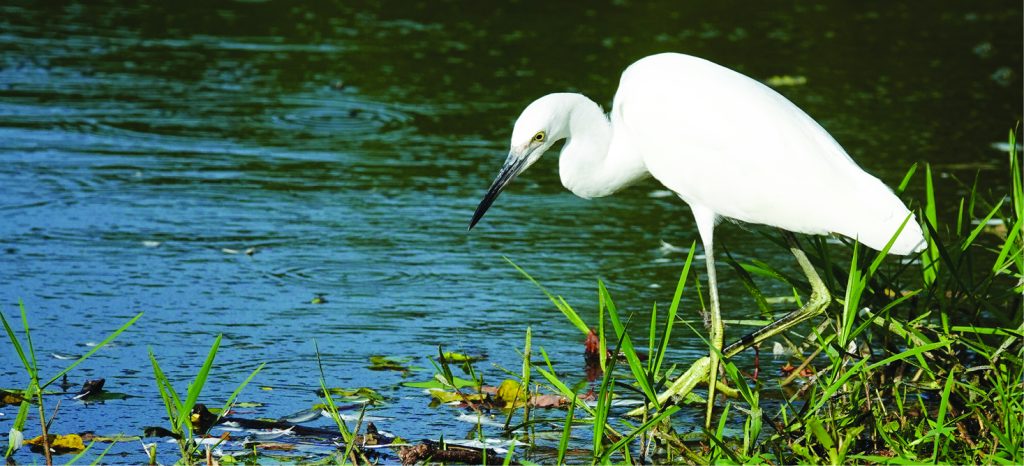
One bird that frequently appears in wet areas later in the summer is the little blue heron. And it may be more than one who show up. Furthermore, they’re not usually blue. Young of the year, which these inland wanderers almost always are, are actually white. Except for the very tips of the wing feathers — usually a challenge to make out — these birds are covered with white feathers. Unlike the great or snowy egret, which also may turn up in the Piedmont or Sandhills this time of year, the bill of these small herons is pinkish or grayish, and the legs are greenish.
All of these white waders may be spotted in shallow wet habitats: streams, small ponds, water hazards, retention areas, etc. Little blue herons may be by themselves, mixed in with other white, long-legged waders, or even seen with the much larger great blue heron. Little blues can be identified by their more upright foraging posture, their slow, deliberate movements, and a downward angled bill as they stalk prey. Unlike other smaller waders, they will hunt in deeper water, often all the way up to their bellies. Little blues watch not only for small fish but frogs and crayfish as well as large aquatic insects. It is thought that their coloration allows them to blend in inconspicuously with similar white species, allowing the association to provide protection from predators. Also, it has been found that little blues are significantly more successful predators when foraging alongside great egrets. These larger birds are likely to stir up the water as they move after underwater prey, which can flush a meal in the direction of nearby little blues.
It takes these herons at least a year to develop adult plumage — not unlike white ibis, which also breed along our coast (but who sport dark plumage their first summer and fall). They may have a pied appearance for a time in late winter or early spring. By April they will be a slatey blue-gray all over with a handsome bluish bill. Unlike our other wading birds, they lack showy head or neck plumes. They are also unique in having projections on their middle toes that form a comb, which is used as an aid when grooming.
Unfortunately, this species has experienced an alarming drop in population numbers over the past half-century across North America. Loss of coastal wetland habitat, continued declines in water quality, as well as being eliminated as a nuisance in fish hatcheries, all are thought to contribute to the decline. So, be sure to stop and appreciate these stately birds should you come across one. OH
Susan Campbell would love to receive your wildlife sightings and photos. She can be contacted by email at susan@ncaves.com.