
CHAOS THEORY
Tanked
A terrible, horrible, no good, very bad day
By Cassie Bustamante
One of my favorite childhood books is Judith Viorst’s Alexander and the Terrible, Horrible, No Good, Very Bad Day. If you’ve read it, you know that poor Alexander has one of those days where everything goes wrong. And — spoiler alert — it doesn’t even have a happy ending. But what it does have is an assurance to kids far and wide that everyone has days like that. Everyone.
Chris, my husband, is away for work, so I’m on my own for a few days with our three kiddos. I pick up Wilder, 5, from his after-school program and we head home for the evening. Shortly after we walk in the door, he comes to me, his blue eyes looking sad and guilty, his cheeks slightly flushed.
“I know you got a text from the school today, Mom,” he grumbles.
A text from his teacher? I check my phone to see if I’ve missed it. Nope. “Why would the school message me?” I ask him.
He looks at his feet, kicking the carpet. “My card was flipped from green to yellow,” he mumbles. In kindergarten-speak, his behavior went from good to “you’ve been warned.”
“Oh, no,” I say. “What happened?”
“I talked when I wasn’t supposed to,” he replies. Welp, he’s definitely my kid. I can’t tell you how many classes I got kicked out of for disruptive chatter.
“Hey, it’s OK,” I say, hugging him. “You made a mistake and you learned from it. I’m sure it won’t happen again.” Though, if he’s like me, it will most definitely happen again. (My math teacher once called me the “Mayor of Math Class” because I had to greet everyone before taking my seat. What some deem disruptive, I call friendly.)
After dinner, I head to his room to snag dinosaur PJs from his bottom drawer. And that’s when I see it.
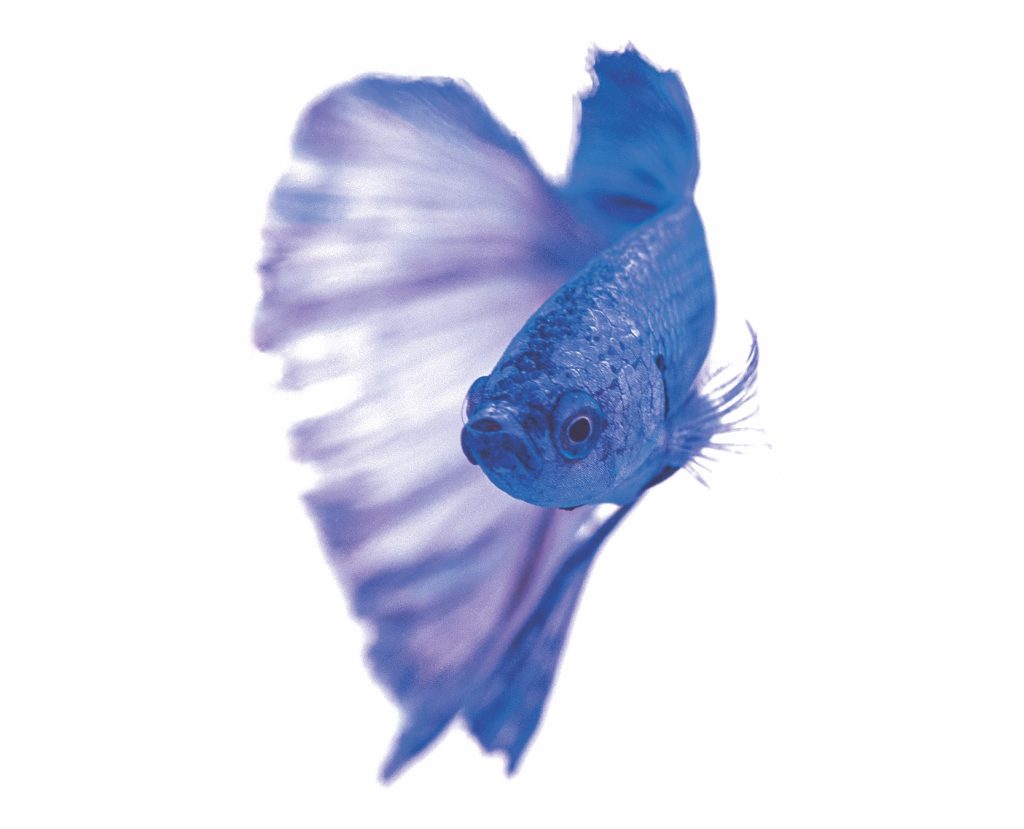
In the small aquarium sitting atop his dresser, Bluey — his cobalt beta named not for the hilarious Australian cartoon dog, but for his color — is vertical in the tank, pouty-face up, tail down.
Tap, tap, tap. I rap on the plexiglass side. Nothing. His little pectoral fins don’t make a flutter.
I take a deep breath, preparing myself to make Wilder’s no-good, very bad day even worse by letting him know the fish he’s loved for over a year is no longer.
“Hey, bud,” I say, “I’ve got some bad news.”
“I know,” he answers, suddenly awash with shame. “You got the text.”
I stifle the giggle trying to escape from my lips. Laughing while delivering the news that my son’s first pet has died is not exactly the kind of exemplary behavior I’ve read about in parenting books. Of course, I’ve never claimed to be an exemplary parent.
“No.” I pause. “Bluey died.”
He perks up, the corners of his little mouth even start to turn upwards. Is that a smile forming? This is not the reaction I was expecting.
He trots down the hall to his room, where his sister, Emmy, is ready to help me scoop out Bluey and send him off to a burial at sea, aka the commode.
Wilder stands on his bed and peers into the tank, where Emmy’s fishing around. She finally nabs him and Wilder asks, “Can I see him?”
Emmy holds out her hand, the limp, lifeless beta sitting in her palm.
Shocking both his big sis and me, he raises his hands in triumph. “I have been waiting for this day!” he shouts.
“What?!” I say, startled. “I thought you’d be sad.”
He peers at me sheepishly, then fakes a short-lived whimper. “Well, I am a little sad,” he says. Then his face lights up. “But now I can get a new fish — a glow-in-the-dark fish!”
While I’m relieved that this moment isn’t another page in Wilder’s own tale of woe, I can’t help but pull good ol’ Alexander off the bookshelf as our bedtime story that night.
Because I want him to know, “Some days are like that.”
Even for a fish.