
SAZERAC


Sage Gardener
I thought I knew what chow chow was, a traditional Southern relish that my daddy put on pinto beans and my mother whipped up using up the tail end of the garden — cabbage, onions, green tomatoes and peppers, accented with mustard seeds. When I run out of the version I make myself, similar to Mama’s, I buy what I consider a really decent alternative, Mrs. Campbell’s Chow Chow, made mostly from cabbage, red bell peppers and onions, and produced by Winston-Salem’s Golding Farms. (Tony Golding got started in 1972, making and distributing Mr. and Mrs. John Campbell’s homemade version.)
Then I started poking around. Southern? Hardly. Food historian John Mariani informed me that the name of chow chow may come from Mandarin Chinese “cha” and originated in America in 1785, when Chinese laborers working on railroads in the West introduced it, amped up with ginger and orange peel. North Carolina-born “Southern Fork” blogger Stephanie Burt muses that the French Acadians from Canada might have brought chow chow to the United States, since their word for cabbage was “chau.” But her personal theory is that “the Carolina version I know originated with the Pennsylvania German and Dutch settlers, who traveled the wagon road to the South bringing their love of relishes and mustard with them.”
My Pennsylvania Dutch mother might have consulted her Mennonite Community Cookbook, but she sure didn’t put any lima beans, green beans or cucumbers in hers. She used the version, as I do, from the Rockingham County Home Demonstration Cookbook, featuring, like Mrs. Campbell’s, cabbage, onions and peppers, but also green tomatoes. Head north and chow chow gets even greener, made predominantly with green tomatoes, especially in Nova Scotia and New Brunswick.
If you want to make some from the remnants of your garden veggies, type into Google what you have too much of and you’ll find oodles of recipes.
But what really grabbed my attention was what some people do with it. Sure, I heap it on hamburgers, hot dogs and collard greens. And it’s the secret ingredient in my devilishly delicious deviled eggs. But, really, fish cakes and mashed potatoes? Heaped on biscuits and gravy or on corn bread? Don’t even mention ice cream — unless it’s chocolate.
Unsolicited Advice
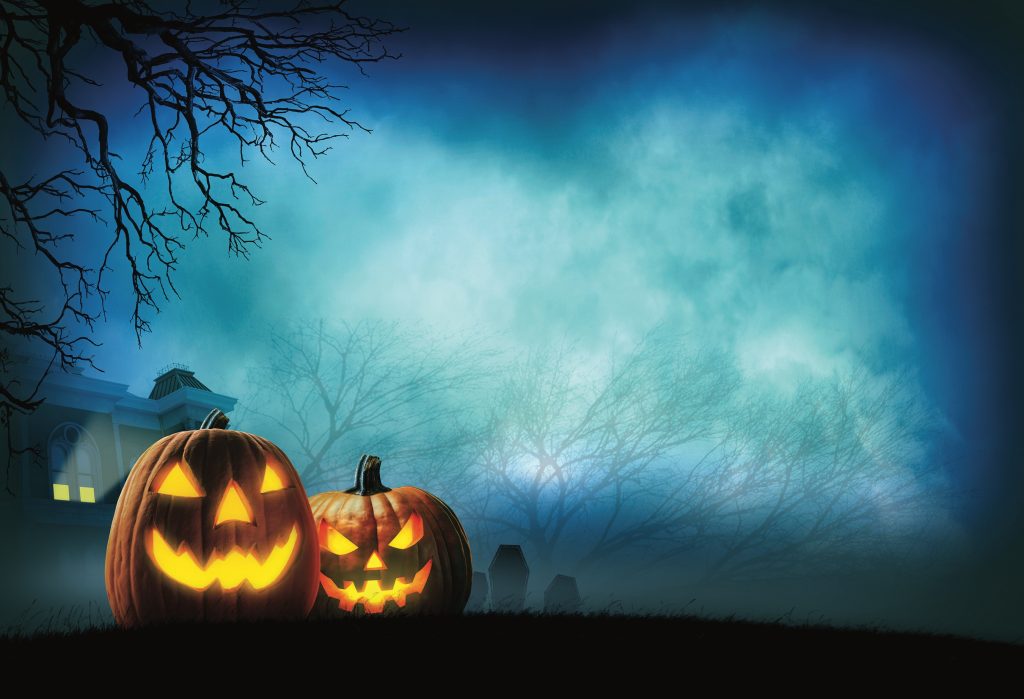
You know the house that the kids clamor to every Halloween? It’s the one with the flashing lights, “Monster Mash” blaring and a fire pit out front surrounded by witches and werewolves sipping their brews. Green with envy? Don’t be — we’ve got tips to make your front door the top stop on the block.
Don’t dole out off-brand candy imposters. No one wants your Crisp-Cat, Wacky Taffy or Chuckles bar. Even toddlers know they’re a cheap imitation of the real thing and taste like chocolate-covered disappointment.
The biggest fright of the night? Nothing screams “I’m a dentist” like handing out toothbrushes at the door. If you’re going to do it, at least toss in some sugar-free candy, too. Plus, from a business standpoint, more cavities means more income.
Ambience? More like zombie-ence. Think eerie mood music, orange and purple lights and — the icing on the individually packaged Tastykake, which also makes a great treat — a frightful ’fit for yourself. And we all know nothing is scarier than a homemade Halloween costume.

Window on the Past
Captured on the heels of the Great Depression, these two goblins are prepared for the coldest of winters and the largest of pumpkin pies. Better stock up on the whipped cream!

Just One Thing
While one red balloon floating up from a drain says “Stephen King-level creepy,” soon, several red balloons in front of an art studio will scream creativity. Since 1996, ArtStock Studio Tour has offered art collectors and lovers the opportunity to tour several local studios — marked by red balloon bouquets — where they can peruse and perhaps purchase a piece for their own homes. This year, ArtStock is stretching that canvas all the way into High Point. Witness here the work of Greensboro resident and mixed-media artist Linda Spitsen, who is participating for her third year. For the first time, she plans to open the doors to her in-home studio. Spitsen says she traces her creativity all the way back to kindergarten. “For forever, people have always received a handmade card from me for their birthdays,” she says. But that creativity was reignited on a larger scale in 2016 when she retired from a longtime career as vice president of HR at a tech company. Now, Spitsen has collectors all over the globe — “in all the continents but Antartica,” she quips. Her brush, she finds, generally yields works that are floral or earthy in nature, as seen here in Thursday’s Child, a bold acrylic on gallery-wrapped canvas. Asked who, exactly, Thursday’s Child is, Spitsen simply says, “I was born on a Thursday.” As was her husband, Stu Nichols, she notes. The painting, as it turns out, was completed on the eve of her birthday earlier this year. Just follow the red ArtStock balloons to see Spitsen’s work as well as that of 30+ local artists, Oct. 2–5. Info: artstocktour.com
All Bark
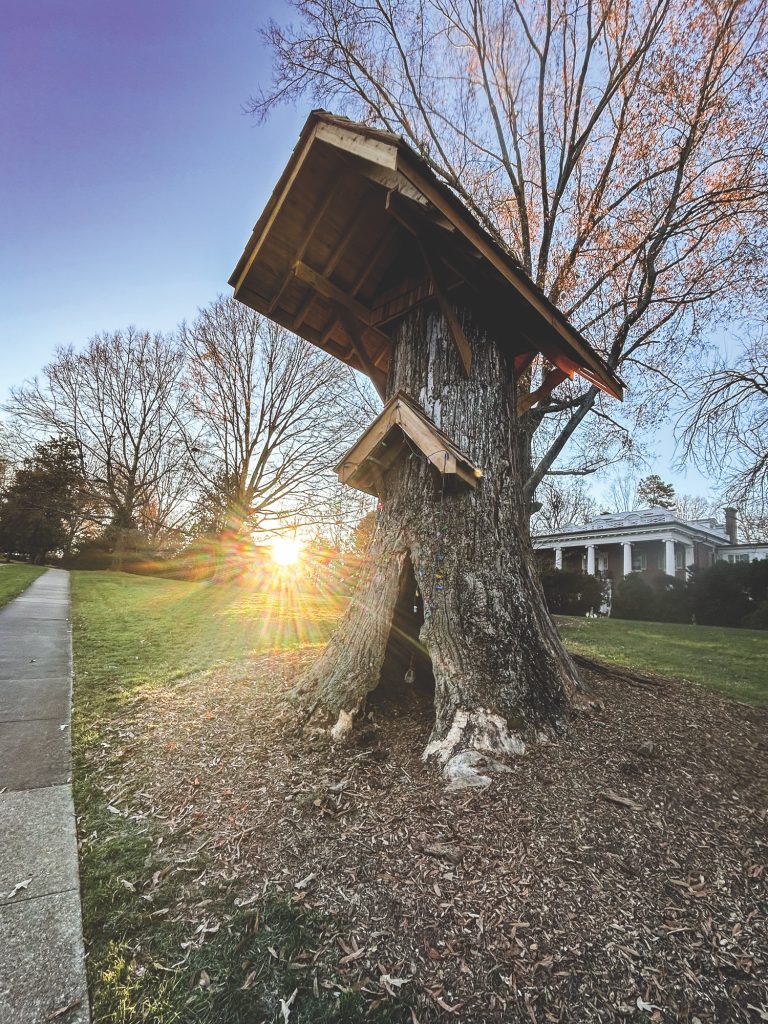
Poplar Hall, a Neoclassical Revival home in Irving Park, now features what may be the first tree that’s been remodeled of its kind — notable in a neighborhood where grand old mansions routinely receive every imaginable home improvement.
You read that correctly. If tree superlatives were handed out, this tree would win “Most Improved,” hands down!
The much-loved poplar stands on the lawn of the historic 1914 family home of politician and lawyer Aubrey Brooks. Poplar Hall was among the first houses built in Irving Park. In recent years, arborists and experts could be seen administering TLC to a particular tree, across from the entrance to the Greensboro Country Club.
Why care so for this tree? It had star power, an earthly wonder to all who passed by.
The same feature that made the tree charmingly irresistible, sparking the imagination, also indicated its vulnerability. Its heartwood having died, its center was enchantingly hollowed out so much so, a child could disappear into its interior.
Generations of fans have visited the tree, standing conveniently by a public sidewalk. Passersby, runners, walkers and parents with strollers have invariably slowed for a better look. Like the Angel Oak in Charleston, South Carolina, it had quietly become a natural attraction, one the children in my family always requested to visit.
Years ago, a fire was set inside the hollow. Though it bore the signs on the charred interior, the tree seemed to defy death.
But, despite the care of intergenerational owners who gave it their best efforts, the tree steadily declined.
Advancing decay and time further ravaged the tree. And who could even guess its age? Hardwoods such as this often live over 250 years, according to treehuggers.com.
The ailing tree recently underwent a series of incredible transformations. First, a breathtaking amputation. The dying top was lopped off, leaving it truncated and sad-looking. Fans and neighbors worried. What next?
The tree trunk — the main attraction — remained with at least 20 feet of its magnificence intact. The natural “doorway” was saved, its ancient portal still open.
Since then, a cedar shake roof was constructed, reinforcing the tree’s appeal and storybook charm. More embellishments followed: gingerbread trim and two charming windows. Delighted children dubbed it the “Keebler Elf tree” after the well-known cookie commercials, where elves whip up Fudge Stripes in such a tree.
As a final, playful touch, garden gnomes — perhaps Keebler kin — appeared inside the hollow, establishing residency, proving the remodel was a habitable success.
It was a remarkable save for a tree with legions of fans.
But not everyone unreservedly loves the elf tree at Poplar Hall. Occasionally, the darkness of the walk-in tree spooks little ones, fearful of encountering unseen guests.
When my niece, Bailey Sparks, visited the tree, we urged her to step inside for the full experience. Just as she entered the shadowy hollow, she screamed out in pain and fright. A bee had stung her.
Later, she shakily recorded the event on a blackboard in my home, which bears chalk-scrawled messages from visiting children. “I will never forget this day! The first day I got a bee sting! July 15, 2007,” she wrote. The child had no more to say on the subject, wishing to never return.
But the majority of those paying homage to the tree get a pleasurable shot of dopamine rather than bee venom. Most of us are tree lovers, like generations of the Brooks family seem to be.
According to historic records, the name itself is proof. Poplar Hall is the namesake “of a stately tulip poplar” that stood on the front lawn of the property more than a century ago.