
SAZERAC

September 2025
Sage Gardener
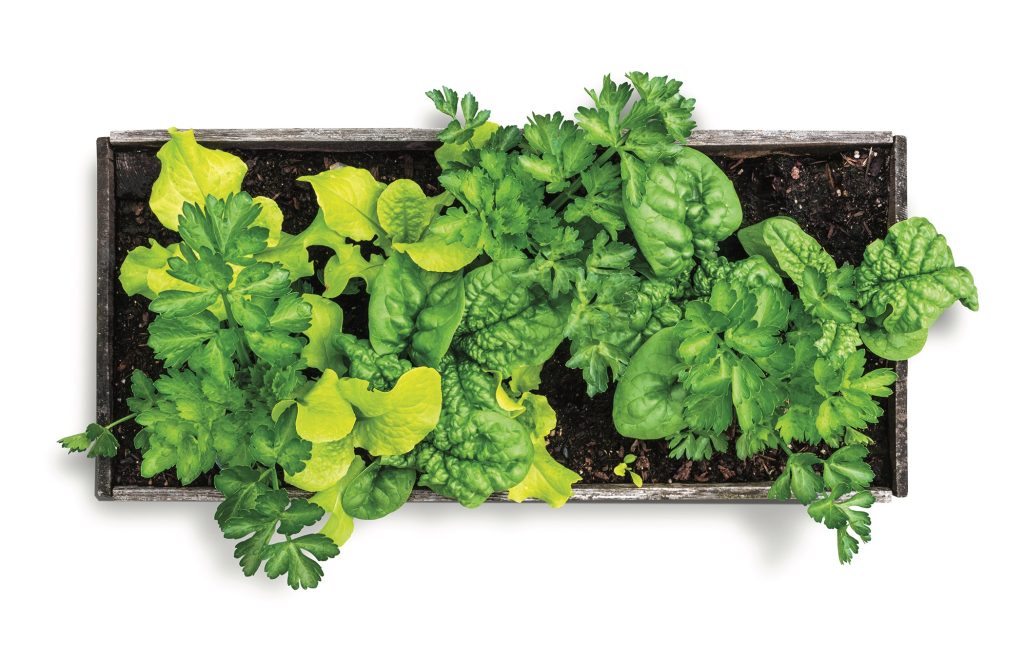
With the end of summer comes the inevitable garden turnover, and the Sage Gardener is thinking about what he can grow without even stepping foot outdoors. You can get a kit delivered right to your front door, from $20 for a 10-piece ensemble found on Amazon all the way to an $899, smart technology, hydroponic, LED-lit, automatically-watered unit (remote camera extra) from Gardyn.com. But a quick survey of my friends suggests you don’t have to break the bank to bring the outdoors in. “I buy basil and parsley at the local Harris Teeter and torture them until they wither,” says an artist friend. “I’ve begun to notice that when I go by the baby plants in the produce aisle, they’ve started recoiling at me.”
Another friend fills her kitchen with herbs from Trader Joe’s, popping the ones that don’t thrive from the pot into the frying pan. Her partner has labeled the sunny little corner of their kitchen, “The Rainforest.” She’s found that mint in particular thrives like kudzu until Derby Day, when it tends to disappear.
Another friend restricts his indoor gardening to chives, which he snips and puts on salads and baked potatoes. My wife and I have found that “mowable” plants are the best bet for our window garden: herbs or leaf lettuce, spinach, endive and Swiss chard. We also grow root veggies for their edible greens. Think beets, turnips, mustard greens and radishes.
A friend in New York City warns that you need the right angle of sun for certain plants to thrive: “The growing season on our south-facing back deck lacks the early spring warmth of North Carolina, but my reliable winter-overs are lovage, chives and sage. This year’s sage plants are almost teenagers.”
A hiking buddy who actually harvested tomatoes from her potted plants says, “I’m no expert but I’ve learned the importance of light, food and water. The key lies in figuring out how much of each, when, and then adjusting the ratio to fit their needs.”
O.Henry colleague Maria Johnson takes her struggling plants to “the urgent plant-care clinic at Plants & Answers on Spring Garden Drive for a quick diagnosis.” If declared fatally wilted on arrival, “there are plenty of healthy replacements to choose from.”
If you’re really serious about all this, I suggest that you google “indoor garden links by Guilford County Master Gardeners.” Or check out a primer written by an extension agent in Person County, who, among many other tips, suggests using equal portions of peat and vermiculite for your soil; fertilizing your plants with a water soluble 15-30-15 formula; and choosing the right window or spot on the patio so that fruiting plants get at least 12 hours of bright light a day. Finally, remember, says the gardening-in-the-kitchen magician, that, except for root and leaf plants such as carrots and lettuce, “vegetables must be artificially pollinated for fruit development. Pollination can be accomplished by taking the powdery pollen from the bead-like anthers with a camel’s hair brush and placing it upon the stalk-like pistil.” And by now we all know plants respond well to music, so may I suggest you set the mood with your Marvin Gaye album? Because it’s time for your plants to get it on.

Just One Thing
Harriet Tubman, Mohandas Gandhi, Frederick Douglas and, seen here, Marian Anderson are just some of the familiar figures artist William H. Johnson (1901–1970) painted in his mid-1930s Fighters for Freedom series. Born to a poor African American family in Florence, S.C., in 1901, Johnson left his hometown behind at the age of 17, following his dreams of being an artist to the Big Apple. There, he worked a variety of odd jobs, saving money to put himself through the National Academy of Design and later serving as general handyman at the Cape Cod School of Art in Provincetown, Mass., where he studied with painter Charles Webster Hawthorne. It was Hawthorne who influenced Johnson’s bold use of color, seen throughout this series, which was created to honor African American activists. Featured were scientists, teachers and performers, as well as international heads of state who were valiantly working toward peace. Among his Fighters stands Marian Anderson, mouth open in song. A contralto, she was the first Black soloist to perform at both the Metropolitan Opera and the White House. In 1939, just a few years before Johnson painted this series, the head of the Daughters of the American Revolution denied Anderson permission to perform at the DAR Constitution Hall because of the color of her skin. Subsequently, First Lady Eleanor Roosevelt resigned from DAR and, just a couple months later, presented Anderson with the Spingarn Medal, which recognizes outstanding achievement by an African American. Anderson died in 1993 at the age of 96. You can admire her vibrant, colorful portrait, along with several Fighters for Freedom, at Weatherspoon Art Museum’s exhibit, Sept. 6–Nov. 29. Info: weatherspoonart.org/exhibitions_list/fighters-for-freedom-william-h-johnson-picturing-justice.

Window on the Past
Among the vast vinyl collection of the Greensboro History Museum, one shines brightly — the 1976 Rick Dees gold record of the satyrical novelty song “Disco Duck.” Dees, who graduated from Grimsley decades ago, is still rocking a smashing radio broadcasting career. You can tune in to his voice on his syndicated Rick Dees Weekly Top 40 Countdown, and, if you’re a really lucky duck, you might catch him going quack-quack, quack-quack.

Unsolicited Advice
You’ve seen them already, the early signs of fall. No, we’re not talking about foliage — this is North Carolina, folks. But Starbucks released its seasonal menu late last month, so don’t be surprised to catch a whiff of pumpkin spice on someone’s breath. Get used to it. How about some ideas to get into the spirit of the season, Southern style?
Haul out the flannel shirt! But rip off the sleeves for a look that says, “I love fall!” Or, “Wanna hop on my hog?” Either way, we’re into it. And you can repurpose the sleeve by filling it with maize to use as a door draft stopper for when the fall breezes actually start blowing.
Forget the steaming cup of mulled cider. Since we’re in Piedmont North Carolina and it’s still September, cool off with a chilled cider slushy. Sugar, spice and loads of crushed ice. And a dash of brandy for the 21+ crowd.
Crank up the oven for fall baking. Think chocolate-chip pumpkin bread, homemade cider donuts or apple spice cake, the cozy scent of cinnamon and nutmeg wafting throughout your home. Just don’t forget to also crank up the AC, or hints of perspiration will also be in the air.
Take a leaf-peeping road trip. According to Google Maps, it’s only about 17 1/2 hours to Maine’s Mount Katahdin.
And if there’s one thing no other region can top, it’s college football season. Where else is it warm enough to go shirtless and paint your entire torso for game day? Take it from us and spring for the sweatproof paint or you’ll be a puddle of school colors by halftime.