Wandering Billy
How I Spent the Bicentennial Summer
Stirring up scandal in a sleepy Southern hamlet
By Billy Ingram
“A small town has as many eyes as a fly.” — Sonya Hartnett
As a 19-year-old in the summer of ’76, I landed a gig as an ensemble player in a new, outdoor drama, The Liberty Cart: A Duplin Story, written by Randolph Umberger. He’d penned another open-air theatrical production debuting that year, Strike at the Wind!, a Lumbee Indian pageant performed in Pembroke. Liberty Cart was set, both in story and in fact, in Kenansville (pop. 900 then, a bit less today), situated between here and the coast. Kenansville was an unassuming hamlet only accessible by traveling down two-lane roads before the I-40 extension was completed in the 1990s.
All of the 10 professional actors hired for Liberty Cart portrayed multiple roles with the exception of one. Tom Hull solely played Phenius Pickett, a wise, old, time-traveling pushcart peddler who wove together oft-told tales of Duplin County lore as seen through the prism of the Kenan family’s Revolutionary War experience and beyond, into war-torn South in 1864. The Kenan family’s claim to fame, so far as I can tell, is that they were fabulously wealthy, thanks to the oil and gas business. To this day, it’s a philanthropic surname splashed across multiple buildings on the UNC-Chapel Hill campus.
Having spent little time in small towns without high and low tides, I wasn’t sure what to expect. Certainly not strutting center stage into a bewildering psychodrama soon surreptitiously swirling around us.
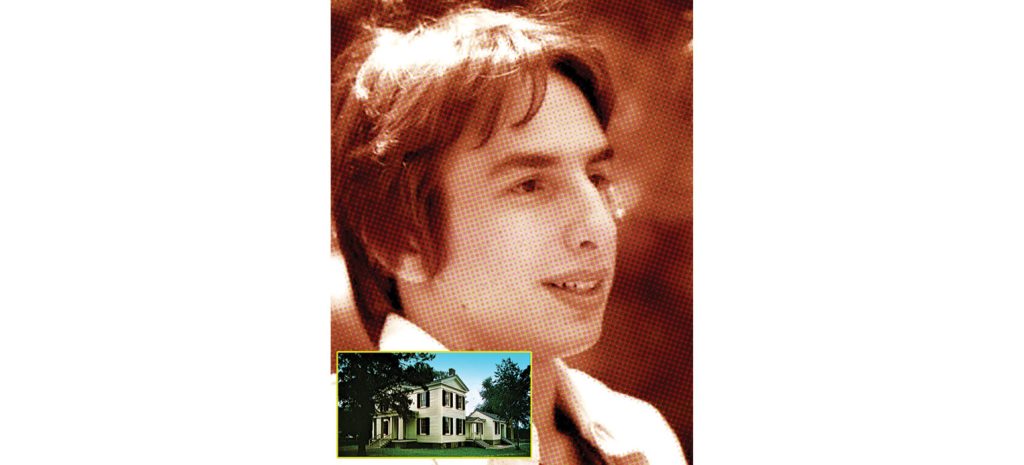
In an art form rooted in North Carolina theatrical tradition, Tom Hull was already a bona fide outdoor-drama star, having portrayed the comical drunk Old Tom in Lost Colony for a decade. Tom, myself and a trio of other cast members bunked together in a three-bedroom house that I christened “Freedom Shack” due to its location directly next door to Liberty Hall, the Kenan family ancestral home, which played a central role in our production. It was the town’s one claim to fame, a historical tourist attraction then and now. Following a month of rigorous rehearsal, Liberty Cart opened on July 29. I was assigned five character parts, including the first boo-hiss villain, Henry McCulloch, a British fop seated atop a luxuriously appointed barge carried aloft by servants. I also played a shady land speculator there to stump for a tax stamp scheme steaming the colonies leading up to the Revolutionary War. The Richlands-Beaulaville Advertiser News described my performance as an “absurdly humorous interpretation of the King’s representative.” On the front page, no less. I wonder now how I was able to finish a single play. Constructed to last for years, those period costumes were woolen saunas in the brutally humid summer swelter.
During down time, Tom and I were home a lot, content to read away lazy afternoons. Tom, a New York City resident, was genuinely loving the change of scenery and relished serving as de-facto housemother, cooking meals most nights partly out of necessity. The lone restaurant in this no-stoplight town, the Tastee-Freez, had bug sprayers positioned above the dining room tables for spritzing insecticide into the air — RAID raining down on your cheeseburger and fries every few minutes.
There was a quaint little diner across Main Street from Freedom Shack, but it had closed recently, rumored to have been forced out of business because the proprietor was African American. I talked the guy into opening just for us at noon. So every day, this gentleman took our orders — pork chop sandwiches were a favorite — then strolled next door to the Piggly-Wiggly for what he needed to prepare our lunch while we howled with laughter watching The Gong Show on TV.
Along with Tom, my Freedom Shack roommates were Roger Dale Jackson, Kevin Flanigan and David Elliott. With a thick head of red hair, Roger was one of the sweetest people I’ve ever met, intensely serious about acting as were the others. I really looked up to Kevin, incredibly effective in that outdoor setting as the handsome, smoldering young firebrand. Two seasons earlier he’d wowed audiences in a major role in Horn in the West. David was athletic, no affectations, and once brought along his Labrador retriever, who absconded with a roast we left marinating on the kitchen counter.
One of my best friends from college, “Sweet” Val McCaw, was also cast in Liberty Cart. Her dramatic moments are still talked about in Kenansville. No, really, especially her turn as Mammy Till chasing Yankees from Liberty Hall’s kitchen. Because of the time periods depicted, Val was relegated to playing domestics, which ultimately didn’t sit well with her, being a proud, independent, young Black woman.
Supporting players, dozens of all ages, were recruited from nearby Wilson, Warsaw, Rose Hill, Wallace and Beulaville. They were some of the nicest folks I’ve encountered in life, but I quickly became aware of awkward, sideways glances from shopkeepers and pickup trucks when Val and I meandered around the four or five local businesses that constituted a downtown. Unbeknownst to us, it was a downright scandal that the whitest teenager God ever blanched and a Black co-ed were flagrantly lollygagging around town together. A local mechanic having a fling with one of the actresses, their relationship consummated on the back steps of sacred Liberty Hall, informed us that townspeople routinely tracked us via their CB radios. Val was mortified . . . that anyone would consider for a moment that we were a couple!
Val had the last laugh, however. At a cast party meet-and-greet held in Freedom Shack’s backyard, with Kenansville’s hoi polloi in attendance, Val stepped from the house, screen door slapping shut behind her, and announced, “Billy, I left the jeans I borrowed from you yesterday on your bed.” Jaws dropped and eyes popped like beasts in a Tex Avery cartoon.
The only cast member with a car, I had deputies hugging the back bumper of my ’72 Dodge Dart Swinger while driving.
Discovering one morning that someone had sideswiped my Swinger, parked overnight on the street, naturally I attempted to file a report with the Sheriff for insurance purposes. Peering above mirrored sunglasses, fully reclining in his swivel chair like the stereotypical good ol’ boy with a badge in every Southern noir movie ever filmed, he blithely commented that he knew who was responsible but wasn’t going to do a damned thing about it. In the rural South of the ’70s, everyone knew their place; if not, it would be made plain to you at some point.
Whereabouts of most of the cast is a mystery. Roger Dale Jackson was seen in a dramatic role in a 1985 episode of AfterMASH, passing away in 2020. Tom Hull died in 2009. I wish I’d had a chance to talk with him again. Of all the cast members, we were the closest as he was the first openly gay person I ever met. Tom moved to Wilmington in the 1980s, where he had a stellar stage career, appearing in occasional movies like Raw Deal in 1986, a role that found him ruthlessly pummeled by Arnold Schwarzenegger. Pretty funny we both ended up working on that same project, myself as a West Coast movie poster artist for the film. Val McCaw married her high school sweetheart, William, enjoying the love of a warm and close-knit family in Colorado.
In a return visit to Kenansville a few years back, I discovered several changes. The town has an intersection with a stoplight now. Liberty Hall is even more of a tourist attraction today, but our beloved Freedom Shack was long ago demolished for additional parking. Liberty Cart closed in 1990 and the amphitheater is covered over in kudzu, but several locally owned restaurants thrive there today, including a soul food joint that residents rave about. OH
Born and raised in Greensboro, Billy Ingram moved to downtown in the 1990s after a career in Hollywood as a key member of the design team the ad world has dubbed, “The New York Yankees of Motion Picture Advertising.”