
Birdwatch
A Familiar Call
Northern bobwhite on the rebound
By Susan Campbell
For some of those fortunate enough to live in open piney woods or adjacent to large farm fields, the whistled call of the bobwhite quail may be a familiar sound. As with so many of our bird species, this once prolific songster has diminished across the Piedmont and Sandhills of North Carolina.
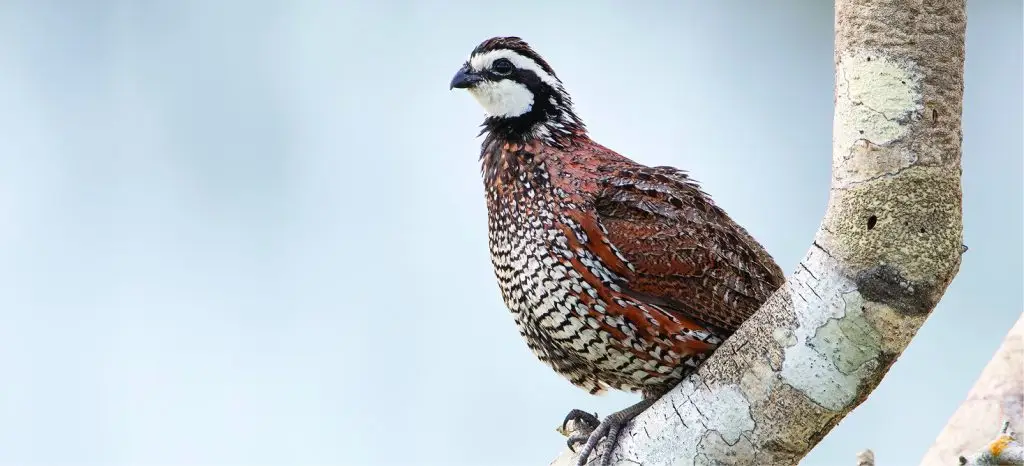
Bobwhites measure between 8 and 11 inches beak to tail and have very cryptic brown, black and white markings, which make them very difficult to see in the grassy habitats they call home. The male has a bright white eye stripe and throat and is the one who announces his territory through a repeated “bob-white” call. The female is not only smaller but is drabber with an eye stripe and throat that are a buffy color. This stout bird is well adapted to foraging at ground level for insects, berries and soft vegetation with its short sharp bill, strong legs and feet with sharp claws.
Bobwhite males attract a mate using their loud repetitive calls in the spring. The female will reply with a four-syllable whistle of its own. Following breeding, the pair create a domed nest concealed in tall grasses, and the hen lays up to 20 pure white eggs. There is a period of approximately 25 days of incubation before the young hatch.
Hens will renest if the eggs are eaten or destroyed. Upon hatching, the chicks will immediately follow their parents, learning how to hunt bugs and which shoots are the most nutritious. As a group they are referred to as a covey. They will stay together through the winter and may join with other families to form coveys of 30 or more birds. When alarmed at an early age, the young will scatter and freeze to avoid predators. Once they can fly, they will take to the air in a blur of wings if they are startled by a potential predator.
Quail were a very popular game bird throughout North Carolina until the 1980s, when a decline in their numbers made them much harder to find. A combination of factors is believed to be responsible. Not only have open woodlands and agricultural fields with hedgerows become scarcer, but ground predators such as foxes, coyotes, raccoons and free-roaming cats have increased. Also, the timing of rainfall can significantly affect breeding productivity. Too much rain too early may inundate nests and result in abandonment. Dry conditions just after chicks hatch may result in insufficient food.
Currently, quail season runs from late November through early April. Hunters may well find coveys in the forests and fields of state game lands. They also can be found on Fish and Wildlife Service refuge lands in the coastal plain. The vast acreage of longleaf pine on Fort Bragg supports quail as well. It requires a well-trained bird dog and a good deal of patience.
Active quail management in parts of the Piedmont and Sandhills over the past couple of decades has paid off with a gradual increase in the northern bobwhite population. Opening up forested habitat, using prescribed burning as well as replanting undesirable vegetation with quality cover plants are two of the best strategies to help boost the population. If the trend continues, before much longer the whistled call of the bobwhite will be more frequent. OH
Susan Campbell would love to receive your wildlife sightings and photos. She can be contacted by email at susan@ncaves.com.