
Learning as We Grow

Learning as We Grow
At Peacehaven, the future is fertile
By Billy Ingram
Photographs by Bert VanderVeen
Welcome to Peacehaven Community Farm, an 89-acre campus near Whitsett where people of all abilities come together to live, learn, work and play. Five adults with intellectual and developmental disabilities currently live at Susan’s View, the first home in Peacehaven’s growing vision for an integrated residential community.
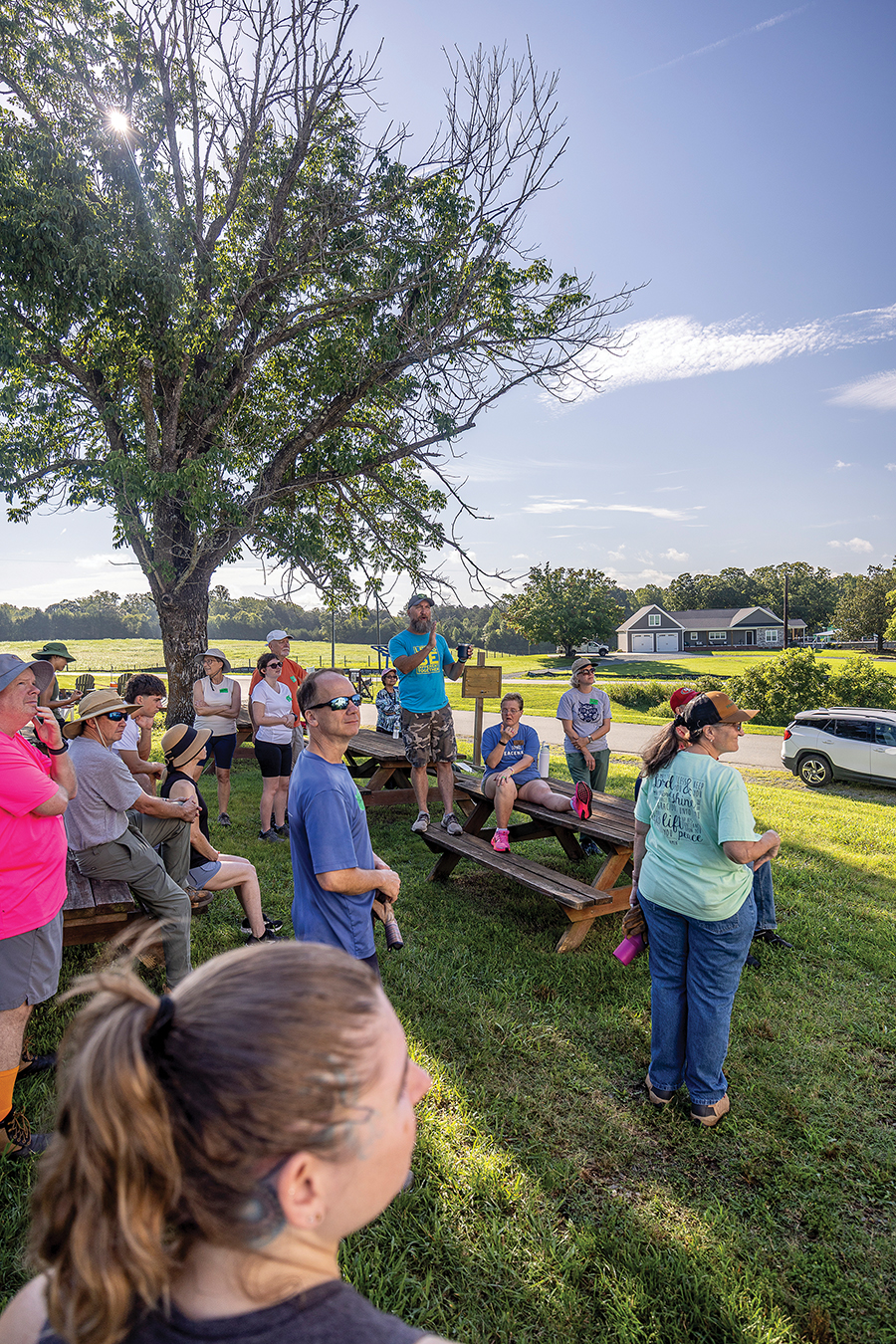
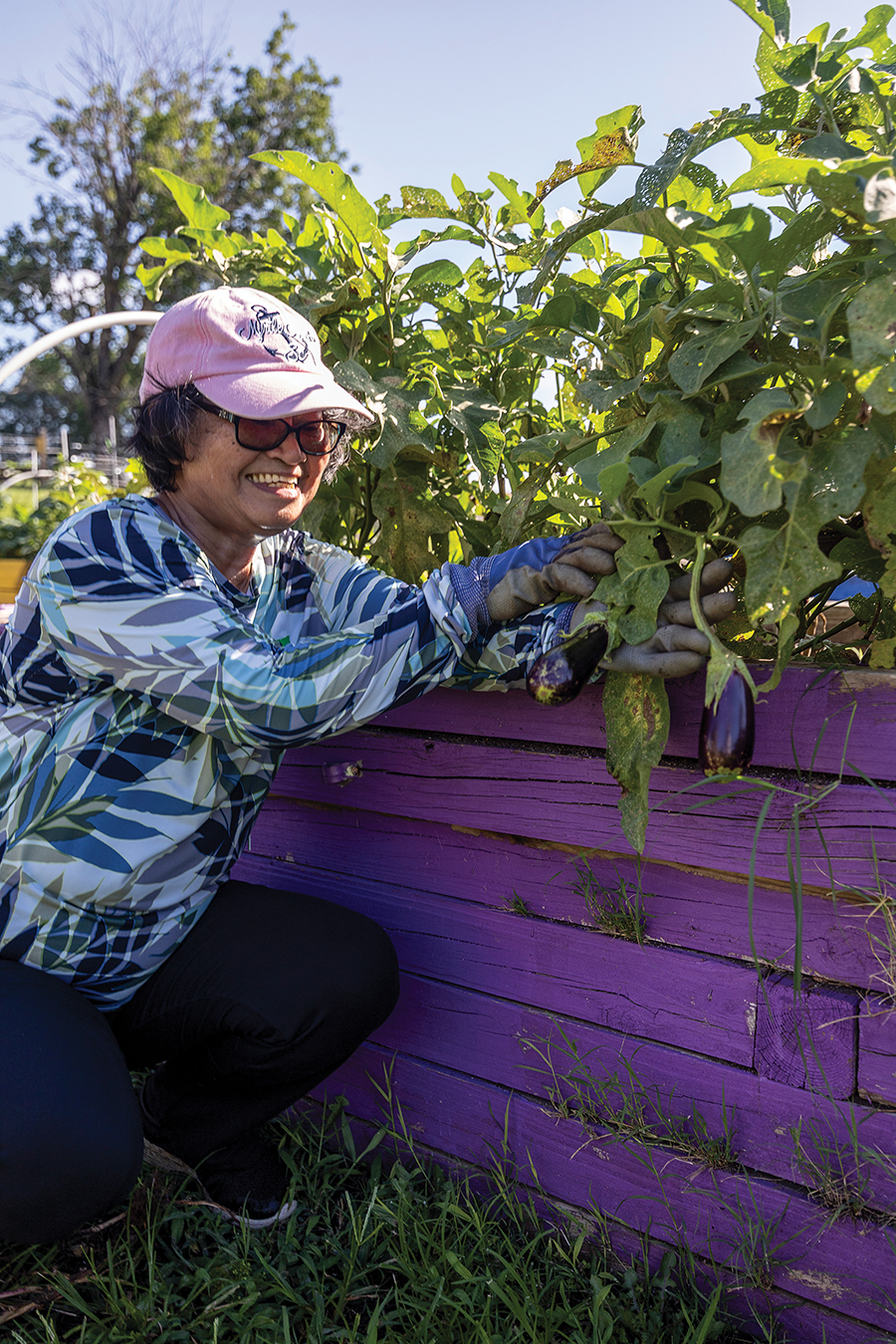
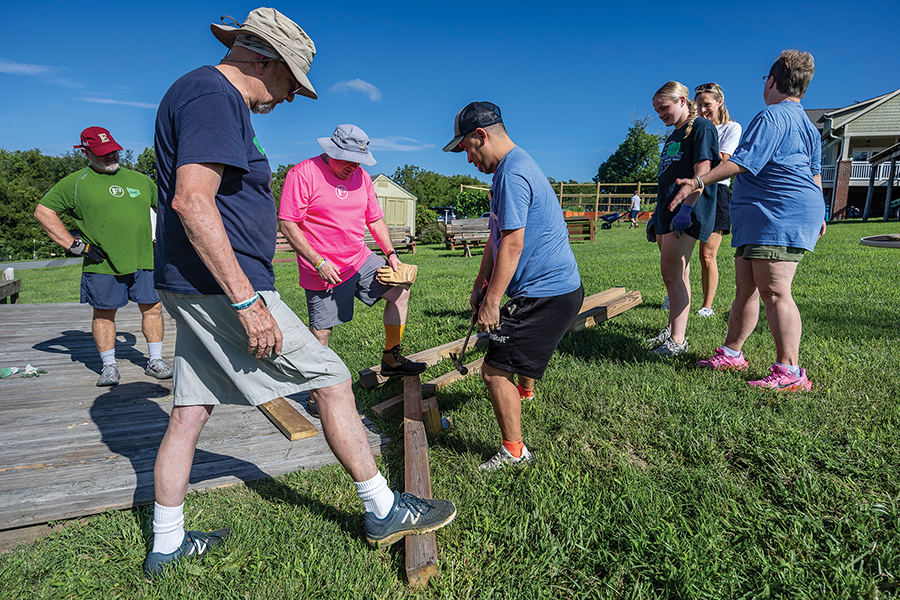
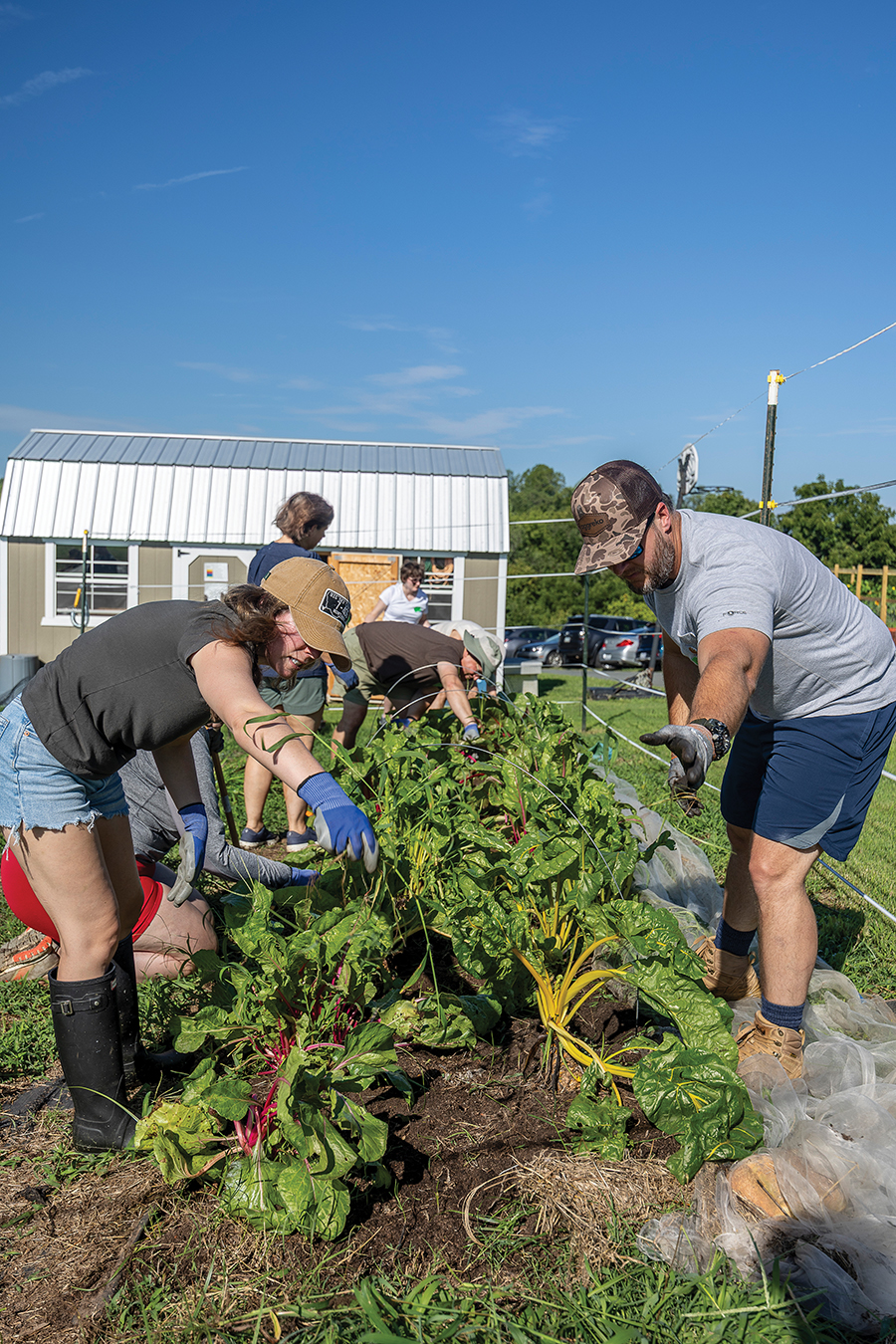
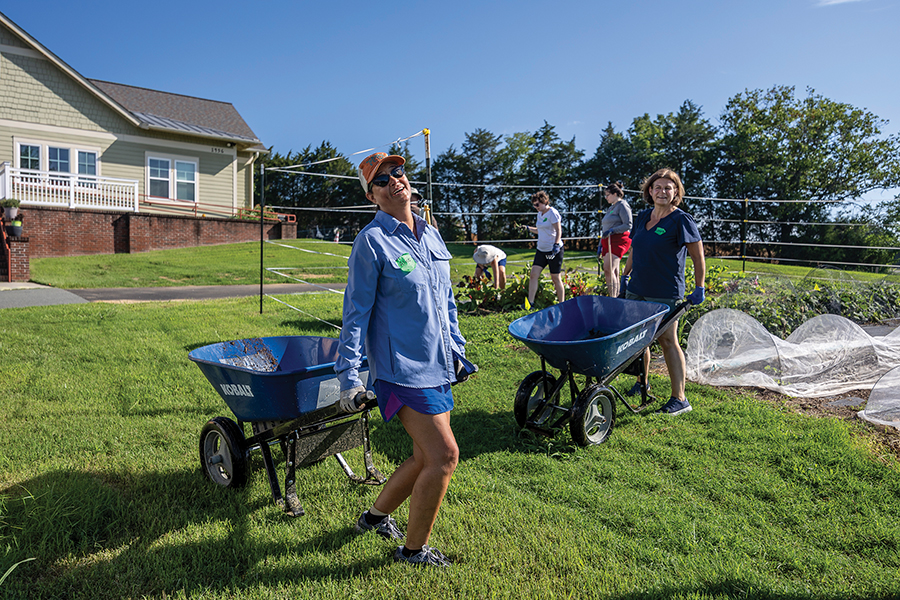
Today is a community workday. Staff members, volunteers and residents spread out across the property, pulling weeds from vegetable gardens, trimming branches beneath shade trees and tackling repair projects.
Despite having little to offer in the way of farming expertise, I quickly find my footing in conversation. There are new people to meet and familiar faces from around Greensboro, including volunteers from Freeman’s Grub & Pub on Spring Garden Street.
Before long I’m talking with Jeff, a Peacehaven resident and an O.Henry fan as it turns out. He’s a take-charge kind of guy who appreciates “being with the community. Letting the community know that, hey, there is stuff going on here every day of the week.”
Jeff gestures toward Adam, another resident, who is immersed in sketching chalk murals that stretch across the sidewalk. “Whether it’s Adam’s drawings or whether it’s just meeting people,” he says, “that’s the best part of living here.”
Nearby, a couple of Grimsley High School students are installing mailboxes as part of the morning’s work.
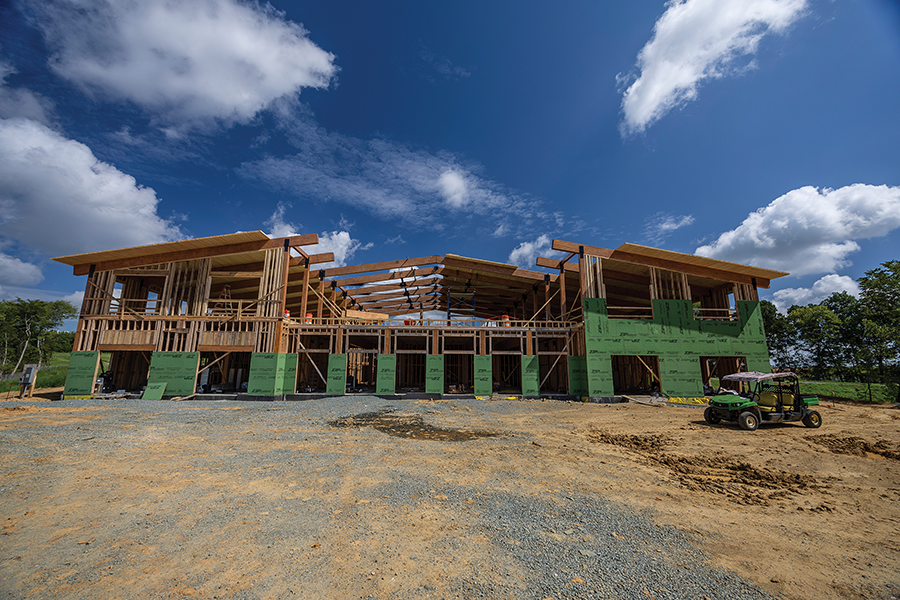
Just beyond where our group of volunteers is working, Peacehaven’s new community center is taking shape. The 23,000-square-foot building will serve as a shared gathering place for people of all abilities, with spaces for working, learning, exercising, creating and spending time together.
Jeff, who recently celebrated his 37th birthday by jamming onstage with roots-rock musician Hunter McBride at Freeman’s, is especially excited about one feature: the planned podcast studio.
“That feature of the community center was actually inspired by Jeff, who has his own podcast,” Peacehaven CEO Phelps Sprinkle says. (Find The Jeff Show on Spotify.) “He also helped drive its development, figuring out that Elon University, a long-standing partner of ours, had a school of communications and connecting with them to get all of us a tour of their facilities. At the end of the tour, their leaders told us they’d be happy to help us however they could.”
Jeff’s parents describe what Peacehaven means to their family in a recent newsletter: “The future we’ve all hoped for is coming alive.”
Peacehaven’s first community workday was held in 2009. Like today’s gathering, it gave people a chance to discover the farm’s mission? through working side by side.
“What we’re building is for everybody, not just for people with disabilities,” says Cory Phillips, Peacehaven’s senior director of brand and experience. “Look at us now. We’re digging in the dirt, you and me, folks over there. We’re all pulling stuff out that nourishes everybody.”
The vision began with two couples, Buck and Cathy Cochran, plus Tim and Susan Elliott, who were each raising children with intellectual and developmental disabilities (I/DD). They shared a concern familiar to many families in the same boat: What happens when a young person with I/DD turns 22 and loses access to school-based services?
Families often call it “falling off the cliff.”
“That’s when they age out of government and local systems,” Phillips says. Too often, the available choices are limited to a group home or a return to the family home, leaving parents to wonder how they can provide lifelong support when their children will likely outlive them.
Over time, that founding idea has grown into a broader vision: an integrated community where people of all abilities can live alongside one another and find opportunities for friendship, meaningful work and greater independence.
For the past four-and-a-half years, Sprinkle has helped guide Peacehaven into its next chapter. He first met Buck Cochran in the summer of 2013, when Peacehaven was preparing to break ground on Susan’s View, the farmhouse was named for cofounder Susan Elliott, who died of cancer before Peacehaven’s first home was completed in 2014.
“Buck was talking about this community where people with and without disabilities would be living together,” Sprinkle says. “This really spoke to me because my oldest daughter, Roxie, has disabilities.”

Today, Roxie is 23, just beyond the age when many young adults with I/DD lose access to school-based services.
Phelps and his wife, Kate, also have two younger adult children. Like many parents, they have had to think about how Roxie will build a full life as she grows older and who will support her after they are gone.
“And you don’t want to put that responsibility on your other children,” Sprinkle says. “At the same time, you want your child to remain safe while also having a full, meaningful life, with relationships where people learn and grow from one another. That’s what Peacehaven is striving for.”
Isolation affects more than the person with I/DD. It also weighs heavily on parents, siblings and caregivers.
“If someone is isolated, that person and their parent or caregiver are going to have poorer mental and physical health outcomes as a result,” Sprinkle says. “If we can create community for those families, that’s preventative health care.”
Communal living has been central to Peacehaven from the beginning.
“We’ve got five folks living with us now at Susan’s View, and they’ve been the most gracious, amazing people you can imagine,” Phillips says. For most, he adds, Peacehaven is the first place they have lived away from their parents.
Parents and staff members have seen residents gain confidence and independence and while building stronger relationships through the experience of living at Peacehaven.
Plans for the completed Peacehaven community call for about 250 residents. Approximately 40% will be residents with I/DD, the majority made up of folks with conventional abilities and backgrounds who’ll be renting apartments just like anywhere else.
The goal is to create a neighborhood where people whose paths might not otherwise cross can live alongside one another, form relationships and experience what it means to belong.
“Knowing that my child is safe and engaged. If something happens to me, I have set them up for success,” Sprinkle says. “That’s what really hooked me.”
As Cochran told him when they first met, Peacehaven could be just as consequential for people without disabilities as it is for people with disabilities.
Accepting the CEO position came with a measure of trepidation. “It is daunting to put a big vision out there and raise the capital necessary to do it,” Sprinkle says. “But it’s like anything else. If you are authentic and surround yourself with the right team, you can accomplish a lot.”
In 2023, the state awarded Greensboro $1.5 million to extend utilities to the Peacehaven property. “When that happened, it made our vision even more realistic and led to real fundraising success from both the private and public sectors,” Sprinkle says.
Not long afterward, the leadership team from Trillium Health Resources visited Peacehaven. Trillium is a local management entity/managed care organization that manages a Medicaid provider network and connects people with I/DD to organizations that provide services.
“That visit was the start of a wonderful partnership, with shared goals of providing more resources for people with I/DD through Peacehaven’s innovative integrated model,” Sprinkle says.
Peacehaven’s work extends beyond housing. Families also want to know what a meaningful day can look like for an adult with I/DD. Will there be opportunities to learn? To contribute? To develop skills and find paid work?
Peacehaven’s RISE and SHINE programs help answer those questions.


RISE, or Reaching Interdependence, Skills and Employment, and SHINE, Sharing in New Experiences, offer personal and professional development for adults with I/DD. Participants set individual goals and work alongside direct support professionals who help them practice skills and remove obstacles.
“Whether it’s practicing eye contact or developing the skills to be hired at a local coffee shop, they’re setting those goals,” Phillips says. “They’ve got a cheerleader and a paid employee on our end helping them remove obstacles.”
Plus, the farm itself provides practical ways to develop those skills. “We’re a fully operational farm growing produce,” Phillips says. “That gives RISE and SHINE participants specific tasks where they can track their progress, work on production and understand the whole process of getting something to market.”
Every other Thursday, RISE and SHINE participants bring the literal fruits of their labor to a pop-up market and coffee gathering at Greensboro’s First Baptist Church on Friendly Avenue.
Leaving the garden and volunteers behind for a bit, Phillips and I climb aboard a Utility Vehicle and head a short distance up the a hill, where Peacehaven’s 23,000-square-foot community center is under construction.
The complex is designed as a place where people of all abilities can cross paths naturally and often. Plans include a coffee shop and café, coworking and maker spaces, therapy areas, adaptive and traditional fitness facilities, classrooms, a pottery studio and a library.
A banquet hall and commercial kitchen can host weddings, conferences and instruction. The building will also include a patio, administrative offices and a multisensory room that can provide both calming and stimulating experiences.
And, thanks in part to Jeff, residents will be able to pop on headphones and record whatever they like in the new podcast studio. “More intersections for folks to hang out, make a friend and be a friend,” Phillips says.
The community center will bring Peacehaven’s larger vision into focus. Integrated living depends on more than building homes next to one another. People need shared places where relationships can develop through ordinary encounters: drinking coffee, taking a class, working, exercising or stopping to talk with a neighbor.
Peacehaven’s annual Harvest Celebration offers a glimpse into that kind of community. Last fall, the music and fellowship festival brought about 600 people to the farm. This year’s celebration, planned for Sunday, October 25, will mark the completion of Peacehaven’s current capital campaign and look toward the next phase of development.
Just a month after last year’s Harvest Celebration, Peacehaven hosted a Thanksgiving observance. A story from that event was highlighted in one of their digital newsletters:
A young man named Johnny and his mother, Elizabeth, were attending a Thanksgiving gathering when Sprinkle shared drawings of the future Community Center and residential neighborhood.
Johnny studied the plans, paused and asked, “Is that where I’ll be living?” It wasn’t a passing comment. It was hope spoken out loud. “Johnny has so many people who love him,” Elizabeth says, “but at Peacehaven he gets to build the social bonds and familiarity that he craves.”
That hope is visible throughout Peacehaven: in Jeff’s plans for the podcast studio, in Adam’s chalk drawings, in students installing mailboxes and in volunteers pulling weeds alongside the people who live here. “This is all new territory,” Phillips says. “We don’t yet know every answer, but we want to find out. If anything, we’re going to fail forward, which is pretty exciting.”
On this workday, the concept feels less abstract. Community is growing here in ordinary and extraordinary ways, through shared work, conversation and chances to get to know one another.
Side by side. OH