SANCTUARY
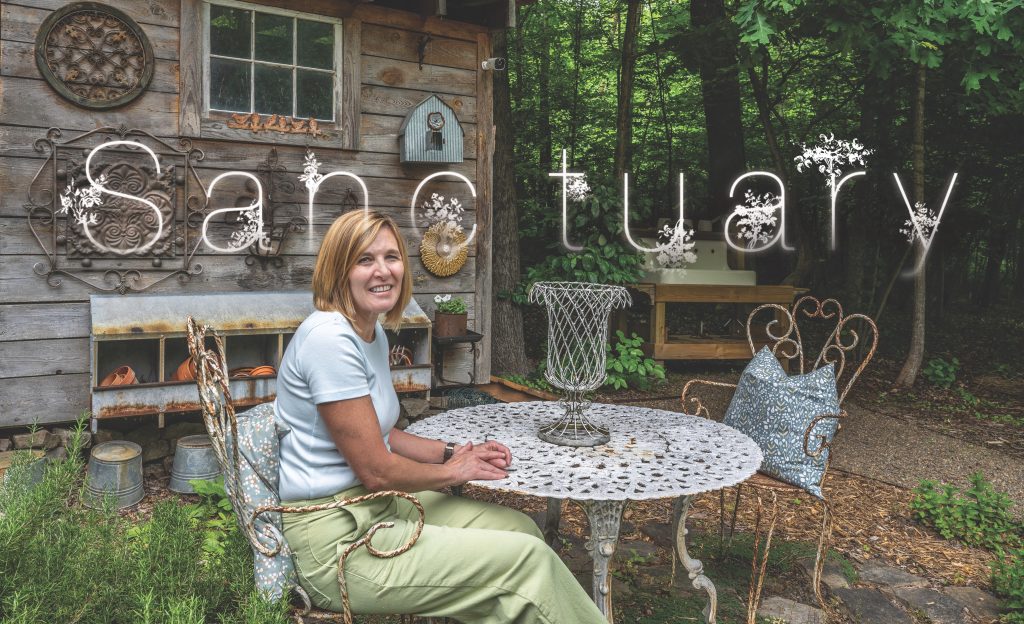
Sanctuary
A Kernersville gardener creates a native plant refuge
By Ross Howell Jr. • Photographs by Lynn Donovan
Ever heard of a plant rescue?
Me neither.
Not until Kelly Gage toured me around her woodland garden.
Gage grew up on a tobacco farm in Davidson County, where her grandmother and mother were avid garden club members. After earning a degree in biology at UNCG, Gage took a job as an environmental manager for Guilford County, working with geologists and engineers to enforce surface-water and groundwater regulations.
For more than 20 years, Gage and her husband, Bobby, had lived in the same house where she had, of course, designed and maintained all the landscaping. Fourteen years ago, they decided to build a new home.
The couple selected a 6-acre wooded site outside Kernersville that had been left untended for 75 years and was overgrown with poison ivy, Chinese viburnum, privet and Japanese stilt grass.
One of the first decisions the Gages had to consider was where to build on the property. They decided to remove a patch of loblolly pine trees and site the house there.
“That really opened up space,” Gage says.
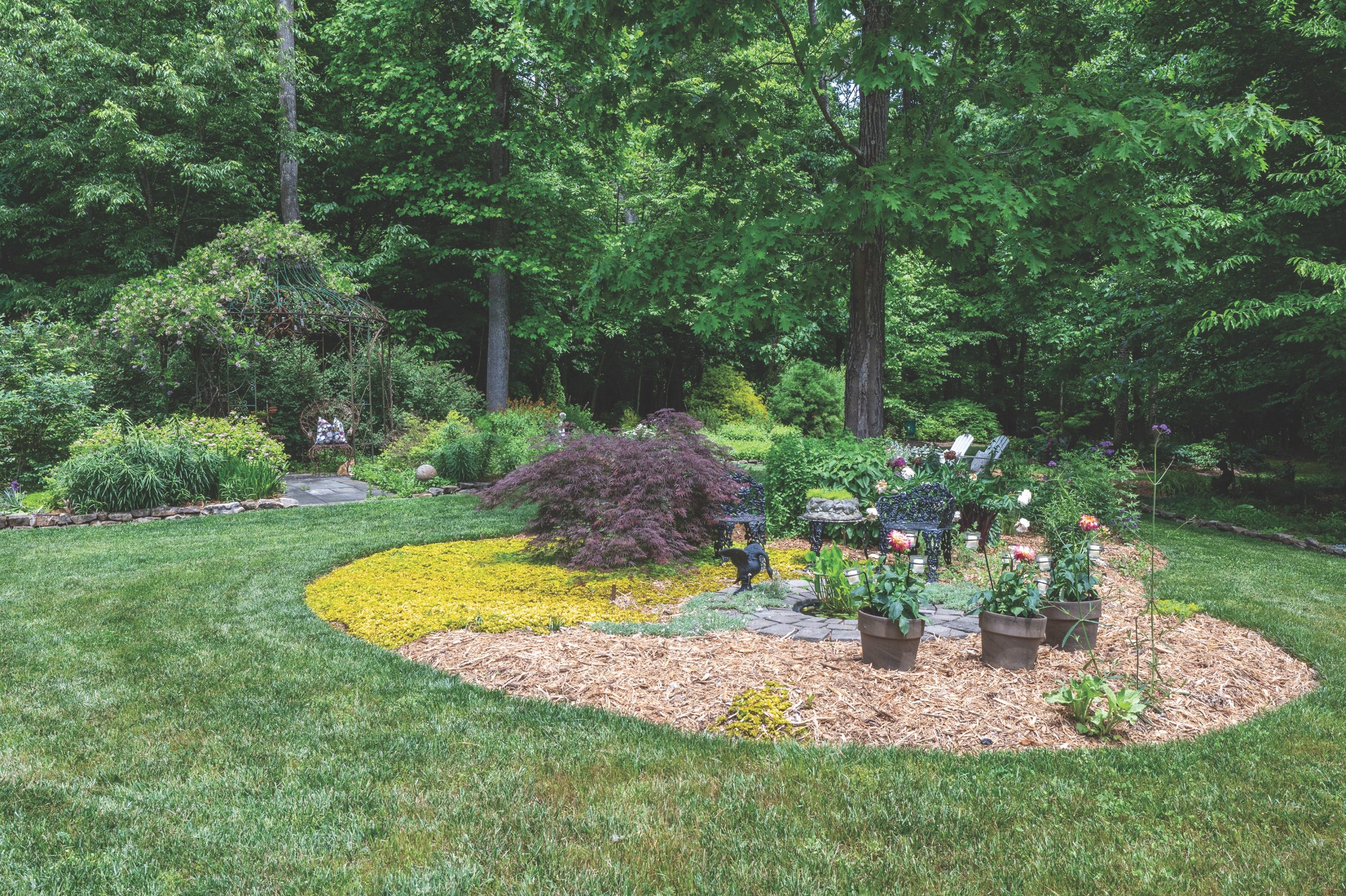
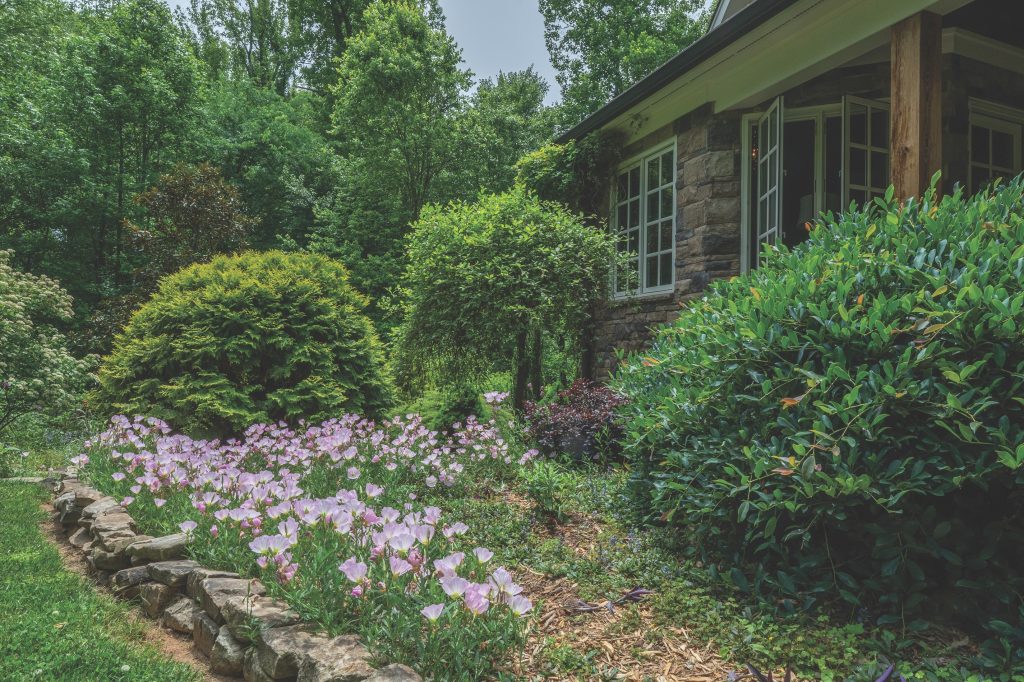
And that’s where we’re standing, in dappled sunlight at the edge of a broad planting bed in front of the house. The trees resound with birdsong.
“At first, we had a lot of sun, but now we have a lot of shade,” Gage muses. With the pines removed, overstory trees such as oaks, maples, poplar and beech have flourished, along with understory trees such as redbud, dogwood, sassafras and sourwood.
She points out a tree with shimmering, green leaves.
“That’s an umbrella magnolia,” Gage says. “It has the second-largest leaf in the magnolia family.” Over time, she’s found many of these natives on the property.

“This one just happened to be close to the house,” she continues. “It’s just the loveliest tree.”
Gage’s voice is calm and measured. It reminds me of one of my favorite elementary school teachers. As she describes the magnolia, you hear inflections of admiration and affection in her voice.
She’s discovered many other indigenous plants that had been overgrown or suppressed altogether, including swaths of columbine, creeping phlox and at least five different species of native fern.
“Once you disturb the soil, some of the seeds and spores that have been lying dormant start to show up,” she says. “Management makes a real difference in woodland areas.”
“I’ve always liked plants,” Gage continues. “But I got really interested in natives when we were settling into this property, trying to understand how to manage the invasive, non-native plants here.”
In 2018, Gage joined the North Carolina Native Plant Society (NCNPS), which is celebrating its 75th anniversary this year. Through education, conservation and advocacy, the organization works to protect native plants throughout the state.
“The members of the society are very generous people,” Gage says. “We do a lot of seed swapping and plant trading.” And they share a deep well of knowledge and experience.
Since 2023, Gage has served on the NCNPS executive board as membership chairman, recruiting new members, developing new chapters (there are currently 11 across the state) and producing educational materials.
On her property, she has cataloged more than 700 different species of plants, shrubs and trees, and estimates that about 600 of them are natives.
As we begin to stroll, Gage points out and names the plants, sometimes by the Latin name, sometimes by the common. The names flow from her lips like a familiar melody.
“Anemone, Phlox subulata . . . autumn fern, sensitive fern, Christmas fern, hosta . . . Monarda . . . Alternanthera, Baptisia . . . mountain mint, Solidago, Rudbeckia Henry Eilers . . .” she intones.
Gage tells me that she sometimes mixes hellebores among natives because they deter the deer. She’ll plant daffodils for the same reason.
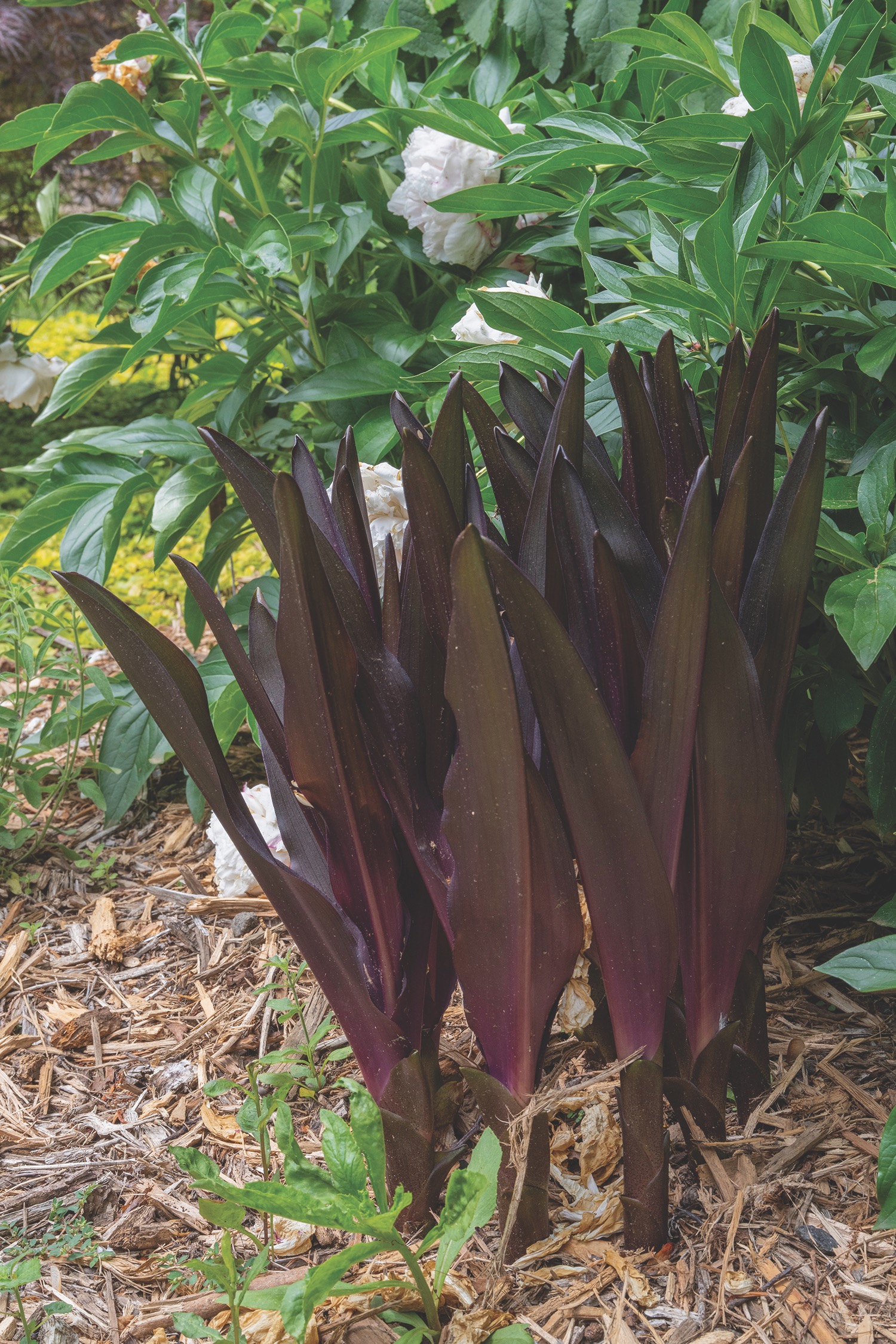
Though some native plant purists might object, she enjoys introducing exotics like the pineapple lily, native to South Africa.
“I love them,” Gage says. “They’re really cool plants.” They produce bract clusters crowned with foliage that look like tiny pineapples.
“And here is my native amethyst falls wisteria,” she says. “It was beautiful last week. Coming up under that is native Clematis viorna.”
Gage explains that she prefers bedding her plants.
“People who are first learning about native plants tend to think only about meadow settings,” she says. “But meadows are hard to maintain,” Gage adds. “Organized beds are easier to control. And your homeowners’ association won’t be after you,” she says with a laugh.
As we walk, Gage points out more plant types. Then she pauses.
“That’s Amsonia hubrichtii, which has just finished blooming,” she says. “It has this gorgeous, golden-yellow foliage in the fall.”
“Growing next to it is silverrod,” Gage continues. “It’s a variety of goldenrod that’s white. It’s lovely. I got it on a plant rescue.”
“What’s a plant rescue?” I ask.
Ah, the perfect question for the NCNPS board member responsible for membership.

Plant rescues, as it turns out, represent an important society activity.
Following clear protocols, a long-time NCNPS member who specializes in rescues works out agreements on the society’s behalf with owners, engineers and builders to gain access to land slated for development. Some tracts span thousands of acres that will be built on over decades, while others are relatively small. Entities prefer working with the NCNPS because their rescue efforts are covered by insurance.
Properties are photographed and clearly marked by surveyors. Accompanied by experts to help with plant identification, a rescue team of about 15 volunteers collects native plants that will go to botanical gardens, art museums, school and community gardens, as well as to the properties of volunteers.
“The only rule is that none of the rescued plants can be resold,” Gage says.
Do volunteers need big gardens to provide sanctuary for the rescues?
“The typical volunteer takes plants home to a quarter-acre neighborhood lot,” Gage answers.
As we continue our tour, we come upon a couple of my boyhood favorites — jack-in-the-pulpits and trilliums.
Jack-in-the-pulpits are perennial natives that reproduce vegetatively by sprouts from their corms or sexually by their spadix (Jack) and spathe (pulpit), yielding bright-red berries in the fall. Plants can be male, female or both, and can change sexes season to season. The trained eye can detect the plant’s sex by the number of leaflets it produces.
As for the trilliums, Gage has at least half a dozen varieties.
“I purchased most of them at UNC Charlotte Botanical Gardens sales,” she says. Others were gifted to her by friends.
“If you’re going to grow trilliums, you better have time,” Gage cautions. “It takes about seven years for them to get established.”
As we continue to walk, she points out blue wood asters, white wood asters, mayapples and another plant that came to her garden as a rescue — dittany.
“It’s a neat little subshrub that has these beautiful, tiny pink blooms,” Gage says. “It likes really dry soil.”
Growing in a shaded bed are yellowroot, wood poppy, glade mallow, wild ginger and phacelia. In a moist area at woods’ edge is a group of taller plants.
“Now these, I just pull out in handfuls,” Gage says. “There are always so many!”
Carolina impatiens — often called jewelweed — is an annual that produces prodigious amounts of seed. Deer love to eat them and they have medicinal value, as well.
“Occasionally, we have gentlemen who cut firewood come by and ask if they can have some of the impatiens,” Gage says. “Apparently, the fluid in the stems will prevent poison oak or cure a case of it.”
We start to head back toward the house. She continues to point out plants along the way.
“Joe Pye weed . . . rattlesnake fern . . . bear’s breeches . . . that’s partridge berry over there — it came from a rescue,” she continues.
“And this is native star hibiscus coming up,” Gage says. She pauses and smiles. “Everybody thinks it’s marijuana!”
Close by the path is a plant with paired leaves shaped like butterfly wings.
“That’s twinleaf,” Gage says. “I just love this plant. It has little white flowers.”
Finally, we pause next to a tree with a wonderful name.
“This is a Carolina silverbell tree,” Gage announces. “In spring, it has gorgeous, papery white flowers. This is my favorite tree.”
When I ask Gage about the future of her sanctuary garden, she smiles.
“Well, we’re in the process of buying 4 more acres from a neighbor, so we’ll have 10 acres,” Gage says.
“The new property is loaded with poison ivy,” she continues. “Some of the vines are as thick as your forearm. And I’m allergic!”
Gage acknowledges that she’ll probably have a half-acre cleared professionally before she starts gardening there.
She hopes one day to have created a sanctuary similar to the Emily Allen Wildflower Preserve in Winston-Salem.
“Our long-term vision is to stay on this land as long as we are physically able,” Gage says. “But we look forward to having the property serve an educational purpose one day.”
For now, she’ll keep tending to her acreage and adding more North Carolina native plants, one rescue at a time.