
A Cottage by the College

A COTTAGE BY THE COLLEGE
A Cottage by the College
Jane Green, neighborhood happiness broker
By Cynthia Adams • Photographs by Amy Freeman
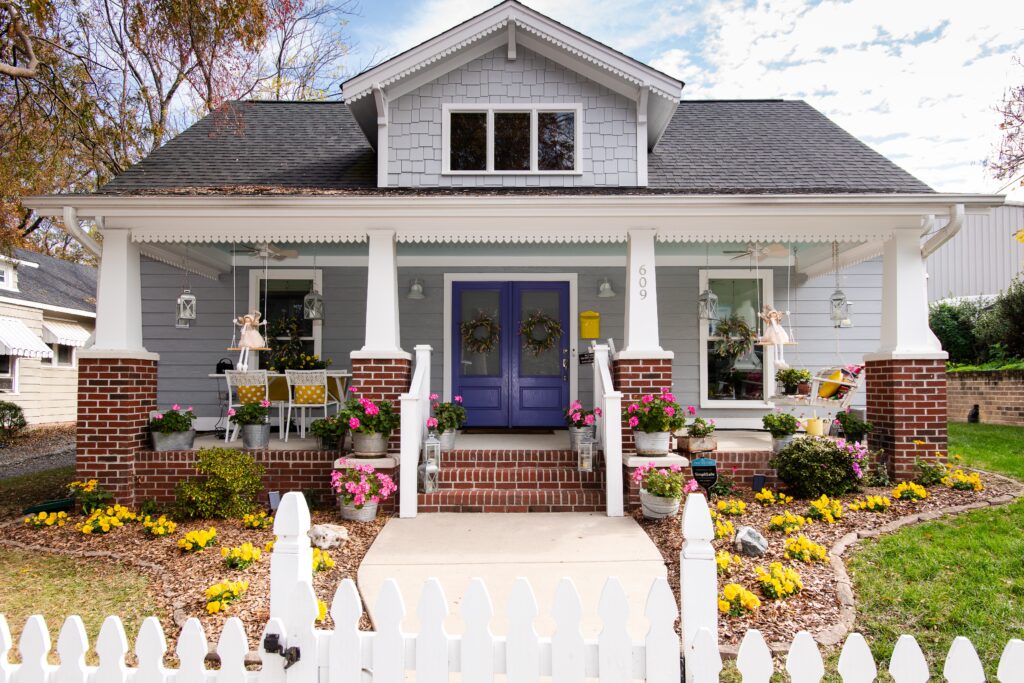
I was outside yesterday working in the yard, and a young girl came by and said, ‘I love your house so much! I stop and look at it every day. I hope one day to have a house just like this,’” says Jane Green, who squeezed a small house on an incredibly tiny lot in the historic College Hill neighborhood. She also squeezed in an inordinate amount of happiness in the process.
“I have met so many nice young people living here. I felt, ‘Wow. That’s such a nice thing to say,’” she says, smiling widely as her eyes fill.
With a well-trafficked sidewalk bustling with passing UNCG students, Jane frequently enjoys porch time, befriending neighbors — even those happening by whom she may never know.
During the summer, a bubble machine installed on the front yard telegraphs Jane’s contagious happiness. A riot of flowers tumbles from planters and tin buckets; pale lavender petunias, lavender and herbs prevail.
By fall, pansies replace petunias, planted in abundance and the porch, an outdoor living room complete with hanging lanterns, table and chairs, rocker and cheerful swing, is dressed according to the season. It is Jane’s favorite place to be.
She has triumphantly brokered joy into her life. Like the pansies she admires, Jane blooms where she is planted. Resilient little pansies recover “even when frozen in a block of ice. Don’t give up on them!”
She sometimes looks back as she is leaving home, to reassure herself it is all real.
“That it’s still there,” Jane says wonderingly.

The best stories often start with serendipity. In the Greens’ case, unseen hands helped them along the way from the time they relocated to Greensboro from New Jersey in order to be closer to their adult children and their growing families.
Yet a shadow eclipsed the Greens’ sunny home last year when Richard succumbed to a debilitating illness four year after creating their pared-to-perfection cottage. Long married, Jane has spent the past year recalibrating, adjusting to life on her own.
As a couple, meals were a communal time. She missed that deeply when freshly bereaved. It was over dinners that the Greens processed the events of their lives.
“You talk about the day. The kids. You’re there.”
Naturally slender, she forced herself to eat after losing her husband.
“You know, the first time I had to sit and eat alone, that was hard for me. I’d never thought about that. That took a lot of getting used to,” acknowledges Jane.
“So, I ate outside [on the porch] and it made me feel better. For several weeks I did that. Kids were going by, they knew me, and I was able to get over that.”
There is a wistful pause. Even so, Jane remains the optimist on the block, a consequence of a close-knit family and actively cultivating a sense of belonging. More than a few longevity experts say such a sense of community is an essential ingredient of a healthful life.
“Your friends are important.” But so are neighbors, she explains.
Instinctually, Jane grins. “I like it just where I am,” she says, gesturing towards the front yard as students pass a white picket fence, part of the house’s charm initiative.
“The only part that bothers me is that they move on . . .” she adds wistfully. “But you get new ones,” she reminds herself. Despite loss, Jane persists, offsetting what might have been consuming loneliness.
Such boundless enthusiasm has made Jane a self-appointed booster for College Hill, downtown Greensboro, the Tanger Center, the City of Greensboro (especially City planner Mike Cowhig) and the students at UNCG.
Notably, too, her positive thinking seems to manifest good things.
Long before the Greens built their dream house, Jane kept a picture of a cottage torn from a Montgomery Ward catalog for future reference. She loved the simple, vintage charm. To her mind, it appeared cozy, friendly and welcoming.
Longing eventually inspired Jane and Richard to build their future Greensboro home in a historic district, where the lots were smaller and better suited to the cottage proportions.
They considered rehabbing other properties. But the Greens ultimately hoped to find an economical, buildable lot within Greensboro.
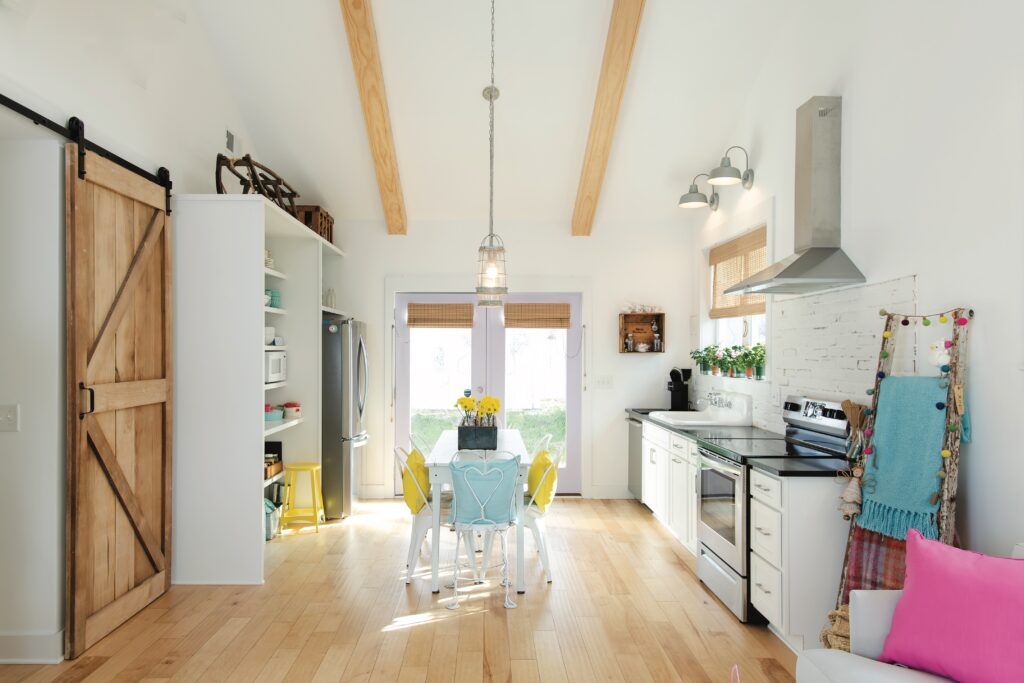
A lot that had been donated to the College Hill Neighborhood Association languished. College Hill resident Dan Curry, a member of its board and with long experience with Housing and Community Development, thought it could be viable. It was largely viewed as unbuildable, he acknowledges.
Even some city officials doubted it was sufficiently large enough to build. Yet Curry thought it could be done.
Empty and littered with refuse, 3,500-square-feet of land was once the entrance to a foundry. It had slowly devolved into an eyesore.
Curry and Cowhig, who worked with historic districts, arrived at a solution that would check several boxes and pacify residents who complained about the problematic lot. It would require coordinating a new build with various factions.
Both men believed the right project could be slipped onto the lot (called “infill”) and restore the 1800s historic streetscape to a more congruent, appropriate reality. “They [the Greens] had to overcome so many obstacles to make it happen,” says Cowhig, and it took two years to resolve.
But it would have to be just the right-sized house.
Not too big, not too small — a Goldilocks fit.
Yet even the Greens’ first look at the lot was singularly unfavorable.
Jane says bluntly, “It was a garbage pit.” But the Greens understood that the lot might be just large enough for their downsized house, minus a private driveway. (Egress would be via an existing driveway to a UNCG-owned building behind the lot used by the drama department for prop building.)
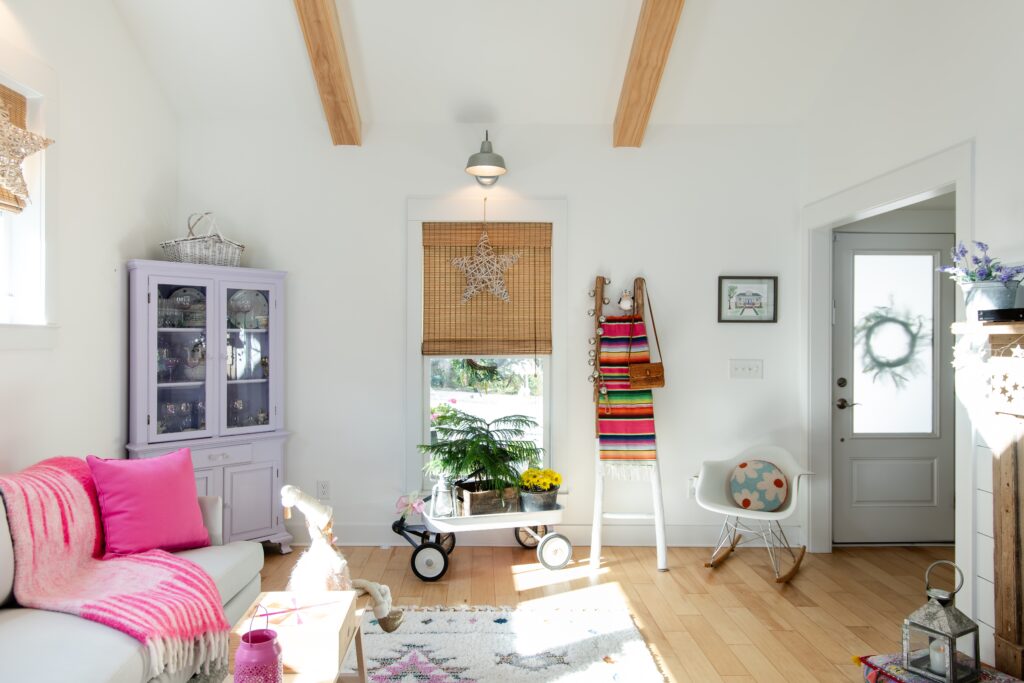
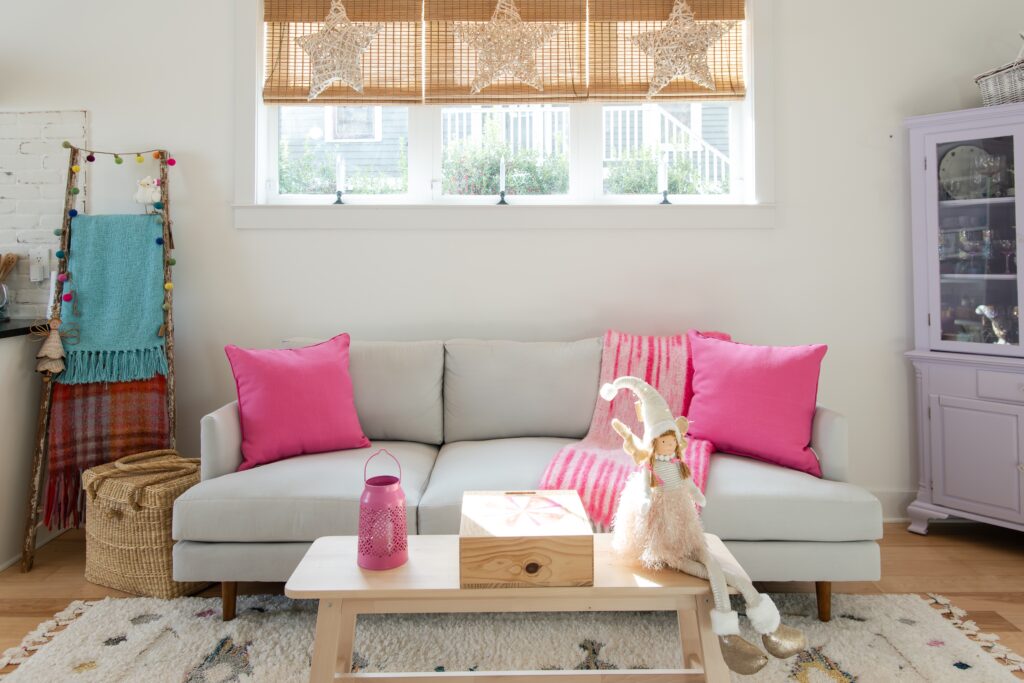
Long accustomed to 2,500 square feet, the Greens planned a 950-square-foot build. Jane stresses that it was less than 1,000 square feet of living space “without the porch.” The porch, which they insisted upon, was crucial to expanding their living space and the desired cottage look.
“I love a front porch,” Jane repeats, adding a happy sigh. With additional guidance from Summerfield contractor Gary Silverstein, the newbie build would appear right at home among historic homes more than a century older.
Cowhig assured all involved the cottage would meet local standards and fit with neighboring homes.
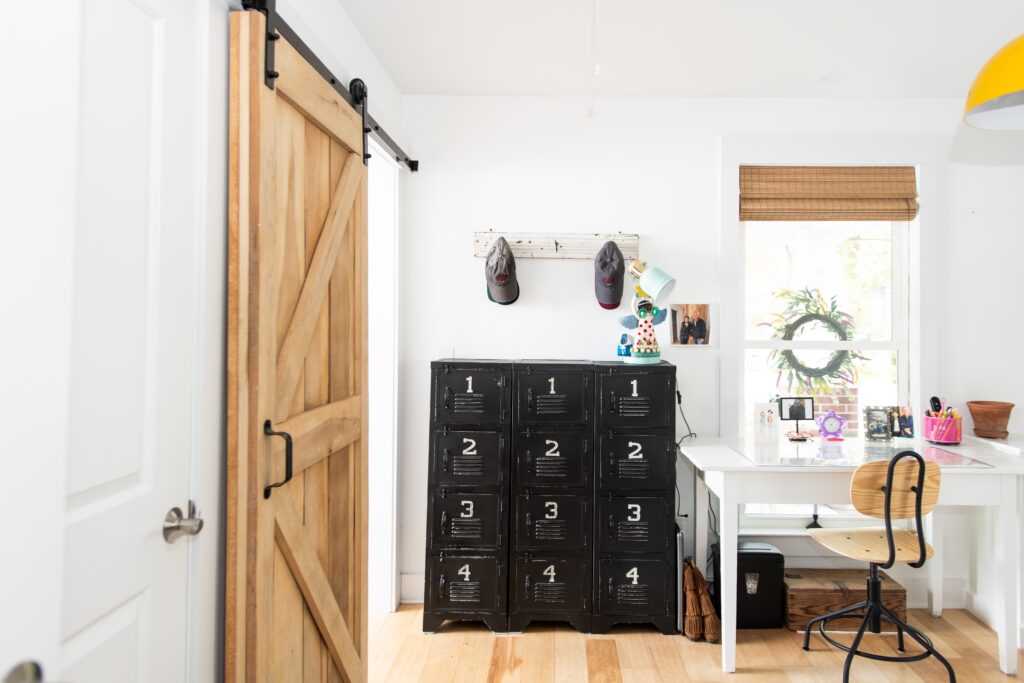
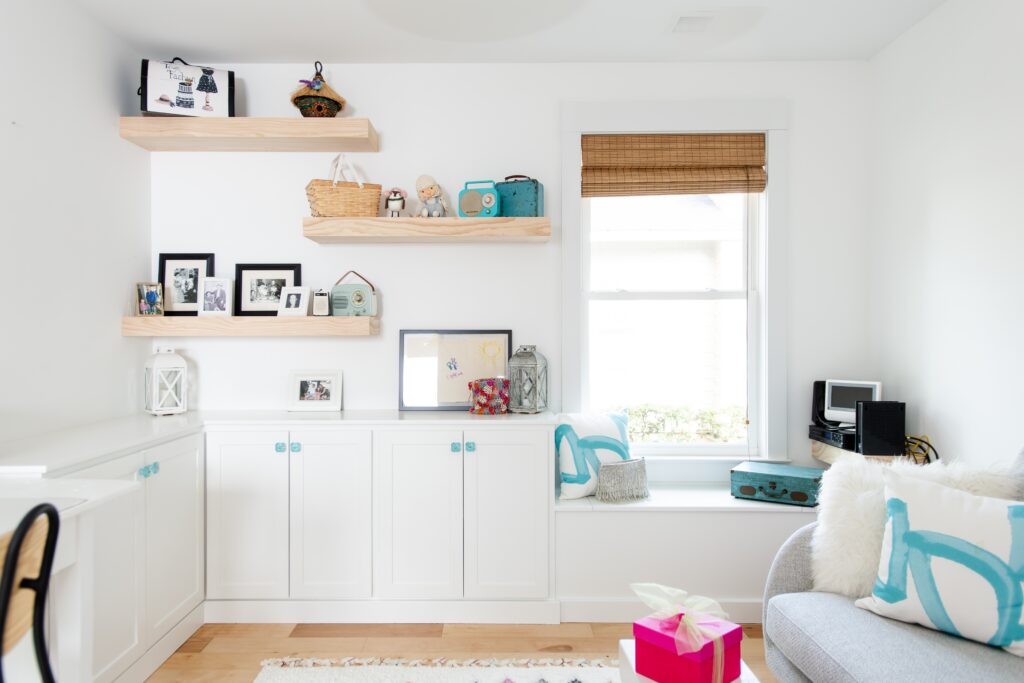
While the Greens rented a home for 10 months in High Point, their daughter, Nicole, who lived in nearby Sunset Hills, helped them strategize and downsize in anticipation of the new cottage.
They spent months going through a lifetime of stored possessions they had brought to North Carolina. Nudged by Nicole, they winnowed out extraneous possessions, and she arranged a tag sale. (The $600 proceeds would eventually pay for a small shed behind the new house.)
Silverstein had to work under less-than-ideal circumstances. The lot was on a busy street, close to UNCG. Construction workers had limited street parking as they ferried materials to the tiny site.
He went the extra mile, attending the planning board meetings before he even knew he had the job, Jane adds. Silverstein also took care of the cumbersome permitting requirements.
With tight building parameters, he had to improvise, using a crane in order to raise the roof rafters, reassuring watchful neighbors that their adjacent homes would be unscathed.
There was no room for error.
“He was wonderful, here working all the time.”
Silverstein completed the Greens’ new home on October 31, 2018.
A beaming Jane adds, “He was on budget!”
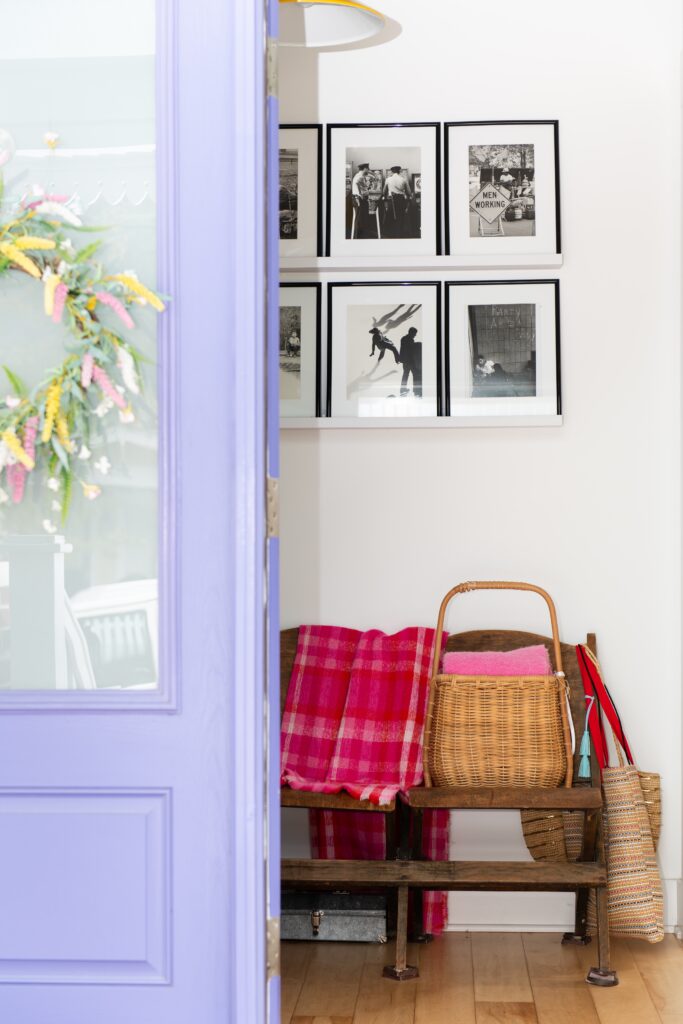
Naturally, budget mattered to the active retirees, who opted to work part time jobs. Richard worked nights as a security guard downtown, freeing days to pursue his lifelong passion for black-and-white street photography. Jane was hired by Our Lady of Grace, working with young school children. Both thrived.
Six years later, much has changed at the Greens’ residence.
O.Henry photographer Bert VanderVeen, whose studio is nearby, had befriended Richard, admiring his striking black-and-white photography.
He proposed having Richard’s first posthumous show and a reception in his honor at the studio, selling prints to benefit charity.
The reception filled with college-age young people who knew Richard and Jane. The students bought almost all of Richard’s works and paid homage to their friend, who was a generation apart — or more — in age.
With the new year, Jane takes stock. While she admits there have been some difficulties without her partner of oh-so-many years, her much loved neighborhood has helped Jane remain contentedly in the home she and Richard built together.
Their mutual adaptability became a key factor in coping with transition and the inevitability of change.
“As you grow older, I think you have to choose a place where there’s activity,” she advises over a coffee on Tate Street, an easy walking distance from her cottage.
“Sure, you hear the fire engines, but after a while, you don’t even notice that stuff. I like being in a city. And I love being in a college town,” says Jane. “One day, I won’t be able to drive, but I can walk!”
She adds that as wonderful as she finds being in a lively place with access to downtown, being stuck “in a tiny house in the middle of nowhere” would have held little appeal.
“You need to be around people, especially now that I’m by myself.”
***
Furthering her commitment to the neighborhood, Jane maintains a Little Free Library. The replica of her cottage is stocked with books for anyone wandering by. Which reminds her: It presently needs restocking. “When I get really low, my daughter gets online and gets donations.”
The library box serves as another way to meet people, she says, brightening. “They come to put books in and they talk to me.” During the pandemic, she filled the box with canned goods rather than books to help financially strapped students. They profusely thanked her, Jane says, her eyes welling with tears.
With her coffee cup drained, Jane glances at her watch. She’s going apple picking with her grandchildren and daughter in law. Flats of multicolored pansies await on the porch.
Pansies, she says admiringly, are cheerful flowers, who lift their faces to the sun.
Jane plants them every year; this year will be no different.
With that done, she’s planning for gingerbread trim below the eaves to punch up the cottage’s curb appeal. “Don’t you think that will look nice?” she asks.
While attending a San Francisco wedding last summer, she and Nicole visited the landmark “painted ladies” for the first time and were charmed by the row of colorful historic homes.
Jane returned to College Hill, energized, ready to punch things up. “More yellow? Or more purple?” she asks, scrutinizing the two colors painted onto sample trim.
Tweaking her already effusive, exceedingly happy home once again, Jane is happily absorbed.
“Do you like the yellow?” she asks hopefully. “I do.”