Life’s Funny

Life’s Funny

HOUNDGATE

Document reveals the influence of canine special interest

By Maria Johnson


Recently, I found a sensitive memo mixed in with some other papers on my desk.

I swear I don’t know how it got there.

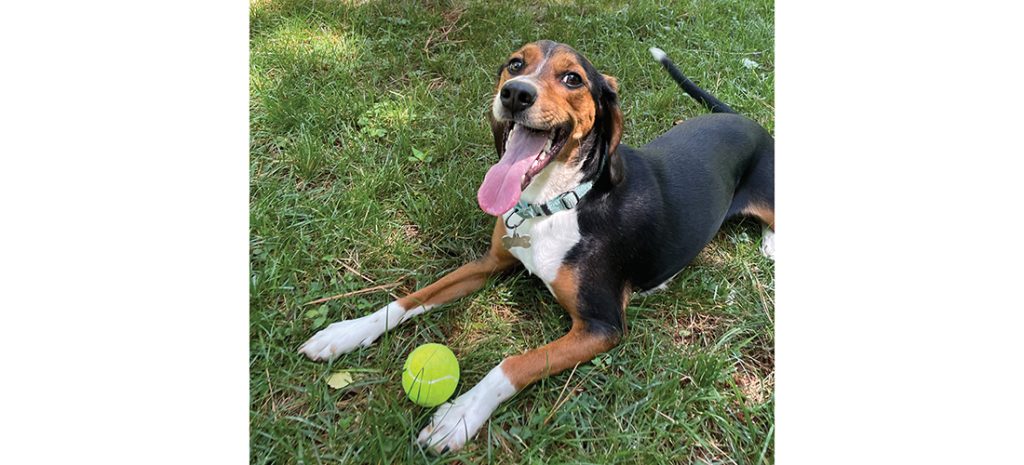
The document — written for our dog sitters — contains some incriminating information. It outlines just how looney my husband and I have become in accommodating our little hound, Millie.

They say the hardest thing is to see yourself as others see you.

Well, after rereading this report, that’s no longer true.

I hope history will not judge us harshly. I doubt dog owners will. Cat owners probably will blink their eyes slowly. And we all know what that means.

In the interest of transparency, we’re disclosing the content. Sensitive parts (i.e., the names of anyone crazy enough to go along with this) have been redacted.

Dear ————-, ————- and ————-:

First, thank you for tending our sweet Mills while we are gone.

She’s a wiggly, kissy, zippy, barky, cuddly girl, and we hope you will love her as much as we do. Here are the basics:


CHOW

Mills eats twice a day, one cup of food in the morning and one cup at night.

Rather than leave her food prepackaged in a zillion Tupperware containers in the fridge, we’re leaving a silver food dish on the kitchen island.

Each time you feed her, please put half a cup of dry food (in plastic bin under the laundry sink) plus half a cup ground turkey and brown rice from the green box in the fridge. Mix well.

You can splash that with a little bone broth (top shelf, fridge). Please microwave the broth for 25 seconds in the little dish beside the broth.

She’ll inhale the chow and act like, “Food? What food? You haven’t fed me. You must be thinking about the last time.” Do not be alarmed. (Hereafter abbreviated as DNBA). You DID just feed her.

I think.


WALKIES

She luvvvs to go for walks in the neighborhood. You can suit her up with the harness and leash on top of the dryer. If you have probs understanding the cinch-style harness, look up the YouTube video titled “Sporn Stop Pulling Mesh Harness,” which is worth watching just to hear the narrator describe the armpit pads as “Sherpa sleeves.”

If you want to drive Mills to a park, feel free. She’s a good car rider. Sometimes she will try to jump into the driver’s seat with you, which I discourage because she does not have her license yet.

Once at the park, feel free to wear my stylish fanny pack, which contains a tiny spray bottle of water. If Mills barks incessantly at other dogs, spritz her in the face and say, “Shh!” Sometimes, a “shhh!” alone will work. Pavlov was right. When she does well, say “Good girl.” Four times. In baby talk.

Mills also enjoys exercising at home. As you might know, she takes after her mother in exhibiting strong OCD tendencies toward tennis balls. If you have time, please take a ball from the ball hopper in the laundry room, grab the tennis racket next to it and hit the ball across the backyard for her to chase and retrieve a few hundred times. Joke. A few dozen times will suffice. She will promptly return the ball to you and BARKBARKBARK for you to do it again.

Once she drops the ball, tell her to “lie down.” Sometimes she will. Sometimes she looks at you like, “Let’s just say I did.” In either case, she will back off long enough for you to pick up the ball. Probably.

Her retrieval process is not exactly . . . linear. Once she finds the ball, she often meanders. She backtracks. Sometimes, she detours to a shady spot, collapses and pants excessively, giving every indication that her heart is about to explode. DNBA. That’s her way of saying, “Gimme . . . a . . . minute.”

If she appears to have trouble finding the ball, don’t worry. She ALWAYS finds the ball, even if it’s on the other side of the yard. Sit down and enjoy the break.

The hardest part of this activity is stopping it. To break the spell, pick up the slobbery ball, carry it inside and put it in the cabinet above the dryer. See space marked “tennis ball.” Then close the cabinet. Yes, this is gross, but she will accept this as “game over.” Oh, and don’t say the word, “ball,” unless you’re ready to start this game again.


CHILLING

Mills is a great loafing companion. She likes to curl up next to you, always touching you. She’s especially fond of lounging on the couch, on a crocheted afghan made of granny squares. Everyone knows this is her afghan, but Mills is very generous. She doesn’t mind if you use a couple of granny squares to cover yourself.

Be advised: If you’re lying on your back, there’s a good chance she’ll walk up the length of your body, as if you’re made of cobblestones, stand on your chest and stick her nose in your face like, “Hey, whatcha doin’?” She weighs 32 pounds, so it’s not too bad. You can use this time to check her for ticks. As far as viewing goes, Millie likes to watch Harry & Meghan, especially the beagle parts.


OTHER MILLIE-NUTIA

Don’t be surprised if she springs up, barking insanely around 5 a.m. She’s reacting to the newspaper hitting the driveway. Really.

She will beg for your food. Don’t give it to her. Even when she rests her snout on your thigh and looks up at you like Olive(r) Twist, “More porridge, please, mum?”

Periodically, she rests her head on coffee tables and chair seats while standing. Big brain, I guess.

Sometimes, when she lies down on the hardwoods, it sounds like a bag of bolts hitting the floor. DNBA.

Sometimes, when she’s relaxed, she honks like a goose. DNBA.

In short, she’s a gem. And so are you, especially if you’ve read this far.  OH

Maria Johnson is a contributing editor of O.Henry. Email her at ohenrymaria@gmail.com.

Life’s Funny

Life’s Funny

HOT DOG! 

Our intrepid reporter goes for a whirl in the Wienermobile

It was the perfect evening for a winter festival.

The air was pleasantly chilly — or perhaps I should say chili — and spiked with the smell of fried dough and the bump of live music.

Revelers lined up to try their luck aboard a mechanical, bucking Rudolph the Red-Nosed Reindeer. In another particularly American display of affection for the holiday, children in padded red suits and headgear tried to knock each other down in spirited rounds of Sumo Santa.

Yes, it really was shaping up to be an ideal Festival of Lights as my husband and I threaded our way down Greensboro’s Elm Street, when what to my wondering eyes should appear but curvilinear gleams of orange and yellow.

“Wait, is that . . . ?”

“What?”

“Oh, my God.”

“What?”

“It is!”

“What are you looking at?”

“It’s the Wienermobile!” I said, breaking into a trot.

I stopped in front of a bubble-shaped windshield, giddy at the fact that I was in the presence of an American icon.

I can’t say for sure when the Wienermobile first entered my consciousness. As a child of the ’60s and ’70s, I’m sure I saw it on TV, in holiday parades and Oscar Mayer commercials.

I have a vague memory of our family car passing a huge rolling wiener on Interstate 75, but I could be confusing that with a colorful tanker. Or it could be the result of wishful thinking and an excellent jingle.

Oh, I wish I were an Oscar Mayer wiener,

That is what I truly want to be—ee—ee,

‘Cause if I were an Oscar Mayer wiener,

Everyone would be in love with me.

Obviously, all these years later, seasoned by life’s experiences, I believe . . . that’s still true.

Everyone loves a hot dog, even a mostly plant-based foodie like myself. Wave a Carolina dog — slaw, chili, onions, extra mustard — in front of me, and I cannot be responsible for what happens next.

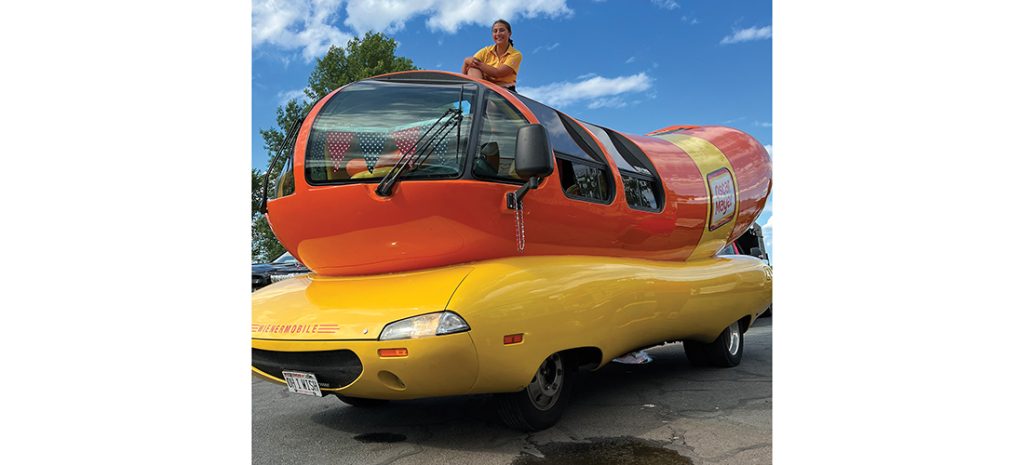
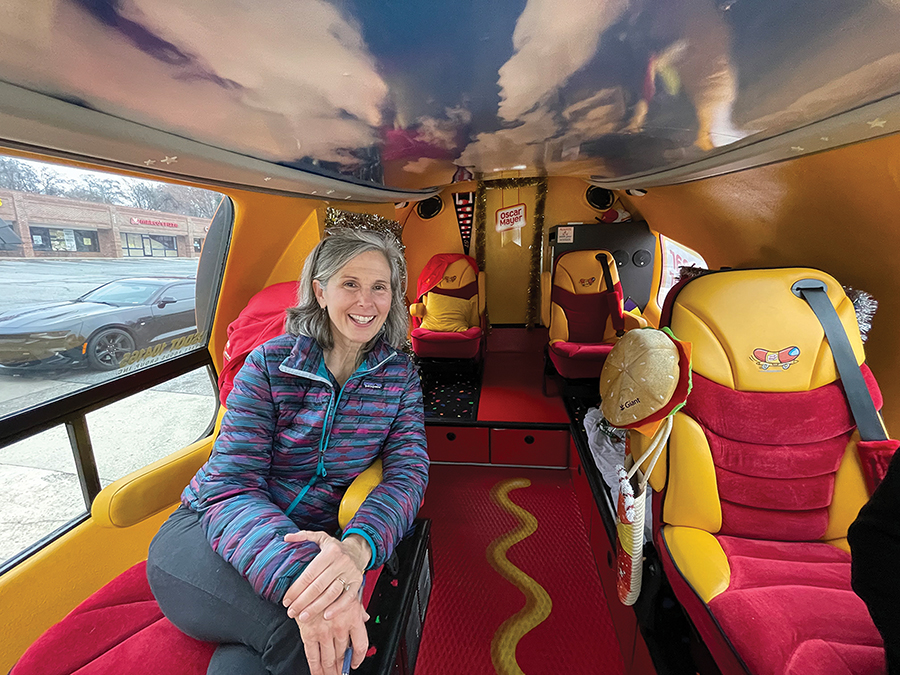
And now? There I was, standing next to the Wienermobile, all 27 feet of it, parked curbside with its gull-wing door lifted so that gawkers could marvel at the luxurious interior, which included six bucket seats upholstered in bright red and yellow, as well as a squiggle of yellow painted on the floor.

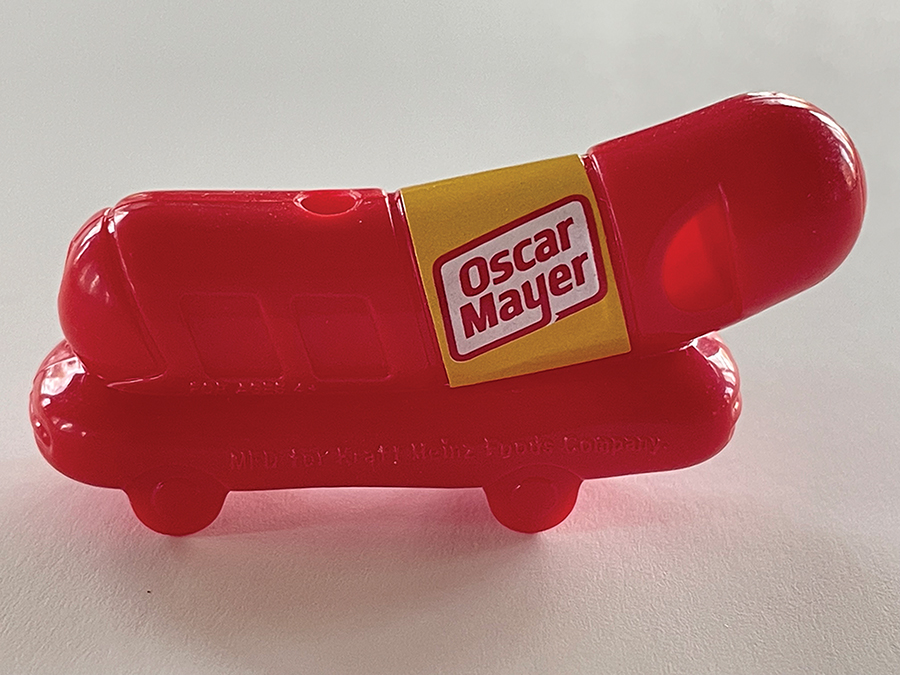
In Wienermobile culture, red equals ketchup. Yellow, mustard. That’s why the keepers of the wiener, two young dynamos named Keagan Schlosser and Chad Colgrove, were dressed in red and yellow pullovers. They invited the crowd to stick their heads inside the Wienermobile, pose for pictures and take home individually packaged, red plastic Wiener Whistles.

I asked Keagan if I could, for journalistic reasons, arrange for a ride in the Wienermobile during their stay. She said that would be “bun-derful.” Two days later — after the Festival of Lights and the Christmas parade — I climbed aboard for a Sunday morning spin.

Keagan asked where I wanted to go.

In a perfect world, we would have picked up my 90-year-old mom from church, the Wienermobile’s jingle-horn tootling just as the postlude faded.

My mom would have been slightly — OK, a lot — aghast, but also flattered. Ultimately, I thought, she’d cave to peer pressure from church pals who would want a ride, too.

As it turned out, my mom stayed at home with a mild illness that morning. Damn it.

My second choice was the Guilford Courthouse National Military Park because it, too, represented a significant piece of American history. Plus loads of people walk there on Sunday mornings. Off we went, as Keagan and Chad, both 23, shared how they became regional wiener drivers.

A native of Carbondale, Illinois, Keagan — who is no relation to the Greensboro Schlossers, sorry, guys — was about to graduate from the University of Wisconsin last spring with a degree in journalism. She’d interned at a local TV station. But the news biz was too serious, she felt, so she started looking into Hotdogger jobs, one-year gigs offered to recent college graduates by Madison-based Oscar Mayer.

Her journalism professors encouraged her to go for it. I repeat: Her journalism professors urged her to shun the Fourth Estate in order to pilot a giant fiberglass wiener around the country for a year.

I could not argue with their advice.

Chad, on the other hand, had known about the Wienermobile from the time he was a tyke in Boise, Idaho. Every year since he was 6, his family would sniff out nearby Wienermobile appearances and snap a picture of Chad grinning beside the seven-ton sausage.

As a teen, Chad rolled his eyes at this tradition, but his mom insisted, saying, “You never know. You might want to drive it one day.”

Naturally, Chad submitted all of those pictures with his job application, and he was chosen as one of 12 Hotdoggers from among 2,000 applicants.

“My mom literally started crying,” he said.

“I think my family was a little more confused,” said Keagan, explaining that they’d been pulling for graduate school, but they softened when she told them that it was harder to get into Hot Dog High than to be accepted at Harvard University.

Among the things Keagan and Chad learned in weenie school:

*The original Wienermobile was created in 1936, in Chicago, by Oscar Mayer’s nephew Carl. The open-cockpit novelty car gave out samples. After a fleet of Wienermobiles was deployed in 1988, they stopped dispensing free hot dogs.

*There are six Wienermobiles cruising America’s “hot dog highways,” stopping for gatherings such as car shows, sporting events, parades, festivals, as well as promotional appearances at stores that sell Oscar Mayer products. (Track the Wienermobiles at https://khcmobiletour.com/wienermobile)

*Built on GMC cab-forward truck chassis, Wienermobiles are powered by 8-cylinder gas engines. They get roughly the same gas mileage as a large SUV. The bodies are fabricated 40 miles from Greensboro at a Pfafftown company called Spevco Inc.

*Jay Leno drove the Wienermobile for a 2017 episode of Jay Leno’s Garage. Actor Tim Allen blew a Weiner Whistle in the 1994 movie, The Santa Clause. Bible-thumping Ned Flanders, of all people, drove the Wienermobile in a 2019 episode of The Simpsons. Inexplicably, Jerry Seinfeld has not asked to borrow the Wienermobile  for Comedians in Cars Getting Coffee.

*The best place to wash a Wienermobile is a fire station. “We ask them if we can use their scrubby brushes and water to clean our wiener,” says Keagan. So far, they have not been refused. “Firemen love the Wienermobile,” she adds.

You could argue that a Harvard degree would better prepare a young person to serve the world than a hitch in the Wienermobile, but after tooling around the military park with Keagan and Chad, I’m not so sure.

You’ve never seen such immediate and whole-hearted smiles, followed by cell-phone fumbling and picture taking.

By the older guy in the San Francisco 49ers sweatshirt.

And the supercool driver of the Tesla stopped at the crosswalk.

And the young guy with the topknot. And the middle-aged couple walking two big white fill-in-the-blank-a-doodles.

And by 11-year-old Layla Jordan and her mom, Mojgan, who quickly waved her daughter into a photo beside the Wienermobile when we stopped at a light.

Keagan and Chad popped the hatch, jumped out and handed Layla a plastic Wiener Whistle.

“Your brother is going to be so jealous,” Mojgan said.

They handed mom another whistle and invited Layla to pose for a picture with them.

“Say ‘Cheeeeeeesy Wieeeeener!’” they coaxed.

Back inside the Wienermobile, Chad and Keagan mused about what would come next for them. Chad hopes to land a corporate wiener job with Oscar Mayer. Keagan, who has successfully driven the Wienermobile around Manhattan several times — and therefore feels, justifiably, that she can do anything — dreams of a big-city job with one of the marketing firms that contracts with Oscar Mayer.

“We’re relishing this while we can,” said Chad with a face as straight as a foot-long.  OH

Applications are now open to become the next hotdogger. For more information, visit oscarmayer.com/wienermobile.

Maria Johnson is a contributing editor of O.Henry. Contact her at
ohenrymaria@gmail.com.
Life’s Funny

Life’s Funny

Resurrecting Hope

A new way of thinking in a new year

By Maria Johnson

I like a soulful story.

So even though this piece will sound like a news story in places, hang on, and I think you’ll catch the spirit. Maybe even The Spirit.

Recently, I heard from a woman named Joyce Powers. Never met her, but I’m a sucker for a woman who tells you that she’s 80, that she does 80 “very well,” and that she wakes up thinking about her current project, like a kid at Christmastime.

The thing that excites Joyce is the fresh approach that her Greensboro church, Presbyterian Church of the Covenant, is taking in response to decades of declining and aging membership, a challenge for many flocks.

The folks at PCOC — they affectionately call the place “peacock” — are chucking the church.

The brick-and-mortar part, anyway.

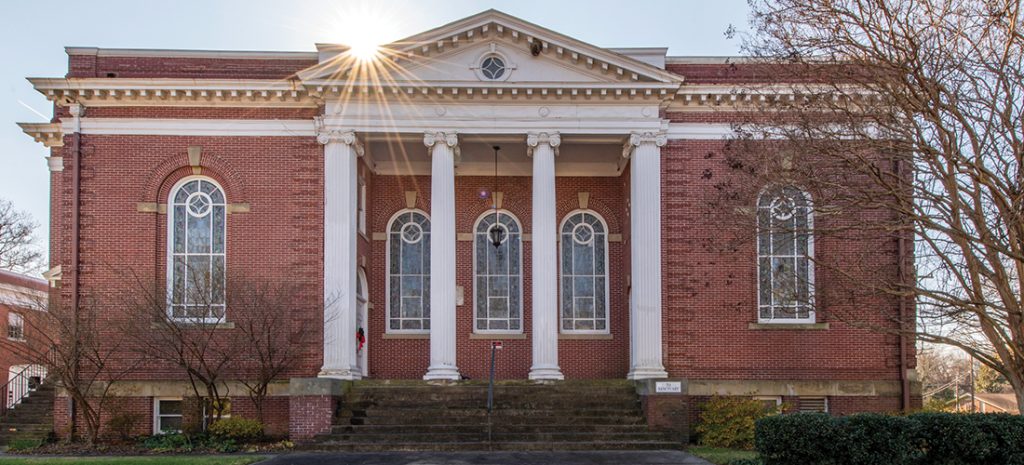
But they’re hanging onto their idea of what the sprawling Neoclassical Revival building near UNCG should be: a place to meet, to cultivate benevolent ideas and make those ideas real in the community.

Back in October, the church released a request for proposals, calling for detailed pitches on how to convert the 50,000-square-foot structure, which dominates a block of South Mendenhall Street, into a hub of live-work-play.

Joyce and other church members can picture the current sanctuary as a performance space. They see room for nonprofit offices, a restaurant-pub. Maybe senior housing.

And yes, a smaller space that the church can lease back for worship.

They aim to sell the property, with stipulations, to the developer whose plan they like the most.

The deadline for proposals is January 27.

“We think this is unique,” Joyce says. “We haven’t heard of anything else like this.”

She credits church member Jim North for seeing what could be. After reading about the Brooklyn Arts Center — an event center and bourbon bar occupying the former St. Andrew’s Presbyterian Church in Wilmington — North visited the site earlier this year. (A story about the BAC appears in the November 2022 issue of this magazine: ohenrymag.com/the-creators-of-n-c-23.)

North told his brethren that he believed a similar transformation was possible here. That’s when Joyce invited input from Dennis Quaintance, who, along with his wife Nancy King Quaintance and developer Mike Weaver, founded one of Greensboro’s crown jewels, Quaintance-Weaver Restaurants & Hotels. Nancy’s parents were married at PCOC.

Joyce also reached out to David Kolosieki, who heads the local Habitat for Humanity and understands both the nonprofit and for-profit worlds.

Kolosieki became a paid adviser to a church committee that harmonized the vision with PCOC’s history.

From the git-go in 1916, the church — the building was designed by famous Greensboro architect Harry Barton — has been action-oriented.

The congregation hired a nurse to deal with the flu pandemic of the late 19-teens. They fed soldiers who passed through the city’s Overseas Replacement Depot in World War II.

Later, they housed a childcare cooperative, a counseling center, and a preschool for blind children.

Currently, PCOC hosts a day center for physically and mentally disabled adults. It also provides a meeting place for the Greensboro Mennonite Fellowship, as well as Unity in Greensboro.

Thinking outside the box is a PCOC specialty. Church members — about 30 of them show up on a typical Sunday — include a couple of homeless people.

“If someone needs us, we’re here,” Joyce says.

She concedes that church members can’t control everything that happens to the property down the road. Neither do they know whether the changes will draw more people into the fold, or if their numbers will dwindle and die.

Not to worry, she says with conviction.

The congregation likely will use proceeds from the sale to create an endowment that will nourish local service projects aligning with the PCOC ethos.

So either way, the church will live on, just in a different form.

And what could be more Spirited than that?  OH

Maria Johnson is a contributing editor of O.Henry. Contact her at ohenrymaria@gmail.com.

Life’s Funny

Stranger Things

Samaritans on the way to Summerfield

By Maria Johnson

It sounds weird to say, but I honestly don’t know how the accident happened.

I remember rolling down the Atlantic & Yadkin Greenway on my mountain bike that Friday afternoon a few months ago.

I remember coming up on the tunnel under U.S. 220, near Summerfield, and noticing that the inside walls had been painted with a bright mural. It looked like something kids had done. Was it flowers in a field?

I remember thinking it was going to be cool to pedal through the artwork and get a closer look.

But I didn’t get that far.

The next thing I knew, I was losing control of the bike and veering off the path.

Had I hit a patch of gravel where the surface changed?

Had my chain slipped?

I have no idea.

I can still feel the sickening realization that I was going down; then the shock of impact followed by a burst of pain in my shoulder; and the instant knowledge that something was broken — but not my head, thanks to my helmet.

My next memory is of three people moving toward me: a young man and woman, and, behind them, an older man with a big black-and-white dog.

The young man helped me up and allowed me to lean on him, which was a good thing because my legs were shaking. I could not have stood on my own.

He walked me over to the tunnel and suggested that I sit with my back against the wall. He asked several questions, which, even through my daze, I could tell were designed to assess my mental and physical state.

“Are you a medical person?” I asked. “Because you talk like it.”

He smiled and said no. But he’d been a lifeguard at YMCA camps and knew a lot about first aid.

The young woman pointed out the bloody scrapes on my right leg and arm.

“It’s her shoulder that I’m worried about,” he said, staring at my right collarbone.

I tried to glance down. I couldn’t see much. I didn’t really want to.

He asked if there was someone he could call.

“My husband, Jeff.”

“Do you know his number?”

“Yeah, I know his number.”

Looking back, I think it’s a small miracle that the young man — whose name I later learned was Jacob — did not call my husband and say, “Your banged-up, coherent, smart-ass wife just wrecked her bike on the greenway. Please come get her.”

Instead, Jacob told Jeff where to park and went off to meet him.

Meanwhile the young woman, Joan, and the older man, Robert — along with his dog, Pepper — stayed with me and chatted. It was amazingly amiable, considering the circumstances.

I turned to Joan: “Are you connected to the Y, too?”

No, she said. She had finished her master’s degree in counseling at UNCG and was getting ready to start a new job with a family-focused practice inside a couple of old homes on Spring Street in Greensboro.

“That’s funny,” I said, explaining that this magazine’s first office was in one of those homes.

In that moment, I could see the front room where our young editor hung her dream catcher, the wonky, windowless room that connected the front room to the kitchen. I could see the staircase, the landing, the upstairs room where our crew draped ourselves over armchairs and a futon to laugh and curse and argue and conjure a never-ending stream of story ideas.

Soon, Joan would come to know the same spaces through her work with young children.

A feeling hit me. It was more woo-woo than woozy.

I turned to Robert.

“What about you? Are you retired — to be walking your dog in the middle of the day?” I asked him.

Yes, he said, from the old post office on Banking Street.

Again, the small-world feeling washed over me.

I told him that O.Henry’s second office was in the Dutch-barn-shaped building next door. I used to mention the old post office as a landmark when giving people directions because everyone seemed to know where it was.

“That was a great post office,” I said sincerely.

Robert nodded.

It occurred to me that there must have been times when we were working within Bluetooth range of each other.

So far, only a few yards and years had separated me, Robert and Joan. And now, here we were, the three of us, hanging out under a highway on a Friday afternoon.

It was as if time and space had folded so that we finally met face-to-face just when I needed them most.

“Well,” I said to my tunnel peeps, “I hope no one else shows up because I’m running out of former workplaces to have in common.”

They stayed with me until Jacob returned with Jeff, who whisked me to an emergency room.

Joan and Jacob took my bike — they had a rack on their car — and dropped it off at our house.

Five hours later, an emergency room doctor confirmed that my collarbone was broken in a couple of places

A few days after that, an orthopedist assured me the bones would knit without surgery if I kept my right side quiet for eight weeks.

That was 12 weeks ago.

The road rash scabs have been replaced by shiny, pink skin.

My sling is folded up in a closet.

I’m doing physical therapy to regain strength.

The bone-deep ache is fading.

What persists, though, is the memory of three strangers who ran to my aid. They knew nothing about me — where I lived, how I voted, what I believed, whom I loved.

None of that mattered. They saw I was hurting and — maybe because my need was so obvious — they responded with care.

Once they came closer, we found we had things in common.

It sounds weird to say, but that gave me hope —  in the midst of pain.

And for that, I am thankful.  OH

Maria Johnson is a contributing editor of O.Henry. Contact her at ohenrymaria@gmail.com.
Life’s Funny

Homeward Bound

The answers to lifelong questions are writ in stone

By Maria Johnson

“Let’s go for a little drive.”

My dad said this on Sunday afternoons when I was a kid.

It was more gentle command than invitation, but I don’t remember anybody balking.

So the four of us — he, my mom, my brother and I — piled into whatever American-made V-8 living-room-on-wheels he was driving at the time and went along for the ride.

Usually, the excursions involved looking at other people’s houses, rolling through more expensive neighbors at a speed that would get you flagged on NextDoor these days.

Sometimes, the objects of our gawking were for sale — often my parents had seen them advertised in that day’s newspaper — but most of the places we ogled were not on the market.

What was the point? To drive. To dream. To discuss.

In hindsight, it’s tempting to say that Daddy — a civil engineer with a lifelong love of architecture, especially the work of Frank Lloyd Wright — was pushing us toward a sense of aesthetics there in his rolling salon. I honestly doubt that’s what he set out to do. But that’s what happened.

We followed his lead. As a naturalized U.S. citizen, he spoke better English than most of his fellow Americans, but he lapsed into his native Greek to praise some homes with a hearty “oraio” (nice) while discounting others with a sad “po-po-po-po.” (What a shame.)

The winners, in his opinion, shared a few traits. They had clean lines, proportionate features and they harmonized with their surroundings. Size had nothing to do with it. Ostentatious homes were kicked out immediately.

I suppose that’s how he could call our modest ranch home in Lexington, K.Y., in the heart of horse country, “a beauty.” He also praised my mom’s childhood home, a two-bedroom bungalow in Spencer, N.C., where we visited my grandparents every summer.

I never saw my father’s boyhood home in Greece, but I wondered if it molded his way of seeing.

“What was it like?” I asked him.

“Rock,” he said with a smile.

“Do you think you could find it now?”

“I don’t know, honey-mou,” he said, using the endearing suffix. “It might not be there any more.”

“Do you remember what it looked like?”

“I remember there was a crack in the wall from an earthquake,” he said.

“Well,” I teased. “That narrows it down.”

He chuckled and added a hopeful line.

“One day, I’m taking our family to Greece.”

He never did. But I was still curious about the house.

One day, I thought, maybe I would find it. My chance came earlier this year.

My husband, our two grown sons and I were headed to Greece. We would spend most of our time in my father’s village, Lagadia, which clings to the side of a mountain in the Peloponnese, the paw-shaped peninsula that claws at the turquoise seas west of Athens.

More than anything, we wanted to absorb the culture: to feel, hear, see, smell, touch and taste what shaped my dad. Finding his boyhood home would be a bonus. And a miracle.

I had no address, no picture no known relatives living in Lagadia, and no guidance from my dad, who died in 2015 at age 95. All I had were several downsized paper copies of a family tree that he had mined from his parents’ memories when he was 18. The handwritten chart went back to 1821, the year Greece launched a successful war of independence against the Ottoman Empire. Would that be enough?

Hope came in the form of Dora Tasiopoulou, who, with her builder-husband Takis, owns the inn where we stayed, Agnantio Studios and Suites.

On our third night, Dora, who speaks excellent English, assembled a few of the village elders in the family’s restaurant, Aroma Café, which is captained by Takis’ brother, Christos.Dora, who also runs a middle school in the nearby city of Tripoli, summarized the family tree to the old heads. She occasionally turned to ask me a question in English, then slid back into Greek. When she ticked off the names of my father and his siblings, one of the men perked up. Was my dad’s brother, Apostolos Yiannacopoulos, a doctor? Yes. Uncle Paul, as I knew him, was a professor of radiology at the University of Athens. Heads nodded. More words flowed. Dora turned to me with a smile and said, “We found your house.”

One of the men, Mr. George, lived two doors down from Uncle Paul’s family home, which would have been my dad’s family home, too.

Together, we made a plan. The next morning, Dora’s father-in-law, Mr. Dimitri, would take us to Mr. George’s cousin, who would take us to Mr. George, who would take us to my dad’s childhood home.

What else could we say but “OK”? It was the only way.

Historically, Lagadia — once home to more than 10,000 people, now inhabited by fewer than 300 souls — is known for its stone masons, so most of its structures are fashioned from native rock and knit together by a web of mortared walkways, alleys, walls and stairs. There are no street names, house numbers or formal property records.

You want to find a place? You rely on word-of-mouth and memory.

What were the odds that we would find both in the four days we happened to be there? A hundred years after my dad was born?

Statistically speaking, we had just won the lottery — in the warmth of the people.

The next morning, Mr. George led us through a labyrinth of walkways to my Dad’s home.

The first thing my eyes fell on was a burst of fuchsia roses in a stone planter beside the front door. My grandmother, Maria, loved roses. I looked at the luscious petals as a greeting: “Welcome to my home.”

The L-shaped home hugged a slope. Imagine a house with a walk-out basement. And the front door on the side. A walled garden was on the low end. The garden was overgrown. The home’s red-tile roof had fallen in. The tops of the upper walls had been chewed off by time. The floors between stories had collapsed. Plants and small trees sprouted from debris inside.

No one had lived there for decades. It was, as the locals would say, “a ruin.”

But not to me. My dad’s stories came to life in front of me.

On the lower level, I saw the low vaulted ceiling of the kitchen where he would have begged the family’s young housekeeper, Christitsa, for fish. I could make out the remnants of the fireplace where my grandmother scooped ashes to smudge behind my dad’s ears to make him imperfect, thus warding off the evil eye.

I saw my grandfather sipping stout Greek coffee from a tiny china cup, sliding the saucer across a tablecloth to hide burn marks left by the falling ash of his unfiltered cigarette.

I saw my dad as a child, wearing what he called “short pants,” walking to church just 50 steps away, and to his school another 25 strides beyond. I saw him chasing a soccer ball on the stony landings around his home.

Right here.

He drew his first breath.

The high, innocent notes of his little-boy voice filled the air.

His mother watched him through these windows.

And now, a century later?

Bees buzzed around the salvia, thistle and sage that sprang from crevices in the tightly-stacked stone walls.

A fig tree growing inside the walls was setting fruit.

Roses beamed at us.

We stood in the morning sun, blinking through tears.

We had come 5,000 miles to look at someone else’s house.

It was, we agreed, handsome. Natural. Simple. Well-built. Suited to its place.

Oraio.  OH

Maria Johnson is a contributing editor of O.Henry. Contact her at ohenrymaria@gmail.com.

Life’s Funny

By Maria Johnson

Eric Trundy is pacing around the stage, doing a bit about the grief he felt after his friend, Rene Luna, another comedian, died of testicular cancer last year.

Trundy confesses that he was sobbing as he was cleaning house, begging God to let him see Luna one more time. In the middle of his mourning, he saw a fly on the wall. He snaps a rag at the wall behind the stage to demonstrate what happened next: The fly dropped.

At that moment, he tells the crowd, it occurred to him: What if reincarnation is real?

What if God heard his prayer and . . .

The crowd laughs. They get it.


Trundy is a funny guy.

Not just because he’s a professional comedian.

And not just because of his hair, sort of bouffant mohawk that rides high on his white-walled head. It’s a very stand-up cut. Cough-cough. And not just because — but honestly, largely because — of port-city mouth, which spits f-bombs and carries an implicit challenge: “You-lookin’-at-me?”

It’s not even because he once worked as a professional wrestler named Rage.

Fact.

No, Trundy — a fireplug of a guy who grew up in New Bedford, Massachusetts, and looks like he’d just as soon slug you as hug you —  is funny because he describes himself as “a crier.”

Meaning that he cries. Easily. With tears.

“I just love feelings, you know?” he says as he reaches for another tissue. Of course, the tissue box holder looks like a Rubik’s Cube because we’re sitting on the intentionally gaudy set of his YouTube talk show, a place that looks like your grandmother’s house. If your grandmother ran a bordello. In Vegas.

The point is, Trundy loves emotions. All of them. Not just the happy ones.

“It turns out, happy is shit without sad,” he sniffs.

Now feels like a good time to say that you should catch Trundy — and a raft of other comics — at the North Carolina Comedy Festival in downtown Greensboro this month.

Why? Because they hold up a mirror with their stories. If all goes well, you laugh at them — and yourself.

“It’s why people watch comedians,” Trundy says. “There’s more vulnerability.”

Trundy is one of the most vulnerable, and funniest, guys around.

He’s a regular at The Idiot Box Comedy Club, the epicenter of the comedy festival, which will use six stages across the city. Idiot Box owner Jennie Stencel started the festival in 2018. This year’s lineup is the biggest ever, featuring 300 comedians from all over North America.

Trundy has been a crowd favorite every year.

“Eric lights up a stage and a room,” says Stencel. “He draws the audience in and gets them to laugh at life’s difficulties and his own struggles, but sometimes it’s just plain joy and silliness . . . He could be headlining all over the country.”

That’s not hype. Trundy, 45, played coast-to-coast, at some of the nation’s biggest comedy clubs until about six years ago, when he was leveled by depression, a blue note that has been sounding since his childhood, which was marred by many forms of abuse.

As a teen, Trundy soothed himself with alcohol and comedy. He devoured cassette tapes of his favorite comics: George Carlin, Richard Pryor and Rodney Dangerfield.

“I listened to comedy like other people listened to music,” he says.

The habit persisted for years, even as Trundy held down a successful career servicing industrial wastewater treatment systems in Virginia and North Carolina.

When podcasts became popular, he heard comedians talk about getting their starts at open mic nights.

That’s why he stepped on stage at The Idiot Box one Thursday night in 2011.

“I got a few laughs, and I was hooked,” he says. “It’s a small dose of what it feels like when you fall in love …except it’s a whole room full of people understanding you. It’s intimate.”

He quit his job and hit the road, which brought a new round of pressures. When Trundy and his wife divorced, a friend, comedian Anthony Lowe, let him stay at his family’s cabin in the woods.

“I don’t think I would have survived had Anthony not helped me,” Trundy says.

As partial repayment of the kindness, Trundy recently produced and directed A Bee in a Bird Suit, a comedy special for Lowe, now Annie Lowe, a transgender woman.

“I’m very lucky that one of my best friends is who she’s supposed to be, and I know for a fact that someone will watch that special and an opinion will change,” Trundy says. “The more you listen to people, the more empathy you have.”

Trundy’s developing new projects for himself, too.

He hosts a YouTube talk show called NBH, short for the ironically titled Never Been Happier. In a recent episode, he and comic pals Nick Ciaccia and DeJahzh Hedrick make fun of machismo by kicking around the idea of a birth control pill for men.

“It would need a masculine name,” says Ciaccia.

“It’s gotta be tough to swallow,” says Hedrick.

“They’re not like little pills,” Ciaccia imagines. “They’re big pills.”

“Lots of jagged edges,” Hedrick adds.

“They taste bad,” Ciaccia says, lapsing into a deep voice. “But I gotta take it.”

“Take it with a beer,” Trundy chips in. “It’s shaped like a pretzel.”

He’s also shaping new bits for the stage, unafraid to show the, um, cracks in his life.

He tells the story of rock climbing at a waterfall with a friend. On the way out, Trundy bent down to play with a cairn, a stack of rocks that marked a trial.

“This lovely, tender gentleman — I think he was Hispanic — walks up to me and says ‘Excuse me. Your pants is broken.’”

Trundy had split the seat of his pants while rock climbing.

“I had been showing my ass to everybody for a good four or five minutes. This guy was so polite. He was letting me off the hook. He said, ‘Oh, you know, it happened to me one time, too.’” Trundy, who’s planted in a wing chair on the empty set of his talk show, giggles about how a stranger tried to ease his embarrassment by sharing that he’d shown his ass to the world, too. It worked.

Trundy shakes his head. “F****in’ adorable.”  OH

Trundy will headline a show Sept. 9 at The Crown at the Carolina Theatre. To learn more about the festival, which is scheduled for Sept. 2-12, go to nccomedyfestival.com.

Maria Johnson is a contributing editor of O.Henry.

Life’s Funny

The Giving Tree

The arms of an old magnolia take a young reader to new heights

By Maria Johnson

When a fellow book lover like Renee Lewis invites you up to see her favorite reading spot, you go.

I confess that I was a little nervous. It had been a while since I’d climbed a tree, so I was relieved when 9-year-old Renee tutored me on the proper way to enter her sanctuary, a glossy old magnolia across the street from her family’s home in Greensboro.

Renee walked to the high side of the tree, which grows on a gentle slope, and grabbed a forked branch just above her head.

“Feel how smooth the bark is?” she asked like a good coach.

I ran a hand over the magnolia’s fine-grained skin, remembering what it was like to be a kid, touch a tree, smell it and realize that it was another living thing — one that could give you shelter and an entirely different perspective if you learned how to feel your way through it. Kind of like a book.

Renee — who was dressed for a cool summer morning in fashionably ripped jeans and T-shirt the color of orange sherbet — knew that already.

She pulled against the forked branch as her gold-and-silver gladiator sandals walked up the trunk. Her pigtails hung free. Then she grabbed another small branch, vaulted herself to a broad arm of the tree, spun around, seated herself and smiled.

She planted one foot against the trunk and dangled the other leg, swinging it for a couple of beats. Then she showed me around the tree, gliding onto neighboring perches, pointing out available seating.

On the ground, her dad, Ben, cautioned her not to go higher.

“This is as high as we usually go,” Renee said, patting a branch above her. “This is the highest one that’ll support us, actually.”
Her meaning was subtle: Higher branches had been tried, out of the view of adults. That’s what leaves are for.

It was my turn. Dressed in my own tree-climbing jeans and sandals, I latched onto Renee’s pull-up bar and shimmied up to a stout branch opposite hers.

We weren’t that high up — our eyes were maybe 6 or 7 feet off the ground — but it felt so different up there.

Sunlight filtered through a filigree of green.

Creamy magnolia blossoms, as big as salad plates, gave off shy notes of sweet and sour.

“Nice,” I said, complimenting Renee on her refuge.

“Mmm, hmm,” she confirmed, her dark eyes shining with confidence. “Yep.”

Below, everything below seemed smaller.

Renee’s mom and dad looked up from an apron of leathery brown leaves spent by the magnolia.

Boys coasted by on their multispeed bicycles. Tick-tick-tick-tick. Somewhere down the street, a lawnmower droned toward the heat of the day.

Closer, a mockingbird moved through its repertoire by whistling, squawking and chirping.

A cardinal sang background — pur-DEE, pur-DEE — and a tortoiseshell cat named Vesper slunk along the curb, thinking we couldn’t see her.

But we could.

Renee, a rising fourth-grader, has been climbing this tree for two or three years. All the neighborhood kids do, if they have permission from their parents. The couple who own the house and yard — Charlie and Ellen Witzke — are empty-nesters who like having children around. When they hired tree trimmers, they made sure the crew left enough low branches so the kids still could hoist themselves into the magnolia.

It’s only for the last few months that Renee has been coming up here to read. Her school, Caldwell Academy, required third graders to read at least 90 minutes a week outside of school.

Usually, Renee zoomed through her quota in the car on the way to and from school. Her parents timed her on their cell phones. But if she was really into a book, she’d get home and say, “I’m going to the tree to read.”

The magnolia is, as Renee likes to say, “the only serene place” she knows — much calmer than home, with her yellow Labrador retriever, Nugget, romping around, and her old sister, Carter, busy being a teenager, and her parents taking remote meetings for work.

Whenever Renee came up here — to a tree not yet populated by after-school kids — her parents could keep an eye on her, and she could have some privacy.

Win-win.

There was another bonus for her mom. Watching Renee beeline to the tree brought back good memories for Jennifer, who used to play in a magnolia at the home of her grandparents, Kitty and Dr. Sam Ravenel, in Greensboro’s leafy Fisher Park.

“Oh my gosh,” Jennifer thought. “That’s just like my brother and me climbing the tree at Pa and Nanny’s.”

The first book that Renee took across the street was Ava and Star, the third book in the Unicorn Academy series by author Julie Sykes. Each book pairs a girl with a unicorn, and together they use their unique powers to benefit Unicorn Island.

Later, Renee climbed up with The Shimmering Stone, part of The Rescue Princesses series by Paula Harrison.

Renee broke her extracurricular reading record that week, logging 200-plus minutes, thanks to the story of Amina, whose mission is to return tiger cubs to their mother.

“I loved it because that’s where I got my information about tigers,” Renee says, explaining that she’s into big cats — tigers, lions, cheetahs, leopards.

Really, Renee says, she loves animals, period.

Maybe that’s why she’s enthralled by her current book — and one of my all-time favorites — Charlotte’s Web, by E.B. White.

Renee thumbs to a dog-eared page of the paperback. Wilbur has just escaped. The other barn animals are egging him on while humans are trying to lure him back with a mixture of “warm milk, potato skins and wheat middlings.”

“Doesn’t sound very appetizing,” Renee’s mom says from below.

“Well, he is a runt, Mom. And milk — he’s a baby,” Renee counters.

Her mother smiles. “That’s true.”

Renee continues. Wilbur has already met Charlotte, the spider and title character.

“She said, ‘Hi,’ and he screamed,” Renee recalls. “I thought that was funny.”

She guesses — partly from the book’s title — that Charlotte is going to have a big impact on Wilbur’s life.

“I think the spider could show something to Wilbur, like bravery or something he hasn’t been through,” she says. “I could see the spider changing the way Wilbur sees things . . . I can see maybe more conflict with Wilbur.”

Renee says she likes to read about how people — and animals — respond to the problems that lie at the heart of every riveting story.

She knows this already.

“It kind of opens up your imagination, when you can relate to a character in some book,” she says.

Then she giggles out the precious truth of a nine-year-old reader.

“I have a very wild imagination.”  OH

Maria Johnson is a contributing editor of O.Henry. She reads books and climbs magnolias whenever she gets the chance. Contact her at ohenrymaria@gmail.com.

Life’s Funny

Finding Tia

How a lost dog helped humans locate their kindness

By Maria Johnson

It had just stopped raining, but the sky was still rumbling when I saw her that Sunday afternoon.

She was a little bigger than a bread box. Her black-and-white fur was soaked, and her tail was tucked between her legs as she crept out from between some townhouses about 40 yards away.

She looked like a purebred spaniel, a dog someone would be missing. She also looked scared, just like my foxhound must’ve looked when he slipped out of the yard during a thunderstorm last summer. I remembered how my heart sank when I realized he was gone.

I called to the little spaniel.

She turned and ran the other way. I jumped in the car and drove around the neighborhood hoping to catch a glimpse of her, but she’d seemingly vanished.

So I did what I had done last summer. I sent up a flare on NextDoor, a social media app that connects people in neighborhoods.

“Black and white spaniel pup on the loose … Whitehall neighborhood off Lake Jeanette Road just now . . . ”

Within seconds, people responded with sympathetic emojis. One woman connected the dots, linking my post to a fresh “lost dog” notice from another neighborhood that she also followed.

Soon, I heard from one of the dog’s owners, Virginia Masius.

“I think that’s my dog, Tia,” she wrote.

A little more than an hour earlier, Virginia had let Tia out to relieve herself just before the storm hit. In the time it took Virginia, a professional musician, to fetch her coffee cup from upstairs, the sky opened and thunder shook the house. When she stuck her head outside and called Tia, there was no response.

Virginia looked under the deck. No Tia.

Then she saw a gap under the chain-link fence.

Fear grabbed her.

She tried to calm herself. Four-year-old Tia had wandered off before, but she’d always come back shortly, usually muddy and happy, wagging her thumb-like tail.

Virginia walked her neighborhood of Bellwood Village calling Tia’s name as she went. Nothing.

She texted the news to her partner, Margo Freibott, a professional dog groomer who was driving back from a grooming competition in West Virginia.

In her car, Margo listened to Virginia’s text and dictated a reply: “She’ll come back. Leave the basement door open.”

She suggested that Virginia check the neighborhood retention pond, where wildlife often gathered. Tia, nicknamed Bird Dog, often followed her nose down to the pond.

Then Margo roused the employees at her business, A Becoming Pet in Greensboro. One of them, Brianna Davis, blasted out more social media alerts and left the dinner table to join the hunt as bulletins flashed across NextDoor and the Facebook pages of individuals and animal-related groups.

Text chains lit up among friends: Be on the lookout for a black-and-white cocker spaniel.

Into the evening, people in the Lake Jeanette area scanned their surroundings as they walked, jogged, and exercised their own dogs.

Others searched as they drove, tacking extra miles onto their normal routes in hopes of spotting Tia.

It was getting dark when a woman called Margo.

She’d seen a black-and-white cocker spaniel running up an exit ramp for I-840.

Oh, no, Margo thought. More than anything, she feared Tia trying to cross the partially finished interstate loop.

She and Virginia drove up and down the highway until 9:30 p.m.

They went home dejected.

Margo left voice messages at veterinarian offices. She posted Tia’s information on PawBoost, a site devoted to lost-and-found pets.

Virginia put a venison roast on the gas grill outside, hoping that Tia’s nose, sharpened by hunger, would pick up the molecules of sizzling fat.

They left the gate and the back door standing open, just in case.

They couldn’t sleep.

Where was Tia right now? Was she safe? Was she scared?

The next morning brought a glimmer of hope.

A woman who lived on Cottage Place, about a mile away as the crow flies, posted that her doorbell camera had captured an image of Tia at about 11:30 the night before.

Margo and Virginia chucked their Monday routines and combed the area. Nothing.

They studied Google Earth to guess Tia’s most likely path, figuring the shy dog would stick to easements and creeks.

Margo focused on the neighborhoods that hugged those spaces, retracing streets and parking her car to walk behind developments and call Tia’s name.

Virginia concentrated on distributing “REWARD” flyers bearing Tia’s picture. She stuck the pages to utility poles and stop signs. She dropped off copies at a branch library, a fire station and nearby pet stores.

Everyone she talked to promised to help.

On Monday night, someone on NextDoor posted a picture of Tia taken on Bluff Run Drive.

Indeed, Tia had crossed the interstate, perhaps by going through a culvert that channeled a creek under the road.

A handful of searchers descended on the area, hollering Tia’s name until 10 p.m.

That night, Virginia and Margo felt hope slipping.

Would they see Tia again?

They clung to a lifesaver they’d never expected: The knowledge that dozens — if not hundreds of people — had Tia on their minds, too.

That day, they had run across people walking with treats and leashes in hand.

“Are you looking for the cocker spaniel?” people had asked them, not realizing who Margo and Virginia were.

“Yeah,” they answered.

“We are, too,” the strangers said.

Tuesday morning, when Margo made a brief appearance at work across town, a client commented that she didn’t look well. Margo explained that her dog was missing.

“The cocker spaniel?” the woman replied.

Tuesday afternoon pinged with more sightings in the Bluff Run Drive area.

A house painter had seen her. A dentist had seen her. A couple of women who were walking had seen her.

The tips were promising — and maddening. Margo, Virginia and friends drove from sighting to sighting, literally moving in circles.

Finally, they zeroed in on a swath of woods where they believed Tia was hunkered down. No one had seen her for a couple of hours.

Margo decided to use a live trap loaned to her by retired local wildlife trapper Bobby Farrington. He’d advised her to bait the cage with fried chicken.

Virginia ran to Bojangles.

Margo set the pressure-sensitive trap just inside the woods and sent everyone home. She sat in her car and watched for three hours. At dusk, she saw a family of deer enter the woods. They looked like the herd that had frequented her neighborhood retention pond before construction had driven them away.

Had Tia followed her nose to familiar animals and bedded down near them at night?

Was she overnighting with friends?

That night, Margo left for the Raleigh-Durham International Airport to pick up her 25-year-old son Cody, who was flying home from Oregon to get his car. On the way home, they stopped to check the trap. It was 1 a.m.

They shined a flashlight into the woods.

Two yellow eyes reflected back at them.

“I’m going down there,” said Cody.

A few seconds later, he spoke again.

“Mom, it’s Tia.”

Sitting on a sofa in the family’s living room, Margo continuously runs her fingers through Tia’s wavy fur.

Every few minutes, her fingers feel a bump, and Margo checks to see if it’s a scab where a tick was removed. They found 26 ticks on Tia when they got her home.

Tia stank, too. Margo figured that she had been eating the remains of dead animals in the woods. Margo’s employees bathed Tia repeatedly to get the smell out.

The fence where Tia slipped out? It’s more secure than Fort Knox now.

And Tia? She crawls all over a visitor on the other end of the sofa.

“Oh, now you come to me, huh?” I tease.

It’s mid-May, a couple of weeks since Tia returned from her two-and-a-half-day holiday, and she seems as happy-go-lucky as ever.

Her humans, though, are forever stamped by the experience, especially the feeling of community that Tia’s disappearance prompted.

“It makes me get goosebumps,” Margo says.

“We were amazed at the outpouring of support,” adds Virginia, who had recently considered quitting Facebook because of the divisive tone that has run rampant in the last several years.

This time, though, social media — and the feelings awakened by an 18-pound pup — led people to reveal their better sides.

“Just when you think you’re losing faith in humanity, your little dog goes out and shows you otherwise,” says Margo.  OH 

Maria Johnson is a contributing editor of O.Henry magazine. You can reach her at ohenrymaria@gmail.com.

Life’s Funny

Paper Chase

The joys of springtime shredding return

By Maria Johnson

My heart leapt in my chest.

There, on my laptop screen, was a solid sign that the pre-pandemic pleasures of life were returning.

Shredding events were back.

Yee-ha!

In case you’ve had your head stuck in a pile of papers, shredding events are community gatherings that involve long lines of cars dropping off loads of personal documents at designated sites, where boxy trucks with huge metal teeth grind them to ribbons — grrrunch, grrrunch, grrrunch — in front of your very eyes.

It’s a contemporary phenomenon, this voluntary destruction of docs, and it usually happens on Saturdays, which adds to the going-to-the-fair feeling.

For your viewing pleasure, some shredding trucks are outfitted with screens showing live feeds from cameras focused on the churning blades and the mountain of pulp inside the truck.

“People like looking at their stuff getting shredded. They really like that,” says 33-year-old Jorge Acosta, who drives for a company called Shred Ace Inc. “It’s a peace of mind thing. I get it. Once those documents go in, they’re not coming out.”

That’s comforting in an age when almost everyone knows what it means to be hacked, breached or compromised.

Bottom line: Public shredding is one of the most cathartic, satisfying experiences I’ve ever had, so much so that I’m willing to overlook my disdain for the word “event,” as in “weather event” (tornado) or “cardiac event” (heart attack).

Every spring — peak season, as any master shredder knows — I schlep old records to an advertised event, where I feel a deep kinship with other defenders of the PIN.

That’s one reason 2020 was small-T traumatic for me.

Not only did COVID inflict true suffering on millions, it cancelled public shreddings far and wide for two years.

Sniff-sniff. I missed myyyyyyy evennnnnnnnnnts.

So imagine my joy when mass shredding resumed this spring. Finally, the mountain of old files that kept me from reconfiguring the closet in my office could be cleared.

Now, the hard work — weighing what to keep and what to shred — began.

Some of them were no-brainers.

Paycheck stubs, expense reports and tax returns more than a few years old? Gone.

Receipts from ancient purchases and routine medical appointments? Outta here.

Statements from accounts closed long ago? Sayonara, suckers.

Other papers, that stirred memories, were harder to part with.

A tattered file marked “Furniture” stopped me.

I leafed through receipts and notes about pieces my husband and I bought when we first started housekeeping 30-plus years ago.

I smiled at copies of letters — typed on a chunky computer monitor, spat out of a dot-matrix printer and mailed with a stamp — that I’d sent to a furniture retailer, insisting that they replace our brand new (cracked) dining room chairs with a new batch after their attempted repairs on the first set of chairs failed.

Lord, I was feisty. And probably over the top. But effective. My grandmother had given us money to buy that dining room furniture, and I was going to make her gift right.

She’s been gone for 25 years now, but when I thought about how much she liked that furniture, and how proud she was to have had a hand in making our home, she was with me again.

I kept the letters and pitched the receipts.

My husband got into the game, combing through files stuffed with his college course work. He kept a few tests marked “100.”

We joked that we should start a new file called “Damn, I Was Good.”

And maybe another one called, “Damn, That Was Stupid,” which we’d fill with evidence of the investments we’d sold right before they took off. Expensive lessons in patience, indeed.

We loaded the car with boxes and bags of old files and headed to the event. My pulse quickened when I saw a line of cars backed out onto the street, like a queue of concert-goers waiting to get into the venue.

Doubt crept in. What if we were throwing away something we’d need later? I crawled into the backseat and started pulling files. Then I said to heck with it. There probably was a mistake, a future regret, in there somewhere. So be it.

Half an hour later, we forked over a donation of $5 per box — some organizations use shredding events as fundraisers — and pulled up beside the hungry truck. Volunteers emptied our boxes into a huge plastic trash bin and rolled it to the truck.

We watched as mechanical arms clasped, raised and tipped the bin into the shredder.

Grrrunch, grrrunch, grrrunch.

Gone for good. Ashes to ashes. Pulp to pulp.

It’s the best show in town. On paper, anyway.  OH

Maria Johnson is a contributing editor of O.Henry magazine. You can reach her at ohenrymaria@gmail.com.

Life’s Funny

What in the Wordle?

How an online game catches fire one green tile at a time

By Maria Johnson

I start with goodbye.

A-D-I-E-U.

It’s a good opener because it contains so many vowels.

Yes, I’m talking about the web-based game Wordle, which gives you six chances to guess a five-letter word.

And yes, I’m hooked, just like the many millions of people who’ve glommed onto the game since it appeared online last fall and became a viral sensation over the winter.

I heard about the puzzle from my elder son’s girlfriend, who made a custom Wordle-like game for them to play virtually on his birthday as they sat on different coasts.

Each of them supplied five words for the other to guess.

I was charmed that she would, and could, create such a smart and intimate gift.

I wanted to know more. So I sniffed out the real Wordle and gave it a try.

I couldn’t get the hang of it.

Then some friends brought up the puzzle in a group text. One pal compared it to the 1970s board game Mastermind, a code-breaking challenge based on colors.

“It’s the same concept, but with letters,” she wrote.

Now I was intrigued.

The next time my younger son was home, I cornered him.

“Do you Wordle?”

“Yep.”

“Will you show me how?”

“Sure.”

A couple of days later, I texted him.

“I got Wordle in two tries.”

“Two?! That’s the white whale.”

Welp, there’s nothing like a little success to spark an obsession.

I dived into the history of the game and found out it was invented by a Brooklyn software engineer named Josh Wardle. Get it? Wordle. Wardle.

Anyway, Wardle, who’s originally from Wales and used to work for the social-news aggregator Reddit, had been noodling with game-making for about 10 years. During COVID, he decided to create a game that he and his partner could play together.

God bless the game-loving lovers of the world.

Eventually, after refining the game with family and friends, the couple decided to put Wordle on their own website with no pay walls and no ads because as Josh Wardle has told several interviewers, they wanted to give people a simple, fun, relatively quick game to play for free.

Do you love these folks or what?

The first Wordle appeared in October 2021.

The number of players grew exponentially. In January of this year, The New York Times Company bought the game for a sum “in the low seven figures.”

For now, Wordle is still available for free, and it has spawned spin-offs galore. Wardle, the inventor, hosted an in-person competition of Wordle, the game, at the American Crossword Puzzle Tournament in Stamford, Connecticut, in April.

Every day, players share their Wordle triumphs and defeats on social media, often with green-and-gray grids representing their attempts in a non-spoiler way.

A player who goes by @iSlutsky recently tweeted, “It’s with great disappointment & sorrow that I inform you of my loss in todays [sic] Wordle. I am heartbroken to have my streak broken and [am] currently entering a dark period of the day. Please send cookies.”

I get it. I have a streak going myself. Twenty-seven games.

I take a sip of coffee and a deep breath.

A-D-I-E-U.

Enter.

The “A” turns olive green, meaning it’s in the word somewhere, but not in the first slot.

I go to the second line, where I’ll get another chance, planning to use the “A” in a different place while trying new letters and fishing for an “O.”

F-L-O-A-T.

The “F” and the “A” turn bright green. Yay. They’re in the right spot. The “O” is olive green, so I need to move it.

On my third opportunity to nail it, I type “X’s” to visualize possibilities.

F-X-X-A-X.

Focal?

Foray?

You could say it’s a toss up. But I’m guessing that “R” is more common in the English language than “C.”

F-O-R-A-Y.

Enter.

Green-green-green-green-green.

Bingo! With three tries to spare.

I wallow in a squirt of self-esteem and a sliver of hope that some mysteries are solvable.

Today, anyway.

And for those that aren’t, there’s always tomorrow.

According to the website, the next Wordle drops in 18 hours, 13 minutes and 24 seconds.  OH


To play today’s Wordle, go to nytimes.com/games/wordle/index.html.

Maria Johnson is a contributing editor of O.Henry magazine. You can reach her at ohenrymaria@gmail.com.