Sazerac November 2024

SAZERAC NOVEMBER 2024

Sage Gardener

As I’m writing this, most Americans are a lot more interested in who will be president than what sort of garden they’ll plant.

Not Marta McDowell, who penned All The Presidents’ Gardens in 2016. From George Washington to Barack Obama, she digs up the dirt, so to speak, about who had a perennial obsession with plants. George and Martha Washington, John and Abigail Adams, along with Thomas Jefferson, had gardens and ambitious plans for plants — before the British burned down the White House in 1814 (after the U.S. Army burned down what became Toronto). At the very least, presidents had vegetable gardens since expenses for family food and banquets came out of their own pockets.

James Monroe moved into a mansion under construction, inheriting a yard with the sort of mucky mess that accompanies reconstruction projects. It was John Quincy Adams, McDowell points out, who, faced with a tumultuous presidency and the death of his father, sought solace in, as he described it, “botany, the natural lighting of trees and the purpose of naturalizing exotics.”

To give you an idea of what Adams had to work with, McDowell writes, “To keep the lawns at least roughly trimmed, he arranged for mowers with scythes to cut the long grass for hay, and sometimes borrowed flocks of sheep.” Adams did have a full-time gardener to help him, John Ousley, an Irish immigrant. Following a plan that the plant-and-garden-crazed Jefferson had drafted, the duo got down and dirty. Each morning, after a brisk swim in the nearby Potomac, Adams spent several hours in his garden to “persevere in seeking health by laborious exercise.” McDowell writes, “His was a garden of celebrated variety.” In the two acres he carved out, Adams boasted that you would find “forest and fruit trees, shrubs, herbs, esculent (edible) vegetables, kitchen and medicinal herbs, hot-house plants, flowers — and weeds,” he added, revealing how honest a gardener he was. Adams also collected white oaks, chestnuts, elms and other native trees with an environmental objective: “to preserve the precious plants native to our country from the certain destruction to which they are tending.”

As the latest occupant — and gardener — moves into the White House in January, may I suggest that McDowell’s book might serve as a soothing antidote to the inevitable drama of nightly news and daily headlines.
David Claude Bailey

That Computes

We say “data boy” to Patrick Fannes, who freely offers his time and knowledge to turning tech trash into treasure. Caching a collection of Windows- and Mac-based tablets, laptops and desktop computers (no more than seven years old), Fannes wipes them clean of all private data, refurbishing as needed before placing them in the hands of disadvantaged children. Though he holds a degree in computer science, he says, “In life I am a lay, ordained Buddhist monk and a doctor of Chinese medicine, serving my community to make this world a better and kinder place.” His friends and associates call him Shifu, the Chinese word for master or teacher, a term of respect. Through Big Brothers Big Sisters, Shifu has worked to provide 200 computers over the last 15 years. If you have an old computer collecting dust, let him give it a second life. And don’t worry — “Your private data will be erased from the computer hard drive and a binary code will be written across the entire surface of the drive nine times so that retrieving any information is impossible.” By donating your tech trash, you’ll not only make your house and the Earth cleaner; you’ll be giving a local child the necessary tools to set them up for success in life. To donate, email Fannes: onecodebreaker@gmail.com.

Booked for a Cause

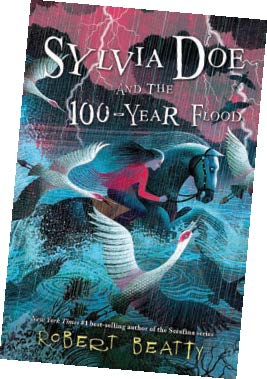
In Asheville author Robert Beatty’s latest book, Sylvia Doe and the 100-Year Flood, Sylvia Doe doesn’t know where she was born or the people she came from. She doesn’t even know her real last name. When Hurricane Jessamine causes the remote mountain valley where she lives to flood, Sylvia must rescue her beloved horses. But she begins to encounter strange and wondrous things floating down the river. Glittering gemstones and wild animals that don’t belong — everything’s out of place. Then she spots an unconscious boy floating in the water. As she fights to rescue the boy — and their adventure together begins — Sylvia wonders who he is and where he came from. And why does she feel such a strong connection to this mysterious boy?

Known for his Serafina series, Beatty will be donating 100 percent of his earned royalties from Sylvia Doe and the 100-Year Flood — a story he’s been writing for several years — to the people impacted by the catastrophic floods caused by Hurricane Helene in Asheville, North Carolina where he lives. The real-life 100-year flood struck at the same time the book was scheduled to launch. (Ages 8 -12.)

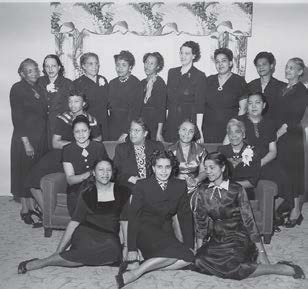
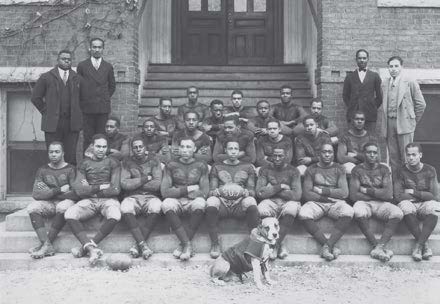
When the photographer says, "Look tough," but there's always that one guy who's trying not to crack a smile.
N.C. A&T's football team, circa late 1930s.

Sazerac

SAZERAC

Sage Gardener

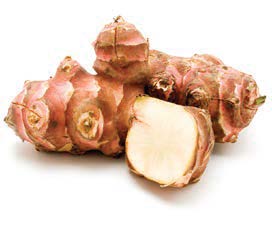
Drive down any country road as fall approaches, and you are likely to see a lot more Jerusalem artichokes than you could ever eat. The golden, daisy-like flowers gloriously polkadot almost every verge in Piedmont North Carolina. And, yes, they are native, though some label them invasive, but more about that later.

My introduction to Helianthus tuberosus was at my mother’s table, where my dad heaped Braswell’s sensational, bright-yellow artichoke relish on his pinto beans as I still do. The turmeric-spiked relish probably originated in the South Carolina Lowcountry, where Mrs. Sassard’s version, like a lot of things in Charleston, “is world famous.”

Jerusalem artichokes themselves are world famous, exported as a delicacy from the New World to France in the 1600s, where they were initially hailed, like so many novelties from the New World, as “dainties fit for queens” — but likely before the queen and her court actually tried them. By 1621, one writer complained, “which way soever they be dressed and eaten, they stir and cause a filthy loathsome stinking wind . . . and are a meat more fit for swine than men.” Not surprisingly, their popularity in Europe dimmed, and it wasn’t until recently that chefs, searching for tasty and unusual local produce, rediscovered them. They were quickly dubbed a superfood because of their nutritional value and their containing — keto alert! — inulin instead of starch. (Inulin is a carb related to the sugar fructose, but is largely indigestible, making sunchokes, as some marketing guru relabeled them, a good choice for diabetics.)

Soon, upscale eateries were featuring Jerusalem artichoke orzotto graced with parsley-and-peanut pesto or truffled sunchokes with brie and honey.

If you’ve never had them, they are slightly sweet with notes of peanut, potato and water chestnut. Not, in fact, much like an artichoke, despite the name. “Jerusalem” purportedly arose when some half-witted Brit tried to pronounce the Italian word for sunflower, girasole. “They can take the form of velvety purees, soups, hearty gratins, crunch crisps (French fries), stew fillings, creamy mash and even ice cream!” enthused one gourmet. 

They are so prolific that Master Gardeners issue warnings. Like crabgrass — and every bit as aggressive — they spread underground by rhizomes. I’ve seen them take over not one but several adjacent raised beds in a community garden. One gardener reported transplanting two plants and ending up with 70 pounds. With each plant producing as many as 20 tubers, “as potatoes were requisitioned for World War II,” one writer says, “Jerusalem artichokes saved millions from starvation,” providing food for humans and livestock.

Harvested from October to March, they are available from time to time in farmers markets and grocery stores. Worried about the gastric distress? Through the miracles of modern science, some home economics scientist discovered that cooking them with lemon juice transforms them through something called acid hydrolysis, rendering them gone with the wind.

Just One Thing

A camera lies,” says Greensboro artist James Celano, who graduated from the Pennsylvania Academy of the Fine Arts more than 40 years ago. Known for his oil paintings of still life, figures and landscapes, Celano says he prefers to paint from life and can tell when an artist is working from a camera image. There are giveaways, he says, such as an exaggerated foreground that disrupts the scale. But the biggest reason he avoids it? “I find that work very flat emotionally.” A born-and-raised northerner, Celano and his wife, Diane, made the Gate City home over 30 years ago, bringing with them their toddler son and their own textile design business, Diane Celano Studios, which serviced clients such as Burlington Industries. “That’s how we paid the bills and kept me independent and free from having to depend on galleries.” Celano converted their home’s two-car garage into a studio space. It’s there that he sets up objects and paints his still life oils. Dollface, seen here, is part of a birds-eye view series and will be part of an exhibition at Ambleside Gallery. “It’s been about 15 years since I’ve exhibited in Greensboro,” says Celano. While he’s participated in GreenHill’s Winter Show, this is his first solo exhibition here in a long time. He’s gathered 26 new paintings, most of them still life, that will be on display from October 4–31, with an opening reception from 6–9 p.m. on October 4.

Window to the Past

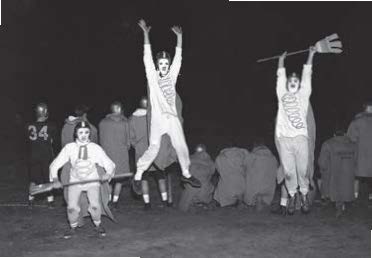
Feeling witch-crafty? Go homemade with your Halloween costume this year. Give it a whirl — just as these Grimsley Whirlies once did back in 1949.

Water Color Talk

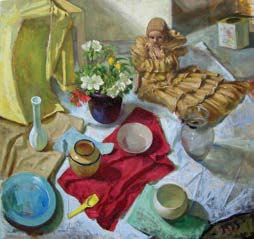
If you’ve walked into The Art Gallery (TAG) at Congdon Yards in High Point recently, you may have already spied the Watercolor Society of North Carolina Exhibition, a juried show featuring 69 paintings created by its members. On September 29 — ahem, before we went to press — the best in show was selected by this year’s juror, renowned watercolor artist Lana Privitera. Originally from Spain, Privitera is a signature member of both the National and American Watercolor Societies. Since we couldn’t yet share the show’s winner, we’re showing off what this judge is capable of. Some Cups and Polka Dots is not a photograph. Despite what your eyes may tell you, it’s a watercolor on paper. Frankly, her painting of dishware looks more realistic than the photos our iPhone 13 snaps — obviously a result of considerable talent combined with epic patience. It “went through many stages and many weeks of work before I felt that the composition and the balance of colors, values and texture were cohesive and interesting,” she reflects. Plus, there’s a lot of behind-the-scenes work before the paintbrush tip ever hits the paper. “Coming up with a unique composition and theme that might also appeal to other people is not easy,” says Privitera, “so the planning stage of any of my watercolors often takes more time than applying the many layers of paint themselves.” So, what was Privitera looking for in a winner? Someone who, like her, “takes their time creating unique and well-balanced compositions.” As for her selection, you’ll just have to head over to TAG to see the piece she thought brushed with greatness. The exhibit ends Oct. 31. Info: tagart.org/exhibits/watercolor-society-of-north-carolina-exhibition.

Unsolicited Advice

With the holidays just a couple months away, and the cooler, shorter days creeping in, October is the ideal time to begin a new crafty hobby — one that results in homemade gifts for everyone on your gift-giving list.

Cross Stitch: Start with the basic “X” and grow from there. Soon, you’ll be whipping out adorable pieces with charming sayings like our personal fav: “What doesn’t kill you gives you a set of unhealthy coping mechanisms and a dark sense of humor.” Bonus, you can tell your dentist you do, in fact, floss every day.

Canning: How about them apples? Turn ‘em into jam, jelly or applesauce. FYI, stock up. Because no matter what Baby Boom had you believe, 2,537 apples = 3 jars of applesauce (approximately). Apples not your jam? Try pickled beets or pumpkin butter. Yes, you can.

Candle Making: Hit up your local thrift shops for unique vintage glass vessels. Fill ‘em with soy wax and your own custom scent. Hints of bourbon, leather and cuban cigar? We call that one “Grandpa’s recliner.”

Witchcraft: Heck, it is October, after all.

Sazerac

SAZERAC

Sage Gardener

My introduction to kimchi was via M*A*S*H, when Frank Burns boasts about catching some Korean peasants burying a land mine — which turns out to be a vat of kimchi. Upon excavation, Hawkeye takes his own dig at Burns, saying “You’ve struck coleslaw!”

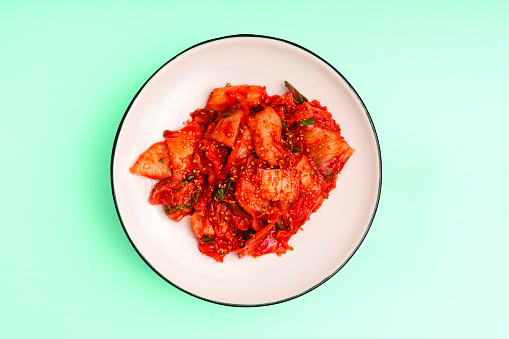
Actually, it’s rather surprising that the usually wellinformed M*A*S*H writers should mention slaw. Fermented and aged (traditionally underground to control the temperature) for a month or more, kimchi doesn’t vaguely resemble coleslaw. Think of a nostril-bending flavor bomb made with fermented cabbage, spiked with chilies, ginger and garlic.

My next encounter with kimchi was on the end of a fork in Cocoa, Florida, where I was writing about the space shuttle’s efforts to escape Earth’s gravity. An editor who had hitchhiked across Asia served it with warm sake one night — love at first bite. I was soon fermenting my own, filling the house with a thick aroma. Another reporter and I would get up at daybreak and catch a mess of mullet, which my wife, Anne, would fry and serve with grits and kimchi. The reporter and I still say it’s the best breakfast we ever had.

Since pickling vegetables is an ideal method of extending their lifespan, kimchi making in Korea dates back to well before the Christian Era. But forget the chilies. Chili peppers, native to the Americas, didn’t make it to Korea until the 1600s.

Most of the kimchi available in America is made from Napa cabbage and scallions, sometimes with added fish sauce. Authentic Korean kimchi often contains salted shrimp or croaker — or other finny prey, including anchovies and salted cod gills.

I’ve found that kimchi tends to appeal to people who relish the strongest of flavors. A friend who obsessively made beer for a while, transitioned to kimchi, observing that he became “fascinated by the alchemy of salt turning bland vegetables into hot, sour yumminess.” Plus, he hoped it “would nurture my gut and cure what age and various vices had inflicted on me.” Like other fermented foods, kimchi’s teeming bacteria is purportedly good for your intestinal microbiome. But people eat kimchi because they love how it triggers endorphins, generally appealing to the same people who fall in love with tonguenumbing hot sauces, hopcrazy IPA’s, mind-bending mescals and peaty, smoky Isla scotch.

Making kimchi is as easy as making sauerkraut and there are a plethora of recipes on the internet. As the days grow colder, consider starting a batch, especially if you have cabbage in your garden. There’s something magical about having a batch of kimchi bubbling away in a dark room, getting a little more sour with each passing day, a little hotter and a little more redolent. Get started now and it will make a great gift under the tree — festively green and red — and mask that annoying evergreen scent.

— David Claude Bailey

Letters

To Cassie Bustamante in response to her June 2024 column, “Curb Alert”

As I sit here in my yard chair relaxing after a morning of delayed yard work, I am enjoying the June edition of O.Henry magazine.

Your article brings back memories. Christmas 2003, my son received his first car as a present. It was a 1998 Jeep Cherokee.

The thought being, it would help in having another driver, helping with errands, stopping his mother and I being his chauffeur. Wrong!

However, that’s not the story at hand.

I remember that Christmas Day going out for a drive with my son Nick at the helm. He decided that a ride on the highway I-40 would be a good idea to test out his new ride.

I have never been so scared sh&$less in my entire life. All I could do was pray and hope to get home in one piece.

Finally he pulled into the driveway and, forgetting to put the Jeep in park, he hit the rear bumper of my wife’s Mercury.

We did have a happy ending though. The Mercury was a tank, no visible damage to either vehicle.

Reading your article brought back this now humorous incident to mind.

Our kids, no matter what they do, leave us with memories. Hopefully, good ones.

— David Ruden

The Passed Baton

“You Should Be Dancing,” the Greensboro Symphony Orchestra has decided — and with a new Aussie conductor as your dance master. Christopher Dragon will take the baton on September 14 to lead the symphony in a POPS Concert featuring The Australian Bee Gees Show, a tribute to the legendary group, at the Tanger Center. Bellbottoms optional.

During its last season, dubbed “Season of the Seven,” seven candidates auditioned — each having an opportunity to lead the symphony. Dragon won out. Hailing from Perth, Australia, Christopher Dragon began his career in his home country with the West Australia Symphony Orchestra. Since then, he’s led the Colorado Symphony as well as the Wyoming Symphony, and worked with orchestras the world over. Plus, not to name drop — but, just for you music aficionados, we’re going to — he’s collaborated with the likes of Cynthia Erivo, Joshua Bell, the Wu-Tang Clan and Cypress Hill. And he’s stoked to bring his flair to the Gate City while creating “unforgettable symphonic experiences to inspire the next generation of music lovers.”

But wait — there’s more! While there can only be one conductor on the podium at a time, sometimes there’s room for two at the top. Chelsea Tipton, fellow “Season of the Seven” candidate, has been named principal guest conductor. A native of Greensboro, Tipton currently serves as music director of the Symphony of Southeast Texas and principal pops conductor of the New Haven Symphony Orchestra. “Returning to my hometown in this capacity is a dream come true,” he says.

Unsolicited Advice

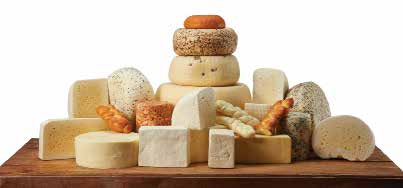
Did you know that September is National Italian Cheese Month? Grate-est news ever grazie! We support any observance that involves feasting on that melt-in-your-mouth (or on your sandwich) delight, any way you slice it. But preferably with carbs and wine, per favore. Stock up on Lactaid and get ready to dazzle your palate with some of our magnifico varieties!

Gorgonzola: Sounds like an evil character from a 1980s cartoon featuring little blue creatures, but is actually the Italian answer to blue — or, shall we say bleu — cheese. Crumbles easily, just like us.

Mozzarella: Quite possibly the most popular pizza topping due to its meltability. Frankly, we’d eat it as a topper to the cardboard circle frozen pizza comes on in its ooey-gooeiest state. By the way, mozzarella is not related to Cinderella, who is actually French.

Parmigiano-Reggiano: Two first names? Must be from Southern Italy.

Mascarpone: Any cheese that can masca-rade as dessert is a winner in our books. If pizza pie isn’t your thing, how ‘bout a pumpkin-mascarpone pie?

Ricotta: Rick oughta make us his famous lasagne soon. And tell him to use the good stuff — none of that cottage cheese.

Provolone: Between two slices of crusty Italian bread slathered with butter, this one makes a delicious and simple grilled cheese. Ready, set, ciao!

SAZERAC August 2024

SAZERAC AUGUST 2024

Sage Gardener

After reading The Orchid Thief (which I unreservedly recommend), I’ve started calling Anne, my wife, the Seed Thief. Her cache of stolen — and also saved-from-the-garden — seeds is vast. One day, she said, “Why don’t you write about saving seeds, O Sage Gardener.”

So . . .  here’s why I’m NOT writing a column about saving seeds.

Let’s start with this response from an online permaculture forum: “Why do something poorly, when I could instead support someone who does an amazing job at seed saving/plant breeding?” The permaculture curmudgeon adds, “In my region, there is no shortage of amazing small farmers selling open-pollinated, regionally-adapted, unique varieties.”

Guilford County’s annual Passalong Plant Sale comes to mind. And there’s also the annual Sown and Grown Seed Swap Weekend at Old Salem, which has featured heirloom dinners in the past.

But let’s get down to the nitty-gritty topic of plant sex. Whether plants have sex with themselves or with insects is a topic that’s way above my pay grade. However, the N.C. State Extension Service has an army of plant experts who understand the mysteries of the birds-and-bees that produce the next generation of plants. “When saving seeds, make sure you are collecting from open-pollinated varieties,” advises Emilee Morrison from Onslow County. (More about open-pollinators in a minute.) “Because of their diverse parentage, hybrid plants will not produce consistent, reliable offspring when you save their seeds.”

Dusty Hancock, a Master Gardener volunteer from Chatham County, has even more discouraging words about plants with diverse parentage: “Seeds from hybrid plants may be sterile, but, if not, it is difficult to predict the characters of the resulting offspring.” He goes on to say that plants from hybrid seeds will be a new combination of the best and worst traits of the original parents. In other words, the seeds you save from that extraordinary okra plant with boocoodles of perfect pods might have the characteristics of a parent that, though drought resistant, produced itty-bitty pods.

So . . . if you really want to play it safe, you need to make sure that the seeds you’re saving come from heirloom plants, all of which are so-called open pollinators, meaning they are pollinated naturally by birds, insects, wind or human hands.

So far, so good — but there’s a catch, says Emilee: “If you grow more than one variety of a crop, you will need to take some precautions to prevent cross-pollination between varieties. Cross-pollination will result in unexpected characteristics in your plants in subsequent generations.” I’m not about to venture into the area of scraping the seeds out, drying them on a screen or in a hydrator, storing them so bugs and humidity don’t ruin them . . . because I’m not going to write about saving seeds. And, from the permaculture curmudgeon, here’s a compelling reason: “I just really, really love buying seeds. Maybe it’s materialistic of me, but pouring through catalogues is what gets me through the winter!”

David Claude Bailey

Window to the Past

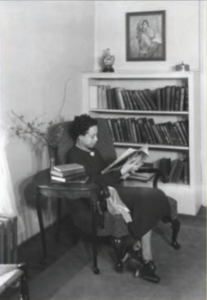
“Then it was that books began to happen to me, and I began to believe in nothing but books and the wonderful world in books — where if people suffered, they suffered in beautiful language, not in monosyllables as we did in Kansas.” — Langston Hughes, The Big Sea

Unsolicited Advice

Soon enough, we’ll see the flashing lights and hear the squeaking brakes of big, yellow buses as they roll through our neighborhoods. Kids will be going full-STEAM ahead — as in Science, Technology, Engineering, Art, Math — as they head back to school.

But, now that we are grown adults, according to our driver’s licenses, we have some ideas about necessary school subjects.

Phone Basics: More Than a Texting Device. We know, we know. Your smartphone features a handy-dandy voice mailbox that allows you to avoid calls, and, instead, listen to messages and respond via text, safely steering clear from any potentially empathetic human contact whatsoever. But — this may come as a shock —  you can actually answer your phone. Repeat after us: “Hello?”

Taxes and You: Sam Is Not the Fun Uncle. Pythagoras’ theorem about right triangles is really a-cute, but Uncle Ben Franklin once observed that nothing is certain other than death and taxes. So why not study deductions and learn how to properly fill out W9s? Had we done that, we would’t be left feeling so, well, obtuse.

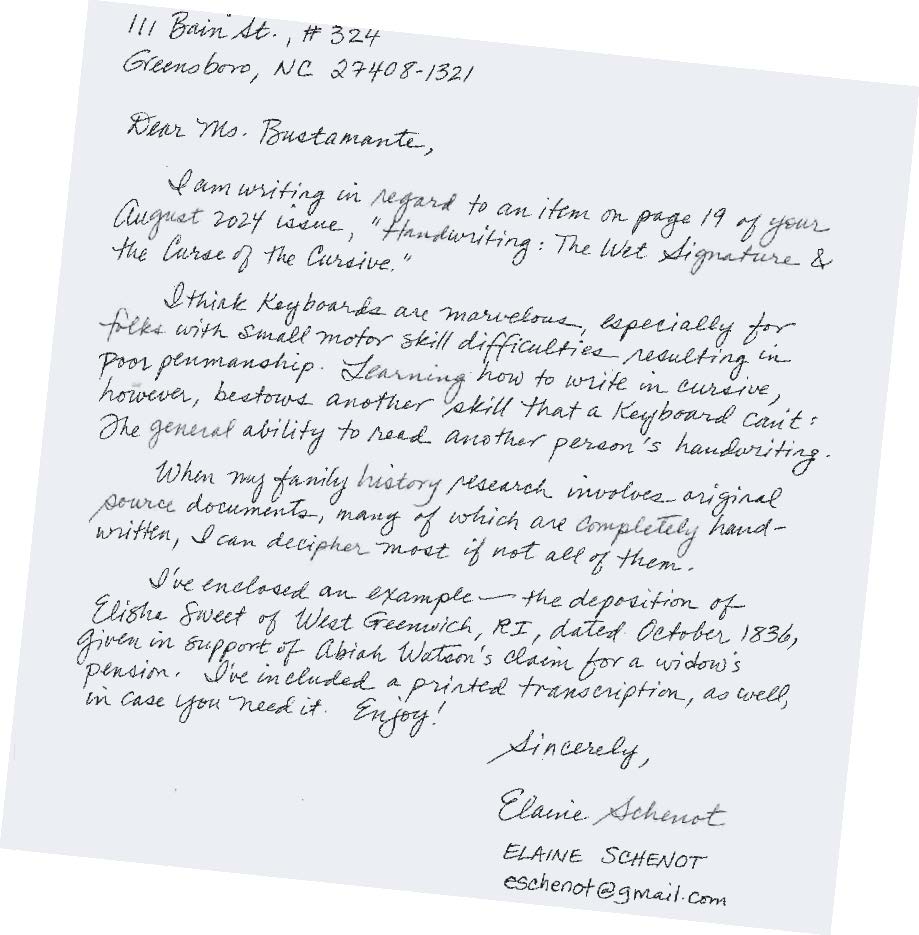
Handwriting: The Wet Signature & the Curse of the Cursive. In our modern, digital world, penmanship doesn’t seem so important. And frankly, we’re coming up dry on a good reason why you might need it. But hey, we’re an arts publication and we don’t want to see any form of art lost. Don’t agree? Please mail a handwritten letter to the editor.

Just One Thing

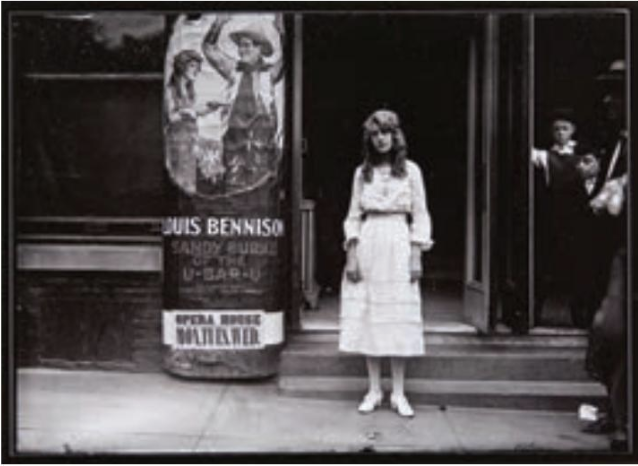
Go ahead. Try not to be drawn into this photograph, taken in 1913 to herald the screening of a silent movie starring Smilin’ Cowboy Louis Bennison as Randy Burke — smiling even when held at gunpoint by Virginia Lee, as seen in the poster. Is that her or a local look-alike posing none too enthusiastically for a promotion in Newport, Rhode Island? Who are those children on the right, one impudently staring at the photographer, Marshall Hall, an AP correspondent? 

When artfully reprinting the photo in 1970, Brian Pelletier obviously was unwilling to crop out the bystander heedlessly walking right into the photo just as the shutter closed. Featured in Weatherspoon’s exhibit that goes up on Aug. 13, “Interpreting America: Photographs from the Collection,” the images on display “illustrate what artists have had to say about American culture from the late-19th to the early-21st centuries.” Americans have always loved sappy Westerns, like this one in which our brave hero saves an orphan after her father is killed in a saloon, is mistaken for a desperado, wins enough money in a poker game to pay off the Widow Mackey’s mortgage, and falls head over heels for a rancher’s daughter, who “takes his revolvers and orders him to put his hands up — and then around her.”

The Write Stuff

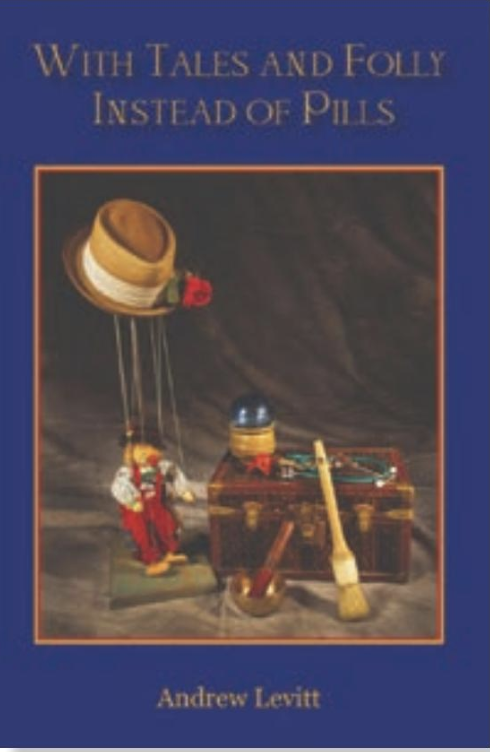
When Andrew Levitt set out to brighten children’s spirits in their hospital rooms, he wasn’t just clowning around. In our December 2022 issue’s “The Fezziwigs Among Us,” founding editor Jim Dodson introduced us to Levitt, whose “charming medical clowning lasted almost a decade, touching the lives and cheering up thousands of kids, young people, parents and staff.” Levitt, who had a lifetime of performance under his belt — everything from miming to acting and clowning — officially became Dr. Merryandrew on April Fools’ Day years ago. The date? A funny coincidence. And, yes, Levitt does, indeed, hold a bona fide University of Pennsylvania Ph.D. — in folklore, fittingly. In his new memoir, With Tales and Folly Instead of Pills, Levitt takes us behind the doors of Moses Cone Hospital, sharing stories he regaled patients with to bring, well, levity to hardship. After all, he writes, “Maybe if more people hear the old stories, there will be more people around who know that life is full of magic and miracle.”

Sazerac July 2024

Sazerac July 2024

What’s Cooking?

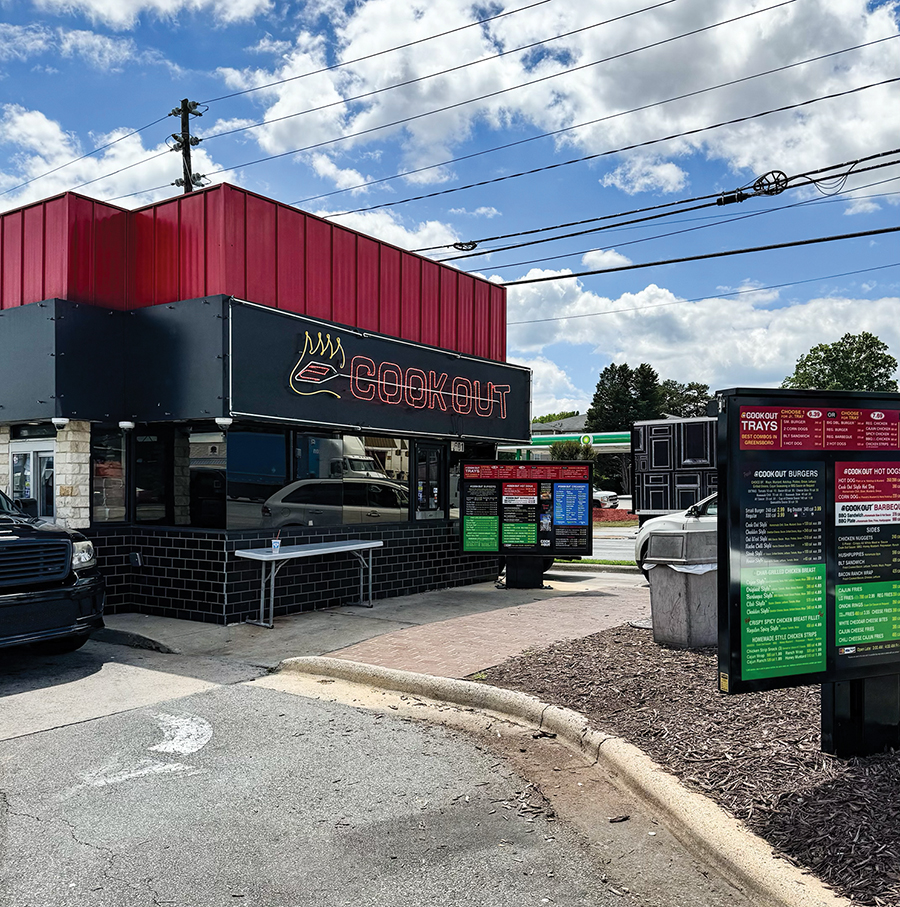
It’s been 35 years since entrepreneur Morris Reaves launched his revolutionary drive-through restaurant concept, opening the very first Cook Out on Randleman Road, where the aroma of fresh grilled burgers still bellows from the chimney.

Reaves got his start in the restaurant business as a short-order cook for Waffle House before becoming the youngest Wendy’s franchisee at the age of 20. In the 1970s, to obtain that franchise, Reaves appealed directly to Wendy’s founder Dave Thomas. Initially hesitant, Thomas remembered that, as a young man two decades earlier, Col. Harland Sanders had taken him under his wing (pun intended), granting him the Kentucky Fried Chicken lease that jumpstarted his career. (Among many other innovations he came up with, it was Thomas who convinced the Colonel to appear in KFC’s commercials.)

While he cooked up that original Cook Out concept in his home state of Florida, Reaves chose our fair city for the rollout in 1989. With expansion into 10 Southern states since then, 117 locations in North Carolina alone, you could cruise up to a different Cook Out menu board every day for a year and still not visit them all.

How does Cook Out compare with another beloved regional chain, the West Coast’s In-N-Out Burger? No contest. Because burgers and hot dogs aren’t the only lure. Cook Out not only has the best barbecue sandwich for my money, it’s also famous for offering N.C.’s own Cheerwine — on tap in states where the beverage isn’t distributed — along with something like 40 flavors of milkshakes including cappuccino, hot fudge, blueberry cheesecake, watermelon (in July and August only) and, had he lived to enjoy it, a Peanut Butter Banana shake that would surely have enticed Elvis to the nearest location. Morris Reaves and his son Jeremy, who serves as current CEO of Cook Out, are reportedly deeply spiritual Christians, so much so that every beverage cup comes imprinted with a Bible verse.

For such a sprawling enterprise, Cook Out is notoriously tight-lipped when it comes to press and publicity. Neither father nor son has ever granted even a cursory interview, nor does the company employ a spokesperson. The marketing department declines to answer the phone or return calls.

What’s next for the restaurant chain? We hope you’re sitting down for this: indoor seating, apparently. There’s already a Cook Out dining room in Kernersville and, rumor has it, the former Mrs. Winner’s on Summit Avenue will be our city’s first sit-down site.

      — Billy Ingram

Strike a Paws: Pet Photo Contest

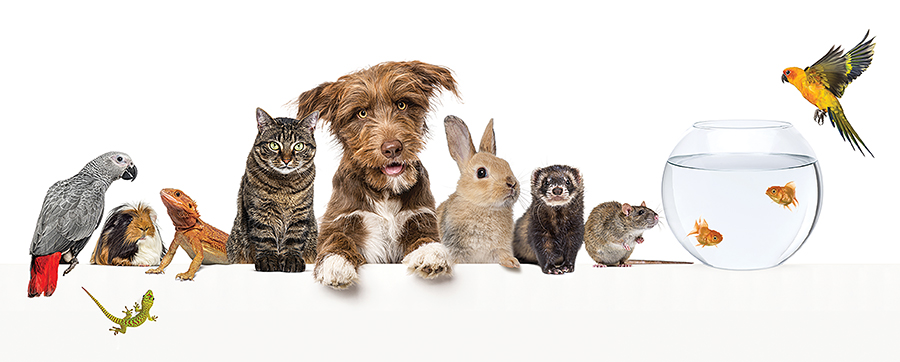
Does your cat’s expression say, “Mr. DeMeow, I’m ready for my claws-up?” Perhaps your Fido is especially photogenic. Or your Beta is fishing for its moment to shine. Whatever feathered, finned, furry — or even hairless — pet you call yours, take your best shot! From now through July 22, you can upload a photo of your beloved critter to our website’s contest page. Voting will open on July 16. But that’s only half the fun. Pet-loving O.Henry readers will be invited to vote on the finest photo, so make sure you beg friends and family to cast their ballots! The winner will fetch a $100 gift card from our contest sponsor, All Pets Considered; plus their photo will appear in our September issue. We’ll be printing several contenders as well, so — who knows? — your pet could be on their way to Sunset Boulevard after all. Visit ohenrymag.com/contests for details and to enter.

Window to the Past

Photographs © Carol W. Martin/Greensboro History Museum Collection

Where’s my TV dinner?

Unsolicited Advice

Backyard barbecue season is upon us and Dad’s raring to put some cheeseburgers on that new grill he just got for Father’s Day, along with his “This Guy Lights Our Fire” apron. But your daughter just announced she’s vegan and your son is lactose intolerant, so how about tossin’ some non-carnivorous alternatives to tube steak  and juicy burgers? We’ve got some ideas that are sure to sizzle.

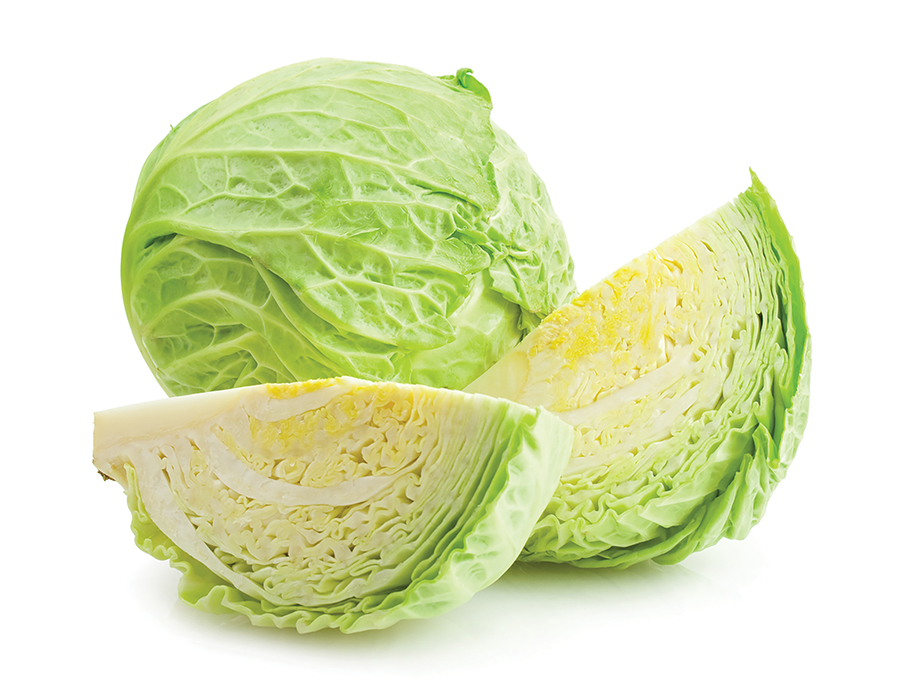
You heard it here in May from our resident Sage Gardener. Cabbage is having a moment. Cut it into slices, brush on EVOO and sprinkle it with seasonings. Might we recommend Montreal Steak Seasoning? It’s like lipstick on a pig, minus the pork. Note: discriminating vegetarians say, “All cabbages are not created equal. The freshest heads feel heavy and are compact for their size.”

A portobello mushroom cap fits perfectly inside a hamburger bun. Coincidence? We think not. And will it fill your porto-belly? We also think not. Unless that cap is stuffed with, say, plant-based sausage.

Looking for something you can put your satisfying, blackened grill mark on? Tofu. Its rubbery quality will simulate that overcooked steak Dad’s famous for. And the “hot” trend is to freeze it before grilling it? Cool, eh?

Lastly, grill your kids (but not in the way Jonathan Swift recommended). You’ve got questions. They’ve got answers they’re probably not as readily willing to share as they are to pass you that plate of charred cabbage.

Sage Gardener

Best-selling American novelist Belva Plain once said, “Danger hides in beauty” — as in poinsettias, lenten roses, bleeding heart, larkspur and lantana — all stunningly beautiful and all poison.

And whoever said, “If danger comes from anywhere, then your eyes must look everywhere,” surely had a house full of children, pets — and plenty of plants. 

C’mon. You’ve heard it before, but here’s a friendly reminder in this, our issue focusing on pets: Even an itty-bitty amount of an ingested lily plant — any part, the stem, flower, leaf — can trash a kitty’s kidney. Your furry friend munching on one or two sago palm seeds can suffer vomiting, seizures and liver failure. Azaleas and rhododendrons, if snacked on, can lead to coma and death from cardiovascular collapse. The  ASPCA’s got a top-17 DON’T-EVEN-THINK-ABOUT-IT list (www.aspcapro.org/resource/17-plants-poisionous-pets). Still, the association’s Animal Control Center ended up assisting more than 400,000 animals in distress in 2022, up from 2021. And it’s not just plants. The top-10 toxins include recreational drugs, OTC meds and, yes, chocolate: https://www.aspca.org/sites/default/files/top_10_toxins_2022.png (who leaves chocolate lying about?).

And please. Keep your children from eating berries from the holly, yew, jack-in-the-pulpit, juniper and pokeweed plants, as tempting as they may look. And no castor beans. (The horrifying poison ricin is made out of castor beans.)

“Away! Thou’rt poison to my blood,” said Will Shakespeare. So before you go hog-wild with houseplants or that garden extension this summer, remember what happened to Romeo and Juliet. Go wisely.
  — David Claude Bailey

Sazerac June 2024

Sazerac June 2024

Unsolicited Advice

According to Simon & Garfunkel, June will change her tune. And according to the Gregorian calendar, she’ll change her season from spring to summer. Typical Gemini. So take your fae-thful friends and family to the arboretum and celebrate at the Greensboro Summer Solstice Festival from 2–10 p.m., Saturday, June 22. We’ve got some tips to help you make the most of this magic moment. Fairy thee well!

Make like a mermaid and scale up on the water intake or you’ll be one parched pixie. Don’t worry — porta-potties abound. As do adult beverages — you know, for hydration.

Speaking of sweat, three words: waterproof body paint.

Show a little elf control? Not here. Let your inner fairy fly for the day — glitter, wings and all!

The evening culminates in an outstanding fire show, where the lawn at Lindley Park turns into gnome man’s land. Set your derriere on your fairy chair on the early side for a stellar view.


Photograph © Greensboro History Museum Collection

Window to the Past

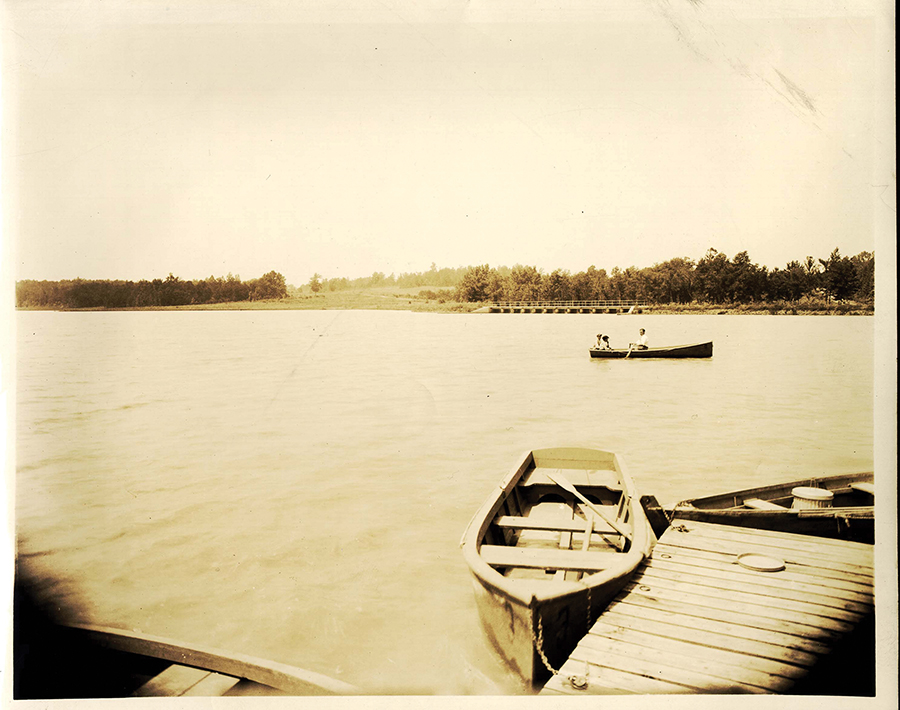
Ready oar not, summer is arriving later this month. Lake Brandt has been welcoming water lovers since 1925.

Sage Gardener

We hope you’re sitting down, because according to The New York Times, “2024 is going to be a really exciting year in cabbage.” Celebrity chefs are stir-frying it, banking it into beds of hot coals and, in Asheville’s Good Hot Fish restaurant, adding it to pancakes served with sorghum hot sauce.

My momma used to braise it in bacon grease, a technique I’ve since discovered seals in the mustard compound that cabbage shares with horseradish, onions and mustard greens — the very compound that, according to the Times, “can make your house smell like a 19th century tenement” but has become “the darling of the culinary crowd.”

Mom, you always did know what was hot and what was not — and that everything tastes better with bacon.

Mark Twain observed that “cabbage is nothing but cauliflower with a college degree.” Cauliflower and Brussels sprouts — in the same family as kale, broccoli and bok choy — have both recently had their moment in the superfood spotlight. Now, it’s cabbage that’s taking center stage on white tablecloths in New York and L.A.’s elite boîtes, going for $18–20 as an appetizer paired with the likes of anchovy breadcrumbs and brown-butter hollandaise. Try serving one of those instead of corned beef and cabbage next St Paddy’s Day.

Brassica oleracea, aka wild cabbage, though not mentioned in the Bible and apparently unknown to early Jewish cuisine, is “a plant that has accompanied mankind throughout the ages,” according to The Oxford Companion to Food. Prized by the Egyptians and Romans, it was sacred to the Greeks, purportedly springing full-grown from no less than Zeus’ own sweat — perhaps because of how it smells?

I’ve grown it only once or twice. I’ve never had well-drained, sandy loam, which it prefers. And being an organic gardener, by the time my cabbage begins to head, aphids, flea beetles, cabbage loopers, diamond-back moths and cabbage maggots get a lot more of it than I do. Besides, cabbage is incredibly cheap, organic or not, even when purchased in a farmers market. (I find N.C. mountain cabbage particularly tasty and it makes terrific sauerkraut. North Carolina, by the way, grows something like 12,000 acres of cabbage a year.)

So remember, you heard it here first (unless you read The New York Times story): “Among the food-forward, cabbage fever is rising.”

        David Claude Bailey

Growing Goodwill

Survey four of the Triad’s youngest residents and one of them will tell you they face food insecurity. Share the Harvest board president Linda Anderson, a retired educator, does her best to improve that grim statistic. Sometimes, she says, it’s as simple as grabbing a hoe or driving a truck.

“There are times during the growing season when our gardens are overflowing with vegetables and we don’t know what to do with the excess. This is when Share the Harvest can help both the gardener and the individuals in need,” says Anderson.

Anderson says donations have grown since 2012 from a few community and church gardens donating food to local nonprofits into an expanding program benefitting organizations, collecting and distributing food to the needy via various programs offering meals and food pantries. For its 10 core volunteers, the need has motivated them to collect, coordinate and distribute donations from groceries, restaurants, gardens, farmers markets and even N.C. State A&T University’s farm.

From May through October, the growing season, they collect, aggregate, then store fresh products at a central collection site for distribution.

“In the beginning, the first year, we had 1,200 pounds of veggies. Last year it was 15,241 pounds received.” See sharetheharvestguilfordcounty.org for more information. 

                                              By Cynthia Adams

Letters

Dear Editor,

OK, I look a little grumpy, I admit. How would you feel after eating dirt in the dark for 17 years?

If you find my surreal red eyes deeply disturbing, I say, “Good!” It’s not like anybody asked me how I wanted my DNA arranged. You think your kids are so cute. They don’t even have exoskeletons! No wonder you’re running them to the ER every other day.

A cicada’s life isn’t much when you think about it. In 30 days’ time above ground, the most dramatic thing that can happen is having a cat or dog eat enough of us to spew up a blob of legs and wings on somebody’s living room carpet. Or having kids trap us in Mason jars to amplify the sound. Like that’s really a science experiment. Stick to the fireflies and leave us alone!

This spring, all you heard was “Total Eclipse! Won’t be another until 2044!” Everybody bought special eyeglasses and threw a party.

Well, this summer, not only are we 17-year cicadas emerging, but our 13-year cousins are, too. Guess the last time that happened. 1803, when Thomas Jefferson was president. You know, author of the Declaration of Independence. How about throwing a cicada celebration, we, the people?

And who’s this Harry Blair joker, anyway? When in our conversation did I grant him permission to reproduce my likeness? Please spare me the public figure argument. I’m a bug!

You’ll be receiving a letter from my attorney.

    Sincerely,

    A. Cicada, Esq.

Just One Thing

During a residency at Charlotte’s Village at Commonwealth, muralist and fine artist Liz Haywood decided it was time to try “something totally different, something to inspire me to branch out of my comfort zone.” Her focus up until then had been on the “many different faces” of diversity, she says. And that something different? Space exploration. The twist? A series she’s calling “Alien Worlds”: “By using a palette of warm pinks, purples and sunset hues, I bring an updated feel to a subject often seen through a masculine lens.” No surprise. Haywood is constantly doing her own dive into the unknown through film and literature. “I’ve basically read every science fiction novel available,” she notes with a laugh. Her canvas offers her a way to imagine the world beyond and bring it back to this planet through a feminist lens. Just as space is full of unanswered questions, Long Walk Home, seen here, is also open to interpretation, she says. “She’s walking into the distance. You don’t know — is she walking back to her ship? Or is she leaving and going somewhere else?” Haywood encourages her viewers to use their own imaginations. This painting is part of her second iteration of “Alien Worlds,” on display at GreenHill Center for NC Art’s “LEAP: Artists Imagine Outer Space” exhibition. “Space is the next frontier,” she muses. “I hope we venture out with open hearts and curious minds.” And does she hope to explore space one day? “I need to be around people ,” she says. “If my dog and my boyfriend and other people could go, then yes!” Info: lizhaywood.com

Sazerac May 2024

Sazerac May 2024

Letters

To Cassie Bustamante in response to her March 2024 feature, “Greensboro: A Cultural Herstory”

My name is Mary Walton, and I am one of Mary Nicholson’s nieces. Thank you so much for recognizing her as one of the eight amazing women you profiled in your article. And what great company she is in.

I thought you would find it interesting that my sister, Lauren, and her daughter, Anna, have both followed in Mary’s footsteps as pilots. She certainly paved the way for them as well as many others.

Mary taught my father — her brother, Frank Nicholson — how to fly, and he became one of the first pilots at Piedmont Airlines and later Chief Pilot. My brother, Tom, is also a pilot and is a captain at Hawaiian Airlines. Lauren’s youngest daughter, Ashley (in college now), is also interested in flying.

Lots of pilots in the family!! Ironically, I am not, even though I am the one named after my aunt. 

Anyway, I just wanted to reach out to say thank you on behalf of our whole family!


A remembrance by Phillip Jones spurred by Stephen E. Smith’s March 2024 “Omnivorous Reader” honoring the late Fred Chappell:

Our classroom was in McIver Building, on the ground floor. One class early in the semester, Fred called on a female student and asked her what she thought of the stories assigned for that day. She was quiet, hemmed and hawed a bit, then admitted that she had not, in fact, read the two stories assigned as homework. Fred’s face tightened a bit, then he looked at her and said, “Then take the time now and read the stories.” The class was immediately quiet — nothing like this had ever happened in our collective school experiences. 

Fred walked over to the window, opened it, pulled up a chair, and smoked several cigarettes very slowly. Time stood still, only the smoke drifting from his cigarettes showed that we were not frozen in place. No one shifted in their seats or made a sound. After giving her enough time, he looked at her and asked if she had finished the story. She nodded and Fred asked her what she thought. When class ended, every student left that room with a different appreciation of Fred, his class and education in general.

Students generally did their homework after that and contributed to class discussions. One day, perhaps a month later, Fred asked three or four students about the homework with no response, then he looked around. Most students stared down at their desk and at their books, afraid to look directly into his eyes. Disgusted, Fred turned, walked to the door, and threw his books violently into the trashcan, then walked out and away. Silence reigned. Was he standing outside the door waiting for a brave soul to sneak away before the bell ended the class? No one moved, no one left the room, and no one spoke. When the bell finally did ring, we filed out silently and left McIver Building as quickly as possible. Fred had put the fear of God, or the Fear of Fred and his disapproval, into our very souls.

Lorem ipsum dolor sit amet, consectetur adipiscing elit. Ut elit tellus, luctus nec ullamcorper mattis, pulvinar dapibus leo.

A Gold Star for Jamestown

Wrenn Miller Park in Jamestown offers plenty of opportunity for rest, relaxation and community with its picnic tables and sloped grass lawn, which provides plenty of seating for its amphitheater. But the park also offers a moment of remembrance. At its northern end, a Veterans Memorial features benches, dedicated bricks, trees, an evolving maze garden and a brick wall with the names of Jamestown residents who served in World War II. Thanks to Cedarwood Garden Club member Sharla Gardner, a Gold Star Families By-Way Memorial marker, which honors those who have fallen and offers hope and healing to families, is to be installed on May 25. This bronze marker, featuring a granite base donated by Hanes Lineberry, is the only one in Guilford County. Currently, there are four in the state of North Carolina, with three more being added this year. And across the entire United States? A total of 181. This Memorial Day weekend, head to Wrenn Miller park to salute the Gold Star Families By-Way Memorial and pay homage to those who have laid down their lives in service.

Calling All O.Henry Essayists

This year, we’re moving our annual O.Henry Essay Contest to earlier in the year so that you have all summer to meditate on it while you mow your lawn, swim your strokes or swat away the skeeters. The theme this time? “Furry, Feathered and Ferocious.” That’s right, we’re all ears for your animal tails — oops, tales — and we’ll be accepting entries May 1–Sept. 30, 2024. Got a wild hare? Submit a story about it! From beloved pets to snake encounters, we want to get our paws on your story.

Of course, there are some rules:

Submit no more than 1,000 words in a digital format — Word or Pages document, a PDF, pasted into an email, or tattooed on your body and sent via photographs. Essays over 1,000 will not be considered. After all, as Shakespeare wrote, “Brevity is the soul of wit.” (Why were your plays so long, Willy???)

One submission per person. Email entries to cassie@ohenrymag.com.

Deadline to enter is September 30, 2024.

Winners will be contacted via email and will be printed in a 2025 issue.

We can’t wait to hear the clickety-clack of keyboards across the Triad as you type your stories — stories that are sure to make us laugh, cry or rush to the animal shelters to bring home even more rescues. What’s one more at this point?

  — Cassie Bustamante, editor

Sage Gardener

In 1971, my wife, Anne, and I got turned on, tuned in and then dropped out of UNC grad school to become full-time hippie farmers in Pfafftown. We raised chickens, ducks and rabbits, grew our own produce and, equipped with Euell Gibbon’s Stalking the Wild Asparagus, foraged the fields and forests for tasty edibles. We made wild strawberry jam, Carolina cherry wine and ate lots of blackberry cobbler. We enthusiastically gathered chickweed, dandelions and violets to spice up our salads. Though I admit, a lot of things we ate just once.

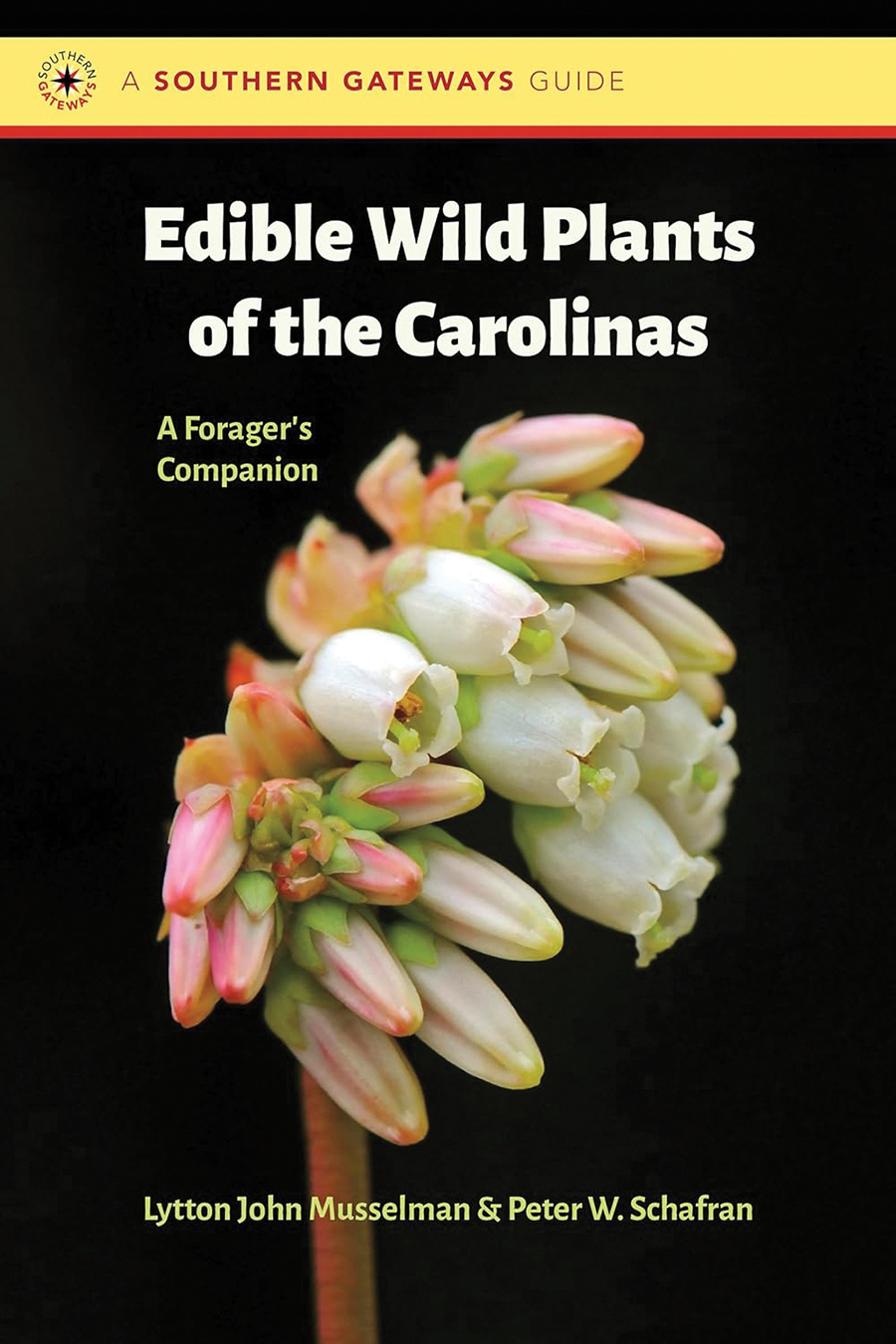
The other day, I came across a copy of the recently published and marvelous Edible Wild Plants of the Carolinas: A Forager’s Companion by botanists Lytton John Musselman and Peter W. Schafran. Suddenly my enthusiasm for eating what comes natural was revived. Lavishly illustrated, it provides very sensible guidelines for what to eat, what not to eat and what’s best left in the field with the mice. Here are some of the choice tidbits I picked up from it.

A vital caveat, however: Please do not eat wild plants before consulting their book or some other reliable guide. There are look-alikes. Some plants have delicious edible fruits but deadly leaves and stems (and vice versa). And there are allergy concerns.

So . . . did you know?

All wild violets are edible, though, as the authors concede, “The taste of most species is underwhelming.” However, “field pansies are pleasantly flavored and make a good — and unique — snack.” And how about Johnny-jump-ups in your next Hoppin’ John?

Wild violet plants and flowers can easily be candied, sugared rather than shrinking.

Lamb’s quarter “is one of the tastiest of wild greens.” Raw or cooked, they hint of umami and were favored by Native Americans. Don’t like ‘em? Spit them out and use as a poultice for minor abrasions.

The taste of Pokeweed “is unremarkable — not surprising since it has to be boiled into submission to be eaten.” The berries make good ink and a mediocre poison.

Orange daylilies, both tubers and buds, are edible. “Fresh buds are tasty with an appealing crunch.” The flavor is mild with, again, a hint of umami, which translates to a pleasant savory taste.

Silver maple seeds, aka whirligigs, are edible raw. And, sautéed in olive oil, they  have a peanut flavor.

Field garlic is four times stronger than store-bought bulbs.

The pink flowers of the eastern redbud “have a sweet flavor . . . and make an interesting topping for ice cream.”

Elderberry flower heads, when soaked an hour or two in water, make a tasty beverage. The bees aren’t the only ones buzzing over these blooms. You can also make an alcoholic drink from the flowers.

Not only are American beech nuts tasty, you can munch on the foliage.

Chickweed, quite edible, has a bitter and soap-like taste. What’s not to like, say our chickens.

Green amaranth is “one of the tastiest of greens.” Best when cooked.

You can eat the tender young shoots of greenbriar, aka blaspheme vine, though the authors caution that the shoots from one plant may taste pleasantly like asparagus while the shoots of the plant right next to it may be too bitter to eat.

Stinging nettles taste like chard.

The young, tender rosettes of dock leaves are “pleasantly sour and lemony.” Don’t eat a lot of them, though, they say. And don’t bother with the roots.

Glassworts at the beach are tasty and are called “haricots de mer” in France. You can buy them bottled in Spain and they’re delicious.

Mulberry leaves are edible but taste “mediocre.”

Devil’s walking stick is a “tasty vegetable.”

Finally — and again — don’t go rushing out there, gobbling down fruits, leaves and stems without properly identifying the plant. O.Henry doesn’t want to lose a single reader.
          David Claude Bailey

Unsolicited Advice

The season of brunches, baby sprinkles and bridal showers is upon us! You know the rule: Never show up empty handed. Instead of the tried-and-true, aka tired-and-trite, bring your party-thrower one of these alternatives to the classic hostess gifts.

A bottle of wine says “I’m a classy guest,” but a six-pack of unfiltered, craft beer? That says, “I’m chill and easy and will likely stay to help clean up after the party. In fact, you might have trouble getting rid of me.”

Elegant serverware? That only lets your host know you enjoy being served and it damned well better be fancy. Instead, give ’em a massage. Well, not literally — awkward! A gift card to a spa shows that you want your host to have a turn at being served.

Upscale and hard-to-find seasonings might leave your host feeling salty. Sprinkle ’em with a dash of home delivery meals: DoorDash gift cards, so they don’t have to think about cooking again just yet.

Flowers die. But lego bouquets are forever. Plus, putting together their plastic posy will be a great distraction from cleaning up after the party.

Candles are cozy, but what they really need once the last guest (that idiot who brought the six-pack!) leaves is an air purifier. A scented candle masks the lingering B.O., but an air purifier cleans the air. What is that smell? *Sniffs* . . . aaah, nothing.

Just One Thing

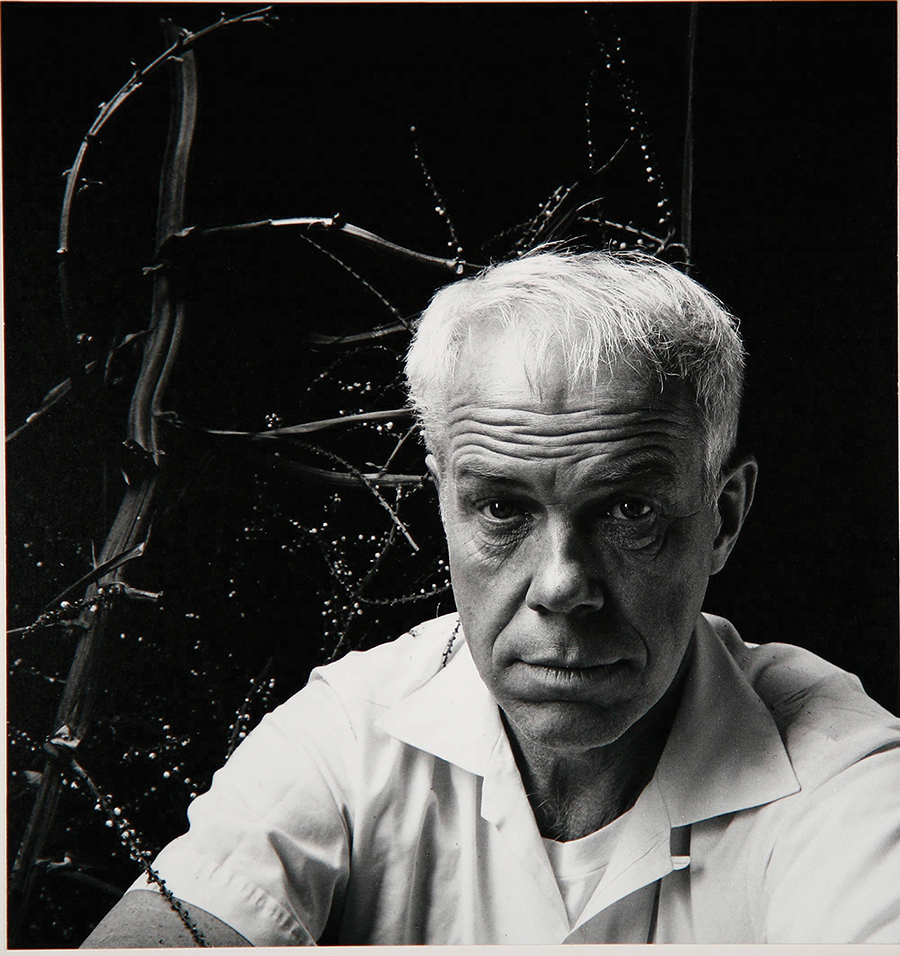
(Minor White Photographer by Imogen Cunningham)

Much of renowned American photographer Imogen Cunningham’s 93 years on Earth were spent behind the viewfinder of a camera. Her father, Isaac Burns Cunningham, though not enthusiastic about her going into the arts, supported her education in both academic and creative fields from a young age. When she showed a developing fascination with photography, he built her a dark room in a woodshed on the family’s Seattle property. However, at the time, photography was not a subject one could major in, so she graduated from the University of Washington with a degree in chemistry. Her thesis? “Modern Processes of Photography.” She is credited as the first woman to photograph a nude man, but it was her 1931 image of dancer Martha Graham that caught the eye of Vanity Fair editor Frank Crowninshield and launched her career in portraiture. In this black-and-white 1963 shot of fellow photographer Minor White, we see a stark contrast between the dark background and the light bouncing off of his white hair and shirt. Shadows accentuate the lines on his face. “She likes to photograph anything that can be exposed to light, I remembered her saying,” White said of sitting for this photo. “Only then did I realize that it was her own light — whether she admitted it or even knew it.” Shortly after this photo was taken, White devoted an entire issue of aperture magazine to Cunningham. Strangely enough, both White and Cunningham died within hours of each other. An exhibit entitled Seen & Unseen: Photographs by Imogen Cunningham is currently on display at Reynolda House Museum of American Art and can be seen through June 2.

Got plans? Book Bound

If you’re not into books, jump to the next page or maybe another pub, but we can’t wait for the authors we dream about meeting, panels that stun our views of the world and all the people we meet at this year’s Greensboro Bound Literary Festival, May 16–19 in downtown Greensboro. Like previous festivals, this year’s lineup brings to our not-so-humble literary scene over 60 writers from across the country. The opening keynote event with best-selling author James McBride (Heaven & Earth Grocery Store, The Color of Water, Deacon King Kong) will get things going on Thursday, May 16, at UNCG, thanks to the generous contribution of the University Libraries (registration required: greensborobound.com/event/james-mcbride/).

Other highlights include our favorite NPR Weekend Edition Sunday host Ayesha Rascoe — in person! — with her book HBCU Made; a special event around an essay collection on video games called Critical Hits, featuring writers Carmen Maria Machado (In the Dream House), Nana Kwame Adjei-Brenyah (Chain Gang All-Stars), J. Robert Lennon (Hard Girls) and Ander Monson (Predator: A Memoir, a Movie, an Obsession). Again, thanks UNCG.

Naturally, conversations will swirl around immigration, climate change, mean girls, diaspora and disappearing, apples, and romantic entanglement as poets, essayists and fiction writers argue about the issues of the day. Family friendly? Greensboro Bound also brings back a robust collection of children’s and young adult authors on Saturday, May 18, to coincide with the various adult events at the Greensboro Cultural Center and Greensboro History Museum.

All of this is a prelude to Sunday, May 19, with a special celebration of author Randall Kenan as the closing event of Greensboro Public Library’s “One City One Book” season. Kenan, who died in 2020, was a North Carolina literary legend and the editor of Carolina Table — the library’s choice for the city-wide read in 2023—24. If you’re a serious foodie, you won’t want to miss the panel discussion (AND FOOD!!!) at The Historic Magnolia House with his friends and colleagues Marianne Gingher, Daniel Wallace, Gabriel Calvocoressi and North Carolina Poet Laureate Jaki Shelton Green. As always, all programming is free. The question is are you?

Sazerac April 2024

Sazerac April 2024

Monumental

On February 20, an enthusiastic crowd gathered in downtown Greensboro, including most of the City Council members that approved the project, for the unveiling of a statue of Henry and Shirley Frye. Renowned South Carolina sculptor Maria J. Kirby-Smith, known for numerous photo-realistic works across our state, was commissioned to create the likeness of the Fryes, which sits just a few yards away from her metallic depiction of writer O. Henry.

Gov. Roy Cooper, Mayor Nancy Vaughan, N.C. A&T Chancellor Harold Martin and former mayor of Greensboro, and president and CEO of the Bryan Foundation (which paid for the statue) Jim Melvin spoke about the monumental contributions this power couple has made to Greensboro and the state at large.

“They have done amazing things that seem impossible,” Gov. Cooper told the assembled. “It’s hard to be the first in anything but [Henry Frye] was the first in many — first Black person admitted to first year of law at UNC Law School; first Black person elected to the General Assembly in the 20th century; first Black Chief Justice of the State Supreme Court. His career paved the way for so many to follow, people who will come and stand at this statue and hopefully think about it and whisper a prayer of gratitude.” 

Credited with integrating the YWCA locally, Shirley Frye has been the recipient of a dizzying array of accolades including the Order of the Long Leaf Pine, one of North Carolina’s highest civilian honors.

Following the ceremony, Jim Melvin told O.Henry magazine, “This is a way for the community to let Henry and Shirley live forever. So the young people can come to see that, no matter what the obstacles, if you have the desire, you can make something happen. And they both did.” 

Where to see this: Center City Park, 200 N. Elm St., Greensboro

      Billy Ingram

Sage Gardener

As I was just about to toss some leek tops into the compost can, I heard the clear voice of my dearly departed, waste-not-want-not mother scream, “Stop!”  A few days earlier, I’d read about how leek tops were delicious when braised in butter and then slow boiled in chicken broth until tender. So I tossed the tops into a pan, and they were, in fact, quite tasty, especially when added to some rainy-day chicken-and-rice soup.

Down the rabbit hole I went, discovering Tara Duggan’s Root-to-Stalk Cooking — and dozens of self-righteous, save-the-planet foodies on the internet determined to rescue the 52 percent of vegetables we discard on the way to eating the other 48 percent.

So, over the past few weeks, my wife, Anne, and I have been downing stalks, stems and fronds to separate the best from all the rest. For years, we’ve been enjoying broccoli and cauliflower stems thrown into Asian stir fries as if they were water chestnuts. And the core of cabbage, unless it’s bitter, is fine in slaw. And don’t toss those cilantro stems. Mince them for added flavor in salsas.

Loving anything fermented, I decided to try a recipe for collard-stem pickles. My dinner guests politely praised them, but I noticed little wads of chewed up stems pushed to the side of their plates when I went to wash the dishes. Not worth it. After a couple of bland batches, we concluded that although beet greens fresh from the garden were pretty good, the ones you cut off beets from the store were too tired to be worth the effort. Ditto radish tops, though a few in a salad are OK. We tried fennel stems and fronds in salads and they were fine, but the pesto I made from them, with a big dollop of cream added, was great over pasta. I admittedly added anchovies to mine, which make anything better, including ice cream.

Turning tomato skins into powder? Nope. Candying fennel stalks? Not me. Dehydrated corn silk? No thanks. “Better bad belly burst than good food waste,” my Pennsylvania Dutch mother croaked from the grave.

Mom, remember the potato-peel soup you once made, assuring us that you’d been taught as a nurse that the little bit of arsenic in potato peels was good for you? It was awful soup. But it sure made great compost.
            David Claude Bailey

Photograph © Greensboro History Museum Collection

Window to the Past

Play ball! Off and on since 1908, Greensboro’s been a part of the minor league baseball scene and has seen the likes of Derek Jeter, Don Mattingly and Johnny Mize on its roster. As the season opens on Friday, April 5, we’re wishing the Grasshoppers a pitch-perfect season.

Just One Thing

In Harem #18, seen here, Moroccan artist Lalla Essaydi revisits the harem of the Dar al-Basha Palace, where her grandmother was essentially held captive with her young son, Essaydi’s father. The woman in this photograph is dressed to become one with the interior. And yet, she stands out and stares directly back at the viewer. Contrasting bold masculine calligraphy against the feminine grace of henna, Essaydi, who earned her M.F.A. from Tufts’ School of the Museum of Fine Arts in 2003, seeks to highlight the contradictions experienced in Arab culture. But, also, she says, “I want the viewer to become aware of Orientalism as a projection of the sexual fantasies of Western male artists — in other words as a voyeuristic tradition.” Unlike her Harem series, most of her work is shot to appear in a nonspecific space, one that could be almost anywhere, left to the interpretation and imagination of the viewer. While Essaydi has worked in several mediums, her most current project is a photographic exploration of “the metaphorical space of my childhood,” a space she felt she needed to return to in order to continue her growth as an artist. Essaydi’s work is currently on display at the Weatherspoon Art Museum through May 25, 2024. Museum director Juliette Bianco calls Essaydi a dynamic speaker — “magnetic” — and, lucky for you, Essaydi is scheduled to give an Artist Talk at 4:30 p.m. on April 4. Info: weatherspoonart.org/event-apr-4-artist-talk-lalla-essaydi.

Unsolicited Advice

Is it breakfast? Is it lunch? Or is it a meal to be had between — and in addition to — breakfast and lunch? Here at O.Henry, we vote for that third option. In honor of National Brunch Month, we’re sharing our top five hosting tips so you can open your doors to friends and help them reach that goal of three square meals a morning.

Make it colorful. Not only is it aesthetically pleasing to your brunch-goers, but eating the rainbow is the healthiest way to eat, according to doctors all over the internet. Red peppers, carrots, leafy greens? Yes, please. And, when all else fails, Skittles.

At brunch, there’s no need to hide that wine in your Stanley cup. Your guests will raise a glass to you when you fill ’em up with mimosas and bloody Marys.

Invite guests to wear pajamas because you’re never too old for a PJ party. Plus, it takes the pressure off of the fit pick. However, restrict your guest list to those who don’t sleep in the buff.

Plan dishes you can make ahead of time and then reheat that day: quiche Florentine, chocolate chip zucchini bread, dainty ham biscuits and creme brûlée French toast, to name a few. But leftovers of last night’s dinner? Skip it, even if it is pizza.

Invite guests to serve themselves from a buffet, where each dish is labeled in careful hand-lettering so you’re not embarrassed by the mumbles of “what ever is that?” No one likes a mystery meal. Plus, if they can handle self-service at the grocery store, they can handle it at your brunch buffet.

Sazerac March 2024

Sazerac March 2024

Sage Gardener

Plant some beets. Now. If you don’t have a vegetable garden, put them in your flower bed or in a planter. They’re easy to grow, thrive in cold weather and add a splash of color to your winter palate of pale, mushy turnips, rutabagas and potatoes.

Beets in all forms are descended from a maritime plant that grows wild along the Mediterranean and Atlantic coasts of Europe. Prized by the Greeks and Romans for their green tops (Swiss chard is a first cousin to beets), the multicolored roots were largely ignored except for animal fodder through the 17th century. Beetroots, as the Brits call them, really didn’t catch on until the 19th century when the French began pairing them with rich béchamel sauce, stewing them in butter and drowning them in cream. Then again, what doesn’t taste good after swimming in a rich roux? Meanwhile, on the other side of the Atlantic, “throughout the Colonial era, Americans relied heavily on the garden beet for survival during the winter months. The vegetable was considered an essential winter food — especially during the Six Weeks of Want, a period of produce scarcity that extended from the end of January through mid-March.” That, according to the Smithsonian’s online article “Beauty and the Beets.” (There’s also a www.justbeetit.com website and an online recipe for Paula Deen’s Red Velvet Beets.) On the other side of the planet in Belarus, Poland and Russia, borsch was emerging as a nourishing beet-intensive stew, packed with other various cold-climate vegetables and amped up with almost anything on two or four legs. Ukraine claims borsch as its national dish. An X-(or Twitter-)sphere battle is ongoing between Russia and Ukraine over the birth of borsch. The comments section is ripe with fighting words: “As if stealing Crimea weren’t enough, you had to go and steal borsch from Ukraine as well.”

But back to beets. Fresh is best and farmers markets will be peddling them soon — red, yellow, orange and candy-striped. Don’t have the space to grow your own or the time to make it to the markets? Beets are one of the few vegetables, in my opinion, that aren’t ruined by canning. Harvard beets (beets, sugar, water and cornstarch) are one of my favorite winter dishes. (The name is derived from the deep red of Harvard’s football jersey — or perhaps a tavern in England named “Harwood” that was corrupted in American English into “Harvard.”)

I’m not sure my mom (or most other Southern cooks of her era) ever cooked beets that weren’t canned — and then pickled. If there’s a traditional Southern recipe for beets that are anything but pickled, I’d be tickled to know. I couldn’t find one in any of my slew of Southern cookbooks, including the one from Crook’s Corner, though I know they once served warm-goat-cheese salad with roasted beets and pumpkin seeds. A shame, because they’re so good roasted or in borsch or even raw in salads.

I must admit that most of the beets we grow rarely get much larger than shooter marbles. No sweat. We split them in half, cut up the greens and throw them in a frying pan with way too much butter. Butter, beets, ba-da-boom. Ba-da-yum. Don’t beat me up. Remember I don’t claim to be an expert gardener, just a sage one who never skips a beet.
              David Claude Bailey

Unsolicited Advice

There’s a reason the March Hare in Lewis Carroll’s epic tale, Alice’s Adventures in Wonderland, appears nerve-wracked and, well, harried: We’re betting it’s because he’s just returned from a family vacation with his many offspring. Since his month is upon us — and so is spring break — we thought we’d offer up a helpful packing list for Mama or Papa Rabbit. Hop to it!

Snacks: We know you’re on break, but here’s a little math equation for you. Take the number of snacks you think you need and multiply that by at least five. It likely still won’t be enough, but you’ll get closer.

A book: You’re a sippy-cup half-full kind of thinker, aren’t you? We like how hopeful you are that you’ll have time to relax. So, go ahead, bring the book. They make great coasters.

An outfit per day: Load up that suitcase with fashions for the person you hope you’ll be on vacay as opposed to who you know you’re gonna be. Just make sure you also pack your fav sweats. You know, the ones with the holes.

Devices with screens: Let’s just be honest here. Opening aforementioned book? A device in the hands of your kiddo might be your only chance.

Ear plugs: We’re sorry, what?

Sazerac Letters

To Cassie Bustemante in response to her December 2023 “Chaos Theory.”

Laid up by my third round of COVID (my chemo-compromised immune system likes to alternate that with pneumonia every few months), I finally found time to read December’s O.Henry and laughed out loud over your story of blow molds, which I did not know were called that until today. My three offspring and their two cousins loved nothing more than seeing their paternal grandmother’s “tacky Santa,” old and faded then, lighting up her carport in the ’70s. He was so beloved that when Nanny’s “treasures” (of which there were three stories and an outbuilding full) were offered upon her entering a nursing home, the only item asked for by name by all five grands was Tacky Santa. It took some costly negotiation, but my middle son prevailed and, to this day, it’s the “leg lamp” on the front porch of his multimillion-dollar Texas home, even after the HOA’s silly comments about “not meeting neighborhood standards of taste.” Thanks for the memories!     
Nelda Howell Lockamy

Photograph © Greensboro History Museum Collection

Window to the Past

Did you know that New York-based Constellation Brands has its humble roots in the Gate City? Beginning life as Car-Cal Winery, the company imported from California and bottled here before relocating to the Empire State. You could say it was a Car-Cal-culated move as it’s now one of the world’s top wine producers.

Winner, Winner, Chicken Dinner

Thank you to all who entered our 2023 O.Henry Essay Contest, with the theme, “The Kindness of Strangers.” Your stories brought tears to our eyes and laughs to our lips while cementing our faith in humanity. With so many delightful entries, our task was daunting, but we’re pleased to have chosen three beautiful essays that will appear in our pages throughout this year. Without further ado, your 2023 winners:

First Place: Ronald Winter, “The Kindness of Strangers, In Unlikely Places”

Second Place: Harry Roach, “The Gift of the Fan Belt”

Third Place: Kay Cheshire, “The Checkout Counter”

We’re mixing things up for the 2024 contest and will accept entries May 1 through September. 30. Look for an announcement and details about our theme in our forthcoming May issue. 

        O.Henry editors

Turning a Page

Nobody knew what to expect in 2018 when a group of readers, writers, students, academics, authors and volunteers organized the inaugural Greensboro Bound Literary Festival.

Founded by book lover Steve Colyer and Scuppernong Books owners Brian Lampkin, Steve Mitchell, and Deb and Dave White, it closed with a sold-out event featuring celebrated poet Nikki Giovanni.

Now Greensboro Bound has named its first-ever executive director.

What prompted the move?

“Exhaustion,” says Lampkin. “Most nonprofits get to that point,” he chuckles. “You have all this volunteer enthusiasm and you realize you need somebody to tie everything together.”

After a thorough search, Greensboro Bound decided on Lex Orgera.

“Lex is an exceptional writer and publisher,” Lampkin says.

A poet, writer, editor and herbalist, Orgera holds an M.F.A. from Emerson College. She is the cofounder of Penny Candy Books for young readers and the author of two collections of poems, along with a memoir, Head Case, about losing her father to Alzheimer’s disease.

“I’m really thrilled to be stepping into the role of executive director in an organization I believe in,” Orgera says. “The festival is an amazing weekend of conversations, ideas and workshops, but we also partner with Guilford County Schools to get books and authors in front of students,” Orgera adds. “We stay busy!”

And the upcoming festival in May?

“We have a little something for everyone — best-selling novelists, award-winning poets, music writers, culture critics, chefs, memoirists and more.”

With Orgera on board, the 2024 edition of Greensboro Bound should be quite a read. — Ross Howell Jr.

Sazerac February 2024

Sazerac February 2024

Sage Gardener

With Valentine’s Day coming up, the Sage Gardener has been sitting by a crackling fire, reading about aphrodisiacs and anaphrodisiacs, to which The Cambridge World History of Food devotes 12 quarto-sized pages. (Anaphrodisiacs? Substances and foods that blunt sexual appetite — of particular interest to clerical scholars during the Middle Ages in respect to randy monks, friars and priests.) But back to plants and foods that encourage amorous behavior, as seen on the big screen when Tom Jones meets Mrs. Waters in a country inn and gastro-lust ensues.

Who knew, for instance, that sparrow brains were prized in 16th century England for their lascivious attributes? Granted, goddess of love Aphrodite considered them sacred and that they’re infamous for their uninhibited and public displays of affection — but sparrow brains? And sweet potatoes? Once upon a time, again in Jolly Old England, they were prized as “the venereous root,” probably because of their scarcity (or appearance?). Which is likely why so many once-exotic but now-every-day spices (cardamom, nutmeg, ginger, gloves, cinnamon and even pepper) were prized as aphrodisiacs. (I certainly see no effects from the gallons of chai I drink every morning.) I also learned that the French ate three meals of asparagus the day before their weddings as a libido booster. And that beets are a natural source of tryptophan, betaine and boron, something that’s hard to beet in the vegetable world.

I came of age in the ’50s and ’60s, when, as Jane and Michael Stern observe in their classic American Gourmet, “culinary sophistication conferred great powers of seduction on the gourmet.” Books such as Saucepan and the Single GirlVenus in the KitchenThe Naked Chef and Love and Dishes have, over the years, fueled amorous fires in so many bellies and hearts. The Sterns remember fondly how setting victuals ablaze — from flaming chunks of meat skewered on a sword to, look it up, coffee set on fire — kindles something primitive deep down in our psyches. And remember Swiss fondue and America’s obsession with oh-so-saucy-and-sexy French cuisine? It was an era when Cosmo editor Helen Gurley Brown wrote, “There is a relationship between food and sex. One appetite can feed the other in a never-ending cycle of sensation.” (Was it any wonder that my wife-to-be and I bonded on a picnic featuring roast duck and homemade gingerbread?) The Oxford Companion to Food confirmed what my decades of dining suggest — that “the concept of finding a truly aphrodisiac food is on a par with that of finding a crock of gold at the end of the rainbow.” However, there are few tried-and-true favorites my kitchen mate and I put on the table for anniversaries, birthdays and other special occasions.

Is there a more sensuous food than ripe strawberries, especially if you share a few double berries, taking just a half bite and sealing the deal with a sweet meeting of the lips? The botanical name for chocolate, Theobromo (food of the gods) cacao, is apt not only because of its stimulating chemicals, such as phenylethylamine and serotonin, but from the sheer sensual pleasure of having something melt in your mouth as it triggers endorphins in your brain. Teething and savoring the soft flesh of steamed artichoke petals, dipped in butter, is a sensuous ritual, as is dipping lobster into melted butter. And how about butter on just about anything? And then there are oysters, plucked steaming and sizzling from beneath a burlap sack atop a sheet of steel over a roaring fire — popped open and slurped with just a dash of tangy Texas Pete.

I could go on, but in an era when men and women endlessly troll the internet and haunt doctors’ offices looking for love, something a London physician observed in the 16th century comes to mind: “A good cook is half physician.”

                                      David Claude Bailey

A Heartfelt Cause? You bet

Six years ago in “The Light Within Us,” O.Henry writers highlighted several local individuals and organizations who were sprinkling Greensboro with goodness (ohenrymag.com/the-light-within-us). We recently caught up with Kathleen Little, who cofounded Hands for Hearts in memory of her son, Matthew Sullivan. Sullivan passed away in January 2014, a decade ago. At the time of his death, Sullivan, just 34, held a tight bond with his toddler nephew, Nicholas LaRose, who was born with multiple heart defects. To support children — like Nicholas — with congenital heart defects and to carry on the legacy of a young man who had “a heart that went on for days,” according to best friend Skotty Wannamaker, Hands for Hearts was brought to life. Now, 10 years after forming, the nonprofit organization is still beating strong. In fact, last year, Hands for Hearts took home the 2023 Duke Children’s Hero Award. Wanna take a gamble on how you can help? Practice your poker face and chip in for its annual Casino Night from 6 p.m.–midnight on Saturday, Feb. 24, at the Greensboro Country Club. Food, drinks, silent and live auctions, plus classic casino games? Count us in. Tickets: handsforhearts.org.

Unsolicited Advice

Fun fact: Gary Chapman, author of The Five Love Languages, hails from North Carolina and served as minister for over 50 years at Cavalry Baptist Church in Winston-Salem. Since Valentine’s Day is right around the corner, we’ve come up with some ideas to help you show your feelings, no matter which language your partner speaks.

Words of Affirmation: There are just three little words your partner is longing to hear. “You were right.”

Quality Time: How about a movie night? You’ll spend almost an hour discussing what flick to pick only to decide there’s not enough time left to watch said film. But, hey, that was a good 45 minutes together.

Physical Touch: Big spoon, little spoon? Nah, give ‘em something less expected. High five, low five. Nothing says romance like a “Put it there, bruh.”

Acts of Service: Do you remember that Mr. Clean Super Bowl ad that went viral in 2017? Google it. The point is, there’s nothing sexier than someone else cleaning your house. Nothing.

Receiving Gifts: You are a gift. Remember that. And make sure your partner knows that, too.

Window to the Past

Photograph © Greensboro History Museum Collection

Milling around? A family poses on the porch of their house in one of the Cone mill villages. From the exterior, this house is almost a spitting image of the Glencoe mill home featured on page 60. Can you spot the major difference?