Welcome to the Neigh-borhood

Welcome to the Neigh-borhood
Welcome to the Neigh-borhood
Terry Christian’s barndominium houses creatures great and small
By Maria Johnson
Photographs by John Gessner
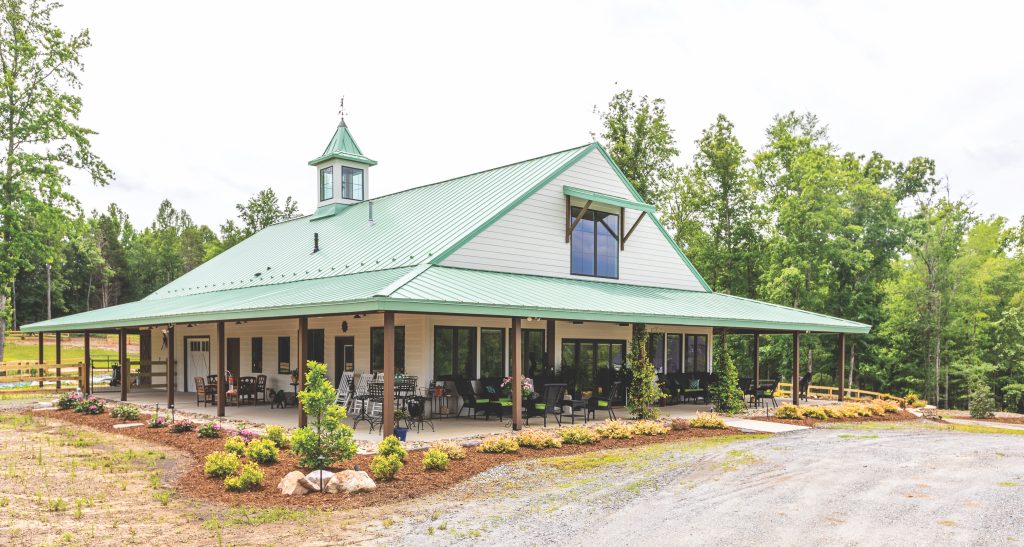
Last year, before the gated entrance was installed at Terry Christian’s new home, some neighbors drove up to the gleaming barn-like structure — the one that’s topped with a weathervane shaped like a dancing pig holding a martini glass — and asked, reasonably, if the building was a clubhouse provided by the homeowners’ association.
No, Terry explained. She was “in” the neighborhood, a freshly minted cul-de-sac community in Summerfield, but she was not “of” the neighborhood.
The wide-set building with a green, metal roof and deep wrap-around porch was her private dwelling, she informed them.
She would share the hybrid house-barn with her horses, dogs, cats, a pig, a mini-donkey and other “Old MacDonald”-worthy characters in her critter-based life.
Some of the neighbors thought it was cool.
Others thought it was “ew.”
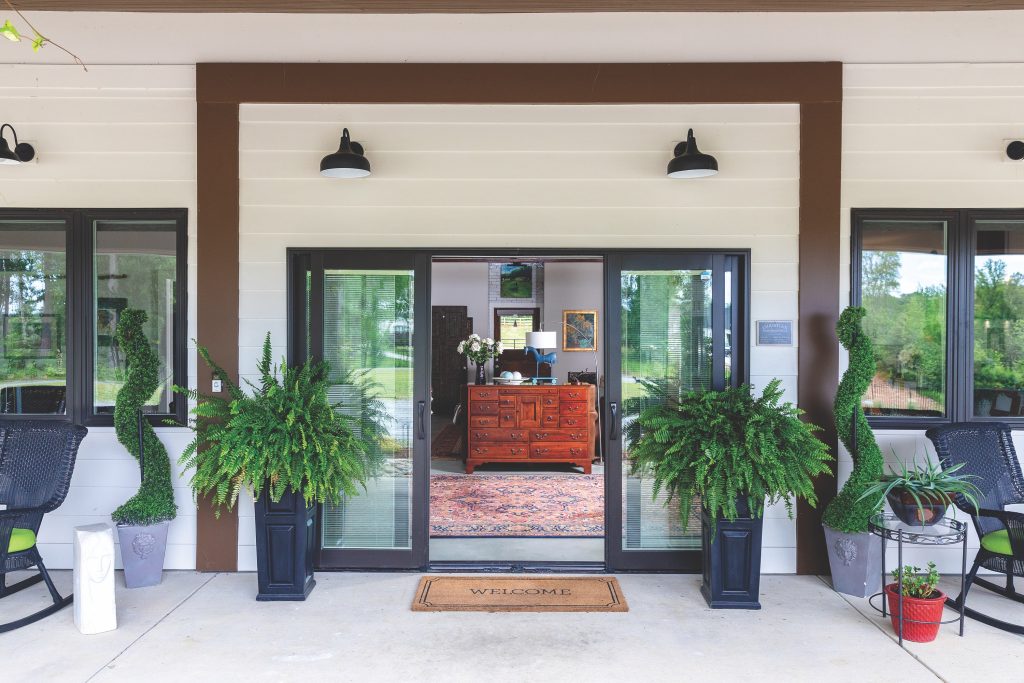
Unbeknownst to both groups, they had crunched up the gravel driveway of a dream that hatched in Terry’s mind when she was an animal-loving girl growing up in Greensboro’s Old Starmount area in the 1960s.
Where did the dream come from?
Terry herself is not sure. Maybe she was influenced by Mister Ed, a TV sitcom that ran during her childhood. The show featured a horse that stuck his head through the top half of a Dutch door — very much like the portals in Terry’s barn — and conversed in voice-dubbed dialogue with his owner, Wilbur.
Maybe her dreams were genetic in nature, the combination of her refined Southern mother’s compassion for the less fortunate, along with her father’s affinity for helping things grow and flourish.
Her dad, Dr. Joe Christian, was a well-known general practitioner in Greensboro. He was an avid gardener, too.
He imagined the city’s Bog Garden in 1987 while walking the family’s Boykin spaniel around the marshes near Northline Avenue and Holden Road. He appealed to landowner Blanche Sternberger Benjamin, widow of Friendly Center developer Edward Benjamin, to give the land to the city. The rest is wetland history.
That genealogy alone could explain Terry’s desire to live close to the land.
It’s also possible that her aspirations were totally unique, the sum of nature and nurture — plus more nature — including hours spent playing in a creek and slogging home with lightning bugs in jars and frogs in her pockets.
Whatever the source of her dream, it took root.
And grew.
And now, nearly 60 years later, it has flowered.
“I finally get to have my passion,” Terry says.
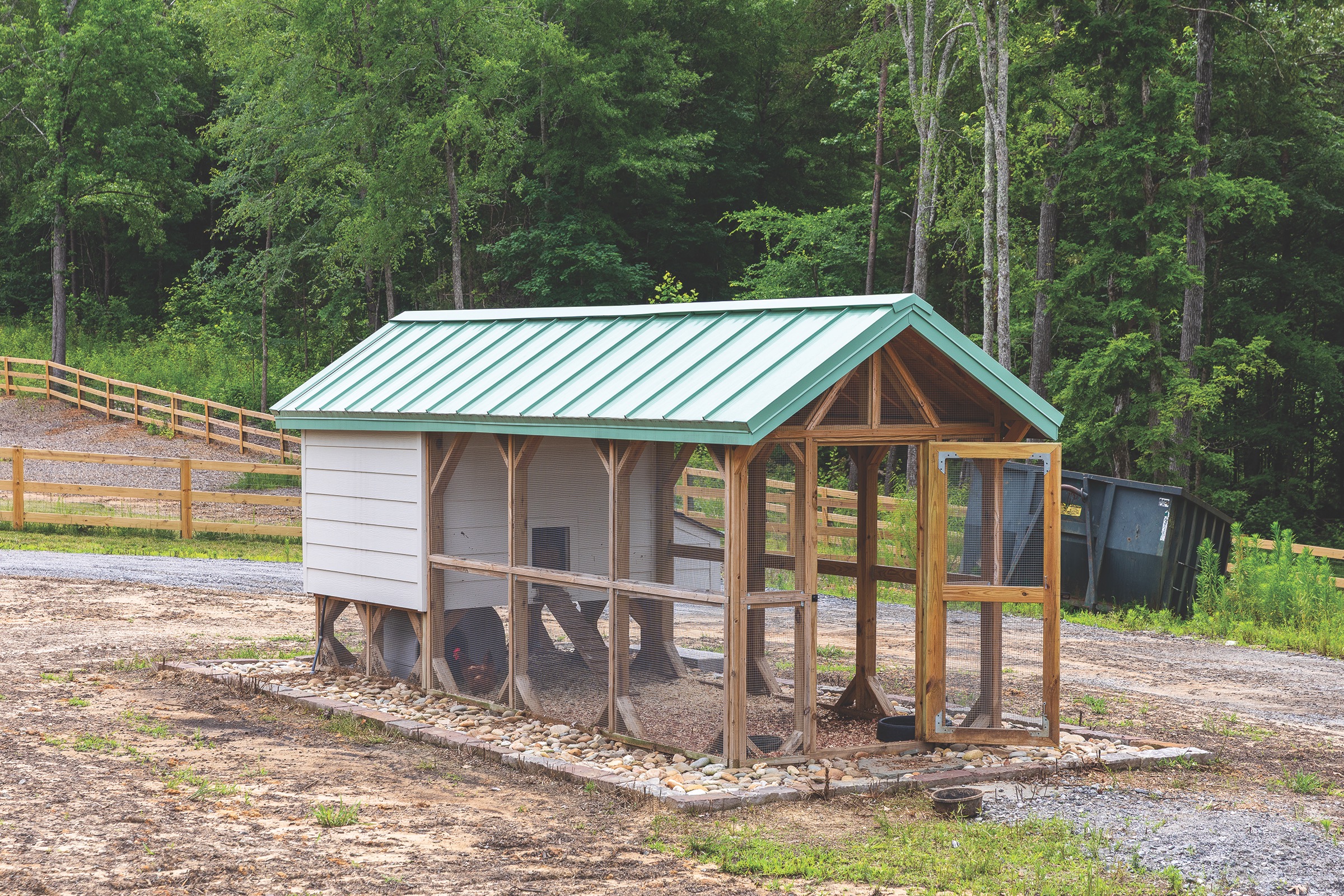
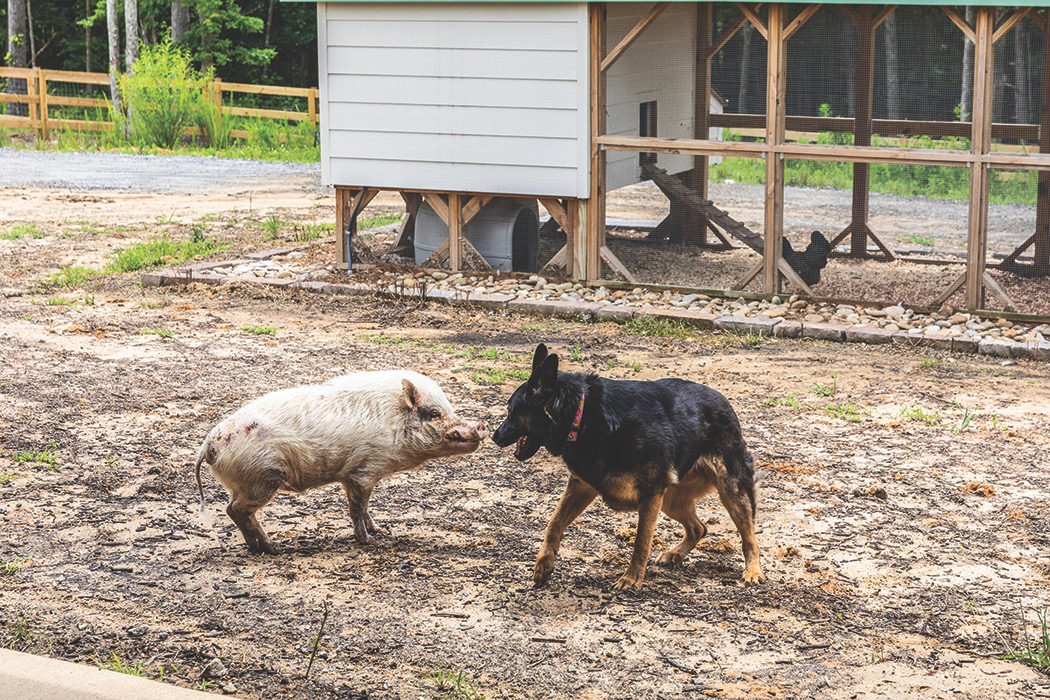
Terry seems genuinely surprised that her pet pig, Hamlet, is caked with mud as he emerges from his dome-shaped “pigloo” in the side yard, snorting as he trots toward her with porcine purpose.
(Insert pig grunts here.)
“You are soooo dirty,” Terry coos to Hamlet.
(Grunts of acknowledgement.)
Indeed, Hamlet — a bristly, blond Vietnamese pot-bellied pig Terry bought as a piglet nearly 14 years ago — is not your average porker.
First, he cuts a svelte figure. For a pig.
Even the vet noticed.
“I’ve never said this before, but your pig is too skinny,” the vet told Terry, who is addressing the situation with supplemental puppy chow.
Second, Hamlet seems to engage in earnest conversation with Terry, who notices that he is favoring his right front hoof.
“What happened to your foot, little one?” she asks.
(Grunts of explanation.)
Terry watches and listens, as if making a diagnosis. She comes by that skill honestly.
Often, when her father, “Dr. Joe,” went on a house call for humans, young Terry — the third of four kids — tagged along. Sometimes, patients who were short on money paid her father in animals. Terry wanted to be there.
Finally, her mom said no more house calls for Terry, who was amassing a small zoo of cats, dogs, rabbits, a guinea pig and a duck named Donald, who imprinted on Terry.
“Wherever I went, that damn duck would follow me,” says Terry.
She wanted a pig and a monkey, too, but her parents said that pigs and monkeys would not fly, in any sense, in their home on Mistletoe Drive, a short suburban walk from the then-new Friendly Center.
She lobbied for a pony in the backyard. Her family gave her riding lessons at Gambolay Farm off Old Battleground Road.
Later, Terry got her own mount, a black horse named Tar Baby, who was stabled at Reedy Fork Ranch, off U.S. 29.
She, her sisters and their friends spent long hours at the farm, riding trails and getting into mischief with horses, hound dogs and barn snakes.
“I should have been a vet,” says Terry, “but I was more interested in cheerleading than chemistry.”
After graduating from Grimsley High School, she spent a year traveling with the nonprofit organization Up with People, a network of young musical troupes that sing and dance and otherwise exude positivity on stages around the world.
Terry’s casts traveled the U.S. in Greyhound buses, staying with host families and napping in hammocks strung up inside the buses.
“I was small enough to sleep on the luggage rack,” Terry says.
A talented alto, she loved being on stage. She earned degrees in theater and voice from UNCG. A friend lobbied her to move to New York and try Broadway.
But Terry stuck around Greensboro. She had found another love. She married Greg Johns and had two daughters, Austin and Anne-Christian.
She stayed in the public eye, too, by modeling, performing in community theater and acting in commercials, including those she wrote for her family’s business, Johns Plumbing.
To many, Terry had a picture-perfect life, including a sprawling estate in Summerfield, where she and her family maintained a 5,300-square-foot home and an 8,000-square-foot barn.
They kept horses plus peacocks, chicken, sheep and cows, and, for a while, a small vineyard with Sangiovese grapes.
Terry lived in fifth gear.
Then came 2020. Her eldest daughter, Austin, married. The pandemic hit. She and her husband split and sold the farm.
Terry moved in with her mother, by then a widow, who was happy to have the company.
Moving home at age 63 was strange for Terry.
She slept in her old bedroom.
“I kept thinking I should be sneaking out,” she quips.
Terry brought Hamlet and several of her chickens home to roost on Mistletoe Drive.
One day, she saw a Facebook post reporting a pig on nearby Madison Avenue.
Terry ran right over.
Another time, a neighbor reported a fox trotting down Mistletoe Drive with a white chicken in its mouth.
Something had to change.
Terry’s vision popped up again. What if she built her animal-filled dream home and took her mom with her?
Home design websites were full of barndominiums, a trend among rural-minded design buffs.
Terry made a list of architects.
Her lifelong friend, Laura Griffin, who had converted an old dairy barn in Wallburg into a chic bed-and-breakfast (see the Spring 2017 issue of O.Henry’s design-minded Seasons magazine), recommended Greensboro modernist architect Carl Myatt.
After one conversation with Myatt, who had tackled many challenging projects in his 60-plus-year career, Terry decided to look no further.
“Don’t laugh,” she instructed Myatt as she drew her dream floor plan with a crayon on a paper napkin.
She drew a rectangle with a line down the middle, short ways. Half barn. Half house. See?
Myatt listened. And asked questions.
Was she prepared to live with the smell of barn animals?
Terry assured him that she was obsessive about cleanliness and that smells would not be an issue.
What about the flies? Myatt asked.
I’ll hang pest strips, she answered.
Land?
Working on it, Terry answered.
Intrigued, Myatt started sketching.
“I’d done barns, and I’d done houses, but I’d never connected them,” he says.
The final plan amounted to 3,000 square feet, split evenly between home and barn.
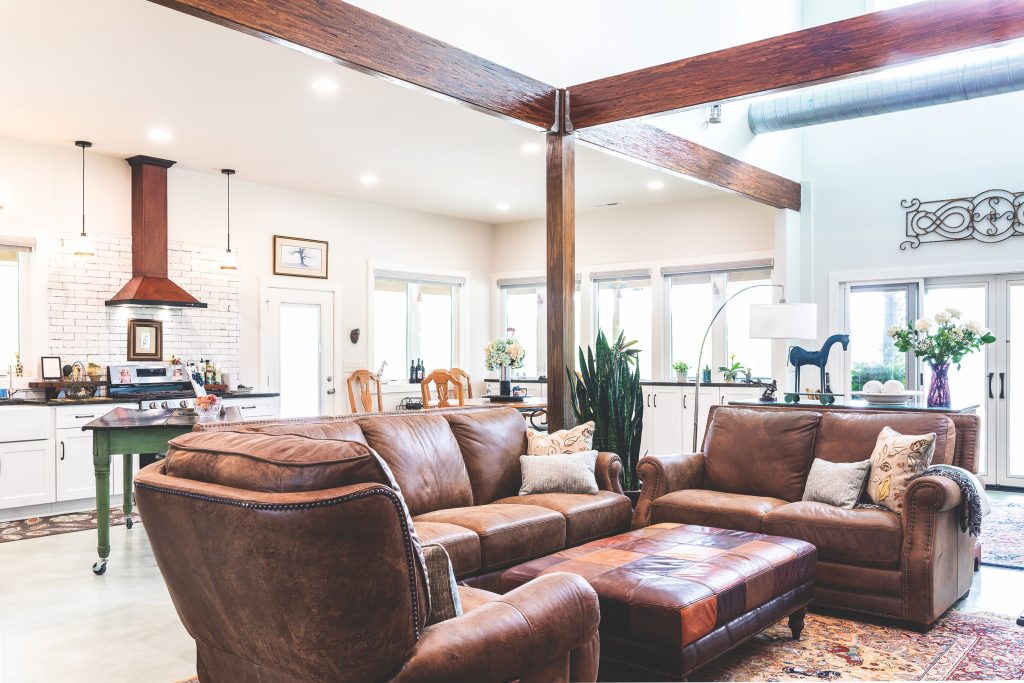
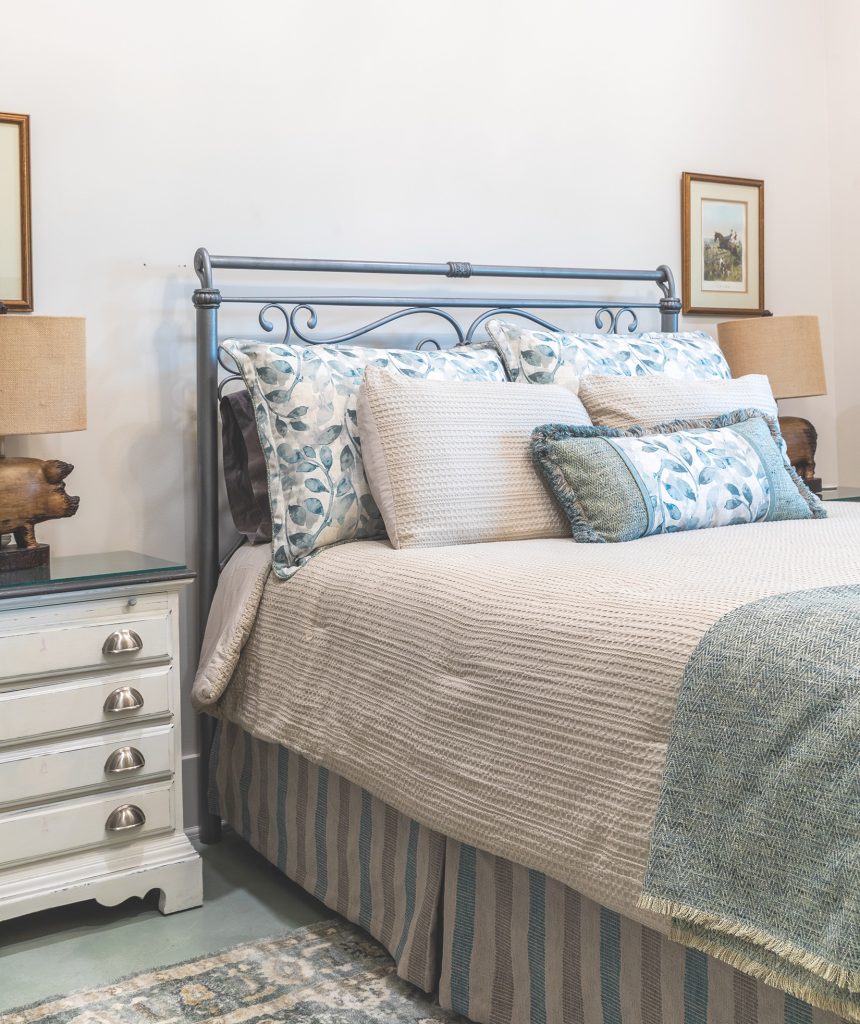
The human quarters include an open kitchen and living area plus space for a pottery studio, and two en suite bedrooms. The home would be a significant downsizing for Terry, but the space was all she needed or wanted.
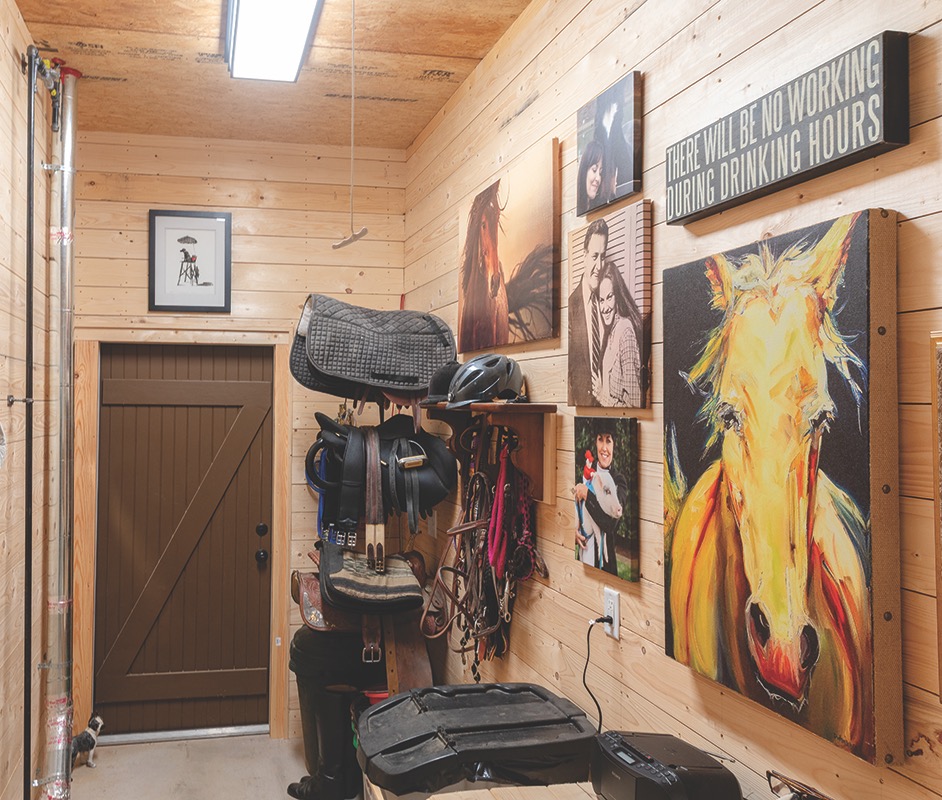
The barn would have three stalls, a tack room and an equipment bay. The center aisle would be flooded with natural light streaming in from a custom-made cupola.
Myatt finished the plans.
Then everything froze.
COVID was still mucking with supply chains and the prices of construction materials. Terry waited for prices to fall and rejiggered financing.
Lenders wanted to know: Was the structure a house or a barn?
Yes, said Terry, who still owns part of the plumbing business.
Construction started in 2021 and sputtered along.
Terry’s mom moved to a memory care center in 2022.
“She knew it was time,” says Terry.
The residential part of the barndominium was finished in 2023, and Terry moved in without her mom.
Later that year, Anne “Annie B.” Christian died.
“Both she and Daddy are still here,” Terry says confidently. Many of her parents’ treasured objects surround her in her new place.
Her doctor-gardener-father, who was a talented sculptor as well, made a bust of Mark Twain. The caricature rests on a pedestal near the front door.
Nearby stands her mother’s upright piano, which Terry’s grandson, 2-year-old Forrest, brings to life when he visits.
Artwork by his 5-year-old sister, Bridger, splashes the space with energy.
With the help of designer Lou Walter of High Point, Terry brought polished warmth to her museum-like space, which is bound by high ceilings, white walls, banks of windows and a concrete floor.
Playing off exposed beams overhead, the duo grounded the kitchen and living area with bass notes of leather furniture, Oriental-style rugs, bronze artwork and pottery, some of which is by Terry’s own hand.

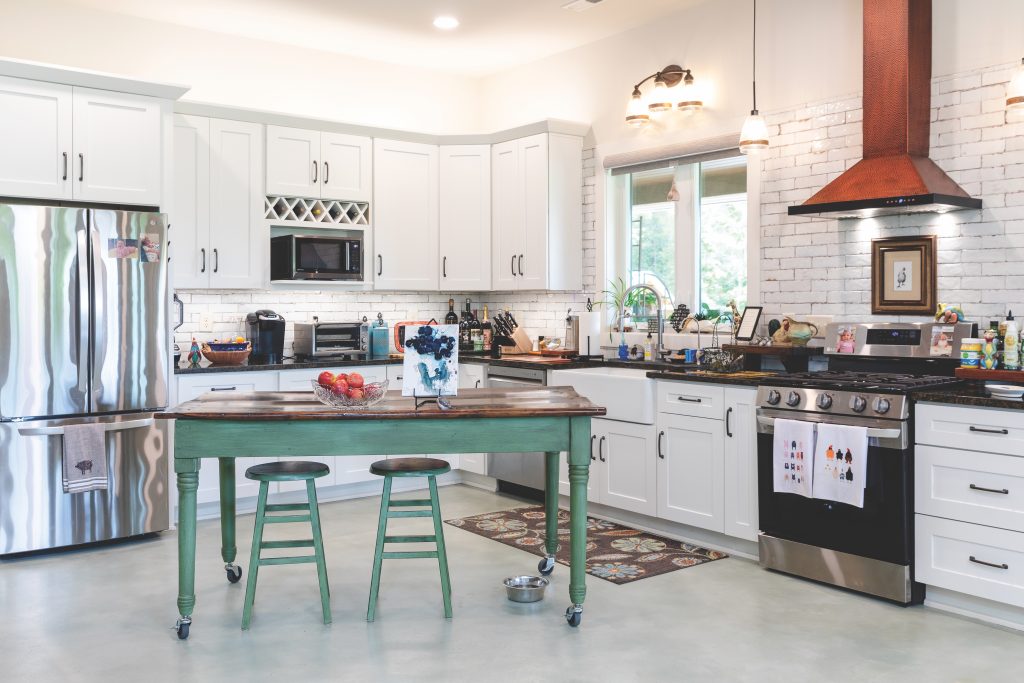
A hammered copper stove hood and dark, speckled, peacock granite countertops anchor the kitchen.
Greensboro artist Lisa Cox used her faux brushwork to add interest and depth to the concrete floor and a vintage table-turned-kitchen-island. She copied the kitchen’s subway tile backsplash in a doorway leading to the barn, which was finished earlier this year.
General contractor Earl Waddell applied his woodworking skills in the equine wing, finishing the interior with handsome tongue-in-groove, yellow-pine walls and doors.
The stalls received their first occupants, rescue mares Midnight and Cinnamon, in July.
Their luxury compartments include automatic watering troughs, rubberized floor mats, stylish wrought-iron hay racks and modern ceiling fans just out of reach of curious muzzles.
The third stall belongs to a mini-donkey, Faith.
“I want the place to be swarming with animals,” says Terry, who is well on her way to populating her hilltop ark.
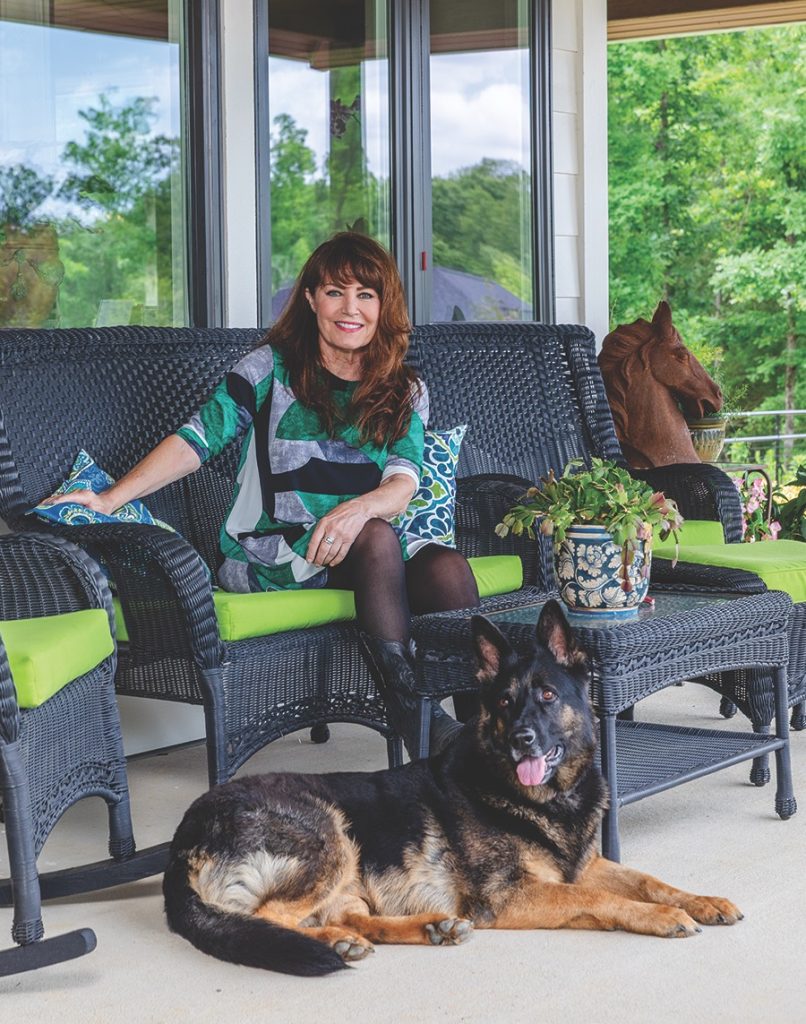
Her housemates include a fiercely protective, 75-pound German shepherd, Xena, who is named after the Warrior Princess, as well as a Scottish Fold cat named Gabby and a Siamese-tabby, Taz.
Confident of having a few more lives, Taz spars with Xena on the rug at Terry’s feet.
Certain humans are welcome in this setting.
Terry envisions a nearby knoll as a possible future home for her grandchildren, who could traipse over the rise to YaYa’s house. A family compound on 22 acres, some of which skirt the Haw River, would suit Terry just fine.
She will add creatures as she sees fit.
Her green eyes flicker.
“I still want that monkey,” she says.