
Trains, Trails, Technology
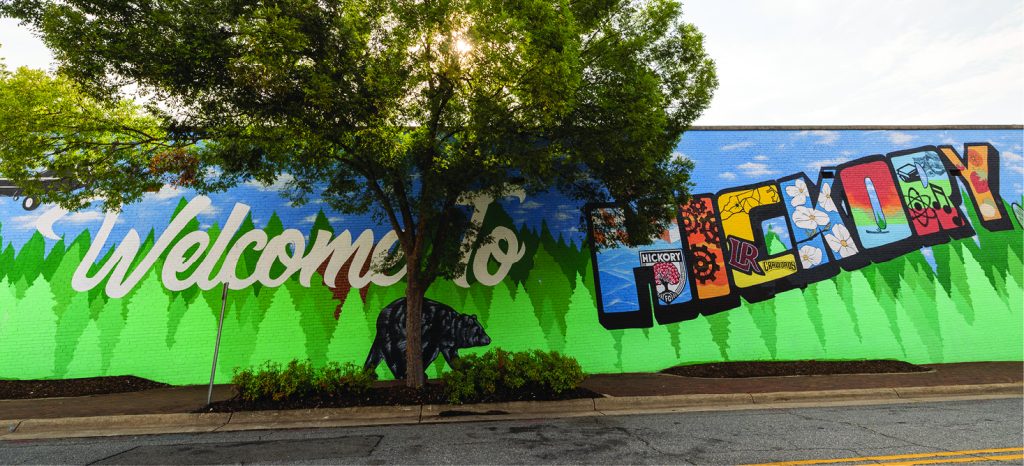
Trains, Trails, Technology
A Day Out in Hickory
By Danielle Rotella Guerrieri
Photographs by Liz Nemeth
When you think of an energetic cultural hub, Hickory may not be at the top of your list, but maybe it should be. Nestled in the foothills of the Blue Ridge Mountains and a straight shot west from Greensboro is the small city that National Geographic named one of the country’s best in 2018 for its “hipster-friendly” vibe. Today, it remains a true hidden gem that spans far beyond its logging and furniture roots, having strategically transformed itself into a community of creators and innovators.
Curious about the city that calls itself “Life Well Crafted,” I, along with my husband, Tom, hopped on the highway to experience for ourselves the farm-to-table restaurants and breweries coupled with distinctive cultural and outdoor offerings that have been enticing troves of unexpected-destination seekers.
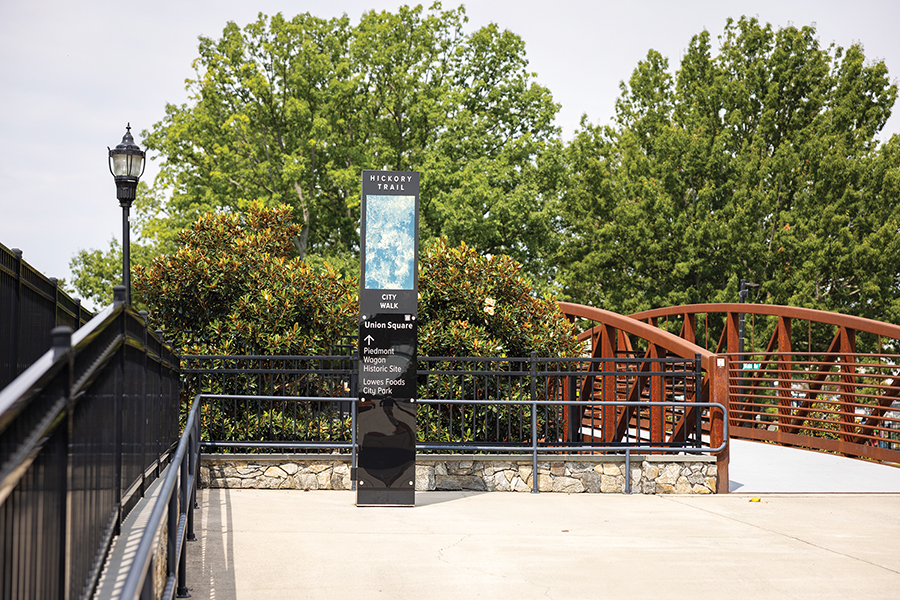
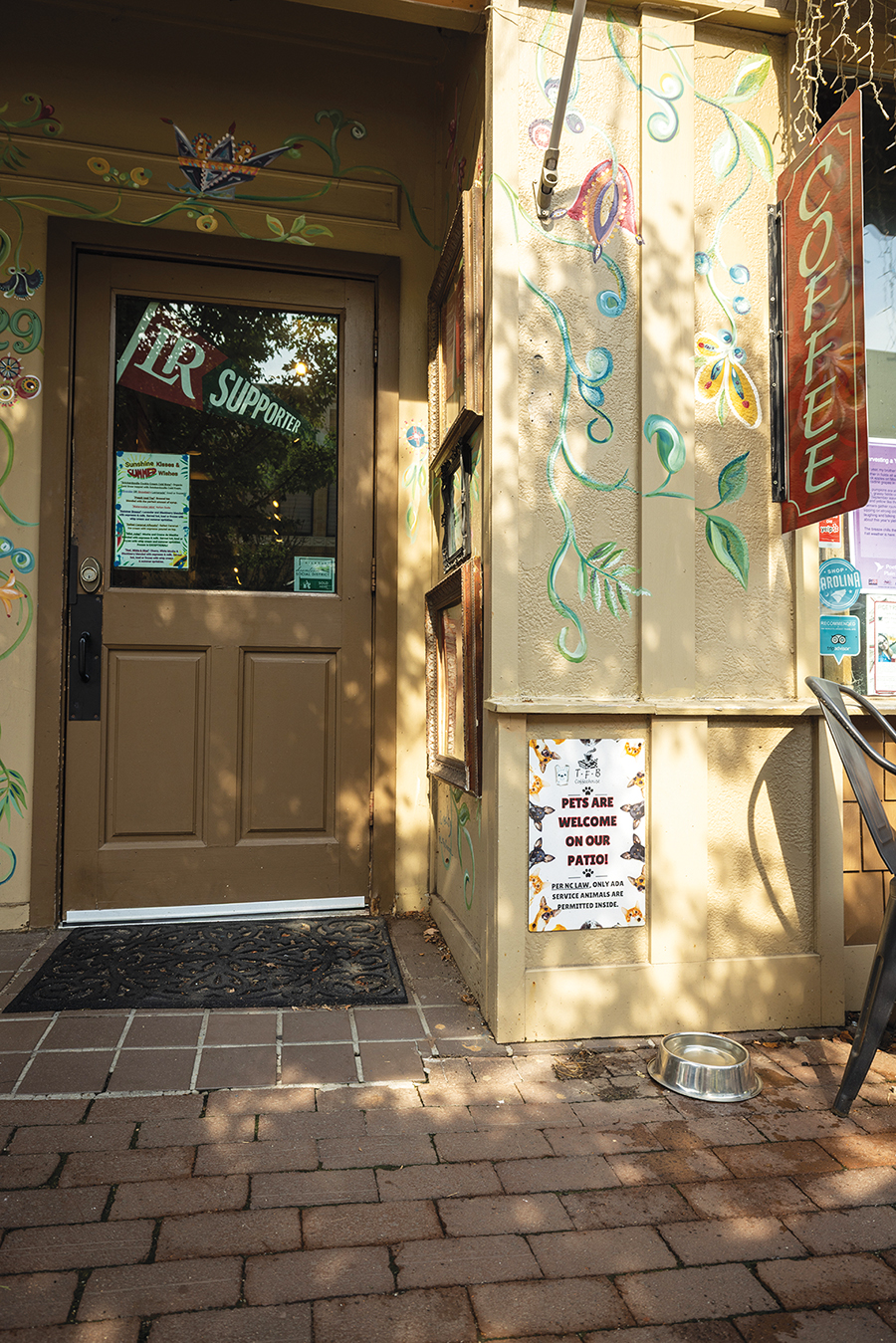
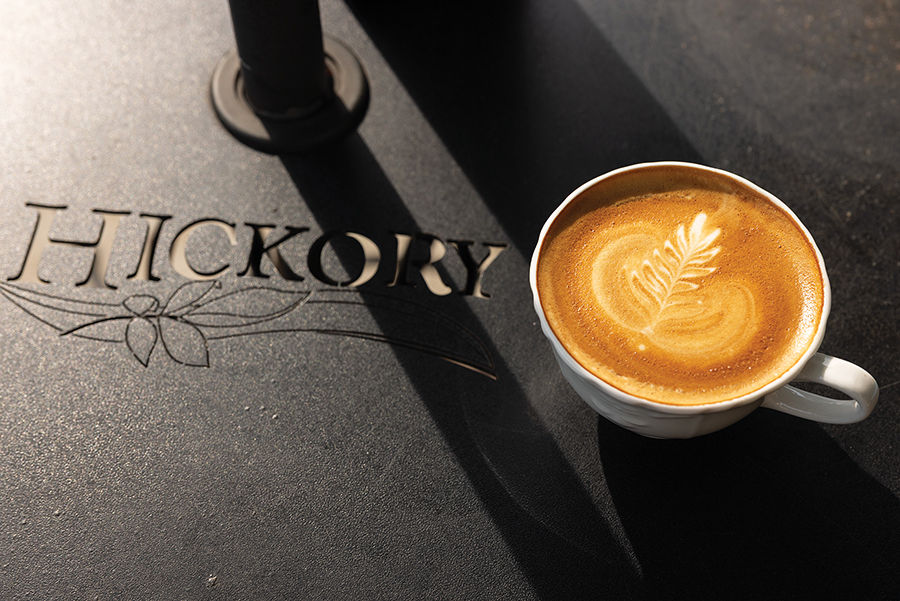
Taste Full Beans is our first stop in Hickory, a large, funky space buzzing with energy as bustling folks gather on a cloudy Saturday morning to fuel up on caffeine and local cuisine made from — as written on the front chalkboard — “ingredients sourced from local farmers we know by name!” After gulping down a couple sips of a French press java made with Einstein Dark beans for me, and a latte for Tom, we trek the 2.5-mile City Walk, a section of the Hickory Trail.
Hickory Trail, an 11-mile paved trail that connects downtown Hickory Lake, educational campuses, cultural venues and the Hickory Regional Airport, can be picked up from Union Square. Four of the Trail’s five sections are now open – City Walk, Riverwalk, Aviation Walk and Historic Ridgeview Walk. The last segment, the OLLE Art Walk, will open sometime in 2027, providing a midway connection along the path. Named after the OLLE Arts District, for “Old” and “Lenoir,” many artisans have relocated to this area, and the city is adding public art to transform the corridor, much like Greensboro’s Downtown Greenway. The Aviation Walk, in the opposite direction of where we are headed, is named such because it connects to Hickory’s Aviation Museum, located at the Hickory Regional Airport. The museum is chock-full of artifacts and memorabilia ranging from WWI to the present day, including ejection seats and flight suits from the 1940s — a can’t-miss visit for any plane aficionado.
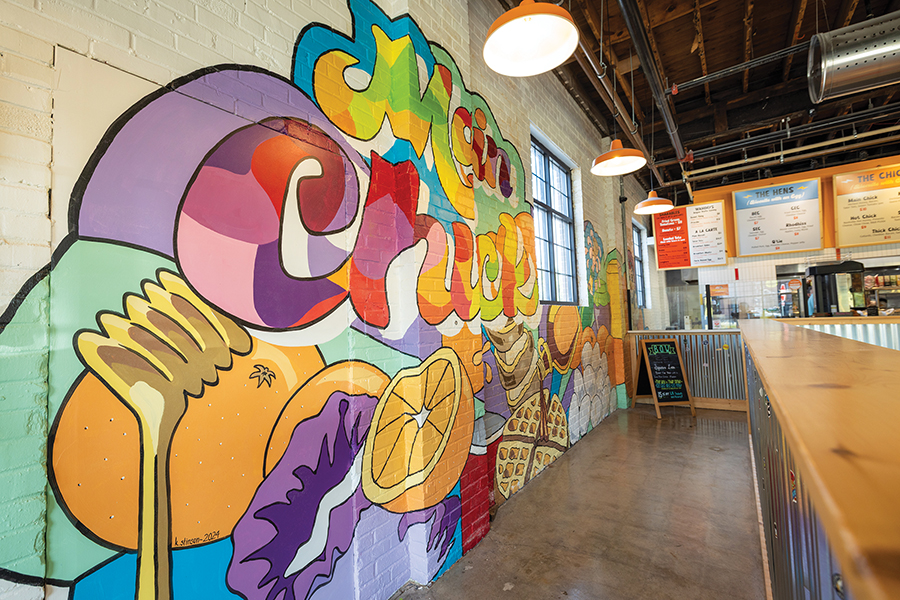
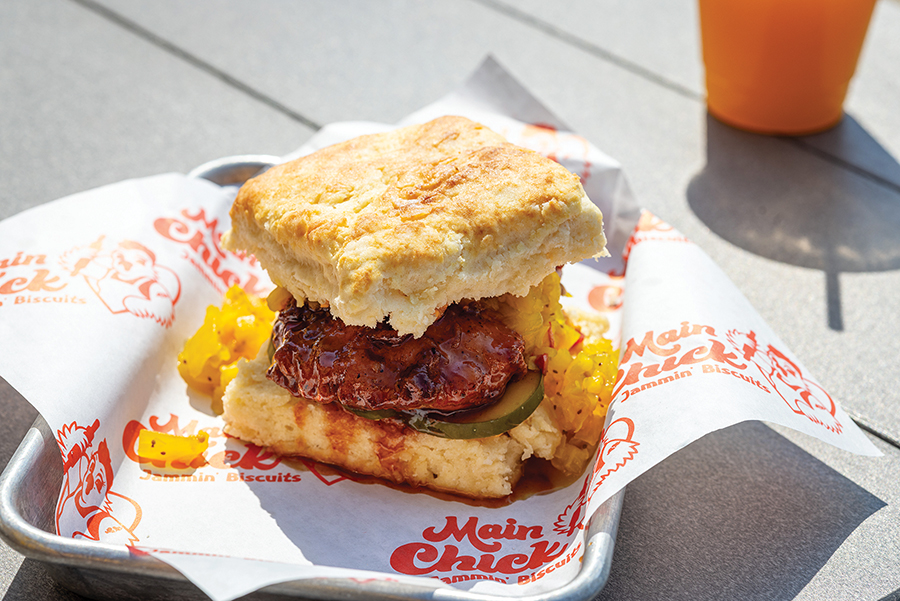
After reaching Lenoir-Rhyne University, we power back to downtown, but first stop for buttery, melt-in-your-mouth chicken biscuits at Main Chick Jammin’ Biscuits, a Cranford Hospitality property. Cranford Hospitality co-owner and Hickory native Zack Cranford worked as a youngster in his parents’ original restaurant, Granny’s Country Kitchen. After graduating from N.C. State, he moved back to Hickory and opened several restaurants with his parents and brother before acquiring 205 Main Ave., home to City Walk Brewing & Distillery, Cranford Brother’s BBQ and Main Chick, all facing City Walk. As a child, Cranford saw Hickory as a booming manufacturing hub, only to witness its gradual decline. Since then, he says, “I’ve seen Hickory transform into what it is today.”
Passing signs for SALT Block on the Trail — short for Science, the Arts and Literature Together, a nonprofit that supports Arts Culture Catawba, Catawba Science Center, Hickory Choral Society, Hickory Museum of Art and Western Piedmont Symphony — piques our interest in the artistic fervor of a city that is home to just over 45,000 residents.
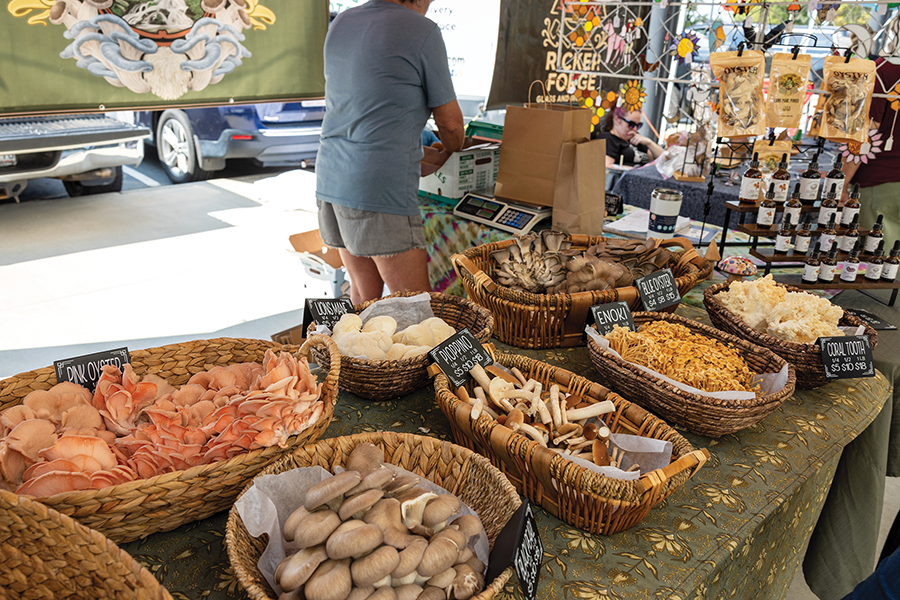
At the downtown Hickory Farmers Market, that creative spirit shines. We scope out goods from stained glass artists, mushroom farmers, knife sharpeners, you name it, as the sweet fragrance of homemade sourdough bread and fresh-cut flowers permeates throughout the walkway. With an ambitious mission statement — “contributing to the well-being, education and vitality of the community and local food economy for our residents, farmers and artisans” — the market is open until 1 p.m. Wednesdays and Saturdays from April through October, beginning at 10 a.m. on Wednesdays and 8 a.m. on Saturdays, then only on Saturdays from November to mid-April.


Union Square, where the market is located, has been around since 1913, when a street ran in front of the shops before being redeveloped as a pedestrian mall in 2012. Sails on the Square, gigantic overhead canvases resembling a ship’s sails, offer sun and rain protection for the farmers market and Sails Original Music Series, a free flagship event every Friday night in May, June and September.
Just off Union Square, Trade Alley Art is our next stop, a bright gallery where we meet dimensional artist Barbara Haeme and fused-glass artist Tyrone Powell. One of Powell’s glassworks catches my eye — a miniature white guitar that features horizontal and vertical black lines with punches of primary colors, emulating the early-1920s Modern abstract style of Dutch painter Piet Mondrian. Haeme’s mixed-media collages are equally captivating, made from repurposed clock, piano and camera parts and assembled into striking, sculptural pieces.
Around the corner, The Front Stoop’s antique-chic atmosphere and old-world ambiance draw us in. Owner Madison Chapman is the new kid on the block, opening her doors this past April. “We just got back from the Round Top Antiques Fair in Texas,” says Chapman, explaining how she maneuvered through 11 miles — a similar length to the completed Hickory Trail — of antiques along State Highway 237 in Carmine, Texas, hauling home one-of-a-kind items for the store. Among shelves of ornate copper bowls and richly-aged, patinaed mirrors, I spy a funky wood-inlay vase, perfect for my living room bookshelf.
After some solo shopping at Bottega, Thistle Dew Nicely, Ella Blu and Aqua B Downtown boutiques, I meet back up with Tom, who’s been doing his own Union Square window shopping. We meander inside The Natural Olive, a gourmet olive oil and balsamic vinegar store with a Mediterranean-inspired vibe owned by Revi and Daniel Bar, who bought the store from its previous owner last year. We taste-test several savory blends before Tom buys a half-dozen bottles, including a cilantro-and-onion blend, a Tuscan herb EVOO and an 18-year-aged balsamic. You can never have too much olive oil or balsamic vinegar, can you?
We continue to DASH Home + Kitchen, a warm, welcoming space filled with natural light, stocked with exquisite kitchenware and signature gifts. Owner Holly Woodward, interior designer by trade, and her husband, Mark, moved to Hickory from High Point almost a decade ago for Mark’s furniture company job. They changed career paths after the pandemic and couldn’t imagine opening a small business anywhere else. “The talent is abundant, and the city does everything to be progressive,” says Holly. Their inspiration took shape again this summer, with the soft opening of yet another business, The Downbeat, an intimate jazz cocktail lounge on Union Square. Featuring live performances and carefully curated vinyl, bespoke cocktails and an elevated small-plate menu, The Downbeat collaborates with talented musicians, such as Kass Blount & The Burners, and local farmers, including farmers market regular Hedge Family Farm.
The Hickory Wine Shoppe, a sophisticated watering hole with a dozen or so tables next to a tall mahogany bar, catches our attention next. Smoked oysters, local artisan bread and other tasty bites are offered from the “tiny but mighty” kitchen, and natural wines from small producers who use sustainable farming practices can be sipped either inside or outside along Union Square’s social district, where folks 21 and older can enjoy alcoholic beverages on the street.
Deciding our appetites are more mighty than tiny, we head across the railroad tracks to Olde Hickory Station, a historic 1912 railway depot that was repurposed in 2013 into a bustling restaurant and market. Outdoor tables with umbrellas line the dog- and kid-friendly patio that sits parallel to the train tracks. Inside, a skinny bar, where a gaggle of hungry customers sits for lunch, lines the interior corridor of the main dining area. Behind 20 or 30 beer taps is a vibrant mural depicting the building from the 1900s. Excited to sample Hickory’s local craft beer, I order a flight of lagers and ales, declaring Olde Hickory Brewing’s Fresh Hop my favorite, while we hungrily snack on chicken wings and roasted beet salad.
Before hitting the highway back toward home, we digest while doing a little historic sightseeing from the comfort of our car. We cruise past several landmarks, including the Piedmont Wagon and Manufacturing Company, a series of brick buildings at the junction of two railroads. From the 1880s–1940s, up to 1,000 horse-drawn wooden wagons a month were produced within the walls of those historic, industrial buildings.
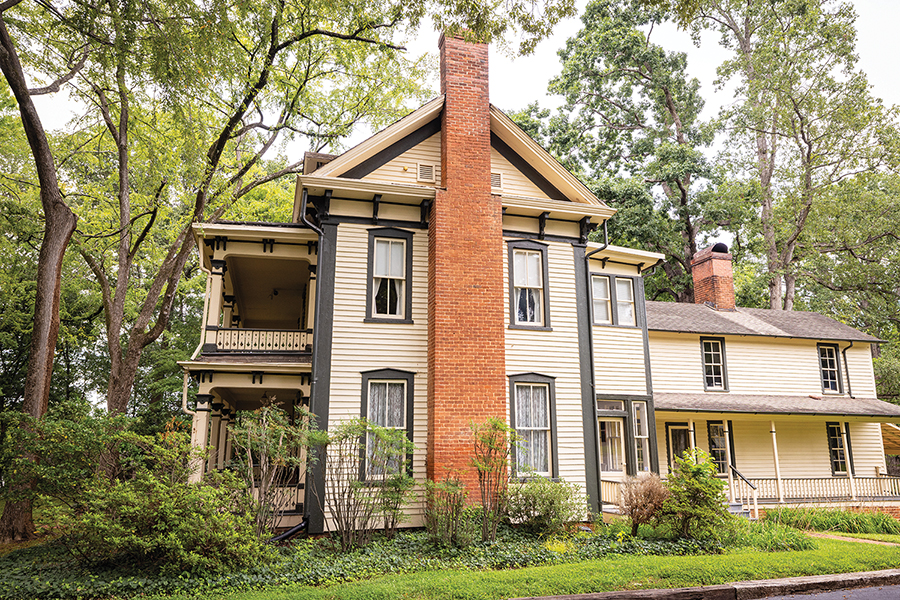
We pass by Maple Grove, an impressively tall Italianate-style farmhouse with round columns and green trim built in 1883 for Mary Adelaide Lindsay Shuford and her husband, Adolphus Lafayette Shuford, who founded Hickory Tavern, the village that later became the city of Hickory in 1873. Adolphus bought multiple lots, imported the first Jersey cattle herd to North Carolina, and developed a 70-acre dairy farm shortly before his 1885 death at the age of 53. Shuford descendants founded and own Century Furniture, one of the remaining furniture makers in Hickory. Preserved by the Hickory Landmarks Society, which also maintains Propst House and Houk’s Chapel, Maple Grove offers free tours.
National Geographic got it right eight years ago. Between the walkability, music scene and array of independently owned shops and restaurants, Hickory has evolved — while still honoring its roots — into a place that makes a perfect full-day pit stop on the way to the mountains. But it’s completely worthy of its own dedicated day trip, too. OH