The Accidental Astrologer

Romance, Recklessness and Destiny

For the November-born, excitement is written in the stars

By Astrid Stellanova

Creative Ole Abe was an Aquarian, like four other notable U.S. Presidents. But then, you knew that, right Star Children? So when Abe Lincoln proclaimed a national Thanksgiving holiday in 1863, it was a good idea that nobody could resist, no matter which side of the Mason Dixon line they lived on.

But did you realize another holiday figures into the stars this month? Do the math — November-born are conceived around Valentine’s Day, which means they are the stuff of romance, recklessness, destiny, or a maybe a little bit of all. — Ad Astra, Astrid

Scorpio (October 23–November 21)

Star Child Scorpio, you see someone through a forgiving lens, who by even the most generous descriptions would be called weird. As weird as a mating fruit bat. You are virtuous and hold on tight when another might cut bait and leave that bat behind. Return the favor to yourself and forgive the things you are privately self-critical about. It’s a necessary liberation and will set you on your highest course.

Sagittarius (November 22–December 21)

Darlin’, let ole Astrid lay it on you straight: Don’t hang with the night crawlers. As tempted as you are to enjoy newfound popularity, a few of your new hangers-on are not exactly top-shelf stuff. And maybe be a little less generous about picking up the bar tab.

Capricorn (December. 22–January 19)

Shew, Sugar, you were right all along. And as much as that is true, revenge ain’t as sweet as you think. Don’t shove your Mama overboard. By the time you read this, I hope you will find it in your heart to let it go so you can face everybody over the turkey table and smile.

Aquarius (January. 20–February. 18)

Time’s a-wastin’. Get your house in order before the holidays so you won’t be high, dry, and too lonely in the run-up to Fa-La-La Season. The only relationship you haven’t lost lately is with your Chia Pet, Sugar. Setting things straight with You-Know-Who will require an apology and some soul-searching. All worth it.

Pisces (February 19–March 20)

In a parallel universe, you got your due credit. But in this one, you did not. You must chase the thing you deserve credit for, and be sure you get top billing the next time you invent a self-wringing mop electric toilet brush. Cause, really, Honey Bunny, most are not that creative.

Aries (March 21–April 19)

Stuff went down and nobody was happy. Like a honey badger, you just don’t care much either. Good thing, because you are already on to the next thing and you are leaving the drama behind. If anybody’s nose is still out of joint, hand ’em a splint and a smile.

Taurus (April 20–May 20)

You haven’t moped this much since Burt Reynolds died. Honey, it may not be about Burt, but it might be about your recent inclination to go all nostalgic. The next time Smokey and the Bandit is on TV, just change the channel for gawdssake.

Gemini (May 21–June 20)

You may think the party can’t start without you, but Sugar, get a grip. Are you a self-declared disaster area? Or are you just ticked off because a genuine chance to make a big entrance didn’t happen? Think about it: If you throw the party, you get to control the spotlight, too.

Cancer (June 21–July 22)

This isn’t the time to take a stand about small and petty. In the name of world peace, let the jerk who rains on your party slink off into the night. You are about to have a wonderful holiday and nobody can change that. Get ready to make merry, Darlin’.

Leo (July 23–August 22)

It hasn’t gone unnoticed that you have launched a self-improvement program. Points for that, Honey. If you keep this up, somebody is going to surprise you with a declaration of love that might take your breath away, but do keep your hand on your wallet, as they might take that too.

Virgo (August 23–September 22)

Someone near and not so dear makes you grit your teeth and suck in your temper. You try to set a good example before this feckless fool. While you’re at it, try dividing by zero. Same outcome. Give them an air kiss and lickety-split, moving on fast.

Libra (September 23–October 22)

Your best work happens when you let go and let loose your natural charms. You don’t have to be Jim Carrey funny, Honey, just rely upon your dry wit, and good times and best outcomes find you. By next month, you won’t be able to keep up with all the invites.  OH

For years, Astrid Stellanova owned and operated Curl Up and Dye Beauty Salon in the boondocks of North Carolina until arthritic fingers and her popular astrological readings provoked a new career path.

Gallery

G.I. Joe

Photographer Joe Bemis recreates the drama of World War II

By Billy Ingram     Photographs by Joe Bemis

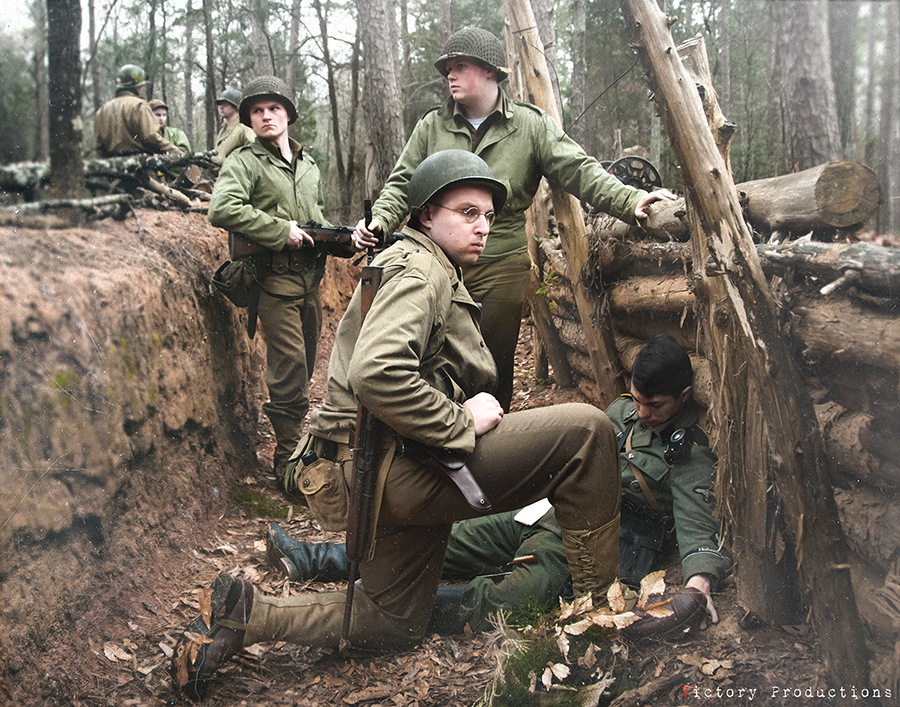
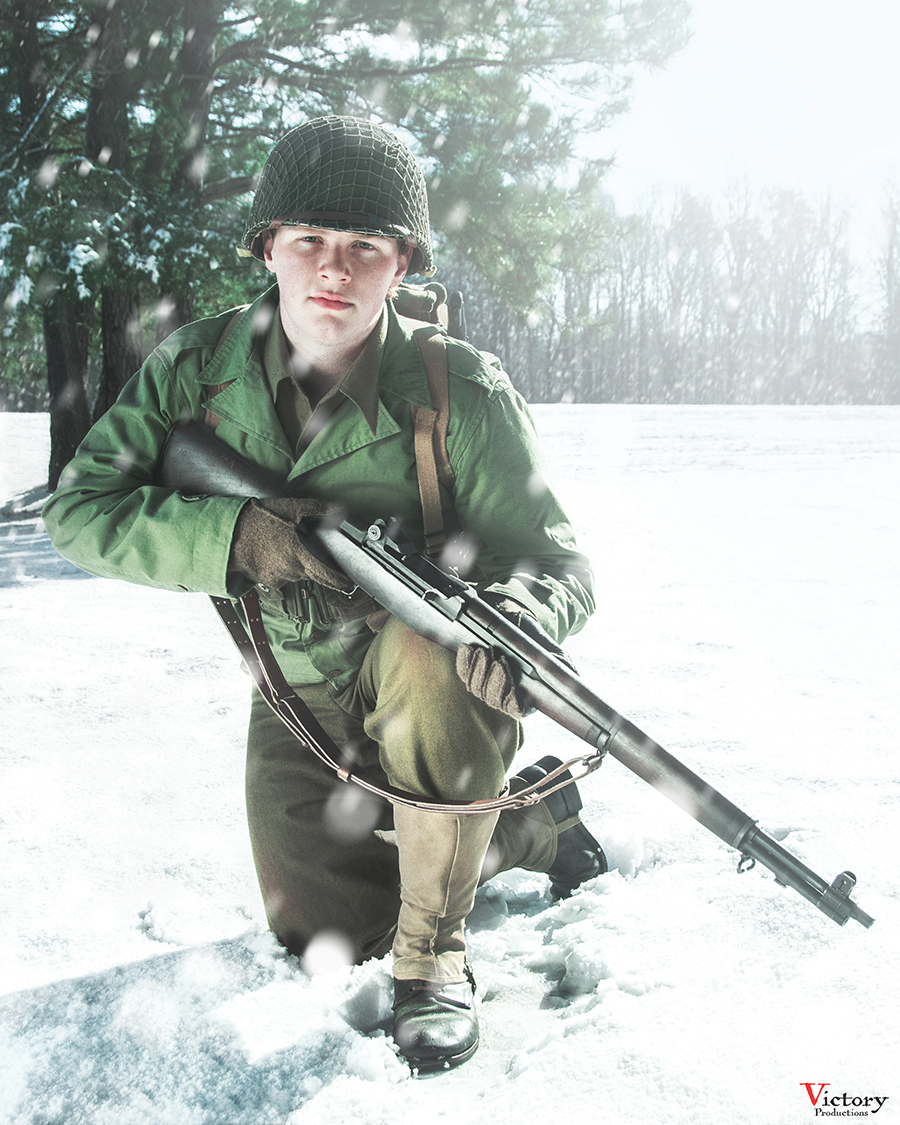
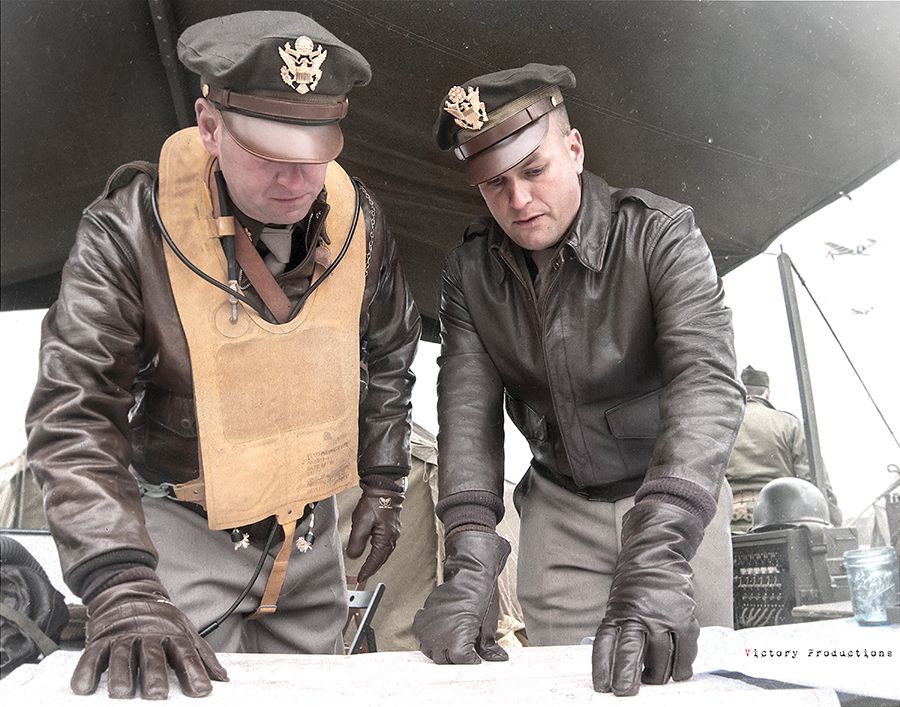
To celebrate Veterans Day, photographic artist Joe Bemis (featured in O.Henry two years ago) returns with another panoramic gallery recreating famous engagements in American military history. Under the banner of Victory Productions, he’s been known to depict soldiers in the field in Napoleonic times, even aerial dogfights during WWI, but his main concentration is on the Revolutionary War and World War II.

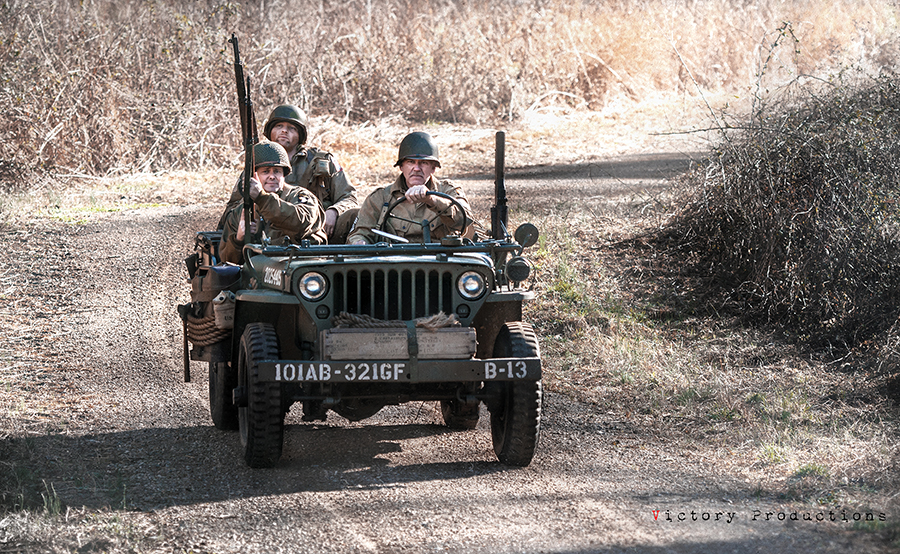
For the most part, Joe organizes photo shoots with historical re-enactors, like these images representing the 1st Infantry Division, The Big Red One and the 82nd Airborne at Operation Market Garden, using actual Jeeps from WWII, even a ’39 BMW motorcycle. You have to admire his dedication: Joe dug the 8-foot-deep gun emplacement for his Kuban Bridgehead ’42 photo series himself. “I don’t want to glorify war with my photos,” he says. “But Nazis were the world’s greatest bad guys.” Other photographs in this collection depict Russians and Germans at the Eastern Front.

“A lot of guys I’ve met own their own Jeeps, tanks and halftrack vehicles,” Joe tells me. “You can’t really find a Panzer or a Tiger tank because they don’t exist outside museums anymore, but you’ll see some guys with German motorcycles.” Nazi staff cars are more plentiful thanks to the Volkswagen Thing phenomenon. After all, the VW Thing was an automobile very similar to the Kubelwagen manufactured for the West German Army in WWII for use as staff cars, retooled slightly for sales in the United States in the mid-1970s.

On occasion Joe will take advantage of battle re-enactments produced for the public. He’ll arrive before the gates open and stay after-hours to stage photos with the participants. “I’ll grab a couple of guys and set the shots up because I have very specific images in my head that I want to recreate,” Joe explains. The last WWII re-enactment he attended was at Latta Planation in Huntersville, North Carolina. “That was one where I actually ran around in the battle while the action was happening, so I was able to get some shots that nobody else could get because I was at different vantage points,” he recalls.

For re-enactors it’s a very expensive hobby when it comes to weapons and outfits, especially so for Revolutionary War troops. “A buddy of mine is a tailor,” Joe notes. “He makes his living creating those uniforms.” Re-enactors are often ex-military, cops, history professors and curators. “Even when no one can see them they’re still in character, staying very accurate to what would have been happening around them at that time,” Joe continues.

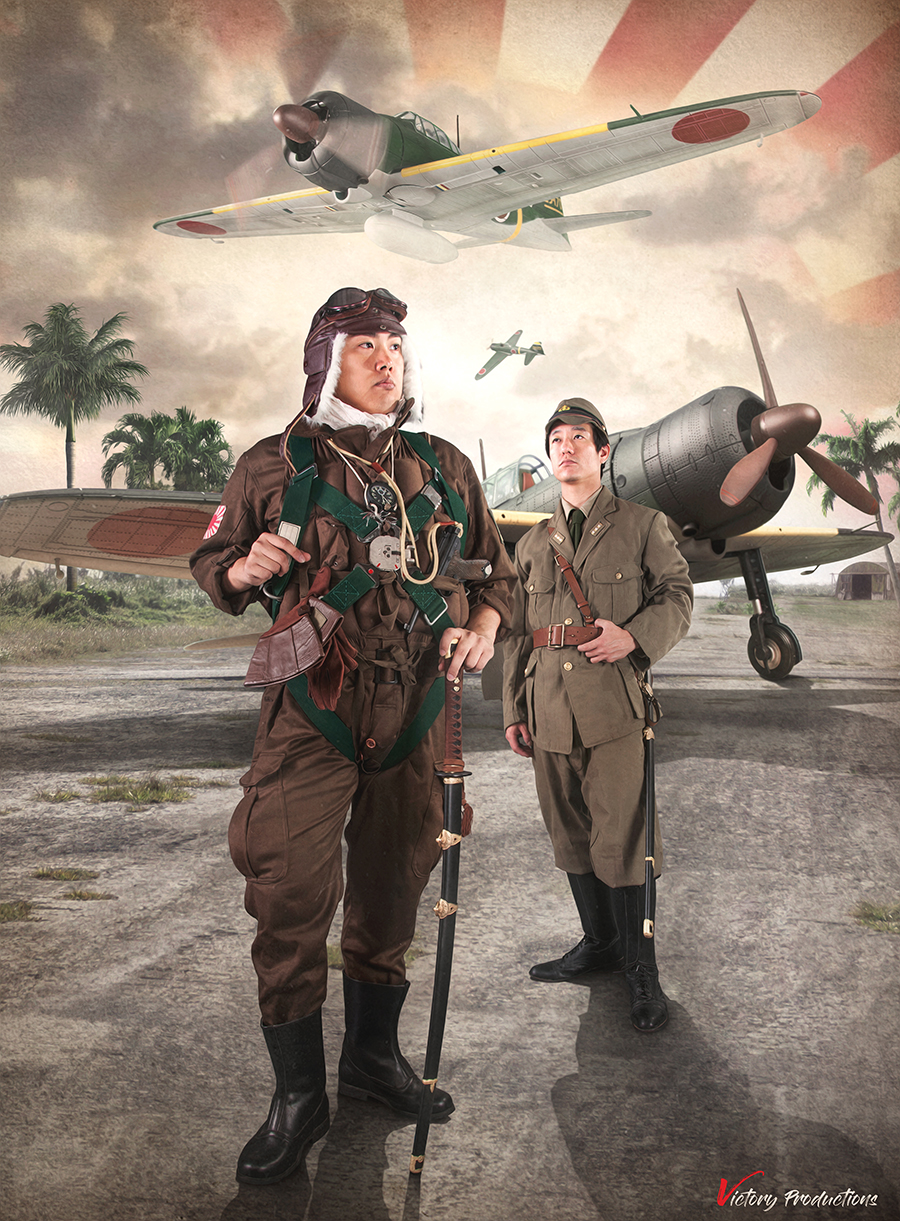
He is currently immersed in depicting the Japanese side of the second World War, in particular Zero and Kamikaze pilots. Airplane interiors were shot at last year’s Warbirds Over Monroe event, where aircraft seen in the motion picture Tora! Tora! Tora! were on display courtesy of the Commemorative Air Force out of Texas. “I was able to get in contact with the lead pilot Michael Burke and he gave me access to the planes for the interior shots,” Joe told me. “Even though they are not actual Zeros, they’re Navy trainers that were painted to look like Zeros because, from a distance, you couldn’t tell the difference. It felt so cool to be in those planes that actually flew in that movie.”

Although it was released well before he was born, Tora! Tora! Tora! from 1970 is one of the photographer’s favorite movies. “I watched that with my grandfather,” Joe remembers. “I never thought in a million years I’d be able to sit in one of those planes.” Max Lee is the main model in those photos, he adds. “He has the complete Japanese fighter pilot uniform. He even had the ceremonial sword on his dress uniform.” Photographed at a studio in New York, for in-flight scenes 1/18th scale model Zeros were used. “They’re accurate right down to the rivets,” Joe notes.

Meanwhile, Joe Bemis is applying his considerable talents to photographs he shot inside a restored German U-boat captured by the U.S. Navy in June 1944, currently on display at Chicago’s Museum of Science and Industry. That U-505 was captured by the U.S. Navy in June 1944. As for future Victory projects, “We’re going to Normandy next year for the 75th anniversary of D-Day,” Joe says. “That’s always been a dream. They’ve pretty much gotten every surviving C-47 to perform a fly-over over Normandy, paratroopers are going to drop over the historical drop zones. That hasn’t been done since D-Day. I can’t wait.”  OH

For more recreations from America’s military past, visit VforVictory.us. The next Warbirds Over Monroe air show will be on the 10th and 11th of this month, featuring the Memphis Belle B-17F Flying Fortress from the 1990 movie, Memphis Belle, the P-51 Mustang Swamp Fox, a German ME262, the very first jet-powered fighter, along with more than a dozen other historical aircraft. Held yearly at the Charlotte-Monroe Executive Airport in Monroe, N.C., ticket price for veterans and current military personnel is only $5, while kids under 12 get in free.

Billy Ingram is writing a book about his career as a movie poster designer working for the major Hollywood studios in the 1980s and ’90s.

Short Stories

Mountain Man

And no, we don’t mean Grizzly Adams, but acclaimed photographer Jeff Botz, whose panoramas of the Himalayan Mountains will be on view for the month of November starting on the 2nd, at Ambleside Gallery (528 South Elm Street). “I do not consider myself a documentary photographer, nor are these photos travelogue,” says Botz, who considers his work “visual poetry” that captures the wonder of being in so stunning a natural environment. Hence the show’s name, Vessels of Wonder, a concept Botz further emphasizes by pairing the photos with meditations on mountains and spirituality, from John Denver’s folk-rock classic “Rocky Mountain High” to verse by Persian poet Rumi. The fusion of images and words — not to mention the thousands who have flocked to Botz’s past exhibits in Charlotte and Hickory — are all clear indications of an artist at his peak. Info: amblesidearts.com.


Feet Accompli

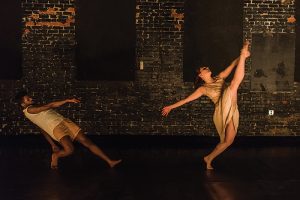
At 28, it has, quite literally grown by leaps and bounds. The NC Dance Festival brings together professional modern dance choreographers from across the state to share their creative visions. Showcasing a wide variety of dance movement, performances range from contemplative to playful. For, er, kicks, check out the innovation in action at 8 p.m. on November 9 at Greensboro Project Space (219 West Lewis Street) and November 10 at Van Dyke Performance Space (200 North Davie Street). For information and tickets: (336) 373-2727 or danceproject.org/festival.


Waist Not Wanted

Food season is officially upon us, but avoid gorging yourself and bingeing on junk food — and packing on the pounds — with a little education from Greensboro Children Museum’s Adult Cooking Classes. Kicking off the series on November 3, Chef Anders Benton of GIA demonstrates how to prepare his seasonal favorites (which students get to sample in a multicourse meal). On November 5, you can learn all about mindful eating (think: butternut squash, cherries and quinoa), make your own granola on November 10 and vegan desserts on the 15th. If all of this sounds a little too healthy, just enroll your kids in the Tween, Teen and Kid Cooking Classes on the 9th, 16th and 17th, respectively. The topics? Pies, pie-decorating and fruit pies. Sweet! To register: gcmuseum.com.


Go for Baroque

Though originally written for an Easter mass, Handel’s Messiah has, over time, become a staple of the Christmas season. After all, the entire first part of the choral work is about the birth of Christ, making it a fitting component of December church services. Additionally, there was an abundance of sacred music for Easter, but not so much for Christmas. Curiously, Handel wrote the work at a time when he was underappreciated; London audiences had yawned at his previous season’s works, so the composer worked feverishly in the late summer of 1741, writing from morning till night, before The Messiah’s debut the following spring in Dublin. The layered, exuberant choral piece wowed audiences and forever sealed Handel’s reputation as one of the greats. Hear for yourself as Jay Lambeth conducts Greensboro Oratorio Singers, featuring soloists Caroline Crupi, soprano; Emily Schuering, Mezzo; Jacob Wright, Tenor and Daniel Crupi, Bass in the company’s 65th performance of The Messiah. As a part of the Music Center’s OPUS series, the concert, starting at 7 p.m. on November 27 at the Carolina Theatre, is free and open to the public — something truly worth rejoicing. Info:
gsomusiccenter.org.


Oh, Beautiful!

Greensboro Beautiful, to be precise. The nonprofit dedicated to keeping the Gate City gleaming is capping off its 50th anniversary with an exhibition of works by local artist and “North Carolina’s painter” Bill Mangum. To raise money for Greensboro Beautiful, Mangum was commissioned to paint the city’s four public gardens (Gateway, Tanger, the Arboretum and Bog Garden), but as he engaged in the project, the number of paintings grew to 50. Charming vignettes — a solitary bench amid a profusion of pink azaleas, an iris in full bloom, the remains of a tree trunk in fall — began to fill the artist’s studio. See all 50 of them in the exhibition, which runs from November 7–17 at the Art Shop (3900 West Market Street), and appreciate not only the green in Greensboro, but its entire palette of vivid color, as well. Info: greensborobeautiful.org.


View to a Kiln

Need some extra plates, mugs and vases for your Thanksgiving table or to give as gifts? Then head to Curry Wilkinson Pottery (5029 South NC Highway 49, Burlington) on November 17, 18, 24 and 25 for the opening of the wood-fired kiln, which was completed this past summer. Enjoy light refreshments in a rustic farm setting as you peruse the salt-glazed, slip-trailed earthenware that has become a signature] style for Wilkinson, a former apprentice of Randleman’s Thomas Sand — and another vessel of a time-honored North Carolina art. Info: currywilkinsonpottery.com.


Out on a Limb

“I think that I shall never see/A poem as lovely as a tree,” wrote journalist and poet Joyce Kilmer. We’d wager Doug Goldman, a botanist for the U.S.D.A., would heartily agree. As chronicled in these pages earlier this year, Goldman has devoted his energies to cataloguing and preserving the wide variety of trees and shrubs in Greenhill Cemetery, many of them planted by the Gate City’s “Johnny Appleseed,” Bill Craft. Learn more about the array of roots and branches swathed in glorious fall colors on November 10 and 11, on a Green Hill Botanical Tour with Goldman as your guide. Tours begin at 1 p.m. at the Wharton Street gate. To reserve, send an email to: friendsofgreenhillcemetery.org.

Life’s Funny

Sneaking Up on Cool

Waiting for the other shoe(s) to drop

By Maria Johnson

My younger son called from college the other day. Strange. Was someone sick? Hurt? In trouble?

“ARE YOU OK?” I answered quickly.

He was. He was lighthearted, in a good mood, eager to talk.

Hmm. Suspicious.

We chatted about his classes, his housing situation, his plans for the upcoming fall break — all good.

“So . . . listen,” he finally said. “Are you doing anything this afternoon?”

I wondered if he could feel my eyes narrowing. “I’m working on a story,” I said. “Why do you ask?”

“Well, there are there these shoes,” he said.

At this point, I should tell you that the boy is a fool for athletic shoes. Not just your run of the mill kicks. I’m talking high-end sneaks “designed” by pro athletes and entertainers. Adidas’s Yeezys by musician Kanye West. Nike’s Air Force 1 by rapper Travis Scott. Kobe 11 Elites and Jordan South Beaches, both by Nike, anointed with the endorsements of former NBA stars Kobe Bryant and Michael Jordan respectively.

Let me be clear that my son does not OWN all of these shoes, though by dint of a good-paying summer job and online haggling, he has acquired a few specimens that have garnered the respect of folks in the know.

Last summer, I witnessed other young men turning to study his feet as we walked down the street. My son did not acknowledge their acknowledgment.

Later, when I asked him if he’d seen them checking out his shoes, he nodded. A slight smile bent his lips. Apparently, when one is cool, one stays cool about it.

But there is a price to pay. One must be vigilant about one’s cool.

Which was why he was calling.

He wanted me to go to a hipster store in downtown Greensboro and enter a raffle for pair of shoes called Nike Blazer Mid Off-White All Hallow’s Eve, which are exactly what they sound like: mid-rise canvas shoes with an orange swoosh for Halloween because, I dunno, wearing a pair of orange socks wouldn’t be enough.

The deal was, each person could register only once, and he and his roommate had already signed up at a Raleigh store so, if I wasn’t doing anything, maybe I could go downtown — by the end-of-the-day deadline; no pressure — and register for the shoes under my name. Whoever won the raffle would get the “opportunity” to buy the sneakers at the full retail price of $130. If either one of us won, he promised, he would pay me back.

Sigh.

An hour later, I walked into the store, where I was the oldest person by, oh, 30 years.

“Howyadoin?” said a guy behind the counter. He was helping someone else, but he paused long enough to scan me. His eyes stuck on my feet.

I would be lying if I said I hadn’t anticipated this. Before leaving the house, I’d pulled on some black woven athletic shoes, which I thought were, you know, pretty dope in a post-menopausal, calcium-taking, small-SUV-driving kind of way.

He lingered on my feet. Taking a cue from my son, I did not acknowledge his acknowledgement. It did not occur to me until later that he might have been looking at my lace-up ankle brace, and that it was entirely possible that no one wearing an orthopedic device had ever entered the store before.

As a result of my ignorance, I stayed cool. I would nod a lot and speak only when spoken to.

“Can I help you?” said another guy.

“Yeah, I’m here for . . .”

My mind froze. I needed to get the word right. What had my son called it? A drawing? A cake walk? A raffle? Yes!

“. . . the raffle.” I nodded.

“What size?”

I looked down at my feet.

“Thirteen.”

“What color?”

Color? I almost said off-white, naturally, but it’s a good thing I didn’t because — as my son would explain later under eyes that were rolling like a slot machine — Off-White is the label of Virgil Abloh, who recently became the first black artistic director of men’s fashion at Louis Vuitton. The collaboration of Nike and Off-White is what makes the shoes special.

Ohhhhhhhhhhh.

I consider it a small act of God that the sales guy prompted me before I could answer.

“Black or tan?” he said.

“Tan.”

I had a 50 percent chance of being right.

“Check your email on Wednesday,” he said. “If you win, they’ll send you an invoice.”

I nodded. He nodded. Cool.

A few days later, my son was home on break. The shoe raffle had been held the day before. Neither of us had gotten an email. Oh, well. My kiddo was sitting on the couch that night, perusing his phone, when he started laughing. His roommate, who’d gone with him and registered for the raffle on a lark, had won.

“Maybe he’ll let you wear one of the shoes,” I said. My son looked appalled.

He pulled up a website, stockx.com, an Internet aftermarket, which showed that a pair of never-worn All Hallow’s was selling for more than $700. His sole brother’s plan: Sell the shoes and buy a similar pair for a hundred bucks.

My son nodded. I nodded.

Cool.  OH

Although Maria Johnson, a contributing editor of O.Henry, doesn’t always walk the walk, she sure can talk the talk. You can reach her at ohenrymaria@gmail.com.

Pleasures of Life

Penn-ultimate Pleasures

North Carolina’s first family of swing is still going strong

By Maria Johnson

After 60 years, how do Dixie and George Penn keep the sparkle in their music and marriage?

Dixie, 77, whips out a small battery-powered device — her iPhone.

“We go to bed with this every night,” she says. “He has his, and I have mine.”

“Sometimes she says, ‘Turn it down,’ “ he says softly.

Sharing YouTube music videos is a guilty pleasure, far different from the days when they embarked on the entertainment and romance business. Back then, in the mid-1950s, they were teenagers. Dixie ran to the radio and jotted down the lyrics of songs she wanted to learn. George, a saxophonist, drove his arrangements of popular tunes over to her house on the pretense that he just happened to be passing through Gretna, Virginia, a speck of a town 30 miles from where he lived in Danville, a slightly bigger speck.

“That’s kinda how you . . .” Dixie starts.

“Snowed your mother,” George says.

Sixty years will do that to you. You finish each other’s sentences, know each other’s paths, pitfalls and punch lines.

Dixie and George anticipate each other, whether they’re sitting in the formal living room of the home they’ve shared in Madison since 1968, or performing for the thousandth time — no exaggeration — in front of an audience that laps up their jazzy, swingy, big-bandy sounds.

These days, their performances happen mostly in the lobby of Greensboro’s O.Henry Hotel.

The Penn family — either the full gang of six or some permutation of Dixie, George and their four daughters — play the hotel’s free jazz series regularly.

On December 8, all of them will convene at the hotel for a special concert celebrating the couple’s 60 years of marriage and 62 years of making music together.

“Music is the heartbeat of that household, for sure,” says Victoria Clegg, who curates the jazz series. “It’s just remarkable to me that that’s how George and Dixie met, and then that they had four daughters who are so incredibly talented.”

The best way to see the arc of their lives, Dixie says, is by decade. She hands over an outline written in her flowing hand. Here’s a fleshed-out version:

1940s: She’s Got Talent

Nine-year-old George Penn sees 7-year-old Dixie Hendrix in a talent show at the Belk-Leggett department store in Danville, Virginia.

Dixie wears a pinafore and belts out “Zip-a-Dee-Doo-Dah,” from the Disney film Song of the South.

She wins first prize. Perhaps blinded by her success, she does not see George.

1950s: The Spark

Dixie is 16 and somewhat of a celebrity in the Greater Gretna area because a) she has her own weekly radio show, a 15-minute segment sponsored by her home-builder father, b) she is the drum major at Gretna High School and c) she gives free baton twirling lessons to local kids.

“You know how people love it when you do things for their children,” she will say later.

One day, she gets a letter from Charlie Price, leader of the Russ Carlton Orchestra in Danville, who heard about her singing ability. He invites her to audition. George is a saxophonist in the band. This time, Dixie sees him. He is 18 and headed to Virginia Tech. He has a girlfriend. She has a boyfriend.

Not for long.

They marry while George is in college, on January 3, 1959, during Christmas break.

They travel to gigs on weekends and see a variety of behavior: fights, frat boys licking beer off the floor, audience members unplugging the band’s speakers and plucking the drumsticks from a drummer’s hands.

They play on because audiences are generally respectful. Appreciative. Fun-loving.

The Penns are having fun, too.

They are in love. With music. With each other.

1960s: New York, New York

George graduates, mothballs the horn, and takes a job in the New York City office of Gem-Dandy Inc., maker of belts, suspenders and sleeve garters.

They live in the suburbs. Dixie joins the Larchmont Junior League and its a cappella group, The Soundettes. She also sings in the community chorus, which is directed by bandleader Lew Anderson, formerly Clarabell the clown on the Howdy Doody television show.

Anderson knows Doc Severinsen, a trumpeter and future bandleader on Johnny Carson’s Tonight Show. Severinsen does a concert with the chorus. Dixie solos with “Lullaby of Broadway.”

George dusts off the saxophone and jams with local musicians.

Their daughters inherit the entertainment gene. Baby Vaughan wails in perfect pitch.

The next two girls, Elaine and Elizabeth, possess angelic voices, too.

One day, George announces they’re moving to Madison, the company headquarters in Rockingham County, north of Greensboro.

Dixie is dumfounded. She doesn’t want to go.

But Madison grows on her.

1970s: Children, children and more children

Georgianna is the fourth and final package of perfect pitch.

Dixie and George gig from time to time with the Red Vests, a Dixieland band in Eden, or with the Dave Cook Combo from Danville.

Mostly, they herd children in a swirl of school, church, sports and song. They provide musical instruments. Piano lessons. Turntables and tape decks. The basement becomes a rehearsal space. When the rhythm picks up, the floor shakes under the linoleum in the kitchen above.

1980s: Politics as Usual

Dixie graduates from UNCG in 1983 with a degree in therapeutic education and a minor in recreation. She becomes director of the Madison-Mayodan Recreation Department, a joint effort of the side-by-side cities. She juggles playgrounds and small-town politics.

She also manages La Vogue, the family band. Hey, it’s the ’80s.

Here’s the rule: If you are in the family, you are in the band. Most of the time, it works well. Except when it doesn’t because . . . four teenage girls.

They fight over clothes, jewelry, and everything else. But something happens when the band kicks in. The girls sing and smile and focus on the music. You can’t sing upbeat songs and be angry. Music breaks the circuit.

Every gig confirms what George and Dixie know: they are happiest while performing.

Taking big vacations? Bleck. Spinning around the dance floor as consumers of music, not creators? Boring.

“We tried doing what other people did and it didn’t work,” Dixie will reflect later. “We went back to doing what we wanted to do, and we were so happy.”

1990s: Empty Nest

The girls, now young women, scatter. Vaughan goes to Los Angeles to write music for TV and movies. She will share the stage with Emmylou Harris, Darius Rucker and Huey Lewis and others.

Elaine, who was an All-American basketball player at Greensboro College, moves to Wilmington, where she makes environmental documentaries and continues to perform.

Elizabeth jumps into entertainment production at Busch Gardens in Williamsburg, Virginia.

Georgianna takes a turn at Busch Gardens, too, then joins Vaughan in Los Angeles. They appear as extras on shows including Bay Watch and the medical drama E.R.

Dixie and George visit them on the set and meet an actor, a nice fellow also named George . . . Clooney.

Back home, Dixie and George play with a combo called “50s Plus,” a nod to 1950s music.

The Penns are in their 50s, too. Family life is changing, but all is not lost. Lyrics.com and cell phones small enough to carry to bed are on the horizon.

2000–2018 (condensed): The Flock Returns

Slowly, the far-flung family coalesces back in North Carolina. Vaughan, a writer, singer and producer, lives near Charlotte.

Elaine, who does motivational speaking, music and marketing, lives in Madison.

Elizabeth lives in Greensboro. A physical therapist, she directs rehabilitation at the UNC Hospital in Eden. She continues to do musical production.

Georgianna lives in Greensboro, too. She is a freelance writer and does marketing for Charlie’s Soap, the Madison-based company that George went to work for when he retired from Gem-Dandy.

Dixie retired from the parks and rec job, for the third time, last year.

The flock flies loosely under the banner of Penn Family Music, which means at least two people named Penn will show up.

Getting everyone together is rare, but the reunions often happen around a show.

“It’s the highlight of our music, having them all together,” says George.

“I can’t tell you what joy it brings,” says Dixie.

Sometimes, they team up with the Greensboro Big Band, directed by Mike Day. The whole crew will play for the Piedmont Swing Dance Society on the Saturday after Thanksgiving.

The anniversary show at the O.Henry Hotel will happen a few weeks later. Dixie and George probably will sing a duet.

They sang together for the first time last October. They trilled another love song for church seniors this past September.

This tickled Dixie — but not in the way you might expect.

“His mouth goes so funny, I cannot watch him,” she says. “I thought I would die. I laughed halfway through the song, waiting for it. Then, I started crying because when he came in, it was so beautiful. His harmony was so beautiful.”

Did she feel he was singing to her?

“No,” she says flatly.

“I gotta find a third song,” he says softly.

Celebrating five years of O.Henry Jazz

By Georgianna Penn

Sergio Ward, of WQFS 90.9’s Jet Set Jazz Radio, often refers to O.Henry Jazz as “the gift that keeps on giving.” It certainly is for me and my family. I’ve been performing with my sisters and parents, George and Dixie Penn, for several decades in the Triad and we are blessed to be a part of the O.Henry Jazz Series.

Picking up the mantle of earlier jazz clubs — Sammy’s, Green’s, Plantation Club, Sam’s Canterbury Inn — Thursday Cocktails & Jazz at 5:30 p.m. and Select Saturdays at 6:30 p.m. feature practically every subgenre — Dixieland, Swing, Blues, Bossa Nova, Cole Porter, a little Gershwin and whole lot of the Great American Songbook — all of it originating from the magical space of the Social Lobby of the O.Henry Hotel.

It’s a favorite spot for CEO and chief design officer Dennis Quaintance, who often makes it a point of stopping by on Thursday evenings. “It’s just very meaningful when you see this sort of joy emanating from this room,” he says, explaining that the thriving O.Henry Jazz Series is an affirmation of his vision and that of his friend and guiding spirit for the hotel’s design, the late Don Rives.

With the Algonquin Hotel as inspiration, Rives made sure the high-ceiling space was welcoming with rich paneling, warm lighting and plush furniture arranged for easy conversation.

“Even the moldings break up the sound differently than if that was just a flat ceiling, so it ends up being acoustically warm and not acoustically hot,” Quaintance notes. But it’s the musicians who conjure the magic.

Five years ago, at the recommendation of well-known musician Jessica Mashburn, who was working at the Green Valley Grill, Quaintance hired Neill Clegg (sax, flute, clarinet), husband of series curator Victoria Clegg. She suggested his colleague at Greensboro College, pianist Dave Fox. A few years later “first call” bassist Matt Kendrick, came aboard. The O.Henry Trio was born. “It’s about the intention and this sort of love and passion by Victoria, by Neill, by Dave and by Matt . . . their energy is palpable,” Quaintance observes.

Perhaps because each of them is “a singer’s musician,” as Victoria Clegg puts it. My own experience working with the Trio is like attending a master class, though Neill Clegg will tell you that jazz should be a conversation between the singer and musician. The creativity is in the conversation and that’s what makes it intimate for the listener.

“One of the nicest things that happens at the O.Henry is when you see the musicians and the vocalists take someone back in time,” says Victoria Clegg.

Little wonder the first show drew 130 people, many of them still regulars. For the musicians, “It’s a big community sandbox,” Victoria Clegg continues. “You now have this great place to show your wares in the fashion in which they should be displayed.” Steve Haines, a bassist and professor of music in UNCG’s Miles Davis Jazz Studies program, appreciates the cultural significance of the series: “Victoria and her friends at Quaintance-Weaver have put a feather in the cap for music in Greensboro.”

Tapping local talent instead of musicians from elsewhere is the cornerstone of the program. “The foundation is that we’re people who live here . . . and so, it ought to be sort of neighbors being gracious to neighbors,” Quaintance says. “It’s astonishing to me the musical talent that exists, not just in the jazz genre, but in general.”

Victoria Clegg considers each performance a gift “and every week it’s wrapped differently depending upon who the artist is, a different package,” she says. “I always think if O.Henry could speak he would say, ‘job well done, job well done’ with this little grin on his face.”  OH

For schedule of shows visit ohenryhotel.com.

True South

Family Dinners

The more they change over time, the more we need them

By Susan S. Kelly

Sure, sure, it’s turkey time, but how about the other 364 dinners someone needs to dream up, whip up, order up, serve up, and clean up for the hungry hordes? It’s been said that every family has a 10-meal rotation that they unconsciously stick to. Chicken, pork chops, spaghetti. Tacos, brats, pasta. Then it’s leftover night, or pizza night, and the rotation begins again.

In direct opposition to this menu stasis theory is the fact that, like everything else on the planet, family dinners change and evolve. At first, they’re wild, untamed things, with high chairs and thrown food. In time, bibs are replaced with napkins, and manners. The toddler turns 6, and learns to set the table. Actual conversation takes place during a family dinner, unless you make the mistake of asking a 7-year-old about the movie he saw, because a 7-year-old’s synopsis tends to last through dessert.

Then comes school. School, school, school. Tired of hearing about school, my mother decided to select a topic for discussion during our family dinners. “Tonight we’re going to talk about art,” she said one memorable table time. Muteness ensued. Cornbread was consumed. The experiment was an abject failure. Family dinners cannot bear that burden. Like nature itself, they have to wander all over the place and sprout in different directions. Also like nature, there’s an exception to every absolute: My children had friends whose parents, over Sunday dinner, would pay their kids a dollar if they could summarize the sermon at church. Their dinner table topic stayed on point. My sister handled the nightly kitchen table convos by asking everyone what the worst and best parts of their day had been. Her husband’s answer never varied: worst — getting out of bed; best — getting into bed.

Every family dinner has its accoutrements other than food. On television shows, families had sodas at dinner; only milk was served at our table. I longed for a spinning lazy Susan in the center of the table, bearing ketchup and Texas Pete bottles on its swiftly appointed rounds. I’d have settled for an upright napkin holder, so you could fish another out when yours fell out of your lap, or got sticky or shredded — a yearning that probably explains why I tend toward cloth napkins now for family dinners. Still, I hid those cloth ones away one Christmas so we could use holiday-themed ones, and didn’t find them until the following September. And still, family dinners had proceeded right on, with the one-ply paper ones.

Happy is the day when evolution gets ’round to when children can cook, rather than complain, about the unfamiliar vegetable, or the texture of the meatloaf. Then, each family member can “take a night” on a vacation, or a Wednesday. They delightedly pick the menu, proceed to shop, prepare, serve and wash up, while you contentedly enjoy the sunset, or the news. As long as you’re also content to foot the bill for tenderloin filets, or dine cheerfully on boiled hot dogs. A new era of family dinners is ushered in when girlfriends and boyfriends arrive on the scene. No more dishing out from pots and pans on the stovetop; time to up the game and make an impression with actual serving dishes. Flowers in a vase. Not candlelight, though: too much of a statement. Where there once was a clamor over who gets to say the blessing grows the nervousness of who gets picked to say the blessing.

Every family experiences years when organizing a dinner together centers around sports, meetings, babysitting and jobs, a task on a par with planning the invasion of Normandy. I wrote a novel whose plot included a family member who’d died unexpectedly. Of the grief-stricken moments of daily minutiae that followed, the most sorrowful was the evening the mother opened a kitchen drawer and gazed at the placemats. She realized that the rotating stack of four — checkered, straw, quilted — would now resume as three. The pattern of family dinners had been forever altered, hammered home by a detail as devastatingly simple as a pattern of placemats. Still, families consist of only two, too. My husband and I light candles every night. After 60, low lights are beneficial. Even the food looks better.

Fifty in a field for a reunion, four for chicken tetrazzini, a pair on stools at the counter with a bowl of soup. Breakfast for dinner. The Sunday steak. Take-out. A USPS delivery from a specialty service with every ingredient, plus recipes, included. Or just the specialty of the house — one of those 10 meals. In the end, only three ingredients truly define a family dinner: Food. Conversation. People.  OH

Susan Kelly is a blithe spirit, author of several novels, and proud grandmother.

Scuppernong Bookshelf

Ladies of Literature

Celebrating women writers among November’s releases

Compiled by Brian Lampkin

It’s November 2018. A month of real meaning for the future. This is also a month full of great new books by women. Let’s celebrate women writers as we anticipate a future with more and more women in places of power.

November 6: Beyond the Call: Three Women on the Front Lines in Afghanistan, by Eileen Rivers. A riveting account of three women who fought shoulder-to-shoulder with men in Afghanistan and worked with local women to restore their lives and village communities. They marched under the heat with 40-pound rucksacks on their backs. They fired M16s out of the windows of military vehicles, defending their units in deadly firefights. And they did things that their male counterparts could never do — gather intelligence on the Taliban from the women of Afghanistan.

November 6: Monument: Poems New and Selected, by Natasha Trethewey. Two-time U.S. Poet Laureate and Pulitzer Prize winner Natasha Trethewey’s new and selected poems, drawing upon Domestic Work, Bellocq’s Ophelia, Native Guard, Congregation, and Thrall, while also including new work written over the last decade.

November 6: Grits: A Cultural and Culinary Journey Through the South, by Erin Byers Murray. For food writer Erin Byers Murray, grits had always been one of those basic, bland Southern table necessities — something to stick to your ribs or dollop the butter and salt onto. But after hearing a famous chef wax poetic about the terroir of grits, her whole view changed. Suddenly the boring side dish of her youth held importance, nuance and flavor. She decided to do some digging to better understand the fascinating and evolving role of grits in Southern cuisine and culture as well as her own Southern identity.

November 13: Bringing Down the Colonel: A Sex Scandal of the Gilded Age, and the “powerless” Woman Who Took on Washington, by Patricia Miller. In Bringing Down the Colonel, the journalist Patricia Miller tells the story of Madeline Pollard, an unlikely 19th-century women’s rights crusader. After an affair with a prominent politician left her “ruined,” Pollard brought the man — and the hypocrisy of America’s control of women’s sexuality — to trial. And, surprisingly, she won.

November 13. Becoming, by Michelle Obama. In a life filled with meaning and accomplishment, Michelle Obama has emerged as one of the most iconic and compelling women of our era. As First Lady of the United States of America — the first African American to serve in that role — she helped create the most welcoming and inclusive White House in history, while also establishing herself as a powerful advocate for women and girls in the United States and around the world, dramatically changing the ways that families pursue healthier and more active lives, and standing with her husband as he led America through some of its most harrowing moments. Along the way, she showed us a few dance moves, crushed Carpool Karaoke and raised two down-to-earth daughters under an unforgiving media glare.

November 20: Tony’s Wife, by Adriana Trigiani. From the Jersey shore to Hollywood, New York City to Las Vegas, the hills of northern Italy and the exuberant hayride of the big band circuit in between: Tony’s Wife tells the story of the 20th century in song. Adriana Trigiani is the bestselling author of seventeen books, and is cofounder of the Origin Project, an in-school writing program that serves more than one thousand students in Appalachia.

November 27: The Collector’s Apprentice, by B. A. Shapiro. Shapiro has made the historical art thriller her own: “B.A. Shapiro is back with a platinum potion of art, love and scandal, set against the big backdrop of Paris between the wars. If you can put The Collector’s Apprentice down, you’re made of stronger stuff than I am. I read it in one sumptuous sitting. This is a big story, from a big talent.” — Jacquelyn Mitchard, author of The Deep End of the Ocean.  OH

Brian Lampkin is one of the proprietors of Scuppernong Books.

Simple Life

The Wisdom of Stars

When in doubt, look up . . . and within

By Jim Dodson

“When I have a terrible need of — dare I say, ‘religion’? — then I go outside at night and paint the stars.” — Vincent Van Gogh

Most mornings when I’m home, several hours before sunrise, rain or shine, you can find me sitting in an old wooden chair in my front yard, the day’s first cup of Joe in hand, soaking in the deep silence and looking at the sky.

I don’t paint the stars but I sure enjoy gazing on them with the aid of my iPhone’s nifty Star Guide, allowing this Earthling to identify constellations and the seasonal movement of planets. Even on cloudy or rainy mornings, Star Guide — like Superman’s X-ray vision — can penetrate the clouds, a reminder that a glorious universe and a lovely mystery await just beyond, always there.

As spiritual practices go, my predawn ritual was born on a forested hilltop near the Maine coast 30 years ago. A serious early riser since boyhood, I began stepping outside simply to see how my neighbors fared overnight, especially on November’s sharply colder nights, heralding another hard winter on the doorstep.

The “neighbors” I speak of were the woodland creatures that surrounded our peaceful kingdom off the long-abandoned Old Town Road that ran through a 500-acre forest of birch and virgin hemlock pocked with kettle holes from the receding Ice Age, woods dense with fiddlehead and cinnamon ferns, laurel hells and wild vernal springs.

Like the stars overhead, they were always there, palely loitering at the edge of the yard in the moonshine and starlight: the small clan of whitetail deer that fed off the sorghum pellets I provided through the harshest nights of winter; a flock of wild turkeys that displayed absolutely no fear of our dogs; the massive lady porcupine who waddled through the backyard from time to time (I nicknamed her Madame Defarge after Charles Dickens’ infamous revolutionary knitter), pausing to feed on my frost-wilted hostas; not to mention a young bull moose that hung around our neck of the woods for almost two years, apparently looking for a girlfriend, an age-old story.

Perhaps the toughest creatures by far were the tiny black-and-white chickadees that showed up at our side-yard feeders after the coldest Arctic nights imaginable, day-after-day, season-after-season, year-upon-year, no more than a handful of feathers and a tiny beating heart, teaching me something about the divine force at play.

Our house was a simple post-and-beam affair, a classic Yankee saltbox that I designed and helped build with my own hands, made of rugged beams hewn from Canadian hemlock. Those beams spoke to me at night, especially as we both aged, cracking and sighing and settling year after year. The surrounding gardens took me almost two decades (and most of my kids’ college funds) to build, beginning with the ancient stone walls of the farmstead that once existed on our hilltop more than a hundred years before us. Our predecessors grew corn and pole beans. I grew English roses, lush hydrangeas and heavenly lilacs, not to mention hostas as big as Volkswagens. Part of my annual November ritual after topping up my woodpile was to erect my Rube Goldberg plant protectors that could withstand being buried for months in the coming snow.

Back then, I believed this was my little piece of heaven, the rugged homestead I’d made for my family on a star-swept hill in Maine; the place I would quietly spend the balance of my days on Earth, writing and woolgathering, walking the spring and autumn woods and the Old Town Road with the dogs, forever revising my ever-changing garden, feeding the locals and memorizing the stars of the northern firmament in frosty autumn darkness. Over those two decades, I saw super moons and dozens of shooting stars — and once even the shimmering Northern Lights.

I loved that life and held it against my bones as long as I could. And then I let it go, have never been back, though I still have dreams about that house, those woods, those deep snows and frozen stars, not to mention my former woodland neighbors.

But home — this home, Carolina — unexpectedly called and I couldn’t ignore the summons. My late Southern grandmother, a grand old Baptist lady who knew the Scriptures cold, loved to say — like Thoreau, like the poet T.S. Eliot, like her husband Walter’s own grandmother, a gentle natural healer her neighbors called Aunt Emma — that life is simply a great hoop, a sacred circle, that the end of our explorations is to discover the place where we began and know it for the first time.

For better or worse, I have followed this cosmic script with the faith of a mustard seed, and now I am blessed to have beautiful Southern stars and an old forest of a different kind sheltering overhead, the towering oaks of my boyhood neighborhood, guardians of different early morning companions that are just as wild in their own suburban ways.

In place of Madame Defarge and a lovesick moose, we are visited before dawn by feeding rabbits and an owl that dolefully hoots like clockwork down the block as I sit back and study the stars, sipping my coffee, marveling at the scene overhead, as glorious as any medieval cathedral or walled City of God.

Spiritually speaking, I suppose I am what a dear friend calls a cosmic wanderer, a religious mongrel in love with the writings of the Sufi poet Hafiz, Pierre Teilhard de Chardin, the Upanishads, a little Ralph Waldo Emerson, a lot of Billy Collins and Mary Oliver, a dash of Joe Campbell and Charles Wesley’s hymns, spiced by the Bhagavad Gita and the mystic Meister Eckhart, all nicely summarized by the wisdom of my old friend Katrina Kenison, who wrote in her splendid book Magical Journey, An Apprenticeship in Contentment: “We are all one. We need only look more deeply into the nature of who we really are to see that our sense of isolation is an illusion and to have our separateness ameliorated by union. I might be but one small thread in a vast fabric, but there’s comfort in imagining the eternal interplay between my own small, temporal life and all there is.”

They’re all with me in the starry darkness, this merry band of voices.

With luck, if there is a wind in the darkness, the large Canterbury chimes I gave to my bride for our 15th anniversary — that took me the better part of an entire spring afternoon to hoist and secure in the massive white oak out back — may play three or four notes, sometimes sounding like a Buddhist bell calling one to mindfulness, other times — and I swear on my worn-out copy of Walden that this is gospel truth — the first five notes of Amazing Grace.

I cannot explain how or why this happens, but I’ve heard it with my own ears and believe it with my own heart. Likewise, I can’t explain or justify why most things happen in this passing life — joy, sorrow, tragedy, redemption — but grace certainly helps one face the day, whatever it brings.

November brings forth the two brightest planets in the Southern sky, Mars and Venus, gracing dusk and dawn like a blessing and benediction respectively while Orion, lord of our coming winter’s nights, rises below Taurus and the Pleiades in the East as Summer’s Triangle fades in the West.

The clear autumn sky never fails to make me feel both puny and thrilled by the knowledge that this same unchanging sky shone over Plato and Aristotle as they taught their students, Galileo on his balcony peering at the clockwork heavens, Marcus Aurelius penning his soulful Meditations on a lonely Roman frontier, Jesus praying in the wilderness, English lords signing the Magna Carta, Jefferson jotting notes about human independence, Lincoln speaking at Gettysburg, women marching for the vote, four brave college students sitting down at a whites-only lunch counter, the discovery of the God Particle and a phone that can see through clouds like Superman.

Beneath November’s clear and changing skies, as the soul leans inward, I use my iPhone’s wondrous Star Guide to identify the stunning moons of Jupiter, suddenly remembering C.S. Lewis’ observation that, contrary to our collective belief, we are not the center to the universe because “the center of the universe is actually everywhere.” Jesus’ version of this ancient truth may be the greatest metaphor of all for describing the potential transformation of human consciousness yet to come — that the “Kingdom of Heaven” is not somewhere up or out there — but patiently waiting for discovery deep inside us.

Perhaps human consciousness is beginning to understand that the force we call “God” is simply a streaming river of light and unconditional love that flows everywhere and through everything, as true and present as the stars that literally surround our small fragile planet wreathed in clouds or hidden by the brightest light of day, reassuringly there though we can’t — or choose not to — see it.

Not long ago, I read somewhere that the late astronomer Carl Sagan — a confirmed agnostic — believed there may be as many stars as there are grains of sand on Earth, billions of stars in hundreds of universes bearing untold numbers of unimaginable gifts. The November star child in me sure hopes this proves true.

God only knows what adventures await us.  OH

Contact Editor Jim Dodson at jim@thepilot.com.

Birdwatch

To Screech His Own

The spine-tingling call of the Eastern screech owl belies its size and appeal

By Susan Campbell

Listen! An eerie trill or spooky shriek from out of the darkness at this time of year just might indicate the presence of an Eastern screech owl. Territorial adults readily use a mix of screams, tremolos on different pitches and long trills to advertise the boundaries of their home range. And their vocalizations are remarkably loud for a bird that stands only about 8 inches high. They are commonly found in forests all over North
Carolina, but they particularly thrive in thick pine stands, so much of our Piedmont habitat is ideal for them. Furthermore, they are with us year-round.

Eastern screech owls can be either a dull gray or a rich rufous color, with tufts of feathers on the head giving them an eared or horned appearance. But don’t expect to spot them easily, even though they roost during daylight hours. Their dark splotches and vertical striping along the breast and belly provide excellent camouflage against their favored roosting spot, trees, where they may be sitting close to the trunk or peering out of a cavity.

As is the case with most raptors, males are larger than females. Nonetheless, females have higher pitched calls. Your best bet for spotting one is to watch for belligerent crows or flocks of songbirds signaling their presence by frenzied flight and raucous calling.

This species is found throughout the Eastern United States, as well as along the Canadian border and in easternmost Mexico. Although they may wander somewhat outside the breeding season, Eastern screech owls are not migratory. These diminutive owls breed in the springtime. A female simply lays up to six white eggs on the substrate at the bottom of the cavity. Incubation takes about a month and then the young birds take another month to develop before they fledge. All this time, while the female remains on the nest, her mate will hunt nightly for the growing family. Pairs, who usually stay together for life, favor old squirrel or woodpecker holes, as well as purple martin houses and the occasional wood-duck boxes. Pairs of screech owls will readily take to boxes made to their exact specifications, not surprisingly.

Eastern screech owls eat a wide variety of prey. Rodents make up a large portion of their diet, but they also readily catch frogs, large insects and other invertebrates including crayfish and even earthworms. They have been known to also feed on roosting birds and the occasional bat. Screech owls are very much at home feeding on mice, rats or voles that can be found around bird feeders at night — as well as moths and beetles attracted to outside lights. Screech owls are patient, adopting a sit-and-wait strategy before pouncing on their prey and swallowing them whole. Owl gizzards are specially adapted to digesting the soft parts of the creatures they eat and then balling up the bones, fur and other indigestible bits into an oval mass that is regurgitated each day. Favored roost sites or nest cavities can be found by locating piles of these masses (or pellets, as they are referred to) on the forest floor. Unfortunately screech owls often hunt along roadsides and are prone to being hit by cars as they swoop low over the pavement to grab a meal.

But overall Eastern screech owls are a successful species that has adapted well to the changes humans have made to the landscape. So spend some time outside after dark and train your ears for the trill or tremolos of our Eastern screech owl. These cute little birds are anything but scary once you get to know them!  OH

Susan would love to receive your wildlife sightings and photos. She can be contacted by email at susan@ncaves.com.