Birdwatch

Cleanup on Aisle 2

The vulture’s role in the ecosystem

By Susan Campbell

Vultures: All of us have seen them. Maybe it’s been passing a group feasting on a recently killed animal by the side of the road. Or, more likely, you have spotted an individual soaring overhead on long, outstretched wings. These odd looking birds are too often misunderstood and even disliked — for nothing more than their appearance. In actuality, they are fascinating creatures that perform a vital role in the ecosystem: They are Mother Nature’s cleanup crew.

Often referred to generically as “buzzards,” vultures are part of a family of birds found worldwide with dozens of species, including South American condors. Here in North Carolina, we have both turkey and black vultures year-round. Individuals from farther north significantly boost flock numbers in the cooler months. These large black scavengers lack feathers on their heads: likely an adaptation to feeding almost exclusively on carcasses. Turkey vultures are the more common species from the mountains to the coast. Soaring in a dihedral (v-shaped profile) on long wings with silver linings, they have red heads and long tails for steering.

Black vultures, however, have gray heads and white patches on the under-wing as well as somewhat shorter wings and tails. As a result, they soar with a flatter profile and fly with snappier wing beats. This species has really expanded across the Piedmont in recent years, perhaps due to development, increased road building and the inevitable roadkill that results.

The winter brings vultures together in what can be impressive roosting aggregations that are known as “wakes.” These groups can build to 100 or more individuals of both species that will roost close together in a particular spot: night after night during the season. Late in the day, they will gather in mature trees with larger branches capable of holding significant weight. It is easy to spot them on tall snags or sitting side by side on communication towers. Given the human tendency toward neatness, there are fewer and fewer dead trees for the birds to utilize — so they have been forced to use manmade perches. They may choose rooftops and this can, believe it or not, include people’s houses.

It is not obvious as to why they choose the locations that they do each winter. Given the ease at which they roam in search of food, proximity of their next meal seems rarely a concern. They are capable of gliding and soaring many miles each day. No doubt they require a location with a substrate that warms readily in the morning sun to provide the updrafts they require to reach cruising altitude. Vultures do need a perch that is open enough to allow them to spread their wings on takeoff. This is likely why they are found roosting in more open environments.

For those living near a vulture roost site, be aware that the birds seldom use the same location for more than one season. This could be for reasons of cleanliness or to perhaps reduce the chances of predation — but we really do not know. Also, do not expect that the wake will persist beyond early spring. The group will break up and head off to their breeding grounds by late February or early March. Using prevailing southerly breezes, they will be carried back north in short order.

Although we do have small numbers of breeding vultures in the Piedmont and Sandhills of North Carolina, they are widely dispersed and are quite secretive during the nesting season. Unless they are on the wing, sniffing out (yes, they use their noses more than their eyes) their next meal, they may go completely overlooked.  OH

Susan Campbell would love to receive your wildlife sightings and photos. She can be contacted at susan@ncaves.com.

The Pleasures of Life

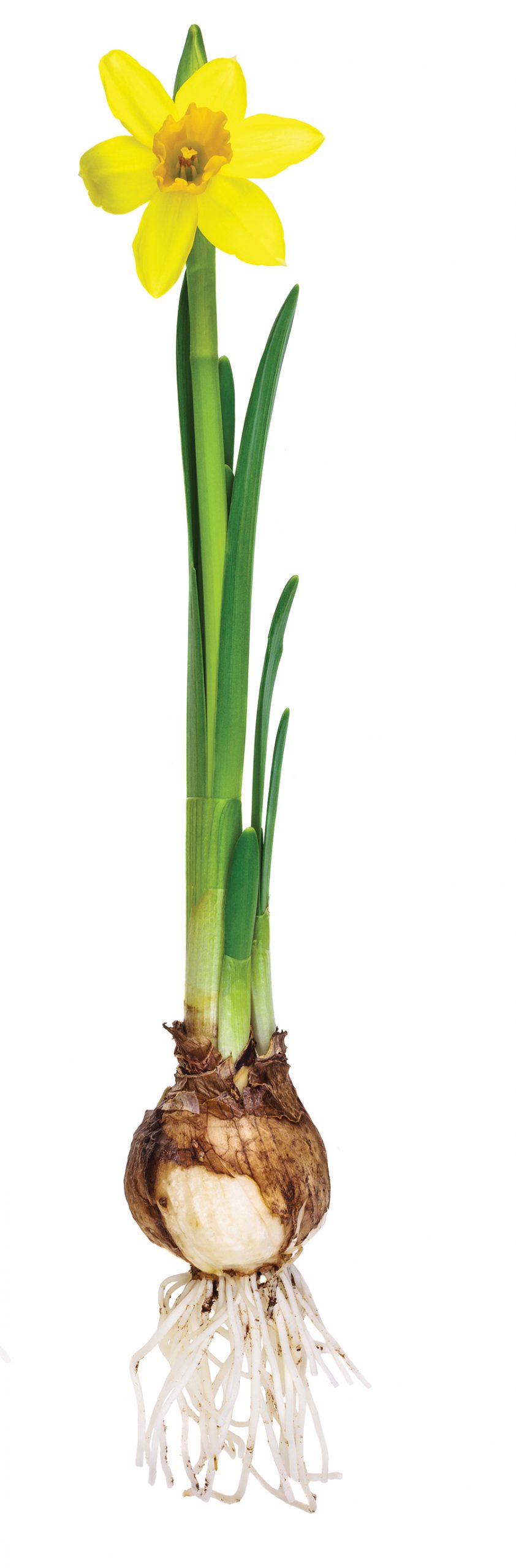
Ode to a Daffodil

Acres of yellow blooms beckon the splendor of spring

By Lindsay Morris

In the evening Alice sat on her grandfather’s knee and listened to his stories of faraway places. When he had finished, Alice would say, “When I grow up, I, too, will go to faraway places, and when I grow old, I, too, will live beside the sea.”

That is all very well, little Alice,” said her grandfather, “but there is a third thing you must do.”

“What is that?” asked Alice.

“You must do something to make the world more beautiful,” said her grandfather.

“All right,” said Alice. But she did not know what that could be.

Miss Rumphius by Barbara Cooney


I remember the morning as if it were yesterday. It was early, oh so very early. Much too early for my 8-year-old, growing body. With every ounce of my being, I silently commanded my spirit to ignore the telltale signs of the low beams of light seeping through my blinds. I ordered the gentle tugging on my shoulder to relegate its dictates to the deep recesses of my dreams. Within moments, the strong hands that tugged also separated me from the comfy sanctuary of flannel sheets that enveloped me and jarringly forced me to welcome the earliest moments of dawn.

And then the magic words were spoken: “It’s time.” Just as a hypnotist awakens his client from the edge of consciousness, I was completely awake and reminded of our task at hand. In a trance, I methodically enumerated my to-do list, putting on work boots, donning gardening gloves and grabbing whatever was accessible on the kitchen counter to fuel what I knew would be a long day ahead.

Opening the back door of my childhood home has always brought about visions of Wonderland or Terabithia, and that morning was no different, other than the sun shining much lower and more intensely through the dense trees that hedged our little world of Avalon Loop. You see, Avalon was a world my sisters and I firmly believed God created for our imaginations. The animals of the realm, while not visible, could certainly be heard talking among one another. From the swans’ snorts and the ducks’ cackles on the pond to the neighing of our horse, Ike, son of Tina, and the low whimpers and barks of our dogs, all were offering their morning greetings. But time with furry and feather friends would have to wait. It was as if they, too, had heard the summons, “It’s time,” as my father walked by with tools and bags in hand.

I followed his lead with confidence, knowing that he always had a plan prepared with precision and efficiency. I also knew there would be rules that I must follow, but that is how order thrives in the kingdom of Avalon. My father was a Renaissance Man, one who could dream, create and implement with scientific acumen — a rare man of beauty and science. As much as my young mind could conceive, I knew his goal was never to disrupt nature, but instead to curate it and if possible, unveil and highlight its beauty.  

But that warm October morning, I feared our task that day may not reach completion as I observed the mound of bulbs at our feet. My father, a patient and determined man, seemed nonplussed and content to get started. According to my father, we had around one thousand bulbs to plant alongside the driveway and the north end of the pond. Listening closely, I absorbed with great care his meticulous instructions. He demonstrated how to push the spade into the soil just enough so that the bulb was covered but would still have room to adequately grow and absorb the earth’s nutrients. I worked alongside him, mirroring as closely as possible how he broke the earth. With his small spade, he calculated the distance, spaced and designated a home for each bulb. His plan was masterful, and it played out like a lyrical dance as we glided down the hillside.

The minutes quickly turned into hours. Only when the sun began to dim over the pond did it call out to the swans, ducks and geese, who echoed in unison to the fading sunlight. As I surveyed our work, a sense of pride filled my entire being. With a reassuring smile, my father glanced over at me, tired, but expectant. While my arms and limbs were heavy with fatigue, it could not rival the growing anticipation of what I knew the spring would reveal.

And spring could not come soon enough for my impatient spirit. I remember assessing the soil on a daily basis, practically pleading with it to offer any sign of life. 

The winter of 1990 was a particularly cold one, and those first shoots of bright spring green seemed as though they would never appear. I imagined myself to be an evangelist, praying and wooing those tiny bulbs that we had so carefully sown to rise from the earth. I wasn’t even particularly sure what variety of flower they were because I had never asked my father. Instead, I hoped to be surprised by what would spring forth from the work of our hands. I wanted their beauty to be unveiled in their own timing. And it wasn’t long after their green shoots greeted the sun that I noticed a yellow tint to a few of them. However, as quickly as my synapses fired this message to my brain, my heart sank with great dismay. 

Yellow: The color of sickness, the color of school buses and pencils. For me, it was more than just a color that clashed with my golden blond hair, impeding me from wearing anything in its hue, but it also made me anxious and uneasy about everything when it surrounded me. For some reason, yellow fully dilated my senses. You see, colors have always had a way with me. I have synesthesia, in which colors dictate my mood, my taste and my sense of well-being about the world. After all these months of anticipatory excitement, I was now utterly uncertain what this initial indication of yellow would reveal. However, just a few mornings later in February, I was awakened to an unseasonably warm and sunny day. Rushing outside, I expected to be greeted with sickness at the sight of so much yellow. 

However, nothing could have prepared me for what my eyes encountered and the response that followed. If heaven could be so adorned with rays of golden and lemony yellows, and even yellows marked with golden orange halos, I would have thought that I was in the realms of glory. I willingly abdicated my senses and gazed upward to the sun and offered it gratitude for the beauty that it had nurtured and now reflected. Yellow no longer triggered painful anxieties to rush through my veins, but instead lovingly beckoned me to sit among it to just soak in its splendor.

And the splendor of our daffodils has grown exponentially over the years. More than 30 years later, their yellow blooms have become an intrinsic part of our family’s life, just as they have become the centerpiece around many occasions with family and friends. Not only are they the foremost indicator of spring’s arrival, but each year, without fail, they celebrate my March 1st birthday with grandeur. They have marked with great intentionality baptisms and homecomings. 

Now, more than three decades later, not only has my memory of that day remained vividly intact, but with each passing year numerous events and moments with the daffodils have been added to the storehouse of my memories. You see, over the course of three decades, the daffodils have been divided and spread over and under and around our property.  Easily covering five or more acres, adorning both entrances and even abounding in great numbers around the loop road surrounding our pond, their numbers now add up to more than 25,000 flowering blooms. The magic of that day has turned into a proliferation of beauty that not only welcomes but befriends all who enter the realm of Avalon each spring. Their beauty, and the work of our hands, has been a reminder of what planting and nurturing can create. 

This is how Miss Alice Rumphius from Barbara Cooney’s beloved children’s book learned to make the world more beautiful by spreading her lupine seeds across her home and down by the sea. Similarly, my father, on that unseasonably warm October day, showed me with love and patience how beauty can be elicited and magnified in unexpected ways through the vision of a daffodil bloom.  OH

Though living alongside the Mayo River in Rockingham County, Lindsay Morris is connected to Greensboro through the spirit of Howard Coble and her love of the local arts scene. 

Bookshelf

March Books

Compiled by Shannon Purdy Jones

After an entire winter spent indoors (and especially this COVID winter) spring feels like I’m shedding a winter cocoon and stepping back out into the world.

It’s no surprise that at Scuppernong one of our favorite ways to connect with our community is over a good book. We have four book clubs that meet on a monthly basis at Scup, including a brand-new Romance Book Club launching this month. If you’re feeling the urge to shake off the winter cobwebs and reconnect, then find below our next few month’s book club picks to see which conversations fit you. Or, head over to our events calendar at scuppernongbooks.com. (Book clubs meet on Zoom, though we hope to move back to in-person this year as COVID precautions allow. Login info for each book club Zoom is available on our events calendar.)

White Shadow by Roy Jacobsen (Biblioasis, $16.95).  March Reading the World Book Club pick

No one can be alone on an island . . . but Ingrid is alone on Barrøy, the island that bears her name. The war of her childhood has been replaced by a new, more terrible present — the Nazi occupation of Norway. When bodies from a bombed vessel carrying Soviet prisoners of war begin to wash up on the shore, Ingrid can’t know that one will not only be alive but could be the answer to a lifetime of loneliness — nor can she imagine what suffering she will endure in hiding her lover from Nazi authorities, or the journey she will face, after being wrenched from her island as a consequence for protecting him, to return home.

This highly anticipated follow-up to Roy Jacobsen’s International Booker and Dublin Impac Award-shortlisted The Unseen, a New York Times New and Noteworthy book, White Shadow is a vividly observed exploration of conflict, love and human endurance.

Velocity Weapon by Megan E. O’Keefe (Orbit, $17.99) 

March Sci-Fi Book Club pick

Nominated for the Philip K. Dick Award for Best Novel

Sanda and Biran Greeve were siblings destined for greatness. A high-flying sergeant, Sanda has the skills to take down any enemy combatant. Biran is a savvy politician who aims to use his new political position to prevent conflict from escalating to total destruction.

However, on a routine maneuver, Sanda loses consciousness when her gunship is blown out of the sky. Instead of finding herself in friendly hands, she awakens 230 years later on a deserted enemy warship controlled by an A-I who calls himself Bero.

The Love Hypothesis by Ali Hazelwood (Berkley, $16.00) March Romance Book Club pick

As a third-year Ph.D. candidate, Olive Smith doesn’t believe in lasting romantic relationships. So, like any self-respecting biologist, Olive kisses the first man she sees.

That man is none other than Adam Carlsen, a young hotshot professor — and well-known ass. Which is why Olive is positively floored when Stanford’s reigning lab tyrant agrees to keep her charade a secret and be her fake boyfriend.

Suddenly their little experiment feels dangerously close to combustion. And Olive discovers that the only thing more complicated than a hypothesis on love is putting her own heart under the microscope.

Dead on Arrival by Jaki Shelton Green (Blair, $10.95)

March Poetry Book Club Pick

This is a welcome reissue of Jaki Shelton Green’s acclaimed premier collection of poetry. Green’s earlier works pulse with the intoxicating rhythms and fierce clarity of image that made her one of North Carolina’s most popular poets. Here is an artist, at turns, angry and wickedly funny, demanding justice yet possessed of a refined grace.  OH

Shannon Purdy Jones is store manager and children’s book buyer for Scuppernong Books.

Citizen Jim’s Latest Hurrah

Citizen Jim’s Latest Hurrah

With the announcement of the Greensboro-Randolph Megasite, a legendary mayor cements his legacy

By Jim Dodson    Photograph by Mark Wagoner

On a sunny afternoon late last year, former Greensboro mayor and longtime president and chief executive officer of the Joseph M. Bryan Foundation, Jim Melvin, took three old friends for a leisurely drive in the country. His purpose was to show them the 1,800-acre Greensboro-Randolph Megasite off U.S. Highway 421 south of the city, which Melvin and a group of private and public partners hoped would soon become the home to a major transportation-related manufacturing facility.

“I think we finally got it right,” declared the genial former mayor many Triad residents affectionately think of as “Mr. Greensboro” owing to his many years of dynamic civic activism and an unrivaled record of accomplishments over the past half century. “Can’t tell you fellas what’s coming,” he teased with his fellow travelers, “but when this thing is finally announced, which may be very soon, it’s gonna be one of the most exciting things to ever happen to this region, a true game changer — improving lives like you can’t imagine.”

Melvin took a breath and added, “Lemme tell you, it took a lot of faith and unbelievable hard work by a number of folks who never gave up trying to make this thing happen. That’s the real story.”

Seated in the back seat of Melvin’s SUV, a retired textile executive and lifelong friend of Melvin’s named Jimmy Jones couldn’t help smiling, recognizing a well-worn phrase that could be a working motto for his old friend’s dynamic public career.

Some years after Greensboro’s most accomplished public figure in decades left public office and became just Citizen Jim in 1981, the story goes, he was invited by the trustees of Greensboro College to give the school’s annual commencement address.

“When it came time for him to speak,” Jones remembers, “Jim simply walked up to the lectern, looked out at the graduates and declared, ‘I think it’s best to quote the late Winston Churchill. Never give up! Never, never give up!’ And with that, he wished them all good luck and sat down. The crowd loved it. In fact, they gave him a standing ovation. It was vintage Jim Melvin and said everything you need to know about the man.”
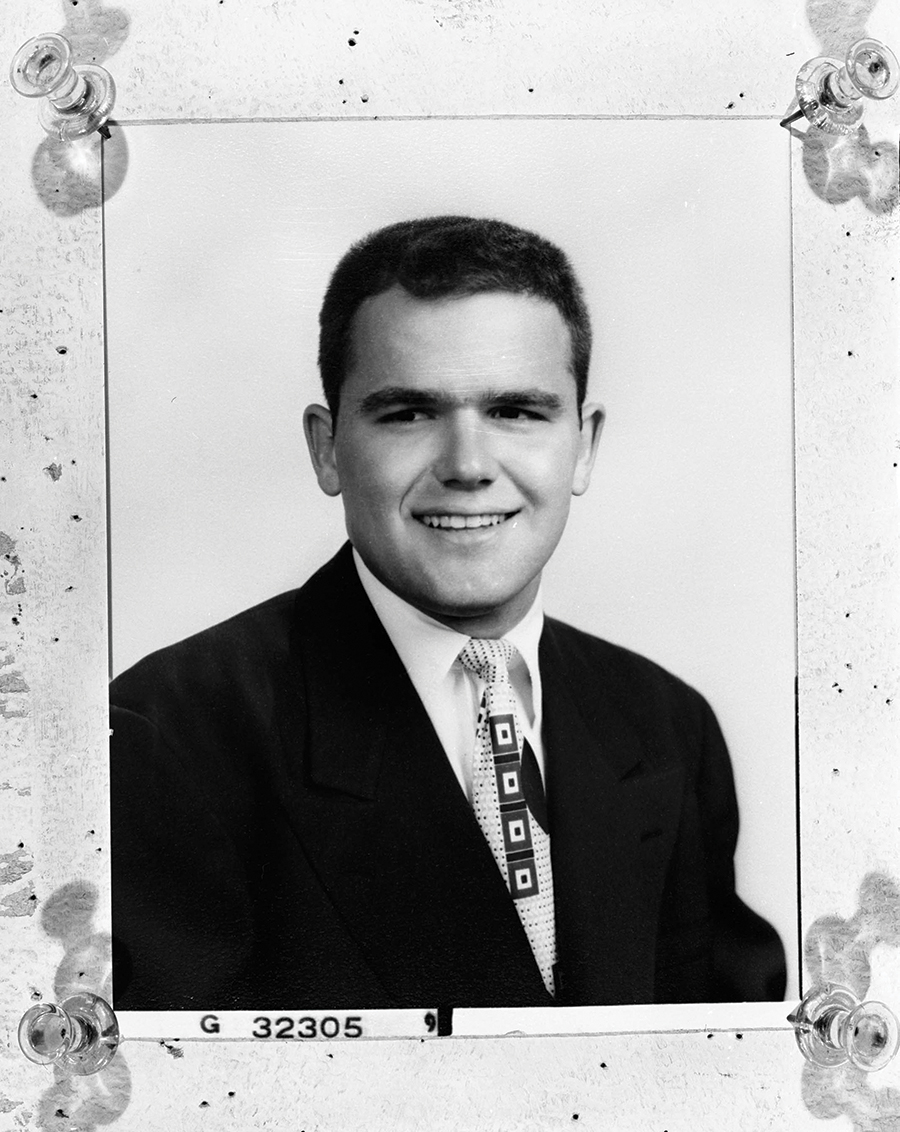
Indeed, true to his word, in early December, a few weeks after he took his pals for a spin in the country, Citizen Jim and a host of key stakeholders unveiled a transformative $1.29 billion deal with Toyota North America to build a new-generation lithium battery manufacturing plant for electric and hybrid automobiles at the Greensboro-Randolph Megasite, projecting employment of at least 1,700 workers by the time it opens in 2025.

In a sense, Melvin’s tireless 10-year quest to bring a major manufacturing facility back to the Triad after decades in which major textile, furniture and other related manufacturing industries fled the region might seem like simple vindication and the perfect coda for a fellow who once invoked the stark words of Winston Churchill at war to inspire Greensboro College graduates. Given his formidable vita over four decades, it’s also tempting to wonder if the triumph of the megasite might be a fitting last hurrah that defines his legacy.

A quick review of Citizen Jim’s remarkable public life and notable civic accomplishments illustrates the point.

Edwin Samuel Melvin, named for both his Greensboro grandfathers and known as “Jim,” grew up on Asheboro Street — today Martin Luther King Boulevard — absorbing the value of long days and hard work from his father, Joe, who owned a popular Texaco filling station. “He was the hardest-working man I ever saw, quite honestly, sunrise to way past sunset every day of the week. He and my mother were also firm believers in the importance of giving back in whatever way you could to help others. That idea stuck with me early.”
After earning a degree in business from UNC Chapel Hill, followed by a stint in the army, Melvin was at home pumping gas on Asheboro Street for his father one afternoon when the president of a local bank — one of his daddy’s customers — was impressed by young Jim’s can-do attitude and invited him to enroll in the bank’s teller training program.

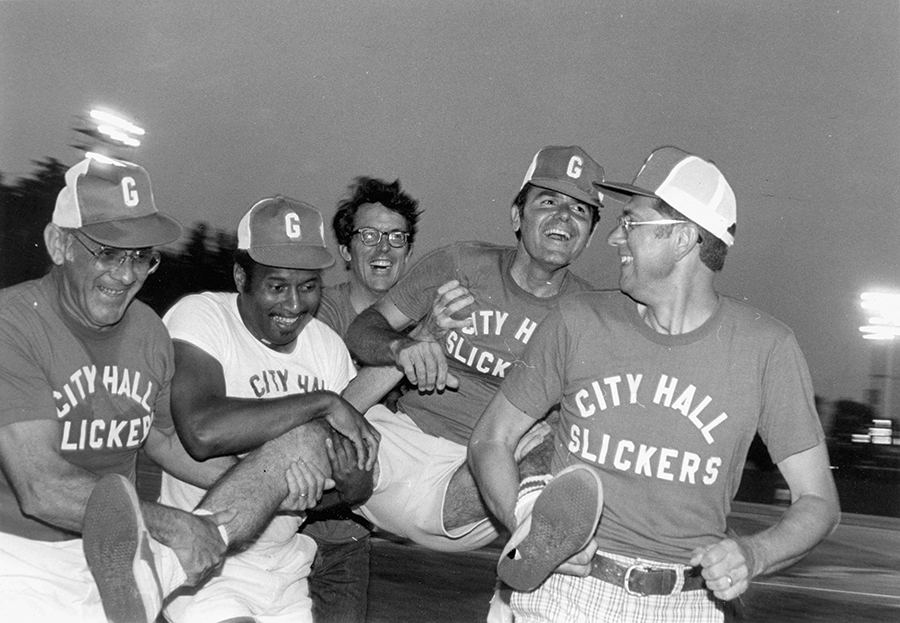
The work with people suited his personality, even more so when his boss suggested he join the Greensboro Jaycees, an organization full of young go-getters and future movers and shakers, heavily involved in civic activity. Jim signed up in 1961, not long after a guy named Arnold Palmer began setting the golf world on fire. “It was one of the smartest things I ever did. The Jaycees were a fantastic group of people and the GGO [Greater Greensboro Open, forerunner of today’s Wyndham Championship] was just entering its golden years.” Two years after joining, Melvin became the tournament’s charismatic chair, helping to raise more than $1 million that attracted the interests of CBS, which nationally televised the tournament for the first time — and continues to this day.

One year later, Melvin became president of the Jaycee chapter, which under his watch was named “Best Jaycees Club in the World.”

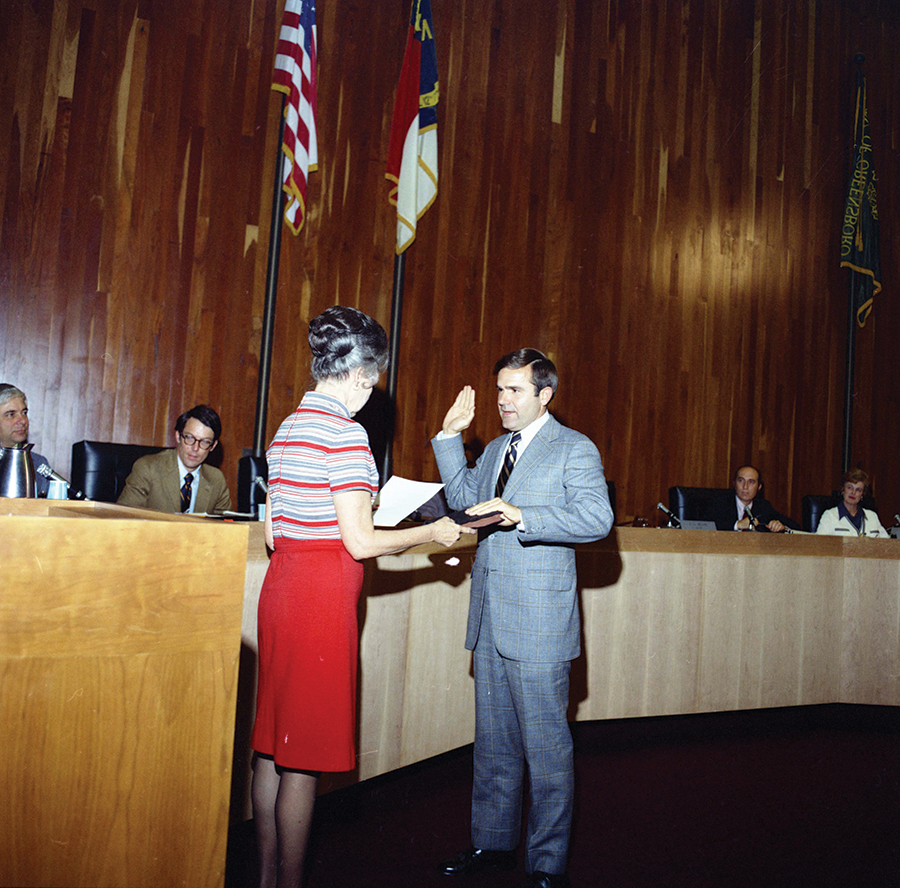
In 1968, he entered politics by serving as campaign manager for Rich Preyer’s successful congressional race. A year later, he ran unsuccessfully for the city council and was chosen by the council to serve as mayor pro tem in 1971. From there, he went on to five consecutive terms as Greensboro’s first publicly elected mayor. During his tenure, Melvin supported expansion of the Greensboro Coliseum, construction of a new municipal office building downtown, creation of the city’s most modern sewage treatment plant and the building of Bryan Park. He also played a pivotal role in the development of the Randleman Reservoir.
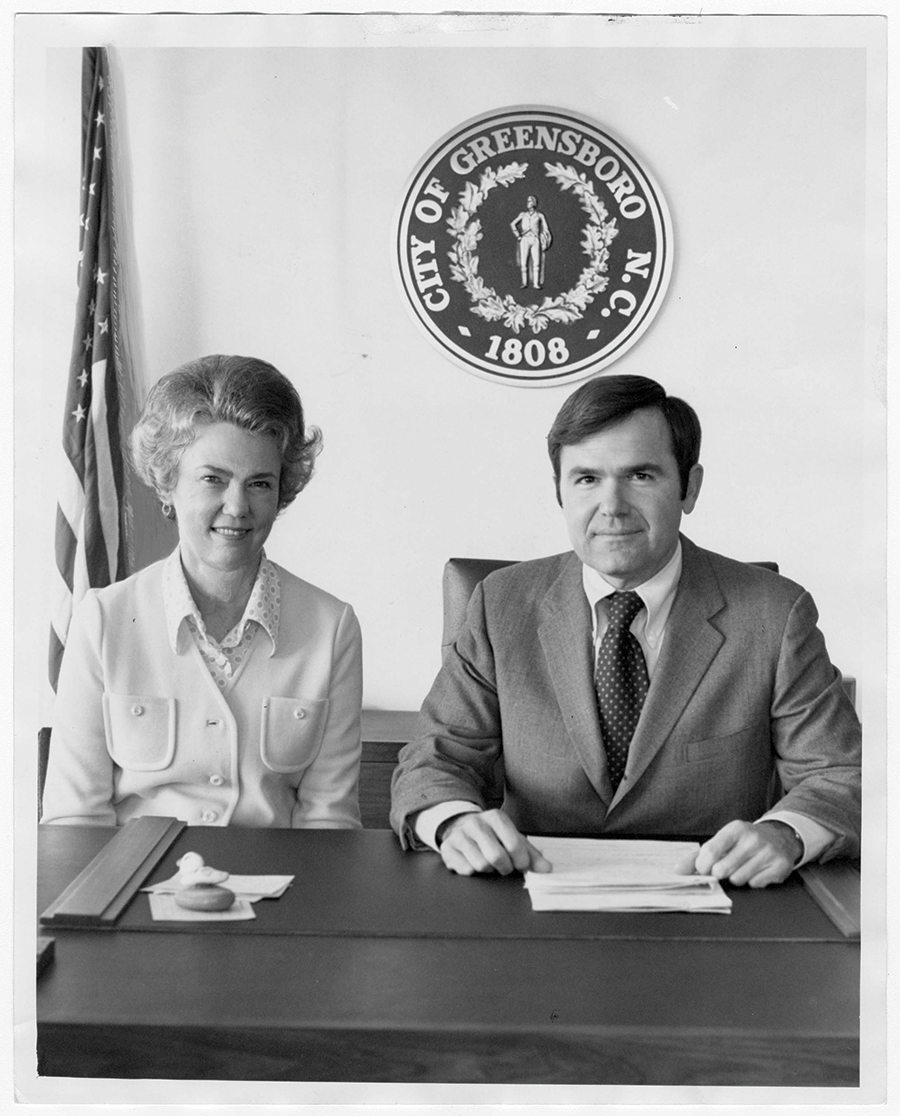
Melvin left politics in 1981 to focus on his banking career and philanthropic interests, retiring from banking in 1997 to accept the post of CEO and president of the Joseph Bryan Foundation at the personal urging of the aging Joe Bryan, who recognized both Citizen Jim’s innate passion for the Gate City and his knack for getting big things done.

Among other things, under Melvin’s guidance, the foundation raised $15 million to bring Elon Law School to the heart of downtown, orchestrated major improvements to the coliseum, helped create Center City Park and build the ballpark where the Greensboro Grasshoppers play. He also helped create Action Greensboro, a nonprofit that serves as a catalyst for public-private development to serve city residents.

A decade ago, in the wake of a 30-year mass exodus of major textile, furniture and cigarette corporations, Melvin took on what would arguably became his most ambitious and challenging project of all — a campaign to bring major manufacturing back to the Triad.

“We lost more than 90,000 good-paying jobs when those vital industries left the region,” he pointed out when we caught up to him at his office, a few days after the megasite deal was announced. “Charlotte became a booming banking capital, and Raleigh thrived as center of high technology. But here in Greensboro and the Triad, we were always a manufacturing culture going back to the days when John Motley Morehead had the foresight to create the North Carolina Railroad through this part of the state that attracted people like the Cone brothers to Greensboro, setting off a manufacturing boom that lasted for a century. We needed to somehow get that back.”

The idea of a shared manufacturing megasite, he says, originated a decade ago when Stan Kelly and Mike Fox of the Piedmont Triad Partnership hired a top engineering firm to find a suitable location. They identified a 1,800-acre rural parcel off U.S. 421 between the town of Liberty and the Julian community.

A unique partnership between Randolph County, the Bryan Foundation, the City of Greensboro and Piedmont Triad Partnership got the program off the ground, including Realtor Sam Simpson and real-estate lawyer David Joseph, whose task it was to convince more than 100 individual landowners to sell their property in the interest of the project. “That was no simple job,” Melvin says. “They sat on a lot of couches and just listened to folks. They joked that they each put on at least 10 pounds.”

The team “made generous offers to buy or replace the land,” Simpson says. “But for most of these people, this wasn’t about the money. This was about, in some cases, land their families had lived on for generations. This was about their roots in a community.” He continues, “They had to believe this project was going to make a difference in their lives — and everyone around them — before they agreed. That took patience and absolute transparency, which Jim Melvin insisted on.”

A major boost came two years into the process when the North Carolina Railroad expressed interest in joining the massive development project, granting the site unrivaled transportation access for a potential manufacturing client from a pair of interstate highways (and a third in planning stages) and a railroad line directly adjoining the site.

The final piece of property was acquired in 2017, and Toyota identified the megasite as a leading candidate for its new North American auto production plant. At the 11th hour, however, the deal collapsed when the company opted to move to Alabama instead.

Among other things, a unique working group that included the City of Greensboro, Randolph and Guilford counties, the North Carolina Railroad, Piedmont Natural Gas, Duke Energy and a key environmental engineering firm managed to collaborate on an even more compelling turnkey site that would have everything a major manufacturer need to be simply “move in and get to work.” This goal was achieved when the Greensboro City Council agreed to extend water and sewer to the site.

“The working group was the final piece of the puzzle, and Jim Melvin’s visionary approach to things was so important,” notes Brent Christensen, CEO of the Greensboro Chamber of Commerce. “It brought everyone together to share ideas and get things done. That’s the Melvin way.”

“None of this happens without Jim,” echoes Randolph County Commissioner Darrell Frye, who has known and worked with Melvin for years. “He knew how to get the right people together and make it happen. He’s a visionary who never gives up. I think the positive multiplier effect of this is going to prove unlimited in the future. It worked out even better than we hoped.”

Which brings us back to Citizen Jim’s novel commencement address to the graduating class at Greensboro College, an admiring mention of which reportedly found its way into commentary in The New York Times. The man clearly practices what he preaches.

“But did it really happen the way your friends like to tell the story?” We put that question to him at his Bryan Foundation offices a few days after Toyota made its groundbreaking announcement.

“Believe it or not,” he confirmed with a hearty laugh, “it did happen like that. But you’ve got to realize the circumstances. It was cold and starting to rain. The last all those parents sitting there wanted was to hear some long-winded politician give a speech. So, I just gave them my favorite quote by Winston Churchill. They seemed to really appreciate that.”

Finally, we wondered if this latest accomplishment might be a fitting last hurrah for the indefatigable Melvin, who turned a youthful 88 on Christmas Eve.

The man who never, never gives up, just smiled.

“How about we just say the latest hurrah,” he suggested.  OH

 

Short Stories

Lovin’ Some Lyle

Singer-songwriter-actor Lyle Lovett brings his witty lyrics and distinctive spin on country music to the Steven Tanger Center for the Performing Arts on Tuesday, March 8 at 7:30 p.m. Accompanied by an acoustic band, the four-time Grammy-Award winner hit the road at the beginning of March — the first time in two years. The show will feature acoustic arrangements of Lovett standards, as well as a preview of songs from his upcoming album, scheduled for release in May. The smaller ensemble and Lovett’s informal, conversational onstage style will provide the audience with an up-close, “living-room” listening experience. Rumor has it that the Texan lives near Houston in a house built by his grandfather in 1911. Explains a bit about the diversity of his music. Info: TangerCenter.com

Fun and Names

The Greensboro Children’s Museum is upping its game for kids of all ages. In January, it received its largest donation in its 23-year history. The $1.25 million donation from Frank and Nancy Brenner will be used to advance the museum’s mission to inspire hands-on learning through play, as well as fund building repairs and upgrades to more than 20 indoor and outdoor exhibits. The gift officially launched the museum’s capital campaign, “Building for Tomorrow,” to raise $2 million for infrastructure improvements to the facility. In honor of the gift and recognition of the museum’s expanded presence throughout North Carolina and Virginia, in July the museum will be renamed the Miriam P. Brenner Children’s Museum. Miriam Brenner is the late mother of Frank Brenner. Info: GCMuseum.com

As Seen in O.Hey

Don’t throw away your shot to hear a phenomenal entertainer speak and perform as part of UNCG’s Concert & Lecture Series. Daveed Diggs is an actor, rapper, singer-songwriter, screenwriter and producer known for his work in Hamilton, Black-ish, Snowpiercer and Disney’s forthcoming The Little Mermaid — we hear he’s a little crabby about that. Catch Diggs at 8 p.m. on March 5. Info: VPA.UNCG.edu/ucls-2; to subscribe to O.Hey, visit oheygreensboro.com

A Fairy Tale Come True

Cinderella — the time-honored, beloved story of a dreamer — shunned by her step-monsters and saved by a fairy godmother, glass slippers, industrious mice and a charming prince — comes to life at the Carolina Theatre, 5 p.m., Saturday, March 26 and, 3 p.m., Sunday, March 27. The classical ballet version of the Brothers Grimm fairy tale brings drama, romance and humor to the stage — not to mention outstanding performances by the Greensboro Ballet. Set to the music of Sergei Prokofiev, the ballet will remind you that dreams can come true. And sometimes losing a shoe isn’t a bad thing. Young Cinderellas in training can dress in their favorite princess costume and enjoy a tea party with Cinderella and her friends. Included will be a goody bag and a princess craft project. Meet many of the characters from the ballet and, of course, the Cinderella herself will pose for photos and give autographs. Definitely a sugary sweet event for sugary sweet sweeties. Info: CarolinaTheatre.com/Events

Dynamic Duo

While we’re on the subject of 24-carat entertainment, chanteuse extraordinaire Jessica Mashburn, along with world-renowned singer/songwriter /devoted husband (because why wouldn’t you be?!?) Evan Olson, are once again performing as AM rOdeO. They will bring their merry melodies to Grandover Resort’s 1808 Lobby Bar from 7–10 p.m. on Friday, March 11. Two of the most talented performers you’ve ever heard of, AM rOdeO reminds O.Henry’s me of big city lounge entertainment. Practically a lost art, Jessica and Evan bring with them a wide repertoire of tunes from The American Songbook classics to the present. Evan Olson’s musical compositions recently have been featured on network shows such as The Young and the Restless, America’s Funniest Home Videos and Dexter: New Blood on Showtime. This promises to be a sophisticated, enormously entertaining kick-off to your weekend. Info: GrandoverResort.com — Billy Eye

Ogi Sez

by Ogi Overman

Let’s pause for a moment and reflect on the past two years — how we handled the horrors, the isolation, the fear of the unknown, the suffering that began not one but two Marches ago. Many of us were on the brink of losing all hope, and, maybe, some of us did. But then came that sliver of light at the end of the long, dark tunnel, and now we hope that we will find ourselves at the dawn of a new day, a new season, a new and vastly different March.

Let the music play.

• March 19, Greensboro Coliseum: Women’s basketball takes center stage at the Coliseum this month, but nestled between the ACC tourney and the Regionals, the Avett Brothers managed to sneak in their rescheduled New Year’s Eve show. They promised they’d be back and they didn’t disappoint. But then, they never do.

• March 25, High Point Theatre: The mid-’90s were marked by a resurgence of swing music, led on the East Coast by the Squirrel Nut Zippers and the West Coast by Big Voodoo Daddy. But the phenomenon also was going on in Great Britain, with the Jive Aces leading the charge. They’re bringing their “Jump, Jive & Wail” tour stateside this spring, and I think I’ll Zoot up and flip, flop & fly over to High Point.

• March 26, Ramkat: It seems almost cliché to call Donna the Buffalo a cult band. Granted, a quarter century ago they amassed an immediate cult following that has only multiplied today. But by taking a leap of faith and forming the Shakori Hills GrassRoots Festival down the road in Pittsboro, they took on an aura all their own. So, if you can’t wait until May to see them, head over to Winston.

• April 1, Ziggy’s: I know, I know, I’m breaking the rules by hyping a date in April, but, as Barney said when the gold truck came through Mayberry, “Ange, this is big. This is big — big!” Indeed it is. When a legendary music venue reopens in a new town and is again run by a venerated impresario, Jay Stephens, it deserves a month’s notice. Ever-popular newgrass act Acoustic Syndicate hosts the grand opening. And it promises to be grand.

Almanac

March

By Ashley Walshe

March is an age-old prophecy: a great thaw followed by a riot of life and color.

Some said it would start with a single daffodil. A field of crocus. The soft warble of a bluebird.

All the signs are here. And in the bare-branched trees, where wild tangles of dead leaves resemble papier-mâché globes, newborn squirrels wriggle in their dreys, eyes closed.

Weeks ago, winter felt eternal. The cold air stung your face and fingers. The world was bleak and colorless.

Now, the red maple is blooming. Saucer magnolia, too. You build the last fire, sweep the hearth, return to the garden and its wet, fragrant earth.

Frost glistens in the morning light, but you know it’s true — that spring is coming. You know because the birds know. They cannot help but blurt it out.

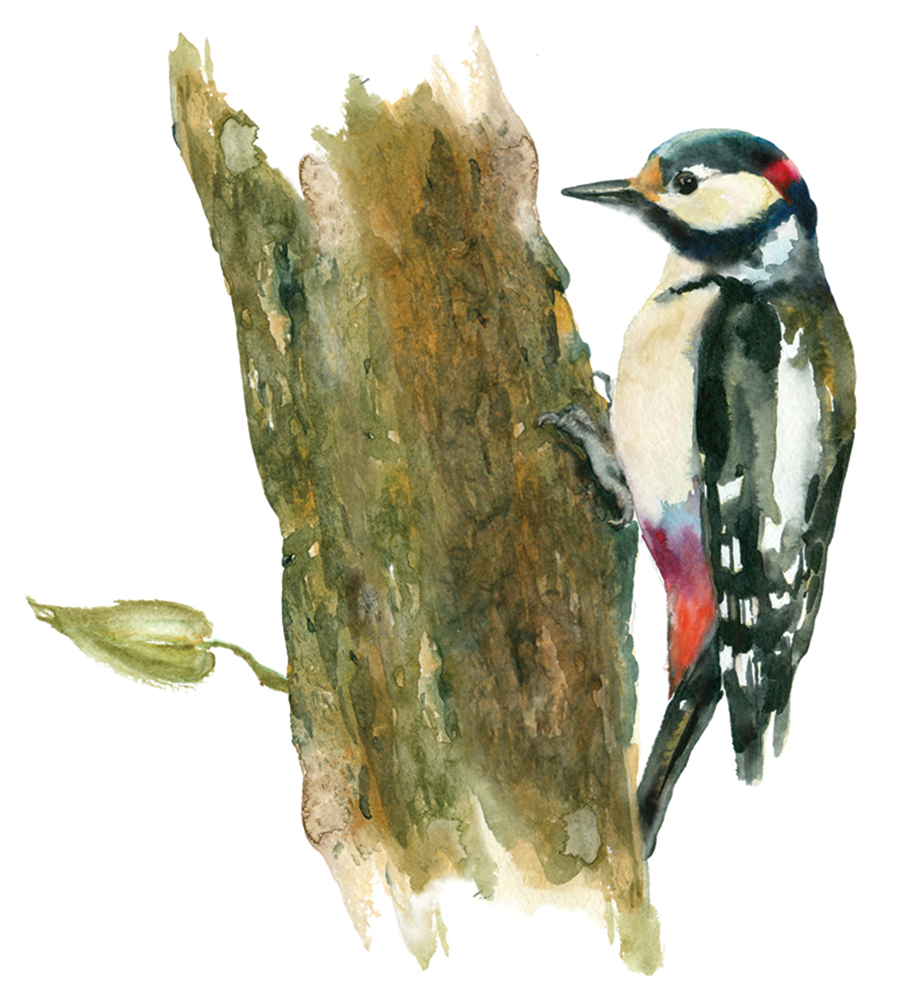
Beyond the flowering quince, a woodpecker drums on a towering pine.

A towhee gushes drink-your-tea.

A robin whistles cheerily, cheer up, cheer up, cheerily, cheer up.

Soon, spring peepers and chorus frogs will join the band. The first bee will drink from the first hyacinth flower. A young squirrel will open its eyes.

Sunlight kisses wild violets, purple dead nettle, tender young grasses. Everywhere you look, you notice a new warmth, a new softness, the gentle pulse of life. By some miracle, spring has arrived. A sweet mystery born from the icy womb of winter.

In March winter is holding back and spring is pulling forward. Something holds and something pulls inside of us too.

— Jean Hersey

A Gardener’s Luck

Let’s talk about three-leafed clover (genus Trifolium), a flowering herb in the legume family that just might be what your lawn or garden has been missing. Common as weeds — and often disregarded as such — clover can grow in most any climate, tolerate poor-quality soil and resist most pests and diseases. Here’s the best part: clover can “fix” spent patches of earth by restoring nitrogen levels. In other words, it’s a natural fertilizer and often is used as green manure crop.

Using clover as a ground cover between garden beds will also attract pollinators. Mix some clover with your grasses and your lawn will look greener. An added bonus: It’s impervious to dog urine. Even if you never find a four-leafer, that’s some good garden luck.

Spring Forward

Daylight saving time begins Sunday, March 13. Longer days inspire evening walks, birding, a quiet hour in the garden. Notice what’s flowering: breath-of-spring (winter honeysuckle), brilliant yellow forsythia, lemony scented star magnolia. Notice what needs to be pruned: ahem, the rose bush. Although the vernal equinox occurs Sunday, March 20, spring has been here for weeks, present in each glorious inhalation. Allergy season? Coming soon.


O.Henry Ending

André Leon Talley

A sense of self at the rainbow’s end

By Cynthia Adams

A gangly Black kid, left in infancy to be raised by his grandmother, a domestic in Durham, became the “last great fashion editor,” declared The New York Times.

André Leon Talley, who died January 18, wrote: “To my 12-year-old self, raised in the segregated South, the idea of a Black man playing any kind of role in this world seemed an impossibility.”

His eyes “were starving for beauty.” Talley found it in high fashion.

His death at 73 was first announced on Instagram to his 403,000 followers.

Talley, 6′ 6″ in his stocking feet, became a towering figure in Vogue, Harper’s Bazaar, W, Interview, Ebony, HG, Women’s Wear Daily, Vanity Fair and Numéro Russia.

Yet, he remained gracious. My friend, Irene Moore, who worked for W, said, “In spite of his forbidding look, he was a really nice guy.” Maureen Dowd remembers how “He told me about his late grandmother in Durham,” after she wrote about how her mother descended from a line of Irish maids.

Bennie Frances Davis was a stylish and proud grandmother, a lodestar.

Dowd intimated Talley was a hoarder, stuffing his home with crystal, linens, even Truman Capote’s sofa. Like Capote, the legend was “prowling the world in search of glamour and beauty, disdaining ‘dreckitude.’” Dreckitude, Talley explained, “is the lowest point in the lowest ebb.”

Talley’s touchstones remained his Southernness and beloved grandmother. These, Southern writer Julia Reed said, secured their friendship until her death.

In his memoir A.L.T., André Leon Talley wrote: “At the end of the rainbow that has led me to a successful career in the world of fashion . . . I find that the things that are most important to me are not the gossamer and gilt of the world I live in now.” His deep Southern roots furnished “a sense of place, a sense of self.”

Born in 1948, Talley’s sense of self came early. He recalled walking across Duke’s campus, where Davis worked in housekeeping, and being peppered with rocks by students. (He was on his way to read Vogue.)

Talley studied French and literature at N.C. Central University, with graduate studies at Brown University.

He interned in New York for his idol, Diana Vreeland, at the Metropolitan Museum Costume Institute. She connected Talley with Andy Warhol, founder of Interview.

Designer Tom Ford kept notes, faxes and emails from Talley, describing them as “works of art.”

Post Vogue, Talley experienced the chilling effect of “Nuclear Wintour,” the staff’s nickname for the brusque and demanding Dame Anna Wintour, the editor of Vogue portrayed in The Devil Wears Prada.

Despite all, Talley remained the toast of New York and France, where he had lived and was awarded the Chevalier de l’Ordre des Arts et des Lettres.

Yet he was tugged southward to the Carolinas for frequent honors. Last November, N.C. Gov. Roy Cooper awarded Talley the state’s highest civilian honor, the North Carolina Award (for Literature).

Since 2000, Talley was a trustee at SCAD, The Savannah College of Art and Design. He also was a headliner at Charlotte’s Mint Museum, curating an Oscar de la Renta exhibition in 2018 and chairing the 2019 Coveted Couture Gala. In addition, he was a television personality on America’s Next Top Model and artistic director for Zappos.

He wistfully hoped Wintour would reconcile with him at his deathbed.

On April 19, Louis B. Gates Jr.’s popular ancestry-tracing program, Finding Your Roots, will feature André Leon Talley.

Yet, Talley already knew who he was — a caped crusader, fighting the good fight against dreckitude.  OH

Cynthia Adams is a contributing editor for O.Henry. She can be reached at inklyadams@aol.com.

Simple Life

The Baker’s Assistant

How sweet it is

By Jim Dodson

Not long ago, my wife, Wendy, joined 47 million foot soldiers of the Great Resignation by retiring early from her job as the longtime director of human resources for one of the state’s leading community colleges.

She loved her job at the college. It was fun and fulfilling in almost every way.

But something more was missing — and revealed — when COVID invaded all our lives.

Simply put, it was time to follow her heart and do something she’d envisioned doing even before I met her 25 years ago: to start her own gourmet, custom-baking company called Dessert du Jour.

News late last year that an innovative shared community kitchen for food entrepreneurs (called The City Kitch, based in Charlotte) was opening branches in Greensboro and Raleigh propelled her into action. She signed up for the first private kitchen studio and got to work preparing for her debut at a popular outdoor weekend market just before Christmas, selling out everything she baked in a couple hours. It was a promising start.

I should pause here and explain that Wendy is no novice or newcomer to the luxury baking world. Even while masterfully holding down a demanding career over the past two decades, she made stunning custom wedding cakes, luscious pies, artistic cookies and other baked delicacies for friends and neighbors.

As I say, she was already wowing customers in Syracuse, New York, when we met during one of my book tours in 1998, and she agreed to go on a formal first date that turned out to be, as I fondly think of it, baptism by baby wedding cakes.

To briefly review, on a brisk autumn evening after a seven-hour drive between my house in Maine and her home in Syracuse, I arrived just in time to find Wendy cheerfully boxing up 75 miniature, exquisitely decorated wedding cakes for some demented daughter of a Syracuse corporate raider.

“Oh, good,” she beamed, flushing adorably with a dollop of icing on her button nose, as I appeared. “Want to help me box these up and take them around the neighborhood for me?”

How could I refuse? Her neighbors, it seemed, had offered space in their refrigerators and freezers until the cakes could be delivered to the wedding hall in the morning.

Truthfully, I don’t recall much about being pressed into service as an impromptu delivery man. I just have this vague memory of carefully boxing up dozens of the beautiful little cakes and bearing them all gussied up with elegant ribbons and bows to her lady pals around the cul-du-sac. “Oh,” one actually cooed as she looked me over. “You must be the new boyfriend from Maine. Careful you don’t put on 50 pounds. Wendy’s cakes are awesome.”

I gave her my best Joe Friday impersonation. “Never tasted ’em, ma’am. Just here to help out the baker lady.”

Happy to report, the baby wedding cakes made it safely to the wedding hall the next day without incident. The grateful baker lady even thoughtfully saved one of the gorgeous little cakes for the trip home to Maine.

I’m embarrassed to say I never sampled it. Cake wasn’t my thing, probably because I grew up with a mama who annually made me a birthday cake from a Betty Crocker box mix and store-bought frosting that tasted like chocolate-flavored sawdust with icing. I gave Wendy’s baby wedding cake to my children, who absolutely loved it.

Another issue emerged on my next visit to Syracuse, our critical second date. When I breezed into her kitchen with a bottle of her favorite wine before we went out to dinner, I found her putting the finishing touches on another masterpiece of the baker’s art.

Sitting nearby on her kitchen counter, however, was a beautiful wicker basket full of popcorn, my all-time favorite snack food. As she opened the wine, I grabbed a big handful of what I thought was popcorn.

Her lovely face fell. It turned out to be a groom’s cake that only looked like a wicker basket full of popcorn.

Profusely apologizing, as I licked the evidence of the crime off my greedy fingers, figuring this might be our last date, I had something of a dessert awakening.

“Hey, this is really good. I don’t even like cake. What’s in this?”

To my relief, she laughed. “Only the finest Swiss white-chocolate, sour-cream cake with salted buttercream. But no worries. I can make another one pretty quickly. Let’s just get Chinese takeout for dinner while I work.”

I’d never seen such composure under fire. Right then and there I decided to propose to this remarkable woman and even confessed my sad history with Betty Crocker, wondering if she would do the honor of becoming my wife and someday making me a birthday cake.

“Sure,” she said. “I’ll even make you a Betty Crocker box cake if you want it.”

Talk about a selfless act of love! This was like inviting a Wine Spectator judge to enjoy a lovely bottle of Boone’s Farm’s Strawberry Hill or LeRoy Neiman to do a doodle of a racehorse! She actually made me a box-mix cake, which I took one taste of and dumped in the garbage.

Fortunately, by the time our wedding rolled around two years later, Dame Wendy had schooled me up like a pastry chef’s apprentice, a culinary awakening sealed by my first taste of her incredible old-fashioned caramel cake — which she now makes me every year for my birthday (along with a sour cherry pie). 

Not surprisingly, the spectacular cake she made for our outdoor wedding beneath a gilded September moon disappeared without a trace before I could even get a taste. Our greedy guests left nary a morsel and even took home extra pieces stuffed in their pockets. 

Since that time, a long and steady stream of fabulous specialty cakes, cookies, pies, scones, muffins and the best cinnamon rolls ever made have flowed from her ovens to the tables of friends, family and customers from Maine to Carolina.

Which is why the creation of Dessert du Jour is such a milestone for the love of my life. She’s never been happier, launching her little dream company at a time we’d all like to see in the rearview mirror as soon as possible. In the meantime, she shares her happiness with others, one gorgeous theme cookie or slice of roasted pecan-studded carrot cake at a time.

And for the moment at least, I have the honor and pleasure of still being her sole employee, the one who puts up the tent and tables at the street market and delivers the goods wherever I’m sent around town, a baker’s assistant happily paid in cake tops and leftover cinnamon rolls.

I ask you, does life get any sweeter than that?  OH

For more information, visit thecitykitch.com and dessertdujour.net. 

Jim Dodson is O.Henry’s founding editor and ambassador at large.

Poem

What the Moon Knows

She knows shadow, how to

slip behind clouds. She’s perfected

the art of disappearing. She knows

how to empty herself into the sky,

whisper light into darkness.

She knows the power of silence,

how to keep secrets, even as men

leave footprints in the dust, try to claim her.

Waxing and waning, she summons

the tides. Whole and holy symbol,

she remains perfect truth, tranquility.

Friend and muse, she knows the hearts

of lovers and lunatics. She knows 

she is not the only one that fills the sky,

but the sky is her only home.

— Pat Riviere-Seel

Pat Riviere-Seel is the author of When There Were Horses