The Creators of N.C.

Welcome Home

How Amarra Ghani became a guiding light for those in need 

By Wiley Cash
Photographs by Mallory Cash

Amarra Ghani has continually found herself in two roles that are surprisingly in concert with one another: caregiver and outsider. These two roles go hand-in-hand more than one would think. Often, outsiders come from a perspective that allows them to assess the needs of others with fresh eyes, and caregivers tend to take on singular roles that set them apart.

“I’ve always felt different,” Ghani, the founder of Welcome Home in Charlotte, says. “The color of my skin, my name.” After 9/11, these feelings intensified for Ghani, a practicing Muslim whose parents are Pakistani immigrants. “I felt super-ostracized,” she says, despite growing up in ethnically and culturally diverse cities in New York and New Jersey. “People would say hurtful things to me because of what I looked like or how I grew up.” Ghani’s feelings of being an outsider intensified when her family moved to Charlotte halfway through her senior year of high school. Feeling alone, Ghani began to lean on her faith. “I was isolated from everyone,” she says. “I fell in love with Islam because it was comforting for me. I was praying more. I was reading the Koran and I felt like God was my only friend.”

After high school, Ghani attended community college in Charlotte before transferring to the University of North Carolina-Asheville, where she founded the Muslim Student Association in hopes that other practicing Muslims would not feel as alone as she once had. “That’s where I found my voice,” she says. After college, she moved to Washington, D.C., to work for the U.S. Department of Agriculture, and later as a production assistant at NPR. Ghani was living out her career dreams, but was called home to Charlotte in 2016 after her mother was diagnosed with breast cancer. She became her mother’s caregiver.

She didn’t stop there.

While throwing a “friendsgiving” celebration that year, Ghani encouraged her friends to bring warm winter clothes that she could donate to people in need. She learned that a friend’s mother — a native of Afghanistan who’d been living in Charlotte for 40 years — was gathering clothes for local refugees. When Ghani took her friendsgiving haul to the woman’s house, she asked her what else local refugees needed. She was surprised to learn that most of them needed the basic necessities like utensils, towels and bedding. She told her that she would put out a call on social media, which she had regularly used to make connections during her work in D.C. The response was overwhelming; soon, her parents’ garage was full of donated materials, from used clothing to brand new items to gift certificates. “Once I started, it just kept growing,” she says. When the pool of donors and volunteers swelled from 30 people to over 250, Ghani realized that she needed a better platform, so she set up a WhatsApp group called “Welcome Home.” This seemed like an appropriate name for a group dedicated to welcoming refugees as they bridge the gap between the struggles in their old lives and the challenges of the new.   

While working full-time with Wells Fargo, Ghani set about turning Welcome Home into a functioning organization, complete with a board of directors. Once things became official, the first phase of the organization’s work was to meet the basic needs of the refugee community by furnishing apartments, for example, or taking people on grocery store visits and other errands where assistance was needed. The second phase of operations focused on sustainability, and the organization forged ahead with programs in English language education and services that pair refugees with translators who can accompany them on doctor visits and other appointments where language may be a barrier.

Ghani knows these difficulties firsthand. “English is my second language because my parents would not talk to me in English,” she says. “As the child of immigrants, there’s a time when you become your parents’ parent. I was 11 when I started helping my dad with forms or going to the doctor with them or going to parent-teacher conferences to translate.” What a difference an organization like Welcome Home would have made in the life of her family: “I wish someone had guided my parents,” she says. “My dad could’ve had less pressure on him.” And how were they to know such resources existed? “When you’re someone who doesn’t speak the language and you’ve just arrived and don’t know the community around you, you need someone to guide you. That is what drives me.”
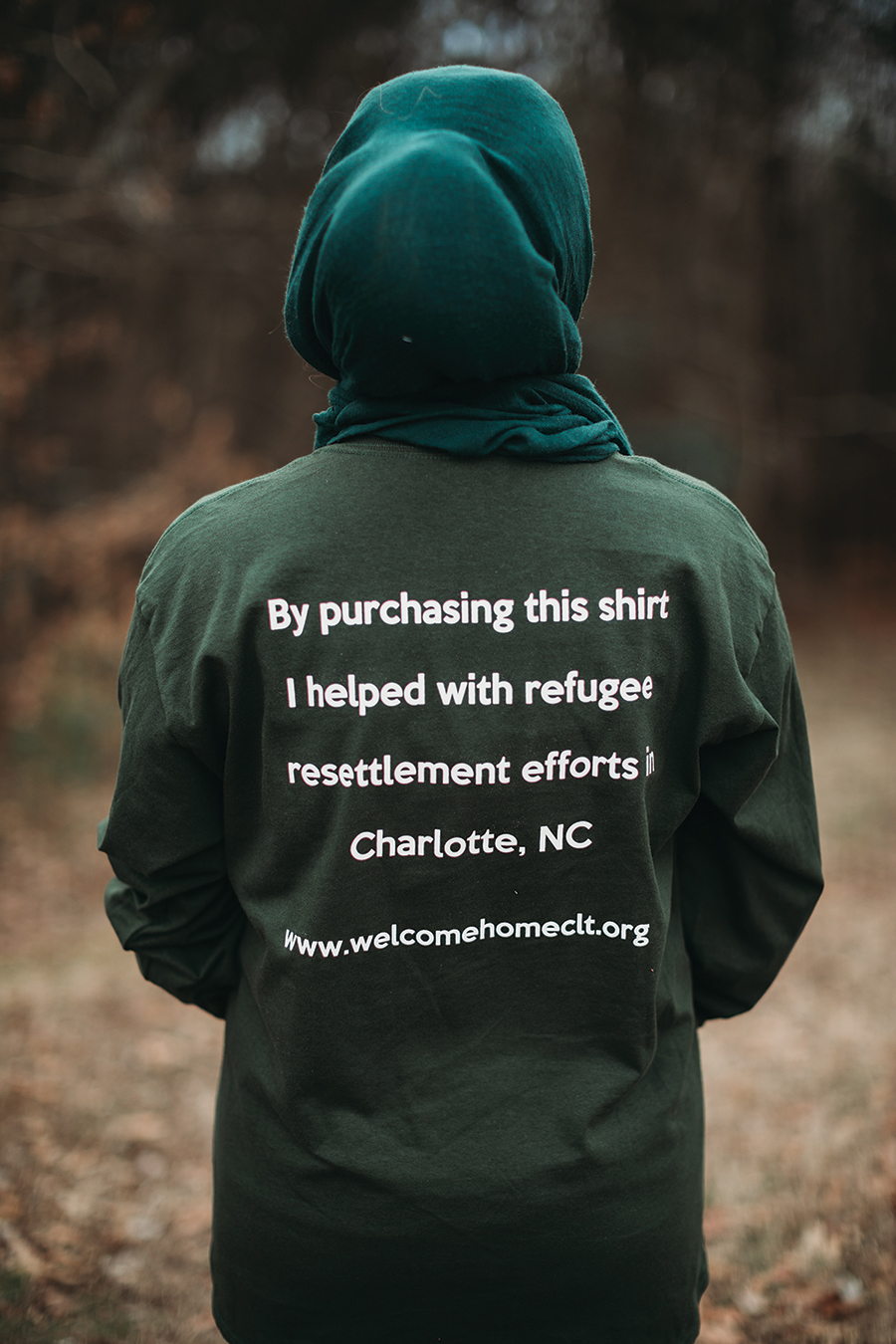
Welcome Home started out with 21 families, and they all eventually graduated from the program, no longer in need of assistance. “We have families who come here and who don’t know English or how to drive and perhaps have a fourth grade education,” Ghani says. Not only are they learning how to survive in a world that feels so foreign, she continues, but they are learning how to thrive. “We have three families who have been able to purchase houses in the last year,” she says. They were able to raise money to cover the rent for another family where the wife was diagnosed with breast cancer. “Earlier this year, we learned that this family was able to buy a house as well.”

But Ghani also recognizes the hesitancy many people have about seeking help, which is why Welcome Home plays such an important role in the lives of refugees from places like Syria, Afghanistan and Myanmar. While many refugee organizations are missionary in nature, Welcome Home is not. Still, Ghani cannot deny the comfort families find in working with an organization largely comprised of people who share the refugees’ religious faith, culture and worldview. “It makes a difference in small ways and big ways,” she says. “For example, during Thanksgiving, our families know that we can provide Halal turkeys. That establishes a level of trust.” Now, perhaps more than ever, trust is paramount as refugees settle into a new community during the coronavirus pandemic.

As the virus takes its toll in communities across the state, Welcome Home finds itself back in their first phase, meeting the basic needs of their families. “It’s all about necessities and fundraising to cover bills,” Ghani says. It’s also about keeping families safe from the virus itself. In mid-February, Welcome Home partnered with the city of Charlotte and the Mecklenburg Department of Health Services to provide vaccinations. “They reached out to us because of the skepticism of the vaccine in refugee and immigrant communities. We’re bridging that gap and bringing familiarity to the process of getting vaccinated,” Ghani says.

Through it all, Ghani, who last month was awarded UNC-Asheville’s Francine Delany Award for Service to the Community, maintains that she is driven by her faith, as well as by the memories she has of being an outsider and her most recent calling to care for those in need. “What did I do to deserve the life that I have?” she asks. “Nothing. I was just born into this family and this faith and this atmosphere. Others aren’t so lucky.” When she works with refugee families, assisting them with everything from getting clothes to learning English, she can’t help seeing a bit of herself in their struggle. “I know where they’re coming from,” she says, “I’ve been in that place.” No matter the place where members of Charlotte’s refugee community find themselves, Amarra Ghani wants to make certain they get home.    OH

Wiley Cash is the writer-in-residence at the University of North Carolina-Asheville. His new novel, When Ghosts Come Home, will be released this year.

Short stories

Pisces and Quiet

You’ve seen the viral YouTube video.
Some aquarium, somewhere, a security camera captures an octopus slipping from its tank after hours, slinking across the floor like some kind of shape-shifting alien, then dipping into a nearby tank to snack on, say, an exotic fish. In this scenario, the Pisces is, indeed, the fish. And here’s the thing: They asked the octopus if it were hungry. Selfless to a fault, Pisces are the ultimate martyrs of the zodiac. But there are better, healthier ways to invite attention. Music, for instance. Quincy Jones, Josh Groban, Nina Simone and Erykah Badu? All Pisces. Ditto Rihanna, Kurt Cobain and Smokey Robinson. Take it from the greats: Find a way to channel your fathomless sea of emotions before it gets the best of you. Because life is far more interesting thanks to your veritable brand of over-the-top drama.


O.Henry’s 10 for 10

Have you heard? As announced in our January issue, O.Henry is hosting a short story contest for our 10-year anniversary. And that’s an emphasis on short. Tell us a story in 10 words. For inspiration, look up the famous 6-word novel attributed to Hemingway. Guidelines are simple. Using the subject line “O.Henry’s 10 for 10,” submit your short story — one per entrant, please! — by email to ohenryturns10@gmail.com. Deadline: May 1, 2021. Winning entries will be published in our anniversary issue. Bonus points for pulling off an O.Henry twist.

And speaking of our January issue . . . If you were wondering who painted the hauntingly quirky “Madam” portrait featured on our cover (photo contributed by VIVID Interiors), that would be Greensboro’s own Kevin Rutan, owner of Fe Fi Faux. Find him on Instagram @krutan2018.


It’s Play Time

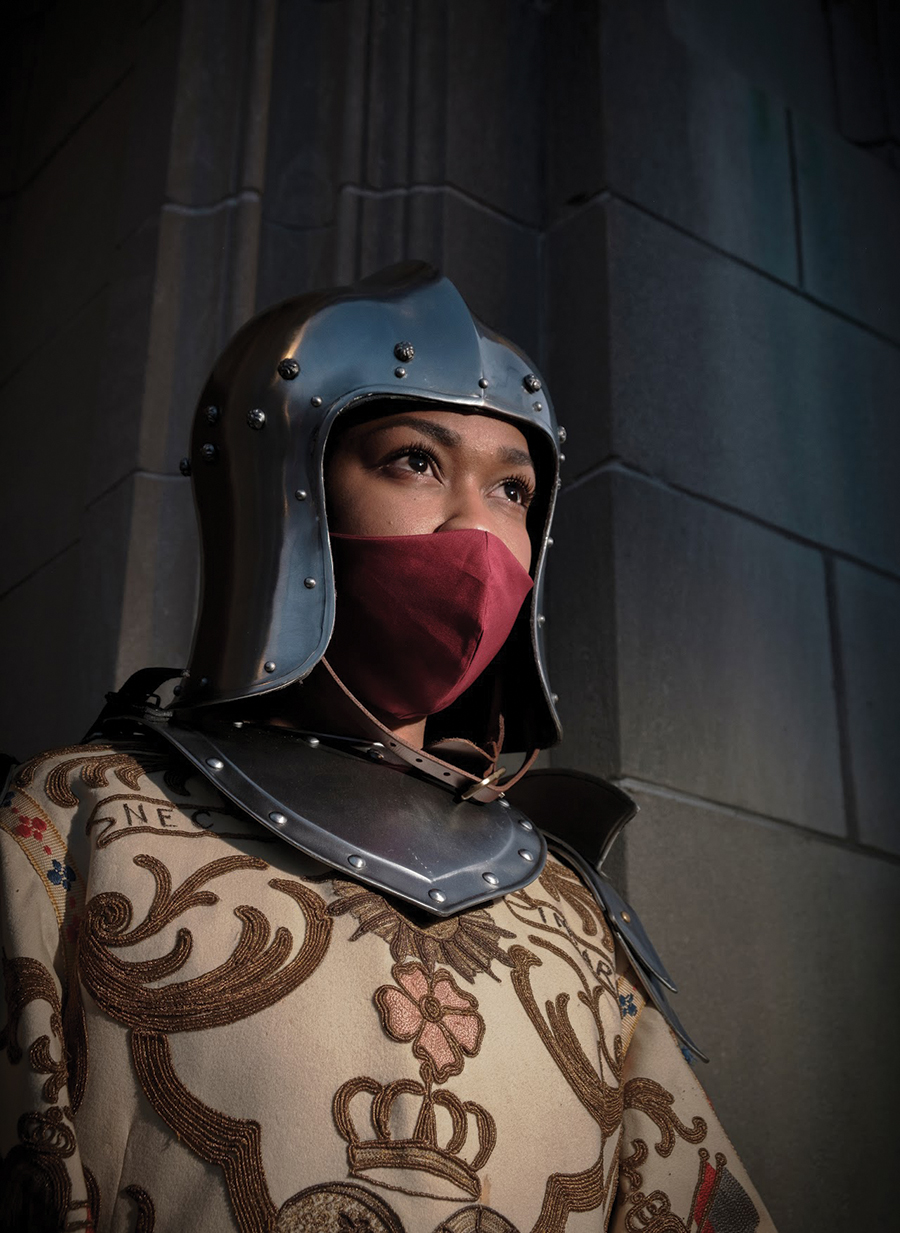
Here’s two for you. First, UNCG’s School of Theatre presents George Bernard Shaw’s Saint Joan, inspired by one of the most heroic, mystical and misunderstood teenage girls to have ever walked the Earth. On-demand streaming is available from March 18–20, with a Frame/Works Discussion held via Zoom on Monday, March 22, 7 p.m. Tickets are $5. Box Office: (336) 334-4392. Info: uncgtheatre.com. Joan’s tale tips the scale toward searingly tragic. But it’s nothing a little dystopian comedy can’t remedy. March 24–27, at 7:30 p.m., Greensboro College Theatre presents Eastern Standard. Set in 1987, this Richard Greenberg rib tickler was a knockout at New York’s famed Manhattan Theatre Club and, later, a Broadway hit. This review from The New York Times in 1988: “For anyone who has been waiting for a play that tells what it is like to be more or less middle-class, more or less young and more or less well-intentioned in a frightening city at this moment in this time zone, Eastern Standard at long last is it.” Performances are free to the public. Face masks required. Greensboro College Theatre, 815 W. Market St., Greensboro. Tickets: (336) 272-7102 (extension 5242). Info: www.greensboro.edu/theatre.

Simple Life

In the Beginning

A grande dame, an old beech and other memory-keepers on the path to this gardener’s genesis 


By Jim Dodson

Fifteen years ago, a grande dame of English gardening named Mirabel Osler smiled coyly over a goblet of merlot and said something I’ll never forget. “You know, dear,” she declared, “being a gardener is perhaps the closest thing you’ll ever get to playing God. Please don’t let on to the Almighty, however. He thinks He gets to have all the fun.”

The café in Ludlow, Osler’s Shropshire market town, claimed a Michelin star. But the real star that early spring afternoon in the flowering Midlands of England was Dame Mirabel herself. Spry and witty, the 80-year-old garden designer had reintroduced the classic English “cottage garden” to the mainstream with her winsome 1988 book, A Gentle Plea for Chaos.

The intimate tale of how she and her late husband transformed their working farm into a botanical paradise where nature was free to flourish became a surprise bestseller that fueled a worldwide renaissance in cottage gardening. It’s actually what inspired me to create my “faux English Southern Garden” on a forest hilltop in Maine.

My visit with Osler was one of several stops I was making across England in the spring as part of a year-long odyssey through the horticulture world while researching a book about human obsession with gardens — including my own.

When I asked Dame Mirabel why making a garden becomes so all-consuming and appealing, she had a ready answer.

“I think among the most valuable things a garden does for the human soul is make us feel connected to the past and therefore each other,” she said, sipping her wine.

“We’re all old souls, you know, people who love plants. Especially trees.”

She was delighted that I shared her enchantment with trees, mentioning a gorgeous old American beech that stood beside our house in Maine and how it became the centerpiece of my own wild garden.

When my children were still quite young, we carved our initials into the beech — as one must do with its smooth, gray bark — hoping our names and the tree might reside together forever, or at least a couple hundred years. Unfortunately, our great beech was visibly ailing, which sent me on an odyssey to try to save it. That quest ultimately became a book called Beautiful Madness.

“I think that’s the alchemy of a beautiful tree,” Dame Mirabel agreed. “They speak to us in a quiet language all their own. They watch over the days of our lives and will long outlive us. No wonder that everyone from Plato to the Druids of Celtic lore believed divinities resided in groves of trees. Trees are living memory-keepers.”

Mirabel Osler passed away in 2016, age 91. Not long after Beautiful Madness was published in 2006, however, she wrote me a charming note to say how much she enjoyed reading about our visit in Ludlow. True to form, as my wife, Wendy, and I discovered on that unforgettable spring day, Dame Osler’s final garden was a chaotic masterpiece, a backyard filled with beautiful small trees and flowering shrubs arching over a narrow stone pathway.

Not surprisingly, as this long, dark winter of 2021 approached its end, Dame Mirabel was on my mind anew as I began serious work and planning on what will be my fourth — and likely final — garden.

Five years ago, Wendy and I purchased a handsome old bungalow in the neighborhood where I grew up, allowing me to spend the next three years transforming its front and side yards into my version of a miniature enchanted forest — my tribute to Dame Mirabel’s Shropshire garden.

I nicknamed the long-neglected backyard dense with overgrown shrubs and half-dead trees “The Lost Kingdom.” Reclaiming just half of this space was another odyssey, but more than a year later — and thanks to the assistance of a younger back and a Bobcat — a promising shade garden of ferns, hostas, Japanese maples and a handsome Yashino Japanese cedar now flourishes there. It reminds me of the many Asian-themed botanical gardens I’ve visited.

That left only a final section of the “Lost Kingdom” to deal with, which I began clearing late last fall, resulting in a nice blank canvas half in shade, half in sun.

Since Christmas Day, I’ve spent hours just looking at this space the way the author in me stares at a blank white page before starting a new book.

Creating a new garden from scratch is both addictively fun and maddeningly elusive — a tale as old as Genesis. It’s neither for the faint of heart nor skint of wallet.

Gardens, like children, mature and change over time. At best, gardeners and parents must accept that we are, in the end, simply loving caretakers for these living and breathing works of art. Although the Good Lord may have finished His or Her garden in just six days, I fully expect my new final project — which, in truth, is relatively small — to provide years of work and revision before my soul and shovel can rest.

No complaint there, mind you. As the Secretary of the Interior (aka, my wife) can attest, her garden-mad husband enjoys few things more than getting strip-off-before-you-dare-come-into-this-house dirty in the great outdoors, possibly because his people were Orange and Alamance county dirt farmers stretching back to the Articles of Confederation. Their verdure seems to travel at will through his bloodstream like runaway wisteria.

After weeks of scheming and dreaming, sketching out elaborate bedding plans and chucking them, it finally came together when a dear old friend from Southern Pines named Max, renowned for his spectacular camellia gardens, gave me five of his original seedlings for the new garden. I planted them on the borders and remembered something Dame Mirabel said about old souls and trees being memory-keepers.

Surrounded by Max’s grandiflora camellias, this garden will be a tribute to the trees and people I associate them with.

A pair of pink flowering dogwoods already anchor a shady corner of the garden where a peony border will pay tribute to the plant-mad woman who taught me to love getting dirty in a garden, my mom.

Nearby will be a pair of flowering crab apple trees like the pair that bloomed every spring in Maine, surrounded by a trio of Japanese maples that I’ve grown from sprouts, linked by a winding path of stone.

A fine little American beech already stands at the heart of this raw new garden, a gift from friends that recalls the old beech tree that sent me around the world.

For now, this is a good start. There will be more to come. For a garden is never really finished, and I’ve only just begun.  OH

Jim Dodson is the founding editor of O.Henry magazine.

The Nature of Things

Year of the Fox

The subtle magic of a different kind of circus


By Ashley Wahl

My sweetheart and I share a birthday in February. Last year, same as the year before, we took each other to the circus to celebrate. This year we are training a fox.

OK, the fox is actually a dog. And if we’re being honest with ourselves, we think she might be training us. The point is, it’s a different kind of circus this year, and a timid red dog with large, pointy ears is showing us a thing or two about magic.

In our former life, Alan and I spent the coldest months in Florida, near Sarasota, where the Ringling Bros. and Barnum and Bailey Circus maintained its winter quarters for over 30 years. There, the circus arts are still alive and thriving, and each year — with the exception of this year — its Circus Arts Conservatory puts on Circus Sarasota Under the Big Top, which always falls on our birthday. The show is fantastical. No wild animals, of course. Just a dazzling display of human potential. For us, it felt like the ultimate celebration of life on this strange and beautiful planet. 

Although we were technically living in Asheville (as in, that’s where we got our mail), our Florida home was a no-frills camper van equipped with the bare essentials, including a single-burner camp stove and a portable fridge. Rarely did we stay in one spot for longer than three days, and on weekends, we set up our canopy tent at art and craft festivals up and down the coast, vending our wares alongside fellow travelers.

Suffice it to say there was no room for a dog in our traveling carnival. 

But life twists and turns like a master contortionist. When we put down our stakes in Greensboro last fall, we felt it was time to add a member to our troupe.

Back when we thought we were looking for a guard dog, we hooked up with a German Shepherd rescue that had recently taken in a mama with eight pups. The dam wasn’t exactly a Shepherd — or any other breed that was easily defined. She was smaller — maybe 50 pounds — with a short, red coat and large, pointed ears. Someone found her dodging traffic on a busy road in Fayetteville and, as it turned out, had an unneutered German Shepherd waiting at home. You can guess what happened next.

The whelps were darling — half Shepherd, half whatever their mother was — each one adopted as soon as they were old enough. We brought home mama.

This is a good time to mention that Alan and I are first-time dog owners. And while we had binge-watched several seasons of Dog Whisperer with Cesar Milan, nothing can prepare you for bringing home a shy little fox of a dog who is, quite literally, scared of everything.

And everyone.

While she isn’t exactly the guard dog we envisioned — at least not yet — we named her for the Hindu goddess Durga, protective mother of the universe often depicted perched on the back of a lion or tiger. Talk about a circus act. As for the name, we figured she might grow into it.

Admittedly, watching Dog Whisperer before adopting a dog is a bit like reading Bill Bryson’s A Walk in the Woods before hiking the Appalachian Trail, but our big takeaway is that, often, a dog’s behavior hinges upon its human’s energy. We are witnessing firsthand that Durga’s trust and confidence starts with our own. It’s a wonderful practice — leading by example rather than trying to “fix” what’s “out there.”

And what a beautiful lesson on patience.

Our only expectations are that of our own reactions and yet, by some miracle, our shy little fox is blossoming. 

No, she’s not jumping through hoops or walking a tightrope yet, but what is the circus if not a celebration of the extraordinary?  And isn’t it extraordinary to live life fully and without fear?

We’re getting there.   OH

Contact editor Ashley Wahl at awahl@ohenrymag.com.

Almanac February 21

Card, t-shirt, poster, wallpaper, children’s room decoration.

February is the space between the darkest hour and the earliest light. A paper-thin sliver of silver moon. A sensuous world of deep silence.

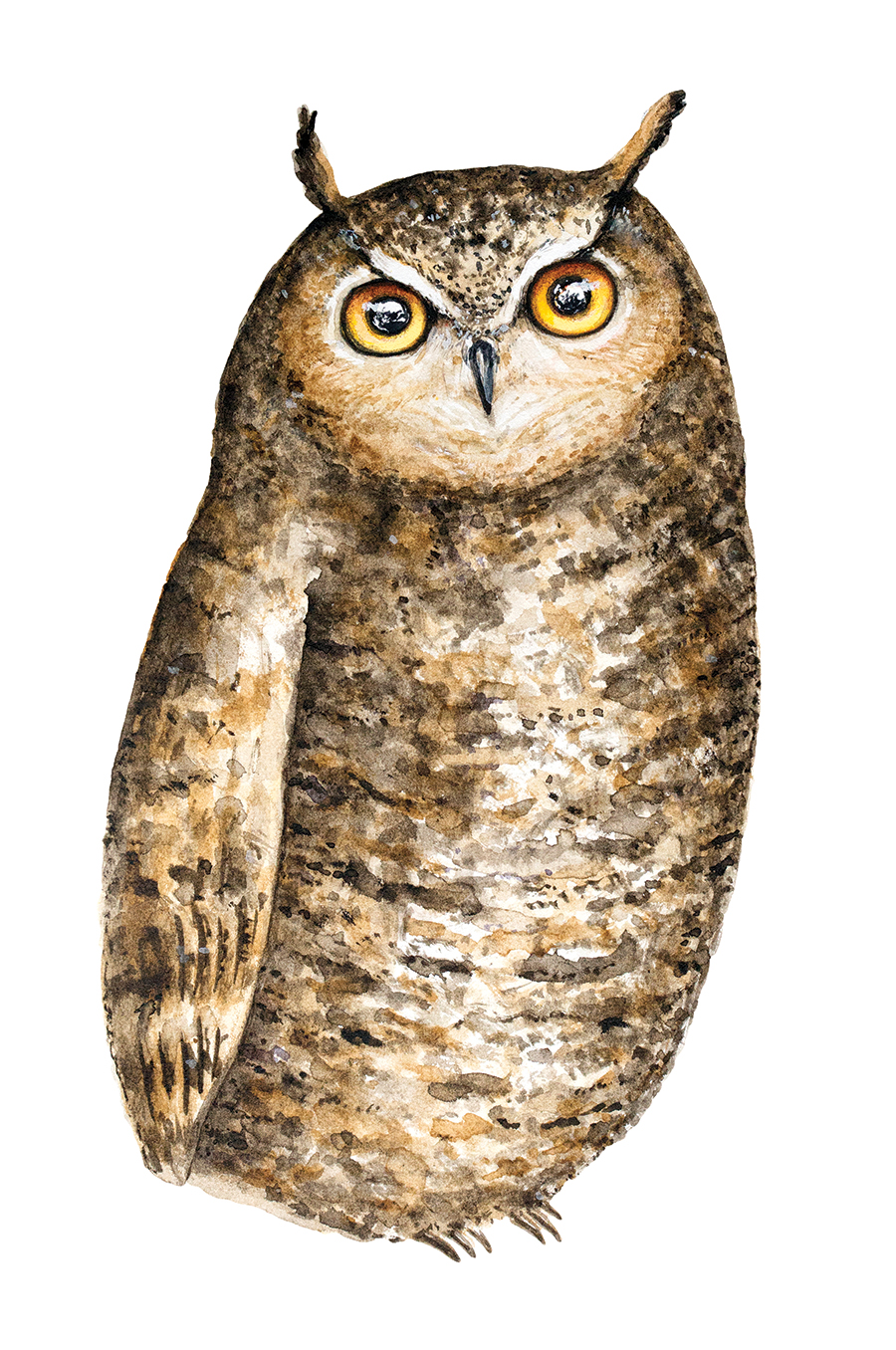
High in the towering pine, a pair of great horned owls sit with their clutch in the black of night, yellow eyes like ancient, swirling galaxies. In this realm of shadow and mystery — this wintry temple of stillness — they are the wisdom keepers. And they are always listening.

Warm beneath the great horned mother, three white spheres hold tiny, secret worlds. Days from now, the brood will hatch. But in this moment, all is quiet. Until it isn’t.

On the forest floor, movement flickers like a light in the dark. There’s a faint rustling of leaves. The stealthy owl king twists his head until he targets the source, seeing with his ears before his eyes. Hare? Mouse? We’ll never know. Nature holds her secrets close.

February heightens the senses. Silence cradles every sound, and you can feel it — the charged nothingness before the rhythmic hoots of the great horned beasts. The charged nothingness that follows.

Mystery flirts with your mind like wind dancing through metal chimes.

Just before the earliest light, you hear what sounds for all the world like the piercing, primal scream of a banshee. You are half frightened, half delighted, which speaks to your own primal nature. Next, you hear a sequence of yips and yups. A shriek and more yups. Then, silence.

You suspect what you’ve heard is a pair of foxes, but only the owl knows for sure. And in this sacred window between darkness and light — this thin crescent moon of a month — nature holds her secrets close.


When you listen with your soul, you come into rhythm and unity with the music of the universe.

—John O’Donohue


Year of the Ox

Friday, February 12, marks the celebration of the Chinese New Year — day after the new moon. Cue the paper lanterns for the Year of the Ox, a year of hard work and, let’s hope, positive change. According to ancient myth, twelve animals raced to the Jade Emperor’s party to determine which order they would appear in the zodiac. The ox is the second because, well, the rat tricked it. All of this to say, trust your gut — and get ready for a good year in your garden.


Yellow flowers of oriental paper bush under snow in early spring.

Winter Bloomers

What is that spicy, glorious aroma, you ask? That would be paperbush (Edgeworthia chrysantha), which gets its name from its bark, not its fragrant yellow flowers.

Paperbush is a deciduous shrub that blossoms in late winter. Native to the Himalayas, China and Japan, this winter bloomer prefers moist, rich soil and a shaded landscape. And with its elegant silhouette and bluish, almost silvery foliage, it dazzles all year.

Speaking of bluish . . . let’s talk about violets. Blue violet, purple violet, hooded violet, wood violet, meadow violet, woolly blue violet. Whatever you call it, the birth flower of February is an herbaceous perennial celebrated for carpeting the winter landscape. They’re edible, too. Although the common violet grows wild along our East Coast, there are hundreds of species of violet (genus Viola), first cultivated by the Greeks circa 500 B.C.

According to Greek myth, hunter-goddess Artemis transformed one of her nymphs into a violet — not, say, a red rose — when the huntress’s twin, Apollo, tried to pursue her. Thus, the violet is said to represent modesty and humility. It’s also been known as the “lesbian flower,” and in 1927, a play called The Captive featured a female character sending violets to another female character. The production stirred the pot, so to speak, with its conspicuous theme of lesbianism and was eventually shut down. But in 1978, the color violet made its way into the rainbow flag for San Francisco’s Gay Freedom Celebration. Violets are for everyone. OH

Life’s Funny

Streaming Consciousness

When a little TV wisdom comes in handy 

By Maria Johnson

Like many people coping with COVID restrictions, I’ve been watching more TV — especially series with episodes that you can stream back-to-back-to-oh-look-it’s-next-month-already — on platforms such as Netflix, Prime Video and HBO.

My husband and I have snickered our way through The Marvelous Mrs. Maisel; been thoroughly freaked out by the all-too-timely The Plot Against America; cast a suspicious eye on just about every character in the detective show Endeavour (“Did you see the way that passerby pedaled his bicycle? Wasn’t it just a little too quickly?”); and been mesmerized by The Queen’s Gambit, in which the hauntingly beautiful actress Anya Taylor-Joy plays an addicted genius. The show has sparked renewed interest in the game of chess (see last month’s O.Henry magazine). It also has prompted armies of tippling women to look deep into their souls and ask themselves the hardest question: “Should I be wearing my hair in bangs like she does?”

I was so enchanted by the show that when my younger son offered to teach me to play chess during a recent visit, I agreed. He explained the rules. I knew that I needed to make a clever opening move. So I did.

I put my hand on a piece, stared at my son, and said with all the gravity I could muster, “Is this the piece that can hop like a bunny?”

He gave a barely perceptible nod.

I moved my piece to a square, held it there, looked at him intensely, and lifted one eyebrow.

“Are you sure you want to do that?” he asked.

In this fashion, I touched all of the pieces and moved them to every conceivable spot — not unlike a primitive computer pondering all the possibilities — until he finally said, “OK, whatever, that’s a good move.”

I’m happy to report that this worked great. The game was close — long, but close — and he won only by moving a pawn to my back row, at which point the pawn became a queen who could do whatever the hell she wanted.

Which brings me to another show we’ve been watching, The Crown, which is about Britain’s royal family and the issues they confront — or, more accurately, don’t confront — in their personal and political lives.

Before I watched this show, I never knew much about the royals other than what I read in an occasional email digest from Quora, a question-and-answer website that deals in a fair amount of palace intrigue.

For example, a reader will ask a question like “What’s Prince Harry really like?” and a plumber from Gloucester will answer with great authority because a union buddy of his once fixed a loo in Kensington Palace, two floors away from Harry’s apartment.

That was good enough for me — until I started watching The Crown. Since then, I’ve been diving into royal history, customs and etiquette, just in case the queen and I ever meet up.

It could happen. Let’s say I’m in London, and I’m walking around Hyde Park, which is right next to Buckingham Palace and is slap full of dogs running loose. Maybe I notice a corgi that looks lost and more than a little irritated with other dogs sniffing its butt. I check its collar, hoping to see the owner’s contact information, and — whaddya know — there’s a tag that says “QE II, B. Palace.” So I call the number, and this little voice says, “Yesss?”

And I’m like, “Um, yeah, I found your dog, and I’m pretty sure I saved its life, so . . . ”

She tells me to come right over. When I hand over the dog, the queen is overcome with emotion. “Thankew,” she says. You know how she runs those words together.

And I’m like, “No problemo, Your Majesty.”

I know from watching the show that I’m supposed to call her “Your Majesty” on first reference and “ma’am” from then on.

Also, I curtsy to her, which goes against my grain, but in my head I think of it as a tiny reverse lunge.

So I do a quick set of tiny reverse lunges, just to prove my good intentions and general fitness, and I wait. Unless the queen makes the first move, you never touch her. This won’t be easy. I’m a toucher. If she doesn’t offer me her hand to shake or fist bump, I’ll probably just give her a thumbs up, and say something like, “Cool purse. Ma’am.” If it’s the middle of the afternoon, she’ll probably invite me in for tea to show her gratitude.

Again, from studying up, I know that no one eats until the queen eats, and if the queen stops eating, you stop eating. I know I can handle the first part, waiting for her to start, but if they’re serving something delicious, like macarons — which are basically MoonPies — or little pimiento cheese sandwiches with the crusts cut off . . . I can’t make any promises.

But I’ll definitely let her lead the conversation. When she makes a point, I’ll agree by saying, “One would think so.” This is a very royal way of talking — saying “one” instead of “I.”

Given a chance to speak, I would try to find common ground, probably by talking about dogs because dog people love to talk about their pups. I might say something like, “One is curious, ma’am: Has Her Majesty’s dogs ever pulled her underwear out of the royal laundry basket?”

She could find this kind of familiarity refreshing.

Or she could use the royal accessory that I envy the most, the bye-bye button, a buzzer that summons her assistants to whisk away visitors when she’s heard enough.

Either way, I would be instantly qualified to answer a question on Quora.  OH

Maria Johnson is a contributing editor of O.Henry. She can be reached at
ohenrymaria@gmail.com.

O.Henry Ending

Never Arrive at the Funeral Home Late

A broken rule and a lesson on love and understanding


By Katherine Snow Smith

I watched from the second-to-last basement stair, which was covered in the original short-pile marigold carpet from 1959. My mother ironed my sister Melinda’s tea-length dress. It was the color of orange sherbet, lace overlaying silk. Melinda had worn it to our cousin Melanie’s wedding several years earlier. It would be the last dress she would ever wear, because she was to be buried in it the next day.

We had to be at Brown-Wynne Funeral Home to plan my sister’s funeral in just about an hour. My mother, who painstakingly pressed every tuck and every pleat, was moving in slow motion. Then she stopped ironing to talk.

“First thing this morning, we heard a lawnmower and looked out the dining room window and that sweet Grady Cooper was mowing the lawn. He did the front and back in all this heat,” she told me, referring to my dad’s good friend since sixth grade. Grady knew we’d have people coming over and wanted the house to look good, but more so, he just wanted to do something to help when there really was nothing anyone could do.

“And then that wonderful Glenn Keever insisted on going with your father and Alean to the funeral home this morning,” she said as she placed a tulip sleeve over the tip of the ironing board.

Alean was the housekeeper who had stayed with Melinda and me while our parents worked. She was still coming once a week when Melinda died at age 31 in a car crash. After my father told her the funeral would be closed casket, Alean asked if she could see Melinda once more. He complied immediately, later telling me he wouldn’t have done that for anyone but her.

Glenn was one of my father’s closest friends. He had identified my sister’s body for the authorities after she was killed by a drunk driver. My parents were out of town, and I was living in Florida. This all happened more than 20 years ago, and as every well-wisher promised me at the time, the pain has lessened. The gaping hole will never be refilled.

I still remember how the basement smelled that day with the stiff, clean fragrance of Niagara Spray Starch as my mom ironed. It was a familiar scent because the ironing board was always in our basement, where Melinda and I had spent hours, thousands of hours, playing.

To my right was the big brick fireplace, devoid of ashes in June. I pictured it two decades before, lined with produce boxes my mom procured from Winn-Dixie so Melinda and I could stack them three high and eight long to build empires for our Barbies.

Finally, my mother was done ironing Melinda’s dress. She carefully hung it on a padded coat hanger. Now if she could just change clothes quickly we could leave in 10 minutes and get to the funeral home almost on time. But then she placed a pair of white cotton underwear over the ironing board and gingerly touched the steaming iron to the fabric, an inch at a time.

Nobody, I mean nobody, was even going to see the underwear. What was she doing? And then I got it. I was only four months pregnant with my first child, but I got it. She wanted to be Melinda’s mother for five more minutes. She wanted to keep ironing, caring, teaching, defending, celebrating, helping, consoling, praising. This was the last thing she would ever do for her daughter.

“I love you so, so much and so did Melinda,” I said as I rushed to my mother and hugged her.

“Thank you, Katherine. I love you more than you will ever know,” she said through tears.

We were a good half hour late to the funeral home. Nobody complained.  OH

Katherine Snow Smith is a North Carolina native who has worked as a journalist throughout the Carolinas. She currently lives in St. Petersburg, Fla., where she is a freelance editor and writer, but visits her parents and friends in the Tar Heel state every month. This essay was excerpted from her first book, Rules for the Southern Rulebreaker: Missteps and Lessons Learned, which was published by She Writes Press in 2020.

Labor of Love

The historic T. Austin Finch House blushes anew

By Cynthia Adams


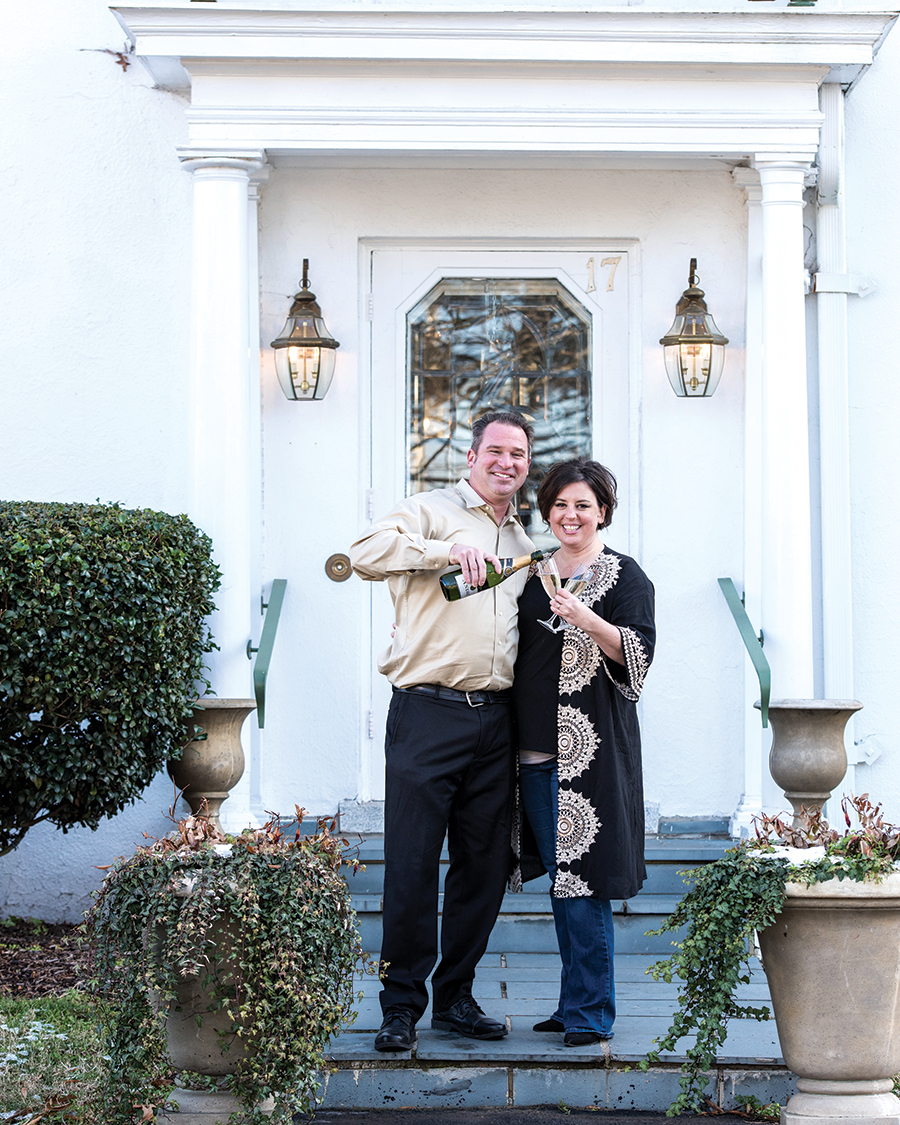
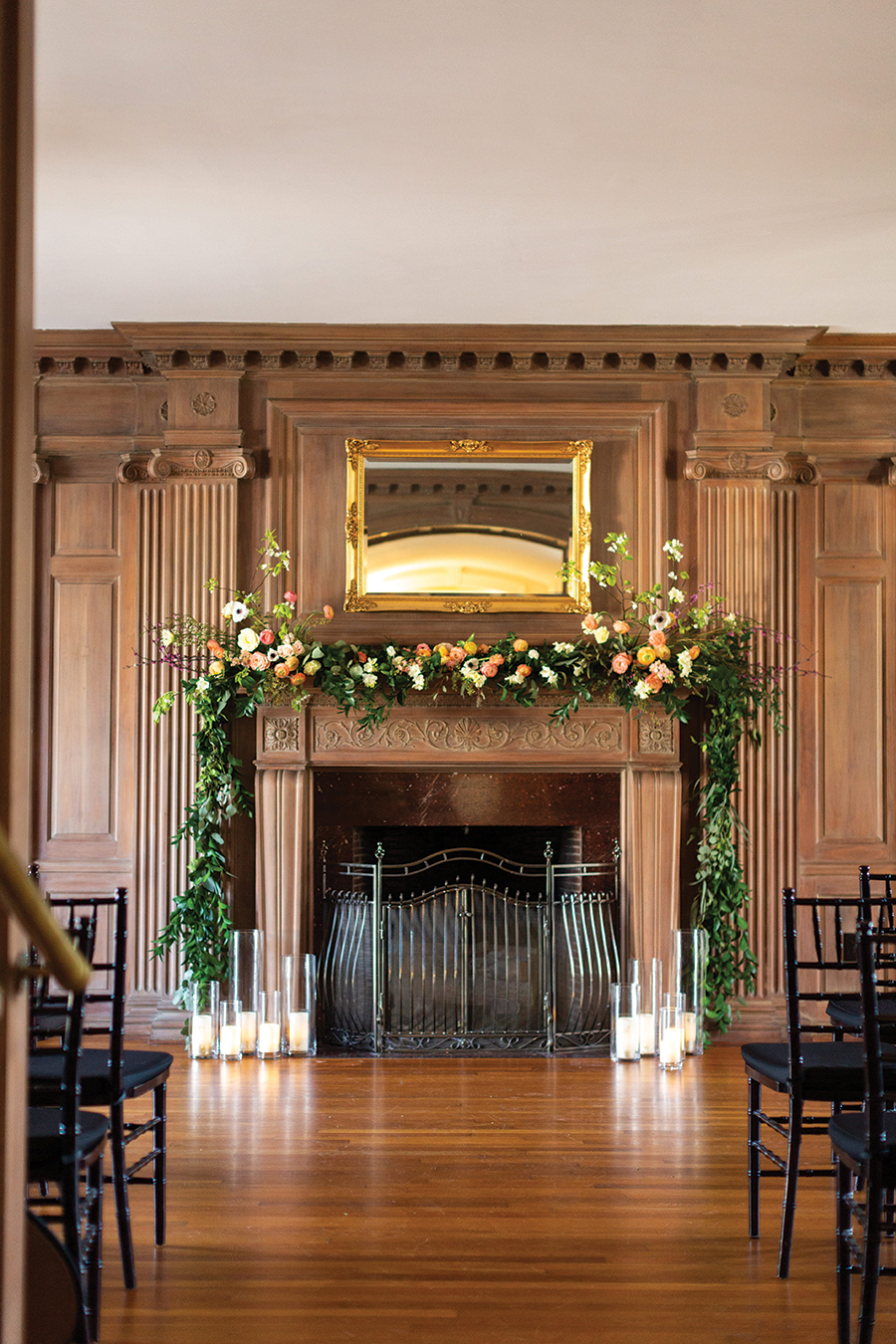
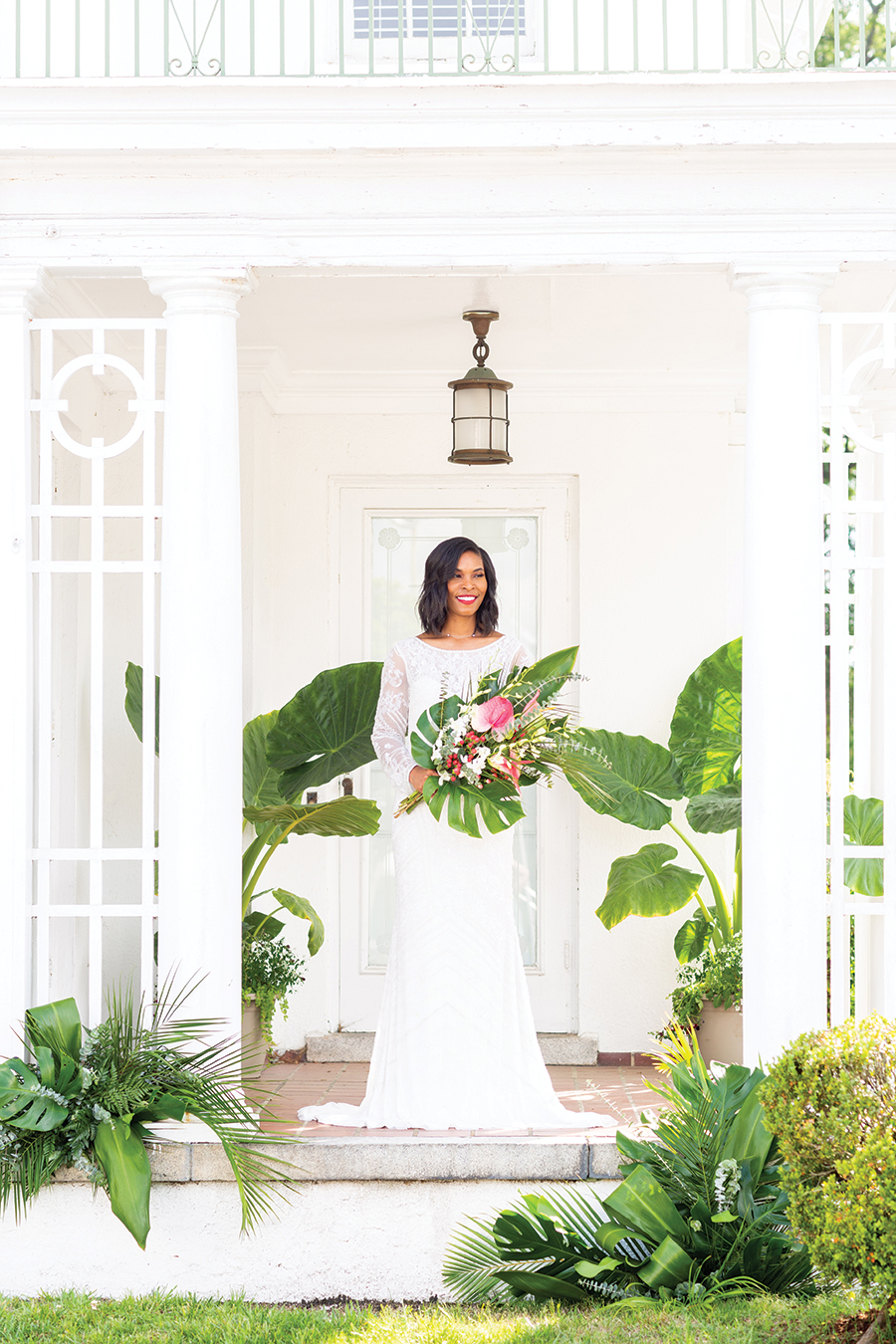
Today, Thomasville’s Renaissance Revival mansion of the T. Austin Finch house is a favorite photo location for blushing brides, who smile radiantly for the camera from the Juliet balcony.

Exactly one century ago, the elegant home was built for another blushing bride, Ernestine Lambeth, the newly-wed wife of T. Austin Finch. Although the house was built as a symbol of their union, it also represented the fusion of two families’ successful companies: Lambeth Furniture and Thomasville Chair Company.

According to Winston-Salem historian Heather Fearnbach, the Finch-Lambeth wedding unified “two major North Carolina furniture-manufacturing dynasties.” And it firmly solidified Thomasville Furniture as a furniture megabrand.


Photographs by Amy Freeman


But that was in another era. In succeeding years, the North Carolina furniture industry became a shadow of its former self. T. Austin Finch House languished, and then sat empty, serving as a poignant reminder of the decline of manufacturing in the state and in the Triad.

That’s when another young couple, Hilary and Andrew Clement, entered the story. They knew it wouldn’t be easy, but with an infusion of love and cash — not to mention strong backs and helping hands — the Clements vowed to restore the T. Austin Finch House to its former glory.

How that transpired is quite a saga.

The Clements were living in Greensboro when, in 2016, Andrew took a teaching job in Thomasville, which was close enough to commute. It wasn’t long before he learned about the historic Finch house, which had been on the market for several years.

No one wanted the house to be lost, including Thomasville’s city leaders, recalls Andrew. It was a valuable piece of the town’s story, and over time, it became a siren call to a man itching to see the old beauty saved.

Photographs by Amy Freeman


The story of the house’s revival began in the summer of 2017, when Andrew began making repeated visits to the 1.5-acre property. He peered through the windows, admiring the architectural details and sensing the mansion’s former grandeur. Then he began wondering what a little love — or, more like a lot of love — could do for this vacant old house. Basically, Andrew Clement had fallen irrevocably in love with the Finch House. To get some perspective on his infatuation, Andrew decided to call Jim Howard, a Realtor and longtime friend, to walk through the mansion with him.

“It was an incredible deal,” says Howard. But what would Hilary think? Howard recognized it just might be a perfect match for the Clements, who were no newbies to restoration projects. In fact, buying and flipping houses was more than a mutual passion and avocation. “In 20 years as a remodeling contractor, I have repaired and renovated over 500 homes,” says Andrew. And together, Andrew and Hilary had renovated 17 properties — all distressed and most in foreclosure — including a 1938 bungalow in Glenwood, which they documented online.

Photo by Brittany Butterworth Photography

Between Andrew’s experience and Hilary’s artistic eye, Howard became convinced that the couple could work some real magic on a property that certainly needed a lot of love.

Hilary is a rare bird: equal parts scientist and artist. She is a skilled Realist painter by night and manages a high-pressured DNA lab by day. Andrew is a third-generation craftsman who says he “was born” to become a renovator. Together, they complement one another’s strengths. 

Which, as it happens, is a good thing when undertaking something as daunting as a well-known mansion languishing in a sad state of neglect and disrepair in plain view on Thomasville’s main street. 

Indeed, this was no small undertaking. It was enormous — scary big even for someone with the Clements’ track record. Six bedrooms, nine bathrooms and 7,000 square feet of all sorts of issues, including rot and moisture. And that’s not counting the carriage house, former servants’ quarters or garage, which would add another 1,300 square feet of space to the project.

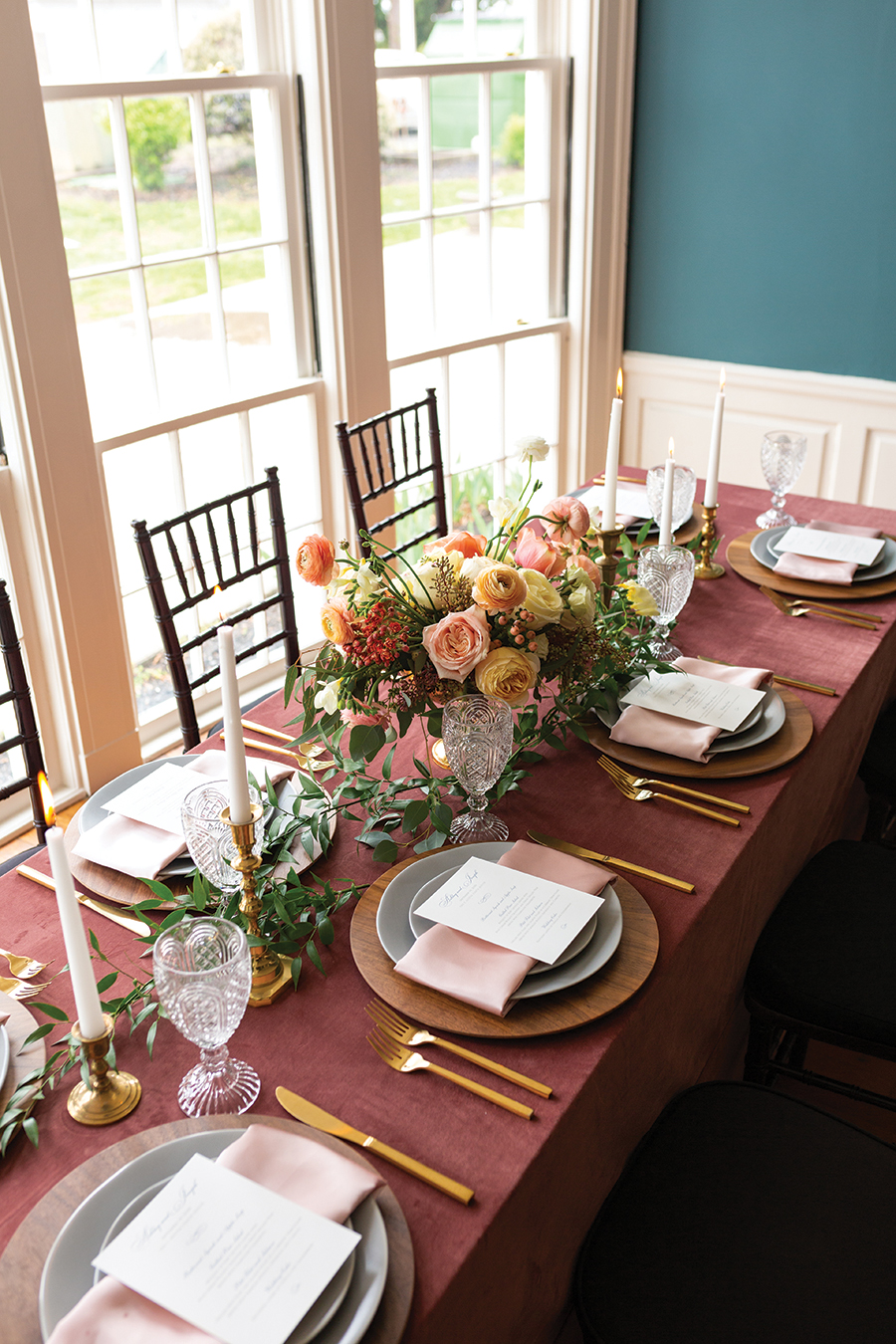
“There was some caution and a lot of due diligence,” says Andrew.

They decided that the only way they could make things work financially would be to revitalize the house as an event center. But they would have to battle mold and decay before the first new couple could stand inside its once lovely plaster walls and murmur “I do.”

Perhaps the resident ghost might have whispered in their ear that if they loved the house, a home would one day love them back. 

Who can explain love?

In any case, the Clements ultimately responded with a yes — they would love the house back to life. They purchased the Finch property on October 20, 2017.

Andrew had renovated his first old property when he was only 22-years-old — a house even older than the Finch house — a 1902 Queen Anne McLeansville farmhouse. The work inspired him to earn his general contractor’s license, and Andrew has focused upon renovations since. 

Now 42, he had 20 years of experience to his credit as proven by scars, scrapes and bruises. 

Yet nothing compared to such a grand mansion. And, it seemed karmic.

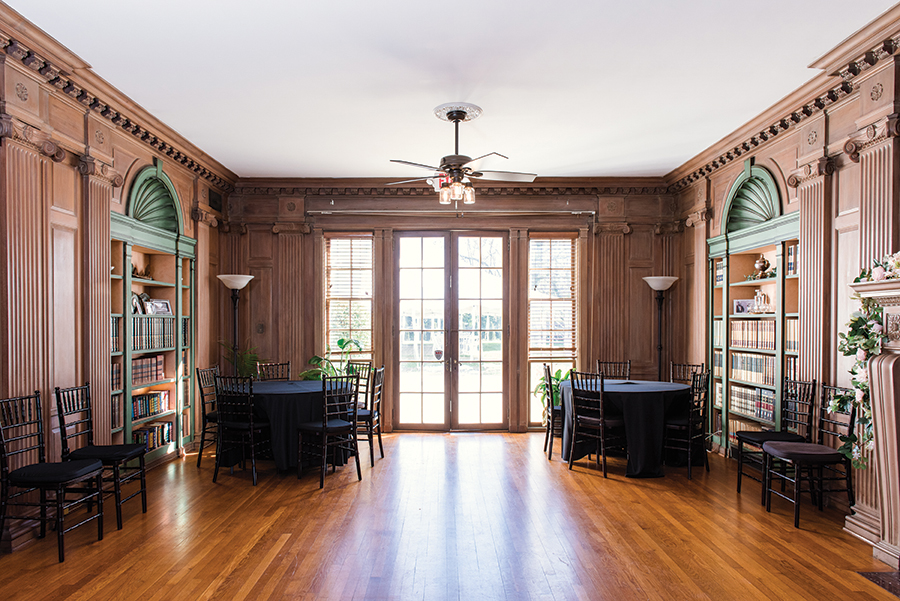
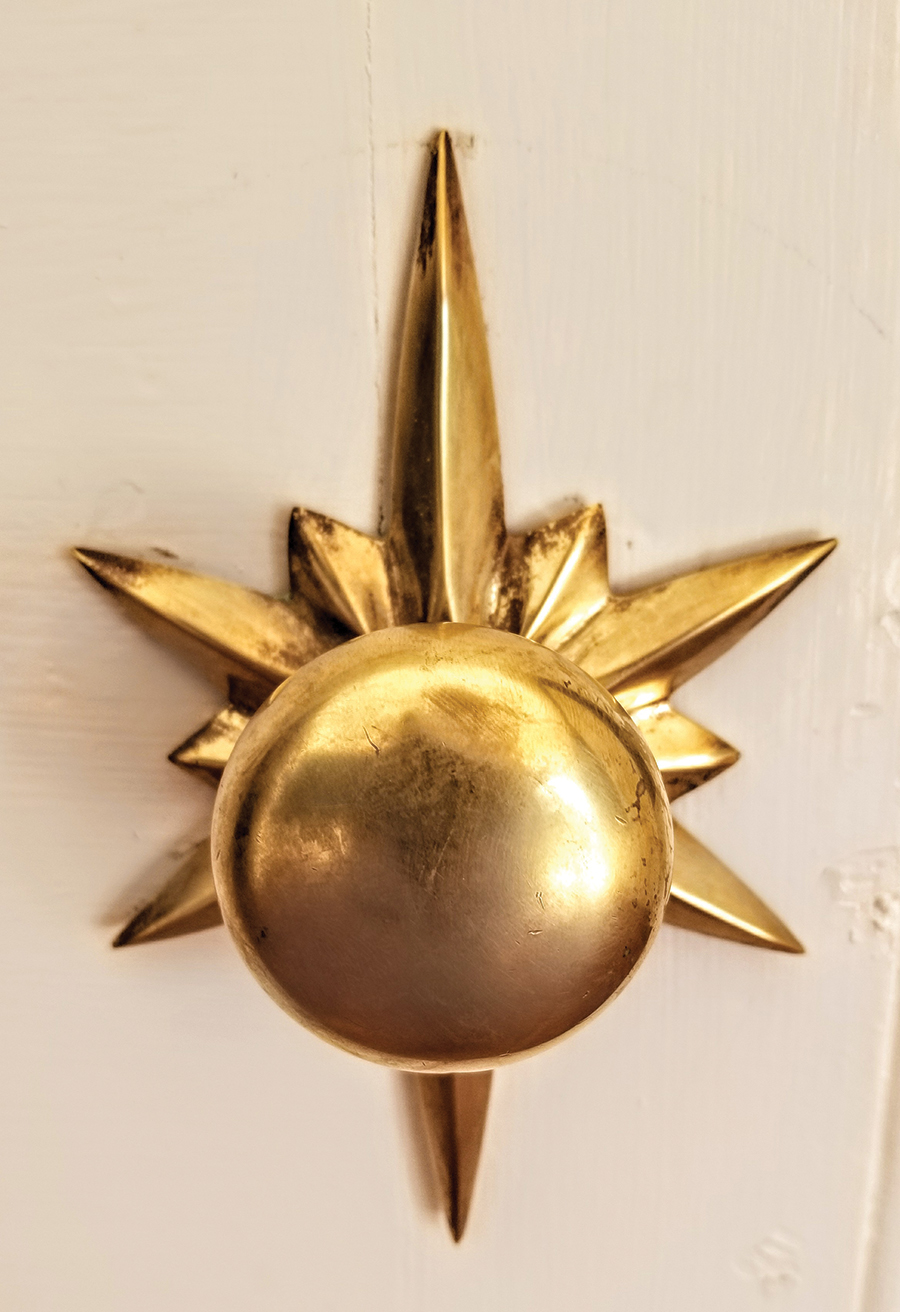
Inside the Finch mansion’s plastered and paneled walls was a century of history and the physical remnants of its former grandeur. For instance, original wormy cypress was used in a magnificent, intact library, part of an addition made in the late 30s. Fireplaces and surrounds had survived, thanks in part to the fact that there had been few owners and renovations. A delightful and mysterious star motif repeated in the public room. The home’s charming pastel-tiled bathrooms were in surprisingly good condition. Leaded glass windows and rare Jefferson windows were intact, too.

As Andrew grew more convinced it was viable to take on, Hilary was unnerved. “Hilary had a lot of reservations about the property,” admits Andrew. “She didn’t want the renovation to sink us financially, which it almost did. She was also concerned about me stretching myself too thin, which I did also,” Andrew admits. Ultimately, Hilary became persuaded that with their combined talents and determination, they could pull the project off.

“Hilary is our secret weapon,” confesses Andrew. “She has driven and controlled ‘the look.’ We agree on most design decisions, but I defer to her insight. Hilary built our website and runs our social media. This is so helpful in an image-driven business.”

In 2018, the couple hired historian Heather Fearnbach, whose professional assistance furthered the process of getting the home listed on the National Register of Historic Places. The listing was a crucial step in terms of securing important tax credits, which would make the project more feasible.  The application was aided by the fact that the Renaissance Revival home and its occupants were well-documented.  Given the Finches role within Thomasville’s history — Thomas Finch having even served as mayor — the provenance of the restored house was almost synonymous with the town itself.

“It’s really overwhelming at times when you think about who has been in the building and what it has meant to the community,” Andrew told the Lexington i in an interview.

It took the couple a full year to make the house habitable again.

Was there a moment when they thought, “what have we done?”

Oh, yes.

Photograph courtesy of Brittany Butterworth


Two-thirds of the way through the project, Andrew admits he “hit a wall,” so to speak.

“I had some serious health issues, and we started to run out of money to complete the work,” he says. “It was at this point that I believed buying this property was the worst decision I had ever made.”

But this love story was written in the stars. Thankfully, at the perfect time and in the perfect way, the Clements were able to complete the renovation.

With the encouragement of family and friends, they hosted the first event in October of 2018. 

No longer the private address for the Finches, a powerful couple who entertained North Carolina’s affluent and influential, the historic home is now open as a public venue. 

The beauty of the home and carriage house, with an enormous reception tent out back, has attracted a flock of lovebirds, hosting more than 50 weddings over the last two years. 

Photograph courtesy of Serena Adams

The property is thriving, accommodating as many guests as can be safely organized with the constraints of a pandemic. Given that the story of this house is a tale of two couples, it is so fitting that the property has become a venue where other couples make vows that will determine the course of their lives. And it is uncanny how many parallels exist between the original owners and the couple that brought their home back to life.

Whereas the Finches were instrumental in modernizing and growing the furniture business, they were also deeply civic-minded, like the Lambeth family. The Finches lent considerable money and support to public projects, ambitious ones ranging from schools and hospitals to libraries.

Like the Finches, Andrew had also had a long commitment to public service. Howard notes, “He’s always chosen his career by the contribution to society.”

Andrew balances work as a project manager for Community Housing Solutions, a nonprofit that provides home repairs and new houses for low-income homeowners in Guilford County. “Community Housing Solutions (CHS) began in 2002 under the name Housing Greensboro,” he says. “CHS was formed in partnership with the Center to Create Housing Opportunities, Greensboro Housing Coalition, Habitat for Humanity of Greater Greensboro and the City of Greensboro.”

The house was formally listed on The National Registry of Historic Places on August 26, 2018.

Photograph courtesy of Aura Marzouk


“Grandson David Finch has visited to see the restoration. Great grandson Justin Finch has also visited with his wife. Both have been appreciative,” says Andrew.

Former Thomasville Furniture employees have also come to see the house, which was occasionally open to them long ago for special Finch-family events.

Hilary keeps an art studio upstairs where she paints on weekends. She also chooses treasures for the house. Ones that “feel right,” says Andrew.

Would the house’s resident ghost approve of them?

The rugged Andrew pauses, smiles, then admits something as long shadows fall across the dining room, which retains its triple-hung sash windows.

“We have never spent the night and have no intention of ever living in the house.”

After being pressed, he merely grins — or grimaces — enigmatically. 

“Some of the local police and other residents swear the house is haunted. I do have to admit I’ve been weirded out a few times being in the house all alone when it’s dark.”

With darkness falling, Andrew flicks on a flashlight, gives a little shrug, and we both make a hasty exit.  OH

For more information about the T. Austin Finch House, visit www.the-finch-house.com. To see Hilary’s artwork, visit www.hilarypaints.com. And to view the Clements’ renovation of their Glenwood bungalow, visit bungalowandbackyard.blogspot.com.


Feature photograph by Brittany Butterworth

On the Border

By Mélina Mangal  
Illustrations by Harry Blair


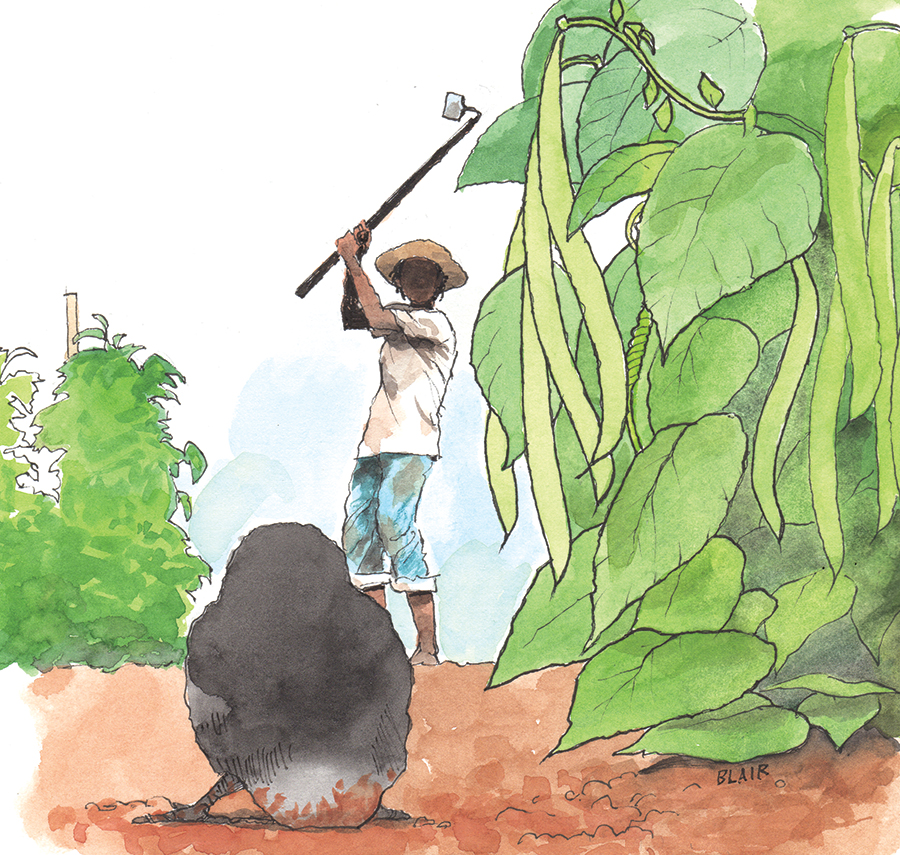
First time I saw it, I knew right away it was hurt. Else it would’ve flown away like any other sensible bird when it seen me coming with the hoe. It fluttered and cowered in the corner of the garden, in between the rows of pole beans. Probably fell out of the tree, like so many baby birds come springtime. But I didn’t see a nest in the sweetgum behind the fence. I would’ve noticed it.

The bird was squat and black, like a lump of furry fat. It looked like some kind of duck, but I couldn’t tell for sure. Its tiny tail feathers was caked with mud. Dark marble eyes stared at me. Could it smell the chicken fat, liver parts, bone bits and blood sunk into my skin from years coating my smock?

It had been so bad when I’d started at the Royal Poultry Emporium, couldn’t nothing take the smell away. No matter what I tried — Jovan Musk, coconut oil, even Frank’s aftershave — I still smelled that raw, bloody chicken as I drove back across the border to South Carolina every night with Aunt Della and Sheryl Caldwell. After a few years, couldn’t notice the difference no more. But everyone outside the plant could.

It tore me apart to see my own baby girl shrivel and cry whenever I came near ’cause of the smell. Seemed like she only let Frank hold her and give her the bottle. Maybe if I had just fed her my own milk, she’d be alive today. Preemies better off on formula, they’d said. But maybe she could’ve gotten used to my smell. After all, Frank did. Wasn’t the smell drove him away. It was the operation. After they cut my baby girl out, they cut out my womb. To save my life, they said.

I raised the hoe, wondering if there would be a sound as it came down across that feathery skull. I didn’t need no bird getting into my vegetables, ’specially since I had to live off them now. The company had barely paid my medical bills, and the court said the state didn’t need to pay nothing, even though they had never inspected that poultry pit. Not once. I needed the money, but Lucifer’s serpents couldn’t drag me back to a place like that again.

Didn’t never want to touch no more meat, no matter how it was cooked. Couldn’t stand to think about it — that frying in hot oil, boiling, barbecuing. Hellish flames burning and tearing at flesh, burning screams and dreams right off the bone. Fire trapping and slapping bodies into a smoldering ooze.

I looked down at the dirty lump staring at me. Was it a haint come from the bloody ashes to get me? Had to get rid of that bird, that nasty smelly bird.

I could still smell it, like it was just yesterday, stinking up my hair, my skin, my air. From where I’d stood near the front entrance, I’d heard the rush of gas as it lit a wall of fire all around us. Heard the fire killing screams. Pushed and ran and ran. Hot, hot, black smoke, frying flesh, screaming screaming screaming. Donna Basnight Sheryl Caldwell Vonda Truelove Laquita Fearington Annie Gibbs burning at the door marked Fire Exit Only. I saw them pounding, faces twisted and trapped from where I crawled outside. Smoky mess, couldn’t open the door for them — blocked — my arms still on fire as I looked down.

That bird stared up at me, glassy black eyes accusing. “Why me?”  I steadied the hoe between my shaking arms and raised it again, like a pickax. Had to get rid of that stinky bird. No more fowl. No more feathers. No more flesh.

The bird inched away, toward the fence, toward the ashes of the Royal Poultry Emporium. “Fly you, damn it! Why can’t you fly, you devil bird?”

I closed my eyes and with all my strength brought the hoe down. The sound of screaming filled my ears.

Stop. Stop the screaming. I brought the hoe down again and again, my eyes closed tighter to block out the cries. All I saw was black smoke.

Run. Run. Keep running. Stop. Stop the screaming. Stop.

I’d run clear across the field and was next to the highway. I leaned on the signpost to steady myself and catch my breath. Then I read the sign. Adopt-a-Highway. This portion of 177 adopted by Mason Hog Farms. The oatmeal I’d eaten for breakfast lurched up and out. I stood there until a horn honked at me.

My sister’s brown Dodge pickup stopped in the middle of the road. “Marilyn, what are you doing here?” Sandra’s soft voice coated me as she touched my arm.

“Just taking a walk. That’s all.” I knew what she was thinking. You never go nowhere. You’re afraid to leave the yard. But I couldn’t tell her what I was really afraid of.

I got in the truck with her and she drove me back home. After they released me from that burn center in Charlotte, Sandra let me stay in Michael’s room since he’d gone to the Marines. But my nephew’s room was right next to the kitchen. I couldn’t live that close to those smells. So Sandra’s husband had fixed up their old shed for me. I went right there and stayed the rest of the day, reading my Burpee’s seed catalog.

Next morning I went back out to the garden. The hoe lay in the dirt, next to five deep gashes where the blade had landed. I stopped to pick it up, so I could get back to my work. Felt like Grandpa Chaney, the way he used to bend to pick the beans and potatoes he’d planted earlier.

That’s all I want to do. Dig, plant, grow. Like Grandma Chaney too. Used to snap beans as fast as she knit. Snap plink snap plink as she dropped the beans in a bucket in summer. Click click clack when her needles connected in winter. And every so often she’d grab a chicken from the yard and twist and snap —

I heard a rustling in the dirt. I looked over and those hard wet eyes looked back up at me. Birds don’t blink but I thought it was dead. Should’ve been. The bird looked the same as I left it, a muddly black blob. Could’ve been a lump of dirt. Maybe it was.

I closed my eyes tight and counted to 10. When I opened them, the lump was still there. And it moved. I backed away. And kept walking, until I reached my little house.

I was shaking when I lay down on my cot. That damn bird. Fixin’ to eat up my seedlings. Sent here to scare me. I sat straight up again. No. No haint or bird or nothing was going to ruin my garden. I went back out to the far side and worked on my flower beds. Tulips, daffodils and iris about to bloom. This was my garden, no matter whose land it was on. I worked it, watered it, cared for it.

I lay down in it next morning before the sun come up. I felt all misty and cool and new, like the morning glories before they open up to the day. Like the deep purple pansies shiny with dew. I pretend to be one of them, with fresh new skin. Velvety soft and smooth, so smooth you want to lay your face next to one and breathe pure sweetness.

After the sun come up I got my tools and returned to the vegetable side of the garden. I inched closer to the bean patch. But I was going to work on the peas first. My fingers sunk into the damp black dirt. It felt good to not feel pain no more. I saw a flutter in the corner of my eye but didn’t want to turn. I kept playing with the dirt, letting it sift through my fingers.

I heard a tiny sound from the bean patch. I didn’t want to see nothing ’cept dirt and seedlings. But I saw the bird.

It was still a dirty black lump. Its head lurched forward and grabbed a thick graybrown worm. It snapped its beak and swallowed. The bird’s skinny throat bulged where the worm got sucked down. My hands were shaking. This bird wouldn’t die.

I backed up and ran to Sandra’s house. Had to do something, clean. Had to do laundry. I threw all their clothes from the basket into the washing machine, then ran across the yard to get all of my clothes. I did four loads and hung each batch to dry outside.

The next day I went to weed near the turnips and collards. The ground was still wet from rain and the plants looked all clean and green. I smiled at them. Then I stole a peek at the bean patch. The bird was still there but farther away this time. And it looked different.

I walked over to the bird and saw its shiny tail feathers. The rain must have washed all the dirt off. I moved in and looked at it even closer. It shivered. I saw myself in its mirror eyes. A hulking creature with stained and stretched skin holding a hoe in her hands.

Water leaked in through the door when it stormed that night. I cut out the light and stuck my toes in the cool puddle. I watched out the window as thousands of droplets fell from the sky. A rain parade showered my flowers and vegetables, like confetti in those New York parades on TV.

A flash of lightning lit up a corner of the garden, and I smiled at how pretty and silver it looked. But I jumped when a clap of thunder struck real close. I couldn’t stop shaking after that. Why couldn’t it have rained the day of the fire? Water would have poured over the flames, dousing them quick. Another bolt of lightning flashed and thunder crashed again, even closer. Why’d it have to happen?

Lightning lit the bean patch before me, and I strained to see from behind my window. That bird would be pelted out there, if it was still alive. Seconds later, I was out in the garden, sloshing around in the mud, looking for the bird. Rain washed over me, soaked through me, seeped into me.

I nearly stepped on it as the bird tried to hide under new tomato plants. I scooped it up and it pecked at me, but I ran all the way back to my little house with it.

I dried it with my towel and set it down on the braided rug next to my cot. It set there, still shaking, looking all around. After I dried myself and changed, I stepped over it to my bed. I lay there looking down at that shiny black mess of feathers. It smelled just like me, wet and muddy.

I didn’t get up for my morning walk in the flowers like usual. I was too afraid of stepping on the bird in the darkness. So I lay there until the sun poked in through the windows. The bird didn’t move when I stepped over it to get breakfast. I bent down and touched it, thinking it might be dead. Its eyes opened, but this time it didn’t shake or flutter away from me. Or try to peck. I stroked the back of its neck and was surprised at how soft it felt. Like a kitten.

After making toast for myself, I crumbled up another piece and put it outside my door for the bird. If I just fed it a little and looked after it for a while, it would fly off on its own when it could. I went to the bean patch right away after that and worked all the rows of vegetables.

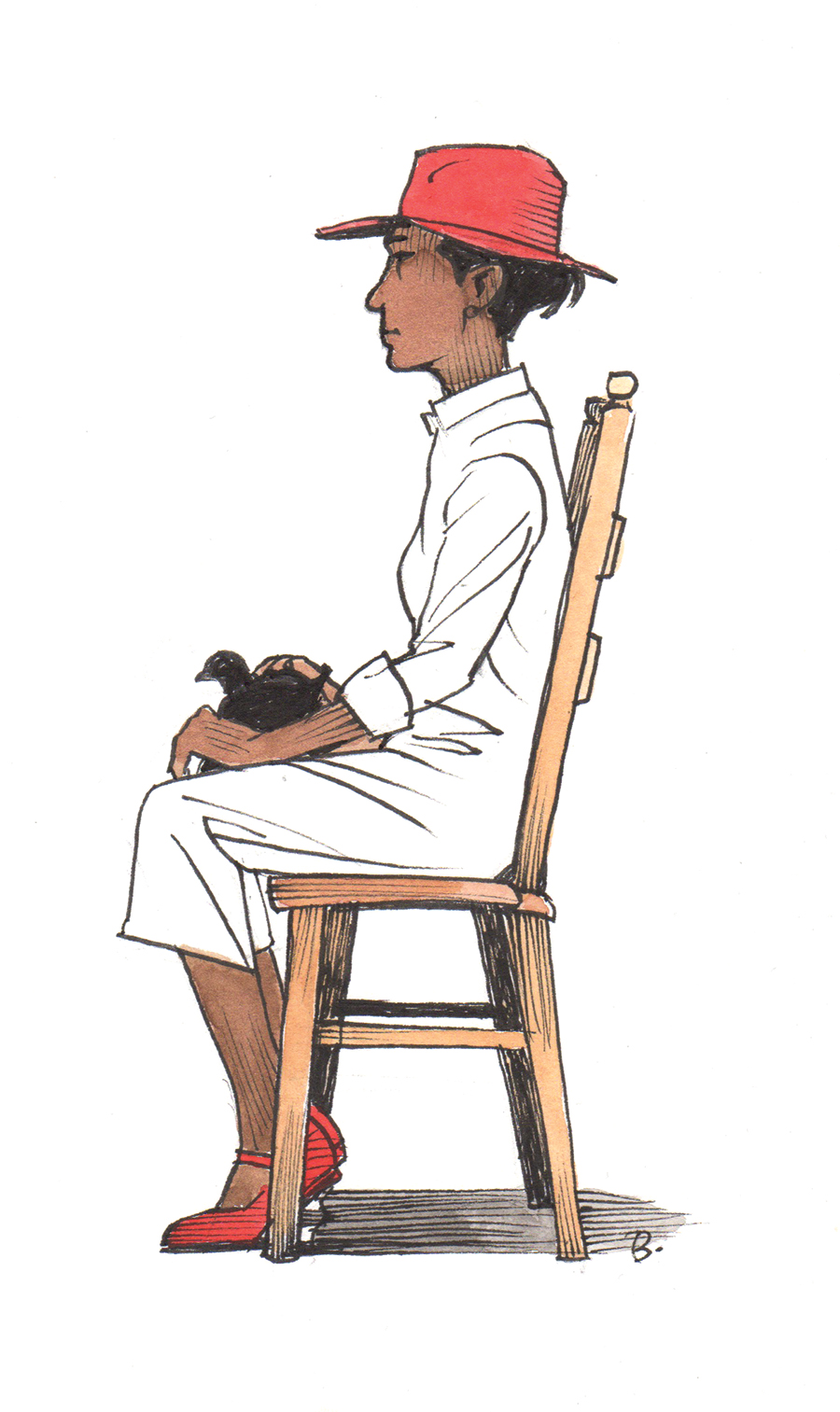
A week passed before Pansy walked without looking like she’d topple over. I’d started feeding her corn and cereal and other scraps. She loved them. And her feathers looked silkier and shiner than I ever guessed they could. I still hadn’t figured out what kind of a bird she was. She had to be some special kind of duck.

When the mailman came around to my little house, I was holding Pansy in my lap, stroking her sleek feathers. He held out the white envelope and I took it with my left hand.

“Got yourself a new bird there, Ms. Marilyn?”

“Just nursing it till it can fly again.”

“You know chickens don’t fly much. That’s a Bantam. My brother raises ’em.”

He ticked me off when he started laughing. So I didn’t answer. I looked at the envelope. It was from Cameron, Tate & Howell, lawyers for the plant. I knew from the size it couldn’t be a check. So I set it down and stroked Pansy with both hands. I heard a cheer-cheer-cheer and saw a red bird land in the sweetgum. I blew it a kiss.  OH

(From the book All the Songs We Sing, celebrating the 25th Anniversary of the Carolina African American Writers’ Collective published by the Blair/Carolina Wren Press.)

Working at the intersection of nature, literature and culture, Mélina Mangal highlights those whose voices are rarely heard, and the people and places that inspire them to explore their world. A graduate of UNC-Chapel Hill’s School of Information and Library Science, Mangal opened up the first joint Public/School Library in Carrboro at McDougle Middle School. She has authored short stories and biographies for youth, including The Vast Wonder of the World: Biologist Ernest Everett Just, winner of the Carter G. Woodson Award. Her latest book is Jayden’s Impossible Garden.

Cuckoo for Cocoa

Custom chocolates sweeten the deal in downtown Gibsonville

By Maria Johnson     Photographs by Amy Freeman

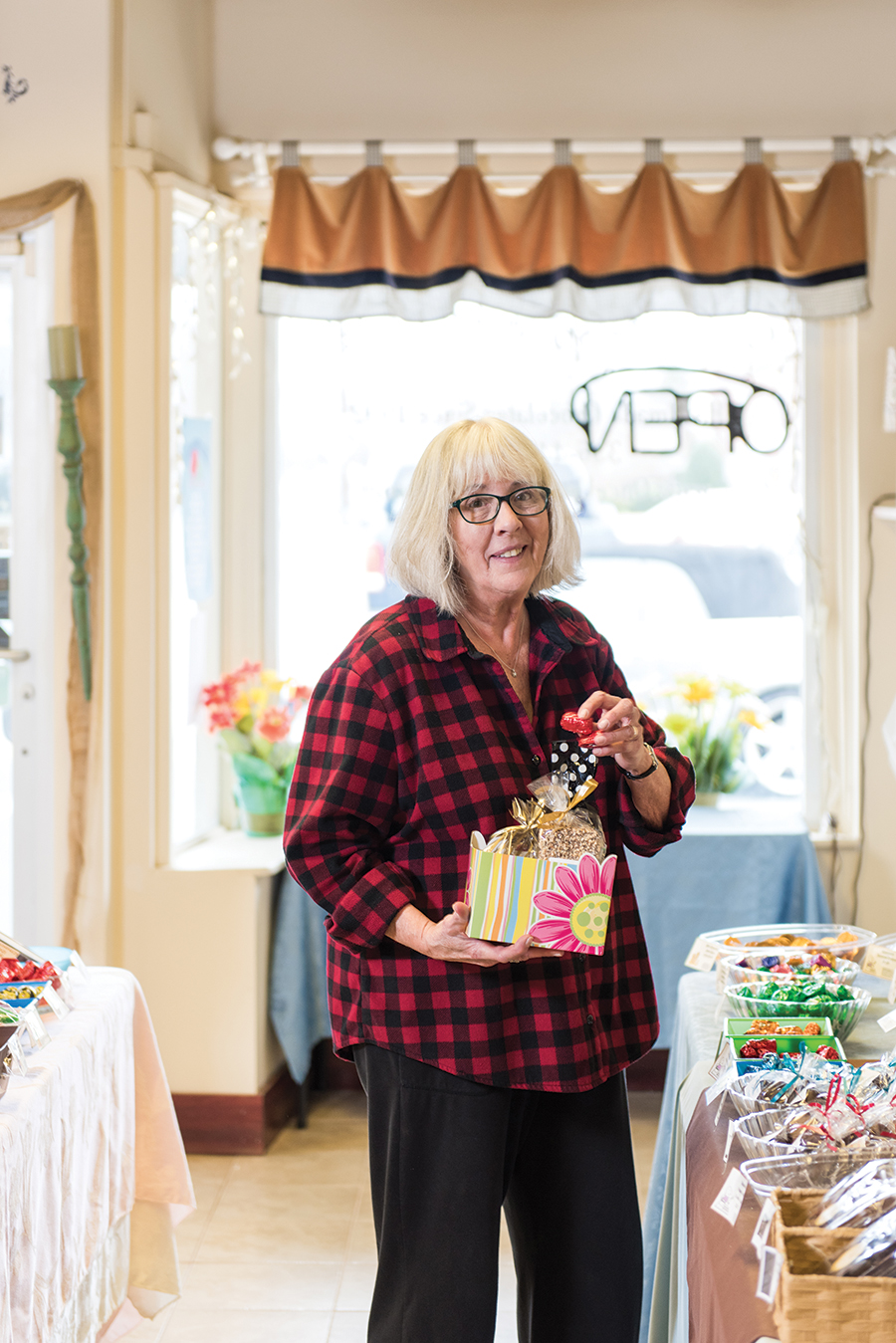
Relax, last-minute lovers. Debbie Stephens, the owner of Once Upon a Chocolate in Gibsonville, has your back at Valentine’s Day.

After nearly 30 years in the chocolate business, she knows what to expect.

You’ll saunter into her corner store on V-Day — or the day before, if you’re the plan-ahead sort — looking for confections to express your affection. Some of you will appear to be rather desperate.

You might ask Stephens what kind of chocolate she thinks your beloved would like — an indication that you might have issues that chocolate alone can’t fix.

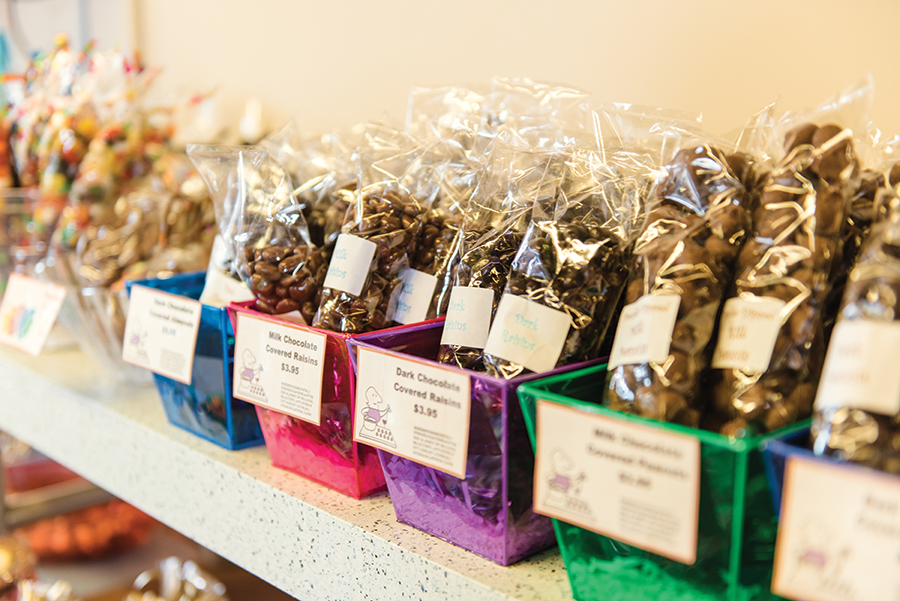
But, being an experienced businesswoman, the type with a soft-centered heart, Stephens will be kind. She’ll ask what sorts of sweets your sweetie savors, then she’ll guide you through a vast selection of velvety truffles and crunchy nut clusters arranged, in regimented rows, inside a gleaming glass case.

If you’re looking for a more direct statement of purpose, she can show you hearts, Cupids, roses and lips wrapped in bright foil skins and glossy cellophane bags.

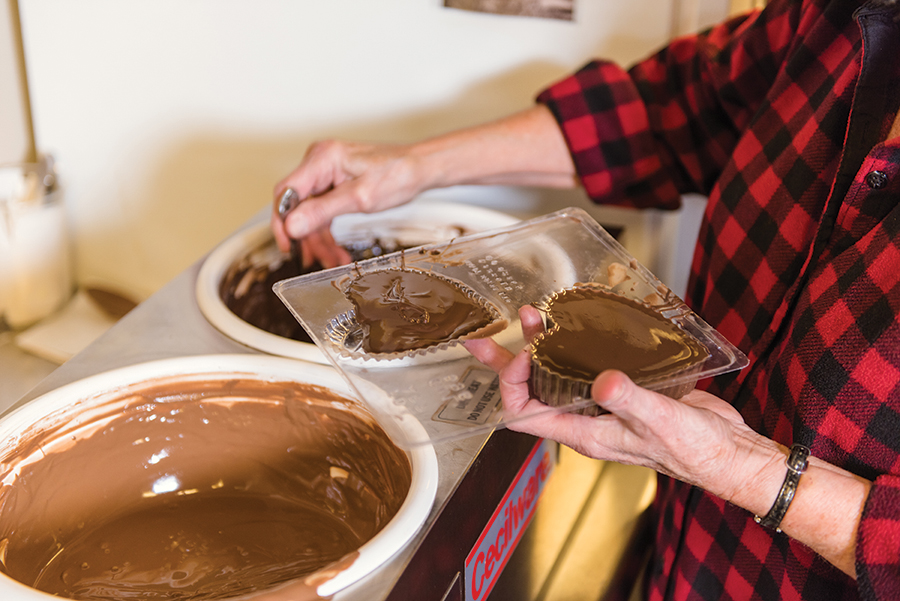
She will have stocked up for the holiday, having hand-poured more candies than usual. Her small-batch method — along with her ability to mold custom chocolates in almost any shape you can imagine — sets her apart from most retail chocolatiers, who buy their wares from wholesalers.

“It’s what enables my website to thrive,” she says.

Her success embodies a sort of Forrest Gump Paradox. Gump, the movie character, famously quoted his mother as saying, “Life is like a box of chocolates. You never know what you’re going to get.” Stephens didn’t realize, until she was in her 30s, that she could make a second career of allowing people to know exactly what kind of chocolate they were going to get.

Back in the 1990s, she was living in Florida, working as an office manager for a home improvement chain, and looking for an exit ramp from corporate life. Her mother, a small business expert with the state of Mississippi, suggested that she buy a chocolate shop franchise.

Stephens had no experience making candy, but she liked crafting, and she figured she could learn to get creative with cocoa.

Debbie’s Chocolate Delights opened in Tampa in 1992 and quickly became popular with people who wanted edible favors for weddings, bar mitzvahs, bat mitzvahs, bridal showers, baby showers and business gatherings.

Custom candy bars — done in dark chocolate, milk chocolate or white chocolate — also were a hit.

Debbie Boggs, the wife of All-Star baseball player Wade Boggs, used to order hundreds of candy bars, with a family photo printed on the wrapper, for a Christmas party they hosted every year.

Within a couple of years, Stephens bought the store from the franchiser. Personalized chocolate was a good fit for her. Local customers kept her busy, and as online shopping took off in the early 2000s, people started locating the hard-to-find shapes on her website.

One year, a helicopter-related company in the Netherlands ordered a fleet of chocolate choppers.

“I was thinking, ‘Is there no one closer to you that has chocolates? You’re in a candy country,’” says Stephens, who happily obliged the company nevertheless.

Another memorable order came from a mall management company in the U.S. For a grand opening, they wanted custom-wrapped chocolate bars, some containing golden tickets for prizes, like the candy bars in Willy Wonka and the Chocolate Factory.

The biggest order ever — 2,000 boxes, each containing five custom chocolates — came from a marketing company that was handling swag for a funeral home company headed to an industry convention in Las Vegas.

The boxes — which included a chocolate bar with the company logo, a chocolate golf ball and a grand truffle with a money sign on top — went into the hotel rooms of company guests.

In 2010, Stephens sold the Tampa business — including the name and molds — and she and her husband moved to Burlington to be closer to family.

“I started over from scratch,” says Stephens. “I didn’t have anything but a little bit of knowledge about things that worked and things that didn’t work.”

She set up shop in Gibsonville at the corner of Piedmont and Burlington avenues, a short hop from Main Street.

“The small downtown setting appealed to me,” she says. “We have a wonderful merchants’ association, and the town is always striving to be better. There’s a sense of community that isn’t found in a big city.”

The railroad-flavored business district, with its signature red caboose and garden train, draws a steady trickle of visitors, many with children. For them and other youngsters, Stephens keeps a ready supply of chocolates resembling the superhero Falcon, the folksy Thomas the Tank Engine and the robotic Transformers.

Area businesses — including The Inn at Elon, Cone Health and Duke University — count on her for candies bearing their logos.

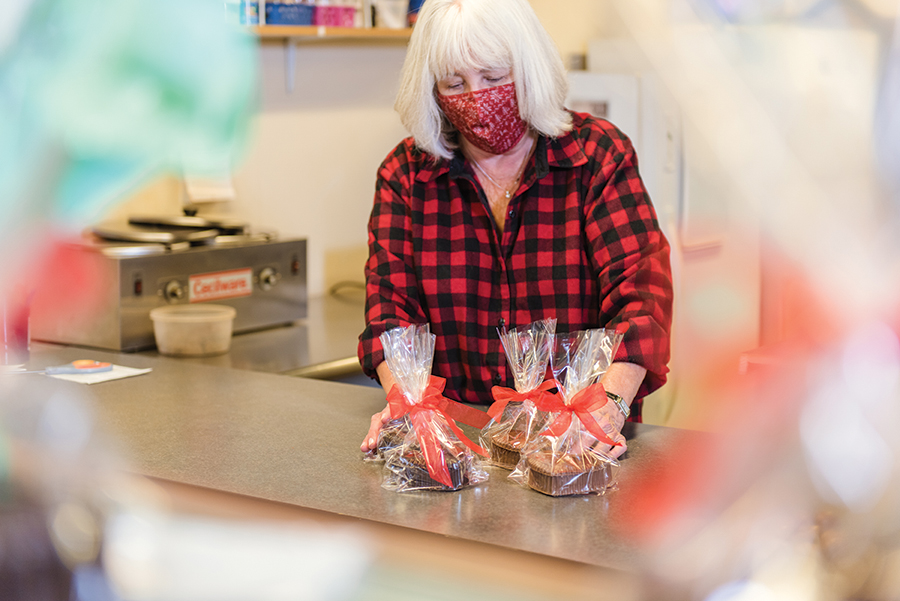
But the majority of her business — in non-COVID times anyway — comes from out-of-staters who find her shop online and call in their orders. Stephens handles the details by phone to ensure accuracy.

“I have customers telling me all the time that it is refreshing to talk directly to an owner,” she says.

Her top seller is the gold foil-wrapped figure that’s billed on her website as a “chocolate Oscar-style statue.”

The stand-up figure is a winner with people who host Hollywood-themed gatherings and watch parties for the annual Academy Awards show, which has been moved to April 25 this year because of COVID.

Six years ago, Parade magazine mentioned Stephens’ chocolate statues in a story about Oscar parties. She was inundated with calls the next day.

“It was so bad that Monday morning, we had to take the phone off the hook,” she says. “That was a case where too much publicity was a bad thing.”

Stephens has shipped the statues as far away as Paris, France and Azerbaijan.

She also helps customers who want to celebrate specific films.

“I enjoyed an order the year the movie Titanic came out,” she says. “The client was having a party, and I made cruise ships for each person, as well as a large block of white chocolate that looked like an iceberg. She placed it on a mirror on her table.”

Stephens’ bank of about 5,000 molds made from food-safe plastic makes it highly likely that she can turn out whatever shape her customers might want:

Dinosaurs.

Butterflies.

Cell phones.

Pipe wrenches.

Slot machines.

“I have an artillery regiment in Kansas City that orders chocolate cannons for their event every year,” she says. “The (chocolate) handguns have been ordered by a group in Atlanta who holds a concealed-carry convention every year.”

Business gatherings have plunged in the past year because of COVID, and that has taken a huge bite out of Stephens’ sales. Her business is down 75 percent, but the remaining 25 percent is enough to keep her melting and pouring.

The raw material is a chocolate base that comes from a supplier in 50-pound cases. She liquifies the tear-shaped, chocolate discs in melters that hold the molten mixture at a steady temperature while she dips and pours.

The chocolate takes 10 to 20 minutes to set up, and it keeps for three to four months. Stephens uses no preservatives.

There’s not much need; her creations disappear quickly, though not by her own hand, which answers one of the most common questions she hears: Aren’t you tempted to eat your work?

Stephens says no.

“At work, I’m thinking of food like chicken, burgers; nothing sweet,” she says. “I have a tendency to want chocolate at home, but I just don’t take it home. It’s rich, and you can’t eat tons, plus if I’m sitting around eating it, I just have to make more.”  OH

Maria Johnson is a contributing editor of O.Henry. She can be reached at ohenrymaria@gmail.com.