February Poem

Greyhound

Every year for one summer week we fled city concrete,

our skinned and scarred bony legs climbing steel bus steps.

Our mother shaking her head at the zoomorphic use

of a racing dog she believed was grossly falsified, sighing:

Why they would put a fast dog on this slow-ass bus is beyond me!

The driver collecting tickets always shook his head back,

not for the misleading hound, but the long night ahead —

a sundown that commenced crying fights, the lap feast

of cold fried chicken and bread slices, head balancing acts

of sleep upright. All to get down home, a foothill

in the blue ridge mountains where we stepped off

into a morning and the arms of our grandmother

who’d say: My you’ve grown. How was the ride? Who’d boast

she rode the mule-pulled tractor to the schoolhouse in snow.

— Crystal Simone Smith

(From the book All the Songs We Sing, celebrating the 25th Anniversary of the Carolina African American Writers’ Collective published by the Blair/Carolina Wren Press.)

Wandering Billy

Remembering Marion

She never missed a beat. And I sure miss her


By Billy Eye

Sweet is the memory of distant friends! Like the mellow rays of the departing sun, it falls tenderly, yet sadly, on the heart. – Washington Irving

Marion Hubbard, a dear friend and remarkable woman, passed away a few weeks ago. Marion and her husband, A.P. (Ainslie Perrow), were two of my parents’ closest friends. I’d known them all my life and grew to love them like they were my own family.

The Hubbards lived in a lovely home on Sunset Drive, where they raised their two daughters, Libby and Ada. A.P. was a businessman. For many years, his wholesale lumber company was a prime resource for the city’s leading contractors, supplying wood for homes being built in Kirkwood, Sunset Hills and Starmount Forest. Eventually, A.P. Hubbard Wholesale Lumber blossomed into an international, multimillion-dollar enterprise.

Marion, on the other hand, led the life of a fairly typical Atomic Age housewife. She golfed and dined at the Greensboro Country Club, volunteered with the Junior League, served as a Rotarian, rode horses with the kids, taught Great Books in public schools, attended Holy Trinity Church and traveled the world. She was also a voracious reader, a veritable one-woman lending library filling life’s blank pages with verve, warmth, laughter, love and a keen sense of purpose.

A.P. died suddenly in 1997, when Marion was 68. I interviewed Marion Hubbard in 2016 for an article that was never published. It’s the untold story, in her words, of how she stepped up as CEO of A.P. Hubbard Wholesale Lumber in the wake of her husband’s death. If a movie is ever made of Marion’s life, they’ll have to resurrect Barbara Stanwyck for the lead.

Marion started the tale by saying that just before A.P.’s funeral, someone from the company approached her.

“Marion, you really have to be in the office on Monday,” they told the newly widowed homemaker.

That, she said, got her attention. After all, she knew enough about the current state of the business to know that she could lose a lot of money if she didn’t immediately take charge. “When I went in,” Marion recalled, “one salesperson that works for A.P. came up and said, ‘Well, do you know about my bonus?’”

“Yes, I do know about that,” replied Marion.

“Well, do you know about that job we’re doing down in Charleston?” he retorted. 

“I know about that too, yes,” she said.

“Well, do you know about . . .”

This went on and on, she said, always with the same response: “Yes, I know.”

The salesman became so furious his face went red. “Well, A.P. lied to us,” Marion recalled him blurting out. “Your husband said he never talked about business after 5 o’clock.”

“He didn’t,” quipped Marion. “But he came home for lunch!”

As it turned out, that salesperson had assumed — and even told everyone — that he would be in charge in the event that A.P. passed.

This gave me a glimpse into the kind of relationship that A.P. and Marion must have had. Although she was a housewife, Marion had been aware for many years of the inner workings of her husband’s company. For instance, she said they would go into the office together on weekends and A.P. would look over the books and discuss upcoming jobs. “So he really did give me some insight,” she said. “It wasn’t just completely cold turkey.” She felt she had no choice but to take the reins of the business when she did.

“I would be left with all the obligations but none of the benefits if I didn’t,” she told me. “A couple of people in my family told me, ‘Well, you can’t do this.’ And by that, meaning, ‘You’re probably not capable of it.’ Of course, that did not sit well with me.”

There were, she recalled, some immediate, unexpected hurdles. A competitor, who was also a friend, attempted to lure away her most productive salesmen. Also, the bank initially refused to lend her any capital as they normally would have done for the company.

“I suggested to the bank that maybe they were treating me that way because I was a woman,” Marion told me. “They were genuinely shocked. They said, ‘Oh no, it’s because you’re inexperienced.’ Which I thought . . . that’s reasonable.”

Fortunately, A.P.’s life insurance benefit provided the temporary finances to keep commerce, and timber, flowing.

But one challenge followed another, as will happen in business.

Embezzlement? Yep. That, too. 

The good news was that sales were “huge, in the millions, but our profit margin was so tiny, I’d be embarrassed to tell you what it was,” Marion said. Because they sold truckloads of product, any mistake was a big, expensive mistake. If a truckload of lumber disappeared, your bottom line could go from black to red overnight. In fact, that actually happened. “A truck driver called and said he didn’t have time to make a delivery,” Marion told me. “So he parked the truck outside his house, and it was gone the next morning.”

Here’s where luck came into play: One of the salespeople was returning to Greensboro from a sales call when, out of the corner of his eye, he noticed something odd. “He makes a U-turn, drives back into the woods and there’s the tractor trailer with the lumber on it!” Beating a hasty retreat, he called the cops who recovered the stolen goods.

She proved to be a tough businesswoman who steered the company successfully through the worst recession since the 1930s. But Marion was always generous, attributing the success to having a low overhead and a dedicated workforce. “We really did have some really good people. We had one of the buyers come in and say, ‘We can’t believe you did this much business out of this little office.’”

The company had its best year in 2015 — so good, Marion said, “it nearly killed us.”

Collecting what was owed her at times presented a challenge. “I talked with this guy in Alabama who had declared bankruptcy. I felt sorry for him, of course, but I said, ‘Oh, you can start over.’”

She was in her late 80s at the time.

“Oh no, Miss Marion,” he told her, “I’m too old to do that.’”

And she said, “How old are you?”

The man was 35.

“My goodness,” said Marion, “You know J.C. Penney started his ten-cent store when he was 75? You are not too old.”

Can you believe he had the nerve to ask how old she was?

He gasped when she told him .

When Marion retired in 2017, A.P. Lumber was one of just a handful of lumber brokers remaining in Greensboro.

I feel extremely fortunate that my sister and I had the opportunity to visit Marion last October. We enjoyed a lovely afternoon talking about times past and folks passed. She certainly didn’t seem like someone who would no longer be with us in just a couple of months.

A true Southern doyenne, I deeply regret that the unsinkable Marion Hubbard isn’t here to read this now. Thankfully her warmth and zest for life live on in memory.  OH

Mr. O.G — Original Greensboro — aka Billy Eye would love to hear from you. Email tvparty@bellsouth.net.

Birdwatch

Unexpected Guests

The red crossbill makes an appearance


By Susan Campbell

This winter has been quite a season for birders across the Eastern United States. Here in North Carolina, it has been incredible with a variety of unexpected species scattered across the state. A few of them, like the snowy owl on the Outer Banks, were only around for a day. But others have been surprisingly widespread, are persisting and are being found in numbers. One such species is the red crossbill.

This feisty little seedeater with the oddly crisscrossed bill is native to the boreal forest, where conifers are abundant. They are uniquely adapted to pry open the sizable cones of spruces, firs, pines and even the small, compact cones of hemlocks. Crossbills are after the oily, nutrient-rich seeds found within. With short legs and strong feet, they cling easily to not only the bark and branches of the trees they forage on, but to the needles and cones as well.

The challenge for these birds of the North is that the cone crop that they depend on, especially during the colder months, is not predictable. Some years there is more than enough food to sustain them. But in seasons such as this one, red crossbills are forced to migrate much farther south than usual to find enough seed to make it through the winter.  They may appear at feeders, especially those with hulled sunflower (referred to as “hearts” or “meats”) that the birds can easily consume.

Red crossbills often give themselves away, since they travel in noisy flocks. Their distinctive “jip” calls are unlike any other vocalization you might hear in the winter in central North Carolina. Although the adult males are a bright red-orange color, the females and immature birds are more muted. They may get overlooked as one of our more common finches or sparrows. The streaky brown plumage of a female crossbill might cause confusion: They look very much like our familiar female house finches. So, be sure to look very closely at the bills of all the “little brown jobs” that show up at your feeder. And if you get lucky and spot a crossbill or two, I would love to hear about it.

Interestingly, we do have a small population of red crossbills that breed in the northwestern corner of our state. The habitat on Mount Mitchell is the equivalent of the boreal forests of Canada and northern New England. So, if you don’t happen upon any in the coming weeks, should you find yourself at elevation in the mountains this summer, you may, nonetheless, catch a glimpse of one of these unusual birds. OH

Susan would love to receive your wildlife observations and/or photos at susan@ncaves.com.

The Pleasures of Life Dept.

Good Gravy

The hot and heavy love affair that keeps me coming back for more


By David Claude Bailey

My father said he couldn’t wait to go to heaven. He’d heard that everything there came with gravy on top of it.

I’m my father’s son, and please consider this a Valentine to the elixir of life, to mother’s milk (with a little pan juices, flour and fat thrown in), to no less than my favorite food group — gravy.

Oh good gravy, how I love thee. And I’m not alone. My idol, Dolly Parton, once admitted, “Every time I fell off a diet was because of potatoes and gravy of some sort.” And the late American humorist Erma Bombeck once quipped, “I come from a family where gravy is considered a beverage.”

(By the way, Dad, how’s chocolate ice cream topped with sawmill gravy?)

Speaking of sawmill gravy, it was my father’s favorite — and mine too, though red-eye gravy and chicken-fried milk gravy are close contenders. At any rate, on the rare occasion Dad couldn’t jet home from work for a half-hour lunch because he was covering for another employee (which he inevitably did as manager of the Belk store in Reidsville), he’d go to Miller’s Cafe, put a napkin in his lap and, presto, a plate of biscuits, carpeted with sawmill gravy would appear, along with a cup of black coffee and a bottle of Texas Pete. Maybe you think sawmill gravy with biscuits isn’t exactly a well-balanced meal, but consider this: at the base of this Southern food pyramid are the biscuits, made from wholesome Midwestern-raised grain, bleached to perfection. Your dairy requirement? Isn’t gravy loaded with milk? Protein? The sausage bits swimming around the plate. And vegetables? Isn’t that why they put sage in Southern sausage?

My wife, Anne, makes superb gravy when she will. (Why would anyone leave a frying pan on the stove in which meat has been cooked without making gravy?) Anne’s finest is the milk gravy she makes after frying venison cutlets in bacon fat. Serve it on rice and you have to be careful not to swallow your tongue. When she heard I was writing about gravy, she wrinkled her nose the way she does and said, “OK, Mr. Smarty Chef Pants, what is gravy? And what’s the difference between a gravy and a sauce?”

“Good question,” I answered, which is what people on NPR say when they’re put on the spot. I spent several months as a backline chef in a French restaurant, so I know what gravy is. Besides, I grew up eating gallons of it, made by the finest Pennsylvania-Dutch cook in the South, my mother. Her hallowed gravy boat buoyed mahogany pot-roast gravy, silky gravy made from roast chicken, potent and peppery au jus from roast beef and the milk gravy I learned how to make from watching her. She’d sprinkle a heaping tablespoon of flour and lots of pepper into her midnight-black, cast-iron skillet that was still sizzling with fat and pan drippings from frying fatback. She’d scrape up any crunchies sticking to the pan as the flour browned, then add milk slowly as she whisked the flour in and let it thicken. What could be simpler? But when does a gravy become a sauce and vice versa?

I decided to consult Monsieur Larousse, as in Larousse Gastronomique. “You must understand, my American friend, we cook sauces, not gravy.” That’s what was channeled into my mind’s ear as I read the 15 pages devoted solely to sauces in Larousse. The closest thing to gravy, my Gastronomical friend said, is a demi-glaze, aka brown sauce, which has as its base dark and classic Espagnole sauce.

“This has nothing to do with Spain,” Monsieur Larousse interjected from his massive tome. “We call it Espagnole sauce because Spaniards are dark. And because Germans are blonde, we refer to the much lighter sauce made from veal or poultry as sauce Allemande.” To make Espagnole sauce, I learned from Larousse, be prepared to boil bones, meat, carrots, onion, thyme, bay leaf and bacon for hours, draining and straining and skimming and recooking it multiple times. I remember how at Print Works Bistro I’d be tasked with pouring off the broth that had been cooking for hours in a 20-gallon steam jacket. The result was wonderful. But not gravy.

Miss Fannie, as in Miss Fannie Farmer, calls pan drippings “the simplest, purest gravy imaginable.” Amen, sister. Keep it simple. Scrape the browned bits from the pan in which the meat has been cooked, she says, along with two tablespoons of fat. Add salt, pepper and a half cup of water or broth and stir. Want a thick gravy? Make a roux as my momma did with the pan fat or thicken the mixture with flour or corn starch stirred into cold water and then added to the pan. Easy, peasy, but stir, stir, stir to prevent lumping.

But what if a cook chooses to enhance a gravy with cream, eggs, wine or spices other than salt and pepper? Surely it then becomes a sauce. Both of my daughters say that their favorite gravy is their own dad’s proprietary red-eye gravy. I fry country ham only long enough to create something to scrape. Then I add enough coffee (espresso because that’s what I drink) to deglaze the pan.  Lots of pepper, NOT salt, a dash of Worcestershire and Texas Pete, and, finally, I add, yes, Coca-Cola to sweeten it just a tad, not more than a tablespoon. Then, top it off with water until it’s the right strength. If you don’t put it on grits, you weren’t raised right.

The question is, with those fancy ingredients, is it a sauce or gravy? Miss Joy (as in Joy of Cooking), for instance, classifies “pan gravy” as just another sauce. As does the authoritative John Mariani. Gravy, he says, is “a sauce, usually flour-based, served with meat, poultry and other foods.” But I’m pretty sure that neither of them are from the South.

Confused, I finally decided to ask Noah Webster: “A sauce made from the thickened and seasoned juice of cooked meat.”

Why didn’t I look in the dictionary in the first place?

Now that you know all that, why don’t you get up early February 14, fry up some Neese’s Extra Sage Country Sausage, pop a can of refrigerator biscuits if you don’t enjoy making them from scratch, and see if your significant other doesn’t love you once, love you twice, love you better than gravy and rice.  OH

As a dinner guest, O.Henry’s Contributing Editor David Claude Bailey has been known to jump up from the table after volunteering to make gravy. And he insists no one has ever been disappointed because he did.

Weekend Away

Georgia on Our Minds

The Madcap Cottage gents scamper off to Savannah


By Jason Oliver Nixon

I hadn’t been to Savannah in years, and John had never visited.

Pre-pandemic, Savannah was often bandied about as a possible Madcap weekend away destination, but somehow we always wound up in places like London or, closer to home, Charleston instead. And we do love Charleston, but sometimes the Holy City can be a tad too polished.

“Savannah is like Charleston’s wild child,” noted a friend with deep ties to the Georgia coast. “We aren’t as uptight and formal, and we really like to kick up our heels and throw a good party. After all, our nickname is the ‘Hostess City.’ And remember that we are an open-container city, so always get your cocktail to go!”

Meanwhile, our next-door neighbors in High Point spend most of their time in Savannah, where they have a second home and run a ghost tour company, Savannah History & Haunts. The pair has been urging us to visit for years.

“You will love it,” said Bridgette, one half of the powerhouse behind the couple’s multi-city tour company. “There are great hotels and restaurants, and the history is off the charts. Plus, you can take one of our tours!”

John and I re-read Midnight in the Garden of Good and Evil and, yes, screened Forrest Gump late one night to get into a Savannah state of mind.

Weekend away, here we come!

We decided to take George, our pound-rescue Boston terrier, along for the adventure and left the pug posse back home in the capable hands of the dog sitter.

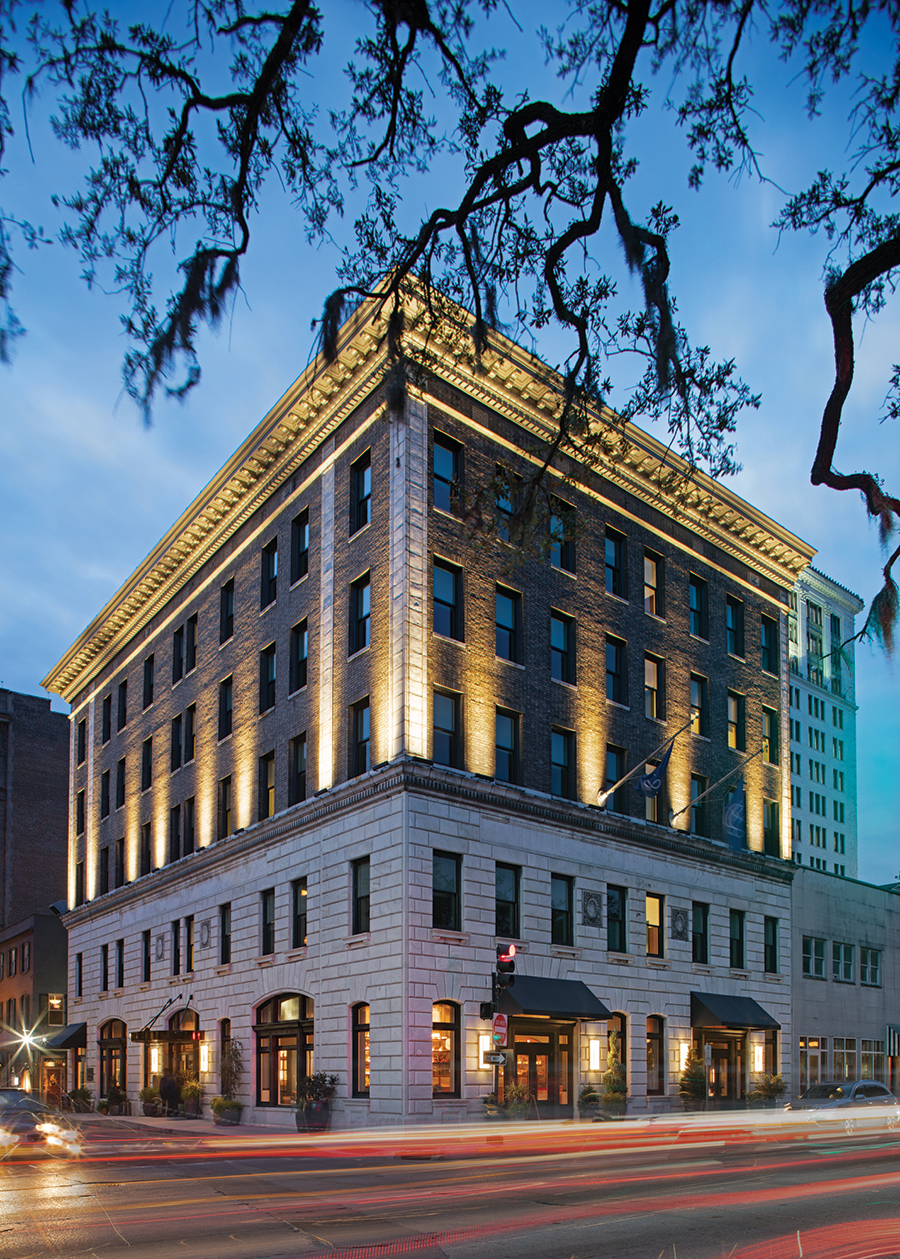
For the five-hour drive from the Triad, John and I meandered through Cheraw and Florence, S.C., instead of facing — or more like being smoked by — Charlotte’s notorious speed demons. Still, after a few hours on the I-95 leg, John and I were ready for a strong libation as we pulled up at our weekend roost: the recently opened and absolutely stunning, dog-friendly Drayton Hotel.

Dylan Wilson is a fashion and portrait photographer based in Savannah, Georgia. He is available for assignments worldwide.
Photos by Dylan Wilson
www.dylanwilsonphotography.com

George trotted in like he owned the place, and we all settled into The Drayton’s colorful Living Room, aka the lobby, where masterfully crafted, medicinal martinis were quickly rustled up. George perched happily atop a poof and preened.

Housed within the historic American Trust and Bank, The Drayton calls to mind an intimate, London-style hotel that mixes colors and patterns, giving a nod to the past with modern flourishes and understated — but beautifully presented — service. Smack on the corner of busy East Bay and Drayton streets, The Drayton offers the perfect location but feels worlds away from nearby River Street with its tourist hustle-bustle. The five-story hostelry boasts a terrific restaurant, St. Neo’s Brasserie, a chic, high-ceilinged dining room and first-rate service (our server, Libbie, was a gem). The rooftop bar wasn’t open for the season, but there is a slick, tucked-away bar in the basement and a coffee outpost just off the lobby that didn’t disappoint. Our intimate suite was equally cool with knockout views of the container ships plying the Savannah River (Savannah is the third largest container port in the nation) and a truly inspired bathroom with a wet room that paired a shower and clawfoot soaking tub.

With refreshed to-go cocktails in hand and George happily tucked away, we decided it was time to hit the town.

Savannah is the perfect walking city. Of course, the city celebrates its 22 signature squares, verdant and dripping with Spanish moss, which span one square-mile of its downtown. You will probably pick a favorite over the course of your visit. For us, it was Lafayette, but be sure to visit Chippewa, the site of Forrest’s iconic bench (his actual bench was a prop, now found at the Savannah History Museum). The squares are surrounded by historic residences with gated gardens, many of which you can tour, including the Davenport House and the Mercer-Williams home, site of the murder detailed in Midnight in the Garden of Good and Evil. There’s also dreamy Forsyth Park and museums aplenty.

“SCAD seems to be gobbling up the city,” noted John as we found our Savannah sea legs and looked around for more gin to accompany lonely olives. SCAD, of course, refers to the Savannah College of Art and Design, and the institution does, indeed, seem to have kudzued here, there and everywhere in between.

We passed the famed Olde Pink House eatery (too crowded!) and questioned whether we had to wear masks outdoors — you’re supposed to.

Geographically and pandemically situated, John and I decided to follow our friend’s lead, and we truly kicked up our slip-on Converse-clad heels.

We dined at The Fat Radish (bliss!), the farm-to-table Cha Bella, The Collins Quarter and The Fitzroy. We sipped cocktails on the roof of the glamorous Perry Lane Hotel and brunched at Clary’s Cafe, the Little Duck Diner and B. Matthews Eatery. And then, we shopped.

Savannah boasts a glorious assortment of design outposts such as Courtland & Co., PW Short General Store (incredible!), Alex Raskin Antiques (the crumbling building alone is worth the visit) and minimalist favorite Asher + Rye (too Scandi spare for Madcap maximalists!). We were in home design heaven.

Our neighbors’ 90-minute 9 p.m. candlelit ghost tour was an especial highlight of the weekend. Throughout, we explored dark byways and atmospheric squares and learned about the ghosts and cemeteries that haunt and dot Savannah. Dan, our High Point neighbor, guided the tour. Decked in historic-styled garb, he was a font of knowledge paired with heaps of charisma and a true spirit of fun.

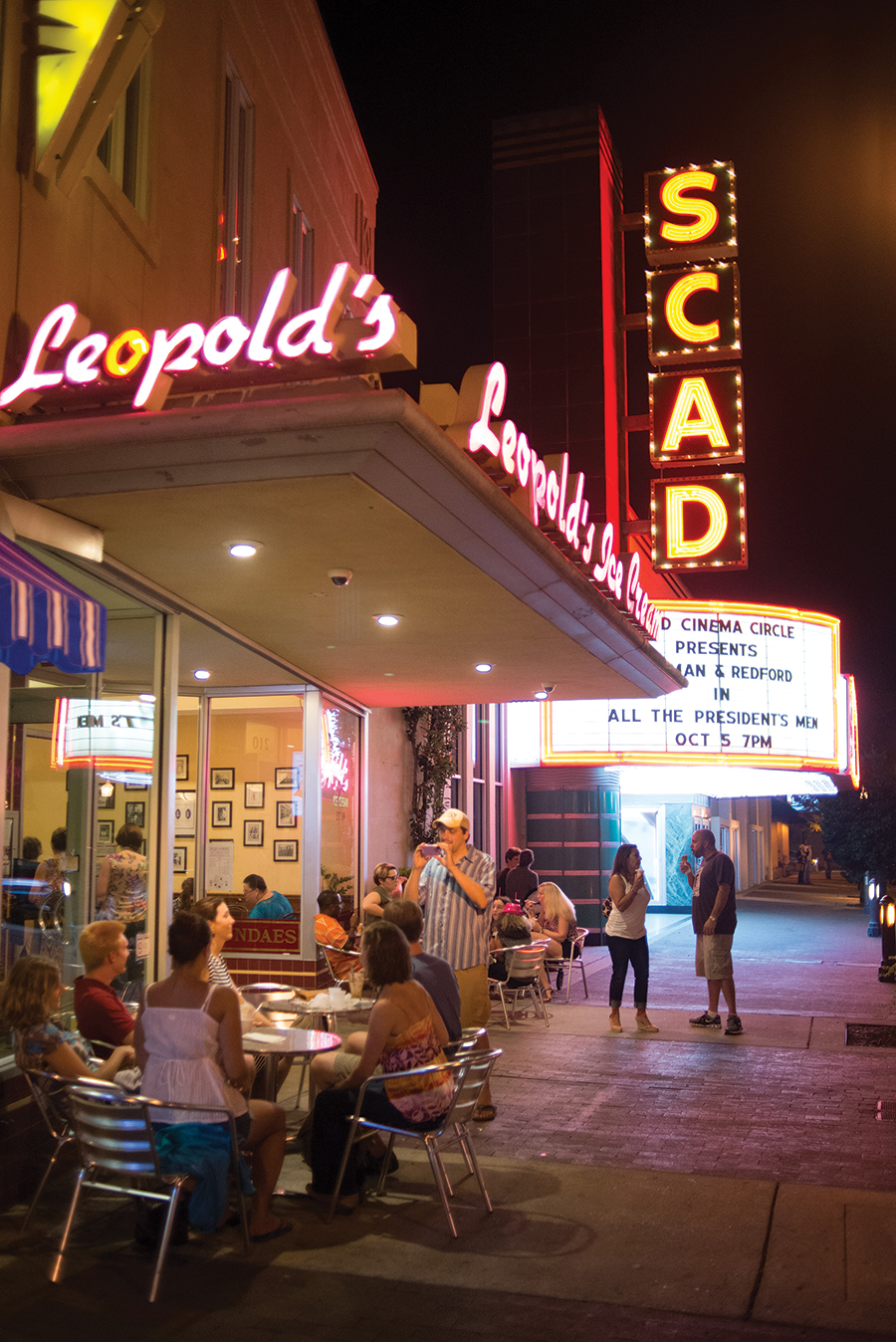
John and I trotted George out for long walks (Savannah is super dog friendly), sampled ice cream at fabled Leopold’s, sipped more potent potables at Artillery and the Lone Wolf Lounge, nibbled treats from Byrd Cookie Company and explored the refurbished Plant Riverside District with its power-station-meets-pure-glitz JW Marriott Hotel and river-facing sushi and biergarten eateries.

And, whew, there went the weekend . . .

But there is so much more to see and experience in Savannah. We will most certainly be back — with cool Chatham Artillery Punch cocktails in hand, of course.  OH

For more information about The Drayton Hotel, visit thedraytonhotel.com.

The Madcap Cottage gents, John Loecke and Jason Oliver Nixon, embrace the new reality of COVID-friendly travel — heaps of road trips.

Home by Design

Between Worlds

What’s in an entry hall? See for yourself


By Cynthia Adams

Consider the entry hall. Really.

The entry hall actually is a pretty big deal. Two hundred years ago, nobody would have had an entry — nor a hall, for that matter — unless they were living in a grand residence.

Entry halls only entered into our vocabulary around the 1840s. 

According to Benjamin Briggs, executive director of Preservation Greensboro, the entry hall was formerly regarded as something solely for the affluent; that added square footage required wealth. And more.

“The hallway is a filter. Meant to be a filter for your true self,” says Briggs. “So, a presentation out front. If people were admitted deeper into your soul or existence, you allow them into the formal room — that would have awed them. Levels of entry — it’s about control.”   

Those sophisticated French view the entry hall to the home as a preview of the owner’s private world — a tantalizing glimpse of what they prize most. 

(And historians say we Americans were once of the same mind.)

If that were the case in my family home, it might have misled visitors to imagine my folks were the Andrew Lloyd Webber’s of Hell’s Half-Acre.

When my parents purchased a ranchburger with a foyer, they installed their newest acquisition there: an enormous “Mediterranean style” stereo from Tucker’s furniture store. It left room for little else, including one’s feet.

It was even larger than the hulking “Early American” television in the adjacent den. (Question: Did all early Americans have a special weakness for enormous cabinetry? Or for spice cabinets, faux coffee grinders, wood salad bowls, spindles and chuck wagon lamps?)

Our stereo was so ungainly that when the house was burgled, the burglars cleaned out nearly everything but it.

Nowadays, foyers are so ubiquitous they are beneath mention in Triad real estate listings.

“If you go back to the Medieval period you would enter into a large multipurpose room . . . with cooking happening, and sewing in the corner,” says Briggs. 

Upon entry, you were inside the very life of the family.

“You’re plunging into the deep end of the swimming pool,” he says with a laugh. “No privacy. All of life is happening in this one, big, hall room.”

Nowadays, nothing much is happening in the entry hall other than arrivals and departures. Here we take off jackets, shuck off shoes, stash umbrellas, hang our hats. It scarcely gets a notice. 

Bill Bryson described the hallway as the most “demoted room in the house” in At Home, his fascinating study of domesticity.

Early Triad settlers built single-room log cabins. Sometimes with a second room or loft. The historic houses on view behind the Greensboro History Museum demonstrate how ordinary folk lived — and there was certainly no entry hall, as Briggs says.

There was the “big square room with cooking fireplace and wonderful mayhem.”

But if you were somewhat middling to wealthy, adds Briggs, you built a floor plan — the Quaker plan — which became the subject of his graduate thesis. Space evolved.

“If you catalog the floor plan,” he explains, it is thus.

“First a one-room house. Then, a parlor popped onto the side.” He says the parlor is where the owners not only slept but entertained visitors.

“The bed would have been one of the most expensive things anyone owned. When the minister made his rounds, he would be brought into the parlor and they would have tea. The consideration of privacy — that you would never bring anyone into your bedroom — would never have happened.” Briggs pauses thoughtfully. “As you can imagine, this is almost coming back (with open floor plans).”

Over time, a center hall appeared in homes. “Then, in the Victorian period, the organic plan [with rooms branching off].” He continues to discuss the Craftsman-style plan, whereas, once again, “you open into the living room.”

This no-entry hall trend continued in mid-century modern design. But in the 1800s, a Georgian-period trend toward hallways found its way here into the Triad. Notably, at Blandwood, Governor John Motley and Eliza Morehead’s mansion in downtown Greensboro.

In 1845, Morehead returned to Blandwood at the end of his term. At the time, it featured an entry hall designed five years earlier by A. J. Davis. 

The Governor and Eliza could now order visitors to wait in the hall. And housekeeping got a boon.

“You kept the mud and dung from the streets of Greensboro out and it was easier to clean,” Briggs adds.

The entry achieved something even more important: a way of presenting yourself to the wider world. A screen.

“As the French described, a controlled presentation of your life,” observes Briggs. “Maybe not allowing people to come into your life, but to make a judgement of your life based upon your ‘controlled’ goods.” 

Controlled goods, meaning, displays of wealth and status. These varied.  “Perhaps an expensive wall paint color, a carpet, a piece of furniture.”

Blandwood’s decor, including the new entry hall, grew worldlier, more classical. Those Morehead portraits bespoke social standing.

British designers still insist that one should consider the entry hall as more than a passage from one space to another. (First impressions, and all that.) British magazines and Pinterest devote much editorial to hallway inspirations.

The British entry hall has a theme, often poshly appointed with rugs, mirrors, table, bench, portraits. Even the tiniest Notting Hill entry hall.

Beloved Farrow & Ball paint (especially the vivid green color “Folly”, which evokes that playful yet classical sense of well-heeled European aristos) jollies up what could otherwise be a purely functional, even glum, place. 

Personally speaking, I’m clinging to the idea of an entry hall. It may not live up to the French or British standard, but it keeps the dogs from rushing the UPS driver. And mud and dung outside.

This year, I vow to show ours more love. OH

Cynthia Adams is a contributing editor of O.Henry magazine.

Scuppernong Bookshelf

Apropos

A bevy of February releases fit for any month of the year


Compiled by Brian Lampkin

A good argument can be made that when you designate a month as belonging to someone or some group (Women’s History Month, Poetry Month, etc.), you thereby diminish the importance of women’s history or poetry in the other eleven months. It’s not likely the intended effect, but perhaps it plays out that way on occasion. The better use of, say, Black History Month, is to highlight (in this case) books that will inform your reading for the entire year. And I don’t really think that the fact that we celebrate my birthday but once a year diminishes my personhood for the other 364 days. In any case, publishers recognize Black History Month and use it to put out a bevy of related books. Let’s take advantage of the largesse and talk about the best of these new releases for February.

Feb 2: The Three Mothers: How the Mothers of Martin Luther King, Jr., Malcolm X, and James Baldwin Shaped a Nation, by Anna Malaika Tubbs (Flatiron Books, $28.99). Berdis Baldwin, Alberta King and Louise Little were all born at the beginning of the 20th century and forced to contend with the prejudices of Jim Crow as Black women. These three extraordinary women passed their knowledge to their children with the hope of helping them survive in a society that would deny their humanity from the very beginning. They each taught resistance and a fundamental belief in the worth of Black people to their sons, even when these beliefs flew in the face of America’s racist practices and led to ramifications for all three families’ safety.

Feb. 2: The Rebellious Life of Mrs. Rosa Parks (Young Readers Edition), by Jeanne Theoharis (Beacon Press, $18.95). Because Rosa Parks was active for 60 years, in the North as well as the South, her story provides a broader and more accurate view of the Black freedom struggle across the 20th century. Theoharis shows young readers how the national fable of Parks and the civil rights movement — celebrated in schools during Black History Month — has warped what we know about Parks and stripped away the power and substance of the movement. This book illustrates how the movement radically sought to expose and eradicate racism in jobs, housing, schools and public services. It also highlights police brutality and the over-incarceration of Black people — and how Rosa Parks was a key player throughout. Rosa Parks placed her greatest hope in young people — in their vision, resolve and boldness to take the struggle forward. As a young adult, she discovered Black history, and it sustained her across her life. The Rebellious Life of Mrs. Rosa Parks will help do that for a new generation.

Feb. 2: Blood Grove (Easy Rawlins, 15), by Walter Mosley. Let’s not leave history to the historians! Mosley has always been a sly chronicler of Black life and history in his fiction, and this new mystery puts private detective Rawlins in the heart of the social upheaval of 1969, California. No need to have read the other 14 Easy Rawlins books — you can jump in here without missing a beat.

Feb. 9: Crossing the Line: A Fearless Team of Brothers and the Sport That Changed Their Lives Forever, by Kareem Rosser (St. Martin’s Press, $28.99). Born and raised in West Philadelphia, Kareem thought he and his siblings would always be stuck in “The Bottom,” a community and neighborhood devastated by poverty and violence. Riding their bicycles through Philly’s Fairmount Park, Kareem’s brothers discover a barn full of horses. What starts as an accidental discovery turns into a love for horseback riding that leads the Rossers to discovering their passion for polo. Pursuing the sport with determination and discipline, Kareem earns his place among the typically exclusive players in college, becoming part of the first all-Black national interscholastic polo championship team.

Feb. 16: No More Lies: The Myth and Reality of American History, by Dick Gregory (Amistad Press, $17.99). This republishing of No More Lies offers an incomparable satirist’s intellectual, conspiratorial and humorous spin on the facts. The late Dick Gregory examines numerous aspects of culture and history, from the slave trade, police brutality, the wretchedness of working-class life and labor unions to the 1968 Civil Rights Act, the Founding Fathers, “happy slaves” and entrepreneurs. No subject is off limits to his critical eye. Gregory was a comedian, civil rights activist and cultural icon who first performed in public in the 1950s. And it will come as no surprise to learn that he was on Comedy Central’s list of “100 Greatest Stand-Ups.”

Feb. 16: The Black Church: This Is Our Story, This Is Our Song, by Henry Louis Gates, Jr. (Penguin Press, $30). For the young Henry Louis Gates Jr., growing up in a small, segregated West Virginia town, the church was his family and his community’s true center of gravity. Within those walls, voices were lifted up in song to call forth the best in each other, and to comfort each other when times were at their worst. In this book — his reckoning with the meaning of the Black church in American history — Gates takes us from his own experience onto a journey across more than 400 years and spanning the entire country. At road’s end, we emerge with a new understanding of the centrality of the Black church to the American story — as a cultural and political force, as the center of resistance to slavery and White supremacy, as an unparalleled incubator of talent and as a crucible for working through the community’s most important issues. This is the companion book to the upcoming PBS series.

Public Service Announcement: In response to the ongoing COVID crisis in Guilford County, Scuppernong Books has returned to appointment-only browsing with an emphasis on curbside pickup. We continue to encourage everyone to keep the health of our friends, families and community in mind as we mask up, stay home when possible and keep social distance. With our freedom, we choose care, compassion and community well-being.  OH

Brian Lampkin is one of the proprietors of Scuppernong Books

Omnivorous Reader

Waiting for Gurganus

And savoring his short fiction


By D.G. Martin

Like two other important North Carolina authors’ debut novels, Thomas Wolfe’s Look Homeward, Angel in 1929 and Charles Frazier’s Cold Mountain in 1997, Allan Gurganus’ Oldest Living Confederate Widow Tells All in 1989 caught the nation’s attention and stayed at the top of the bestseller lists for months. It has sold over 4 million copies and become an American classic.

Set in the 1980s, the book is narrated by 99-year-old Lucy Marsden, who married 50-year-old Col. William Marsden when she was 15. She tells of her marriage to the Confederate veteran, his wartime experiences and the entertaining and poignant routine of her daily life in the fictional town of Falls, located somewhere near Rocky Mount.

Widow was followed in 1997 by Plays Well with Others. Sandwiched between the two novels are a couple of collections of short fiction, White People and The Practical Heart, the last published in 1993.

So, what had he been doing in the years afterward? “Writing, every day,” he says, “and getting up at 6 a.m. to do it.” Finally, in 2013 Gurganus published Local Souls, taking us back to Falls, where Widow and many of his short stories are set.

Local Souls is neither a novel nor a collection of short stories, but three separate novellas. All are set in Falls, but the characters and stories are independent and quite different. Susan, the main character in the first novella, “Fear Not,” is a 14-year-old all-American girl growing up in Falls when her father dies in a boating accident. Seduced and made pregnant by her godfather, she gives up her baby, pulls her life together, later marries, has two children, and leads a normal life until she is reunited with the child she gave up. Then her life is transformed in a surprising and puzzling way, one that only Gurganus could conjure up.

In the second novella, “Saints Have Mothers,” a divorced woman, smart and ambitious enough to have published a poem in The Atlantic magazine, has two sons and a 17-year-old daughter. The daughter is more committed to serving those in need than she is to her mother, whose life is wrapped up in hopes for her daughter’s future. When the daughter announces that she plans to go to Africa on a service project, the mother objects. But the daughter still goes. Communication with her daughter is spotty until a middle-of-the-night phone call brings word of the daughter’s death. As the mother and the Falls community prepare for a memorial service, Gurganus brings the story to a shocking and touching conclusion.

The third novella, “Decoy,” is the history of a relationship between two men. One is a beloved family doctor, part of an established Falls family. The other is a newcomer, who came from the poverty of struggling farm life, but has achieved modest financial success and near acceptance by Falls’ elite. When the doctor retires, their friendship is disturbed and then swept away by a “Fran-like” flood that destroys both men’s homes and much of Falls.

With its complex characters and plot, “Decoy” deserved to be a separate book. In 2015 that happened, and it sold well as a stand-alone.

In his latest book, The Uncollected Stories of Allan Gurganus (January 2021), several stories take readers back to Falls.

In one story, “The Deluxe $19.95 Walking Tour of Historic Falls (NC),” a tour guide narrates and takes a hard look at the town. She begins: “Moving along nicely. No stragglers, please. Incorporated in 1824, almost immediately made the county seat, Falls still boasts five thousand local souls. We’re down from our peak seven thousand during the commercial boom of ’98, 18 – 98. See that arched bridge? Some say that yonder River Lithium accounts for both our citizens’ soothed temperaments and for how hard we find leaving home. Few local students, matriculating up north, last long there.”

Longtime fans of Gurganus will appreciate the inside look at his favorite town. Newcomers will find that the tour of Falls forms the basis for another engaging Gurganus tale.

The new book includes one of my favorites. In “A Fool for Christmas,” Vernon Ricketts, a pet store manager in a mall near Falls, is the lead character and narrator. He is the fool for Christmas who cannot resist a call to take care of a homeless teenager, keep her warm, and help her hide from the security officer, who is dedicated to getting such undesirables out of the mall. The teenager is pregnant, and Gurganus’ story draws on the Biblical account of Christ’s birth in a way that brings out the same sort of deep feelings.

Gurganus wrote this story for NPR’s All Things Considered in 2004 and read it on the program. He has rewritten it regularly. Last year it made its way into print in a limited edition that sold out quickly. The story’s inclusion assures that the new book will be a family treasure.

Perhaps the book’s most timely story is “The Wish for a Good Young Country Doctor,” which was published first in The New Yorker in April last year. It is set in a rural village in the Midwest during a cholera epidemic in 1850, where a young doctor does his best to save its citizens. But when many die, the doctor is blamed.

How did Gurganus manage to time his story to coincide with the current pandemic? He says he finished the story early in 2020, “on the day that coronavirus appeared for the first time in The New York Times. And the context was completely changed. I sent it to my agent, who sent it to The New Yorker, which bought it in a day, and it appeared two weeks later.”

These stories and six more in the new book will remind us of the talented North Carolinian’s ability to make us laugh painfully at ourselves and our neighbors while we wait for his long-promised, long-delayed opus, An Erotic History of a Southern Baptist Church.

When I pushed him to tell us when it would be finished, Gurganus smiled and said, “I’ve got a lot of material. Every time I think I’ve finished the book, somebody tells me another story about a corrupt preacher and the choir director. And I add another chapter. So I think it might be a trilogy instead of a single volume.”

I am waiting hopefully.

But I am not holding my breath.  OH

D.G. Martin hosts North Carolina Bookwatch Sunday at 3:30 p.m. and Tuesday at 5 p.m. on UNC-TV.

The Creators of N.C.

A Walk in the Woods

In writing and in life, Belle Boggs explores a sense of place and belonging

By Wiley Cash     Photographs by Mallory Cash

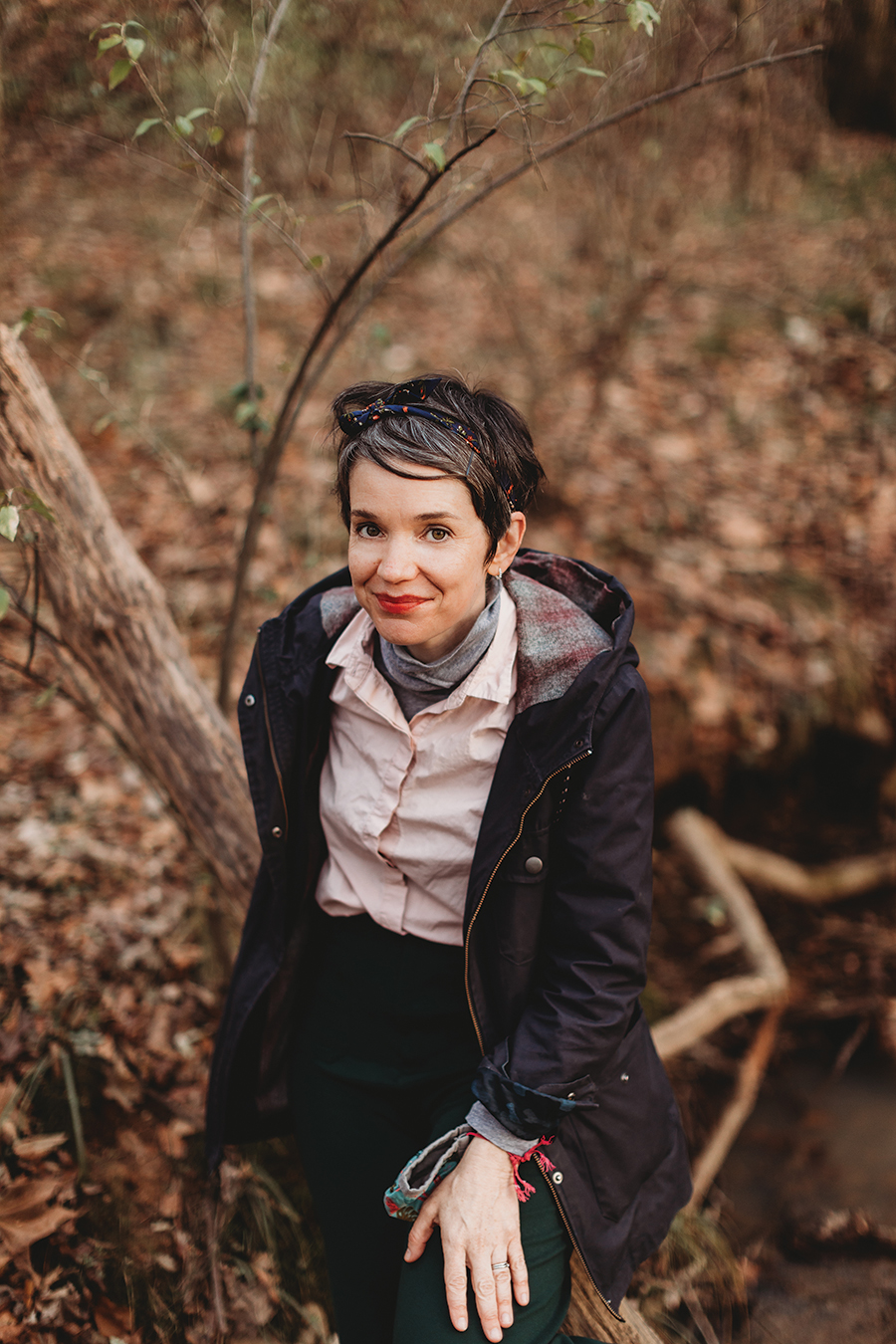
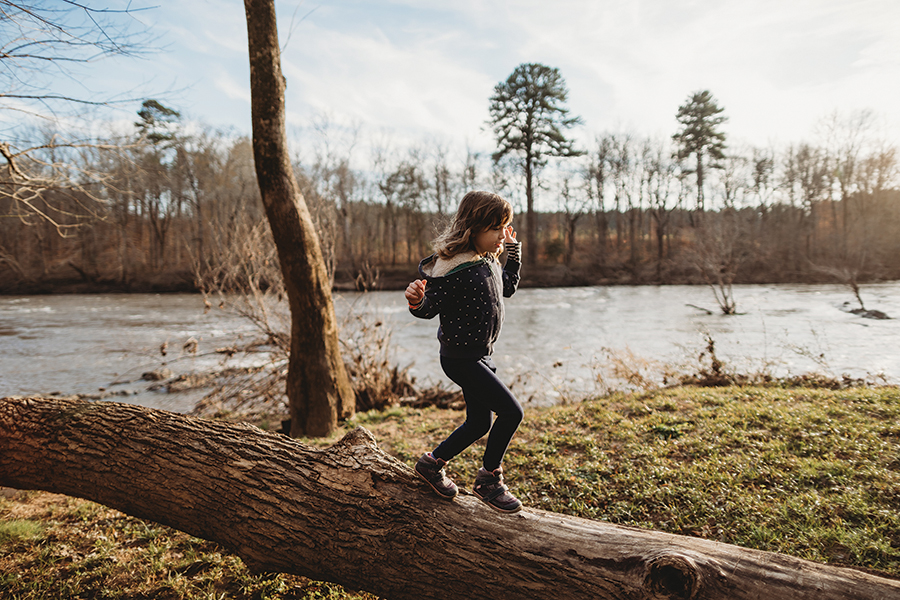
As they do most days, especially since the coronavirus pandemic began, writer Belle Boggs and her 7-year-old daughter, Bea, are walking through the woods near their home in Pittsboro to the banks of the Eno River. Boggs, whose most recent novel, The Gulf (2019), tells the humorous yet complicated story of a struggling writer and teacher, is a teacher herself. Her inclination to educate is evident as she pauses now and then to point out varieties of mushrooms, species of birds and the best places to ford the various creeks that criss-cross the landscape on the way to the river.

While Boggs is clearly not in the classroom at North Carolina State University, where she has taught Creative Writing since 2014, the classroom never seems very far from her mind. The names and stories of her students — both past and present — find their way into conversation easily, as does her interest in the broader implications of education in rural North Carolina, especially Alamance County, where she is at work on a book-length study of the public schools there.

Boggs and her husband, Richard, settled in North Carolina after a stint in New York City, where Boggs taught first grade in Brooklyn while simultaneously earning an education degree from Pace University. Before that, she lived in California, where she earned an M.F.A. from UC Irvine. She knew she wanted to come back to the South, and she and her husband chose North Carolina because they had friends here from his years as an undergraduate in Chapel Hill. But there was something else that brought her back: the sense of place and the benefits and challenges that come along with it. “I’m interested in the challenge of being an artist when you’re from the South,” she says.

But while Belle Boggs has lived in North Carolina since 2005, one of the greatest challenges she faced was that of focusing her literary eye on her adopted state. “It took a long time for me to identify as a North Carolinian because I’d always identified as someone from a very particular place in Virginia,” she says. Her first book, the story collection Mattaponi Queen (2010), is set on the Mattaponi River in the tidewater region of Boggs’ youth and reflects her deep appreciation for place, which must have rung true to native Virginians as the book won the Library of Virginia Literary Award. It was also a finalist for the 2010 Frank O’Connor International Short Story Award, proving that the most powerful regional writing often resonates far outside the region of its birth.

Although Tidewater Virginia certainly informed Boggs’ earlier writing, rural Chatham County is clearly full of marvels for her, and she talks about them with an infectious sense of wonder. Across the river, she points to the spot where eagles are nesting in an impossibly tall tree; in the summer, she says that the waters of the Eno are often low enough that one can sit in a beach chair midstream and read a book; and she follows a path to an oak tree with a hole in its trunk that is large enough for young Bea to climb inside of and nearly disappear. But, for Belle Boggs, life outside of the woods is approached with these same investigatory powers. Along with the environment, other themes that have long held her interest — specifically race, class, education and motherhood — are rendered with the same precise detail that she uses to describe the world that she chronicles on these daily walks.

The issues of race, class, education and motherhood — instead of competing — have found a way of intertwining in Boggs’ recent work, especially once she became a mother. Her 2016 essay collection, The Art of Waiting: On Fertility, Motherhood, and Medicine, chronicles her use of in vitro fertilization after years of confronting the possibility of being childless. And while IVF led to the birth to her daughter, Bea, followed a few years later with the surprise birth of her daughter, Harriet, the process was not without its financial burdens. “As I was waiting for the medication for my IVF cycle, which is like $3,000, our well failed,” she says, “and we had to drill a new one. Both of those things were big stretches for us to pay for, and there was so much uncertainty behind them both. They became a natural metaphor for one another.” This radical honesty, both the struggle to conceive a life and the struggle to keep her own afloat, is the kind of honesty that readers appreciate in Boggs’ writing, something which she finds surprising. “I think in general I’m a pretty reserved writer,” she says, “and I try to let the facts and the details speak for what I’m describing.”

Never were the facts and details more important to undergirding the radical honesty of an experience than when Boggs recently published an essay about her and Bea and a group of people being pepper-sprayed during a peaceful march to the polls in Graham, on the last day of early voting. Boggs had taken her daughter to the march to give her an education in democracy, but what she got instead was a lesson in power: who has it, who does not and how it is used. These same issues of power are what led her to undertake her current project on public education in Alamance County, especially as it pertains to race, class and the issues of regional segregation. It is clear that Boggs’ time some years ago in the first grade classroom fuels both her current work and her deep emotional connection to primary education. “I’m lucky to be teaching in a program like the one at N.C. State,” she says. “But sometimes I feel guilty that I’m not still a first grade teacher, because I think that may be some of the most good you can do in the world.”

But while Boggs teaches undergraduates and graduate students, she has found a way to keep one foot in primary education. Over the course of the pandemic, she and Bea created a Zoom-based writing club for children in kindergarten through second grade, and, perhaps following Boggs’ lead, several of her graduate students have begun working on writing projects with school-age children.

The day is ending. The woods are growing dark. Boggs and her daughter walk back uphill away from the river toward home, where 3-year-old Harriet and Boggs’ husband are waiting. Bea walks ahead of her mother on a trail toward the house, but Boggs stops, calls her daughter back. Boggs has spotted a mushroom, and while she cannot remember the name of it, she believes her daughter may know. The two of them kneel on the forest floor to get a better look. The light is fading, but there is still enough light to see, and there is still so much to learn.  OH

Wiley Cash is the writer-in-residence at the University of North Carolina-Asheville. His new novel, When Ghosts Come Home, will be released this year.

Life’s Funny

Streaming Consciousness

When a little TV wisdom comes in handy 

By Maria Johnson


Like many people coping with COVID restrictions, I’ve been watching more TV — especially series with episodes that you can stream back-to-back-to-oh-look-it’s-next-month-already — on platforms such as Netflix, Prime Video and HBO.

My husband and I have snickered our way through The Marvelous Mrs. Maisel; been thoroughly freaked out by the all-too-timely The Plot Against America; cast a suspicious eye on just about every character in the detective show Endeavour (“Did you see the way that passerby pedaled his bicycle? Wasn’t it just a little too quickly?”); and been mesmerized by The Queen’s Gambit, in which the hauntingly beautiful actress Anya Taylor-Joy plays an addicted genius. The show has sparked renewed interest in the game of chess (see last month’s O.Henry magazine). It also has prompted armies of tippling women to look deep into their souls and ask themselves the hardest question: “Should I be wearing my hair in bangs like she does?”

I was so enchanted by the show that when my younger son offered to teach me to play chess during a recent visit, I agreed. He explained the rules. I knew that I needed to make a clever opening move. So I did.

I put my hand on a piece, stared at my son, and said with all the gravity I could muster, “Is this the piece that can hop like a bunny?”

He gave a barely perceptible nod.

I moved my piece to a square, held it there, looked at him intensely, and lifted one eyebrow.

“Are you sure you want to do that?” he asked.

In this fashion, I touched all of the pieces and moved them to every conceivable spot — not unlike a primitive computer pondering all the possibilities — until he finally said, “OK, whatever, that’s a good move.”

I’m happy to report that this worked great. The game was close — long, but close — and he won only by moving a pawn to my back row, at which point the pawn became a queen who could do whatever the hell she wanted.

Which brings me to another show we’ve been watching, The Crown, which is about Britain’s royal family and the issues they confront — or, more accurately, don’t confront — in their personal and political lives.

Before I watched this show, I never knew much about the royals other than what I read in an occasional email digest from Quora, a question-and-answer website that deals in a fair amount of palace intrigue.

For example, a reader will ask a question like “What’s Prince Harry really like?” and a plumber from Gloucester will answer with great authority because a union buddy of his once fixed a loo in Kensington Palace, two floors away from Harry’s apartment.

That was good enough for me — until I started watching The Crown. Since then, I’ve been diving into royal history, customs and etiquette, just in case the queen and I ever meet up.

It could happen. Let’s say I’m in London, and I’m walking around Hyde Park, which is right next to Buckingham Palace and is slap full of dogs running loose. Maybe I notice a corgi that looks lost and more than a little irritated with other dogs sniffing its butt. I check its collar, hoping to see the owner’s contact information, and — whaddya know — there’s a tag that says “QE II, B. Palace.” So I call the number, and this little voice says, “Yesss?”

And I’m like, “Um, yeah, I found your dog, and I’m pretty sure I saved its life, so . . . ”

She tells me to come right over. When I hand over the dog, the queen is overcome with emotion. “Thankew,” she says. You know how she runs those words together.

And I’m like, “No problemo, Your Majesty.”

I know from watching the show that I’m supposed to call her “Your Majesty” on first reference and “ma’am” from then on.

Also, I curtsy to her, which goes against my grain, but in my head I think of it as a tiny reverse lunge.

So I do a quick set of tiny reverse lunges, just to prove my good intentions and general fitness, and I wait. Unless the queen makes the first move, you never touch her. This won’t be easy. I’m a toucher. If she doesn’t offer me her hand to shake or fist bump, I’ll probably just give her a thumbs up, and say something like, “Cool purse. Ma’am.” If it’s the middle of the afternoon, she’ll probably invite me in for tea to show her gratitude.

Again, from studying up, I know that no one eats until the queen eats, and if the queen stops eating, you stop eating. I know I can handle the first part, waiting for her to start, but if they’re serving something delicious, like macarons — which are basically MoonPies — or little pimiento cheese sandwiches with the crusts cut off . . . I can’t make any promises.

But I’ll definitely let her lead the conversation. When she makes a point, I’ll agree by saying, “One would think so.” This is a very royal way of talking — saying “one” instead of “I.”

Given a chance to speak, I would try to find common ground, probably by talking about dogs because dog people love to talk about their pups. I might say something like, “One is curious, ma’am: Has Her Majesty’s dogs ever pulled her underwear out of the royal laundry basket?”

She could find this kind of familiarity refreshing.

Or she could use the royal accessory that I envy the most, the bye-bye button, a buzzer that summons her assistants to whisk away visitors when she’s heard enough.

Either way, I would be instantly qualified to answer a question on Quora.  OH

Maria Johnson is a contributing editor of O.Henry. She can be reached at
ohenrymaria@gmail.com.