Fiction by Ron Rash
Illustrations by Lyudmila Tomova
St. Louis Globe-Democrat, March 25, 1904
Horace Kephart Is Held for Observation
FORMER LIBRARIAN ARRESTED AS HE WAS WALKING TOWARD EADS BRIDGE
Horace Kephart, aged 42 years, residing at 1821 Kennett place, who was succeeded on February 1 last as librarian of the Mercantile library by William L. R. Gifford, after he had held the position for fourteen years, was arrested at 2 o’clock yesterday afternoon and placed in the observation ward at the city hospital, pending an investigation into his mental condition.
His arrest was brought about by his peculiar actions in Marre’s saloon, 518 Washington avenue. After buying a glass of beer there yesterday, it is said, he engaged the bartender, Edward Wasen, in conversation, during the course of which he placed in Wasen’s hands a lengthy letter, written in pencil on rough wrapping paper, in which he expressed an intention of committing suicide. Police Officer Mannion was at once notified. After following Kephart a block or so along Washington avenue toward Eads bridge the officer stopped him and called an ambulance.
Kephart is a well-known magazine writer. He is a graduate of both Yale and Cornell universities.
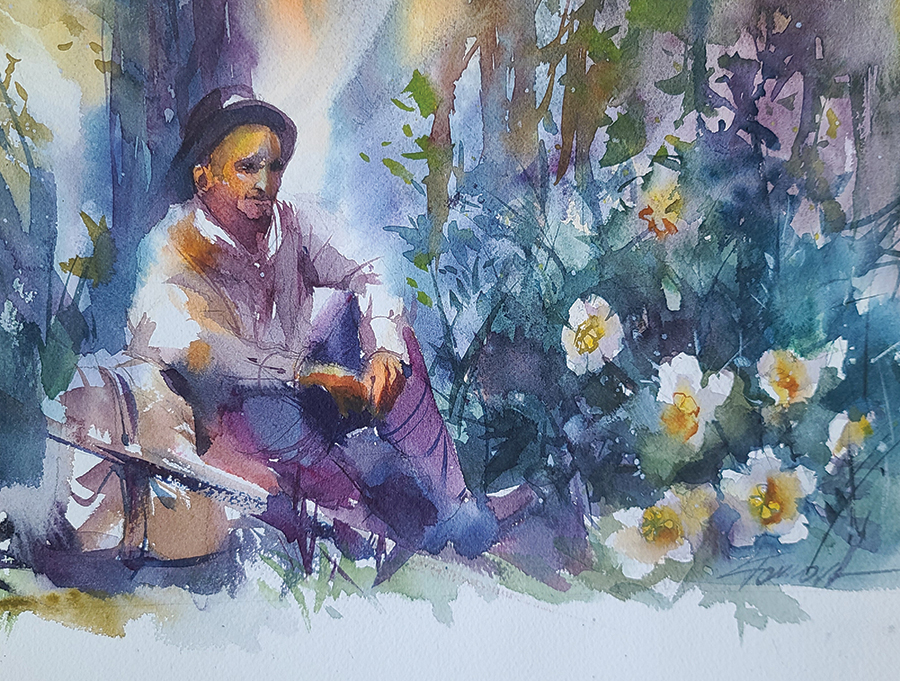
In his insanity, he’d believed two of his closest friends were diabolical enemies. They had hired cutthroats from docks and dim alleys to come in the night and murder him. He heard them pry at his window sill, test the doorknob as they searched for a way inside. He stayed up until dawn, talking aloud, sometimes shouting so they knew he wasn’t sleeping. Only a policeman’s intervention prevented his ending the torment himself. An overwrought brain. That had been a doctor’s diagnosis. When he had finally been allowed to leave the hospital, all the promise he’d shown in college and graduate school, his time at the Yale library before coming to Saint Louis, were meaningless. He was forty-two years old, his life reduced to prurient fodder for newspapers.
♣
He had first visited wild places as a teenager, camping and hiking in the Adirondacks of upper New York state. When he’d taken a head librarian position in Saint Louis, there had been camping trips to nearby forests. He’d become proficient enough in woodcraft to write articles for outdoor magazines. He’d needed these respites from the library work, the rush and clamor of city life, a marriage that had begun to fall apart. But mere respites had finally not been enough.
To find himself, he had to go where he could not be found. Later, when he led the fight to create the Smoky Mountains National Park, he’d write, I wanted to save these mountains because they saved me. But that would be later. When they let him out of the hospital, he sought the solitude of forests. He’d studied a topographical map of the eastern United States, searching for the blank spaces and contour lines that revealed the least inhabited region, the Smoky Mountains of western North Carolina and east Tennessee. He went by train to Dillsboro, North Carolina. Then onward, first by roads, then by trails, and finally following only a narrowing stream into deeper woods. All that he’d brought with him was his tent and an ox sled of supplies. He made a campsite beside the creek, pitched his tent.
For three months, he stayed there. Next to his campsite the stream slowed and deepened. He had never seen water so pure and clear. He’d read that in India those with afflicted minds were set beside rivers so that the sound of the water’s passage could restore their sanity. He fell asleep and waked to the rhythms of the water. The insomnia that had tormented him for years lessened. All the wilderness asked of him was to listen.
And to see. When he gazed into the pools, he could make out the individual pebbles in the sandy beds. When the midday sun shone on the water, flakes of mica made the white sand spark. The clarity of the water entered his mind. The hallucinations ceased; the melancholy began to lift. One early afternoon he saw his own face in the water. Not a reflection but instead a merging, becoming one with the stream, the forests, the mountains. Sometimes he would see speckled trout. They were the most beautiful of fish — their flanks spotted green, red, and gold, their orange fins wavering. They were small, fragile, unable to live anywhere except the purest water. He wondered what it felt like to live inside such weightlessness.
Days passed, then weeks. He grew stronger, both in body and mind. As he explored and observed, the woods became so familiar he no longer needed a compass. Instead of a watch, sunlight and shadows showed him when he needed to turn around, make his way back to his campsite before darkness fell. Unlike in the world he’d fled, seconds and minutes no longer mattered. Wasn’t the awareness of time so much a part of what he’d fled, the way it so often directed his mind to obsess on past regrets or future fears? Wasn’t the numbness he’d sought with alcohol an attempt to escape such awareness? In the daylight, he could believe he was shedding the past as a snake sheds its skin.
But some nights the old torments came. The sound of the water was not enough. The cold light of the moon, the hoot of an owl, became ominous. On such nights, he felt a deep loneliness; he could not completely rid himself of such a deep-rooted human need. Daylight would come and despair, like the dew, evaporated, but he found himself seeking the companionship of others. He came to know some of the scattered families who also lived in these mountains. He occasionally made his way to the village, even had visitors at his campsite. But only occasionally.
As the days passed, senses he had not known within himself awakened. One afternoon he was walking through the woods when a fallen tree lay in his path. He was about to step over it, had raised his foot to do so, when some atavistic impulse made him stop. For a few moments he’d simply stood there, unsure what had happened. What had halted him was nothing seen or heard. For a few moments longer he listened, heard nothing, saw nothing. He walked around, not over, the fallen tree to see what lay where his foot would have stepped. He saw it then, the coiled, satin-black body, the arrow-shaped head, the blunted tail that rattled once, stilled. The snake uncoiled itself and vanished into the underbrush.
Another afternoon while he passed beneath a rocky cliff, he felt he was being watched. As with the rattlesnake, he paused, saw and heard nothing. He’d walked on, but the sense of being observed would not leave him. Twice more he stopped and looked behind him. The third time he looked up, not back, and saw the mountain lion on a ledge. The cat swished its black-tipped tail three times, then turned away. How much had we lost, he’d wondered after such moments — not just knowledge but an expansiveness of being? What more might we discover within ourselves if fully attentive to the world?
After three months, colder weather came. He moved into an abandoned cabin even deeper into the wilderness. The cabin would be his home for three years. He left for days at a time, made the long journey down Hazel Creek to the nearby village. He wrote and published articles about the wilderness that surrounded him. Other times he shared his cabin with visitors. He had never thought of himself as a hermit, but most days and nights he was alone. The hallucinations did not return, but there were still periods of melancholy, and not always at night.
One autumn morning a soft rain fell; fog wreathed the trees. He had not been here long enough to find, as he later would, solace in such weather. The grayness had turned his mind inward, resurfacing the vexations he had come here to escape. Despite the weather, he left his cabin to walk along the stream, hoping movement might help ease his mind. Then the rain lessened, stopped. The fog unknit itself and the strands drifted away. He was passing through a stand of poplar trees when, like a lamp wick being turned up, the yellow leaves brightened and the world shimmered in a golden light. The air was charged, and he felt his heart lift, a sensation beyond words, awe the only word proximate. But that morning it had seemed any attempt to define the sensation with language was such a puny, human thing. Though he would eventually write a whole book about these mountains, describe the plant and animal life in detail, extol the landscape’s pristine beauty, there were moments like this that he would never put on paper.
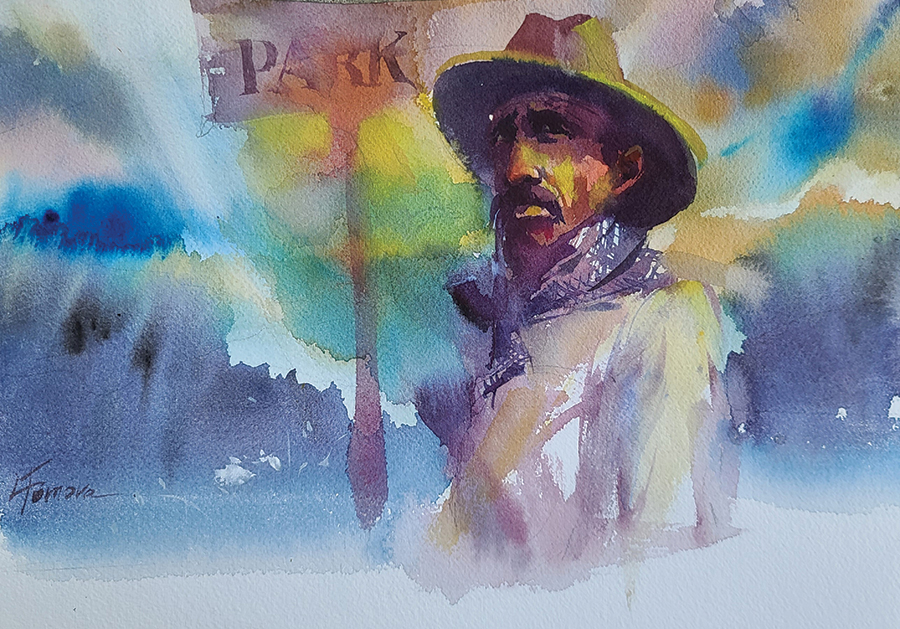
His detractors, then and now, called him a romantic, which was true. He had read Petrarch, Wordsworth, and Thoreau, learned from and been inspired by them. But he did not believe himself a sentimentalist. A part of what had brought him here was to abide in a world without sham. Arrogance and bluster did not impress nature. It did not suffer fools. A heedless step above a waterfall would send the rich and poor, the powerful and the powerless, to their deaths. No bribe or petition would make it otherwise. Wilderness could not be corrupted by humans, but humans often destroyed what they could not corrupt.
One summer afternoon he followed the stream beside the cabin to its source, then went farther up the mountain until nothing rose above him but the sky. He looked out at the surrounding mountains and valleys, the virid green of the nearer ridges, the hazy blue of the farther mountains. But he also saw something else, smoke rising from a lumber camp. He knew what would come next, the sound of axes and saws, then the clamor of a train engine bringing more men and axes and saws — a wilderness chained to flat cars and hauled away. Whole mountains scalped, the stumps of felled trees like gravestones. Streams fouled, dead fish clotting the shallows.
He had already witnessed such devastation in the nearby Black Mountains, nothing left but a wasteland of stumps and silt. It would soon happen here too if not stopped, was happening. When logging began on Hazel Creek, he was forced to abandon the cabin and move to a boardinghouse on the wilderness’s eastern flank. So he joined others who understood what was being lost. Following the example of John Muir, who’d garnered nationwide support to establish Yosemite National Park, the coalition sought allies both in and outside the Smokies.
For a quarter-century, he and his compatriots fought against the timber companies to create the Smoky Mountains National Park. Though he continued to disappear into the woods, sometimes camping for weeks, most of his energy was focused on helping save the East’s last great forest.
He wrote letters and articles, made trips to Washington. What he and others could not accomplish with words, his friend George Masa did with photographs depicting both the forests that had been destroyed and the ones that might soon be. Wilderness advocates across the nation joined the fight. Newspapers in North Carolina and Tennessee furthered the cause.
But the timber companies had their advocates too. The attacks against the park’s best-known supporters became personal. He found himself denounced publicly as a Bolshevik, an opium addict, a drunk, a man who’d been deserted by his own wife and family. Because of his Japanese ancestry, Masa was denounced as a foreigner. Attempts were made to deport him. The timber companies tried to bribe and threaten politicians who supported the park, and sometimes they succeeded. There were death threats too. Public meetings brimmed with potential violence. Again and again, it appeared the timber companies had won. By 1920, he wrote a friend that there was no hope. At such times the melancholy deepened. He feared the insanity might return.
But each time all had appeared lost, crucial support came. Children gave pennies at school. John D. Rockefeller donated five-million dollars. George Masa’s photographs convinced Grace Coolidge, the First Lady, to join the cause. The governors of Tennessee and North Carolina advocated for the park in their states and in Washington. Newspaper editors in Knoxville and Asheville wrote more editorials. Public opinion became solidly pro-park, even after the stock market crashed, plunging the country into depression.
Now it is April 2, 1931. Two months ago, he went to Washington with Governor Horton and Governor Gardner to hand over to the Secretary of the Interior the deeds to the purchased land. It was only 150,000 acres, three-hundred thousand short of officially being a national park, but enough to satisfy the National Park Service. It will happen, he believes, though it may take another year or two to complete the final deeds and sales.
♣
A light knock at his door breaks his reverie.
Mr. Kephart, his landlady says. Your friend is waiting in the parlor.
Tell Mr. Tarleton I’ll join him shortly, he replies.
Earlier today Tarleton congratulated him, believing the park now an inevitability. But the envelope in his hand, which came in the afternoon mail, makes clear not everyone agrees. Kephart, Go back to St. Louis and your asylum or you will be killed, the enclosed note threatens. A newspaper clipping accompanies the note, dated March 25, 1904. Horace Kephart Is Held for Observation, the headline proclaims. The timber companies and their minions have not yet given up. He places the clipping and the note back in the envelope. In Saint Louis, a diseased mind had convinced him of all sorts of plots to take his life; now sanity argues not to dismiss this threat. But advocating for the park has brought death threats before, to him and others.
In September he will be sixty-nine. He never imagined that he might live this long. Yet his wrinkles and gray hair confirm it. He feels the rheumatism in his knees and back, no doubt in part from decades of hiking and camping. Though still able to hike farther than many men half his age, he knows these ailments may soon force him to spend less time in the forests than he’d wish. But if the time comes when he is confined in this room, he will be able to look out his window and see the mountains, one of which has been named Mount Kephart.
He thinks of the cabin on Hazel Creek. Once the park is complete, neither he nor anyone will live there again. It pleases him to imagine the wilderness slowly reclaiming the cabin. There will come a time when the land itself will have forgotten the cabin’s once-presence. By then the scars left by the timber companies will have healed. Even the railroad tracks will rust away. The envelope with the newspaper clipping and threat is still in his hand. He tears it in half, drops it into the trash can.
I wanted to save these mountains because they saved me, he’d written. It was a grandiose statement. They had indeed saved him, but others had paid a cost, most of all his wife. As for his children, they are all but strangers. Altruism is invariably a means to conceal one’s personal failures. The spouse of a timber baron had told him that three years ago at a public meeting. The statement haunts him. And for all of his words about the healing aspects of nature, his desire for liquor has never been quelled. There continue to be times he drinks himself into unconsciousness.
Perhaps tonight as well. He takes out his pocket watch, checks it. It is almost time to meet his friend Tarleton. They have hired a driver to take them to a bootlegger. They will drink tonight. If, as is his wont, he will be no good in the morning, he will lie in bed most of the day to recover. But even so, by this weekend he will be revived enough to join George Masa for a hike. He has a surprise for George. Last spring as he was hiking alone, he discovered a patch of Oconee Bells. They are found nowhere else in the world except here and a few neighboring counties. Even here they are extremely rare. In all of his years wandering these mountains, he had never come upon them until last spring. Now it is their bloom time once more, the white flowers rising from the dark-green glabrous leaves. This late in life, what wonder to have finally seen them.
He rises from the chair, fetches the key he will lock his door with, and will never need again. OH
♣
Coda: Horace Kephart and his friend Fiswoode Tarleton died in a car wreck on the night of April 2, 1931. The driver survived but gave contradictory answers as to what happened. Kephart’s body was discovered forty feet from the car, the cause of death a broken neck. On September 2, 1940, Franklin D. Roosevelt dedicated The Great Smoky Mountains National Park “for the permanent enjoyment of the people.”