A Leap of Faith

A Leap of Faith

Finding shelter from one storm after another

By Cynthia Adams    Photographs by Amy Freeman

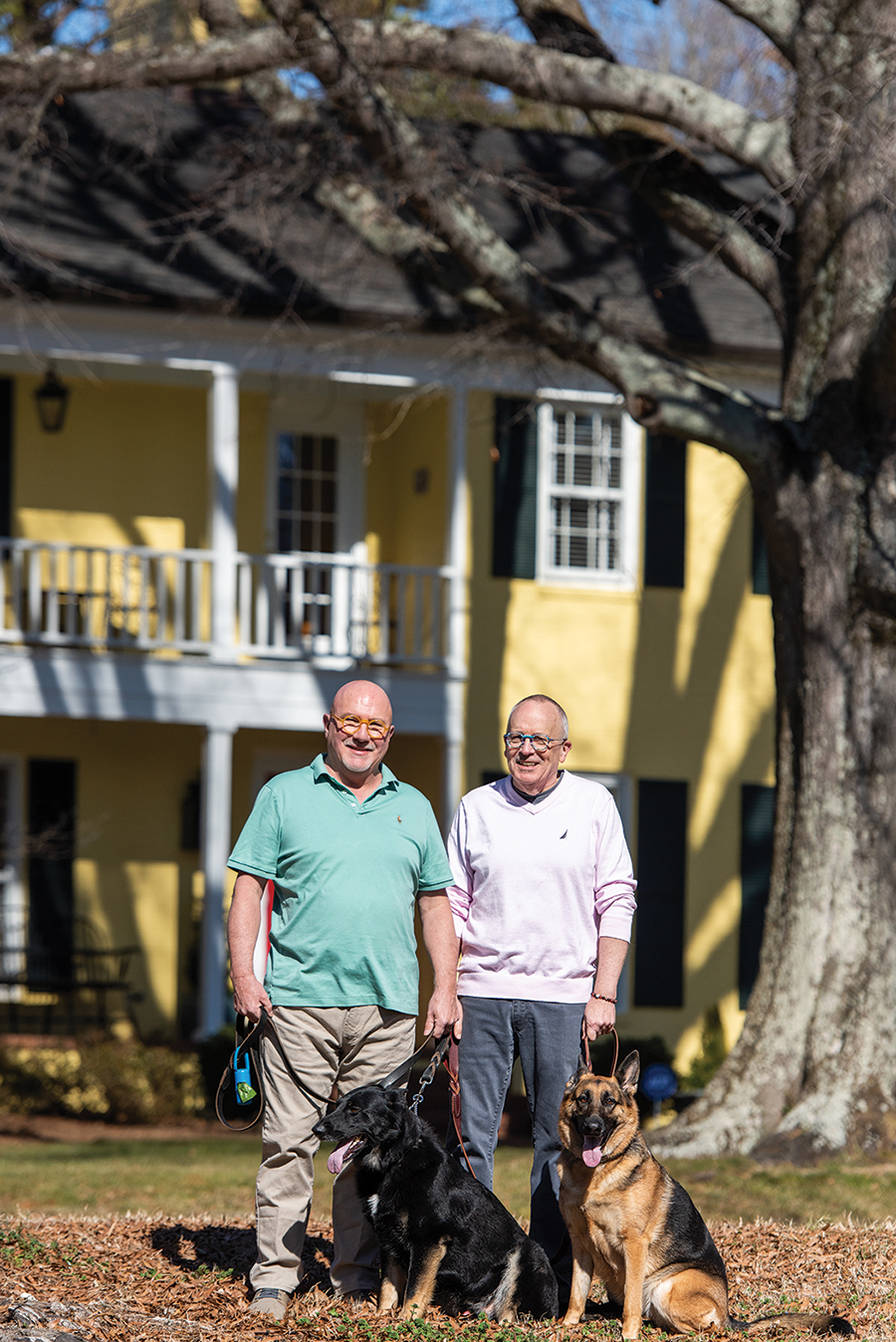
By 2017, Rick and Randy Burge-Willis had had enough of a historic and gorgeous — but too-large — 18th-century farm.

There was too much acreage to maintain at Lilac Hollow, their quaint compound in scenic upstate New York.

“We named it that because a previous owner had collected more than 350 lilac bushes from around the world and planted them over three acres,” Rick says.

The pair of serial entrepreneurs were weighing retirement. (Rick already was semi-retired.) Change beckoned. And a better climate. Until Hurricane Katrina swamped New Orleans, they had once dreamed of retiring to the city which they had long loved.

Lilac Hollow was a Martha Stewart-like dream property. The 10-room house featured 6,000 square feet, replete with fireplaces and period antiques. It was the very definition of New England quaintness.

Best of all, the house sat in the midst of 150 bucolic acres with mountain views, hops and dairy barns, and a chicken house.

They listed it on the market, “assuming it would take at least two years to sell,” Randy says.

The property lasted nowhere near two years; it didn’t even last two weeks. A mere 12 days later, a woman living in Atlanta phoned to inquire further. She was, they discovered, a working chef relocating to upstate New York. They had the perfect chef’s kitchen. 

There, she saw what none of the other area houses had: professional grade appliances — and two of each.

The Lilac Hollow owners were former restaurateurs themselves, still operating the Bakery at Lilac Hollow. (Rick also was a former baker for a gourmet food spot in Albany, New York, and had been the chief baker and pizza maker at their restaurant.)

The two men invited the chef to stay for the evening and to cook together. She took them up on their offer, and the house was a hit.

There was no hesitation; the chef wanted to take possession of Lilac Hollow in late June 2017.

“It was a ‘what the heck moment,’” Randy says. “We needed to find a house and fast.”

The kitchen that sold the farm had a backstory. There was, of course, their ongoing bakery venture. But there also was another poignant story.

For years, the couple had been interested in all things culinary. Neither had owned a restaurant. But in 2011, they agreed to become restaurateurs, sharing the daily work. 

Rick and Randy opened an 11-table café with pavilion seating outside in the Helderberg Mountains, only 18 minutes from their farm.

It featured a multi-item menu specialized in Cajun and Creole foods they came to love in NOLA, with a smattering of local favorites (like pizza), as well.

On opening night in April, Randy’s birthday, cars filled the cafe parking lot. A line of waiting cars wound down the street — cars full of eager, hungry patrons.

“We named it Po’ Boys, and it was prophetic,” Randy sighs. He explains the problems: The menu offered “too many” items. They wanted their hardworking staff to be well-paid. 

It was nonstop work for them, too.  Seven days a week.

“We were very successful during the summer months,” Randy says.  His voice trails off; his expression says, “too successful.”

In August 2011, an uninvited guest named Hurricane Irene visited upstate New York. The historic, unprecedented storm took out bridges, drowning homes and businesses. Po’ Boys, only four months old, did not escape harm.

“The building survived, but we were without power and lost substantial inventory,” Randy says.

“The real issue was that the community was devastated and had no ‘appetite’ for dining out. Many had literally lost their homes,” Randy says. Their home, which was unscathed apart from losing power, quickly filled up with folks they knew, needing, as he says, a candlelight meal and a place to sleep.

While their home was only seven miles away, “the bridge on the road to work washed out and we had to travel 18 miles out of our way.” Randy says. Sadly, the new restaurant was no longer viable. “We decided to cut our losses.” He adds. On October 30, 2011, they closed Po’ Boys Café for good.

They remained at Lilac Hollow until June 30, 2017.

Over many junkets to New Orleans pre-Katrina, Rick and Randy began talking about giving up rural living. “We were both city guys originally. We had lived in Boston or its burbs for nearly two decades, so coming back to the city wasn’t strange for us. The farm had been our dream. We did it, we loved it, and then it was time to move on,” Rick says.

They agreed on finding a true neighborhood — versus the isolation and demands of maintaining a farm.

Rick and Randy had money in their pocket after Lilac Hollow sold, and both were ready to embrace a Southern, warmer lifestyle.

And yet, it was as the sage’s admonition goes, “be careful what you wish for.” Packing up a huge country house and making such a move was a breathtaking shift for the two.

Yet they insist it made complete sense.

But where exactly?

Somehow — studying maps, quality of life and a Southern locale with warmer weather — the pair had determined that Greensboro might check all the boxes.

“We had never been to Greensboro before,” Randy confesses. “But we wanted to move South.”

They came down for a weekend, meeting a Realtor and looking at 16 homes in two days.

A Charleston-style two story brick house in Latham Park — the last home they viewed, was the one. “We opened the door and fell in love with the house. The dappled light through the trees. The willow oaks!” Rick says.
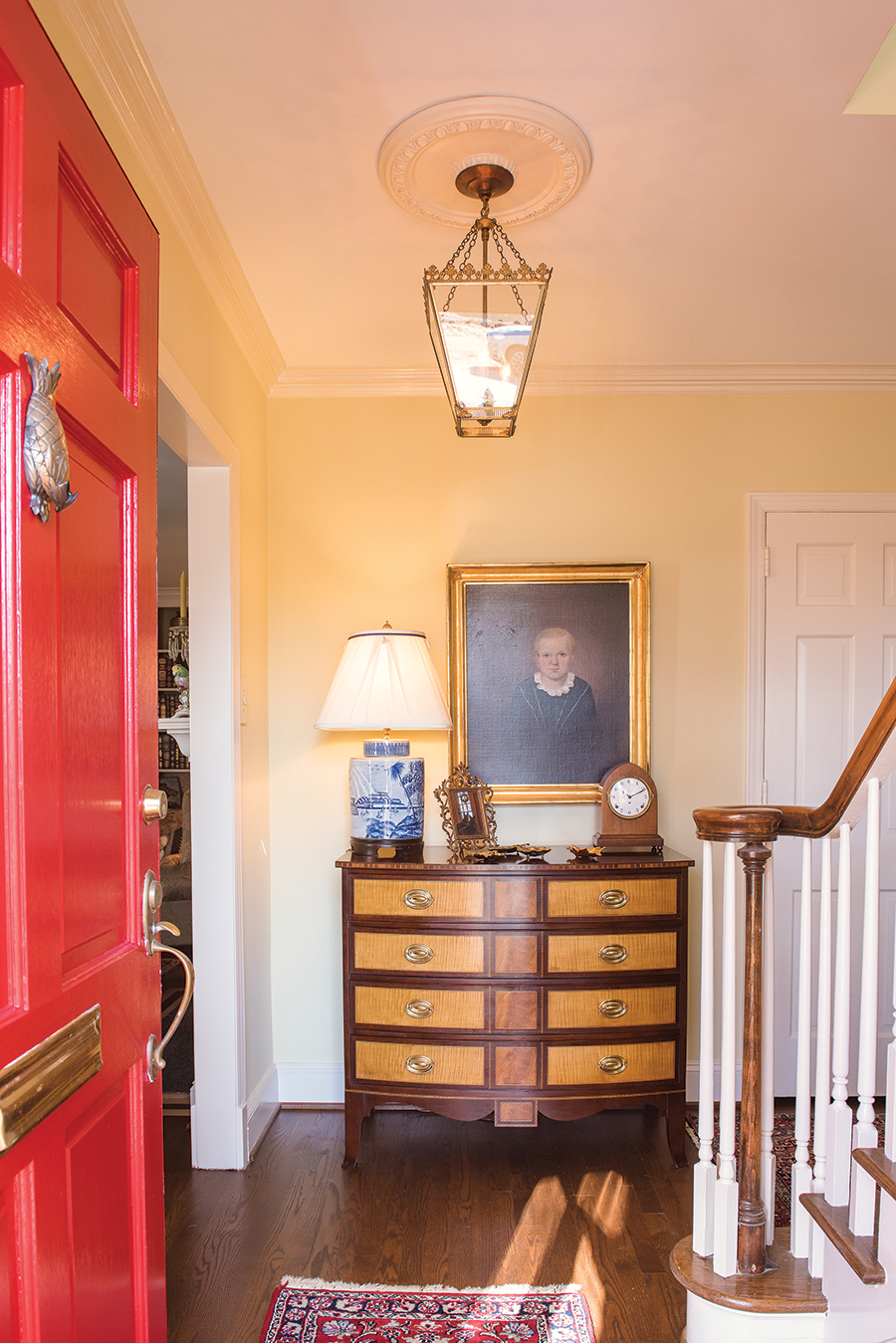
“Close to downtown, easy airport access and a beautiful park across the street,” Randy says. “We saw the house on Saturday, saw it again on Sunday, made an offer and got it accepted on Sunday. We flew home Monday morning.”

Rick adds: “We wanted a place where it would be easy to have two German shepherds in the city. It also felt like we still had a little bit of the country with us. Most of all, the light here in the summer is special.”

Were they anxious about such a leap of faith? Randy only laughs. “Not really. We had already made a bigger leap in going from suburban Boston to rural Upstate New York. Our beautiful Latham Park neighborhood made the transition easier for us.”

But what sold them on Greensboro? “Right size, good airport, good health care, progressive atmosphere. Affordable. Lots of green space,” Rick observes. “We have never looked back. This is our forever home.”

Did anything concern them after they returned to New York? “Nothing,” Randy says firmly. “After we visited, we knew it was the right choice.”

Rick insists there were no detractors among their close circles. If anything, he says, they were “a little jealous, but supportive.”

But there were practical concerns as they packed up their former residence. The Latham Park house was 3,000 square feet, nearly half the size of Lilac Hollow.

“We filled two dumpsters, sold multiple primitive pieces and gave some to the new owner. Still, we moved way too much and have been winnowing since [or replacing to accommodate a new find].”

The couple completed packing and purging just in time to relinquish the keys to Lilac Hollow’s new owner and headed south for Greensboro. They moved into Latham Park June 30, 2017.

The custom-built home featured double porches, built-ins and unique lighting.

“We’ve been told it was custom-built [by Guy Andrews]and that some of Greensboro’s notable families (or their progeny) have lived in this house at some point,” Randy says. “McLean Moore lived here early on, so most of the light fixtures are originals from the noted Greensboro firm McLean Lighting Works.”

“This wasn’t a cookie cutter house,” he adds.

Helpful neighbors contributed details about the house.

“We often run into people who have lived in the house or who are somehow associated with it [including the builder’s daughter, Julie McAllister], or they stop by to reminisce about their memories of the house,” Randy adds. The interiors required marrying two styles. Rick says it also allowed them to “break out of the ‘primitive/colonial’ mode and move out of our comfort zone in terms of decorating.”

“One of the decorating challenges for us was how to incorporate the primitive and ‘high country’ pieces we loved [and that were so appropriate in an Upstate farmhouse] into a classically southern city house,” Rick says.
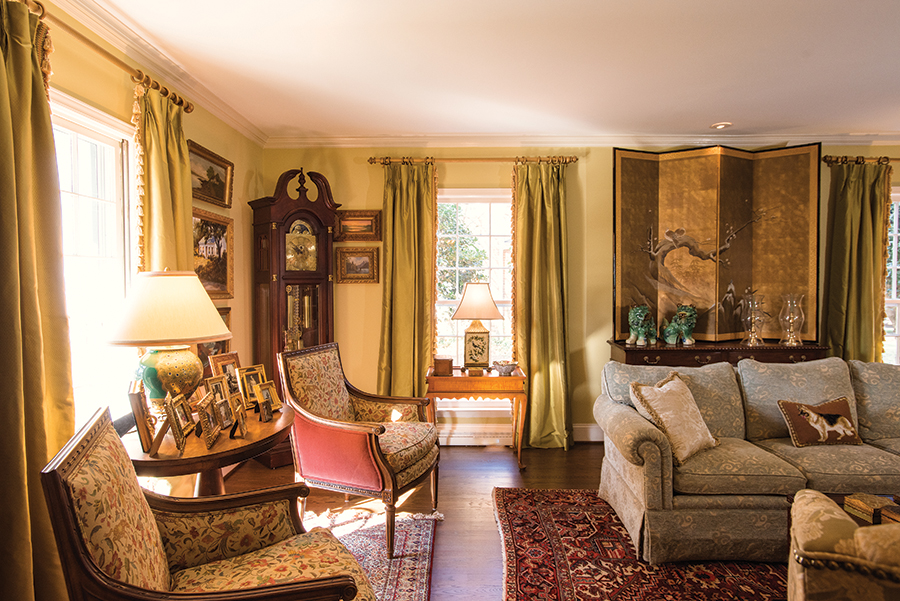
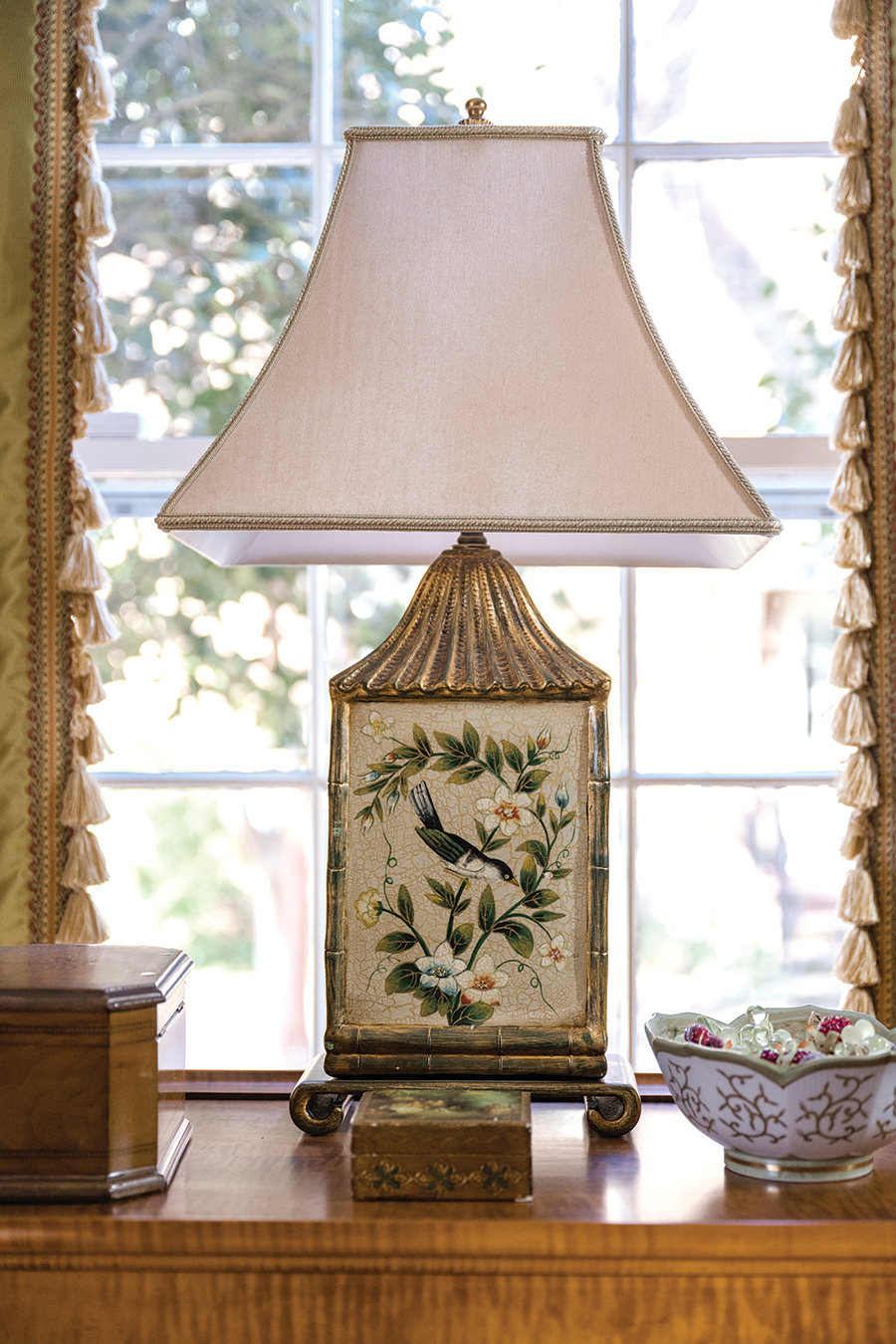
A favorite inspiration was Valkill, Eleanor Roosevelt’s Hudson Valley home.

“It’s not ‘high design’ by any stretch, but a collection of beautiful and timeless things that were important to her. Warm, inviting, eclectic,” Randy muses. “The kind of place where she could have intimate conversations with presidents and kings, but also with friends and acquaintances. It’s become a sort of guide for us as we combined the bits and pieces of over 40 years.”

Creating several library areas was first among their projects.

“We had a library in our previous home and we moved thousands of books with us . . . much to the chagrin of the moving crew,” Randy says.

The new home offered bookshelves, but their collection required even more. “We needed to get the books out of the storage unit,” he says. They added bookcases in first-floor rooms, including a small study with rare pecky cypress paneling.

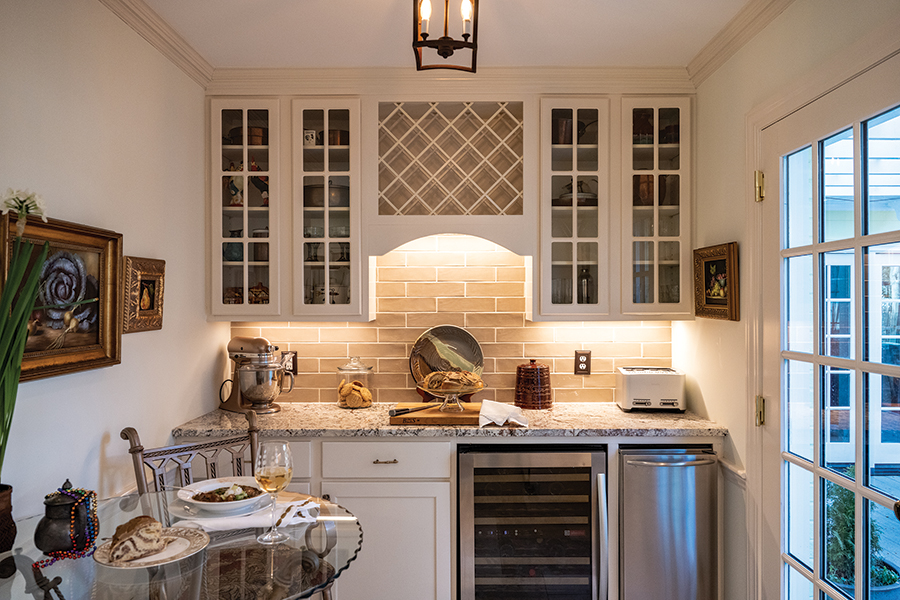
For avid cooks who entertain, they had to share a far smaller kitchen. “It took us a while to get the choreography down!” Rick says.

They added a new deck and pergola, expanding the outdoor living area.

Two years later, the elements struck again.

On July 31, 2019, Buffalo Creek flooded part of Latham Park. It wreaked serious damage to much of their first floor.

A flood, their old nemesis, had once again left them surveying water and wreckage.

This might have been a deal breaker for less resilient people. But not Rick and Randy. They set to work.

Miraculously, the flood did not dampen their love of the house or community.

It also wrought positive outcomes.

“First, it showed us what great neighbors we have,” Randy says. Rick agrees.

“We all came together to help and support each other. Second, it gave us the impetus to make some big changes to the house. We love our home even more,” he says.

“We live in a flood-prone area,” says neighbor Kaylee Phillips, who works for Carriage House Antiques.

“We said to our family, if it starts to flood, we have to go down to help Rick and Randy before we think about our house, because their things are so beautiful! And their house is so classic,” she says.

Phillips, who lives down the street, once worked at Summerhouse, a defunct antiques and gift store. It was owned by Julie McAllister, whose father was Guy Andrews, builder of numerous Latham Park and Brown Town homes.

Soon after the Phillips family moved down the street from Rick and Randy, “They came into Carriage House and said, ‘Hey neighbor!’” Phillips says. She smiles: “They are so special! Every single detail of their home is so special.” As they settle deeply into the close-knit community, they have amassed friends.

After the flood, house changes were required, like painting and papering, but some were simply desired. The first changes? In the kitchen, naturally.

“The house only had small ovens. We needed full size to fit roasting and sheet pans,” Randy says. “We replaced the wood floors in the kitchen with travertine. Replaced the kitchen counters with a lighter color granite [White Spring] and the dated bead board backsplash with handmade Spanish subway tiles.”

More changes evolved. They added granite molding (baseboards) to the powder room, new exterior doors to the kitchen, and new French doors and updated windows in the family room. They replaced a standard exterior door leading to the upper porch with a French door.

Neither have regrets. It all works better now, they say.

Their Latham Park home, one with a park view, brings them peace.

They can pretend it’s Central Park whenever the snow flies or in spring when the old growth trees — a hallmark of the neighborhood — are in full bud.

Their main bedroom is off the upper porch, which is furnished with chairs and tables. They hang baskets of ferns there when the weather is gentle, which remain until frost arrives.
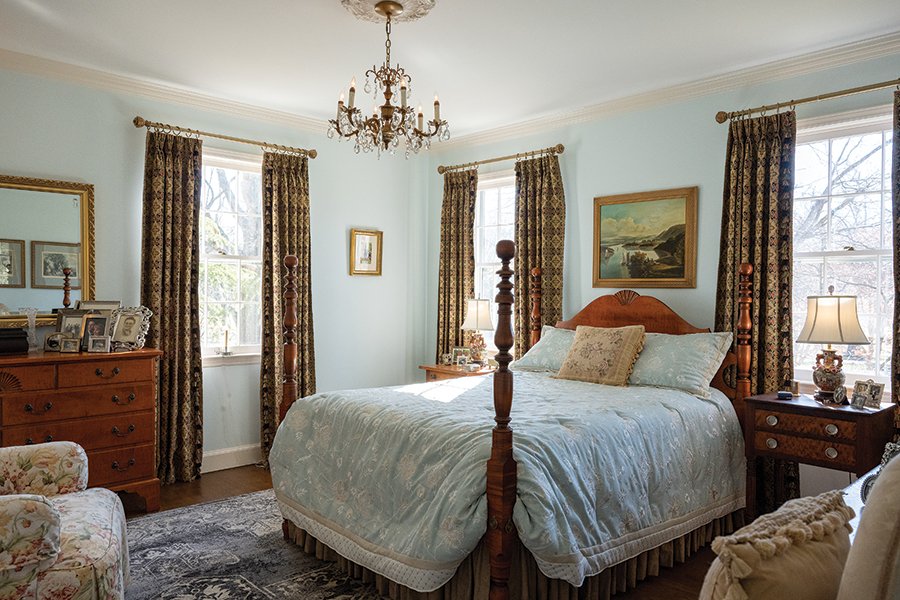
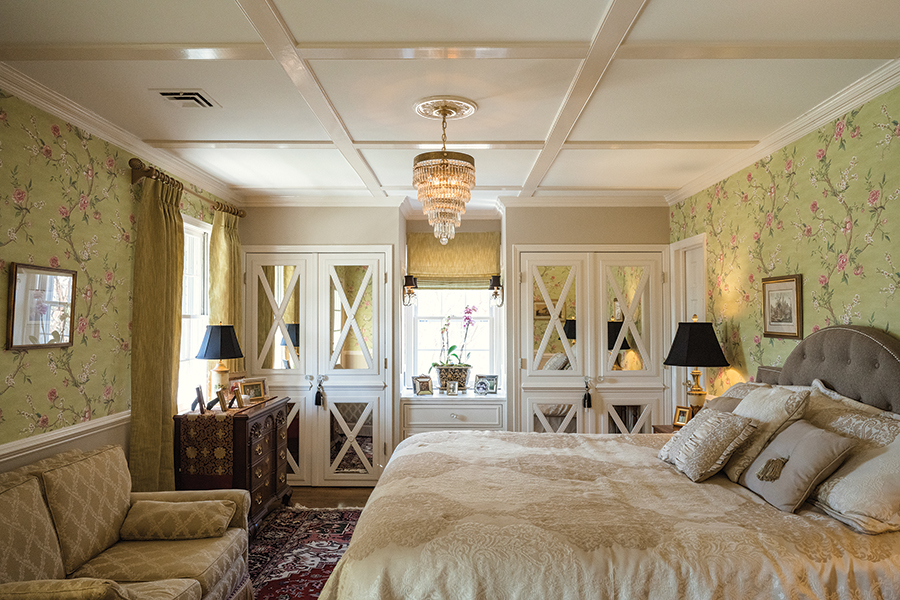
   

They recently had the exterior repainted a buttery yellow and used a dark, New England–like green on the shutters.

Five years later, Rick and Randy consider their new city’s personality. “Friendly, open and accepting, community focused, the ‘New’ South,” they reflected in an email. “The quality of life here is exceptional and constantly improving . . . cultural resources, green spaces, health care, entertainment. Most everything is less than 15 minutes away.”

Favorite things to do here?

“Taking dogs to the parks, searching for treasures at antique and consignment stores, tending our vegetable garden in our community plot at Keeley Park, cooking good food, and expanding our Southern food repertoire,” they wrote.

Last winter, they had a strong crop of collard greens and dined on collards and Hoppin’ John for New Year’s Day.

Come holidays or any occasion, Rick and Randy swing back into serious baking mode.

They bake cookies, breads and NOLA-inspired delectables for neighbors. For parties, they create a house cocktail and bring out the good china and crystal, even coupes for sparkling sips.
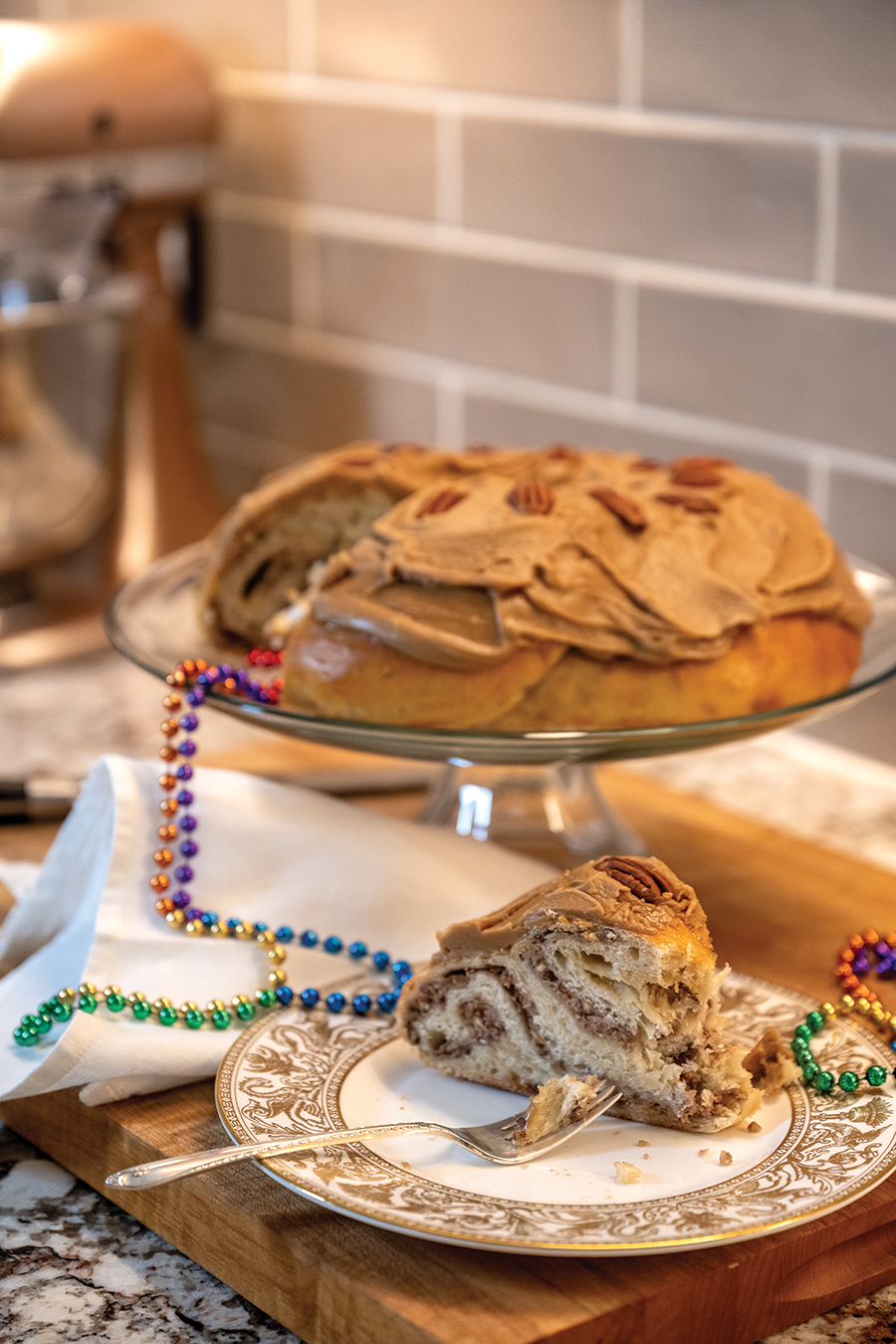
NOLA remains near to their heart. It was there they learned how to be Southern.

“The attention to detail, quality and depth, not just in the food but in the experience. NOLA has it down,” they wrote.

No Southerner worth their collards would argue. OH

Cynthia Adams is a contributing editor to O.Henry. She can be reached at helmschad@gmail.com.

Citizen Jim’s Latest Hurrah

Citizen Jim’s Latest Hurrah

With the announcement of the Greensboro-Randolph Megasite, a legendary mayor cements his legacy

By Jim Dodson    Photograph by Mark Wagoner

On a sunny afternoon late last year, former Greensboro mayor and longtime president and chief executive officer of the Joseph M. Bryan Foundation, Jim Melvin, took three old friends for a leisurely drive in the country. His purpose was to show them the 1,800-acre Greensboro-Randolph Megasite off U.S. Highway 421 south of the city, which Melvin and a group of private and public partners hoped would soon become the home to a major transportation-related manufacturing facility.

“I think we finally got it right,” declared the genial former mayor many Triad residents affectionately think of as “Mr. Greensboro” owing to his many years of dynamic civic activism and an unrivaled record of accomplishments over the past half century. “Can’t tell you fellas what’s coming,” he teased with his fellow travelers, “but when this thing is finally announced, which may be very soon, it’s gonna be one of the most exciting things to ever happen to this region, a true game changer — improving lives like you can’t imagine.”

Melvin took a breath and added, “Lemme tell you, it took a lot of faith and unbelievable hard work by a number of folks who never gave up trying to make this thing happen. That’s the real story.”

Seated in the back seat of Melvin’s SUV, a retired textile executive and lifelong friend of Melvin’s named Jimmy Jones couldn’t help smiling, recognizing a well-worn phrase that could be a working motto for his old friend’s dynamic public career.

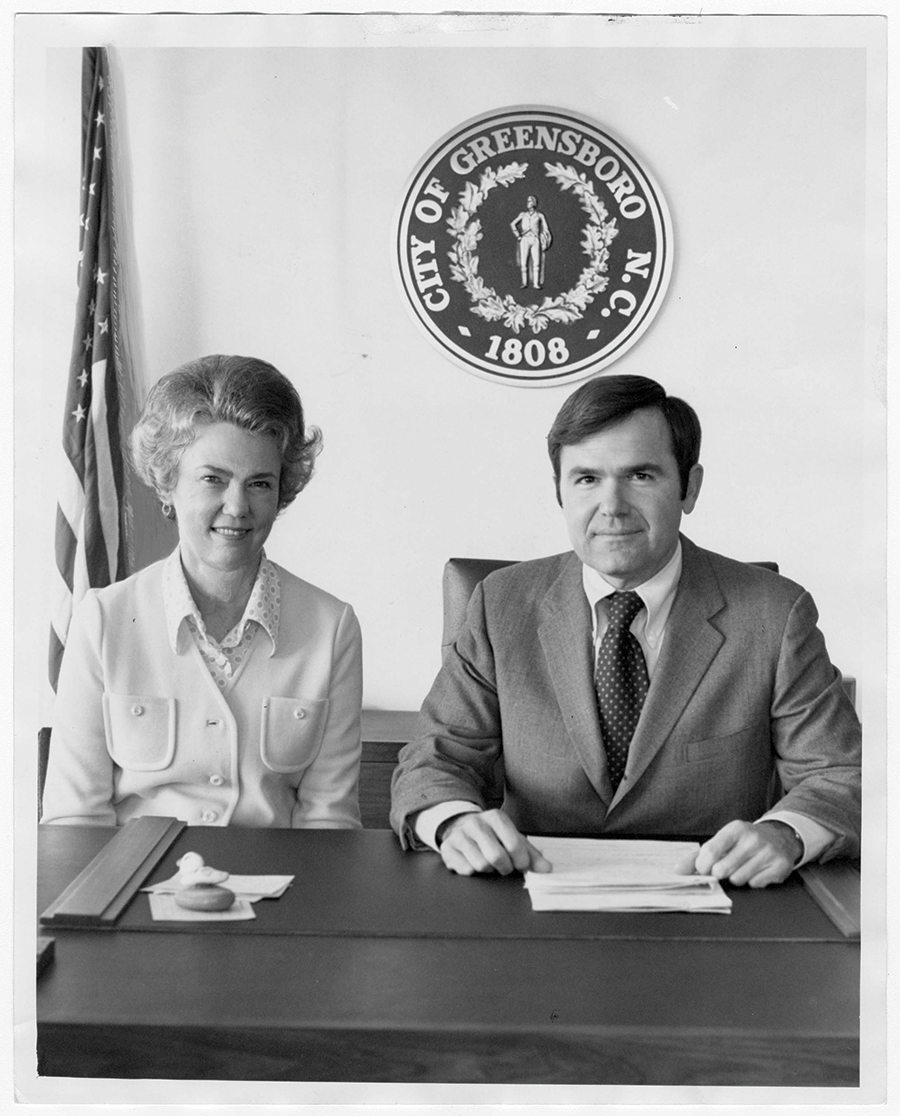
Some years after Greensboro’s most accomplished public figure in decades left public office and became just Citizen Jim in 1981, the story goes, he was invited by the trustees of Greensboro College to give the school’s annual commencement address.

“When it came time for him to speak,” Jones remembers, “Jim simply walked up to the lectern, looked out at the graduates and declared, ‘I think it’s best to quote the late Winston Churchill. Never give up! Never, never give up!’ And with that, he wished them all good luck and sat down. The crowd loved it. In fact, they gave him a standing ovation. It was vintage Jim Melvin and said everything you need to know about the man.”

Indeed, true to his word, in early December, a few weeks after he took his pals for a spin in the country, Citizen Jim and a host of key stakeholders unveiled a transformative $1.29 billion deal with Toyota North America to build a new-generation lithium battery manufacturing plant for electric and hybrid automobiles at the Greensboro-Randolph Megasite, projecting employment of at least 1,700 workers by the time it opens in 2025.

In a sense, Melvin’s tireless 10-year quest to bring a major manufacturing facility back to the Triad after decades in which major textile, furniture and other related manufacturing industries fled the region might seem like simple vindication and the perfect coda for a fellow who once invoked the stark words of Winston Churchill at war to inspire Greensboro College graduates. Given his formidable vita over four decades, it’s also tempting to wonder if the triumph of the megasite might be a fitting last hurrah that defines his legacy.

A quick review of Citizen Jim’s remarkable public life and notable civic accomplishments illustrates the point.

Edwin Samuel Melvin, named for both his Greensboro grandfathers and known as “Jim,” grew up on Asheboro Street — today Martin Luther King Boulevard — absorbing the value of long days and hard work from his father, Joe, who owned a popular Texaco filling station. “He was the hardest-working man I ever saw, quite honestly, sunrise to way past sunset every day of the week. He and my mother were also firm believers in the importance of giving back in whatever way you could to help others. That idea stuck with me early.”

After earning a degree in business from UNC Chapel Hill, followed by a stint in the army, Melvin was at home pumping gas on Asheboro Street for his father one afternoon when the president of a local bank — one of his daddy’s customers — was impressed by young Jim’s can-do attitude and invited him to enroll in the bank’s teller training program.

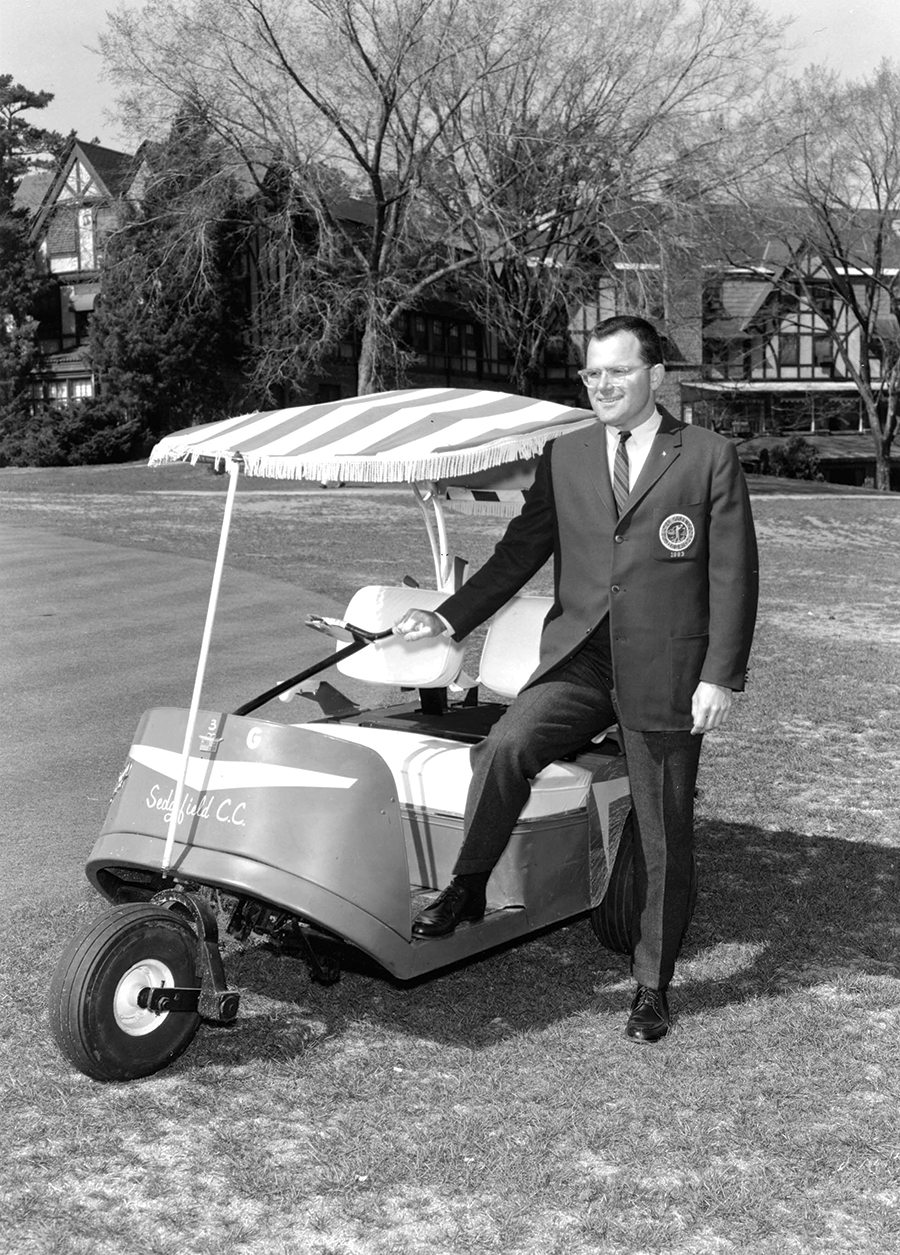
The work with people suited his personality, even more so when his boss suggested he join the Greensboro Jaycees, an organization full of young go-getters and future movers and shakers, heavily involved in civic activity. Jim signed up in 1961, not long after a guy named Arnold Palmer began setting the golf world on fire. “It was one of the smartest things I ever did. The Jaycees were a fantastic group of people and the GGO [Greater Greensboro Open, forerunner of today’s Wyndham Championship] was just entering its golden years.” Two years after joining, Melvin became the tournament’s charismatic chair, helping to raise more than $1 million that attracted the interests of CBS, which nationally televised the tournament for the first time — and continues to this day.

One year later, Melvin became president of the Jaycee chapter, which under his watch was named “Best Jaycees Club in the World.”

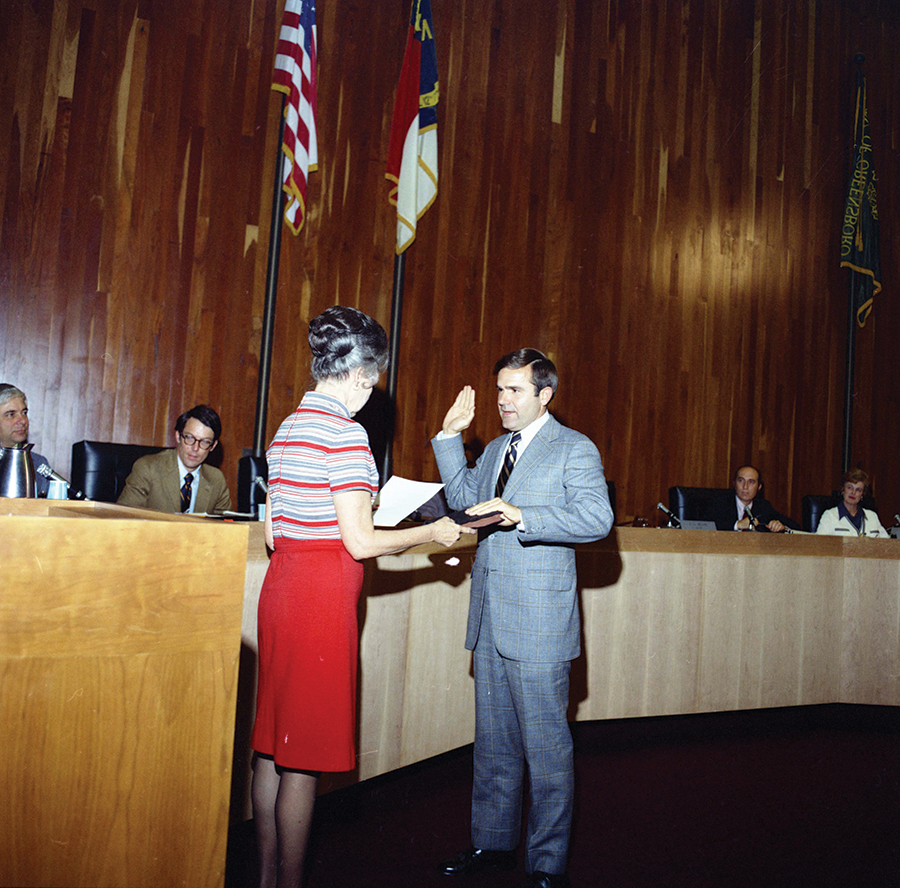
In 1968, he entered politics by serving as campaign manager for Rich Preyer’s successful congressional race. A year later, he ran unsuccessfully for the city council and was chosen by the council to serve as mayor pro tem in 1971. From there, he went on to five consecutive terms as Greensboro’s first publicly elected mayor. During his tenure, Melvin supported expansion of the Greensboro Coliseum, construction of a new municipal office building downtown, creation of the city’s most modern sewage treatment plant and the building of Bryan Park. He also played a pivotal role in the development of the Randleman Reservoir.

Melvin left politics in 1981 to focus on his banking career and philanthropic interests, retiring from banking in 1997 to accept the post of CEO and president of the Joseph Bryan Foundation at the personal urging of the aging Joe Bryan, who recognized both Citizen Jim’s innate passion for the Gate City and his knack for getting big things done.

Among other things, under Melvin’s guidance, the foundation raised $15 million to bring Elon Law School to the heart of downtown, orchestrated major improvements to the coliseum, helped create Center City Park and build the ballpark where the Greensboro Grasshoppers play. He also helped create Action Greensboro, a nonprofit that serves as a catalyst for public-private development to serve city residents.

A decade ago, in the wake of a 30-year mass exodus of major textile, furniture and cigarette corporations, Melvin took on what would arguably became his most ambitious and challenging project of all — a campaign to bring major manufacturing back to the Triad.

“We lost more than 90,000 good-paying jobs when those vital industries left the region,” he pointed out when we caught up to him at his office, a few days after the megasite deal was announced. “Charlotte became a booming banking capital, and Raleigh thrived as center of high technology. But here in Greensboro and the Triad, we were always a manufacturing culture going back to the days when John Motley Morehead had the foresight to create the North Carolina Railroad through this part of the state that attracted people like the Cone brothers to Greensboro, setting off a manufacturing boom that lasted for a century. We needed to somehow get that back.”

The idea of a shared manufacturing megasite, he says, originated a decade ago when Stan Kelly and Mike Fox of the Piedmont Triad Partnership hired a top engineering firm to find a suitable location. They identified a 1,800-acre rural parcel off U.S. 421 between the town of Liberty and the Julian community.

A unique partnership between Randolph County, the Bryan Foundation, the City of Greensboro and Piedmont Triad Partnership got the program off the ground, including Realtor Sam Simpson and real-estate lawyer David Joseph, whose task it was to convince more than 100 individual landowners to sell their property in the interest of the project. “That was no simple job,” Melvin says. “They sat on a lot of couches and just listened to folks. They joked that they each put on at least 10 pounds.”

The team “made generous offers to buy or replace the land,” Simpson says. “But for most of these people, this wasn’t about the money. This was about, in some cases, land their families had lived on for generations. This was about their roots in a community.” He continues, “They had to believe this project was going to make a difference in their lives — and everyone around them — before they agreed. That took patience and absolute transparency, which Jim Melvin insisted on.”

A major boost came two years into the process when the North Carolina Railroad expressed interest in joining the massive development project, granting the site unrivaled transportation access for a potential manufacturing client from a pair of interstate highways (and a third in planning stages) and a railroad line directly adjoining the site.

The final piece of property was acquired in 2017, and Toyota identified the megasite as a leading candidate for its new North American auto production plant. At the 11th hour, however, the deal collapsed when the company opted to move to Alabama instead.

Among other things, a unique working group that included the City of Greensboro, Randolph and Guilford counties, the North Carolina Railroad, Piedmont Natural Gas, Duke Energy and a key environmental engineering firm managed to collaborate on an even more compelling turnkey site that would have everything a major manufacturer need to be simply “move in and get to work.” This goal was achieved when the Greensboro City Council agreed to extend water and sewer to the site.

“The working group was the final piece of the puzzle, and Jim Melvin’s visionary approach to things was so important,” notes Brent Christensen, CEO of the Greensboro Chamber of Commerce. “It brought everyone together to share ideas and get things done. That’s the Melvin way.”

“None of this happens without Jim,” echoes Randolph County Commissioner Darrell Frye, who has known and worked with Melvin for years. “He knew how to get the right people together and make it happen. He’s a visionary who never gives up. I think the positive multiplier effect of this is going to prove unlimited in the future. It worked out even better than we hoped.”

Which brings us back to Citizen Jim’s novel commencement address to the graduating class at Greensboro College, an admiring mention of which reportedly found its way into commentary in The New York Times. The man clearly practices what he preaches.

“But did it really happen the way your friends like to tell the story?” We put that question to him at his Bryan Foundation offices a few days after Toyota made its groundbreaking announcement.

“Believe it or not,” he confirmed with a hearty laugh, “it did happen like that. But you’ve got to realize the circumstances. It was cold and starting to rain. The last all those parents sitting there wanted was to hear some long-winded politician give a speech. So, I just gave them my favorite quote by Winston Churchill. They seemed to really appreciate that.”

Finally, we wondered if this latest accomplishment might be a fitting last hurrah for the indefatigable Melvin, who turned a youthful 88 on Christmas Eve.

The man who never, never gives up, just smiled.

“How about we just say the latest hurrah,” he suggested.  OH


Almanac

March

By Ashley Walshe

March is an age-old prophecy: a great thaw followed by a riot of life and color.

Some said it would start with a single daffodil. A field of crocus. The soft warble of a bluebird.

All the signs are here. And in the bare-branched trees, where wild tangles of dead leaves resemble papier-mâché globes, newborn squirrels wriggle in their dreys, eyes closed.

Weeks ago, winter felt eternal. The cold air stung your face and fingers. The world was bleak and colorless.

Now, the red maple is blooming. Saucer magnolia, too. You build the last fire, sweep the hearth, return to the garden and its wet, fragrant earth.

Frost glistens in the morning light, but you know it’s true — that spring is coming. You know because the birds know. They cannot help but blurt it out.

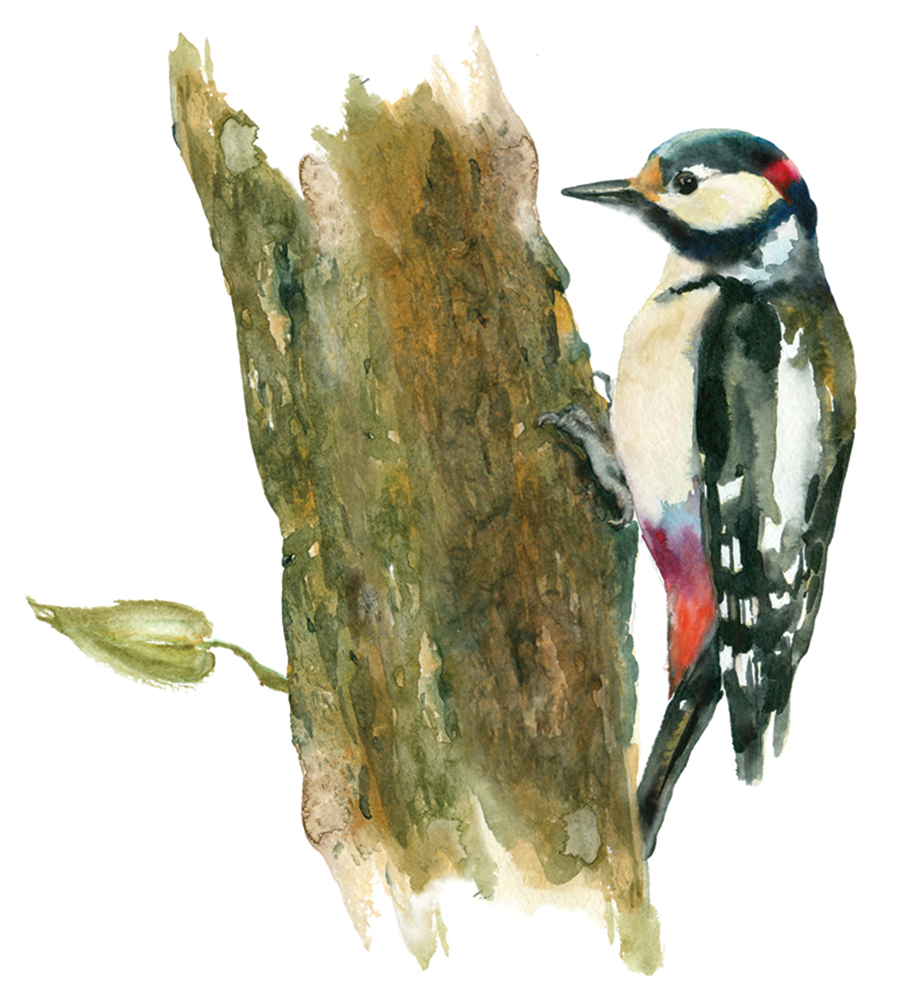
Beyond the flowering quince, a woodpecker drums on a towering pine.

A towhee gushes drink-your-tea.

A robin whistles cheerily, cheer up, cheer up, cheerily, cheer up.

Soon, spring peepers and chorus frogs will join the band. The first bee will drink from the first hyacinth flower. A young squirrel will open its eyes.

Sunlight kisses wild violets, purple dead nettle, tender young grasses. Everywhere you look, you notice a new warmth, a new softness, the gentle pulse of life. By some miracle, spring has arrived. A sweet mystery born from the icy womb of winter.

In March winter is holding back and spring is pulling forward. Something holds and something pulls inside of us too.

— Jean Hersey

A Gardener’s Luck

Let’s talk about three-leafed clover (genus Trifolium), a flowering herb in the legume family that just might be what your lawn or garden has been missing. Common as weeds — and often disregarded as such — clover can grow in most any climate, tolerate poor-quality soil and resist most pests and diseases. Here’s the best part: clover can “fix” spent patches of earth by restoring nitrogen levels. In other words, it’s a natural fertilizer and often is used as green manure crop.

Using clover as a ground cover between garden beds will also attract pollinators. Mix some clover with your grasses and your lawn will look greener. An added bonus: It’s impervious to dog urine. Even if you never find a four-leafer, that’s some good garden luck.

Spring Forward

Daylight saving time begins Sunday, March 13. Longer days inspire evening walks, birding, a quiet hour in the garden. Notice what’s flowering: breath-of-spring (winter honeysuckle), brilliant yellow forsythia, lemony scented star magnolia. Notice what needs to be pruned: ahem, the rose bush. Although the vernal equinox occurs Sunday, March 20, spring has been here for weeks, present in each glorious inhalation. Allergy season? Coming soon.


Poem

What the Moon Knows

She knows shadow, how to

slip behind clouds. She’s perfected

the art of disappearing. She knows

how to empty herself into the sky,

whisper light into darkness.

She knows the power of silence,

how to keep secrets, even as men

leave footprints in the dust, try to claim her.

Waxing and waning, she summons

the tides. Whole and holy symbol,

she remains perfect truth, tranquility.

Friend and muse, she knows the hearts

of lovers and lunatics. She knows 

she is not the only one that fills the sky,

but the sky is her only home.

— Pat Riviere-Seel

Pat Riviere-Seel is the author of When There Were Horses

Colors of Love Poems

One of February’s troubadours, love poems glimmer like candy hearts against a blue sky. Coming in all hues, like love itself, they have the power to adore, seduce, honor, bind, anger, grieve, forgive, appreciate, engage, mend, reconcile and more. From classic to contemporary, verses of love and passion inspire us to give voice to the seemingly indescribable. In honor of Valentine’s Day, we have assembled a collection of poetry submitted from area writers that will warm the heart of Saint Valentine himself.


These Days 

we walk slower,

hand in hand.

I miss my good

knees, the miles

I ran on blacktop,

on country roads

through fields,

always running,

moving, covering

distance as if that

would take me

anywhere—when

all I ever needed,

I see now, is you,

right here: this home,

our yard, my hand

in yours, on a

Sunday afternoon.

— Steve Cushman


The Savings & Moan

Maybe swinging a nine-pound hammer

in Hell, sweat hissing 

on pillow-shaped rocks

that break and bind,

mocking my stinging eyes,

I’ll lose track of Friday nights

when we were alone at the top 

of the savings & loan building.


Or stroke-addled, swabbing the floor

at the Mission shelter, I’ll drop the mop

to end a week, mutter past the wet floor sign,

false teeth clicking, and not want you —

tilting into our spell, then pulling back,

true to your computer.


But never in my right mind

will Fridays above the lights 

go blank, lovely Friend. 

— Michael Gaspeny


Tiramisu

When Julie says she wants Tiramisu

I do what husbands have done forever, 

go searching. First the Italian Bakery 

on Westridge, but they’re out, then Alex’s

Cheesecake downtown, but no luck there.  

I even try a couple chain restaurants but 

you guessed it they’re out. Finally, I asked 

the pastry chef at Cugino Forno and he said,

“Man, it’s National Tiramisu Day.”


Okay, so let’s add that to the list of things 

I don’t know.  Finally, I hit Bestway’s 

frozen food aisle and somehow they 

have a Sarah Lee two-pack, which I buy.


Julie smiles, says, “Thank you this is just what I wanted. 

But what took you so long?” 

I shrug, “There’s a run on Tiramisu today,” and she

laughs as we settle in to watch a gardening

show on Netflix. I wave away her attempts

to share the Tiramisu, tell her to enjoy

the whole thing, secretly hoping she’ll

save a little, perhaps a bite or two, for me.

— Steve Cushman
    
(*March 21 is Tiramisu Day)


Dried Flowers
& Other Crafts

Leaf through pages of my flesh, find quilt-comfort memories.

Read how the day before yesterday becomes three decades.

Showers together, coffee, cozy socks and couches.

Enough, for a time.  Peel back three pages from my book

of skin at shoulder, where muscle meets

gauze-white membrane, a spot that holds one dried iris

pressed between two black & white photos.  One shows

us hiking near Lolo Pass Road, between mounds of boulders,

before we found our almost-smooth meadow.

I will not speak of the second photo.  Not yet.

— John Haugh


July 12, 2007, Kitty Hawk, North Carolina

Full from ice cream and a sun-filled day my son

and I walk the half mile back to our rental house,

as the gulls circle overhead and the bikinied girls

pass us by on pink and yellow rental bikes. Of course,

I’d like to stretch this week at the beach out forever,

but I can’t.  Back home, there are rooms to be painted

and yards to be mowed, not to mention bills to be paid.

But for a few more minutes, Trevor and I are walking

barefoot on the hot sidewalk and when I turn to the left

I spot this dark-haired woman waving at us from a balcony

and as she waves I realize she’s my wife, and this is my

life, and I’m no doubt luckier than I have any right to be.

— Steve Cushman


Serenade

I promise

there will always be

sweet fresh sheets for you:

I have labored

to iron away the creases

of many solitary nights,

pledge that we will lie

on a new bed

with carefully sorted memories,

even as we crumple

toward our inevitable berths.

— Valerie Nieman


Power Outage

For three days the power was out,

so each night after work we huddled

close on the couch, under that thick blue 

blanket, reading books by candlelight, 

drinking wine, our legs intertwined.  


Later, in bed, even if we didn’t make love 

we reached for each other, for warmth, which 

at times felt more intimate than lovemaking.  


When the lights flickered on the third day 

I closed my eyes and thought no, not yet,

as if my thoughts had the power to do 

anything, and she cussed, dammit. 


In the morning, we woke under so many 

layers, both of us covered in sweat as if a fever

had broken and what was ahead might be 

better days, the start of something new.

— Steve Cushman


Secret Admirer

Whoever set the bouquet at your door,

in a vase with pink bows double-knotted

around its glass throat,

doesn’t know you well. You hate pink.

Maybe whoever, approaching so intimately

with sex and death in hand,

breathed in the faint scent of (pink) carnations,

but probably just the funereal odor

that clings to every petal,

eucalyptus and vinegar.

Vinegar that you pour at the feet

of gardenias so the leaves will be green

and the flowers so sweet

before they jaundice and fall.

Cut flowers, bright in their dying,

daisies, asters, roses, carnations.

Casting messages around like pollen,

innocence/patience/pride/love.

Hardly any fragrance to flowers anymore

except for chrysanthemums;

your cousin’s funeral put you off them forever,

the way your mother hated gardenias.

Why gardenias?

Another woman’s perfume,

perhaps, she herself favoring Chanel No. 5

when she could, thick with jasmine.

Gardenia is named jasminoides,

yet not even kin, like someone pilfering

a dead child’s name.

Such sniffery.

You wait for another delivery.

Whoever, maybe.

— Valerie Nieman


Sizing Up

The carpenter

in the Craignure Inn,

carrying still his flat pencil

in its narrow pocket,

looks my way now and again,

gauging this accidental bird

alighted at his local.

A small man precise as his work,

measure twice and cut once;

he has a curved nose

and not a spare bit of flesh,

the plane having worked him

close to the bone.

His vest is joined neatly,

his ginger hair clipped.

I unfold myself from the low chair

like a carpenter’s rule,

near six feet of well-fed American

woman, and go to settle up.

Behind me at the bar,

I don’t see him but I feel

him quietly slip away.

— Valerie Nieman


Popover

I had never heard of Yorkshire Puddings

until my wife made them.  Julie’s British,

says her family ate them every Sunday

growing up, along with a baked chicken,

some potatoes, roasted carrots or green

beans.  Sometimes she calls them

Popovers.  That’s the name our son

uses for these overgrown muffins

of oil and flour and egg, puffed in the

middle, so that a fork or knife can send

them toppling in on themselves.

What I’m trying to say here is I can’t

imagine my life without these treats 

from across the ocean and my son,

if you could see the way he ravages

them, you would know, feels the same.

— Steve Cushman

Sticking With It

How Englishman John Broadhurst walks his talk with art that harks to home

By Maria Johnson     Photographs by Bert VanderVeen

Pick a special stick and tell about it?

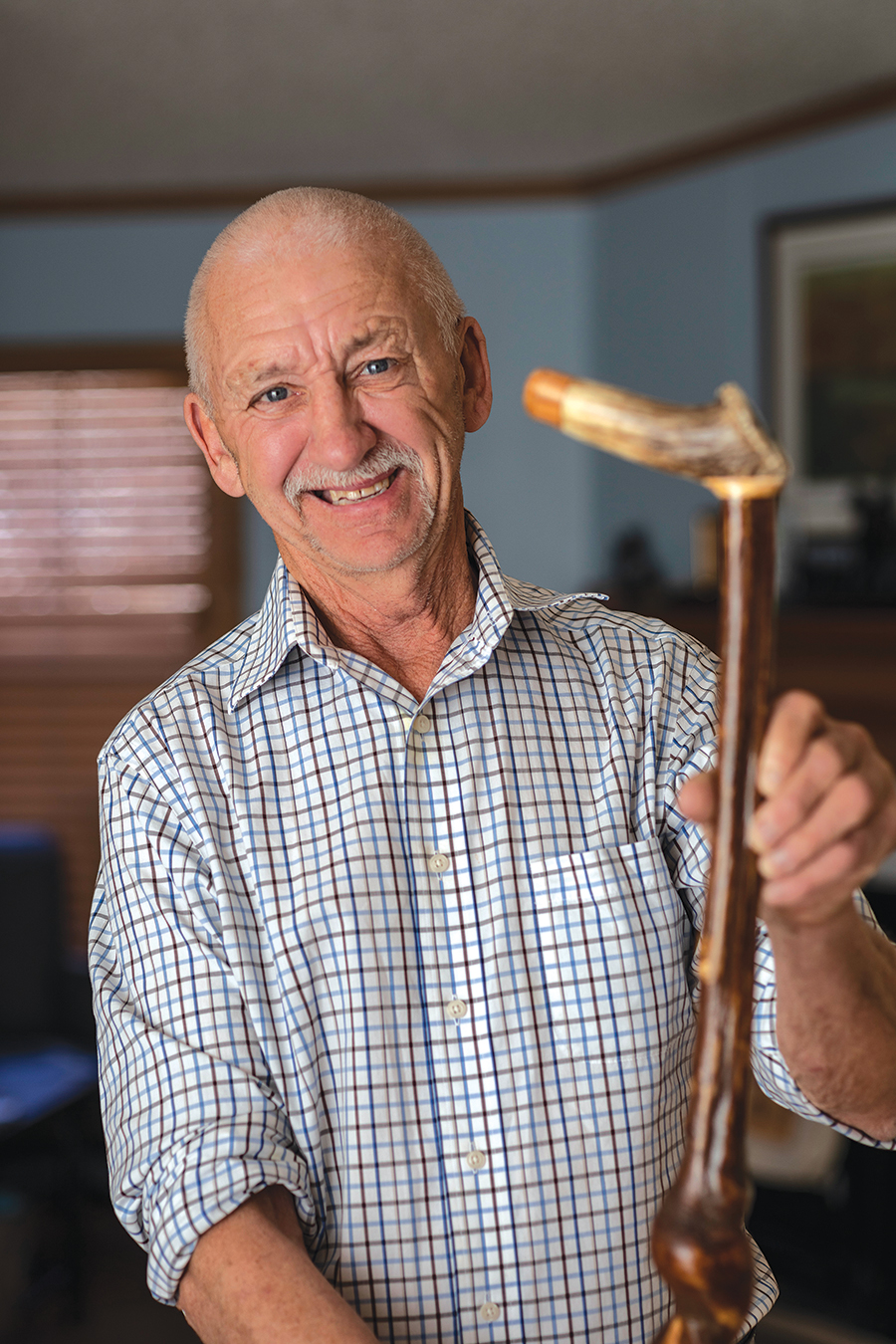
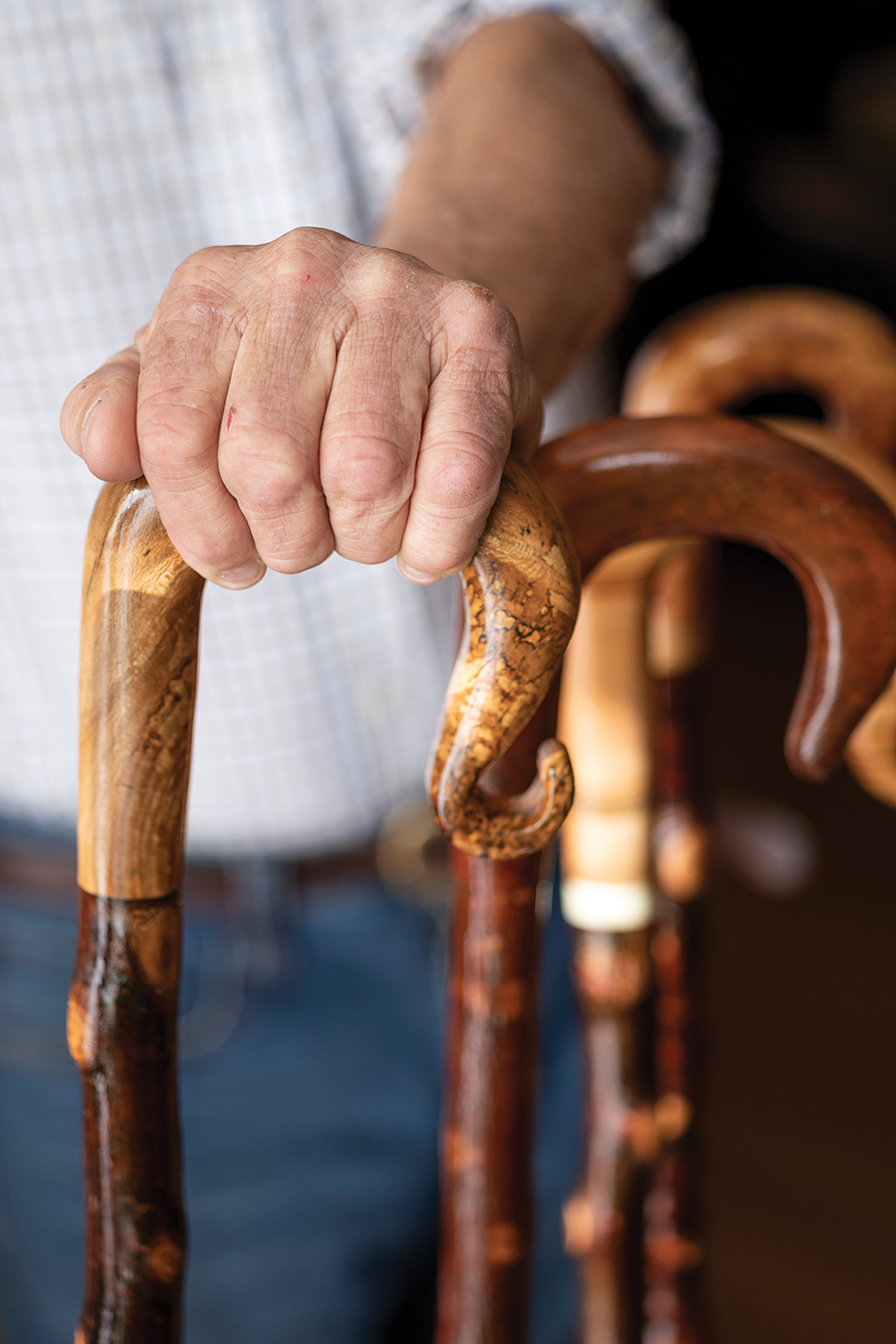
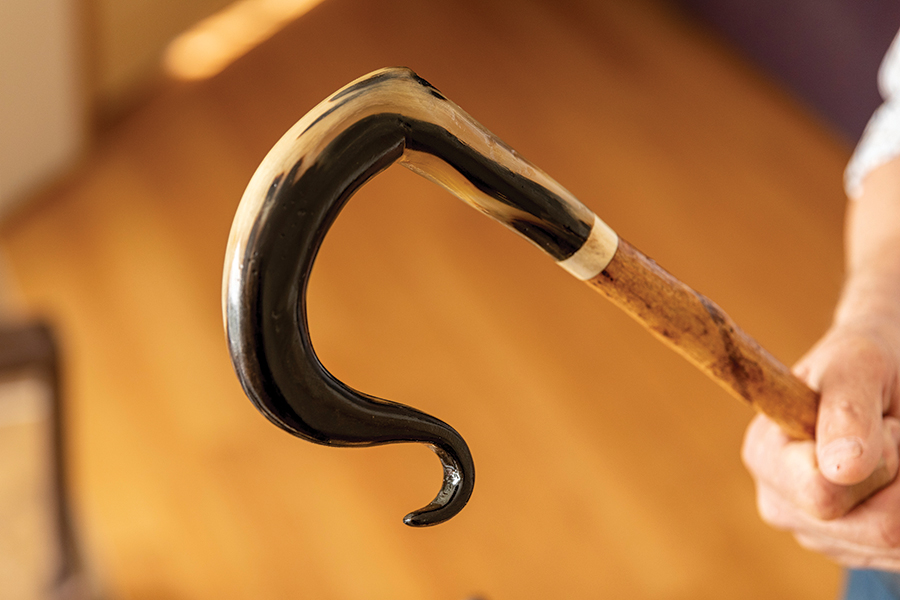
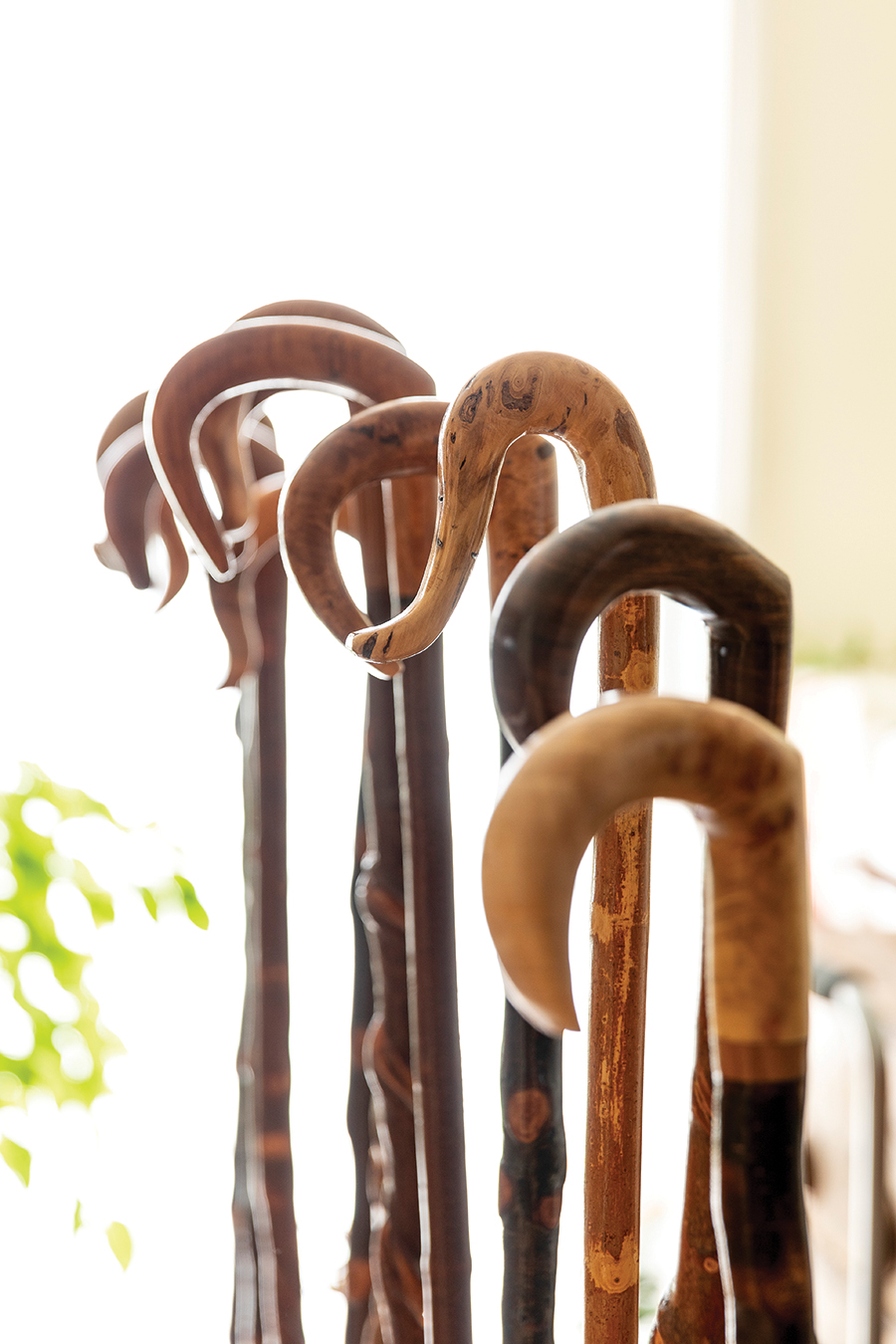
John Broadhurst nods and steps to a rack bristling with walking sticks that he has hewn by hand. He heaves one up and catches it midair. The staff is ash, the rigid stuff of baseball bats, but this branch is way slimmer than a Louisville Slugger, and it still wears the tree’s dove gray bark, lightly varnished. The stick’s handle, warm with hues of coal and butter, is wrought from ram’s horn, worked into a cursive “n” and buffed to a high gleam.

“It’s a big thing to make a ram’s horn handle in England. It’s a common thing for shepherds,” says the 74-year-old Broadhurst, whose British accent shrouds his words like the winter fog of his hometown, the western port city of Liverpool. His mother often put him on a train headed due east, to a station near her parents’ home in the lamb-dabbed hills of Lincolnshire.

When his fox-hunting uncles rode to the hounds, young John followed on a bike, pedaling furiously over the hills, cementing with sweat and a pounding heart the joy of being outside, of moving through the open air whether by horse or by bike or — the most common means — by foot.

Then and now, he says, most people in the countryside carry a chest-high stick, the flag of a culture built on walking. “You go to these farm markets, and I’d say 95 percent of them have a stick. It’s a way of life, and it helps you so much,” he says.

Broadhurst demonstrates by centering a stick at his sternum and leaning over it: When chatting with friends, he says, you can use the stick as a kickstand to take some weight off your feet.


He thrusts the stick forward, planting it as a cross-country skier might. When going uphill, you can stab the incline and pull yourself up.

He eases back the top of the stick: Going downhill, you can brace yourself against gravity.

He jabs at imaginary teeth, knee high. If an aggressive animal comes at you, you have a weapon.

“Your stick is a companion as well, you know,” says Broadhurst, who’s as spare and straight as one of his canes. “You got your dog and your stick, and you can go where you like, you know what I mean?”

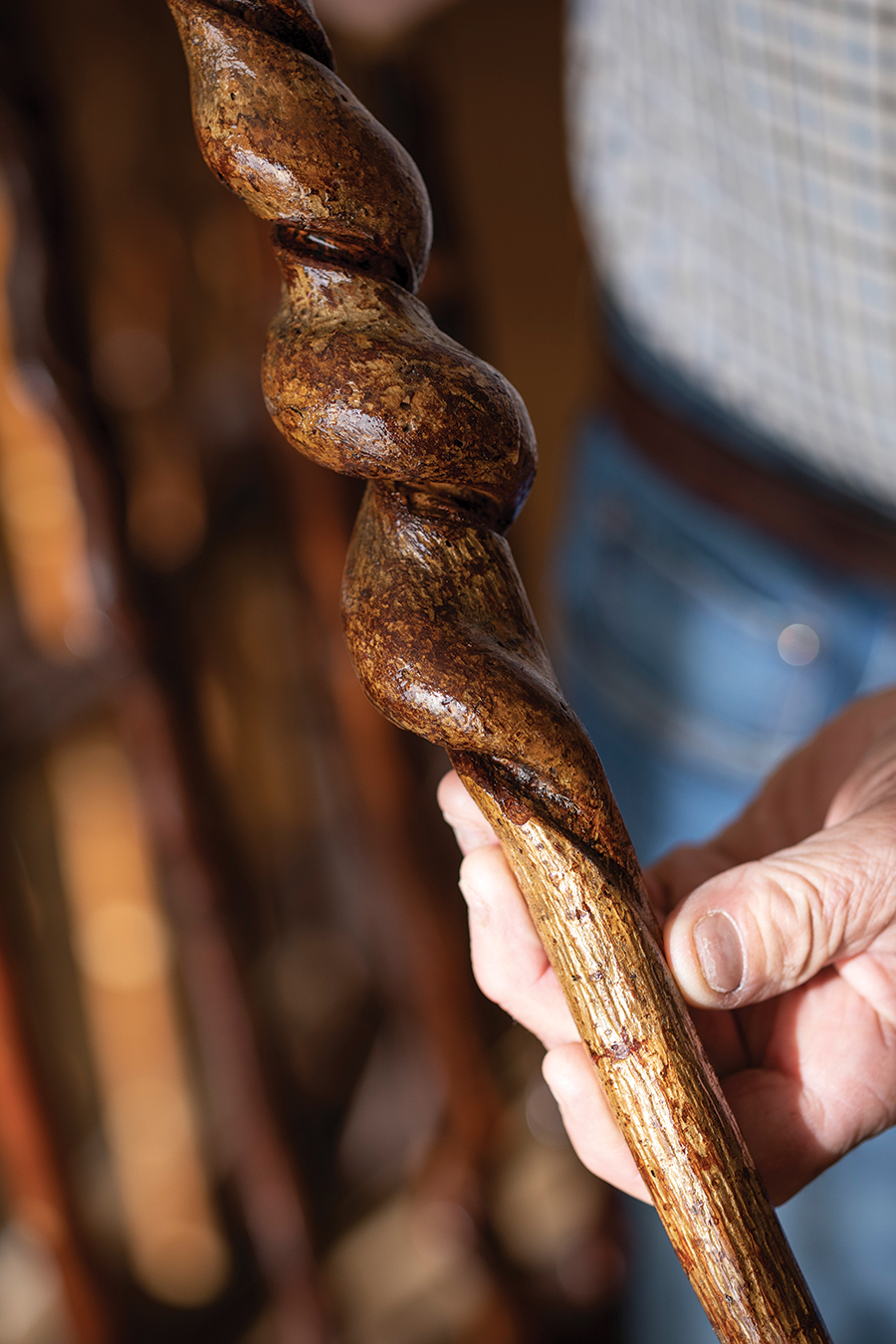
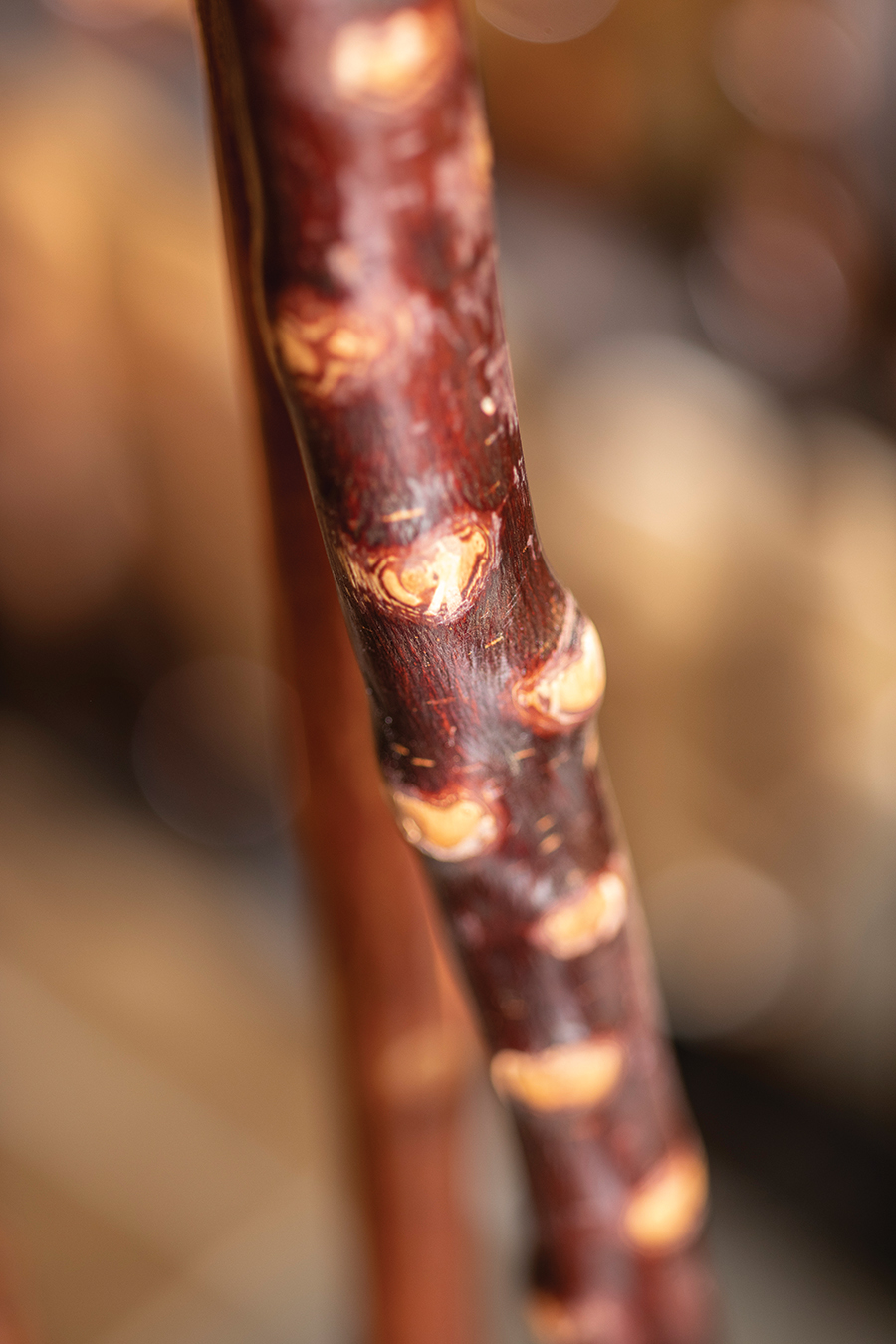
He worked city jobs as a teen, learning stone craft on construction sites before yielding to his boyhood love of the countryside. A professional terrierman, he followed fox hunters in a Land Rover, carting the Jack Russell terriers that flushed quarry from their burrows, a practice that’s now illegal. He weathered winters by sorting and shaping the dried hardwood branches that he’d sawed off a couple of autumns earlier when the leaves and sap were down. He developed an eye for spotting straight segments, about five feet long and as thick as a man’s thumb, still live on the trees and often spiraled with still-green honeysuckle vines.

Blackthorn.

Hazel.

Crabapple.

Oak.

He chose an ash limb to complement his first ram’s horn handle. An older guy had shown him how to work the bony spikes of a Jacob sheep, a black-and-white breed known for having two sets of horns, one curled beside the ears, another pronged atop the head.

When John saw a ram’s head at a slaughterhouse where he’d gone to pick up food for the dogs, he asked for a curled horn.

Back in his shed, he heated the horn with a blow torch to make it pliable, then wrapped it around a steel form to set the distinctive shepherd’s hook shape. It was wide enough to snare a sheep by the neck but gentle enough, with a curlicued end, not to dig in.

“It’s a long process,” Broadhurst says. “You’re messing with it and messing with it, you know? Once you get the shape, you can start polishing it, sanding it, filing it and finishing it off with wire wool.”

He points to the subtle pits in the ebony surface: “This wasn’t a real good horn, you see, but it was good enough,” he says. “You gotta take what you find, you know what I mean?” He joined handle and stick with a threaded steel rod. A white spacer of deer horn, found in the wild, bridged the gap, adding ornament and strength.

Ever keen to improve, he honed his knack for sticks and hounds. He managed a champion pack of hunting beagles on foot until a rogue and riderless horse trampled him in 1997, mangling his left leg and ending his time with the hunt. He fell back on the trade he’d learned as a teenager, laying stone. He kept his hand in the dog game by judging shows around the world.

He met his wife, Susan, the manager of a veterinary clinic, at a Jack Russell terrier show in Mocksville. She was handling. He was taking note.

Today, they live south of Winston-Salem, in a double-wide mobile home that John has clad with a handsome yellow knock-off of chiseled English Yorkstone.

He’s trying to retire from stone, but folks keep calling him about chimneys and patios and gate piers. He still judges dog shows. And he still plays with hardwood in the stretchy hours of winter evenings, when the pens of Plott hounds and Jack Russells that he and Susan keep and call by name have piped down.

He’s gotten pretty good at making walking sticks, he allows, but he’s a novice compared with stick makers in England. He springs up from a chair and returns with a small, slick magazine published by the British Stickmakers Guild. On the cover is a finely carved handle painted in jewel tones. A peacock’s head. He flips to likenesses of rosy rainbow trout and dagger-beaked woodcock. He shakes his head in awe of the craftsmen.

“Some of them lads, that’s all they do, you know what I mean? Some of them are absolutely brilliant,” he says.

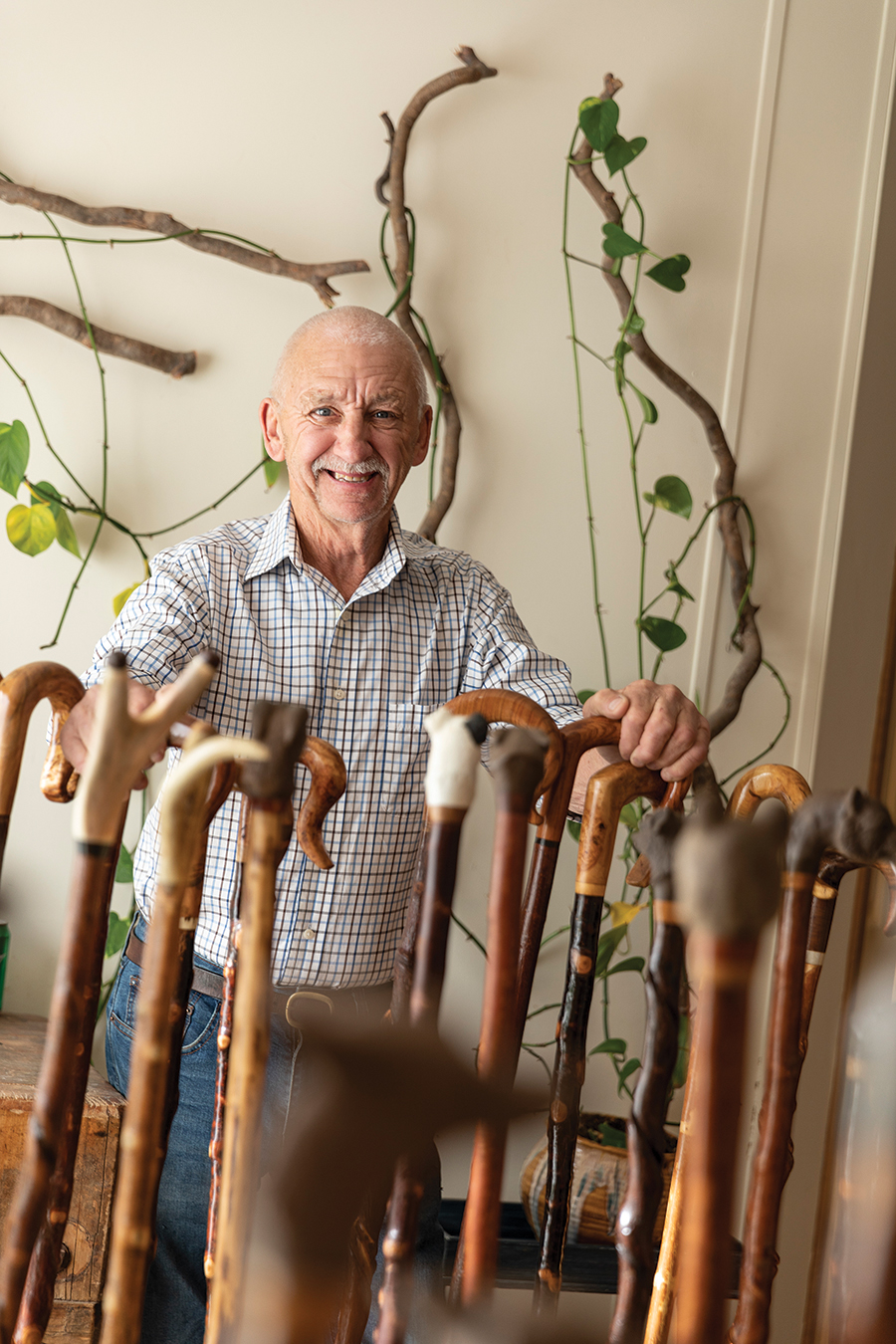
There aren’t many stick makers in these parts, he adds with a crooked smile, so it’s easy for him to look good. He makes maybe 70 sticks a year and sells most of them — at prices ranging from $85 to $170 — at hound shows and steeplechases. He also sets up at WGHP-TV’s Roy’s Folks Craft Fair that’s held in High Point whenever COVID is in check, which hasn’t been for a couple of years now.

Buyers marvel at the variety of his designs.

Dark sticks and light sticks.

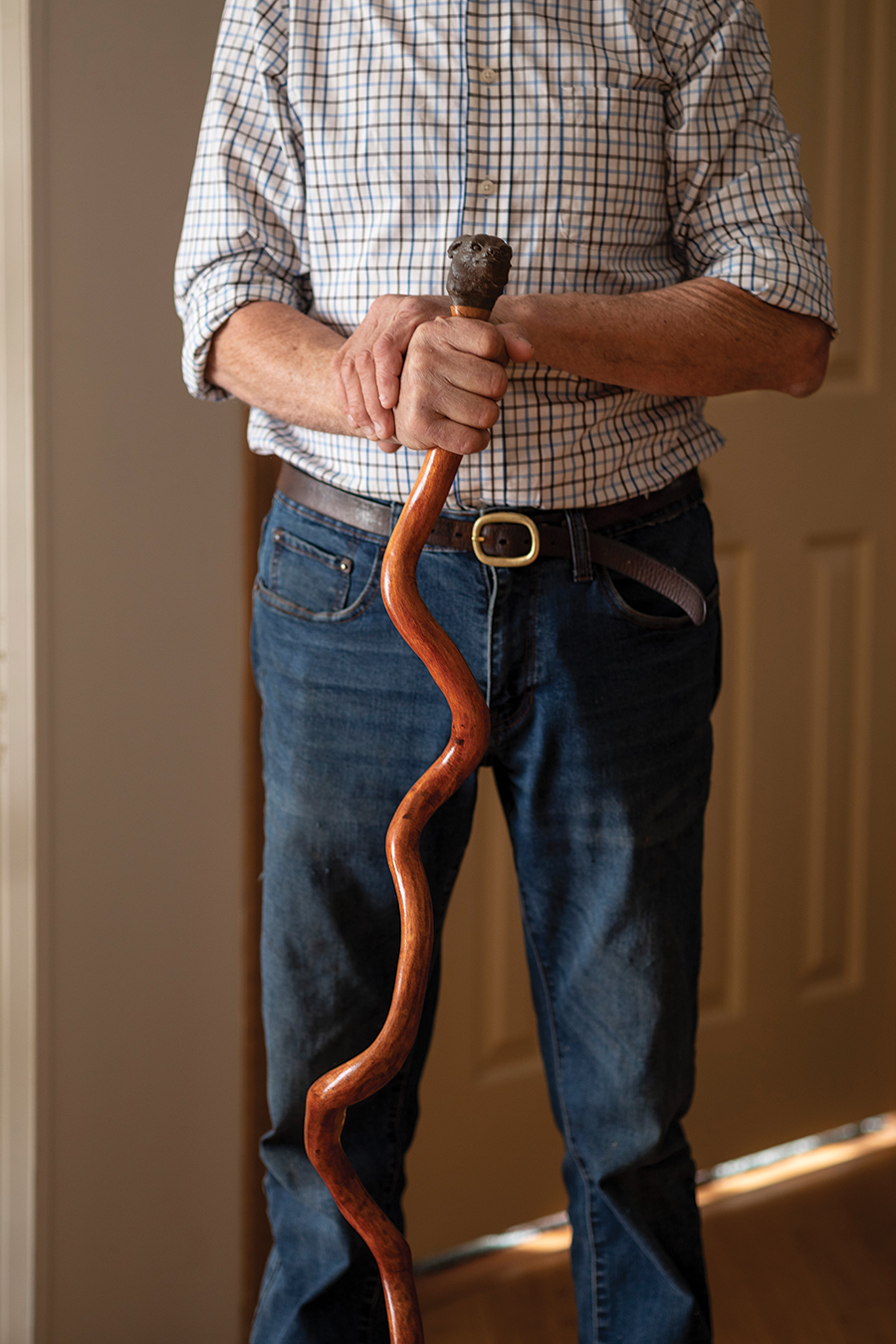
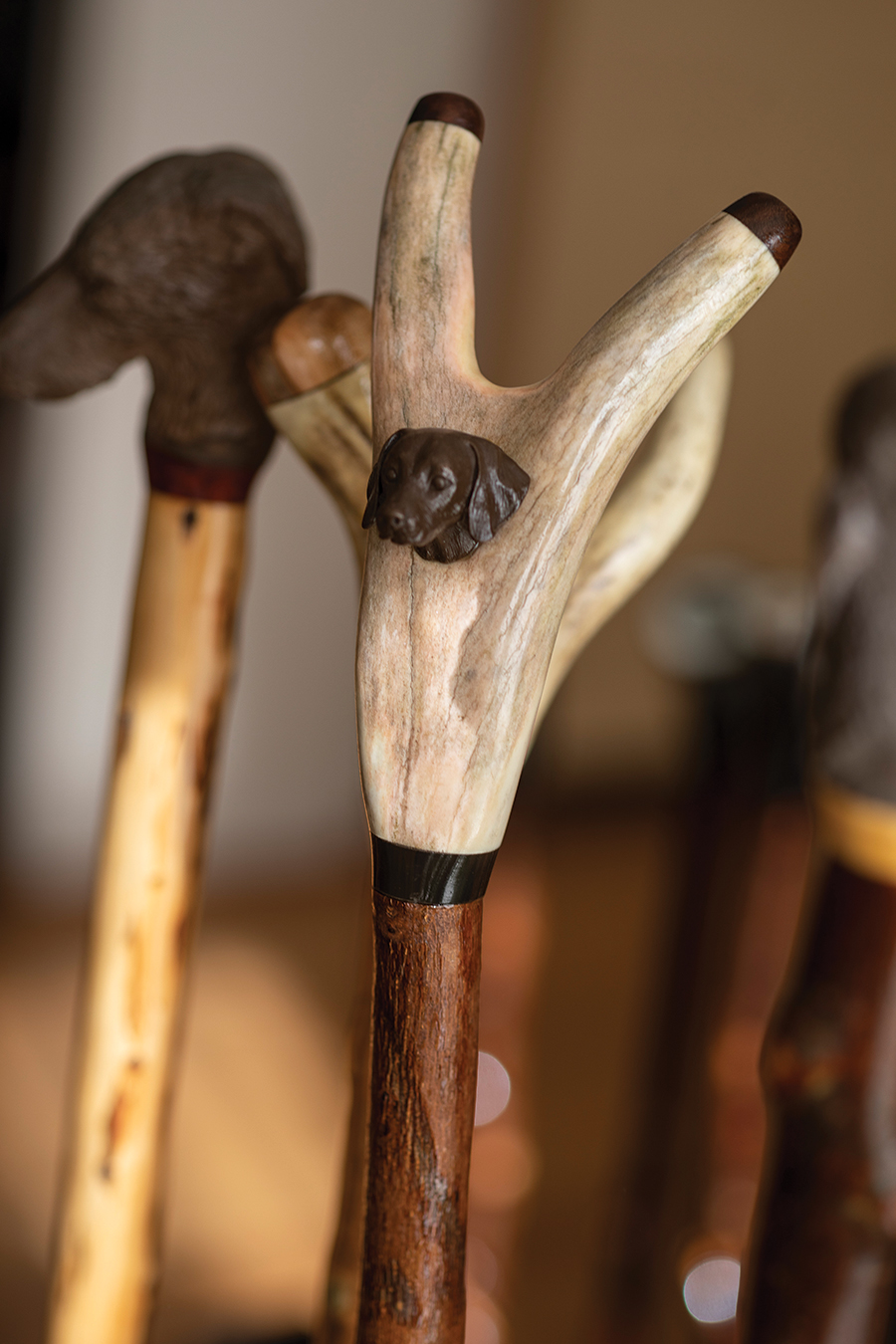
Sticks with resin handles cast in the shape of dogs’ heads.

“Thumb sticks” with notches at the top.

Sticks capped with deer antler, cow horn and burled wood.

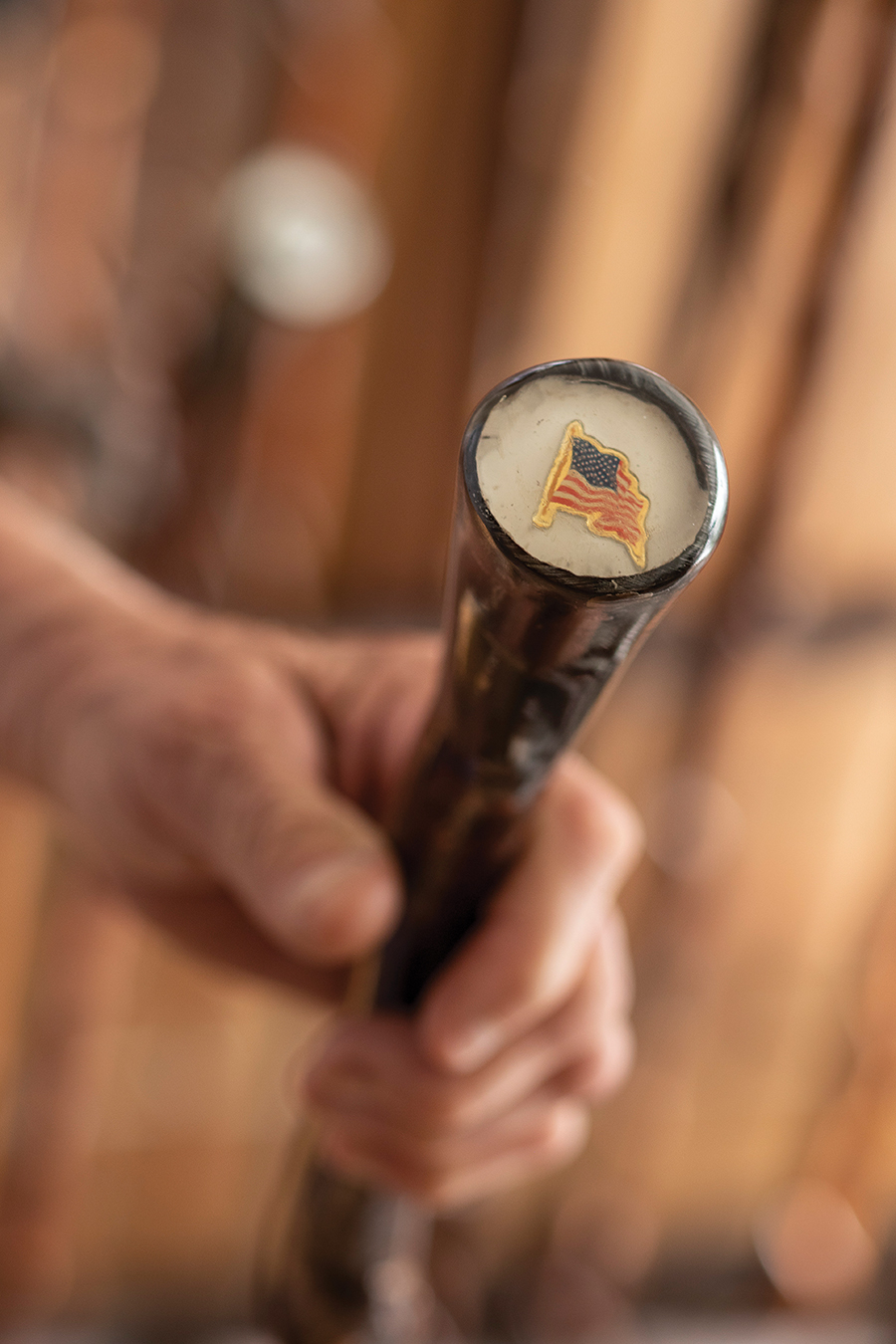
Sticks that end in wooden whistles.

He blows a cheery note. “People use them to call their dogs and the like,” Broadhurst says.

The special stick, the one with a ram’s horn handle, will never sell because he’ll never offer it for sale. “You keep your first one like that, you know?” he says.

He’ll never use it, either. His favorite stick to use is what he calls a “nothing stick.” He pops out of his armchair again — he and stillness don’t mix well — to another rack of sticks. He hikes up a white-elm rod topped with twist of spalted maple. The handle is dark with the oil of his hand.

“That’s my favorite stick,” he says grinning like a boy who’s riding his bike after the horses and hound songs. “Just nothing at all.”  OH

To learn more, contact John Broadhurst at jjbluebear70@gmail.com.

Maria Johnson is a contributing editor of O.Henry. She can be reached at ohenrymaria@gmail.com.
Almanac

By Ashley Walshe

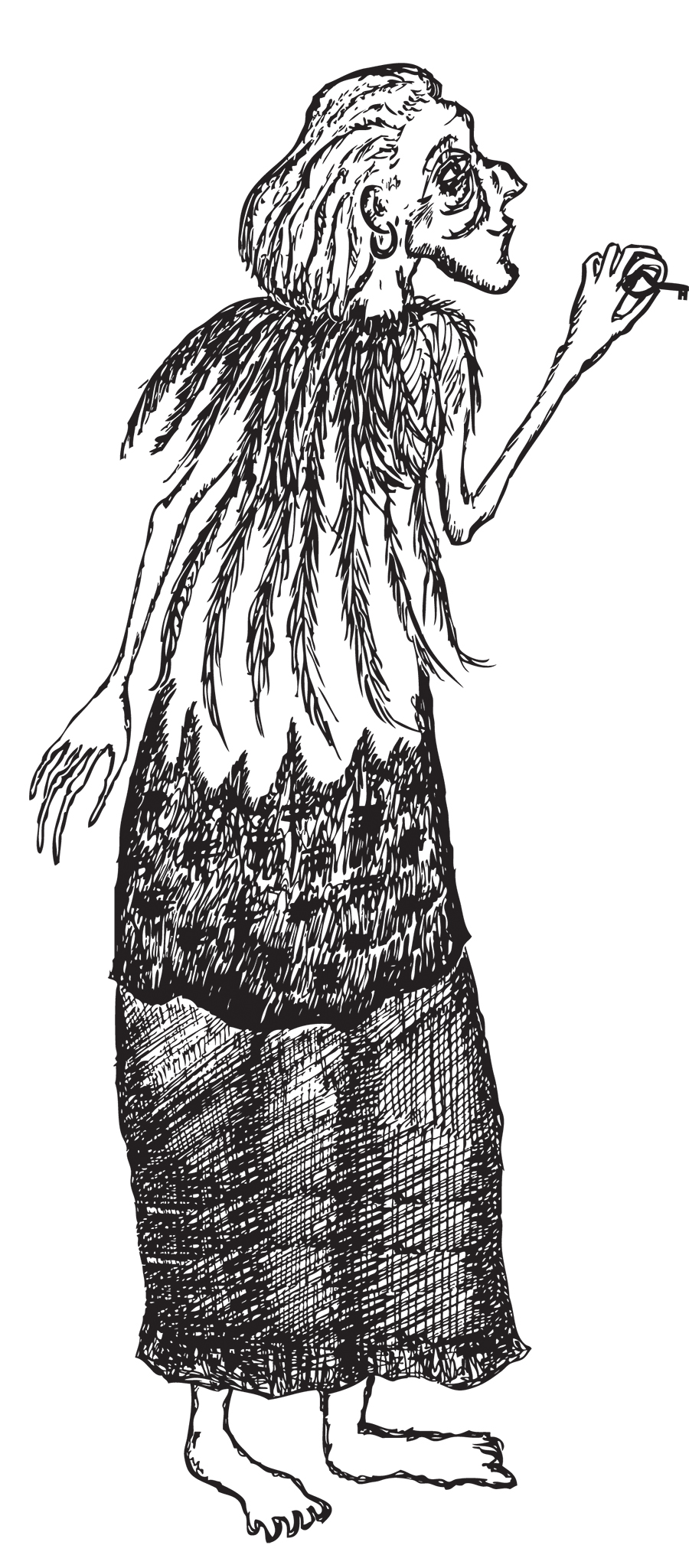
February is a creature from an ancient myth, a wise old woman, a mystical crone goddess. 

At first glance, she is homely, haggard and frightening. Her face is gaunt. Her garments, threadbare. Her skin like gray, crinkled paper.

There is nothing soft or warm or pleasant about her. Time and the elements stripped her of her beauty long ago. She lurks in the shadows, a bag of bones with sunken eyes, crooked fingers and limbs like wind-swept trees. Her icy breath swirls through the air like a ravenous arctic wolf. 

Few have dared to approach — let alone understand — her. Most avoid her like the plague.

She does not require your favor. And yet, should you dare to gaze upon her, she will offer a wisp of a smile. A mysterious light will shine from her deep-set eyes, and while she will not speak with words, you will hear her, clear as a bell in the night: follow me.

Into the darkness you’ll trudge, cold air burning like poison ivy, frozen earth crunching beneath your feet. Rows of naked trees reach toward a grim, abysmal sky, and you wonder how life could possibly grow in this barren landscape, this pregnant silence, this bitter womb of winter.

As she walks, the crone slips her wrinkled hand into her cloak pocket and withdraws a rusted skeleton key. At once it is clear: This is no forsaken beast. She is the chosen one: the gatekeeper between death and life, the end and the beginning, the black of night and the first blush of dawn.

You begin to notice what was already here: early crocuses bursting through the frosty soil; milky white snowdrops and fragrant wintersweet; a host of sunny jonquil. A great horned owl screams out.

The crone does not glow like a young maiden or a new mother. But as you softly gaze upon her, you see the grace of a soul who has witnessed many seasons — a wise one who knows that spring is ever on the silvery horizon. That the only way to it is through it.

Feed the Birds

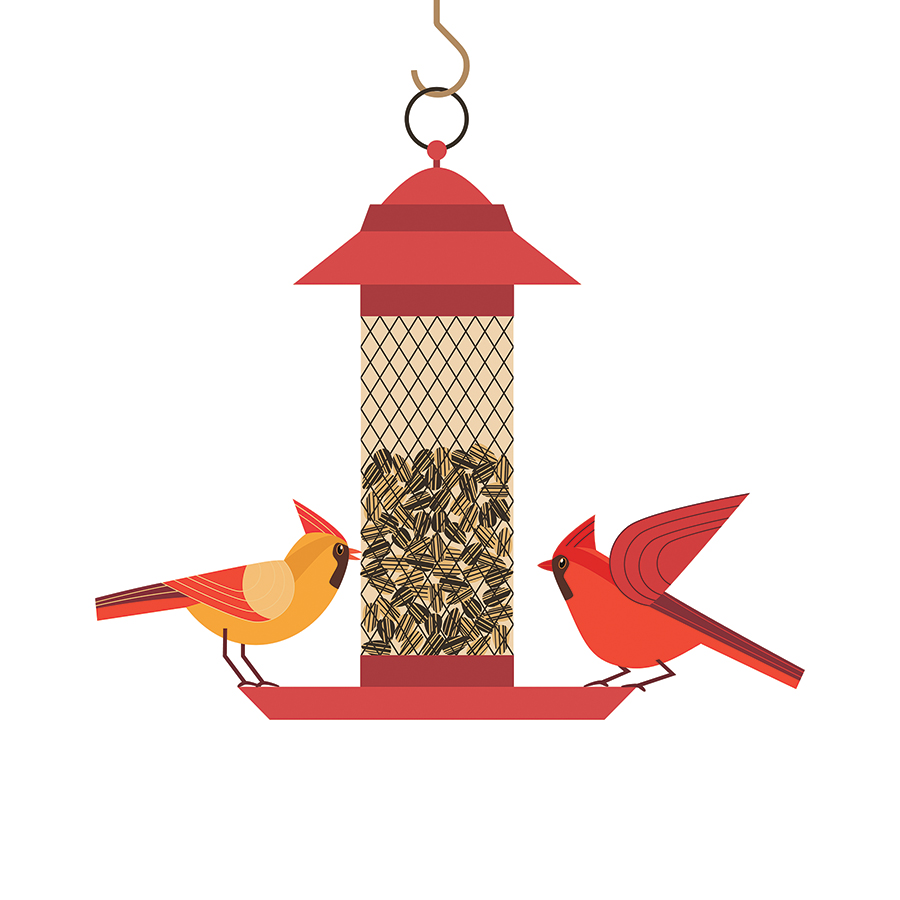
It’s been a long winter for everybody — especially our winged friends. Feed the Birds Day is celebrated each year on February 3. If ever you’ve wondered where St. Francis of Assisi, patron saint of animals, came up with his “For it is in giving that we receive” line, consider that he’s often depicted with a bird in his hands.

You think winter will never end, and then, when you don’t expect it, when you have almost forgotten it, warmth comes and a different light.

— Wendell Berry


Space and Time

According to EarthSky.org, one of the most anticipated sky scenes of 2022 happens 40 minutes before sunrise from February 11–16, when Venus, Mars and Mercury will all be visible in the darkest spell of morning.

Another scene not to be missed this month: The “Winter Hexagon,” a prominent group of stars comprised of Rigel (in Orion), Sirius (in Canis Major), Procyon (in Canis Minor), Aldebaran (in Taurus), Capella (in Auriga) and Pollux (in Gemini). Also called the “Winter Circle,” you can find this asterism by first looking for Orion’s brightest star, Rigel, the bluish star at the lower right (in other words, below the belt). From here, draw a line straight up to Aldebaran, then continue following the bright points counterclockwise until you complete the circle. 

Poem

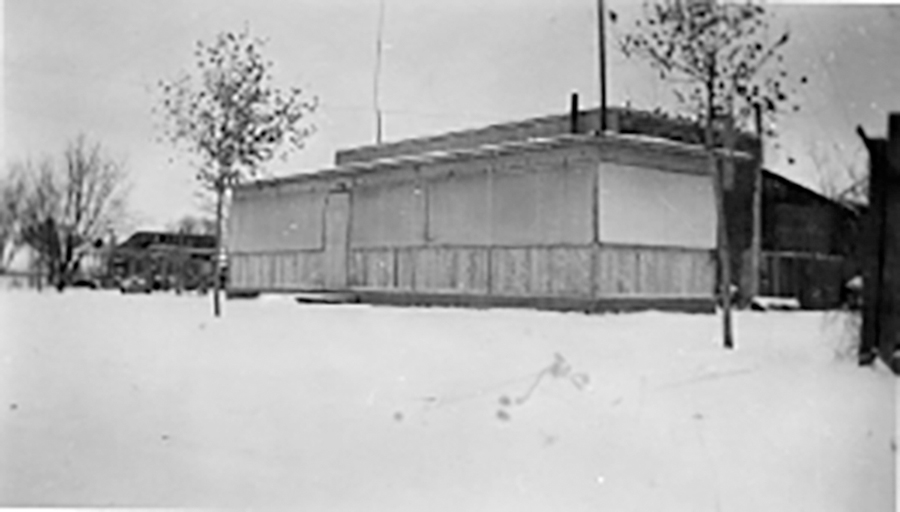
Long Homestead in Winter

— Las Cruces, circa 1932

Not in any literal sense

a homestead: it was purchased

you learned from an old deed

sent you by a cousin. And in this

winter photo, strange with magic

of the never seen, a study in

whites and grays, foreground

trees and background barn shading

towards true black, porch windows

canvas covered against the cold,

original adobe brooding behind, just

one slender strand of air, smokey

warm you guess, rising from a single

flue suggests habitation, warmth

inside. No one living knows

its history now, when the barn

was built; porch facing pristine snow

now fades into surrounding silence. What

was the day like when someone, your

father perhaps, had hiked out the

back door around towards the railroad

track to capture the snow before it turned

to mud underfoot; foot sodden you suspect

later that morning when indoor

voices might have called to breakfast,

but leave your boots outside. All

gone wherever memories are stored —

you never saw the place in winter

but you slept many a summer night there

on that porch already mythical, heard the Santa Fe

hoot by, carry the present away.

  Julian Long

Julian Long is the author of Reading Evening Prayer in an Empty Church.

The Magnolia Network

Historic haven reimagined as a vibrant motel

By Cynthia Adams     Photographs by Amy Freeman

Photograph by Aura Marzouk


How did two hip interior designers, Gina Hicks and Laura Mensch, approach an historic project reeking of cultural significance — specifically Greensboro’s 1889 Magnolia House Motel — given their trade signature is youthful, contemporary and anything but stodgy?

The short answer is vividly.

The duo, who owns Vivid Interiors, leans into exuberant, artsy, color-saturated decors, which are not exactly standard fare for a venue that’s as much a museum as a dining destination and inn. (One of the pair sports a tattoo.) The Magnolia is an historic hybrid, reopened in late 2021, that was once a landing place for some of the hippest of the hip, who once rocked a packed house, singed a baseball with a thwack, thrilled with a knockout in the ring or seared an audience with discourse.

Famous motel guests included Ray Charles, Satchel s and James Baldwin. Athletes, intellectuals and musicians rested their heads at 442 Gorrell Street.

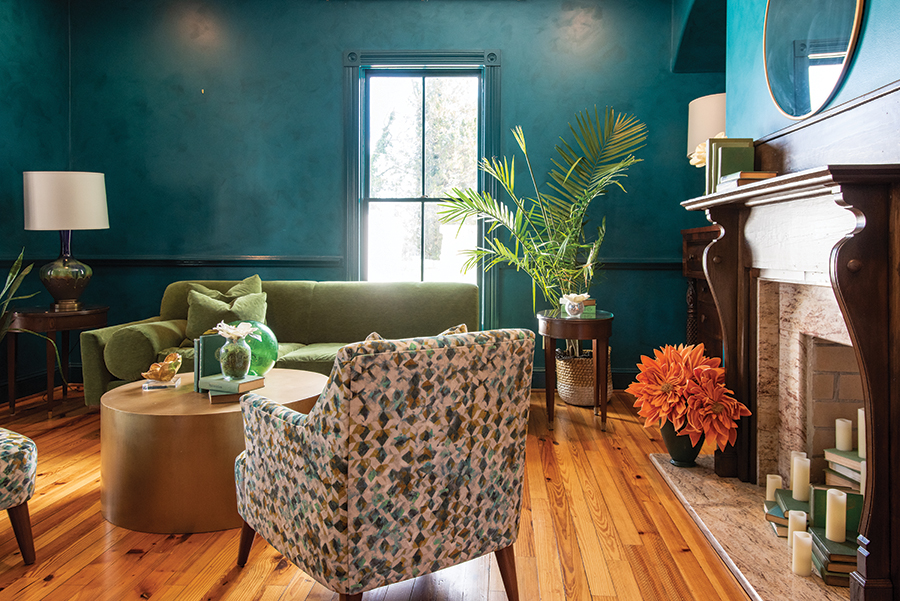
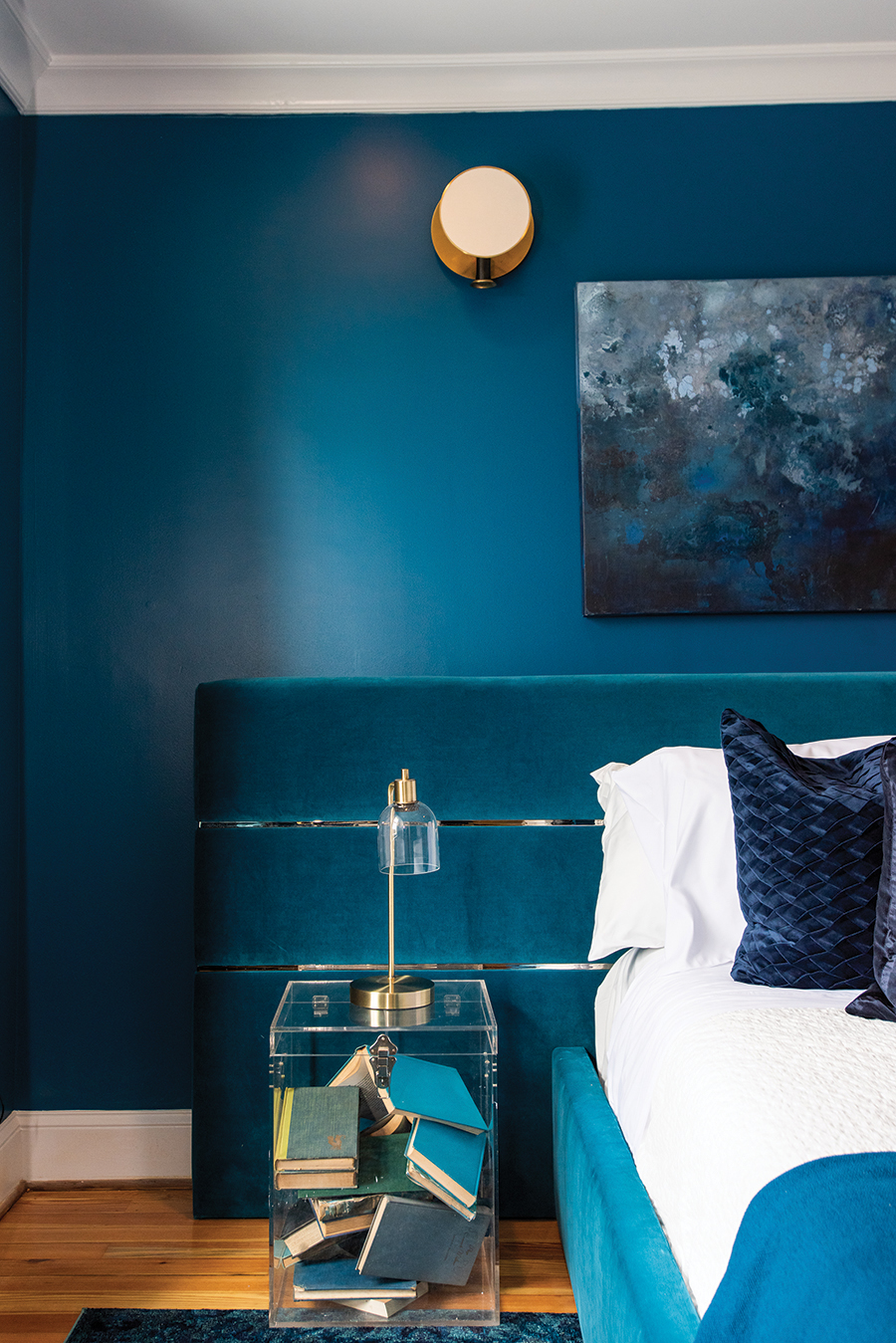
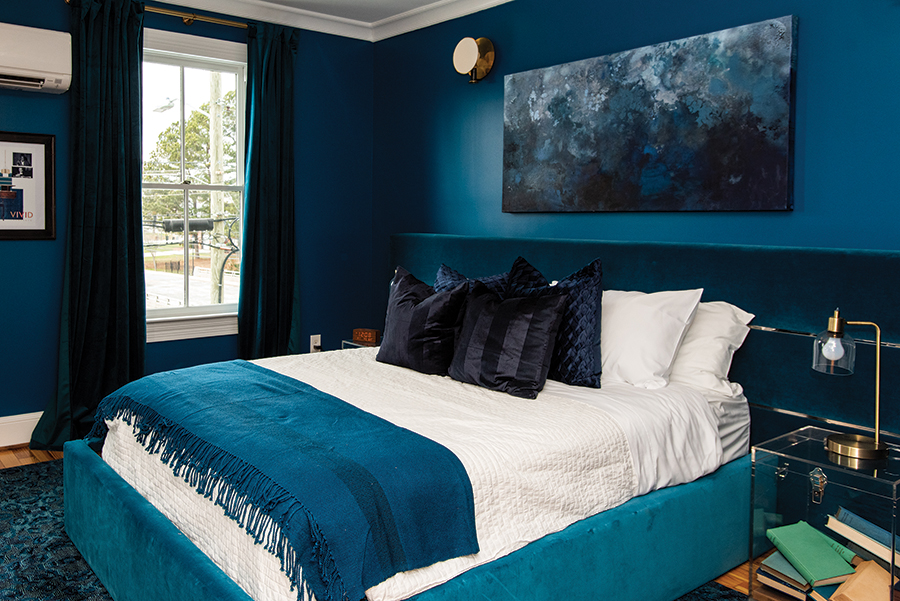
Only a year ago, Hicks and Mensch pored over photographs for clues and provenance, immersed in the likes of Ike and Tina Turner, former Magnolia guests when it was listed in the “Green Book” (more about that later). They reimagined the house’s rooms infused with the blue jazzy vibes of Miles Davis, the pink hotness of Turner or Gladys Knight, the cerebral white heat of James Baldwin or the leathery sports-cool of a Jackie Robinson.

Slowly, the brilliance of legendary figures who stayed there bled into the reimagined interiors, coaxed into being by Hicks and Mensch. Their creative guide was the historic property’s manager, Natalie Miller, who channeled the history with her father, owner Samuel Pass.

Miller wanted to recapture visual, visceral elements that cultural legends experienced within the Magnolia’s walls, which were now 133 years old.

“We will never look at an historic property the same way,” Mensch admits. “We’ve worked on older properties. But . . .” Nothing they had done, she says, was so absorbing, artistically meaningful, as this.

“Natalie helped us see it.”

“We said we’d love to help a year ago, not knowing how far it would go,” Hicks says. “Initially thought we’d set up a room for some photos. But once you get in it, you have to go through with it.”

First, some background. The house, which features four en-suite guest rooms, was small but history-packed. Originally the private home of Daniel D. Debutts, it was converted to an inn 60 years later after purchase by Arthur and Louise Gist. The Magnolia was variously called a hotel, motel and inn. It appeared in The Negro Motorist Green Book from 1955 to 1957 and 1959 to 1961. The guide ceased publication in 1966.

In 1995, Pass, who had grown up nearby, bought the house from Grace Gist, widow of state representative Herman Gist. (Keen to own the place he had admired from youth, Pass removed the for-sale sign and placed it in his trunk, according to the Magnolia House website. He later drove straight to Grace Gist to settle on the price.)

Lying within the South Greensboro Historic District, the property, which opened to the public in late December, is listed in the National Register of Historic Places.

As the Magnolia receded with the end of the Jim Crow era, it might have disappeared, as did most Green Book properties. According to Miller in recent interviews, it is among only four or five such N.C. sites that are “structurally replicated and functionally replicated.”

Mike Cowhig, who works with historic preservation for the City of Greensboro, says the city wanted to prevent its disappearance.

“Around 2000, the city, recognizing the importance of the house, used federal redevelopment funds to award a grant to the owner, Sam Pass, for restoration plans, a business plan, and for a new roof and other stabilization measures to keep the house from deteriorating further,” he recalls. “N.C. A&T also made a grant toward the stabilization of the house around that time.”

Then, Hicks and Mensch met Miller through Launch GSO, a chamber of commerce entrepreneurial program.

Miller had assumed the mantle of managing the property and realizing her father’s vision to approximate its heyday. Miller wanted Vivid to handle the interior decoration. By early 2021, the inn was on the cusp of a new chapter.

“When we first started working with Natalie, they were offering the shoebox lunches and history tours,” Hicks says. “There were a few other Green Guide places that were doing this.”

With the house 85 percent restored, Miller anticipated the critical finishing touches on the part museum/part inn project, engaging a new generation of guests. As the design duo contemplated the interior design, they needed to channel its creative history while adapting needed creature comforts.

“How do you design a space to invite people and honor the past? Some people are purists and want everything preserved,” Hicks says. Mensch adds, “A house still needs to feel fresh and right for the time.”

They developed a creed: “Honor the present and look to the future.”

“Then Natalie asked us to watch a movie called Sylvie’s Love, a modern movie based on a 1950s musician, for the colors, scenery,” Hicks says. She captured screen pics and researched the film sets.

But there was a hiccup: no budget.

Interior design wasn’t a line item. The designers agreed to work pro bono but were offered $1,000 from people invested in Launch, “which would cover about 5.4 hours,” Hicks says with a laugh. It was not long before they logged more than 500 hours.

They considered ways to engage others for material products and, with Miller’s help, decided to look for interested sponsors.

“We jumped into this going backwards,” Hicks says. But she also had an ace: a neighbor, Kathy Devereux.

Devereux was a member of the planning group for High Point X Design, a group seeking to keep High Point showrooms open year-round. After HPXD held an event, the Vivid designers were stunned that everyone wanted to help.

Circa Lighting, reseller of the Visual Comfort line, offered a great deal on lighting. Thibaut, the nation’s oldest designer of wallpaper, sponsored wallpaper and fabric. Sherwin Williams offered paint. The list of help expanded.

Mensch says they had to figure out how to organize all that largesse: How was it going to fit, to look? “It was a little different from a regular project.”

“We had zero budget, but we started with what we loved,” she adds.

They designed it, and it began to coalesce.

In the meantime, with every visit to the site, the designers, who had worked with few historic properties — the Julian Price house and another on Church Street — knew this was their oldest and most complex.

Miller planned adding a museum annex and more rooms. This was more than an inn.

Then, too, there was the omnipresence of famous guests: James Baldwin, Louis Armstrong, Miles Davis, Jackie Robinson, Ike and Tina Turner, Ray Charles, Duke Ellington’s band, James Brown, Gladys Knight, Louis Armstrong, in addition to artists and sports figures.

“It means a lot to us. It’s in the community,” Hicks says. “We were glad to be involved with this project. We put our hearts and souls in it. And we will have an eternal connection to it.”

“For the ‘Kind of Blue’ room, it was kind of the culmination of characters. Miles (Davis) and Buddy Gist (son of Arthur Gist) were friends. The design team mined details, seeking to give the rooms names and themes.”  Now the Carlotta room honors “queens of soul,” and the Legends room honors sports guests. The Baldwin room honors African American intellectuals.

Mensch recalls sitting in the living room for the inn’s soft opening. “It felt so good! It was a great mix.”

Hicks agrees: “It came to life.” She mentions “designing for a difference.”

When Gladys Knight performed at the Tanger in November, Miller gave the designers tickets. As they thrilled to Knight’s performance, they felt re-inspired by the project as it was winding down.

“There are so many things I like about so many spaces there,” Hicks reflects. “It feels cohesive, even while trying to honor so many different people. There’s a rhythm in there. A general mood in the house.”

Then she smiles. “Rich! Deep. And smooth!”

As Ellington sang, “It don’t mean a thing if it ain’t got that swing.”  OH

Cynthia Adams is a contributing editor to O.Henry.