Life’s Funny

LIFE'S FUNNY

Contact Sport

Con-text-ualizing a comedy of errors

By Maria Johnson

Fourteen neighbors? A couple of dozen cupcakes? A Friday afternoon?

Sure, I tell my mom, I’ll help her throw a small celebration of her 92nd birthday, a custom in her neighborhood, where the residents let each other off the hook by proactively reminding each other of the occasion and hosting their own to-dos.

It’s yet another example of something that’s gauche at a young age morphing into something that’s graceful, for all concerned, at a later age.

We draw up a guest list.

In her day, my mom would’ve inked the invitations in her distinctive hand using a fountain pen. She also would have served the cupcakes on her best gold-banded china.

Well, here she is, in her 10th decade, stuck with a daughter whose favorite pattern is “Compostable” by Chinet and who conveys her deepest emotions by text, usually with GIFs from TV comedies.

Finally, my mom agrees to text invitations — sadly without a video snippet of Tina Fey gorging on tres leches cake on “Weekend Update.”

My mom loves it when thumbs up and hearts blossom on the electronic string.

A week later, only a couple of people haven’t responded.

That’s when I learn from one of my mom’s neighbor’s, Amy, that two other neighbors, Ginny and Kathy, whom she was pretty sure would have been invited, have not received my text.

Amy guesses I might have sent the invite to Ginny’s home number instead of her cell number, which she rarely gives out. So Amy supplies the elusive number, and I zap a fresh invite to Ginny’s cell.

I should say “a Ginny’s cell.” And yes, in literature class, this would be called foreshadowing.

Next, I retrace my steps with Kathy.

Voila. I’ve sent the invite to another Kathy, so I tap out a new message to Neighbor Kathy, who responds with a heart.

I think about texting Another Kathy to say, “Never mind,” but she hasn’t responded so I let it go. (Insert suspenseful music.)

Meanwhile, Ginny replies with a conditional “yes” because she is recovering from chemo.

Wow. I am not aware that Ginny has cancer. I text her back, suggesting that she walk over to the party if she feels like it that day. No advanced notice required.

She pins a heart to my message.

To close the loop, I let Amy and Kathy know that Ginny plans to come if she recovers from chemo in time.

Amy and Kathy’s eyebrows shoot up. Ginny does not have cancer.

We all sleep on the unfortunate news of . . . someone’s cancer.

The next morning, feeling that something is off, I review my text to Ginny.

Oooooo.

Turns out I’ve texted a tennis friend named Ginny, who indeed is waging a successful battle against cancer.

She lives in Thomasville.

She doesn’t know my mom.

Yet she has pinned a heart to the invitation to walk down to my mom’s house.

What the . . . ? I admit my blunder to Tennis Ginny, who cops her own confession.

“I admit I didn’t know where I was going to walk to find a cupcake soiree,” she says.

Incidentally, this is why I love Tennis Ginny. She’s always game for fun, even if she’s not sure where to find it.

Resolving to wear glasses while texting, I call Neighbor Ginny, hoping for a voice on the other end.

These days, I know, calling someone in real time indicates either a dire emergency or an extremely juicy nonemergency with more details than two thumbs can handle.

This isn’t either, but Neighbor Ginny picks up without a hint of wariness. God Bless the Greatest Phone-Answering Generation.

She laughs her hearty New Englander laugh when I explain the situation.

I’m relieved at her forgiveness, which I find that older people grant easily, maybe because they need it themselves — as if the rest of us don’t.

Cupcake Day arrives.

The weather is perfect.

My mom’s neighbors stream through her door. I greet them and thank them for coming. A car pulls up.

“Who’s that?” someone asks.

I crane my neck.

“I don’t know,” I say, watching an elegantly dressed lady emerge with a potted flower.

She smiles as she steps through the door.

For the life of me, I cannot retrieve a name.

“I’m so glad . . . you could come!” I say, taking the amaryllis from her.

My mom lights up at the sight of her, hugs her and introduces her to her neighbors.

“This is my friend, Kathy, from church.”

Of course. Another Kathy is Church Kathy, who sometimes shuttles my mom to a prayer retreat. We communicate by text from time to time.

As it turns out, Church Kathy also used to live in my mom’s neighborhood and knows a couple of party guests. She wades in and charms the throng.

I find Neighbor Kathy in the kitchen.

“This just keeps getting better,” I whisper.

She snickers and shrugs: “It seems to be working out.”

Indeed. If Church Kathy thinks it’s odd that she was invited to “walk over” for a cupcake — from wherever she lives now — she never lets on.

If anyone else thinks it’s odd that a non-neighbor — albeit a former neighbor — is stirred into the mix, they never let on.

If my mom thinks she’d better lobby for handwritten invitations next time, she never lets on.

If I think that my husband, who makes fun of me for having more than 1,000 contacts in my phone, might be onto something, I never let on.

Surrounded by friends who are happy to be together, no matter how they got there, my mom is in heaven.

Surrounded by grace — some of it self-administered — I am, too.

Tea Leaf Astrologer

TEA LEAF ASTROLOGER

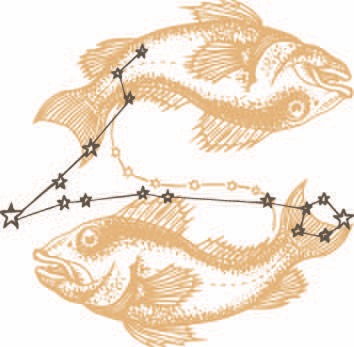
Pisces

(February 19 – March 20)

In case you need the reminder: Yellow does not mean gun it. And only a Pisces needs to hear that it doesn’t mean drift into oblivion, either. Proceed with caution, yes. But stay the course. Be aware of your surroundings and navigate accordingly. When Venus goes retrograde on March 27, it’s time to tend a karmic wound before it festers. In other words: Identify the pattern so you can break it. When in doubt, a salt bath ought to help.

Tea leaf “fortunes” for the rest of you:

Aries (March 21 – April 19) 

Scrap the old story.

Taurus (April 20 – May 20)

Opt for the silk ones.

Gemini (May 21 – June 20)

Steady your hand.

Cancer (June 21 – July 22)

Keep on keeping on.

Leo (July 23 – August 22)

Don’t miss your cue.

Virgo (August 23 – September 22)

Too much salt will wreck the meal.

Libra (September 23 – October 22)

Cast a wider net.

Scorpio (October 23 – November 21)

Get some fresh air.

Sagittarius (November 22 – December 21)

Try washing behind your ears.

Capricorn (December 22 – January 19)

Fix your gaze on the horizon.

Aquarius (January 20 – February 18)

Plant the seed, then let it be. 

Sazerac March 2025

SAZERAC

Sage Gardener

I love raw onions so much I’ve devised a stratagem so that fast-food employees don’t get my hamburger order wrong. (“Extra onions” is often misconstrued as “no onions.”) So, I tell the clerk, “I’d like an onion sandwich . . . and it’s OK if you leave the hamburger on it.” Whether baked, fried, char-grilled or caramelized, onions are, as the Egyptians believed, a gift from the vegetable gods. But the Sage Gardener’s sagacity on the subject of onions does not extend much further than knowing there are two basic types, branching (or green) onions and bulb onions. And I hereby confess that I’ve never been able to grow a bulb onion any larger than a small lime, but I may have finally figured out why. Sure, some sources say growing onions is as easy as poking a hole in the dirt with your finger and dropping in a seed or a set, but a friend convinced me the seed route is not for me. After he ordered a number of enticingly named varieties such as cipollini, big daddy and red zeppelin, my permaculturistic pal nursed what few seeds germinated, misting them with water and even encouraging them with some baby talk, only to watch almost every single one of his transplants wither and die. Me? For years, I’ve been lured by the sets that pop up in garden section of big-box stores in the spring. But then I read about “long-day,” “intermediate-day” and “short-day” onions. “Long-day onions are not recommended for our area,” writes Lisa Rayburn, an agent with the N.C. Cooperative Extension Service. “Unfortunately, the onion sets sold in big-box stores are usually long-day onions and will not form properly in our area.” Duh! While onion maps show that the Northern U.S. has long days, the Tar Heel landscape is in the short-day territory or intermediate-day range. Rayburn says if you plant long-day onions in the state, “They will produce only greens or very small, if any, bulbs.” Further research, however, revealed that “recently, long-day and intermediate-day-type onion varieties have been developed that are well-adapted to North Carolina conditions.” That, according to Chris Gunter, a former prof and vegetable specialist at N.C. State. Browsing the Burpee catalog that just came in the mail, I see that they have several different varieties of sets hybridized for intermediate and short-day climates. B-I-N-G-O! Of course, all this is something I’m sure I would have learned in a Master Gardener class if I weren’t too bull-headed to take one. So this month, I’ll be poking a hole with my finger in the still frigid soil and dropping in a Georgia Queen hybridized set or a Snow White. (Warmer climes, by the way, produce sweeter onions.) And later in the summer, when I top a big, bad sizzling burger with some freshly picked butter-crunch lettuce and a fat, juicy slice of Cherokee tomato, I’ll weep from joy — and onion juice — as I slice up my first huge homegrown onion and plop a ring or two atop the stack.

Window on the Past

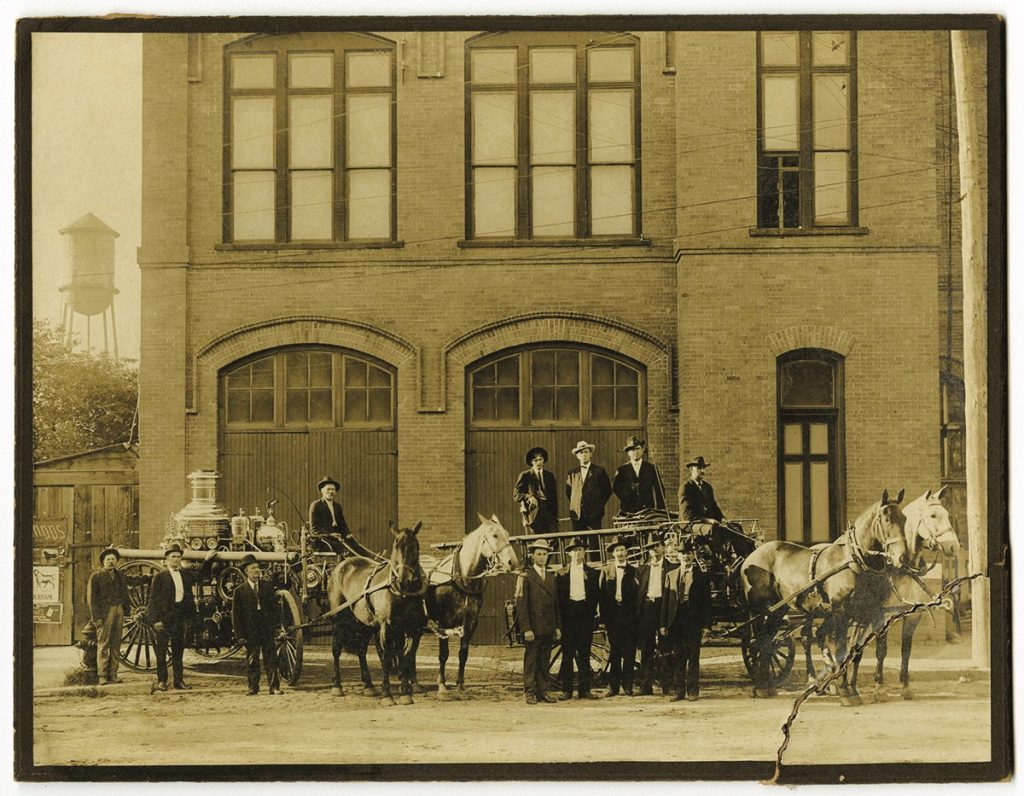
Since 1905, a lot has changed in the Greensboro Fire Department. For starters, we’re no longer relying on horses and steam engines. And, these days, women are wading into the smoke and putting fires out alongside men. What hasn’t changed is the epic heroism of the GFD.

Taking Flight

William Mangum, Greensboro resident and North Carolina’s artist, is accustomed to high-flying success. But, not long ago, he soared to new heights by winning an international competition to come up with the livery on the fuselage of Boom Supersonic’s Overture aircraft.

How Mangum managed to snag one of the competition’s most coveted awards over more than a thousand entries from across the globe is a tribute not only to the artist’s famous versatility, but also a prime example of how traditional art form can still fire the imagination in a highly digital world.

We recently sat down with Mangum at his downtown studio on a quiet winter afternoon to get the details.

It started, he explains, when a notice in Triad Business Journal caught his eye. It announced a competition to design the outer skin — aka the “livery” — of Boom’s forthcoming supersonic jet.

“It really excited me because as a kid I was enthralled with building model airplanes,” he says. “The problem was that submissions were due the following Monday, less than 48 hours away. After pondering the opportunity for about 30 minutes, I called my wife, Cynthia, and told her I really wanted to give it a shot, but would have to spend two nights at the studio to make the deadline.”

Mangum’s approach was to produce a painting of the aircraft and graphically transfer it to a model of the plane. “My idea was to imagine an American flag draped on the plane moving at Mach-speed, shearing it off against the fuselage.”

To accompany his submission, he included a note describing his participation in North Carolina’s aviation history, specifically his work celebrating the centenary of the Wright Brothers at Kitty Hawk.

A short time later, he received the good news in an email from the sponsors.

“By dang, out of 1,100 international submissions, I won the top prize of ‘Most Original Design.’ It was incredible. Their email said they were going to take my design and put it on a working model of the project.”

He’s not sure if his imaginative rendering will grace the skin of Boom’s first supersonic jet, expected to roll out sometime in 2029, but he plans to stay in touch with the company.

“I’d love to be one of the first folks to fly in it,” he admits. “The plane will have only 80 seats, all business class, and will fly to London in just three and-a-half hours. That would be a big thrill for sure.”

In the meantime, he has a major Earth-bound commission to paint portraits of High Point University’s 41 campus buildings. That project will take flight over the next 18 months.

“I’m very excited about that, too,” he says. “It has a much easier deadline.”

Just One Thing

If you are a fan of Gossip Girl, chances are, you’ve spied a Marilyn Minter piece. Frostbite hangs in the bedroom of Blake Lively’s character, Serena van der Woodsen, honing in on a determined blue eye that dazzles with shimmering silver shadow and dewy lashes. And then there is the iconic Stepping Up, which hangs in the van der Woodsen family’s hallway and features a grime-covered ankle and heel in a sleek, rhinestone-covered stiletto. It’s no wonder that during the show’s last season, Minter created a piece entitled Gossip. Born in 1948 in Shreveport, Louisiana, Minter has worked for more than a half-century, challenging standards around sexual imagery. In this C-print, Minter plays with bokeh, and we see a blurred-out, red-lipped mouth, slightly open as if whispering. Droplets of water that look as if they’re on the camera lens seem to suggest gossip, true or not, is being broadcast. Purchased by UNCG’s Weatherspoon Art Museum with funds from the Burlington Industries Endowment and the Lynn Richardson Prickett Acquisition Endowment, Gossip is part of the current “Embodied” exhibit, curated by students in Art History 490 and running through March 29. Info: weatherspoonart.org/exhibitions/current-exhibitions.

Unsolicited Advice

Sure, we’ll take a pint o’ green beer on St. Paddy’s Day, but why stop there when you can celebrate Irish American Heritage Month all March long? We’ve got the craic to make the Emerald Isle shenanigans last. Erin go Bragh!

1. Binge Bad Sisters. Set in Dublin and filmed in Ireland, this Apple TV+ series follows the five Garvey sisters as they navigate the sudden, mysterious death of one of their husbands. If you’re into murder and mayhem, but in a pretty, pastoral setting, hit play — it’s gas.

2. Hozier, U2, The Cranberries, Ed Sheeran, Van Morrison, The Pogues. What do they all have in common? They’re on our “Irish I Was There Right Now” playlist. Make yourself one for hours of nonstop Irish-made music that’ll have you shamrockin’ a’round the clock.

3. Crank up the corned beef-and-cabbage crockpot. Irish American immigrants originally cooked up this concoction based on the homeland’s bacon-and-cabbage dish, substituting more affordable meat. While we prefer the salty, savory scent of bacon to broim — which is what this dish reeks of — we’ve got no other beef with this meal.

4 Don your wooden-soled clogs, cue up “Riverdance” and go mad yoke. Not recommended for apartment dwellers. Or anyone whose neighborhood has a noise ordinance, for that matter, because the jig will surely be up.

5. Indulge in an Oreo Shamrock McFlurry. There’s nothing particularly Irish about this, but, hey, at least it’s green. And delicious.

In the Market

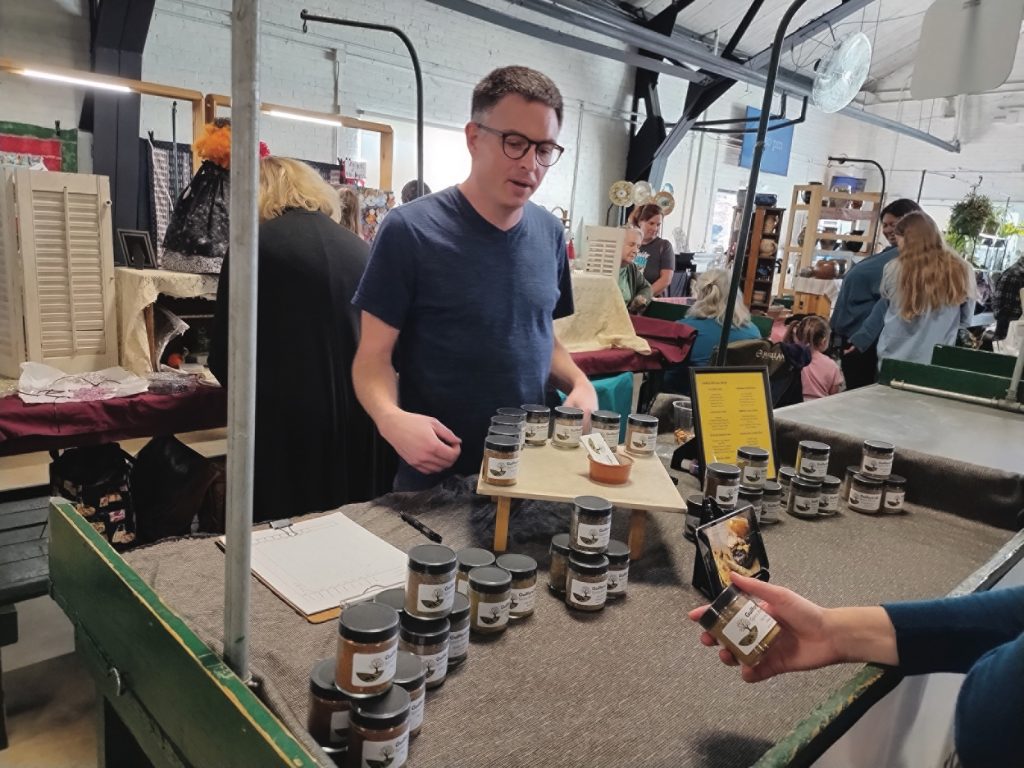
I attended an event recently where half of the folks were talking about this guy, “Chad,” and his amazing spices. One lady raved about a pie she’d just made with what I found out later was his King Blossom Apple Pie blend. The very next Saturday morning, I set out in search of this suddenly illustrious spice meister.

Chad Smith sets up a booth where he peddles his Guilford Hill Spice Blends (most) Saturdays at the Greensboro Farmers Curb Market downtown, where I asked about his line of seasonings. I wanted to know where the inspiration sprang from. “I couldn’t find a Cajun that didn’t have so much salt, so I decided to make my own,” he answers. After Smith created a palate-pleasing blend, he shared the results. “At first I gave my Two Step Cajun to friends and family and they all told me I should sell it. So I developed a whole collection that I’ve been selling now for five years and it’s all natural.” 

The most popular seasoning is his Painted Lady Garden. “It has rosemary and basil out front, then blended with sage, thyme and oregano on the back end,” Smith says. “The idea behind all of my recipes is that you won’t taste any one ingredient at a time — everything works together for one big flavor.”

For an added boost, his Scotch Bonnet Pepper is mixed with a little bit of brown sugar and cinnamon. “As your meat cooks,” Smith explains, “that brown sugar makes a nice glaze over everything. The Fitz Roy Adobo I use for my taco meat, whether it’s chicken, pork or beef. Fantastic. We’ve been using this lately with burgers as well.”

Selling 1.9-ounce jars for $10 each, Smith named his spice line after the neighborhood he lives in, Guilford Hills. “It’s a nice community with lots of families, and families need a way to make their meals easier. Where Mom and Dad can put dinner together and it’ll be flavorful, everyone will be happy, and the blend does most of the work for you.” Plus, he notes that because his blends are salt free, customers can add salt to fit their personal taste. The first ingredient in his Green Stone Greek is tomato powder, “and you have garlic, black pepper, onion, oregano, sage, beet powder, coriander, cinnamon and nutmeg.” Delish!

Chad Smith creates these proprietary small-batch mixes in Out of the Garden Project’s shared-use kitchen, a commercial grade facility that allows local entrepreneurs to produce prepackaged food products for the marketplace in a safe and sanitary environment. “This time of year, the Chihuahua Chili Powder sales increase because it’s made with smoked, dried jalapeño,” Chad tells me. “The smoke will deliver a bold flavor to anything you cook it with — a big bowl of chili or just do some nice bean dip. The Eighteen Arms Chinese is also popular; we just did a stir fry with that the other night.”

Besides the farmers market, Guilford Hill Spice Blends can be found at the Extra Ingredient in Friendly Center and online at Guilfordhillspice.com. Get it while it’s hot.

Simple Life

SIMPLE LIFE

The Art of Healing

With the dawn of spring, we begin again

By Jim Dodson

If you live long enough, the saying goes, you will discover that healing takes time.

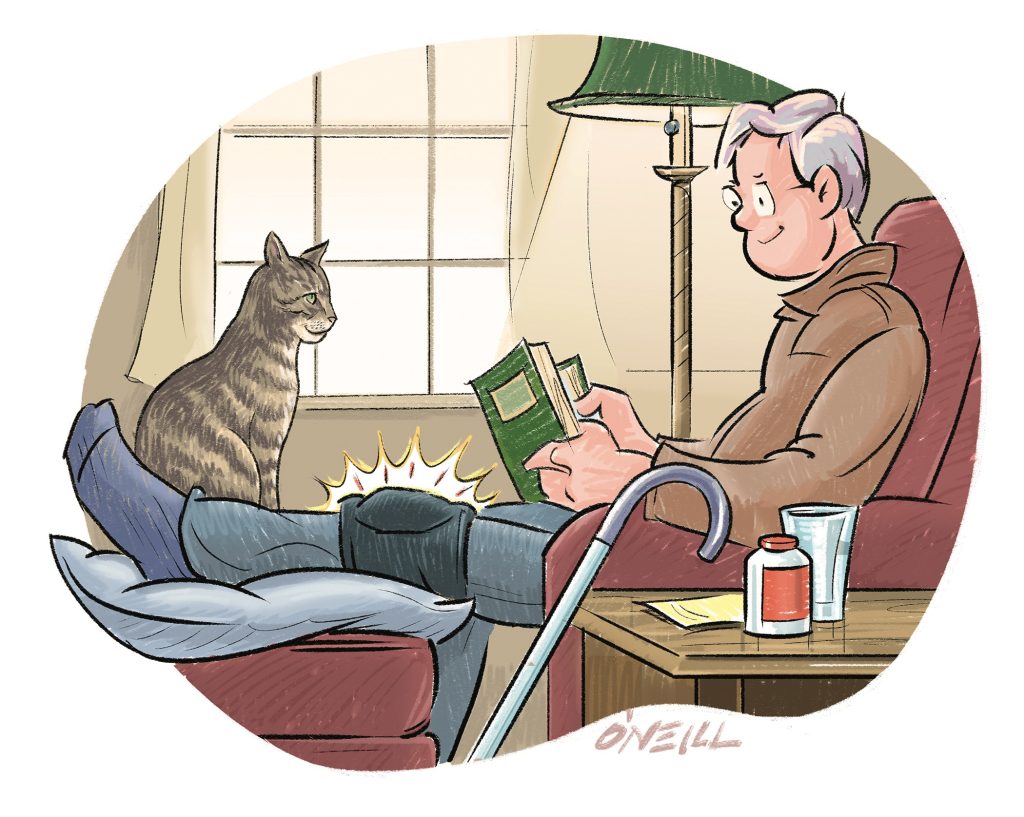
This ancient wisdom is being driven home to me because 15 days before I sat down to write this column, I received a complete left knee replacement.

Friends who’ve been down this path were quick to assure me that the pain and discomfort that accompanies major joint surgery can only be mitigated by time, patience and committing to an aggressive program of physical therapy.

Owing to a lifetime of sports injuries and a fulsome style of landscape gardening my cheeky bride, Wendy, once called a “blood sport with bushes and trees,” I suppose I’ve always downplayed my naturally high tolerance for pain — until now.

“Did you happen to catch the number of the city bus that ran over my leg?” I groaned to my wife on post-op day three, often described as the peak moment of pain during joint recovery.

“Just relax and let your body heal,” was her response. “By March, you’ll be back in the garden and playing golf with a brand-new knee that feels great. It just takes some time to heal, babe.”

Of course, she was right. So, I shut my yap and let my body get on with its healing business without further interference from me.

It proved to be a wise move. Upon completing my second week of physical therapy, not only did I learn that I was a week and a half ahead of the normal recovery rate from knee replacement, but had also begun to regain the ability to walk without the assistance of a cane. The pain was also slowly vanishing — so much so that I did a walking tour of my garden to assess the winter damage. 

This adventure got me thinking about how waiting for the pain to stop and the healing to begin is a common experience that touches every aspect of our lives.

As children, we fall down or cut a finger and run to Mom or Dad, who applies the bandage and a kiss that makes the injury soon forgotten.

Every day on the news, however, we learn about children who live in war zones or are victims of child abuse. Their young lives will forever be damaged by the trauma they’ve suffered — a pain that will likely never quite vanish, leaving a wound that may never heal.

On a much larger scale, the recent devastation of homes and lives lost from Hurricane Helene and the raging wildfires of Los Angeles have produced pain and suffering on an apocalyptic scale, something that will take decades for communities to rebuild and heal. The outpouring of love and assistance from complete strangers to our mountain neighbors, however, speaks volumes about our shared human instinct for healing. A similar outpouring is already underway in the City of Angels.

On the scale of normal, everyday life, a lover’s broken heart may only require a few healing months of intense self-care, a good therapist and a new pair of shoes to begin the mending process.

The psychic pain of losing a job, sending a child off to college, ending a close friendship, or saying goodbye to a loved one or special place you may never see again can impose their own unique weight on the human heart. In time, only memory and gratitude for what was may soften the pain.

That, at least, is my hope.

One evening over this past Christmas, as we sat by the fire watching a holiday movie, our beloved cat, Boo Radley, suffered a sudden massive seizure. Boo was a large, gray tiger cat who entered our lives 14 years ago when Connor, Number Two son, brought him home as a tiny feral kitten found at the Southern Pines train depot on a winter night.

Connor named him “Nico” and kept him in his upstairs bedroom for several weeks before he moved on to Boston to accept a new job. At that point, we renamed the inherited young cat “Boo Radley” and watched him quickly take over the house. One minute he was grooming the ears of our big golden retriever, Ajax, the next sleeping in kitchen pots and pans. He was always up to some amusing mischief that made us all smile.

For some reason, Boo took a particular shine to me, showing up at my desk every morning to playfully tap my computer keys as I wrote. The first time I let him outside, he followed me entirely around the backyard watching me plant roses and mow the lawn.

One summer evening near dusk, I saw Boo bolt across the backyard being chased by a young gray fox. Before I could come to his rescue, I saw the young fox running back the other way — chased by Boo. Crazy as it sounds, their game of tag went on for weeks.

When we moved to the old neighborhood where I grew up in the Gate City, Boo really found his stride. He supervised as I re-landscaped the entire property and faithfully came to sit under the trees with me every afternoon when the day’s work was done. Likewise, for over a decade, he never failed to appear from his nighttime rounds to sit together under the early morning stars while I sipped coffee and had a friendly chat with the universe. He usually snuggled up in my lap as the Almighty and I sorted things out. On most afternoons, he napped in the golden-hour sun in his favorite part of the garden, which I eventually named “Boo’s Garden.”

Like the original Boo Radley, he particularly didn’t care for strangers, and proved to be fiercely territorial, ready to chase off any feline intruder foolish enough to get too close.

Wendy liked to say Boo was simply guarding his turf — and his best buddy.

I do believe this may be true.

On the fourth night after my knee replacement, however, during the deepest pain of my recovery, Boo suffered his sixth seizure in five weeks. The promising medication he’d been on for a month simply didn’t work, proving the art of healing is as much mystery as it is science.

Following a sleepless night, we made the painful decision to end Boo’s suffering. Hours later, a lovely vet from Lap of Love came and put my best pal to sleep on his favorite blanket. I don’t think I’d ever felt such emotional pain. Over a cat, no less.

Every moment of this life, as my late Grandmother Taylor liked to say, someone is waiting beneath a clock for a birth or a death or a chance to begin again.

The return of spring brings winter’s long wait to an end. It’s nature’s moment to heal and begin again.

With my brand-new knee, I can’t wait to get out into the garden.

But my best friend is gone, a pain that will probably take years to heal.

Chaos Theory

CHAOS THEORY

Tanked

A terrible, horrible, no good, very bad day

By Cassie Bustamante

One of my favorite childhood books is Judith Viorst’s Alexander and the Terrible, Horrible, No Good, Very Bad Day. If you’ve read it, you know that poor Alexander has one of those days where everything goes wrong. And — spoiler alert — it doesn’t even have a happy ending. But what it does have is an assurance to kids far and wide that everyone has days like that. Everyone.

Chris, my husband, is away for work, so I’m on my own for a few days with our three kiddos. I pick up Wilder, 5, from his after-school program and we head home for the evening. Shortly after we walk in the door, he comes to me, his blue eyes looking sad and guilty, his cheeks slightly flushed.

“I know you got a text from the school today, Mom,” he grumbles.

A text from his teacher? I check my phone to see if I’ve missed it. Nope. “Why would the school message me?” I ask him.

He looks at his feet, kicking the carpet. “My card was flipped from green to yellow,” he mumbles. In kindergarten-speak, his behavior went from good to “you’ve been warned.”

“Oh, no,” I say. “What happened?”

“I talked when I wasn’t supposed to,” he replies. Welp, he’s definitely my kid. I can’t tell you how many classes I got kicked out of for disruptive chatter.

“Hey, it’s OK,” I say, hugging him. “You made a mistake and you learned from it. I’m sure it won’t happen again.” Though, if he’s like me, it will most definitely happen again. (My math teacher once called me the “Mayor of Math Class” because I had to greet everyone before taking my seat. What some deem disruptive, I call friendly.)

After dinner, I head to his room to snag dinosaur PJs from his bottom drawer. And that’s when I see it.

In the small aquarium sitting atop his dresser, Bluey — his cobalt beta named not for the hilarious Australian cartoon dog, but for his color — is vertical in the tank, pouty-face up, tail down.

Tap, tap, tap. I rap on the plexiglass side. Nothing. His little pectoral fins don’t make a flutter.

I take a deep breath, preparing myself to make Wilder’s no-good, very bad day even worse by letting him know the fish he’s loved for over a year is no longer.

“Hey, bud,” I say, “I’ve got some bad news.”

“I know,” he answers, suddenly awash with shame. “You got the text.”

I stifle the giggle trying to escape from my lips. Laughing while delivering the news that my son’s first pet has died is not exactly the kind of exemplary behavior I’ve read about in parenting books. Of course, I’ve never claimed to be an exemplary parent.

“No.” I pause. “Bluey died.”

He perks up, the corners of his little mouth even start to turn upwards. Is that a smile forming? This is not the reaction I was expecting.

He trots down the hall to his room, where his sister, Emmy, is ready to help me scoop out Bluey and send him off to a burial at sea, aka the commode.

Wilder stands on his bed and peers into the tank, where Emmy’s fishing around. She finally nabs him and Wilder asks, “Can I see him?”

Emmy holds out her hand, the limp, lifeless beta sitting in her palm.

Shocking both his big sis and me, he raises his hands in triumph. “I have been waiting for this day!” he shouts.

“What?!” I say, startled. “I thought you’d be sad.”

He peers at me sheepishly, then fakes a short-lived whimper. “Well, I am a little sad,” he says. Then his face lights up. “But now I can get a new fish — a glow-in-the-dark fish!”

While I’m relieved that this moment isn’t another page in Wilder’s own tale of woe, I can’t help but pull good ol’ Alexander off the bookshelf as our bedtime story that night.

Because I want him to know, “Some days are like that.”

Even for a fish.

Almanac

ALMANAC

Almanac March 2025

By Ashley Walshe

May your thoughts be as glad as the shamrocks,

May your heart be as light as a song,

May each day bring you bright, happy hours,

That stay with you all the year long.

— Irish Blessing

March is an arrival, a revival, tender life still wet from birth.

Listen.

A purple martin sings at dawn, hollow bones weary from 5,000 miles of flight.

“Join me,” he broadcasts to the others. “Over here! On past the flowering redbud. The air is sweet, and spring is nigh!” 

Yes, spring is nigh. We’ve much to celebrate. The journey through winter was long and arduous.

On the forest floor, where trout lily and bloodroot grace the softening earth, fiddleheads unfurl like soundless party horns.

One by one, swallowtails emerge from chrysalides as yellow confetti propelled in slow motion. Winged maple seeds sing in scarlet, cascading from naked branches like blazing garlands.

A chorus of peepers screams out.

Squirrel kits nuzzle nursing mothers in their dreys. Born pink and blind, their world is all warm milk and wriggling bodies. When they open their eyes, the violets will have opened, too.

In the garden, a cottontail kindles her first litter. Deadnettle and dandelions mingle with delicate grasses. A bluebird crafts her cup-shaped nest.

Can you sense your own revival? Your own tender blossoming? Spring is here, and so are you.

Emerge from brumation as the snake does. Wiggle your toes in the feather-soft grass. Let the sun melt the winter from your skin and bones as the sparrow trills rejoice!

Once in a Red Moon

According to National Geographic, two of the nine “must-see sky events” of 2025 are happening this month, beginning with a total lunar eclipse and blood moon on Friday, March 14. During the total eclipse, visible from 2:26 – 3:31 a.m., Earth’s shadow will cause the moon to appear otherworldly, glowing in shades of “pumpkin orange to coppery red.” Can you say le fantastique? Night owls: No reason to miss it. 

Next on the docket of celestial sensations is a deep partial solar eclipse on Saturday, March 29. Early birds: This one’s for you. Bust out those eclipse glasses for a show that will peak at sunrise.

A Time to Sow

The soil is thawing. The birds are twittering. The worms are back in business.

Earthworms are key to healthy, nutrient-rich soil. And did you know that just 1 acre of land can host upwards of 1 million of the cold-blooded wigglers? The more, the merrier.

As a new season begins, we, too, return to the garden.

In early March, sow carrot, spinach, radish, pea and turnip seeds directly into the softening earth. Chives, parsley, onion and parsnips can be planted mid-month. At month’s end, bust out the beet and arugula seeds.

Broccoli, cauliflower and cabbage seedlings can be transplanted outdoors mid- to late-month. Ditto kale, Swiss chard, lettuce and kohlrabi.

As robin exhales mirthful tunes of crocus and tulip and plump, soil-laced worms, you gently hum along.

Home to Port

HOME TO PORT

Home to Port

A roving designer settles in High Point’s Emerywood

By Cassie Bustamante
Photographs by Bert VanderVeen

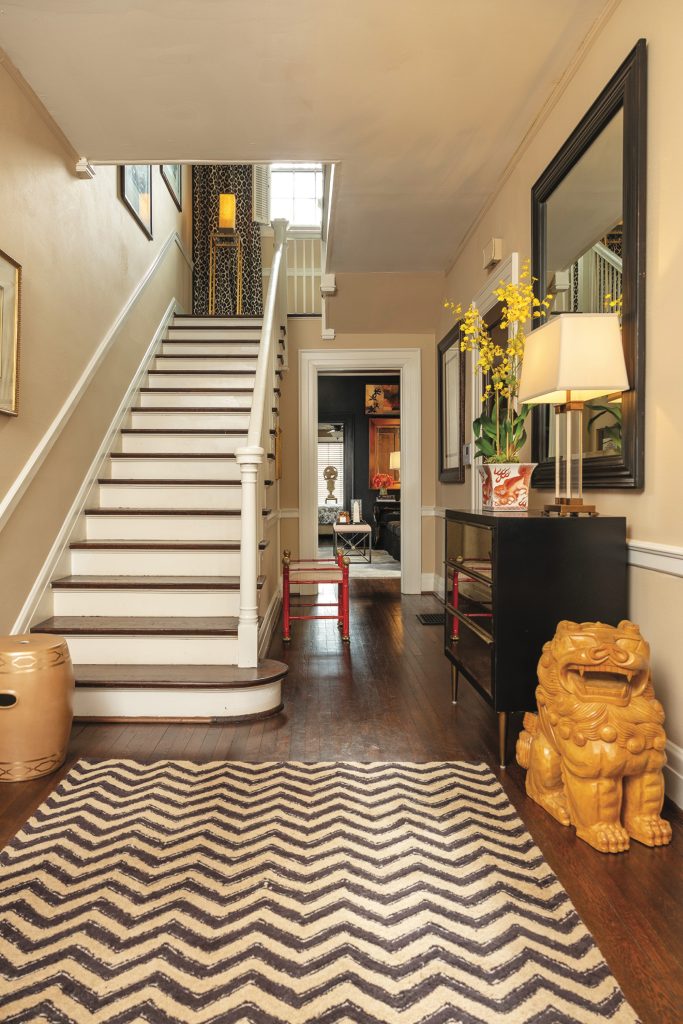
“How many times can one decorate and move?” asks Mark Abrams, co-owner of PORT 68, a home decor company based out of Chicago. He’s lived all over the States in his 62 years. As a young man in the mid-1980s, Abrams first visited the Furniture Capital of the World and had a sense of knowing he was going to one day call it home; friends told him he was insane. But he’s got the last laugh because “fast forward and here I am!” And, it turns out, his century-old Colonial in High Point’s historic Emerywood is the house this wandering spirit has lived in the longest. Perhaps this time he’ll pull his ship into harbor for good.

Born and raised in Demopolis, Ala., Abrams remained in the Yellowhammer State during college, initially planning to study architecture. “I realized real quick there’s a huge amount of math requirements,” he quips while petting his black-and-white cat, Freddie, perched in his lap. Instead, he graduated from the University of Alabama in 1985 with a degree in communication. At the time, the school didn’t allow double majors, so Abrams minored in fashion merchandising and design, considering a career as a retail buyer.

But, during his junior year of college, an internship with one of the largest design-marketing companies, Gear-Holdings, in New York City, shifted his trajectory. “Gear,” as Abrams refers to it, was co-founded and owned by a family friend, the late Raymond Waites, who also hailed from Demopolis. “I went to New York and it changed my life,” muses Abrams.

“It was like a big grad school,” he says, where he learned the ropes of both business and design as a Gear employee, eventually stepping into the role of visual director. “Because of Gear, and who I knew and what I was doing,” says Abrams, “I was published in every shelter magazine there was and on a few covers of books for my design work.” One of his first projects was a four-part publishing series with Better Homes & Gardens that wound up in a book. His work at Gear is what introduced him to High Point, where he set up a showroom for one of the company’s licensees.

Eventually, Abrams grew tired of grinding his gears. “I just worked and worked and worked and made no money.” What his bank account lacked in abundance, he made up for in a padded portfolio. Plus, Waites had introduced him to “the who’s who of the industry,” providing him with valuable connections. After a few years, he left Gear and jetted to Los Angeles, where new adventure awaited.

And ever since, he’s barely kept his feet in one spot for more than two years at a time. “I’ve moved 12 times cross-country,” he says. “I’ve lived in, let’s see, New York, L.A., Dallas, St. Louis, Kansas City, Greensboro — twice — New York again.” Plus, he adds, Ferndale, Washington, and, before High Point, Chicago.

In 2009, with industry veteran Michael Yip, Abrams co-founded PORT 68. Its mission? “Bringing home beautifully designed products from ports around the world to you.”

At the time, Abrams was living in Greensboro on Kemp Road. Before that, he’d been living just around the corner on Watauga in Hamilton Forest when a realtor knocked on his door and told him someone wanted to buy his house. Abrams, a sucker for flipping houses recalls, “I said, ‘As long as you can find me one in this neighborhood, that’s fine.’ And he did!”

But with the start of the company, Abrams relocated to Chicago, where PORT 68 has its headquarters. With showrooms in High Point, Atlanta and Dallas, the company decided to look for what Abrams calls a High Point “market house,” a place where the team could stay when they needed to be in the city. He called his pal, real estate agent Lee Kemp, and asked her to show him a house he had his eye on. Turns out, “it was way too much work.”

“I was just adding it up in my head and I am going no, no no.” But Kemp came through with another house that was being sold as an estate and was a stone’s throw away from the one he’d already seen. Abrams did a 15-minute walk through, made an offer he didn’t think they’d ever accept and hustled off to the airport.

As soon as he landed at O’Hare Airport, he got the call that the offer had been accepted. “I was like, ‘What!’” he recalls.

While he hadn’t planned on moving, after nine years of living in the Windy City, where “the snow would blow horizontally,” this warm-weather-loving Southerner had had enough. Abrams traveled often for work and was spending at least eight weeks a year in High Point as it was, and being in High Point would also put him within driving distance to the Atlanta showroom. Why not just move there?

After all, he says, High Point has a “very tight-knit design community” that you won’t find anywhere else, the sort of place where a close-knit group of industry friends can get together to “complain, discuss, egg each other on — all the things you need to talk about.”

During Market, the PORT 68 team infiltrates and makes his house their home base. “I call it the sorority house because people are all over the place and it’s kind of a wreck.” But, he adds, he always wants his guests to feel right at home. “My house is where you can put your drink anywhere and don’t worry about it, put your feet up anywhere and have a good time. I don’t live in fine antiques; I live in old things that I love and that’s kind of it.”

Of course, being in High Point also made it a little easier to get back to his hometown of Demopolis, where his aging parents still lived. About the time Abrams landed in High Point, his father had just begun battling Alzheimer’s. With his parents’ failing health, Abrams found himself traveling to Alabama every two to three weeks. Assuming the time would come, Abrams prepared his home for his mother to move in, readying the main-floor bedroom and handicap en-suite bathroom the previous owner added.

Sadly, he says, “That didn’t happen.” In 2022, his mother passed away, followed by his father in March of last year.

The bedding in that main-floor guest space was assembled originally with his mother in mind. A black-and-white duvet and bed pillows juxtaposed with playful, burnt-orange tiger “hide” throw pillows feature a “timeless” toile that was created by Gear in 1986. Fellow Demopolitan Waites wanted to craft the classic pattern with a hometown-homage twist. Using antique document fabric, Abrams says, they added “vine-and-olive people,” an homage to the French expatriates who founded Demopolis. For Abrams, the most exciting element is that the plantation-style house depicted on the toile fabric is historic Bluff Hall, which had been owned by Abrams’ grandfather before he sold it to the Marengo County Historical Society.

But the real kicker? “My mother turned down living in the house [Bluff Hall] because, she said, ‘I don’t want to live in an old barn,’” says Abrams with a chuckle. Judging by the toile design, Bluff Hall is far from being considered a barn.

These days, Abrams doesn’t travel back to Demopolis as much now that both parents are gone. “The estate is coming to an end so I feel a slight relief of just the physical driving back and forth.”

Making his house a home while running a business and taking care of his long-distance parents eventually took its toll on Abrams. In June 2024, he went into atrial fibrillation, abnormal rhythm of the heart, accruing the equivalent of “a weekend at the Ritz Carlton,” referring to his hospital bill. But, he says, “I am alive.” The cost was well worth it because “little High Point Hospital” was able to regulate his heart rhythm. And now, he says, it’s time for him to make himself a priority.

Abrams kept a few sentimental family pieces that he’s seamlessly blended into his design, such as a wooden box he’d given his father 30 years ago that now sits on the sofa table. While he describes his style as somewhat “eclectic” — a mix of tonal colors and metallics, texture, layers, and animal prints — he also says, “I am very calculating when designing.”

The living room, off of which sits a covered porch, is the prime example of his design ethos at play. A rich, streamlined velvet sofa faces two lush, armless chairs. A woven, natural rug anchors the space, layered with a smaller, vintage-style rug in the warm earth tones that reverberate throughout the home. In front of his windows, two white, carved-wood screens he found years ago at a Chicago antique shop — for an absolute steal — provide privacy.

Abrams has filled built-ins — stylishly and meaningfully — with books, decorative pieces and souvenirs, and, of course, PORT 68 mirrors. In front of one, three glass boxes display sentimental collections from his many travels to Vietnam, India, England and all across the globe. And, to top it off, a silver engraved vessel, “my baby cup.”

On the narrow strip of wall next to the built-ins Abrams points out a set of three steel, engraved bookplates found in Palio, Italy. “They’re all my initials.”

In the adjacent sitting room, a large, bright-orange Suzani tapestry picked up in Istanbul is stretched on a wooden frame, transforming it into a show-stopping work of art. Textiles are one of Abrams’ favorite souvenirs to purchase when abroad. “They don’t take up any room and they don’t break in your luggage,” he quips.

The Suzani, it turns out, hangs on a wall Abrams had hoped to knock down to create a spacious eat-in kitchen, but that turned out to be structurally impossible. Instead, he made small cosmetic changes, painting the kitchen and updating it with leftover wallpaper from a showroom. The paper, a neutral tan-and-white trellis design, is “Island House” by Madcap Cottage, a local High Point brand that is a PORT 68 licensee, along with iconic New York fabric house Scalamandré Maison and colonial classic Williamsburg.

Just off the kitchen is a 100-year-old original, a dark-wood butler’s pantry with glass-door uppers. Abrams has painted the wall behind it orange, echoing the color of his Suzani. “I wanted to gut this,” Abrams admits, noting that several drawers were not functioning, “but my business partner’s wife freaked out and she goes, ‘Do not take it out!’” His solution? He removed those drawers and added a wine refrigerator, which nestles in perfectly. And now, he appreciates the marriage of display piece and storage the cabinet offers. “I gotta put my mother’s junk somewhere,” he says with a laugh. “All the silver — lots of silver — I call it the burden of Southern silver” — a phrase he stole from Waites’ wife, Nancy, a fellow Southerner.

In the dining room, Abrams once again used wallpaper — a Thibaut metallic rafia in easy-to-remove vinyl — to refresh the space. Throughout the house, the plaster ceilings needed repair so he “wallpapered the ceiling so I didn’t have to deal with the cracks or the plaster.”

In the center of the dining room ceiling, a large-scale, traditional brass chandelier hangs, adorned by simple black shades, which, Abrams jokes, cost more than the fixture itself. “I bought my chandelier — my brass chandelier, which would be thousands of dollars if you bought it through Visual Comfort — 20 bucks at Habitat.”

He frequents the local Habitat for Humanity retail store because vendors regularly abandon showroom pieces there. Pro designer tip? “You just need to go. All. The. Time.”

In his primary bedroom upstairs, another Habitat find covers the entire wall behind his headboard. Unseen to the naked eye, Abrams notes that there are two off-centered windows hidden behind pleats of creamy, linen-wool fabric, a visual trick that allows him symmetry. The whole treatment, he says, cost him just around “100 bucks.”

A study in cool neutrals — black, gray, tan and chrome — his bedroom is a comparatively soothing and minimalistic space. The rug, a tan-and-white plaid “was custom made for me through my friends at Momeni.” In the corner, an easel features a sketch of the human form and, above a black settee, two large astronomical prints mimic the room’s colors.

“This is the contrast,” says Abrams, leading the way to a chocolate-black bedroom one door down. “I always like having one dark bedroom for guests because it’s cozy,” he says. Flanking the windows, black-and-white zebras leap across scarlet Scalamandré drapes.

Abrams gestures to the smaller furnishings in the space. “A lot of this stuff I’ve had forever, from house to house to house, and it just works when you buy classic things,” he says. Metal pedestals purchased 30–40 years ago from Charleston Forge display porcelain urns.

The last “bedroom” of the upstairs is smaller and the staircase to the attic lines the back wall. Abrams, who doesn’t need a fourth bedroom, turned it into his dressing room. The pièce de résistance is the open cabinet displaying what he calls “my trust fund” and perhaps this collector’s most expensive pieces, amassed over time. Again, he reiterates the importance of buying something classic and taking care of it, except this time he’s talking about his extensive shoe collection. “Luckily, your feet sizes don’t change. This may change,” he says as he pats his stomach, “but that doesn’t change.”

For now, Abrams says, the house is “all done over.” He’s repaired, repainted and wallpapered almost every surface. Of course, there’s still an old basketball slab in the backyard that he’s contemplated painting to resemble a pool, complete with a big, inflatable rubber duck. “But,” he says, “I don’t know if anybody would get my humor.”

At home, relaxing on his velvet sofa, Abrams reflects on his life. “All from a boy from a small town in Alabama,” he muses. “It’s been a crazy adventure.”

Is it time to call an end to the crazy adventure and plant permanent roots in High Point?

As if he hadn’t yet thought of it, he says, after a beat, “Well, yeah, maybe.”