Birdwatch

BIRDWATCH

Cleanup on Aisle 9

The unparalleled scavenger

By Susan Campbell

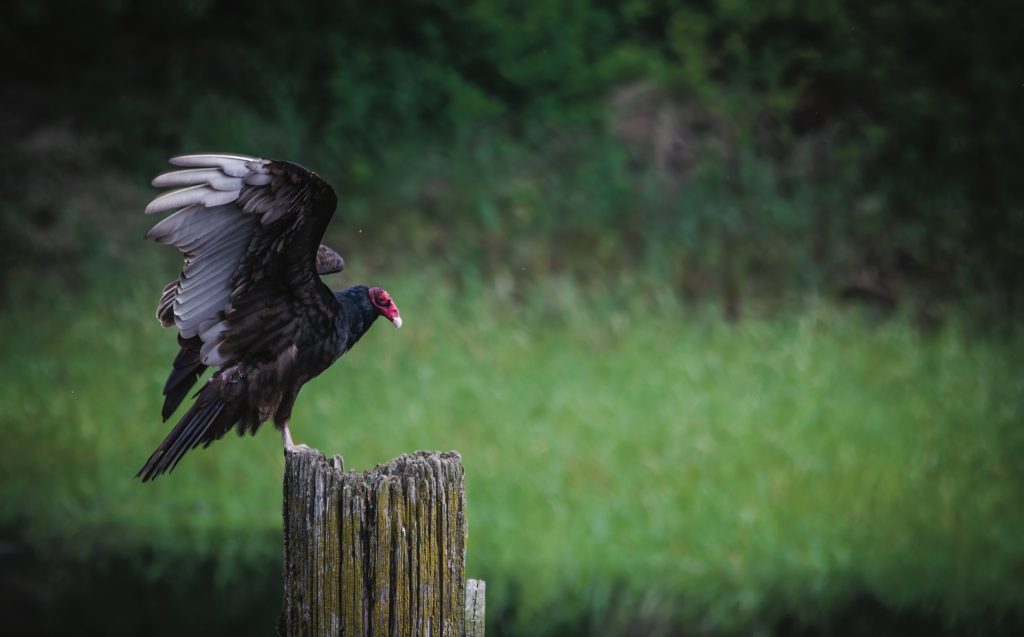
There! By the edge of the road: It’s a big, dark bird. It looks like it could be a wild turkey. But . . . is it? A closer view reveals a red head and face with a pale hooked bill, but a neck with feathers and a shorter tail. Definitely not the right look for a turkey — but perfect for a turkey vulture. This bird is also referred to as a buzzard or, for short, a “TV.”

Making an identification of these odd-looking individuals is somewhat harder these days since wild turkeys have made a good comeback in the Piedmont of North Carolina. Turkey vultures and turkeys can occasionally be seen sitting near one another in an agricultural field where they may both find food or are taking advantage of the warmth of the dark ground on a cool morning.

Turkey vultures, however, are far more likely to be seen soaring overhead or perhaps perched high in a dead tree or cell tower. They have a very large wingspan with apparent fingers, created by the feathers at the end of the wing. The tail serves as a rudder, allowing the bird to navigate effortlessly as it’s lifted and transported by thermals and currents high above the ground. These birds have an unmistakable appearance in the air, forming a deep V-shape as they circle, sometimes for hours on end.

It’s from this lofty vantage that turkey vultures travel in search of their next meal. Although their vision is poor, their sense of smell is keen. They can detect the aroma of a dead animal a mile or more away. They soar in circles, moving across the landscape with wings outstretched, sniffing all the while until a familiar odor catches their attention.

Turkey vultures are most likely to feed on dead mammals, but they will not hesitate to eat the remains of a variety of foods, including other birds, reptiles and fish. They prefer freshly dead foods but may have to wait to get through the thick hide of larger animals if there is no wound or soft tissue allowing access. Toothed scavengers such as coyotes may actually provide that opportunity. Once vultures can get to flesh, they are quick to devour their food. With no feathers on their head, there are none to become soiled as they reach into larger carcasses for the morsels deep inside.

Vulture populations are increasing across North Carolina — probably due to human activity. Roadways create feeding opportunities year-round. Landfills, believe it or not, also present easy meals. In winter, the northern population is migratory and shifts southward, so we see very large concentrations in the colder months. The large roosting aggregations can be problematic. A hundred or more large birds inhabiting a stand of mature pines or loitering on a water tower does not go unnoticed. 

Except for birdwatchers and those who live near a roost site, most people overlook these impressive birds. Often taken for granted, they are unparalleled scavengers, devouring the roadkill our highways inevitably produce.

Ghost Town

GHOST TOWN

Ghost Town

Apparitions in the area

By Cynthia Adams

As Halloween approaches, stories of the paranormal pique our curiosity.

In 1876, British composer Henry Clay Work was inspired to write “My Grandfather’s Clock” by eerie events in a hotel where he stayed, where a tall clock stopped working at the death of one of the brothers who owned it. 

The song’s popularity endured. Johnny Cash and Burl Ives recorded the ballad decades later, and countless schoolchildren learned the lyrics. 

Yet, Sherri Raeford directly experienced this phenomenon. 

“The backstory first,” begins Raeford, a playwright who stages the works of Shakespeare. She appreciates context. 

Her mother received a one-of-a-kind Christmas gift 45 years ago from Raeford’s father, Marshall Weavil, who worked for Sovereign Limited, a grandfather clock company in High Point.

“He designed the machines that made the decorative trim, the curlicues on the clock,” Raeford explains. 

“He gave my mom a clock — the first ever made by that company.” Inside, it was signed: To Lois with love, Marshall, Dec. 25, 1980.

At his death, his daughter received a grand example representing his life’s work. 

“He gave me a bigger, better clock when he passed away,” Raeford says.

Shortly after, Raeford’s mother, suffering dementia, came to live with her. “It was a stressful time.”   

Strangely, the clock her father bequeathed her developed a mystifying tendency.  “The grandfather clock would stop and go,” Raeford says, seemingly “according to what was happening.”

“The last year of Mom’s life . . . when I would grow impatient with her, the clock would gong at me!” Raeford was incredulous, having never before heard these sounds.

“The last week of Mom’s life, it quit working. I restarted the pendulum, and said, ‘Daddy, she’s not ready.’” Raeford waited. 

“The second time it quit, I realized, maybe I’m hanging on to her and she is ready.”

Raeford’s mother died two days later. The gonging stopped forevermore.

“It quit working.” 

Raeford inherited her mother’s smaller clock and gave the larger one to a friend.

Aptly, she quotes Hamlet. “There are more things in heaven and Earth, Horatio, than are dreamt of in your philosophy.”

The T. Austin Finch House

Thomasville’s Finch House is a Renaissance Revival mansion built in 1921 for T. Austin Finch, whose family founded Thomasville Furniture, and his wife, Ernestine Lambeth Finch. 

With Thomasville Furniture’s factories shuttered, the mansion fell into decline. In the summer of 2017, Greensboro residents Andrew and Hilary Clement took on its restoration.

Andrew, a contractor, looked beyond the decades of mold and decay. With much of its grandeur intact, he envisioned wedding ceremonies occurring onsite. 

The Clements transformed the house into a blushing beauty (Labor of Love: ohenrymag.com/labor-of-love). One too lovely to leave?

“Some of the local police and other residents swear the house is haunted,” Andrew replies.   

Ernestine? Out of respect “for the family and their legacy,” Andrew hesitates before admitting to sensing a feminine energy in the primary bedroom and library.   

“I have not seen anything, but I feel her presence in both of those spaces, especially at night when the house is empty. One of my construction guys lived upstairs for a period of time and he saw her in old-fashioned clothes several times in that room.”

Later, he sends a detail.

“She’s definitely a benevolent spirit and not scary. One of my girls has smelled her perfume several times in that bedroom.” 

Thomasville Apparition

On June 26, 1970, Dana Holliday’s father was mortally injured in a tractor accident at age 70.

As his frantic son, Derek Kanoy, tried to resuscitate him, the father calmly reassured him. “He said, ‘Don’t worry about me, I’ll be fine.’”

But he slipped away before paramedics arrived.   

“They used to call him Bucky Buddha,” Holliday says. “He was bigger than life.” 

Afterward, the brokenhearted family held a reception to honor Bucky Buddha’s amazing vitality. “It was unbelievable, says Holliday. “Friends lined the road leading to the farm. He didn’t want a funeral. Instead, we danced and told stories.”

The family have since created a compound on the farm and live near one another.

One April day in 2020, Derek and his wife Kim snapped a photo while walking from the barn to their house. In the picture, taken at sunset, a small, glowing orb appears directly over the spot where the fatal accident occurred, almost 50 years later.

“Kim was stunned,” says Holliday. “She might have been taking a picture of the sunset.” Perhaps the sphere of light had appeared before, but this time it was documented. Holliday says the extraordinary sighting was as if Bucky Buddha was signaling all was, indeed, well.  “I think it helped.”

Two years before Bucky’s death, Tomiko Smith, a consulting medium who once worked at the Rhyne Research Center at Duke University, told Holliday that she should be “intentional about the way I spent time with him.” Now, she understands.

A Haunting on Mendenhall Street

After years of admiring it, a 1914 Craftsman in a charming Greensboro neighborhood went up for sale. We spent months repairing plaster, painting and scrubbing, thoroughly excising the smell of cat urine and viscous nicotine residue coating each wall of the Westerwood house before finally spending a night.

After moving in, we were utterly exhausted that first night. Around 1:15 a.m., I was awakened by the unmistakable creaking of the stairs.

Heart hammering, I rose quietly. The stairs were flooded with moonlight by a large window at the top. I crept toward the landing and crouched, watching. The sound of footfalls upon each tread was distinct — but no one appeared.

I returned to bed when the steps stopped, but sleep eluded me. Had it been a lucid dream?

But the scenario repeated the following night. The disembodied footfalls on the stairs returned, at the same hour.

On the third night, again crouching at the top, I jumped when a hand touched my shoulder. “I hear it, too,” my husband said quietly.

I scoured old deeds and newspapers for clues. What had happened in our new home? Whose spirit mounted the stairs each night?   

Nothing gave much insight, apart from the fact that records revealed the house had changed hands often, once resold mere months after being bought. 

Was it due to what seemed to be a benign ghost?

During an overnight visit from my young nephew, I caught him racing upstairs, his child legs pumping. I chided him about running in the house. He turned to me, eyes wide. “That man’s watching me!” 

He pointed back to the empty stairs. I hurriedly distracted him with a children’s book.

Gradually, we made peace with the restless spirit who walked the stairs. Ironically — a tale for another day — a paranormal experience awaited us in our next home.

Writers of Passage

WRITERS OF PASSAGE

This year’s O.Henry writing contest had a twist. Or was it twisted? We asked you to write your own obituary — because it’s never too late. Until, of course, you are. A team of editors pored (and even argued) over the words of our nearly departed entrants for hours — it was a stiff competition. In the end, several wowed us with the use of humor, quirkiness and literary tools, but there can only be one winner. Between two, it was just about a dead heat, so we also selected a runner up. The rest? Well, they were still cherished by all who read them. And now it’s your turn: Read ’em and weep.

With Heavy Hearts, We Announce Our Winner

Jane Kester Took the Last Train

With almost no regrets, Jane Kester caught the last train. The one whose daily whistling formed the backdrop of her growing-up days in her Guilford County home with the midtown depot. The same one that delivered assurance that life chugs along, mostly at an even pace. She spent most of her life within earshot of the train, each boxcar filled with the cargo of a peak or valley. It seems her time passed by as quickly as the blurred scenery on that moving train; yet the pauses captured in still-shots were the ones that, strung together, formed a panorama of her Earth time.

A  series of clips: of a first date in a red-and-white convertible and a lavender dress; of birthing babies and watching them mother their own; of watercolors painted for baby nurseries; of a hand raised at the back of the classroom. There were glimpses of a child saved by a miracle; a daughter’s embrace. Another car held ocean storms and mountain sunsets, Scrabble games and scorched boxer shorts left to dry on a space heater. And there were the snapshots of falling in love for life and falling in love with life. Above the engine’s roar could be heard the laughter, and the music, and the dance. All engineered by the Almighty conductor, keeping it all on track.

The last whistle stop is a fitting landing place.

Our Dearly Beloved Runner Up

David Who?

In a sad testament to squandered opportunity and a truly half-assed effort at life, the family of David Theall announce his passing from this world. Born in the Midwest and raised in the South, David’s childhood was notable only for a complete lack of anything interesting happening at all. Of his three remaining siblings, only one even remembers his name.

Teen years were marked by a muted rebellious period that his parents failed to notice except when his hair extended beyond his collar. Their belief that a close-cropped haircut would protect you from the evils of becoming a “hippy” was the solid foundation upon which they raised all of their children. (This was particularly difficult for their daughter.) David, an average student who set no academic records, did make it to college, but achieved nothing notable within the hallowed halls. His college roommate remembers him as a quiet type who “may have been a mute.”

After earning a degree in journalism and entering the job market, his colleagues always said, “David has a face for radio and a voice for print, but don’t let him write anything either.” His career spanned several decades of mediocrity, punctuated by a retirement party with only three guests in attendance.

The list of lifetime achievements deserving mention in a forum that charges by the word is, frankly, not worth the extra nickel. Never even close to the brink of greatness, his life will be forgotten by most who knew him and mourned by none.

Greatly Missed

Mary E. Lewis Took the Trip of a Lifetime

November 8, 1998 – August 29, 2025 

We are sad to report that Mary Ellen Lewis is no longer with us. To the surprise of none who knew her, she brained herself tripping over the first flagstone of the path leading to her car,  which she walked at least three times daily. 

Known as Mellon to her friends (due to an inspired misspelling of her name that happened to resemble the word for “friend” in a fictitious Elvish language), she is survived by her family, two good-as-sisters in other states, and a raunchy Dungeons and Dragons group that still can’t get their initiative order correct.

Her final wishes, verbally conferred, detail that her body is to be thrown into a stratovolcano so that she can finally fulfill her life-long wish of seeing one up close. Barring that, she would like an urn of her ashes to be placed on the doorstep of the local grammar-Nazi, with a hand-written note reading, “your next.” 

The measly funds she accrued while living are to go towards buying violins for young students so that they too may know the joys of musicianship (and their parents the bliss of silence following a half-hour of scraping that sounds like a dying feline). Her own violin is to be immolated alongside her. 

Any flower arrangements procured for the wake are to be illicitly-and-hand-picked from the  neighbors’ gardens. Libations of green tea are an acceptable substitute. 

RIP Mellon

Larry Queen, Overachiever

“He tried.”

Rhonda S. Shelton Ends Tour of Duty

Well . . .

She never imagined she would laugh so much or cry so much doing a job she loved!

Three of many:

A white-headed old man who loved his liquor and had ankyloglossia (tongue-tie). Well, she could hardly contain her laughter in an argument with him. It was a daily occurrence, but she enjoyed it. Later in her career, she saw him one Sunday after a long absence. He was dressed in a three-piece, lime-green suit and sneakers, his white hair washed and combed. He told her he had accepted Jesus and was a new man. He was! Thank you, Jesus!

Second, a shooting incident she was involved in, scared her to her core, but she survived. A drug deal gone bad, vehicle chase and gunfight. He was down, she was still standing! Thank you, Jesus!!

Third, a drowning of a female. A local drunk she thought they had dealt with a million times. It’s raining, with thunder and lightning. Ugh, the Fire Department made it to the call before us, and a fireman is carrying a small child. She cried for hours. Death made her understand just how fragile a life is, made her stop and realize how resigned she had become to being a police officer rather than a human being. All three shaped her into an officer, but it took the acceptance of Jesus Christ to make her a better person. The good, the bad and the ugly. 10-42.

Sarah Thompson Gained Her Wings

True to form, with no planning, even less prep, and, of course, leaving breakfast dishes scattered and one wet load of laundry undried, Sarah Thompson, mother and part-time person, has died. A child of nature and bare feet, she fell victim to the grind in her early years, only to later return to her actual purpose in life, which was walking through creeks, searching for salamanders with her children. A psychologist by training, she became disillusioned with the rigid classifications of her profession and instead believed primarily in compassion, embracing Joseph Heller’s idea that no one should be OK given all of (gestures wildly) “this.” Conversations took surprising turns, as she made a career out of studying suicide, but also once made a fairy mailbox out of a matchbox with her son, each with great passion.

She cried often, rarely passed over a discarded item on the curb, listened to the Indigo Girls’ “Romeo and Juliet” over 10,000 times, gardened without gloves and found peace in painting watercolor fruit on tiny paper. She loved her husband. She cherished her children. Her phone was almost never charged. She found life to be savagely heartbreaking and just as beautiful.

We know that Sarah did not fear death. Instead, she had decided to return in her next life as a bird, just as her grandmothers (cardinal and yellow finch) and her mother (bluebird) had done before. She did not yet know which bird she would be and was looking forward to the surprise.

From $21 to Doctor: The Beautiful Hot Mess That Is Lobel Lurie

Born in the Philippines, where babies cry in karaoke pitch and rice is a love language, Lobel “Label-Lulubel-Nabel-Hey-You” Lurie entered life already slightly weird and wildly determined.

When she left the Philippines, she carried exactly $21 in her pocket, one sturdy suitcase and enough stubbornness to terrify immigration officers. She didn’t just cross oceans — she crossed entire expectations.

Breast cancer survivor. Doctor of Nursing. International speaker. Rockstar nurse. Human spinach detector.

She traveled the world saving lives and occasionally saving people from public humiliation — zipping flies, flicking toilet paper off shoes and praying nobody noticed.

Despite scraping the last bit of toothpaste because small things matter, she consistently carried at least 10 open lip glosses in every purse — proving chaos was part of the brand.

She once gave a major lecture in Spain with a full lettuce leaf stuck in her teeth. Nobody dared interrupt. Probably because she also had the energy of a woman who would fix your life and your fly without blinking.

Her motto:

“Slightly weird but wildly together is the best you can hope for. And if your fly is down, fix it before you embarrass your ancestors.”

Survived by:

•Her daughter, who inherited her spirit.

•Friends and communities now compulsively checking their teeth.

•Half-used toothpaste tubes and a lifetime of fully used dreams.

Long live Lobel Lurie — beautiful, messy, unstoppable.

Mallory Miranda Booked It Outta Here

Mallory Miranda died today, aged 112, just like she always told you all she would, damn it. Don’t bother googling her. A prolific writer, she wrote under pseudonyms so none could pursue her after mistaking her characters as representations of themselves. You will, if googling, find salacious videos made by someone whose stage name was the same as hers. For clarity, her epitaph will read “Mallory Miranda, pseudonyms:” followed by a list of her pseudonyms, concluded “Bite me!”

Mallory was born in California in 1989. She lived comfortably until the 2008 Great Recession. During this period, she learned the traitorous quality of money, then opted to spend her life in willful avoidance of it. She insists this was intentional — not because she spent her entire income on books. Ignore that TBR pile. It’s nothing to do with her lack of fortune. Sir! Madam! Please, let’s — is that drone delivering more books? Ugh —

As Mallory promised, her COD: None are shocked she finally fell down one too many rabbit holes. Literally. This was not another research deep dive. It was bunnies she refused to exterminate from her yard. Her yard became a sanctuary for critters after neighbors poisoned their yards to the point of no biological return. She always knew moving to North Carolina would kill her, and surely, it was one of these local bunnies’ holes that tripped her. Her calcium-deprived bones couldn’t take it.

Mallory is preceded in death by her husband and survived by her son and library.

Walt Pilcher Had the Last Laugh

As Walt Pilcher, 83, of Colfax was preparing to shuffle off this mortal coil, he looked up “shuffle off this mortal coil” and changed his mind about dying, preferring unlike the tragic Hamlet to invoke his personal 11th Commandment, “Thou Shalt Not Take Thyself Too Seriously,” and dreading the cloyingly glowing and therefore ironically all-the-more funereal sentiments he imagined might make up his obituary, like these:

Walt lived life to the fullest and was an inspiration to all. He had a zest for life, chose his own path and died doing what he loved, his way. He loved deeply and laughed often with a heart of gold bigger than the sky, an unbreakable spirit and a smile that lit up the room, a beacon of light in dark times and a guiding light to friends and family. He always had a twinkle in his eye and a story to tell. He was the glue that held us together. Taken too soon, gone from our sight but not from our hearts, Walt never met a stranger and left an indelible mark on everyone who knew him, always putting others first with benevolence and generosity that knew no bounds, touching countless lives with kindness and grace, he was loved by all who crossed his path. His was a life well lived, a legacy of selfless service that endures. Walt will be sorely missed, but Heaven has gained another angel. May his memory be a blessing.

Funeral arrangements are incomplete.

Simple Life

SIMPLE LIFE

The Comforts of October

Cooler days, evening fires and scary-good cookies

By Jim Dodson

My late mother liked to tell how, once upon a time, I loved to stand at the fence of the community-owned pasture behind our house in North Dallas feeding prairie grass to a donkey named Oscar.

I was barely walking and talking.

“You weren’t much of a talker, but seemed to have a lot to say to Oscar, far more than to anyone else,” she would add with a laugh. “We always wondered what you two were talking about.” 

Oscar’s kind, old face, in fact, is my first memory. Though I have no idea what “we” were talking about, I do have a pretty good hunch.

My mom also liked to tell me stories about growing up in the deep snows of Western Maryland, which sounded like something from a Hans Brinker tale, fueling my hope to someday see the real stuff. Quite possibly, I was asking Oscar if it ever snowed in Texas. 

I finally got my wish when we visited my mom’s wintery German clan for Christmas, days after a major snowstorm. It was love at first snowball fight with my crazy Kessell cousins. We spent that week sledding down Braddock Mountain and building an igloo in my Aunt Fanny’s backyard in LaVale. I hardly came indoors. I was in snowy heaven.

My mom took notice. “You’re such a kid of winter,” she told me. “Maybe someday you will live in snow country.”

Her lips to God’s ears.

Twenty years later, I moved to a forested hill on the coast of Maine where the snows were deep and winters long. My idea of the perfect winter day was a long walk with the dogs through the forest after a big snowstorm, followed by supper near the fire and silly bedtime tales I made up about our woodland neighbors as I tucked my young ones into bed. On many arctic nights, I lugged a 50-pound bag of sorghum to a spot at the edge of the woods where a family of white-tailed deer and other residents of the forest gathered to feed. Tramping back to the house through knee-deep snow, I often paused to look up at the dazzling winter stars that never failed to make me glad I was alive.

Perhaps this explains why I love winter as much as my wife does summer.

The good news is that we find our meteorological balance come October, a month that provides the last vestiges of summer’s warmth even as it announces the coming of winter with shorter days and sharply cooler afternoons. We share the pleasure of October’s many comforts.

As Wendy can confirm, her baking business ramps up dramatically in October as customers at the weekend farmers market clamor for her ginger scones, carrot cake and popular seasonal pies — pumpkin, pecan and especially roasted apple crumb — which typically sell out long before the market closes at noon. October marks the beginning of her busiest and happiest baking season.

Meanwhile, back home in the garden, I will be joyfully cutting down the last of the wilted hydrangeas, cleaning out overgrown perennial beds, spreading mulch on young plants and already planning next summer’s garden adventures — that is, when I’m not raking up piles of falling leaves, a timeless task I generally find rather pleasing until the noise of industrial-strength leaf blowers fire up around the neighborhood.

Their infernal racket can shatter the peace of an October morn and make this aging English major resort to bad poetry, with apologies to Robert Frost:

I shall be telling this with a sigh

two roads diverged in a yellow wood

and I one weary gardener stood

and took the path less traveled by

with rake in hand and shake of fist

oh, how these blowers leave me pissed! 

With the air conditioning shut off and the furnace yet to fire up, on the other hand, October brings with it the best time of the year to fling open bedroom windows and sleep like footsore pilgrims at journey’s end. At least our three dogs seem to think so. Our pricey, new, king-sized marital bed begins to feel like a crowded elevator on chilly October nights.

Among October’s other comforts are clearer skies, golden afternoon light and the first log fire of the season, celebrated by a wee dram with friends and thoughtful conversation that drifts well into the night until the host falls asleep in his favorite chair. That would be me.

Everything from my mood to my golf game, in fact, improves with the arrival of October. And even though my interest in all sports seems to dim a little bit more with each passing year (and the worrying growth of online betting), the World Series and college football can still revive my waning boyhood attention on a brisk October weekend.

Halloween, of course, is the grand finale of October’s comforts. What’s scary is how much money Americans shell out annually on costumes, candy and creepy, inflated yard decorations (something like $11.6 billion last year, according to LendingTree), which suggests to me that being happily frightened by the sight of lighted ghouls on the lawn and kids who come in search of candy dressed as the walking dead is simply a welcome break from the daily horrors of cable news.

Our Halloween routine is one I cherish. Wendy’s elaborately decorated Halloween cookies disappear as fast as she can make them (I’m partially to blame, but who can resist biting the head off a screeching black cat or a delicious, bloody eyeball?) and I take special pleasure in carving a pair of large jack-o’-lanterns, one smiling, the other scowling, which I light at dusk on Halloween. Years ago, I used to camp on the front steps dressed as a friendly vampire until I realized how scary I looked, with or without the makeup.

Now, the dogs and I simply enjoy handing out candy to the parade of pint-sized pirates and princesses and other creatively costumed kids who turn up on our doorstep.

The best thing about October’s final night is that it ushers in November, a month of remembrance that invariably makes me think of my late mother’s stories of snow and a gentle donkey named Oscar.

Last year, my lovely mother-in-law passed away on All Souls Day, the morning after Halloween. Miss Jan was a beloved art teacher of preschool kids, whose creativity and sparkling Irish laugh brought joy and inspiration to untold numbers of children.

And me.

What a gift she left to the world.

What’s Old is Nu Again

WHAT'S OLD IS NU AGAIN

What's Old is Nu Again

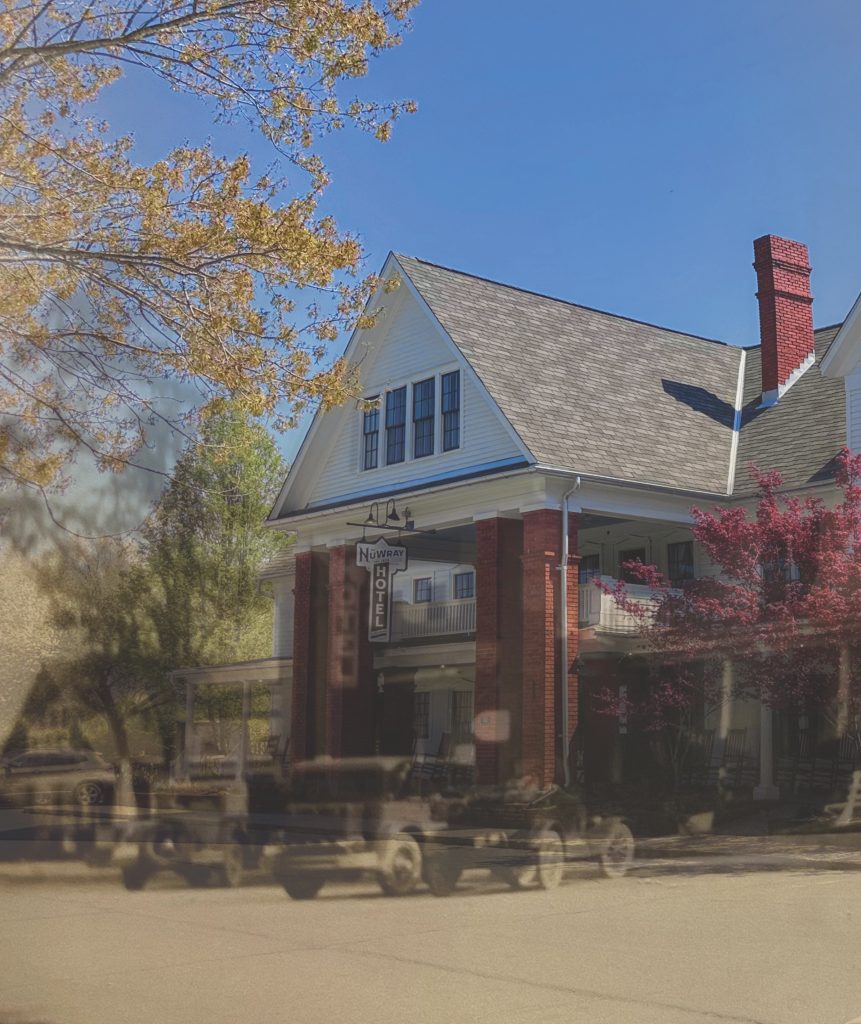
The former owners of Double Oaks make their mark on North Carolina’s oldest hotel — the NuWray. Now, a new generation is discovering why Jimmy Carter, Mark Twain and Elvis all stayed here.

By Page Leggett

When you pull into downtown Burnsville — a little mountain town (pop: 1,612) in Yancey County — you might think you’ve stumbled onto a movie set. Surely, some studio honcho ordered up the charming square complete with a historic inn and its rocking chair-filled front porches on two levels.

That’s the NuWray, North Carolina’s oldest continuously operating hotel.

The first time I saw it, while visiting the area for the twice-yearly Toe River Arts Studio Tour, it was closed for an overhaul. But I was captivated and knew I had to return.

The NuWray opened in 1833 as an eight-room log structure called Ray’s Hotel. 

Owner Garrett Deweese Ray’s daughter, Julia, married William Brian Wray, and the couple inherited the hotel after Ray’s death in 1932. Locals began referring to the inn as the NuWray to distinguish it from its predecessor, the “Old Ray.”

The Wrays added the now-iconic stone fireplace in the lobby in the 1930s, although you’d swear it must’ve been there all along. The inn remained in the family for four generations before being sold in the 1990s, changing hands frequently and falling into disrepair.

That is, until an enterprising Greensboro couple intervened.

The ultimate DIYers.

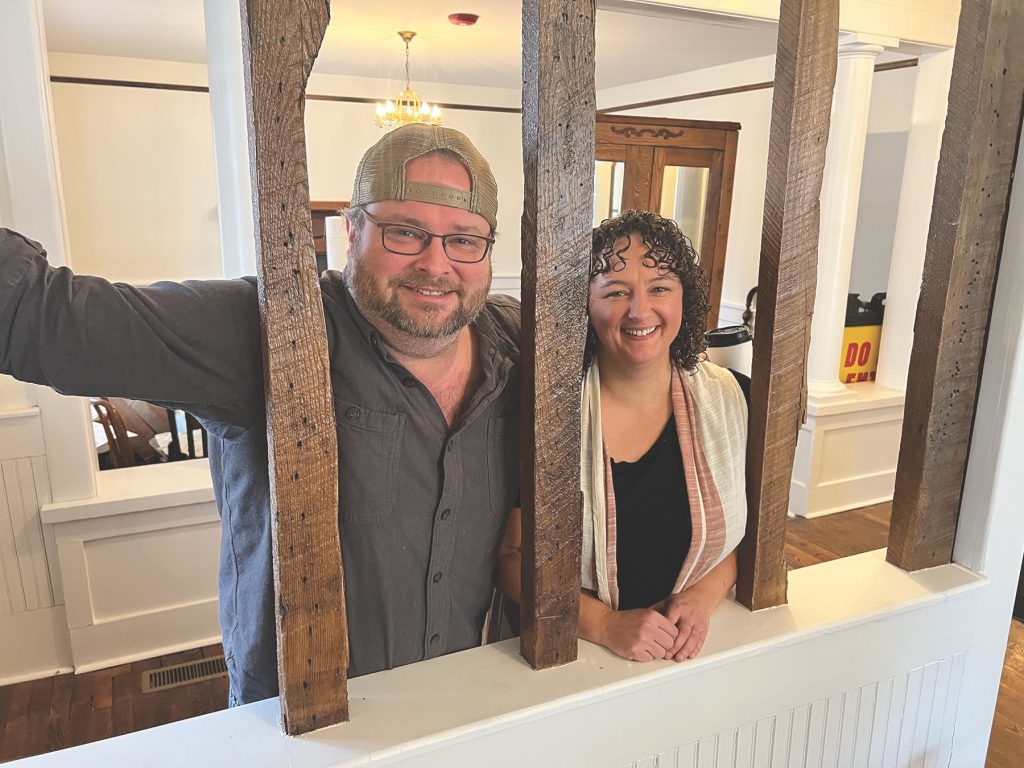
Amanda and James Keith discovered a penchant for historic preservation while renovating a home in Greensboro. Their second renovation became the Double Oaks Bed & Breakfast, which they owned and operated from 2016 to 2024.

James is an electrician — among other things — who does much of the work himself.

Both the Keiths had full-time jobs while running their B&B: James was a music minister at First Presbyterian, and Amanda ran the Wake Forest University press. But both loved hospitality and went looking for a project that would allow them to be full-time innkeepers.

When they discovered the NuWray, it appeared down and out. But the Keiths were undaunted. The inn had “good bones,” as real-estate agents say of ramshackle properties.

And it had a pedigree. “People from all over knew the NuWray in its heyday,” Amanda says. Jimmy Carter and Elvis Presley stayed here. Christopher Reeve is rumored to have been a guest. And the NuWray has hosted so many writers — Mark Twain, Thomas Wolfe, O. Henry, F. Scott Fitzgerald — that Amanda was inspired to name one of the rooms “The Writer.”

But the inn’s biggest fans may be the people of Burnsville.

“If you ask just about any local, they’ll have a story,” Amanda says. “They worked here, their mother worked here, they had their wedding here. I don’t think there are many locals the NuWray hasn’t touched in some way.”

Staying true to the original

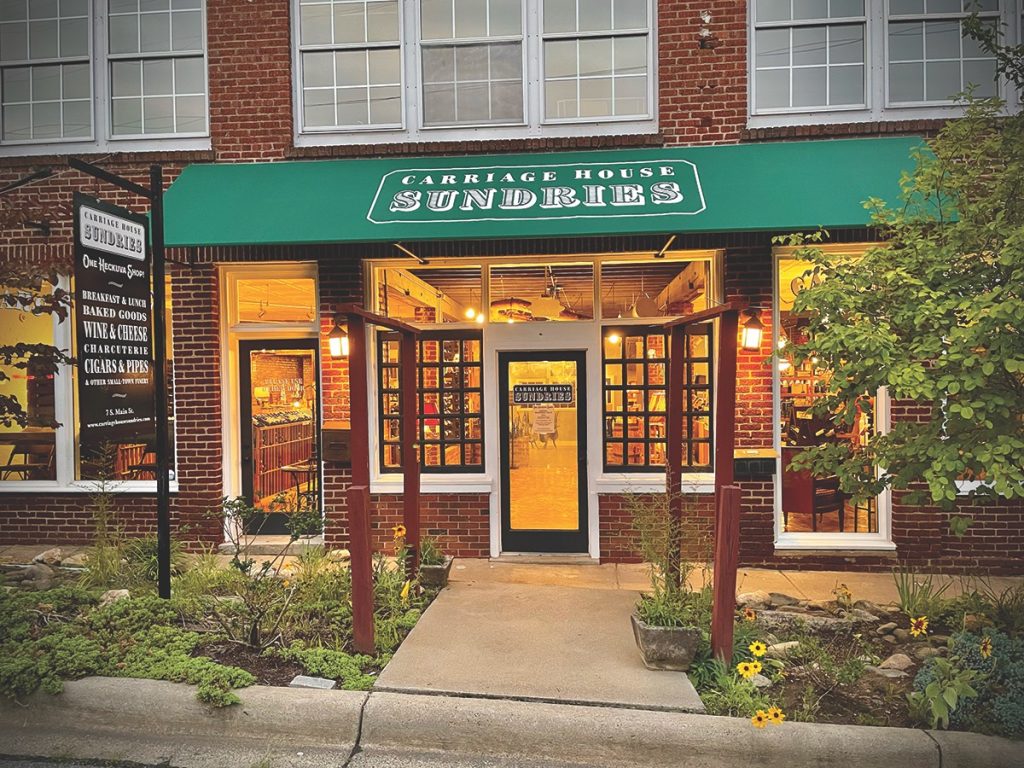
The Keiths bought the inn in October 2021, moved to Burnsville that December and started renovating in January 2022. They also bought the property adjacent to the inn and converted it into Carriage House Sundries, an art-filled coffee shop by day/wine bar by night with a humidor for cigar aficionados.

They wanted a big project, and they found it. “With historic properties, nothing is straightforward,” Amanda says. “You have to do a lot of it on the fly; you never know what you’ll find when you open up a wall.”

Amanda, who designed the interiors, found five layers of wallpaper in some places. “The wallpaper tells the story of the inn,” she says. Visitors can see preserved samples in several places.

The NuWray never had central air until the Keiths added it. They kept what furniture was usable, and Amanda scoured antique shops and Facebook Marketplace to source other pieces almost exclusively from the area.

The community was central to the restoration. Local crews worked on it, and, throughout the inn, you’ll see paintings by local artist Melissa Flattery and quirky lighting made from books, antique typewriters and other found objects by craftsman Ed Doyle.

When Amanda learned that a member of the Wray family, Joy Bennett, is a potter in town, she commissioned her to make ceramic name plates for each guest room.

A taste of history

In 1915, the Wrays started a restaurant, which really put the NuWray on the map, Amanda says. The Southern “country-cooking” recipes had been passed down through generations. Meals were served family-style.

“That’s difficult to pull off nowadays,” Amanda says. “The health department doesn’t particularly like it, and it’s wasteful.”

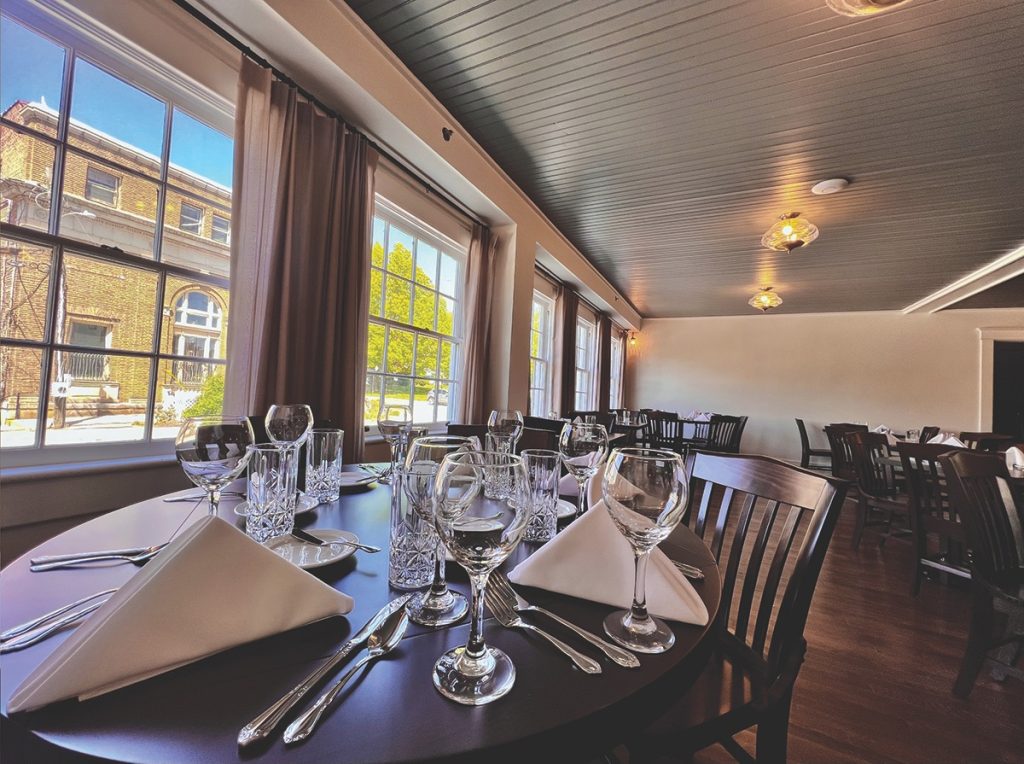
But the revamped restaurant, open for breakfast, supper and Sunday brunch, honors the NuWray’s history with updated recipes from the hotel’s historic cookbooks, such as “Will’s Sunday Cake” (custard-filled chocolate sponge cake with chocolate meringue frosting) and a “Smothered Salad” (mixed greens with warm bacon vinaigrette). Duck and dumplings, chicken-fried steak and a tomato tarte with goat cheese mousse are other standouts.

While James Keith was the chef at Double Oaks — what can’t he do? — the Keiths wanted someone with experience running a bigger kitchen for the 26-room hotel.

They lured Chef Peter Crockett to Burnsville from Asheville. “We really appreciate the environment he creates in the kitchen,” Amanda says. “He’s a strong leader and mentor. That was important to us because it helps attract and keep staff.” 

The original smokehouse — now called Roland’s in honor of Will Roland, the hotel chef for over 40 years — serves al fresco drinks and snacks on Fridays and Saturdays from 4 to 10 p.m. The former laundry facilities in the basement are being converted into a bar with a speakeasy vibe.

Burnsville’s post-Helene hub

The hotel reopened to much fanfare in August 2024. Just a few weeks later, on Sept. 27, Hurricane Helene tore through Western North Carolina. In its aftermath, the NuWray became a lifeline.

“Immediately after the storm passed, people began pouring into the square,” Amanda says. “No one had phone service, so this was the logical place to find out what was happening.

“Everyone was either looking for information or trying to pass information along. We started paper lists of what roads were passable, who’s missing, who’s looking for whom, what supplies are needed and where.” Those paper lists soon morphed into whiteboards.

The flooded restaurant was cleaned and the kitchen pressed into service. Townsfolk needed to be fed, and the NuWray needed to use stocked food before it went bad.

The staff of Carriage House Sundries, which had been open for almost a year, “showed up ready to help,” Amanda says. “Everybody jumped in and prepared what we could without electricity: sandwiches. We smoked all the meat we had in our fridges and freezers on our outdoor smoker, the Smok-O-Motive. Then, people started bringing their meat for us to cook.”

A 60 Minutes crew, including correspondent Sharyn Alfonsi, documented Helene’s devastation and the recovery efforts in October 2024. Of course, they stayed at the NuWray.

The hotel reopened for a second time in May with a “Restoration Shindig,” a celebration of the hotel’s — and town’s — resilience.

“This wasn’t the opening season we pictured,” Amanda says, “but I’m grateful we got as far as we did before the storm hit. If we hadn’t, there’s no way we could’ve contributed what we did. And I think it’s so poignant that this is now part of the NuWray’s history. It’s been a beacon for a long time.”

Make your way to The NuWray. Learn more about Burnsville’s pride and joy and book a room at nuwray.com. The inn has 26 unique guest rooms with en-suite baths. Four are dog-friendly. There’s no elevator, but the inn has two first-floor guest rooms.

Welcome to the Neigh-borhood

Welcome to the Neigh-borhood

Welcome to the Neigh-borhood

Terry Christian’s barndominium houses creatures great and small

By Maria Johnson  
Photographs by John Gessner

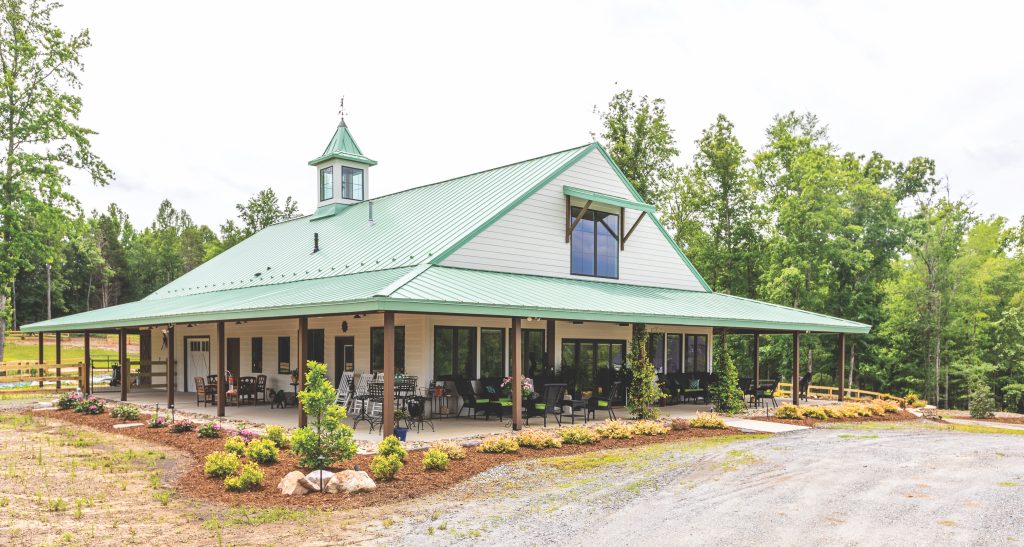
Last year, before the gated entrance was installed at Terry Christian’s new home, some neighbors drove up to the gleaming barn-like structure — the one that’s topped with a weathervane shaped like a dancing pig holding a martini glass — and asked, reasonably, if the building was a clubhouse provided by the homeowners’ association.

No, Terry explained. She was “in” the neighborhood, a freshly minted cul-de-sac community in Summerfield, but she was not “of” the neighborhood.

The wide-set building with a green, metal roof and deep wrap-around porch was her private dwelling, she informed them.

She would share the hybrid house-barn with her horses, dogs, cats, a pig, a mini-donkey and other “Old MacDonald”-worthy characters in her critter-based life.

Some of the neighbors thought it was cool.

Others thought it was “ew.”

Unbeknownst to both groups, they had crunched up the gravel driveway of a dream that hatched in Terry’s mind when she was an animal-loving girl growing up in Greensboro’s Old Starmount area in the 1960s.

Where did the dream come from?

Terry herself is not sure. Maybe she was influenced by Mister Ed, a TV sitcom that ran during her childhood. The show featured a horse that stuck his head through the top half of a Dutch door — very much like the portals in Terry’s barn — and conversed in voice-dubbed dialogue with his owner, Wilbur.

Maybe her dreams were genetic in nature, the combination of her refined Southern mother’s compassion for the less fortunate, along with her father’s affinity for helping things grow and flourish.

Her dad, Dr. Joe Christian, was a well-known general practitioner in Greensboro. He was an avid gardener, too.

He imagined the city’s Bog Garden in 1987 while walking the family’s Boykin spaniel around the marshes near Northline Avenue and Holden Road. He appealed to landowner Blanche Sternberger Benjamin, widow of Friendly Center developer Edward Benjamin, to give the land to the city. The rest is wetland history.

That genealogy alone could explain Terry’s desire to live close to the land.

It’s also possible that her aspirations were totally unique, the sum of nature and nurture — plus more nature — including hours spent playing in a creek and slogging home with lightning bugs in jars and frogs in her pockets.

Whatever the source of her dream, it took root.

And grew.

And now, nearly 60 years later, it has flowered.

“I finally get to have my passion,” Terry says.

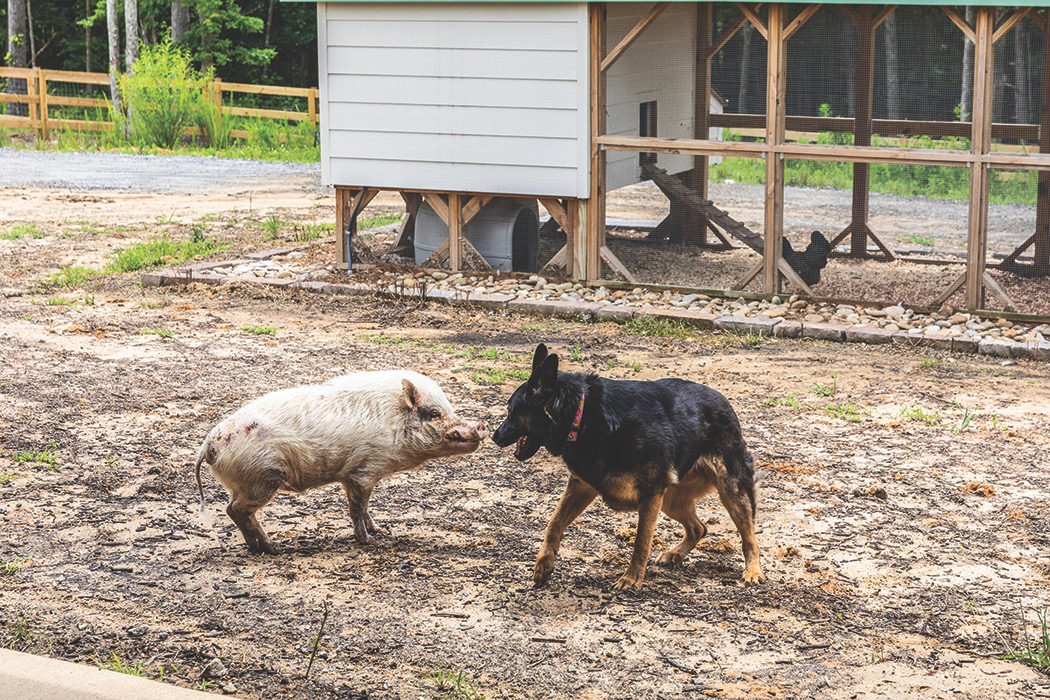
Terry seems genuinely surprised that her pet pig, Hamlet, is caked with mud as he emerges from his dome-shaped “pigloo” in the side yard, snorting as he trots toward her with porcine purpose.

(Insert pig grunts here.)

“You are soooo dirty,” Terry coos to Hamlet.

(Grunts of acknowledgement.)

Indeed, Hamlet — a bristly, blond Vietnamese pot-bellied pig Terry bought as a piglet nearly 14 years ago — is not your average porker.

First, he cuts a svelte figure. For a pig.

Even the vet noticed.

“I’ve never said this before, but your pig is too skinny,” the vet told Terry, who is addressing the situation with supplemental puppy chow.

Second, Hamlet seems to engage in earnest conversation with Terry, who notices that he is favoring his right front hoof.

“What happened to your foot, little one?” she asks.

(Grunts of explanation.)

Terry watches and listens, as if making a diagnosis. She comes by that skill honestly.

Often, when her father, “Dr. Joe,” went on a house call for humans, young Terry — the third of four kids — tagged along. Sometimes, patients who were short on money paid her father in animals. Terry wanted to be there.

Finally, her mom said no more house calls for Terry, who was amassing a small zoo of cats, dogs, rabbits, a guinea pig and a duck named Donald, who imprinted on Terry.

“Wherever I went, that damn duck would follow me,” says Terry.

She wanted a pig and a monkey, too, but her parents said that pigs and monkeys would not fly, in any sense, in their home on Mistletoe Drive, a short suburban walk from the then-new Friendly Center.

She lobbied for a pony in the backyard. Her family gave her riding lessons at Gambolay Farm off Old Battleground Road.

Later, Terry got her own mount, a black horse named Tar Baby, who was stabled at Reedy Fork Ranch, off U.S. 29.

She, her sisters and their friends spent long hours at the farm, riding trails and getting into mischief with horses, hound dogs and barn snakes.

“I should have been a vet,” says Terry, “but I was more interested in cheerleading than chemistry.”

After graduating from Grimsley High School, she spent a year traveling with the nonprofit organization Up with People, a network of young musical troupes that sing and dance and otherwise exude positivity on stages around the world.

Terry’s casts traveled the U.S. in Greyhound buses, staying with host families and napping in hammocks strung up inside the buses.

“I was small enough to sleep on the luggage rack,” Terry says.

A talented alto, she loved being on stage. She earned degrees in theater and voice from UNCG. A friend lobbied her to move to New York and try Broadway.

But Terry stuck around Greensboro. She had found another love. She married Greg Johns and had two daughters, Austin and Anne-Christian.

She stayed in the public eye, too, by modeling, performing in community theater and acting in commercials, including those she wrote for her family’s business, Johns Plumbing.

To many, Terry had a picture-perfect life, including a sprawling estate in Summerfield, where she and her family maintained a 5,300-square-foot home and an 8,000-square-foot barn.

They kept horses plus peacocks, chicken, sheep and cows, and, for a while, a small vineyard with Sangiovese grapes.

Terry lived in fifth gear.

Then came 2020. Her eldest daughter, Austin, married. The pandemic hit. She and her husband split and sold the farm.


Terry moved in with her mother, by then a widow, who was happy to have the company.

Moving home at age 63 was strange for Terry.

She slept in her old bedroom.

“I kept thinking I should be sneaking out,” she quips.

Terry brought Hamlet and several of her chickens home to roost on Mistletoe Drive.

One day, she saw a Facebook post reporting a pig on nearby Madison Avenue.

Terry ran right over.

Another time, a neighbor reported a fox trotting down Mistletoe Drive with a white chicken in its mouth.

Something had to change.

Terry’s vision popped up again. What if she built her animal-filled dream home and took her mom with her?

Home design websites were full of barndominiums, a trend among rural-minded design buffs.

Terry made a list of architects.

Her lifelong friend, Laura Griffin, who had converted an old dairy barn in Wallburg into a chic bed-and-breakfast (see the Spring 2017 issue of O.Henry’s design-minded Seasons magazine), recommended Greensboro modernist architect Carl Myatt.

After one conversation with Myatt, who had tackled many challenging projects in his 60-plus-year career, Terry decided to look no further.

“Don’t laugh,” she instructed Myatt as she drew her dream floor plan with a crayon on a paper napkin.

She drew a rectangle with a line down the middle, short ways. Half barn. Half house. See?

Myatt listened. And asked questions.

Was she prepared to live with the smell of barn animals?

Terry assured him that she was obsessive about cleanliness and that smells would not be an issue.

What about the flies? Myatt asked.

I’ll hang pest strips, she answered.

Land?

Working on it, Terry answered.

Intrigued, Myatt started sketching.

“I’d done barns, and I’d done houses, but I’d never connected them,” he says.

The final plan amounted to 3,000 square feet, split evenly between home and barn.

The human quarters include an open kitchen and living area plus space for a pottery studio, and two en suite bedrooms. The home would be a significant downsizing for Terry, but the space was all she needed or wanted. 

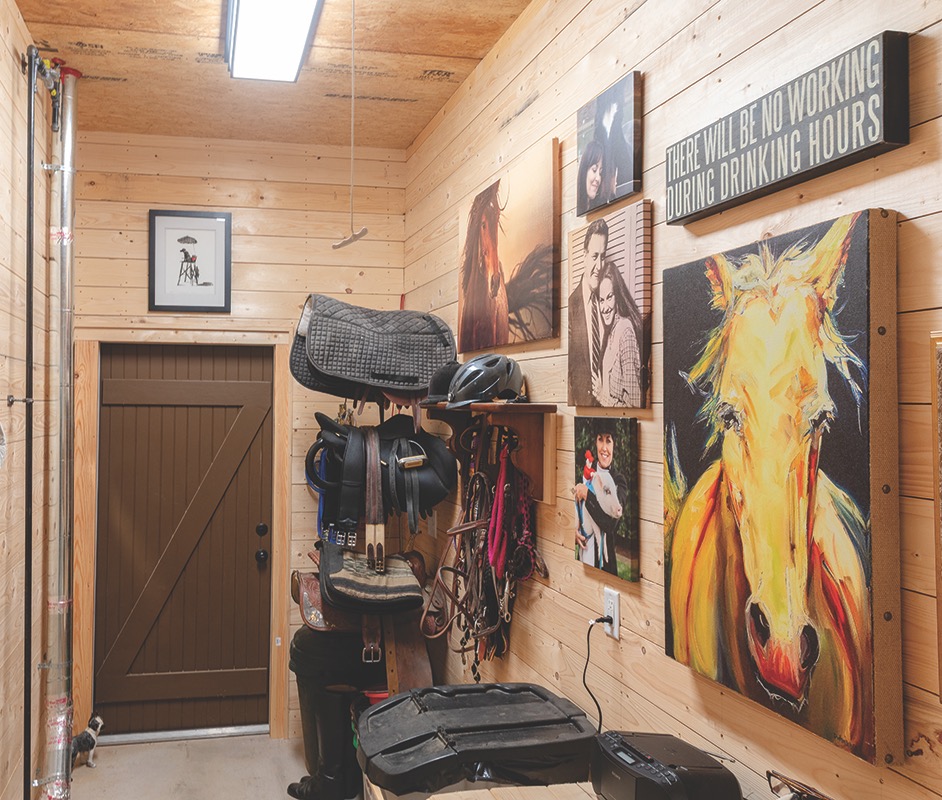
The barn would have three stalls, a tack room and an equipment bay. The center aisle would be flooded with natural light streaming in from a custom-made cupola.

Myatt finished the plans.

Then everything froze.

COVID was still mucking with supply chains and the prices of construction materials. Terry waited for prices to fall and rejiggered financing.

Lenders wanted to know: Was the structure a house or a barn?

Yes, said Terry, who still owns part of the plumbing business.

Construction started in 2021 and sputtered along.

Terry’s mom moved to a memory care center in 2022.

“She knew it was time,” says Terry.

The residential part of the barndominium was finished in 2023, and Terry moved in without her mom.

Later that year, Anne “Annie B.” Christian died.

“Both she and Daddy are still here,” Terry says confidently. Many of her parents’ treasured objects surround her in her new place.

Her doctor-gardener-father, who was a talented sculptor as well, made a bust of Mark Twain. The caricature rests on a pedestal near the front door.

Nearby stands her mother’s upright piano, which Terry’s grandson, 2-year-old Forrest, brings to life when he visits.

Artwork by his 5-year-old sister, Bridger, splashes the space with energy.

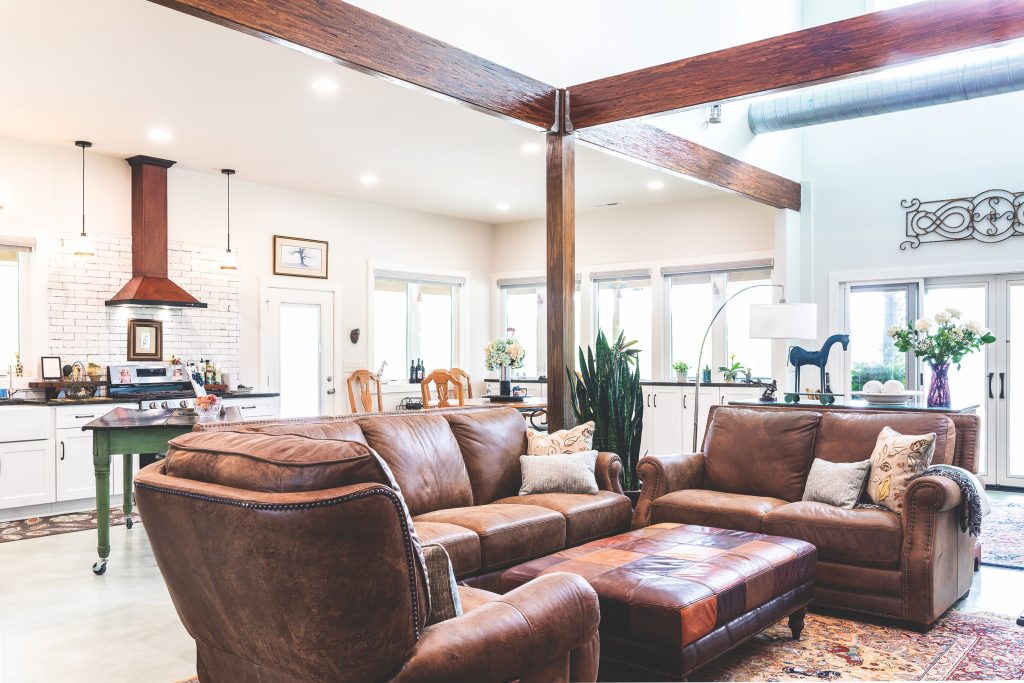
With the help of designer Lou Walter of High Point, Terry brought polished warmth to her museum-like space, which is bound by high ceilings, white walls, banks of windows and a concrete floor.

Playing off exposed beams overhead, the duo grounded the kitchen and living area with bass notes of leather furniture, Oriental-style rugs, bronze artwork and pottery, some of which is by Terry’s own hand.

A hammered copper stove hood and dark, speckled, peacock granite countertops anchor the kitchen.

Greensboro artist Lisa Cox used her faux brushwork to add interest and depth to the concrete floor and a vintage table-turned-kitchen-island. She copied the kitchen’s subway tile backsplash in a doorway leading to the barn, which was finished earlier this year.

General contractor Earl Waddell applied his woodworking skills in the equine wing, finishing the interior with handsome tongue-in-groove, yellow-pine walls and doors.

The stalls received their first occupants, rescue mares Midnight and Cinnamon, in July.

Their luxury compartments include automatic watering troughs, rubberized floor mats, stylish wrought-iron hay racks and modern ceiling fans just out of reach of curious muzzles.

The third stall belongs to a mini-donkey, Faith.

“I want the place to be swarming with animals,” says Terry, who is well on her way to populating her hilltop ark.

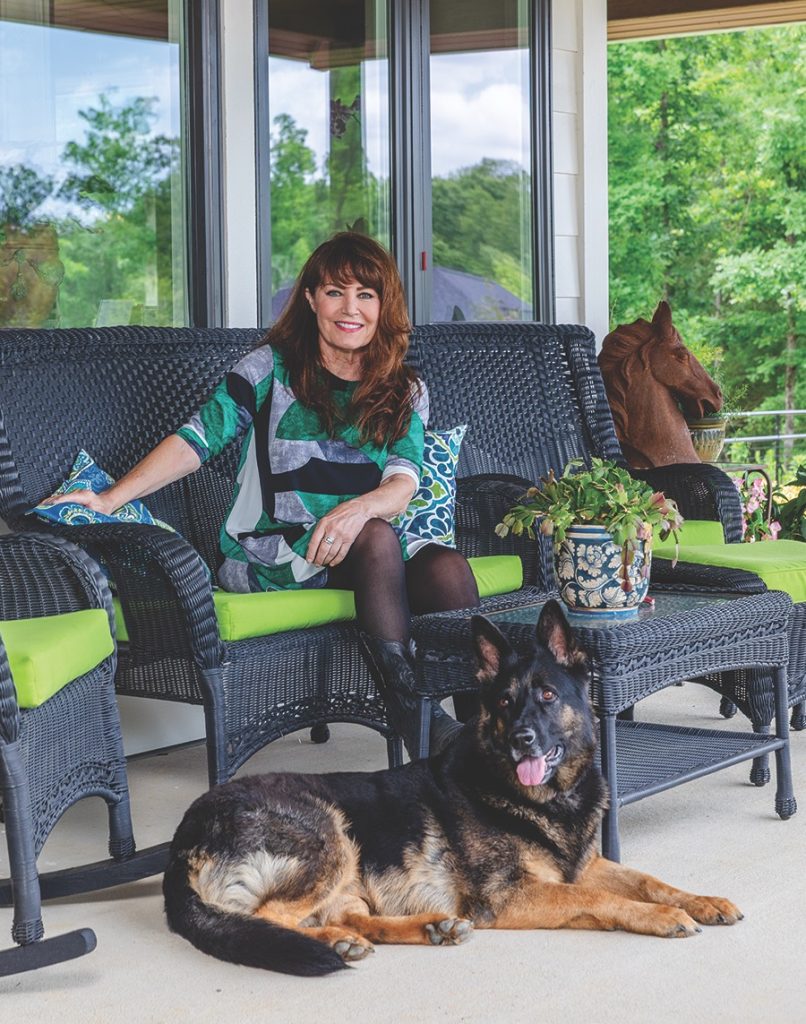
Her housemates include a fiercely protective, 75-pound German shepherd, Xena, who is named after the Warrior Princess, as well as a Scottish Fold cat named Gabby and a Siamese-tabby, Taz.

Confident of having a few more lives, Taz spars with Xena on the rug at Terry’s feet.

Certain humans are welcome in this setting.

Terry envisions a nearby knoll as a possible future home for her grandchildren, who could traipse over the rise to YaYa’s house. A family compound on 22 acres, some of which skirt the Haw River, would suit Terry just fine.

She will add creatures as she sees fit.

Her green eyes flicker.

“I still want that monkey,” she says. 

Omnivorous Reader

OMNIVOROUS READER

Getting Semi-Real

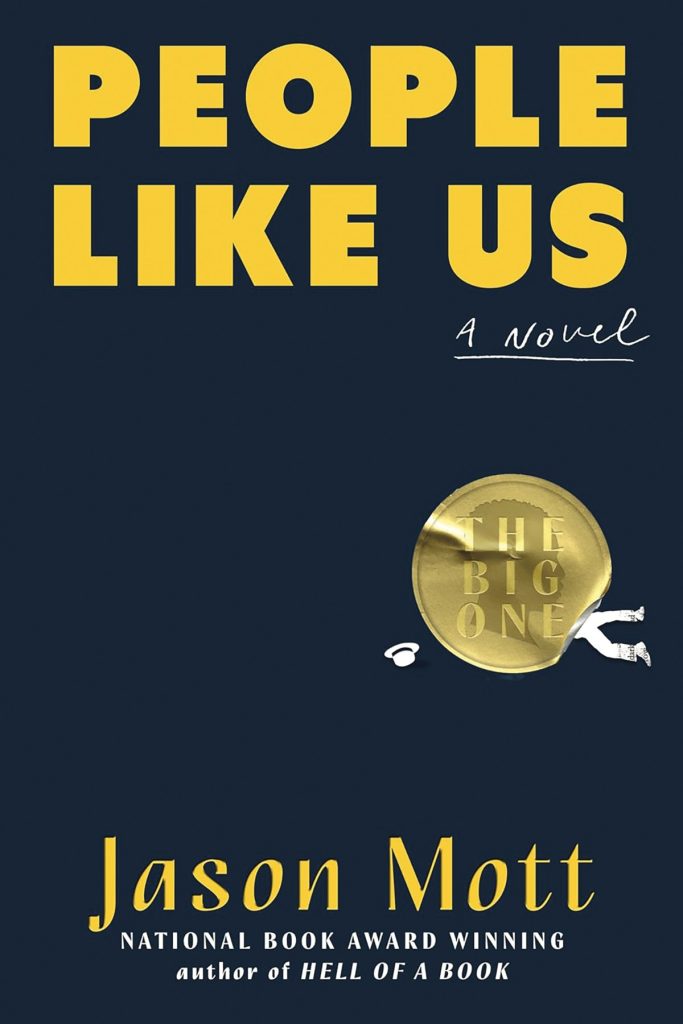
Jason Mott’s People Like Us

By Anne Blythe

Jason Mott gets one thing out of the way right off the bat in People Like Us — his latest novel is semi-fictional. Or at least that’s what the National Book Award-winning author of Hell of a Book wants you to believe.

“Whole fistfuls of this actually happened, sister!” he tells us in the forward. “So, to keep the lawyers cooling their heels instead of kicking down the front door with those high-priced Italian loafers of theirs, some names and places have been given the three-card monte treatment and this whole damned thing has been fitted with a fictional overcoat.”

People Like Us is the story of two Black authors — one on tour in the wintry climes of Minnesota after a school shooting, and the other being chauffeured around Europe, or “Euroland,” as he calls it, as the guest of a super-wealthy benefactor we know only as “Frenchie.”

They’re both exploring the idea of the American dream and whether such a notion is truly attainable within the confines of their lives. One is pondering that question from inside U.S. borders, the other from the outside.

Readers likely will notice many parallels between the real life of the acclaimed Columbus County resident and UNC Wilmington professor who’s a five-time author now. Mott started writing People Like Us as a memoir that delved into his relationship with America.

But along the way a couple of his Hell of a Book characters — Soot and The Kid — kept dropping into his story. So it evolved into this description-defying, pseudo-memoir/novel that will make you laugh out loud at its devilishly delicious humor, then sink into the grave realization that Mott is deftly addressing some serious social commentary.

Because both protagonists feel compelled to travel with concealed weapons, the gun culture in America and abroad is one such theme. So is the precarious state of the nation.

Mott is not preachy about these topics. He is subtle and inviting as he gets readers to think about American identity, and the complexities that Black Americans confront in a land where racial “othering” still exists.

One of the beauties of his writing is he can turn a phrase that will stop you dead in your tracks and force you to linger for a minute or two to admire his imagination, wit and way with words. Mott describes a scene about a seismic shift on a par with the protests that followed the murder of George Floyd this way: “It was like watching Sisyphus — a man who never skips leg day — finally get that super-size rock of his farther up the hill than he ever did before. And, just for a second, you can believe that, hell, maybe he’ll finally get it over the top.”

Mott’s prose will take you on a madcap adventure or somber journey with a cast of intriguing characters. We reconnect with Soot, the character in Hell of a Book who becomes invisible or one of “The Unseen” after witnessing his father shot by police while out on a jog. He’s an author now, in Minnesota, reckoning with the suicide death of his daughter, Mia, amid the aftermath of a school shooting.

Then there’s The Kid, who is older than he was in Hell of a Book, mysteriously seizure-prone now, living in France and going by the name Dylan — or at least the author living it up bourgeois-style in Europe believes the two are one and the same despite being told otherwise.

We get to know The Goon, the giant Black Scottish bodyguard and driver employed by the eccentric Frenchie to squire around the nameless author in a Citroën so decrepit and aged it seems like it’s “about to pull a hamstring.” 

Dylan is with them as they go from book event to book event in Italy and France. Along the way, the author, who sometimes pretends to be the better-known Colson Whitehead or Ta-Nehisi Coates, runs into Kelly, a funeral director and former girlfriend from the States. She hops in with the trio as the four of them seek a “Brown Man’s Paradise.”

Just as the gun used in an accidental shooting toward the end of the book hangs suspended in air “like a steel question mark,” so too does the notion of whether leaving America, as Mott poses, “just might be the new American dream.”

Dylan, who fled to “Euroland,” sheds light on that idea in deep conversation with the author, who is debating himself whether a comfortable home can really be had outside the homeland for people like him.

“There’s a hierarchy here, just like everywhere,” Dylan told him. “You’re either French-born White or Italian-born White or English-born White or Whatever-born Whatever . . . or you’re an Other. Well, where do the Others go? What do you do when your home doesn’t love you and all the other homes you tried to make a life in don’t love you either?”

That question lingers as Mott wraps People Like Us, fodder for one more semi-fictional book.

Sazerac October 2025

SAZERAC

Sage Gardener

I thought I knew what chow chow was, a traditional Southern relish that my daddy put on pinto beans and my mother whipped up using up the tail end of the garden — cabbage, onions, green tomatoes and peppers, accented with mustard seeds. When I run out of the version I make myself, similar to Mama’s, I buy what I consider a really decent alternative, Mrs. Campbell’s Chow Chow, made mostly from cabbage, red bell peppers and onions, and produced by Winston-Salem’s Golding Farms. (Tony Golding got started in 1972, making and distributing Mr. and Mrs. John Campbell’s homemade version.)

Then I started poking around. Southern? Hardly. Food historian John Mariani informed me that the name of chow chow may come from Mandarin Chinese “cha” and originated in America in 1785, when Chinese laborers working on railroads in the West introduced it, amped up with ginger and orange peel. North Carolina-born “Southern Fork” blogger Stephanie Burt muses that the French Acadians from Canada might have brought chow chow to the United States, since their word for cabbage was “chau.” But her personal theory is that “the Carolina version I know originated with the Pennsylvania German and Dutch settlers, who traveled the wagon road to the South bringing their love of relishes and mustard with them.”

My Pennsylvania Dutch mother might have consulted her Mennonite Community Cookbook, but she sure didn’t put any lima beans, green beans or cucumbers in hers. She used the version, as I do, from the Rockingham County Home Demonstration Cookbook, featuring, like Mrs. Campbell’s, cabbage, onions and peppers, but also green tomatoes. Head north and chow chow gets even greener, made predominantly with green tomatoes, especially in Nova Scotia and New Brunswick.

If you want to make some from the remnants of your garden veggies, type into Google what you have too much of and you’ll find oodles of recipes.

But what really grabbed my attention was what some people do with it. Sure, I heap it on hamburgers, hot dogs and collard greens. And it’s the secret ingredient in my devilishly delicious deviled eggs. But, really, fish cakes and mashed potatoes? Heaped on biscuits and gravy or on corn bread? Don’t even mention ice cream — unless it’s chocolate.

Unsolicited Advice

You know the house that the kids clamor to every Halloween? It’s the one with the flashing lights, “Monster Mash” blaring and a fire pit out front surrounded by witches and werewolves sipping their brews. Green with envy? Don’t be — we’ve got tips to make your front door the top stop on the block.

Don’t dole out off-brand candy imposters. No one wants your Crisp-Cat, Wacky Taffy or Chuckles bar. Even toddlers know they’re a cheap imitation of the real thing and taste like chocolate-covered disappointment.

The biggest fright of the night? Nothing screams “I’m a dentist” like handing out toothbrushes at the door. If you’re going to do it, at least toss in some sugar-free candy, too. Plus, from a business standpoint, more cavities means more income.

Ambience? More like zombie-ence. Think eerie mood music, orange and purple lights and — the icing on the individually packaged Tastykake, which also makes a great treat — a frightful ’fit for yourself. And we all know nothing is scarier than a homemade Halloween costume.

Window on the Past

Captured on the heels of the Great Depression, these two goblins are prepared for the coldest of winters and the largest of pumpkin pies. Better stock up on the whipped cream!

Just One Thing

While one red balloon floating up from a drain says “Stephen King-level creepy,” soon, several red balloons in front of an art studio will scream creativity. Since 1996, ArtStock Studio Tour has offered art collectors and lovers the opportunity to tour several local studios — marked by red balloon bouquets — where they can peruse and perhaps purchase a piece for their own homes. This year, ArtStock is stretching that canvas all the way into High Point. Witness here the work of Greensboro resident and mixed-media artist Linda Spitsen, who is participating for her third year. For the first time, she plans to open the doors to her in-home studio. Spitsen says she traces her creativity all the way back to kindergarten. “For forever, people have always received a handmade card from me for their birthdays,” she says. But that creativity was reignited on a larger scale in 2016 when she retired from a longtime career as vice president of HR at a tech company. Now, Spitsen has collectors all over the globe — “in all the continents but Antartica,” she quips. Her brush, she finds, generally yields works that are floral or earthy in nature, as seen here in Thursday’s Child, a bold acrylic on gallery-wrapped canvas. Asked who, exactly, Thursday’s Child is, Spitsen simply says, “I was born on a Thursday.” As was her husband, Stu Nichols, she notes. The painting, as it turns out, was completed on the eve of her birthday earlier this year. Just follow the red ArtStock balloons to see Spitsen’s work as well as that of 30+ local artists, Oct. 2–5. Info: artstocktour.com

All Bark

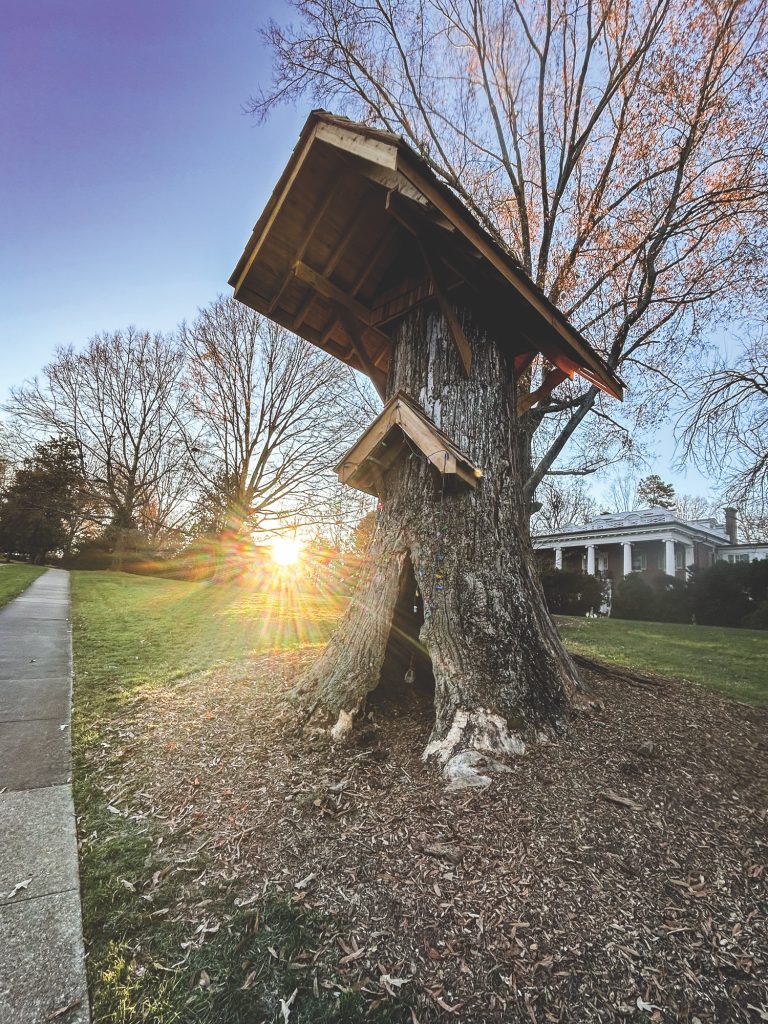
Poplar Hall, a Neoclassical Revival home in Irving Park, now features what may be the first tree that’s been remodeled of its kind — notable in a neighborhood where grand old mansions routinely receive every imaginable home improvement.

You read that correctly. If tree superlatives were handed out, this tree would win “Most Improved,” hands down! 

The much-loved poplar stands on the lawn of the historic 1914 family home of politician and lawyer Aubrey Brooks. Poplar Hall was among the first houses built in Irving Park. In recent years, arborists and experts could be seen administering TLC to a particular tree, across from the entrance to the Greensboro Country Club. 

Why care so for this tree? It had star power, an earthly wonder to all who passed by.

The same feature that made the tree charmingly irresistible, sparking the imagination, also indicated its vulnerability. Its heartwood having died, its center was enchantingly hollowed out so much so, a child could disappear into its interior.

Generations of fans have visited the tree, standing conveniently by a public sidewalk. Passersby, runners, walkers and parents with strollers have invariably slowed for a better look. Like the Angel Oak in Charleston, South Carolina, it had quietly become a natural attraction, one the children in my family always requested to visit. 

Years ago, a fire was set inside the hollow. Though it bore the signs on the charred interior, the tree seemed to defy death.

But, despite the care of intergenerational owners who gave it their best efforts, the tree steadily declined.

Advancing decay and time further ravaged the tree. And who could even guess its age? Hardwoods such as this often live over 250 years, according to treehuggers.com.   

The ailing tree recently underwent a series of incredible transformations. First, a breathtaking amputation. The dying top was lopped off, leaving it truncated and sad-looking. Fans and neighbors worried. What next?

The tree trunk — the main attraction — remained with at least 20 feet of its magnificence intact. The natural “doorway” was saved, its ancient portal still open.

Since then, a cedar shake roof was constructed, reinforcing the tree’s appeal and storybook charm. More embellishments followed: gingerbread trim and two charming windows. Delighted children dubbed it the “Keebler Elf tree” after the well-known cookie commercials, where elves whip up Fudge Stripes in such a tree.

As a final, playful touch, garden gnomes — perhaps Keebler kin — appeared inside the hollow, establishing residency, proving the remodel was a habitable success.

It was a remarkable save for a tree with legions of fans.

But not everyone unreservedly loves the elf tree at Poplar Hall. Occasionally, the darkness of the walk-in tree spooks little ones, fearful of encountering unseen guests.

When my niece, Bailey Sparks, visited the tree, we urged her to step inside for the full experience. Just as she entered the shadowy hollow, she screamed out in pain and fright. A bee had stung her.

Later, she shakily recorded the event on a blackboard in my home, which bears chalk-scrawled messages from visiting children. “I will never forget this day! The first day I got a bee sting! July 15, 2007,” she wrote. The child had no more to say on the subject, wishing to never return.

But the majority of those paying homage to the tree get a pleasurable shot of dopamine rather than bee venom. Most of us are tree lovers, like generations of the Brooks family seem to be.

According to historic records, the name itself is proof. Poplar Hall is the namesake “of a stately tulip poplar” that stood on the front lawn of the property more than a century ago.

Art of the State

ART OF THE STATE

Taking a Breath

Daniel Johnston’s art and life find new meaning

By Liza Roberts

Celebrated Seagrove ceramic artist Daniel Johnston has always asked his work to carry a lot of weight. The clay vessels and pillars and bricks he forms and fires in Randolph County are beautiful; they’re also packed with a powerful purpose that has fueled his ambition for years. His works carry complicated stories about land, especially the place where he makes them and his life there. They’re dense with technical prowess, the multicultural lineage of that learning, and the demonstration of those skills. And they’re conceptual, freighted with ideas, wise to the history of art and its evolutions.

But lately, Johnston has begun making art differently. He’s thinking about it differently. The catalyst has been his marriage to artist Kelsey Wiskirchen and the February birth of their first child, Joseph Elliott Johnston.

“There’s the feeling that I have a greater purpose in life as a father,” he says. “The work, I can see, has had a bit of a breath. In a way, if it had a life of its own, it would thank me for taking the pressure off of it a bit.” If his art no longer needs to prove his human worth, Johnston muses, perhaps it can begin to speak for itself: “It frees my work up to be more mature.”

At the moment, that new work is destined for a substantial fall installation at the Gerald Peters Gallery in Santa Fe, New Mexico. He plans to install his pieces there — as many as 50 large pots and several of the wall-hung clay brick assemblages he calls “block paintings” — in a series of rooms he’ll create out of 80-odd discarded wooden walls he salvaged from the High Point Furniture Market.

Building environments for his work is not new for Johnston. “So much work that is impactful and changes people’s lives, it’s all content in context. The architecture of the room, it gives it context, and, in a way, it removes the pressure from that object. [The installation is] a bit of a Trojan horse, so that the viewer can softly let [the object] in,” he says. “If I can start controlling how you feel, then I’m able to allow you to see my work in the way I want to communicate it.”

Also on display within this context, possibly: previously unseen paintings made not of clay, but of paint on canvas or board. “This would be the first time I’ve ever exhibited paintings that weren’t three dimensional,” he says. His constructed wood-walled installation would be a good place to show them, he says, because they’d become part of a larger artistic immersion. “If you go into an installation, you are walking into an installation, you’re not walking into an exhibition of paintings.” Still, he’s not yet ready to commit. “Maybe I won’t exhibit them if I don’t feel they’re strong enough.”

Taking his time is part of his practice. Abstracted, sketch-like paintings of vessel-shaped forms have shown up on his studio walls in recent years, but the paintings he may include in the Santa Fe installation are likely to be inspired by the landscape of New Mexico and the tobacco barns of North Carolina. Some will be painted on land he owns next to Carson National Forest in New Mexico, and some will be painted at home in Seagrove. “I’m absolutely in love, architecturally, with the tobacco barn,” he says. “It’s just such a brilliant piece of architecture.”

Homeplace

Johnston lives and works in a house and studio he built with his own hands. It reflects his long-held appreciation of the tall, timbered barns traditionally used to cure tobacco. It’s a log cabin the size of two barns put together, with big pots all around it, some sunken in the grass and some on pedestals.

It sits on 10 acres of land he bought at age 16 with money he’d originally saved for a Ford Mustang — land where, at that young age, he built himself a shack to live in, alone, after he dropped out of school. Years later he felled the trees to build this house and studio.

When I first met Johnston there seven years ago, he was humble as he told his story and surveyed his place. Growing up not far from there in extreme poverty as the child of tenant farmers, “in my mind,” he says, “land was power.” He told himself early on he would make for himself a different kind of fate. 

The same could be said of his art.

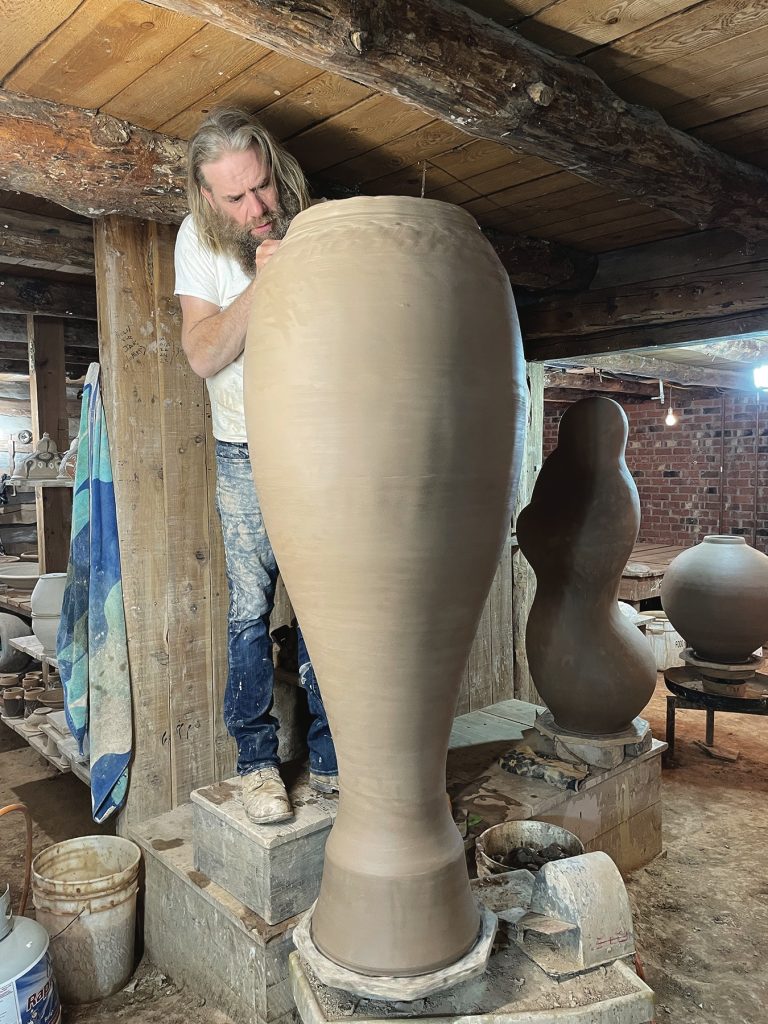
About 15 years ago, after lengthy apprenticeships with potters in Thailand and England and with Seagrove’s internationally revered Mark Hewitt, Johnston became a leading American maker of big pots. He perfected a technique to turn 100-pound lumps of clay into giant vessels that could hold 40 gallons apiece and made them in huge numbers, a series of 100 pots one time, 50 pots another. The acclaim was exciting, but then became disillusioning. It broke his heart to see them carted away, one by one. It was the groupings, he realized, that held the meaning: “People had to have a piece of it. As soon as they had that jar, it had no context.”

Johnston eschews that kind of work today. Now, he’s not concerned with demonstrating his finesse or with making beautiful objects unless they have conceptual meaning. At the North Carolina Museum of Art in 2019, he sunk 183 individual wood-fired ceramic pillars in a permanent installation across the gentle hills of the park landscape to evoke an organic border, fence or outcropping. In 2021 at NC State University’s Gregg Museum of Art & Design, he built a massive wire-mesh, house-shaped frame — a temporary building at once empty and full — to hold several giant pots, many irregularly shaped, and some put together like bricks in a foundation. It was a paradox: lonely but inhabited, open but caged, refined but deformed.

“I’ve never thought of myself as a potter, and I don’t really like the title. I want to work with my mind, not my hands,” he says. “Like Duchamp’s Fountain.” He’s referring to a porcelain urinal the French conceptual artist Marcel Duchamp exhibited in 1917, considered a seminal moment in 20th-century art. Duchamp rejected what he called “retinal” art, or art designed to please the eye, and wanted his art to provoke the mind instead. “I think about that a lot,” Johnston says.

Recently, caring for his newborn son and also for his aging father, who suffers from dementia, has allowed Johnston to spend more time in thought than his typical schedule of constant studio work allows.

“I’ve been working my mind, which is really probably the place that I spent the least time before he was born,” he says. “I can look back now and see that I had filled my time with things that kept me from using that bit of my brain. And so now it’s the opposite of it. I’ve had a huge amount of space to use that part of my brain.” The result, he says, is the kind of artistic evolution that lies beyond the acquisition of skills. “The nice thing is that once you have the security of your skills and your abilities under your belt, there’s always a huge amount of room to improve. But so much of the work is mental and thought at that point. And so I have been working that way.”