Art of the State

Wild & Whimsical

Anne Lemanski’s fanciful patterned creatures

By Liza Roberts

If you’ve seen any of Anne Lemanski’s cosmic, colorful animal sculptures in person, you know they look as if they might twitch, or pounce, or slink on by. The skins that cover them — psychedelic prints and unexpected patterns — somehow add to this unlikely effect. Perhaps her multicolored tiger, or her ocelot, or her amazing rabbit, has emerged through a looking-glass portal from some magical realm and wound up in our own?

You’re not far off.

Lemanski’s Spruce Pine studio is, in fact, an otherworldly laboratory of creation where she doesn’t just make an animal, she learns it inside out. She studies its physicality and psychology, figures out how its haunches tense when it sits back, how they loosen in a run, how its brow might scowl at distant prey. Then she replicates all of that with copper rods she bends, cuts and welds into a three-dimensional sculpture, an armature. In an upstairs made of shipping containers, another act of creation happens, guided not by realism but by intuition. Here, she will create a skin for that armature, make it out of digital photographs or prints or collage or all three, and print it on paper. She will draw and cut a pattern as if she were making a dress or a suit and sew it all on, piece by piece, with artificial sinew. Her tools — wire cutters and an X-Acto knife — are the same, simple ones she has used for 30 years. She has no assistants.

On a warm and wet spring weekend, Lemanski is learning mink. Her giant mastiff, Dill, sits nearby. Photographs of minks in every position and resolution surround her, filling a wall and every tab on her computer. She’s learning about what minks eat, how they’re bred for coats, about the recent killing of 17 million COVID-infected mink in Denmark. “Millions! I’m not exaggerating. I was horrified,” she says, shivering. The armatures for a few minks in different positions are underway; one is complete. She holds it in her hands. “Once the armature is done, that’s the most important part of capturing the animal,” she says. “I ripped this one apart like three times. And finally, one day, it just clicked.”
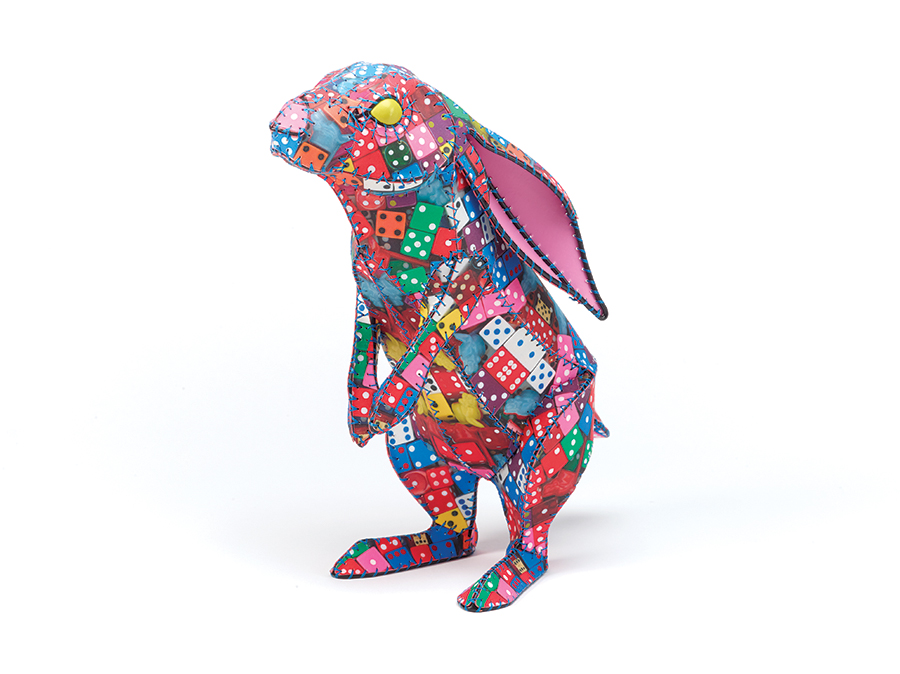
With the armature complete, Lemanski moves on to the mink’s skin, leaning into the collages that form a significant counterpart to her sculpture. Comprised of illustrated images from the pages of pre-1970s textbooks, comic books, picture books and children’s encyclopedias, Lemanski uses her X-Acto knife to combine, say, giant squid with convertible cars, pigeons with mermaids, skeletons with alphabet blocks, chewing gum with polar bears. There are butcher’s maps for cuts of meat and colored-dot tests for colorblindness, and constellations and cockatoos — a century’s worth of illustrations shaken and stirred into a cocktail of nature and man, science and myth, technology, geometry, and things that are cool. A series made during COVID, Metaphysical Mineral, explores the properties of a series of eight different minerals. Quartz includes a high diver in a ’50s-era swimsuit, a white stallion and a swarm of bees. Sulphur gets a winding snake, a stick of dynamite and a cigarette.

These individual component images are one of a kind and cannot be replicated; to do so would be to lose the unmistakable texture and character of the Ben-Day dots used in printing from the 1950s to the 1970s (made particularly recognizable by the pop artist Roy Lichtenstein). “I’ve tried [copying them], and it just doesn’t work,” she says. So when she uses these images in a collage, Lemanski tacks them down lightly with a little loop of tape so she can take them off and use them again. This technique also adds to the three-dimensional look of the collages once they’re printed.
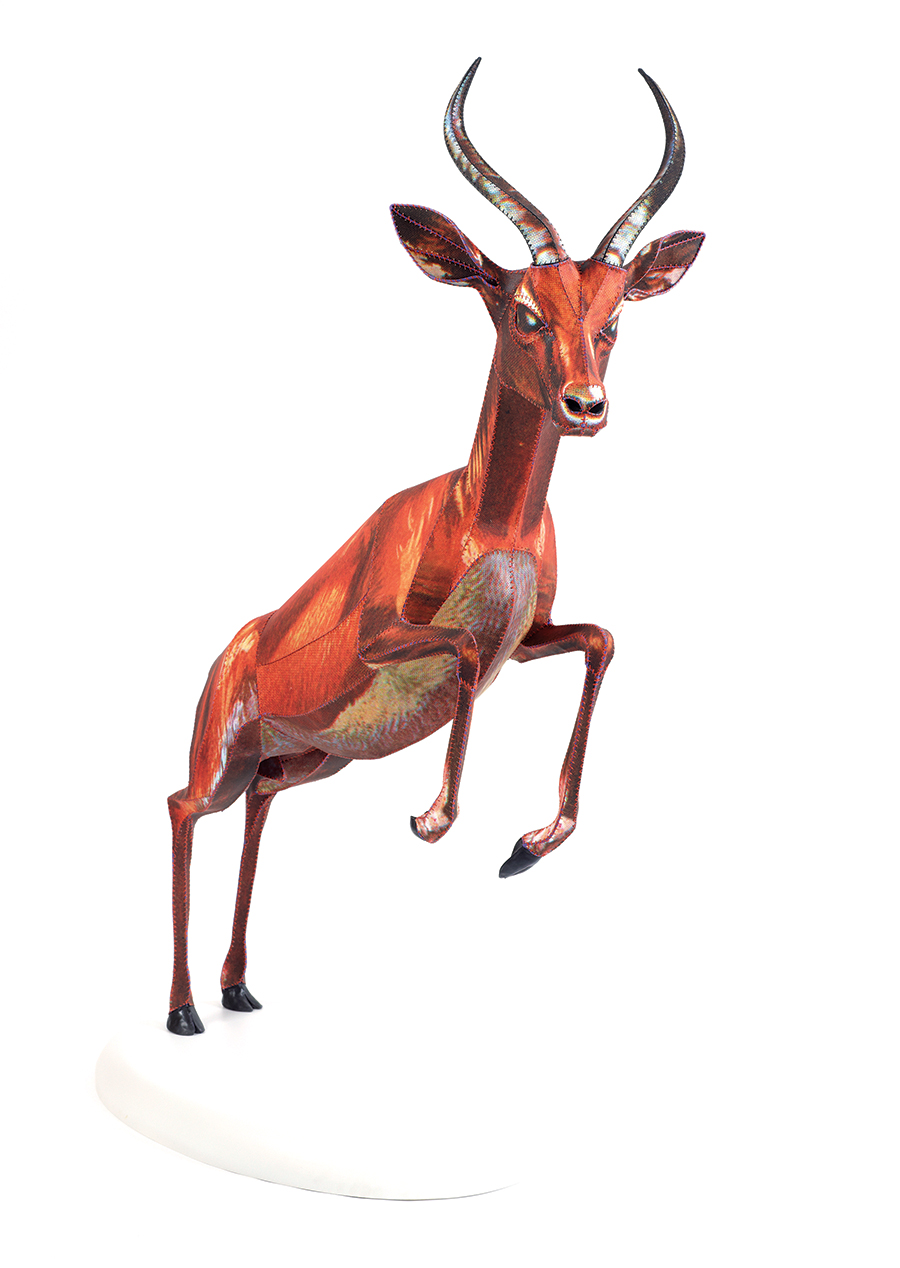
She credits a residency at Charlotte’s McColl Center with launching this kind of work. Inspired by the possibilities of the center’s large-format digital printer, she made 12 small collages and printed them in huge dimensions. These prints ended up forming the basis of a solo exhibition at the center that also included sculpture, in this instance a “three-dimensional collage” that incorporated some of the printed collage animals themselves. A 4-inch image of an impala in one print, for instance, became a life-sized impala sculpture in the center of the room that she “skinned,” in a meta twist, in digital prints of the tiny image’s own fur. “That was a challenging piece to make,” she says.

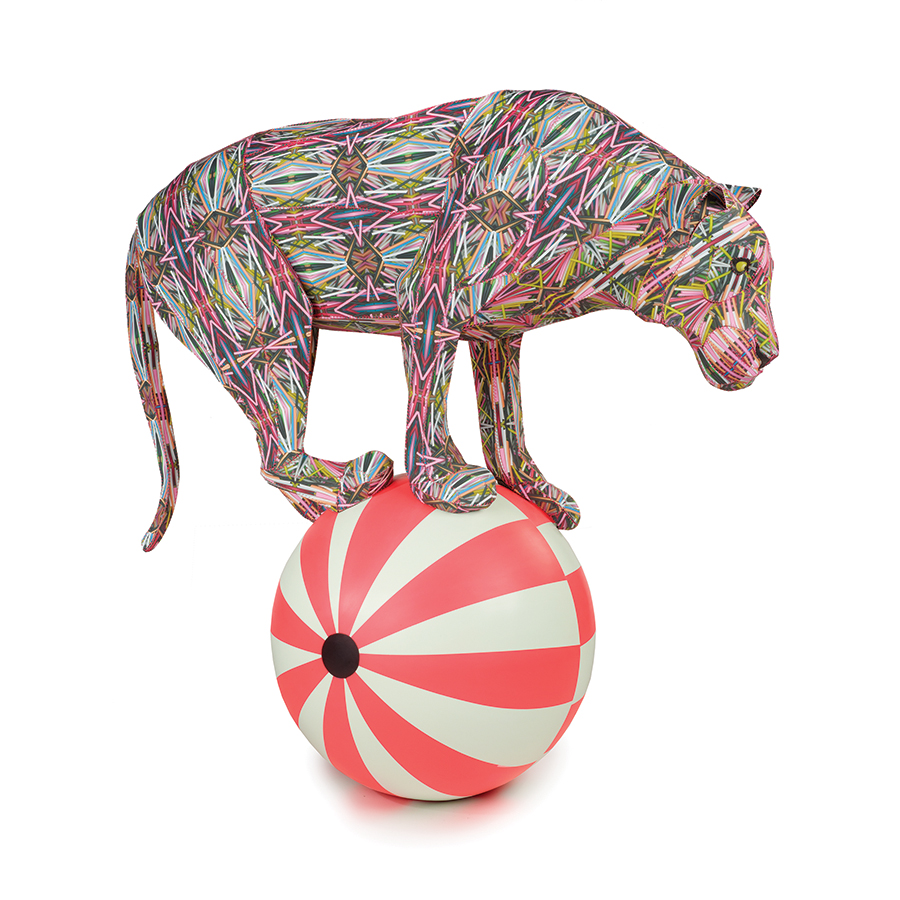
So was the Tigris T-1, a freestanding, life-size sculpture of a tiger balancing on a ball, that was acquired by noted collector Fleur Bresler for donation to Crystal Bridges Museum of American Art in Bentonville, Ark., a career-catapulting moment Lemanski is still pinching herself about. Her work is also in the permanent collections of the Mint Museum, the North Carolina Museum of Art, the Asheville Art Museum and in many private collections. It’s even found its way into wallpaper as part of a fanciful line of sly, butterfly-and-bird-bedecked prints made in Schumacher’s Peg Norris collection, a collaboration between Charlotte gallerist Chandra Johnson and interior designer Barrie Benson.
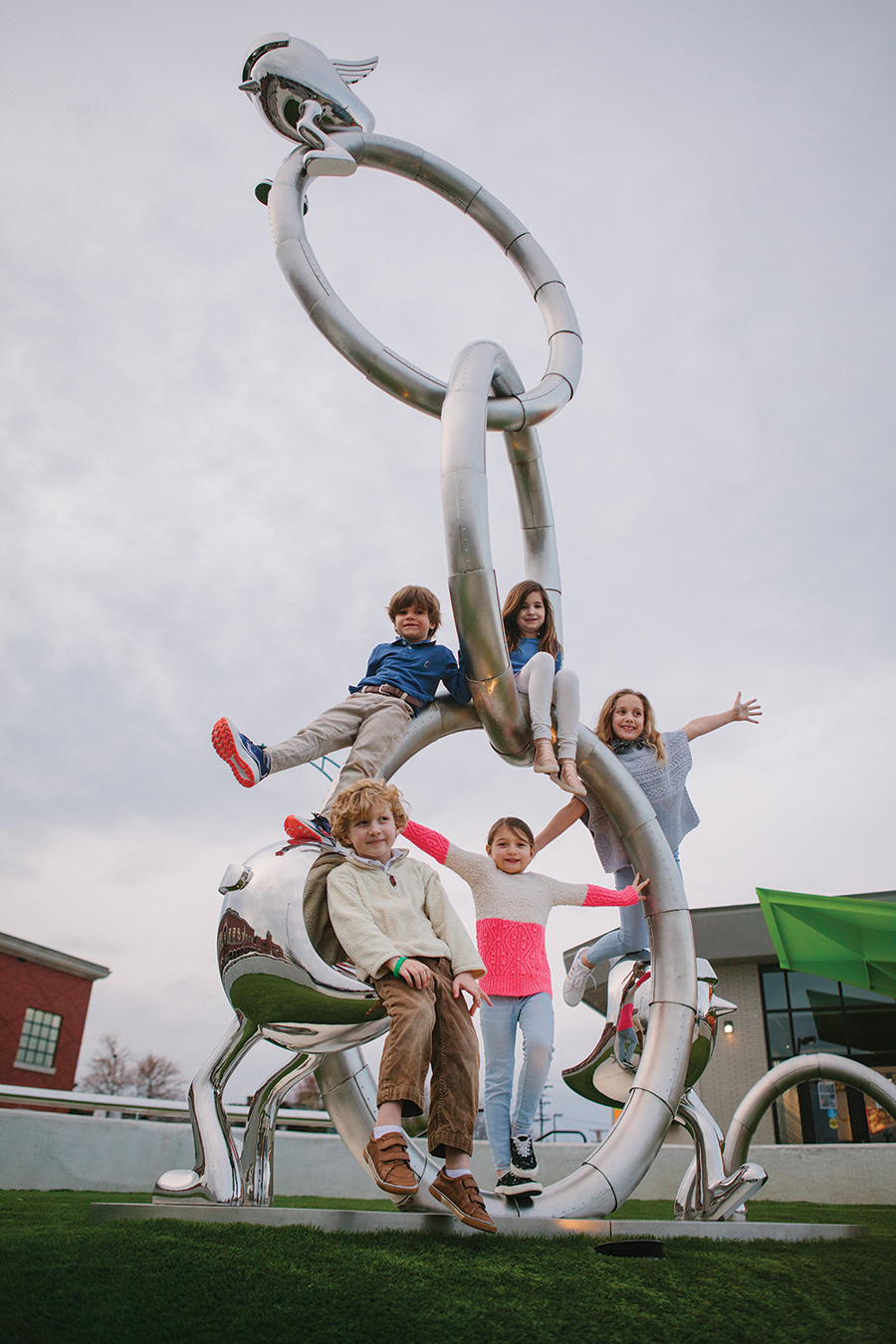
What’s next is what excites Lemanski most. Lately, she’s been working on an animal that’s captured her imagination for a while: a horse — a life-sized Appaloosa. “Who doesn’t love a horse?” she asks, as she works out the intricacies. “The hooves and ankles of a horse are extremely complex; they’re bulbous, they’re angular, and that’s where all the business happens.” Also in the hopper: her first piece of public, outdoor art — another large animal — to be cast in aluminum. It could mark the beginning of a whole new oeuvre.

“I really am looking forward to the work I’m going to make in the future,” Lemanski says. “I think it’s going to be on a large scale, and I just want to keep pushing the work forward… It’s the unknown of the future that keeps me going.”  OH

This is an excerpt from Liza Roberts’ forthcoming book Art of the State: Celebrating the Art of North Carolina, to be published by UNC Press this fall.

Free to Go & Grow

Rob Brown

Finding the Promised Land
As told to Ross Howell Jr.     Photograph by Bert VanderVeen

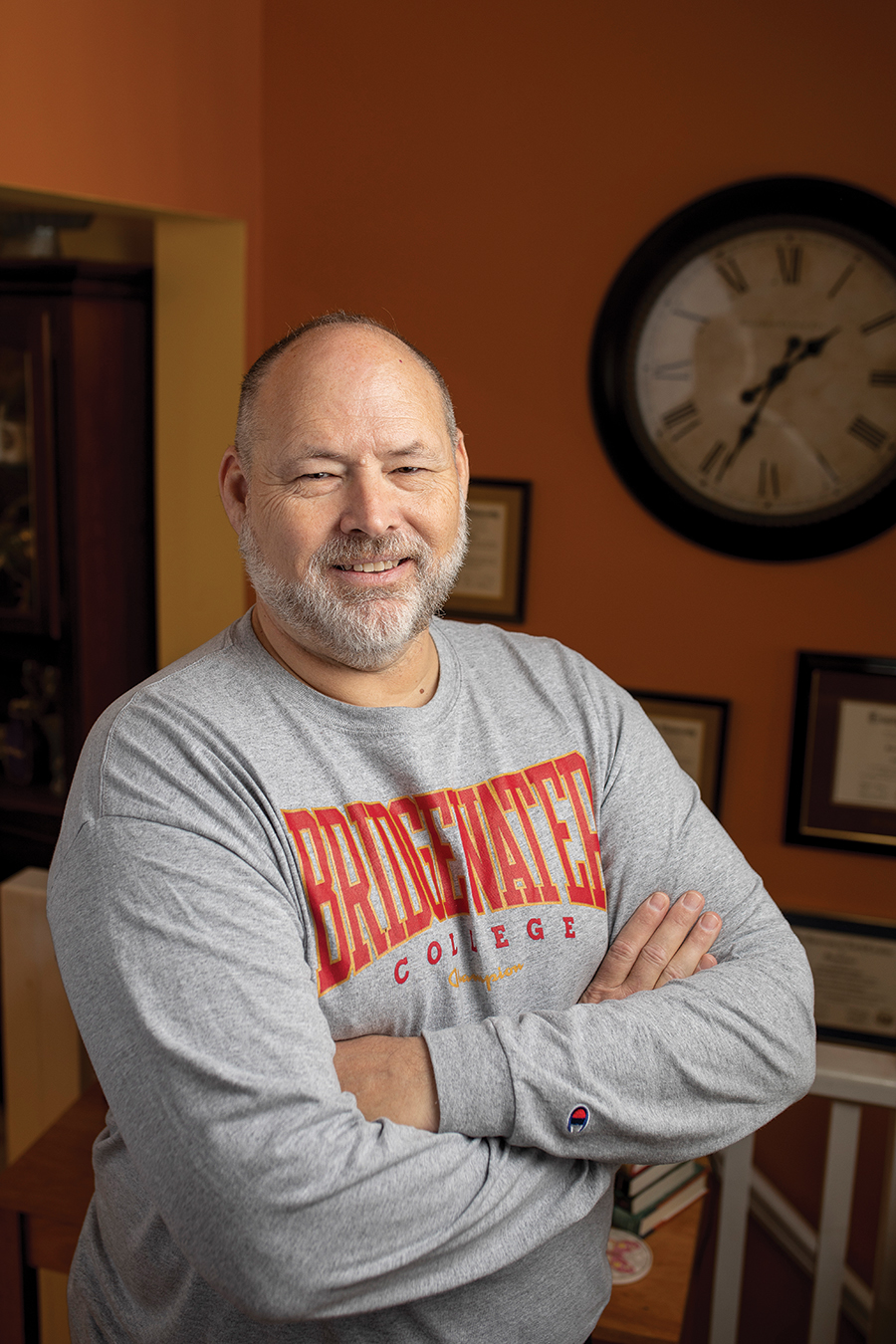
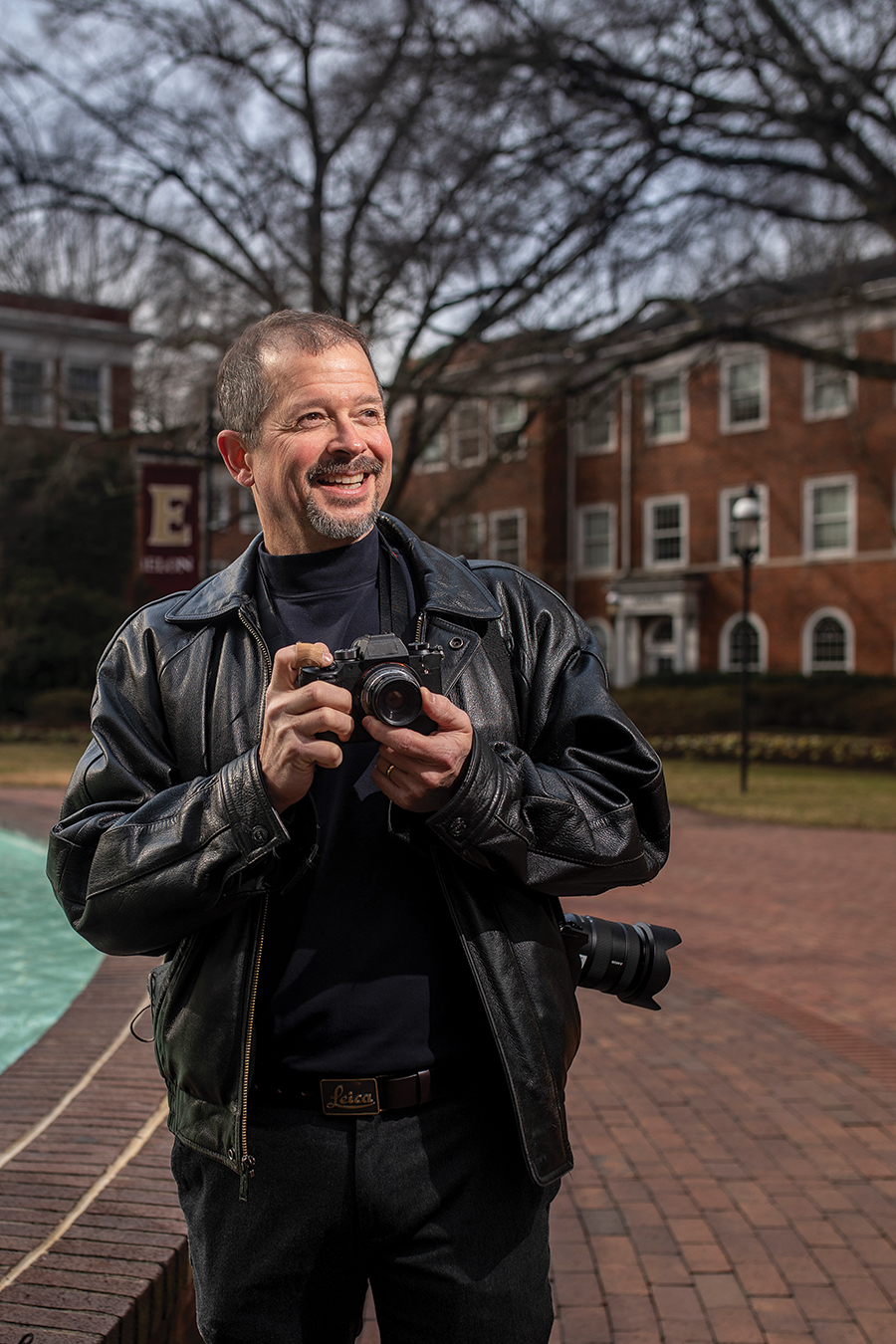
When I was in fourth grade, my dad — who at 84 is still a Richmond Times-Dispatch photographer — took me to a football game between VMI and the College of William & Mary. He hung a camera around my neck, got me a press pass and told me to see what I could do.

I got a picture of a guy scoring a touchdown, which ran in the Times-Dispatch. The paper paid me $5.

I was hooked.

But when I graduated from high school, I didn’t see photography as a real job. So, I apprenticed with a brick layer. Later, I went to Longwood University, playing basketball in the summer with a guy named Leger Meyland. He was going to photo school and convinced me to go, too. He has been a mentor and friend for 40 years now.

After a year at Randolph Community College, I got a job at the Radford News Journal. Then I came here to Greensboro to work at the News & Record, where I met my wife, Lane. After she got a job in Chicago, we moved there. I found work at The Times of Northwest Indiana, a suburban newspaper.

We had kids and decided to move to Baltimore to be closer to our families. Lane landed a full-time job at The Baltimore Sun. I was a freelance photographer and stay-at-home dad.

When we learned the News & Record was looking for a director of photography, I applied. They took a chance on me, even though my only management experience was raising kids.

In 2015, when I was laid off from the paper, I felt spurned. For a while, I freelanced. Then I put my cameras away, rarely taking pictures.

I decided I’d try something completely different.

I signed up for brewing school at Rockingham County Community College, then got an entry-level job with Natty Greene’s Brewing Co. I was putting beer bottles in boxes in a cold warehouse. Eventually, I was trained to work in the cellar, and later, I handled brewing.

Then I went to Foothills Brewing in Winston-Salem. My work there also was very physical.

I realized brewing is a younger man’s game. So, I decided I’d give computer security a try.

After about two months of study at Guilford Technical Community College, COVID hit.

All my classes went virtual, except for geology. Even though I’d made the president’s list and was six hours away from my associate’s degree, I was feeling very isolated.

I knew when I finished, I’d be starting at ground level again. Worse, I’d be working with 19-year-olds who were real computer whizzes compared with me.

Because my son was getting married, I’d been helping him look for a wedding photographer online.

One evening, I was talking with Lane.

I showed her a photographer’s site and said, “Looking at these photos makes me want to take pictures again.”

And she asked, “Why don’t you?”

So, I got back into freelance photography. After about three months, I heard that the Elon University communications department was looking for a photographer.

I applied and got the job.

Now, I’m back to doing something I love and something I’m good at.

For years I was wandering in the desert and now I’ve found the Promised Land. I couldn’t have done it without Lane.  OH

A longtime writer for O.Henry, Ross Howell Jr. is doing research for a second historical novel.


Jessie Sloan

Landing on Her Feet

By Cynthia Adams     Photograph by Bert VanderVeen

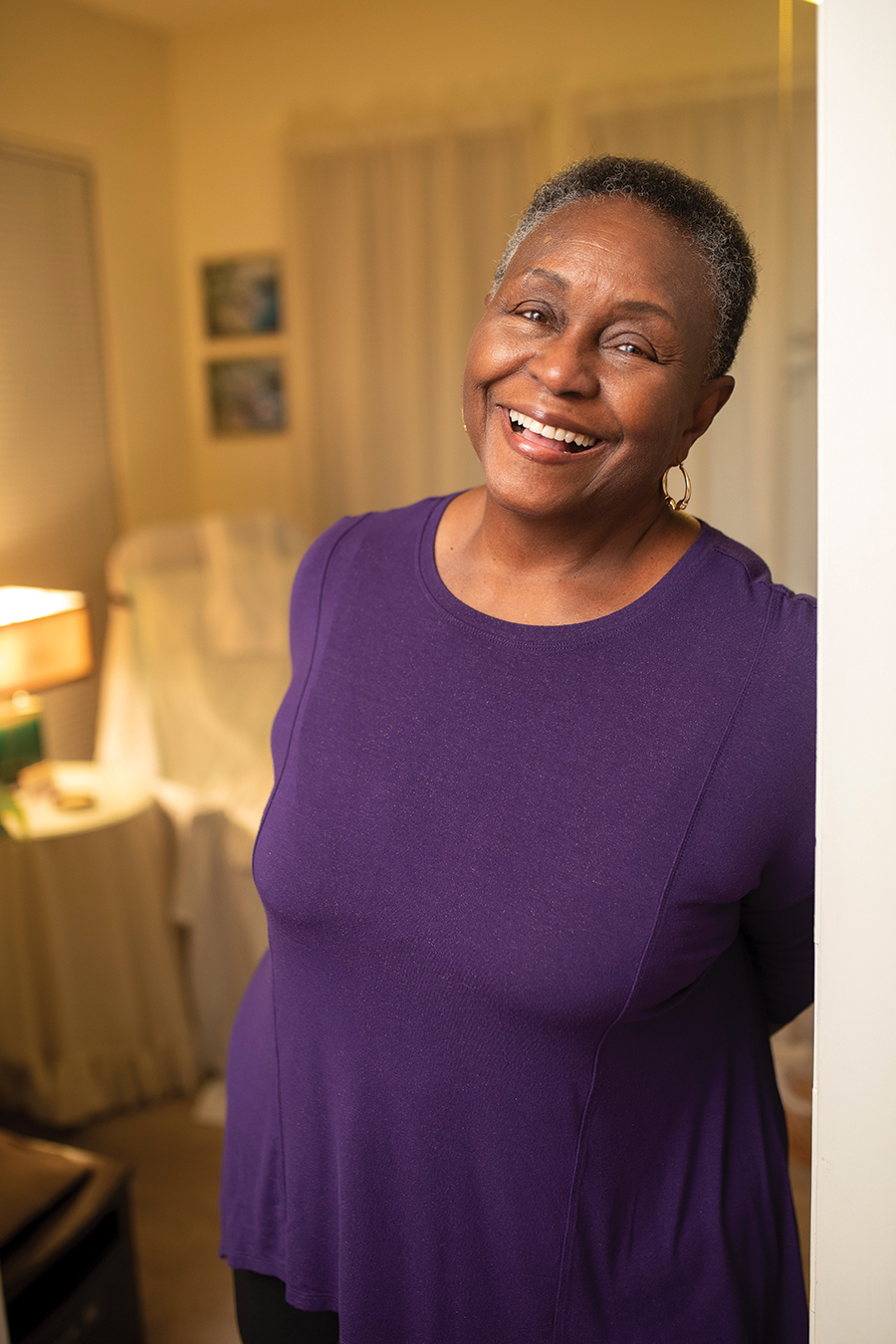
For such a sunny personality, Jessie Sloan, a Shreveport, Louisiana, native, had a surprising first job after college — making bombs at the Louisiana Ordinance Plant.

“I was making 2.2 mortar shells, putting the mechanism on the back of the shells that made it propel.”

She also began hair-raising work as a cosmetologist — her mother having advised her to always have a side gig.

Next, Sloan vetted materials for Lucent Technologies in Shreveport, with top security clearances. (“If I did not approve it, they would not purchase it.”)

After 27 years, she “woke up one morning and, noting a Lucent posting in Greensboro, decided I wanted to see how the other part of the world lived.”

In a lickety-split, Sloan transferred.

Sloan remained in top clearance work — secure telephones for the White House and transatlantic junction cables.

Whenever she saw the President using a White House phone, she thought, “I had a hand in that. Oh, my goodness!”

Ever mindful (“My mama always told me, never settle for one thing. Have an A, B and C. I’ve always had more than one job”), she earned her N.C. license, resumed work in a beauty salon — and still worked for Lucent. Two years later in 1997, Lucent closed the Greensboro facility. Sloan retired.

For a while, she traveled, unable to do hair given a knee replacement. “I had to find something else!”

She laughs. “I don’t let anything get me down. I keep a positive attitude.”

A Louisiana podiatrist first introduced Sloan to reflexology. “If I had any sore places, he would massage a certain area on my foot, and the pain would go away.” She told him how she loved giving foot massages. He lent Sloan his books.

“One night I was in bed and said, ‘Well, Lord, what can I do?’ The Lord said, in my mind, ‘Do feet! You enjoy doing feet.’ I got up that morning and found a school.”

For a year, Sloan studied reflexology at Natural Touch Massage School, completing studies and clinical work in 2005.

She registered her business, Soles by Sloan, working at a State Street salon (plan A). Sloan advertised, appeared at health fairs and built a reflexology practice, which she later moved to her home.

Does she absorb the energy of clients as she works?

“You do. You’re transferring your energy to that person. And absorbing all that drains you,” she says.

Meanwhile she worked for Sears 14 years — plan B — in data entry.

Sloan giggles.

“A friend said, ‘You’re not from this planet. You’re not from here.’ I would say, ‘I am too from here! God made me, and He made me this way!’ So many things have happened to me that were unexplained. It’s amazing.”

Today, Sloan’s primary work remains reflexology. But, always, there’s a plan B. Last August she began working with special-needs children on school buses. She arrives at the terminal before 6 a.m.

“I keep them in their bus seats to be sure they don’t get up and hurt themselves. Help them off and on and help with their seat belts. It’s really rewarding.”

This repeats in the afternoon. Sloan returns after lunch to assist again, riding with the children, soothing them, and is home before 5 p.m.

“I’m learning to be thankful, patient. Learning to be caring. Understanding. To work with kids,” Sloan says. “I’ve always wanted to do it.”

She ends the call, preparing for a reflexology session.

“Reflexology is my first love. That is just part of me. That, I always tell people, is my calling.”  OH


Chris Hayes

Learning Lessons from COVID

By Maria Johnson     Photograph by Bert VanderVeen

Early one Sunday morning, after wrapping up his 7 a.m. to 7 p.m. shift in the intensive care unit of Greensboro’s Moses H. Cone Memorial Hospital, registered nurse Chris Hayes sniffs out the charge nurse, hands over a handful of badges and tags, and walks out of the Greensboro hospital in his blue scrubs for the last time.

The next afternoon, he sits in a sparsely populated Panera restaurant, sipping a cola and absorbing the new reality of his retirement.

“It hasn’t sunken in yet,” the 56-year-old Hayes says.

Bearded, burly and athletic, with sports sunglasses parked atop his closely cropped hair, the former high school wrestler explains why he left his beloved profession in January, after nearly 32 years.

It’s true, he says, he’d been thinking about retiring to have more time to travel and work on projects around the house.

The accelerator, he says, was COVID.

Specifically, one young man with COVID.

Chris cared for him last summer.

The kid — a college student with no history of health problems — had been moved to the ICU because his oxygen levels were falling. Chris saw him only one night. The kid was conscious, alert and talking through an oxygen mask.

And even though Chris had told himself — after doing it once early in his career — that he’d never get attached to a patient again, he connected with this young man.

“I could see my daughter there,” Chris says, eyes welling at the thought of his younger child, also a college student.

That night, the young man — who was not yet eligible for a vaccine because of his age — crumped.

That’s nurse-talk for took a sudden turn for the worse.

They put him on a ventilator to help him breathe. He stayed on the machine for three weeks.

One morning, when Chris was at home, he got a text from a colleague. They’d lost the kid.

“I about threw my phone through the wall,” Chris says. “It was anger, just anger wishing it had never happened.”

His anger surged at other times, too, especially when dealing with older, unvaccinated patients.

“Probably the hardest thing was listening to people when they were dying, saying they wish they had [gotten the vaccine],” he says.

The idea of retiring grew sweeter when his wife, Jamie, left her job. She’d also worked nearly 32 years as a public school teacher. She, too, was pushed out by COVID and the overwhelming demands it placed on educators.

They both were seasoned veterans with thick skins, Chris says, but COVID had found their breaking points.

“Everybody has one,” he says. “Anyone who tells you they don’t is lying.”

Still, he says he harbors no hard feelings about his pandemic experience.

“I’m probably smiling because it made me retire early,” he says.

Eventually, he adds, he’ll look for another job — a low-stress, part-time gig — maybe in landscaping or in a big-box hardware store, where he can get a discount to furnish his garage workshop. Lately, he has been building coffee tables, TV stands and end tables for his daughters and their friends.

Before the next job search, though, he’ll take several months to scratch some items off his to-do list: going to an Eagles concert with his wife; taking two cruises with his family (one to celebrate older daughter Rebecca’s graduation from pharmacy school); and attending every fall volleyball game of his younger daughter, Grace, a senior at Bridgewater College in Virginia.

One of Grace’s teammates had COVID in 2020 and developed a seizure disorder afterward. The teammate recovered and played again, Chris says, but seeing people who are younger and stronger than he is get seriously ill with COVID was not lost on him.

“Noticing that young people are not immune to all of this has taught me that life is precious,” he says. “It’s time to get out and enjoy it.”  OH


Wandering Billy

The Prez of Jazz Night

Getting into the groove
on Sunday evenings

By Billy Eye

It’s too exciting for words … so they had to set it to music!
movie trailer for Blues in the Night (1941)

I’ve been carping for a decade that this town needs a groovy, early-evening Sunday hangout. Jazz Night at Cafe Europa fits the bill perfectly, especially now that the weather is turning milder and the patio is open. (Let’s hope. I’m writing this in February.) This swinging soiree from 6–9 p.m. is presided over by Prez, spinmeister supreme who also hosts a Wednesday night jam at Flat Iron, broadcast live over WUAG.

As someone who frequented the 1980s and early ’90s Los Angeles underground dance clubs, mid-’90s’ Club Babylon raves here, and, in the early 2000s, footloosing in massive discotheques across London’s underbelly, I’ve had the privilege of grinding behind grooves laid down by the top DJs in the world. <name drop> Keoki, Paul van Dyk, Sasha & John Digweed, plus PeteTong, Fatboy Slim and Paul Oakenfold.

Having been present for a number of Prez’s performances in a dimly lit Greensboro nightclub over the last year or so, I’d rank him with the best on that list, possessing a prodigious talent for transforming the most quotidian room into bouncy blissfulness, drawing on an all-too-rare musical intelligence unleashing a barrage of mind-blowing beats veering wildly but seamlessly from one genre to the next.

“I could be at a bar, for example, and everybody’s got their back to me,” Prez tells me. “But something they hear they register with, either their head nods, their foot taps, fingers clicking, and you know that, ‘Oh, wow. They recognize what they’re listening to.’”

For Sunday Jazz at Cafe Europa, Prez spins a mellower tone, with a softer but no less sharpened edge. It is anchored in part by modern jazz-inspired pioneers like DJ Can and Amerigo Gazaway, echoing with the vocals of Aretha Franklin, The Chi-lites, Nina Simone and other seminal 20th-century soul sensations. Who is this guy?

“My parents were into music and they’re from the South,” Prez says. “So, there were cross-cultural dynamics for me, like them growing up in a Southern culture, then my father joining the military, traveling around the world while raising kids along the way. Then I came to UNCG as a freshman, where I honed my skills.”

Residing in various countries, like Germany and Thailand, as a child before settling in Massachusetts had to have influenced his musical preferences. “I think it gave me a taste of what the culture of a certain environment sounded like,” Prez says. “Finding different dynamics in soul music but with kind of an African flavor or a Polynesian flavor or Latin rhythms.”

This DJ paints with a broader brush than one would expect, which makes sense because jazz underpins so many contrasting styles. “You get a different flavor that’s not just classical jazz,” Prez says about his style. “It’s not just big band; you get a little hip-hop flavor, some soul, house, electronic and funk music that stems from jazz.”

Cafe Europa attracts an eclectic clientele on a regular basis, that’s part of the appeal of the place. “We started Jazz Night back in May 2021,” Prez says. Just took a chance. My man [bartender] Jonny Alright and [owner] Jacob Pucilowski over at Europa said, ‘Hey, let’s do something kind of cool, something different.’” When Jazz Night first got underway it was just the lone DJ flying solo alongside crates of his albums. “It was not what the crowd expected jazz to be,” Prez recalls. “That’s why we kept doing it and why we’re still doing it now.”

Warding off any remaining chill in the air with more chill on the patio at Europa, surrounded by our downtown parks? For a serene Sunday twilight, nothing could be finer in Carolina when you consider this is a casual bistro offering affordable cocktails and slightly Southern comfort cuisine. Its French dip sandwich, steak & frites, and the cafe burger come highly recommended. I’ve never ordered anything that didn’t satisfy.

“Of course, you go with the classics,” Prez explains about his choice of needle drops. “Coltrane, Miles, Max Roach, Dizzy, then venturing into Roy Hargrove, Robert Glasper, Ali Shaheed Muhammad.” As word spread and the audience expanded, people started bringing their own records. “I was like, ‘Cool.’ Then people started turning up with turntables, keyboards, a guitar now and then, and it became a kind of a jazz jam formulated around the records.”

Kinda reminds me of a smoky little joint (back when smoky was okie) called Sammy’s in the Plaza Shopping Center where, a few decades ago, a combo on Friday nights drew legions of jazz enthusiasts.

Moving a crowd with your rhythmic repertoire begins with an understanding of the basics. “I tell people,” Prez says, “if they want to collect records, if they want to become a successful DJ, you listen first. You don’t go out and buy gear or buy records; it’s about listening and then you can curate. Then you can turn that into a three-hour mix where people are entertained.”

In an atmosphere infused with melodic precision, a totality of tonality presented in a way that Greensboro hasn’t heard or seen before, somehow every week Prez manages to discover another fresh take on what jazz can be, constantly experimenting with syncopated juxtapositions.

Arrive alone or with a coterie, and should winter’s icy fingers linger the proceedings will be relocated indoors.

Wheels of steel are largely digital now, but they still spin. Prez has been honing his craft for two decades. “I don’t really know what keeps me going, to be real. I think it’s the joy that I see on younger people’s faces that are new to this, are fresh into music. Seeing their energy, feeding off of their energy. How do you capture that moment?” Prez asks, knowing full well the answer. “That’s what being a DJ is.”  OH

Next month marks exactly six years since Billy Eye started writing “Wandering Billy,” which is why the schools and liquor stores will be closed during April to honor that landmark occasion.

Life’s Funny

What a Gas

A lesson on finding what you need

By Maria Johnson

A dark green cylinder.

About the size of a football.

Says “Coleman” on the side.

White label.

Red-and-black print.

I know exactly what I’m looking for — a propane tank for a camp stove — and why.

The ice is coming.

Or so the forecast says.

My memory jumps to a little more than a year ago, when a weekend ice storm left us in the dark and the cold.

We didn’t have it as bad as many others did — our electricity went out Saturday morning and came back on Sunday afternoon. We were pure-T lucky that some parts of the city still had power and that we had enough gas in the cars to go and get McDonald’s coffee and takeout meals.

We brought them home — instead of eating across town — because the pandemic raged on.

Our wings were clipped. Twice. But we had a gas fireplace. And water. And batteries for our flashlights. And quilts and afghans stitched by long-gone grannies who lived when these conditions were closer to the norm — when winter nightfall meant kindling a fire.

We did as they would have done. We turned the sofa to face the fireplace and literally huddled with our hound and our loved ones. Our older son and his girlfriend were still here, stretching their Christmas visit because they were working from home, and they allowed “home” to be with us for a while.

We warmed Thai takeout — not very well — in a Dutch oven over the fire, under an open flue.

We read Sherlock Holmes stories aloud, by flashlight.

We went to bed early and rose with the sun.

In daylight, we drove — carefully, around downed trees and through intersections with stoplights gone dark — to a park. We stayed long enough to be dazzled by the sunlight dancing in the diamond woods — and to be scared into retreat by the gunshot pops and muffled whooshes of trees breaking and falling under the weight of their jewelry.

On the way home, I saw a friend striding, as she usually does, for exercise and joy, down an empty Lawndale Drive in a neon parka, her New England hardiness in full view.

We, however, were reduced to basics.

A walk.

A fire.

Some food.

And water.

Good health.

Good humor.

Each other.

When everything else fell away, it was easy to see what we had.

And be grateful.

It’s hard to talk about this — gratitude in the face of hardship — even with the pandemic waning somewhat. So many people in this country have died of COVID in last two years: 886,000 at this writing.

Eight. Hundred. Eighty-six. Thousand.

So many people have suffered and are still suffering with empty chairs and guilt and long COVID.

But I hear timid thanks leaking out in people’s stories these days.

Timid thanks for the hard stops that enable us to see that simple is OK.

Small is OK.

Dare we say it: better, even.

Maybe giving thanks is where this gets sticky. Thanks implies a giver with an intention. A purpose. A reason for the rattiness. We love a reason, don’t we?

But sometimes, I think, there is no reason. Bad stuff happens because it can. And will, inevitably, in this God-filled universe.

Sometimes we get caught in the jaws of life and don’t survive.

Sometimes, we do survive — for a while longer.

Whether we can scrape up any wisdom afterward is up to us.

Whether we can look around and see the doors that have been, many times, open all along — that’s up to us.

Take, for instance, the opportunity to buy a gas camp stove after last year’s power outage.

I saw it. And took it.

Bought a gas cylinder, too.

And stored it in the garage, separate from the stove.

But where, oh where, I wonder now, a year later.

We comb the shelves and crannies.

Then we look in insane places — as people who have lost things often do.

Could it be in the laundry room?

The pantry?

Your sock drawer?

Jeff searches the attic — the attic! — as I stand before the garage shelves that seem to mock me.

“OK, I know you’re here,” I finally surrender. “Just show me where.”

I take a breath and soften my gaze.

And there it is.

In a cardboard box, on edge, that I had clearly labeled like the spine of a book: “PROPANE GAS FOR CAMP STOVE.”

Ohhh yeahhh.

I had put the tank there, after several months of watching it get knocked over and roll around on the shelf, because it seemed safer that way.

I laugh out loud.

Because what I wanted wasn’t in the form I was looking for — and by my own hand, to boot.

     But it was there all the time.  OH

Maria Johnson is a contributing editor of O.Henry magazine. You can reach her at ohenrymaria@gmail.com.

Birdwatch

Cleanup on Aisle 2

The vulture’s role in the ecosystem

By Susan Campbell

Vultures: All of us have seen them. Maybe it’s been passing a group feasting on a recently killed animal by the side of the road. Or, more likely, you have spotted an individual soaring overhead on long, outstretched wings. These odd looking birds are too often misunderstood and even disliked — for nothing more than their appearance. In actuality, they are fascinating creatures that perform a vital role in the ecosystem: They are Mother Nature’s cleanup crew.

Often referred to generically as “buzzards,” vultures are part of a family of birds found worldwide with dozens of species, including South American condors. Here in North Carolina, we have both turkey and black vultures year-round. Individuals from farther north significantly boost flock numbers in the cooler months. These large black scavengers lack feathers on their heads: likely an adaptation to feeding almost exclusively on carcasses. Turkey vultures are the more common species from the mountains to the coast. Soaring in a dihedral (v-shaped profile) on long wings with silver linings, they have red heads and long tails for steering.

Black vultures, however, have gray heads and white patches on the under-wing as well as somewhat shorter wings and tails. As a result, they soar with a flatter profile and fly with snappier wing beats. This species has really expanded across the Piedmont in recent years, perhaps due to development, increased road building and the inevitable roadkill that results.

The winter brings vultures together in what can be impressive roosting aggregations that are known as “wakes.” These groups can build to 100 or more individuals of both species that will roost close together in a particular spot: night after night during the season. Late in the day, they will gather in mature trees with larger branches capable of holding significant weight. It is easy to spot them on tall snags or sitting side by side on communication towers. Given the human tendency toward neatness, there are fewer and fewer dead trees for the birds to utilize — so they have been forced to use manmade perches. They may choose rooftops and this can, believe it or not, include people’s houses.

It is not obvious as to why they choose the locations that they do each winter. Given the ease at which they roam in search of food, proximity of their next meal seems rarely a concern. They are capable of gliding and soaring many miles each day. No doubt they require a location with a substrate that warms readily in the morning sun to provide the updrafts they require to reach cruising altitude. Vultures do need a perch that is open enough to allow them to spread their wings on takeoff. This is likely why they are found roosting in more open environments.

For those living near a vulture roost site, be aware that the birds seldom use the same location for more than one season. This could be for reasons of cleanliness or to perhaps reduce the chances of predation — but we really do not know. Also, do not expect that the wake will persist beyond early spring. The group will break up and head off to their breeding grounds by late February or early March. Using prevailing southerly breezes, they will be carried back north in short order.

Although we do have small numbers of breeding vultures in the Piedmont and Sandhills of North Carolina, they are widely dispersed and are quite secretive during the nesting season. Unless they are on the wing, sniffing out (yes, they use their noses more than their eyes) their next meal, they may go completely overlooked.  OH

Susan Campbell would love to receive your wildlife sightings and photos. She can be contacted at susan@ncaves.com.

Bookshelf

March Books

Compiled by Shannon Purdy Jones

After an entire winter spent indoors (and especially this COVID winter) spring feels like I’m shedding a winter cocoon and stepping back out into the world.

It’s no surprise that at Scuppernong one of our favorite ways to connect with our community is over a good book. We have four book clubs that meet on a monthly basis at Scup, including a brand-new Romance Book Club launching this month. If you’re feeling the urge to shake off the winter cobwebs and reconnect, then find below our next few month’s book club picks to see which conversations fit you. Or, head over to our events calendar at scuppernongbooks.com. (Book clubs meet on Zoom, though we hope to move back to in-person this year as COVID precautions allow. Login info for each book club Zoom is available on our events calendar.)

White Shadow by Roy Jacobsen (Biblioasis, $16.95).  March Reading the World Book Club pick

No one can be alone on an island . . . but Ingrid is alone on Barrøy, the island that bears her name. The war of her childhood has been replaced by a new, more terrible present — the Nazi occupation of Norway. When bodies from a bombed vessel carrying Soviet prisoners of war begin to wash up on the shore, Ingrid can’t know that one will not only be alive but could be the answer to a lifetime of loneliness — nor can she imagine what suffering she will endure in hiding her lover from Nazi authorities, or the journey she will face, after being wrenched from her island as a consequence for protecting him, to return home.

This highly anticipated follow-up to Roy Jacobsen’s International Booker and Dublin Impac Award-shortlisted The Unseen, a New York Times New and Noteworthy book, White Shadow is a vividly observed exploration of conflict, love and human endurance.

Velocity Weapon by Megan E. O’Keefe (Orbit, $17.99) 

March Sci-Fi Book Club pick

Nominated for the Philip K. Dick Award for Best Novel

Sanda and Biran Greeve were siblings destined for greatness. A high-flying sergeant, Sanda has the skills to take down any enemy combatant. Biran is a savvy politician who aims to use his new political position to prevent conflict from escalating to total destruction.

However, on a routine maneuver, Sanda loses consciousness when her gunship is blown out of the sky. Instead of finding herself in friendly hands, she awakens 230 years later on a deserted enemy warship controlled by an A-I who calls himself Bero.

The Love Hypothesis by Ali Hazelwood (Berkley, $16.00) March Romance Book Club pick

As a third-year Ph.D. candidate, Olive Smith doesn’t believe in lasting romantic relationships. So, like any self-respecting biologist, Olive kisses the first man she sees.

That man is none other than Adam Carlsen, a young hotshot professor — and well-known ass. Which is why Olive is positively floored when Stanford’s reigning lab tyrant agrees to keep her charade a secret and be her fake boyfriend.

Suddenly their little experiment feels dangerously close to combustion. And Olive discovers that the only thing more complicated than a hypothesis on love is putting her own heart under the microscope.

Dead on Arrival by Jaki Shelton Green (Blair, $10.95)

March Poetry Book Club Pick

This is a welcome reissue of Jaki Shelton Green’s acclaimed premier collection of poetry. Green’s earlier works pulse with the intoxicating rhythms and fierce clarity of image that made her one of North Carolina’s most popular poets. Here is an artist, at turns, angry and wickedly funny, demanding justice yet possessed of a refined grace.  OH

Shannon Purdy Jones is store manager and children’s book buyer for Scuppernong Books.

Citizen Jim’s Latest Hurrah

Citizen Jim’s Latest Hurrah

With the announcement of the Greensboro-Randolph Megasite, a legendary mayor cements his legacy

By Jim Dodson    Photograph by Mark Wagoner

On a sunny afternoon late last year, former Greensboro mayor and longtime president and chief executive officer of the Joseph M. Bryan Foundation, Jim Melvin, took three old friends for a leisurely drive in the country. His purpose was to show them the 1,800-acre Greensboro-Randolph Megasite off U.S. Highway 421 south of the city, which Melvin and a group of private and public partners hoped would soon become the home to a major transportation-related manufacturing facility.

“I think we finally got it right,” declared the genial former mayor many Triad residents affectionately think of as “Mr. Greensboro” owing to his many years of dynamic civic activism and an unrivaled record of accomplishments over the past half century. “Can’t tell you fellas what’s coming,” he teased with his fellow travelers, “but when this thing is finally announced, which may be very soon, it’s gonna be one of the most exciting things to ever happen to this region, a true game changer — improving lives like you can’t imagine.”

Melvin took a breath and added, “Lemme tell you, it took a lot of faith and unbelievable hard work by a number of folks who never gave up trying to make this thing happen. That’s the real story.”

Seated in the back seat of Melvin’s SUV, a retired textile executive and lifelong friend of Melvin’s named Jimmy Jones couldn’t help smiling, recognizing a well-worn phrase that could be a working motto for his old friend’s dynamic public career.

Some years after Greensboro’s most accomplished public figure in decades left public office and became just Citizen Jim in 1981, the story goes, he was invited by the trustees of Greensboro College to give the school’s annual commencement address.

“When it came time for him to speak,” Jones remembers, “Jim simply walked up to the lectern, looked out at the graduates and declared, ‘I think it’s best to quote the late Winston Churchill. Never give up! Never, never give up!’ And with that, he wished them all good luck and sat down. The crowd loved it. In fact, they gave him a standing ovation. It was vintage Jim Melvin and said everything you need to know about the man.”

Indeed, true to his word, in early December, a few weeks after he took his pals for a spin in the country, Citizen Jim and a host of key stakeholders unveiled a transformative $1.29 billion deal with Toyota North America to build a new-generation lithium battery manufacturing plant for electric and hybrid automobiles at the Greensboro-Randolph Megasite, projecting employment of at least 1,700 workers by the time it opens in 2025.

In a sense, Melvin’s tireless 10-year quest to bring a major manufacturing facility back to the Triad after decades in which major textile, furniture and other related manufacturing industries fled the region might seem like simple vindication and the perfect coda for a fellow who once invoked the stark words of Winston Churchill at war to inspire Greensboro College graduates. Given his formidable vita over four decades, it’s also tempting to wonder if the triumph of the megasite might be a fitting last hurrah that defines his legacy.

A quick review of Citizen Jim’s remarkable public life and notable civic accomplishments illustrates the point.

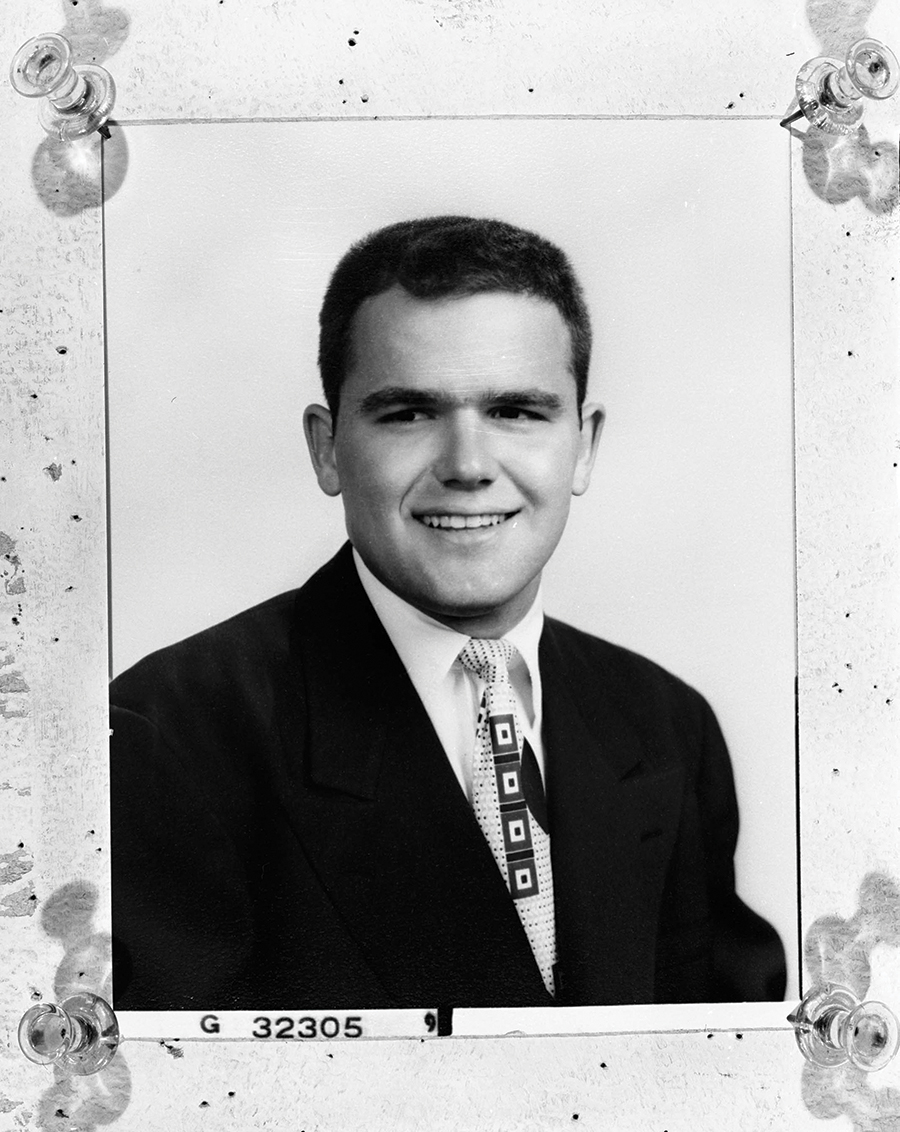
Edwin Samuel Melvin, named for both his Greensboro grandfathers and known as “Jim,” grew up on Asheboro Street — today Martin Luther King Boulevard — absorbing the value of long days and hard work from his father, Joe, who owned a popular Texaco filling station. “He was the hardest-working man I ever saw, quite honestly, sunrise to way past sunset every day of the week. He and my mother were also firm believers in the importance of giving back in whatever way you could to help others. That idea stuck with me early.”

After earning a degree in business from UNC Chapel Hill, followed by a stint in the army, Melvin was at home pumping gas on Asheboro Street for his father one afternoon when the president of a local bank — one of his daddy’s customers — was impressed by young Jim’s can-do attitude and invited him to enroll in the bank’s teller training program.

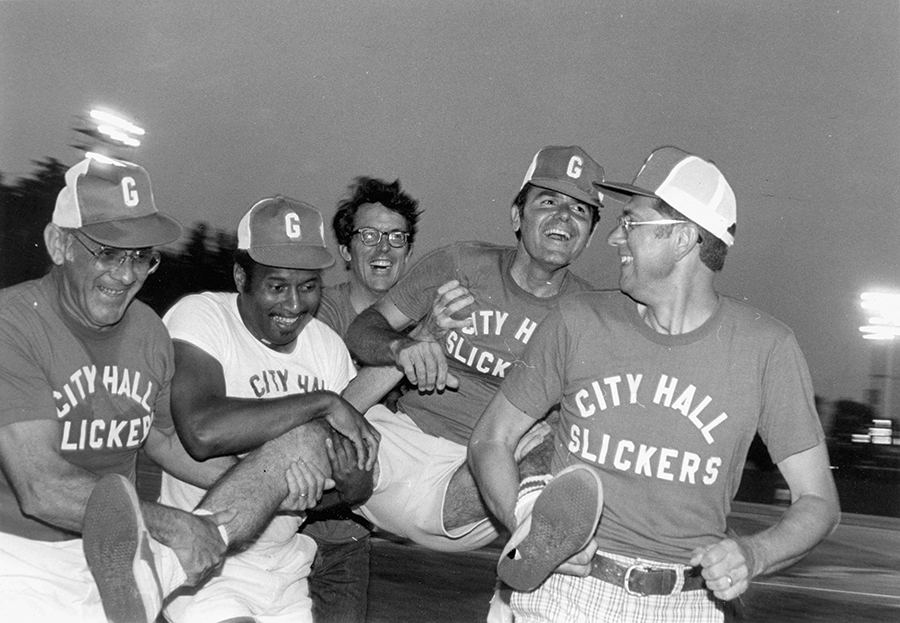
The work with people suited his personality, even more so when his boss suggested he join the Greensboro Jaycees, an organization full of young go-getters and future movers and shakers, heavily involved in civic activity. Jim signed up in 1961, not long after a guy named Arnold Palmer began setting the golf world on fire. “It was one of the smartest things I ever did. The Jaycees were a fantastic group of people and the GGO [Greater Greensboro Open, forerunner of today’s Wyndham Championship] was just entering its golden years.” Two years after joining, Melvin became the tournament’s charismatic chair, helping to raise more than $1 million that attracted the interests of CBS, which nationally televised the tournament for the first time — and continues to this day.

One year later, Melvin became president of the Jaycee chapter, which under his watch was named “Best Jaycees Club in the World.”

In 1968, he entered politics by serving as campaign manager for Rich Preyer’s successful congressional race. A year later, he ran unsuccessfully for the city council and was chosen by the council to serve as mayor pro tem in 1971. From there, he went on to five consecutive terms as Greensboro’s first publicly elected mayor. During his tenure, Melvin supported expansion of the Greensboro Coliseum, construction of a new municipal office building downtown, creation of the city’s most modern sewage treatment plant and the building of Bryan Park. He also played a pivotal role in the development of the Randleman Reservoir.

Melvin left politics in 1981 to focus on his banking career and philanthropic interests, retiring from banking in 1997 to accept the post of CEO and president of the Joseph Bryan Foundation at the personal urging of the aging Joe Bryan, who recognized both Citizen Jim’s innate passion for the Gate City and his knack for getting big things done.

Among other things, under Melvin’s guidance, the foundation raised $15 million to bring Elon Law School to the heart of downtown, orchestrated major improvements to the coliseum, helped create Center City Park and build the ballpark where the Greensboro Grasshoppers play. He also helped create Action Greensboro, a nonprofit that serves as a catalyst for public-private development to serve city residents.

A decade ago, in the wake of a 30-year mass exodus of major textile, furniture and cigarette corporations, Melvin took on what would arguably became his most ambitious and challenging project of all — a campaign to bring major manufacturing back to the Triad.

“We lost more than 90,000 good-paying jobs when those vital industries left the region,” he pointed out when we caught up to him at his office, a few days after the megasite deal was announced. “Charlotte became a booming banking capital, and Raleigh thrived as center of high technology. But here in Greensboro and the Triad, we were always a manufacturing culture going back to the days when John Motley Morehead had the foresight to create the North Carolina Railroad through this part of the state that attracted people like the Cone brothers to Greensboro, setting off a manufacturing boom that lasted for a century. We needed to somehow get that back.”

The idea of a shared manufacturing megasite, he says, originated a decade ago when Stan Kelly and Mike Fox of the Piedmont Triad Partnership hired a top engineering firm to find a suitable location. They identified a 1,800-acre rural parcel off U.S. 421 between the town of Liberty and the Julian community.

A unique partnership between Randolph County, the Bryan Foundation, the City of Greensboro and Piedmont Triad Partnership got the program off the ground, including Realtor Sam Simpson and real-estate lawyer David Joseph, whose task it was to convince more than 100 individual landowners to sell their property in the interest of the project. “That was no simple job,” Melvin says. “They sat on a lot of couches and just listened to folks. They joked that they each put on at least 10 pounds.”

The team “made generous offers to buy or replace the land,” Simpson says. “But for most of these people, this wasn’t about the money. This was about, in some cases, land their families had lived on for generations. This was about their roots in a community.” He continues, “They had to believe this project was going to make a difference in their lives — and everyone around them — before they agreed. That took patience and absolute transparency, which Jim Melvin insisted on.”

A major boost came two years into the process when the North Carolina Railroad expressed interest in joining the massive development project, granting the site unrivaled transportation access for a potential manufacturing client from a pair of interstate highways (and a third in planning stages) and a railroad line directly adjoining the site.

The final piece of property was acquired in 2017, and Toyota identified the megasite as a leading candidate for its new North American auto production plant. At the 11th hour, however, the deal collapsed when the company opted to move to Alabama instead.

Among other things, a unique working group that included the City of Greensboro, Randolph and Guilford counties, the North Carolina Railroad, Piedmont Natural Gas, Duke Energy and a key environmental engineering firm managed to collaborate on an even more compelling turnkey site that would have everything a major manufacturer need to be simply “move in and get to work.” This goal was achieved when the Greensboro City Council agreed to extend water and sewer to the site.

“The working group was the final piece of the puzzle, and Jim Melvin’s visionary approach to things was so important,” notes Brent Christensen, CEO of the Greensboro Chamber of Commerce. “It brought everyone together to share ideas and get things done. That’s the Melvin way.”

“None of this happens without Jim,” echoes Randolph County Commissioner Darrell Frye, who has known and worked with Melvin for years. “He knew how to get the right people together and make it happen. He’s a visionary who never gives up. I think the positive multiplier effect of this is going to prove unlimited in the future. It worked out even better than we hoped.”

Which brings us back to Citizen Jim’s novel commencement address to the graduating class at Greensboro College, an admiring mention of which reportedly found its way into commentary in The New York Times. The man clearly practices what he preaches.

“But did it really happen the way your friends like to tell the story?” We put that question to him at his Bryan Foundation offices a few days after Toyota made its groundbreaking announcement.

“Believe it or not,” he confirmed with a hearty laugh, “it did happen like that. But you’ve got to realize the circumstances. It was cold and starting to rain. The last all those parents sitting there wanted was to hear some long-winded politician give a speech. So, I just gave them my favorite quote by Winston Churchill. They seemed to really appreciate that.”

Finally, we wondered if this latest accomplishment might be a fitting last hurrah for the indefatigable Melvin, who turned a youthful 88 on Christmas Eve.

The man who never, never gives up, just smiled.

“How about we just say the latest hurrah,” he suggested.  OH


Short Stories

Lovin’ Some Lyle

Singer-songwriter-actor Lyle Lovett brings his witty lyrics and distinctive spin on country music to the Steven Tanger Center for the Performing Arts on Tuesday, March 8 at 7:30 p.m. Accompanied by an acoustic band, the four-time Grammy-Award winner hit the road at the beginning of March — the first time in two years. The show will feature acoustic arrangements of Lovett standards, as well as a preview of songs from his upcoming album, scheduled for release in May. The smaller ensemble and Lovett’s informal, conversational onstage style will provide the audience with an up-close, “living-room” listening experience. Rumor has it that the Texan lives near Houston in a house built by his grandfather in 1911. Explains a bit about the diversity of his music. Info: TangerCenter.com

Fun and Names

The Greensboro Children’s Museum is upping its game for kids of all ages. In January, it received its largest donation in its 23-year history. The $1.25 million donation from Frank and Nancy Brenner will be used to advance the museum’s mission to inspire hands-on learning through play, as well as fund building repairs and upgrades to more than 20 indoor and outdoor exhibits. The gift officially launched the museum’s capital campaign, “Building for Tomorrow,” to raise $2 million for infrastructure improvements to the facility. In honor of the gift and recognition of the museum’s expanded presence throughout North Carolina and Virginia, in July the museum will be renamed the Miriam P. Brenner Children’s Museum. Miriam Brenner is the late mother of Frank Brenner. Info: GCMuseum.com

As Seen in O.Hey

Don’t throw away your shot to hear a phenomenal entertainer speak and perform as part of UNCG’s Concert & Lecture Series. Daveed Diggs is an actor, rapper, singer-songwriter, screenwriter and producer known for his work in Hamilton, Black-ish, Snowpiercer and Disney’s forthcoming The Little Mermaid — we hear he’s a little crabby about that. Catch Diggs at 8 p.m. on March 5. Info: VPA.UNCG.edu/ucls-2; to subscribe to O.Hey, visit oheygreensboro.com

A Fairy Tale Come True

Cinderella — the time-honored, beloved story of a dreamer — shunned by her step-monsters and saved by a fairy godmother, glass slippers, industrious mice and a charming prince — comes to life at the Carolina Theatre, 5 p.m., Saturday, March 26 and, 3 p.m., Sunday, March 27. The classical ballet version of the Brothers Grimm fairy tale brings drama, romance and humor to the stage — not to mention outstanding performances by the Greensboro Ballet. Set to the music of Sergei Prokofiev, the ballet will remind you that dreams can come true. And sometimes losing a shoe isn’t a bad thing. Young Cinderellas in training can dress in their favorite princess costume and enjoy a tea party with Cinderella and her friends. Included will be a goody bag and a princess craft project. Meet many of the characters from the ballet and, of course, the Cinderella herself will pose for photos and give autographs. Definitely a sugary sweet event for sugary sweet sweeties. Info: CarolinaTheatre.com/Events

Dynamic Duo

While we’re on the subject of 24-carat entertainment, chanteuse extraordinaire Jessica Mashburn, along with world-renowned singer/songwriter /devoted husband (because why wouldn’t you be?!?) Evan Olson, are once again performing as AM rOdeO. They will bring their merry melodies to Grandover Resort’s 1808 Lobby Bar from 7–10 p.m. on Friday, March 11. Two of the most talented performers you’ve ever heard of, AM rOdeO reminds O.Henry’s me of big city lounge entertainment. Practically a lost art, Jessica and Evan bring with them a wide repertoire of tunes from The American Songbook classics to the present. Evan Olson’s musical compositions recently have been featured on network shows such as The Young and the Restless, America’s Funniest Home Videos and Dexter: New Blood on Showtime. This promises to be a sophisticated, enormously entertaining kick-off to your weekend. Info: GrandoverResort.com — Billy Eye

Ogi Sez

by Ogi Overman

Let’s pause for a moment and reflect on the past two years — how we handled the horrors, the isolation, the fear of the unknown, the suffering that began not one but two Marches ago. Many of us were on the brink of losing all hope, and, maybe, some of us did. But then came that sliver of light at the end of the long, dark tunnel, and now we hope that we will find ourselves at the dawn of a new day, a new season, a new and vastly different March.

Let the music play.

• March 19, Greensboro Coliseum: Women’s basketball takes center stage at the Coliseum this month, but nestled between the ACC tourney and the Regionals, the Avett Brothers managed to sneak in their rescheduled New Year’s Eve show. They promised they’d be back and they didn’t disappoint. But then, they never do.

• March 25, High Point Theatre: The mid-’90s were marked by a resurgence of swing music, led on the East Coast by the Squirrel Nut Zippers and the West Coast by Big Voodoo Daddy. But the phenomenon also was going on in Great Britain, with the Jive Aces leading the charge. They’re bringing their “Jump, Jive & Wail” tour stateside this spring, and I think I’ll Zoot up and flip, flop & fly over to High Point.

• March 26, Ramkat: It seems almost cliché to call Donna the Buffalo a cult band. Granted, a quarter century ago they amassed an immediate cult following that has only multiplied today. But by taking a leap of faith and forming the Shakori Hills GrassRoots Festival down the road in Pittsboro, they took on an aura all their own. So, if you can’t wait until May to see them, head over to Winston.

• April 1, Ziggy’s: I know, I know, I’m breaking the rules by hyping a date in April, but, as Barney said when the gold truck came through Mayberry, “Ange, this is big. This is big — big!” Indeed it is. When a legendary music venue reopens in a new town and is again run by a venerated impresario, Jay Stephens, it deserves a month’s notice. Ever-popular newgrass act Acoustic Syndicate hosts the grand opening. And it promises to be grand.

Almanac

March

By Ashley Walshe

March is an age-old prophecy: a great thaw followed by a riot of life and color.

Some said it would start with a single daffodil. A field of crocus. The soft warble of a bluebird.

All the signs are here. And in the bare-branched trees, where wild tangles of dead leaves resemble papier-mâché globes, newborn squirrels wriggle in their dreys, eyes closed.

Weeks ago, winter felt eternal. The cold air stung your face and fingers. The world was bleak and colorless.

Now, the red maple is blooming. Saucer magnolia, too. You build the last fire, sweep the hearth, return to the garden and its wet, fragrant earth.

Frost glistens in the morning light, but you know it’s true — that spring is coming. You know because the birds know. They cannot help but blurt it out.

Beyond the flowering quince, a woodpecker drums on a towering pine.

A towhee gushes drink-your-tea.

A robin whistles cheerily, cheer up, cheer up, cheerily, cheer up.

Soon, spring peepers and chorus frogs will join the band. The first bee will drink from the first hyacinth flower. A young squirrel will open its eyes.

Sunlight kisses wild violets, purple dead nettle, tender young grasses. Everywhere you look, you notice a new warmth, a new softness, the gentle pulse of life. By some miracle, spring has arrived. A sweet mystery born from the icy womb of winter.

In March winter is holding back and spring is pulling forward. Something holds and something pulls inside of us too.

— Jean Hersey

A Gardener’s Luck

Let’s talk about three-leafed clover (genus Trifolium), a flowering herb in the legume family that just might be what your lawn or garden has been missing. Common as weeds — and often disregarded as such — clover can grow in most any climate, tolerate poor-quality soil and resist most pests and diseases. Here’s the best part: clover can “fix” spent patches of earth by restoring nitrogen levels. In other words, it’s a natural fertilizer and often is used as green manure crop.

Using clover as a ground cover between garden beds will also attract pollinators. Mix some clover with your grasses and your lawn will look greener. An added bonus: It’s impervious to dog urine. Even if you never find a four-leafer, that’s some good garden luck.

Spring Forward

Daylight saving time begins Sunday, March 13. Longer days inspire evening walks, birding, a quiet hour in the garden. Notice what’s flowering: breath-of-spring (winter honeysuckle), brilliant yellow forsythia, lemony scented star magnolia. Notice what needs to be pruned: ahem, the rose bush. Although the vernal equinox occurs Sunday, March 20, spring has been here for weeks, present in each glorious inhalation. Allergy season? Coming soon.


Poem

What the Moon Knows

She knows shadow, how to

slip behind clouds. She’s perfected

the art of disappearing. She knows

how to empty herself into the sky,

whisper light into darkness.

She knows the power of silence,

how to keep secrets, even as men

leave footprints in the dust, try to claim her.

Waxing and waning, she summons

the tides. Whole and holy symbol,

she remains perfect truth, tranquility.

Friend and muse, she knows the hearts

of lovers and lunatics. She knows 

she is not the only one that fills the sky,

but the sky is her only home.

— Pat Riviere-Seel

Pat Riviere-Seel is the author of When There Were Horses