The Flying Gargoyles

THE FLYING GARGOYLES

The Flying Gargoyles

Photographs by Tibor Nemeth

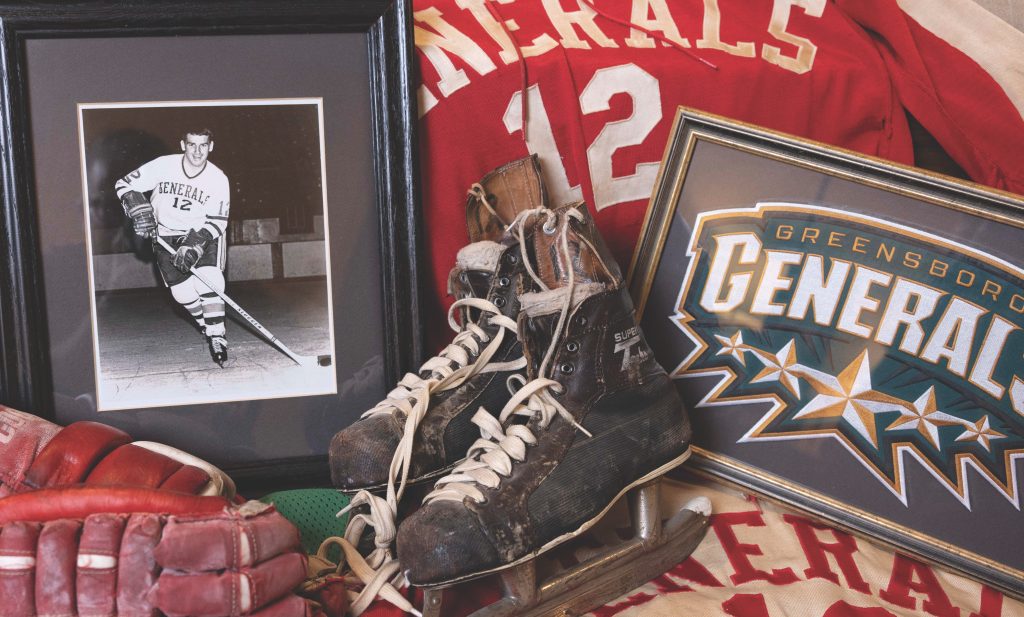
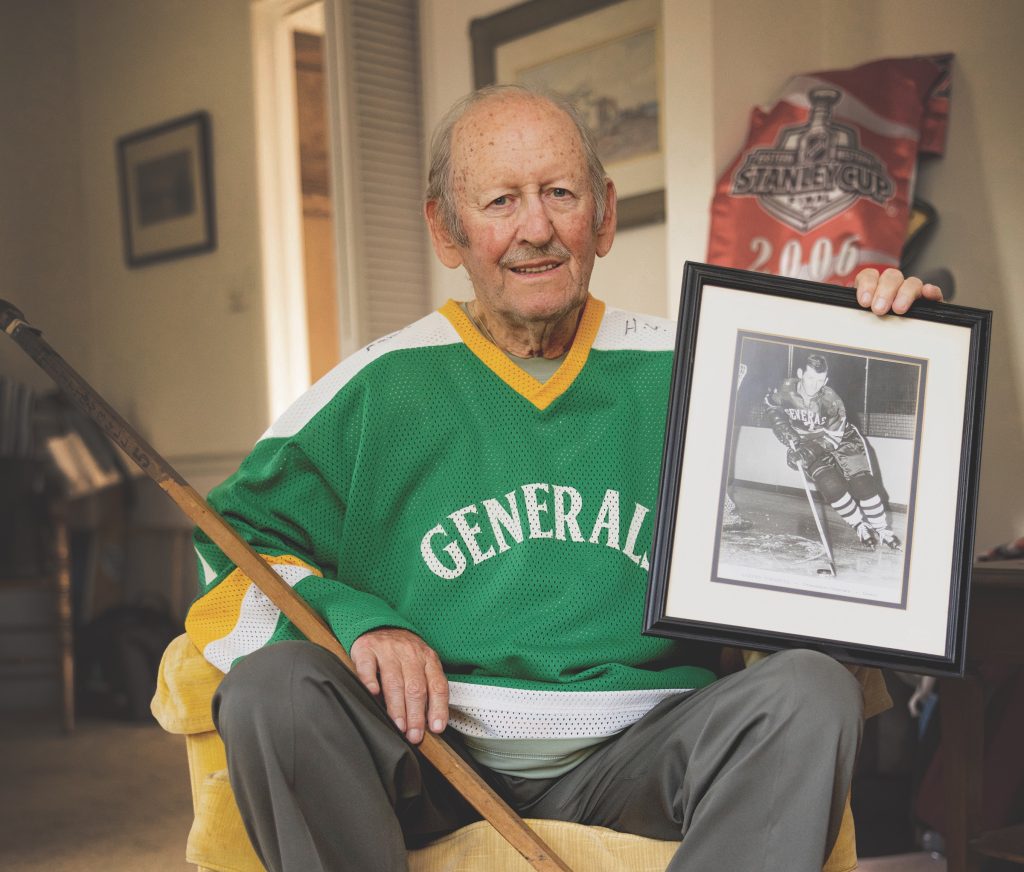
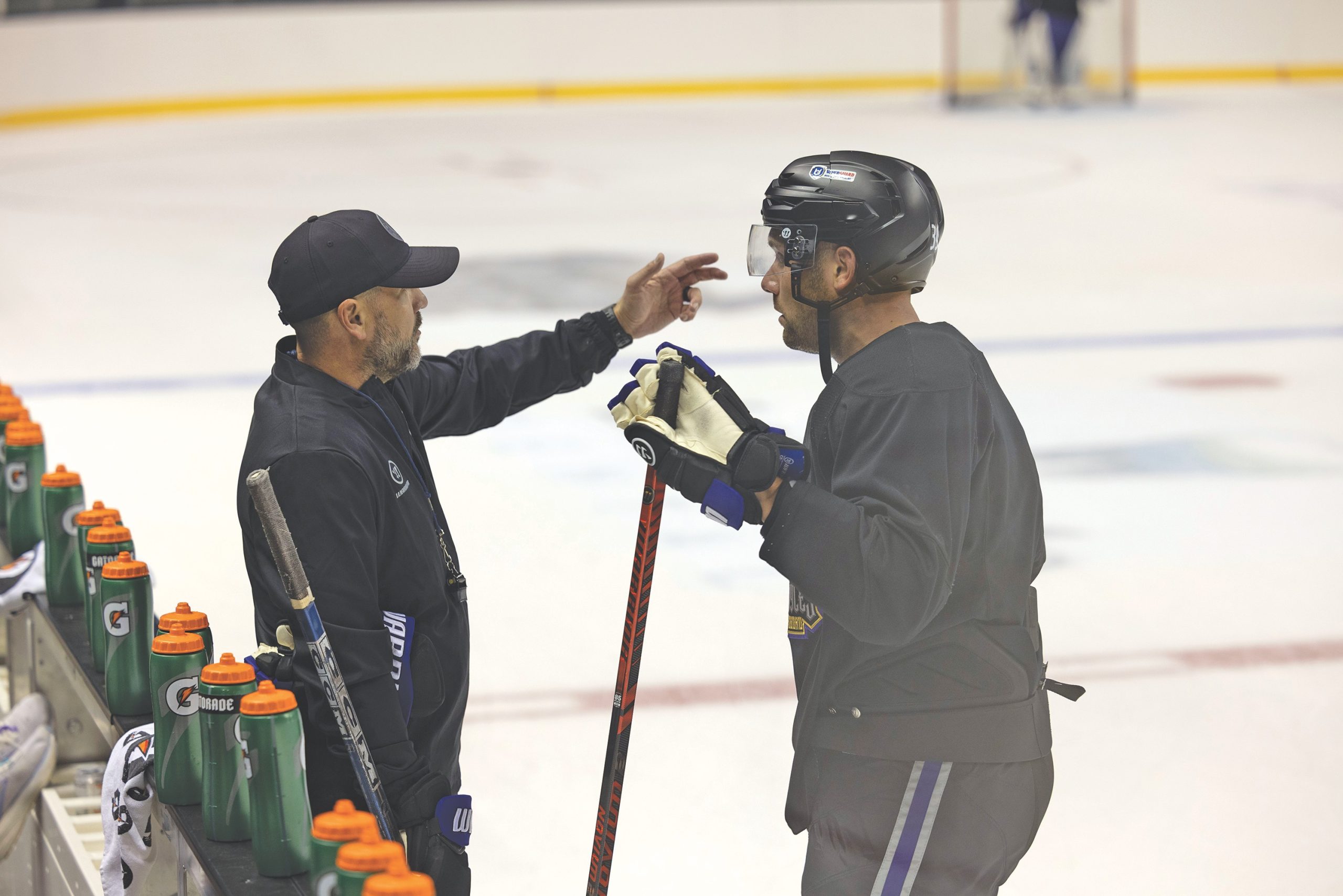
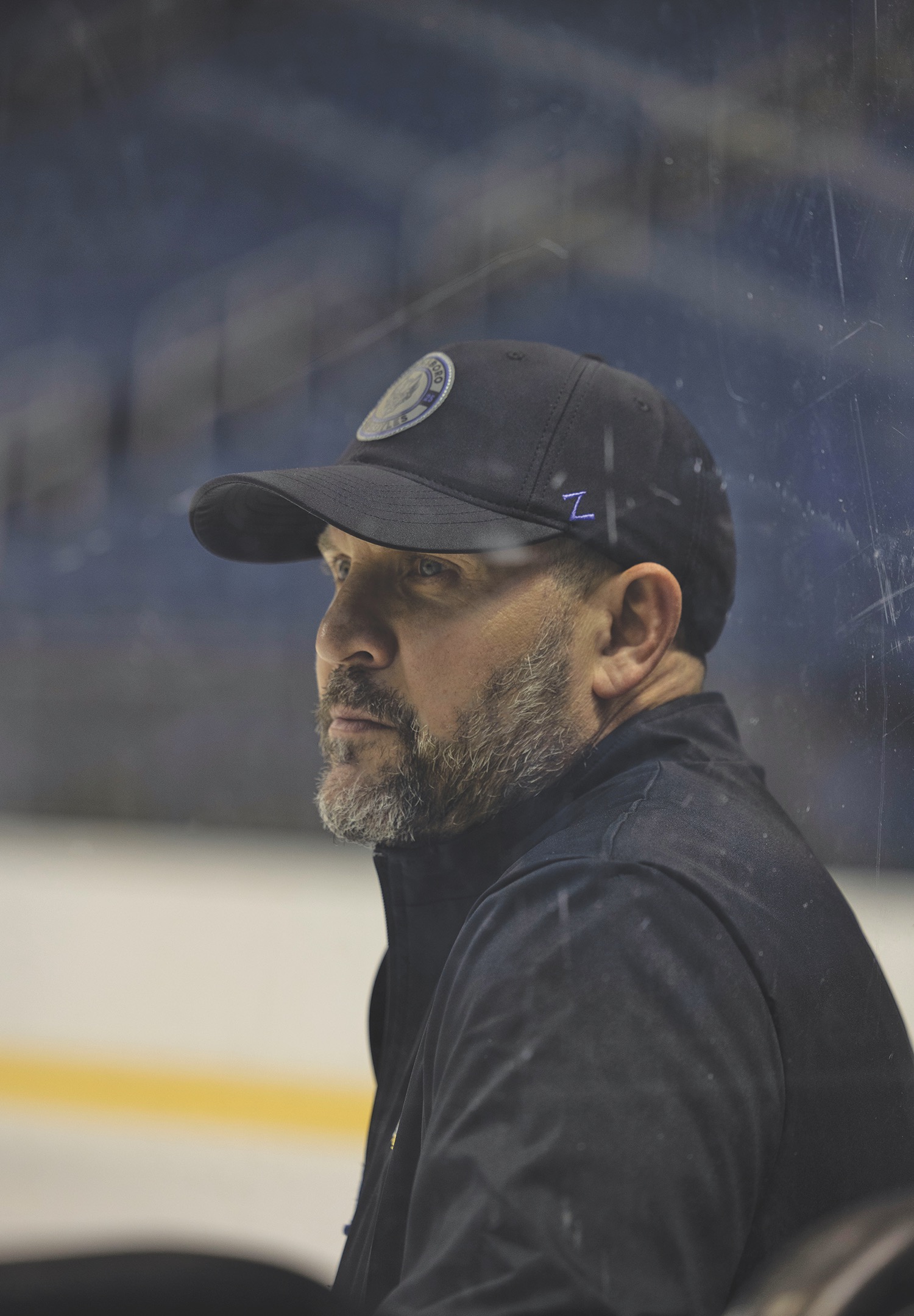
We sent photographer Tibor Nemeth to capture Gereensboro’s newest hockey team, the Gargoyles, warming up on the ice before their season kicked off in October. You can find the rest of their opening season schedule at gargoyleshockey.com.

Strolling with Fungi

STROLLING WITH FUNGI

Strolling with Fungi

A woodland garden flourishes in an old Winston-Salem neighborhood

By Ross Howell Jr.    Photographs by Lynn Donovan

Managed by the Piedmont Land Conservancy, the Emily Allen Wildflower Preserve is a reminder that the natural world lies right at our feet.

In 1954, Allen and her husband, O. G., moved into the dream home they’d built on 6 acres of land — with a creek — in a leafy Winston-Salem neighborhood.

One spring, Allen noticed the purple-and-white petals of a wildflower emerging beneath what she described as “a mess with poison ivy, honeysuckle and blackberries growing everywhere” near the creek.

That wildflower was a showy orchid (Galearis spectabilis) and, somehow, it sparked a passion in Allen to learn everything she could about North Carolina native plants.

She took a botany class at Wake Forest University and went on to serve as president of the North Carolina Native Plant Society. Over some 40 years, Allen collected wild plants from the mountains of Western North Carolina, nursing them in her backyard.

Emily and O. G. donated their land through easement to the PLC in 2000. Since then, Allen’s care for what she always called her “Friendship Garden” has been bolstered by PLC staff and stalwart volunteers.

O. G. passed away in 2006 and Emily in 2015. Upon her death, their home was donated to the conservancy to be developed as an educational center.

Allen’s wildflower garden and house feature not just flowers from the mountains, but also a bounty of eastern North American trillium, along with native ferns, creeping phlox, Dutchman’s breeches, cranesbill geranium, flame azalea, Carolina buttercups, columbine, plus Oconee bells (Shortia galacifolia), a rare wildflower found in the southern Appalachian Mountains.

As you’d expect, the site is best known for its spring wildflower group tours, which are available by appointment only.

But photographer Lynn Donovan and I are here to participate in a fall “Mushroom Stroll,” one of several programs offered annually at the garden.

It’s raining steadily, and I should’ve given more thought to my outerwear. Veteran photojournalist Donovan has wisely brought a slicker and hood.

We’re greeted at the door by Janice Lancaster, manager of the garden. Lancaster received her undergraduate degree in dance from the University of North Carolina School of the Arts. In addition to her work with the PLC, Lancaster has developed a dance-ecology course at Wake Forest University and her choreography often features environmental themes.

A group of mushroom strollers are already inside, as is Kenneth Bridle, who will lead our tour.

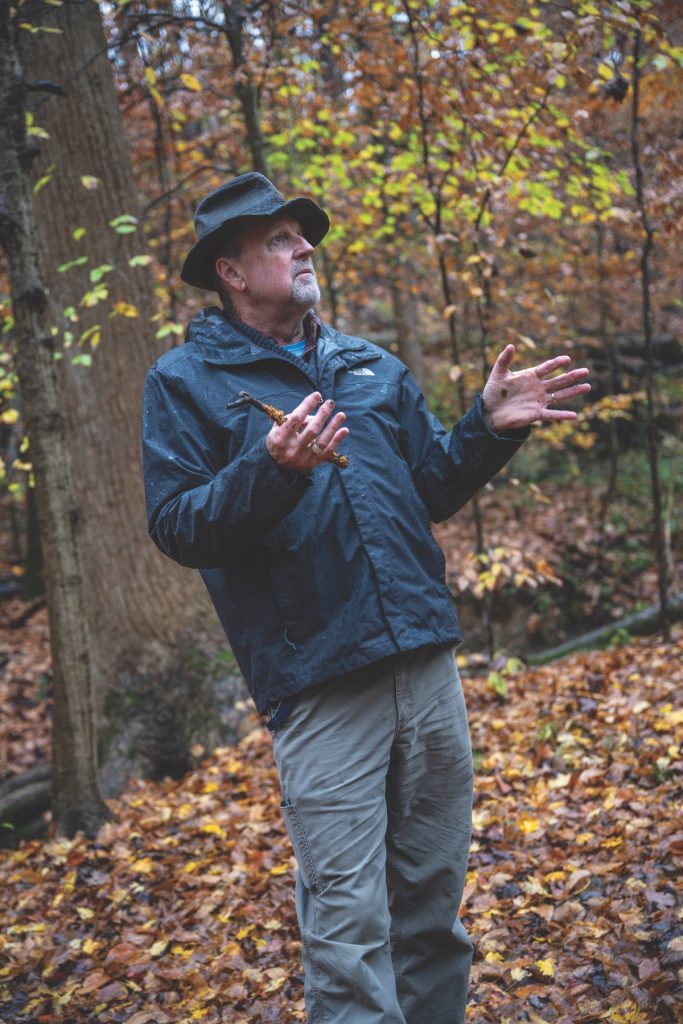
Bridle has a Ph.D. in biology from Wake Forest and has worked with the PLC for more than 30 years. Recently, he retired from his position as stewardship director and now acts as a conservation adviser, leading nature walks and other activities.

Bridle’s career in environmental preservation is truly remarkable.

He is the author of several natural heritage inventories as well as rare plant and animal surveys. A founding member of the Dan River Basin Association, the Carolina Butterfly Society and the Triad Mushroom Club, he also teaches classes in a selective and rigorous Master Naturalists’ program that prepares volunteers to lead stewardship, education outreach and citizen science projects.

Bridle gives us a quick tour of the improvements to the Allen house.

Split units now replace the original heating system. A downstairs bathroom was remodeled to serve as a wheelchair-accessible restroom.

“The last part is taking out cabinets and countertops in the old laundry room,” Bridle says. In their place, a catering kitchen will be installed.

“It’s slowly turning into more usable space, which is what Emily always wanted,” Bridle says.

He should know. He met Allen when he came to her garden as a graduate student.

That started a friendship that lasted for years. Bridle often served as Allen’s driver on her plant-collecting expeditions and, like her, Bridle would go on to serve as president of North Carolina Native Plant Society.

“After a hot, dry summer, we usually have some kind of rain event,” Bridle says, “and the following week, the mushrooms go crazy.”

Bridle clears his throat.

“So, we’re going to wander around outside,” he announces to our group. “Everybody keep your eyes peeled.”

As we go outside, we can hear the steady drum of raindrops in the leaf canopy.

After a few steps along the path, Bridle pauses and points to the ground.

“Right there, bird’s nest fungi,” he exclaims. Bird’s nest fungi (family Nidulariaceae) are small, cup-shaped fungi containing spore-filled discs that resemble tiny eggs. The fungi feed on decomposing organic matter, such as wood and plant debris.

“When a drop of water falls in the nest,” Bridle says, “those spores blast out.”

He points out a dark mass spreading among leaves and sticks.

“That’s a whole colony of them,” he explains.

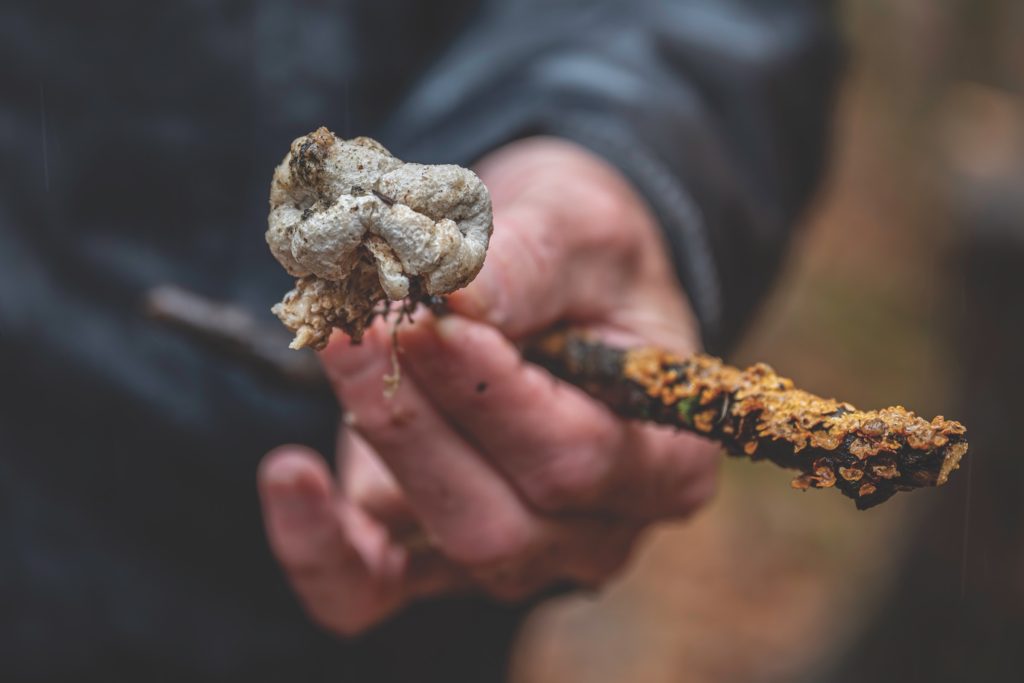
A few more steps into the woods, we spy a tree trunk glistening in the rain. On its side are orange-colored growths with the texture and shape of oyster shells.

“That’s shelf fungi called orange crust,” Bridle says. “They come in many different versions.”

Shelf fungi have a tough exterior and are a favorite of mushroom enthusiasts because they can be observed year-round, even when other types of mushrooms might not be in season.

Bridle tells us that an unusual variety grows in the Blue Ridge Mountains, feeding on decaying rhododendrons.

“Those are iridescent blue and will glow in the dark,” he says.

Farther along, we come upon more shelf fungi. These are called turkey tails. They’re nestled in groups along a rotting limb, bearing the shape and color of a tiny tom turkey displaying his tail feathers.

“They always have those nice, multicolored, concentric rings,” Bridle says. “And they have a long tradition in Asian medicine.”

As we make our way farther down the swale toward the creek, we come upon oyster mushrooms (Pleurotus ostreatus). Pale and serene, they’re edible, prized for their delicate texture and flavor.

“Of the mushrooms we find in the woods, the oysters are probably the most common,” Bridle says.

Nearby, Bridle points out another mushroom growing on a tree stump. It’s a resinous polypore (family Fomitopsidaceae).

“See that orange resin?” he asks. “They produce that resin even in the driest of summers.” These mushrooms are perennials, producing a new ring of growth each year.

On a decaying log farther along the path, Bridle spots a small specimen of an edible shelf mushroom. It’s called chicken of the woods (genus Laetiporus) and can grow to be quite large, stacked in shelves, some 10 inches in width.

He tells us that the flesh of the mushroom is soft and tasty, and stores well wrapped in a paper bag and kept in the refrigerator. Vegans often prepare it as a substitute for meat, cooking it in a variety of ways.

“Anything you can do with a chicken finger you can do with chicken of the woods,” Bridle says.

He describes other fungi that are common to the area — hen of the woods, shrimp of the woods and lion’s mane.

“You’ll often find lion’s mane high up in a standing, dead tree,” Bridle says.

No excursion into the world of fungi is complete without at least one bizarre fact, and Bridle points out some beech trees growing on the other side of the creek.

“In September, I always take people down among those trees,” he says, “because that’s where you’ll find the beech aphid poop-eater.”

Our group laughs nervously. Sometimes with a mycologist (a scientist who studies mushrooms), you wonder if they’re just pulling your leg.

Bridle explains that beech trees in September are hosts to colonies of beech blight aphids.

“We call them boogie-woogie aphids, because, if you tap on the tree branch, all the aphids do the wave.” That is, the aphids all at once start throbbing in unison.

See what I was saying about a mycologist?

These tiny insects suck sap from the beech trees, feeding on the sugar. Their excretions are politely referred to as “honeydew.”

So, on the limbs and leaves beneath the aphid colony, you’ll see masses of black fungus that look like sooty sponges.

That’s Scorias spongiosa, the beech aphid poop-eater.

“Everybody remembers that one,” Bridle concludes.

The rain is falling in earnest now, so even the well-equipped are ready to retreat. My barn coat feels like it’s holding about a gallon of water.

Donovan stows her camera gear and we get into the car.

We’re wet as bird dogs after a hunt. But we’re both grinning like crazy.

High on mushrooms, you might say. And filled with wonder for the natural world.

Ghost Town

GHOST TOWN

Ghost Town

Apparitions in the area

By Cynthia Adams

As Halloween approaches, stories of the paranormal pique our curiosity.

In 1876, British composer Henry Clay Work was inspired to write “My Grandfather’s Clock” by eerie events in a hotel where he stayed, where a tall clock stopped working at the death of one of the brothers who owned it. 

The song’s popularity endured. Johnny Cash and Burl Ives recorded the ballad decades later, and countless schoolchildren learned the lyrics. 

Yet, Sherri Raeford directly experienced this phenomenon. 

“The backstory first,” begins Raeford, a playwright who stages the works of Shakespeare. She appreciates context. 

Her mother received a one-of-a-kind Christmas gift 45 years ago from Raeford’s father, Marshall Weavil, who worked for Sovereign Limited, a grandfather clock company in High Point.

“He designed the machines that made the decorative trim, the curlicues on the clock,” Raeford explains. 

“He gave my mom a clock — the first ever made by that company.” Inside, it was signed: To Lois with love, Marshall, Dec. 25, 1980.

At his death, his daughter received a grand example representing his life’s work. 

“He gave me a bigger, better clock when he passed away,” Raeford says.

Shortly after, Raeford’s mother, suffering dementia, came to live with her. “It was a stressful time.”   

Strangely, the clock her father bequeathed her developed a mystifying tendency.  “The grandfather clock would stop and go,” Raeford says, seemingly “according to what was happening.”

“The last year of Mom’s life . . . when I would grow impatient with her, the clock would gong at me!” Raeford was incredulous, having never before heard these sounds.

“The last week of Mom’s life, it quit working. I restarted the pendulum, and said, ‘Daddy, she’s not ready.’” Raeford waited. 

“The second time it quit, I realized, maybe I’m hanging on to her and she is ready.”

Raeford’s mother died two days later. The gonging stopped forevermore.

“It quit working.” 

Raeford inherited her mother’s smaller clock and gave the larger one to a friend.

Aptly, she quotes Hamlet. “There are more things in heaven and Earth, Horatio, than are dreamt of in your philosophy.”

The T. Austin Finch House

Thomasville’s Finch House is a Renaissance Revival mansion built in 1921 for T. Austin Finch, whose family founded Thomasville Furniture, and his wife, Ernestine Lambeth Finch. 

With Thomasville Furniture’s factories shuttered, the mansion fell into decline. In the summer of 2017, Greensboro residents Andrew and Hilary Clement took on its restoration.

Andrew, a contractor, looked beyond the decades of mold and decay. With much of its grandeur intact, he envisioned wedding ceremonies occurring onsite. 

The Clements transformed the house into a blushing beauty (Labor of Love: ohenrymag.com/labor-of-love). One too lovely to leave?

“Some of the local police and other residents swear the house is haunted,” Andrew replies.   

Ernestine? Out of respect “for the family and their legacy,” Andrew hesitates before admitting to sensing a feminine energy in the primary bedroom and library.   

“I have not seen anything, but I feel her presence in both of those spaces, especially at night when the house is empty. One of my construction guys lived upstairs for a period of time and he saw her in old-fashioned clothes several times in that room.”

Later, he sends a detail.

“She’s definitely a benevolent spirit and not scary. One of my girls has smelled her perfume several times in that bedroom.” 

Thomasville Apparition

On June 26, 1970, Dana Holliday’s father was mortally injured in a tractor accident at age 70.

As his frantic son, Derek Kanoy, tried to resuscitate him, the father calmly reassured him. “He said, ‘Don’t worry about me, I’ll be fine.’”

But he slipped away before paramedics arrived.   

“They used to call him Bucky Buddha,” Holliday says. “He was bigger than life.” 

Afterward, the brokenhearted family held a reception to honor Bucky Buddha’s amazing vitality. “It was unbelievable, says Holliday. “Friends lined the road leading to the farm. He didn’t want a funeral. Instead, we danced and told stories.”

The family have since created a compound on the farm and live near one another.

One April day in 2020, Derek and his wife Kim snapped a photo while walking from the barn to their house. In the picture, taken at sunset, a small, glowing orb appears directly over the spot where the fatal accident occurred, almost 50 years later.

“Kim was stunned,” says Holliday. “She might have been taking a picture of the sunset.” Perhaps the sphere of light had appeared before, but this time it was documented. Holliday says the extraordinary sighting was as if Bucky Buddha was signaling all was, indeed, well.  “I think it helped.”

Two years before Bucky’s death, Tomiko Smith, a consulting medium who once worked at the Rhyne Research Center at Duke University, told Holliday that she should be “intentional about the way I spent time with him.” Now, she understands.

A Haunting on Mendenhall Street

After years of admiring it, a 1914 Craftsman in a charming Greensboro neighborhood went up for sale. We spent months repairing plaster, painting and scrubbing, thoroughly excising the smell of cat urine and viscous nicotine residue coating each wall of the Westerwood house before finally spending a night.

After moving in, we were utterly exhausted that first night. Around 1:15 a.m., I was awakened by the unmistakable creaking of the stairs.

Heart hammering, I rose quietly. The stairs were flooded with moonlight by a large window at the top. I crept toward the landing and crouched, watching. The sound of footfalls upon each tread was distinct — but no one appeared.

I returned to bed when the steps stopped, but sleep eluded me. Had it been a lucid dream?

But the scenario repeated the following night. The disembodied footfalls on the stairs returned, at the same hour.

On the third night, again crouching at the top, I jumped when a hand touched my shoulder. “I hear it, too,” my husband said quietly.

I scoured old deeds and newspapers for clues. What had happened in our new home? Whose spirit mounted the stairs each night?   

Nothing gave much insight, apart from the fact that records revealed the house had changed hands often, once resold mere months after being bought. 

Was it due to what seemed to be a benign ghost?

During an overnight visit from my young nephew, I caught him racing upstairs, his child legs pumping. I chided him about running in the house. He turned to me, eyes wide. “That man’s watching me!” 

He pointed back to the empty stairs. I hurriedly distracted him with a children’s book.

Gradually, we made peace with the restless spirit who walked the stairs. Ironically — a tale for another day — a paranormal experience awaited us in our next home.

Writers of Passage

WRITERS OF PASSAGE

This year’s O.Henry writing contest had a twist. Or was it twisted? We asked you to write your own obituary — because it’s never too late. Until, of course, you are. A team of editors pored (and even argued) over the words of our nearly departed entrants for hours — it was a stiff competition. In the end, several wowed us with the use of humor, quirkiness and literary tools, but there can only be one winner. Between two, it was just about a dead heat, so we also selected a runner up. The rest? Well, they were still cherished by all who read them. And now it’s your turn: Read ’em and weep.

With Heavy Hearts, We Announce Our Winner

Jane Kester Took the Last Train

With almost no regrets, Jane Kester caught the last train. The one whose daily whistling formed the backdrop of her growing-up days in her Guilford County home with the midtown depot. The same one that delivered assurance that life chugs along, mostly at an even pace. She spent most of her life within earshot of the train, each boxcar filled with the cargo of a peak or valley. It seems her time passed by as quickly as the blurred scenery on that moving train; yet the pauses captured in still-shots were the ones that, strung together, formed a panorama of her Earth time.

A  series of clips: of a first date in a red-and-white convertible and a lavender dress; of birthing babies and watching them mother their own; of watercolors painted for baby nurseries; of a hand raised at the back of the classroom. There were glimpses of a child saved by a miracle; a daughter’s embrace. Another car held ocean storms and mountain sunsets, Scrabble games and scorched boxer shorts left to dry on a space heater. And there were the snapshots of falling in love for life and falling in love with life. Above the engine’s roar could be heard the laughter, and the music, and the dance. All engineered by the Almighty conductor, keeping it all on track.

The last whistle stop is a fitting landing place.

Our Dearly Beloved Runner Up

David Who?

In a sad testament to squandered opportunity and a truly half-assed effort at life, the family of David Theall announce his passing from this world. Born in the Midwest and raised in the South, David’s childhood was notable only for a complete lack of anything interesting happening at all. Of his three remaining siblings, only one even remembers his name.

Teen years were marked by a muted rebellious period that his parents failed to notice except when his hair extended beyond his collar. Their belief that a close-cropped haircut would protect you from the evils of becoming a “hippy” was the solid foundation upon which they raised all of their children. (This was particularly difficult for their daughter.) David, an average student who set no academic records, did make it to college, but achieved nothing notable within the hallowed halls. His college roommate remembers him as a quiet type who “may have been a mute.”

After earning a degree in journalism and entering the job market, his colleagues always said, “David has a face for radio and a voice for print, but don’t let him write anything either.” His career spanned several decades of mediocrity, punctuated by a retirement party with only three guests in attendance.

The list of lifetime achievements deserving mention in a forum that charges by the word is, frankly, not worth the extra nickel. Never even close to the brink of greatness, his life will be forgotten by most who knew him and mourned by none.

Greatly Missed

Mary E. Lewis Took the Trip of a Lifetime

November 8, 1998 – August 29, 2025 

We are sad to report that Mary Ellen Lewis is no longer with us. To the surprise of none who knew her, she brained herself tripping over the first flagstone of the path leading to her car,  which she walked at least three times daily. 

Known as Mellon to her friends (due to an inspired misspelling of her name that happened to resemble the word for “friend” in a fictitious Elvish language), she is survived by her family, two good-as-sisters in other states, and a raunchy Dungeons and Dragons group that still can’t get their initiative order correct.

Her final wishes, verbally conferred, detail that her body is to be thrown into a stratovolcano so that she can finally fulfill her life-long wish of seeing one up close. Barring that, she would like an urn of her ashes to be placed on the doorstep of the local grammar-Nazi, with a hand-written note reading, “your next.” 

The measly funds she accrued while living are to go towards buying violins for young students so that they too may know the joys of musicianship (and their parents the bliss of silence following a half-hour of scraping that sounds like a dying feline). Her own violin is to be immolated alongside her. 

Any flower arrangements procured for the wake are to be illicitly-and-hand-picked from the  neighbors’ gardens. Libations of green tea are an acceptable substitute. 

RIP Mellon

Larry Queen, Overachiever

“He tried.”

Rhonda S. Shelton Ends Tour of Duty

Well . . .

She never imagined she would laugh so much or cry so much doing a job she loved!

Three of many:

A white-headed old man who loved his liquor and had ankyloglossia (tongue-tie). Well, she could hardly contain her laughter in an argument with him. It was a daily occurrence, but she enjoyed it. Later in her career, she saw him one Sunday after a long absence. He was dressed in a three-piece, lime-green suit and sneakers, his white hair washed and combed. He told her he had accepted Jesus and was a new man. He was! Thank you, Jesus!

Second, a shooting incident she was involved in, scared her to her core, but she survived. A drug deal gone bad, vehicle chase and gunfight. He was down, she was still standing! Thank you, Jesus!!

Third, a drowning of a female. A local drunk she thought they had dealt with a million times. It’s raining, with thunder and lightning. Ugh, the Fire Department made it to the call before us, and a fireman is carrying a small child. She cried for hours. Death made her understand just how fragile a life is, made her stop and realize how resigned she had become to being a police officer rather than a human being. All three shaped her into an officer, but it took the acceptance of Jesus Christ to make her a better person. The good, the bad and the ugly. 10-42.

Sarah Thompson Gained Her Wings

True to form, with no planning, even less prep, and, of course, leaving breakfast dishes scattered and one wet load of laundry undried, Sarah Thompson, mother and part-time person, has died. A child of nature and bare feet, she fell victim to the grind in her early years, only to later return to her actual purpose in life, which was walking through creeks, searching for salamanders with her children. A psychologist by training, she became disillusioned with the rigid classifications of her profession and instead believed primarily in compassion, embracing Joseph Heller’s idea that no one should be OK given all of (gestures wildly) “this.” Conversations took surprising turns, as she made a career out of studying suicide, but also once made a fairy mailbox out of a matchbox with her son, each with great passion.

She cried often, rarely passed over a discarded item on the curb, listened to the Indigo Girls’ “Romeo and Juliet” over 10,000 times, gardened without gloves and found peace in painting watercolor fruit on tiny paper. She loved her husband. She cherished her children. Her phone was almost never charged. She found life to be savagely heartbreaking and just as beautiful.
We know that Sarah did not fear death. Instead, she had decided to return in her next life as a bird, just as her grandmothers (cardinal and yellow finch) and her mother (bluebird) had done before. She did not yet know which bird she would be and was looking forward to the surprise.

From $21 to Doctor: The Beautiful Hot Mess That Is Lobel Lurie

Born in the Philippines, where babies cry in karaoke pitch and rice is a love language, Lobel “Label-Lulubel-Nabel-Hey-You” Lurie entered life already slightly weird and wildly determined.

When she left the Philippines, she carried exactly $21 in her pocket, one sturdy suitcase and enough stubbornness to terrify immigration officers. She didn’t just cross oceans — she crossed entire expectations.

Breast cancer survivor. Doctor of Nursing. International speaker. Rockstar nurse. Human spinach detector.

She traveled the world saving lives and occasionally saving people from public humiliation — zipping flies, flicking toilet paper off shoes and praying nobody noticed.

Despite scraping the last bit of toothpaste because small things matter, she consistently carried at least 10 open lip glosses in every purse — proving chaos was part of the brand.

She once gave a major lecture in Spain with a full lettuce leaf stuck in her teeth. Nobody dared interrupt. Probably because she also had the energy of a woman who would fix your life and your fly without blinking.

Her motto:

“Slightly weird but wildly together is the best you can hope for. And if your fly is down, fix it before you embarrass your ancestors.”

Survived by:

•Her daughter, who inherited her spirit.

•Friends and communities now compulsively checking their teeth.

•Half-used toothpaste tubes and a lifetime of fully used dreams.

Long live Lobel Lurie — beautiful, messy, unstoppable.

Mallory Miranda Booked It Outta Here

Mallory Miranda died today, aged 112, just like she always told you all she would, damn it. Don’t bother googling her. A prolific writer, she wrote under pseudonyms so none could pursue her after mistaking her characters as representations of themselves. You will, if googling, find salacious videos made by someone whose stage name was the same as hers. For clarity, her epitaph will read “Mallory Miranda, pseudonyms:” followed by a list of her pseudonyms, concluded “Bite me!”

Mallory was born in California in 1989. She lived comfortably until the 2008 Great Recession. During this period, she learned the traitorous quality of money, then opted to spend her life in willful avoidance of it. She insists this was intentional — not because she spent her entire income on books. Ignore that TBR pile. It’s nothing to do with her lack of fortune. Sir! Madam! Please, let’s — is that drone delivering more books? Ugh —

As Mallory promised, her COD: None are shocked she finally fell down one too many rabbit holes. Literally. This was not another research deep dive. It was bunnies she refused to exterminate from her yard. Her yard became a sanctuary for critters after neighbors poisoned their yards to the point of no biological return. She always knew moving to North Carolina would kill her, and surely, it was one of these local bunnies’ holes that tripped her. Her calcium-deprived bones couldn’t take it.

Mallory is preceded in death by her husband and survived by her son and library.

Walt Pilcher Had the Last Laugh

As Walt Pilcher, 83, of Colfax was preparing to shuffle off this mortal coil, he looked up “shuffle off this mortal coil” and changed his mind about dying, preferring unlike the tragic Hamlet to invoke his personal 11th Commandment, “Thou Shalt Not Take Thyself Too Seriously,” and dreading the cloyingly glowing and therefore ironically all-the-more funereal sentiments he imagined might make up his obituary, like these:

Walt lived life to the fullest and was an inspiration to all. He had a zest for life, chose his own path and died doing what he loved, his way. He loved deeply and laughed often with a heart of gold bigger than the sky, an unbreakable spirit and a smile that lit up the room, a beacon of light in dark times and a guiding light to friends and family. He always had a twinkle in his eye and a story to tell. He was the glue that held us together. Taken too soon, gone from our sight but not from our hearts, Walt never met a stranger and left an indelible mark on everyone who knew him, always putting others first with benevolence and generosity that knew no bounds, touching countless lives with kindness and grace, he was loved by all who crossed his path. His was a life well lived, a legacy of selfless service that endures. Walt will be sorely missed, but Heaven has gained another angel. May his memory be a blessing.

Funeral arrangements are incomplete.

What’s Old is Nu Again

WHAT'S OLD IS NU AGAIN

What's Old is Nu Again

The former owners of Double Oaks make their mark on North Carolina’s oldest hotel — the NuWray. Now, a new generation is discovering why Jimmy Carter, Mark Twain and Elvis all stayed here.

By Page Leggett

When you pull into downtown Burnsville — a little mountain town (pop: 1,612) in Yancey County — you might think you’ve stumbled onto a movie set. Surely, some studio honcho ordered up the charming square complete with a historic inn and its rocking chair-filled front porches on two levels.

That’s the NuWray, North Carolina’s oldest continuously operating hotel.

The first time I saw it, while visiting the area for the twice-yearly Toe River Arts Studio Tour, it was closed for an overhaul. But I was captivated and knew I had to return.

The NuWray opened in 1833 as an eight-room log structure called Ray’s Hotel. 

Owner Garrett Deweese Ray’s daughter, Julia, married William Brian Wray, and the couple inherited the hotel after Ray’s death in 1932. Locals began referring to the inn as the NuWray to distinguish it from its predecessor, the “Old Ray.”

The Wrays added the now-iconic stone fireplace in the lobby in the 1930s, although you’d swear it must’ve been there all along. The inn remained in the family for four generations before being sold in the 1990s, changing hands frequently and falling into disrepair.

That is, until an enterprising Greensboro couple intervened.

The ultimate DIYers.

Amanda and James Keith discovered a penchant for historic preservation while renovating a home in Greensboro. Their second renovation became the Double Oaks Bed & Breakfast, which they owned and operated from 2016 to 2024.

James is an electrician — among other things — who does much of the work himself.

Both the Keiths had full-time jobs while running their B&B: James was a music minister at First Presbyterian, and Amanda ran the Wake Forest University press. But both loved hospitality and went looking for a project that would allow them to be full-time innkeepers.

When they discovered the NuWray, it appeared down and out. But the Keiths were undaunted. The inn had “good bones,” as real-estate agents say of ramshackle properties.

And it had a pedigree. “People from all over knew the NuWray in its heyday,” Amanda says. Jimmy Carter and Elvis Presley stayed here. Christopher Reeve is rumored to have been a guest. And the NuWray has hosted so many writers — Mark Twain, Thomas Wolfe, O. Henry, F. Scott Fitzgerald — that Amanda was inspired to name one of the rooms “The Writer.”

But the inn’s biggest fans may be the people of Burnsville.

“If you ask just about any local, they’ll have a story,” Amanda says. “They worked here, their mother worked here, they had their wedding here. I don’t think there are many locals the NuWray hasn’t touched in some way.”

Staying true to the original

The Keiths bought the inn in October 2021, moved to Burnsville that December and started renovating in January 2022. They also bought the property adjacent to the inn and converted it into Carriage House Sundries, an art-filled coffee shop by day/wine bar by night with a humidor for cigar aficionados.

They wanted a big project, and they found it. “With historic properties, nothing is straightforward,” Amanda says. “You have to do a lot of it on the fly; you never know what you’ll find when you open up a wall.”

Amanda, who designed the interiors, found five layers of wallpaper in some places. “The wallpaper tells the story of the inn,” she says. Visitors can see preserved samples in several places.

The NuWray never had central air until the Keiths added it. They kept what furniture was usable, and Amanda scoured antique shops and Facebook Marketplace to source other pieces almost exclusively from the area.

The community was central to the restoration. Local crews worked on it, and, throughout the inn, you’ll see paintings by local artist Melissa Flattery and quirky lighting made from books, antique typewriters and other found objects by craftsman Ed Doyle.

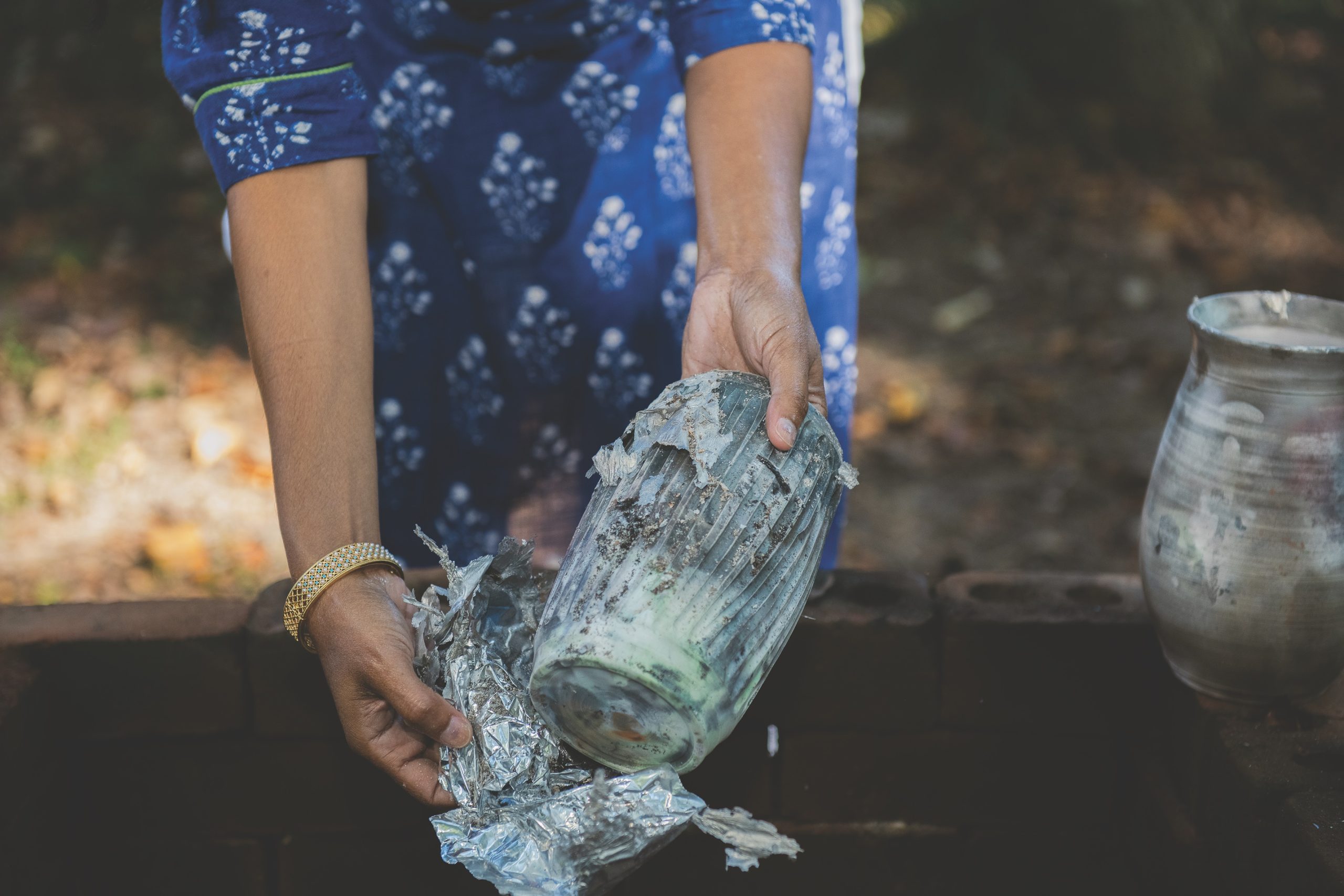
When Amanda learned that a member of the Wray family, Joy Bennett, is a potter in town, she commissioned her to make ceramic name plates for each guest room.

A taste of history

In 1915, the Wrays started a restaurant, which really put the NuWray on the map, Amanda says. The Southern “country-cooking” recipes had been passed down through generations. Meals were served family-style.

“That’s difficult to pull off nowadays,” Amanda says. “The health department doesn’t particularly like it, and it’s wasteful.”

But the revamped restaurant, open for breakfast, supper and Sunday brunch, honors the NuWray’s history with updated recipes from the hotel’s historic cookbooks, such as “Will’s Sunday Cake” (custard-filled chocolate sponge cake with chocolate meringue frosting) and a “Smothered Salad” (mixed greens with warm bacon vinaigrette). Duck and dumplings, chicken-fried steak and a tomato tarte with goat cheese mousse are other standouts.

While James Keith was the chef at Double Oaks — what can’t he do? — the Keiths wanted someone with experience running a bigger kitchen for the 26-room hotel.

They lured Chef Peter Crockett to Burnsville from Asheville. “We really appreciate the environment he creates in the kitchen,” Amanda says. “He’s a strong leader and mentor. That was important to us because it helps attract and keep staff.” 

The original smokehouse — now called Roland’s in honor of Will Roland, the hotel chef for over 40 years — serves al fresco drinks and snacks on Fridays and Saturdays from 4 to 10 p.m. The former laundry facilities in the basement are being converted into a bar with a speakeasy vibe.

Burnsville’s post-Helene hub

The hotel reopened to much fanfare in August 2024. Just a few weeks later, on Sept. 27, Hurricane Helene tore through Western North Carolina. In its aftermath, the NuWray became a lifeline.

“Immediately after the storm passed, people began pouring into the square,” Amanda says. “No one had phone service, so this was the logical place to find out what was happening.

“Everyone was either looking for information or trying to pass information along. We started paper lists of what roads were passable, who’s missing, who’s looking for whom, what supplies are needed and where.” Those paper lists soon morphed into whiteboards.

The flooded restaurant was cleaned and the kitchen pressed into service. Townsfolk needed to be fed, and the NuWray needed to use stocked food before it went bad.

The staff of Carriage House Sundries, which had been open for almost a year, “showed up ready to help,” Amanda says. “Everybody jumped in and prepared what we could without electricity: sandwiches. We smoked all the meat we had in our fridges and freezers on our outdoor smoker, the Smok-O-Motive. Then, people started bringing their meat for us to cook.”

A 60 Minutes crew, including correspondent Sharyn Alfonsi, documented Helene’s devastation and the recovery efforts in October 2024. Of course, they stayed at the NuWray.

The hotel reopened for a second time in May with a “Restoration Shindig,” a celebration of the hotel’s — and town’s — resilience.

“This wasn’t the opening season we pictured,” Amanda says, “but I’m grateful we got as far as we did before the storm hit. If we hadn’t, there’s no way we could’ve contributed what we did. And I think it’s so poignant that this is now part of the NuWray’s history. It’s been a beacon for a long time.”

Make your way to The NuWray. Learn more about Burnsville’s pride and joy and book a room at nuwray.com. The inn has 26 unique guest rooms with en-suite baths. Four are dog-friendly. There’s no elevator, but the inn has two first-floor guest rooms.

Welcome to the Neigh-borhood

Welcome to the Neigh-borhood

Welcome to the Neigh-borhood

Terry Christian’s barndominium houses creatures great and small

By Maria Johnson  
Photographs by John Gessner

Last year, before the gated entrance was installed at Terry Christian’s new home, some neighbors drove up to the gleaming barn-like structure — the one that’s topped with a weathervane shaped like a dancing pig holding a martini glass — and asked, reasonably, if the building was a clubhouse provided by the homeowners’ association.

No, Terry explained. She was “in” the neighborhood, a freshly minted cul-de-sac community in Summerfield, but she was not “of” the neighborhood.

The wide-set building with a green, metal roof and deep wrap-around porch was her private dwelling, she informed them.

She would share the hybrid house-barn with her horses, dogs, cats, a pig, a mini-donkey and other “Old MacDonald”-worthy characters in her critter-based life.

Some of the neighbors thought it was cool.

Others thought it was “ew.”

Unbeknownst to both groups, they had crunched up the gravel driveway of a dream that hatched in Terry’s mind when she was an animal-loving girl growing up in Greensboro’s Old Starmount area in the 1960s.

Where did the dream come from?

Terry herself is not sure. Maybe she was influenced by Mister Ed, a TV sitcom that ran during her childhood. The show featured a horse that stuck his head through the top half of a Dutch door — very much like the portals in Terry’s barn — and conversed in voice-dubbed dialogue with his owner, Wilbur.

Maybe her dreams were genetic in nature, the combination of her refined Southern mother’s compassion for the less fortunate, along with her father’s affinity for helping things grow and flourish.

Her dad, Dr. Joe Christian, was a well-known general practitioner in Greensboro. He was an avid gardener, too.

He imagined the city’s Bog Garden in 1987 while walking the family’s Boykin spaniel around the marshes near Northline Avenue and Holden Road. He appealed to landowner Blanche Sternberger Benjamin, widow of Friendly Center developer Edward Benjamin, to give the land to the city. The rest is wetland history.

That genealogy alone could explain Terry’s desire to live close to the land.

It’s also possible that her aspirations were totally unique, the sum of nature and nurture — plus more nature — including hours spent playing in a creek and slogging home with lightning bugs in jars and frogs in her pockets.

Whatever the source of her dream, it took root.

And grew.

And now, nearly 60 years later, it has flowered.

“I finally get to have my passion,” Terry says.

Terry seems genuinely surprised that her pet pig, Hamlet, is caked with mud as he emerges from his dome-shaped “pigloo” in the side yard, snorting as he trots toward her with porcine purpose.

(Insert pig grunts here.)

“You are soooo dirty,” Terry coos to Hamlet.

(Grunts of acknowledgement.)

Indeed, Hamlet — a bristly, blond Vietnamese pot-bellied pig Terry bought as a piglet nearly 14 years ago — is not your average porker.

First, he cuts a svelte figure. For a pig.

Even the vet noticed.

“I’ve never said this before, but your pig is too skinny,” the vet told Terry, who is addressing the situation with supplemental puppy chow.

Second, Hamlet seems to engage in earnest conversation with Terry, who notices that he is favoring his right front hoof.

“What happened to your foot, little one?” she asks.

(Grunts of explanation.)

Terry watches and listens, as if making a diagnosis. She comes by that skill honestly.

Often, when her father, “Dr. Joe,” went on a house call for humans, young Terry — the third of four kids — tagged along. Sometimes, patients who were short on money paid her father in animals. Terry wanted to be there.

Finally, her mom said no more house calls for Terry, who was amassing a small zoo of cats, dogs, rabbits, a guinea pig and a duck named Donald, who imprinted on Terry.

“Wherever I went, that damn duck would follow me,” says Terry.

She wanted a pig and a monkey, too, but her parents said that pigs and monkeys would not fly, in any sense, in their home on Mistletoe Drive, a short suburban walk from the then-new Friendly Center.

She lobbied for a pony in the backyard. Her family gave her riding lessons at Gambolay Farm off Old Battleground Road.

Later, Terry got her own mount, a black horse named Tar Baby, who was stabled at Reedy Fork Ranch, off U.S. 29.

She, her sisters and their friends spent long hours at the farm, riding trails and getting into mischief with horses, hound dogs and barn snakes.

“I should have been a vet,” says Terry, “but I was more interested in cheerleading than chemistry.”

After graduating from Grimsley High School, she spent a year traveling with the nonprofit organization Up with People, a network of young musical troupes that sing and dance and otherwise exude positivity on stages around the world.

Terry’s casts traveled the U.S. in Greyhound buses, staying with host families and napping in hammocks strung up inside the buses.

“I was small enough to sleep on the luggage rack,” Terry says.

A talented alto, she loved being on stage. She earned degrees in theater and voice from UNCG. A friend lobbied her to move to New York and try Broadway.

But Terry stuck around Greensboro. She had found another love. She married Greg Johns and had two daughters, Austin and Anne-Christian.

She stayed in the public eye, too, by modeling, performing in community theater and acting in commercials, including those she wrote for her family’s business, Johns Plumbing.

To many, Terry had a picture-perfect life, including a sprawling estate in Summerfield, where she and her family maintained a 5,300-square-foot home and an 8,000-square-foot barn.

They kept horses plus peacocks, chicken, sheep and cows, and, for a while, a small vineyard with Sangiovese grapes.

Terry lived in fifth gear.

Then came 2020. Her eldest daughter, Austin, married. The pandemic hit. She and her husband split and sold the farm.

Terry moved in with her mother, by then a widow, who was happy to have the company.

Moving home at age 63 was strange for Terry.

She slept in her old bedroom.

“I kept thinking I should be sneaking out,” she quips.

Terry brought Hamlet and several of her chickens home to roost on Mistletoe Drive.

One day, she saw a Facebook post reporting a pig on nearby Madison Avenue.

Terry ran right over.

Another time, a neighbor reported a fox trotting down Mistletoe Drive with a white chicken in its mouth.

Something had to change.

Terry’s vision popped up again. What if she built her animal-filled dream home and took her mom with her?

Home design websites were full of barndominiums, a trend among rural-minded design buffs.

Terry made a list of architects.

Her lifelong friend, Laura Griffin, who had converted an old dairy barn in Wallburg into a chic bed-and-breakfast (see the Spring 2017 issue of O.Henry’s design-minded Seasons magazine), recommended Greensboro modernist architect Carl Myatt.

After one conversation with Myatt, who had tackled many challenging projects in his 60-plus-year career, Terry decided to look no further.

“Don’t laugh,” she instructed Myatt as she drew her dream floor plan with a crayon on a paper napkin.

She drew a rectangle with a line down the middle, short ways. Half barn. Half house. See?

Myatt listened. And asked questions.

Was she prepared to live with the smell of barn animals?

Terry assured him that she was obsessive about cleanliness and that smells would not be an issue.

What about the flies? Myatt asked.

I’ll hang pest strips, she answered.

Land?

Working on it, Terry answered.

Intrigued, Myatt started sketching.

“I’d done barns, and I’d done houses, but I’d never connected them,” he says.

The final plan amounted to 3,000 square feet, split evenly between home and barn.

The human quarters include an open kitchen and living area plus space for a pottery studio, and two en suite bedrooms. The home would be a significant downsizing for Terry, but the space was all she needed or wanted. 

The barn would have three stalls, a tack room and an equipment bay. The center aisle would be flooded with natural light streaming in from a custom-made cupola.

Myatt finished the plans.

Then everything froze.

COVID was still mucking with supply chains and the prices of construction materials. Terry waited for prices to fall and rejiggered financing.

Lenders wanted to know: Was the structure a house or a barn?

Yes, said Terry, who still owns part of the plumbing business.

Construction started in 2021 and sputtered along.

Terry’s mom moved to a memory care center in 2022.

“She knew it was time,” says Terry.

The residential part of the barndominium was finished in 2023, and Terry moved in without her mom.

Later that year, Anne “Annie B.” Christian died.

“Both she and Daddy are still here,” Terry says confidently. Many of her parents’ treasured objects surround her in her new place.

Her doctor-gardener-father, who was a talented sculptor as well, made a bust of Mark Twain. The caricature rests on a pedestal near the front door.

Nearby stands her mother’s upright piano, which Terry’s grandson, 2-year-old Forrest, brings to life when he visits.

Artwork by his 5-year-old sister, Bridger, splashes the space with energy.

With the help of designer Lou Walter of High Point, Terry brought polished warmth to her museum-like space, which is bound by high ceilings, white walls, banks of windows and a concrete floor.

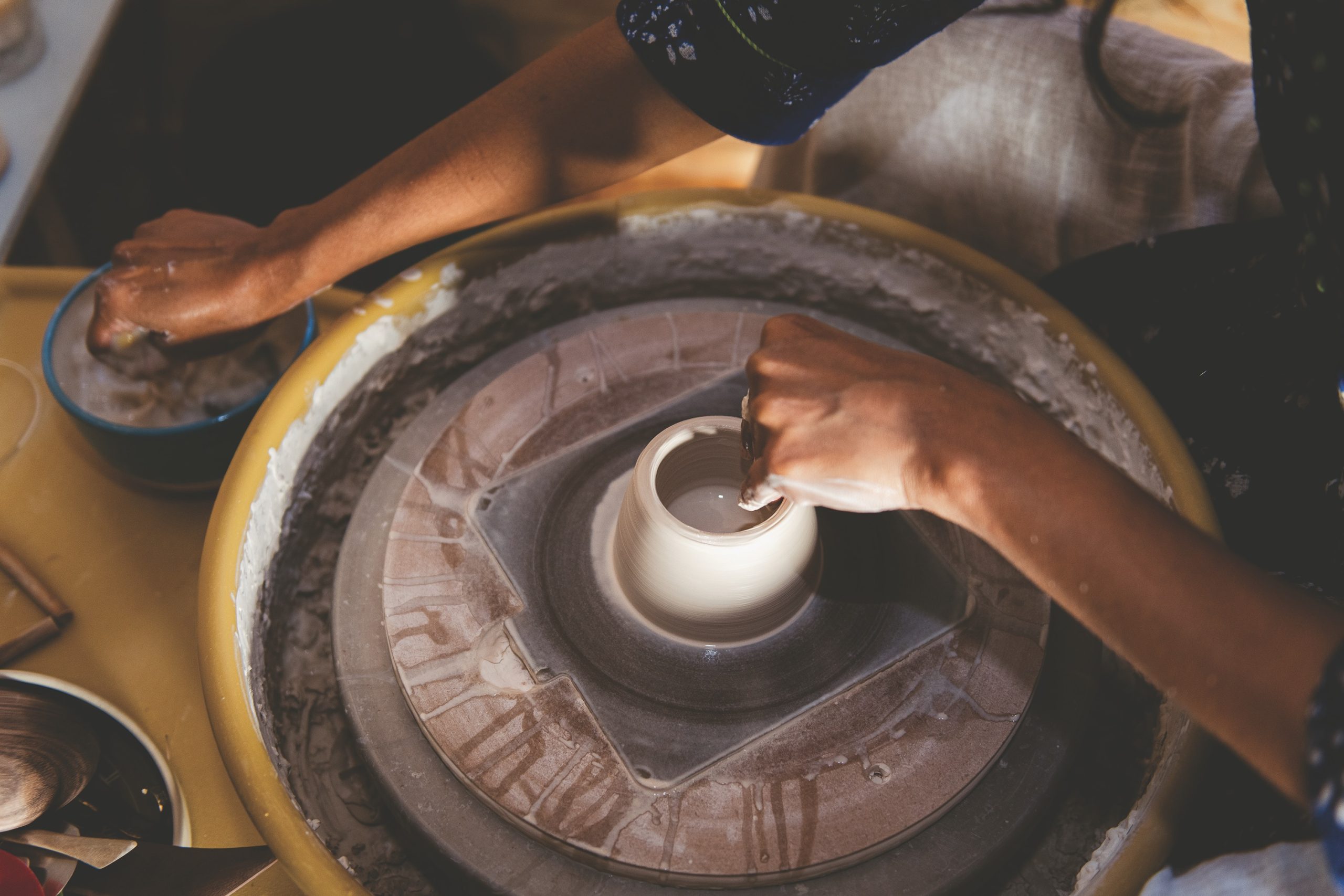
Playing off exposed beams overhead, the duo grounded the kitchen and living area with bass notes of leather furniture, Oriental-style rugs, bronze artwork and pottery, some of which is by Terry’s own hand.

A hammered copper stove hood and dark, speckled, peacock granite countertops anchor the kitchen.

Greensboro artist Lisa Cox used her faux brushwork to add interest and depth to the concrete floor and a vintage table-turned-kitchen-island. She copied the kitchen’s subway tile backsplash in a doorway leading to the barn, which was finished earlier this year.

General contractor Earl Waddell applied his woodworking skills in the equine wing, finishing the interior with handsome tongue-in-groove, yellow-pine walls and doors.

The stalls received their first occupants, rescue mares Midnight and Cinnamon, in July.

Their luxury compartments include automatic watering troughs, rubberized floor mats, stylish wrought-iron hay racks and modern ceiling fans just out of reach of curious muzzles.

The third stall belongs to a mini-donkey, Faith.

“I want the place to be swarming with animals,” says Terry, who is well on her way to populating her hilltop ark.

Her housemates include a fiercely protective, 75-pound German shepherd, Xena, who is named after the Warrior Princess, as well as a Scottish Fold cat named Gabby and a Siamese-tabby, Taz.

Confident of having a few more lives, Taz spars with Xena on the rug at Terry’s feet.

Certain humans are welcome in this setting.

Terry envisions a nearby knoll as a possible future home for her grandchildren, who could traipse over the rise to YaYa’s house. A family compound on 22 acres, some of which skirt the Haw River, would suit Terry just fine.

She will add creatures as she sees fit.

Her green eyes flicker.

“I still want that monkey,” she says. 

Off the Record

OFF THE RECORD

Off the Record

We asked our photographers to think outside the cardboard sleeve. The results? Record setting.

What: Peter Frampton/Frampton comes Alive

Who: Julie Borshak

Where: Keith Borshak’s studio

Photograph: Keith Borshak

What: Lady Gaga/Fame

Who: Leslie Gill

Where: Cohab.Space, High Point

Photograph: Amy Freeman

What: B.B. King/Live in County Cook Jail

Who: Tony Hall - Guitar borrowed from Steward Fortune

Where: Downtown on Washington Street

Photograph: Mark Wagoner

What: Lionel Hampton/Silver Vibes

Who: Byron Grimes

Where: Mark Wagoner’s music studio

Photograph: Mark Wagoner

What: The Rolling Stones/Sticky Fingers

Where: Kontoor Brands World Headquarters

Photograph: Becky VanderVeen

What: The Rolling Stones/Tattoo You

Who: Nathan James Hall

Where: Legacy Irons Tattoo

Photograph:  Bert VanderVeen

What: Barbra Streisand/The Broadway Album

Who: Cassie Bustamante as Barbra Streisand

Eloise McCain Hassell as Éponine, Les Misérables
J.P. Swisher as Don Quixote, Man of La Mancha
Ralph Shaw as Jim, Big River, Mary Ries as Peter, Peter Pan
Lee Kirkman as The Phantom, The Phantom of the Opera
A. Robinson Hassell as George M. Cohan, George M!
Amber Engel as Eva Perón, Evita Pam Wheeler as Elphaba, Wicked
Chip Potter as Jesus, Jesus Christ Superstar
Carole Lindsey-Potter as The Witch, Into the Woods Lighting by Kendall Thompson
Costumes & Props by Winston-Salem Theatre Alliance,
Lynn Donovan & cast
Album covers borrowed from the collections of
Eloise & Robby Hassell, J.P. Swisher, Rachelle Walsh,
Mark & Lynn Wagoner, Brenda Studt,
Carole Lindsey-Potter, Lynn Donovan

Where: Carolina Theatre

Photograph: Lynn Donovan

What: Herb Alpert’s Tijuana Brass/Whipped Cream & Other Delights

Who: Venée Pawlowski

Where: Black Magnolia Southern Patisserie

Photograph: Lynn Donovan

Modern Life

MODERN LIFE

Modern Life

Based in Greensboro, the NC Dance Festival celebrates its 35th anniversary of showcasing the state’s best contemporary dancers

By Maria Johnson    Photographs by Lynn Donovan and Brandi Scott

Bathed in fluorescent studio lights and stepping lightly over a cushioned vinyl floor, Jiwon Ha shows her young students how to bolster a fellow dancer who wants to descend gracefully to the ground during a modern piece.

The mechanics are tricky, so Ha, who is remarkably youthful at 40, demonstrates by leaning way over to her right. Dressed head-to-toe in black, she appears as slight and springy as an eyelash.

Her left leg leaves the ground as she reaches the tipping point. She urges her charges to act quickly as gravity does its thing.

“Catch me! Catch me!” she says, hopping on her right foot to stay upright.

Four teenage girls — all students at Dance Project, a Greensboro-based nonprofit devoted to the art of choreographed movement — rush to grab her by the leg, arm and waist.

Suspended in mid-air, Ha uses the moment to teach: Once the counterweight is right, and the stress is balanced, it’s easy to land softly and rebound again. The underlying structure must be right.

It’s a concrete lesson in the importance of support.

The NC Dance Festival gets it.

On October 18, the annual gathering, which is organized by Dance Project, will mark 35 years as the primary showcase for the state’s modern dancers.

The mainstage program for that day will include some of Ha’s students, who’ll appear as a pre-professional group.

On November 7, the young cast will perform again at a special show for students who have been exposed to dance in local elementary, middle and high schools. Both times, the pre-professional dancers will execute a piece created by Ha, which expresses the emotions of adolescence.

“I want to create a dance piece that will connect with the artists and audience members as well,” Ha says. “I’m super-pumped to be a part of the North Carolina Dance Festival.”

Sure, Durham has the American Dance Festival, which pulls from a nationwide pool of talent, but Greensboro’s celebration is distinct because it focuses solely on modern dancers across the state.

That was the vision of the late Jan Van Dyke, who founded Dance Project as a harbor for her own performing company in 1973. Working with university dance programs around the state, Van Dyke launched the festival almost 20 years later, in 1991, with the goal of growing community support for dance.

The festival traveled from campus to campus for several years. Then came a phase of performing at off-campus venues. Since COVID, the festival has centered mostly on the Greensboro Cultural Center’s cavernous Van Dyke Performance Space, a stage named for the festival’s founder, who died of cancer in 2015.

With Dance Project headquartered a couple of floors above, Van Dyke’s spirit still looms large in the cultural center and in the local dance community 10 years after her passing.

A celebration of her life, co-hosted by Dance Project and UNCG’s School of Dance, will be held on September 28 and will include light refreshments, storytelling and videos of Van Dyke’s work. The event would be a good place for the dance-curious to dip a toe into the festival.

“Some people are a little intimidated by dance — maybe they don’t understand it,” says Anne Morris, executive director of Dance Project and the festival. “We try to open the doors to understanding.”

In crafting the mainstage program for next month’s festival, Morris and her board of adjudicators, who reviewed submissions without knowing who the choreographers were, have tried to assemble a varied menu.

“We work really hard to curate a show that’s a pretty good mix of a lot of things,” says Morris, adding that viewers will see elements of hip-hop, ballet, tap and other genres.

Not charmed by the style of an individual piece?

“Stick around,” Morris urges. “You might find something you like.”

The festival lineup includes an appearance by Stewart/Owen Dance, a well-known company in Asheville. They will perform a work that was commissioned by the American Dance Festival.

“It involves fronts, putting on a mask to be what you think society expects of you,” says Morris. “At times, it has a vaudeville feel.”

Other mainstage artists include:

Alyah Baker, an assistant professor of dance at UNC-Charlotte. Combining dance with feminist activism, she draws on the work of Black poets Nikki Giovanni and Lucille Clifton.

Eric Mullis, choreographer and co-director of the Goodyear Arts space in Charlotte. The multi-talented Mullis is also a Fulbright Scholar and an associate professor of philosophy at Queens University. Fascinated by motion-capture technology, his performance will include video projections of color and movement.

Chania Wilson, a native of Clayton and a 2021 graduate of UNCG’s School of Dance, will present an excerpt from her Duke University master’s thesis performance. The six-person work, called There is a Ladder, deals with documenting the experiences of Black women in dance.

The thought of returning to Greensboro brings back fond memories for the 26-year-old Wilson. She remembers visiting the city to attend a high school dance day at UNCG.

“I was blown away when I got here,” she says. “I loved the energy — how the community and faculty and students engaged. I thought it was the ideal college environment.”

As a student at UNCG, Wilson says, she was tried by circumstances. The university’s main dance studios were under renovation during her freshman year and her classes were scattered to other stages.

“I made a lot of memories sprinting across campus,” she says.

COVID arrived during her junior year, forcing her to attend classes via Zoom. She recalls being in her off-campus apartment on Spring Garden Street, putting a batch of banana bread in the oven, setting her laptop on the breakfast bar, joining an online class, and doing a West African dance in a 4-by-4-foot space she’d cleared by moving her couch aside.

“Doing West African dance on Zoom was interesting because of the drumming. Sometimes, there would be a lag, and I was like, ‘I know I’m not on beat, but I’m trying.’ It was definitely an era,” she says, laughing now about the experience.

“I think every generation has an element of, ‘Oh, we had to work through this to make us stronger.’ For me, I realized that I dance for the sake of being around other people and community.”

Jiwon Ha found similar comfort in the Piedmont’s dance community. She and her husband, John Ford, a software developer from Greensboro, moved here from her native South Korea in 2016.

Ha was wary of relocating because of anti-immigrant sentiment expressed by some Americans during the national election year, but dance allowed her to make connections easily.

“I’m so grateful that dance is a universal thing,” she says. “Once we move the body, we are all the same.”

For a while, she struggled with understanding English, especially English soaked in Southern accents.

“Now I say ‘Y’all’ very naturally, and sweet tea is my new drink,” she says. “I’m grateful that I moved here at that time after all.”

As a dance teacher at Elon University, UNC School of the Arts, and Dance Project, Ha is experienced at guiding young students. She taught teenagers at a dance conservatory in South Korea. There, she says, the teacher-student dynamic is hierarchical. Here, she says, the relationship is more egalitarian, with American students being prone to share ideas with teachers.

“They’re more vocal, which I appreciate,” she says. “It’s a newer generation, and I’m very grateful that I can work with them.”

Her rapport with students is evident in the studio, where she steers them with a keen eye while issuing gentle corrections and ample praise.

“Fall.”

“Rise.”

“Softly walking.”

“Reaching out.”

“Latching arms.”

“Eyes sparkling.”

“Good”

“Nice.”

“Beautiful.”

Ha uses the Graham technique, as in the legendary dancer Martha Graham, which emphasizes the contraction and release of spine. Cupping the hands and spiraling with an open, lifted chest are two hallmarks of the technique.

Ha is quick to demonstrate to her students, often dancing beside them. When they veer off course, she nudges them with a light touch to the arm or back. The dancers appreciate her hands-on approach.

“Jiwon is really specific, and I like that because it allows me to work on my technique and choreography while feeling really comfortable,” says 15-year-old Heba Shawgi, a student at The Early College at Guilford.

From dance, she says, she has learned lessons that apply to school and personal relationships as well.

“It’s important to be yourself and realize everybody makes mistakes,” Shawgi continues. “Everybody is going through the same learning process.”

Sitting on the floor, chatting with Ha after their class, the girls share what modern dance has meant to them: a place to build physical strength and skills; a place to find friendship and connection with like-minded people; and a place to grapple with emotions, especially the anxiety that can come from comparing oneself to others, whether in school or in the studio.

“It’s hard not to compare yourself to others,” says Sophie Kohlphenson, 17, a student at Weaver Academy. “You have to constantly remind yourself that you’re not gonna dance like the person next to you. It’s definitely a process I’m still trying to work through.”

The young dancers are quick to offer advice to festival-goers who might not be familiar with modern dance.

“I would just tell them to lean into it,” says Jessica Smith, 14, also a student at Weaver. “You can’t really make much of modern dance if you don’t take it all in.”

Sometimes a dance will provide an obvious story, they say. Other times, the works will be less narrative and more abstract, just as with paintings and other fine art.

“Everyone is going to interpret it differently,” says Sid Dixon, 16, a Grimsley High School student. “Take it how you want it. You don’t have to understand it to watch it.”

Later, Ha expands on their thoughts, providing a few more handholds — or footholds, as the case may be — for new audience members.

“Even if someone doesn’t know much about modern dance, there’s still a lot to enjoy: the physicality; the strength it takes; the emotion in the movement; or simply the satisfaction of watching a group move together as one,” she says.

“There’s also something really beautiful about its in-the-moment nature. It’s here, and then it’s gone, just like life. I hope all audience members can sit back and enjoy without feeling pressure to analyze.”

The View Finders

The View Finders

The View Finders

O.Henry photographer Amy Freeman focuses on family

By Cassie Bustamante     Photographs by Amy Freeman

As any photographer knows, life can change in a flash. After years of hunting for a mountain retreat, O.Henry photographer Amy Freeman’s search became more urgent. Her family — husband, Peter, and son, Louis — needed a place where they could escape into nature while spending valuable time together. “It’s been a dream for a long time, a really long time,” she says.

“We’d been looking for years,” agrees Peter. Thirty years, in fact, since Louis was just a small child. They’d perused properties in Brevard, Asheville, Banner Elk, Blowing Rock, you name it, sticking within the borders of North Carolina.

As many others did during the early days of COVID, Amy recalls, the family leaned even more into finding a peaceful getaway. “We decided one random Saturday we would go look up in the Roaring Gap area, but — accidentally — we didn’t get off early enough and we ended up on the Fancy Gap exit instead.” They’d crossed over into Southern Virginia. “And, we were like, this is kind of great.”

Suddenly, they had their sights set in a new direction across the North Carolina border just as a curveball came their way. In October 2020, Louis, then 32, was diagnosed with myotonic dystrophy type 1, a form of muscular dystrophy that leads to progressive weakness of the body’s muscles. For a long time, doctors thought perhaps Louis had Asperger’s Syndrome, a form of autism. Amy and Peter, however, weren’t so certain.

“Nothing ever made sense to me because he’s so smart, but just struggled in certain areas,” says Amy. Louis graduated from High Point University in 2011 with a bachelor of science degree and works at Freeman Kennett Architects, founded and co-owned by none other than his architect father, who’s been in the business for over three decades. But Louis is not just book smart. In fact, Amy says, “You should follow him on TikTok. He’s got some hilarious videos. He has a wicked sense of humor.” (You can find him there at @musculardystrophy88.)

Armed with a diagnosis, their mountain home checklist now had new must-tick boxes. “Travel time,” says Peter. Anything longer than an hour-and-a-half in the car can be a challenge for Louis. “The other consideration, the biggest, was that we didn’t want to find a place where he’d have to go up a lot of steps.”

In order to afford the second home, the family decided Louis could move into a single-level downstairs apartment in Peter and Amy’s townhome and sell his place. He was willing to give it up if it meant they could have a mountain house, but they all still wanted their own spaces. “Architecturally, we were looking for a place that would give us separation under the same roof,” says Peter.

“We all need a break from each other,” he quips. Amy chuckles knowingly.

On Peter’s 60th birthday, just as the family was headed home from a weekend at the beach celebrating, Peter came across a home on Zillow that he thought they needed to see. Back in High Point the very next day, Peter called the listing agent. Right away, the family, including Coco the dog, who travels everywhere with them, hit the road and headed to Hillsville. The home provided every necessity they’d listed, including no steps and adequate separation of space.

Plus, the home offered even more than they could have imagined. Beetling on a rocky perch just off the Blue Ridge Parkway, the house’s wraparound porch serves as a premium seat to the best show in town — Pilot Mountain amidst an ever-changing kaleidoscope of sky and stars.

“But,” Amy says, “we were like, I don’t think we can afford this.”

“It was super scary,” admits Peter. He consulted with his brother, Trey, who already owned a couple of properties, hoping he could advise them on making it work with their tight budget. 

“Are we crazy?” Peter asked Trey.

Trey came to see the home and saw an opportunity. He offered to go in on the purchase and make the house an Airbnb rental 70% of the time, making the financial leap a lot less scary.

With Trey, the Freemans bought the home and quickly got to work, making basic cosmetic changes to prep it for rental. On the main level, the walls were painted a soft neutral. Amy selected Benjamin Moore’s White Dove. But their painter had the color matched at Sherwin Williams and, Amy says, “it was very different.” When she first saw it, she wept. “But I’ve learned to love it.”

Before, bedrooms were a carnival of color, in chartreuse-green, mustard and poppy-red. The Freemans had everything coated in calming, rental-friendly neutrals. The previous owner left furnishings behind, so they repurposed what they could. An old gun cabinet was transformed into a bookcase. The rest, they cobbled together, bringing bits and pieces from home that had been passed down from their parents and were sitting in storage, like Amy’s father’s red, leather chair and her parents’ oriental rugs. They supplemented with items from Louis’ former condo, such as his sofa.

The once-plain fireplace — “it was just a hole,” says Amy — was decorated with large-scale, charcoal-gray tile grouted in high-contrast white. The tile had been leftover from their own bathroom floor at home. A proper mantel the couple ordered from Wayfair was the icing on the cake. Now, Amy says, visitors often comment on the fireplace. “And I am like, that’s my bathroom floor! I usually walk on that!”

In the kitchen, Amy says, they saved a ton of money by keeping the existing cabinetry and countertops. “We have a problem replacing something that’s perfectly good.”

“That’s our attitude,” agrees Peter. “We’re not cramping the landfill.”

With their inexpensive cosmetic updates, the house was ready to rent out to mountain-seeking vacationers. While the Airbnb share idea enabled the Freemans to purchase the house and they found much success with the rental, Amy says, “We found out very quickly that’s not why we got it.”

“Louis fell in love with it,” says Peter. “He kind of blossoms up there. And I think that made us feel really good, that he was kind of taking to it.”

Unlike Peter, Trey, who owns a house in Athens, Ga., and another in WaterColor, Fla., found he wasn’t able to get to Hillsville often. He wanted to rent the home out even more. Amy and Peter weren’t ready to give up what already little time they spent there. Their wheels started turning.

They were newly invigorated and determined to find a way to buy out Trey. Amy blurts out, “We manifested it!”

Peter chuckles. “Well, we sold our office building.”

“OK, we sold our office building, but, I mean, I manifested it,” Amy says teasingly.

With the house now 100% theirs, the Freemans removed the Airbnb listing and got to work putting their personal stamp on the place.

“We love a project!” says Amy.

Unlike many couples who struggle DIYing together, Amy and Peter have always gotten along incredibly well throughout the process. “It really is amazing that I can almost finish her sentences and she can finish mine,” Peter says of planning designs with his wife.

Inside, they updated the kitchen by painting the cabinets a soft, spruce green and replacing the once brown-hued countertops with white quartz. What brought it all together was the backsplash tile, which came from “a new, cool sample” Peter had gotten in at the architecture firm that happened to match perfectly, Amy recalls.

“It is nice to be in the business,” says Peter.

They began bringing more personal pieces from home. A side table the couple purchased from Pier1 Imports the first year of their marriage features a little upside-down man holding a glass top. Amy recalls thinking that its $60 price tag was too rich for their newlywed blood. “Somehow,” she says, “it survived over the years.” Now, a true conversation starter, it sits next to the living room sofa.

A large Cordial Campari vintage marketing poster print Amy and Peter purchased at Rooster’s on State Street 25 years ago hangs on the kitchen wall. Nearby on a perpendicular wall, a caustic-wax painting that looks like a birch tree anchors a table and two stools. It was a birthday gift to Amy last year from her friend, local artist Dana Holliday. “It’s my most treasured piece of art.”

The biggest change they made was painting the exterior, which is constructed of hardy cypress, a dark shade of charcoal. “Peter walked around the house 1,000 times, considering, and finally decided he wanted to go darker,” says Amy.

“Peter never brags on his design chops,” Amy continues, “but I am here to tell you he imagines things that I typically can’t wrap my brain around.” The Freemans originally thought they’d use a natural wood trim, but, around that time, Amy photographed a July 2023 story for O.Henry, “Beyond the Back Door.” She was inspired by an outbuilding Otto & Moore had renovated and painted a similar charcoal, but its door was a cool shade of blue. In the end, they opted for a “dark, greenish blue,” says Amy, and now the home blends in with the hardwoods that surround it.

While they still have other projects they’d like to slowly chip away at — perhaps an art studio —  they’ve made the Hillsville home all theirs. “Now it doesn’t feel like we’re just going up to our Airbnb for the weekend,” says Amy. “It feels like home.”

Most Fridays, the family hops in the car, with Coco, of course, and heads to the Blue Ridge Mountains for the weekend. “We breathe the minute we get off of 74 and start to rise up the mountain,” says Peter, audibly exhaling.

Able to unplug for a bit, the Freemans spend their days visiting the nearby Floyd Farmers Market, Primland Resort or Chateau Morrisette, which was founded by William Morrisette of Greensboro’s Morrisette Paper Co. Current co-owner Melissa Morrisette, the founder’s daughter-in-law, has become an incredible friend. “We are welcomed like family when we are at the winery.”

And when they don’t feel like venturing out, the 4-acre property and its surrounding area offers plentiful rest and recreation. There’s fishing nearby, which Peter hopes to get into when he retires one day. Just 10 minutes from the house is a very short but beautiful hiking loop Amy loves to trod. But, she quips, even a trip to the mailbox can be a walk through nature’s wonder.

“Porch time, as we like to call it,” Amy says, is a favorite family pastime, and Peter agrees. The first thing he does every morning is step outside onto the expansive porch to take in the view.

“One of the things that Amy said years ago when we first started this process was, ‘I want to go somewhere with big sky,’” recalls Peter. “And that always stuck with me.” Looking out to Pilot Mountain in the distance, the sun setting off to the right in a rainbow of misty blues, golden oranges, all the way to fiery red, there’s no denying her wish was granted here. In fact, you can catch both the sunrise and sunset from this vantage point on the porch — and plenty of “big flyers,” including pileated woodpeckers.

“It just feels like you’re in a treehouse and nothing else in the world exists,” Amy muses.

But the biggest blessing this house has bestowed upon the Freemans is the freedom it’s given Louis. Once an avid snowboarder and golfer, Louis is yet again able to adventure outdoors, thanks to a side-by-side — a utility task vehicle (UTV) Amy was totally against at first. A fallen tree that was blocking their driveway, however, changed her mind.

Up at the house by herself, she called her neighbors to see if they could help her clear the small tree. Mariah, who’s around Louis’ age, cruised on over on her side-by-side with a Bear Saw. She cut the tree and then used a winch attached to her side-by-side to pull the tree away. Immediately, Amy says, “I go in the house and call Peter and say, ‘Y’all can go ahead and get that side-by-side. I think we need one.’”

In fact, Amy says, she’s had to reframe her perspective on other things, too. “Nowadays,” she says, “we bring the party to us.” Rather than venturing out to visit friends, they welcome guests to stay at their Hillsville home with them. Two extra en-suite bedrooms, Amy notes, provide lots of privacy.

Life’s given the family unexpected circumstances, “but then you just realize that’s OK,” says Amy. If not for living under the same roof with Louis, “I would never have gotten his humor. I would have never been able to see that part and how strong and courageous he is.”

It’s a privilege, Peter agrees. Most parents, he adds, don’t get to know their children as adults in the way that they’ve been able to know Louis. “We all get so much more connected with the Earth and nature,” he says. And, it seems, to one another.

“We’re the three musketeers,” quips Amy.

The Show Must Go On

THE SHOW MUST GO ON

The Show Must Go On

UNCSA’s Chancellor Cole looks to the school’s bright future

By Billy Ingram

Over a quarter century has passed since my last visit to what was then simply known as “School of the Arts.” (Don’t call it that today — they’ve graduated!) Touring their campus over the summer, I was amazed at University of North Carolina School of the Arts’ expansion, with the addition of three enormous, Hollywood-style sound stages, extensive wardrobe and wig departments, an airplane hangar-sized set-painting facility, state-of-the-art imaging studio, and even a quaint city street backlot facade alongside a three-screen movie theater where the RiverRun International Film Festival is held each year. During that late-1990s visit, I donated a bundle of movie posters I had labored on years earlier in Tinsel Town, one of which (Superman IV) was framed outside the theater’s entrance.

I have returned to meet with Brian Cole, now in his sixth term as chancellor of UNCSA. This year marks the 60th anniversary of the university and, while there will be cake — there’s always cake — Cole is aggressively fixated on a future fraught with unprecedented challenges fueled by rapidly evolving technology and ingrained predaceous business practices threatening to upend every aspect of the arts. He’s clearly up to the task.

UNCSA concentrates on five core disciplines: drama, music, filmmaking, design & production, and dance, with both high school and college curricula. Cole comes from the symphonic side. His pro career started when he apprenticed with the Cincinnati Symphony under the tutorage of one of music’s most eminent maestros, Grammy-winning Paavo Järvi. He went on to teach at the University of Cincinnati College-Conservatory of Music before circling the globe waving his conductor’s wand before a multitude of illustrious orchestras.

“I think arts and artists are critical to our society and this place plays a critical role in producing those artists,” Cole asserts, seated in his window-rimmed chancellory overlooking a busy corner of campus. “Creativity is why we are successful — because artists are the ultimate problem solvers.”

UNCSA is home to a wealth of expert educators connected to and, in many cases, still actively participating in their attendant industries. “That hands-on experience is something we’re known for,” Cole says. “Producing people ready to create, being job-ready on day one, especially in the production areas. That’s not something other places can really claim to the same degree.” The school is on track for record enrollment this fall, maybe because of its almost unmatched media exposure in recent months. “People know of us because of the training, but also because we’ve had this incredible impact on all these industries with some notable alumni who are doing amazing work.”

Our media landscape is inexorably shifting, Artificial Intelligence being well past its nascent six-fingered-hands phase. The unexpectedly rapid acceleration of AI’s ability to seamlessly (shamelessly?) complete complex artistic tasks is a pedal to the, ahem, mettle of anyone with creative aspirations.

“We’re having some substantive conversations right now about creating a strategy for this,” Cole says. “It is definitely starting to have a substantial effect on the film and TV industry, on the visual arts, and the music industry. It is an incredibly disruptive technology that has vast potential for good and bad.” A Chancellor’s Task Force has been convened to address how to navigate a new world emerging out of generative AI. “We’re looking at our industry partners who might be able to provide resources for students, faculty and staff. What are the positive ways this is already being used? What are the negatives and how can we get out in front of that?”

While a number of universities are investing heavily in AI, there’s a tendency to focus on so-called hard skills or STEM (science, technology, engineering and mathematics). “I don’t hear as much from arts-training institutions. One of the most important things is, whether it’s music or a poster or a film, if you don’t hear or see the human’s voice in it, then it’s a failure.” Cole quotes a sports analogy coined by Oscar-winning director Steven Soderbergh about AI: “It’ll help you get down the field quicker, but it will never get you into the end zone.”

This administrator has faced game-changing outbreaks before, having barely transitioned from dean of the School of Music to chancellor when COVID shut everything down. “Solutions we came up with were incredible because of the passion and the creativity of the people on this campus,” says Cole, who may have had in mind that well-worn trope: The show must go on. “I have not seen any other institution in the country from that time period that was doing more, or, in many cases, anywhere near as much as we were and doing it safely.” Carrying on with musical, dance and drama performances, the students were on stage, but the audience caught it via livestream.

Chancellor Cole is equally mission driven when it comes to establishing an intellectual property paradigm for emerging talent. What exactly would that look like? “A nonprofit media publishing arm promoting the work of the artists of our ecosystem,” he explains. Those artists include “alumni and faculty, but to some degree current students when they are in that launch period.” For now, UNCSA Media is primarily concentrating on music with plans to venture into other artistic avenues represented on campus. “We’ve got four or five albums out or in the works. The key to creative and career success in the future is leveraging the ownership of what you create. And often that had been the thing leveraged over artists.”

It’s called show business. Taylor Swift’s years-long, multimillion dollar effort to wrest control of her early albums and songwriter royalties is an au courant example of an artist signing a lopsided deal in exchange for industry advancement.

Cole recalls discussing that conundrum with legendary pop star John Oates over dinner one evening. “Hall & Oates is the most successful musical duo of all time, Rock & Roll Hall of Fame . . . you’d be surprised how much longer it took in their career to really make any money.”

Perhaps not as well known to the public is UNCSA’s live-in high school curriculum, which emphasizes artistic pursuits while simultaneously offering more conventional course work. “We have alums that come from very small towns and now they’re in really substantial, incredible careers in the arts,” notes Cole. “There was nothing for them in their hometown but they met someone who knew of this high school in North Carolina that was training students in the arts, where you could also have a great academic education as well. For North Carolina residents, there was no financial barrier — our state supports that.”

The chancellor aspires to enroll an additional hundred high schoolers once a larger dorm is completed. “We already have programs in music and dance and drama and visual arts. We want to certainly expand those but we also want to create a filmmaking concentration. I don’t think there is another one in the country at the high school level.”

As if Cole didn’t have enough to do on-campus, he is also overseeing one major off-campus project, an $85.3-million renovation of the Stevens Center. “It is essentially our biggest high-tech classroom and learning laboratory,” he says, “an important cultural center for professional organizations in our community and for what UNCSA does there.” When completed, it will be a venue where all departments collaborate to mount major productions utilizing actors, dancers, musicians, backstage crews, costume, lighting and set designers, even atypical variables like “animatronics and robotics technicians working in live entertainment. We’re very fortunate that, through the generosity of the state, we’re keeping those skills on pace as well.”

Cole still allows time for conducting, both in country and abroad but less so on campus. “We have great artists and teachers here, so I don’t want to take too much away from them. For the last two years I conducted our Nutcracker production at the Tanger Center. Big success.” For 2025’s holiday tip-toeing at Tanger, however, Cole will pass the baton to someone else. “It’s good for students to work with different conductors — not just for the orchestra, but also the dancers.”

Reflecting on the passage of 60 scholastic cycles since that inaugural class of ’65, Chancellor Cole muses, “The founders were thinking we would be like the Juilliard of the South. And it very much was. Now I kind of think of Juilliard as the UNCSA of the Northeast.”

Just kindly try to refrain from referring to it as School of the Arts.

Behind the Curtain

Cynthia Adams

Susan Turcot, whose parents live in Greensboro, went on to have a distinguished film and television lighting career in Hollywood after attending UNCSA. Her credits include mega-hits Independence Day, The Negotiator, Titanic, Panic Room, Pleasantville, The Rat Pack and The Bird Cage. Her skill set? Dimmer board, lighting and rigging, among other specialties.

Her proud parents, Bud and Sharon Turcot, rented out a Sedgefield theater for a private showing when Titanic premiered.

“They gave out tissues and Life Savers,” she recalls with a laugh. Guests filed out of the theater wiping their eyes and Susan regaled them with stories about the set, cast and crew at an afterparty. That Titanic gig, however, couldn’t have delighted her folks more as it grossed over $2 billion, becoming the highest grossing film of its time.

She self-deprecatingly jokes that only her parents’ friends know she has rubbed elbows with the rich and famous and never name drops. Turcot also worked on the top-rated TV sitcom Two and a Half Men.

She didn’t enter UNCSA intending to specialize in dimmer board and rigging: “When I was there [at UNCSA], it was different.” She graduated in the 1980s with a concentration in design and production.

“Of course, there was no film [concentration] then, only theater. It was dance, drama, music, and design and production.”

Turcot left after graduation to pursue opportunities in California and found her niche. She keeps work options open, she says, even if she has been remiss about keeping her resume current. Now, at home in Los Angeles, where she has lived and worked most of her adult life, Turcot says a lot of her fellow graduates are active in the industry there.

In its 62 years, UNCSA has graduated alumni who work in a multiplicity of artistic careers, grabbing headlines well beyond the Triad. Many become notable musicians, actors, screenwriters, directors, producers and dancers. Much larger numbers who graduated from UNSCA’s five professional concentrations work behind the scenes in performing, visual and moving image arts.

UNCSA’s arts-based education produces many unsung heroes of the industry. Imagine a film when the lighting is too harsh — or dim. Or the sound is faulty. Or the casting is all wrong. Or the makeup and costumes are amateurish.  

Those in “above the line” roles belong to composers, graphic designers, photographers, producers, directors, actors, musicians and writers. Those who execute on a technical, granular level, include “below the line” professions such as casting directors, production designers, costume designers, editors, cinematographers, camera work, set design, sound recording, makeup artists, sound, electrical and lighting technicians.

Many of those names are not always known to the arts and entertainment audiences. But you do know these talented alumni by their work.

Paul Tazewell, BFA ’86, concentrated in costume design and technology as a student from Akron, Ohio. Since then, he has steadily contributed to a body of creative work recognized as artistically and historically significant.

On March 2 earlier this year, Tazewell made school history when he won the Academy Award for Costume Design for Wicked, becoming the first UNCSA alum to win an Oscar. 

He also made Oscar history as the first Black man to achieve that distinction. Plus, he has two Tonys on his shelf, for Death Becomes Her and Hamilton, plus a Primetime Emmy Award.

As an extra feather in the school’s cap, UNCSA quickly posted the news that Wicked was not only nominated in 10 different categories, but won two, scoring a second Oscar for production design. The original stage director, Joe Mantello, and the film’s casting director, Tiffany Little Canfield, both alums, contributed to the stage and screen versions.

Tazewell attributes much of his artistic identity to his N.C. alma mater.

“It was here that I first began to love myself — to trust my own voice. To trust my own vision of myself. And that love has shaped everything since,” he recently said in a commencement speech delivered to the school’s newest grads.

As UNCSA graduates have steadily migrated into professional careers in film, in touring productions, in music, and on Broadway — others are entering newer fields in digital media. 

Photographer and director David LaChapelle attended high school at UNCSA, which he has since called his “big break.” This coming from a man whose early work was with Andy Warhol’s Interview magazine. His museum-worthy body of work has appeared in the world’s top magazines plus a vast collection of music videos and includes signature photographs of celebrities such as Michael Jackson, Uma Thurman and Elton John.

Earlier this year, the North Carolina Museum of Art hosted two exhibitions of LaChapelle’s work. On display at its two locations in Winston-Salem and Raleigh were more than 80 prints, drawings and videos.

Tanase Popa, who graduated in 2006, studied stage management. Now, he pairs the right talent with the right project. He has since earned a Peabody and an AFI award, and has had multiple Emmy and Golden Globe nominations for his work in television and film. He has worked on popular series including Glee and American Horror Story.

The press-averse alum eschews the spotlight. “I want to be the one behind the scenes putting it together,” Popa said in a 2020 interview for the school’s website.

“I never looked at myself as someone who was creative in the sense that I need to write or be a director to put the pieces together that way. I always loved finding the right people for the right project.”

Not every career is spent on the Great White Way or working behind the Klieg lights of Hollywood. Training in production and design easily lends itself to work in an artful aspect of consumerism.

If you’ve shopped at Saks Fifth Avenue, you’ve seen the work of UNCSA alum Connor Matz, who directs the mega-retailer’s windows, visuals and interiors.   

Meanwhile, entrepreneurial alum Destinee Steele has built a successful business and career in Florida working as a wig-and-makeup artist since her professional training at UNCSA.

In each case, their creative work is their calling card.

And when you’ve finished a movie that was so good, you just don’t want to leave the theater as the cast of characters behind the scenes scrolls on and on, remember that it’s a reminder how many people work in any production. These unsung creatives get little credit beyond the mention of their name. 

Finish your popcorn and read on. Odds are good that those talents — with names like Turcot, Tazewell, Mantella, Canfield and Poppa — honed their skills at UNCSA.