Follow the Yellow Brick Road

To the 25th anniversary production of CTG’s The Wizard Of Oz
By Quinn Dalton
 Justice Reeves-Burke, a sophomore at Weaver Academy and one of two Dorothys cast in Community Theatre of Greensboro’s production of The Wizard of Oz, knows what it’s like to grow up in the theater. At 15, and now in her seventh year in the production, she’s been acting for literally half a lifetime.
She credits her mother, Adriane Reeves-Burke, for her start. “My mom had been the stage manager in Oz the year before,” Reeves says. Her first role? A munchkin. “I was in the Lullaby League, and I was also a crow,” Reeves recalls. That was the first three years. The second three she spent in the Women’s Chorus — they are on stage when Dorothy makes her first entrance running down the aisle. She auditioned for the Dorothy role at age 12, 13 and 14 before being offered the role this year. “I finally got it,” she says. The excitement is clear in her voice. So is the confidence. She has followed her passion and she’s kept coming back year after year — for the joy of it, mainly — and she’s ready to make her own run down that aisle.
Reeves-Burke’s story echoes the story of so many actors, stage crew members, volunteers and family members who, over 70 seasons, have formed the family that is the Community Theatre of Greensboro.
CTG executive director Roz Fulton came to Greensboro as a student at N.C. A&T, graduating in 2000 with a B.S. in family and consumer science education. CTG was the only place she applied to, hired as an administrative assistant. When she joined, the annual Wizard of Oz production was only in its fourth year, and it was also the only CTG production that provided an abundance of roles for children.
Over the next few years, she saw so many talented young people play their hearts out as a munchkin, poppy or crow. But there weren’t many opportunities for kids in other CTG productions. “I wanted to see all the kids shine.”
In 2005 the education director role came available and she asked the CTG board to consider her. “I always had a creative side to me,” she says. “They gave me the chance.”
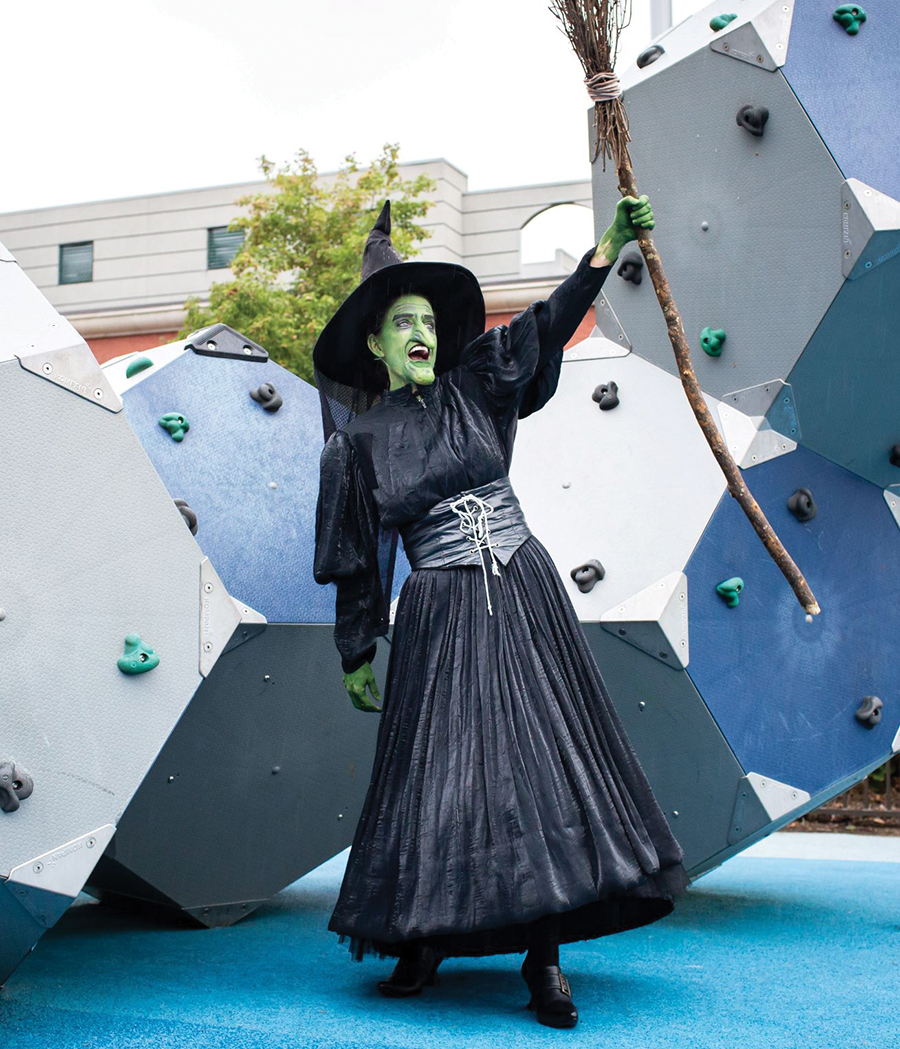 Their first youth production kicked off in 2008 with High School Musical. Many other famous musical productions adapted for younger audiences have found their way onto the stage through Music Theatre International’s Broadway Junior series.
With all of this developing talent, Fulton launched CTG’s Centerstage Youth Performing Group and began adapting those performances to compete in the Junior Theater Festival, a national competition held in Atlanta in which youth theater programs perform 15-minute versions of full-length performances. To be clear, these short versions are not simply a selection of scenes. They are in fact a 15-minute version of a full-length production. The youth actors help with selection, and Fulton scripts each one. The actors practice under a tight schedule to prepare. In 2020, Fulton and her talented troupe will also attend Junior Theater Festival West in Sacramento for the first time. “It’s the most exciting thing we do,” she says.
Passing the Wand
This year, 19 years after newly graduated Fulton decided CTG was the only place she wanted to apply, she became CTG’s executive director, stepping smoothly into the role formerly held by Mitchel Sommers, who still directs Oz as he has every year since the first production in 1995. Which means Fulton and Sommers have been taking us down the yellow brick road for longer than many of the cast members have been alive. And this is a big year — it’s CTG’s 70th season and the 25th production of The Wizard of Oz.
“It’s the longest continuously running Wizard of Oz production in the world,” Sommers says, and he’s put in the time to know. He is always looking for other longer-running productions as he’s worked year after year to keep this classic production fresh.
This involves frequent changes to sets, choreography, costumes and even adding to the cast. Last year for example, the newly minted Emerald City Ensemble added dance and comic sparkle, and this year some major set design updates will wow audiences.
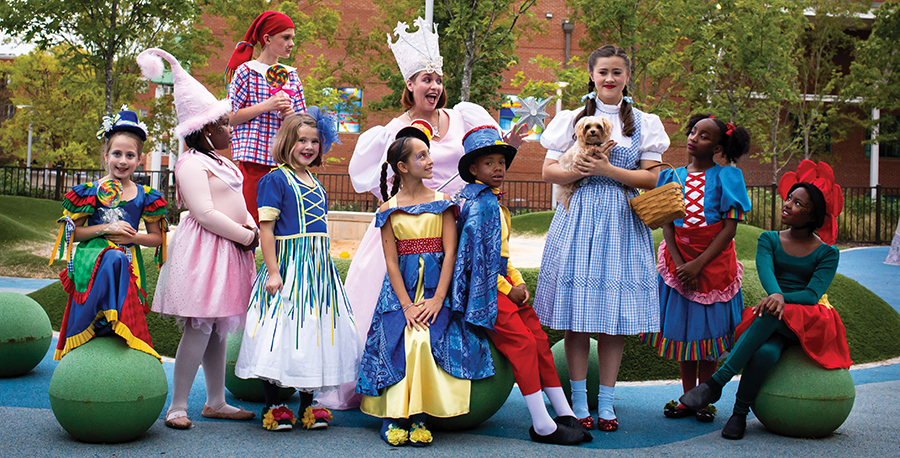 The scale of CTG’s Oz is in and of itself dazzling. Because of its popularity, it’s the one show staged at the historic Carolina Theatre. The roughly 100-
person cast is only a sliver of the picture. Backstage, two sets of 25 volunteers work in different teams, one on each production weekend, assisting with props, set and costume changes, with lighting and sound crews hired in.
Then there are the parents, bless them, who get their munchkin or flying monkey to practice every afternoon and on weekends as the show dates near, and may volunteer as well. Often, it’s truly a family effort. In Roz Fulton’s case, daughter Morgan did a munchkin/poppy turn while husband Jevon was one of the Fly Guys — the volunteers who run the rigging that puts the air under the Wicked Witch’s broom.
All told, between cast, crew, professional technicians, volunteers and of course CTG staff, each production directly involves around 220 people. That’s, of course, not including the thousands of audience members — multiplied by 25 years. That’s a lot of people coming together to share the wonder of one of the most famous stories in the world, one that happens to be not just about going home, but knowing where your home really is.
There’s no Place like Home
Mitchel Sommers has seen first-hand how thousands of young and adult actors have found their home in theater. “Many people who perform with CTG, and not just with The Wizard of Oz, their lives may not be ideal,” Sommers says. “This lifts them up to a better place. Sometimes it’s just a matter of learning basic life skills — how to dress themselves or how to read or how to just have a conversation.” Often, he says, it’s as simple as walking into a world they wouldn’t know otherwise. “Some of our actors come to practice from a shelter and they live for being part of this production. When they come here they’re on the same stage and singing the same songs as people who have grown up in a mansion and had every advantage.”
And the stories. Too many to count. Too many to mention. The grandmother who’s brought her granddaughter to every production for 20 years. The mother who, as a little girl, was in the cast of Annie, the first production Mitchel directed, and years later performed in Oz with her daughters. The friendships and even families that found their start on that stage. The people he runs into everywhere he goes, locally and in far-flung places, who tell him about their own experience in the show, or about their child’s, or how it was the first play they ever saw, made possible by CTG’s free school performance during the week before opening night.
Mitchel found his home too — in CTG, in Oz, and the theater, always the theater. Every story is another reason he stays with it. “This is how we share what it’s like to be human,” he says. “We are all transformed on the stage.”
Justice Reeves-Burke, who shares the role of Dorothy this year with High Point’s Penn-Griffin School for the Arts’ junior Mackenzie Mullins, agrees. The two Dorothys split their performances over the two weekends — partly so there is an understudy in case of sickness, and partly to allow more opportunity for actors to shine. She says she might never have found her passion if both of her moms hadn’t suggested she try it. So she wants to pay that favor forward to anyone wondering if there might be a place on stage for them. “Try it,” she says. “It’s taught me so much. And when it comes together it’s the best feeling in the world.” OH
Quinn Dalton is the author of two story collections and two novels, most recently Midnight Bowling. She also co-authored The Infinity Of You & Me under the pen name JQ Coyle with fellow UNCG M.F.A. grad Julianna Baggott.
For information on showdates: November 16 – 24. https://www.facebook.com/pg/communitytheatreofgreensboro/events/?ref=page_internal

 never cooking alone, even at my most solitary moments. I am surrounded by generations of cooks, their wisdom, laughter, and their flawed and perfect recipes lifting my hands and heart savoring each ingredient as I realize that each ingredient represents all the joys, sorrows, healing and restoration of my life’s journey. These unseen hands hold me in passionate surrender to generosity as family and friends gather at my table reminding me that food creates community, holds my sense of identity, and conjures sensory surprises over and over again. The ghosts of other tables, other kitchens remind me that we are all just ingredients, and what matters is the grace with which I cook the meal.
 The inlaid glass sideboard was majestic with a centerpiece of magnolia, camellia and gardenia blossoms fresh cut from my grandmother’s flower garden and hosting cut glass pedestals of scrumptious coconut cake, petit fours, homemade (pink, green, yellow) mints, fresh strawberries, chocolate-covered peanuts, and my grandmother’s famous secret recipe egg custard. Pitchers of brewed mint tea and punch bowls bearing icy rainbow sherbet flanked both sides of the dessert display waiting to be admired and devoured by the white-gloved missionaries.

 F
F
 F
F


 A
A  He had been living in New Jersey when his sister, Pat, a UNCG art professor, called and invited him for a visit, adding, “I have someone I’d like you to meet.” That someone was to become the artist’s future wife, Bonnie Burkett. She had no interest in living in New Jersey, so Wasserboehr relocated to the Gate City, picking up a freelance assignment at the News & Record.
  These days Wasserboehr “bounces back and forth” between the old and the new, painting miniatures as small as 2 inches or 54 millimeters, and creating digital paintings (using a software program called ArtRage). The artist also combines his craft with his love of history. He was once asked to restore an “old, damaged and faded photograph.” After scanning it and “drawing out the old information in the pixels still hiding in the scan,” Wasserboehr brought to life a portrait of his client’s grandmother; it revealed a cameo brooch — the very one his client kept in her jewelry case, never knowing until that moment it had belonged to her grandmother.
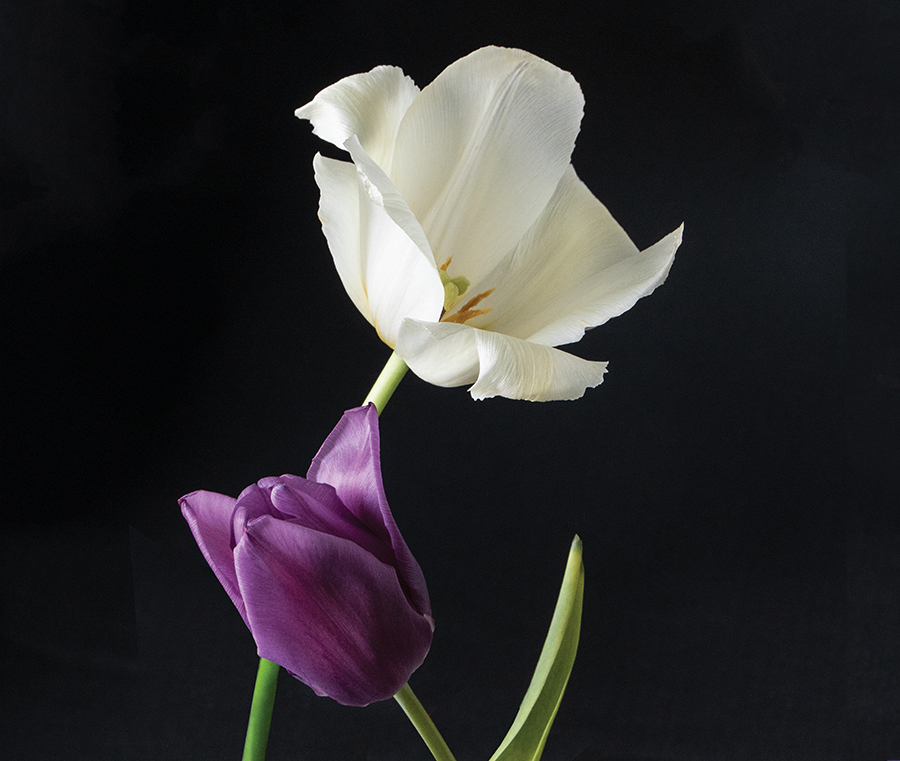
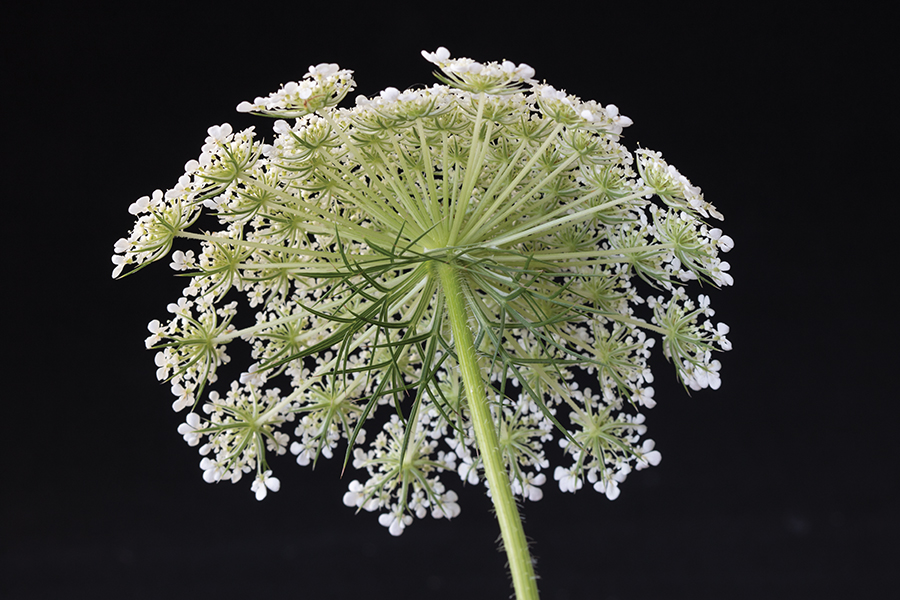
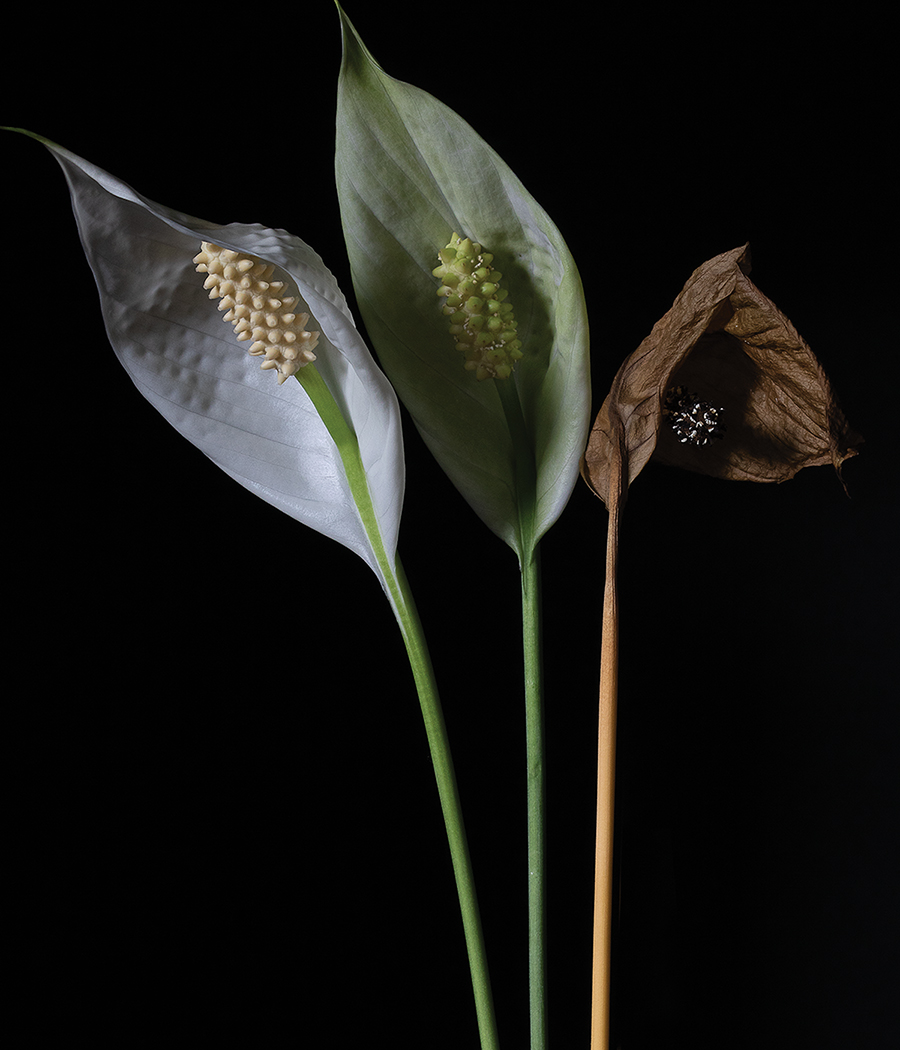 But his wife, Bonnie’s “insane” passion for gardening led him to macro photography. “We go to Walmart to look for housewares and the next thing you know, we’ve got $50 to $60 worth of plants,” Wasserboehr says. “I go out in the yard and dig holes.” A few years ago they fashioned two beds in their backyard, “where we could plant roses, lilies, mums, cornflowers and other beauties,” Wasserboehr recalls. As the plants grew, he noticed some daylilies occluded by some shade. Their pale color caught his eye and prompted him to reach for his camera.
  He continued nabbing “perfect specimens” from his wife’s garden (“she’s been a really good sport about it, he adds), favoring taller, vertical flowers — such as the daylilies and tulips, that are sculptural in appearance. “They’re more in-your-face,” Wasserboehr concedes. His painterly eye prompted him to experiment with composition, zooming in on just the lip of that vase, or the base of a petal, for example, to create a surreal effect reminiscent of Georgia O’Keeffe’s paintings. Wasserboehr says he might shoot from unusual angles — lying on the floor, standing on top of a stool — to achieve just the right composition.
 Maria Fangman
 Charlie Heddington & Debbi Seabrooke
 Diane & Tracy Peck
 Chris & Robyn Musselwhite
 Susan Foust
 Victoria Clegg
 David Barnard
 “
“
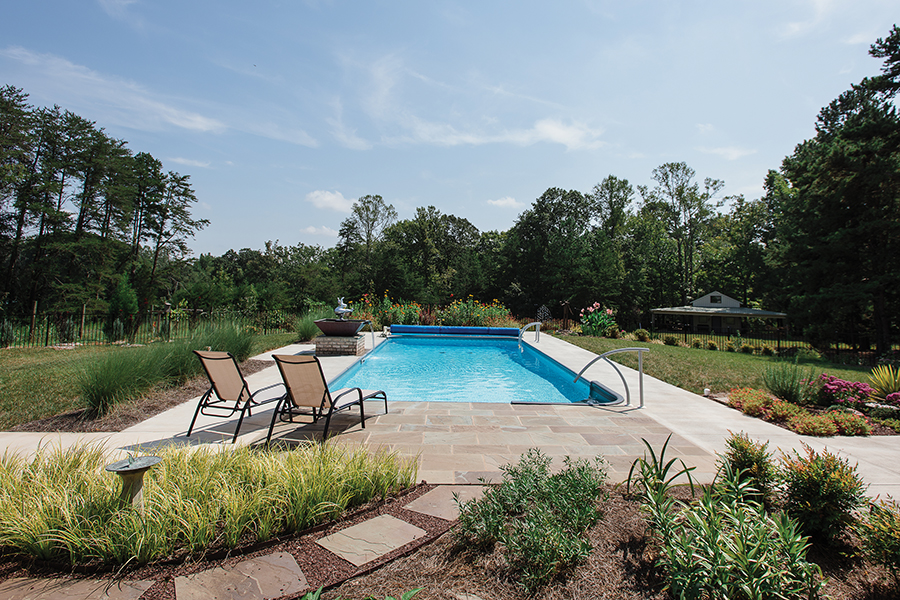
 Out back, beyond the shimmer of her saltwater pool, is a gated garden where late-summer zinnias, hibiscus and canna lilies linger on with a few valedictory blooms. Beyond this is is a wide natural meadow teems with wildflowers, asters, black-eyed Susan, broom sedge and Joe Pie weed humming with hundreds of bees and butterflies gathering up the final sips of summer’s sweetness.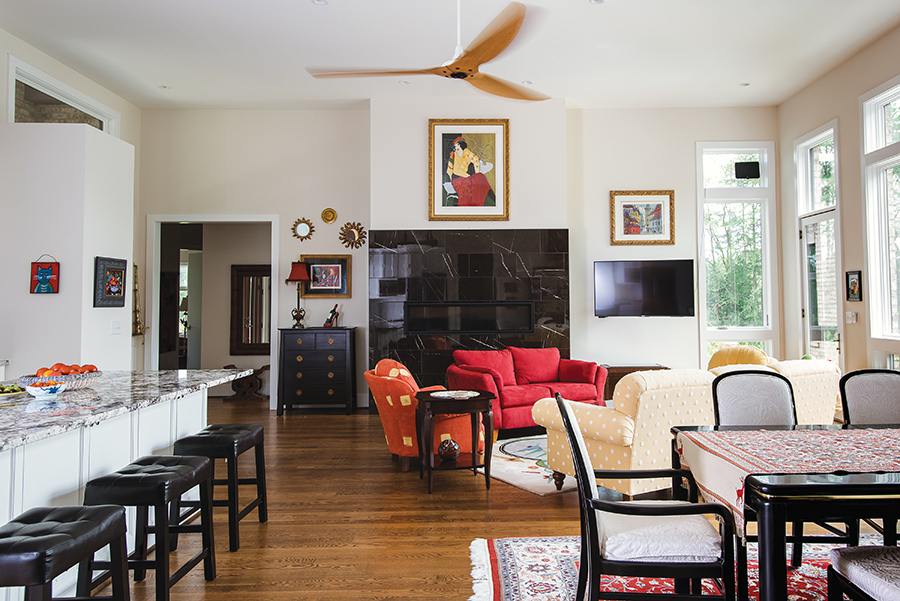


 T
T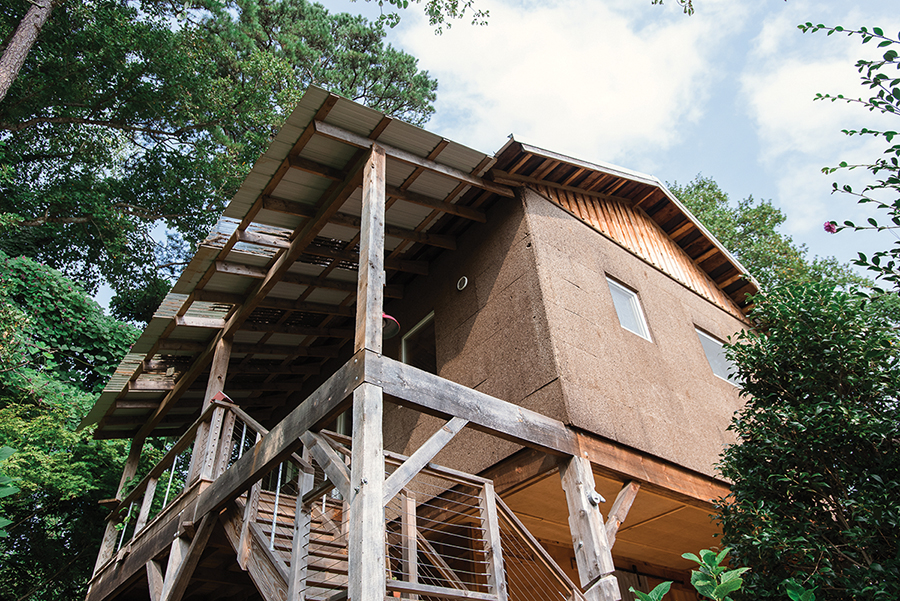 The Roost does, however, host humans, lots of them, who book the one bed/one bath, $85-a-night property nearly every weekend and often during the week.
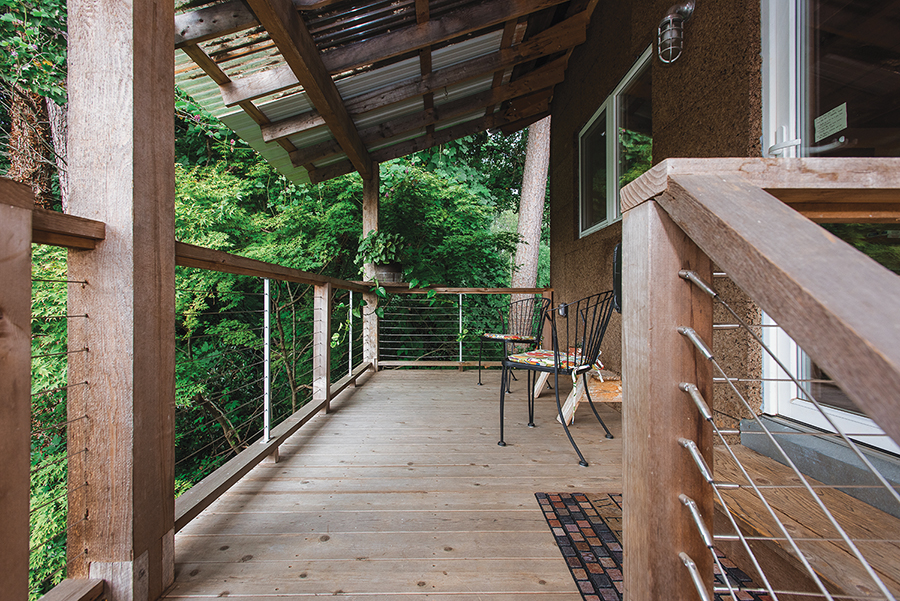 In the beginning, Amanda Jane — a native of Louisiana who moved to North Carolina to build homes for Habitat for Humanity — wasn’t sure what the place would look like. Her then-boyfriend, also a builder, had constructed homes in colder climates.
 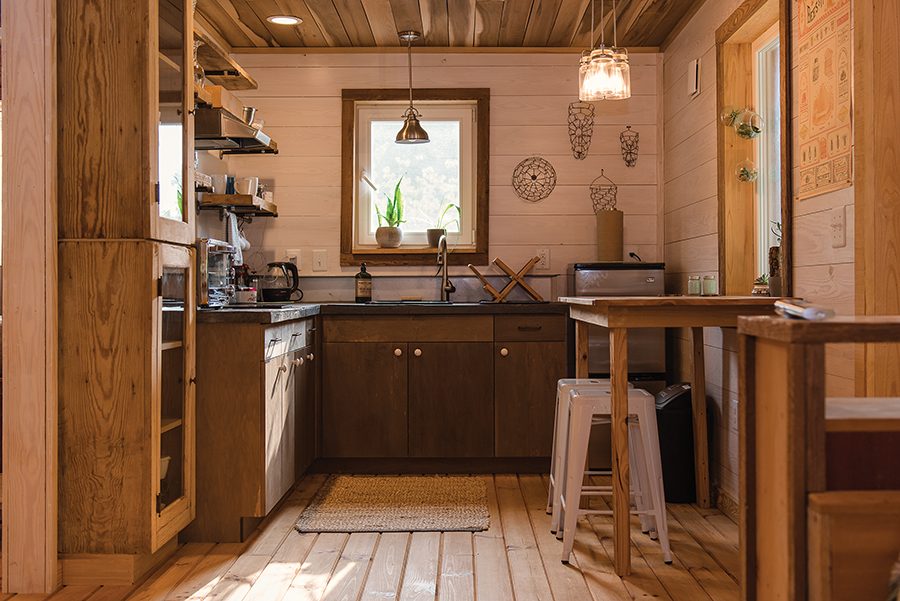 Amanda Jane drew the plans, literally, with a pencil. Tapping her Habitat experience and her interest in nature — she holds a degree in forestry management and ecology from Texas A&M University — she sketched at least 20 iterations before hitting on a compact, functional and aesthetically pleasing design.
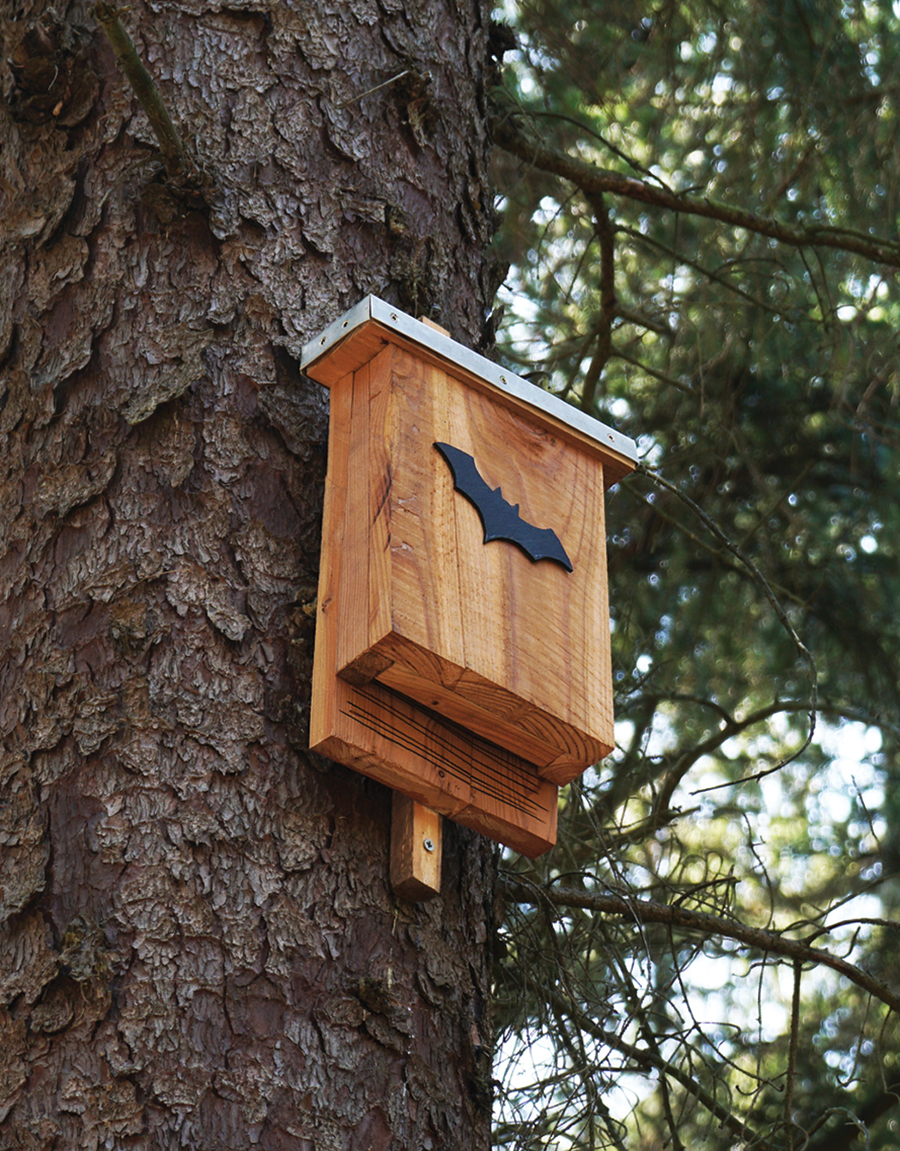 Bats in the Eaves
 Before the Frost . . .
 Battle of the Pies