July Almanac 2019

Snapshots from July are salt-laced and dreamy.

Children skipping through sprinklers on the front lawn.

Baskets of ripe peaches, still warm from the sun.

Tree houses and tackle boxes.

Tangles of wild blackberry.

Brown paper bags filled with just-picked sweet corn.

Last summer, gathered in celebration of July 4, we made a game of shucking sweet corn on my grandmother’s front porch. Two points for each clean ear, a bonus per earworm, yet as husks and corn silk began to carpet the ground beneath us, joy and laughter were all that counted.

And now, memories.

Like Papa’s pickles, made with the cukes from his own garden.

Speaking of Papa . . . something tells me he would have loved watching us turn a chore into a simple pleasure, perhaps the secret of any seasoned gardener.

The Art of Shade-Dwelling

In the sticky July heat our state is known for, not just the flowers are wilting.

Advice from a fern: seek shade and thrive.

Yes, you.

Bring a hammock, summer reading, refreshments, pen and journal.

Daydream beneath the lush canopy. Bathe in the filtered light. Indulge in the summery soundscape. Cloud gaze.

And if you’re looking for a spot by the water, follow the spiraling dragonfly. She will always lead you there.

The dandelions and buttercups gild all the lawn: the drowsy bee stumbles among the clover tops, and summer sweetens all to me. — James Russell Lowell

Fresh from the Garden

Eggplant, snap beans, green beans, summer squash. Plump tomatoes are spilling from the vine, but there are two words on my mind: melon season.

In one word: cantaloupe.

And while it’s fresh and abundant, consider some new ways to enjoy it.

Blend it with club soda and honey.

Salt and spice it with crushed peppercorn and sumac.

Toss it with arugula, fennel and oregano.

Make cool melon soup, or sweet-and-salty jam.

Nothing spells refreshing like chilled cubes of it after a hot day in the sun, but if you’re looking for savory, check out the below recipe from Epicurious.
Cantaloupe and Cucumber Salad

(Makes 4 servings)

Ingredients

1/2 cup olive oil

1/4 cup Champagne vinegar or white wine vinegar

1 teaspoon ground coriander

1 teaspoon kosher salt

1/4 teaspoon freshly ground black pepper

1/8 teaspoon ground cardamom

1/2 large cantaloupe, rind and seeds removed, flesh cut into 1-inch pieces

1 large English hothouse cucumber, sliced on a diagonal ½-inch thick

2 Fresno chiles, thinly sliced

1/2 cup unsalted, roasted pumpkin seeds (pepitas)

1/4 cup chopped cilantro

1/4 cup chopped mint

Sumac (for serving)

Ingredient Info

Sumac is a tart, citrusy spice generally sold in ground form. It can be found at Middle Eastern markets, specialty foods stores and online.

Preparation

Whisk oil, vinegar, coriander, salt, pepper and cardamom in a large bowl. Add cantaloupe, cucumber and chiles, and toss to coat in dressing. Let sit, uncovered, 15 minutes.

To serve, add pumpkin seeds, cilantro and mint to salad and toss gently to combine. Top with sumac.

Lazy Days of Summer

The full buck moon rises on Tuesday, July 16, which, according to The Old Farmer’s Almanac, is a good day for pruning, mowing and weeding. But if R&R is more your speed, below are a few obscure holidays you might add to the calendar.

July 10: Pick Blueberries Day

July 17: Peach Ice Cream Day

July 20: Ice Cream Soda Day

July 22: Hammock Day

Happy Independence Day, friends. Happy, happy hot July.  OH

Fantasy Island

Local designer Terry Allred brings a tropical flair to an iconic North Carolina beach destination

By Nancy Oakley     Photographs by Andrew Sherman

Vacation, all I ever wanted/Vacation, had to get away . . .” The Go-Gos’ high-pitched chorus of their jaunty 1982 pop hit, “Vacation” rolls around in your mind, if not on the car stereo, as you accelerate with abandon down I-40 toward the beach. Good-bye alarm clock! Good-bye over-air conditioned office with blinding fluorescent lights! Good-bye deadlines! Good-bye broiling Battleground Avenue, clogged honking traffic and the acrid smell of tar! You’re going on vacation! Happy! Happy! Joy! Joy! You can’t wait to get your “toes in the water, ass in the sand,” as another travelin’ troubadour, Zac Brown puts it. Your happy place of choice? The Blockade Runner Beach Resort in Wrightsville Beach.

Impossible not to notice before you even set foot inside the door is a colorful sculpture that takes up the entire front window — a wire frame filled with foam flowers, as it turns out — resembling a sea anemone, the handiwork of interior designer Terry Allred. She understands all too well that for the generations of North Carolinians who have regularly vacationed there, the Blockade Runner is an institution, their “own special place,” to borrow from yet another song, “Bali Hai.” So why not create a similar paradise? “Wrightsville Beach is an island. Let’s make them think they’ve come to an island, a really funky island. A fun island,” she recalls suggesting to the hotel’s owners, Bill Baggett and his sister Mary Baggett Martin, when the décor was due for an upgrade.

The tropical fantasy envelops you as you enter the lobby, where, covering the floor, a bright blue mural by Winston-Salem artist Angelina Taddeucci recalls the blue holes in the Bahamas, though Allred says her inspiration were the overwater bungalows so popular in Polynesian resorts. Overhead, a ripple of aqua-colored, stretchy fabric spans the ceiling — waves, as it were; the far wall, original to the hotel, is also painted bright blue and mounted with various kinds of fish (a vestige of a prior renovation, Allred notes); wooden slats replicating a boardwalk punctuate other walls, another foam flower sculpture in the shape of a seahorse is suspended from the ceiling. “I wanted people to feel like they were walking on water,” Allred explains. “When you walk in, you’re supposed to be absorbing water. There’s water everywhere.” Even in the elevator where a single drop seems to splash off the walls. “Why do you come to the beach? You come for the water, right?”

She and her husband, John, came to the beach 26 years ago. Gate City born and bred, Allred had built a successful design business in her hometown in the 1980s with a high-end consignment store named — what else? — Terry Allred. “It was on North Elm Street where Fishers Grille is,” the designer remembers (she would later relocate it to West Market). “I loved to do vignettes. I’m a designer! C’mon!” she says. The tableaux were her creative outlet, since 98 percent of her clientele were other designers. “Why would I be a stupid idiot and compete with people who were coming in and buying from me all the time?” she posits, adding that occasionally she would hire her compatriots to help with the store, if for nothing else than the camaraderie. “My customers were my life!” she says wistfully.

She was not, therefore “a happy trooper” on that day in 1991 when John Allred announced that his job as an engineer for Wilmington Machinery was taking the two to the Port City. With a heavy heart, Terry Allred the designer sold Terry Allred the store, before she and John embarked for the coast.

But as she notes, Greensboro and Wilmington have long been inextricably linked, and it was a Greensboro connection who made the Allreds’ transition to Wilmington a little easier. “Jane Moffitt [now Jane Moffitt Beeker, owner of JM Designs] was a really, really great customer of mine. Incredible customer,” Allred says. She goes on to explain that she’d helped Moffitt with some installations at the Wilmington community of Landfall, which in the early ’90s was smaller than it is today, “maybe 300 people,” Allred estimates. Being new in town, it was a good place for the couple to start out and meet people, and where Allred could establish her professional reputation. She maintained ties with the Triad, buying antiques for Henredon Furniture’s 11,000 square-foot showroom at High Point Market, and ultimately for Ralph Lauren, which was using Henredon furniture in its galleries nationwide. She and John would eventually move to a house “on the prettiest, cleanest creek on the Intracoastal,” with a “gorgeous” yard they loved to work in, but Allred kept her connections to Landfall, doing interiors for some of its residents. One of them introduced her to the woman who would play a huge part in the designer’s life and career, Blockade Runner’s Mary Baggett Martin.

The hotel had been sold to a developer who had plans to convert the lodging into a condominium development. But before it was inked, the deal fell through, leaving the Baggetts with a hotel that suddenly had no advance bookings. Mary desperately needed to refresh the rooms. Which is how, in October of 2006, Allred became Blockade Runner’s in-house interior designer.

“Mary and I hit it off,” Allred says, recalling how the two went to the High Point Market that October, and later, a show in Atlanta. Her new gig was unique in many respects. “This is a family-owned hotel. This is not Marriott — Marriott tells you what to buy,” Allred offers. She was responsible for selecting everything, down to the tiniest detail. “I was picking toilet paper, salt and pepper shakers . . . nothing came into that hotel that I didn’t put my hands on,” Allred says. Initially, each of the hotel’s 150 rooms had its own unique design. “We would buy throws for the beds, pillows for the beds. We can’t have the same tissue holder for every bathroom, if every room’s different,” Allred says. Housekeeping would often get confused as to which throws belonged in which rooms. And, as she would discover over the course of 12 years, a hotel designer’s work is constantly in progress. For one, it takes months for the furnishings ordered in bulk at Market to arrive in containers. Since the Blockade Runner is almost always fully rented, new furnishings and accents have to be implemented in piecemeal fashion. Guests often rearrange pieces designated for specific spaces. “That doesn’t happen in residential [projects],” Allred notes. Then there’s the wear and tear, requiring most lodgings to refresh their interiors every five years or so. But a beach hotel? “It’s unmerciful,” says Allred, citing the sand and unrelenting humidity.

And yet, for all of the challenges, she was having fun. Allred’s eyes light up at the latest redesign as she scrolls through her iPhone flashing photographs of pillows purchased at Market, some with a Mexican folkloric vibe consisting of a rough weave of deep blue thread on a cream background (“Is this not fun?”); others in bright florals seen in Rifle Paper Company’s stationery, all the rage among the younger set (“Is that not the funnest thing?”). She pauses at another image of flooring in a floral design similar to Moroccan tile (“It’s vinyl; isn’t it cool?”) and another image of a bar that appears to be studded with beachcombers’ finds. (“It’s for the lobby, from Phillips Collection. I thought it looked like quartz and pebbles, see?”).

She had Taddeucci paint big splashy murals of palm fronds and blue coral on the walls of the dining areas, used teak furniture and bright colors for the upholstery. Outside, the landscaped lawn shows more evidence of Allred’s ingenuity: an Easter Island head here (you’re on an island, remember?), a fountain there (Allred laughs about the time she accidentally fell into it), elegant hammocks where one can laze and gaze at the roiling Atlantic; across from the pool area, a set of bright blue wicker pod chairs resembling dolphin fins. Nearby stands an accent wall, its bricks painted in glossy red hues — meant to reflect and amplify the sun’s setting rays beaming from the opposite direction. 

Allred credits Mary’s generosity for letting her creative spirit run loose. “Mary spoiled me,” she says of their many showroom jaunts over the years. “She’s taught me a lot. She leaves no stone unturned.” When Allred’s muse strikes and she immediately wants to purchase items that catch her eye, it is Mary who pulls in the reins with a gentle, “Are you sure about that?” or “Let’s go look some more.” Allred has persuaded her friend and employer to rethink things, too, coaxing her away from 150 unique rooms and offering seven distinct floors, instead, the idea being that each visit to the Blockade Runner can be different from the last. On a nautical-themed floor lined with porthole mirrors, sailing enthusiasts will appreciate the sailcloth shower curtains, not to mention the view of watercraft cruising the sound. There is a Rifle floor, using the aforementioned accents of the Rifle Paper Company, and Allred’s favorite, a Bohemian floor whose design was inspired by an elegant dresser she calls “Emma.”

It was love at first sight when she spotted the piece at Market. “I sat down on the floor in front of Emma. And I said, ‘I’m doing a floor with this dresser.’” She likes to think her creative impulsivity has rubbed off. When, at another showroom Mary and younger Brother Ben Baggett gasped in unison at the sight of an enormous Lucite Guildmaster table supported by an enormous driftwood base, Allred immediately ordered the piece, despite Ben’s questioning where in the hotel it would go. Her response? “What difference does it make? “We’ll find a home for something that takes your breath away.” That, after all, part of creating an escape for vacationers. The table, as it happens, now has a place of pride in the stunning, water-themed lobby.

Another pearl of wisdom Allred hopes she has imparted to Mary is the importance of establishing consistent relationships with vendors. She has particular praise for High Point–based Phillips Collection, “because they’re so easy, they’ll do anything for you,” Allred says. For the same reason, she speaks admiringly of BELFOR, the property restoration company that stepped in after the Blockade Runner was saturated with water during Hurricane Florence last fall. “They were fabulous,” Allred says, mentioning that BELFOR had to rebuild the entire balcony section of the hotel, whose roof was ripped off during the storm. Allred was “back in the saddle” in the storm’s wake, going to the High Point and Atlanta shows to purchase furniture, art and accessories and overseeing all the myriad moving parts integral to the hotel’s refurbishment. She says BELFOR was particularly helpful with to replacing carpets, flooring or wallpaper. “They do it. They get it for me, which cuts out some of my hassle.” Having lived through 17 hurricanes, she is all too familiar with the hassle of recovery — the demand for contractors and inspections alone — that many inland dwellers simply do not understand.


But Terry and John Allred will always understand what it means to be waterlogged, even though they themselves are once again inland dwellers. The pull of home was just too strong. They sold their house on the Intracoastal Waterway exactly one week before Florence struck. “I told my husband we should have bought lottery tickets that week,” Allred quips, as she stands before another Taddeucci mural consisting of green leaves on a black background. It is a bold statement in their high-rise, as is the expansive view of downtown Greensboro.

“We love our new life,” Allred sighs contentedly, mentioning the nearby restaurants, Carolina Theater, Triad Stage and the live music from the N.C. Folk Festival readily available from their perch. “I can sit right here, have a glass of wine and watch it all!” the designer enthuses. She likes to walk in Fisher Park, and come winter, make snow angels in City Center Park. “We’re not the beach people we used to be,” she reflects. In fact, she and John have turned their gaze to the west. For when they’re not enjoying the Gate City’s downtown scene, the Allreds take delight in the cool mountain breezes of Meadows of Dan, Virginia, where they frequently socialize with an enclave of fellow Greensborians, visit wineries such as Chateau Morrisette and Villa Appalaccia, dine at the posh mountaintop resort, Primland, and work in a new garden — this one rich in the red clay they’ve missed all these years.

The couple chanced upon a small condominium community while visiting another Baggett family property, Meadows of Dan Campground that includes some log cabins, which, yes, Allred refurbished for her dear friend Mary. The Baggetts, she says, “are family.” And though she officially retired from her post at the Blockade Runner, Allred was still overseeing the post-Forence design work and putting some finishing touches on the lobby — oversized wicker fan chairs, metal palm trees — for its grand unveiling last month before the start of high season. She’ll likely return in October when the property celebrates its 55th anniversary, lending her special magic to the decorations and festivities as she has for every holiday — Thanksgiving, Christmas, Fourth of July — making the hotel a happy place for all who enter its dreamlike watery world. Then she’ll head west again to where she is happiest: “digging in the dirt . . . and visiting wineries.”  OH

By the time you read this, Nancy Oakley will be kickin’ back, Zac Brown–style.

Poem July 2019

Pulling Up the Wild Blackberry Bushes

seems ungrateful but they’re too plentiful

crowding the precious patch of sun

meant for the Heritage Red Raspberry

that cost $16.

So it’s a matter of hubris that we jerk up

those lesser cousins before they bloom

drag them over nubile grass and

toss their torn briars into fire.

Yet when I get to the last bush, I stop

remember how in August I needed

more fruit to nestle around the scant

peaches in my cobbler.

The berries were small but their juice

tasted of mulled wine, piquant but

not too tart, the grace note of a last-minute

potluck, others cooed for the recipe.

So I lay aside the shovel, knowing that

this last bush, cane too tender for thorns,

might one day be our savior

if the raspberry turns to dust.

— Ashley Memory

Anchors Aweigh!

Frank Slate Brooks and Brad Newton are always ready to set sail for adventure  from the comfort of their nautical-themed home in historic Lindley Park

By Billy Ingram     Photographs by John Koob Gessner

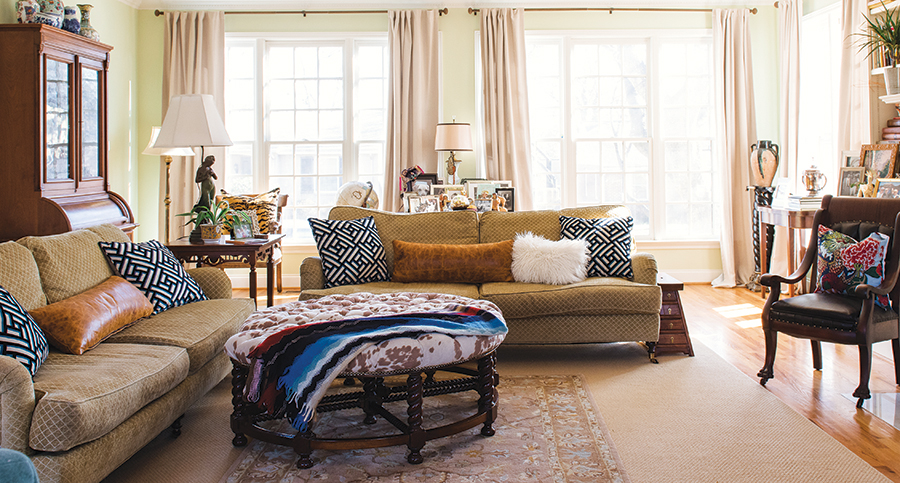
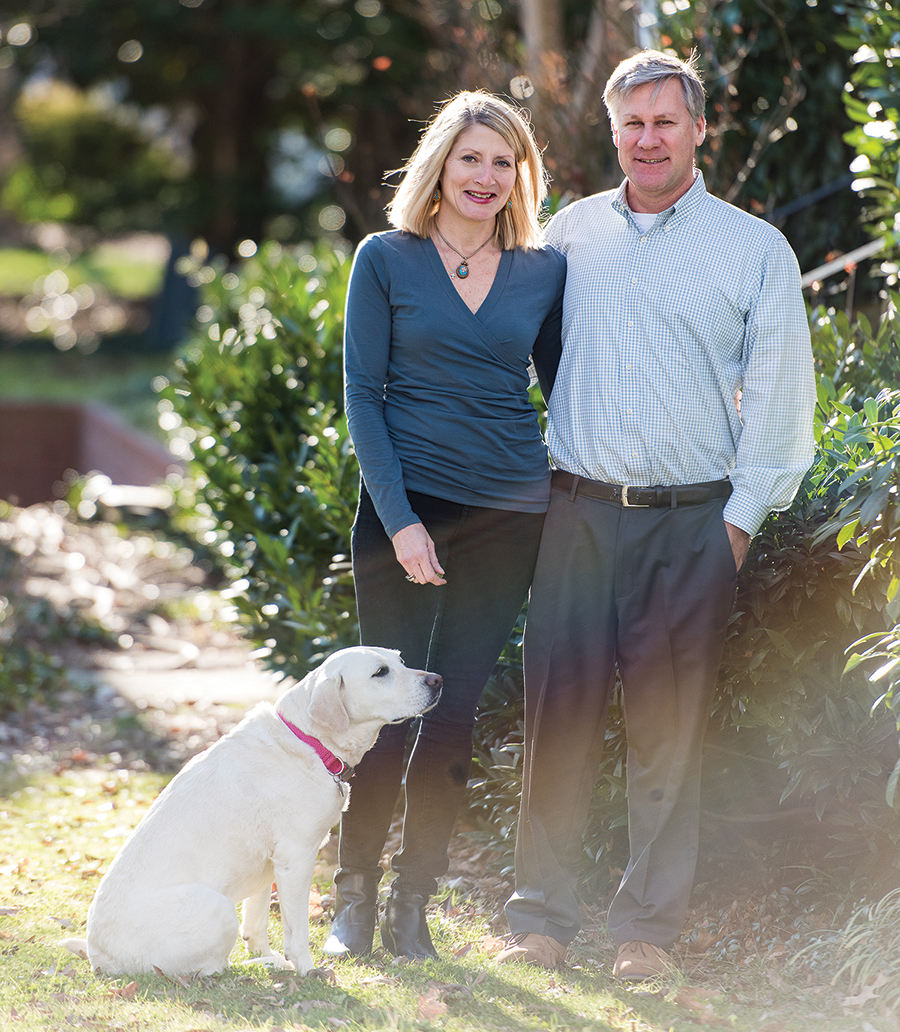
Frank Slate Brooks and Brad Newton have chosen to cruise through life, moored but not anchored to their spectacular Lindley Park home, a retro-pop sanctuary where elegance and eccentricity collide.

Frank was raised in High Point, Brad in Burlington. They’ll have been a couple for 23 years this August. “We found out a couple of years into our relationship that our grandparents had been best friends,” Frank tells me. “We don’t know if we met each other as kids or not, but it was meant to be somehow.”

If their names sound familiar, it may be due to a blizzard of publicity that erupted in 2014 after they became the first gay couple to marry in Guilford County. “I didn’t realize that the media might be there,” Frank recalls. With that in mind, their first thought was — would their parents be OK with this being public? “My father is very conservative,” Frank says. “My mother had already passed and my dad was out at River Landing. Someone had left him a copy of the newspaper next to his bed and wrote ‘Congratulations’ on it. I walked in and Dad said, ‘So what have you been up to?’ He was all good.”

And so was the community at large. “We really thought there would be some kind of backlash or something nasty but it was the opposite,” Brad says. “At the baseball stadium the Saturday after, there was a chili cookout thing going on and people of all ages were coming up to us giving us hugs, it was just great.” Frank Slate Brooks, now with Tyler Redhead & McAlister Real Estate, has sold well over 100 homes in and around Lindley Park since 2006. “In 2001, I started out flipping homes with my then partner [interior designer] Laurie Lanier,” Frank tells me. “She staged a house for me and it sold in less than half a day. We did about 12 houses here in Lindley Park before we priced ourselves out of the market because when we started, Lindley Park was not what it is today. Everything that we sold raised the prices for all the properties around them.”

After his experience flipping houses, Frank realized he needed to get his real estate license, “I really think we [Stephanie and I] were responsible for the renaissance of Lindley Park.”

Graced with tree-lined streets, eclectic architecture and neighborhood schools, Lindley Park was ripe for a revival once people began moving in from the suburbs. It was originally the site of an amusement park designed by the Greensboro Electric Company in 1902 to generate interest in the city’s new trolley line. That 3-mile trolley ride down Spring Garden from the center of town took around an hour and a half. (You could walk in half the time, but the muddy terrain wasn’t exactly pedestrian-friendly.)

Named for J. Van Lindley, whose 1,130-acre nursery and Pomona Terra Cotta Company were situated nearby, the 26-acre park opened on the Fourth of July. The pavilion featured refreshment booths, a Fairyland Casino for dancing and bowling alleys. Nearby was a manmade lake for swimming and boating in the summer, ice skating in the winter, along with a miniature railroad and a 1,000-seat theater for touring vaudeville acts, as well as some sort of local monkey act. The park’s 20 x 25–foot bathhouse still stands behind the residence at 2812 Masonic Drive.

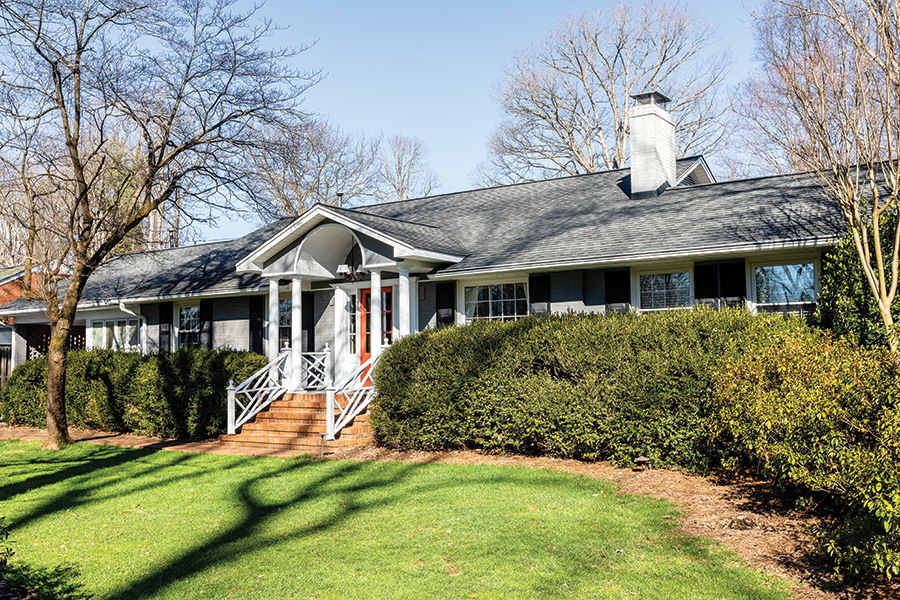
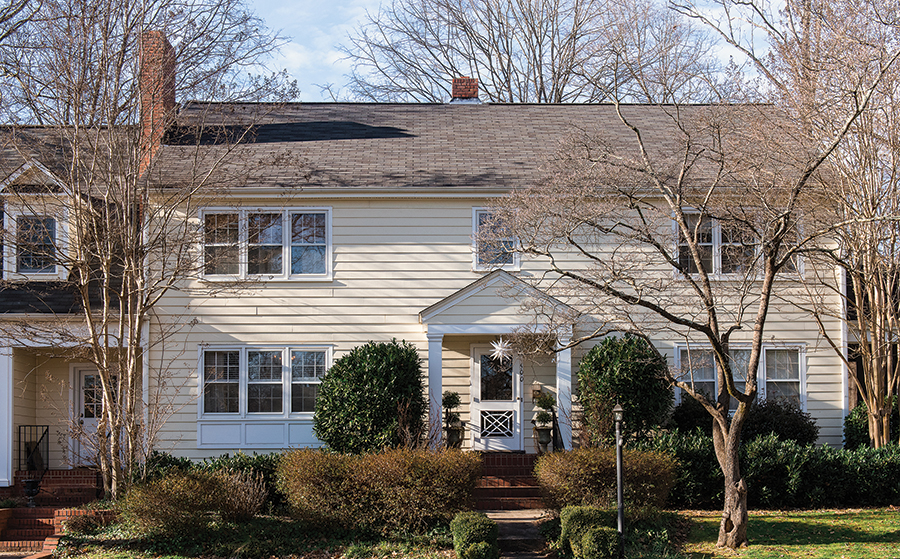
Frank and Brad’s two-story, Colonial Revival–style home on Northridge Street was built during the first wave of swank homes developed for the Lindley Park neighborhood in 1922 after the amusement park had closed. Its construction is somewhat unusual, consisting of a brick exterior with 16 inches of insulation between the walls, the majority being more brick that keep rooms naturally warm in winter and cool in the summer. “They knew how to build houses back then,” Brad says.

At the start of the 1920s, the heart of Lindley Park was the corner of Walker and Elam and it remains so today. The first collection of unrelated businesses outside downtown was most likely Sunset Hills Shopping Center, established around 1925 on the northeast and northwest corners of the intersection, with two shops and a service station where Sticks and Stones is today. The retail area expanded in the 1930s to include a Piggly Wiggly in the space Suds & Duds currently occupies.

The Pickwick Soda Shop (now Walker’s) opened around 1943, at some point in the 1960s becoming The Pickwick bar and grill where, in the evening, newspaper folks downed Blatz on tap with college students that included Jim Clark, future Director of UNCG’s MFA Creative Writing Program. Sealing its street cred as a hippie hangout in the ’60s and ’70s, The Allman Brothers played there. As the district became more bohemian with the expansion of UNCG in the 1980s, large portions of Lindley Park began to go to seed.

In 1999, Frank had been living on Mayflower Drive for around seven years when, as he recalls, “My parents said, ‘You need to get a bigger house because we’re giving you a lot of furniture’ and I thought, ‘OK . . .’” Visiting a friend who lived on Northridge Street, “We were out on her deck,” Frank remembers. “And she said, ‘These people next door are getting ready to transfer and they’re selling their home,’ and I said, ‘What house?’ We had been over there many times and never noticed this house.”

That may be because the manse is somewhat hidden behind a canopy of shade trees even older than the home itself. Frank ventured over, knocked on the door, “A woman named Mary lived here,” he says. “She showed me the house and the backyard and I said, ‘Sold!’”

A few minutes later, “Frank called me at work,” Brad recalls. “He said ‘I found a house, we’re signing the papers tonight’ and I said, ‘Whoa, slow down.’ I’ve not even seen this house! I came over after work and kinda did the same thing: ‘Sold!’”

Frank describes the surroundings in 1999, “The Filling Station [restaurant] was still a filling station with stacks of rusty cars in front of it.” Fishbones on the corner, he says “was part of The Blind Tiger next door; they closed that off and it just sat there. Now it’s the reverse.”

“Bestway was owned by two old men,” Brad remarks. “After they sold it, it became very much like a glorified Stop & Rob, not at all what it is now. There was very little activity at the corner of Walker and Elam, I think Wild Magnolia closed right as we were moving in.”

Since then, they’ve been furnishing their home in 20th-century whimsy, a Technicolor dreamscape. For instance, in an otherwise sedate living room, a Chain Drive Irish Mail push/pull pedal cart from the 1960s adorns one corner. In the breakfast room, a papier-mâché monkey mask by Mexican artist Sergio Bustamante hangs above a pristine 1952 Seeburg Select-O-Matic 100 jukebox. “We had it restored,” Frank says. Surprisingly, filling it full of hit records was easy, he adds. “I had a listing where the owner had left hundreds of 45s behind so we switch it out all the time.” They even found a place online that prints those distinctive crimson-striped labels for the jukebox’s song selections.

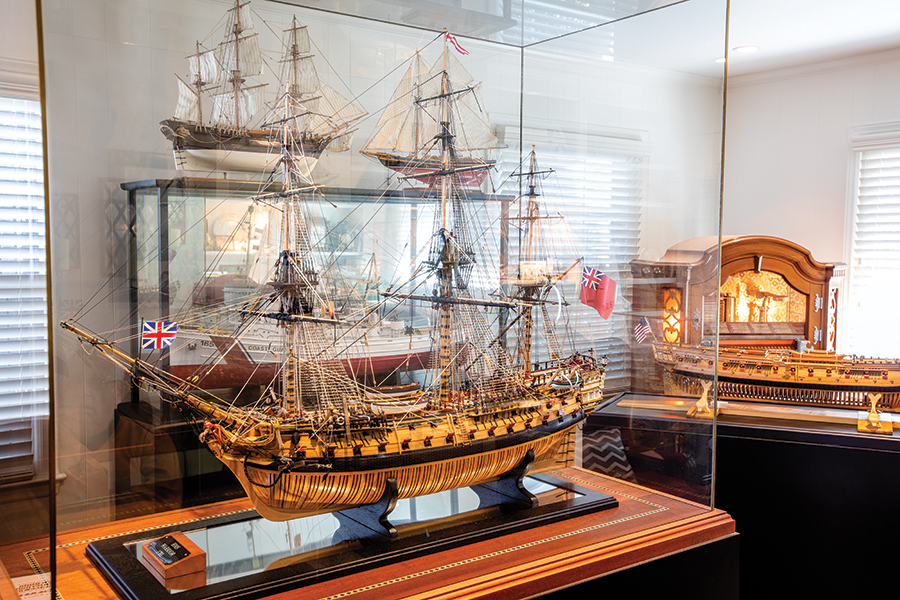
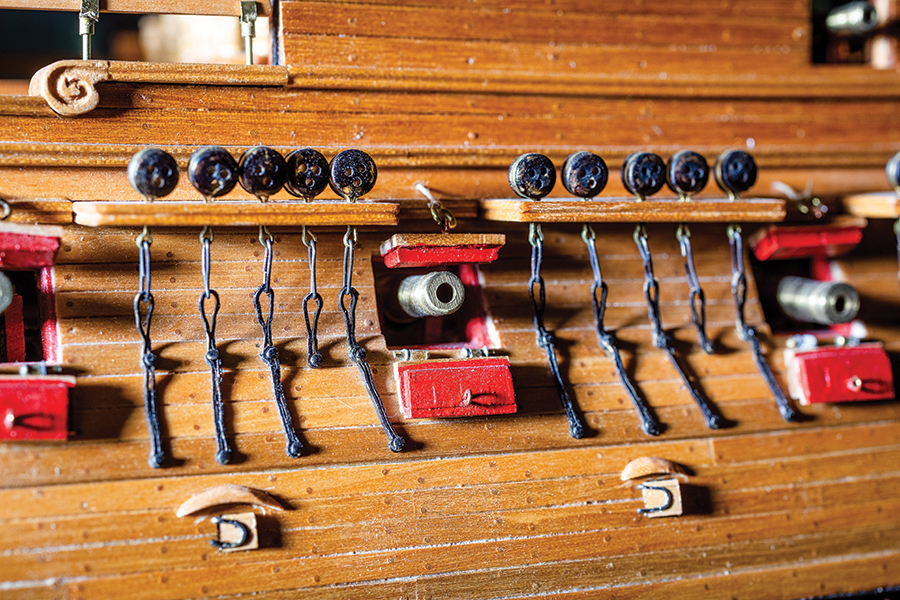
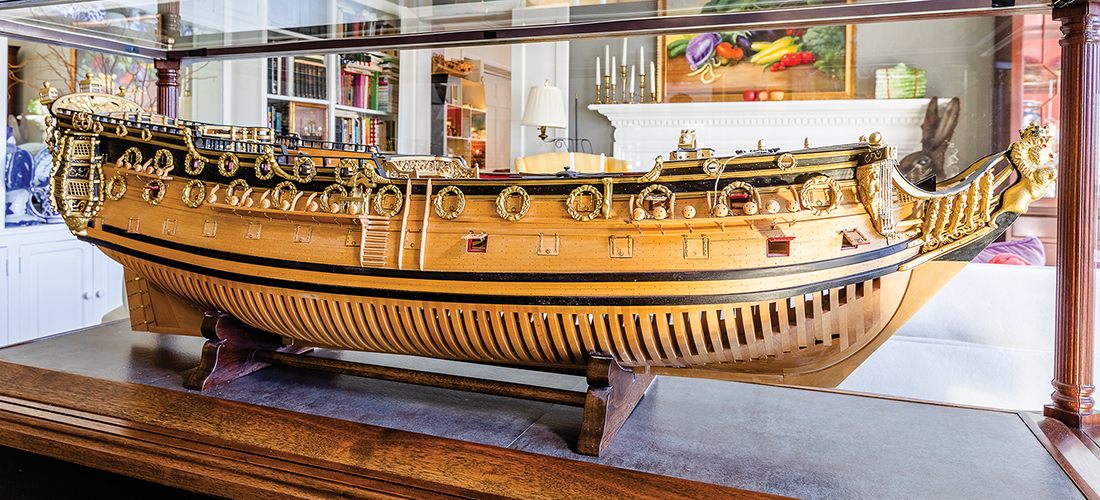
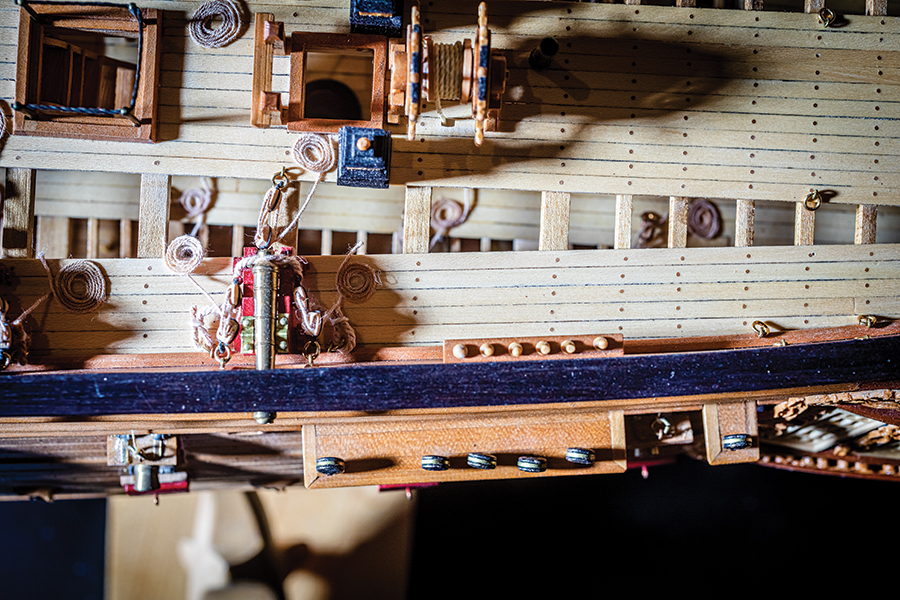
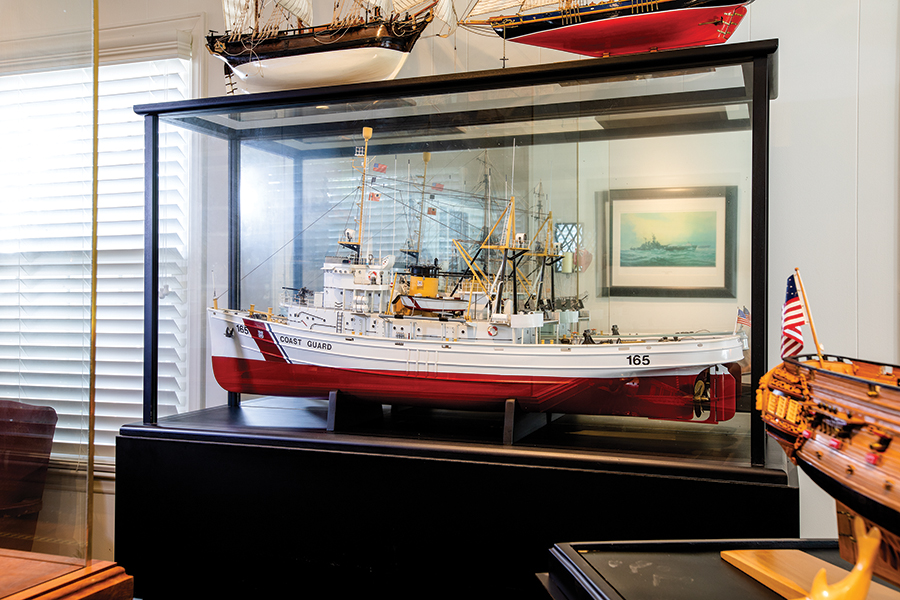
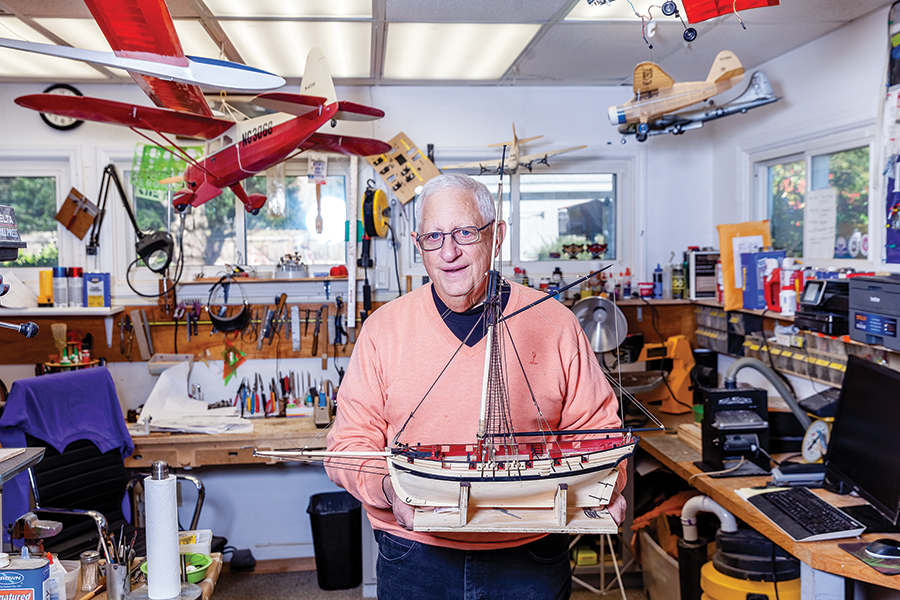
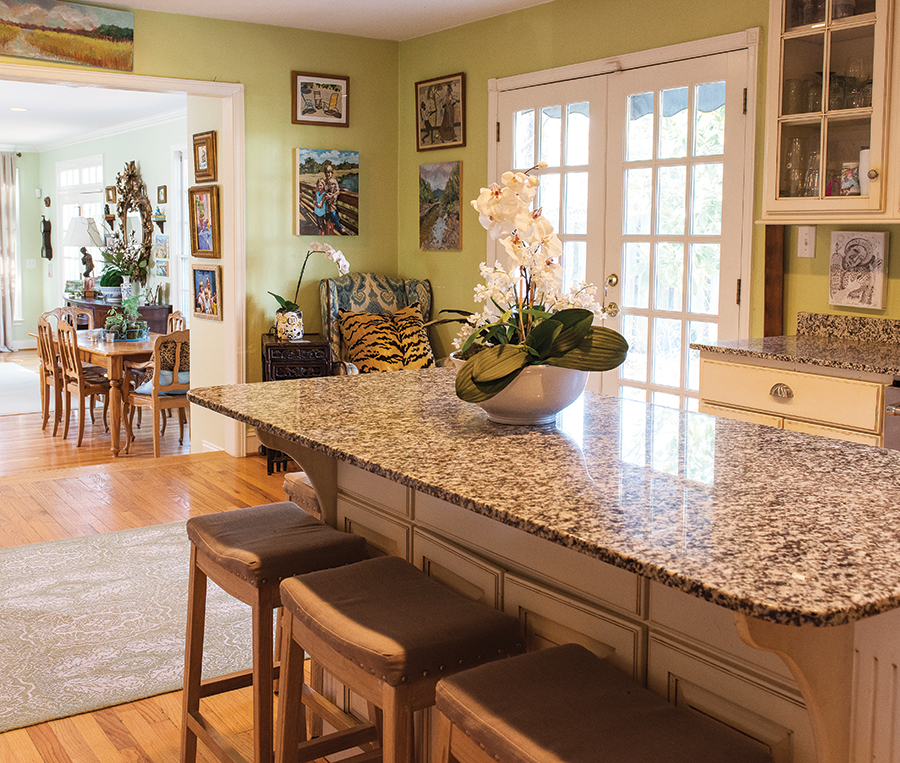
Brad is a big Don Knotts fan, so a poster from The Ghost and Mr. Chicken holds a prominent spot in the kitchen, as does a collection of pins acquired by Frank’s father from the many countries he’d traveled to. It continues to grow with the couple’s own additions. “This kitchen has seen so many transformations,” Frank says. “We recently did the countertops, the upper cabinets are from Preservation Greensboro.” Just off the kitchen is another equally impressive collection: of model ships he assembled as a teenager.

But what really makes their home one-of-a-kind is an unmistakable nautical theme. Both Frank and Brad (or “Frankenbrad” as their friends fondly refer to them) share a fascination with ocean liners and enjoy luxuriating on transatlantic cruises aboard vessels like the SS Norway and RMS Queen Mary 2. Part of the allure? “I love the ability to unpack once and have everything taken care of,” Frank says. “In a lot of ways, we’re very old-fashioned,” Brad explains. “On cruise ships you still have to dress for dinner, I do enjoy that. On the Queen Mary 2, they will stop people from entering the dining room in a T-shirt and shorts.”

A Carnival Cruise won’t float their boat. “We prefer the old-school, luxury Cunard ships and Celebrity Cruises,” Frank insists. “They always have lectures and more interesting things to do than your Caribbean cruises. The spa . . . high tea is very nice, the British ships are big on trivia contests. And the disco is fun for maybe one night.”

“Frank made friends with the actress Celia Imrie (of the Bridget Jones movies) on our first Queen Mary crossing,” Brad says. “We were invited to a gay wedding on board, officiated by the Captain, and she was involved in that.” Even choppy waters won’t spoil the good times for these two. “We got chased by Hurricane Mitch last year on the [Celebrity Cruise ship] Mercury,” Frank tells me. “We dodged it the first time but then it reformed in the Atlantic and they were calling it ‘Son of a Mitch.’ The waves got so bad, everyone was tossed and thrown everywhere so all drinks were free for a day or two. We have our sea legs so it didn’t bother us; we thought it was fun.”

At an early age, Frank became infatuated with America’s Flagship, the SS United States. Now he’s North Carolina co-chairman of the SS United States Conservancy, an attempt to repurpose what was once the most elegant ship on the high seas, attracting U.S. Presidents and Hollywood stars alike from the moment of her maiden voyage in 1952. A full 100 feet longer than the RMS Titanic, the SS United States still holds the record as the fastest ocean liner to cross the Atlantic. The ship was retired in 1969.

All around the home are mementos and sumptuous details salvaged from the SS United States: ashtrays, aluminum cabin keys, towels, travel posters, its “Swimming Pool” sign in the mudroom above the back door, even blankets on the beds bear the ship’s insignia.

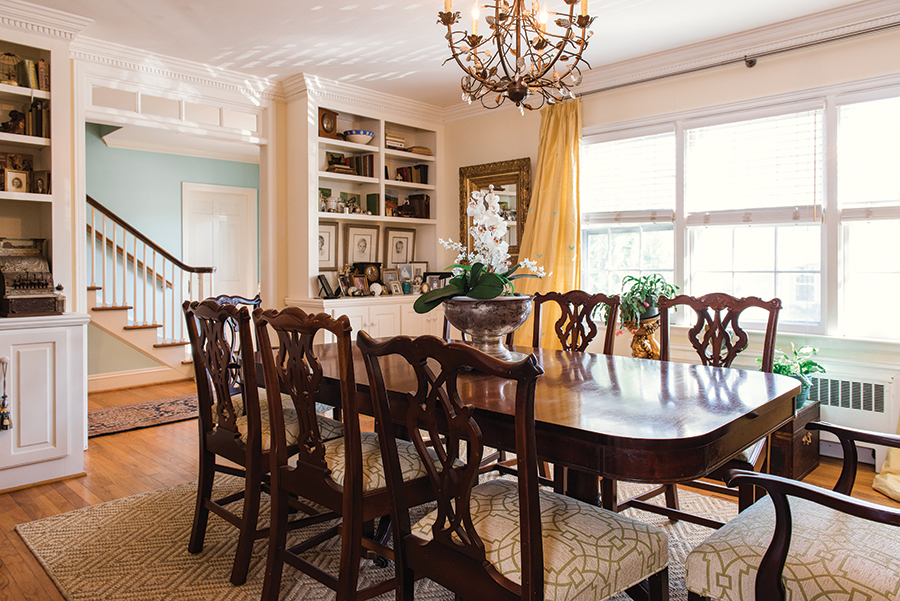
In the dining room are several chairs, a table lamp, and fine china place settings that also originated from the ocean liner; a scale model of the ship serves as the formal table’s centerpiece. Nearby, a grandfather clock from the 1800s chimes the hour while, mounted on another wall, is a metal sculpture of Jesus wearing a crown of thorns by Felix de Weldon who famously sculpted the Iwo Jima Memorial. “It’s bolted to the wall,” Brad says. “It’s very heavy. If it ever falls off, it’ll end up in our basement.”

Recently, FrankenBrad hosted a kick-off party here for Preservation Greensboro’s tour of Lindley Park homes. “We had a great turnout,” Brad says. “Our house was going to be on the tour, but we were out of town.”

Brad, who’s worked in marketing for Replacements, Ltd. for the past 23 years, has a love for Hollywood movies, as evidenced by the dramatic framed three-sheet posters for such cult classics as Beyond the Valley of the Dolls and Stanley Kramer’s The 5,000 Fingers of Dr. T., both of them three times larger than your typical one-sheet movie poster. “They didn’t make a whole lot of three-sheets,” Brad notes. “In fact, they are always numbered.” Pointing to an etching in the bottom left hand corner of the 5,000 Fingers poster, he says, “There were only a total of 53 of these made and this is No. 8.” A poster for Roman Polanski’s 1965 thriller Repulsion is mounted above their bed because, as Brad says, “Everyone wants to see a psychotic Catherine Deneuve whenever they walk into the bedroom, right?”

If this home reminds one of Stately Wayne Manor it shouldn’t be surprising that, just like the ’66 Batman TV show, in the den next to a red rotary telephone is a bust of William Shakespeare. Pulling back The Bard’s head reveals a switch that triggers a bookcase to slide to one side, exposing the Batpole leading down to the Batcave (sliding bookcase, Batpole and Batcave not included).

Another fitting nostalgic touch? Their screened porch, which hasn’t been glassed-in as so many are nowadays. There’s something quaint about a screened porch, especially this one with four 1950s era barbershop waiting room chairs to lounge on. Very Mayberry.

Entering their backyard, dominated by a 60-foot long pool, is a bit like walking onto the deck of a cruise ship, but considerably greener. “These silver planters are from the First Class Dining Room in the SS United States,” Frank says. A wall of nautical flags, nearly an exact replica of the one situated at the end of that fabled ocean liner’s indoor pool, spells out, ‘Come on in the water’s fine!’ The outdoor shower and deck chairs also originate from the United States.

As we relaxed on the terrace, accompanied by a symphony of chirping birds, I half expected Admiral Halsey to come floating down from the sky.

“There was a time when we were talking about buying a beach house,” Brad explains. “We thought about the upkeep, the insurance, worrying every time a storm came through, so we decided we’d turn our house into a vacation property. We love to get up on Saturday mornings, put on our bathing suits [“Or not,” Frank interjects] and it’s like we’re on vacation in our own neighborhood.”

It’s safe to say the couple’s three dogs — Rex, a 6-year-old black Lab; Dios, a 9-year old golden retriever; and Ripley, a 2-year old English Cream — enjoy the pool almost as much their owners do. Frank laughs, “When we go on vacation we have a dog sitter who is always like, ‘Oh yeah!’”

Chip Callaway did the landscaping, lining the fence line with magnolias and upright skip laurel. “Chip told us, ’The first year they sleep,’” Frank explains. “‘The second year they creep and the third year they leap.’ And that’s where we are now, the leaping stage.” A pull-down motion picture screen along an exterior wall of the garage allows for cozy movie nights. No wonder they have no intention of moving or even one day downsizing. “We’re here to stay,” Frank insists. “We love it here.”

Sold!  OH

Billy Ingram is a former Hollywood movie poster artist who now enjoys exploring Greensboro’s rich history.

She’s Got Game

Joy resounds in the crack of a bat for Grasshoppers superfan Priscilla Tuttle

By Maria Johnson     Photographs by Sam Froelich

Priscilla Tuttle raises her fists, but not in anger.

She puts up her dukes to bolster her beloved Grasshoppers when they need it — as they do now, in the opening act of a daylight double header against the Lakewood BlueClaws, who’ve scuttled down from New Jersey.

It’s the bottom of the first, and the Hoppers, Greensboro’s minor league baseball team, are at-bat, down 1-nothing.

The BlueClaws pitcher unfurls a fastball that reverses sharply with a flash of ash. CRACK! A shooting star of hide arcs over the infield and lands in the grass. The Hoppers batter in bright white churns to first.

“Go-go-go-go-go-yeah-yeah-yeah-yeah-yeah-wooooooooo,” Tuttle croons from her usual seat in the first row behind the Hoppers dugout. She shakes her fists like baby rattles, though she’s far from the cradle.

At 78, she’s one of those women who subtracts years by answering the age question quickly.

She’s not afraid of stepping up to the plate.

Or guarding it, like she did when she was coming up in the textile town of Eden.

Her daddy worked at Fieldcrest Mills’ Draper blanket plant; he played catcher and shortstop for the mill team. Young Priscilla and her family watched the games at close range.

“Mama said my first black eye I got by a baseball when I was 3,” she says.

As a teenager in the 1950s, Priscilla followed the Dodgers — the Brooklyn Dodgers — on TV. She played catcher for her high school softball team. She used her daddy’s mitt, a hard brown doughnut made buttery in the middle by balls that numbed her left hand.

She threw right-handed, batted left, was a fair-to-good hitter and a scrappy defender who planted her featherweight frame over home plate whenever a girl rounded third.

“I tried to keep ’em from getting across that base. I got rocked a lot. That was in the old days,” she says.

Later in life, after she and her husband, Gray, had four sons, she and the boys played on occasional Sunday afternoons with a co-ed bunch from her Methodist church. Priscilla played catcher, again. She didn’t get bowled over nearly as much — thank you, Jesus, for Christians and small children at home plate— but she got charley horses from not warming up.

Dirt-and-fescue diamonds are rarely a girl’s best friend into middle age.

She quit the plate and exercised by chasing her boys and minding the family store  — The Barn Bait & Tackle — in an old tobacco barn on N.C. Highway 135 between Eden and Stoneville. That’s where she was working when a friend of the family — who was also a booster of the Greensboro Hornets, a predecessor of the Hoppers — walked in with some players in T-shirts and jeans.

It was 1991.

The booster-friend had worked it out with Gray’s uncle to let the players fish in the uncle’s pond. They stopped at the store for rods and reels and worms.

Priscilla fixed them up. That’s how it started, her long walk home to baseball.

She’d set up the players with bait and tackle, they’d talk, and naturally, they got to be friends. She invited them over to the house for supper.

She made regular food. Salisbury steak. Meat loaf. Green beans. Crowder peas. Creamed potatoes. Cornbread.

“They ate it all,” she says. “Lord have mercy.”

One day, one of the players asked Priscilla if she’d ever been to one of their games?

No, she said.

Why not? he asked.

She shrugged.

If I got you some tickets, would you go?

Sure, she said.

In 1993, she became a regular at War Memorial Stadium. Gray would go, too, when he could get away from farming tobacco and getting up hay.

Priscilla studied the game. She learned the fine points that had never dawned on her in high school: how hitters hit to certain locations in certain situations; how defenders shift on the field depending on who is at-bat; how every throw from the field is calculated to minimize damage.

Like most games, baseball was simple on the surface, complex underneath.

“It’s a finesse game,” she says. “I enjoy seeing ’em work it.”

It was more fun because she knew the players. She took their pictures, had double prints made at Winn-Dixie, laid out photo albums for herself and gave extra prints to the players to share with their families.

Somewhere, she knew, those players — most of whom were single and in their late teens or early 20s — had parents who worried about them. Priscilla wore out her Instamatic camera letting the unseen families know she was watching out for their sons.

She got new cameras, new lenses.

She made the transition from film to digital.

She grew and changed with the team, with the seasons.

She joined the booster club and pitched in to provide the players with picnics, household goods, and goody bags for road trips.

She adapted to the name changes — from Hornets to Bats in 1994, and from Bats to Grasshoppers in 2005, when the team moved to what’s now First National Bank Field.

She rolled with changing affiliations to major-league clubs.

She and Gray traveled to spring training in Tampa, Florida, when the team was aligned with the New York Yankees. They visited Jupiter during the reign of the Miami Marlins.

Just this season, the Hoppers divorced the Marlins and took up with the Pittsburgh Pirates, who eat grapefruit in Bradenton, Florida.

Priscilla was sorry to see the split. Marlin’s CEO Derek Jeter had played for the Greensboro Hornets in 1992 and ’93 before going onto stardom with the Yankees, and Priscilla was impressed by him and his parents. Good people.

But Jeter’s visit to Greensboro last season did not bode well, she says. He stayed in a skybox and did not acknowledge the fans.

“It looks like he would have come out of the box to meet the people,” she says. “There are a lot of people here who remember the old days.”

Maybe, she says, it was time for a change after all. The Marlins’ brass didn’t like the dog crates in the clubhouse. The bat-fetching pooches of Hoppers owner Donald Moore are longtime darlings of local fans, including Tuttle.

Soooo . . . fair thee well, Marlins.

“We like the Pirates,” says Priscilla, who has served as the president of the Hoppers booster club for, as she says, forever.  “We like the Pirates just fine.”

It’s time for “Y.M.C.A.”

Youngsters in shorts mount the dugout roof in front of Tuttle. She moves her canvas tote bag to give them more room as they commence to making Village People of the crowd.

Tuttle, whose short blond hair yields easily to gray, stays seated, sings along and makes the letters with her arms. In her elastic-waist jeans and slip-on sneakers, she looks every bit the elementary-school substitute teacher that she once was — and the reading tutor that she still is.

Her red T-shirt advertises the Fighting Quakers of Guilford College. Her grandson, Dylan Tuttle, pitches and plays right field for the Quakers. He gets it — why his grandmother keeps baseball cards, baseball programs, baseball books and signed baseballs in clear plastic boxes.

He gets her poster of Yankees slugger Don “Hit Man” Mattingly, who, incidentally, also played in Greensboro, in 1980, on his way to the Show.

If anything happens to me, Priscilla has told Dylan, don’t let them throw this stuff away. You know what it means. Not that she plans on going anywhere anytime soon, she points out, other than to a Hoppers game.

“A lot of things make me happy, but with this, I enjoy sitting and watching the plays. You sit here, and the cares of the day . . . it’s a way of focusing on something else,” she says.

“You can stay at home, in your little cluster, and never branch out, or you can go out someplace like this and meet people, and have a community. It’s just a joy. Except when we’re losing.”

We’re losing.

Have been since the error-filled fourth inning.

Now, it’s bottom on the seventh, the final inning of the foreshortened doubleheader.

Priscilla locks her blue-green eyes on the game. Her bifocal lenses are clear — not rose-colored — but her wire frames are rosy-gold. Hopeful around the edges.

We’re down 4-7 when the rally starts.

Siri doubles. Sanchez walks.

Men on first and second.

Macias singles, driving home Siri and advancing Sanchez.

Men on first and third.

“Oh! Go-go-go-go-go! Woooooooo.”

Priscilla’s fists are up.

The score is 5-7 when the first baseman Martin comes to bat. His mother might call him Mason, but to Priscilla, he’s Martin. She calls them by their last names. This is baseball.

Martin’s a lefty. Out of Washington state, Priscilla thinks. She’s still getting to know this Pirates team, making them her own.

“Let’s go, Hoppers! Let’s goooo,” she urges.

Four-hundred-and-eleven feet. That’s how far Martin pulls the ball. It sails over the ad-plastered fence and clonks off a building under construction on the other side of Eugene Street.

Martin knows it’s gone when he hits it. His slow trot around the bases gives time for everything to rise: The noise. The fans. The delirium of seeing the long shot made real.

Game over.

Hoppers win 8-7.

Priscilla Tuttle is on her feet, bouncing in her Skechers, yelling to be heard over the swell.

“Now, that’s what you call a baseball game.”  OH

Maria Johnson is a contributing editor of O.Henry. Her email is ohenrymaria@gmail.com.