Poem March 2023






 January is a creation story.
It begins with the wrinkled hands of a grandmother — perhaps your own grandmother — in the darkest hour of morning.
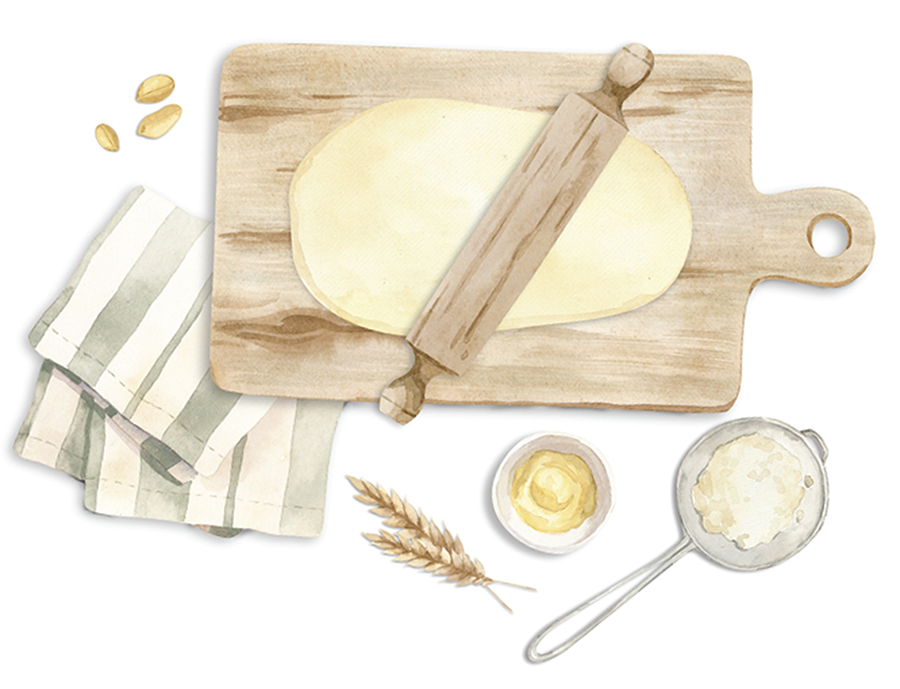
The wise woman knows the secrets of this barren season. She’s found warmth in the bone-chilling air; comfort in the aching silence; promise in the dwindling pulse of winter. When the frozen earth has nothing left to give, she reaches for the mother dough — the breath of life — then steadies herself for the tedious ritual.
The mother dough is a myth of its own: a wild yeast kept bubbling since the dawn of time. The grandmother feeds it once more — a bit of flour, a bit of water — then walks away.
Breadmaking is a dance of time and space.
Tonight, she’ll make the leaven. Tomorrow, the dough. The rest is as crucial as the work.
At first light, a nuthatch sings its rhythmic song. Grandmother washes her ancient hands, folds the dough four times over, then lets it sit.
Two, three, four — sit.
Two, three, four — sit.
Again. And, again. And, again.
The hours tick by. The dough rises. The grandmother hums as she dusts the work surface.
Creation is a process. After she shapes and scores the loaves, she bakes and cools them. Neither bread nor spring can be rushed. Such is the wisdom of this bitter season. Such is the wisdom of the grandmother.
Year of the Rabbit
The Lunar New Year begins on Sunday, Jan. 22. Goodbye, tiger. Hello, rabbit.
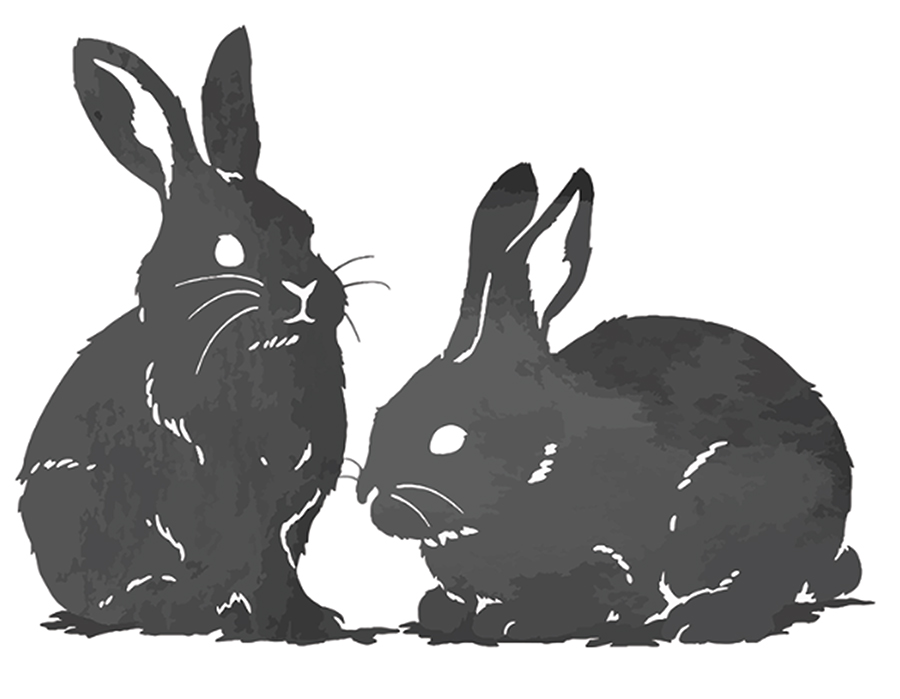
Considered the luckiest animal in the Chinese zodiac, the rabbit is a calm and gentle creature known for its grace, compassion and ability to take swift action. Those born in rabbit years are said to embody these desirable traits. Never mind their fickle nature and escapist tendencies.
But what does the Year of the Water Rabbit have in store for the whole fluffle (yes, that means bunch) of us?
Some say peace. Some say hope. The rabbits in the yard suggest more rabbits.
Anyone who thinks gardening begins in the spring and ends in the fall is missing the best part of the whole year, for gardening begins in January with a dream. — Josephine Nuese
 The Blank Canvas
January is for dreaming. Every gardener knows that. Fetch the sketch pad. Reflect on last year’s highs and lows. Ask what your garden is missing.
This frosty month of seed catalogs and new beginnings, allow yourself to think outside the planter box. Or inside, if that’s your preference.
Is yours a kitchen garden? Butterfly garden? Purely ornamental?
Suppose you added more fragrance. Snowdrops in the springtime. Aromatic herbs in summer. Chrysanthemums in autumn. Honeysuckle and jasmine woven in between.
Color outside the lines. After all, nature does it all the time. PS

We were birds then
at thirteen, a chime
of wrens chirping,
carbonated goddesses
blowing bubbles,
spilling secrets,
dancing the latest dances,
we did each others’ hair,
practiced kissing,
gossiped (a girl’s
first step toward insight),
we shook the magic eight ball,
could not imagine
a path toward our future —
we only knew we didn’t want
our mothers’ lives,
taking dictation,
cleaning up messes,
hiding tins of money,
we were angels falling,
wingless, trusting
the wind to lift
our bodies of light
far above the silver
water tower,
to let us down kindly
somewhere, anywhere
wild and broad and new.
— Debra Kaufman
Debra Kaufman’s latest collection of poetry is God Shattered.

Yesterday, I found an empty turtle shell
On a leaf-littered trail by the ancient river.
Light flooded the inside
Like a tunnel through a yellow-painted mountain.
My eyes said, “No one is home”
And yet, a part of me was unconvinced.
Holding my breath, I bent down to pick it up
Hand and body ready to retract.
How often do I live this way —
Frightened to see what’s really here?
Scared to reach toward what I do not know?
Eager to hide from the truth?
Smooth and heavy in my cupped hand
The carapace was picked-clean
Vertebrae resembling some mystical symbol;
A rune, a spell, a skeleton key.
All I know is this:
There was movement within that vacant shell.
A gentle lifeforce.
A flowing river.
The bones of an unknown song.
Today, the shell sits on my bookshelf
And I shiver each time I walk by
Half-wondering when invisible legs
will carry it along.
This subtle haunting will continue for weeks
Until, one day, the song becomes clear:
Death is not real.
We’re all just learning how
To lay down our armor
Embody the current
Disappear into the light.
— Ashley Walshe

Find me in the fold,
the crease between light and darkness,
where the silver sliver of a crescent fades
and the first hint of daylight approaches,
where I can still slip into the shadows,
and playfully balance between
morning and night.
Find me in the branches of the moonlit trees,
among the silken threads of webs,
as if I’ve just woken,
as if I haven’t been larking about all night,
basking in the freedom
that only comes
when the weary world sleeps.
Find me, sprightly greeting the day,
as the sun starts to lay its golden rays
upon my silky black wings,
and I must swallow the darkness
of the night,
keeping it as a part of me,
honoring who I am
even in the brightest of sunlight.
— Cassie Bustamante

Like a spot of blood against the blue sky,
a Cardinal perches on the shepherd’s hook
where I hang suet and a cylinder of seed-feeders
I gave Sylvia for her last Mother’s Day.
The birds are a gift to me now. Her beautiful
ashes fill a marble blue urn and rest
near one of her crazy quilts in the foyer to welcome visitors.
Buddha is there on a table and guards her keepsakes,
a cleaned-out bookshelf holds her high school portrait,
a cross-stitch she made for me. Every little corner
has its memory of how short a sweet life can be.
— Marty Silverthorne
From Collected Poems of Marty Silverthorne
Like a spot of blood against the blue sky,
a Cardinal perches on the shepherd’s hook
where I hang suet and a cylinder of seed-feeders
I gave Sylvia for her last Mother’s Day.
The birds are a gift to me now. Her beautiful
ashes fill a marble blue urn and rest
near one of her crazy quilts in the foyer to welcome visitors.
Buddha is there on a table and guards her keepsakes,
a cleaned-out bookshelf holds her high school portrait,
a cross-stitch she made for me. Every little corner
has its memory of how short a sweet life can be.
— Marty Silverthorne
From Collected Poems of Marty Silverthorne


At opposite ends of the feeder,
dangling from the buckeye
by a sliver of jute,
a cardinal and indigo bunting
feed, seemingly oblivious
to the blue and scarlet other,
their self-absorption
an ongoing evolutionary tick
completed this very instant.
Birdseed falls into the tall grass
under the tree.
The cardinal flies off,
upsetting the feeder’s ballast.
It sways, wildly
at first, then less
and then less until less,
like a hypnotist’s gold watch,
while the bunting,
fading by degrees
into the falling blue spell
of evening remains
perfectly still.
— Joseph Bathanti
Joseph Bathanti served as North Carolina’s poet laureate 2012-2014. His most recent book is Light at the Seam.