Life’s Funny

LIFE'S FUNNY

Well, Shhhhhhhucks

A potty-mouth clean-up is short-bleep-lived

By Maria Johnson

Algorithms are scary things, the way they learn our habits, which is pretty bleep well.

Why else would my newsfeed recommend that I read a piece in The New York Times titled “Curses! A Swearing Expert Mulls the State of Profanity.”

The story promises tips on how to cut back “if you want to.”

What the bleep does that mean?

I’m talking to you, algorithm, you little son of a software bleep.

Are you saying I have a cursing problem?

Well, you’d be partly right.

And partly wrong.

See, most of me is O-bleep-K with cursing. In fact, I love laying down a good oath. There’s a certain catharsis and clarity and energy that comes with damning a bleepity-bleeper to everliving bleep.

Bleep. I feel better just typing that.

But another part of me knows I curse out loud too bleep much, though there’s a camaraderie in hanging with other potty mouths. More on that later.

I also curse a lot to myself when I’m fired up about something, which is pretty bleep often. My awareness of this salty leaning has me thinking that maybe I’ll give up cursing for Lent.

How long is Lent?

What?!

Forty days?

Oh, bleep no.

I could maybe do 40 hours.

Like, one work week, from 9 to 5, with nights and weekends off. Sort of a Lent Soft challenge? Is that a sacrilegious question?

Yes?

All right, all right. Forty bleep days. Without spoken-word profanity.

Or swearing in writing.

But I get to write using bleeps, and I get to keep the sewer in my head.

It’s a start. I gotta do something because this habit is getting worse.

Maybe it’s because I’m an empty-nester. I watch my language around children.

As my grandmother used to say: Little pitchers have big bleep ears.

She didn’t use those exact words, but that’s what she bleep meant.

Because kiddos imitate what they see and hear, my husband and I minded our p’s and q’s — and f’s and s’s — because we didn’t want our sons to blurt out something disrespectful or insulting at the wrong time.

It takes time and maturity to learn how to curse responsibly.

Also, we didn’t want our boys to sound like they were raised in a bleep barn.

Now that our guys don’t live in our bleep barn, I mean house, anymore, I’m not as careful as I used to be. I’ve reverted to my pre-mom setting.

Actually, scratch that.

I’m worse than bleep ever.

Maybe it’s the times we live in.

Have you watched a movie or streamed a TV series lately?

The language is bleep atrocious.

Have you listened to a podcast?

Holy bleep.

Honestly, I don’t like it. But what the bleep am I gonna do? Cancel Max so I can’t watch Hacks any more?

Fat bleep chance. When Season 4 drops, I’m all over that bleep.

Yes, its profane and edgy. It’s also funny as bleep.

So let’s forget about me cutting back on consumption.

I do think there’s room, though, to cut back on my triggers. Namely the news.

Don’t get me wrong; I’m a newshound from the word “go.”

We need to pay attention to what’s going on.

But for the last several years, I’ve hardly been able to watch, read or listen to the news without hollering, “I CANNOT BLEEP BELIEVE THIS!”

I realize my venting doesn’t change diddly-bleep.

But I gotta tell ya: It feels pretty bleep good.

I’d like to clear up one misconception right here: that people who curse a lot don’t have a very good vocabulary.

That’s a load of bleep. I’m not saying that stupid bleeps don’t cuss. But not everyone who cusses is a stupid bleep.

To wit, I do the Spelling Bee every day.

And Wordle.

And a crossword puzzle.

That’s a lot of bleep five-dollar words.

Plus, I’ve been around writers most of my life, and writers are some of the finest cussers I know. We have the verbal palette; many of us just favor the blue hues.

What the bleep?

Maybe this Times story can explain.

Where are my bleep glasses?

Oh, here they are.

Let’s see. Looks like they interviewed a guy named Timothy

Jay, who’s a retired professor of linguistics at the Massachusetts College of Liberal Arts.

Get this bleep: His specialty was studying profanity.

What a bleep fun job that would be.

Ol‘ Timothy says that cursing is indeed more prevalent because society has gotten way more casual.

He blames social media because you can just about write anything on TikTok or X, the platform formerly bleep known as Twitter.

(Aside: When someone comes up with a better verb than “tweet” for the act of reacting with one’s thumbs, please let meknow. I refuse to say: “Gimme a minute to X this.”).

Anyway, Tim says culture is always evolving and just as soon as a taboo becomes acceptable, people will come up with something even taboo-ier.

Translation: Don’t hold your bleep breath for cursing to go away.

He goes on to say that cursing is mostly about conveying intensity of emotion, and not always negative emotion. In some cases, swearing around others indicates belonging and intimacy.

It’s like saying to someone, “You talk like a bleep sailor, but I love you anyway. Also, I trust you not to record this and play it back for my mom.”

The good professor notes that humans get a measurable physical jolt out of swearing.

Roger that bleep

Finally, he says that the only way to curse less is to practice mindfulness about when you curse and why.

Sigh. That’s what AI said, too, when I asked it.

It said to try practicing meditation and yoga instead of cursing.

That’s a lot of bleep Oms.

And box breathing doesn’t charge my battery like swearing does.

I’m thinking my best course of action is to use more curse word substitutes.

Like dang. Or dog. Or freakin. Or fiddlesticks. That’s an oldie and a goodie.

Yeah.

Fiddle-bleep-sticks.

I like the sound of that.

Tea Leaf Astrologer

TEA LEAF ASTROLOGER

Aries

(March 21 – April 19)

Just as genius requires a touch of madness, passion requires a touch of grace. When Mercury enters your sign on April 16, don’t be surprised to find yourself in an argument sparked by your own bluntness. On that note, this month is a good time to deepen your meditation practice. Don’t have one? Try listening to the sound of water, taking a cold shower, or candle-gazing.
At month’s end, Venus in Aries amplifies your natural urge to take initiative in pursuits of the heart. Remember,
sometimes the poison becomes the medicine.

Tea leaf “fortunes” for the rest of you:

Taurus (April 20 – May 20)

Two words: mud mask.

Gemini (May 21 – June 20)

Decline the deviled eggs.

Cancer (June 21 – July 22)

Let your eyes do the talking.

Leo (July 23 – August 22)

Sign up for the workshop.

Virgo (August 23 – September 22)

Relax the muscles in your face.

Libra (September 23 – October 22)

It’s time for a fresh perspective.

Scorpio (October 23 – November 21)

Eat your spinach.

Sagittarius (November 22 – December 21)

Go fly a kite.

Capricorn (December 22 – January 19)

Keep your bag packed.

Aquarius (January 20 – February 18)

Plant your feet directly on the earth.

Pisces (February 19 – March 20)

Splurge for the one you really want.

Sazerac April 2025

SAZERAC

Just One Thing

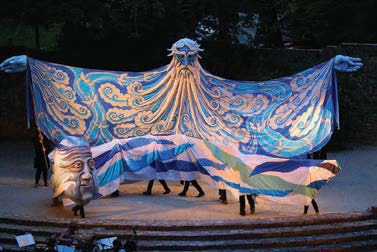
Paperhand Puppet Intervention’s mission is anything but pedestrian: tell stories, beat drums, work up a sweat, push boundaries . . . and steal people’s hearts away all while making the world a better place. Through largerthan- life puppets, Paperhand transports audiences into a world where greed, hate and fear are defeated, while love of the Earth and its creatures triumphs. Combining papier-mâché, house paint, cardboard and silk, puppet-makers in their Saxapahaw studio bring to life characters mythic in scope and kaleidoscopic in hue. Two decades worth of drawings, marionettes, shadow puppets, and clay and papier-mâché characters will be on display at GreenHill Center for NC Art from Saturday, March 22 (public opening 3–5 p.m.), until Saturday, June 21. Check GreenHill’s website for music, performances and hands-on cardboard-puppet fabrication as part of its ArtQuest program, plus a series of events, including a robot-costume family night and parade (April 5), an Earth Day Celebration (April 19), an artist talk (May 14) and a workshop (June 7). Discover how you can change the world with your own two hands, just as as Paperhand Puppets have. Info: www.greenhillnc.org/of-wings-and-fe

Unsolicited Advice

Here at O.Henry, we are all about literacy. After all, our namesake is one of America’s greatest short-story writers. The month of April honors a different kind of literacy — financial. Turns out, our namesake was not so hot at that and, in fact, served five years in Texas prison on charges of embezzlement. So, while we wouldn’t recommend taking money advice from the man himself, here’s our two cents on the subject. Make a grocery list and stick to it. Unless, of course, the Tillamook ice cream is BOGO. Build an emergency fund. Also, define “emergency.” A 401K, as its name suggests, is a very long race, but, when you reach the finish line, the participation trophy is worth it. Put in the work and go the miles. Before you know it, you’ll be retiring in the lap of luxury. Invest. And we don’t mean in Beanie Babies. With the help of a financial advisor, invest in stocks. Or invest in yourself — earn more accreditations or learn new skills that bring added value to your resumé. Cancel unnecessary subscriptions. Lucky for you, there are free magazines for your entertainment. Like the one in your hands.

Tour de Plants

Whether your thumb is vivid green or you’re chlorophyll deficient, The Greensboro Council of Garden Clubs is opening the vine-covered gates on six private — though not necessarily secret — gardens. This year’s tour features the secluded beds in the neighborhoods of Irving Park, Sunset Hills and Starmount Forest. Traipse through backyard wonderlands so enchanting that they exceed Lewis Carroll’s wildest dreams and wander onto front lawns bordered by lush bushes, flowering vines and blooming bulbs galore. You’re sure to head home mulch inspired and ready to dig into your own outdoor oasis. Plus, you’ll have a chance to mingle with club members while exploring how you can become a part of their growing community, too. Plentiful fun awaits! Tickets are $25 each and, as of April 1, can be purchased at A. B. Seed, The Extra Ingredient, Fleet-Plummer, Guilford Garden Center, Plants & Answers: The Big Greenhouse, and Randy McManus Designs. The tour runs from 10 a.m. to 4 p.m., May 17 and 18. Info: facebook.com/gcgcinc.

April Window on the Past

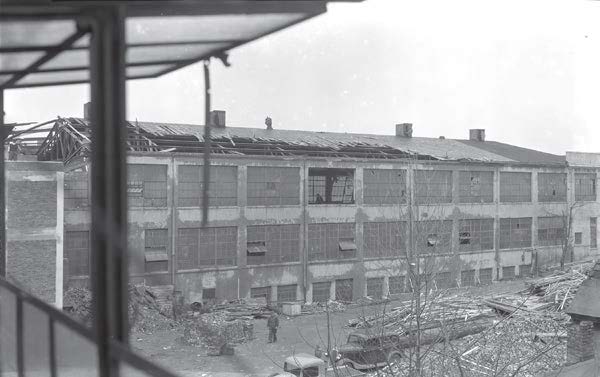
Plot twist? On April 2, 1936, a tornado ripped through the south end of Greensboro. The storm created a path of destruction 11 miles long, extensively damaging some buildings, including the former Blue Bell factory shown here. Restored to its former glory, it serves as home to Centric Brands and Transform GSO on the northwest corner of Gate City Boulevard and South Elm Street.

Our 2025 Writing Contest

When O.Henry’s team decided to put a twist on our annual writing contest, we ended up with what some will see as a twisted creative writing contest. We want you to write your own obituary — a faux-bituary, if you will. But this is no grave matter. No, this is an opportunity to dredge up the wit, humor and magic from your darkest depths. If you need inspiration, google “Idaho witch Holly Blair obituary.” Blair crafted her own whimsical memorial and it had us wishing we’d known her when she was alive. Or take, for instance, Renay Mandel Corren’s obituary, written with such love and hilarity by her son Andy Corren that it went viral, spurring him on to author Dirtbag Queen: A Memoir of My Mother, which released earlier this year. Maybe this is your own memoir in the making. Every day, we’re buried in deadlines and daily housework. Imagine, instead, just being buried — six-feet-under buried — and how you’d want to be remembered.

But first, rules.

Submit no more than 250 words in a digital format – Word or Pages document, a PDF, pasted into an email, or carved into stone and sent via photographs. More than 250 words? You’re dead to us.

One submission per person: Email entries to cassie@ohenrymag.com

Deadline to enter is July 31, 2025.

Winners will be contacted via email and their submissions will be printed in a forthcoming issue.

Lastly, life is short. Have fun with this assignment.

Sage Gardener

In one of my favorite flicks, Tim Burton’s Mars Attacks!, Jack Nicholson as POTUS makes a final appeal to the Martians who have invaded Earth, pleading, “Little people . . . why can’t we all just . . . get along?” His answer comes after he shakes hands with the take-me-to-your-leader commander of the attack, whose hand detaches and proceeds to stab the president in the back, a Martian flag popping up from his corpse.

Let’s admit it. It’s pretty obvious from the evening news that we humans don’t get along very well with one another, and in this dog-eat-dog world, things aren’t much better for man nor beast.

But plants. Those trillium, trout lilies and anemones bursting into bloom all around us, they certainly know how to get along.

Or do they?

Unless you’ve been hiding under a garden rock, one of the hottest horticultural topics in recent years has been plant communication. In an article entitled, “Plants Can Talk. Yes, Really,” Mamta Rawat, a program director at the National Science Foundation, muses, “I think we’re seeing that the complexity [of communication] is just as great with plants as it is with animals.”

And it ain’t all friendly.

Researchers have discovered that leaves can trigger defenses when they detect predators. When some roots sense problems with nutrients, water and predators, they respond accordingly. Plants even signal nearby kin telling them that the ever-dreaded aphids (or Martians) have landed.

In fact, gardeners have had a solution for this problem for centuries. It’s called companion planting. Basil disorients moths that lay tomato hornworm eggs. Aphids can’t stand garlic! Nasturtiums lure caterpillars away from your kale, cabbage and broccoli. You can read all about these and other suggested pairings at www.almanac.com/companionplanting-guide-vegetables.

Relying on the latest scientific info instead of old wives’ tales, Benedict Vanheems, longtime contributor to Kitchen Garden, Britain’s longest-running garden magazine, digs into which plants love one another and which ones wage war on the competition. Asparagus thrives with petunias and tomatoes close by. And, yes, it makes sense to plant squash so it shades the roots of corn and to plant pole beans to climb up corn stalks. Cabbage loves garlic, nasturtiums and sage as neighbors. Peas pair well with lettuce, radish and spinach. And both zucchini and summer squash love oregano, nasturtiums and zinnias. Chemicals similar to humans’ pheromones are at work in many of these cases.

But what plants don’t play well with others? Sunflowers, walnut trees and fennel are among the plants that are allopathic, meaning they release a toxic chemical from their roots to hamper the growth of certain surrounding plants. Broccoli and cauliflower are happiest at some remove from peppers and tomatoes. And onions and garlic can retard the growth of peas and beans.

Recently, researchers found that some plants even communicate through sounds that can be picked up by other plants and animals. Although I have not heard any of my plants trash talking, plant cells can emit vibrations that other plants sense, letting them know they’re getting a little too close for comfort. Chinese researchers even observed that when they broadcast sound waves of a certain frequency in a field, crop yields improved.

So maybe you ought to talk to your plant companions, but just be sure you use a soft voice and the right frequency.

Simple Life

SIMPLE LIFE

A Spring Awakening

And a journey from darkness to light

By Jim Dodson

I celebrate April’s return every year because it’s the month that a divine awakening changed my life.

It was 1980. I was the senior writer of Atlanta Weekly, the Sunday magazine of the Journal-Constitution, the oldest newspaper magazine in the nation. It was probably the best writing gig in the South. Over the previous three years, I’d covered everything from presidential politics to murders in the “City Too Busy to Hate,” as Atlanta liked to promote itself in those days.

One minute I was interviewing a grand dragon of the Ku Klux Klan in Alabama, the next riding along with the Repo King of Atlanta as he repossessed cars in the city’s most dangerous federal housing project, a shotgun on the seat of his truck. I’d also written several pieces about young women from the South who were drawn to Atlanta’s bright lights only to wind up murdered or missing.

Looking back, though I didn’t realize it then, I was in search of an answer to a question that had no answer.

Three years before I snagged that job, Kristin, my girlfriend back home in North Carolina, was murdered in a botched holdup by three teenage boys at a Hickory steakhouse where she worked as the weekend hostess. I’d left Kristin on a beautiful October Sunday after making plans to get married and move with her to England, where she had a job as an understudy awaiting her in London’s West End.

The low point of my Atlanta odyssey came on a hot July night in 1979. I was working on a cover story about Bob Stivers, the city’s famous medical examiner, whose forensic sleuthing reportedly inspired the popular TV show Quincy. The week before that Saturday night, I’d watched half a dozen autopsies at the ME’s elbow, equally mesmerized and horrified. When Stivers invited me to ride along with the squad that picked up murder victims, I jumped at the chance. Saturday nights were particularly busy in the city that had recently been declared America’s “Murder Capital.”

My new fiancée, Hank Phillippi, was the nighttime weekend anchor at WSB-TV. We shared an old, brick house near the east-side entrance to Piedmont Park. Our weekend routine was to have a glass of wine and watch Saturday Night Live when Hank got home from the studio before midnight.  

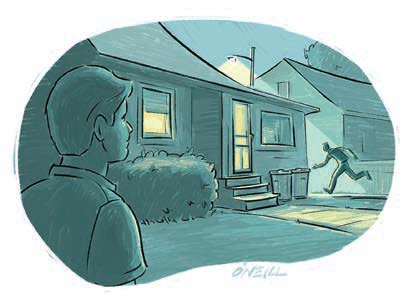
On that fateful night, waiting for a call from Bob Stivers’ death crew, as I was standing in the darkness of our backyard, waiting for my dog, Magee, to do her business, I saw a car pull up beside our neighbor’s house. We were friendly with the Emory med students who lived there.

As I watched, a man emerged from the backseat of the car and calmly walked to our neighbor’s backdoor and knocked. A med student still in scrubs opened the door. There was a brief exchange of words, followed by two gunshots. The medical student collapsed on the ground. The assailant bolted for the running car, which sped away.

By the time I reached his side, a young woman from the house was screaming hysterically. I asked her to fetch me a couple towels and call 911.

Fortunately, at that moment, Hank arrived home. She took charge and phoned the police as I cradled the wounded man in my lap, attempting to keep him conscious. He died 15 minutes before cops arrived. “We get drug hits like this every weekend,” the cop said.

I chose not to follow the victim’s body down to the city morgue.

The next morning, though, as I was walking Magee, I heard a chapel bell in the distance softly chiming “Blessed Be the Tie That Binds,” one of my favorite hymns since childhood. Tears filled my eyes.

As Hank slept in, I fetched a cup of coffee, sat on our front steps taking stock of my life, and suddenly realized what was missing. I hadn’t been to church in five years.

I got dressed and went to services at the historic All Saints’ Episcopal Church downtown, famous for feeding the homeless and never locking its front doors. The rector, a wonderful man named Harry Pritchett, gave a powerful sermon about how God finds us in the darkness when we least expect it. It felt like he — or maybe God himself — was speaking directly to me.

Not only did I begin attending All Saints’ regularly, but also made a decision in favor of writing stories that enriched life rather than revealed its dark side. I even set my mind on attending seminary, until a wise old Bishop from Alabama named Bill Stough, the editor of the Bishop’s Fund for World Relief, convinced me to follow a “ministry closer to your heart,” as he put it. “You are a born writer,” he said. “You can serve the Lord better by writing about life than becoming a parish priest.”

Not long after that harrowing summer night, Hank and I called off our engagement, but have remained dear friends for more than 45 years.

As for me, that following April while working on a sample story about youth baseball tryouts, I ventured over to a rundown ball field in my midtown neighborhood, where a desperate league director convinced me to take on the coach-less Orioles. They were a wild bunch, many of whom lived in Federal housing. This was during the peak days of the “Missing and Murdered” crisis affecting Atlanta’s Black teens. I made a deal with my team’s families to drive them home after all games and practices.

I also made a deal with my rambunctious “Birds”: If they played hard and behaved like gentlemen, I would buy them all milkshakes after winning games.

They took the offer to heart. We won the Midtown League Championship in a romp that season, which convinced me to stick around Atlanta for one more year. We went undefeated for a second time. It only cost me 200–300 milkshakes.

I never wrote another crime story again.

Crazy as it sounds, almost a year to the day later, I woke on an April night to find Kristin standing beside my bed. She looked radiant. I thought I must be dreaming, but she was so lifelike, especially when she smiled and spoke. “Pook,” she said, using her pet name for me, “it’s time for you to leave here and go north. That’s where you’ll find what you are looking for. I’ll always love you.”

Days later, I resigned from the magazine, turned down what might have been a dream job in Washington, and headed for a trout stream in Vermont.

God, Kristin and my baseball team found me in the darkness when I least expected it.

It’s been a wonderful life ever since.

Chaos Theory

CHAOS THEORY

Partners in Grime

A bit of a fixer-upper

By Cassie Bustamante

The summer I turned 7, my family moved from small-town Upstate New York to Wilbraham, a small-town in Western Massachusetts. Picture quaint, 200-year-old homes, churches surrounded by old, stone walls and even a very old, red schoolhouse-turned abode. Everywhere you looked, the streets bubbled over with New England charm. But our new house? Not so much. It bubbled over with ick.

My mother and I made the trek across states together, leaving my father behind to cheer on my older brother, Dana, who was playing in a little league tournament. I hadn’t yet seen any photos of the new digs, but I’ve always thrived on change and the opportunity to meet new people. And, this time, we were moving to be closer to family. We’d be in the same town as both sets of grandparents and close to all sorts of cousins, aunts and uncles.

In fact, Wilbraham was the town where my parents met as high school students with backyards abutting one another. Back then, my dad wore his white-blonde hair in a 1970s swoop that cascaded in front of his eyes, suiting his shy personality. My mom, a petite brunette with a Farrah Fawcett ’do, was gregarious and often teacher’s pet. Come to think of it, a lot like me. It wasn’t until they both enrolled at Springfield College in the fall of 1974 that sparks flew.

All along the drive, I chattered away excitedly, driving Mom bonkers. The anticipation came to a jarring halt when we pulled into a driveway. This could not be it. I prayed that this was some kind of joke and, surely, Mom was about to shout, “Gotcha!” In front of me stood a dilapidated, brown 1964 Colonial with red shutters — the worst color combination known to man — and an attached two-car garage. The paint was blistered and peeling, rot everywhere. This was it? I wept.

When my brother arrived a week later, he had the same reaction. In fact, he packed a suitcase and said he was going to ride his bike back to New York and live with friends. I wondered how he’d manage the suitcase while pedaling, but I never witnessed that level of stunt mastery because he stayed.

Beyond the front door, the family room featured the inevitable ’60s faux-bois paneled walls and linoleum flooring that vaguely resembled bricks. The tacky residue left behind by a rug adhesive attracted the fur of our golden retriever, Butterscotch. In fact, every surface seemed sticky and dirty.

But it was as if Mom and Dad could see into a crystal ball, which magically showed them something I couldn’t see — the spark of potential underneath all that grime. They rolled up their sleeves and got to work. In sections, they replaced wooden siding along with rotten windows. They repainted the exterior a soft gray and gave it new barn-red shutters, a color combo that still remains in place today, according to my Google search, almost 40 years later. I recall many days spent outside, flipping over rocks in search of salamanders, while Dad sat atop the house with his cousins, hammering down a new roof.

Grampa, Dad’s dad, was a self-made entrepreneur who owned a wholesale hardware company, and thus understood the world of home renovation. He’d appear from time to time to “help” Dad with weekend warrior projects. But not until he’d sat on the porch munching on a donut and sipping coffee, followed by playing basketball with me and my brother in the driveway. And then, “Oh, would you look at that? I’ve got to go if I am going to make my tee time!” Maybe he took it too easy, but we all look back on those moments with laughter. Cancer took his life way too soon just a couple years later when he was just 59.

On weekends when repairs weren’t being made, Bob Vila’s voice rang through the kitchen while I ate my grilled peanut butter sandwich, This Old House playing on our wooden console television set in the nearby family room. YouTube and TikTok were still decades away from being created, kids. My parents had to learn about DIY through reading books and checking the Sunday paper’s TV schedule to make sure they didn’t miss their favorite DIY shows.

Mom, an avid gardener who knew just what would thrive where, planted flowers aplenty to create a lush and vibrant yard. Lilac bushes lined our white picket fence. Just outside the back door, an herb garden’s fragrance wafted through our kitchen window all summer long. We teasingly called it the “Herb”— with a hard “H” — garden, naming it after the endearing, out-of-shape man in one of Mom’s Jane Fonda exercise videos.

My parents poured everything — blood, sweat, tears and what little money they had — into making that hideous monstrosity a jewel of the neighborhood. As a 6-year-old, I hadn’t understood the possibility, but as a 46-year-old I’ve learned something about compromise and seeking out hidden potential.

Over the 21 years that my husband, Chris, and I have been married, we’ve bought a few well-worn homes. And every one, we’ve made our own with paint and — like my parents — blood, sweat, tears and all the money we could muster. When we arrived in Greensboro in January 2019, the 1960s Starmount Forest ranch home we moved into was far from a looker, but it ticked the boxes for a family of five. Though our new house was not nearly as neglected as my childhood home in New England, my own kids felt a little like I had the day I arrived in Wilbraham with my mom. The magic simply wasn’t there. But, thanks to my parents, I’ve realized that magic is something you create through a combination of creativity, hard work and collaboration that includes the kids. And as the months have turned into years, we’ve turned a house into a home, one that our two older kiddos will look forward to returning to next fall when they’re both away at college. That is, until they have their own fixer upper to make their own.

Wandering Billy

WANDERING BILLY

Playing the Market

For over 30 years, Ron C. Curlee II has stretched his artistic limits

By Billy Ingram

“All great change in America begins at the dinner table.” — Ronald Reagan

In 1994, Ron C. Curlee II was the first intriguingly talented individual I met in our fair city after relocating mere days before from Los Angeles. I’d wandered into Babylon, an infamous rave club located on South Elm in the long-dead heart of downtown Greensboro. Babylon was notorious for shoveling underaged kids through its doors. For all I knew, Ron may have fallen into that category.

As it happens, that den of iniquity was sponsoring an art opening of Ron’s Crimes Against Nature series — enormous canvases featuring, for the era, bold, lurid and graphic imagery of exactly what the work’s title suggests. We instantly hit it off and, since then, it has always been a pleasure in those too rare instances when our divergent paths cross; laughter is always sure to follow, sparked by his gregarious personality, somehow both serious and fun.

I marvel that today Ron remains on the cutting edge, a key component of his career being his three decades participating in the High Point Market as a painter of extraordinarily original abstracts, as well as a designer and merchandiser.

Accomplished in both art and design, his career has had an internal reach. In addition to dozens of local shows and commissions, his artwork has been featured in most of the well-known furniture showrooms, including Highland House, Harden, Francesco Molon, Excelsior, Century, Hickory Hill and Drexel Heritage.

This area has grown significantly since the mid-1990s, when the impact that Market made all across the Triad was seismic. Families back then were renting out their homes to attendees for $1,500 a week, due to lack of available hotel rooms. Venturing out to dinner, even in Greensboro, became a challenge during those two-week periods, the nicer restaurants being predictably overbooked. On those occasions when I would dine out with my parents during April and October Market, generally at some out-of-the-way steakhouse such as Jordan’s on Church Street, we’d amuse ourselves by observing nearby tables where sales reps were expense accounting the night away with obvious ladies of the evening who flocked from near and far to service this influx of out-of-towners.

Ron grew up in Lenoir and attended the University of Georgia’s studies abroad program, where he studied painting in Italy. But it was actually the lure of the Market that brought him to Greensboro in the 1990s. I recently caught up with him in his richly appointed, downtown Greensboro home-studio duplex (thestudioandgallery.square.site) to look back on some of his more colorful experiences at High Point Market.

Following the death of Diana, Princess of Wales, Paul Burrell, her former butler and one-time footman for Queen Elizabeth II, began licensing his name for various upscale goods that included furniture. “I was director of visual merchandising for an upholstery company that paid to use Burrell’s name,” Ron tells me. “So we made up all the stories behind his collection that was [supposedly] based on his travels with Princess Diana.”

This was following the “uppity” butler’s trial for stealing various personal items from the beloved Princess and after Prince Harry publicly accused him of “milking” his mother’s death in Burrell’s scandalous book, A Royal Duty. “I traveled around England with him,” Ron recalls. “People either loved him because they wanted to know about Princess Diana or they despised him because he had risen above his station. So it was very awkward.” At gallery openings and tea parties, Burrell would regale audiences with stories about how Diana’s boys would sit on chairs like the one on display or the way Princess Diana would relax on a sofa resembling that model. “And we wrote all of that for him.”

On one occasion, while imbibing a bit heavily on a rather empty stomach, Ron recalls, “I may have told [Burrell] that he was just the front man who didn’t know anything, that I was doing everything while he was getting all the credit.” The next morning, he says, “They told me Paul didn’t have anything to say and just up and left.” Not long after, Ron got wind that Burrell was talking with a friend in New York who was getting him drunk and secretly recording their conversation about the Queen and Princess Margaret, then selling it to a tabloid for a million dollars. “And I was like, why didn’t I think of that?!?”

Ron has also rubbed elbows with Hollywood royalty and recalls a furniture collection introduced at Market that he thought was immediately fabulous and very successful. “The Humphrey Bogart Collection from Thomasville,” he replies. “I have pieces from that line in my living room. It was like Old Hollywood, a little deco with lots of unique woods, veneers and different applications. A mixture of skins and veneers like shagreen shark skin, tiger-eye maple, zebra wood.” Bogart and Lauren Bacall’s son, Stephen, had input into the designs and made an appearance in 2002 at the presentation party.

Was there a ruinous collection he was saddled with showcasing that was an absolute disaster? “At Fine Furniture Design, they’re no longer in the United States,” Ron says with a laugh. “They were high end and introduced a collection that was entirely covered in mirrors. They had a mirrored poster bed, entertainment cabinet, occasional end tables, cocktail tables and a dining table that sat 12.” Ron was flabbergasted. “I was just like, what the hell is this? It was so ostentatious, so over the top and it didn’t sell.” Upon reflection, the manufacturer blamed Ron for the line’s failure. “I was told that I didn’t paint the rooms the right color, I didn’t do the right presentation. I was thinking, my accessories should have been razor blades and straws!”

Collections are generally only offered for a year or so and then quietly disappear. “They can last longer but Market is fashion driven,” Ron points out. “Everybody wants something new. So you may add a few pieces and continue a collection for a couple seasons, maybe a year and a half or two years. But you want to be fashion forward.” To that end, designers tend to lean into Pantone’s Color of the Year — in 2025, it’s Mocha Mouse. “So buyers are looking at mocha fabrics; yarns will be dyed that, too. Last year it was Peach Fuzz.”

Both during and outside of Market, folks generally approach Ron when they’re looking for artwork to complete a room. “I’m known for large abstracts, so I can build up to 10 feet by 10 feet,” he says. “At Market, they’re not going to offer something custom. It’s going to be what’s on the wall and buyers will order 10 of them or whatever. But all of my creations are going to be original and custom.”

For the next few weeks, it’s once more into the breach for Ron C. Curlee II: “So I’ll merchandise several showrooms and then, when they’re completed, I head to the Suites at Market Square and put my own showroom together to sell my artwork.” He’s been showing at Market Square for about four years now. “Sometimes I have other artists or product designers in my space but I’m not going to sell a container full of merchandise. A lot of my clients are designers, so they’ll come to market, see what I have and what I’ve done and then commission artwork in specific sizes, specific colors. Seeing me at Market is a reminder that I’m still here.”

Buffalo Presbyterian Church

BUFFALO PRESBYTERIAN CHURCH

Buffalo Presbyterian Church

From generation to generation, Greensboro's pioneer church lives on

By Jim Dodson     Photographs by John Gessner

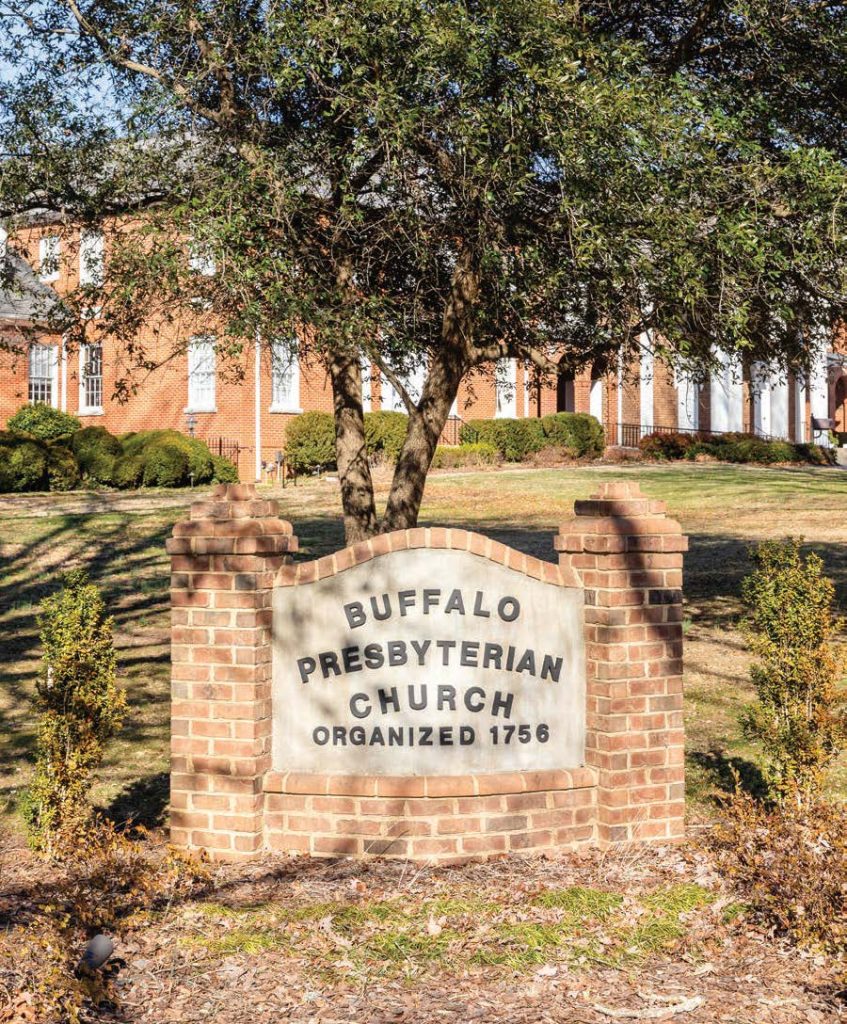
On a mild winter morning, welcome hints of spring in the air, the pews at historic Buffalo Presbyterian Church are nearly full for a Sunday service celebrating Rev. Brian Marsh’s second anniversary. Remarkably, Marsh is only the 17th minister in 269 years to occupy Buffalo’s pulpit since the church was organized by a band of Scots-Irish settlers in 1756. Such longevity speaks volumes about the faith and continuity of a church that predates the establishment of Guilford County by 15 years, the United States of America by 20 years, and Greensboro itself by 52 years. 

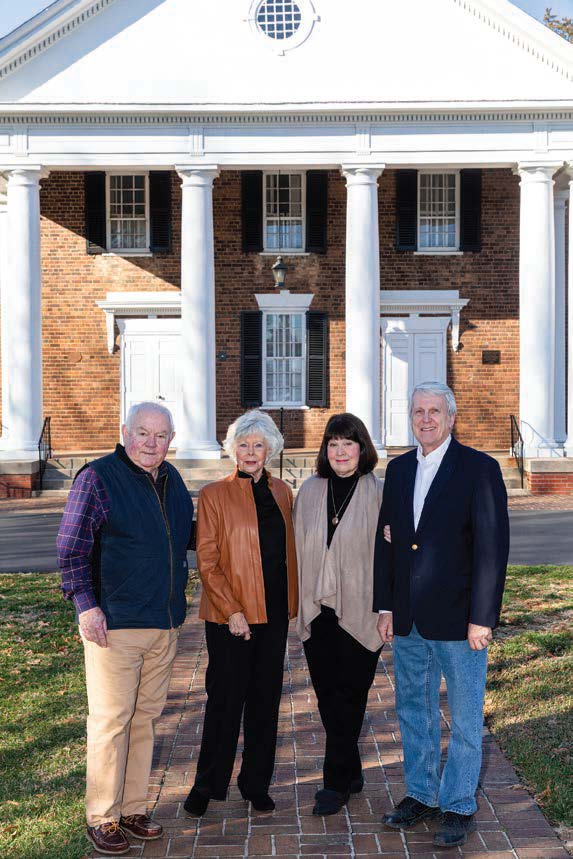
“I sometimes have to fight my emotions when I think about Buffalo’s historical importance to this community, a place where so many families of Greensboro have worshipped for centuries,” says Thomas McKnight, an eighth-generation member whose ancestor wrote the deed for the land on which the church sits. “Through the ups and downs of its history, good times and bad, literally war and peace, Buffalo Church has been a spiritual home where God’s word is preached and all are welcome.”

“I think that’s been the comforting message of Buffalo Church since its earliest days,” agrees Vinnie Gordy, another eighth-generation member who was baptized, grew up and was married in the church. “The settlers who created this church came out of a dangerous wilderness to make this their spiritual home. And that’s exactly what Buffalo Church is to many of us today — a home where we belong, sharing the love of Christ and the word of the Bible.”

Buffalo’s founders were liberty-loving, Scots-Irish immigrants who followed the Great Wagon Road from southern Pennsylvania to new lives in a wilderness area then known as the Nottingham Settlement, formed in 1750. It originally consisted of 33 plots of land purchased from Lord John Carteret, the second Earl of Granville, the last of North Carolina’s Lord Proprietors. The church today sits at the heart of the original settlement, which was framed by Horsepen Creek to the west, South Buffalo Creek to the east, Reedy Fork to the north and Muddy Creek to the south. Lore holds that the church, upon its establishment, took its name from the creek that bisects the modern city of Greensboro.

As I learned while researching my forthcoming book on the Great Wagon Road, America’s Scots-Irish Presbyterians were arguably the most determined travelers of the Wagon Road and the backbone of the country’s westward expansion, hardy souls who built more churches and log cabin schools than any other religious group in the Southern backcountry. They also brought with them a fierce sense of independence and a God-given talent for spreading the Gospels, making music, and educating their young. As Jim Webb writes in his 2004 bestseller Born Fighting: How the Scots-Irish Shaped America, they were also in the vanguard of fighting for liberty from the American Revolution onward.

If you want to know how old a church is, the saying goes, visit its graveyard.

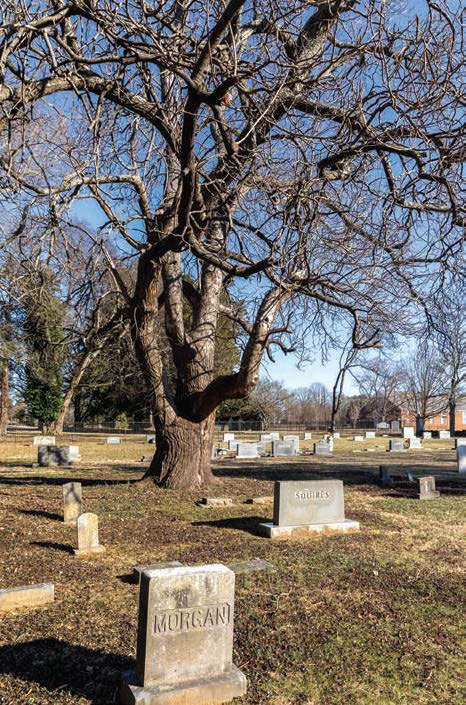
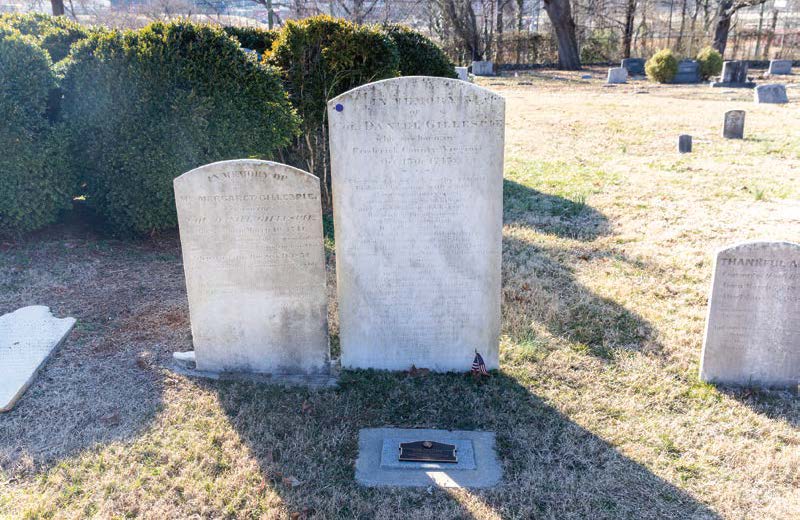
Testament to Buffalo Church’s powerful influence on the history of this region is a peaceful 6-acre cemetery that’s home to one of the largest catalpa trees in North Carolina and an estimated 1,200 graves, including the remains of at least 145 soldiers, many of whom fought in both the Battle of Alamance and the Revolutionary War. Men from the church, in fact, have fought and died in all American wars with exception of one — the Spanish-American War. Many of their gravestones have simply vanished over time.

“As a result, there are many more graves out there than we’ve identified,” says Pam Brady, a seventh-generation member who has researched the cemetery for many years. “That’s because many of the original graves were marked with wooden crosses or stones that simply disappeared over the years.” The cemetery’s earliest headstone identifies the grave of Mary Starrett, who was the wife of Benjamin Starrett and was buried in 1775.

Still, a stroll among the hundreds of gravestones that remain intact, however, reads like an honor roll of Greensboro’s pioneer names  — Gillespie, Forbes, Donnell, McKnight, Forbis, Dick, Lindsay, McNary, Albright, Mebane and Rankin.

Brady once set out to find the grave of her ancestor, William Rankin, but was only able to locate a faded stone belonging to his wife, Jean. “By the time I did my research on where he might have been buried — presumably near his wife — and got back to the cemetery, even her stone had disappeared,” she says with a laugh, adding that at least 20 current church members have ancestors from the 1700s — not all soldiers — buried in Buffalo’s historic cemetery. “We feel blessed to worship where our ancestors worshiped,” she adds, “because it connects us to the rich history of Guilford County and the creation of Greensboro in a very personal way. I like to think that Buffalo Church is to Guilford County what Bruton Parish Church is to Colonial Williamsburg and the North Church to the city of Boston.”

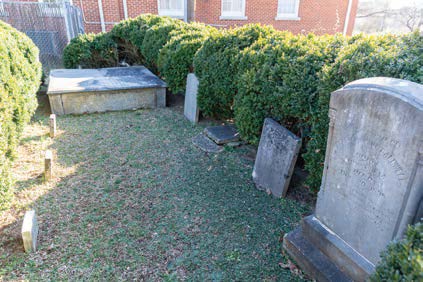
The most celebrated grave site exists directly behind the sanctuary, a family plot framed by century-old boxwoods. It belongs to Rachel and David Caldwell, a Princeton theological graduate who was called to serve as Buffalo’s first pastor in 1765, sharing pulpit duties with Buffalo’s sister congregation just east of what is now Greensboro at Alamance Presbyterian Church for the next 55 years.

Two years after Caldwell arrived, he established what became known as Dr. Caldwell’s Log College, a theological and classical academy for young men. His students included future N.C. governors, members of Congress and at least 50 ministers. He later became a trustee of Liberty Hall, the precursor of the University of North Carolina.

Today, Caldwell’s Log College Site — home to his farm, well-preserved Federal-style house (dating from 1781) and influential school — are part of David Caldwell Historic Park, a National Historic Site that shares space with the Tanger Family Bicentennial Gardens. Come spring, there is probably no more visited public grounds in Greensboro.

In addition to Caldwell’s reputation as a spellbinding pastor, due to a shortage of physicians in the region, he acquired medical books from Philadelphia and became a self-taught doctor, which came in handy during his years as a key patriot leader in the Revolutionary War. According to records, he was present at the Battle of Alamance during the Regulator insurrection of May 16, 1771, and urged his flocks to volunteer during the American Revolution and the War of 1812. His farm also became a prime staging ground for American troops prior to the Battle of Guilford Courthouse, the major turning point of the war.

Rev. Caldwell died in August 1824. His wife, Rachel Craighead Caldwell, daughter of a Presbyterian firebrand patriot leader named Alexander Craighead, followed him to the grave one year later.

Just three years later, in 1827, Buffalo’s congregation replaced a previous pair of wooden sanctuaries — one of which was said to hold as many as 1,000 worshippers — with a striking brick sanctuary that is believed to be the first brick church in this part of North Carolina.

Seventh-generation member Clyde Albright’s great-great grandfather, Jacob Albright, built the sanctuary from bricks made on the property. 

Just under a century later, a classical portico was added to the entrance of the sanctuary and a choir loft was constructed. Not long afterwards, an education building named for David Caldwell was built on the west side of the church. A similar structure dedicated to Rachel Caldwell was eventually added to the east side of the sanctuary, completing the evolution of the church campus.

To celebrate Buffalo Church’s bicentennial in 1956, the church underwent a major renovation and sanctuary expansion. Clyde Albright’s grandfather, Lonnie Albright Sr., showed Boren Brick where to dig the clay from the original site (reportedly near Friendly Center) used for the bricks of the expanded sanctuary.

The highlight of the celebration was a dramatic two-night outdoor pageant called Let Freedom Ring, featuring a cast and staging crew of more than 75 members of the church, several professional actors and the choirs of Buffalo and Alamance churches. The play, presented over a trio of outdoor stages, told the story of Buffalo’s extraordinary history, from early days before the church’s founding to the achievement of America’s independence. “It was quite an exciting production,” remembers Vinnie Gordy. “There was great music, and cannons firing and lots of fireworks. I was age 12 and sang in the children’s choir. My older sister, Magie Fishburne, however, had a major role as Hannah Meeks, and my aunt, Helen Andrew, played Rachel Caldwell. There was a large turnout both nights from the community. I don’t believe anyone had ever seen anything quite like it.”  

Longtime members also point out that, like many older churches, Buffalo Church has seen its ups and downs over the decades. “By 2015,” says McKnight, “we were a church with a lot of older members, many who were dying out. Before COVID hit, in fact, we were down to about 68 regularly worshipping members — probably the lowest point in the church’s history.”

Ironically, he adds, COVID proved to be the unexpected salvation. When churches everywhere were asked to shut down for the duration, Buffalo’s leadership opted to remain open, employing extreme spacing throughout its handsome sanctuary. “When the word got out that we were holding services as usual, our membership returned, along with a lot of newcomers from other churches. It may be proof that God works in mysterious ways,” McKnight adds with a smile. “But the growth has continued regularly since that time.”

Today, the congregation numbers over 200 and continues to slowly grow, a timely revival for a congregation some affectionately call the “Pioneer Church of Greensboro.”

At a recent Saturday morning men’s prayer breakfast, a record turnout of more than 45 included nine newcomers who’ve recently come Buffalo’s way from other churches.

“I think they are drawn to a church where the fellowship is genuine and the preaching is firmly Bible-focused,” reflects Albright. “When I sit in the choir loft and remember where my parents and grandparents once sat, looking out over a sanctuary that is now almost full every Sunday, I think about the generations of people who were born, got married and passed their lives through this wonderful old church. I think our ancestors would be very pleased to see new faces and a church family that is growing again.”

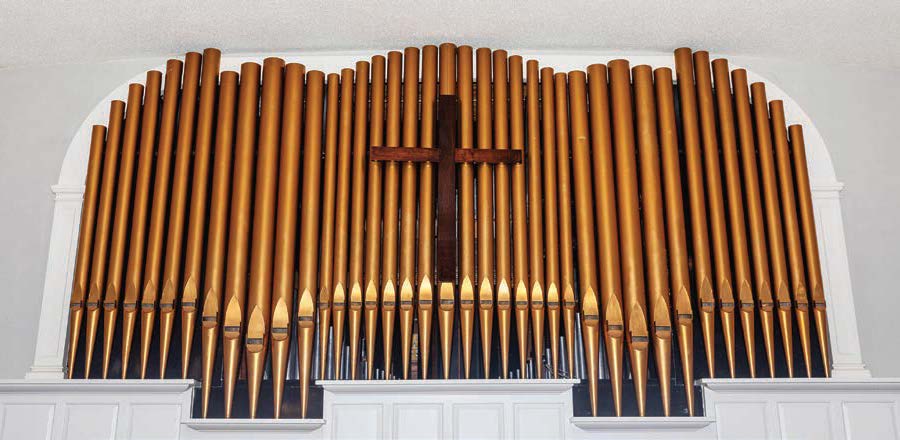
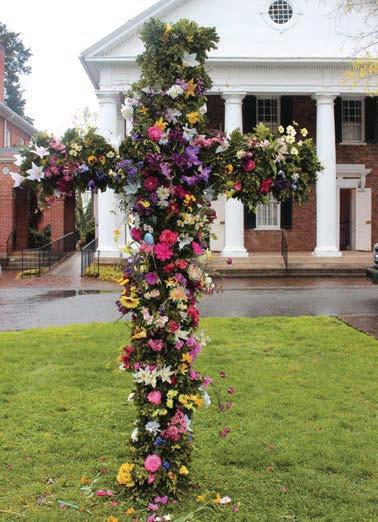
Three decades ago, Albright — a lawyer with a gift for woodworking — took the remains of an 80-year-old white oak that met its demise through a lightning strike during a storm and made a rugged wooden cross. He wrapped it in chicken wire and planted in front of the church portico during Easter week. Last November, the same salvaged wood was used to build a larger cross, which hangs from the organ pipes in the sanctuary.

On Easter Sunday, members adorn the original cross he built with flowers before a sunrise service and congregation breakfast.

“It’s become a very popular tradition at Buffalo Church,” confirms Albright. “As the sun comes up, I think that old cross covered with spring flowers expresses our gratitude for the return of spring and the glory of Jesus Christ’s resurrection.”

Architectural Details We Cannot Resist

ARCHITECTURAL DETAILS WE CANNOT RESIST

ARCHITECTURAL DETAILS
WE CANNOT RESIST

(Hint: Porches rock our worlds)

By Cynthia Adams •  Photographs by Bert and Becky VanderVeen

My dad stood on the brakes whenever he spied a house featuring grand, white columns and a generous porch sweeping across the front, his dusty pickup sputtering to a stop. He stopped, fully fixated, before puttering on, often headed to an antiques auction.

“Just beautiful,” he’d sigh, shaking his head in awe.

He most admired “grand old gals,” as he called the finest homes with slate roofs, copper gutters, working shutters and Juliet balconies. He would loop through historic neighborhoods, excitedly pointing and teaching me to recognize and value those details, too. Years later, I learned he had dismantled and salvaged materials from a ramshackle house to build our first family home just before my birth, proving just how much of a house guy he was — or, at least, proving his thrifty resourcefulness.

As for me, I was captivated by the interior details of homes. What treasures were to be found inside?

And I was anything but practical. 

With sparkling glass door knobs and a staircase to nowhere, even cobwebbing, cracking plaster and a dining-room floor that listed so much it gave you vertigo didn’t discourage my desire for a dodgy Westerwood home. It also possessed gorgeous molding (if an unfortunate, teensy fireplace) and a butler’s pantry — and a surprisingly serviceable floor plan featuring nooks and crannies galore. It quickly won the hearts of two neophyte homebuyers.

Old house lovers get it. 

Perhaps it takes preservationists and architectural buffs to fathom the irrational, deep affection historic homes and buildings inspire. And most can quickly tell you what particular details make their pulse quicken with pleasure — and why. They have an internal catalog of favorite things — from window details to arches. According to home blogs, they are particularly smitten by original details, especially French doors with mullions, substantial moldings and casings, ceiling details and medallions, and wall paneling.

So, I began asking some of my favorite old-house lovers, many of whom just so happen to have preservation credentials, to share some of their favorite architectural details up and down Greensboro’s streets and avenues.

Take Katherine Rowe, who lives in a classic brick two-story in the leafy and grand neighborhood of Sunset Hills and discovered a passion for historic homes while coming of age in Salisbury, where there is a thriving preservation movement. 

Proof? She served as an officer of Preservation Greensboro’s Board of Directors and dedicated 21 years volunteering with its Architectural Salvage program.

Rowe currently serves as a commissioner with the Historic Preservation Commission of Greensboro (HPCG). Two years ago, she helped judge the Community Appearance Awards of Winston-Salem and Forsyth County. Vocationally, she also does “small remodels and design work.”

Architecture is a topic she delightedly calls “fun!” 

If you ask what her favorite architectural detail is, Rowe hesitates to narrow it to one. Soon, she’s tripping over things she finds riveting. Firstly, she mentions the purple glass exterior sconces and cast concrete door surround at the old Masonic Temple on West Market Street “because they are so much themselves; bold, colorful. Meant to look a bit imposing, but they’re just adorable.” 

Rowe has difficulty choosing a single architectural detail that most delights. Then she discusses the elaborate cast-concrete Art Deco molding around windows “at 100 S. Eugene, next to the sheriff’s office, which are delightful because they are such a surprise. Detailed. A lot of work, and I appreciate the thought behind those windows, both from the architect and the guy who made them.”

Later she emails a list of admired architectural details around town, noting:

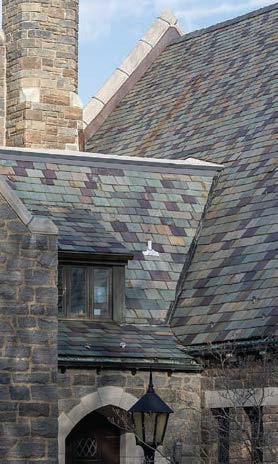
The miles of slate roof at Holy Trinity; graceful, symmetrical classical architecture at Temple Emanuel; arches and garages doors at the now defunct Central Fire Station on North Greene; robust arches at a private residence at 703 Fifth Ave. in Dunleath; the restored Gatekeeper’s Cottage (originally part of Green Hill Cemetery, now Carolina Home Partners) on Wharton Street; public spaces that are inspirational, such as War Memorial Stadium and East White Oak Community Center.

“There’s lots of good public architecture, right?” Rowe notes. “Charles Hartmann was responsible for much of it,” she adds, ticking off his greatest hits: “Grimsley High, Dudley High, the original Jefferson-Pilot building with Thomas Jefferson bust and Country Club Condos on Elm Street.”

On a personal note, she sends an email later, saying she was initially drawn to her home’s long sunroom with its three walls of windows and red quarry tile floor. “It reminded me of my great-grandmother’s sunroom in Albemarle; hers had jalousie windows, tropical barkcloth upholstery and bright, floral houseplants. Charming and cheerful to a child.”

Now that their sunroom is insulated, she and her husband, Jeri, spend weekend afternoons there reading or watching television. “And I bring in pots of geraniums and clover to overwinter on tables set up in front of two of the window walls. Which seems a bit full circle, don’t you think?”

Fellow volunteer, writer and preservationist David Arneke has also served with HPCG. Like Rowe, he has been an officer of Preservation Greensboro. He currently serves on the nonprofit Preservation Greensboro Development Fund.

Since 2017, he has written and edited piedmonthistorichomes.com, which serves as a comprehensive guide to “the most historic, notable and distinctive 18th-, 19th- and early- to mid-20th-century homes now for sale in North Carolina’s Piedmont Triad region.”

Notably, Arneke knows about succumbing to old house charms. For many years, he has lived in a circa 1900 College Hill home with Betty Work. Lured by certain charming architectural details when he first saw their future house, one distinction eclipsed all others.

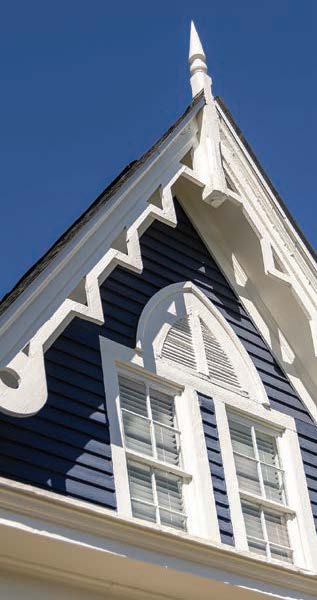
“The feature that really grabbed us was the scalloped frieze boards that go all the way around the house. They were hard to even see when we bought the house because the entire exterior was painted beige — every last detail.” According to a November 1997 Greensboro News & Record interview, the couple took three years deliberating the perfect exterior paint colors.

“Also, inside the house, the back stairs,” he adds. “Neither of us had ever lived in a house with stairs in the front and in the back. Such a novelty for us.”

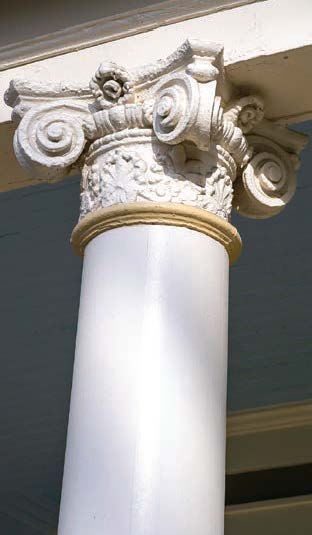
Having long chronicled features of older homes, he admires the columns on the Bumpas-Troy House, saying their size and prominence “make them grand and spectacular and unlike anything else in the neighborhood.” He muses, “It must have been quite a sight when it was built in 1847, out in the woods beyond the edge of town with no other houses around it.”

Arneke discusses a Dunleath home, which turns out to be the same one that Rowe had mentioned, notable for its “wonderfully distinctive front porch. I don’t remember seeing another one like it in Greensboro.”

Arneke recalls a striking historic feature of a Fisher Park house.

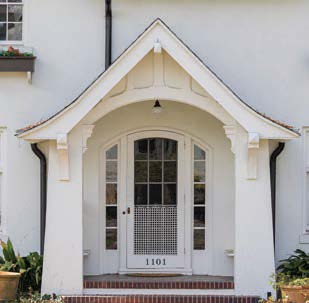
“The swooping roofline on 1101 Virginia Ave. . . . The whole house is remarkable, but that roofline, along with the portico, give it a whimsical look that you just don’t see very often. I get the feeling someone had fun designing that house.”

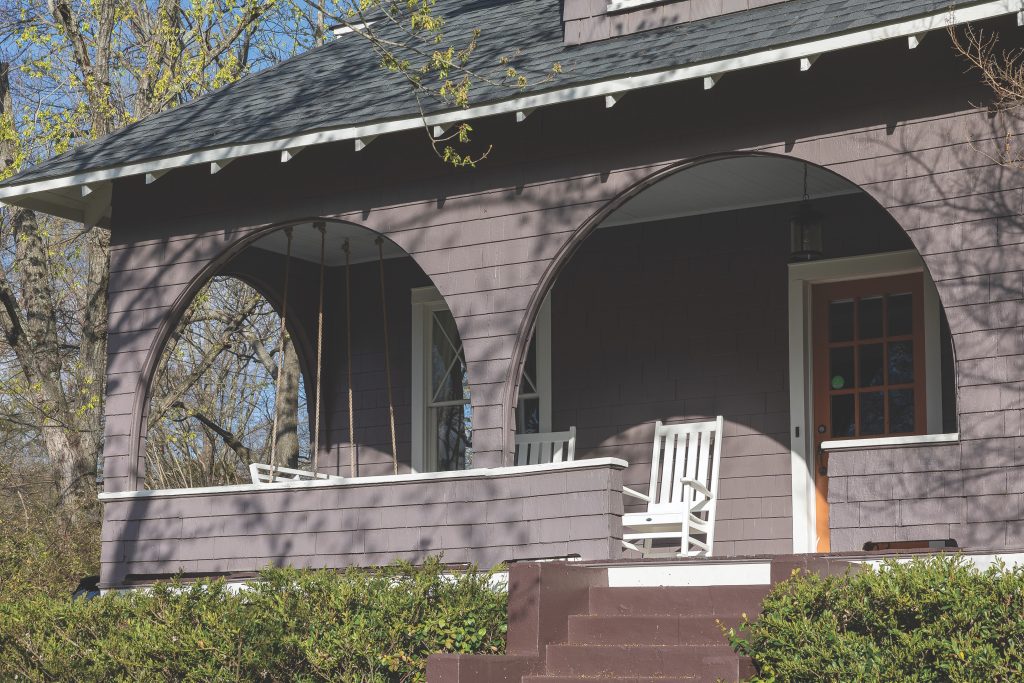
Fellow preservationist Deborah Kaufman, who lives in Sedgefield and now serves as an at-large commissioner on HPCG, says, “I absolutely love the front porches of older homes. They always make me nostalgic, especially if there’s a porch swing. I’m reminded of my childhood at my great-grandparents’ house.”

She qualifies details.

“Brick porch flooring and wrought iron rails just don’t give me the same warm feeling as those creaky wooden floors and white railings.” 

Even Greensboro City planner and preservationist Mike Cowhig, a Fisher Park resident, agrees with Arneke and Kaufman on the topic of porches, particularly when it comes to what’s directly under foot. In a word, Cowhig finds the commonplace touchingly affecting — and often overlooked. 

“There’s nothing like a well-preserved set of wood front porch steps and a tongue-and-groove porch floor,” he says. 

“Because they are exposed to the weather, [wooden] steps are often replaced with masonry steps, so they are increasingly rare. The treads are usually bullnose with a rounded edge like stair treads. Victorian era steps can have very decorative hand railings.”

As for historic tongue-and-groove porch floors? A yawping hole opened like a sinkhole in that Westerwood’s tongue-and-groove porch — just as I stepped out for the mail during our first week of residence.

Said porch’s beguiling Chippendale-style railings were rotting and much of the German siding cladding the entire house was also rotten. Only the concrete steps were not.

The next house that captivated us sold itself within minutes, even lacking a requisite front porch. But inside, it had handmade doors, brass knobs and gorgeous, deep windows (with wavy glass in the muntins!) offering a park view. Built in 1926 by former Greensboro mayor Ralph Lewis, we considered it “modern.” Sadly, the gorgeous slate roof was developing leaks, eventually requiring replacement a few years ago. As did the heating, air conditioning and rotting Tuscan columns at the front entry and side porch. 

But those windows with wavy glass? They survived, and they still slay me.

I was willing to overlook almost anything for its many sets of French doors (three!) and remarkably — how to express this to a saner person? — calming energy.  Laugh if you want, but the plaster walls inside our old house feel like a safe, sheltering place. 

Especially so if you forget the resident ghost.

Almanac April 2025

ALMANAC

Almanac April 2025

By Ashley Walshe

April is a drift of dandelions, cheerful and bright.

Can you hear them giggling? Listen. It helps if you slip off your shoes.

Somehow, bare feet in the cool grass, you can access new frequencies: the whir of tiny wings, the swelling of tender buds, the rhythmic flow of nectar.

Wiggle your toes. Breathe into your belly. Surrender to the urge to lie down.

Yes, that’s better. Draped across the softening earth, the sun on your skin is medicinal. You close your eyes, brush fingertips across feathery blossoms, let your inner child run wild.

Perceive the world through the eyes of a dandelion. Anticipate the tickle of bee feet, the tender kiss of mourning cloak, the ecstasy of thunder and rain.

Are you giggling yet?

Listen.

The song of spring rises in all directions.

In the distance, a chorus of peepers rouses the burgeoning woods. Wet and trembling, a swallowtail clings to its chrysalis, pumping crumpled wings at the speed of grace. A bluebird whistles tu-a-wee

Open your eyes. Turn your gaze toward the flowering dogwood, the mighty tulip, the small, ambrosial apple tree. Everywhere you look, spring spills forth.

The dandelions are chattering now. Turn a cartwheel, one squeals. Dance for rain, blurts another. Pick me, whispers a third. 

Smiling, you reach for a fat, yellow blossom, pluck the stem, tuck the flower behind your ear. Eyes closed once more, you drift into blissful reverie. Among this sea of sprightly yellow orbs, you drink in the playful hum of this budding season, let the song revive your every cell.

Floriography

The Victorians used tussie-mussies (nosegays) to express their true feelings. Apple blossoms and dogwood were code for I like you. Purple violets murmured true love. Tulips? Well, that would depend on the color, of course.

While the language of flowers has withered in these less-than-modest times, we can’t help but ascribe meaning. Surely, every gifted flower says, I’m thinking of you. But what is it that you hear in the presence of flame azalea, redbud, cherry blossom? What do you glean from the iris and bluebell?

The Great Egg Hunt

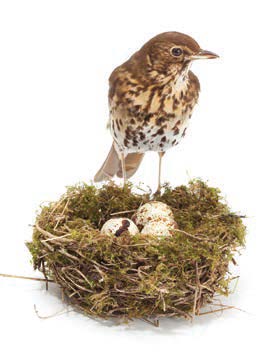
There, nestled in the branches of dogwood, sugar maple, hawthorn and pine; in gutters, rain boots and dense shrubs; within the cavities of dead and living trees: eggs, eggs, beautiful eggs. Creamy white ones, speckled brown (chickadee, cardinal and nuthatch). Bright and muted blue ones (robin and bluebird). Pale green with rust-colored blotches (mockingbird). And guess who’s out searching for them? Opossums, snakes, skunks, racoons, crows and jays.

Spring is as harsh as it is lovely. And, yet, this circle of life is indeed what makes each spark of creation all the more precious.

Poem April 2025

POEM APRIL 2025

Greedy

The catbird is pecking away

at two ripe tomatoes.

I wave my hands and shout,

My tomatoes! as though 

I’d produced them

from my breasts or belly.


The catbird aerializes

on the tomato cage,

jabbing and jabbing the red fruit.

I have more on the counter

that I won’t eat before they rot,

or that I’ll give away.


It’s unseemly, this stinginess,

a memory of not-enough,

the necessity of preserving

a crop from rabbits and deer,

the otherwise marvelous

round-backed bugs, grasshoppers

flaring red underwings,


or birds like this one,

gray as a civil servant,

an actuary of ripeness,

that tilts its head to eye the fruit

and flaunts its rusty bottom

in salute.

— Valerie Nieman