Among the Wildflowers

AMONG THE WILDFLOWERS

Among the Wildflowers

A 1950s Sunset Hills charmer blooms anew

By Cassie Bustamante     Photographs by Betsy Blake

Making your way toward downtown Greensboro along Friendly Avenue, a burst of fiery red and vibrant purple might catch your eye as you pass through Sunset Hills. Wildflowers — poppies and Larkspur, to be exact — bloom along the fence line of a 1950s rancher. The seeds were sown just last year, although this particular house has been a colorful source of comment for years. In fact, if you drove by five years ago, its teal-and-purple exterior would have surely grabbed your attention.

Formerly, the single-family house was a duplex, says Rachel Azam, who currently shares the home with her husband, Najib, their 3-year-old daughter, Zaara, and her 18-year-old stepson, Khalil, who attends the North Carolina School of Science and Mathematics and will head to UNC-Chapel Hill in the fall. And let’s not forget Sophie, the family’s blue-eyed Aussie, a glutton for belly rubs. Originally from Pleasant Garden, Rachel recalls often cutting through Sunset Hills when she was a child. “I grew up watching this house change color,” she muses.

In August 2020 at the height of the pandemic, the once likely Charlotte Hornets-inspired home was sold, flipped into a fresh, gray-and-white, clean slate, and put on the market right after the New Year holiday. Almost immediately, the Azams put in an offer.

Rachel, barefoot, stands in her bright, white kitchen, wearing relaxed, barrel jeans and a cropped white T-shirt. Her chocolate-brown eyes peer out from underneath a Duke baseball cap, her thick, brown hair hitting just below her shoulders. A warm, homemade breakfast quiche, fresh from the oven, fills the home with a toasted, buttery, come-hither smell. A bowl of oranges sits on the island counter next to a vase filled with fresh flowers in oranges and pinks. “We have a dance party in here every morning per Zaara’s request,” says Rachel.

As if on cue, Zaara twirls into the room, dark curls bouncing, and shouts, “Play ‘Cruel Summer!’” Rachel notes that most mornings it’s Broadway tunes, Wicked or Taylor Swift.

“T. Swift don’t miss,” quips Najib with a glint in his own brown eyes. He’s on his way to the Research Triangle, where he works in risk control for UBS, an investment banking company, but not before giving his wife and daughter each a kiss. “Bye, Zaari!” he says as Zaara demands a second hug from Daddy.

While the couple originally met as high schoolers training to be counselors at North Carolina for Community and Justice’s Anytown camp, they didn’t really get to know each other until much later. Najib, who grew up in nearby Jamestown, attended undergrad at UNC-Charlotte and went on to earn his law degree from UNC. Rachel graduated from UNCG with a B.S. in nursing. Mutual friends brought them together eventually. Nick, Najib’s best friend from college, is the older brother of Rachel’s own childhood best friend, Sarah. But Rachel remembered Najib, who is a couple years older than her, from those teen years at camp because his name was unusual. And he’s told her, she says, “I definitely remember you, wink wink.”

In the fall of 2018, the couple first exchanged vows right here in Greensboro. “We are a multicultural household,” says Rachel. Najib is Arabic and his family hails from Bangladesh, “so we had our big Bengali ceremony and reception in October 2018.” Less than a year later, in June 2019, the couple, with photographer Ellie McKinney and their loved ones, hopped the Atlantic Ocean and held an Irish ring ceremony, honoring Rachel’s heritage, in the seaside town of Galway, Ireland.

While still in their honeymoon phase in November 2019, Rachel took a new position working in pediatric endocrinology, specifically in diabetes, within the Duke University healthcare system. The work was particularly meaningful to her. At age 11 while studying dance at the UNC School of the Arts, she was diagnosed with type 1 diabetes. Although she returned home after the diagnosis, dancing has always held a special place in her heart. Granted, the job meant a big commute from their Charlotte condo, but Rachel loved the work.

Soon after starting her new position, the medical world was turned on its head when the COVID pandemic descended upon America in March 2020. Rachel began working a hybrid model, often doing telehealth appointments with patients and caregivers. Thankfully, she says, the technology has come a long way from when she was a child living with diabetes. Now, remote monitoring is available. “My senior year of high school was when I got my first insulin pump. It was life changing.”

Suddenly, in 2020, both Rachel and Najib — like most of the world — found themselves at home much more often and in need of an outlet, and, she quips, “You can only do so many athome workouts.” Rachel, who’d arranged her own wedding flowers both stateside and in Ireland, found joy in floral design. Still in Charlotte, she’d visit her local farmstand and would come home with “buckets of blooms.” A seed was planted and, before she knew it, grew into Flower Barre, a bespoke floral design company named with a nod to what she calls her first love, dance.

To get a change of scenery, the Azams ended up taking an extended stay at Najib’s parents’ Jamestown home, often wandering through Greensboro neighborhoods as a diversion. Though they’d seen themselves as never returning to the area they grew up in, the more they walked, the more they thought, “We could live in this area.”

And when the adorable 1,600-square-foot house situated on the corner of East Greenway and Friendly popped up on Redfin, they wasted no time. That offer they submitted was readily accepted.

As it turns out, the timing was impeccable. Just a week after going under contract, the couple found out they were expecting. Naturally, the first room they tackled was Zaara’s nursery, which has since transitioned into her “big-girl” room. The walls are a soft, ballet-slipper pink, the windows are flanked by tonal pink, floor-length drapes, and the bedding features blooms in rosy pinks and golden yellows with stems of sage green, lady bugs scattered here and there. On her corner bookcase, overflowing with board books, a vase holds a bouquet of dried wildflowers, special to Rachel because they’re from the arrangements she made for Zaara’s first birthday, where the theme was “Wild One.”

While the home was a move-in ready, blank canvas, the landscaping was a clean slate — there wasn’t any. The couple poured their time and energy into their front yard. Rachel’s “jack-of-all-trades” dad, who raises beef cattle on a Pleasant Garden family farm, shared his skills and knowledge. With Najib, he carved out a pea-gravel pathway and installed French drainage.

The couple began planting beds, amping up the home’s curb appeal. Next came the backyard. “It was a bamboo forest,” Rachel quips. She has plans to keep adding here and there, year after year, starting with hydrangeas and echinacea this year.

Inside, they’ve put their personal stamp on their home bit by bit with splashes of color, mostly blue-greens. Rachel says those shades remind her of the ocean; they have a calming effect.

For the kitchen bar area, Rachel selected a blue-and-gold wallpaper featuring whimsical stems of wildflowers. She found sturdy wooden shelves on Etsy. Najib installed both the wallpaper and the shelves. But the nook’s pièce de résistance is framed artwork, swirls of red with splashes of green and purple. “That’s one of Zaara’s first little finger paintings,” says Rachel proudly.

Rachel’s most recent touch to the home interior is a bold and vibrant floral wallpaper hung by the back door. The colors mimic that of Zaara’s bedding, though more saturated and with hints of Rachel’s second-favorite color, magenta. She painted the adjacent door in a dark teal shade, though, she notes, “It’s got some scratchies because of the dog — you know!”

A drop zone already existed near the back door with hooks and cubbies for shoes, but next to it was a blank wall — wasted space in a small home. Rachel reached out to her pal, Emma Millard, who, she’d noticed, was offering design work in addition to working in real estate. The two had met at the first big wedding Rachel had done as a florist, where Emma’s best friend was the bride. Emma and Rachel, both pregnant, bonded quickly and their daughters were born just a month apart.

That once blank wall is now a functional built-in. Emma maximized the limited space, designing cabinetry custom-made by Greg Van Wyk, owner of Foxbury Woodworks in Oak Ridge. Greg installed and painted it — blue-green, naturally.

From here, Zaara can be heard singing along to Moana 2. She dances in front of the TV screen, lost in her own Hawaiian reverie for the moment, but happily takes a beat to show off her modern dollhouse in the corner of the living room, where goldenrod pillows add a warm touch.

Sophie expectantly sits nearby, whimpering for attention, her little bum wiggling in anticipation. Rachel translates: “Hi, I am here, in case you forgot about me. And this is my toy basket.”

In the entry, a painting of a woman wearing a blue-and-white striped dress holding a little girl’s hand as they walk through a field of poppies and larkspurs hangs in a gilded frame. The artist’s initials? “N.A.”

“This is Zaara and I,” says Rachel wistfully. “Najib painted this for me for my birthday.” The family had visited Dogwood Farms, a you-pick flower farm in Belews Creek, and, unbeknownst to her, Najib had snapped a photo to use as his inspiration. Rachel is in awe of how he can use both sides of his brain, though she herself toes the line between science and artistry on a regular basis, too.

As a high schooler, it turns out, Najib took lessons from local artist Anne Kiefaber. During the pandemic, she opened her home studio to budding artists as long as they wore masks. Like Rachel, Najib had needed his own outlet. “So he and Khalil started going together to art class once a week,” says Rachel. Now, almost five years later, he’s still going and currently working on a piece for friends of theirs.

A moss-covered fairy house decorated with purples and oranges sits on a table below the painting. Najib’s friend, Nick, gave Zaara the kit for Christmas. “It’s just too good to put outside,” quips Rachel, “so it’s just part of the home decor!”

“We love fairies, don’t we?” she asks her daughter.

“There are three little girls down the street who had a couple of fairy houses outside in the front yard,” she says. “We couldn’t walk past the house without stopping to play with the fairies.” The little girls took notice and began writing letters to Zaara from the perspective of River Lily, the fairy who lives there. This year, the girls have expanded into an entire fairy village that has little Zaara enchanted.

Back in their own yard, they’re working their own magic. Soon, the poppies and Larkspur along the fence — her cutting garden — will be replaced by new flowers. Last year, she planted heirloom zinnia seeds “and they actually worked!” She was able to supplement purchased stems with blooms from her garden.

Of course, there are a few blooms that hold a special place in Rachel’s heart. She loves vibrant blossoms that lend to her style, which she calls “a little wild and a little funky,” naming Dahlias — “most of them look like an amazing firework — and lisianthus. “I love the poppy,” she says. “They’re quite magical in that they come up and they are super, super tight in their pod and then they just emerge and they have these beautiful flow-y petals and really dynamic shape.”

These days, Rachel buys most of her blooms through a Winston-Salem wholesale company that supports North and South Carolina farmers. Where she expected to face competition, she has been pleasantly surprised. “We all pitch in and are helping each other,” she says. She even rents space occasionally from fellow florist Joneswell Flowers, which happens to be conveniently close to Zaara’s preschool.

And Zaara, whose name means “blossoming flower” in Arabic, loves working at the shop by her mom’s side, plucking green leaves from stems or sweeping up petals. Rachel daydreams of a future where they can work side-by-side as Flower Barre florists. “It may sound silly, but her little creative brain and the way her mind works, it would just be amazing to be able to create with nature as art with her.” The seeds are planted. And now, she waits, she waters and she watches as her own blossoming flower unfurls.

Sazerac June 2025

SAZERAC

June 2025

Just One Thing

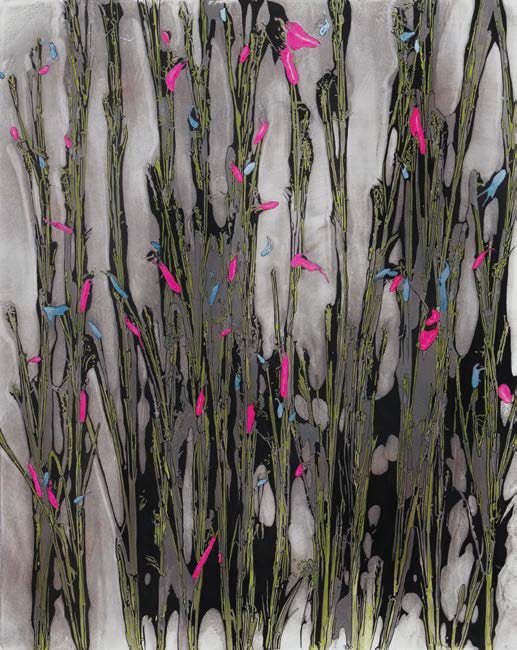
“My bond with nature began in childhood with time playing in the woods and helping my grandmother in her flower gardens,” says artist Emily Clare, named for both her grandmother, Emily, and her grandfather, Clarence. Since 1987, Emily Clare’s work has been exhibited in galleries throughout much of the Southeast and has reached as far as Australia. These days, Emily Clare can be found strolling by evening light around her Winston-Salem home or exploring woodlands of the Southeast, where she collects native, invasive and exotic plants she then presses as the basis of her work. Rather than traditional paint and brushes, she uses leaves, vines or blades of grass, and ink, allowing nature to dazzle as it unfurls its wondrous design. “Each one has a message they leave on paper,” she says. For her, creation is meditation. And for us, the observers, her work invites us to be more mindful, to reflect on being stewards of Earth’s natural resources. Seen here, Native Grass 1 depicts tall, wild and free — rather than meticulously mowed — blades printed using Akua ink and accented with gouache, watercolor and iridescent paint on Arnhem 1618 paper. Its shots of neon pink and cerulean blue catch the eye as you take an indoor nature walk through her “Botanical Dreamscapes” exhibit in Revolution Mill’s Central Gallery, on display through June 20. Info: revolutionmillgreensboro.com/events.

Another Candle on the Cake

Last of the late-1950s Rockabilly stars, Billy “Crash” Craddock turns 86 years old this month. A lifelong resident of Greensboro, he was 18 years old in 1957 when he recorded his first 45 single locally on the Sky Castle label, named after the teenybopper hangout on High Point Road known for its elevated WCOG-AM DJ booth. He was signed by Columbia Records a year later.

In 1959, he became a bonafide teen idol in Australia, where, during his first tour there, screaming fans greeted him everywhere he went. “Boom Boom Baby” rocketed to No. 1, the first of four top-10 platters down under. “I was excited just to be in the business and nervous at the same time,” Craddock told me in 2009. “The record company took a picture of me combing my hair on top of a building in New York. When it came out in a magazine they called me ‘pretty boy.’ I didn’t like that.”

Hits mostly eluded him stateside in the ’60s, but that changed in a big way after his 1971 “Knock Three Times” hit No. 3 on the Billboard country chart. “Wow, what a feeling riding around Greensboro,” he recalled. “Seemed like every time I’d move the radio dial, it was playing. Every station, ‘Knock Three Times’ was either getting started or ending. I thought, Is this for real?” His followup country radio release, “Ruby, Baby,” cruised into the No. 1 spot.

A string of chart-toppers followed, culminating in his biggest smash in the summer of ’74, “Rub It In,” which not only landed in first place on the country chart, but also hit No. 16 across all musical genres on the Billboard Hot 100. Still rockabilly to the roots, country to the core in his 80s, Craddock thrilled the studio audience on Country Road TV in 2024, covering a Tammy Wynette tune, “Darlin’ Take Care of Yourself.” 

A bridge over the rail lines on 16th Street is dedicated to Billy “Crash” Craddock, but locals who knew him before he began mining gold records remember him as the down-to-earth guy who hung sheet rock in their homes during those lean years before he began mining gold records. Rub it in, why don’tcha?  — Billy Ingram

Window on the Past

This photo, taken in the 1940s, is part of the Abraham H. Peeler collection held by the Greensboro History Museum. Peeler, long-time principal at the historic J.C. Price School, was heavily involved with Camp Carlson, one of the first camps in North Carolina created for Black Boy Scouts. These 10 lads are definitely dressed for adventure with the classic campaign hats and official-issue field uniforms, complete with kerchiefs and knee-high socks with garter flashes. Obviously trustworthy, loyal, helpful, courteous, kind, obedient, thrifty, brave, clean and reverent, they were on their honor to do their best to help other people at all times and to keep themselves physically strong, mentally awake and morally straight.

Unsolicited Advice

June is chock-full of celebrations, some we’ve already marked in our planners — Father’s Day, Summer Solstice, Juneteenth, Pride Month and the highly anticipated National Accordion Awareness Month. (This is not a joke. Nor is Bed Bug Awareness Week. Look it up.) In 2014, June was also designated as Alzheimer’s & Brain Awareness Month, so we thought we’d share some of our favorite ways to boost brainpower:

Brain teasers: Ever play The New York Times’ Connections? You have to find the common bond between several words. Try this: safety, candy, DJs, home ownership. Answer: They all have their own national month in June.

Board games: Our fav? The one where someone puts bits of cheese and fruit all over the board and challenges us to eat it all. Haven’t lost yet.

Crossword puzzles: Like Katy Perry, you’re up then you’re down — but never clueless. Amp up your cognitive flexibility and reserve, short- and long-term memory, and problem-solving skills.

Sleep: Catching Z’s is vital for brain restoration and repair. But maybe you lie awake at night already fully aware of bed bugs. Let a Calm app celebrity-narrated “Sleep Story” lull you to slumber. Because the last voice you want to hear at night isn’t your partner’s. It’s Matthew McConaughey’s.

Learn a new skill: Think languages or instruments. Accordion, anyone?

Wandering Billy

WANDERING BILLY

Filmmaking on the Frontlines

And screenwriting in a Greensboro bar

By Billy Ingram

“I am a typed director. If I made Cinderella, the audience would immediately be looking for a body in the coach.” — Alfred Hitchcock

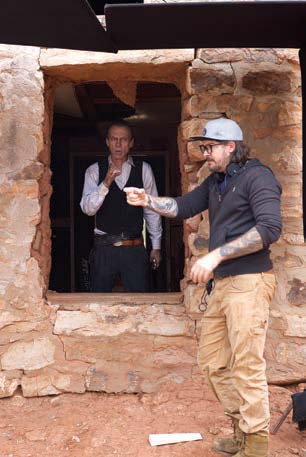
Hunched slightly over in the darkened outer reaches of Corner Bar on Spring Garden, writer, producer and director Phil Blattenberger is pecking away at finessing his latest screenplay. Forbes anointed him as “Cinema’s Every Man” and says he “is reshaping the industry in his working-class image.” Launched from Greensboro, this young filmmaker managed to wrap two acclaimed feature films in the last two years alone. His 2024 release, Laws of Man, stars Jacob Keohane (Halloween Kills), Jackson Rathbone (Twilight), Dermot Mulroney (My Best Friend’s Wedding), Keith Carradine (Nashville) and Harvey Keitel (Reservoir Dogs).

“I was in grad school at UNCG” recalls Blattenberger. A baby step back in 2017 is what prompted this improbable journey. “As a fun little side project, I wrote a Vietnam War movie. I’m going to shoot this thing in the woods of North Carolina with my buddies to get investors involved.” As it turns out, he raised enough money behind it to ship production overseas to Cambodia. The result was Point Man, an unflinching deep dive into racial tensions during the Vietnam War, racking up nominations for Best Screenplay and Best Director at the Sydney Indie Film Festival, ultimately winning Best Film among other accolades. Sony secured DVD-distribution rights for the 2018 wartime drama.

His second feature, Condor’s Nest, came out a full five years later, and was more ambitious. A WWII adventure about a downed American B-17 bomber crew thwarting Nazis, it stars a platoon of familiar pros including Arnold Vosloo (The Mummy), Michael Ironside (Starship Troopers), Academy Award-nominee Bruce Davison (X-Men, 1923) and Jorge Garcia (Lost). While some scenes were filmed in South America (doubling for Germany), most of the production was shot in North Carolina, including right here in town, even a day lensing at the former Cellar Anton’s site, underneath what is now Havana Phil’s. I’m told it looked exactly as it did when the last meal was served there some four decades earlier. (I wrote about that project in my March 2023 column: ohenrymag.com/wandering-billy-76.)

Blattenberger set sights even higher for his follow up, the aforementioned Laws of Man. “Next step up is a bigger budget, bigger names,” he says about an explosive period piece pitting a suited duo of 1960s-era U.S. Marshalls manhunting a fleeing fugitive. “If we’re going to justify that expense, we’ve got to have the soft money. So we set up shop in New Mexico.” That decision was made primarily due to the state’s generous financial incentives for filmmakers, i.e. soft money. “All of the Condor’s Nest financiers came in so we got Keith Carradine — the first time I’ve worked with an Academy Award winner.” Laws of Man scored Best Film at the Tangier Film Festival in 2024.

“Jacob Keohane, who starred in my first two movies, plays the lead in Laws of Man, just a phenomenal guy.” Blattenberger met the actor while working as a bartender prior to filming Point Man. “His audition came across, I watched the tape and I was like, ‘Where the hell do I know that guy?’ I realized he was DJ Jake the Snake at Club Fifth Season, my first bartending gig in its final days, circa 2009.”

Blattenberger’s fourth feature, Ascendant, is likely to lift off as you’re reading this, but the financing landscape in 2025 is a great deal more fraught than it was even just a couple of years ago.

He characterizes current conditions as the biggest crisis the motion picture industry has faced since the advent of television. “Distributors have chopped their minimum guarantees because they overspent, basically.” Recall that onslaught of intriguing new TV series and big budget pictures bombarding us on streaming platforms beginning around five years ago (thanks to COVID)? Notice how that practice has cooled considerably? Turns out there was some illogic behind that. Amazon, Hulu and Netflix leveraged — and blew through — billions of dollars developing jaw-dropping content with maximum star power, believing that newbies like Peacock and Paramount+ would wither away in their wake, leaving just a few players dominating digital media.

“It just didn’t happen,” says Blattenberger. Posting billions in losses, streamers reversed course, eschewing new acquisitions. “They stopped buying the indie films that hit Cannes and then Toronto. Nobody is getting post-theatrical deals.” The (new) old paradigm was that a movie would have an initial run, get picked up by a top-tier streamer for three months, followed by a Hulu run, then a Tubi exclusive and a cable deal. “That used to be the waterfall.”

I find that comforting, in a perverse way, knowing the movie business hasn’t changed significantly since I walked away 30 years ago. The bobbleheads tucked into top floors are still running things with reckless fecklessness.

As preeminent entertainment essayist and film historian Peter Biskind once wrote, “ . . . the independents who are really passionate always find a way to make their films.” Embracing this unprecedented distribution dynamic, for his next production, Blattenberger set aside an elaborate concept, which was already in the works, in favor of a more scaled-down approach.

“Because B-budget action thrillers require huge names, you’ve got to make your money back on a $1.5 million budget,” argues the auteur. “The exception has always been horror — I hate the word ‘horror,’ so I’m going to call it a psychological thriller — that lets you bring in a genre star who costs you pennies on the dollar compared to your A-listers. Horror turns out a hundred times at the box office what you could possibly expect with low-budget action.”

In pre-production when we spoke, Ascendant is centered around a doomsday cult no doubt up to devilish dealings while on a retreat in Eastern North Carolina. “You’ve got to make your location interesting if you’re going to hold an audience hostage for 90 minutes in what’s effectively a single location. You’ve got to go for broke on the design.” What will be a creepy encampment situated inside what is effectively a 3-acre crop circle is being constructed from the ground up in Rocky Mount. Blattenberger is no Cecil B. DeMille on an elevated perch barking orders through a megaphone. “I’m out there with dirty hands, picking splinters out of my fingers, building sets,” he says of his activity earlier in the week.

“Film it and they will come” may not sound like a solid marketing strategy to a banker or lawyer, but it’s business as usual for indies and major releases alike. When a long shot does hit the mark — take Blair Witch Project, for instance — the money spigot sprays in all directions. “I’m in a weird position where I’m over halfway financed, but, in my experience, once you attach a name, that’s when people really start throwing cash in.” As luck would have it, he’s just signed Rob Zombie collaborator Richard Brake (The Munsters), who also appeared in Laws of Man.

“As producer, all of my pre-production work can be done from a laptop.” As such, Phil Blattenberger has discovered what other local creatives have: You can go Hollywood without living the nightmare. “I sit here in this exact chair at this exact corner at Corner Bar and do half my work. This is effectively my office at this point. I can shoot in Cambodia or New Mexico or Rocky Mount, but, until I need to be on set actually building or directing, I can center myself in a place like Greensboro, North Carolina.” 

Birdwatch

BIRDWATCH

The Black Crows

The same music but different lyrics

By Susan Campbell

Everyone knows what a crow is, right? Well, no. Not exactly. It is not quite like the term “seagull,” which is generic for a handful of different species found near the coast. When it comes to crows, you can expect two species in central North Carolina in the summertime: the American crow and the fish crow.

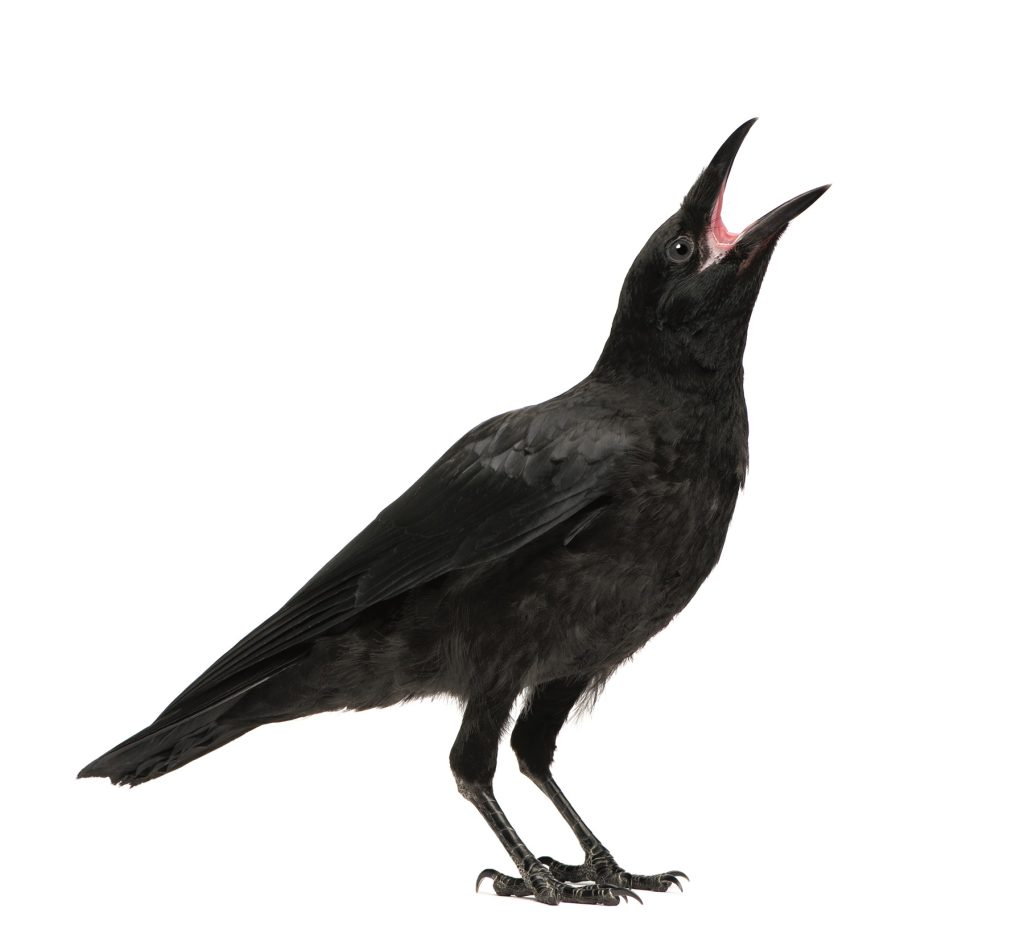
Telling them apart visually is just about impossible. However, when they open their beaks, it is a different matter. The fish crow will produce a nasal “caw caw,” whereas the American will utter a single, clear “caw.” That familiar sound may be repeated in succession, but it will always be one syllable. Young of the year may sound somewhat nasal at first, but they will not utter the two notes of their close cousin, the fish crow.

Both crows have jet black, glossy plumage. They have strong feet and long legs, which make for good mobility. They walk as well as hop when exploring on the ground. They have relatively large, powerful bills that are effective for grabbing and holding large prey items. Crow wings are relatively long and rounded, which allows for bursts of rapid flight as well as efficient soaring. The difference between the two species is very subtle: Fish crows are just a bit smaller. Unless you have them side by side, they are virtually indistinguishable.

Fish crows are migratory in our part of North Carolina. By the end of the summer flocks of up to 200 birds will be staging ahead of the first big cold front of the fall. Most of the population will be moving eastward come October. For reasons we do not understand, some fish crows will overwinter in our area. Other small groups are being found on Christmas Bird Counts each December across the region. Not surprisingly, the number of fish crows along our coast swells significantly by mid-winter. Visiting flocks do not stay long and are our earliest returning breeding birds, arriving by early February for the spring and summer. Almost as soon as they reappear, they begin nest building. Their bulky stick-built platforms are hard to spot, usually in the tops of large pines. Furthermore, crows tend to be loosely colonial, so two or three pairs may nest close together in early spring.

Although fish crows are often found near water, they wander widely. They are very opportunistic, feeding by picking at roadkill, taking advantage of dead fish washed ashore, sampling late season berries, digging up snapping turtle eggs, or robbing bird feeders all with ease. But they are also predatory. Even though they are large birds, they can be quite stealthy. It is not uncommon for these birds to hunt large insects in open fields, or frogs and crayfish at the water’s edge. Unfortunately, fish crows are very adept nest robbers and take a good number of eggs and nestlings during the summer.

     These birds, as well as their American cousins, can become problematic. They are very smart and readily learn where to find an easy meal. At bird feeders, they will quietly wait until the coast is clear, especially if savory mealworms or suet can be had, and polish off every scrap in no time. Southern farmers, years ago, found an effective deterrent: hanging one of these birds in effigy to keep flocks from decimating their crops. Recently I acquired a stuffed crow from my local bird store in hopes this method would work around my feeding station. I have also been concerned about both species of crow preying on nearby nests. Amazingly, it does work, though I do move it regularly to keep the attention of passing would-be marauders. And it’s quite the conversation starter as well!

The Kids Are Alright

THE KIDS ARE ALRIGHT

Home

The Kids Are Alright

High school cool kids conquer all, even Carnegie Hall

By Billy Ingram

Photographs by Bert VanderVeen and Becky VanderVeen

Not long ago while attending my high school reunion, discussions with former (resisting using the word “old”) classmates inevitably circled back to how fortunate we were to have had an abundance of high-caliber teachers at Page, back in what is euphemistically referred to as “the day.” There was Jean Newman, an English teacher who instilled in me a love for creative writing. Without her encouragement, you wouldn’t be rolling your grapes over these words right now. Elizabeth Bell’s art class taught fundamental artistic methodologies and rendering techniques that, a decade later, proved crucial for a career in the arts that didn’t exist when I graduated high school. So many influencers . . .

There’s an infamous malapropism uttered on the 2000 campaign trail by the world champion of the slipped lip, George W. Bush: “Rarely is the question asked, is our children learning?” Recalling that quotation a quarter of a century later prompted me to pondering . . . is our kids learning today?

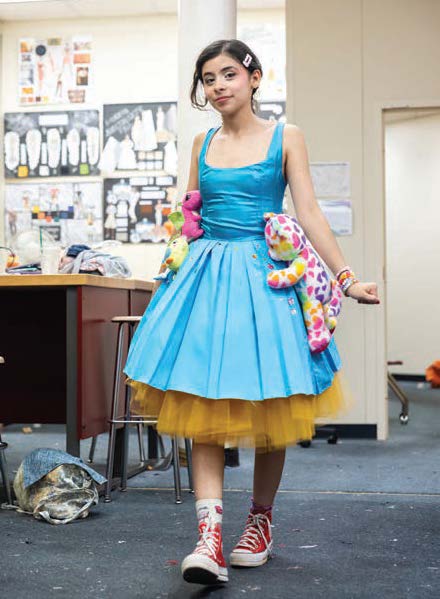
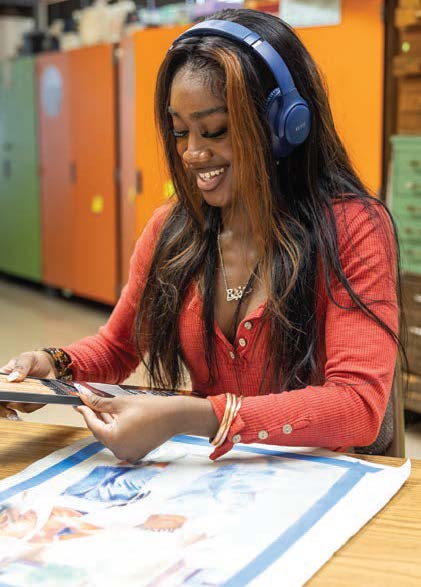
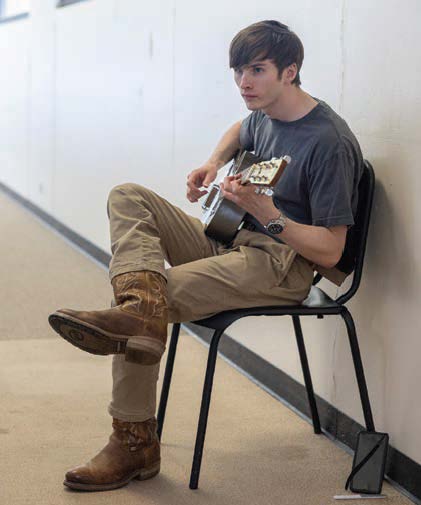
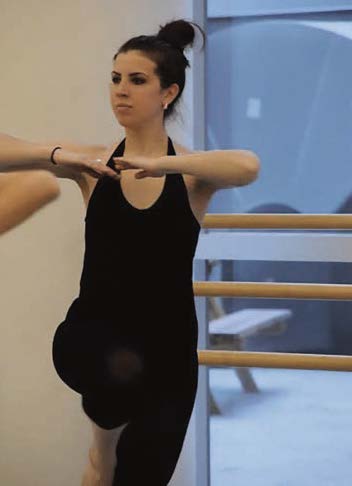
To quell that query, I made an appointment to see Principal Whitney Sluder at Weaver Academy for Performing & Visual Arts and Advanced Technology (granted it’s not your typical high school). Welcoming its first students in 1978, Weaver Academy (originally Weaver Education Center) offers an opportunity for public high schoolers to explore multiple artistic avenues and grow proficient in specialized, in-demand skills that typical schools don’t usually have room or resources to tackle.

“Generally speaking, we are an open campus downtown and I love our location,” Principal Sluder tells me as I’m ushered into her office. “We can walk everywhere. The art scene is very much present downtown, which I love. That’s grown even in the last 15 years since I was here as a student.”

Principal Sluder graciously leads me on a tour of this buzzing hive and, honestly, if I hadn’t seen it with my own eyes, I might not have believed it. I see kids running to class. No one is YouTubing on their iPhones. Every classroom we dropped in on, students are fully engaged, wide-eyed and awake, displaying an obvious yearning for learning. Did I inadvertently overlook a Red Bull concession in the lobby? Turns out, populating a learning environment with young people who actively want to be present, smaller class sizes and teachers just as enthusiastic as the students leads to wondrous results.

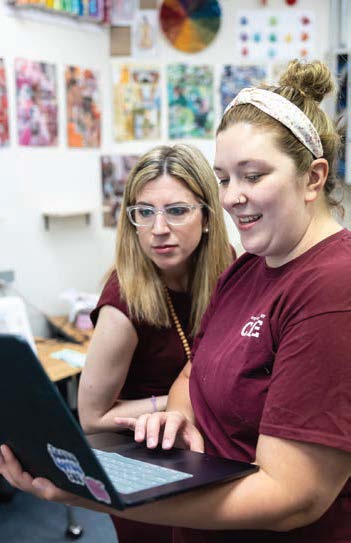
Weaver’s curriculum is divided into two distinct disciplines. PVA (Performing and Visual Arts) students attend Weaver for the entire school day, where, in addition to their chosen creative focus, they also study traditional academics like math and science. CTE (Career and Technical Education) attendees are bussed in part-time from their districted high schools to master more conventional skills like culinary arts, carpentry, drafting and diesel technology.

I’m introduced first to Masonry instructor Dean Lamperski, who is busy teaching proper methods for framing homes using cinder blocks. “It’s the biggest thing now in the industry,” he explains about an increasingly popular approach that mitigates damage caused by severe storms. He likens it to construction in Florida, “where you build houses out of block then put whatever exterior material you want on it.”

Rounding the hall, James Adkins is teaching Construction Technology and Carpentry in a cavernous workshop that opens up to the outdoors. Previously a general contractor, Adkins’ teaching toolbox is packed with practical knowhow. “I got into commercial construction, ran my own business for 15 years, then I retired. That did not go well at all.” His wife, a school counselor at the time, suggested he look into teaching “because I was lost. That was 17 years ago and I’ve loved every minute.”

Masonry, carpentry and HVAC students graduate with an NCCER (National Center for Construction Education and Research) certification. “We also do OSHA 10 certification,” Adkins points out. “So they can leave here and go into the GAP [Guilford Apprenticeship Partners] program or go straight into the workforce.” Plus, he says, a lot of his graduates head to Guilford Technical Community College or East Carolina University to study construction management. Of his charges this year, “All of mine are high flyers. Almost all of them have a plan for what they’re going to do next. These last few years, I’ve been very impressed, I could leave them alone and they’ll just keep on working.”

Each year Adkins’ students assemble two tiny houses, one for Tiny House Greensboro and another, funded by GCS CTE, is assembled atop a trailer. These projects involve substantial collaboration between other Weaver curricula. For instance, “Drafting is involved in the design,” Adkins says. “Our trailer is built by Kevin Crutchfield’s Diesel Technology class. It goes over to Collision Repair, where they’ll paint it, and then we frame the house upon it. Heating and Air will do the HVAC units.”

“We used to build an entire house,” Principal Sluder explains as we walk further. “We haven’t done that for quite some time. It’s hard to move a large house — that takes a lot of time and permits. The kids get excited about the tiny houses because everywhere you turn, there’s a TV show about it or they see them in their communities.” Internships over the summer between 11th and 12th grade are made available so that when Weaver students graduate, they can enter a high demand field at a greater rate of pay, thanks to certifications and years of experience already behind them.

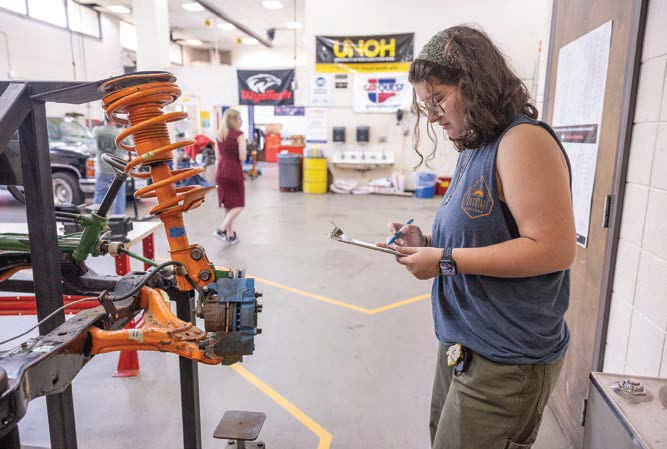
Traversing the hallways, Principal Sluder greets each passing student by name, stopping to ask how studies are going before we enter another enormous workspace, this one overseen by Ray Dove. Dove has been teaching Automotive Repair at Weaver for almost two decades. His domain consists of a fully equipped vehicular maintenance facility spilling out onto a garden-sized salvage yard with cars and trucks in various degrees of disassembly.

“We’ve got some cars sitting out here now that, when I’m finished with the instruction,” Dove explains, “and we’ve kind of worn them out, I’ll give them to Mr. Del Vecchio so he can use them in Collision Repair, taking doors off or maybe doing window glass installation.” The automotive program at Weaver is ASE Education Foundation accredited, and these students, too, finish their education earning multiple certifications.

In what serves as an occasional cafeteria, Chef Marion Osborne teaches Culinary Arts and Hospitality in the Guilford County School System’s only fully equipped commercial kitchen for students. After college, Osborne began working in restaurants and hotels with an eye towards becoming a chef, deciding instead that what he really wanted to do was to teach. Chalking blackboards as a Language Arts instructor during the day, he says, “I went to culinary school at night then went back to working in restaurants. Then, through a fluke, this job opened up and I got very lucky.” That was 17 years ago. “There’s not another school I would teach in.”

Osborne grew up in a small coal-mining town in Southwestern Virginia, where, he says, “I was cooking all the time.” His first restaurant position was as a pastry chef “and I got hooked. I worked at the Ritz-Carlton Hotel in Atlanta with one of the greatest pastry chefs in the world, Jacques Torres.” Here at Weaver, his pupils are baking and broiling for three rigorous hours. “It’s a program designed to train people to work in the restaurant industry — it’s commercial cooking.” Culinary grads can transition to a fine-dining establishment, but, Osborne notes, the more motivated “will go to either Guilford Tech, Johnson & Wales University or the Culinary Institute of America. We’ve had students go to all three because they want that associate’s degree. It sets them up for more success.”

Located above Weaver’s circular lobby, PVA students are abuzz in the theater preparing for the upcoming spring musical, The Prom, adjusting lighting, rehearsing dance numbers and testing digital backdrops where graphics will serve as the set, no need for canvas-and-paint mise-en-scènes.


Growing up in Pennsylvania, Theater department head Keith Taylor maintained a lifelong desire to mentor. “I acted in high school and in college,” he says. “That’s where I caught ‘the bug,’ but I always knew I wanted to work with students.” He taught theater elsewhere for 20 years before his son, who was attending UNCG’s Theatre Education program, steered him towards Weaver. That was 18 years ago. “I love it here. I tell people there’s no place like it really.”

PVA applicants face a more rigorous road to acceptance as opposed to CTE hopefuls, who merely sign up for courses at their districted schools.

“We have a three-part audition,” Taylor explains about sliding into a theater-side slot. “They come with a memorized monologue to show us what they can do.” That is followed by a quasi-cold reading with unfamiliar dialogue. “We call it a lukewarm reading because we send them out of the room with a script and one of our current students. So they get to practice and play with it a little bit.” When applicants return to the room, he quips, “Then I just mess with them. I’m like, ‘Do it like it’s the best day of your life.’ ‘Now do the script like it’s the worst day your life.’ We see if they’ll take direction, make choices and take chances.” The third hurdle is an interview. “We just talk about why you want to be at Weaver and what your life goals are and how do you see theater fitting into it. So it’s a long day.” Many arrive already experienced in local productions. “So we get a lot of kids that come in and have some chops and kind of know what they’re doing. And a lot of them with beautiful singing voices, too. I’m blown away.”

The skills these drama students acquire have practical applications across a number of more conventional disciplines. Carpentry, painting, event sound and lights, front of house, ticket sales, audio recording, and video editing are de rigueur. “When COVID hit, so many folks left the business, especially in tech,” Taylor says. “We always tell our kids you can get jobs in tech, and a lot of students find real jobs in construction. If you can build scenery, they’re hungry for you.”

Over almost two decades, Taylor has witnessed his students attain success in the business. Isaac Powell comes to mind. “He was Tony in West Side Story on Broadway and he’s done a lot of HBO, Netflix. He was in American Horror Story. Grayson Frazier works for Saturday Night Live in hair and makeup and did Aladdin.” Jonathan Cobrda wowed audiences in Frankenstein: A New Musical off-Broadway.

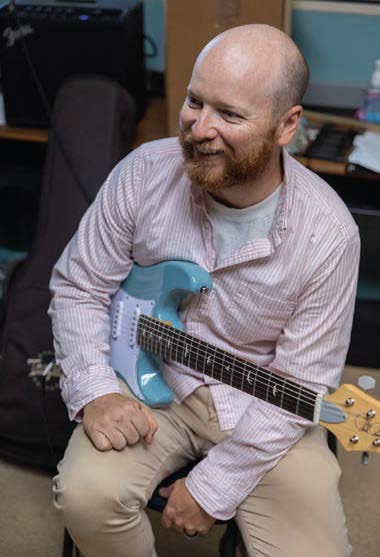
Howie Ledford teaches one of only four music production programs in the state at Weaver. A 2012 grad, sound designer Matt Yocum just this year won his second Grammy (for the Kendrick Lamar Not Like Us video) and scored a second Golden Reel Award. In 2024, he took home an Emmy for Best Sound Editing on HBO’s The Last of Us.

Music alumni Smith Carlson is a Los Angeles based Grammy-winning, multiple platinum-selling songwriter, producer and music engineer known for his work with Lil Jon, Beyoncé and Taylor Swift. “He’s constantly asking, ‘What do you need? What can I give you equipment-wise, money?’” Principal Sluder declares. “We have two Grammy winners, an Emmy winner and a Tony winner. So all we need is an Oscar and we have an EGOT. We’re very proud of that. Students who leave here really do attribute much of their success to their high school experiences and the opportunities they have at a place like this.”

An airy, mirrored rehearsal studio is where Donna Brotherton, conductor of the award-winning Weaver Academy Chorale, leads her young vocalizers in a rendition of “John the Revelator.” Her bona fides are a mile long, including a master’s degree in Music Education. She’s been at Weaver since 2005.

Brotherton’s love of music began as a toddler in Fairfax, Va. “We had a piano and my parents showed me how to play and it just went on from there. Piano lessons, clarinet lessons, violin lessons, voice lessons, singing in shows, in operas, theater classes, everything.” During her high school days, she was first-chair bass clarinet for Virginia’s All-State Band for two years. “Teaching has turned out to be a complete delight in my life, I love it so much.” Seems to be a common thread at Weaver. That and loyalty to purpose.

Last summer, the Weaver Chorale was selected by WorldStrides to be a part of its National Youth Choir for a concert at Carnegie Hall. In addition to being part of that grouping, the Chorale was asked to return to Carnegie Hall to perform a 15-minute solo set of songs the students and teacher selected and prepared. “It was amazing. The kids were ecstatic,” Brotherton says. For most vocalists, that experience is an unattainable dream. “We got to see a Broadway show. We got to do a workshop with one of the musical directors of Wicked. And then our own special solo performance. It was absolutely thrilling — they were in tears.”


“I’ve had a lot of really successful students over the years,” Brotherton says about Weaver’s warblers and tech whizzes. “It’s an honor, and students know about what our graduates are doing and they want to do that, too. It’s a joy every day,” she insists. “I would do this job if they didn’t pay me.” (Given the current trajectory of education funding, be careful what you wish for.)

Sluder herself is an alumni of Weaver’s dance program. “It’s a unique perspective being an administrator here,” says Prinicipal Sluder. Her title was preceded by “Vice” until 2023, and, before that, she was the academy’s dance instructor. “It’s a humbling opportunity every day when I walk through the doors that I don’t take lightly. It really is a pleasure to serve our students and families on a daily basis in a place that really built me.” In moments when she feels overwhelmed by admin distractions, she comes back to her why: “I know what brings me joy and it’s the students.” She may venture into the dance studio to join in a routine or drop in on Brotherton’s class. “She’ll say, ‘OK, we’re going to stop practicing sight reading for a minute and we’re going to sing for Ms. Sluder.’ Sometimes I’ll sing with them and it’s just really special. I get rejuvenated then get right back to it.”

Long after my tour through Weaver, I think back to something Mr. Adkins offhandedly remarked when we were trekking through his carpentry cave: “It’s been challenging, but I’m thinking I’m leaving things better than I found them.” I suspect it’s more significant than that.

One of my guilty pleasures is that 1996 Tinsel Town tearjerker, Mr. Holland’s Opus. The film focuses on a recalcitrant high school music teacher with a dream to conduct the symphony he rather selfishly spent the better part of his adult life composing. In the end, the titular character, portrayed by Richard Dreyfus, finally figures out what teaching is all about, but only after several decades worth of former students surreptitiously take the stage, instruments at the ready to lift his notes above the sheet. He should have realized far earlier that an educator’s true legacy is manifested quietly inside those impressionable creative cortexes he’s helped cultivate, carefully or unconsciously, by way of an enthusiastic commitment to passing along knowledge and wisdom.

On a daily basis, opuses are writ, note-by-note, by Weaver Academy’s staff and educators. Everyone I met is intently invested, personally and professionally, in best possible outcomes, whether they’re played out on the stage, under the hood of a car or by sturdy hands wielding hammers.


Life’s Funny

LIFE'S FUNNY

Great Googly Moogly

Inquiring minds want to know some weird stuff

By Maria Johnson

If there’s one thing that internet search engines can confirm about human existence, it’s this: You’re not alone in your musings, no matter how offbeat.

Which is comforting. Sorta.

I became aware of this phenomenon a few years ago, when I broke my collarbone. The treatment included wearing a cross-body sling on my right arm, and I was struck by how much of a  load that put on my left shoulder.

“I wonder how much my right arm weighs?” I thought to myself.

Pre-Google I would have had to settle for a guess. Either that, or I could have pulled out a scale and tried to weigh my arm, which would have been too painful and would have brought me back to guessing.

Well, no more.

I started typing my question into the Google machine.

“How much does a woman’s . . . ”

Autofill offered several disturbing ways to complete that search phrase, along with the relatively innocuous words “arm weigh?”

Clearly, others had wanted to know the heft of a lady-wing.

Who are these weirdos? I wondered . . . before proceeding to the answer, which is:

About 5% of her body weight.

I glanced down at my 6-pound appendage.

No wonder it felt like I was lugging around a small dumbbell. I was.

Since then, I’ve noticed that no question is so esoteric, so arcane, so flippin’ odd that other people haven’t wondered the exact same thing.

Here’s a small sampling of the questions I’ve searched in the last several months, along with a little context about why I wanted to know, and the readily available answers.

Question: Why does Amal Clooney hate George Clooney’s dye job?

Why I wanted to know: Because I’m a big fan of Guilford County native and legendary World War II-era newsman Edward R. Murrow (hello, Murrow Boulevard), and because George Clooney darkened his hair for his role in the Broadway show Good Night and Good Luck, which is about how Murrow exposed McCarthyism.

Answer: Amal hates her husband’s dye job because she believes that nothing makes a man look older than using hair coloring, which, in my humble opinion, is a double standard — and also very true.

Question: Are crows attracted to bones?

Why I wanted to know: My younger son was at a friend’s apartment recently when they discovered what appeared to be a fragment of a deer jaw lying on a cushion. Huh? The best explanation: The friend’s dog had dragged in the fragment from the balcony, where . . . a bird had dropped it. (Let’s hope.)

Answer: Yes, crows are attracted to bones and other bright objects. They have been known to leave bones as “gifts” for people they like. Or want to terrorize. That part is unclear, although another Google search confirmed that crows can hold grudges against particular humans. This  led me to wonder about something else that, apparently, other people have pondered, too.

Question: Do crows laugh at people?

Answer: “There’s no evidence to suggest they find human actions humorous.”

Tough audience. Caw-caw-caw.

Question: Why do male tegus have two reproductive organs?

Why I wanted to know: OK, stay with me for a minute. I was talking to a veterinarian-friend about the most unusual pets she has ever seen, and she mentioned tegus, which are a kind of lizard. Then she mentioned in a by-the-by way — you know, how friends do when they’re discussing lizard genitalia — that male tegus have two, um, cold-blooded thingies, which led me to make a crude joke about how I know a few guys who might want to become reptiles.

Answer: Nature loves a Plan B. Sorry, human dudes.

Question: What does Cali-sober mean?

Why I wanted to know: I heard it on a podcast, natch.

Answer: Cali-sober (short for California-sober) means swearing off all intoxicants except weed, which, if you think about it, makes sense only if you’re high.

Question: Where does the phrase “great googly moogly” come from?

Why I wanted to know: Because it’s a phrase I know, but I’m not sure how I know it.

Answer: No less an intellect than author Stephen King has wondered the same thing. He traced the phrase back to 1950s bluesman Willie Dixon. Others point out that rocker Frank Zappa used the phrase in his 1974 song “Nanook Rubs It.” And apparently Grady uttered the words on the 1970s TV show Sanford and Son in clear anticipation of the internet age way before Lamont and the rest of us “big dummies” saw what was coming.

Question: How do dryer balls work?

Why I wanted to know: In case you haven’t noticed, dryer balls — which are balls that you put in a dryer; let’s hear it for the occasional obvious answer that is also correct — are on store shelves everywhere. I’d dismissed them as a gimmick until a veteran appliance repairman recommended them as a way to increase the efficiency of a clothes dryer.

Answer: Dryer balls work by “aerating” the clothes, creating more space between laundry items as they tumble, thereby cutting down drying time. I wouldn’t have believed it, but it seems to be true. The balls also soften clothes by beating the snot out them (my words, not the words of the dryer ball industry). And as an added bonus, your dryer will sound like a collegiate drum line, which should keep the crows from leaving deer bone fragments around your house. It works out. 

Tea Leaf Astrologer

TEA LEAF ASTROLOGER

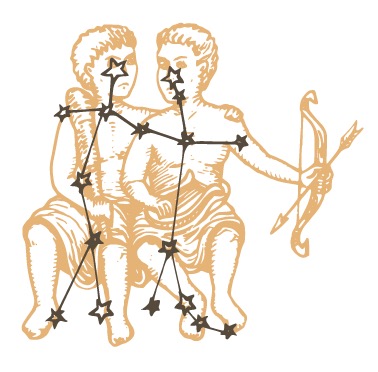
Gemini

(May 21 - June 20)

Perhaps you know that butterflies have taste receptors on their feet. But did you know they drink mud? Communicate through flight patterns and pheromones? As the social butterfly of the zodiac, you’ve learned to flit your way out of foot-in-mouth moments with charm and grace. That skill will come in handy this month. And on June 11, the full moon in Sagittarius just might rock your world with an unexpected romance.
Do try to avoid mud, flightiness and unnatural fragrances.
Read that last line again.

Tea leaf “fortunes” for the rest of you:

Cancer (June 21 – July 22)

Ignore the critics.

Leo (July 23 – August 22)

Operation Digital Detox. Capeesh?

Virgo (August 23 – September 22)

Pack an extra set of clothes.

Libra (September 23 – October 22)

It’s just not that serious.

Scorpio (October 23 – November 21)

No need to force things.

Sagittarius (November 22 – December 21)

Remember to pause before you speak.

Capricorn (December 22 – January 19)

Your song is somebody’s medicine.

Aquarius (January 20 – February 18)

Gift yourself a quiet moment.

Pisces (February 19 – March 20)

Tune into a different channel.

Aries (March 21 – April 19) 

Don’t let your ego call the shots.

Taurus (April 20 – May 20)

Write this down: baking soda and vinegar.