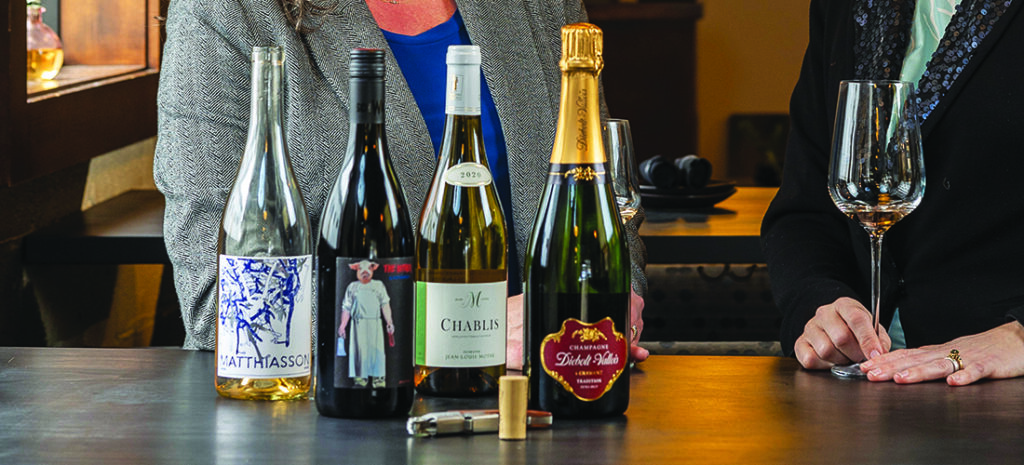
Wine Not Now?

Wine Not Now?

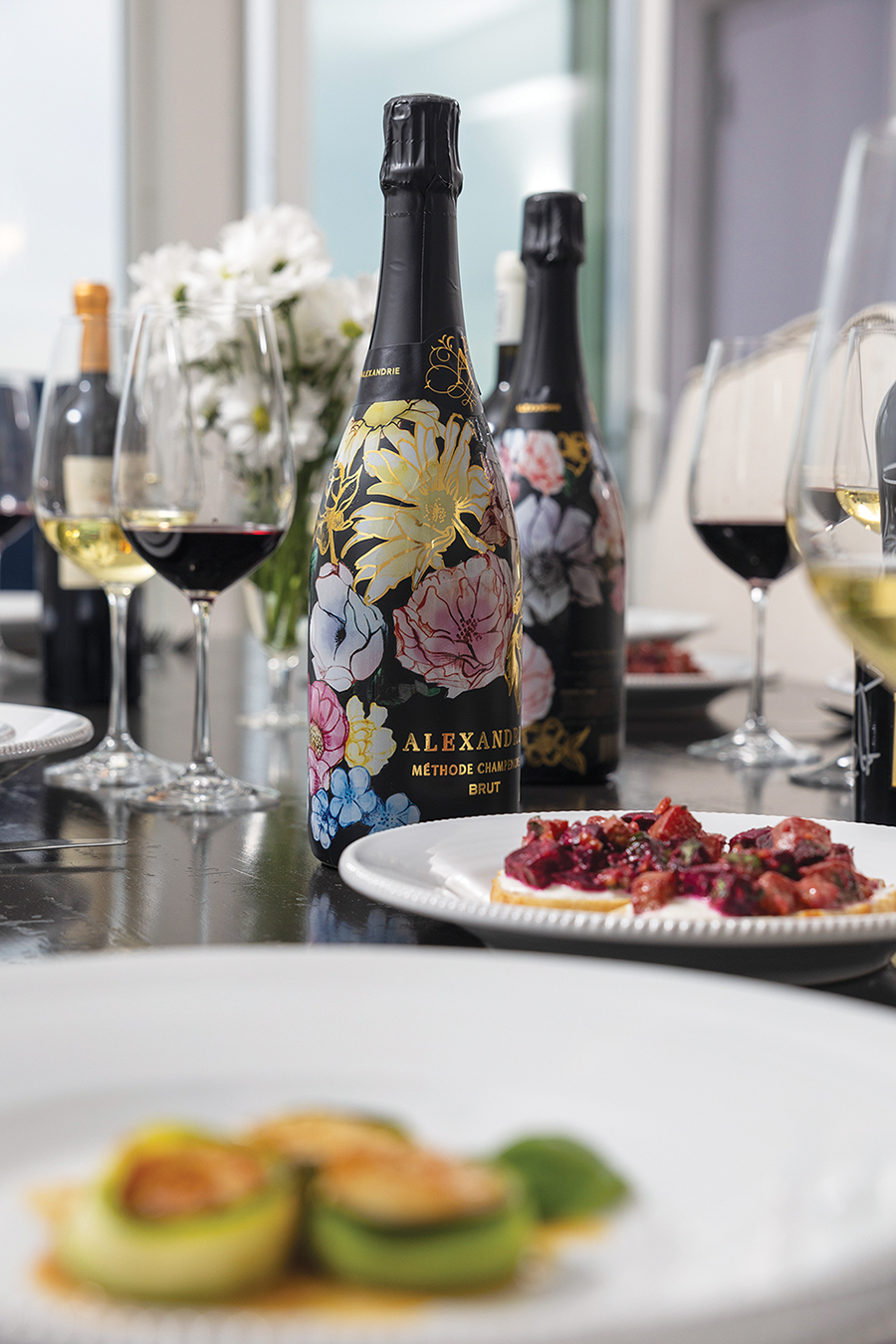
Women forge their own wine trails into the industry

By Cynthia Adams

Photographs by Bert VanderVeen

In 1987, the Center for Creative Leadership’s Ann Morrison famously wrote about a confounding and confining glass ceiling: “The glass ceiling is a barrier so subtle that it is transparent; yet so strong that it prevents women from moving up the corporate hierarchy.”

Women working in the business of wine may find its ceiling shatterproof. Historically, the wine industry was and continues to be headlined by male names.

Yet half of female drinkers prefer wine over beer and spirits, and, when it comes to the work place, more choose the wine industry over other alcoholic beverage careers. No less than the venerable Wine Spectator acknowledges the archetypal wine drinker as “dominantly female.” 

If that’s the case, why are so few women in the wine industry, either at the helm or involved at a managerial level? Instead of trying to answer that question, perhaps it’s more productive to look at what women are bringing to the wine scene that might otherwise be missing and explore what impact women are having here in the Triad and Greensboro, where certified female sommeliers outnumber males.

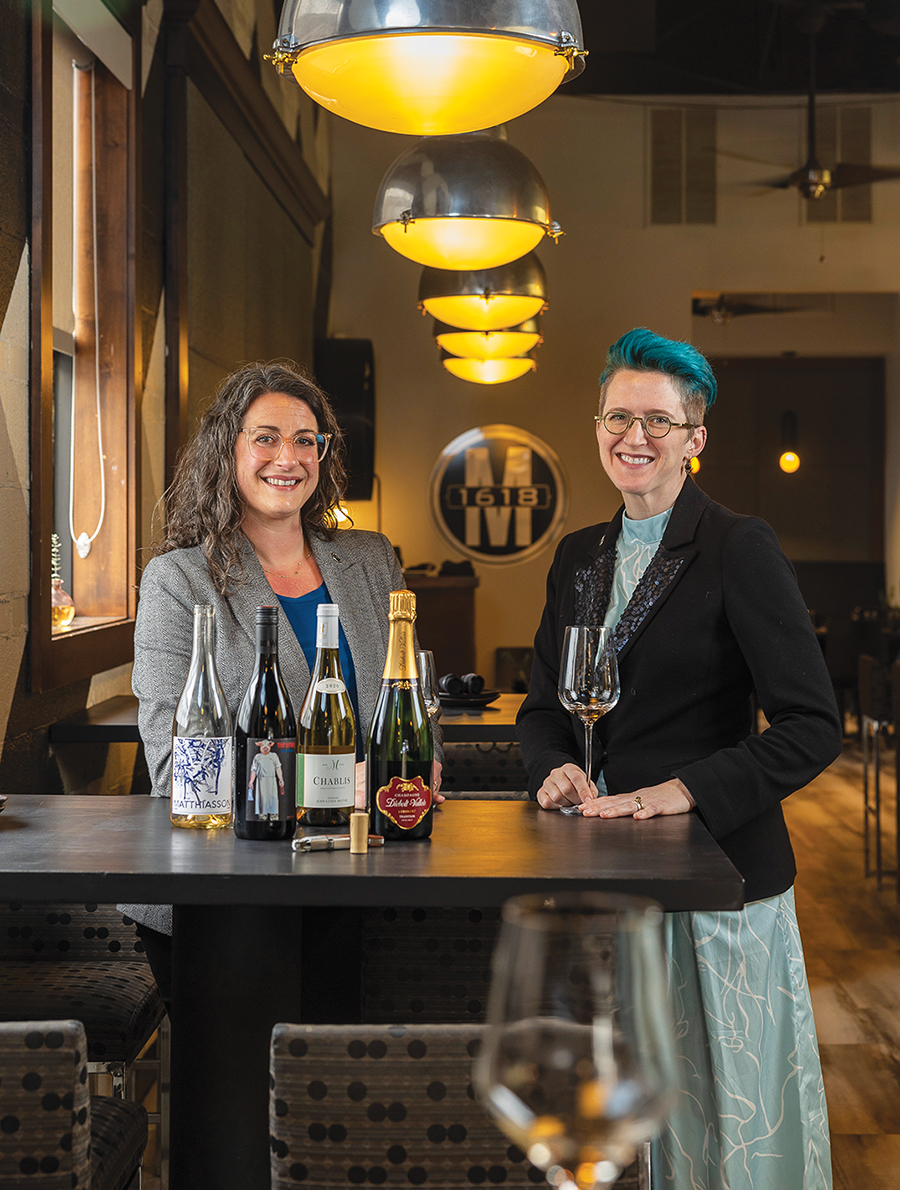
“Men have a bigger voice,” says Julia Luce, who operates The Public House, a High Point business hosting private events and wine dinners. While not a sommelier, she has forged relationships with growers and suppliers. “Women are more polite,” she says. Luce seeks opportunities in nontraditional ways, such as wine classes and pairing events she develops herself. In a word, she says wine is “social.” Rather than cultivars, something she can also talk about endlessly, Luce has focused on cultivating a wine community of her own making. 

“Wine is about gathering people together. It is all about your food, your taste, friendships. The conversation. It’s never political or hostile. When you open a bottle of wine, it is over something good. If not celebratory, it’s a discussion. If wine was a person, wine would be a diplomat.”

The Public House grew out of Luce’s previous job. 

“In 2012, I worked for a French-Canadian furniture company — they loved wines. They created a commercial kitchen in their showroom and started doing dinners,” she says. “That building is now Earl’s Landing restaurant [in High Point.]”

There, Luce learned to present wines and create wine events. “Now, here I am.”

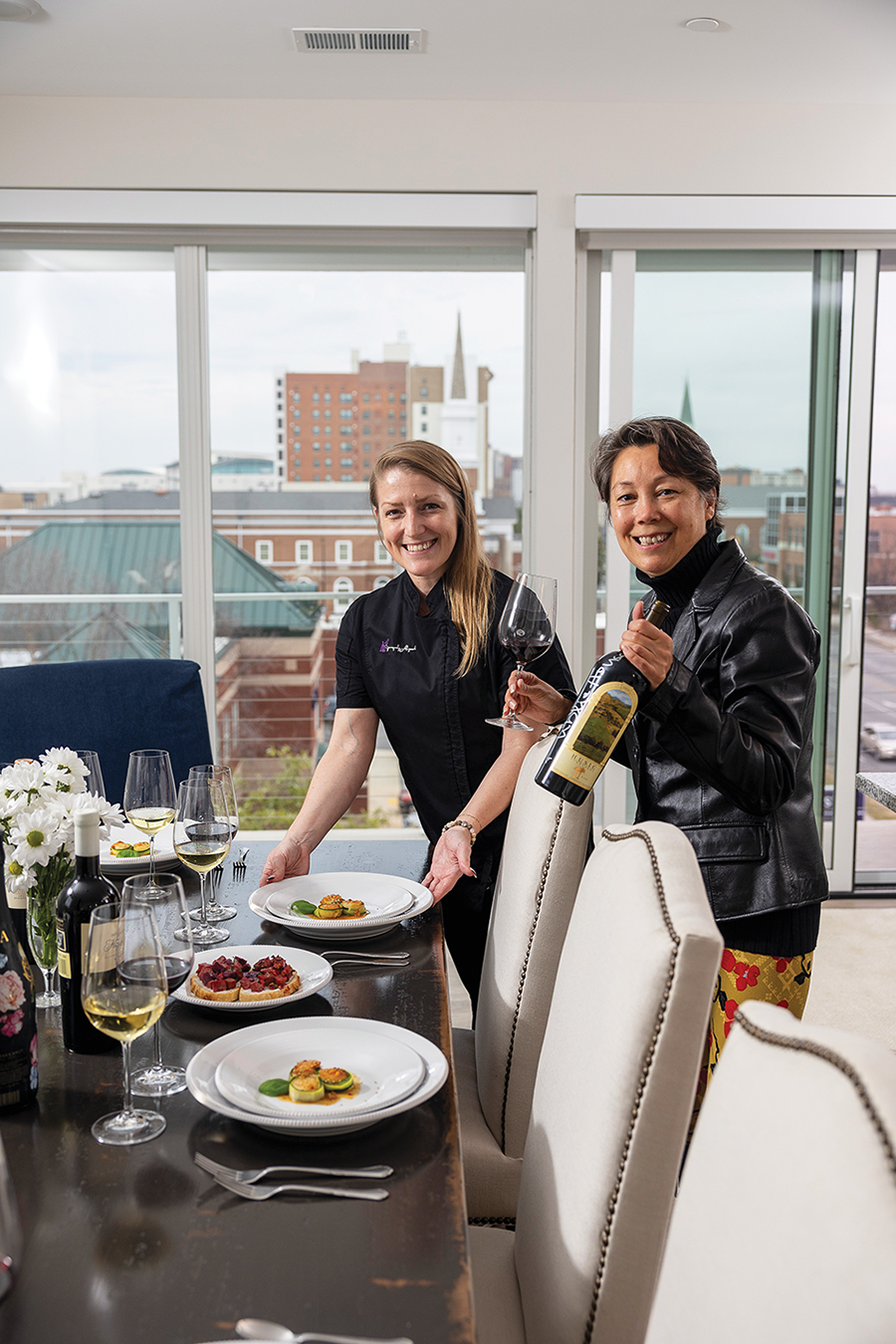
Stacey Land, vice president at 1618 Concepts, which owns 1618 West Seafood Grill and 1618 Midtown, has had a similarly circuitous route to becoming a female player in the Triad wine scene. Ascending to that role in 2020 from general manager and sommelier at 1618 Midtown, she had spent years working her way through the ranks from washing dishes, eventually becoming Greensboro’s second certified female sommelier via the Master Court of Sommeliers.

Land, who grew up in the food industry, was mentored by the first, Julia Hunt, an advanced sommelier at American Premium Beverage, formerly at Green Valley Grill, where they met.

(Certification requires candidates demonstrate advanced tasting skills and mastery of theory and service. There are various levels and attainments, one through five, with master sommelier the highest. Depending upon the source — and day — there are an estimated 273 worldwide master sommeliers and 164,000 certified sommeliers in the US. There are only a few accrediting bodies, including the famous Court of Master Sommeliers. Two other bodies, the National Wine School, and Wine & Spirit Education Trust, also certify sommeliers. The majority of working wine professionals industry wide are not actually sommeliers.)

Land joined 1618 in 2010. In 2021, she also earned a third level wine certification via the Wine & Spirit Education Trust.   

In the December 2017 issue of Seasons, Ross Howell Jr. wrote “Somm and Substance,” describing how Triad sommeliers, including Land, pursued the grueling path to certification. 

As with chefs, Land mentions, women in wine are the exception versus the rule. 

Once, Land “had dreams of being a writer and newspaper person.” Graduating from UNCG in 2004 with an English degree, she jokes, “It was like coming into the horse-and-buggy industry the year they invented cars.”

Returning to the restaurant world, Land bought into the former Grappa Grill, which soon closed in 2008.

“I had another crisis of am I in the right business?” 

Land flung herself into working full time at 1618 while prepping for — and passing — sommelier exams. “All of my certifications came within the last 12–13 years when working at [1618] West.” 

Left: Jennifer Talton & Julia Luce

She prepares wine lists and oversees the total guest experience, and fondly mentions 1618’s “Book Club,” their tongue-in-cheek monthly wine club, as a fun way to share wine knowledge. But professionally, she pays her knowledge forward by mentoring female and male colleagues seeking certification, like Hunt once did for her.

1618 colleague Evans Mack also grew up entrenched in the world of food, beverages and service. Now she is the restaurant’s second female sommelier. Land mentions her friend Jake Asaf, owner of Greensboro’s Lewis & Elm restaurant and Rioja! Wine Bar, who qualified as a sommelier at the same time she did.

Meanwhile, Luce has resumed monthly wine dinners halted by COVID. “Ju Ju’s Supper Club” is the latest venture offshoot of her business, partnering with Painted Plate Catering. (They restarted in February.)    

Wine dinners create a chain of opportunities for minorities working in the wine industry, Luce says, citing vineyard owners, an organic chef named Jennifer Talton, and a female wine importer. Luce maintains an office in Greensboro’s Fisher Park, decorated with plates signed by vineyard owners

“When you drink wine to enjoy, savor and pair it . . . that, to me, is to live,” says Luce. After all, she adds, “the French are living a long, healthy life because they do it — drink wine — with love and friendship.”

There are a number of other women earning a living in wine service in the Triad. In downtown Winston-Salem, Taylor Beal is one of three sommeliers at Katharine’s Bar & Brasserie, which opened in 2016. “I am the only female.” She earned her level one certification in 2019 through the Master Court, slowed by the pandemic. “I had COVID, which messed up my smell. I’m studying for level three.” 

Then there are wine shops and tasting rooms, such as longtime mainstay Zeto wine and specialty shop in downtown Greensboro, owned by Despina Demetriades and Su Peterson. 

Founded in 1999, Zeto has carved a niche with grapes that “are grown and produced mostly without chemicals or pesticides,” said Peterson in a televised interview. The shop features a Vinomatic, an automatic wine machine dispensing nearly 30 bottles for sampling, convenient for Zeto’s ongoing wine tastings and classes.

At least two other Greensboro tasting rooms have female owners. Alison Breen of the Tasting Room, and J’mihyia and Paris Whitsett of Marjae’s Wine Bar.

Sometimes, key players in the business of wine take lucrative, yet less visible, roles. “A team of women at Johnson Brothers wine distributors has worked together as wine reps since it was bought,” Land says. 

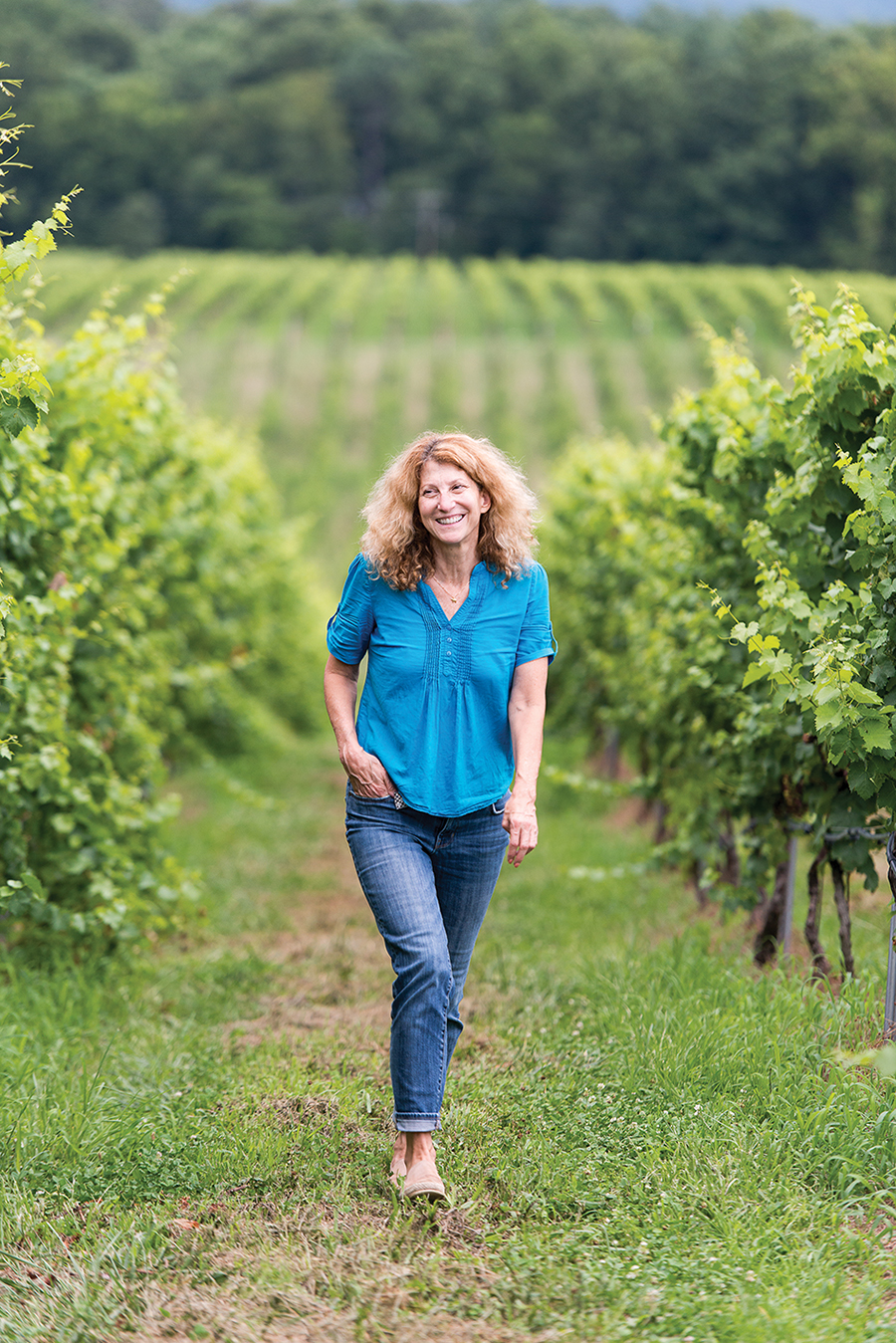
Left: Barbara Raffaldini

Middle: Evans Mack & Stacey Land

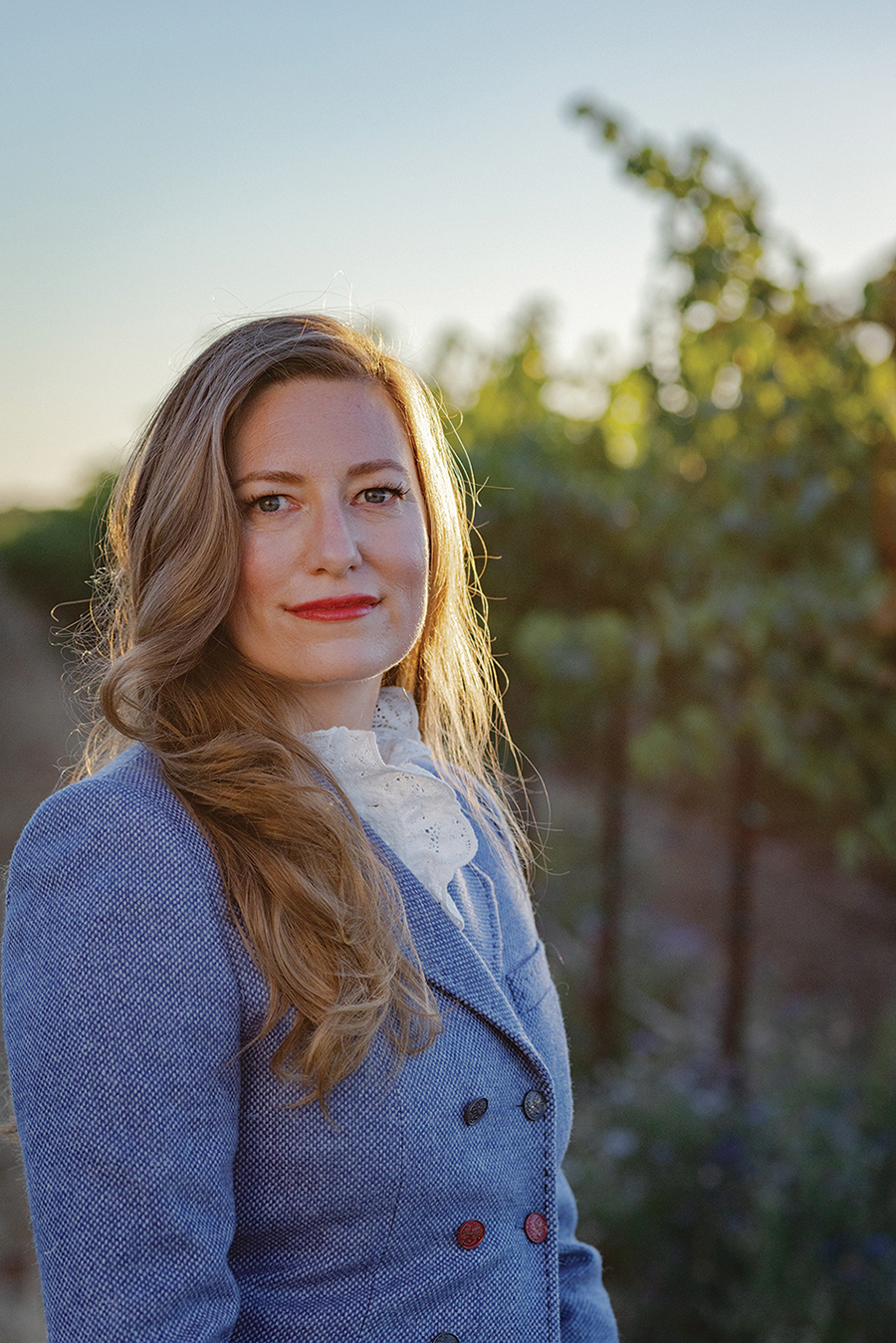
Right: Dr. Stephanie Bolton


Although approximately 200 wineries call North Carolina home, few statistics reveal how many women are at the helm or are involved on a managerial level. One is in the N.C. foothills at Raffaldini Vineyards, where Barbara Raffaldini, splits her life between running Raffaldini and a legal career.

In 2020, sister publication Seasons cover story featured Barbara, who co-owns the winery with Jay, her brother. “Fortune Favors the Bold,” discussed her dual careers as a winery owner and partner for an Illinois law firm. 

There remains an elephant in the tasting room. Something Land mentions over a glass of rosé at 1618’s wine bar in Midtown: whether women can hold their own in such a male-centric milieu.

Land worries that women, as an industry minority, struggle with imposter syndrome. She drops her voice. “I’ve been in this business for 20 plus years; if I don’t know how to do this, who does? Have I been faking this? No.”

The comment reflects what author Valerie Young presents in her research. Highly capable and accomplished women, Young writes, may wrestle with that, particularly in male-dominated fields. 

“You can have all the confidence in the world and still be reluctant to self-promote out of a steadfast belief that a person’s work should speak for itself. It doesn’t.”

To Young’s point, minorities in certain industries may also face unfounded criticism.

Quietly, Land says, “I think it’s in jobs that are male-dominated for so long. Think of women chefs. If you’re a professional woman in an industry that has been male dominated for so long . . . you feel that imposter syndrome.”

Worse, others may ask, “‘How did that woman get to the top of that field?’” 

That especially stings. Land’s father, who graduated from Napa’s Culinary Institute of America and remained in the restaurant field until his retirement, begged her not to follow him in the restaurant business. Now, she says proudly, he will call and ask her advice about wines.

Luce agrees that women struggle for a seat at the bar. “We are, industry wide, underrepresented.” 

A few years ago, I met Karen McNeil, author of The Wine Bible and a leading light in the wine world. She says, “The road up the mountain is long and sometimes confusing.”

Lesser known are women working in viticulture, the cultivation of grapes. One, Dr. Stephanie Bolton, is leading the way concerning safer and sustainable practices for growers from the rural heart of zinfandel country in Lodi, CA. 

A North Carolina native who once studied chemistry as an undergraduate at Wake Forest University, Bolton was recognized last August in Wine Enthusiast magazine’s “Future Forty” for her achievements in viticulture through her research and educational work at the Lodi Winegrape Commission. 

Now, her leadership and global initiatives with domestic and international wine growers extends as far as Israel, earning industry distinction.

“I can tell you that in general we are seeing more women get involved on the viticulture side of things, says Bolton. “It’s nice to have both the male and female perspectives in the wine industry positions — we all benefit from that.”

Bolton adds, “I can’t speak for all women, but I prefer wine as a drink of choice over beer and liquor because it transcends me to a time — the vintage — and place — the region it is from — while offering art, romance, history, education and elevating my dinner into a true feast for the senses. Even better when the wine was produced by a friend and I get to feel that special connection, too.”

Connections are key, as Luce suggests. Raise a glass while raising support, too, promoting fellow minorities who are gaining entrée to a once closed industry. 

Outliers, perhaps. Regardless, they are chipping away at the glass ceiling, proving it isn’t impervious after all.  OH

Spirits, Beer and Wine:

Chardonnay in the Brewery?

Two years ago, Fodor’s Travel writer Alex Temblador asked, “Why are there so few women in the spirits, beer and wine business?” 

The Distillers Association of North Carolina reports at present approximately 22 of 90 distilleries in our state are “owned, co-owned or managed by women.”

Meantime, women are forging inroads into brewery’s upper management. One example is Renee L’Heureux, who leads operations at Red Oak Brewery in Whitsett, N.C., including its Lager Haus and Biergarten.

Here, too, is an interesting acknowledgement of women as consumers of wine.  Although the brewery’s German-style beers have a dedicated following, their tasting room also offers a carefully curated wine list. During a week in mid-January, she says, their team spent hours reviewing wine offerings.

Why?

L’Heureux points out, “The industry standard is that 85 percent of wine drinkers at breweries are women.”

Why not offer a decent list, she asks?

Red Oak’s wine list is thoroughly considered, a pragmatic choice, she explains.

Wandering Billy

Wandering Billy

Spotlight on Juan Fernandez

Remembering an icon of the Greensboro theater scene and beyond

By Billy Ingram

“Theatre is a series of insurmountable obstacles on the road to imminent disaster.”   — Tom Stoppard

I’m not remotely the right person to pen this. We weren’t close friends. I never met his wife, Lana, and hadn’t seen the guy in 50 years. But when I heard that former Page High School classmate Juan Fernandez (class of ’74, best ever!) passed away, I couldn’t let that tiptoe by unnoticed.

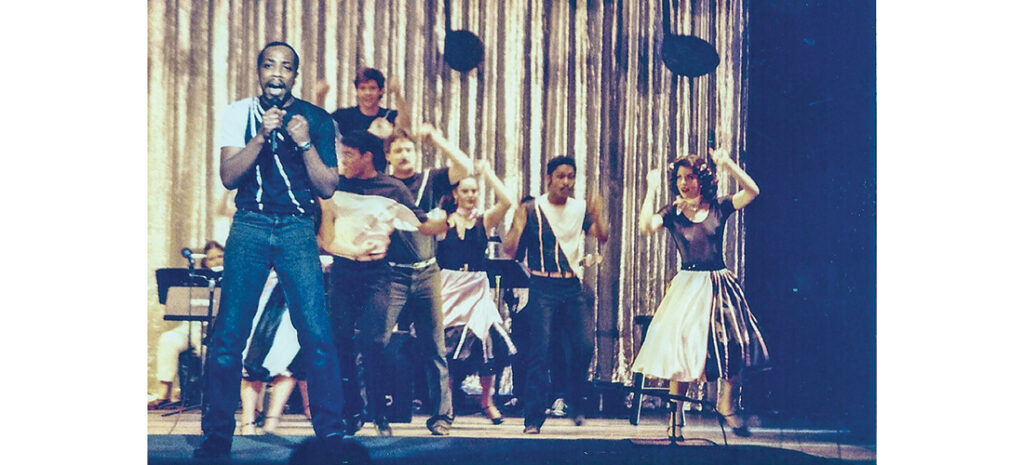
Let’s wayback to the 1972–73 school year, significant in part because the Vietnam War ended, 18-year-olds gained the right to vote, Bob Fosse’s Pippin debuted on Broadway and McDonald’s started serving breakfast (except on Sundays). It was also the year Page High junior Juan Fernandez, whose family moved here from Connecticut just a year earlier, unknowingly, but with an air of inevitability, began his journey as the first Black actor in Greensboro to be consistently cast in leading roles in both amateur and professional productions.

In 1973, Juan and I were both cast in Li’l Abner, a big, splashy musical from Broadway’s Golden Age, featuring one of the funniest scripts (by Norman Panama and Melvin Frank) and wittiest scores (Gene De Paul with lyrics by the immortal Johnny Mercer) the Great White Way ever mounted.

At Page, as directed and choreographed by Louis Hrabovsky and Frank Holder, the show featured a 22-piece orchestra recruited from the Greensboro Symphony, costumes sewn by UNCG’s theater department, and over 50 student hoofers and belters crowding the stage. This lavish but innocently sexy, fully integrated production of Li’l Abner was an unusual theatrical manifestation for a high school at that time. More importantly, during those weeks and weeks of rehearsals in the role of Marryin’ Sam, Juan Fernandez morphed from gawky teen into a dynamic performer possessing an unmistakeable brilliance comparable to any of the mid-’70s Broadway superstars I sat in awe of. And I saw ’em all, baby. Juan absolutely demolished that Li’l Abner audience on opening night.

And 15-year-old me hated him for it!

Li’l Abner was a genuine hit, largely due to Fernandez’s infectious performance. Standing ovations, sold-out crowds every night and, in the first and only instance I’m aware of, the show was held over for an additional weekend, then booked into War Memorial Auditorium for a short run. After Abner, Fernandez dazzled local theatergoers in musical productions of Showboat, Shenandoah, Godspell and Flower Drum Song, to name but a few. His range was astonishing. Livestock Players Musical Theatre, Greensboro Youtheatre, The Broach, Carolina Theatre, Barn Dinner Theatre . . . there wasn’t a stage Juan Fernandez couldn’t rob of every last laugh or teardrop, often inhabiting pivotal roles previously portrayed primarily — if not exclusively — by white actors.

“I met Juan when he was 16 and auditioned for Sweet Charity,” says Carole Lindsey-Potter, choreographer and director for Livestock Players during the years Juan Fernandez was active there. “He got the role of Daddy Brubeck, which had the best song in the show, ‘The Rhythm of Life,’ and he brought the house down.” Lindsey-Potter recalls being the first North Carolina theater group to get rights to Pippin, a musical that saw Fernandez cast as Leading Player in the Livestock Players’ 1974 production —  “his most memorable performance.”  He was what they call a triple-threat performer: “He was a wonderfully talented actor, singer and a natural dancer. Barbara Britton cast Juan as The King in The King and I in 1976. This was long before nontraditional casting here.”

Actor-director and Page alumni Charlie Hensley notes that Fernandez “was a terrific performer and a wonderful man, always at ease on stage.” What he recalls most is Ferndandez’s star turn as Daddy Brubeck in Sweet Charity. “He went on to perform ‘The Rhythm of Life’ hundreds of times after that, all over the world. He was also amazing as the lead in The King and I with Shannon Cochran.”

Obie- and Theatre World Award-winning star of stage and screen Shannon Cochran (see my April 2023 column) recalls that staging fondly. “When Juan and I did The King and I together, I think he was very conscious of the essential misogyny written into his role and went out of his way to be gallant and attentive to me. I couldn’t move easily in a hoop skirt, but he was always there with a pad or pillow for me to sit on during breaks, always helped me off the floor — our lowly heads weren’t supposed to be higher than his! — and, additionally, he was a divine dance partner! ‘Shall We Dance’ was a dizzying, thrilling ride in his arms. Such a class act with a genuinely strong stage presence.”

Greensboro’s theater scene has spawned a multitude of African-American Broadway stars — Deon’te Goodman (Hamilton), Avilon Trust Tate (The Wiz), Chris Chalk (Fences), J. Alphonse Nicholson (A Soldier’s Play)  — who surely couldn’t have known that Juan Fernandez was first to break the color barrier onstage locally. Universally loved. Universally respected.

“I worked with him once at The Broach. He was such a nice guy and good actor,” director Michael Lilly says. “I had tried to get in touch with him about a year ago in Wilmington about a project but never got a response. Then someone said he had moved to Costa Rica. I recall hearing he was not well.” Charlie Hensley remarks how, “We usually touched base a couple of times a year, I remember thinking on his birthday recently that he’d been quiet for a while.”

After high school I hadn’t much of an opportunity to interact with Juan Fernandez, having gone away to college, summers spent out of state or touring before relocating to Los Angeles in 1978. Happily, he and I connected on Facebook before his passing last year, allowing me to finally tell him how envious I was of his ability to command the audience in Li’l Abner.

True, Juan Fernandez strut from life’s stage into the wings far too soon, but it’s the actor’s lot to leave the audience wanting more. One wonders if he ever considered or was even aware of his legacy, the trail he blazed. Unlike almost every other artistic pursuit, after the curtain falls and stage lights go dark, theater leaves behind little more than a rock skipping across the surface of a pond. In the case of Juan Fernandez, the ripples he created will reverberate well into the future, lifting and inspiring not only those he came in contact with, but also performers who, decades later, unwittingly followed his lead to achieve a level of stardom that generally skirts the first player the spotlight shines upon.  OH

Make no mistake, Billy Ingram was a showstopper as Evil Eye Fleagle in Li’l Abner, but it’s worth noting that Juan Fernandez wasn’t anywhere onstage during those scenes.

Birdwatch

Birdwatch

An Unlikely Visitor

The rare sight of a western tanager

By Susan Campbell

In the Sandhills and beyond, western wanderers can occasionally be found soaring overhead, perched in the treetops or even at a feeder. Birds have wings and so they can (and do) end up anywhere. One of the most exciting parts of watching birds is that you never know who might show up.

Some birds are quite prone to vagrancy. Whether this condition is a result of wandering, getting lost or blown off course, we cannot usually say. Species that are long-distance migrants are, not surprisingly, at risk for mishaps en route. Though studied a great deal, very little about migration is understood. The fact is birds do migrate and most individuals are successful at it, allowing their genes to be passed on to the next generation.

This is not to say that those birds that end up off track are bound to stay lost forever or perish as a result of a wrong turn along the way. In fact, it’s believed that these out-of-place individuals, in some cases, represent the beginning of a range expansion for their species. Records have been kept long enough that we have documented bird populations moving into new areas of the United States.

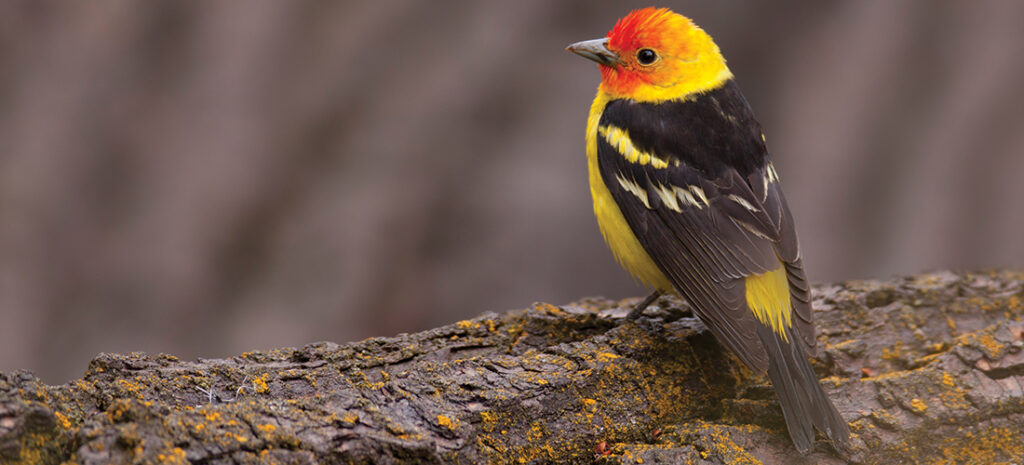
A species that has been observed in the winter more and more frequently, well outside of its normal range, is the western tanager. This small but colorful songbird is found in the warmer months throughout most of the western U.S. in a variety of wooded habitats. They head for Mexico and Central America come fall. However, in the early ’90s, one showed up at a feeder in Wilmington and stayed — not just one winter but returned for two more. It fed on suet, shelled seeds and fruit. Since then, more than a dozen other individuals have been documented along the southern coast of North Carolina. What does this mean? It is probably too soon to tell. But bird lovers in our southeastern counties are keeping their eyes out for westerns each year.

It has been more than a decade since the first western tanager appeared in the Sandhills. But this winter, a male western tanager once again turned up in a Pinehurst yard. The hosts, being bird people, realized they had something out of the ordinary at their feeders. It was tricky seeing the necessary field marks on him given his secretive nature. All tanagers molt twice a year and happen to be drab from early fall through early spring, so identification is a bit tricky when these birds do appear in the East. Unlike our more familiar summer and scarlet tanagers, westerns have noticeable barring on their wings and are brighter yellow on their underparts. 

Interestingly, there was also a western tanager in Apex (outside Raleigh) this season. It, too, was a male, but he arrived with lots of orange and red on his head and face already — clearly an adult bird. Like the Pinehurst tanager he was rather shy at first, but within a few weeks, settled in and began strutting his stuff several times a day, enjoying mealworms and bits of fruit from the big platform feeder.

Though sightings of western tanagers are rare, it pays to be prepared with binoculars and a good field guide should something “odd” show up. The unusual is always possible, whether you are visiting a large wildlife refuge, local park, a McDonald’s parking lot or even in your own backyard.  OH

Susan Campbell would love to hear from you. Feel free to send questions or wildlife observations to susan@ncaves.com.

Poem March 2024

Poem March 2024

Julian

In christening gown and bonnet,

he is white and stoic as the moon,

unflinching as the sun burns

through yellow puffs of pine

pollen gathered at his crown

while I pour onto his forehead

from a tiny blue Chinese rice cup

holy water blessed

by John Paul II himself

and say, “I baptize you, Julian Joseph,

in the name of the Father, and of the Son,

and of the Holy Spirit.”

Nor does he stir when the monarchs

and swallowtails,

in ecclesiastical vestments,

lift from the purple brushes

of the butterfly bush

and light upon him.

    — Joseph Bathanti

Joseph Bathanti was the North Carolina poet laureate from 2012-2014. He will be inducted into the North Carolina Literary Hall of Fame in October.

Home Grown

Home Grown

You Can Lead a Horse to TV . . .

The Captain, Trigger and me

By Cynthia Adams

Watching my father lead Trigger into the den one sunny morning to watch Captain Kangaroo, he proves a point. The pony is as gentle as my horse-loving Dad claims. And Trigger’s taste in TV is spot-on.

This is a moment of undiluted magic.

Because I am every bit the scaredy cat my sister insisted I was, Trigger terrifies me,  though Dad argued he’s a fantastic pony. My puny 5-year-old self is certain that, like other horses in Westerns, he cunningly waits to rear up and buck me off. 

Dad, laughs, knowing Trigger isn’t itching to buck me; Trigger simply has an itch. 

“He didn’t buck you, Cindy girl,” he insists. “Trigger is just twitching at a fly.”

But I grow ever more anxious about riding.

So one Saturday, inspiration strikes Dad. His right brow rises up, a tell-tale sign when he has such moments, and he heads to the barn. With a few clicks of the tongue and some sugar cubes, he returns, leading the pony through the back door straight into the den where I sit munching Alpha-Bits. He recruits my older sister, Sharon, to keep lookout for Mama.

It is so masterful, Trigger doesn’t even jostle the Progressive Farmer magazines on the coffee table as my father leads him. 

Stopping before the boxy RCA television, he commands Trigger to lie down on the braided rug. I giggle excitedly as Trigger obeys. 

After a few giddy moments watching the Captain, Grandfather Clock and Mr. Green Jeans with Trigger, my sister hisses a warning. Pulling on my Keds, I hastily follow them outside. 

Dad saddles Trigger and hauls me up. Then Trigger flicks at a fly.

I fall right off. 

I lack something essential in the horsewoman department. Pluck? Certainly. Assurance? That, too. Also, weight and balance.

Dad swears me and my sister to secrecy about the TV session, and Mama is none the wiser. 

But the episode has done its work, solidifying my desire to somehow become a cowgirl like Sharon. I dream of becoming bigger and sturdier. One worthy of such an erudite pony as Trigger, a superior pony who appreciates the Captain like I do. Unlike my sister and dad, I remain wary of life on the range. 

Sharon, with her sassy cowgirl outfit, hat, red boots and holster, fears nothing. Maybe she’s not a gun slinger, but she does break her shoulder blade defending me from the neighborhood bully. 

So I study cowgirl arts, like fire-making, perfected in my bedroom closet, where I strike match after match. Though I never catch my clothes ablaze I am successful in building a roaring campfire — directly outside our front door. 

After serious punishments are meted, I abandon fire making and attempt to make a name for myself as a magician, ordering a magic set from Bazooka bubble gum. I envision entertaining cowgirls and cowboys exhausted from fending off desperados on the range. 

The main component in the minuscule magic set — lifeless Mexican jumping beans that looked suspiciously like dried black beans — are a huge disappointment. 

Even Trigger looks puzzled by the inert beans.

Ditto for the desiccated sea monkeys I order. Magician David Copperfield reports he was similarly inspired by the Captain, too. But the magic act never materializes. Despite my best efforts, the only thing I am able to vanish is my dream of being a magician.

Trigger proves a fine listener as my ambitions unspool and die. The Captain teaches patience, so feeding my confessor carrots and apples, I cluck my tongue like my dad when visiting him in the pasture and barn. Trigger regards me with softly nonjudgmental eyes. 

Still, when he flicks, I bail.

Slowly understanding it is neither his fault nor mine, I scramble up to try again. He becomes a good friend to have, despite all the past and future falls. 

So, we brace for them together, Trigger and me, waiting for the day I grow bigger, stronger. Worthy of my own cowgirl suit.  OH

Cynthia Adam is a contributing editor to O.Henry magazine.

Creators of N.C.

Creators of N.C.

Chapel Hill Magic

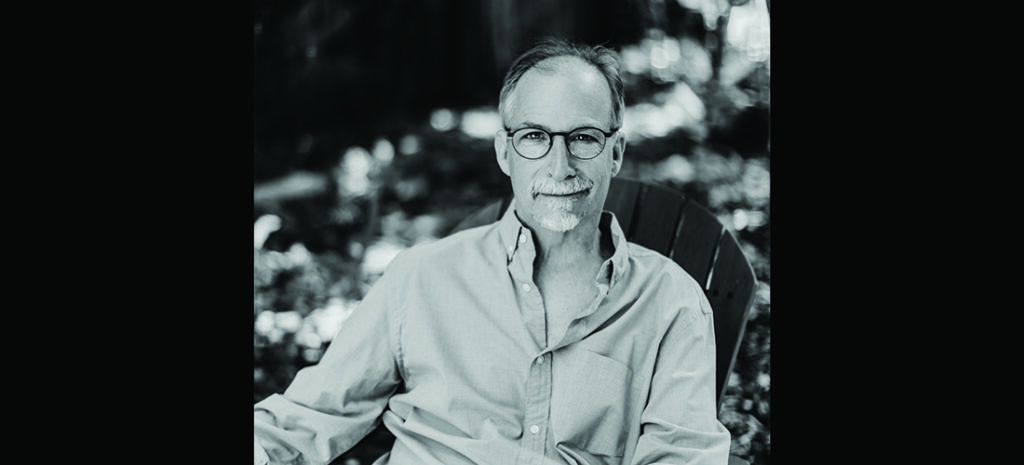
Daniel Wallace and a community of writers

By Wiley Cash

Photograph By Mallory Cash

It’s January, and I’m at the bar inside The Crunkleton on Franklin Street in Chapel Hill, where the winner of the 2023 Crook’s Corner Book Prize is about to be announced. Intrigue is high, but not for me. I served as judge for the prize, so I already know how the evening will turn out. I’m just thrilled to be among so many writers and book people for the first time since COVID shut down the public announcement of the prize not long after the 2020 winner was announced.

I’m also excited to be hanging out with my friend, Daniel Wallace, who I met exactly 10 years before. How do I know it’s been 10 years? Because this is the 10th year of the Crook’s Corner prize, and I was the inaugural winner, and I met Daniel for the first time at the awards ceremony back in 2013. He’s been one of my favorite writers and people ever since.

In 2013, my wife and I had just moved back to North Carolina after my debut novel was published, and to win what has become an iconic Southern book prize meant the world to me, as did the kindness of the writers I met the night of the award ceremony, including Daniel, Lee Smith, Allan Gurganus, Elizabeth Spencer and Jill McCorkle. They made me feel like I belonged among them, and they set the tone for how I would treat and support the writers who came after me.

In the moments before this year’s prize winner is announced — it’s Texas native Bobby Finger for his excellent novel The Old Place — Daniel and I stand around the bar and catch up. I ask him about the upcoming March release of the paperback of his latest book, This Isn’t Going to End Well: The True Story of a Man I Thought I Knew, a nonfiction portrait of his brother-in-law William Nealy, who was well known as an impossibly cool outdoorsman who made a name as a cartoonist who drew paddling guides to countless white water rivers throughout the South. Daniel first met William when he was 12 and William was the cool, mysterious guy dating Daniel’s older sister Holly. To say that Daniel looked up to William is an understatement.

William died in 2001, and after Holly passed 10 years later Daniel discovered William’s journals while cleaning out their house. What he read inside changed his perception of William forever. Daniel’s book is the result of his attempts to make sense of William’s life and the effect it had on so many people, including Daniel.

I ask him what it was like to write a book of nonfiction after forging a career as a novelist. The crowd is growing in the bar, and we are talking over the noise of other conversations.

“I never wanted to do nonfiction,” Daniel says. “The joy for me in writing fiction is putting the characters in motion and seeing what one of them does, and how it affects the rest of the characters in the story. There’s this joy that I get from making discoveries while following my characters.”

“In writing about William, were you also discovering something?” I ask. “Was it similar to creating a character and getting to know him as you went along?”

Daniel sips his drink and thinks for a moment. “The process was similar to writing a novel even though I had all this material that was already there that I could just pick up and read. The character I was writing about — and I have to say that when I talk about William as a character, I’m also talking about a person who was my brother-in-law and someone I grew up with — but when that person is part of your narrative, they do become a character. And even I became a character in this book.” He smiles. “Although I like to think of myself as being real. I don’t know what your impression of me is.”

My impression of Daniel Wallace has always been that he is not only real, but that he is also very kind and funny. Every time he sees my two daughters he has some type of trinket to give each of them, and he’s always gone out of his way to offer opportunities to other writers, including in 2015 when he invited me to serve as the Kenan Visiting Writer at UNC-Chapel Hill. As to his sense of humor, when I asked him for a sample syllabus, he sent me what he referred to as the “required syllabus for all creative writing students.” His novels were the only books on it.

My niece, Laela, who’s a junior at the nearby North Carolina School of Science and Mathematics, is interested in publishing, so I’ve brought her along for the evening. When I introduce her to Daniel I tell her that I met him 10 years ago at the first Crooks prize party and how that evening felt like the beginning of my career.

“It was a special night,” Daniel says wistfully. “Of course Wiley’s novel was the only submission that year, but we were all still really happy for him.”

We all laugh, but the conversation takes a serious turn when we reflect on what seems like the constant changes in Chapel Hill’s cultural landscape. Crooks Corner is a great example. The restaurant opened just down Franklin Street in Carrboro in 1982 and quickly became a staple of the Southern food movement, garnering praise and culinary awards from publications and juries around the country. But, like many restaurants, Crooks closed its doors during the pandemic, and for now they’re still closed, although there are rumors that it might reopen sooner rather than later.

Daniel followed William and Holly to Chapel Hill and moved there permanently in the early ’80s around the time Crooks opened. He’s seen so many changes over the decades in a place that he chose because of its creative vibes and how welcoming it was to writers and artists.

“There was a simplicity to it then,” Daniel says. “Part of it I’m sure has to do with youth, but when you live in a place that doesn’t have a building over one-and-a-half stories tall, you feel bigger in that town, and you feel more real in a way that you might not feel now.”

Daniel had begun his undergraduate studies at Emory University, and when he transferred to Chapel Hill to be closer to William and Holly, he found himself in a creative writing class led by Lee Smith.

“It was at 8 o’clock in the morning,” he says, “and of course Lee brought her trademark power, personality and joie de vivre to it, which made writing fun. And she was fun. I loved how she taught. It was an adventure with language and story and character that was very appealing to me.”

Daniel left UNC before receiving his degree and went to work for his father for two years in the import industry. But he couldn’t shake his desire to write, and he couldn’t forget his love for Chapel Hill.

“I moved back here because of the community,” Daniel says, “and because, of course, Holly and William were here, too. But a major part of that decision was that it’s hard to exaggerate the importance of going to Harris Teeter and seeing Lee Smith shopping. The life of a young writer looking out from this hole that they’re in is made so much brighter when you can see that real people have this real job, just like you want to do. You’re not intimidated as much by the possibility of entering that world when you have these roving mentors, these mentors that you haven’t even necessarily met yet, but you see them walking around. You see Doris Betts on the street corner, waiting for the light to change. It’s human, it makes writing a human act.”

The evening is almost over. The announcement has been made, and winner Bobby Finger has said a few words to the audience, as have I. I speak about the power of recognizing debut writers and how important it is to be a member of a community like the one Crooks Corner and Chapel Hill’s writers have built over the years.

Daniel is gone by the time I step back into the audience. My niece and I find our coats and walk out onto Franklin Street, the cold winter air hitting our cheeks. I can see wonder in her face as we walk back to the car, something I’ve heard people refer to as the “Chapel Hill Magic,” the same thing Daniel felt in the early ’80s after riding his bike to The Cave to play pool with William.

The buildings are taller now, some of the old places have closed, and some of those old people are gone. But this little town, and people like Daniel Wallace, can still make you feel big.  OH

Wiley Cash is the executive director of Literary Arts at the University of North Carolina at Asheville and the founder of This Is Working, an online community for writers.

Botanicus

Botanicus

The Subtle Art of Leaf-Pinching

It can get a little embarrassing

By Ross Howell Jr.

The City of Greensboro’s recent policy change discontinuing the curbside pickup of leaves piled or in plastic bags has prompted quite a wide range of responses from homeowners — as new civic policies often do.

In my case, I’m concerned about a potential interruption of my supply chain.

So I did what any Greensboro resident would do. I consulted an economics professor.

My neighbor, Bob Wilson, has taught at Guilford College for decades. His wife, Mary Beth Boone, is a print artist. They’re both avid gardeners. In fact, Bob brought a house gift of blueberries from his garden when my wife, Mary Leigh, and I moved into the neighborhood years ago.

Situated on a corner lot in Fisher Park, Bob and Mary Beth’s house is surrounded by a lovely cottage garden. Filled with perennials, it’s colorful throughout the growing season, from creeping phlox in the early spring to the purple foliage of oakleaf hydrangeas in the fall.

Bob, Mary Beth and I share a little secret.

We pinch leaves from neighbors’ curbsides in the fall.

“Bob likes to call me the bag lady,” Mary Beth laughs. When she sees those clear plastic bags on the curb, stuffed with oh-so-tempting leaves, she’ll stop her vehicle on the spot and sling the bags into the trunk.

Mary Beth tells me about a recent encounter. She was stuffing bags into her car when a young woman happened along. She stopped and removed her ear buds.

“Excuse me,” the young woman said. “What are you doing?”

Mary Beth explained that she was loading up leaves to take to her house to spread on her plant beds.

“Oh, like composting,” the young woman said.

“Exactly,” Mary Beth replied.

“Cool,” the young woman said. She replaced her ear buds and nonchalantly went on her way.

Bob, Mary Beth and I share a smile.

I ask Mary Beth about her favorite leaves for mulching. She prefers white oak and maple.

My own preference is the slender, slippery willow oak leaves, though raking them can be like trying to rake water.

I just roll my trashcan down the sidewalk to somebody’s curb and start raking. I’m not as subtle as Mary Beth.

I expect some of my neighbors find this behavior eccentric, but excuse it because I’m a writer, and we’re supposed to be eccentric.

For some of us, leaves are the best type of organic mulch you can find.

“Problem is, most people don’t like the way they look.” says Bob. For homeowners with grass lawns, piled leaves can be unsightly. But I’ve found that if you mow over them weekly during leaf drop, they disappear like magic.

Of course, scattered over perennial beds, the leaves hide quickly on their own.

“Leaves are a great mulch for stopping weeds from coming up,” Bob continues. “And they’re the perfect fertilizer.”

He explains that as trees take nutrients out of the soil to grow, they transfer most of those nutrients into leaf production. When leaves fall, the nutrients are returned to the soil.

“So rather than trying to figure out if I’m buying the right fertilizer,” Bob adds, “I know I’m getting the perfect fertilizer.”

“It’s always made sense to me,” he concludes.

Just as the young woman with the ear buds commented to Mary Beth, it’s like composting.

Bob’s even written a book strongly influenced by his experience with gardening over the years. Developed from a course he taught, Greening the Economy describes essential characteristics of healthy natural ecosystems that can be applied to building and sustaining healthy economic systems worldwide. The text has even been translated into Mandarin.

All well and good, but Bob’s book doesn’t solve our dilemma. The curbside leaves that he, Mary Beth and I have pilfered for years apparently won’t be so conveniently available in the future.

And those clear plastic bags that made it so easy to identify the leaves will be relics of the past.  OH

Ross Howell Jr. is a contributor to O.Henry magazine. Not all leaves are suitable for mulch. For helpful tips, visit www.simplegardenlife.com/leaves-to-avoid-composting.

Sazerac February 2024

Sazerac February 2024

Sage Gardener

With Valentine’s Day coming up, the Sage Gardener has been sitting by a crackling fire, reading about aphrodisiacs and anaphrodisiacs, to which The Cambridge World History of Food devotes 12 quarto-sized pages. (Anaphrodisiacs? Substances and foods that blunt sexual appetite — of particular interest to clerical scholars during the Middle Ages in respect to randy monks, friars and priests.) But back to plants and foods that encourage amorous behavior, as seen on the big screen when Tom Jones meets Mrs. Waters in a country inn and gastro-lust ensues.

Who knew, for instance, that sparrow brains were prized in 16th century England for their lascivious attributes? Granted, goddess of love Aphrodite considered them sacred and that they’re infamous for their uninhibited and public displays of affection — but sparrow brains? And sweet potatoes? Once upon a time, again in Jolly Old England, they were prized as “the venereous root,” probably because of their scarcity (or appearance?). Which is likely why so many once-exotic but now-every-day spices (cardamom, nutmeg, ginger, gloves, cinnamon and even pepper) were prized as aphrodisiacs. (I certainly see no effects from the gallons of chai I drink every morning.) I also learned that the French ate three meals of asparagus the day before their weddings as a libido booster. And that beets are a natural source of tryptophan, betaine and boron, something that’s hard to beet in the vegetable world.

I came of age in the ’50s and ’60s, when, as Jane and Michael Stern observe in their classic American Gourmet, “culinary sophistication conferred great powers of seduction on the gourmet.” Books such as Saucepan and the Single GirlVenus in the KitchenThe Naked Chef and Love and Dishes have, over the years, fueled amorous fires in so many bellies and hearts. The Sterns remember fondly how setting victuals ablaze — from flaming chunks of meat skewered on a sword to, look it up, coffee set on fire — kindles something primitive deep down in our psyches. And remember Swiss fondue and America’s obsession with oh-so-saucy-and-sexy French cuisine? It was an era when Cosmo editor Helen Gurley Brown wrote, “There is a relationship between food and sex. One appetite can feed the other in a never-ending cycle of sensation.” (Was it any wonder that my wife-to-be and I bonded on a picnic featuring roast duck and homemade gingerbread?) The Oxford Companion to Food confirmed what my decades of dining suggest — that “the concept of finding a truly aphrodisiac food is on a par with that of finding a crock of gold at the end of the rainbow.” However, there are few tried-and-true favorites my kitchen mate and I put on the table for anniversaries, birthdays and other special occasions.

Is there a more sensuous food than ripe strawberries, especially if you share a few double berries, taking just a half bite and sealing the deal with a sweet meeting of the lips? The botanical name for chocolate, Theobromo (food of the gods) cacao, is apt not only because of its stimulating chemicals, such as phenylethylamine and serotonin, but from the sheer sensual pleasure of having something melt in your mouth as it triggers endorphins in your brain. Teething and savoring the soft flesh of steamed artichoke petals, dipped in butter, is a sensuous ritual, as is dipping lobster into melted butter. And how about butter on just about anything? And then there are oysters, plucked steaming and sizzling from beneath a burlap sack atop a sheet of steel over a roaring fire — popped open and slurped with just a dash of tangy Texas Pete.

I could go on, but in an era when men and women endlessly troll the internet and haunt doctors’ offices looking for love, something a London physician observed in the 16th century comes to mind: “A good cook is half physician.”

                                      David Claude Bailey

A Heartfelt Cause? You bet

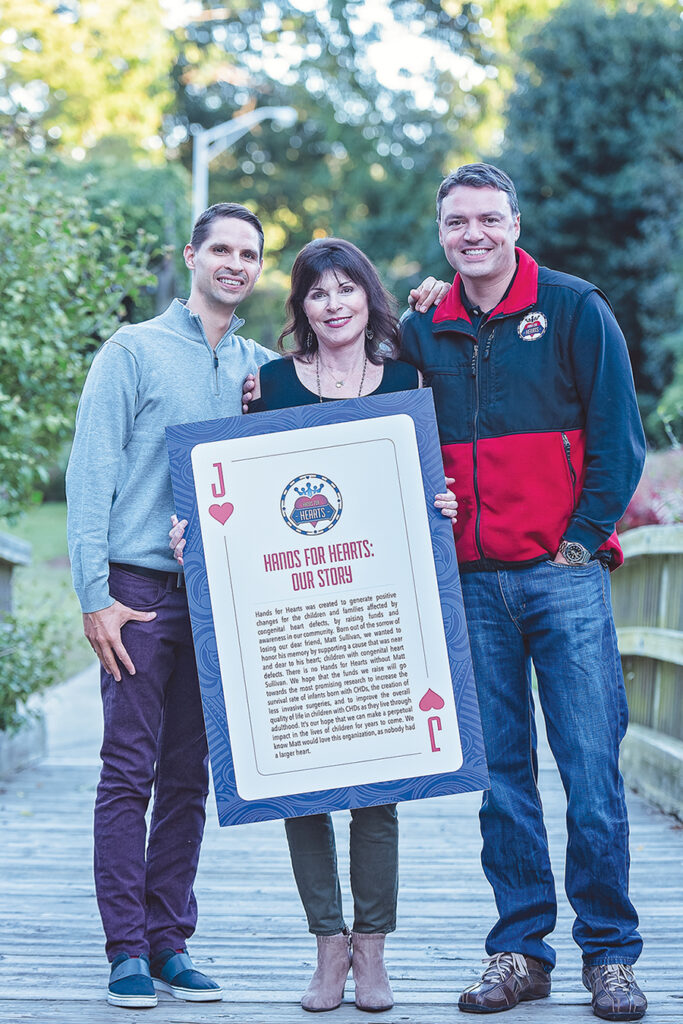
Six years ago in “The Light Within Us,” O.Henry writers highlighted several local individuals and organizations who were sprinkling Greensboro with goodness (ohenrymag.com/the-light-within-us). We recently caught up with Kathleen Little, who cofounded Hands for Hearts in memory of her son, Matthew Sullivan. Sullivan passed away in January 2014, a decade ago. At the time of his death, Sullivan, just 34, held a tight bond with his toddler nephew, Nicholas LaRose, who was born with multiple heart defects. To support children — like Nicholas — with congenital heart defects and to carry on the legacy of a young man who had “a heart that went on for days,” according to best friend Skotty Wannamaker, Hands for Hearts was brought to life. Now, 10 years after forming, the nonprofit organization is still beating strong. In fact, last year, Hands for Hearts took home the 2023 Duke Children’s Hero Award. Wanna take a gamble on how you can help? Practice your poker face and chip in for its annual Casino Night from 6 p.m.–midnight on Saturday, Feb. 24, at the Greensboro Country Club. Food, drinks, silent and live auctions, plus classic casino games? Count us in. Tickets: handsforhearts.org.

Unsolicited Advice

Fun fact: Gary Chapman, author of The Five Love Languages, hails from North Carolina and served as minister for over 50 years at Cavalry Baptist Church in Winston-Salem. Since Valentine’s Day is right around the corner, we’ve come up with some ideas to help you show your feelings, no matter which language your partner speaks.

Words of Affirmation: There are just three little words your partner is longing to hear. “You were right.”

Quality Time: How about a movie night? You’ll spend almost an hour discussing what flick to pick only to decide there’s not enough time left to watch said film. But, hey, that was a good 45 minutes together.

Physical Touch: Big spoon, little spoon? Nah, give ‘em something less expected. High five, low five. Nothing says romance like a “Put it there, bruh.”

Acts of Service: Do you remember that Mr. Clean Super Bowl ad that went viral in 2017? Google it. The point is, there’s nothing sexier than someone else cleaning your house. Nothing.

Receiving Gifts: You are a gift. Remember that. And make sure your partner knows that, too.

Window to the Past

Photograph © Greensboro History Museum Collection

Milling around? A family poses on the porch of their house in one of the Cone mill villages. From the exterior, this house is almost a spitting image of the Glencoe mill home featured on page 60. Can you spot the major difference?

Chaos Theory

Chaos Theory

Waffling?

A surprising engagement

By Cassie Bustamante

I don’t like surprises — unless I suspect they’re coming — in which case, it’s no longer actually a surprise, eh? I am 100 percent that person who will go snooping in my husband’s side of the closet, riffling through his drawers as a stratagem to keep myself totally unsurprised. Chris has known this from early on in our relationship and has mastered the workaround.

So let’s rewind to Christmas, 2002, when we’d been together for almost three years — three years that involve me hopping from North Carolina to Tennessee, from Texas to Louisiana, following him around while living in sin. After dropping hints for almost two years, I decide it’s time to put a ring on it. When you know, you know.

But Chris, ever the practical Virgo, likes to have things clearly mapped before making big moves. Me? Once I’ve made up my mind, I leap and figure out the rest on the way.

When he asks me for Christmas gift ideas that year, I hand-write an elaborate list that reads something like this: “waffle iron, The Nanny Diaries, ring, bread machine, In Her Shoes, ring, J. Crew top, ring. . . ” On it goes, an exhaustive list of things he knows are marginal — kitchen appliances, books I can buy myself, random items of clothing — and the thing I really want repeated so many times it can’t be missed.

We’re spending our first Christmas alone, just the two of us and our beagle, Charlie. Chris is working and can’t get away to visit the parents and I’ve opted to stay with him in our New Orleans apartment. But I am OK with it because I know my ring is coming and, while I’m certainly not getting a Lexus, it’s going to be “a December to remember.”

In fact, a mysterious package — with “Do not open until Christmas” in his mom’s handwriting — arrives earlier in the month for Chris. I think I know what’s inside, but there’s no way to stealthily open and reseal it. Trust me, I would if I could.

On Christmas Eve, we share a romantic meal I’ve prepared of duck à l’orange, whipped rosemary mashed potatoes, a simple tossed salad and warm, crusty rolls. We pair it with a chilled pinot grigio. For dessert, a decadent apple pie. The apartment smells of citrus and cinnamon, just as it should at the holidays.

Christmas morning comes and I drag Chris out of bed, anticipating the diamond awaiting me. Instead, I unwrap every single book, sweater and kitchen gadget from my list. What’s not there? A ring.

Disappointed, I distract myself by breaking in the brand-new waffle iron, a top-notch Williams-Sonoma one at that, but this meal is not like the night before. I’m quietly fuming, the air of romance evaporated.

“Everything OK?” Chris asks.

“Fine,” I offer. It’s the answer I give when everything is, in fact, anything but.

He looks at me, but I avoid eye contact. “Anything I can do?”

“Nope.”

We clean up in silence and Chris tells me he’s going to shower.

“Fine,” I mutter again and slink to the sofa to pout while sappy Christmas movies featuring happily married couples play on the TV.

Fifteen minutes later, I hear Chris enter the room, but don’t look up.

“Are you sure there isn’t anything I can do to make you feel better?” he asks.

“Nope,” I repeat. “Nothing.”

He approaches the couch and stands over me. “How about this?” In his hand he holds a small black box. Inside is a simple gold band with a single diamond. His great-grandmother’s, he tells me.

Holding back tears, I punch him in the arm, saying, “You’re such a jerk, but I love you.” He smirks, pleased with himself that he’s managed to surprise me after all.

As I write this story, I have to laugh at myself. I wouldn’t marry me — I was the jerk. But, 22 years later, we’re still going strong. So is our waffle iron. Some things were just made to last.  OH

Cassie Bustamante is editor of O.Henry magazine.

Simple Life

Simple Life

Winter Dad, Summer Son

How’s the weather? Depends on who you ask

By Jim Dodson

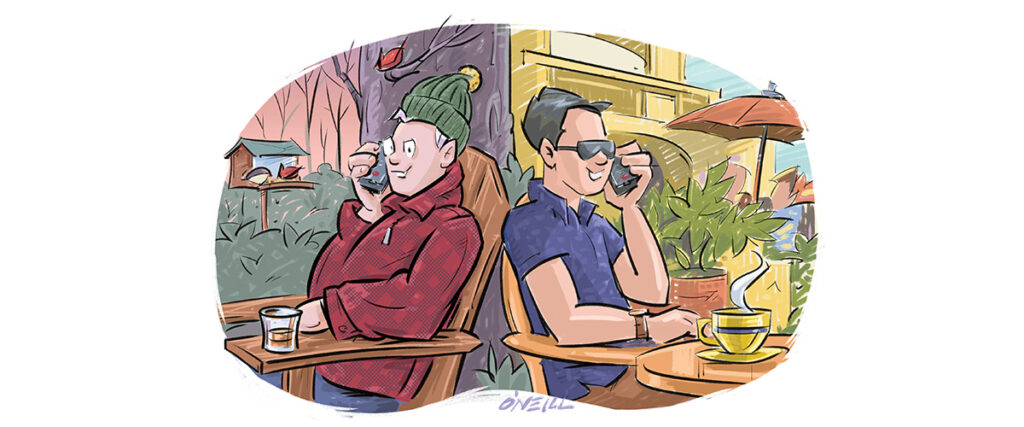
My son, Jack, phoned the other afternoon as I was enjoying an ounce of something superbly aged and watching from my favorite wooden chair under the trees as winter birds fed. It was a clear but cold afternoon, the kind I like. This day was also special in another way as well.

“Hey, Dad,” he said. “How’s it going?”

“Pretty well,” I said. “I finished the book today.”

“Congratulations,” he said. “I know that’s a big relief. Can’t wait to read it.”

“At this point you might be the only one,” I joked, pointing out that my editor at Simon & Schuster has probably given up on the book and forgotten my name.

“Oh no,” he said. “It’ll be just fine. You always say that.”

He was right about this. I’m naturally superstitious about completing books. They’re a little like children you spend years rearing, hoping you got things right, only to send them off into the wide world with gratitude and not a little worry. This was my 18th literary child, one I’d grown unusually close to over the years. Now this special child was about to leave me.

The book, a true labor of love, is about a pilgrimage I took along the Great Wagon Road, which my Scottish, German and English ancestors took to North Carolina. Foolishly, I thought I’d travel the historic Colonial road from Philadelphia to Georgia in roughly three weeks and take a couple more years to write about the interesting people I met along with whatever I learned about America, or myself.

In fact, it took nearly six years to complete the project, counting the two years off the road due to COVID. Even so, I was pleased to have finished the book, though — as is almost always the case — I felt a bit sad that the experience was over. Its fate was almost out of my hands.

So, I switched to our usual topic — the weather.

“How’s the weather there?” I asked.

“Great. Hot and sunny. Just the way I like it. How about there?”

“Cold and clear. Maybe some snow on the weekend. Just the way I like it.”

Jack laughed. “I always forget that. How much you love winter.”

My only son is a journalist and documentary filmmaker living in Lima, Peru, where, as you read this, it’s late summer. Before that, he spent nearly four years living and working in Israel, enjoying the heat and people of that ancient, violently contested land. Fortunately, he left a short time before the latest unspeakably horrible war between Israel and the Hamas terrorists erupted, an event straight from the pages of the Old Testament.

I knew he was worried about friends back in Israel and Gaza and wished he was back there helping to cover the war, where more than a dozen journalists have been killed. His mother, old man and big sister, however, were grateful that he wasn’t one of them.

In a world that forever seems to be coming apart at the seams, for the moment at least, I was glad that he was in sunny and warm Peru, a place I almost cannot imagine, but must be quite beautiful. Jack is fluent in Spanish and Arabic, a true traveler of the world.

Though I speak only English and enough French to get me in trouble whenever I visit France, he and I have many things in common — with one notable exception.

Jack was born on a warm August morning in Maine. He thrives in the heat and is an authentic son of summer, a northern New Englander who digs tropical heat and desert landscapes.

I was born on a cold, snowy morning in Washington, D.C., where my dad worked for the newspaper, a true-blue son of winter who thrives in early evening darkness, bone-chilling winds and lots of snow, a Southerner who could happily reside in Lapland, wherever that is. (I just googled it. Lapland is in Northern Finland. One of its largest towns is Santa Claus Village. Count me in!)

How upside down is that?

On the other hand, perhaps we’re simply fated to be this way. The ancient Greeks claimed unborn souls choose the time and place of their birth. Jack clearly picked the hottest part of summer to make his appearance, like his mama, a mid-July baby.

My mom was born in late January, traditionally the coldest part of winter. My birthday in February follows hers by just five days. She loved winter almost as much as I do. Jack’s big sister, Maggie, was born during a January blizzard. The morning we  brought her home from the hospital, I had to slide down a steep, snowy hill with her in my arms in order to reach our cozy cottage on the coast, as the unplowed roads were all impassable due to the heavy snow. It was one of the happiest moments of my life. Though she resides in Los Angeles today, I think she loves good, snowy winters almost as much as her old man.

Not surprisingly, we winter people are a relatively tiny tribe. A recent study of people in Britain determined that only 7 percent of its citizens claimed to be “winter people.” Then again, summer in Britain can sometimes feel like an endlessly cold and soggy winter day, one reason you find so many sun-burned Brits residing on the Costa de Sol and the Mediterranean at large.

University of Pennsylvania psychologist and author Seth Gillihan studies the effect of weather on people’s moods. In his book, A Mindful Year, he notes that there is a positive link between someone’s birth and preferred season. “People who are born in the winter, their internal clock seems to be set to the length of days in the winter,” he told Metro.co.uk.

The internal clock of so-called winter people, he adds, “is not as affected as someone who’s born in the summer, whose circadian rhythm (the body’s 24-hour ‘internal clock’) is expecting a longer light period.” Among other things, he aims to debunk popular misconceptions about the so-called “winter blues,” pointing out that seasonal affective disorder — SAD for short — affects only a small percentage of the populations, less than 3 percent in the UK.

The idea that people who live in warm, sunny places are naturally happier than folks who reside in cold climates is challenged, he adds, by data that indicates Europe’s northernmost countries with the longest winters — Finland, Iceland, Norway, Sweden — rank among the continent’s seven happiest countries.

In a few weeks, North Carolina winter will begin to slip away. The welcome winter snows of my childhood here seem fewer than ever. The good news is that, by February’s end, my garden will be springing back to life, heralding my second-favorite time of year.

Winter will be coming on in Peru. I’m hoping my summer-loving son will decide to come home to share its glorious return with me.  OH

Jim Dodson is the founding editor of O.Henry.