Sazerac April 2026

SAZERAC

Art to Heart

“What I’ve realized, regarding how long I’ve been doing it, is that you don’t get better, you just change,” says artist Matthew Micca, whose work will be featured at GreenHill Center for NC Art beginning April 10. Micca, an Asheville resident and contemporary abstract artist who breaks the mold, strives to always produce art that he’s proud of — even if it’s something that has completely strayed away from his norm. From drawing illustrations in his earlier years to falling in love with abstract art, Micca has decided to set aside his panel paintings and, instead, try out three-dimensional cubes that encapsulate his contemporary artist mind. “About a year and a half ago, I figured out how to merge my paintings and bring it to the 3D realm in a way,” he says. He found the switch from 2D to 3D to be easier than expected. His technique involves painting his design on one flat surface of the cube while the excess paint drips down its sides. Asked what he thinks about his previous work, he says: “I recognize that it’s good, but I can’t do that now because I’m past that.” Art, Micca says, is ever changing and constantly moving. He wishes more artists would take risks and evolve their art, which, if you can pluck up the courage to do so, can pull you out of your comfort zone and into daring and bold expression. “I think I’ve gotten braver through the years,” he muses. While his work has changed over time, one thing has remained the same: “My work has always been a mix of geometric and organic forms.” While his shapes, patterns and evolving mediums allow him to express himself, he’s fascinated by viewer interpretations as well. “I love to hear what people see in my work,” he says. So when you catch Micca’s solo exhibition of his 3D-cube work at GreenHill Center for NC Art through June 20, be sure to let him know what you see. Info: greenhillnc.org/exhibitions.

Just One Thing

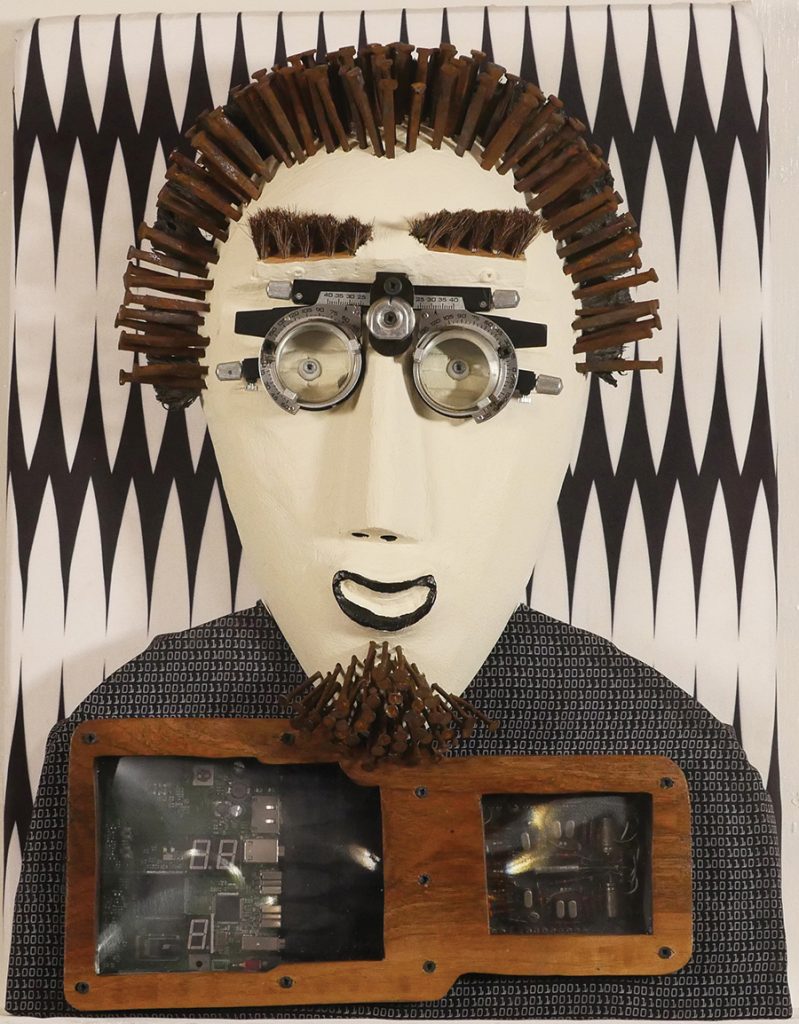
Art is many things to Greensboro artist Jonathan Vizcuña, but quiet isn’t one of them. Vizcuña believes art should speak for itself — and loudly, at that. With its shiny, eye-catching embellishments, his art illustrates his feelings. “As an artist, that’s one of your goals. I want to have the opportunity to, through my art, fill with joy, touch with emotion and communicate many things to many people,” he says. Years ago, while working as a web designer, he started expressing himself through a hobby he didn’t expect to take off the way it did. “I’ve gone through every single title in web design. That has always been my world. Now, sculpting has become a more personal expression, much slower,” Vizcuña explains. For him, sculpting is a much more intentional process than working on paper. He describes himself as having quiet confidence, unassuming and never boasting but, instead, letting his art toot its own horn. He’s been often told by others that he “should be proud” of his art. “I’m not saying I’m not proud of it, but I never thought I would get so much exposure with my sculptures,” he says. From getting his first exhibition in Deep Roots to now exhibiting at The Center for Visual Artists, Vizcuña has put hours upon hours into sculpting because he believes in the power of his art. If you’re a sucker for art that speaks to — or, in this case, roars at — you, check out Vizcuña’s Apex Noir, seen here, at The Center of Visual Artists exhibit, We Art GSO, through April 18. Info: mycvagreensboro.org/WE-ART-GSO.

Window on the Past

For National Poetry Month, we wanted to highlight the work of a not-so-ancient poet — and no, we’re not talking about Shakespeare. Douglas Cartland, a Gate City resident in the early 1900s, wrote a poem about renowned Greensboro-born writer William Sidney Porter, better known as O. Henry. Cartland calls him “Greensboro’s hero, Greensboro’s star, Greensboro’s outstanding light, Greensboro’s sun in the darkest night.” With words like these, Cartland may have just fancied himself the ‘Boro Bard.

Welcome to the Wordshop

Wanna shake up your reading and writing? Greensboro Bound Book Festival returns April 9–11, celebrating diverse voices and stories with American Kaleidoscope as its theme. Three days of literary activities culminating in one full day of downtown events include perspective-shifting author chats, a palette of poetry, a collage of kiddo content and, of course, reflective — and perhaps refractive — writing workshops. That’s where O.Henry comes in to play.

We’ve teamed up with the festival to lead a few of Saturday’s workshops at the Greensboro Public Library’s Central Library. First, from 10–11:15 a.m., O.Henry editors Cassie Bustamante and David Claude Bailey will reflect on their own path of bringing back to life their personal experience. In a session entitled “That’s My Story,” they’ll offer tips and caveats about coaxing memory into words. Got a memoir ’bout to bust out of your brain? Chapter one starts here.

Then, from 11:30 a.m.–12:45 p.m., O.Henry contributor, author and TVparty! creator Billy Ingram takes you on a journey to your next career with “Writing as a Second or Third Act.” Billy’s worked in big-time advertising as well as entertainment. These days, he spends his time unearthing Greensboro gems in his monthly “Wandering Billy” column and writing gritty features for O.Henry. An actor at heart, he knows something about entering the scene stage, whoops, write after a completely different career

Do you panic when you have to interview a subject? Book your sesh from 1:30–2:45 p.m. with O.Henry founding editor and New York Times-bestselling author Jim Dodson, who leads “The Art of the Research Interview.” After spending years traveling, researching and interviewing along the the Great Wagon Road for his 2025 release, The Road That Made America, Jim’s more than got the chops to teach you how to ask the right questions that allow the conversation to flow freely from your interviewee. We’ve always found that free-flowing whiskey helps, but we’re sure Jim’s got better methods.

Putting a cap on the workshops, Erica Miriam Fabri, author of the 2025 Jack McCarthy Book Prize winner, Morphology, leads “Making the Public Personal: Writing Autobiographical Poetry Inspired by Current Events” from 3–4:15 p.m. Curious how you can use your own autobiography to provide future generations with the true — and poetic — story of the cultural movements or social and political conditions shaping your life? Learn to use your voice as a measure for the times.

No matter what skill it is you’re shooting to sharpen, we’re here to help you find and cultivate your story. After all, we’re writing prose.

And don’t miss out on a full line-up of talented authors, beginning on April 9 with No. 1 New York Times-bestselling author Casey McQuiston, whose book, Red, White & Royal Blue, was made into a 2023 film. Find the schedule of events here: greensborobound.com/2026-festival.

Unsolicited Advice

For the lot of us, 2016 was an era in itself. Groovy, new music albums and the upsurge of pop-culture references, thanks to rising social media, made the year nostalgic. And though it’s worth a scroll through our camera rolls, there is one part of 2016 we keep coming back to — the fashion trends. Some were iconic and some were not so much, but, you’ve got to admit it, no one was rocking ripped, high-rise jeans better than us. It was an experimental year to say the least and we’ve grown through our choices in clothing since then, but it’s hard to focus on current ‘fit picks when we’re mentally stuck a decade before. So we’ve provided a list of trends we advise you to stay away from this time around.

Skinny jeans? More like leg traps — bonus points if they looked like they’d been run over by a lawnmower. Hard to get into and even harder to get out of, these infamously tight jeans have burned a hole — bigger than the purposefully placed one on their knees — in our memory forever. Luckily, we’ve evolved to clothing with a little flare. Never again will we let skinny jeans reemerge from our bin in the attic and never again will we let our legs suffer in a vacuum-seal fit.

Fried, dyed and laid to the side, our hair was nothing more than a rainbow experiment. Arguably one of the most tedious trends — thanks to grown-out roots — ombré hair was a trend of self-expression and individuality. It’s not ridiculous to say that every once in a while we have the urge to grab some hair dye and bring the hot-and-hued hairdo back, but lest we forget the clumps of hair and the big chop that followed.

Paired with a denim jacket and a snapback, thigh-high boots were a sign of the times. Leather, suede or pointed, these boots were versatile and everywhere. We saw them on celebrities, family and even friends. What’s the downside, you say? These boots, turns out, were not made for walking — sure to bring blisters and callouses, but, luckily for us, this 2016 trend didn’t stick to us as tightly as these boots did.

Home Grown

HOME GROWN

Dial M for Miss You

A local wind phone welcomes users to call their lost loved ones

By Cynthia Adams

Dana White doesn’t know exactly what captivated her when she learned about wind phones on National Public Radio. Was it longing to reach out to a dearly departed relative?

Was it a call to connect? 

White, a woman with healthy boundaries, isn’t saying. 

Yet many also feel a mysterious attraction to wind phones, a concept originating in Otsuchi, Japan.

Since the first wind phone appeared 15 years ago on a windswept mountain, created by a grieving man, Smithsonian magazine estimates more than 200 wind phones have been installed in the U.S. alone. A wind phone — a disconnected phone perfect for expressing deeply held feelings of loss or grief — may seem outmoded in a digital age of instant connectivity.

Here, the wind alone bears the message.

The premise is basic. A vintage phone, often with a rotary dial, is typically placed in some remote, sometimes haunting location, though it’s not unheard of to find them in cities. Walkers on a nature trail may happen upon an old phone mounted to a tree.

According to a CBS News Sunday Morning segment, people hiked to such a phone within a California forest, there for the purpose of unburdening themselves.

The bereaved used the phone to leave messages borne away by the wind without a trace — hence the name.

But sometimes wind phones are installed in built structures or phone booths.

Simple or elaborate, the wind phone becomes the receiver of longing, for reconnection with a deeply missed someone or something.

In White’s case, however, her wind phone seems to have evolved like a highly personalized art project; one long mulled over. In her spare time, she likes making art in a home studio. So, when White spotted what she believed could become the raw materials for such a project, she set about creating one.

“In February 2022, I was hanging out with friends at Fishers Grille and saw a large crate next to a dumpster and thought, That could be a phone booth!”

Fishers Grille co-owner Doug Jones said the shipping container was free for the taking. White’s boyfriend, Steve Dabbs, collected the crate in his truck and thus began her new project.

“No telling what my friends, family and neighbors thought as they listened to me going on and on about it, but none of them discouraged me,” she says four years later.

Since White’s phone was created, wind phones began popping up throughout the state, more recently in Charlotte, Oak Island and Sunset Beach. Ian Dunn placed a wind phone at historic Oakwood Cemetery in Raleigh. (At this writing, there is at least one other in Raleigh.)

Having now lost several family members without the opportunity to say goodbye, I instantly connected with the concept.

White fashioned the phone and booth from upcycled materials, just like the crate, painting the open booth barn red. After mounting an old rotary wall phone inside, she placed a “Phone” sign on the top.

“I finally set it out next to the sidewalk in May 2022 with a note explaining what it is, and pens and paper for people to leave notes.”

Well satisfied, White says, “It gets a lot of traffic and feels pretty private, considering the location.”

“While some [who use her phone] are aural, others are more visual and prefer to write/read,” she explains.

White also gets a kick out of watching adults explain the concept of the wind phone to children. From her perch on a kitchen stool, she notices some users come often. At times, she meets people who are deeply curious about the phone. White smiles. “When I’m asked, ‘Does it work?’ I always respond ‘Of course, it does.’” Disappointingly, the vintage phones occasionally disappear.

“As we’re now on our third phone, I welcome anyone’s old phone for which they no longer have a use,” she writes later — not a terrible average given it has been four years since the wind phone’s installation.

On a whim, I dial my childhood phone number: Tuxedo 8-2372. A throwback to when the prefixes were actually pneumonic devices, they related to the letters and numbers on a rotary dial. Naturally, the number is no longer in service. My voice, too, simply drifts away on the wind.

In the silence, I imagine my father’s singular way of answering: “Yell-o! This is Warren!” and my heart does a little twist. I have not heard his voice since his sudden death in 1990.

Since, I’ve discovered what’s called a “Goodbye Line,” which allows users to bid farewell to people, places and things. Once connected, a recording reflects that: “This payphone, like us, is here now but won’t be forever.”

Omnivorous Reader

OMNIVOROUS READER

The Forest Primeval

Finding identity in a Hemlock

By Anne Blythe

Midway through Melissa Faliveno’s Hemlock: A Novel, her protagonist, Sam, awakens after a night of many beers and shots, disoriented in the thick of the Wisconsin Northwoods.

The ground is wet with dew. Damp leaves cling to her body. She has no idea where she is nor how she got there. On the forest floor where she finds herself, far below the canopy above, small shade-tolerant trees and plants survive in the low light, providing a vital layer of sustenance for the wildlife living among them. As Sam emerges from her oblivion, confused but unafraid, the word “understory” pops into her mind.

“She whispered the word to herself and thought of things that live in the light, and things that live in the dark. How whole worlds and realities can exist in things unspoken and unseen,” Faliveno writes. “How there’s a story told aloud, in the open, above the surface of things, and there’s a story beneath it, that one must look much harder to find.”

Hemlock, Faliveno’s debut novel, is as layered as the Northwoods, a vast expanse of dense coniferous and hardwood forests, glacial lakes and rustic cabins and cottages. It’s a story of self-discovery — a dreamlike exploration into addiction, inherited generational trauma, gender identity and sexuality. It’s also a story that defies genre.

In Hemlock, Faliveno, a University of North Carolina at Chapel Hill creative writing professor, pulls from Gothic tropes: a gloomy cabin in an isolated area, a non-traditional damsel in distress, ancestral curses and a talking deer that —no matter how hokey it sounds — works. At the same time it’s a love story, sinister and sultry, and a tribute to nature that teeters between reality and fantasy.

We meet Sam, a 38-year-old Wisconsinite, when she’s had 10 stable, booze-free months with her boyfriend, Stephen, and their cat, Monster. She’s on her way from their Brooklyn apartment to “Hemlock,” her family’s desolate cabin nestled in the heart of the Northwoods. Once a place of family togetherness for Sam and her parents, a creepy vibe had settled into the cabin ever since her mother’s eerie walk into the woods, never to be seen again.

As the miles and days roll by, Sam’s fragile grip on reality becomes even more tenuous. In her dreams, the cabin is a huge, “hulking, looking thing with endless doors and hallways, walls that seemed to breathe; a maze of passages that changed shape and stretched on forever; into nothing.” In reality, it is “a normal little house, with four normal walls, a normal little porch and chimney” that her father built for retirement but now is ready to sell.

As Sam replaces broken floorboards and repairs things, she’s living in virtual seclusion, a marked difference from the urban frenzy of New York City. The rot of the cottage and surrounding area hollowed out by recession creeps into her mind and she begins to slip back into old behaviors. Just one beer turns into one more. Then a sixpack. Then one brandy old-fashioned, and another before an empty bottle awaits her on the counter in the morning. Amid the slip from sobriety, Sam wrestles with whether she wants to return to her boyfriend, her job as a magazine editor and the life she built in New York.

The novel — a probe of the indecipherable space between one place and another, one gender and another, one sexuality and another and past and present— is not always an easy read. It can be frustrating and exhausting watching Sam settle into a buzz that, no matter how hard she tries, cannot quiet the persistent whisper of her emotional unraveling.

Can the Midwest she fled ever be home again? Does she identify as a man, woman or something else more fluid that’s not so easily defined? Can she eschew the booze that is part of her culture and escape the throes of addiction passed down from her grandmother to her mother and on to her?

Somehow, though, Faliveno’s vivid and descriptive writing keeps pulling you back in. She makes you feel like a confidant, a trusted but objective friend who can help Sam as she tries to break free from the expectations of a world with deeply entrenched norms and stereotypes.

Faliveno is very introspective, pondering a wide range of topics, any one of which probably could have anchored a book. Despite the dark themes in Hemlock, there is beauty in the ugliness and light in the understory.

Almanac March 2026

ALMANAC

Almanac

March 2026

By Ashley Walshe

March is a procession of tiny wonders.

In the wakening woods, where trout lily and spring beauty appear and disappear at the speed of life, red fox trots toward the forest’s edge, silent as a spring ephemeral.

Weaving between woods and meadow, bluebird combs the softening earth, harvesting grass and pine needles to craft its tidy, cup-shaped nest.

Behold the purple martin. A charm of hummingbirds, shimmering like flying prisms. Sprinkles of color in all directions.

Scarlet maple seeds cascade from naked branches. Fiddleheads brighten creeksides with a riot of luminous spirals. Electric redbuds dazzle.

Yellow transcends itself. Daffodils spill across rolling hills like a sun-kissed sea of trumpets. Spicebush quivers at the tender kiss of swallowtail. Dandelions present as wild, impassioned brushstrokes.

Earthworms animate the loamy soil. Black snakes dance across the warm earth like ribbons.

The humans emerge, too. Gardeners dawdle in dirt and sun. Lovers listen for warblers, sparrows, spring peepers. Children comb the earth as the bluebird does.

“Violets!” they squeal, gathering tiny purple flowers by the tiny precious palmful.

“Can we use them to make cookies?” they ask. “Pink jelly? Lemonade?”

Bare feet in feather-soft grass, they feel the wonder many have forgotten. The wonder of warm earth blossoming with new life. The taste of wild violet.

As the procession of spring continues, slip off your shoes. Let the tiny wonders revive and delight you. Awaken the purity of your own vernal spirit.

Red Clover, Red Clover

Should you happen upon a patch of tender clover, allow yourself to stay a while. Get quiet. Attune to the frequency of these sprightly, three-leaved sprigs. Some say you can hear them singing.

A symbol of the Emerald Isles, the seamróg (Gaelic for “young clover”) is a robust ground cover, building soil and, come spring, inviting a wealth of pollinators.

But did you know that their leaves and flowers are edible? If ever you’ve tried clover blossom jelly, delicate and sweet, then you know the ecstasy of butterfly and bumblebee. Nibbled a leaflet? Just a day in the life of a cottontail rabbit.

And if ever you’ve found a four-leaf clover, well, the luck of the Irish be with you. 

Sun, Moon and Stars

Behold a blood moon just before sunrise on March 3 — a total lunar eclipse that, indeed, will give the moon a rusty hue.

On Friday, March 20, the sun crosses the celestial equator at 10:46 a.m., marking the official arrival of spring (although the birds have suggested it for weeks).

As for the stars? It’s Pisces season until March 21, when fiery Aries turns up the heat. In other words: in like two fishes, out like a ram.

One swallow does not make a summer, but one skein of geese, cleaving the murk of March thaw, is the spring.

                    — Aldo Leopold

Chaos Theory

CHAOS THEORY

Beans, Beans, Good for the Heart . . .

You know the rest

By Cassie Bustamante

When I first met my husband, Chris, his idea of eating veggies was to toss a couple tomato chunks in with romaine and then drown it in Caesar dressing. A strict vegetarian at the time, I was appalled. Plus, what woman hasn’t thought to herself, “I can change him.”

Challenge accepted. I started sneakily. I would make him a salad, chopping red pepper and tomato into small bits so he wouldn’t notice the intruders. Spinach leaves slowly made their appearance amidst the romaine. Maybe he noticed, but, since we were still in the “salad days” of our relationship, he said nothing. In fact, over time, he began to — dare I say — enjoy a whole rainbow of produce. Heck, he even likes Brussels sprouts now. But don’t ever put a pea on his plate.

So, when our kids were young, it came as no surprise that they inherited his picky palate. Our oldest, Sawyer, has somehow made it to 20 year of age on waffles and grilled-cheese and peanut-butter sandwiches (hold the jelly). We sometimes refer to our youngest, 7-year-old Wilder, as “Sawyer 2.0” because his mannerisms and, yes, finicky palate are eerily similar to his big brother’s. Their only veggie? Tomato sauce on pizza or pasta. Emmy, now 19, is our best eater, though that’s not saying much because Sawyer and Wilder have set the bar so low.

Pie to the rescue! Over 10 years ago, I came across Chocolate Covered Katie’s website and decided I’d try her deep-dish chocolate chip cookie pie. Gooey, fudgy and indulgent? Maybe, but it held a secret. This pie was comparatively healthy — a good source of fiber and protein. I’d once been able to sneak plants past Chris’ lips and I was hopeful this might do the trick for Sawyer especially.

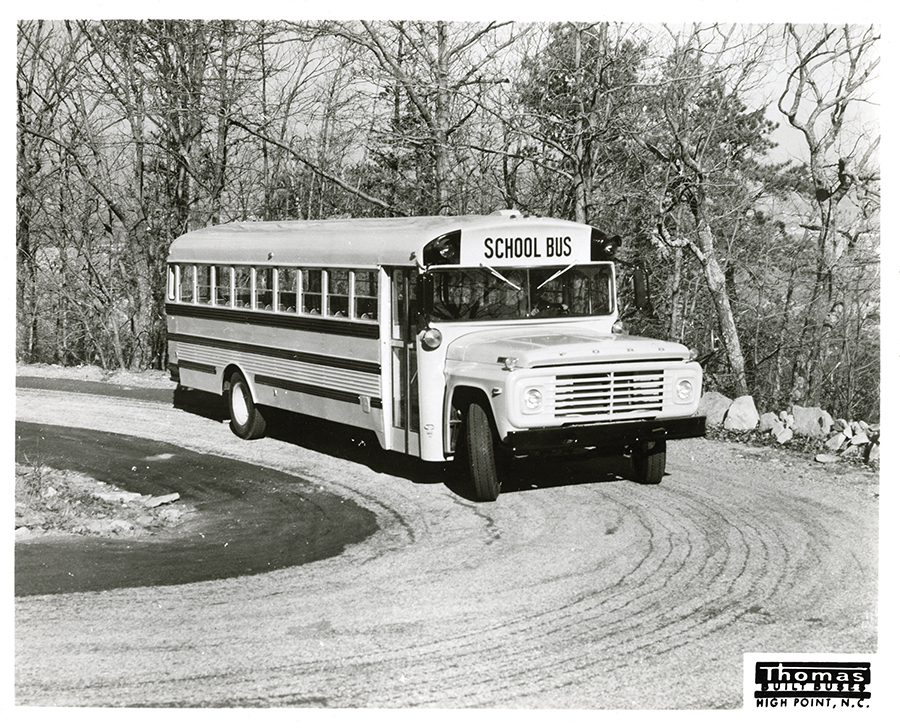
As Sawyer and Emmy hop on the bus headed for elementary school, I dash to the grocery store for supplies. Garbanzo beans, check. Quick oats, check. Almond butter, check. Turbinado sugar, check. At home, I’ve got homemade applesauce, chocolate chips, vanilla extract, salt and baking soda. And let’s not forget the springform pan I registered for when Chris and I married that just needs some dusting off. Actually, it might still be in its original box.

Following Katie’s instructions, I measure, blend, fold and bake. Naturally, I “taste test” the batter. (Hey, no eggs means it’s safe, right?) Without a lick of butter, I’m shocked at just how much it resembles one of my favorite food groups, raw cookie dough, and have to stop myself from spooning it all in my mouth.

When the final product comes out of the oven, its golden-brown appearance looks like something on the cover of Southern Living, minus the dollop of whipped cream. As it cools, I remove the incriminating bean cans, taking out the trash before it tells on me. As the bus stop drop-off time approaches, I peer out the window, anxiously waiting Sawyer and Emmy’s arrival.

Finally, they walk in the kitchen door, their little noses twitching, sensing something sweet and slightly nutty in the air. Spying what appears to be a giant cookie sitting on the counter, Sawyer says, “Oooh, what is that?”

“Oh,” I say, trying to sound natural, “I found a new recipe for a deep-dish cookie pie and thought I’d try it. I’m not sure you’ll like it.”

“I’ll try it!” exclaims Emmy, who loves freshly baked goods almost as much as her mama.

Sawyer’s big blue eyes grow even wider. “Wait, we can have it now?”

“Sure, I’ll let you both have a little pre-dinner treat this once,” I reply with a wink.

I cut into the pie, pulling out the very first wedge, followed by the second. The center is still soft and warm, the chocolate chips melty.

The kids take a seat at our kitchen island as I slide a plate loaded with a slice and a fork over to each of them. Sawyer lifts a forkful to his mouth as I stand nearby, trying my best to be nonchalant. But my energy is practically emanating off of my body — very chalant.

Sawyer’s eyes close as he savors his first bite. “Mom, this is so good! Can you pack this in my lunch for dessert tomorrow?”

“Of course,” I say casually, but inside my brain there are two little versions of me and they are jumping up and down, high-fiving each other. “We tricked the boy into eating beans!” they’re shouting.

Sawyer does, in fact, take a carefully wrapped piece of deep-dish cookie pie with him the next day, along with his usual, a PB&J, again, hold the jelly. And each day after that until nothing but crumbs are left of the pie.

On day four, as Chris and I sit in the living room watching Jeopardy!, Sawyer plops down on the sofa. He looks a little sheepish as he says, “I don’t know what my problem was in school today, but I couldn’t stop farting. Like, all day.”

I shrug. “Hmmm, no idea.” Meanwhile, I look over at Chris and give him the don’t-you-dare-say-a-word-about-beans look. “You feel OK otherwise?”

“Yeah, I feel fine,” he says. “Just gassy.”

“Well, then I wouldn’t worry about it.”

I’ve now made that recipe for years, eventually coming clean about what’s in it to Sawyer. Luckily, he was too far gone to turn back and still enjoys a slice, especially warm. As for any other vegetables? Well, I might just let that be his future partner’s problem. Maybe she can change him.

Sazerac March 2026

SAZERAC

Sazerac March 2026

GROCERY STORE TOURISM: UNSOLICITED ADVICE

Greensboro natives know that our grocery stores are the heart of our city. Locally grown and made to fit our authentic, cultivated palate, there’s no better place to feel like a true urbanite than amongst rows of colorful produce. As Condé Nast Traveler names grocery shop tourism a trend, we thought it’d be fitting to showcase our city’s hotspots. Whether you’re just visiting or a ‘Boro buff, take a tour of our markets, where you’ll find the cream of the crop.

The Fresh Market: It’s only natural that you’ll find your way to The Fresh Market. Founded in Greensboro, The Fresh Market brought European-style, intimate and personalized grocery shopping back and created a store meant for comfortability. We’re all for a cozy and homey grocery market and, as some would say, “Home is where the heart is — and where the freshly-baked pastries are.”

Bestway: Craft beer-and-wine tasting is what makes a grocery trip worth the while — oh, and groceries, too. China may have the Great Wall, but here, along with all your cooking needs, you’ll find the Wall o’ Beer. We won’t judge you if you beeline it for the brews before browsing apples and oranges — it’s called balance.

Indu Cafe: If you’re a fan of samosas, Indu Cafe is the perfect place to visit. If you’re unseasoned to the crispy vegetable and spice filled snacks, don’t knock ’em until you try ’em. This shop full of authentic Indian seasoning, flavors and ingredients satiates the city’s craving for crispy, cultural cuisine. You just may give up window shopping and find yourself caught —  mid-bite — in a crunch.

Deep Roots Market: Deep Roots Market makes it their mission to feed the needs of Greensboro and to do that you have to know Greensboro. Dating back to 1976, it began as, and still is today, a nutrition and health-conscious co-op that has fed the community by listening to it. So, you could say Deep Roots Market is rooted deep in Greensboro.

Indie Scene

“When I was coming along, record stores were a place of community. Everyone hung out there,” Mike Moore, owner of Buffalo Boogie Records, recalls. “That’s what I wanted to bring here in Greensboro, that community feeling.”

If you’re a bit out of tune with the times, 2026 is “the year of analog.” Despite the rise of digital dominance, individuals are no longer depending on online streaming for music, instead swapping digital for tangible media. Thanks to a vinyl renaissance, a nearly lost space that fosters connection between music mavens alike has reemerged — record stores. In 2018, Moore opened Buffalo Boogie Records, aiming to share his love of records with anyone who had an ear for music. He hoped to create an environment that stirred conversation and eventually invited friendship. “Music is a way of life for a lot of people. It certainly has been for me since I was a child,” he says. “It’s a celebration of life.”

“I had no intention of opening up a record store back in the ’80s and so forth — I just loved records,” says Moore. Throughout the decline of record purchasing and the rise of CDs in the mid-1980s, Moore garnered discounted or discarded albums and, over the years, acquired a buzz-worthy collection. “So at times I feel sort of like an archivist as well. I’m preserving something that’ll be passed on from generations to generations and on and on,” he says.

From seeing The Monkees in concert to making friends at his local record store, Moore, who primarily grew up in High Point, has always revolved around the music scene and is eager to see the younger generation becoming more and more interested in vinyl. “It seemed like 12–15 years ago, people started looking more towards vinyl as opposed to digital media. It looks like it’s going back to analog. Vinyl started getting popular again,” he says. Exhausted by the hustle and bustle that comes with browsing the internet, individuals are removing themselves from digital overload, embracing a sense of personal connection. “It kind of blows my mind that the younger generations are much enjoying the music mediums that I did when I was a child in the 1960s and as a teenager,” muses Moore.

Though much of the younger generation up-and-comers grew up with digital media platforms and will most likely continue to use it, it is encouraging to see an increase in the demand for physical media. Moore assures us that “the year of analog” will topple the digital media dominance and bring back the classics: “2026 is going to be more of a confirmation that vinyl is back.”
        — Joi Floyd

JOI DE VIVRE

A peek into a superhero’s dream: A new suit, helmet of gold and shield of armor can only save so much, little hero — even superheroes have to dream eventually. The world will wait for you. Life will not, so live it to the fullest. Dance in the crowded streets full of dreamers and non-believers. Swing your partner ’round and ’round and swoop into a kiss. Take a long, deep breath of your sweet, beautiful life made up of a jumble of moments. Those tiny, little moments are special and unique but can only follow time. And yes, time is a thief, but keep him by your side because even thieves can be good guys. For better or worse, that big, bad world will have to save itself for now, little hero. There’s so much to do, but it can wait another day —  another time. So, hang that suit up and save yourself instead because even superheroes have to dream eventually.

    Joi Floyd

Louise B. Alexander, Historical Print Photograph Collection, UA 0104, Martha Blakeney Hodges Special Collections and University Archives, University Libraries, The University of North Carolina at Greensboro.

Window on the Past

An all-male judicial system was a sign of the times in the late 1800s, and, since Women’s History Month is upon us, we thought we’d share a little about local women’s activist and change maker Louise Brevard Alexander. In 1920, Alexander became Guilford County’s first female lawyer. After serving as a juvenile detention judge until 1935, she taught political science at Woman’s College (now UNCG) and was the first to receive the O. Max Gardner Award, considered the UNC System’s highest faculty honor. Alexander pushed the boundaries of women’s rights and the rest was, well, history.

Birdwatch

BIRDWATCH

A Feisty Little Bird

The active lifestyle of the brown-headed nuthatch

By Susan Campbell

If you have ever heard what seems to be a squeaky toy emanating from the treetops in the Sandhills or the Piedmont, you may have had an encounter with a brown-headed nuthatch. This bird’s small size and active lifestyle make it a challenge to spot, but once you know what to look and listen for, you will realize it is a common year-round resident.

Brown-headeds are about 4 inches long with grey backs, white bellies and, as the name suggests, brown heads. In this species, males are indistinguishable from females. Their coloration creates perfect camouflage against the tree branches where the birds forage in search of seeds and insects. Their oversized bill allows them to pry open a variety of seeds, as well as pine cones, and dig deep in the cracks of tree bark for grubs.

By virtue of their strong feet and sharp claws, brown-headed nuthatches can crawl head-first down the trunk of trees as easily as going up. Although they do not sing, these birds have a distinctive two-syllable squeak they may roll together if especially excited.

Brown-headed nuthatches do take advantage of feeders. They are very accustomed to people, so viewing at close range is possible, as are fantastic photo opportunities.

This species is one of our area’s smallest breeding birds. It’s a non-migratory resident, living as a family group for most of the year. Unlike its cousin, the white-breasted nuthatch, which can be found across the state, the brown-headed is a bird of mature pine forests. Brown-headeds are endemic to the Southeastern United States, from coastal Virginia through most of Florida and west to the eastern edge of Texas. Their range covers the historic reaches of the longleaf pine. However, this little bird has switched to using other species of pine such as loblolly and Virginia pine in the absence of longleafs.

Brown-headed nuthatches are capable of excavating their own nest hole in small dead trees in early spring. Because so few of the appropriate sized trees are available (due to humans tidying up the landscape), in recent years brown-headed nuthatches have taken to using nest boxes. However, unless the hole is small enough to exclude larger birds, such as bluebirds, they may be outcompeted for space. For this reason, the species is now one of concern across the Southeast, with populations in decline. In addition to reductions in breeding productivity, logging, fire suppression as well as forest fragmentation are causing significant challenges for this feisty little bird.

“Helper males” have been documented assisting parents with raising subsequent generations. Without unoccupied territory nearby, young males may consciously be choosing to stay with their parents in hopes that they may inherit their father’s breeding area over time. If this approach sounds at all familiar to bird enthusiasts in our region, it should. It’s similar to the strategy of the red-cockaded woodpecker, another well-known, albeit less abundant, inhabitant of Southeastern pine forests.

Life’s Funny

LIFE'S FUNNY

Try It! You’ll Like It?

Nibbling around our differences

By Maria Johnson

I stumble over his Kryptonite.

On a recent visit home, my younger son — the one I used to challenge in driveway basketball, the one who now dunks the ball, guaranteeing no more mother-son pick-up games — hangs around the kitchen as I make a quick lunch for myself.

I slap together my go-to sammie of late: natural peanut butter, chunky, of course, with bread-and-butter pickles, topped with a squiggle or three of sriracha.

On pumpernickel.

Toasted.

Yes, really.

“What. Are. You. Doing?” he asks, looking over my shoulder.

“Making a sandwich,” I answer. “Want one?”

“No.”

“It’s good. Try it.”

“No way.”

I take a bite, issue a loud mmmm and hold out a cross-section of gleaming earth tones for him to examine.

“It’s pretty, too. C’mon, take a bite.”

“Nope,” he says, taking a few steps back.

“The recipe came from The New York Times cooking app,” I say, offering a pedigree.

“I don’t care,” he protests through a budding smile.

I do what any loving mother would do. I hold out the sandwich at arm’s length, wave it like a light saber, and chase him around this house with it.

“Tryyyy it! You’ll liiiike it!” I urge, echoing a 1970s Alka-Seltzer commercial in which a bistro customer recounts being pressured by a waiter to sample a new dish.

Obviously, my baby, who was born in 1997, has not seen this TV ad.

“Get away from me with that thing!” he insists, weaving and bobbing as if the sandwich might bite him.

We’re both about to fall over with laughter when he finds a door.

“I’m going to the gym,” he calls out over his shoulder.

“Saving you half, kiddo!” I holler after him.

This passes for love — and maybe motivation to exercise — in my family.

Later, as I eat his half of the sandwich, I wonder: How could he, or anyone, not like this creation? To me, it’s the perfect union of flavors and textures: warm and tangy pumpernickel slathered with the subtle sweetness of peanut butter, spiked with the sweet-tart crunch of pickles, and swaddled by an after-burn that’s relatively mild on the Scoville scale.

What more could your taste buds want than to be pleasantly surprised by an unexpected combo?

Of course, every person’s idea of “pleasant” is different.

I poll a few friends on favorite food pairings that make others cringe.

Bee likes a peanut butter sandwich with fresh tomatoes and Miracle Whip.

Trish reports that, as a child, she enjoyed post-Thanksgiving dark-meat turkey smeared with peanut butter on a saltine cracker.

“My family looked at me like I was crazy,” she says, laughing at the memory. “I wouldn’t be afraid to try it again.”

I would hop on that crazy train with her. In peanut butter we trust.

In pickles, too, though I pause when Donna reports that her late father-in-law, whom everyone called J.E., used to eat homemade cocoa pound cake with home-canned dill pickles.

How did that occur to him?

No one in the family seems to know the origin story, so Donna asks Google AI: Is eating dill pickles with cocoa pound cake a thing?

The answer: “Eating dill pickles with chocolate cake is a recognized, albeit niche and often surprising, flavor combination that has gained traction as a ‘sweet and savory’ pairing.”

J.E. was ahead of his time.

Speaking of sweet and savory, David, perhaps the most adventurous eater I know, says one of his daughters recently gave him some artisanal chocolate with anchovies.

“The salt and umami against the dark chocolate was a fortunate combination,” he says.

Full disclosure: David also likes what he describes as an old Southern favorite: liver mush topped with artificial maple syrup.

Artificial maple syrup? Because real maple syrup would ruin the experience?

“Yeah, it needs to be Log Cabin,” he explains. “Made with corn syrup, of course, and a lot of artificial maple flavoring. Real maple syrup is way too mild to counter the funky mildew flavor of liver mush.”

Take that, funky mildew flavor of an optional dish.

This reminds me of a meal I once shared with a friend at a Japanese restaurant in Pinehurst. Miso soup came with dinner.

“What is this?” she asked, not enthusiastically, after sipping from a long, plastic spoon.

“Miso,” I answered. “Made with fermented soybeans”

“Me-so-no like this,” she said.

Honestly, the soup tasted a little gym-socky to me, too, but it was nicely balanced by a salty broth garnished with scallions and puffed rice.

I slurped away.

There’s no accounting for taste, as the old saying goes, but scientists do know a lot about what makes certain foods attractive to some people while others cringe at the thought.

Roberta Claro da Silva, an associate professor in the College of Agriculture and Environmental Sciences at N.C. A&T State, says several variables — culture, psychology, genetics and age — go into the experience of flavor.

For example, when Silva was growing up in Brazil, she ate sugar on avocados. Salted avocado was a no-go.

“There was no guacamole,” she says. “It didn’t exist.”

However, salted lemons, limes and green mangos were common treats.

“Salt breaks the astringency and makes it more sweet,” she explains.

So food culture — what’s available and eaten in your area — influences your idea of what’s appetizing. But there’s more to the recipe: memories and associations, the psychological aspects.

“If you have a very good memory of your grandma cooking food with specific spices, you will relate this with comforting food,” Silva says.

By the same token, if you’ve ever gotten sick after eating a particular food, you’ll probably avoid it because of the negative association.

Visual biases creep in, as well. People generally like foods that are aesthetically pleasing. That’s why plating is a big deal in fancy restaurants.

Some parts of flavor are not as malleable. Genes partly determine the number of taste buds a person has, as well as their sensitivity. So-called “super-tasters” detect bitterness at lower thresholds than others. Often, they cannot tolerate dark chocolate and strong coffee.

Genes also influence our sense of smell, a huge contributor to what we call flavor. One genetic variation, which affects chemical receptors in the nose, determines whether a person finds the flavor of cilantro pleasantly herby or disgustingly soapy.

Age figures into the stew, too. Taste buds decline, in quality and number, as the years go by. That’s why older people often lean toward stronger flavors and saltier food.

The upshot: Yummy and yucky are moving targets over a lifetime.

I ask Silva an academic question: Is it possible that my son will try a peanut butter-pickle-and-sriracha sandwich one day, despite, you know, the possibly negative experience of having been chased around the house with one?

“I believe so,” she says kindly.

Saving you half, kiddo. 

Tea Leaf Astrologer

TEA LEAF ASTROLOGER

Pisces

February 19 – March 20

No, you’re not going crazy.
Yes, you know what you know. And, no, you don’t need to explain your so-called prophetic dreams to anyone (they’re not ready to hear them). Here’s what you should do: Cut ties with the friend who makes you feel like a doormat. Get clear on your boundaries — and honor them. And when the new moon graces your sign on March 18, inspiration for a fresh skin care routine could be the glow-up that you never saw coming. Or, maybe you did.

Tea leaf  “fortunes” for the rest of you:

Aries (March 21 – April 19) 

Try taking a cold shower. 

Taurus (April 20 – May 20)

Two words: leafy greens.

Gemini (May 21 – June 20)

You’ll know when you know.

Cancer (June 21 – July 22)

Make a date with the sunrise. 

Leo (July 23 – August 22)

The signs won’t be subtle. 

Virgo (August 23 – September 22)  

Pay attention to your jaw and shoulders. 

Libra (September 23 – October 22)

Put your playlist on shuffle and move your feet.

Scorpio (October 23 – November 21)

Pick up where you left off. 

Sagittarius (November 22 – December 21)

Prepare to surprise yourself. 

Capricorn (December 22 – January 19)

Work with the chaos. 

Aquarius (January 20 – February 18)

Explore a different vantage point.

Home Grown

HOME GROWN

Changed Fur Good

The making of a vegetarian

By Cynthia Adams

Come wintertime, our perpetually cold Mama suddenly perked up, like a Lenten rose popping out of the permafrost.

Her appreciation for plunging temperatures was partly due to creature comforts: A roaring fire. The ancestral McClellan vegetable soup burbling on the stove (which, frankly, tasted like everybody else’s recipe). And a fruit cobbler in the oven, aromatically caramelizing. 

Plus, Mama saw cold weather as an excuse to wear her furs.

Furs. Lynx. Mink. Rabbit. My father haunted auctions and estate sales scoring fur coats, finds that made Mama dance with delight.

To my horror, Mama would wear fur anywhere. 

“How could you?” I’d entreat as she swathed herself in animal skins, making me despair for the once living, breathing, rightful owners, with Mama nearly disappearing within their oversized heft (but for her pursed Revlon-reddened lips).

“They’re already dead,” she would hiss back.

I turned on my heel and went to my room. Did they have no conscience? I journaled, heavily underlining “no.” 

True, some of Mama’s affection for fur had to do with warmth. But her fur lust owed much to Liz Taylor, who exemplified Mama’s ideas about glamor. 

She aspired to a very different life than the one she was consigned to in Hell’s Half Acre with her brood of five children.

Worse yet, I received cold comfort from any quarter. My sisters saw no problem with fur. My brothers, who hunted and fished, wondered what the problem was. I was the sole dissenter.

My moral compass pointed to faux fur and pleather.

In a moment of stubborn righteousness, I announced becoming a vegetarian. Both parents looked strangely pleased when I requested a frozen pizza. They happily complied, given the price of Totino’s versus rib eyes.

Daddy sighed, calibrating the rareness of a steak. “She won’t be able to hold out,” he predicted, eating charred fat trimmed from Mama’s steak as I nibbled freezer-burned pizza that tasted about the same as the disk of cardboard stuck to its bottom.

“Yes, I will,” I retorted sassily.

“Then you just don’t know what’s good to eat,” he flung back — an opinion I learned was shared by celebrity chef Anthony Bourdain. 

Bourdain sniffed, “Vegetarians are the enemy of everything good and decent in the human spirit, and an affront to all I stand for, the pure enjoyment of food.”

Being a judgmental teen, I thought my parents were the enemy of everything good and decent in the human spirit! 

Heedless of my feeble protest, Mama would don her fur at the first hint of wintry mornings. Yes, decked out in a fur coat, her kitten-heeled mules would slap along the oak floors on the way to the kitchen. She looked like a ball of fur putting the percolator onto the stove. Her lightweight robe would not be seen again till May.

As the percolator caffeinated the air, we kiddos emerged. We all drank black coffee upon reaching the mandated age of 12. Perhaps Mama believed insisting upon serving it black might discourage us from becoming coffee fiends. She was wrong.

Coffee underway, she would pull out her biscuit-making paraphernalia from the cabinet, slapping it on the yellow Formica counter. Out came the rolling pin, flour, Crisco and milk. 

Standing at the kitchen counter in her fur and mules, cocktail rings adorning her fingers, Mama did what she did every morning. She worked a knob of Crisco shortening into a floury lump, rolled out the dough, dusted it with flour, and finally cut rows of biscuits with an ancient biscuit cutter. The pillowy dough was in the oven before Daddy had finished his first cup of Maxwell House.

“No bacon,” Daddy reminded me at the table as Mama plunked rashers into a cast iron pan, a carton of eggs at the ready. I am certain she must have singed a furry sleeve at some point, but would have never admitted it.

“No homemade sage-rich sausage.” He added gleefully, “and no gravy made with pan drippings.”

I claimed a biscuit, buttering it liberally, making clear I’d breakfast henceforth on grits or oatmeal and biscuits, glaring over my coffee mug.

“Suit yourself, old girl,” Daddy mused. “You’re the vegetarian.” 

It was hard staking the moral high ground, my stomach groused. At school lunch, I faced limited choices: namely, pizza or fries. I resolved to bring a peanut butter sandwich the next day, eating several servings of Jell-O to fill myself up, having never guessed how jolly old gelatin is made.

My life became a series of concessions. I kept eating Jell-O even after learning its revolting origin story. I ate enough carbs and fats to set myself up for a future of cardiac problems, loading up on butter, cheeses, ice cream and shakes. 

My parents remained oblivious to my moral rectitude. If anything, they seemed to flaunt their carnage, making every meal a tribute to meat. Pork chops. Pork roasts. Beef stew. Fried chicken. Chicken fried steak. Fried chicken livers. Burgers. Barbecue. Spaghetti Bolognese. Sausage. Bologna. Ham. Country ham. Steaks every Friday night.

Sinking to a new low, Daddy brought home liver mush, reading the ingredients as he shoveled it into his mouth: “pig liver, pig head, pig lips, pig snout and pig ears . . .”

It was easy for me to decline when he offered me a fur-trimmed suede coat. “No thanks,” I said, suggesting he offer it to my sister. She happily accepted.

Sellout, I thought sourly, glaring at her prancing around. She pulled a face and danced away.

Years later, when tasked with clearing out my mother’s possessions, it was glaringly obvious that much of her glamazon style had persisted to age 93. She’d never parted with some of her favorite, sparkly heels (despite painful bunions), sequined handbags and, even, so help me, a boa. I couldn’t resist saving a pair of faux-fur trimmed denim jeans and bedazzled denim jacket as proof of Mama’s dramatic flair.

I paused, passing a hand across fur coats that grew ever larger on her as she shrank, long since relegated to the guest room closet. I emailed the family. No takers. Then my sister-in-law reevaluated. “I’ll take one,” she wrote. 

“Happy for you to have it!” I emailed back while spooning in a bite of lime Jell-O. 

And I meant it.