Home Grown

Home Grown

By Cynthia Adams

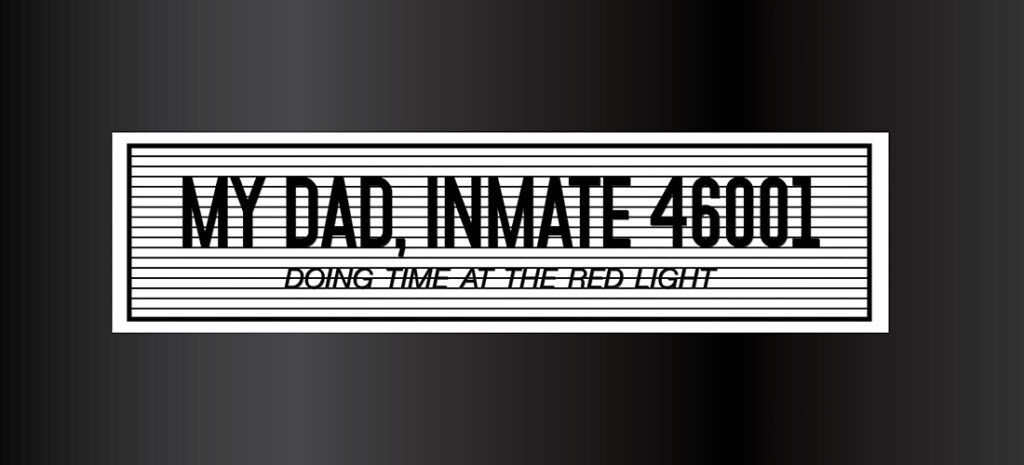
On a recent trip with friends, I casually mentioned my father’s unfortunate incarceration, an expression adopted from the character Anthony Bouvier, portrayed by Meshach Taylor, on the hit sitcom Designing Women. Fans of the show may recall that from 1986–1993 Taylor played a gentle quipster, unfairly convicted of robbery. 

I preferred Bouvier’s jokey euphemism; it landed gentler than saying, “My father went to the big house.” Or, “Dad did time.”

Prison talk is freighted, folks. Predictably, eyebrows raised.

“It’s not like he killed anyone,” I hastily added. What I didn’t add was he was merely one case among others in my family line.

A former mentor shared these encouraging words, “Normal families seldom produce writers.”

Take this magazine’s namesake and this city’s native son, William Sydney Porter — pen name O. Henry — who went on the lam to Honduras before serving time. He served three years in an Ohio prison; my father served only three months. I found myself bringing that up, as if it explains anything. Dad, however, could have easily walked out of an O. Henry plot — with a love for storytelling and an obsession for Pepsi-Colas and Mounds candy bars.

Dad, himself, and other relatives were never shy about sharing our family’s hapless narrative.

During a visit in Atlanta with my great uncle, Miles McClellan, he shared an alarming story. Our ancestral widowed Scots-Irish grandmother killed a tax collector during the Great Famine. “I’ve spent time at the Library of Congress,” Miles confided, “trying to learn more about her.”

Uncle Miles told an incredible tale: She whacked the tax collector with a fireplace poker when he attempted to collect their cow in lieu of taxes. She was spared a death sentence, but she and her children were exiled.

He died before finding proof, but the tale had taken unshakeable root in my imagination. 

There was more. Uncle Miles himself experienced incarceration as an adventurous young man who loved newfangled motor cars. He sought his fortune in Atlanta, starting one of the city’s early car dealerships. My grandmother insisted her favorite brother was framed by older, jealous rivals. Then, the narrative grew tricky: He fled after faking his own death by driving his Model T into a creek, then lived in Baltimore under an assumed name. But he returned to face the charges, just as O. Henry did, however false. My grandmother fainted outright when her brother walked up her driveway, very much alive.

After serving time, Uncle Miles went on to found another successful business — this time selling municipal water towers — and (honestly) earned wealth. He piloted his own plane, lived in an Emerywood mansion, and remained witty and compassionate, while walking the straight and narrow.

But when my father was sentenced to a federal penitentiary in Birmingham, Alabama, tales of redemption didn’t soothe us, despite his funny and considerate probation officer, Randy Harrell, who became a family friend. The fact that Dad was appointed a pre-trial probation officer seemed a clear indication of pending doom. When Dad was led away in handcuffs, I was a new college student. Three younger siblings were still at home. Dad was jailed at Maxwell Air Force Base with Watergate offender Charles Colson. My liberal father’s response? “This is cruel and unusual punishment,” he wrote to the warden and to anyone he could think to complain to. 

Dad and Charles apparently became buddies, although Dad was wary of Colson’s “jailhouse religion.” I kept a letter sent by Colson to me on Pentagon stationary urging me to keep up my studies. The logo, incidentally, is crossed out.

Dad returned to a business and family life in ruins. And the family curse continued. A young sibling would wind up spending months jailed for fishing without a license — so help me God. (He had a prior DUI). The old saw about he who represents himself in court has a fool for a client proved true in his case and mine; read on.

When appealing a driving conviction before Judge Elreta Alexander before her retirement, I tested that theory. Standing well apart from the hangdog guilty group and edging closer to the allegedly innocent, I pleaded “guilty with exonerating circumstances.” The judge snapped: “Stand there with the rest of the guilty!”

Admonished, I slipped a folder of images of “No Right on Red” signage at a downtown stoplight behind my back, now terrified of actually presenting my evidence. Would this clever judge realize my wide-angle lens might have distorted the sign’s distance from the stoplight? I had sworn to give honest testimony; but were the pictures just a tad misleading?

After systematically finding each “innocent” plaintiff guilty, Judge Alexander beckoned me to approach the bench. “You. The one who doesn’t know if she’s guilty or innocent. What is it that you brought?” she asked, demanding the ill-concealed folder.

As she studied my pictures, I lightly joked that the worst that could happen was she would find me guilty. Fixing me with an assessing look, she warned that, no, things could get worse. 

“Read your ticket,” the judge said grimly. She could, in fact, jail me for illegally turning right on red. And levy fines. 

Jail?! I grew redder than a fully ripe McIntosh apple.

Perhaps because the ticketing officer failed to appear, Judge Alexander relented, ruling prayer for judgment continued, a PJC. 

I paid the court costs and sprinted out — a near miss as a jailbird. 

Long afterward, I refused to turn right on a red light, no matter how many horns honked or fingers flipped me off.

Felonious grandmother, uncle, father and brother, know this: I vow to break the chain of unfortunate incarcerations.

That annoying driver who rubbernecks before proceeding right at the stoplight? It’s probably law-abiding little ole me. Just wave hello and please don’t honk; there’s some serious ancestral baggage riding with me and a curse I’m doing my best to shake.  OH

Cynthia Adam is a contributing editor to O.Henry magazine.

Home Grown

Home Grown
Angel on Her Shoulder, Nape and Wrists

Mama picks her pungent poison

By Cynthia Adams

My Mama was wild for big, strong fragrances, favoring those that grew stronger as the day grew longer. In terms of chemical warfare, Mama could have taken out a small village with her perfume alone.

For years, I questioned whether Mama had any sense of smell whatsoever. She navigated her Yank tank of a car with Avon perfume samples at the ready inside the trunk that seeped so powerfully into the interior, it would make my eyes water. Mama put the “stinking” into her Lincoln.

Typically, Mama didn’t wear the fragrances she briefly sold. No, she was a fan of more precious perfumes. Nina Ricci’s line was a long-time fave. But she was quick to jump ship in favor of celebrity-hyped scents. Joy became a favorite after reading it was then the costliest perfume on the market. She also favored anything worn by her style idols, Elizabeth Taylor or Joan Collins.

She positively flipped for Opium, a scent so powerful that I dreaded being in her vapor trail.

The last thing you wanted to do was hug Mama early in the morning. You, too, would wear Nina, Opium, Black Diamonds or her perfume du jour for the rest of the day.

Her fragrances tracked alongside a timeline of popular culture.

That changed when she remarried in her 70s after meeting a man who loved fragrances as much as she did. He would buy a huge (refillable) bottle of Angel for Mama and Polo for himself.

Between them, they could never sneak up on a person. You smelled them coming.

By then, Mama had abandoned all other fragrances for Angel. It still lingers on the clothing I saved after she “went to her reward” — its ironic name not lost upon her family.

All of which suddenly rushed back to me after entering a bathroom as a young woman exited. I had the equivalent of an olfactory flash back, including the gag reflex.

Covering my face with a tissue, I fled and immediately phoned an academic friend who positively excels at one topic in particular: pop culture. He shares the snappy sensibilities of late comedian Leslie Jordan. 

When he answered, his speech, always slightly breathless, was crackling with wait-till-you-get-a-load-of-this energy before I could even mention my prime reason for phoning — loathsome colognes. 

We immediately fell into our old-friends patter, talking over one another and half-listening, which is oddly comforting. These free-for-alls take peculiar turns that make us cry with laughter. 

I delight in dragging his intellectual self to my idiotic level, which is a bit like taking David Niven to a tractor pull.

But, this time, he was way ahead of me.

“Google ‘actors with dentures,’” my friend said with urgency, which admittedly threw me for a nanosecond, given our last chat was about Jimmy Carter, whom he had met on several occasions. For ages, he had hinted he might get me permission for a media visit to the Carter family compound in Plains, Georgia, where he had consulted on a preservation project. 

After a pause, he cackled with laughter — just as I feared he had lost it. 

I scribbled a note to myself as we nattered on, assuring him he’d just handed me a column idea. At least we were hewing to the general subject area of smells.

Assuring him I would google “dentures,” I steered him back to what was uppermost in mind: compiling a list of the worst fragrances of all time. Without hesitation, he ticked off the most odious of men’s colognes: Pub. Hai Karate. Polo. British Sterling. Jungle Gardenia. Straw Hat.

And hiccuped with laughter.

Delighted, I mentioned Tom Ford’s unisex fragrance — “F––––g Fabulous” — one which a clerk at Belk’s fragrance counter told me her store would not stock.

“Indecent,” she sniffed. I only knew such a scent as “F––––g Fabulous” fragrance existed because my niece spotted it at Charlotte’s SouthPark Mall.

“It stinks,” she texted, “but I sure want the bottle.”

Meanwhile, my friend zigzagged back to dentures, insisting Clark Gable’s horrid breath caused leading ladies to stuff their nose with cotton. (Explaining why Scarlet was so disgusted by Rhett?) A denture-wearing Tom Cruise and others surprised. (Go ahead. I’ll wait while you do your own search. I’ll be here when you return from that rabbit hole.)

Seeking bias-confirmation, I absently googled “most reviled fragrances” as my friend gabbed about the challenged chops of stars.

Angel popped right up. 

“Not very original,” posted a disgusted Reddit respondent, who just might be a chemist. “Angel, the progenitor of every sickly-sweet gourmand, its ramifications still being felt nearly 30 years later. OK, it wasn’t the first to use the caramel/chocolate ethyl maltol but it WAS the first to use it in those quantities, to that effect.” He ranted: “What makes it worse is that they squandered that bottle, that name and that beautiful blue color on THAT juice.”

Describing Angel as “carnal and sensual,” another Redditor claimed it was worn by model Jerry Hall. But I halted at the heading, “What perfume is good for body odor in monsoon?” Soap! my mind screamed.

For years I refused to wear any fragrance. It took most of early adulthood for my sense of smell to normalize after a childhood spent in mom’s flagrantly fragrant wake. Eventually, make-up maven Bobbi Brown created Beach, a clean, uncomplicated scent, reminiscent of Coppertone and sunlight. Fleeting, too, as a weekend idyll by the sea; it was truth in advertising, that name.

Some things, like Beach, wear well —
and, more importantly, fade like your favorite denim shirt. Some things grind. A lot like Cruise’s original teeth, come to think of it.

Meantime, my friend was still cracking on about celebrities and dentures. But my head, frankly, was lost in a fragrant cloud — one that had Mama’s name all over it.  OH

Cynthia Adam is a contributing editor to O.Henry magazine.

Home Grown

Home Grown

Just the Beans

Upping our daily grind

By Cynthia Adams

Our kitchen counter is dominated by a coffee machine large enough to be in a Starbucks. 

It grinds, perks, foams and noisily squirts. It is shiny and intimidating.

If this machine were a Hollywood star, as I am pretty sure it thinks it is, it would be Sofía Vergara.

The fully loaded, foreign-made espresso maker came from Williams-Sonoma. When Don came home with it, he stared at the enormous box before uncrating the behemoth, breathing shallowly. He sank down onto a stool. It was a moment. Finally, he gently eased it out of the packaging, barely exhaling, before carrying it to its place on the counter. 

He handled it with the care and caution of an acolyte bearing incense or an offering to the altar. I murmured something about the Oracle of Omaha, Warren Buffet, contentedly drinking McDonald’s coffee each morning. Don’s dumbfounded expression shut me up.

The machine claimed a huge section of counter space; a kitchen squatter, as large as the microwave and nearly as heavy.

The lengthy instruction manual and its detailed warranty were scrutinized, analyzed, memorized. It was actually some months before Don left town and I attempted to use the shiny beast myself, safe from his watchful eye. He was the barista in charge of all coffee making — and I remained too intimidated by the thing.

This Australian-engineered coffee machine had more doohickeys and programmed features than my car. Well, close. 

I dialed, adjusted, waited as it did its work. But the machine instantly loathed me, producing an espresso so intense and unpalatable I shouted “Mio Dio, quell caffe e forte!” And I don’t even speak Italian. 

The Australian machine only likes Don, presumably because he has relatives living near Sydney. Mine live near Hell’s Half Acre. I gave up and drove to McDonald’s for a latte as soon as I regained my ability to speak English.

Ostensibly, we had invested in this finicky contraption to end the high cost of daily “designer coffees.” It would take a mathematical whiz to calculate exactly how long it would take to make it worth it.   

Realistically, we have not saved one thin dime but are instead dipping into our retirement fund. The cost of the machine was only the beginning.

Because the machine deserved — no, demanded — specialty unroasted beans. “You do not put regular gas into a Ferrari,” Don spluttered.

How could I think of using ordinary roasted beans from the local market? Whose antioxidant value was already diminished? 

My ignorance launched Don into mansplaining.

He explained free radical damage. And polyphenols. The benefits from green beans might be preventatives against all the worst illnesses: cancer, heart disease, diabetes. He took a deep breath. 

So, if we didn’t buy roasted beans, I asked, did this mean we needed unroasted beans?

Of course, he replied. “They’re called green beans.” I believe he briefly closed his eyes, collecting. Then what? I asked, shooting a dirty look at the Australian which seemed to be smirking at my ignorance.

This led to the next phase of our coffee journey. Don first experimented by roasting green beans in a popcorn popper, something YouTube had suggested. That was soon deemed too difficult to control . . . beans went from lightly roasted to charred in seconds.

Did I mention the green beans were not inexpensive, especially factoring in the cost of shipping? Coffee is a commodity folks. Globally traded.

We swiftly replaced the hot air popcorn popper with a bona fide roaster, which also must be carefully attended despite all the fancy gee jaws and settings. It’s Australian, too, and nearly as cheeky as the coffee machine. 

The roaster was installed in the basement near bags of green coffee beans specially ordered from Sweet Maria’s in California. (Until the first invoice from the Californians, he roasted coffee for nearly anyone who mentioned a love of java.) 

The roaster required a contraption Barista Don built to divert the smoke, snaked across the basement ceiling to the chimney flue and overwhelming the basement.

But I do not murmur complaint, for therein lies the true payoff of coffee roasting. The dazzlingly aromatic smell, redolent of various coffee types, sometimes infused with the round notes of fine chocolate, rises through the floors of our very old house, suffusing the air.

I inhale deeply. This is the exact smell I hope carries me off to the afterlife when I die.

Back upstairs, the Australian is soon fed its favorite beans. It will grind, perk, foam and noisily squirt. And it will produce a perfect cup, often what caffeine lovers call a “God cup.” I wait obediently, grateful, actually. 

Barista Don and I have reached a kitchen accord. 

For just a sip of the freshly roasted goodness in my cup, you’d do the same. The machine — that Australian diva that took over our kitchen — has rightfully earned her seat at the table.  OH

Cynthia Adam is a contributing editor to O.Henry magazine.
Home Grown

Home Grown

You Can Lead a Horse to TV . . .

The Captain, Trigger and me

By Cynthia Adams

Watching my father lead Trigger into the den one sunny morning to watch Captain Kangaroo, he proves a point. The pony is as gentle as my horse-loving Dad claims. And Trigger’s taste in TV is spot-on.

This is a moment of undiluted magic.

Because I am every bit the scaredy cat my sister insisted I was, Trigger terrifies me,  though Dad argued he’s a fantastic pony. My puny 5-year-old self is certain that, like other horses in Westerns, he cunningly waits to rear up and buck me off. 

Dad, laughs, knowing Trigger isn’t itching to buck me; Trigger simply has an itch. 

“He didn’t buck you, Cindy girl,” he insists. “Trigger is just twitching at a fly.”

But I grow ever more anxious about riding.

So one Saturday, inspiration strikes Dad. His right brow rises up, a tell-tale sign when he has such moments, and he heads to the barn. With a few clicks of the tongue and some sugar cubes, he returns, leading the pony through the back door straight into the den where I sit munching Alpha-Bits. He recruits my older sister, Sharon, to keep lookout for Mama.

It is so masterful, Trigger doesn’t even jostle the Progressive Farmer magazines on the coffee table as my father leads him. 

Stopping before the boxy RCA television, he commands Trigger to lie down on the braided rug. I giggle excitedly as Trigger obeys. 

After a few giddy moments watching the Captain, Grandfather Clock and Mr. Green Jeans with Trigger, my sister hisses a warning. Pulling on my Keds, I hastily follow them outside. 

Dad saddles Trigger and hauls me up. Then Trigger flicks at a fly.

I fall right off. 

I lack something essential in the horsewoman department. Pluck? Certainly. Assurance? That, too. Also, weight and balance.

Dad swears me and my sister to secrecy about the TV session, and Mama is none the wiser. 

But the episode has done its work, solidifying my desire to somehow become a cowgirl like Sharon. I dream of becoming bigger and sturdier. One worthy of such an erudite pony as Trigger, a superior pony who appreciates the Captain like I do. Unlike my sister and dad, I remain wary of life on the range. 

Sharon, with her sassy cowgirl outfit, hat, red boots and holster, fears nothing. Maybe she’s not a gun slinger, but she does break her shoulder blade defending me from the neighborhood bully. 

So I study cowgirl arts, like fire-making, perfected in my bedroom closet, where I strike match after match. Though I never catch my clothes ablaze I am successful in building a roaring campfire — directly outside our front door. 

After serious punishments are meted, I abandon fire making and attempt to make a name for myself as a magician, ordering a magic set from Bazooka bubble gum. I envision entertaining cowgirls and cowboys exhausted from fending off desperados on the range. 

The main component in the minuscule magic set — lifeless Mexican jumping beans that looked suspiciously like dried black beans — are a huge disappointment. 

Even Trigger looks puzzled by the inert beans.

Ditto for the desiccated sea monkeys I order. Magician David Copperfield reports he was similarly inspired by the Captain, too. But the magic act never materializes. Despite my best efforts, the only thing I am able to vanish is my dream of being a magician.

Trigger proves a fine listener as my ambitions unspool and die. The Captain teaches patience, so feeding my confessor carrots and apples, I cluck my tongue like my dad when visiting him in the pasture and barn. Trigger regards me with softly nonjudgmental eyes. 

Still, when he flicks, I bail.

Slowly understanding it is neither his fault nor mine, I scramble up to try again. He becomes a good friend to have, despite all the past and future falls. 

So, we brace for them together, Trigger and me, waiting for the day I grow bigger, stronger. Worthy of my own cowgirl suit.  OH

Cynthia Adam is a contributing editor to O.Henry magazine.

Home Grown

Home Grown

And Just Like That…

I learned sologamy is a thing

Kicker: Marrying yourself is called sologamy. Self-marriage is legal in all 50 states. Yet it took a 5-year-old to tip me off.

By Cynthia Adams

While hacking at a tangle of ivy and Virginia creeper, our neighbor, Warren, approached the fence. He swung a toy sword while wearing the expression of someone who wanted to unburden himself.

When I complimented his red kicks, he solemnly nodded, his blonde curls bouncing, and studied his feet as if surprised to find them there.

His small fingers reached through the chain link fence to pet Patch, our Schnauzer. Generally friendly, Patch responded with a small growl, even as his tail wagged happily.

Like kids, dogs are unpredictable.

“Sorry, Warren,” I apologized. “He’s grouchy today.” 

“So is Baxter,” he pointed out, nodding. Baxter, a wire-haired rescue, is mercurial. We worked hard to end incessant fence fighting between Bax and Warren’s two dachshunds.

“How’s preschool going?” I asked, still weeding. Wrong topic.

He muttered something unintelligible. His frown deepened. Muddling along, I gathered the little guy was interested in planting vegetables. “Plant some popcorn,” I suggested, trying to elicit a laugh.

“You can’t grow popcorn!” Warren replied. But, after thinking, he changed his mind and his face brightened. “It’s corn!” 

So, I suggested he grow popsicles.

“You can’t grow those!” he protested, spluttering. Warren was a tough audience. “You have to go to the South Pole to get popsicles!” Nonetheless, he agreed to include me in his next polar order.

Garden and snacks exhausted, I again broached the subject of school. One girl in particular seemed to dominate Warren’s thoughts, but he struggled to explain how. I’ll call her Julia.

I gathered that Julia perplexed him — naturally, irritation can mask fascination between the sexes.

“You know what she said?” he asked, frowning and walloping a magnolia with his sword, venting his frustration. 

What might a precocious girl say? I couldn’t guess.

“She said Obama married himself.” He gave the tree trunk another hearty stab before fixing me with a long look. Waiting.

I mumbled, “Is that right?” 

Warren muttered something to the intractable magnolia, not bending to his will, and lashed it once again. 

“That doesn’t sound right to me,” I said, trying to read Warren’s reactions. “You can’t marry yourself.”

This was comic fodder. My mind flashed to a TV show from the 1960s, The Linkletter Show. It was the sort of comment Art Linkletter drew when interviewing kids ages 5–10 for a popular segment called “Kids Say the Darndest Things.” 

But Warren had me thinking. 

Beyonce’s song, “All the Single Ladies,” pointed to a clue: Single women have long outnumbered married ones in the U.S. and in the U.K. 

Seems that sologamy, self-marriage, self-partnering had many names, and was legal and well documented.

When and where it began is unclear, but, in a 2003 episode of the dramedy Sex and the City, the main character, Carrie Bradshaw, declared she would just marry herself. Ostensibly to fight the unmarried woman stigma. Of course, that was fictional. Real life examples weren’t hard to find and include:

Supermodel Adriana Lima said “I do to me” in Monaco in 2017.

Actress Emma Watson “self-partnered” in 2019. 

Also, closer to home, American Idol winner Fantasia Barrino (from High Point) embraced sologamy by putting a ring on her own finger. Barrino later married Kendall Taylor — which self-marrieds can do — in 2015.

Bigamy? No. The self-married can legally other-marry.   

Singletons going the self-marriage route may or may not wear a wedding gown, may or may not buy themselves a nice ring, and may or may not have a wedding cake for their big day. But they report feeling affirmed, ready to vow eternal love henceforth. 

To themselves. 

“This is not a Bridget Jones-like tragic story,” wrote Ariane Sherine in a Spectator piece entitled “Marriage for One” four years ago. “If we can’t find a knight in shining armor, we make alternative arrangements.” 

Warren, abandoning his sword, was now on his trampoline, whooping and hollering. I mopped my brow, observing his spring-loaded joy, which didn’t require another to be complete.   

Perhaps young Julia’s wouldn’t either.

It was a new time.

Knight be damned.  OH

Cynthia Adam is a contributing editor to O.Henry magazine.
Home Grown

Home Grown

Taking a Breather

A nose that worked on the company dime

By Cynthia Adams

I leaned close to the restroom mirror, examining my nose. With the company newspaper I edited (the last in the state) going to press, I took a breather.  A breather — ironic given my breathing had been permanently altered following a painful childhood swing incident. Nosebleeds and sinusitis became commonplace.

But after 20 years, that would finally change when I decided I’d see a doctor about my nose. A few weeks later, I remained mostly silent while a surgeon studied my X-rays, pointing out the years-old damage that led to a deviated septum.

Merely 2.5 inches of cartilage and bone gone wrong. Easily corrected, he explained. 

Seeking out a surgical remedy had been set in motion after a human resources exec visited my office, requesting we publicize a company-wide insurance campaign, specifically to encourage outpatient surgery — not yet commonplace. It would save the company, which was self-insured, significant money. As an incentive, company insurance would cover the entire cost of outpatient surgery — every dime. 

“Find someone who needs outpatient surgery and write an article about it,” the HR guy said matter-of-factly. 

My mind raced as he stood there waiting to be congratulated for his brilliant idea. Who the heck was going to volunteer for surgery? 

“How the . . . ?” I began, but stopped before insulting the same person who okayed my raises.

So I mumbled, “Well, I . . . ”

Then I surprised us both by blurting out there was a possibility of someone: Me!

He brightened.

“Great! Just be sure it’s medically necessary.” 

I was already wearing adult braces to correct a misaligned jaw and bite; maybe it was time to address another problem. My constantly blocked nose.

I agreed to a consultation with an ENT who was experienced with trauma surgeries. It was during the second consult he presented my X-rays. Pointing to damaged cartilage and bone, adding sunnily, “There’s complete blockage!” He sounded exactly like a plumber.

With a notepad in hand, I asked nuts-and-bolts questions and made notes. The surgery was called septoplasty. The benefits included fewer infections and nosebleeds, and, with mouth breathing remedied, no snoring. 

But I looked down as he spoke and wrote the question, Will he break my nose?, heavily underscoring the last three words. 

Mentally, I sketched an enormous mallet, a target inked onto my schnoz, and me, a hapless fool, reluctantly holding still. 

But I took a small step back when the surgeon explained the how of the surgery: It would necessitate internal incisions and a tiny flap opened up over my nose in order to clear the passages.

I revised my mental cartoon: not so much a mallet; more like miniature miners excavating a cave with tiny picks and shovels. Except, excavating cartilage. And, perhaps a little bone, he added. I must have blanched.

“You won’t feel the procedure,” he reassured.

How would I not feel that? With fearful misgivings, I shakily booked a date for surgery.

An older friend had a deviated septum corrected years before. She, too, couldn’t breathe properly; she also snored (to the great irritation of her former partner, a cranky artist). 

Over drinks she told me about the worst of the aftermath, nearly swallowing the gauze packing her nose when she dozed off once home. Of course, she didn’t choke to death, but she did have a frantic ER trip.

At the pre-dawn check in for surgery, my blood pressure was elevated (terror will do that), but this didn’t halt the procedure. I remember my nostrils being swabbed with something to staunch bleeding. Then an IV was inserted.

Blissful indifference streamed into the veins of my wrist. 

Picks? Shovels? Bring them on, I mumbled to the nurse, who smilingly reassured me they would use neither.

I remembered nothing until the nurse called my name, telling me the procedure was over. Still blissed out, she helped me sit and, soon, stand. When my mother met wobbly-legged me in reception, she looked stricken. 

“Hey, Mama! I’m fine and dandy!” I chirped with drugged-up enthusiasm. “Actually, I’m gonna bake these nice people a cake!” 

The nurses tittered knowingly behind me, according to my mother. I never baked anything more ambitious than box brownies.

Indeed, there was packing extending deeply into my nasal passages, the thing I feared the most. My under eyes were lightly bruised. But, in my happy daze, I was mightily relieved it was all over. 

Days later, during a post-surgical visit, I waited with other patients. But this was the A-team, apparently, who had opted for the more thrilling cosmetic procedure: rhinoplasty. 

A nose job.

I curiously scrutinized them with a side eye. Some wore tiny casts over their softly feminine, narrow noses. Each had a refined tip.

They had all been given a celebrity nose; specifically, they had supermodel Christy Turlington’s nose. (That was then. Now, Kate Middleton, the Duchess of Cambridge, has the most requested nose.) Though it intrigued me that ordinary folk could alter their face to look like a star, I was there to report on my less thrilling, non-cosmetic surgery. But — a nose was a key feature! I obsessed with how they would look once all swelling resolved, imagining them on a catwalk, a procession of proud noses, raised high.

After my brief check, I stood stock-still on the sidewalk, inhaling; was that great smell the restaurant a block away?

The corners of my mouth tilted upwards following my gauze-free nostrils. A world of fresh air and sensations awaited; I followed them straight to a lunch spot. The former Ham’s on Friendly was a greasy spoon I’d frequented before — but this was next level. Seems I had never really tasted the deep-fried fries. Bliss again!  Pausing to sniff the catsup (a condiment that didn’t smell so much after all, I discovered), I savored my lunch as if it were a Michelin Star experience. What could Christy Turlington possibly eat that could top this, I wondered, happily popping fry after fry into my mouth.

Like my nose, possibilities seemed wide open.  OH

Cynthia Adam is a contributing editor to O.Henry magazine.

Home Grown

Home Grown

Confessions of a Biscuit Eater

A hair-raising adventure with Mama

By Cynthia Adams

My Mama sprang immediately to mind as a friend described a Triad maven he met while doing work for designer Otto Zenke. “She was always dressed bridge-ready. And she was so rich she had a hairdresser do her hair daily!” 

Hairdressers everywhere should observe November 5 — the day she died — National Hair Day, versus October 1. (As hair care company NuMe declared in 2017, according to my editor.)

No matter the fluctuating fortunes, calamities or dramadies within our family, a few things were certain: The sun would rise right alongside a pan of Mama’s biscuits, and so would her closer-to-God hair.

Thy will and Mama’s hair would be done. Weekly. (Southerners know what “done” means . . . and in this case, it has nothing to do with biscuits.)

Her biscuit making, however, was instinctual after years of practice. Mama practically made them in her sleep, wearing a negligee, satin mules and a cocktail ring, which grew lumpy with dough as she kneaded. She slapped the pan in the oven, sipping a cup of black coffee before cracking eggs as the grits burbled on the stove.

Every day.

I lost my appetite for those pillows of Crisco, flour and milk in my early youth after learning from my new friend, Rocky, that toast was much cooler up north. 

Rocky also touted frozen pies — anathema to my kin. When Judy, the daughter of our (adored) bookmobile driver, echoed Rocky’s preferences, I swore off biscuits, too.

Mama was fit to be tied when my 11-year-old self requested toast following our no-biscuit pact. 

When Rocky moved away, I ate my words and rejoined the legion of biscuit eaters. 

Mama’s passion for biscuits eventually waned, but hairdos were sacrosanct.

Her salon was called “Barbara’s.” Envision the salon in Steel Magnolias — except Barbara’s was actually at Barbara’s house. It was obvious when Barbara was working because the carport sheltered her patrons’ land yachts — Lincolns, Cadillacs and Oldsmobiles. 

For hair to be considered truly “done,” it had to be impervious to wind, rain or natural disaster — minus wildfires — while made highly flammable with a shellacking of hairspray. Once done, women marched out of Barbara’s with helmet-like coiffures, teased and steeled. Fortified.

When older, her children grown, Mama wanted more. By her 70s, her salon visits were a twice-a-week habit.

Then Mama left my dad, Barbara and Hell’s Half-Acre behind, establishing a tight-as-ticks bond with a hairdressing duo in Norwood, NC — which even involved trips together. 

Mama achieved Nirvana vacationing with her hairdressers. (“Perry and Terry freshened my hair up every day when we were in Disney World!” she said blissfully.)

When she eventually remarried and moved to Greensboro, Mama struggled to find the level of style — teased high and hardened off — she demanded.

She tried salon after salon, eventually discovering Wayne. It became a happy pairing. When I needed to find her, I could go straight to his salon, spot her Lincoln outside and find Wayne spraying with zeal, a plastic shield at her face.

“He knows what my hair needs,” she would explain. “So many hairdressers do not.”

She also grasped what Jim, her husband, needed. Given his thing for blondes, Mama’s dark tresses grew steadily lighter. 

After Jim’s death, she moved nearer to my older sister.

The hairdresser hunt was on once more.

This proved more stressful than my (pragmatic) sister anticipated. They cycled through scores of beauticians as Mama’s health declined. Now using a cane, and soon, a walker, she began having falls, yet determinedly kept appointments. 

When Mama fell completely out of the Lincoln at the curb in front of her newest salon, the kindly hairdresser was recruited to visit her twice weekly.

This, too, grew challenging as Mama grew unable to stand at a basin long enough for shampooing.

Only in recent months of no bleaching had I discovered what her natural color actually was — still dark at the back though gray at the front. Shampooing Mama’s hair in the shower one day, I announced I’d “do” her hair. 

Glancing at mine — merely blown dry — she raggedly exhaled.

“Well . . .” Her hands fluttered in surrender. Attempting to twine her gray hair around a curling iron, I burned both her neck and my hand, and cussed. Mama looked exasperated as I held a cold cloth to her neck.

And started laughing.

“I’m having trouble, but it’s all because of your cowlick,” I lied sweatily.

“You don’t know diddly squat about hair or curling irons. Get that hairspray,” she giggled, indicating a large can of Big Sexy Hair. I sprayed her recalcitrant curls till wet, shakily trying to coax them into Modestly Compliant Hair.

When I burned us both again, Mama retorted, “Well, you’re no Wayne! Just get me my lipstick.” Big Sexy Hair couldn’t save me.

She pursed her lips as I swiped them with red — her perennial favorite — and reached for blusher, dusting her porcelain-pale face before swiping her lashes with globs of mascara, lending a jolting Bette Davis in Whatever Happened to Baby Jane effect. Mama was unrecognizable.

With a very light squirt of her cologne — Angel — I hurriedly wheeled her away from the mirror.

“Mama, why don’t I follow up that success by making a pan of biscuits?”

“Huh! Good thing I’m wearing my Depends,” she retorted drily. We giggled together; Mom, tremulous but plucky. “We can work on the hair later,” she added, and my heart dropped to my kneecaps.  OH

Cynthia Adam is a contributing editor to O.Henry magazine.
Home Grown

Home Grown

Mama’s International Cuisine

Taste buds awaken outside of her kitchen

By Cynthia Adams

Ours was an international kitchen . . . if you accept that the fare at IHOP is international.

Mama made gravy, but not the Italian red sauce certain New York Italians confusingly call gravy.   

True, she made red-eye gravy, milk gravy and brown sausage gravy, which she spooned over biscuits. As for red sauce, Mama went rogue. If she ran short on Hunt’s tomato sauce, she substituted catsup. She used ground beef in her spaghetti sauce, but to a difficult-to-digest extent. Slicks of oil glazed the surface as she ladled it over the pasta, completely unfazed.

Mama’s version of Chow Mein came from a can of Chun King bamboo shoots. As she hotly argued, it had to be authentic or else Chun King would never have put it on the can in the first place.

The menfolk loved Mama’s Hungarian goulash, a substantial dish that came from The Progressive Farmer or Betty Crocker’s cookbook. It had little to do with Hungarians or actual goulash, but Mama, a born improviser, was no stickler. The sheer weight of the dish — leaning heavily on a base suspiciously like her brown breakfast gravy — featured ground beef, cooking oil, powdered onion, celery salt, canned mushrooms and a pint of sour cream. So substantial, in fact, it could sustain a famished Hungarian ditch digger.

When I experienced authentic foreign food as a student studying abroad, my reality was rattled. Nothing I’d eaten in Hell’s Half Acre, as locals called our community, had prepared me. 

Italian fare — from a slice on the street to pasta — delighted yet bewildered. The simplicity and lightness of fresh ingredients — and lack of reliance upon Hunt’s tomato products — shocked my system.

Once back in Cabarrus County, I never told Mama how unlike Italian gravy it was. Besides, my father and brothers were enthusiastic about Mama’s hearty cooking, leaving no room for self-doubt. He would push back from the table, happily groaning, “Jonni, I’m stuffed!”

She was a get-er-done woman, uninterested in the fuss and bother of Julia Child. Jonni and Julia? Never. True, Mama was expeditious, but not so much as Mama June of Here Come’s Honey Boo Boo, who prepared on camera a two-ingredient “sketti” with catsup and butter. I figured most home cooks were equally steadfast in their reliance upon recipes found on can labels and cake boxes.

That was, until I met Peggy, whose son I later married. As a young woman invited to her table, I fell under her spell, already intoxicated by her fragrant kitchen — where fresh herbs and spices, olive oil, and generously sized Italian meatballs and sausage simmered.

I inhaled, and the aromas of Italy filled my senses. Although of Irish stock, Peggy was a native New Yorker steeped in Italian fare. 

Chianti was on the table — I’d noted Peggy enjoying a glass as she cooked. These were habits I vowed to adopt as soon as I had a kitchen of my own. Only an M.F.K. Fisher or a Ruth Reichl could express Peggy’s carefree alchemy, meshing ordinary ingredients into an exceptional whole as she sometimes sang along to a Frank Sinatra tune.

As dishes were passed, I watched, enraptured as Peggy served. The sauce lightly covered slightly toothy pasta. Over that went hand-rolled meatballs, fragrant of fresh parsley, basil and garlic. Then the Italian sausages. Grated parmesan (fresh!) was passed around, along with garlic bread for sopping all that deliciousness.

I carefully avoided telling Mama about the ecstasies of authentic home-cooked Italian for obvious reasons. Mama would have been mortally wounded; she fancied herself to be a fine cook. (And I never told Mama how Peggy also created a culinary masterpiece out of a Thanksgiving turkey, too — pushing herbs beneath the skin before dousing it with a good olive oil. And cooking it until done, which Mama seldom bothered with.)

When my marriage to Peggy’s son ended, my relationship with her endured. Years later, Peggy and I were having drinks with her daughter, Gale. Peggy was especially fond of a good Manhattan, and, as we sipped, I wistfully reminisced. 

Did she still make her spaghetti, I ventured, hopeful of wangling an invitation to her table?

Peggy giggled her signature, girl-like trill. “Oh, I don’t cook anymore,” she said, waving her hand. “Those days are behind me.” 

This news was tantamount to learning that Michelangelo retired early and no longer carved marble. 

“B-but . . . ” I spluttered, at a complete loss. I turned away before she could see my despair.

New World Italians have a charming expression for a meat sauce like Peggy’s: Sugo Della Domenica or “Sunday’s sauce.” It is never difficult, they observe, to get people to the table for Sunday’s sauce.

Indeed.

Sometimes in my dreams, I sip chianti in Peggy’s kitchen. The sauce simmers; bits of fresh basil dance to the surface. The growl of my impatient stomach. And then, sigh: that first al dente bite in the mouth. 

My sweet Mama, I vowed long ago, could never know.  OH

Cynthia Adam is a contributing editor to O.Henry magazine.

Home Grown

Home Grown

Mama and the Limousine

Joy-riding with millionaires

By Cynthia Adams

We strolled to our neighborhood haunt, an Italian restaurant attached to a downtown hotel near our Mendenhall money pit. It was far easier to walk than deal with the hassle of parking — a perpetual problem for our historic Westerwood neighborhood.

The joint offered decent fare and prices that fit our always-tight budget. Given it was furniture market time, too, better known places were packed.

Out front, a white stretch limo awaited. A curious thing — until I remembered market. “Some big deal furniture people,” I guessed. 

After spaghetti and generous pours of the house red, we left contentedly full, noting the limo and driver still outside. 

“Hey, I’m going to ask who the heck they’re waiting on,” I announced, emboldened by the Chianti. I tapped on the window glass. 

Then something (perhaps the wine again?) made me open the rear door behind him. The driver responded with a decidedly friendly Southern accent: “Hey!”

“Hey! I’ve always wanted to see the interior of one of these,” I lied, and slid inside as my husband stood, arms dangling, looking appalled. He frowned at me, shaking his head.

“It’s just some furniture people’s rent-a-limo,” I shushed him. Limos were commonplace during two times: prom night and the biannual furniture markets.

The driver explained that his name was Richard and that, actually, I was wrong. He drove full time for the limousine’s owners, who were having dinner.

The owners?

At the neighborhood joint?

He asked if I’d noticed the tag on the front: “Driving Miss Hazel,” a nod to the film Driving Miss Daisy. No, I mumbled.

As I silently explored the posh interior and full bar, Richard suddenly coughed and pointed at two figures leaving the restaurant. “See? There they are now! I’ll introduce you.”

My widening eyes followed his pointing finger; then my torso more or less froze along with the rest of my body.   

As Richard leaped out to open the passenger side rear door, I hurled myself across the seat, jumping out the opposite side. Busted! As the smiling owners settled in, I stood outside with the door still ajar, blathering praise about the limo and apologizing.

“Let us give you a ride,” insisted the owners, Dolen and Hazel Bowers. In for a dime, in for a dollar, what could I say? I stepped back inside, but I could feel the reluctant energy teeming off my husband as he slid in beside me. I knew without turning my head to glance at him that his face was red with embarrassment.

Two blocks later, Richard dropped us outside our house. Given the scale of the limo, it seemed very small.

“We’re having a neighborhood party next weekend,” I blurted out, desperately embarrassed. “Saturday at 7. Please come.”

“We’d like that,” the Bowers replied.

Friends of ours, we learned, lived on the same golf course near their befittingly unusual stucco home. Built in a semi-circular design, it was rumored to have an equally unusual interior — notable given its place alongside traditional Southern mansions. 

It turned out the couple had made a serious fortune in real estate holdings and development. They were known as personable and extravagant, if eccentric. 

The limo and driver, with its own custom garage, underscored the rumors.

I promptly forgot the exchange until Saturday evening, with the party in full swing. My mother was in town to celebrate reaching a cancer-free landmark and things were hopping.

Suddenly, the doorbell rang, which was odd, as everyone else came right in, following the music and party chatter. I answered the door and a uniformed man appeared into view.

Richard.

Richard sort of goose-stepped into the living room, stopping abruptly. Then, five words: “Announcing Mr. and Mrs. Bowers.”

Doffing his cap, he retreated with a flourish. 

“Heddo,” said Hazel, adorably, her accent slightly unusual despite her being a local. She wore high heels and tottered into the room. Dolen followed.

The raucous party grew absolutely silent. 

Richard insisted that he’d wait in the drive with the limo. When we explained we shared a driveway with our (intractable) neighbors, he decided to simply circle around the block. There was nowhere in a neighborhood that was planned during a time of horse and buggies for a stretch limo, as I imagined what a scene endlessly circling presented. 

Mom, guest of honor (dressed in a suede midi-skirt and looking like a westernized Joan Collins), was enraptured and breathed she’d never been in a limo. Clapping, Hazel insisted she deserved a cruise in the limo. Delighted, Mama left in the limo to go God-knows-where.  Richard took guests on limo rides as the night wore on, with the Bowers happily mingling. Everybody was happy.

I’d concocted a menu that was a nod to an English high tea. We served little sandwiches, savories, cheeses and sweets — including biscuits and an English trifle. And, naturally, tea. 

The spirits were more popular by far.

Dolen enthusiastically sampled everything, including some moonshine a guest brought.

Praising the moonshine, he soon put the high in our high tea.

Weeks passed, and my husband was working in a building mostly occupied by lawyers when he discovered that Dolen was there closing on a major business deal. You might guess the titan would have been wearing some Succession-worthy brand like Zegna. But no. Dolen had worn his favorite bib overalls.

“I guess the man had nothing to prove to anyone,” my husband speculated. Serious wealth conferred a unique social passport; the Bowers traveled through life exactly as they wished with Richard at the wheel.

Not long after that, Dolen died.

Party particulars fade away in time, apart from how you felt. We felt especially fine that night, our guests chattering throughout the house, many settled on the staircase, laughing, sipping drinks.

Hazel, who remained in the Triad, survived until last year.

Mama, too, slipped away three years ago, yet she often remembered the  Bowers, Richard and her thrilling ride to nowhere beneath a starry, clear sky. OH

Cynthia Adam is a contributing editor to O.Henry magazine.
Home Grown

Home Grown

Age is Just a Number

And fate sure has mine

By Cynthia Adams

After my birthday came and went, my nephew rang me up. One never to mince words, he asks, “How does it feel to be as old as you?” 

He reads Hunter S. Thompson and Cormac McCarthy, drinks truth serum for breakfast and avoids platitudes like, “Gee, you don’t seem old.” Only my nieces are that merciful.

After that sobering call, I’ve gone all in on scientific reading. I scrutinize claims that cold showers burn brown fat (that spongy glob rolling around our midsections). I stumble across MIT’s David Sinclair, who swallows a teaspoon of olive oil and youth-enhancing supplements for meals and looks about 30. I note how tech giants chill out in walk-in freezers, emerging fighting-weight-fit. All of them are arm wrestling with Father Time.

Meanwhile, I’ve been lolling in hot showers, ladling extra dressing on everything, kicking back with a Pinot and Camembert — when cold, sober and spartan were the HOV lane to youth.

What I want to know is how to look younger without actually having to do anything. Certainly not planking for core strength or training for 10Ks and half marathons, a thing I used to do. Or drinking mocktails.

What passive anti-aging opportunities had been overlooked?

One springs to mind following the shock of seeing myself in recent family photos: Avoid standing next to the very young in photographs.

Also, time to banish grandmacore from my wardrobe. Toss pantyhose — as not only a sign of the elderly but aggravating. Hot in the summer and freezing in the winter. And that droopy crotch!?

Henceforward, in future, avoid certain references. Like pay phones. And don’t mention when there used to be pay phones citywide, or how single girls never went on dates without a dime in case a handsy date made unwanted advances (outmoded term).

Note: Appear baffled by terms like “landline” or “collect call” or “long distance” or “person-to-person.” (When was a call ever anything but person-to-person?)

No “remember whens,” either, as in, “Remember when I got my first cell phone?” The Motorola 2900 was a costly monster, large enough to be mistaken for a military field phone. A few minutes’ usage was outrageously costly. 

Its replacement had the size and heft of a brick with a fixed antenna.

Also, no future mention of carbon paper (for my trusty IBM Selectric typewriter) —  or bottles of correction fluids like Wite-Out — shall cross my lips.

Even the stodgy Atlantic, whose readership is at least 50 years old, said this about Wite-Out: “The sticky, white fluid and its chief rival, Liquid Paper, are peculiar anachronisms, throwbacks to the era of big hair, big cars and big office stationery budgets.”

Crumbs dropped on the anti-aging trail: Tamp down that hair, drive an EV and text like it’s 2023!

So never shall I share raunchy stories like how during office parties someone inevitably went to the mail room to drop their pants and copy their naked bottom on a Xerox machine, back when they were common (and so was actually going to the office).

Because The Atlantic points out even printers themselves are in danger of being anachronistic in this digital age. Seems printer sales are steadily slipping down because little that we write is ever even printed. Welcome to the regular life of a writer, printers.

So, in the interest of anti-aging, I will not muse mindlessly, reminiscing about Tupperware parties (remember “burping” Tupperware?) Also, Avon, Mary Kay or other multilevel marketing companies. Mary who??

But where do I stop?

My nephew actually chides me for mailing him a Hallmark birthday card. “It wasn’t even personalized!” he adds. “And do you realize the carbon imprint of sending that single letter across the country?”

Just as I am about to whimper about how hard it’s gotten to find those delicious potato sticks anymore. The ones in a can. Drenched in palm oil. Which makes my arteries slam shut. And the pucker lines around my lips dig in deeper. And let’s not even mention the plight of orangutans.

Honestly, I’m growing cautious to the point of paranoia about what I can share with him anyway, given he’s this ripped fit, white-water rafting, carbon-counting hipster living in Denver. 

While I’m me. Living here.

Getting older — and more obsolete —  by the d#@! second. OH

Cynthia Adam is a contributing editor to O.Henry magazine.