Home Grown

Home Grown

Mama’s International Cuisine

Taste buds awaken outside of her kitchen

By Cynthia Adams

Ours was an international kitchen . . . if you accept that the fare at IHOP is international.

Mama made gravy, but not the Italian red sauce certain New York Italians confusingly call gravy.   

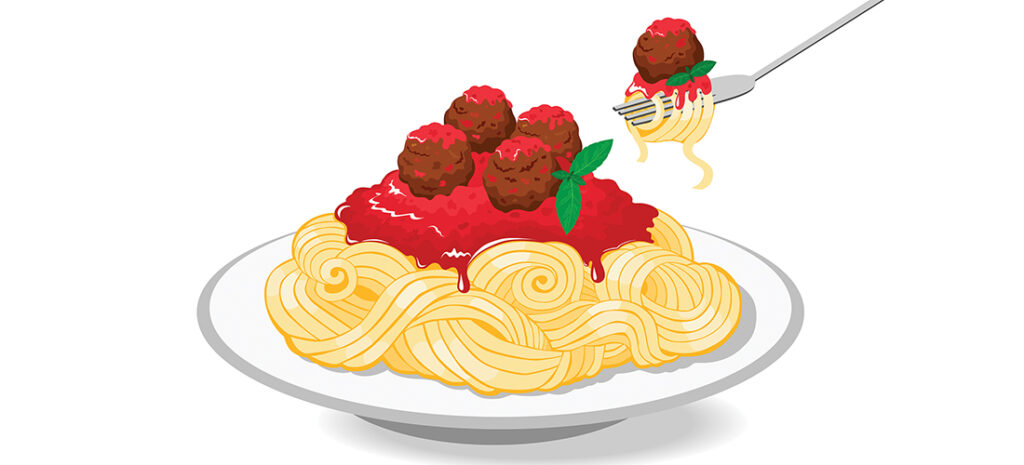
True, she made red-eye gravy, milk gravy and brown sausage gravy, which she spooned over biscuits. As for red sauce, Mama went rogue. If she ran short on Hunt’s tomato sauce, she substituted catsup. She used ground beef in her spaghetti sauce, but to a difficult-to-digest extent. Slicks of oil glazed the surface as she ladled it over the pasta, completely unfazed.

Mama’s version of Chow Mein came from a can of Chun King bamboo shoots. As she hotly argued, it had to be authentic or else Chun King would never have put it on the can in the first place.

The menfolk loved Mama’s Hungarian goulash, a substantial dish that came from The Progressive Farmer or Betty Crocker’s cookbook. It had little to do with Hungarians or actual goulash, but Mama, a born improviser, was no stickler. The sheer weight of the dish — leaning heavily on a base suspiciously like her brown breakfast gravy — featured ground beef, cooking oil, powdered onion, celery salt, canned mushrooms and a pint of sour cream. So substantial, in fact, it could sustain a famished Hungarian ditch digger.

When I experienced authentic foreign food as a student studying abroad, my reality was rattled. Nothing I’d eaten in Hell’s Half Acre, as locals called our community, had prepared me. 

Italian fare — from a slice on the street to pasta — delighted yet bewildered. The simplicity and lightness of fresh ingredients — and lack of reliance upon Hunt’s tomato products — shocked my system.

Once back in Cabarrus County, I never told Mama how unlike Italian gravy it was. Besides, my father and brothers were enthusiastic about Mama’s hearty cooking, leaving no room for self-doubt. He would push back from the table, happily groaning, “Jonni, I’m stuffed!”

She was a get-er-done woman, uninterested in the fuss and bother of Julia Child. Jonni and Julia? Never. True, Mama was expeditious, but not so much as Mama June of Here Come’s Honey Boo Boo, who prepared on camera a two-ingredient “sketti” with catsup and butter. I figured most home cooks were equally steadfast in their reliance upon recipes found on can labels and cake boxes.

That was, until I met Peggy, whose son I later married. As a young woman invited to her table, I fell under her spell, already intoxicated by her fragrant kitchen — where fresh herbs and spices, olive oil, and generously sized Italian meatballs and sausage simmered.

I inhaled, and the aromas of Italy filled my senses. Although of Irish stock, Peggy was a native New Yorker steeped in Italian fare. 

Chianti was on the table — I’d noted Peggy enjoying a glass as she cooked. These were habits I vowed to adopt as soon as I had a kitchen of my own. Only an M.F.K. Fisher or a Ruth Reichl could express Peggy’s carefree alchemy, meshing ordinary ingredients into an exceptional whole as she sometimes sang along to a Frank Sinatra tune.

As dishes were passed, I watched, enraptured as Peggy served. The sauce lightly covered slightly toothy pasta. Over that went hand-rolled meatballs, fragrant of fresh parsley, basil and garlic. Then the Italian sausages. Grated parmesan (fresh!) was passed around, along with garlic bread for sopping all that deliciousness.

I carefully avoided telling Mama about the ecstasies of authentic home-cooked Italian for obvious reasons. Mama would have been mortally wounded; she fancied herself to be a fine cook. (And I never told Mama how Peggy also created a culinary masterpiece out of a Thanksgiving turkey, too — pushing herbs beneath the skin before dousing it with a good olive oil. And cooking it until done, which Mama seldom bothered with.)

When my marriage to Peggy’s son ended, my relationship with her endured. Years later, Peggy and I were having drinks with her daughter, Gale. Peggy was especially fond of a good Manhattan, and, as we sipped, I wistfully reminisced. 

Did she still make her spaghetti, I ventured, hopeful of wangling an invitation to her table?

Peggy giggled her signature, girl-like trill. “Oh, I don’t cook anymore,” she said, waving her hand. “Those days are behind me.” 

This news was tantamount to learning that Michelangelo retired early and no longer carved marble. 

“B-but . . . ” I spluttered, at a complete loss. I turned away before she could see my despair.

New World Italians have a charming expression for a meat sauce like Peggy’s: Sugo Della Domenica or “Sunday’s sauce.” It is never difficult, they observe, to get people to the table for Sunday’s sauce.

Indeed.

Sometimes in my dreams, I sip chianti in Peggy’s kitchen. The sauce simmers; bits of fresh basil dance to the surface. The growl of my impatient stomach. And then, sigh: that first al dente bite in the mouth. 

My sweet Mama, I vowed long ago, could never know.  OH

Cynthia Adam is a contributing editor to O.Henry magazine.

Home Grown

Home Grown
Mama and the Limousine

Joy-riding with millionaires

By Cynthia Adams

We strolled to our neighborhood haunt, an Italian restaurant attached to a downtown hotel near our Mendenhall money pit. It was far easier to walk than deal with the hassle of parking — a perpetual problem for our historic Westerwood neighborhood.

The joint offered decent fare and prices that fit our always-tight budget. Given it was furniture market time, too, better known places were packed.

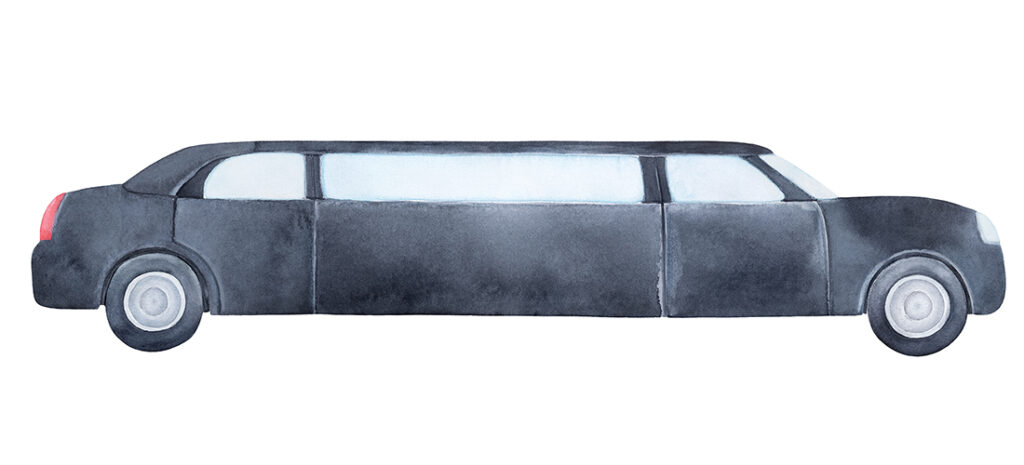
Out front, a white stretch limo awaited. A curious thing — until I remembered market. “Some big deal furniture people,” I guessed. 

After spaghetti and generous pours of the house red, we left contentedly full, noting the limo and driver still outside. 

“Hey, I’m going to ask who the heck they’re waiting on,” I announced, emboldened by the Chianti. I tapped on the window glass. 

Then something (perhaps the wine again?) made me open the rear door behind him. The driver responded with a decidedly friendly Southern accent: “Hey!”

“Hey! I’ve always wanted to see the interior of one of these,” I lied, and slid inside as my husband stood, arms dangling, looking appalled. He frowned at me, shaking his head.

“It’s just some furniture people’s rent-a-limo,” I shushed him. Limos were commonplace during two times: prom night and the biannual furniture markets.

The driver explained that his name was Richard and that, actually, I was wrong. He drove full time for the limousine’s owners, who were having dinner.

The owners?

At the neighborhood joint?

He asked if I’d noticed the tag on the front: “Driving Miss Hazel,” a nod to the film Driving Miss Daisy. No, I mumbled.

As I silently explored the posh interior and full bar, Richard suddenly coughed and pointed at two figures leaving the restaurant. “See? There they are now! I’ll introduce you.”

My widening eyes followed his pointing finger; then my torso more or less froze along with the rest of my body.   

As Richard leaped out to open the passenger side rear door, I hurled myself across the seat, jumping out the opposite side. Busted! As the smiling owners settled in, I stood outside with the door still ajar, blathering praise about the limo and apologizing.

“Let us give you a ride,” insisted the owners, Dolen and Hazel Bowers. In for a dime, in for a dollar, what could I say? I stepped back inside, but I could feel the reluctant energy teeming off my husband as he slid in beside me. I knew without turning my head to glance at him that his face was red with embarrassment.

Two blocks later, Richard dropped us outside our house. Given the scale of the limo, it seemed very small.

“We’re having a neighborhood party next weekend,” I blurted out, desperately embarrassed. “Saturday at 7. Please come.”

“We’d like that,” the Bowers replied.

Friends of ours, we learned, lived on the same golf course near their befittingly unusual stucco home. Built in a semi-circular design, it was rumored to have an equally unusual interior — notable given its place alongside traditional Southern mansions. 

It turned out the couple had made a serious fortune in real estate holdings and development. They were known as personable and extravagant, if eccentric. 

The limo and driver, with its own custom garage, underscored the rumors.

I promptly forgot the exchange until Saturday evening, with the party in full swing. My mother was in town to celebrate reaching a cancer-free landmark and things were hopping.

Suddenly, the doorbell rang, which was odd, as everyone else came right in, following the music and party chatter. I answered the door and a uniformed man appeared into view.

Richard.

Richard sort of goose-stepped into the living room, stopping abruptly. Then, five words: “Announcing Mr. and Mrs. Bowers.”

Doffing his cap, he retreated with a flourish. 

“Heddo,” said Hazel, adorably, her accent slightly unusual despite her being a local. She wore high heels and tottered into the room. Dolen followed.

The raucous party grew absolutely silent. 

Richard insisted that he’d wait in the drive with the limo. When we explained we shared a driveway with our (intractable) neighbors, he decided to simply circle around the block. There was nowhere in a neighborhood that was planned during a time of horse and buggies for a stretch limo, as I imagined what a scene endlessly circling presented. 

Mom, guest of honor (dressed in a suede midi-skirt and looking like a westernized Joan Collins), was enraptured and breathed she’d never been in a limo. Clapping, Hazel insisted she deserved a cruise in the limo. Delighted, Mama left in the limo to go God-knows-where.  Richard took guests on limo rides as the night wore on, with the Bowers happily mingling. Everybody was happy.

I’d concocted a menu that was a nod to an English high tea. We served little sandwiches, savories, cheeses and sweets — including biscuits and an English trifle. And, naturally, tea. 

The spirits were more popular by far.

Dolen enthusiastically sampled everything, including some moonshine a guest brought.

Praising the moonshine, he soon put the high in our high tea.

Weeks passed, and my husband was working in a building mostly occupied by lawyers when he discovered that Dolen was there closing on a major business deal. You might guess the titan would have been wearing some Succession-worthy brand like Zegna. But no. Dolen had worn his favorite bib overalls.

“I guess the man had nothing to prove to anyone,” my husband speculated. Serious wealth conferred a unique social passport; the Bowers traveled through life exactly as they wished with Richard at the wheel.

Not long after that, Dolen died.

Party particulars fade away in time, apart from how you felt. We felt especially fine that night, our guests chattering throughout the house, many settled on the staircase, laughing, sipping drinks.

Hazel, who remained in the Triad, survived until last year.

Mama, too, slipped away three years ago, yet she often remembered the  Bowers, Richard and her thrilling ride to nowhere beneath a starry, clear sky. OH

Cynthia Adam is a contributing editor to O.Henry magazine.

Home Grown

Home Grown

Age is Just a Number

And fate sure has mine

By Cynthia Adams

After my birthday came and went, my nephew rang me up. One never to mince words, he asks, “How does it feel to be as old as you?” 

He reads Hunter S. Thompson and Cormac McCarthy, drinks truth serum for breakfast and avoids platitudes like, “Gee, you don’t seem old.” Only my nieces are that merciful.

After that sobering call, I’ve gone all in on scientific reading. I scrutinize claims that cold showers burn brown fat (that spongy glob rolling around our midsections). I stumble across MIT’s David Sinclair, who swallows a teaspoon of olive oil and youth-enhancing supplements for meals and looks about 30. I note how tech giants chill out in walk-in freezers, emerging fighting-weight-fit. All of them are arm wrestling with Father Time.

Meanwhile, I’ve been lolling in hot showers, ladling extra dressing on everything, kicking back with a Pinot and Camembert — when cold, sober and spartan were the HOV lane to youth.

What I want to know is how to look younger without actually having to do anything. Certainly not planking for core strength or training for 10Ks and half marathons, a thing I used to do. Or drinking mocktails.

What passive anti-aging opportunities had been overlooked?

One springs to mind following the shock of seeing myself in recent family photos: Avoid standing next to the very young in photographs.

Also, time to banish grandmacore from my wardrobe. Toss pantyhose — as not only a sign of the elderly but aggravating. Hot in the summer and freezing in the winter. And that droopy crotch!?

Henceforward, in future, avoid certain references. Like pay phones. And don’t mention when there used to be pay phones citywide, or how single girls never went on dates without a dime in case a handsy date made unwanted advances (outmoded term).

Note: Appear baffled by terms like “landline” or “collect call” or “long distance” or “person-to-person.” (When was a call ever anything but person-to-person?)

No “remember whens,” either, as in, “Remember when I got my first cell phone?” The Motorola 2900 was a costly monster, large enough to be mistaken for a military field phone. A few minutes’ usage was outrageously costly. 

Its replacement had the size and heft of a brick with a fixed antenna.

Also, no future mention of carbon paper (for my trusty IBM Selectric typewriter) —  or bottles of correction fluids like Wite-Out — shall cross my lips.

Even the stodgy Atlantic, whose readership is at least 50 years old, said this about Wite-Out: “The sticky, white fluid and its chief rival, Liquid Paper, are peculiar anachronisms, throwbacks to the era of big hair, big cars and big office stationery budgets.”

Crumbs dropped on the anti-aging trail: Tamp down that hair, drive an EV and text like it’s 2023!

So never shall I share raunchy stories like how during office parties someone inevitably went to the mail room to drop their pants and copy their naked bottom on a Xerox machine, back when they were common (and so was actually going to the office).

Because The Atlantic points out even printers themselves are in danger of being anachronistic in this digital age. Seems printer sales are steadily slipping down because little that we write is ever even printed. Welcome to the regular life of a writer, printers.

So, in the interest of anti-aging, I will not muse mindlessly, reminiscing about Tupperware parties (remember “burping” Tupperware?) Also, Avon, Mary Kay or other multilevel marketing companies. Mary who??

But where do I stop?

My nephew actually chides me for mailing him a Hallmark birthday card. “It wasn’t even personalized!” he adds. “And do you realize the carbon imprint of sending that single letter across the country?”

Just as I am about to whimper about how hard it’s gotten to find those delicious potato sticks anymore. The ones in a can. Drenched in palm oil. Which makes my arteries slam shut. And the pucker lines around my lips dig in deeper. And let’s not even mention the plight of orangutans.

Honestly, I’m growing cautious to the point of paranoia about what I can share with him anyway, given he’s this ripped fit, white-water rafting, carbon-counting hipster living in Denver. 

While I’m me. Living here.

Getting older — and more obsolete —  by the d#@! second. OH

Cynthia Adam is a contributing editor to O.Henry magazine.
Home Grown

Home Grown

My Greek Tragedy

In which a hero rises from Athens’ ashes

By Cynthia Adams

Seeking a geographic cure after my father’s sudden death, my husband and I booked tickets to Greece during spring break in graduate school. So what if we lacked money, plans and a command of Greek?

The wheels had fallen off our family wagon with Pop’s death soon after my parents’ divorce.

Pop had died of a heart attack while he and a new, visiting girlfriend (nicknamed Lucy Locket) were enjoying an energetic getting-to-know-you session. After his funeral, my brother lured her from our family home with offers of a truck — then cash as a consolation for the diamond she insisted Pop promised her. His risk tolerance left behind unpaid taxes and mortgaged properties — in short, a mess. 

We found in Greece an echoing of my internal chaos. Strolling in an Athens square, we heard a bomb explode nearby. Hotel clerks quoted rates sky high and we felt increasingly stupid and helpless. We ended up in a room with no tub and a shower with a spout at shin-height. At least our feet were immaculate.

Off on a bus to wondrous Delphi and Corinth, we were issued tickets for different rows. On return, a woman with Tourette’s shouted at her seatmate. Mentioning Oliver Sack’s book on the subject, The Man Who Mistook His Wife for a Hat, a young, English-speaking passenger interrupted a conversation with me, saying, “Look, I’ve dealt with all the crazy ladies I can handle in one day.” 

(This tickled me so much I later wrote Sacks, who kindly replied.)

Booking tickets to the nearby island of Paros, we narrowly avoided being shoved off the gangplank by passengers who suddenly arrived like a Zombie horde. 

As the sea heaved that night, passengers heaved, too.

We reached Paros in gale-force winds and staggered on foot to the only open outpost. 

We booked into a convent-bare room with little heat or hot water, no blanket, no radio nor TV, only The Handmaid’s Tale to read. Downstairs we joined rowdy fishermen drinking ouzo while waiting out the storm. There was no menu and few dishes on offer. We ate (excellent, thankfully) spaghetti lunches and dinners on repeat and shivered. 

We rented a car at absurd cost just to see what else was on the island. Nothing but an abandoned marble mine. It shone in the sunlight, blinding us as we wobbled in the wind. We drove back, laughing at the instruction in the car’s dash to “return all ruined rubbers to the trunk.” (Rubbers, it happened, was their translation for tires.)

After five days in Paros, the winds calmed. As soon as we spotted the ferry approaching, we sprinted to pack our things.

But, back in Athens, peril awaited. On the way to the airport, a shrimp dinner literally left us broke after we were charged a usurious price (by the gram) for them.

How would we get to the airport?

Standing on a sidewalk with our bags, trembling with stress, I jumped when someone tapped my shoulder. A smiling woman asked in perfect English if she could help us.

We had been drained of our last cash at the restaurant, I nearly wept. Could she persuade the driver to accept our credit card — our last hope?

“Allow me to get a taxi for you,” the stranger nodded. 

When the taxi appeared, she spoke with the driver. Her voice was firm. She turned to us. “He will take you there. Do not worry.” Would he accept our credit card, I pleaded, my voice shaky.

“It is taken care of,” she said. “Do not worry.” 

We protested — how to repay her? Could we have her address? 

Shaking her head, she shooed us into the taxi.

“I don’t want your last memory of Greece to be a bad one,” she said. “So, think of me.” Flashing a brilliant smile, our benefactor turned, vanishing into the crowds.  OH

Cynthia Adam is a contributing editor to O.Henry magazine.

Home Grown

Home Grown

Travels with Mama

A daughter unpacks her mother’s baggage

By Cynthia Adams

Mama never traveled light. She traveled with intentions. Those encapsulated champagne-and-caviar dreams and included sequins, suits, wraps, strappy heels, scarves, earrings, necklaces, belts, handbags, daywear, nightwear and leisure wear for God knows where.

Working at a consignment shop meant Mama apparently bought just about everything that happened to be in her size. 

Travel light? Mama traveled heavy, whether visiting friends in Spartanburg or family in Switzerland. Regardless, she packed foam curlers, curling iron, enough hairspray to asphyxiate a ballroom full of people and a complete palette of makeup.

Taking Mama on a lark to L.A., something negotiated while she recovered from heart surgery, I learned a thing or two. 

Never rent an economy-sized car when shuttling Mama.

Her suitcase — nicknamed “the coffin”— fit into the land yacht, her lumbering Lincoln — but was way too big to fit into the rental car I picked up at LAX.

The coffin could only fit through the rear doors when turned sideways and hefted across the rear seat. Mama patted her hair, commenting on the traffic, while I shoved her other bags and my single one into said trunk. And the West Coast traffic?

It is possible to be both sweaty and cold when terrified

Flop sweat trailed from my temples as we merged onto the freeway. Then Mama began musing about a good comb-out. 

A comb-out? She had gotten her hair done the previous day. But Mama had standards, which weren’t going to slip here in the land of “swimmin’ pools and movie stars.”

Passing a billboard, she visibly brightened, wondering about getting into a Wheel of Fortune taping.

I reminded Mama that my realm of influence was, well, nonexistent. The only two people I knew in Hollywood, Suzy Turcot and Sherwood Jones, were not lolling around swimmin’ pools. Suzy worked in lighting (on a hit sitcom and films) and Sherwood had edited the Olsen twin videos when they were kids, plus some feature films. 

Barely aware of palm trees and iconic scenery, I glumly realized Mama wouldn’t be pacified with Gray Line star tours and museums. She wanted hair, makeup, action!

Prompted by her screaming “Stop,” we pulled into a Beverly Hills inn with Mama’s carry-on bag at her feet, a huge purse in her lap and the coffin filling the back seat.

Mama adored the spacious Italianate, frond-filled lobby. On a sideboard awaited freshly squeezed juice and stage-perfect fruit. 

The lobby bore little semblance to our bargain-rate Lilliputian room. The coffin sprawled once it was inside, consuming the floor space. It would only fit beside my twin bed. Opened, it belched finery.

The first night I stepped right inside it while fumbling to the loo, entangled in Mama’s diaphanous garb. 

She also brought court-worthy ensembles. Mama adored true crime, once accompanying me to Union, S.C., as I attempted to sniff out a story about a murdering mother. (She disarmed the lock-lipped townspeople with grandmotherly inquiries — Mama knew more about the murders than Nancy Grace.)

Which is why, on day two in L.A., donning a pantsuit, Mama mentioned Brentwood. After studiously following O.J. Simpson’s trial, Mama pointed out gory details as I clenched the steering wheel.

Mama Macabre.

Days in L.A. became a whirl of celebrity crimes and my traffic misdemeanors — when I found the police department to protest a whopping parking ticket, I pointed out it was featured in Beverly Hills Cop.

On a subsequent trip with a small entourage including my sister, our first to Vegas, we unwittingly booked a tattered hotel slated for demolition. And yet, Mama had filled the coffin with clothes suitable for Monte Carlo. 

Her sparkly garb would have thrilled Raymond in Rain Man, but was overkill at the slots. If Mama noticed fellow gamblers in sweatshirts and worse, she didn’t comment.

Here I learned something new: Beware of a casino’s largesse.

Slurping down free cocktails, we shrieked with jubilation as the slot machine began screeching and flashing like a fire siren. Jackpot! 

“How much did you win?” Mama gasped, adjusting her sequined top. 

“I can’t count that high,” I shouted. Gawkers gawked. The machine spit coin after coin. “Forty quarters!” 

I ordered another Bloody Muddy, weighing an upgrade to the Wynn with my winnings. 

Ten dollars.

Regret, I realized by daybreak, thy name is stupid drunkenness.

It wasn’t even enough to buy Mama another glitzy consignment shop top.

The next day, chastened by my wanton ways, I reconnoitered and visited the Guggenheim Hermitage in the Venetian hotel. It was a “jewel box” tucked into the Venetian’s lobby, featuring works from both Russia’s State Hermitage Museum and the Guggenheim, which was as jarring a fish-out-of-water Vegas experience one might have. It echoed with my footsteps as only one other person — a guard — was inside.  It soon closed due to lack of attendance. 

Imagine. 

Meanwhile, Mama rejoined my sister in the casino, inspired, rather than dissuaded, by my “windfall.” 

While walking along the strip back to our dumpy hotel, I noticed a wrecking ball had been indiscreetly moved into place. It seemed a metaphor straight out of a Wes Anderson flick. Then a stranger handed me a yellow flier advertising cheap flights over the Grand Canyon

I squinted in the overwhelmingly stark sunlight in amazement at this, the perfect antidote to the artifice of Vegas: A natural wonder.   

On approach, the other passengers and I donned headphones playing the musical theme to Grand Canyon to fine effect. Better than the Guggenheim — a natural work in a staggering landscape. 

As I stood on the precipice of this magnificent hole, my eyes welled. Meantime, back at the casino, Mama’s eyes shown with joy, too, when the one-armed bandit dispensed a bounty of coins. Enough winnings for a new pair of pantyhose. 

We both won, Mama breathed out that night, dressed in a splendid cocktail frock. Her very best.  OH

Home Grown

Home Grown

Zany or Zen:  Me and the Chelsea

Lodging complaints

By Cynthia Adams

It was my father’s idea to book me into the Hotel Chelsea. Yes, that Chelsea — Manhattan’s confounding hotel.

I was 15, en route to meet fellow high schoolers and our chaperones, young art teachers, for studies abroad. This trip, plan B, arose when my mother nixed my being in Ecuador as an exchange student.

“I won’t have it,” Mama insisted. “Something terrible will happen.”

My travel-happy Dad, heavily influenced by a strong dollar and the hope that I would score him a bargain Rolex while we were in Lucerne, suggested Europe.

You may be thinking, the Chelsea! How very cool. But, no. 

The seedy Chelsea was cheap. And so was my dad. Once, on a family trip to Nova Scotia, Dad tried to negotiate with an innkeeper on rates by offering his daughters’ help with housekeeping. Travel on the cheap with a large family reminded me of humorist David Sedaris’ accounts of his father, Lou Sedaris. My Dad, Warren, seemed to be Lou’s brother from another mother.

Rufus Wainwright wrote music at the Chelsea, even naming songs after it, telling Vanity Fair “there was no better address to have in terms of communicating decadent, sad ’20s esprit.”

Dad didn’t know the Chelsea had domiciled the likes of O. Henry, Mark Twain, Thomas Wolfe (who wrote You Can’t Go Home Again there), Tennessee Williams, Jack Kerouac, Allen Ginsberg plus Arthurs Clarke and Miller. No, he knew none of that. Nor that it was infamous for murders, suicides and misadventure — before Sid Vicious lived down to his moniker, killing Nancy Spungen.

The mood setter for my Chelsea experience was the taxi ride into the city. A grubby driver with two-day stubble on his double chin grinned as I gave the address: “222 West 23rd Street.”

“First time in New York?” he asked. “Southern gal,” he burped out, leering in the rearview mirror, careening wildly. Was he drunk?

The oppressive taxi stank of body odor.

“Welllll…” he drawled, like Robert DeNiro in Cape Fear. “Whar in Dixie? I’m Southern, too.”

I didn’t want to answer, but, well, Southern manners required it — so I mumbled, “Near Charlotte.” He followed up with, “Ever heard of a rapist, little girl?” 

His gray teeth showed as he grinned. “I got charged with rape down in South Kerlina and left.” 

Left? As in escaped? And I was in the rapist’s car.

Staring out the window, determinedly silent, I reviewed my helplessness. What to do? To my infinite relief, he pulled up at the Chelsea, chuckling.

I paid and fled with my bags into the then-seedy hotel, faced with a new dilemma. The Chelsea looked like what my elders called “a flophouse.”

Having escaped abduction or worse, I planned to hunker down in a dodgy room till morning. Before, gulp, taking another taxi ride to JFK. 

I was famished, but not hungry enough to venture next door to El Quijote, which has since been restored, by the way.

Just as well, it happens. Lola Schnabel, daughter of artist Julian, told Vanity Fair about a finding a human tooth lodged in a croquette while living at the Chelsea. 

At sunrise, jumping out of bed, I tugged opened the curtains. 

And froze.

Mere yards away, a slender man on the rooftop was performing a sun salutation. In the nude.

I dragged the tatty curtains closed. As quickly as I could dress, I asked the Chelsea desk clerk for help with a taxi, one driven by a non-rapist. He kindly obliged.

Weeks later in Lucerne, a Rolex saleswoman pulled trays of watches for my (uninformed) inspection, but my budget was $300. She gently suggested Bucherer instead and gave me a tiny Rolex spoon. Dad wore the Bucherer for decades, as if it was the watch he coveted. I kept the spoon.

(Years later, I gasped when actor Keanu Reeves sported a Bucherer.)

I never mentioned the taxi driver, the pre-renovation Chelsea, nor the birthday-suit sun salutation to Dad — who died long before Reeves proved the Swiss saleswoman, bless her heart, had been right all along.  OH

Cynthia Adams is a contributing editor to O.Henry magazine.
Home Grown

Home Grown

Highly (Anxietied) Entertaining

My mother, the hostess with a host of worries

By Cynthia Adams

My mother, while a charming and gracious Southern woman, was driven to the fine edge of sanity by entertaining.

Hosting the Home Demonstration Club (born in the Depression) to discuss homemaking topics such as canning and cake decoration was on par with Princess Margaret making a stop in Hell’s Half Acre. HHA was 30 miles from Monroe, Charlotte, Concord and — well, places where HRH Margaret would never deign to visit. 

“Company” sent seismic waves through our ranch home.

A hair appointment was booked. A trip to Smart Shop for a new dress. High-anxiety calls went to Mama Patty, her mother, who lived for company.

Mama Patty, always baking, was primed and ready for “drop-ins,” her polite term for interlopers. Not so with her youngest, Jonnie Louise (who dropped the “e” on Jonnie in her fifties — Mama Patty had hoped for a boy).

Out came the Electrolux, Johnson’s floor wax and the buffer. Yes, JL owned a buffer. Also, a punch bowl with cut-glass cups; plus, china, crystal, silver, linens, etc.

My older sister and I would vacuum, then hand wax the floors (yeah, Karate Kid stop your sniveling). Then buff. While managing to gripe and argue the entire time. 

Once when I complained that I was too tired to help, Mom gave me one of her diet pills. 

“These are from Dr. Pfeiffer, so they’re safe, but give lots of energy.” 

Those pills became known as Black Beauties on the street — amphetamines. Of course, JL didn’t know this. I grew more jittery than the shuddering buffer, following the oak grain and inhaling the waxy smells as my young heart hammered. 

While show time drew near, we were all banned from the kitchen as soon as cooking commenced.

Mom believed her usual repertoire lacking when it came to the Home Demonstration Club. She would send herself into a complete frenzy — once making a baked Alaska.

By the time the Home Demonstration agent and guests arrived, Mom, the floors and her buffet were perfect — but she was near collapse.

Then there was Mama Patty.

Mama Patty, who had faced devastating losses, lived out her life as if she had only walked among duckies and daisies. Yet she lost a toddler to meningitis. A young husband to an aneurysm. A breast to cancer.

(When questioned about never complaining, she replied, “Self-pity is a cancer! And it will kill you faster,” then proceeded to smock gowns for neighboring newborns and send cakes when someone died.) 

Mama Patty’s house was tidy, cheerful — and full of bad furniture.

At least, the kitchen was cheerful. The table, chairs and counter were red melamine rimmed with chrome. Pound cakes (lemon and chocolate) awaited in Tupperware. A fruit pie chilled in the “Frigidaire” with fried chicken, potato salad and pickles.

A meal was always at the ready and she happily fed whomever graced her doorstep. 

She “went modern,” decorating the den with a brown Naugahyde sofa and recliner, and a braided green rug. She accented with unidentifiable amber glass objects. With the recliner extended, she stretched out to enjoy her soaps, The Edge of Night and Secret Storm.

Mama Patty’s bedrooms were filled with 1940s-era “suites” of brown furniture, which even my kid self recognized as ugly. 

When Mama Patty died, mourners spilled outside the country church, later overwhelming her little house. A weepy-eyed man no one recognized blubbered, “I loved Miss Pat so much!” 

When asked how he knew our grandmother he answered, “Oh, I repaired her appliances.”

Seemed he and his family enjoyed not only regular visits but also her cooking. He once was fixing the washing machine when a bad storm arose; she perfectly innocently insisted he lie down on the bed till it passed. 

Mama Patty feared storms, snapping turtles tangling up her fishing line, snakes and drowning.

All real things to fear. And all of which made my mother’s social anxieties, then and now, an even greater mystery.  OH

Cynthia Adams is a contributing editor to O.Henry magazine.

Home Grown

Home Grown

Fringe Movement

Bitchin’ kitsch-in

By Cynthia Adams

There it was in the venerable Architectural Digest. Shag carpet everywhere. The “rise of kitschy themed vacation rentals.”

“Kitschy” and “themed” extolled in AD, arguably the most revered design publication.

Before I could get my eyeballs back down from the top of my head, there in the magazine’s online edition unspooled images of pink, shaggy, fur-covered floors, walls and ceilings. Boudoirs with round beds — as in Elvis’ Vegas era, Pocono-honeymoon-style round beds. And more vinyl, glitz, brass, acrylic, glass, unidentifiable materials, and Elvis-gold and Vegas neon colors than have been on view since Plan 9 from Outer Space hit the movie screen and pre-rib removal Cher was on TV.

Forget Granny Chic, Granny Core‚ or Millennial Chic. Forget Coastal Grandma Chic. Forget anything you’ve read about Minimalism, Houston style, New York style, West Coast cool. Forget it and gird your design loins.

Something else, something very strange, is afoot.

Something tacky this way comes.

And the most unsettling part? When Architectural Digest embraces tacky, readers are expected to simply submit as their discomfort scale ratchets up. How bad must things be in modern life for us to embrace kitsch taken to extreme lengths?

The taste-makers at the vaunted Architectural Digest are not alone in claiming that kitschy décor, kitschy homes and kitschy boutique hotels are rare and hot-hot-hot.

Among the renters of such hip-to-kitsch grandparents’ abodes was even — wait for it — a fire department.

I sort of get it, in that case, anyway. Wouldn’t such an interior kitsch so bad that design mavens wave their magic design wands in order to position it as good, just cry out for combustion? Hot-hot-hot so incendiary as to burn-burn-burn? That would seem to be a pyrrhic victory. 

But it seems there is no making kitsch, nor any extreme, go away for good. Bad taste exists because how else might we know how to define the antithesis?   

According to the BBC, kitsch was supposedly killed by the Modern Art movement. But, no. (Spoiler: Andy Warhol has a big role in the offing of really bad taste by conflating it with hipster taste.) Here’s what the BBC says about it:

“This is one reason for the emergence of a wholly new artistic enterprise, which I call ‘pre-emptive kitsch.’ Modernist severity is both difficult and unpopular, so artists began not to shun kitsch but to embrace it, in the manner of Andy Warhol, Allen Jones and Jeff Koons.”

Here, friends, comes the best part. Pre-emptive kitsch as defined by the BBC themselves:

“The worst thing is to be unwittingly guilty of producing kitsch. Far better to produce kitsch deliberately, for then it is not kitsch at all but a kind of sophisticated parody. Pre-emptive kitsch sets quotation marks around actual kitsch, and hopes thereby to save its artistic credentials.”

The BBC editorialist has examples: “Take a porcelain statue of Michael Jackson cuddling his pet chimpanzee Bubbles, add cheesy colours and a layer of varnish.” Certainly a strong visual. They continue: “Set the figures up in the posture of a Madonna and child, endow them with soppy expressions as though challenging the spectator to vomit, and the result is such kitsch that it cannot possibly be kitsch. Jeff Koons must mean something else, we think, something deep and serious that we have missed. Perhaps this work of art is really a comment on kitsch, so that by being explicitly kitsch it becomes meta-kitsch, so to speak.”

Meta-kitsch lives. Deliberately, some say, deliciously (or deliriously) kitsch redux, as in, “the 1980s were far more than just the ’50’s redux,” a direct quote from an online dictionary.

Beat them to the punch, in other words. Be in on the joke.

And then we have, thanks to design writer Kelsey Lawrence, an exposition on the “rise of kitschy, themed vacation rentals,” which includes motel rooms, Airbnbs and even travel trailers. (Especially Air Stream trailers.)

It’s nostalgia-tinged, Lawrence says. Those Pepto-Bismol, Strawberry-Shortcake-doll pink walls and carpeting, crushed velvet as the fabric of the moment, and the must have on repeat: once again, Playboy mansion style round, velvet-covered beds.

Bow-kitsch-a-bow-bow.

Lawrence blames the trend on the hardship of the times; the barrage of bad news, which apparently can only be shut out by focusing upon kitsch.

So, if you stare at hardcore kitsch long enough, you can blot out the images of fellow Americans demonstrating for their civil rights?

Pre-emptive, meta-kitsch, if taken to its logical conclusion, would extend to all matters of taste. For example, if you wore Tammy Faye cry-me-a-river makeup to the office on Mondays, your Bobbie Brown-tastefully-neutral face would be far more appreciated — perhaps even celebrated! — on Tuesday.

Or if you ditched your Talbot’s jacket for a Kimmy Schmidt getup for the PTA meeting, everyone would applaud your knowing irony. A hipster, in-on-the-joke? 

Like the green Jell-O with marshmallow-and-grated-carrot-salad brought to the elegant dinner party, temerity wobbling on a platter, the laugh wouldn’t be on you . . . it would be with you.

After the applause dies, enter FOMO. 

What exactly, one worries privately, inside a tasteful home with pale lacquered ceilings, industrial-chic doors, upcycled floors and Jeff Koons-inspired art, what deep and serious thing, did I miss out on?  OH

Cynthia Adams is a contributing editor to O.Henry.

Home Grown

Home Grown

Ready to Pounce

A game of cat and alpha

By Cynthia Adams

I was so eager to break the glass ceiling that I began eyeing the work exits if the ceiling showed no signs of cracking. Some bosses made exits easier than others.

My first real job paid peanuts, but the boss was a rock star in the civil rights movement. I was idealistic enough to love the grant-funded dead-end work. When the grant expired, I accepted a permanent job with a lackluster boss, only to discover a telling omen.

My desk overlooked a cemetery.

Between the new boss’s whispery voice and the graveyard view, I flapped my wings daily just to get my blood flowing, achieving minimal career velocity.

I moved on to an international corporation with real pay and prospects, and two bosses. All they shared in common were New York backgrounds and human bodies.

One, a pipe-sucking, tweed-wearing adman with a lofty vision of himself, drove a Volkswagen Thing. Despite his eclectic exterior, he was a dullard counting the days to retirement. The other, a Dapper Dan right out of Mad Men, was fresh out of rehab — imposed after he infamously peed off the boss’s deck at a Christmas party.

Dapper Dan was utterly brilliant, but bitter about his ex-wife, who had recently left him.

Unfortunately, I reminded him of her. He immediately nicknamed me (ugh) Cat Turd.

No longer bored, I pointedly ignored the insult.

Slowly, the embittered one found grace, thanks to a relentless pursuit of recovery (although my feline excrement moniker stuck). He invited me to hear him speak at AA meetings — for once, he knew what he was talking about — sharing the program and his spiritual practice. Soon, I recognized toxic relationships of my own. Dapper Dan’s recovery helped me leave a painful marriage and recover myself, too.

Next, I found yet another colorful boss (imagine Colonel Potter on M*A*S*H). He was no alcoholic, but rewarded late workers with a splash of Dewar’s in our coffee mugs. I didn’t like Scotch, but adored the irreverent man.

I was recruited away from that job, but soon remorseful, as the new boss, a shameless sycophant, was Colonel Potter’s opposite.

Soon, I hastened to my final corporate gig — working alongside a vainly handsome, abusive alcoholic: “Mr. Alpha.” 

What are the odds? Seemed I also reminded Alpha of his ex-wife.   

I am ashamed to admit how thrilled I was when Alpha revealed himself by lewdly insulting an off-duty police officer at a work event. Arrested on suspicion of DUI, he dispatched me to find cash for his bail. Before I did, I whispered to the arresting cop, “Take his belt. He’s probably a suicide risk.” 

Of course, Alpha was far too in love with himself for self-harm.

Alpha began making moves upon our shared assistant, who tearfully reported it to me. Human resources was overseen by Alpha’s pal and she refused to go there.

How to stop Alpha?

The answer surfaced while I was scanning articles for a work project.

I enlisted friends far and wide to mail articles on workplace harassment to Alpha — printing or typing his address.

I played a long game, and nervously waited.

Eventually, Alpha summoned me to his corner office. 

“Shut the door,” he growled.

“Stop it. Right now,” Alpha demanded, face reddened. 

“Stop what?” I asked, temples pounding.

“You know what,” he said. “I’m warning you.” 

“If you tell me exactly what it is you want me to stop, I’ll certainly try,” I bluffed quietly.

Alpha glowered. His mouth opened. Then closed.

“Get out,” he snarled. 

I padded away. 

From that day forward, Alpha stopped pawing our assistant. Even so, I knew that even a Cat Turd had only nine lives and pondered my exit, praying I would land on my little cat feet.  OH

Cynthia Adams is a contributing editor to O.Henry.

Home Grown

Home Grown

Mama Buys a Horse

To have and to hold the reins

By Cynthia Adams

After decades of a volatile marriage, Mama had had enough.

Their Richard Burton/Liz Taylor stalemates were nuclear — often ending with bling. She loved jewelry, and Daddy liked extravagant gestures.

Our cash-strapped father loved land, cars and antiques. Once, he bought an Elvis Presley pink Caddy, then a horse-drawn carriage, displacing Mama’s Lincoln.

Her passions were big cars and hair and fashion.

My parents had eloped as teens, hiding the marriage license under the living room rug. When Mama developed a baby bump, they pulled back the rug.

They produced five young’uns. Daddy bought farmland — and baubles, pacifying Mama, who hated debt and his roaming eye. Arguments were the soundtrack to our childhoods.

Decades of stress, gravy and biscuits did their worst. He developed gout, “sugar,” and angina.

Mama developed breast cancer like her mother before her. Daddy, distraught, railed about disfiguring mastectomies, convinced of “laser alternatives.” She chose to excise it.

What couldn’t be removed was a metastasizing sense of betrayal.

Mama believed she had kept up her end of the marital bargain — at least all but the “in sickness and in health” part, which Daddy was failing, too.

She accepted a job assisting an elderly couple, packed up the Lincoln, and she and her best friend, Linda, left their husbands.

The left-behind men were a mess.

Daddy was bewildered. Their longstanding, unwritten contract was that if he capitulated, she was mollified.

A divorce required selling farmland.

“I’ll give her what she wants and she’ll come back,” he groaned.

She didn’t.

Daddy sourly predicted she couldn’t handle money, grousing, “She’ll blow right through it.”

She did.

We helplessly watched the wreckage.

Linda’s new boyfriend, Eddie, liked horses. Mama soon reported, “I’ve bought a horse! And the cutest riding outfit,” producing a picture of a quarter horse with a Western saddle.

Previously indifferent when we kept horses, Mama never learned to ride.

Our newly buxom Mama posed for Glamor Shots with an eye to the future, and her spending diversified beyond implants and horses.

She invested with hairdressers Perry and Terry in a startup florist business after a trip to Disney. Perhaps they twisted Mama’s arm; she’d returned with it in a cast.

The “Flower Pot” closed within 70 days. Seemed none of them knew or cared about actual floral work.

Next, she purchased an audacious ring in Miami, which we dubbed the Super Bowl ring.

Mama invested, then leapt out, taking a drubbing. “I’m not cut out for the stock market,” she frowned.

I inquired about her horse with no name. “Oh, I don’t know where it is,” she waved, sunlight setting her ring ablaze.

“You don’t know where it is?”

“Eddie’s taking care of it,” she said. “Somewhere. I’m not really a horse person.”

As it turned out, Eddie and Linda were over; Linda had reconciled with her husband.

Mama’s bank account dwindled . . . a missing horse . . . bad stocks . . . an empty Flower Pot. She began working at a consignment shop, easily affording new outfits every day.

Mama never looked better.

When Daddy died of a heart attack at 61, Mama sat with me all night as I sobbed.

“Your Daddy brought me a mess of collard greens a week ago,” she confided. “I sort of think he wanted us to get back together.”

I know he did, I gurgled through Tammy Faye-ugly tears.

Mama bought an extravagant spray of roses for his coffin.

Daddy had left her $10,000 to buy a diamond.

In death as in life, everything — and nothing — was resolved.  OH

Cynthia Adams is a contributing editor to O.Henry.