Omnivorous Reader

Omnivorous Reader

Portrait of a Genius

When art and politics collide

By Stephen E. Smith

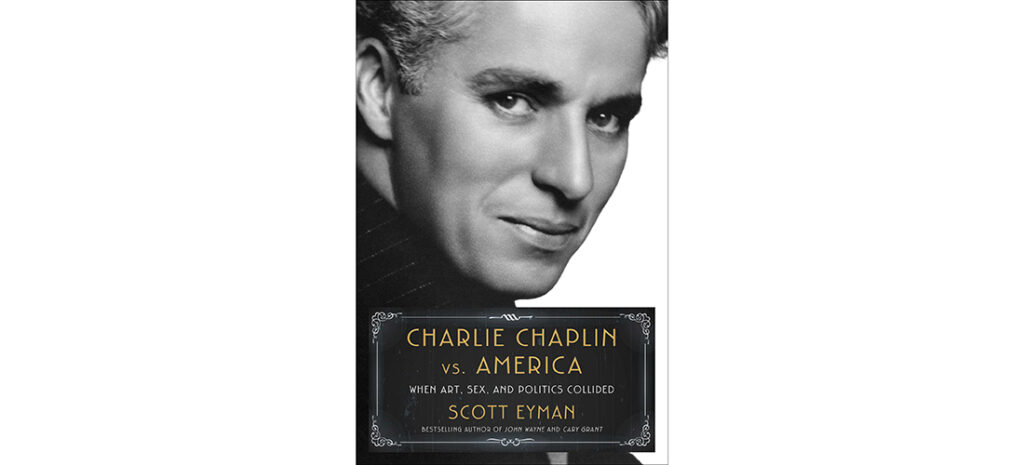
At a moment in our cultural/political history when we disagree about almost everything, you’d expect an ambitious pundit to pen a bestseller titled America vs. America: A Definitive Analysis of Our Cantankerousness. Although books aplenty attempt such revelations, it’s difficult, if not impossible, to articulate the forces at work in the here and now, but literary critic Scott Eyman has given us the next best thing to an explanation: Charlie Chaplin vs. America: When Art, Sex, and Politics Collided, an exposé/biography of a man who defined, at least in part, the last century, and who suffered the slings and arrows of an America gone wacky.

Eyman’s latest offering — he’s authored six previous books on the film industry and various movie stars — may strike readers as a story told a trifle too late. After all, Charlie Chaplin is ancient history, a wobbly, bowler-topped, black and white stick figure balanced on a rubbery cane who inexplicably entertained our grandparents with the silent knowledge that authentic comedy has its source in the concealment of anguish. The day-to-day details of Chaplin’s life notwithstanding, there’s insight aplenty in this cautionary tale of an artist whose universal popularity among Americans diminished to the point that he was run out of the country and forced to take up residence in Switzerland for the later years of his life.

Chaplin was born in England and suffered a childhood of poverty and hardship. His alcoholic father abandoned the family, and he and his brother were sent to a workhouse. His mother was committed to a mental institution when he was 14, and Chaplin was forced to find work touring theaters and music halls as a stage actor and comedian. At 19, he toured with a company that traveled the United States, where he eventually signed with Keystone Studios. By the age of 20, he was the best-known man in the world.

Chaplin co-founded United Artists and went on to write and produce The Kid, A Woman of Paris, The Gold Rush and The Circus. After the introduction of talkies, he released two silent films, City Lights and Modern Times, both film classics, followed by his first sound film, The Great Dictator, which satirized Adolf Hitler. After abandoning his Tramp persona, his later films included Monsieur Verdoux, Limelight and A King in New York. His credits and awards would fill this page, but less-than-knowledgeable readers need only grasp this basic fact: Chaplin was a creative genius who had a profound influence on popular culture and the art of filmmaking.

The focus of Eyman’s biography is Chaplin’s fall from grace. Early in his career, Chaplin was accused in a paternity suit in which he was found guilty, although blood tests proved conclusively that he was not the father (at the time, the state of California didn’t recognize blood tests as evidence); but the scandal was enough to attract the attention of gossip columnists, Hedda Hopper foremost among them, who were always collecting dirt on celebrity targets that would sell newspapers.

More destructive to Chaplin’s reputation was the public curiosity regarding his politics. Although he lived much of his life in the United States — indeed, he made most of his fortune here — he never applied for citizenship, which generated a cloud of suspicion that never quite dissipated. Chaplin claimed to be an anarchist, “not in the bomb-throwing sense,” Eyman writes, “but in his dislike of rules and a preference for as much liberty as the law allowed, and maybe just a bit more.” In truth, he was little interested in politicians and politics, outside the restraints placed on the arts by contemporaries who were politically minded.

Having suffered through a childhood of poverty, he harbored a great concern for the underprivileged, which is evident in all his films. But when he released Modern Times, which thematically explored the unending struggle against authoritarianism, and The Great Dictator, which mocked Adolf Hitler, both films, humorous but essentially didactic in intent, further thrust Chaplin into the political arena. Prior to our involvement in World War II, he publicly advocated an alliance with the Soviet Union, and members of the press and the public were scandalized by his marriage when he was 54, to 18-year-old Oona O’Neill, the daughter of playwright Eugene O’Neill.

Because of his support of Russia, Chaplin was accused of being a communist sympathizer, and the FBI opened an investigation, all of which fed into the Red Scare and McCarthyism of the early 1950s. Chaplin fell into such disfavor with the public that he was denied re-entry to the U.S. after leaving for the London premiere of his film Limelight.

Eyman’s book is a “social, political and cultural history of the crucial period in the life of a seminal twentieth-century figure — the original independent filmmaker who gradually fell into moral combat with his adopted country precisely because of the beliefs that form the core of his personality and films.”

Certainly, the activities of the press — particularly the gossip columnists who fed on Chaplin’s foibles; and the FBI, which launched a long, out-of-control investigation of Chaplin’s life — will give the thoughtful reader pause. FBI files on Chaplin ran to over 1,900 pages, mostly hearsay procured from dubious sources, material that was fed to friendly reporters who used the misinformation to besmirch Chaplin’s character and promote themselves.

Are there definitive elements in Chaplin’s life that precisely parallel the political/cultural moment in which we find ourselves? Probably not. As usual, Mark Twain is credited with having said it best: “History doesn’t repeat itself but it often rhymes,” and readers, regardless of their politics, are likely to find themselves singing along with whatever sad tune history is humming at the moment.   OH

Stephen E. Smith is a retired professor and the author of seven books of poetry and prose. He is the recipient of the Poetry Northwest Young Poet’s Prize, the Zoe Kincaid Brockman Prize for poetry and four North Carolina Press Awards.

Omnivorous Reader

Omnivorous Reader
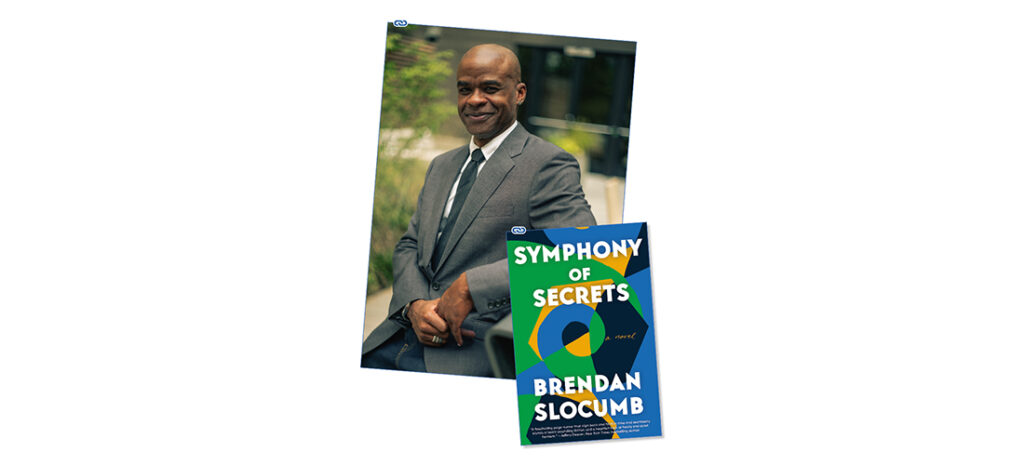
Portrait of a Rock Icon

The good, the bad and the ugly

By Stephen E. Smith

When organizing the 1967 Monterey Pop Festival, the promoter phoned Chuck Berry to invite him to perform, explaining that the acts were donating their fees to charity. Berry replied, “Chuck Berry has only one charity and that’s Chuck Berry.” End of discussion.

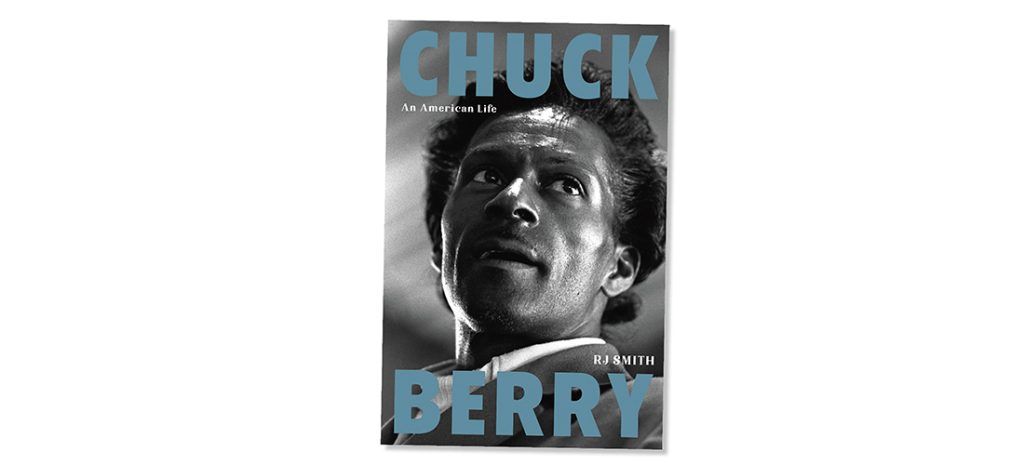
That was Chuck Berry at his most generous, and readers of RJ Smith’s Chuck Berry: An American Life will likely be taken aback by the unsavory details of the life of the man who gave us “Maybellene,” “Roll Over Beethoven,” “Sweet Little Sixteen,” “Back in the U.S.A.,” “Reelin’ and Rockin’,” “School Days,” “You Never Can Tell” and “Johnny B. Goode,” rock ’n’ roll classics that pop culture will not willingly let die.

Smith’s biography has been widely lauded in print, online and over the airways, and his study of Berry’s life is as close to a complete examination available to the public. Court records offer even more objectionable details. This much is certain: The more you read about Chuck Berry’s lifestyle, the less likely you are to ever listen to “Maybellene” with a sense of nostalgia.

Berry grew up in a solid middle-class St. Louis family. He wasn’t a blues guy who spent his youth picking cotton and banging on a catalog guitar. He did, however, suffer discrimination early in his life, and Smith devotes the opening chapters of the biography detailing the effects of Jim Crow on Berry’s formative years.

Berry’s trouble began when he was convicted of armed robbery as a teenager and spent almost three years in juvenile detention. When he was released, he drifted into music, became an early master of the new electric guitar, and created an original sound by combining country music with boogie-woogie.

We can argue about who invented the concept of “rock star,” but certainly Chuck Berry, Elvis Presley and Jerry Lee Lewis could lay claim to the term. Berry’s shtick was to sing with impeccable diction while blasting glib rapid-fire lyrics that teenagers could instantly comprehend and dance to. This straightforward blueprint for early rock ’n’ roll attracted Black audiences in the early ’50s. By the mid-’50s Berry’s fanbase was integrated. In the 1960s, he was playing to almost entirely white crowds, at which point his performance was simply called “rock.”

The bulk of Smith’s biography is taken up with the upsetting stories that accompany Berry’s hundreds of performances. His business plan was straightforward. Berry would sign a contract with a promoter who was responsible for supplying the backup band and amplification equipment. He’d arrive in a Cadillac, also supplied by the promoter, minutes before he was to take the stage. There’d be no rehearsal, no interaction with the band, and he’d demand payment in cash before performing. Berry would count the moola, play for the designated amount of time, duckwalk for the audience’s edification, and bang out the hits for which he was best known. Then he’d exit the stage. If there was an encore, he’d demand additional cash. When the concert was over, he’d pack up his guitar and make a clean getaway.

Generally, the audience loved it, dancing, cheering and having a fine time. Berry made money, the promoter usually made money, and the audience left satisfied. The late Rick Nelson summed it up best in his hit “Garden Party”: “Someone opened the closet door and out stepped Johnny B. Good,/playing guitar like ringing a bell, and looking like he should.” Ray Kroc would have been proud — Berry cooked up musical cheeseburgers, each one a tasty clone of its predecessor. Consistency was the key.

All of which was fine and dandy with American audiences. But there was one overawing problem: Chuck Berry. He was irascible, mercurial, essentially unknowable, and had an affinity for trouble. After serving his time in juvie and achieving fame as a rock ’n’ roller, he began traveling the county with a 14-year-old Native American girl he claimed was his assistant. The cops weren’t buying it and nailed Berry for violating the Mann Act — transporting an underage female across state lines for immoral purposes. He spent two more years in prison. Then the IRS began tracking the cash Berry received for his performances and nailed him for income tax evasion, and late in his career he was busted for installing covert cameras in the restrooms of a restaurant he owned, an act of voyeurism that gave rise to an investigation that uncovered a trove of pornographic material in which Chuck Berry was the star. 

As Berry’s antisocial behavior was becoming common knowledge, he was being roundly honored by the American public. On Whittier Street in St. Louis, the National Register of Historic Places listed his home as a monument, and after his release from prison for violating the Mann Act, NASA blasted gold-plated recordings of Berry’s “Johnny B. Good” into interstellar space aboard Voyagers 1 and 2. (Voyager 1 is now 14.1 billion miles from Earth, a far distance from the prison cells Berry occupied in the ’60s and ’70s.) His IRS indictment was greeted with a universal shrug, and his voyeurism conviction was likewise ignored by the press. Chuck Berry went right on performing and raking in the big bucks, playing out the string until the bitter end.

Smith has included all the facts: the good, of which there’s little enough; the bad; and the ugly, of which there’s plenty. Two questions remain. First, who was Chuck Berry? Did anyone truly know the man? Berry explained his sense of self in an interview: “This is a materialistic, physical world. And you can’t really KNOW anybody else, man, because you can’t even really know yourself. And if you can’t know yourself then sure as hell no one else can. Nobody’s been with you as long as you and you still don’t know yourself real well.”

The second question is more complex, encompassing the American penchant for revering individuals, whether rich, talented or charismatic, who are given to violating legal and social norms. Are we willing to accept outrageous behavior from unrepentant religious leaders, corrupt politicians and wayward rock ’n’ roll stars because they’ve somehow made themselves infamous? Apparently so. After all, nothing is quite as American as hypocrisy. OH

Stephen E. Smith’s latest book, Beguiled by the Frailties of Those Who Precede Us, is available from Kelsay Books, Amazon and Local bookstores.

The Omnivorous Reader

The Omnivorous Reader

Heavy Mettle

Three mothers of tenacity appear in a debut novel

By Anne Blythe

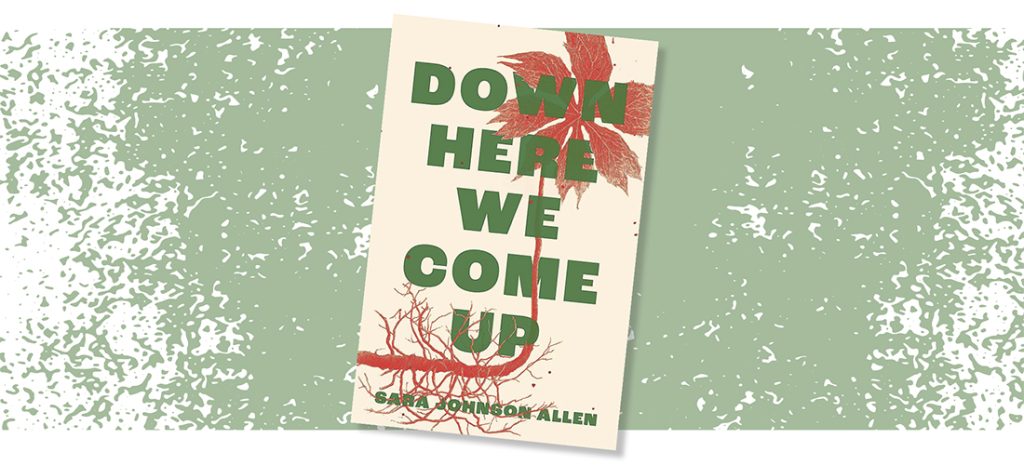
Mother’s Day has come and gone this year, but Sara Johnson Allen’s Down Here We Come Up offers a unique and complicated tribute to the grit of motherhood, not the roses and candy of a Hallmark holiday. This debut novel from a writer with Raleigh roots shows the depths to which three mothers will go for their children despite the blunders and foibles that accompany the rough-and-tumble lives that bring them all together under one roof in a “creaking, rotting bungalow” outside Wilmington.

In rich, vivid, sparkling prose, Allen’s page-turner explores tough topics: socioeconomic divides; the realities of immigration often skirted in today’s hot-button debate; the shadow economies of the illegal drug trade, and human and weapons trafficking.

Kate Jessup is the protagonist. She’s in her mid-20s, “movie-star beautiful,” and the wistful mother of a daughter whose soft skin she could still smell even after spending only 48 hours with her before handing the newborn over to a Boston couple in a “closed adoption.”

Kate’s a twin who is almost as street smart as her brother, Luke, is book smart. They’re the children of a sassy single mother, Jackie Jessup, who showed her twins how to live by hook or crook as they grew up near Wilmington. They learned early in life that “there was a thing’s market value, the perceived value, the true value, the if-the-buyer-was-drunk value.”

Jackie, readers find out pretty quickly, “could con people into anything because she saw ahead of everyone else by several moves,” Allen writes. “In a different set of circumstances, Jackie might have been a great chess player, someone who could beat the fast strategies of the men playing outside the Au Bon Pain in Harvard Square where Kate later followed her twin brother Luke when he received enough merit and need-based scholarships plus loan money that it didn’t matter he had no actual money.”

Settled near Harvard Square with her professor-boyfriend in a multi-million-dollar Victorian home he’d purchased from his father for a dollar, Kate gets a call from Jackie that shakes her out of the aristocratic world she had joined.

“Mama, I’m at work. What do you want?” Kate asked while ducking down between the rows of plants she loved to tend in the greenhouse where she worked.

“ . . . Look, I need something,” Jackie said between drags on a Kool 100.

Jackie wanted Kate to “get someone’s children,” and to entice her daughter, she added: “I have something you want.” Kate had been emotionally hollow when she left the South and her mother to be near her brother in New England. Most of all, she wanted to know where the daughter she’d given up for adoption was. Though she tried to tamp down those questions, they were never far from the surface.

Against her brother’s advice, she had even gone to the home where she thought the adoptive parents lived, just to get a glimpse of the life she had brought into the world. But there was no sign of the couple or a little girl who would, by then, be close to 8 years old.

Jackie’s phone call, and the chance that her mother might truly know where her daughter was, leads Kate back to the house where she grew up. She leaves Boston, taking her boyfriend’s Audi without his permission or even telling him she was going. Memories of a life she thought she had left behind flooded back.

“She knew driving south would be like letting poison seep into the well,” Allen writes. “She could taste it, bitter and sharp on the sides of her tongue, the menthol smoke, the chemical air freshener, a variety of aftershaves of strangers in their house, all of it.”

Once home, Kate found her mother deathly ill, “a skeletal, yellow-grey version of herself.” The bungalow was filled with people she didn’t know, travelers from south of the U.S. border who were there because of Maribel Reyes, a former teacher and mother of three who fled Mexico to build a better life for her family.

Maribel had moved into the Jessup home, taking on a daughter-like caregiver role for Jackie. More than that, she had created a safe house for migrant workers who made stops in southeastern North Carolina as they carved new paths in a foreign and sometimes unwelcoming land.

Maribel, Kate and Jessie may have converged in this place from different circumstances for an array of reasons but they shared a powerful bond. They were mothers who knew too well the pangs of being separated from their children. Each was willing to go to great lengths to narrow that distance, often bending the rules to achieve that greater purpose.

As the women plot the trip to get Maribel’s children out of Mexico and across the Bridge of the Americas from Cuidad Juarez into El Paso, Texas, Allen shows her deftness at describing places. You can almost feel the hot weather of the inner coastal communities. “Kate knew heat,” Allen writes. “She knew it up and down like the motion of a paper fan in a closed-window church. Blot-a-cloth-against-your-sweaty-forehead heat. Waving-up-from-the-asphalt-like-a-mirage heat. Wet heat.”

You can visualize what the coastal community looked like before the new housing developments cropped up on old farmland and forever altered the landscape. The sounds and smells of the changes hang heavily in the air — new languages among the rural Southern accents, the chilaquiles and memelas served in kitchens where biscuits once were the main fare.

Amid all the calculating, heartbreaking and serpentine storylines of survival are moments of triumph, jubilation and humor. Allen has her readers cheering for her characters, rallying for them to forgive themselves and others and longing for new beginnings.

“Follow anything back to the beginning, and you will find a mother,” Jackie says at one point.

From start to finish, Allen will make her readers think about motherhood, how to define it, and the joys, messiness and sacrifices that come with the job.

Author Alena Dillon describes Allen’s first novel as “a literary mic drop.” Let’s hope it’s not the end of a performance, but the first of more stories to come. She’s off to a great start.  OH

Anne Blythe has been a reporter in North Carolina for more than three decades covering city halls, higher education, the courts, crime, hurricanes, ice storms, droughts, floods, college sports, health care and many wonderful characters who make this state such an interesting place.


omnivorous reader

Omnivorous Reader

Discovering a Dutch Master

A life story ringed with mystery

By Stephen E. Smith

Convincing a friend that a work of art you love is worthy of his or her attention can be disheartening.

You: “See the inner darkness and the outer brightness of the painting, how the sense of circumambient air drifts evenly through the scene?”

Friend: “How much is that thing worth anyway?”

Our unabashed enthusiasm is too often dashed by indifference. Or, worse yet, by that Antiques Roadshow inclination to ignore anything other than a painting’s monetary value.

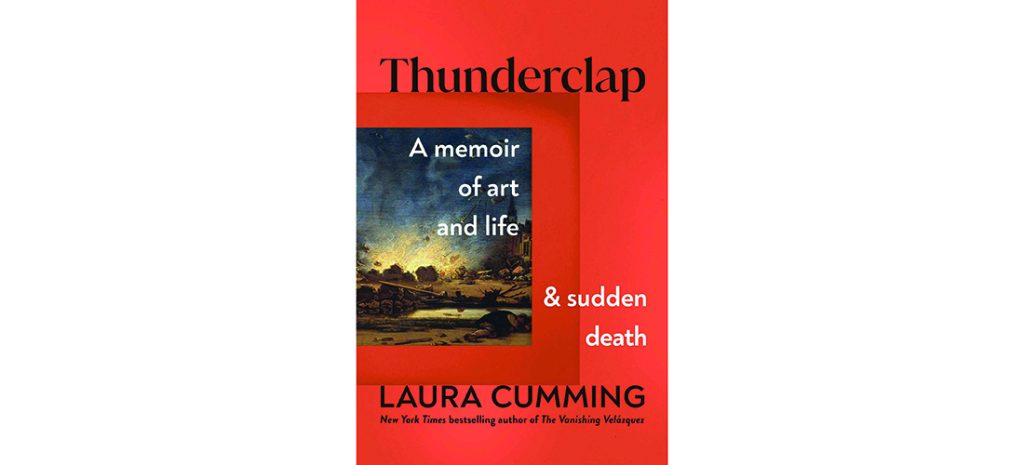
Given our confusion as to exactly what art is and what it means, it’s little wonder we tend to reject uninvited suggestions as to what we should like or dislike. That’s the challenge facing art critic Laura Cumming in Thunderclap: A Memoir of Art and Life & Sudden Death. Since childhood, she has been enamored of A View of Delft, With a Musical Instrument Seller’s Stall, by Dutch artist Carel Fabritius (1622-1654). Now she wants us to love it, too.

Cumming has been the art critic for The Observer and was a senior editor of the New Statesman magazine, both British publications. Her book The Vanishing Velazques was a New York Times bestseller. In her latest offering, she writes with keen insight and obvious affection for the Dutch masters — Rembrandt, Vermeer, Avercamp, Ruisdael, De Hooch, etc. — but the focus of her memoir is on the less celebrated Fabritius, known for having painted The Goldfinch, The Sentry, as well as A View of Delft. Fabritius is considered a minor Dutch master, primarily because so little of his work survives, but Cumming maintains that he’s no less accomplished than Vermeer and Rembrandt, and that he’s deserving of greater recognition. Unfortunately, precious little is known about Fabritius’ life, and it’s assumed that most of his paintings have not survived. We do, however, know about his death.

The “Thunderclap” in Cumming’s title alludes to an explosion near a convent in the city of Delft, where 80,000 pounds of stored gunpowder exploded on Monday, October 12, 1654. The detonation injured a thousand, destroyed hundreds of wooden homes and left a hundred people dead, including Fabritius, his apprentice and the subject of the portrait he was painting at the time. Fortunately, his best-known painting, The Goldfinch, was rescued from the rubble.

Although Fabritius was a student of Rembrandt, he’s seldom mentioned by his contemporaries, and documentation concerning his personal life is sparse. His wife and child died early, and, like most Dutch painters, Fabritius was deeply in debt. His isolation is reflected in The Goldfinch, his lesser-known The Sentry and two brooding self-portraits, which are little enough upon which to base a lengthy aesthetic exposition. “I go round and round this tiny tale,” Cumming writes, “this life circling out from the village of Middenbeemster, ringed with mystery. It is a man’s whole life. Yet I can get no more of him, except perhaps through his art. He is like a suicide who takes his secrets away with him.”

The “memoir” element of Thunderclap focuses on Cumming’s father, James Cumming (1922-1991), a painter of “semi-figurative art.” Cumming admired her father’s artistic dedication, but his inclusion in the narrative seems mildly intrusive when explicating the likes of the Dutch masters. Certainly, his influence is felt in the love Cumming has for art, but the connection to her narrative is tenuous at best.

But Cumming recalls with pleasure the art she discovered growing up in Scotland, and the magnificence of the paintings she observed on a childhood visit to the Netherlands. The bulk of her beautifully written text is devoted to explicating the art produced by those Dutch masters, and the book offers colorful images of the paintings she explicates.

Americans, for all our lack of aesthetic depth, are nonetheless capable of appreciating how art relates to our everyday lives. Grant Wood’s American Gothic, for example, is an immensely popular masterpiece that illustrates through the subtle use of symbolism most of our aspirations and contradictions — the individual vs. collective wisdom, religion, the American Dream, the virtues of hard work, the relationship between the sexes, upward social mobility, etc. — and the subtle social criticism in Childe Hassam’s Washington Arch in Spring is apparent to any careful observer. Ethnocentric tendencies aside, it’s possible to discern much about the cultural history of a foreign country by studying its art. This is where Cumming’s insights are essential.


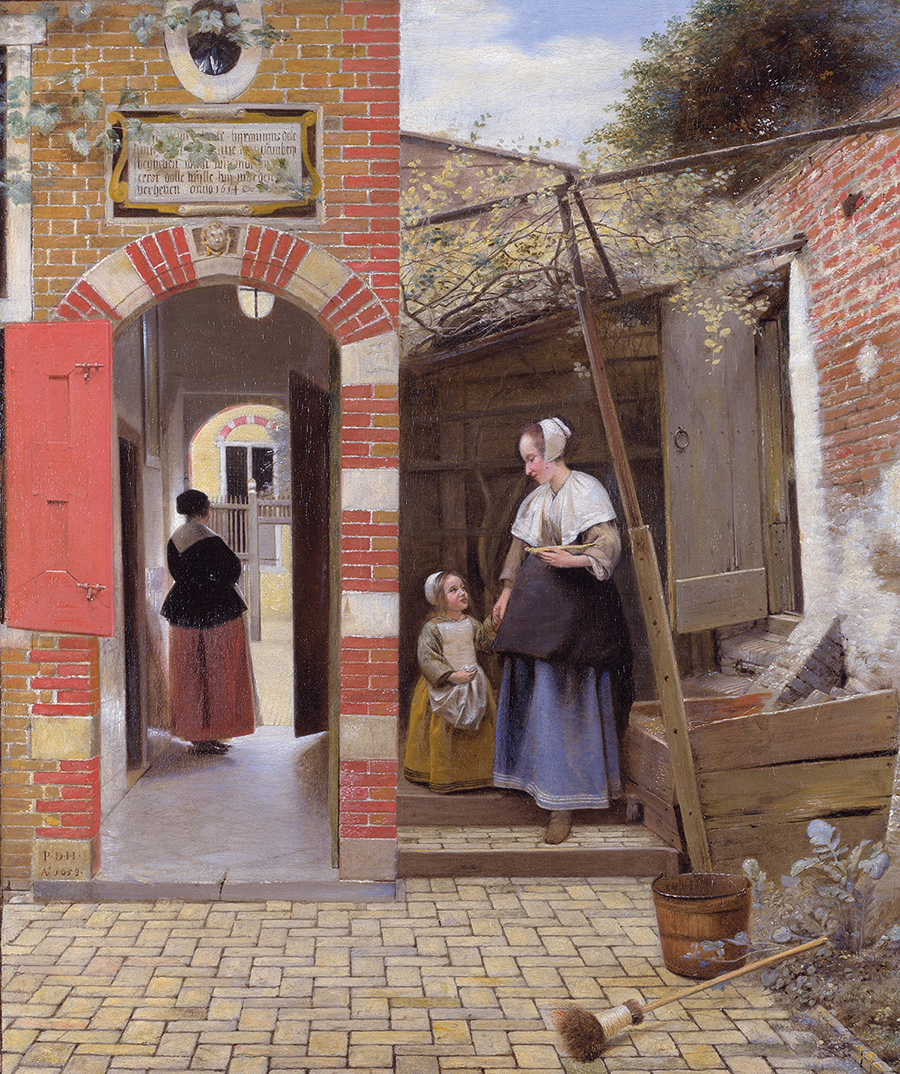
Her description of De Hooch’s The Courtyard of a House in Delft is representative of her work: “. . . the brickwork lying in its separate courses, the paint exactly imitating mortar; the dusty blue of the weeds and ivy, the clear light of the street; then the wonderful set of rhyming shapes — the scarlet shutter on one side, its wooden counterpart on the other; the oval window in the stonework and its glass twin in the hallway, the recession of arch inside arch inside arch that takes the eye right through the corridor and out in the street of Delft.”

Reading Cumming’s meticulous descriptions opens the reader’s perception of the accompanying paintings. Her precise prose takes readers on an excursion through the Rijksmuseum and the Golden Age of Dutch Art. It’s a tour worth every ounce of effort.   

No book, especially a book on art, is for everyone. But Thunderclap comes close. Keep an open mind. And if you’re not interested in art, you can take solace in the fact that the masterpieces Cumming presents are priceless, deserving of a jubilant Antiques Roadshow “Wow!” with the turn of every page.

Thunderclap: A Memoir of Art and Life & Sudden Death will be in bookstores in mid-July. If you find it enthralling, you might also enjoy Donna Tartt’s 2014 Pulitzer Prize-winning novel The Goldfinch.   OH

Stephen E. Smith’s latest book, Beguiled by the Frailties of Those Who Precede Us, is available from Kelsay Books, Amazon and The Country Bookshop.

Omnivorous Reader

Omnivorous Reader

Flying Toward Catastrophe

The real canaries in the coal mine

By Anne Blythe

Many of us turned a more enthusiastic ear toward the chorus of birds in our midst during the early days of the pandemic. With the routine rumble of traffic muted to a minimum, their chirps, trills and full-throated songs offered a sense of solace in an unfamiliar world.

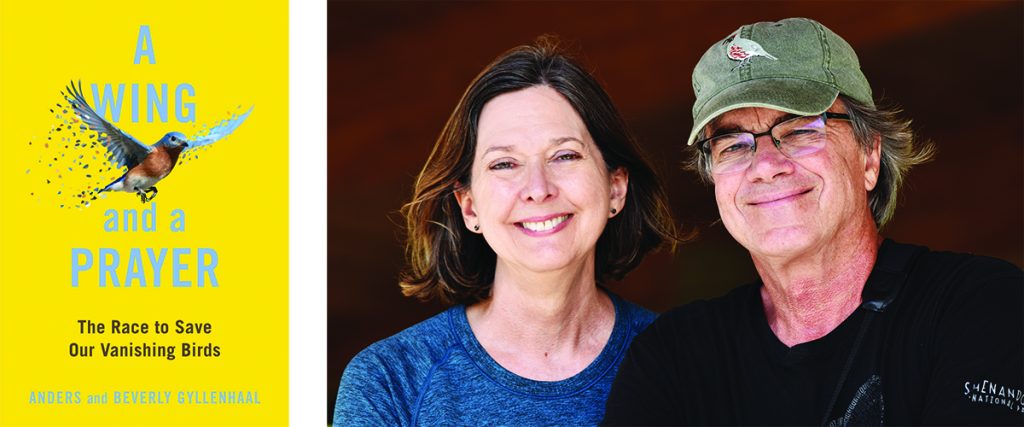
In their new book, A Wing and a Prayer: The Race to Save Our Vanishing Birds, Anders and Beverly Gyllenhaal tell us we should lean in and pay close attention. Their calls, or lack of them, their habits and changing habitats herald the health of our environment, write the avid birders and veteran journalists.

The husband and wife team, based in Raleigh, got the bad news out of the way at the start. In the last 50 years, a third of the North American bird population vanished.

“That translates to three billion birds of all sizes and shapes, in losses stretching from coast to coast, from the Arctic to Antarctica, through forests and grasslands, ranches and farms,” the couple writes in the introduction, noting that some birds are transcontinental travelers. “As one veteran biologist, John Doresky, with the U.S. Fish and Wildlife Service in Georgia, told us, ‘We’re in the emergency room now.’”

The Gyllenhaals might start their story in the ER, but their book does not dwell heavily on a doomsday scenario. Instead, they offer an optimistic outlook as they chronicle the research, new technology and conservation laboratories they explore during two years of cross-country and intercontinental travels.

The grasshopper sparrow and spotted owl serve as their bookends for a wide-ranging story reported with exacting detail about the work of “the ranks of biologists, ranchers, ecologists, birders, hunters, wildlife officers and philanthropists trying to protect the continent’s birds from a growing list of lethal threats and pressures.”

Anders and Beverly got involved with birding more than a decade ago while living in Washington, D.C. They were transitioning from long careers in journalism to “a lifestyle geared toward three Bs: birds, books and banjos, which Anders had played since high school.” Disclosure: One leg of their journalism path brought Anders to the News & Observer in Raleigh, where I worked for him and admired his dedication to solid reporting and storytelling. That commitment is evident throughout A Wing and a Prayer.

They take us along with them on a journey in their Airstream from North Carolina to Florida, through the heartlands to Kansas, and then further west to California, where they store their home office on wheels while they continue their trek through Hawaii.

They introduce us to colorful conservationists in muddy bogs, grassy fields and craggy bluffs while also giving readers a peek inside the offices of pivotal conservation organizations and ornithology labs.

Many of these scientists and conservationists could be the backbone for books of their own about trying to stop birds from being added to the list of extinct species. They introduce us to Ben Novak, a scientist in his mid-30s who grew up in North Dakota and now lives in Brevard, North Carolina. After falling in love with the passenger pigeon as a teen, he has developed intricate plans to build a lab in western North Carolina, hoping to use genomics to bring the bird back from extinction.

Not all of the conservation projects are as futuristic as Novak’s. In Hawaii they are about to release clouds of mosquitoes bred in laboratories to combat avian malaria. The goal is for the lab-created male mosquitos carrying an incompatible bacteria to mate with females that, in turn, will lay eggs that won’t hatch. In the process the conservationists hope to save some of the island state’s most threatened native birds. Hawaii, the Gyllenhaals point out, is the extinction capital of the world with 100 of the 140 native bird species having already disappeared. And, in the Southeast, the U.S. military has been heavily involved in efforts to save the red-cockaded woodpecker through controlled burns and managed forests on bases like Fort Bragg and Camp Lejeune.

While the Gyllenhaals stress that it is often the bigger birds — the bald eagle, the illusive ivory- billed woodpecker or the California condor — that get much of the attention, the smaller birds that hide easily in their habitats need more vocal advocates to save their species.

Their two-year journey, covering more than 25,000 miles, gives glimpses of many different birds including the Cerulean warbler, a tiny songbird that breeds in Appalachia and the eastern U.S. hardwood forests before making a long journey to winter in South America. The Gyllenhaals traveled to Ecuador to see firsthand the conservation efforts to protect the brilliantly colored birds that winter in the mountain forests there.

“We returned home inspired by the work under way to save birds,” the Gyllenhaals write. “We met folks who ruin their knees scrambling along dangerous cliffs, agonize over algorithms, confront adversaries at gunpoint and sometimes get their eyebrows singed off. They welcomed us into their lives for days at a time and shared their hopes, frustrations, and determinations.

Taken together, their experiences help make the case for birds — not only as nature’s workhorses and cultural icons, but as living bellwethers of the environment at a pivotal time.”

If you care about the birds in your midst — those in plain sight as well as those not so easy to see — A Wing and a Prayer is a must read.

“The Three Billion Bird Study stripped all mystery from the troubled state of the hemisphere’s birdscape,” the Gyllenhaals conclude. “There’s still time to respond, but that time is now. It’s clear what steps are making a difference and what will help avoid another half-century like the last one. Halting the collapse of our birds will not be easy. But as the scores of researchers, birders, wildlife experts, hunters and philanthropists are proving every day, a turnaround is within reach if we’ll listen to what the birds are telling us.”   OH

Anne Blythe has been a reporter in North Carolina for more than three decades. She has covered city halls, higher education, the courts, crime, hurricanes, ice storms, droughts, floods, college sports, health care and many wonderful characters who make this state such an interesting place.

Omnivorous Reader

Watergate Revisited

A thorough look at the end of our political innocence

By Stephen E. Smith

If you don’t believe history can turn on insignificant details, consider this: The political firestorm known as Watergate was precipitated by a piece of cheap tape. In his Watergate: A New History, Garrett M. Graff, a former editor of Politico Magazine, has gathered the particulars of America’s most infamous political scandal into an 800-page history that thoroughly examines the minutiae that brought down the 37th president.

If you’re among the millions of Americans born after the Watergate scandal, here’s what you need to know. In the early hours of Saturday, June 17, 1972, a security guard at the Watergate Complex in Washington, D.C., discovered that duct tape had been used to ensure that a couple of doors remained unlocked. The guard called the cops, and five officers disguised as hippies apprehended five men in suits and charged them with attempted burglary. It was the beginning of the end of Richard Nixon’s presidency and America’s political naivete.

If you suffered through those troubled times — June 1972 to August 1974 — you’re probably wondering if another Watergate history is necessary. Given the number of books, articles, documentaries and movies that have investigated every possible facet of the Watergate debacle, it’s difficult to imagine the need for a retelling, but once you’ve begun your retrospective journey in Graff’s “new” history, there’s no turning back. You may think you know all there is to know about Watergate but you don’t.

Graff is a proficient storyteller and an able prose stylist, and he excels at breathing new life into characters who have dimmed with time — E. Howard Hunt, G. Gordon Liddy, Chuck Colson, Donald Segretti, John Ehrlichman, H.R. Haldeman, John Mitchell, John Dean, Jeb Magruder, et al. — and the journalists, senators, congressmen, wives and government employees whose lives were altered by the scandal that sent 25 of Nixon’s cronies to prison. To do this, Graff plowed through the published accounts, oral histories, the Oval Office tape transcripts, as well as FBI, court and congressional records. His objective was to “re-investigate.”

“I believed from the start,” he writes, “that the full story of this scandal didn’t lie in the umpteenth interview, fifty years after the fact, with a key player who had already spent decades telling, refining, and positioning his story.”

Graff is particularly adept at reintroducing readers to lesser-known Watergaters. L. Patrick Gray, acting director of the FBI from May 3, 1972 to April 27, 1973, is a case in point. For most Americans, he remains an insignificant figure in the scandal, but Graff fully explores Gray’s character — especially his overriding desire to become director of the FBI — and his failings, including his admission that he’d destroyed documents taken from Hunt’s safe. “Under questioning, Gray admitted he had regularly sent investigative reports to the White House via Dean,” Graff writes, “allowing the president’s staff access to files that (J. Edgar) Hoover had previously guarded.”

Likewise, Margaret Mitchell, the brash, outspoken, way-too-Southern wife of Attorney General John Mitchell, provided comic relief during the scandal, but Graff details her political insights and how she was ruthlessly attacked by members of the administration and her former husband. He recasts her as a perceptive and outspoken critic who was harassed and demeaned by Nixon’s henchmen.

Al Haig, famous for having blurted “I’m in control here” after the attempted assassination of President Ronald Reagan, became Nixon’s chief of staff when Haldeman was fired. He had, in fact, taken control of the White House prior to the attempt on Reagan’s life: “. . . as Nixon retreated deeper mentally and physically while Watergate consumed his presidency, some would joke that Haig became the nation’s ‘37 1/2th’ president.”

Another minor player was Alexander Butterfield, the soft-spoken former Navy pilot who was the House committee’s first witness in its impeachment hearings. He testified for 10 hours, revealing the secret Oval Office taping system and reinforcing the notion that Nixon was too much of a control freak not to have known what was going on with his subordinates. Even Nixon’s secretary Rose Mary Woods (remember the “the Rose Mary stretch”?) doesn’t escape scrutiny. She was certainly a player in the coverup, and there was speculation that she was a CIA informant.

Mark Felt, the FBI’s No. 2 official at the beginning of the scandal, is the frequent subject of Graff’s reporting. When writing their investigative stories in the Washington Post, Bob Woodward and Carl Bernstein identified their primary source as “Deep Throat,” but Felt wasn’t publicly outed until 2005, at age 91, when he revealed to Vanity Fair that he was Woodward and Bernstein’s informant. Ironically, Felt’s identity as an FBI mole was known to the Nixon administration as soon as Woodward and Bernstein began to write about the white-collar criminals who facilitated Nixon’s cover-up operation.

The questions that don’t get answered are the most obvious: Why did a serving president who was a shoo-in for a second term employ widespread illegality to secure an election he was certain to win? Did the Democrats have dirt on Nixon? Was any advantage to be gained by eavesdropping on Democratic headquarters? Were the Watergate burglars — “the Plumbers,” as they were known in the administration — set up for failure? Since the break-in at Daniel Ellsberg’s psychiatrist’s office yielded no useful information and the confusing circumstances of the ITT merger certainly went unnoticed by the electorate, why had Nixon and his minions continued their illegal activity? And there remains this overriding question: Why had Nixon insisted on recording Oval Office conversations when he knew he was speaking words that would eventually incriminate him?

Richard Nixon remains a shadowy figure in American history, and “gate” has become a convenient suffix for other scandals — most of them overblown or imaginary — but there’s no denying that Nixon’s political shenanigans changed us forever. Unfortunately, the lesson to be drawn from Watergate continues to elude most politicians. Any neighborhood gossip could tell them that in political life there are no secrets, finally or ever. OH

Stephen E. Smith is a retired professor and the author of seven books of poetry and prose. He’s the recipient of the Poetry Northwest Young Poet’s Prize, the Zoe Kincaid Brockman Prize for poetry and four North Carolina Press Awards.

Omnivorous Reader

Of Race and Justice

Two books with common cause

By Anne Blythe

Sometimes two books can sit far apart on the bookshelf and seem to have little in common. Then you read them and discover the themes they share.

Wastelands: The True Story of Farm Country on Trial is novelist and lawyer Corban Addison’s first work of nonfiction, a fast-paced legal thriller that reads like a novel about — wait for it — hog feces.

Addison tells the saga of Elsie Herring and hundreds of other residents in eastern North Carolina so disgusted by the stench and waste disposal practices of the industrial-style hog farms among their rural, mostly Black communities that they waged a legal battle against a pork industry giant. Through deft description of courtroom drama and artful portraits of the characters in this classic good-versus-evil narrative, Addison exposes the longstanding injustices of institutional environmental racism.

In Beyond Innocence: The Life Sentence of Darryl Hunt, Phoebe Zerwick, head of the Wake Forest University journalism program who used to work at the Winston-Salem Journal, delivers a thorough journalistic exploration of the life, wrongful conviction, exoneration and death by the suicide of Darryl Hunt. Zerwick shines a harsh light on a fundamentally flawed justice system and the institutional racism embedded in it.

Addison opens his book inside the federal courtroom in Raleigh where U.S. District Judge W. Earl Britt has just been alerted that a jury has reached a verdict in one of a series of nuisance cases that hog farm neighbors brought against Smithfield Foods Inc., the world’s largest pork producer.

The decision came quickly.

“The word spread like sparks from a brushfire,” Addison writes. “Smartphones emerge from pockets and handbags, thumbs fly across screens, and messages are cast across the digital wind, lighting up other phones with chimes and beeps miles away.”

Britt, Addison writes, is “a charming octogenarian with the oracular eyes of a barn owl,” who waits for the assembly of the necessary attorneys, paralegals, plaintiffs and others to take their places in the courtroom. Peering over his glasses at the lawyers, he motions to the bailiff to bring in the jury.

A quiet settles over the courtroom. The foreman, holding an envelope with the verdict sealed inside, tells the judge that he and his fellow jurors have come to a unanimous decision. “As the envelope makes its short trip to the bench, the plaintiffs in the gallery take a breath and hold it,” Addison writes.

His prose is poetic though, at times, a bit overwrought. “The pain and sorrow of memory, together with the labor of years and dreams of days yet to come, are at the altar before them. Contrary to the tale of greed and opportunism being spun by politicians and poohbahs across town, they aren’t thinking about a million dollar payday as they wait for the judgment to be delivered. Instead, they are whispering a simple prayer, the prayer of verdict day, of verdictum. Please, Lord, let them believe us. Let them believe that we told the truth.”

In the ensuing scenes he gives readers a sense of history about land in the coastal plain that has been passed down from generation to generation among Black families who are standing up against the nemesis they say is responsible for them being unable to enjoy the life they, and their ancestors, once had.

This thoroughly researched and reported narrative ends with a visit to Joyce Messick, one of the plaintiffs in the nuisance cases who saw the hog farm near her family’s property shutter.

While Messick told him she finally felt as if she could breathe clean air, others have not gotten to that point. “Most have yet to see the change, to fill their lungs with liberated air, to stand upon emancipated ground,” Addison writes. “The dollar is still the lodestar of Smithfield Foods, and the legislature is still its domain.” Nonetheless, Addison concludes, there are people who will be relentless until commitments by the pork industry are realized.

To open her book about Hunt, Zerwick explains why she felt compelled to revisit a case she had chronicled in a series for the Winston-Salem Journal, one that led to new court proceedings that resulted in his exoneration.

Beyond Innocence is my attempt to finish a story I began long ago,” she writes. “In 2003, when I wrote about the wrongful conviction of Darryl Hunt for the Winston-Salem Journal, Hunt was in prison then for the 1984 murder of a newspaper editor who had been raped and stabbed to death, not far from the newsroom where I worked.”

Hunt, who maintained his innocence throughout, was exonerated after 19 years of legal battles and the help of tireless advocates who refused to let the wrongful conviction stand.

“To the outside world, Hunt was the man who walked out of prison without rancor or regret,” Zerwick writes. “But the past haunted him, and the heroic narrative of a man who fought for justice masked a deep despair.” Zerwick decided to revisit Hunt’s story after he was found dead in the driver’s seat of a pickup truck that had been parked by a busy road with what appeared to be a self-inflicted gunshot wound.

She was grief-stricken, as were many others. Then she went into reporter mode.

“I wasn’t done with the story after all,” Zerwick writes. “I started looking into his death soon after the funeral. Rather than tackle the big question about the failure of the justice system, I focused first on the facts.” Answers began to arrive as she interviewed the people around him, studied photographs and Facebooks posts, and pored over correspondence Hunt had with his lawyers.

“Hunt’s death taught me a great deal about the limits of journalism and forced me to question my motives,” Zerwick writes. “Does the public’s right to know, that righteous principle we journalists invoke, justify exposing the secrets I hoped to find? Does shining a light in the dark places really help, as we claim it does? Who am I to tell a story Hunt had not told himself?”

In the end, though, Zerwick brings new layers to the saga of Darryl Hunt, the heroic advocate for reform, and the often-told recounting of his wrongful conviction.

“Long before politicians began campaigning against mass incarceration, Hunt saw the system he had left behind for what it is, a trap that condemns millions of men and women, and their children, to living on the fringes, barred from jobs, housing, bank loans, food assistance and more, barred, in short, from a reasonable chance at a decent life,” Zerwick concludes, and she wishes Hunt was here to be a part of the reforms.

Both Zerwick and Addison have crafted new, nonfiction accounts of old cases that tested the justice of the justice system. They should be read from cover to cover. OH

Anne Blythe has been a reporter in North Carolina for more than three decades.

The Omnivorous Reader

Little Press Success

Big things can come in small packages

By Stephen E. Smith

Since its founding by professor Ronald Bayes in 1969, St. Andrews Press at St. Andrews University in Laurinburg has earned a reputation as one of the most consistent and persistent small presses in the country — which is no insignificant accomplishment considering that the average small press has a lifespan of five years. Within the last few months, under the editorship of Ted Wojtasik, the press has released two books that deserve a wide audience. The first is Ruth Moose’s The Goings on at Glen Arbor Acres, a collection of interrelated stories about life in an assisted living facility.

Moose has long been a creative force in the North Carolina writing community. She has published two novels as well as numerous collections of short stories and poetry. Her work has appeared in Atlantic Monthly, Redbook, Ladies Home Journal and Our State magazine, and she taught for 15 years on the Creative Writing faculty at the University of North Carolina in Chapel Hill.

Moose’s latest collection will not disappoint readers who are seeking to escape the everyday stress of politics and pandemic surges, neither of which is mentioned in these stories. There may be “goings on” aplenty at Glen Arbor Acres, but only of a benign nature. In “The Major’s Gun,” a character observes: “You have to be so careful around this place. One misheard word and the gossip goes rampant” — which is pretty much the source of the collection’s recurring conflicts.

Moreover, readers won’t be troubled by stories about characters who undergo overwhelming misfortunes that culminate in disasters of epic proportions. Glen Arbor is no Keseyesque Cuckoo’s Nest. There’s no Nurse Ratched in the medication room, no physical or verbal combat, no racial utterances to be heard, or even a mildly offensive exclamation that might raise a wary eyebrow. Moose’s slice-of-life stories simply offer readers a window into the everyday dilemmas of Glen Arbor’s elderly residents who eat, drink and sleep in the gossipy microcosm where fate has deposited them. If they are allowed enough freedom to cause a mild degree of mischief, they’re always on the lookout for a new source of intrigue. They’ve identified an antagonist, Miss Anne Blackmore Rae (Miss ABR aka Always Be Right), the director of  Glen Arbor, and a male protagonist, the Major, a resident who functions as an authority figure who might right trifling wrongs, a tired old god the ladies can turn to in times of emotional discomfort.

Moose focuses on her characters’ foibles and eccentricities — there is a nudist yoga teacher, a wig maker, a troll-like man who intrudes himself into the ladies’ daily walks, and the mystery of the director’s runaway dog who may or may not be dead. The most “teachable” story involves a resident who submits a poem to a national poetry contest and is notified by mail that she is a finalist who should attend a dinner meeting to receive her award. Of course, it’s a scam perpetrated on the unsuspecting — in this case, the elderly — but the aspiring poet buys a new dress and attends the ceremony. She doesn’t win (there’s a surprise), but she’s received by her peers at Glen Arbor as a literary luminary, proof that there is success to be had in the waning years, and that good friends value us for who we are, not for what we do.

There’s a good deal of irony and wit in Moose’s stories, even if her characters don’t see themselves as the object of humor, even when the situation and context are obviously comic, and readers will find themselves amused and charmed by her subtly crafted narratives.

Another recent St. Andrews Press publication, Collected Poems of Marty Silverthorne, is justification enough for supporting small presses. Silverthorne died in 2019, and it’s unlikely, regardless of his talents as a poet, that a mainstream or university press would publish a book by an author who isn’t around to promote it at readings and in bookstores.

As a poet, Silverthorne had talent and perseverance to spare. He devoted himself to writing verse while working for 30 years as a counselor for persons suffering from alcohol and drug addiction. Left a quadriplegic after a motorcycle accident in 1976, he faithfully dictated his poems to a caregiver and companion, and until the pandemic, he was a steadfast participant at regular meetings of the North Carolina Poetry Society.

Silverthorne is a “plain language” poet. His poems are straightforward retellings of the events that shaped his life, the loss and redemption, the small pleasures he experiences, the troubles and pain a person in his predicament suffers, as in “Inside of Me,” where the poet muses on what others expect of him after accepting his disability: Inside of me you expected to find/a motorcycle wrapped around a tree,/whiskey bottles beside the road./You did not expect to find daffodils/blooming in a pine thicket,/crape myrtles close enough/to threaten their beauty//Inside of me you expected to find/the soiled pages of Penthouse./You did not expect Yeats and Keats/on a linen table cloth,/one large candle with a wavering flame,/a bottle of chardonnay.

Much of Silverthorne’s later poetry was written while mourning the loss of his wife, as in “Delicate Ashes:” . . . Back at home our neighbor held you in his hands,/his fingers around the beautiful blue bowl/of your body, the delicate ashes of your life . . .

Silverthorne makes rich and various uses of rhetorical devices — humor, anger, wit, irony, and juxtapositions of conflicting and indecorous feelings. In doing so, he has left readers with a rich record of a life lived to the fullest despite almost overwhelming adversity.

We are fortunate that St. Andrews Press and other small presses continue to publish books that might otherwise, for reasons unrelated to literary quality, go unread. The pandemic has hit little presses hard. Readings at bookstores and arts organizations have dropped off, and live audiences are difficult to gather in dangerous times. If you’d like to encourage small press publishing, buy their books. Poets and Writers magazine lists over 370 such literary entities that desperately need our support.  OH

Stephen E. Smith is a retired professor and the author of seven books of poetry and prose. He’s the recipient of the Poetry Northwest Young Poet’s Prize, the Zoe Kincaid Brockman Prize for poetry and four North Carolina Press Awards.

Omnivorous Reader

Hanging Judge

A Carolina courtroom whodunit

By Anne Blythe

If you spend much time in courthouses in North Carolina, you begin to see the complex fabric of their communities.

It might be one thread, one story, one case at a time but, eventually, the many threads are stitched together into a complex tapestry. Katherine Burnette, a district court judge from Oxford who rose to the bench as a former federal and state prosecutor, pulls back the curtain on small-town North Carolina and its dramas in her debut novel, Judge’s Waltz.

It may be fiction, but the storyline created by the attorney-turned-writer — while seemingly over the top at the start — is rooted in insider knowledge from someone who has been in and out of North Carolina courthouses for much of her career.

“Barely audible above the hum of the ancient air conditioner came the creak, creak, creak of the thick rope affixed to the brass chandelier,” writes Burnette in the opening of her mystery. “Swaying ten feet above the intricately carved, pre-Civil War bench, the Honorable Patrick Ryan O’Shea had adjourned to a higher court.”

We quickly find out that O’Shea was not universally revered, nor was he a jurist with great legal acumen. His knack was kissing up to a certain professor in his third year of law school and following suit with a wide swath of politicians who helped him get coveted judicial seats.

“Not noted for his weighty opinions from the bench, O’Shea had come to be noted for the weighty politicians who stood behind him and his bid for a higher court,” Burnette writes. “Apparently, these politicians had garnered their strength and their favors to foist O’Shea upon the unsuspecting Fourth Circuit court.”

O’Shea never got there. His last dance, so to speak, was hanging in a federal courtroom in the Eastern District of North Carolina in nothing more than his black robe. “The only thing that O’Shea could do — was doing — was a slow discordant waltz at the end of a long rope,” Burnette says in her prologue.

The pages of the novel are sprinkled with humor and wit as we meet Buck Davis, the folksy lawyer from Oxford who is tapped by the chief judge in the Eastern District to sort through O’Shea’s cases as Katie O’Connor, an FBI agent Davis remembers fondly from high school, leads the investigation into the judge’s death.

Burnette deftly describes the country roads between Granville County and Raleigh, where the judge’s chambers were. She takes readers into drugstores, restaurants, courthouses and other places that will seem familiar to anyone who has experienced the slower hum of Granville County or the bustling halls of power in the capital city.

You can almost smell the drugstore coffee brewing and taste the Southern food being dished up as the suspense builds over how and why Judge O’Shea found himself suspended from that ceiling. “Today’s courtroom deals were made in the few minutes it took to eat a sausage biscuit,” Burnette writes.

The cast of characters includes Jeb, Buck’s brother, who battles demons from opioid addiction; Walter A. Johnson, the Granville County detective who went to high school with Jeb; and Mary Frances Margaret O’Shea, the widow of the lifeless judge, who does not seem to grieve her loss at all.

Even the relatively minor characters who come and go throughout the mystery are memorable, like the waitress, Wanda, who saunters up to Buck and Katie in the Oak Room with a pencil behind her ear and her weight balanced “on one polyester-clad hip.” The Oxford restaurant is where Buck and Katie often end up as they develop not only their case but also a budding romance.

Wanda gives the couple a dose of reality about the menu choices. There is no wine list, Wanda informs Katie. The choice is strictly by color, red or white. And don’t ask for an exotic imported beer, either. Buck settles for a Miller High Life.

Burnette writes, “Wanda scribbled something on her pad and strolled away. ‘One red, one champagne,’ she hollered to the bartender, confusing Katie.

“‘I didn’t know they served champagne,’ Katie told Buck. ‘No,’ Buck explains. ‘She means the Miller. You know champagne of beers.’”

The mystery of what happened to Judge O’Shea twists and turns as Burnette teases her readers with different scenarios.

Was it suicide?

Was it murder?

At whose hand?

And why?

Katie, Johnson and Buck — with a big assist from Jeb — help pull together the many threads as Burnette takes her readers on a journey to the surprise ending of a novel not only worth picking up but difficult to put down.

The verdict is in. It’s a whodunit and a page-turner that belongs on a summer reading list.  OH

Anne Blythe has been a reporter in North Carolina for more than three decades. She has covered city halls, higher education, the courts, crime, hurricanes, ice storms, droughts, floods, college sports, health care and many wonderful characters who make this state such an interesting place.
Omnivorous Reader

Dame Agatha’s Mystery

A novel look at Christie’s 11-day disappearance

By Anne Blythe

Dame Agatha Christie, the famed author who wrote 66 detective novels in her 85 years, left the conclusion of one very public mystery untold.

While some details are known about what happened in December 1926 when the prolific writer famously went missing for 11 days, much remains unknown. That has led to an array of books and films in which writers attempt to piece together clues, fill in gaps and offer theories about Christie’s perplexing disappearance.

Nina de Gramont, a creative writing professor at the University of North Carolina Wilmington, has put forward an intriguing and inventive account in her latest novel, The Christie Affair. She tells her story from the perspective of the mistress who, history tells us, broke up the marriage of Christie and her first husband, Archie.

Here’s what we know from newspaper accounts.

The search for Christie included hundreds of police officers, planes, amateur sleuths on bicycles and in cars, musings from fellow mystery writers Sir Arthur Conan Doyle and Dorothy Sayers, and even a séance at the site where her green Morris Cowley was found deserted in a ditch in the English countryside.

Many theories were posed about what happened to the “lady novelist,” as some journalists described Christie. Was her body at the bottom of the Silent Pool, the lake in Surrey, England, near the abandoned car? Could the mystery writer, not so well-known at the time, be pulling a publicity stunt?

The hunt ended some 200 miles north of Sunningdale, where the author lived with her husband Archie and their daughter, when it was revealed that Christie had checked into the Swan Hydropathic Hotel in Harrogate using the name Theresa Neele. It was not known at the time by the public, but Neele was the last name of Archie’s mistress, the woman he planned to leave his wife for.

Christie’s only public explanation of her whereabouts came in a February 1928 interview with the Daily Mail, in which she described being in a state of depression after her mother’s death in 1926 and suffering from “private troubles,” which she said she preferred not to get into with the reporter. The Daily Mail reported that Christie contemplated death by suicide several times before driving her car into the remote ditch, hitting something, being flung against the steering wheel and bumping her head. It has long been questioned whether Christie truly had amnesia as the family reported after a public outcry about the extensive search and cost of it when it was revealed the author had been staying in the hotel under an assumed name.

“Up to this moment, I was Mrs. Christie,” she told the Daily Mail.

In her book, Gramont names her narrator Nan O’Dea, a departure from Nancy Neele, the real-life other woman. Without giving short shrift to details of the headline-grabbing disappearance available in newspaper archives around the world, de Gramont devises a double-pronged plot. She alternates between Nan’s account of the days and crucial moments before Christie went missing and a backstory filled with sadness and grief that drives the fictional narrator.

We’re transported from London to Ireland and the worlds of the haves and have-nots amid World War I. We move back and forth between Nan’s early days and her first powerful love in Ireland to Christie’s unraveling marriage and the 11 days that inspired the novel. Slowly, we find out why Nan sets her sights on Archie and aggressively works to woo him away from Agatha to achieve a greater love that becomes clearer as the suspense unravels.

Like the “Queen of Crime,” Gramont has a knack for mystery. She lures her readers in with her first sentence: “A long time ago in another country, I almost killed a woman.”

The North Carolina author also has a gift for leaving subtle signs of what lies ahead, putting pointers in plain sight in the style of Christie.

“Anyone who says I have no regrets is either a psychopath or a liar,” Nan, the narrator, says in the opening chapter when asked by her sister whether she regrets what she did. “I am neither of those things, simply adept at keeping secrets. In this way, the first Mrs. Christie and the second are very much alike. We both know you can’t tell your own story without exposing someone else’s. Her whole life, Agatha refused to answer any questions about the eleven days she was missing, and it wasn’t only because she needed to protect herself. I would have refused to answer, too, if anyone had thought to ask.”

Right at the start, we find out what will become clear in the end — Nan ends up with Archie and Agatha does not.

What we get from de Gramont’s evocative and layered scenes between the beginning and end are often twists, steamy romance, deadpan humor, an unexpected body (as necessary in any Christie mystery) and adventures to old-fashioned villages with a cast of mostly affable, but complicated characters.

“As readers our minds reach toward longed for conclusions,” de Gramont writes as Nan brings her own narrative to a close with an ending that’s not all rosy.

Her storyline for Agatha, though, concludes with a happier image.

“A mystery should end with a killer revealed, and so it has,” de Gramont writes toward the end of her book. “A quest should end with a treasure restored. And so it has. A tragic love story should end with its lovers dead or departed. But a romance. That should end with lovers reunited. Beyond the confines of these pages, life will go tumbling forward. But this is my story. I can make anything happen, unbeholden to a future that now has become the past. I can leave you with a single image, and we pretend it lasts forever. So for this part of the story, let’s stop here.”

The author’s masterful storytelling leaves you longing for more.  OH

Anne Blythe has been a reporter in North Carolina for more than three decades. She has covered city halls, higher education, the courts, crime, hurricanes, ice storms, droughts, floods, college sports, health care and many wonderful characters who make this state such an interesting place.