Life of Jane

Scarred for Life

The pros and cons of model behavior

By Jane Borden

My daughter fell on her face. By the time she lifted her head, she was screaming. I scooped her up and, with blood dripping onto her shirt, my dress and her lunch box, ran the block back to preschool. When we arrived, I was crying too.

“I think she needs stitches,” I said. They washed her a bit and agreed. Miss Claudia, her teacher, bandaged the gash above Louisa’s left eyebrow to keep her from fiddling with it and offered to chaperone us to urgent care. Yes, please. Someone needed to remain calm, and clearly it wouldn’t be me.

Louisa settled, once we were moving, mostly because Miss Claudia engaged her the whole way. I continued to panic. Driving to the emergency room, I was reminded of my own incident in second grade, when I smashed my finger in jazz-ballet. The class was at the Lewis Center in Greensboro, and one of the administrators drove me to the emergency room to meet my mother. At the time, I had a paranoid fantasy I was being kidnapped — this made sense because, if you’re going to steal a child, it’s especially convenient for her to have just sustained an injury requiring immediate medical attention.

This time around, while I was driving, I considered kidnapping Miss Claudia. Often, when Louisa disobeys at home, we ask, “Would Miss Claudia let you do that?” It’d be easier just to have her at home.

My childhood injury resulted not from my falling, but from something falling on me, namely a heavy steel bar. The jazz-ballet teacher was stern, therefore I thought she didn’t like me and so I endeavored to suck up. When she asked someone to pull the bars out onto the floor, I volunteered. There were two portable bars, small and large. Shaped like two-dimensional soccer goals, they stood upright by resting on feet made of shorter steel rods that attached at perpendicular angles. To pull a bar into the room, I tilted it forward and dragged it, bearing the weight of the uppermost rod.

I transported the smaller bar with ease. But the larger one overpowered me and I dropped it. Next, I remember seeing the tip of my right middle finger about an inch from the rest of the phalange but still connected by a strip of something corporeal, all against the white background of the Lewis Center floor as it began to stain red. Presumably the teacher had lifted the bar off my mangled digit. I doubt, in that moment, she’d liked me any more.

The staff wrapped my hand in an ice pack and washcloth. After I left, class resumed. My friend later relayed that some of our classmates had cried. I felt flattered at the time, but, in retrospect, realize their tears were probably from terror. Who wiped up the blood?

Louisa loves to tell the story of her scar. Someone will notice it and ask, with a wince or at least great concern, “What happened?” Then Louisa replies in excitement, sticking her little hand out to gesture, “Well, I was swinging on a chain and I fell face-forward onto the concrete.” She smiles as she recalls, enjoying the attention. She didn’t smile at the time. She gave the nurses hell.

A young woman, who was as kind as she could imagine necessary, announced that she’d clean Louisa’s wound with a spray bottle. My husband, Nathan, who by then had joined us, shared with me a skeptical look. The nurse asked that he and I hold Louisa still. Having been to doctors’ appointments with Louisa before, we knew that wasn’t possible. My child cannot be restrained.

Instruments have been flung across floors. Clothing has been torn. An octopus couldn’t hold her down with eight arms, and Nathan and I only had four. Even under normal circumstances, she can’t sit still — her definition of a hug is a one-second squeeze before she’s onto something else — and especially not when being forced to. Nathan and I did our best. The nurse squirted at the wound twice. Most of the fluid went into Louisa’s hair. The nurse had the idea to numb the wound with gel and then return to evacuate it later. A good portion of the gel also wound up in her hair.

Three hours after the fall, Louisa was finally ready for stitches. The team of nurses assisting the doctor decided to immobilize her with a series of sheets. They asked her if they could wrap her up “like a burrito,” which she found hilarious. Delighted, she laughed as they transformed her from a child into a potato with a head. But when they started touching said head, the fighter returned.

Nathan and I had been banished to the hallway because the doctor feared I would faint — if that gives you any indication of my mental state — and so, I listened to my child scream bloody murder, while a nurse shouted out to us, “We’re only cleaning the wound.”

“I thought you said she’d be numb?“ I asked.

“She is,” they responded, in unison. At one point, still during prep, a nurse exited the room to retrieve something. She passed us, sweating, and said to another nurse in the hall, “This kid is strong.” Then she literally wiped her brow. Atta girl, Louisa.

Moments later, the room grew completely silent. Were they delaying the procedure? Had they put her under anesthesia? Neither. The doctor said, “All done.” Turns out Louisa had exhausted herself resisting, and had fallen asleep just before the doctor began. Thank goodness, for if she hadn’t, the stitches would probably be crisscrossed all over her face.

All I got out of the stitches on my finger was a funny looking nail (it grows to the right like a curve in the road), a silly party trick (a bang of it sounds like a knock on the door), and a story. Sometimes a friend will suddenly notice the finger, years after knowing me, and say, “How could I never have noticed?”

It’s less fun when the disfigurement is on your face. Louisa’s scar currently includes not only the horizontal gash, but also the entry and exit points of all four stitches. We massage cocoa butter into it, a process she abhors. We say we’re saving her from a scar. But she doesn’t care about a scar. How can I explain that one day she’ll be vain, when I certainly don’t want her to be?

Occasionally, people tell her she’s beautiful. I don’t want her to be. Attractive, sure. But not beautiful. The world treats pretty girls differently, teaches them to value the wrong things in themselves and, sometimes, in others. Now, with this scar, I’m afraid I got what I wished for. In an effort at gallows humor, I occasionally joke, “At least she’ll never be a model.” Honestly, though, that couldn’t happen anyway. Models have to sit still.  OH

Jane Borden lives in Los Angeles, where reckless drivers occasionally have reason to see her disfigured middle finger.

Life’s Funny

Swan Lakes

A torrid romance for the bird-brained

By Maria Johnson

Hamilton and Euphemia were happy.

Until Rhett showed up.

How can there not be trouble when a Rhett shows up?

They all lived together for about a month. Everyone got along swimmingly, until . . . lust and jealousy busted out.

“I cannot tell you the violence,” says John Atkinson, a neighbor who witnessed the chaos first hand.

Hamilton and Rhett brawled out in the open. They pummeled each other. They tried to drown each other. They tangled so fiercely that another neighbor called Atkinson to say the brutal displays were upsetting her daughter. Couldn’t Atkinson do something?

He intervened. He helped Rhett to find a new place, a few streets over. Rhett was alone until . . . he found another lady. Her name was Scarlett.

C’mon. You knew it was coming.

At this point, I should probably tell you that the main actors in this drama — except for Atkinson — are swans. Specifically, they’re the swans of Hamilton Lakes, the woodsy west-Greensboro neighborhood that mushroomed in the 1950s and ‘60s.

At some point, someone decided that a pair of mute swans — so named because they’re relatively quiet compared to their louder cousins — would be a fine addition to the lakes. Mail-order swans and their offspring came and went, thanks mostly to foxes and snapping turtles. Various neighbors kept tabs on the long-necked birds. Eventually, the baton passed to Atkinson and his wife, Lee, who moved into the neighborhood in the late ’80s.

It made sense. The Atkinsons live right next to Lake Euphemia and the Jim King Pond, so they have a front-row seat for the swan drama. Plus John, a former bird hunter, has an enduring love of nature.

“God has created an unbelievable universe,” he says quietly.

He dived deeply into the swan life about six years ago, when a pair on Lake Euphemia hatched five cygnets. Fearing that snapping turtles would gobble the babies, John gathered up the chicks and took them to his house.

“I put them in the basement and made them a cardboard house, and put a light in there for them, and figured out what to feed them,” he says.

John exercised them in the vacant dog runs behind his house. He let them swim in the koi pond. One of the cygnets died. When the four survivors were big enough to fend for themselves, John installed them in the Jim King Pond. The biggest male, a.k.a. Big Boy, and the biggest female paired off and harassed the other two swans — John assumed both were females — to no end.

So John transplanted the two outliers to Lake Euphemia, where the sisters lived alone until . . . one of them turned out to be a male, which explained the territorial squabbles.

The expats became Mr. Hamilton and Miss Euphemia, and the two swan couples lived side-by-side in the adjoining waters for years. Until . .  . Big Boy’s mate died, leaving him alone on the Jim King Pond.

One day, a couple of months ago, Lee Atkinson announced that three swans were on the pond.

“What the hell?’ said John.

Sure enough, Hamilton and Euphemia had returned, looking for revenge from the days when they were bullied.

Hamilton and Big Boy rumbled.

Hamilton won and claimed the pond. Later, he smacked down Rhett, a rescue who evacuated over to Lake Hamilton to live with Scarlett. Incidentally, Scarlett was found dead not long ago. There are whispers of a vixen in the shadows. So, Rhett is alone again, but friends are trying to hook him up.

Meanwhile, Big Boy lives the bachelor life on Lake Euphemia. Everybody has heard that swans mate for life, and as far as John can tell, that’s true.

Once paired, they remain coupled. They swim side by side. If they’re separated, they call to each other with lonely coos.

If one of their babies dies, they mourn.

If a competitor shows up, especially during mating season, they fight bitterly.

Courtship is elegant, often involving intertwining like dancers in a Tchaikovsky ballet.

It’s hard not to project human emotions onto their behavior. John reminds himself that they’re not people, and yet — he feels for Big Boy. He has heard that widowed swans will accept a new mate. He knows a man Down East who sells mute swans, and he’s thinking of ordering a female.

He goes outside, scoops chicken feed into a bucket and walks to the edge of Lake Euphemia. Big Boy watches from a bank 20 yards away.

John approaches slowly, talking in soft tones.

Big Boy lumbers to the base of a tree and settles on a pad of grass and pine needles. He picks gently around the edges.

To Atkinson, the mound looks like the beginning of a nest.

Spring is almost here.  OH

Maria Johnson is a contributing editor of O.Henry magazine. Contact her at ohenrymaria@gmail.com.

Birdwatch

Rare Birds

Sightings of the evening grosbeak are fewer and far between

By Susan Campbell

The evening grosbeak is one special bird: one that old-timers in Piedmont North Carolina may remember from winters many years ago. Anyone newer to our fair state has likely not seen one here. Those who have been feeding winter songbirds for decades know this bird as the one that can show up in massive flocks and has the capacity to devour black oil sunflower seed in huge quantities in no time at all. It has never been a regular here even when sightings did reliably occur every few years. During winters when northern hardwoods — ash and conifers, such as pine and spruce — set little seed, grosbeaks must fly farther afield to find food. Across New England and the upper Midwest, flocks are forced to move southward in search of sources of nuts and seeds to nourish them during the cold weather. Farther and farther they fly until they find trees laden with fruits — and feeders well-stocked with black oil sunflower seed.

Although populations are quite healthy in the western United States and Canada, evening grosbeaks are not doing well at all here in the East. In the last 50 years a huge decline (as much as 95 percent) has been documented, likely as the result of habitat alteration, from large-scale aerial spraying of boreal forest to counter diseases such as salmonella and West Nile virus. So, it is no surprise that appearances of grosbeaks as a result of eruptions this far south are few and far apart these days.

Evening grosbeaks are easy to recognize: They are a bit larger than cardinals and have varying degrees of yellow plumage. Adult males are mostly yellow with splashes of white. Females and young males only have limited amounts of yellow plumage on a pale background. But all have black wings and a black tail. The most prominent feature of these handsome, husky birds is, as their name implies, a huge white bill.

During the warmer months, grosbeaks have quite a broad diet consisting of a variety of invertebrates, buds of trees and flowering plants along with tree sap as well as larger fruits and their seeds. The birds will forage from the ground to the very tops of trees, especially in the summer months when they have young mouths to feed. Not only will they clean up fallen fruits but they will also hunt aerial insects on the wing.

There are several curious facts about these beautiful birds. One is that for a songbird, the males do not sing. Both sexes simply employ short calls to communicate, especially during the breeding season, but also during the rest of the year. Another interesting tidbit: There is no territorial defense around the nest site. The explanation for the evolution of both these strategies is that resources (especially food) are so abundant that there is no need to advertise or create a territory during a good portion of the year. At feeders, adult males may occasionally chase females and younger males, but generally they feed peacefully, shoulder-to-shoulder.

I will be watching closely for evening grosbeaks in the Sandhills and Piedmont until spring. I have memorized their calls — and have vowed to keep my sunflower feeders full through the winter. However, if any of these large, colorful birds with well-endowed bills end up in our mist nets at the banding station at Weymouth Woods, I guarantee I will be pulling out the heavy gloves as well as a big dose of courage.  OH

Susan would love to receive your wildlife sightings and photos. She can be contacted by email at susan@ncaves.com.

Short Stories Feb 2019

Worth the Drive to Winston-Salem

Once considered avant-garde, Modernist painters are becoming — dare we say it? — the Old Guard. You’ll better understand their influence on the national art scene from 1902 to 1952 by visiting Reynolda House Museum of American Art (2250 Reynolda Road), which presents Hopper to Pollock: American Modernism from the Munson-Williams-Proctor Arts Institute. On view February 15–May 13, the exhibit features 40 works — stark urban scenes by Edward Hopper, iconic drip paintings by Jackson Pollock, abstracts by Willem de Kooning and Mark Rothko — all of them responses to economic, political and cultural upheavals of the last century. Tickets: reynoldahouse.org/hopper.

Pops are Tops

Turn your face away from the garish light of day, dream a dream and let it go when the show ends. We’re talking about Greensboro Symphony’s Tanger Outlets Pop Series concert, “From Broadway, With Love.” Getting under way at 8 p.m. on Valentine’s Day at Westover Church (505 Muirs Chapel Road), the performance features stars of the Great White Way, Hugh Panaro (Phantom of the Opera) and Scarlett Strallen (Travesties). Among the songs in their repertoire are faves from Phantom, Les Miserables, Frozen, Carousel and then some. Tickets: (336) 335-5456, ext. 224 or greensborosymphony.org.

Nectar and Food of the Gods

You’ll find both at the Wine and Chocolate Festival, the perfect antidote to the winter doldrums. Just head to the Coliseum’s Special Event Center (1921 West Gate City Boulevard) on February 9, either at 1 p.m. or at 5 p.m., where you can sip and savor a variety of indulgences produced right here in the Old North State. Purchase a glass —or a bottle — from vintners such as Chatham Hill, Stonefield Cellars or Weathervane, unless you’d prefer a cup of heaven from Bessemer City’s Celestial Cocoa Exchange. And we dare you to resist the jewel-like confections of the Greensboro’s La Pallette Artisan Chocolates, or bites of good ole fudge from Pfafftwon’s Dragonfly Farms. There’ll be other enticements — sauces, jellies, distilled spirits — not to mention locally crafted art and jewelry. Sweetest of all? Providence Culinary Training, a program of the Second Harvest Food Bank of Northwest North Carolina for the under- or unemployed, receives a dollar of every ticket purchase. Buy yours now: (800) 745-3000 or ticketmaster.com, or wineandchocolatefestivals.com.

Fancy Footwork for the Famished

Marvel at some some literal steps to stamp out hunger: Hope Fest Dance for Urban Ministry. A brand-new event, Hope Fest includes performances by seven international dance groups showcasing the moves from Hindu, Israeli, Cambodian, Irish, Native American, African-American and Latino cultures, as well as the sweet sounds of The Tapestry Chorus, an international children’s ensemble chorus. Nosh on snacks, sip some water or tea as you watch the dancers, and if you’re so inclined, make a donation that will benefit Greensboro Urban Ministry and A Simple Gesture, which fight hunger in the community. The festival takes place from 2 p.m. to 4: 30 p.m. on February 24, at First Lutheran Church (3600 Friendly Avenue). Info: firstlutheran.com.

Gone to the Dogs

And cats and birds too! This year, Raise the Woof is raising the stakes: The High Point—based event dedicated to helping our furry friends, (as chronicled in this pages in July of 2018), has encouraged participants — individuals, builders, companies, such as Home Depot — in this year’s fundraiser to construct not only fanciful dog houses, but fantastical abodes for cats and birds, as well. Have a gander at feathered nests, kitty condos and Fido chateaux, or better yet bid for them at auction, at RTW’s event at 1 p.m. on February 23 at HPU’s Community Center (921 Eastchester Drive). Admission is $5, and proceeds will benefit Chair City MAKERspace in Thomasville; GO FAR, which encourages healthy eating and exercise among children; K-9 Health Fund, which provides assistance to retired police dogs; and Davidson County Animal Alliance. Info: raisethewoof.us.

To Be or Not To Be

Want to tap into your inner Laurence Olivier or Sarah Bernhardt? Then take advantage of a sweet deal from the Drama Center: As a nod to its 50th anniversary, the organization is offering drama classes and workshops for $50 (that’s $40 less than the normal cost). Open to everyone from newborns to nonagenarians, the classes, which run from early February to April, will teach you the fundamentals of acting, characterization, monologues and more. Additionally, the All Abilities Actors Legion will offer an inclusive program, open to all. Before you know it, you’ll be strutting and fretting on a stage like a pro — so start preparing that Tony Award acceptance speech now!
To register: (336) 373-2728 or thedramacenter.org.

Five and Alive!

Take that, Amazon! Though the online Goliath has shuttered many an independent bookseller, our pals at Scuppernong Books (304 South Elm Street) have gained a national rep for how to run a highly successful bookstore for five consecutive years. And they’ve done it by building a community of booklovers who cherish their eclectic, and stimulating mix of books, readings, book clubs and a Wit and Spark Trivia night, not to mention the Greensboro Bound Literary Festival and so much more. Celebrate their anniversary at 6 p.m. on February 9, or simply patronize the shop and keep literary liberty going. Info: scuppernongbooks.com.

Hollywood Hotties

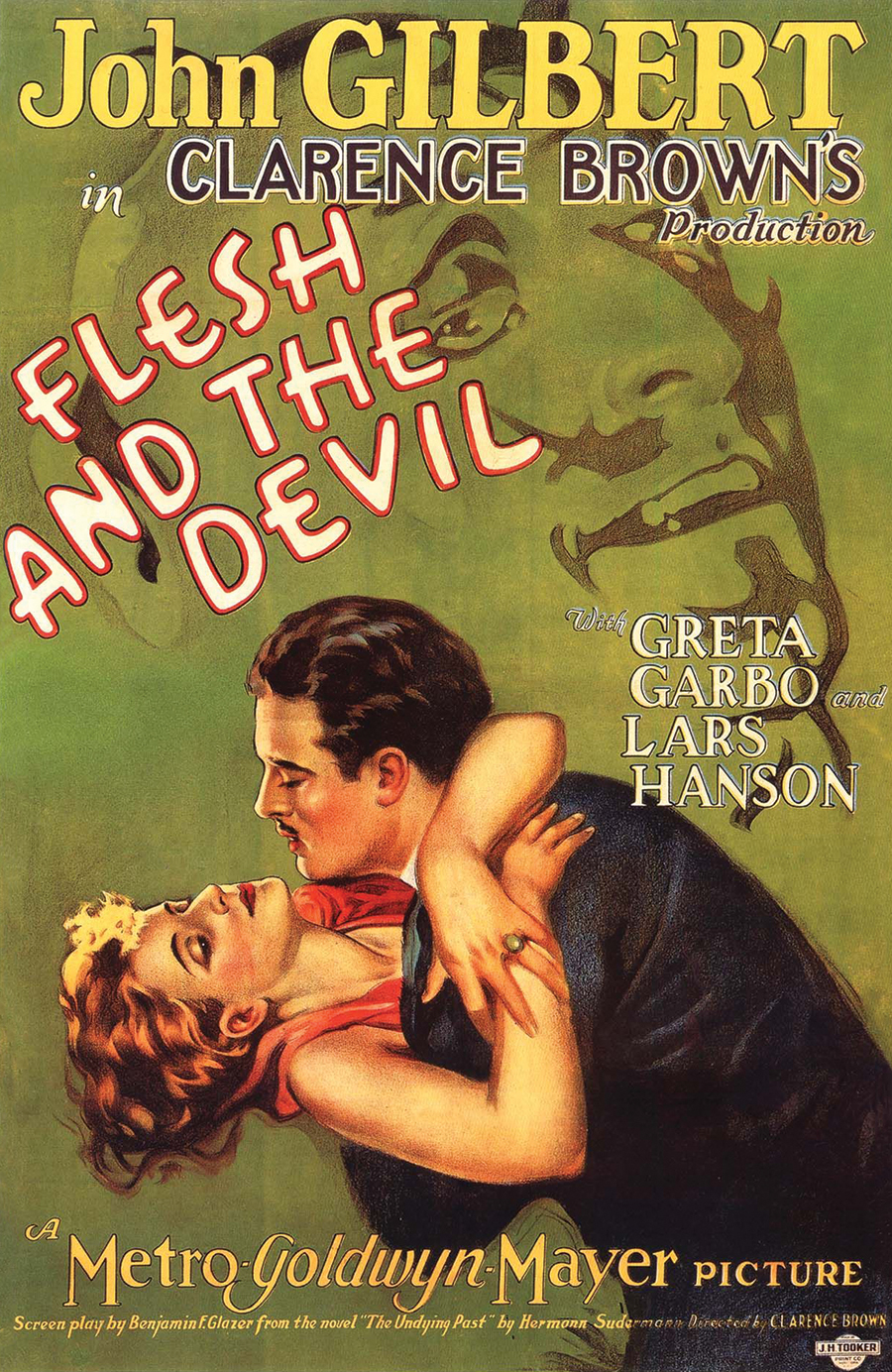
Sure, silent movies may seem quaint or even silly in an age that encourages baring and telling all (live dental streamings, anyone?) But we suspect, once the lights are dimmed on February 26 at Carolina Theatre (301 South Greene Street), and organist Ron Carter makes the old Robert Morton organ sing, the 1926 classic Flesh and the Devil will hold you under its spell. We’ll allow you a giggle here or an eye-roll there at the exaggerated gestures and long close-ups of stars Greta Garbo and John Gilbert, but ultimately, their onscreen chemistry, fueled by an off-screen romance, will ramp up the dramatic tension of the story’s tortured love triangle. Oh! Rapture! Tickets: (336) 333-2605
or carolinatheatre.com.

Ogi Sez

Ogi Overman

Oh, February, I wish there were more good things to say about you. You’re dreary, wet, cold and have only Valentine’s Day to make you brighter. Well, that and a plethora of fabulous concerts to take the chill off and put the thrill back in.

• February 2, Greensboro Coliseum: It’s hard to get any hotter than Luke Combs. After three EPs, he released his first major label LP in 2017, which yielded four No. 1 singles on the country charts. Plus, he defies the pretty boy-cowboy hat Nashville stereotype, wearing a ballcap and a scraggly beard.

• February 9, Community Church of Chapel Hill: Yes, you read that right, a church. But, regardless of venue, after you’ve heard the Seldom Scene, you’ll think you’ve been to church. Still the best bluegrass band of all time, even without any original members left (although that’s a source of debate among purists). The chill bumps after their patented endings tell the story.

• February 14, High Point Theatre: Although Branford Marsalis is generally considered the most respected jazz soprano saxophonist alive, to pigeonhole him into jazz would be a gross mistake. He has played with the likes of the Grateful Dead, Dave Matthews, Bela Fleck, Gov’t Mule, Sting and Phil Collins. In short, there is nothing he can’t play — and play it better than anybody else.

• February 16, The Crown: OK. I admit it; I’m prejudiced. Blues-jazz-Americana artist Seth Walker grew up in Alamance County and went to East Carolina, as did I. The difference was that he had a wheelbarrowful of talent and I had a thimbleful. Plus, he went to Austin to break in, and I came home after a week with a godawful hangover and no gigs. His nine albums to my zilch prove the point.

• February 19, UNCG College of Visual and Performing Arts: Well, what’s left to say about keyboardist Herbie Hancock that hasn’t been said before? Fourteen Grammys, 42 albums, 11 films, an Academy Award, and Kennedy Center Honors in 2013 say it all.

The Omnivorous Reader

A Hunger for Life, A Passion for Words

Deep dives into the mythic life of Sir Walter Raleigh

By D.G. Martin

East Carolina University professor and distinguished public historian Larry Tise recently argued that Sir Walter Raleigh’s attempted settlement on the North Carolina coast was an “egregious error” that we have spun “into the romanticized saga of a ‘lost colony.’”

Tise is an expert about Sir Walter, but there is more to the story, as retold in two new books: The Secret Token: Myth, Obsession, and the Search for the Lost Colony of Roanoke, by Andrew Lawler, and Anna Beer’s Patriot or Traitor: The Life and Death of Sir Walter Raleigh.

Although Lawler acknowledges Raleigh’s errors and weaknesses as outlined by Tise, he sets out in great detail the magnitude of his efforts to establish an English colony on the North Carolina coast. “The Roanoke venture lasted for six years and involved two dozen vessels and well over a thousand people crossing the treacherous breadth of the Atlantic to establish England’s first beachhead in the New World. In size, scope, and cost, it far outstripped the later inaugural voyages to Jamestown and Plymouth. It was the Elizabethan equivalent of the Apollo program.”

On March 16, 1584, Queen Elizabeth granted Raleigh the right to colonize the East Coast of North America south of Newfoundland. The next month Sir Walter had two ships on their way conducting an exploratory mission. The ships arrived on the North Carolina coast in July.

After six weeks of scouting and making friends with the native population, the expedition had not found gold mines or a short cut to China. However, it came back with tales of the good life, samples of tobacco and pharmaceuticals, and two natives, Wanchese and Manteo.

Raleigh then organized a much larger effort. On April 9, 1585, five vessels carrying between 400 and 800 men left England. Manteo and Wanchese were on board. So were soldiers and scientists, including a brilliant scholar and linguist, Thomas Harriot; a metallurgist, Joachim Gans; and a draftsman and artist, John White. By June 26 the colonizers arrived and began the process of exploring the nearby sounds and adjoining lands. The results were mixed. While they gained good and valuable information, the expedition ran low on supplies and all but about 100 men returned to England in September.

The remaining men suffered through the winter. Food was scarce, and the formerly friendly natives had become hostile enemies. When a fleet of English ships under the command of Sir Frances Drake appeared in early June 1586, the settlers abandoned the project and returned with Drake to England. The disappointing result did not deter Raleigh from organizing a third effort in 1587 — a group of men, women and families that became North Carolina’s legendary Lost Colony.

In July 1587, the colonists arrived on Roanoke Island led by their governor, John White, whose granddaughter, Virginia Dare, was born on August 18. A few days later, White sailed to England for much-needed supplies. When he finally returned in August 1590, the colony had disappeared, leaving only a carving of “Croatoan” on a tree as a clue.

The mystery of what happened to Virginia Dare, her family and their fellow colonists is the stuff of legend. One fable says Dare grew to be a lovely young woman and was transformed into a white doe, an animal that still haunts coastal North Carolina. A somewhat less fantastical theory maintains she and other colonists made their way to Robeson County, where locals will show you her purported burial site near Red Springs. Other authors suggest the colonists, including Dare, died from hunger, disease, or were killed by Native Americans. Or perhaps, in order to survive, they joined nearby Native Americans and were absorbed by them.

In The Secret Token, Lawler gives a history of the developing interest in Virginia Dare and the Lost Colony. After her baptism certificate in 1587, there was no public mention of her until 1834. In that year, Harvard-trained historian George Bancroft published his influential A History of the United States. Lawler writes, “It is difficult to overstate his impact on the way we see Raleigh’s colony today.”

For Bancroft, the colony was “the germinating seed” for our country and its institutions, “just as important as its revolutionary coming of age.” Lawler writes that in Bancroft’s view, “Roanoke was, in essence, the nation’s humble Bethlehem, and Dare was its infant savior destined for sacrifice.”

Lawler chronicles efforts to learn where the colonists, if they survived, went. To Croatoan, now a part of Hatteras Island? To Site X, a place marked under a patch in a map drawn by John White, located where the Roanoke River flows into the Albemarle Sound? Or to the Chesapeake Bay, near where the Jamestown Colony settled, and where Powhatan, the local Indian king, massacred them?

Maybe it was near Edenton, where in 1937, a California man said he found a large stone inscribed with a message from Dare’s mother, Eleanor, to her father, John White, reporting the death of her husband, her daughter Virginia, and other colonists. Lawler’s account of this likely scam is almost as interesting as the story of the colonists told by Harnett County native and Pulitzer Prize winner Paul Green’s outdoor drama, The Lost Colony.

In Patriot or Traitor Anna Beer devotes only a few pages to Raleigh’s colony on Roanoke Island, saving space for other and more significant parts of his life in chapters titled as follows:

“Soldier” — In 1569, as a teenager, he fought with the Huguenot Protestants in France and later in Ireland.

“Courtier” — By 1581, he had gained a position in the queen’s court.

“Coloniser” — As a favorite of the queen, he was given authority to establish settlements on the North American coast.

“Sailor” — No great sailor himself, he was nevertheless responsible for important naval actions and victories over Spanish naval forces.

“Lover” — Beer writes, “Sir Walter and his Queen were lovers, but it is highly unlikely that their ‘love’ was ever physically expressed. It was an eroticized political relationship, not a political sexual relationship, and Elizabeth was on top.”

“Explorer” — Although he never set foot on Roanoke Island, he personally led two ambitious, risky, and ultimately unsuccessful explorations to Guiana in today’s Venezuela in search of gold.

“Writer” — Beer heaps praise on his prose, “His writing stands shoulder-to-shoulder with that most remarkably rich and enduring of contemporary works, the 1611 King James Bible.”

Beer begins Raleigh’s story, not with these looks into his extraordinary early life, but in 1603. In that first year of the reign of King James I, Sir Walter was found guilty of treason for allegedly plotting against the new king. His sentence, quoted on the first page of Beer’s book, is a horrifying reminder of the gruesome justice of those times:

“You shall be drawn upon a hurdle through the open streets to the place of execution, there to be hanged and cut down alive, and your body shall be opened, your heart and bowels plucked out, and your privy members cut off, and thrown into the fire before your eyes . . . ”

How Sir Walter was able to defer his execution for almost 15 years and use the time to continue active participation in public life is the material for Beer’s final chapters. In conclusion she writes that Raleigh “lived more lives than most people of his time, or of any time” and that he “had a hunger for life, a longing for death, a despair for truth and a passion for words.”  OH

D.G. Martin hosts North Carolina Bookwatch, airing on UNC-TV Sunday at 11 a.m. and Tuesday at 5 p.m. The program also appears on the North Carolina Channel, a digital channel carried by many cable systems.

Scuppernong Bookshelf

Some Love for the Paperback

Portable, affordable and light, what’s not to love?

Compiled by Brian Lampkin

Admit it, you love the paperback. We’re forced to buy hardcovers to stay au courant (typically the paperback comes around about one year after the hardcover pub date), but the soft cover allows for a haphazardness that mirrors the way we actually read: on the train, in the bathtub, at the beach, falling asleep in bed (the pain of a pb falling onto your head pales in comparison to the bruising of a hc collapse into your cheekbone). For February we’ll share the love and highlight new releases in paperback. It hardly needs mentioning that they’re also 30 to 40 percent cheaper than their upper crust doppelganger.

February 5: Born a Crime: Stories from a South African Childhood, by Trevor Noah. The Daily Show host shows us that he’s quite a writer in this oddly humorous look at the horrors of South African apartheid. We waited a long time for this one to come out in paperback — the hardcover first published in November 2016. This is how the industry works: If we keep buying the hardcover there’s no incentive for the publisher to issue the paperback. It’s also true that if no one buys the hard shell then we’ll never see a soft wrap.

February 5: The Friend, by Sigrid Nunez. This 2018 National Book Award winner makes it to pb exactly one year after its initial release. One should not necessarily equate awards with sales, which is reflected by the relatively normal schedule of the pb release. Novelist Cathleen Schine says, “Sigrid Nunez creates an irresistible tale of love and an unforgettable Great Dane. A beautiful, beautiful book — the most original canine love story since My Dog Tulip.”

February 19: Startalk: Everything You Ever Need to Know about Space Travel, Sci-Fi, the Human Race, the Universe, and Beyond, by Neil DeGrasse Tyson. This is a book you need to keep in your car for the inevitable alien abduction. You’ll want to know where you’re going as you watch the stars fly by out your warp-speed window.

February19: Searching for Stars on an Island in Maine, by Alan Lightman. More stars, but this time Lightman merges science with spiritual wonder. One of my favorites from 2018 and highly recommended for the right book club.

February 26: The Hush, by John Hart. A favorite son of North Carolina, this two-time, Edgar Award–winner wrote a moving sequel to The Last Child and continued his run of New York Times best-sellers. Shouldn’t all mysteries be read in the paperback form — preferably with a lurid cover?

February 26: Birthday, by César Aira. We can’t forget the publishing oddity of the “paperback original.” New Directions is the acknowledged literary leader in this field and you can always count on exquisitely curated work from them. “Among the international brotherhood of readers, César Aira is not just one of today’s most remarkable Argentinian writers, he is also one of the most original, most shocking, most intelligent and amusing storytellers in Spanish today,” says Spanish literary critic and editor, Ignacio Echevarría. Translated by Chris Andrews.

And mark your calendars for the 2019 Greensboro Bound Literary Festival May 17–19! Watch these pages for a complete list of authors, but you should know now that on Saturday, May 18, the remarkable Zadie Smith will headline our festival with an appearance at the Cone Ballroom in the Elliott University Center on UNCG’s campus. Her appearance is made possible by the University Libraries at UNCG. Other early commitments include Wiley Cash (The Last Ballad), Astra Taylor (Democracy May Not Exist, But We’ll Miss It When It’s Gone), Frances Mayes (See You in the Piazza: New Places to Discover in Italy) and a special performance of Greensboro icon Fred Chappell’s new work As If It Were with puppeteers Marianne Gingher and Deborah Seabrooke. Much more to come!  OH

Brian Lampkin is one of the proprietors of Scuppernong Books.

Conversations

12 Questions

For Greensboro pop virtuoso Joey Barnes, the sun always shines and the hits keep coming

By Billy Ingram

Joey Barnes is an anomaly, a singer-songwriter of extraordinary proportions with an amazing vocal range whose power-pop creations don’t stray too far from his 1980s’ electronic new wave influences. Yet he’s just as comfortable crooning jazz standards with a
Cy Coleman-like harmonic swagger distilled from the days of Bing, Dean and Dinah (Washington not Shore).

In 2006, Joey went from thumping bass for The Patrick Rock Band to bashing skins and cymbals for Daughtry, a local band fronted by Chris Daughtry. They were riding high that year with a quadruple platinum album spawning four hit singles while scoring the No. 1 spot on the Billboard 200. What followed was a whirlwind of international dates and the sort of blank-check, rock ’n’ roll antics one indulges in when there’s a cadre of bodyguards and professional babysitters sweeping up those messy entanglements left littering the landscape behind you.

Joey’s recorded seven EPs and LPs on Nascent Republic Records since 2008, including an impressive live album, “On With The Show,” tracking a one-night-only performance backed by Luna Arcade, Tracy Thornton and the Greensboro College All-Stars. On albums like “A Dance Where Worlds Collide,” his romantically infused Pop Rock candies for the ears crackle with effervescence, tempestuous tunes pinballing from the sublimely melodic to the infectiously facetious.

A voice sometimes smoky, other times Smokey, always searing, this Greensboro native has played London’s Wembley Arena twice, but his roots reach way back into the city’s musical aristocracy.

Can you recall the first time you performed on stage?

Well, both my parents were musicians — it must have been with one of the bands my dad was playing in. I do recall a gig playing drums with Rob Massengale. The Massengale family and the Barnes family grew up together as best friends. I was around 12 years old, my dad was playing with Rob, I sat in on drums and played Peter Gabriel’s “In Your Eyes.”

In the 1990s, I was starting to get with other musicians to try and start bands. I do recall playing at somebody’s house party in a garage. A bunch of up-and-coming young musicians, we all knew about four or five chords. I got up there and just started beating around on the drums and it basically turned into “Wipeout” and everybody really loved “Wipeout” like they had never heard it before. I don’t think I played it very well, but that was the first time I gained the attention of girls.

I always wanted to travel, to see the world, and I wanted to perform. It wasn’t about who I could play to, but where I could go. That old cliché thing where you put pins on a map and say, “I want to go here.” Dreams of doing something, being with your friends, playing music.

On your recordings you play almost all of the parts yourself, how did you master such a wide assortment of musical instruments?

Having them around. They were just there. I was never taught; I just watched. You just sit down with something you’ve never played before, like a trumpet or a clarinet, and squeal and sound like you’re strangling a goose until you get a note out of it. Then you get two notes, three notes, then scales and you’ve got it.

Who influenced you most musically?

The Beatles. They were like the foundation of everything. And Frank Sinatra. I grew up in the ’80s so ’80s’ music was a big deal for me — George Michael, Tears for Fears, The Police, a-ha was one of my favorites. Duran Duran was like my Beatles, they were the Fab Five for me.

I was friends with Warren Cuccurullo who joined Duran Duran after Missing Persons, his supergroup made up of Zappa alumni, broke up.

You knew Warren? That guy is a genius, he’s brilliant. He was single-handedly responsible for bringing Duran Duran back in the ’90s with “Ordinary World.”

On the road with Daughtry, did you feel relegated to playing drums, or was that offset by being on tour with the hottest act in America?

It wasn’t rocket science, it was just bash it out. It was about aesthetics and it was about rock ’n’ roll. So easy but it was fun . . . for a while. As the tour went on, I was seeing how much I could do at one time, so I had a piano to my left while I was playing drums. I was trying to make it interesting but that situation . . . there wasn’t a lot of room for playful or, you know, anything artistic.

As far as touring, I was ready to go. I didn’t have any family, kids, so I was game all the time. A lot of sleepless nights, sleeping on airport floors. The adventure and the experience was what I signed up for. I was just like, “This is going to be a good time and let’s see how long it lasts.” Like George Harrison said, “The farther one travels the less one knows.” I changed over the course of that tour. I became a completely different person. For better and for worse, I suppose. I’ve been consistently progressing since then. I learned a lot about what I love, about art, music and learned a lot about what I don’t want to deal with.

After you left Daughtry, you didn’t get much of a hiatus from the road before you were thrust out before the public again. This time with one of the 1980s symphonic synth bands you admired, a-ha, who had massive hits with “Take On Me” and “The Sun Always Shines On TV.”

They were one of my favorites since I was about 8 years old. One of the cornerstone bands, they were always about crafting great pop songs. Dark and mysterious. They’re from Norway, so it kinda sounds like music you would write when half of the year is cold and dark and gray.

One of my good friends, Jimmy Gnecco, is in a band in the Jersey, New York area called Ours. I’ve been a big fan of his for a long time. We met almost 20 years ago. I played drums for him awhile, opened up for him, so we became good friends. He knew the guitar player, Paul [Waaktaar-Savoy], from a-ha. 

As I was getting out of the Daughtry thing, I thought I had almost done everything on my list of things to do, places to go. I thought it couldn’t get any better. Within a couple months, I get a call from Jimmy saying, “Are you sitting down? How would you feel about me, you, and a couple of other people opening up for a-ha in Europe for three months?” I couldn’t believe it. It raised the bar for me personally, It was beyond cooler than anything I did with Daughtry. I cried every night, I couldn’t believe I was there.

Your first time was with Daughtry, but opening for a-ha offered you another opportunity to take the stage at Wembley Arena. The Beatles jammed there, Depeche Mode, The Grateful Dead, Prince, Dylan, Duran Duran.

Playing Wembley was always the pinnacle for me. Everything was about playing Wembley and then to do it again with a different band was pretty insane. The first time I did it, I was in my underwear. Why not?

After that, I toured the United States with my own band. So I ate the road up as much as possible for a decade. Once you’re on the road by yourself, when it’s your thing and it’s coming out of your pocket, your bank account, then you realize this is really tough. Even when you’re making good money.

Being a live performer is a bit like having an alter ego, isn’t it?

I think so. Was it Oscar Wilde who said, “Give a man a mask and he’ll tell you the truth?” I think it’s really good to get in touch with that other person. I think some people are afraid to do that, they don’t know how far they’ll take it into madness. You can lose yourself in the other person. You have to find a balance, to be one [personality] here and another there.

I designed Mötley Crüe’s very first posters. Those skinny boys Nikki and Vince would come peacocking down Santa Monica Boulevard afternoons to our studio in full regalia, neon-colored spandex, makeup, hair crimped to ridiculous lengths. And they wouldn’t even have a show that night.

Not everyone is able to become a David Bowie as the Thin White Duke or Ziggy Stardust. I don’t want to show up at a party and everybody be like, “Oh, there’s Lady Gaga, we see you.” Some people like to draw that attention. I get that but that’s just not me. I can’t stand it, honestly.

Do you prefer recording or live performing?

I prefer the creative process involved in recording. I think that, on certain occasions, if I’m able to take the essence of [a recording], bottle that up and successfully do it justice on stage . . . yeah, then it could be equally gratifying.

For the last decade you’ve worked closely with producer Josh Seawell. What does he bring to your recordings?

For me personally, I come into the studio and Josh facilitates quite easily whatever I hear in my head. He’s a musician as well, and he does put out his own stuff, but he’s been in the engineer seat, the mixing seat, the producing seat, for a long time.

I first met Josh when I recorded with Patrick Rock back in the late-’90s. Josh set up his first studio in his parents’ basement. Our friendship built from there. He stuck with it, invested everything he had in a legit studio on the side of his house with the latest and greatest equipment. And he’s brilliant. To have somebody who has a great ear, that you’re friends with, that you respect. Plus to go to his home. His wife’s the best, his kids, it’s just a really nice atmosphere to be out in the country where you just kind of feel free, to relax and see your vision to fruition. When he started a record label, Nascent Republic, I was, “I’m totally signing with you.”

Josh also does song placement; he’ll get songs on E!, TLC, or Lifetime. The other day one my songs played in a commercial for Turner Classic Movies and I was like, “Yes!”

Your image is on the first modern day mural that emerged downtown, a Pop-Art portrait painted on the side of Design Archives. How did that come about?

I met a girl, Kim Kennedy, in Nashville and she’s a muralist. I have no idea how or why, but she knew some people in Greensboro and it just happened. It really was crazy. I still have tons of people randomly sending me pictures of it saying, “Oh, I’m hanging out with you today.” She started something; now murals are everywhere.  OH

Billy Ingram covered the underground East Los Angeles punk music scene for a Hollywood bar rag in the early-1980s. He wrote about it in PUNK, the kind of book the whole family can gather around the bar and read together.

Crossing That Bridge

How a home designed by a famed Greensboro architect in the 1960s ushered one couple into a new phase of life half a century later

By Maria Johnson     Photographs by Amy Freeman

small bridge delivers visitors to Lovelle and Alan Overbey’s Modernist home.

The bridge’s span is short: 13 feet from driveway to double doors. The deck arches slightly, and the planks and rails are painted a tasteful, receding taupe. But the tendency is to notice the roof over the bridge — a pointy Asian-flavored cap of weathered copper. Or you can find yourself staring down into the gurgling water, a hyphen of a koi pond that hugs the house. Physically, there’s not much to the bridge.

But figuratively, it bears a lot of weight. It has carried the Overbeys into a new phase of life.

They came to a place that’s familiar to the fortunate. Their children were in college, and Alan was selling his business — an employee benefits consulting firm — as the couple edged toward early retirement.

They loved the two-story white brick home where their two boys had grown up on Greensboro’s Starmount Drive, just around the bend from a country club golf course. They had great neighbors, great memories and the great luxury of choice at a crossroads.

Their house was “done,” their parenting was mostly “done,” and Alan’s CEO responsibilities were fast approaching “done.” What would they do together next?

Lovelle, who has a master’s degree with a concentration in English education, had lusted after a mid-century house ever since she read The Fountainhead, an Ayn Rand novel that loosely echoes the life of legendary architect Frank Lloyd Wright. “It inspired me to want to live in a house that was completely an American original,” she says.

She loved the lines of mid-century houses, the openness, the history and the furniture that went with them. Alan didn’t care for mid-century homes — he didn’t know much about them, he’d later admit — and so he’d often nix the houses that Lovelle pointed out in their drive-by games of “Do you like that one?” “What about that one?”

They agreed on a few places. A tawny, low-slung home on nearby Kemp Road East was one of them. They studied it as they walked the trails around Hamilton Lakes. Yup, that horizontal honcho had character.

And so, when it came up for sale in 2017, Alan agreed to see it — all 9,400 square feet of it, including the indoor swimming pool — but he was reluctant. He was sentimental about the home where they’d raised the boys. The move was going to cost a fortune. And they really didn’t need to add one more change to their lives.

He sighed, went to meet the real estate agent, and was sold by the time he hit the bridge. A walk-through confirmed it. “It was different from anything I’d ever seen before,” says Alan, a Greensboro native. “It was open. It was bright. It gave me the excitement of the next chapter of our lives. We had to have it.” The fact that celebrated Greensboro architect Edward Loewenstein had designed the house made it even more appealing.

Built in 1964, the house was the residential fantasy of Greensboro internist Dr. Edgar Marks, who was in his early 40s when the home was built. Marks knew Loewenstein socially; the architect was the go-to guy if you wanted Modern in Greensboro. Marks hired him to design a medical building on Olive Street, and later to draw plans for a seven-bedroom home on side-by-side lots in Hamilton Lakes. Then a hive of construction, the neighborhood was a boon for Loewenstein; he drew at least nine homes around the lakes.

Marks, now 97 and still living in Greensboro, remembers the must-haves he directed Loewenstein to include in his showplace: floors with radiant heat, a feature he’d learned about as an Army doctor in post–World War II Korea; an indoor swimming pool with a retractable roof; front doors carved in Mexico; a master and guest bedroom on one side of the house; a separate bedroom wing, on the other side of the house, for the family’s four children; another room for the housekeeper; and a façade of the very same tricolored volcanic rock that distinguishes buildings at Duke University, where Marks was an undergraduate.

Loewenstein made it happen with style, using plate glass windows, asymmetrical rooms, recessed lighting, ceilings of various heights and slopes, and a squiggle-shaped pool.

Marks, his wife, Ellen, and their kids, moved from a home on Hammel Road in Irving Park to their new home near Starmount Forest Country Club, where Marks enjoyed hacking around the course. When the Greater Greensboro Open came to town, Marks and family entertained pro golfers in their home. Tony Lema, Lee Trevino and Tony Jacklin visited what became known as the Marks House. Others stayed with the family.

“One night, I came in after the GGO, and Tom Weiskopf was lying on the floor, looking up at the TV in our bedroom. Everyone made themselves at home,” says Dr. Marks.

Marks and his wife divorced in 1972. She got the house. There was a fire, then renovations. The house changed hands three times before the Overbeys walked over the bridge.

Moving was tougher than they’d thought it would be. Lovelle and her mother packed up the house. They climbed into the attic, where, over the years, the family had stashed the markers of their lives.

Cribs. Children’s toys. Books. Sorting was nostalgic; discarding was painful. Alan and Lovelle felt the pangs of what-have-we-done?

Their friends, who’d hopped online to discover how vast the house was, despite its modest appearance from the street, were more pointed. “Are you nuts?” they asked. “Why are you moving into a house that big, at this point in your lives?”

It was true; the new house would be the biggest house they’d ever lived in, and it would bring not only a new address, but a new style and new stuff. Their old furniture didn’t fit the contemporary spirit of the house, so they farmed it out to a consignment shop. Later, while browsing for mid-century pieces in the same store, they had the eerie experience of seeing their old furniture for sale, of seeing other people pause, consider the pieces they’d lived with for so long, reject them and move on.

“When you walk in and go, ‘Oh, that was ours,’ and ‘That was ours,’ you kinda feel like you’re dead,” says Alan. “It was like we were starting over, in a new life. It was weird.”

“It was weird,” says Lovelle.

Life did what it always does; it went on. Alan and Lovelle got help. Interior designer Donna Keel showed them how to kindle warmth in the vast, sometimes chilly spaces of Modern architecture.

Thanks to the collaboration, the creamy formal living room — with its towering chalky fireplace — is punctuated with loud pillows, funky chairs, Picasso-like art and a gleaming ebony grand piano.

The “kids’ den,” a gateway to the wing of children’s rooms, is an open intersection defined by dove grays, a giant arcing lamp and a formidable painting of a Chinese food take-out box.

Lovelle jolted a couple of bathrooms to life with wallpaper. The pool bath teems with pink flamingoes. The bath nearest the formal living room swims with foil fish on a black background.

In shopping for the house, Lovelle has rediscovered the thrill of the hunt. She and Alan prowl art galleries in North Carolina and New York.

“It makes you feel young again,” she says, noting that instead of combing Pier 1 like she used to, she now haunts Modernist stores such as Area and West Elm, as well as antique shops, eBay, and designer-only caches.

The harvest is evident in the main den, a trove of mid-century icons: a cushy black leather Eames chair with footstool, a chestnut leather sofa, a bristling metallic wall sculpture, a skinny Lucite table, a spotted cowhide rug, a plush chartreuse ottoman on splayed legs and a 75-inch flat-screen TV that’s easily viewed from the pool, on the other side of a glass wall.

The Overbeys have let the house be, structurally. They’ve mostly freshened surfaces, keeping intact many of the original features: mirrored walls, louvered closet doors, grass cloth (now painted) and some classic 1960s bathroom fixtures.

They foresee a few crowbar moments — in the bar and a couple of bathrooms — but nothing major. They feel a certain amount of pressure, Alan says, to maintain and preserve the home in its original form.

“We’re really caretakers. The goal is for us to leave it better than we found it,” he says. “We’re fortunate enough to be able to enjoy it.”

Entertaining helps them to justify the home’s size. They’ve hosted a smattering of parties: political fundraisers; a sorority function; a business gathering of Alan’s associates. Their sons invited friends over during the holidays. One day, the Overbeys hope, the pool will draw grandchildren.

“I want people to make memories in this house with us,” says Alan.

You’ll see them standing on the bridge almost every evening, just before bedtime. They come outside to feed the fish. There are 17 of them, koi and goldfish of various colors. Some of them have names: Pongo and Perdita, the black-and-white pair named after the canine heroes of Disney’s 101 Dalmations. Then there’s Franco, the slippery black-and-gold stand-in for former Pittsburgh Steelers’ running back Franco Harris, a favorite of Lovelle, who grew up in western Pennsylvania.

The fish surface, all eyes and mouths, when they see the couple approaching to cast food pellets. The water roils and splashes with life.

“It’s like a feeding frenzy,” Alan says, smiling broadly. “It’s a lot of fun.”

“When we have company, we love to take them out there,” says Lovelle. “It’s an event. I think it’s my favorite part of the house.” OH

Maria Johnson is a contributing editor of O.Henry magazine.

The Accidental Astrologer

Fanciful February

This month’s star children are intelligent, intense, creative and sensitive

By Astrid Stellanova

Some of my best friends are February-born, and they bring a lot to the table. They are intense. Intelligent. Sometimes standoffish. But best known as creative and sensitive.

They do something with that intellect, too.

Did you know if you’re February born, you are very likely to become famous? At least three presidents (Washington, Lincoln, and Reagan) were born in February

Liz Taylor, Steve Jobs, and Michael Jordan are all February babies, too. Fancy that, Star Children.

Aquarius (January 20–February 18)

Friends say you’ve been acting more stuck up than a light pole, Sugar. And the reason is why, exactly? You got to this place in life by paying attention. If you can do that, there is an excellent reason for you to stick your nose upward when you win the big prize you seek. You are a gifted and talented star child. It shows.

Pisces (February 19–March 20)

You are a tad bit tetchy these days. After fending off more trouble than a one-eyed horse running at Churchill Downs, you did your best, and Sugar, you came oh-so-close to a photo finish. But, you got shoved to the inside, and second place didn’t feel good. The thing you Pisces children have going for you is more determination than Seabiscuit.

Aries (March 21–April 19)

You’re off like a dirty shirt the first time someone ticks you off. When was the last time you took a day off just for quiet time and dialed things back several degrees? It’s time to let more roll off your back and forget all the slights.

Taurus (April 20–May 20)

Lord, Honey, let’s get past the cooling of the Earth and try and live in the present without all this scorekeeping. Yes indeedy, you were right about a point you made. And you drew a line. But the price was wa-a-ay too high. Maybe slide that line over?

Gemini (May 21–June 20)

You had a handle on things but it broke off, right? You knew before you were stretched thin, and then life showed you just how thin it really was. Now is a time for the easy option. Get centered, Sweet Thing.

Cancer (June 21–July 22)

What happened was about as funny as a three-legged dog race — not a bit funny. Now, don’t waste your time expecting a real apology. But as the person who insulted you sobers/grows/wises up, he will wish he had been kinder.

Leo (July 23–August 22)

If somebody gave you two nickels for a dime, you’d act like you were rich. Is that optimism? Or is it just a little bit nutty? You must pay attention to where the money flows this year and not play Diamond Jim. Nickels matter.

Virgo (August 23–September 22)

Your allies would support you no matter what. But when you saw a snake and called it a lizard, you overplayed your hand. Give them every reason to stay in your corner. They will tip things in your favor. But don’t underestimate your allies.

Libra (September 23–October 22)

Feeling lonely as a loblolly pine tree in a parking lot, are you, Sweet Thing? Well, it is a cold winter, and you struggle till the sun shines, and life feels good. It will feel good again, but you are coming through the most difficult passage and know it.

Scorpio (October 23–November 21)

They peed down your back and said it was raining. That ripped your shirt, alright. But you are not stupid. You still see them as an asset. Good enough, Honey. But keep both eyes open in this pending venture.

Sagittarius (November 22—December 21)

That dog just won’t hunt and you know it straight down to your tippy toes. Even so, Sugar, it’s a real sweet dog and you want to keep it. Not all causes are lost — just one that you have been so committed to for about a year too long. Deep breaths, Sugar.

Capricorn (December 22–January 19)

The problem with somebody you look to for advice is this: If they’re moving their lips, they’re lying. But what wildly entertaining tales they can tell! You feel protective and that is another reason you are so committed to them, mother figure.  OH

For years, Astrid Stellanova owned and operated Curl Up and Dye Beauty Salon in the boondocks of North Carolina until arthritic fingers and her popular astrological readings provoked a new career path.

February Almanac 2019

Spring violets follow snow; the daffodils push through it.

Whoever grumbles curses at this cold month need only witness an explosion of February Gold, the early bloomer that utterly beams with exaltation.

We thaw from the inside out.

In the garden, wren and titmouse sing out from bare branches, and something within you stirs. You put on the kettle, light a candle, phone a friend you didn’t know could use the extra warmth.

Come over, you say, reaching for an extra mug. 

Some days, just as the daffodils push through snow, your kindness is the February Gold that lights up the world.

Say It in Flowers (or Spoons)

This and every month, red roses say I love you. But if you’re looking to dazzle your sweetheart with something different this Valentine’s Day, here are a few customs from around the world:

Exchange pressed snowdrops (Denmark).

Pin the name of your one true love on your shirtsleeve (South Africa).

Offer carved melons and fruit (China).

Although the Welsh celebrate their patron saint of lovers on Jan. 25, this gift might take the cake: the love spoon. Carved with intricate patterns and symbols, these wooden spoons have been given as tokens of affection for centuries.

Let us love winter, for it is the spring of genius. — Pietro Aretino

This Little Piggy

Tuesday, Feb. 5, marks the celebration of the Chinese New Year. Cue the paper lanterns for the Year of the Pig, a year of wealth and good fortune. Also called the Spring Festival, this lunar New Year is considered a fine time to “sweep away” ill fortune and create space for your abundance to arrive. It’s also a fine time for dumplings.

Because they resemble ancient gold ingots, Chinese dumplings are made by families on New Year’s Eve for the same reasons we slow-cook black-eyed-peas and collards.

In honor of the Year of the Pig, consider trying your hand at homemade dumplings. Or, in case you missed out last month, here’s a Hoppin’ John recipe adapted from The Traveling Spoon Chef on Instagram:

Ingredients:

1 pound dried black-eyed peas

10 cups water

1 medium onion, diced

1/4 cup butter

1 ham steak, diced

1 teaspoon liquid smoke

1 teaspoon salt

1 teaspoon pepper

1 bunch chopped kale (optional)

1-2 cups cooked rice (optional)

Directions:

Soak black-eyed peas overnight in 6 cups of salted water. Rinse and drain well. In a large pot, sauté onion in butter until tender. Next, add one diced ham steak (optional), 4 cups water, liquid smoke, salt and pepper. Add drained black-eyed peas to the pot, cover, and let simmer for 4 hours, stirring occasionally. If desired, stir in kale and rice just before serving. And a pinch of extra luck.

“Save some leftovers for the following day,” says the chef, and call it “Skippin’ Jenny.”

There is a privacy about winter which no other season gives you . . . Only in winter can you have longer, quiet stretches when you can savor belonging to yourself. Ruth Stout, How to Have a Green Thumb without an Aching Back

The Garden To-Do

This month, plant your greens, Brussels, peas and beets. Turnips and radishes. Broccoli and carrots. Asparagus. And Irish potatoes, three inches deep.