Poem March 2025

POEM

March 2025

The Opal Ring

When I was thirteen, my grandmother gave me an opal ring.

I like to wear it when I dress up to go out.

It is so delicate most people never notice it.

My grandmother whispered, It’s from some old beau.

I wear the ring, her memory, to feel magical.

Three small iridescent stones, a gold band worn thin.

Only when I asked did she whisper her secret.

Did you ever look deeply at the displays of color,

opaque stones holding quiet fire? The band’s worn thin.

The last time you betrayed me I slipped on the ring.

Iridescent means plays of color. So few truly look deeply.

She called me to her room, opened a sacred drawer.

This is the last time you betray me. I slip on the ring,

its blue-green, pink lights so delicate. You never noticed.

In her room, she handed me a velvet-lined box.

My grandmother gave me her opal ring. I was only thirteen.

—Debra Kaufman

Wandering Billy

WANDERING BILLY

Drawn to The Gate City

Comics come to life in unexpected places

By Billy Ingram

I dont have inspiration. I only have ideas. Ideas and deadlines.” — Stan Lee

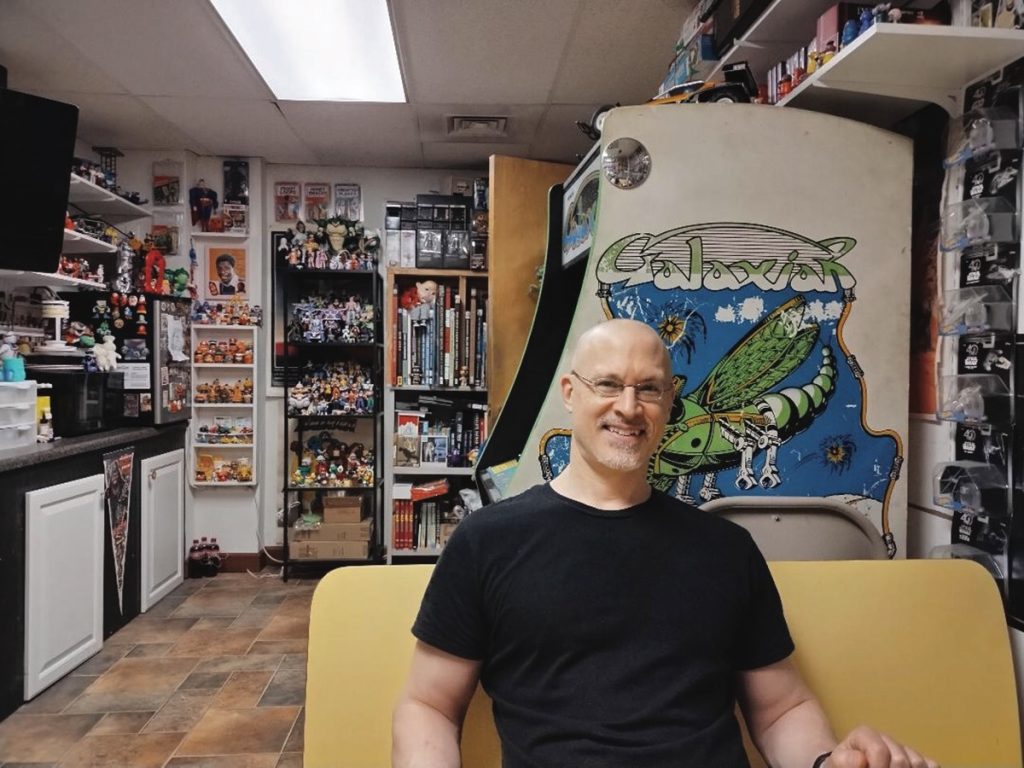
Buried inside an otherwise ordinary office plaza on Cornwallis Drive, tucked twixt dental practices, LLCs and LLPs, sits the Fungeon, a collab for writers and illustrators, several of whom have long associations with many of Marvel Comics’ best-selling titles.

An assault on the senses, this fancave is where pop-culture ephemera from the last seven decades bedazzles every square inch. A tidal wave of childhood memorabilia washes over you — an impossible number of Batman and other superhero figurines, an autographed photo of Dy-no-mite Jimmie “JJ” Walker, breakfast food mascot dolls, a Pee-wee Herman marionette, Star Wars collectables, VHS tapes, movie posters, a full-sized early-80s Galaxian arcade game, even a bright red Wham-O Monster Magnet with “life-time magnet” fists. I half expected the Kool-Aid Man to come bursting through the wall.

I’m there to meet with Chris Giarrusso, a former New Yorker and comic book creator who was drawn to the incandescent glow and nearly imperceptible excitement of The Gate City in 2017. Now, he shares a fantasy factory with four other creatives. There’s Jody Merriman, known as “Ol Grumpy” on social media. Giarrusso describes him as “a real burly, tough guy who you wouldn’t expect to be drawing pictures.”Randy Green is an acclaimed comic artist, best known for Tomb Raider and Emma Frost. His family owned Green’s Supper Club locally. Illustrator Marshall Lakes has his own comic line. And lastly, former Marvel and DC editor Brian “Smitty” Smith is co-creator of the New York Times-bestselling graphic novel The Stuff of Legend as well as writer/artist of the adorable Pea, Bee, & Jay children’s book series from HarperCollins.

Giarrusso is one of those lucky, talented individuals who has managed to forge a career in the comics. “When I was in college,” the Syracuse native told me, “I read about the internship program at Marvel in Wizard magazine.” He applied in 1997 and was accepted. “So for a summer, I was an intern there. That’s really the big game-changer, just getting the foot in the door and people getting to feel comfortable around you, that you’re not some crazy person. I guess they’re always afraid that the intern’s going to be some whack-job type.”

In 1998, Giarrusso was hired by Marvel’s production department, scanning artwork for Photoshop tweaking. “But I also liked to draw,” he says. “So I would show people my cartoons every chance I got. I was cartoon riffing on what was happening in the office or whatever.” Shades of Marvel’s superhero satirist extraordinaire Marie Severin. Eventually, the editor of “Bullpen Bulletins,” a feature in every Marvel publication, gave Giarrusso space for a monthly comic strip. “The editor said, ‘Yeah, OK, less work for me to fill up a page.’”

Almost by necessity, he created a line-up of cuddly, kid-sized Marvel heroes characterized by big heads and bulbous boots, whose comical interactions were drawn-up in standard newspaper strip format. “Because the panels were so small, it’s easier to draw little kids,” he says about the origin, if you will, of Mini Marvels. “You can actually squeeze them in better into the panels. And just the idea of them being kids was kind of already a built-in gimmick.” A devotee of Charles Schulz, Giarrusso quips, “I wanted to do Peanuts but with little Marvel characters.”

The little strip that could caught on. After about a year, “I pitched the idea for a longer story to Smitty before he went up the ladder. He was an assistant editor when I got hired as a production guy. I put a proposal together, handed it to him and then he pushed it through.” The result? The emergence of, quite possibly, the freshest, most original talent the genre has seen this century, effortlessly capturing the rhythmic essence that makes for great comics.

Undoubtedly, that’s why Marvel continually repackages Giarrusso’s back catalog. Mini Marvels: Hulk Smash was released in December and one reviewer raved that this book “will remind you why comics are fun, and if given to a new fan, this could be their gateway into comics.” Mini Marvels: Spidey-Sense unfolds with a genuinely funny tale about paperboy Spidey’s fractious battles against a peevish Green Goblin while innocently attempting to deliver the Daily Bugle to his arch enemy’s house. Giarrusso rendered the pint-sized Spider-Man with an exuberance and fluidity reminiscent of co-creator Steve Ditko’s earliest web-slinger sagas.

Beginning in 2009, Giarrusso’s own original high flying tyke-in-tights, G-Man, flew into view in three graphic novels published by Image Comics, followed by The G-Man Super Journal: Awesome Origins, an illustrated-prose hardcover from Andrews McMeel, who also publish definitive collections of Peanuts dailies (and Calvin & Hobbes, another influence, I suspect). A series crying out to be animated, G-Man’s universe is populated by a multifarious cast of characters rivaling that of Jack Kirby’s Fourth World, fused with the innocence of early-1960s Legion of Superheroes. Nominated for a Harvey Award in 2014, G-Man: Coming Home was selected as Favorite Adventure Graphic Novel by Kids’ Comics Revolution.

“Fifteen years ago or so, when Mini Marvels was having a moment, Acme Comics invited me for a signing,” Giarrusso explains about his initial sojourns South, previous to his relocation to Greensboro eight years ago. “It became kind of routine to come for every Free Comic Book Day. I got to know the area and the community and the people here.” Graphic artists and writers can easily work remotely and are often required to. In that regard, our fair city makes for a comfortable launching pad. “At one point, Smitty came down and he set up the [Fungeon] studio. A couple years later, I followed and just inserted myself into the framework that he created here.”

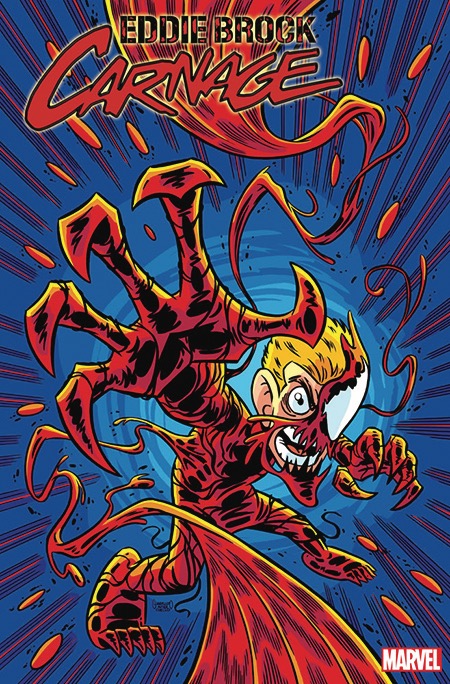
Giarrusso has been particularly productive of late. While working on Pea, Bee, & Jay, Smith sold HarperCollins on a series for middle graders that Giarrusso illustrates, Officer Clawson: Lobster Cop, which features the undersea adventures of a mystery-solving crustacean. A new Mini Marvels story appeared in October 2024, then Giarrusso created four visually arresting variant covers for the 2025 X-Men/Uncanny X-Men crossover event. Alongside February’s incendiary image fronting his Eddie Brock Carnage #1 variant, these edgier renderings reveal an artist whose style is evolving, assuming a more dynamic, unflinching underpinning without sacrificing any inherent adolescent charm.

Ironic? In the bowels of a nondescript office complex, cleaved from a patch of woods where as a 9-year-old I happily retreated reading DCs with Go-Go Checks purchased from a drug store around the corner, there exists a grotto where creative individuals are weaving dreams into four-color fantasies and captivating children’s lit that is destined to ignite imaginations for generations to come.

Birdwatch

BIRDWATCH

Heard But Not Seen

Eastern phoebes tuck their nests away

By Susan Campbell

Eastern phoebes are small black-and-white birds that can be easily overlooked — if it wasn’t for their loud voices. Repeated “fee-bee, fee-bee” calls can be heard around wet areas all over our state. The farther west one travels through the Piedmont and into the foothills of North Carolina, calling males become more and more evident. From March through June, males declare their territory from elevated perches adjacent to ponds and streams. Even on warm winter days, these little birds can be heard loudly chirping or even singing a phrase or two.

Phoebes have an extensive range in the U.S., from the East Coast to the Rockies, and up and across central Canada. In the winter they can be found in Southern states from the Carolinas over to Texas down into Mexico and northern Central America. They are exclusively insectivorous, feeding on beetles, dragonflies, moths — any bugs that will fit down the hatch. Although they do not typically take advantage of feeders, I have seen one that did manage to negotiate a suet cage one winter. Because their feet are weak, they’re not capable of clinging, so this bird actually perfected a hovering technique as it fed in spurts.

Originally eastern phoebes utilized ledges on cliff faces for nesting. We do not know much about their habits in such locations since few are found breeding in those places now. Things have changed a lot for these birds as humans have altered their landscape.

While phoebes can be easy to locate as a result of their loud calls, in our area their nests may not be. Although they are good-sized open cup structures, they will be tucked into out-of-the-way locations. Typically, they will be on a ledge high up on a girder under a bridge or associated with a culvert. They may also be up in the corner of a porch or other protected flat spot. Grasses and thin branches are woven and glued together with mud to form the nest; therefore it’s critical that the location be close to water.

The affinity eastern phoebes have for nesting on man-made structures in our area may indicate that these are safer than more traditional locations. Climbing snakes are not uncommon in the Sandhills. Black rat snakes and corn snakes are not as active on buildings as they are on bridges and other water control structures. The phoebes may be adapting their behavior in response to these predators and others less likely to be found so close to human activity.

If you have, or have had, phoebes on your property in summer, I’d like to hear about it. I continue to record locations and details on nesting substrate for the species in the Sandhills. The variety of locations that these little birds choose has been very curious. Light boxes and fixtures, gazebos, porch support posts and more have been used, if they are covered by at least a slight overhang. Not only is water a necessity for phoebes in summer, but they require mature trees for perching and foraging as well. Keep an ear out and perhaps you will find one of these adaptable birds nearby — and be sure to let me know!

Home Grown

HOME GROWN

Putting the Pieces Back Together . . .

With resilience, grace and wit

By Cynthia Adams

One evening as I am chopping vegetables, my young friend, Jamie, calls me.

She occasionally texts, but never phones. Most weeks, we chat at Brown-Gardiner’s fountain, where she is a popular server — animated, engaged — the primary reason for my going so often.

Answering, I strain to understand Jamie’s garbled speech. The only words fully discernible are “this is Jamie.” She struggles, stuttering, until falling silent. 

Her friend, Lexi, takes the phone. Lexi’s words are crisply clear: Jamie has suffered a stroke. She goes on to say that she has just been released from the hospital following days of unconsciousness and lifesaving surgery. Lexi pauses.

“Jamie wanted you to know.”

Jamie is in her early 30s. A stroke? My knees wobble.

Jamie is the sort who brings life and vivacity into a room, as she has done at the lunch counter. The sandwiches, salads and dishes are standard lunch-counter fare, but nothing special. Jamie is. Often, she’d spot me approaching and open the door in greeting. 

In a few days’ time, after much texting back and forth, Jamie indicates she would like a visit. I take silly gifts: A bath bomb that resembles a doughnut with pastel sprinkles. A satin sleep mask emblazoned, “Shit Could Be Worse.” 

Just like her old self, Jamie howls with laughter.

She has miraculously survived the catastrophic stroke without losing her motor skills. There is no facial paralysis nor limp. No overt paralysis of any kind. Yet Jamie’s brain scans reveal damage to areas controlling speech. She struggles with aphasia and speech challenges.

Jamie chats normally and suddenly goes silent, freezing, searching for a word. This is something I had previously seen when another friend — a woman five decades older than Jamie — had a stroke. 

More than once, rather than asking, “Where’s my phone?” Jamie instead says, “Where’s my brick?” Or, maybe block. Determined to show no reaction as my intelligent and chatty friend struggles to summon words, I still feel my heart sink for her. 

But Jamie’s wit and intelligence are fully intact. She gamely laughs during a terrifying time. “My brain is def broken,” she texts a few months later.

Attempting jokes about the surgery, the hospital stays, the worry she reads in her friends’ faces, Jamie finds her way through her own terror with humor. 

Showing the blackened bruising at her femoral artery after carotid angioplasty and stenting, she declares, “But I’m still pretty!”

Everyone reassures Jamie she will soon be well. Better than new. Even so, Jamie  cannot drive, or resume college classes nor work for six months minimum. 

“Yeah, yeah, yeah!” she will mutter, not cynically, but with convincing force, intent upon powering back to health. 

One day, I mention that a collection jar for her benefit has been placed at Brown-Gardiner. Jamie texts back, asking if the picture chosen “makes me look pretty.” I report back that, in fact, it does. Her smile — her face — beams from the jar. Faithful patrons contribute small change and bills. 

One day, $1,000 is dropped in the jar by a single group of customers. Jamie reports as best she can that it was from guys she always served on the Saturday morning shift. While she struggles to fully convey who “the guys” are, I try to guess if they are part of a golf team or a tennis league.

Jamie isn’t quite sure, but she is sure of one thing: “They love me.”

As her megawatt smile beams brighter, she adds, “and I love them.”

Since her saga began, Jamie has learned a preexisting congenital defect triggered her stroke, something called arteriovenous malformation, or AVM. In her case, it was located in the carotid artery. Much like aneurysms, it’s difficult for an AVM to be diagnosed until it’s too late.

Strangely, this hasn’t discouraged her. Learning the cause of the stroke has had the opposite effect. With a name, however strange, AVM is an anomaly that she can wrap her mind around, Jamie explains.

The condition is quite rare: Only 1.34 per 100,000 people have AVM.

Somehow, this statistic cracks Jamie up. 

“Of course,” she says, articulating slowly. With a wry smile that says, “it couldn’t possibly be anything commonplace,” she throws her hands up in the air. Since her stroke, in rapid succession, Jamie has been scrutinized and scanned from top to bottom in MRI machines.

“Now I know the deal,” she adds. 

Jamie has learned, to her relief, that she is not a walking time bomb. 

“That was scary. Would I just drop dead?” This was her first thought upon emerging from days of unconsciousness after the stroke.

Jamie’s July birthday week draws together a young group of friends who take her for a celebratory steak dinner. She shares funny moments, reporting that she kept a journal “for my up-and-coming stroke comedy tour.”

Her speech is, against all odds, normal. Yet, the stroke is a bomb that fell onto her old life, segmenting it into before and after.

In the interim, another stent was needed. Weeks of speech therapy and recovery, scans and consultations have become months, now years. Two Christmases have passed. 

Jamie has suffered medical setbacks, forcing her to temporarily abandon online studies begun since the stroke to complete her undergraduate degree. Even so, she will still graduate this year.   

Jamie’s wrestled with red tape in order to get financial assistance. To cope with insurance claims. To get to medical appointments.

Simply to survive.

Yet Jamie’s resolve remains intact. In her first year of the event, she sent a revealing picture of herself at a game table with pieces before her. 

“I’m gonna be sitting here trying to figure this stupid puzzle out . . . making my brain work . . . This is harder than it looks.”

In over two years of struggle, it is the only complaint Jamie has ever texted.

Essay Contest Winner

ESSAY CONTEST WINNER

Harriet Flies Home

A tale of catch and release

Note from the editor: This was our 2024 O.Henry Essay Contest winner.

By Eric Schaefer

She lands on the end of my fishing pole, making casting impossible. I don’t mind. I’m glad to see her. She has been gone for a few days, and I am always relieved to see her return. Not that I expect her to stay forever. She is, after all, a wild animal, and she needs to be with other crows — at least in theory. So I lean back in the boat and watch her preen her shiny black feathers.

Two years ago, my wife and I fished her, half-drowned, out of a drainage ditch in Florida, wrung her out and gave her a little cat food, which she readily accepted. Soon, the chick was eating everything and seemed perfectly happy with her surrogate parents and her roommate, a lab mix named Alfie. We named her Harriet.

Harriet belongs to the tribe of fish crows who speak in a minor negative key. Their principal call sounds like anh anh. As in “anh anh, I ain’t doing that” or “anh anh, I ain’t what you think.” Crows are versatile, however, and are capable of a variety of vocalizations. They are accomplished mimics, and I believe Harriet can say whatever she wants if so moved. Cocking her head so that one eye focuses on me while the other surveys her surroundings gives me the impression that some complex calculations are taking shape inside her little crow brain. Alfie, on the other hand, I’m pretty sure I can outsmart. 

At mealtime, Alfie sits, staring, drool pouring out of both sides of his jowls, his brown eyes pleading, “Oh pleeeze, can I have just a little of that whatever it is you’re eating? I don’t care, I’ll eat anything, and try my best to actually digest it or throw it up — that’s OK, too — but please let me give it a try.” Harriet doesn’t beg. She would rather steal. And steal she does. Glance away from your plate and she’ll swoop down and take a morsel, then fly up to a bookcase or a high counter. She’s discerning. She’ll examine her prize, maybe cache it for later, but she doesn’t just wolf it down, hoping it doesn’t come back up — like somebody else. 

I’ve never invited Harriet on the boat, but she needs no invitation. She comes and goes as she pleases, and I flatter myself to think she likes my company. I did ask Alfie once, and he was delighted to be included. He bounded enthusiastically about on the boat until he lunged at a Canada Goose and we capsized. While I tried to save my floating gear, he bobbed up a little ways downstream, and I think I heard him say, “I don’t have any idea how we ended up in the water, but this sure is fun.” I didn’t invite him back.

When Harriet first came to us, I thought I should keep her indoors for her protection, so I built her a big cage. It took up half a room and I equipped it with swings and branches and pools and shiny objects and all manner of things a crow might like. She would have none of it. She squawked persistently whenever I put her in her deluxe accommodations, until either I or my wife surrendered and let her have the run of the house. She’d follow us around, poking her beak in whatever it was we were doing. We loved her company, but knew we couldn’t deny her the chance to explore the outdoors. So, one day, we decided to accept whatever happened, and we took her out to the porch and set her down on the railing. She was in no hurry to fly. She sauntered back and forth, examining her new surroundings. Crows don’t actually walk. They strut as if practicing an arrogant little dance step or modeling some outrageous new costume on a runway. Suddenly, she squatted and jumped into the air, flapping steadily until she landed on an oak tree branch.

Alfie catapulted off the porch, ran to the tree, and jumped up so his front paws were on the trunk and he was looking up into the branches. He was either saying, “Come down out of there! You’ll hurt yourself;” or, “How did you do that? Can you teach me?” After that, Harriet accompanied us on whatever outdoor activities we were engaged in, until, one day, she disappeared. We told ourselves it was a good thing, that it was exactly what she should do, and we hated it. But eventually she came back and started to come and go at irregular intervals. The times she was away began stretching out to days.

So now she sits at the end of my fishing pole, looking rather pleased with herself after having been gone for longer than I liked, when a murder of American crows shows up and takes up a raucous cry in the trees. So, this is where you’ve been? I feel like a parent with an unruly teenager. Go tell your friends you have to stay home for a while. She looks at me, calculating, and then at them, and then back at me and says anh anh, and flies off.

NC Surround Around

NC SURROUND AROUND

Dropping In

Return of the Carolina Chocolate Drops

By Tom Maxwell

It all started in April 2005, at the first “Black Banjo: Then and Now Gathering.” The event, held at Appalachian State University in Boone, was part scholarly pursuit and part throwdown, featuring four days of “lectures, jams, workshops, down home frolics, and performances” with a view to bringing the “funky, plunky instrument” back home to Black America. Dom Flemons, a 23-year-old student at Northern Arizona University, attended.

“I was the young person at the event,” Flemons says. He had been playing banjo for a few years already, busking on street corners and devouring records by the Memphis Jug Band and Dave Van Ronk, as well as ’20s songster music of people like Gus Cannon and Henry Thomas. 

So, like many young people who fall in love with old music, most of Dom’s musical heroes were dead — even if their music was very much alive. But in Boone he was about to enter the musical land of the living.

“When I met Joe Thompson, a light bulb went off in my head,” Flemons says. “I heard him playing at the opening ceremony for the Black Banjo Gathering, and all of a sudden I understood the music that connected people like Henry Thomas to Gus Cannon. When I heard Joe’s music, I heard that flavor of fiddle and banjo music that these guys were referencing, playing and living next to generationally. And that inspired me to move out to North Carolina. I sold everything I owned, packed up my car, took Route 66 east and headed for North Carolina to be near the music.”

Thompson, born in 1918, had been playing African American string band music for 80 years by the time Dom Flemons heard him perform at the Black Banjo Gathering. An Orange County native, Thompson joined his family on fiddle (after studying his father’s old-time technique, which was handed down by his own father, a former enslaved person) playing square dances, parties and dances after corn shucking or tobacco stripping. Joe considered quitting music after his cousin and musical partner, Odell Thompson, died in the ’90s, but picked it back up basically by popular demand. Even a stroke in 2001 couldn’t slow him down. “I got to sit with Joe and play music,” Flemons remembers, “and it was a powerful experience just to be in his presence. I knew that I was connected to the tradition from there. It’s something beyond just music. It’s a feeling as well and, if you’re deep in the culture, you understand the nuances of that feeling.”

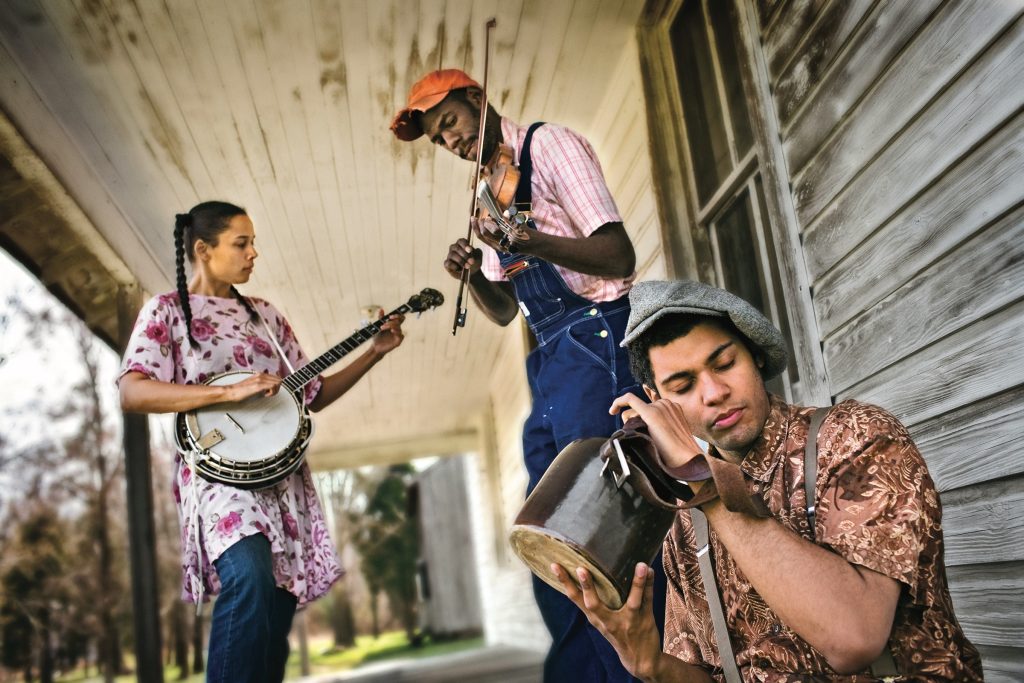
Two years after his performance at the first Black Banjo Gathering, Joe Thompson became a National Endowment for the Arts National Heritage Fellow. He also started mentoring Dom Flemons’ new band. Local musicians Rhiannon Giddens and Justin Robinson also saw Thompson at the Black Banjo Gathering and had been playing music at his Mebane house for several months by the time Dom, newly graduated from college, moved to North Carolina. The three youngsters decided to form a band of their own. “These are the years leading into Obama being elected,” Flemons says, “and culturally, people were ready for a Black string band. They could handle it.”

Flemons, Giddens and Robinson called their band the Carolina Chocolate Drops. “With the combination of all three of the original members of the trio, we created a sound that was very authentic and raw, but also landed right,” Flemons says. “We always had a rock solid rhythm. I leaned 100 percent into that, because being a fan of the Grateful Dead, I understand that give and take with the audience.”

All traditions, an accomplished jazz musician once observed, meet at the root. In their career, the Carolina Chocolate Drops were seamlessly able to blend Civil War-era Black string band music, ’60s folk-rock, jazz and hip hop. It’s no surprise — but still an absolute delight — that the band covered Blu Cantrell’s 2001 R&B Top 40 hit “Hit ’Em Up Style (Oops!)” on their Grammy-winning album Genuine Negro Jig.

“I was a fan of Old Crow Medicine Show,” Flemons says, “so I always thought about fast old-time as being a genre. Fast old-time is something that people have always enjoyed, and it was becoming very popular at that time. When we were arranging songs with the Carolina Chocolate Drops, they would usually do a Joe Thompson number. I came up with the jug and took a combination of what I thought about with traditional jug bands, as well as people like Charles Mingus, and applied that to ‘Georgia Buck.’ That gave us a unique sound from a traditional old-time string band.”

The Carolina Chocolate Drops went on to have a stellar career, releasing five albums, opening for luminaries like Taj Mahal and Bob Dylan, making numerous television appearances, and performing several times at the Grand Ol’ Opry. But as all fiery combinations do, they burned bright, then out. Robinson left in 2011; Flemons followed suit two years later. By 2014, the group functionally disbanded. Until now.

“Rhiannon wants us to do this festival she’s putting together, Biscuits & Banjos,” Flemons says. The festival will be held in Durham April 25 – 27 and will feature not only a reunited Carolina Chocolate Drops, but also solo appearances by Flemons and Giddens. Rounding out the stellar lineup are legacy acts like Taj Mahal, promising newcomers Infinity Song, Tar Heel native Shirlette Ammons and many more. In the tradition of the Black Banjo Gathering — and countless others since time immemorial — there will be artist talks, workshops, a biscuit bake-off (Giddens is a self-described “avid biscuit baker”) and a community square dance.”

Indeed, all American musical traditions do meet at the root. Blues, jazz, rock-and-roll — and a sizable chunk of country music — owe their very existence to African American musical idioms and cultural expressions. We are all the better for it, and when you combine this history with Southern food and an old-school hootenanny, life gets very good indeed. And North Carolina is one of the few places in America where something like this could happen.

“North Carolina is such a wellspring of culture in general,” Flemons says, “and I believe that it has done a lot of things right when it comes to expressing the culture of the state. I think it’s something in the way that the land is structured and the way people are raised. Because a lot of times they have this particular connection to the land, and a foot in both the country and the city. The Carolina Chocolate Drops did school shows in almost every city and town in North Carolina, so I got to see everything from Edenton all the way up to Asheville and Black Mountain and Hot Springs. Every part of North Carolina has something beautiful and unique, and the music reflects that.”

Omnivorous Reader

OMNIVOROUS READER

Coin of the Realm

The history of Rome in loose change

By Stephen E. Smith

If you believe the ancient Romans had little to do with your life, look at your feet. They gave us the concept of left and right footwear. They also left us their checkered history, of which there’s too damn much. If you’ve tackled Gibbon’s unabridged The History of the Decline and Fall of the Roman Empire, you know that a manageable history of ancient Rome requires a framing device that places events and characters in perspective.

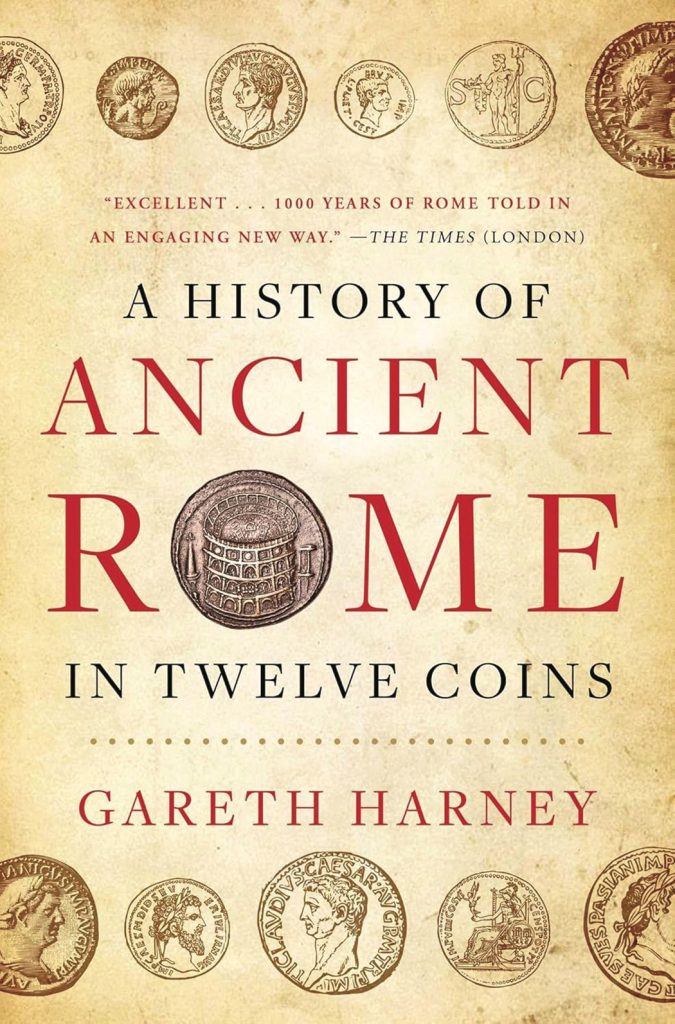
Historian/numismatist Gareth Harney has devised an agreeable gimmick. He has selected what he believes are the 12 most significant coins minted during the Empire’s 800-plus years, and he’s written A History of Ancient Rome in Twelve Coins, connecting the coinage to the emperors and events that influenced their minting.

Roman coins were struck from alloys of gold, silver, bronze, orichalcum or copper — materials that gave them resilience — and they are discovered still in Welsh fields and Polish barnyards. You can buy a pile of uncleaned Roman coins on eBay for $30.

First introduced in the third century BCE, Roman coins were used well into the Middle Ages, and during a denarius’ existence, it would likely have passed between millions of hands. Many of the coins are worn smooth, obscuring the profile of the emperor or god whose likeness was meant to ensure political stability and economic security.

In crisp, energetic prose, Harney opens each chapter as if he were writing historical fiction. “The vision was surely his alone,” he writes of Constantine’s moment of conversion. “Yet the confused shouts of his soldiers seemed to claim otherwise. As the marching column ground to a halt before the spectacle, men raised their arms to the clear sky, calling out to their emperor to witness the unfolding miracle. It took shape, by all accounts, in the rays of the midday sun. A glowing halo surrounding the solar disk, sparkling with additional rival suns where it was intersected by radiating horizontal and vertical beams — all shimmering like jewels with spectral color.”

Harney guides the reader through the history of Rome from Romulus, suckled by a wolf on an early Roman coin, to the last emperor, who was deposed by the German general Odoacer in 476 CE. In the early years of the Empire, coins illustrated mythical scenes and various gods and goddesses, but that changed, as did much of Roman life, when Julius Caesar issued coins bearing his likeness. “Even in an age of giants — Pompey, Cicero, Antony and Cleopatra — Caesar would tower above all,” Harney writes, “bestriding the world like a colossus.” The appearance of Caesar’s profile on the Roman denarius in 44 BCE is acknowledged as a transformative moment in Roman history. The new coin violated ancient law, tradition, and the sacred delineation between military and civic authority. Caesar went so far as to order the minting of a denarius with the likeness of the defeated Gallic leader Vercingetorix, an enemy of the Roman Republic.

The Julio-Claudian dynasty receives its due — Tiberius, Caligula, Claudius, Nero, Vespasian, et al. — and Harney explains the events leading to the coinage produced by each emperor. Bits and pieces of Roman excess and debauchery are reviewed in tolerable detail, and readers are occasionally treated to new depravities, of which there was no shortage in an empire populated with leaders who were murdered almost as quickly as they took power.

For many of these upstart emperors, assassination was often a merciful escape. In 260 AD, for example, the emperor Valerian was defeated by King Shapur I and was taken prisoner. He lived out his years in slavery, falling to his hands and knees to act as a step for Shapur to mount his horse. The emperor of Rome had become a human footstool for an enemy king who later had him skinned, stuffed and placed on display.

Harney’s discussion of the various currencies makes the constant shuffling of Roman emperors slightly less confusing, but the devaluation of Roman coinage is his most significant and timely lesson. The emperors, unable to pay for Rome’s defense, lessened the amount of silver or gold in each coin. “By 270, the ‘silver’ coins of Rome held less than 2 percent precious metal. Nothing more than crude scraps of copper rushed out of the mint, without a thought of quality control. A thin silver wash on the coins only served to insult the intelligence of the Roman people, and quickly wore off to reveal the depressing base metal below.” Any belief in a reliable gold or silver standard vanished from the monetary system. As coinage ceased to hold its value, Romans returned to barter as a method of exchange. When new coins were issued, they dulled more quickly, and they felt light in the hand, signaling debasement. Each degraded coin is part of the puzzle whose final piece reveals the complete collapse of the Roman state.

A History of Ancient Rome in Twelve Coins will appeal to a broad audience. Excluding the rare reader who has a comprehensive knowledge of Roman history and the numismatist specializing in Roman coinage, the majority of readers (those who saw an episode or two of I, Claudius or the movie Gladiator) will find Harney’s history well-written, informative and sophisticated — high-end Monarch Notes for Gibbon’s six-volume Decline and Fall. They may even feel inspired to start collecting Roman coins.

Harney doesn’t claim that his research offers profound insights into our contemporary political divisions or the teetering state of our democracy, but readers will likely infer whatever lesson appeals to their politics. One truth, however, is inescapable: Empires rot from the inside out.

Life’s Funny

LIFE'S FUNNY

Contact Sport

Con-text-ualizing a comedy of errors

By Maria Johnson

Fourteen neighbors? A couple of dozen cupcakes? A Friday afternoon?

Sure, I tell my mom, I’ll help her throw a small celebration of her 92nd birthday, a custom in her neighborhood, where the residents let each other off the hook by proactively reminding each other of the occasion and hosting their own to-dos.

It’s yet another example of something that’s gauche at a young age morphing into something that’s graceful, for all concerned, at a later age.

We draw up a guest list.

In her day, my mom would’ve inked the invitations in her distinctive hand using a fountain pen. She also would have served the cupcakes on her best gold-banded china.

Well, here she is, in her 10th decade, stuck with a daughter whose favorite pattern is “Compostable” by Chinet and who conveys her deepest emotions by text, usually with GIFs from TV comedies.

Finally, my mom agrees to text invitations — sadly without a video snippet of Tina Fey gorging on tres leches cake on “Weekend Update.”

My mom loves it when thumbs up and hearts blossom on the electronic string.

A week later, only a couple of people haven’t responded.

That’s when I learn from one of my mom’s neighbor’s, Amy, that two other neighbors, Ginny and Kathy, whom she was pretty sure would have been invited, have not received my text.

Amy guesses I might have sent the invite to Ginny’s home number instead of her cell number, which she rarely gives out. So Amy supplies the elusive number, and I zap a fresh invite to Ginny’s cell.

I should say “a Ginny’s cell.” And yes, in literature class, this would be called foreshadowing.

Next, I retrace my steps with Kathy.

Voila. I’ve sent the invite to another Kathy, so I tap out a new message to Neighbor Kathy, who responds with a heart.

I think about texting Another Kathy to say, “Never mind,” but she hasn’t responded so I let it go. (Insert suspenseful music.)

Meanwhile, Ginny replies with a conditional “yes” because she is recovering from chemo.

Wow. I am not aware that Ginny has cancer. I text her back, suggesting that she walk over to the party if she feels like it that day. No advanced notice required.

She pins a heart to my message.

To close the loop, I let Amy and Kathy know that Ginny plans to come if she recovers from chemo in time.

Amy and Kathy’s eyebrows shoot up. Ginny does not have cancer.

We all sleep on the unfortunate news of . . . someone’s cancer.

The next morning, feeling that something is off, I review my text to Ginny.

Oooooo.

Turns out I’ve texted a tennis friend named Ginny, who indeed is waging a successful battle against cancer.

She lives in Thomasville.

She doesn’t know my mom.

Yet she has pinned a heart to the invitation to walk down to my mom’s house.

What the . . . ? I admit my blunder to Tennis Ginny, who cops her own confession.

“I admit I didn’t know where I was going to walk to find a cupcake soiree,” she says.

Incidentally, this is why I love Tennis Ginny. She’s always game for fun, even if she’s not sure where to find it.

Resolving to wear glasses while texting, I call Neighbor Ginny, hoping for a voice on the other end.

These days, I know, calling someone in real time indicates either a dire emergency or an extremely juicy nonemergency with more details than two thumbs can handle.

This isn’t either, but Neighbor Ginny picks up without a hint of wariness. God Bless the Greatest Phone-Answering Generation.

She laughs her hearty New Englander laugh when I explain the situation.

I’m relieved at her forgiveness, which I find that older people grant easily, maybe because they need it themselves — as if the rest of us don’t.

Cupcake Day arrives.

The weather is perfect.

My mom’s neighbors stream through her door. I greet them and thank them for coming. A car pulls up.

“Who’s that?” someone asks.

I crane my neck.

“I don’t know,” I say, watching an elegantly dressed lady emerge with a potted flower.

She smiles as she steps through the door.

For the life of me, I cannot retrieve a name.

“I’m so glad . . . you could come!” I say, taking the amaryllis from her.

My mom lights up at the sight of her, hugs her and introduces her to her neighbors.

“This is my friend, Kathy, from church.”

Of course. Another Kathy is Church Kathy, who sometimes shuttles my mom to a prayer retreat. We communicate by text from time to time.

As it turns out, Church Kathy also used to live in my mom’s neighborhood and knows a couple of party guests. She wades in and charms the throng.

I find Neighbor Kathy in the kitchen.

“This just keeps getting better,” I whisper.

She snickers and shrugs: “It seems to be working out.”

Indeed. If Church Kathy thinks it’s odd that she was invited to “walk over” for a cupcake — from wherever she lives now — she never lets on.

If anyone else thinks it’s odd that a non-neighbor — albeit a former neighbor — is stirred into the mix, they never let on.

If my mom thinks she’d better lobby for handwritten invitations next time, she never lets on.

If I think that my husband, who makes fun of me for having more than 1,000 contacts in my phone, might be onto something, I never let on.

Surrounded by friends who are happy to be together, no matter how they got there, my mom is in heaven.

Surrounded by grace — some of it self-administered — I am, too.

Tea Leaf Astrologer

TEA LEAF ASTROLOGER

Pisces

(February 19 – March 20)

In case you need the reminder: Yellow does not mean gun it. And only a Pisces needs to hear that it doesn’t mean drift into oblivion, either. Proceed with caution, yes. But stay the course. Be aware of your surroundings and navigate accordingly. When Venus goes retrograde on March 27, it’s time to tend a karmic wound before it festers. In other words: Identify the pattern so you can break it. When in doubt, a salt bath ought to help.

Tea leaf “fortunes” for the rest of you:

Aries (March 21 – April 19) 

Scrap the old story.

Taurus (April 20 – May 20)

Opt for the silk ones.

Gemini (May 21 – June 20)

Steady your hand.

Cancer (June 21 – July 22)

Keep on keeping on.

Leo (July 23 – August 22)

Don’t miss your cue.

Virgo (August 23 – September 22)

Too much salt will wreck the meal.

Libra (September 23 – October 22)

Cast a wider net.

Scorpio (October 23 – November 21)

Get some fresh air.

Sagittarius (November 22 – December 21)

Try washing behind your ears.

Capricorn (December 22 – January 19)

Fix your gaze on the horizon.

Aquarius (January 20 – February 18)

Plant the seed, then let it be. 

Sazerac March 2025

SAZERAC

Sage Gardener

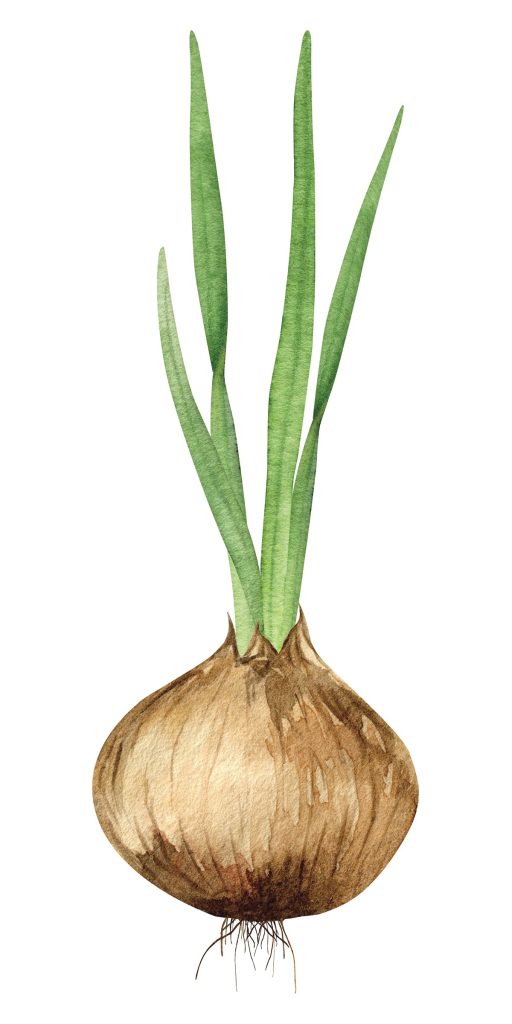
I love raw onions so much I’ve devised a stratagem so that fast-food employees don’t get my hamburger order wrong. (“Extra onions” is often misconstrued as “no onions.”) So, I tell the clerk, “I’d like an onion sandwich . . . and it’s OK if you leave the hamburger on it.” Whether baked, fried, char-grilled or caramelized, onions are, as the Egyptians believed, a gift from the vegetable gods. But the Sage Gardener’s sagacity on the subject of onions does not extend much further than knowing there are two basic types, branching (or green) onions and bulb onions. And I hereby confess that I’ve never been able to grow a bulb onion any larger than a small lime, but I may have finally figured out why. Sure, some sources say growing onions is as easy as poking a hole in the dirt with your finger and dropping in a seed or a set, but a friend convinced me the seed route is not for me. After he ordered a number of enticingly named varieties such as cipollini, big daddy and red zeppelin, my permaculturistic pal nursed what few seeds germinated, misting them with water and even encouraging them with some baby talk, only to watch almost every single one of his transplants wither and die. Me? For years, I’ve been lured by the sets that pop up in garden section of big-box stores in the spring. But then I read about “long-day,” “intermediate-day” and “short-day” onions. “Long-day onions are not recommended for our area,” writes Lisa Rayburn, an agent with the N.C. Cooperative Extension Service. “Unfortunately, the onion sets sold in big-box stores are usually long-day onions and will not form properly in our area.” Duh! While onion maps show that the Northern U.S. has long days, the Tar Heel landscape is in the short-day territory or intermediate-day range. Rayburn says if you plant long-day onions in the state, “They will produce only greens or very small, if any, bulbs.” Further research, however, revealed that “recently, long-day and intermediate-day-type onion varieties have been developed that are well-adapted to North Carolina conditions.” That, according to Chris Gunter, a former prof and vegetable specialist at N.C. State. Browsing the Burpee catalog that just came in the mail, I see that they have several different varieties of sets hybridized for intermediate and short-day climates. B-I-N-G-O! Of course, all this is something I’m sure I would have learned in a Master Gardener class if I weren’t too bull-headed to take one. So this month, I’ll be poking a hole with my finger in the still frigid soil and dropping in a Georgia Queen hybridized set or a Snow White. (Warmer climes, by the way, produce sweeter onions.) And later in the summer, when I top a big, bad sizzling burger with some freshly picked butter-crunch lettuce and a fat, juicy slice of Cherokee tomato, I’ll weep from joy — and onion juice — as I slice up my first huge homegrown onion and plop a ring or two atop the stack.

Window on the Past

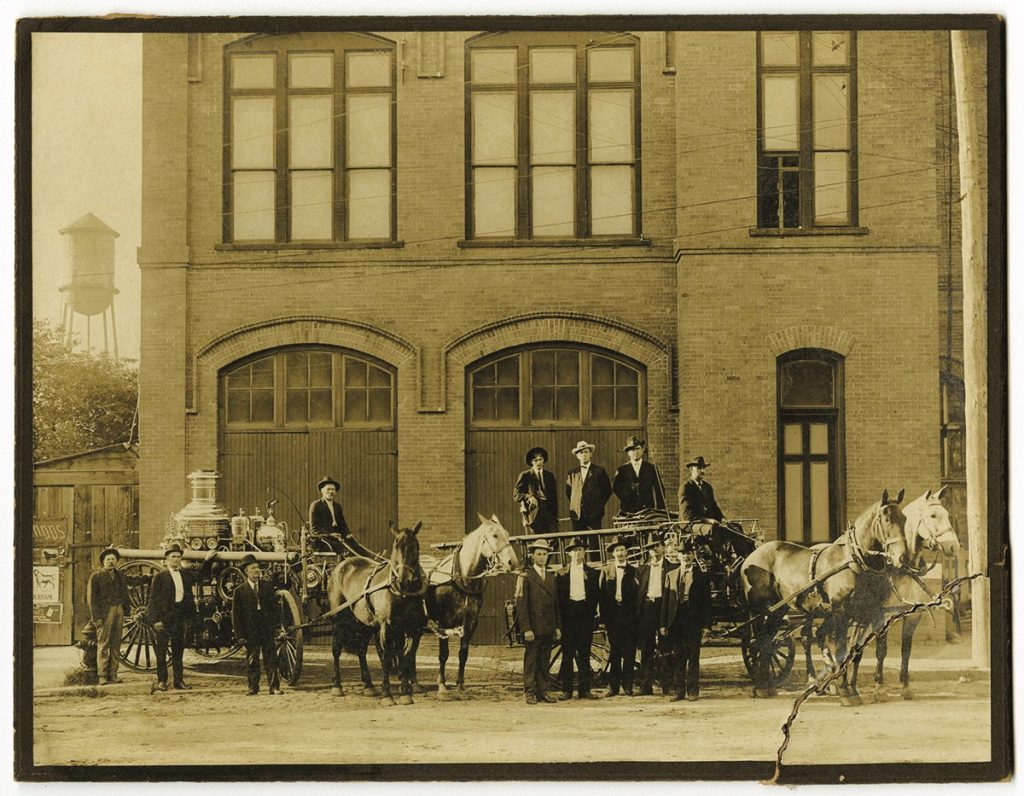
Since 1905, a lot has changed in the Greensboro Fire Department. For starters, we’re no longer relying on horses and steam engines. And, these days, women are wading into the smoke and putting fires out alongside men. What hasn’t changed is the epic heroism of the GFD.

Taking Flight

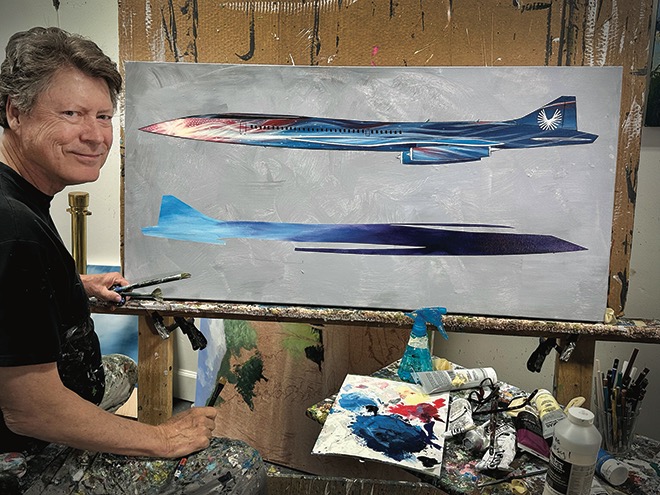
William Mangum, Greensboro resident and North Carolina’s artist, is accustomed to high-flying success. But, not long ago, he soared to new heights by winning an international competition to come up with the livery on the fuselage of Boom Supersonic’s Overture aircraft.

How Mangum managed to snag one of the competition’s most coveted awards over more than a thousand entries from across the globe is a tribute not only to the artist’s famous versatility, but also a prime example of how traditional art form can still fire the imagination in a highly digital world.

We recently sat down with Mangum at his downtown studio on a quiet winter afternoon to get the details.

It started, he explains, when a notice in Triad Business Journal caught his eye. It announced a competition to design the outer skin — aka the “livery” — of Boom’s forthcoming supersonic jet.

“It really excited me because as a kid I was enthralled with building model airplanes,” he says. “The problem was that submissions were due the following Monday, less than 48 hours away. After pondering the opportunity for about 30 minutes, I called my wife, Cynthia, and told her I really wanted to give it a shot, but would have to spend two nights at the studio to make the deadline.”

Mangum’s approach was to produce a painting of the aircraft and graphically transfer it to a model of the plane. “My idea was to imagine an American flag draped on the plane moving at Mach-speed, shearing it off against the fuselage.”

To accompany his submission, he included a note describing his participation in North Carolina’s aviation history, specifically his work celebrating the centenary of the Wright Brothers at Kitty Hawk.

A short time later, he received the good news in an email from the sponsors.

“By dang, out of 1,100 international submissions, I won the top prize of ‘Most Original Design.’ It was incredible. Their email said they were going to take my design and put it on a working model of the project.”

He’s not sure if his imaginative rendering will grace the skin of Boom’s first supersonic jet, expected to roll out sometime in 2029, but he plans to stay in touch with the company.

“I’d love to be one of the first folks to fly in it,” he admits. “The plane will have only 80 seats, all business class, and will fly to London in just three and-a-half hours. That would be a big thrill for sure.”

In the meantime, he has a major Earth-bound commission to paint portraits of High Point University’s 41 campus buildings. That project will take flight over the next 18 months.

“I’m very excited about that, too,” he says. “It has a much easier deadline.”

Just One Thing

If you are a fan of Gossip Girl, chances are, you’ve spied a Marilyn Minter piece. Frostbite hangs in the bedroom of Blake Lively’s character, Serena van der Woodsen, honing in on a determined blue eye that dazzles with shimmering silver shadow and dewy lashes. And then there is the iconic Stepping Up, which hangs in the van der Woodsen family’s hallway and features a grime-covered ankle and heel in a sleek, rhinestone-covered stiletto. It’s no wonder that during the show’s last season, Minter created a piece entitled Gossip. Born in 1948 in Shreveport, Louisiana, Minter has worked for more than a half-century, challenging standards around sexual imagery. In this C-print, Minter plays with bokeh, and we see a blurred-out, red-lipped mouth, slightly open as if whispering. Droplets of water that look as if they’re on the camera lens seem to suggest gossip, true or not, is being broadcast. Purchased by UNCG’s Weatherspoon Art Museum with funds from the Burlington Industries Endowment and the Lynn Richardson Prickett Acquisition Endowment, Gossip is part of the current “Embodied” exhibit, curated by students in Art History 490 and running through March 29. Info: weatherspoonart.org/exhibitions/current-exhibitions.

Unsolicited Advice

Sure, we’ll take a pint o’ green beer on St. Paddy’s Day, but why stop there when you can celebrate Irish American Heritage Month all March long? We’ve got the craic to make the Emerald Isle shenanigans last. Erin go Bragh!

1. Binge Bad Sisters. Set in Dublin and filmed in Ireland, this Apple TV+ series follows the five Garvey sisters as they navigate the sudden, mysterious death of one of their husbands. If you’re into murder and mayhem, but in a pretty, pastoral setting, hit play — it’s gas.

2. Hozier, U2, The Cranberries, Ed Sheeran, Van Morrison, The Pogues. What do they all have in common? They’re on our “Irish I Was There Right Now” playlist. Make yourself one for hours of nonstop Irish-made music that’ll have you shamrockin’ a’round the clock.

3. Crank up the corned beef-and-cabbage crockpot. Irish American immigrants originally cooked up this concoction based on the homeland’s bacon-and-cabbage dish, substituting more affordable meat. While we prefer the salty, savory scent of bacon to broim — which is what this dish reeks of — we’ve got no other beef with this meal.

4 Don your wooden-soled clogs, cue up “Riverdance” and go mad yoke. Not recommended for apartment dwellers. Or anyone whose neighborhood has a noise ordinance, for that matter, because the jig will surely be up.

5. Indulge in an Oreo Shamrock McFlurry. There’s nothing particularly Irish about this, but, hey, at least it’s green. And delicious.

In the Market

I attended an event recently where half of the folks were talking about this guy, “Chad,” and his amazing spices. One lady raved about a pie she’d just made with what I found out later was his King Blossom Apple Pie blend. The very next Saturday morning, I set out in search of this suddenly illustrious spice meister.

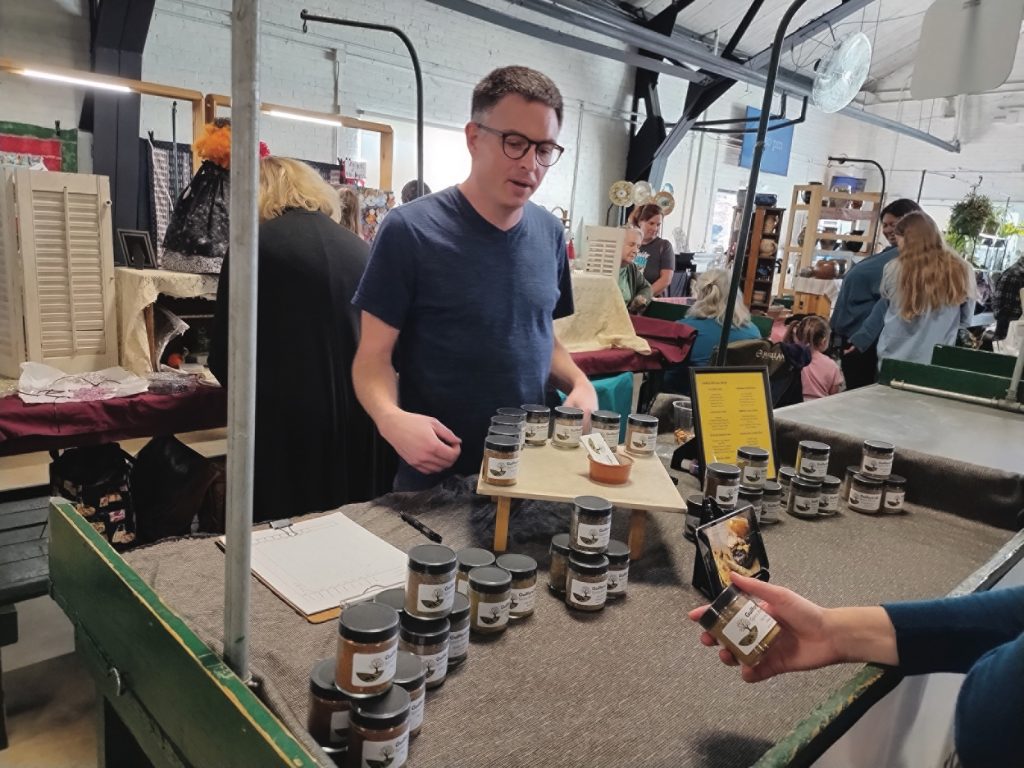
Chad Smith sets up a booth where he peddles his Guilford Hill Spice Blends (most) Saturdays at the Greensboro Farmers Curb Market downtown, where I asked about his line of seasonings. I wanted to know where the inspiration sprang from. “I couldn’t find a Cajun that didn’t have so much salt, so I decided to make my own,” he answers. After Smith created a palate-pleasing blend, he shared the results. “At first I gave my Two Step Cajun to friends and family and they all told me I should sell it. So I developed a whole collection that I’ve been selling now for five years and it’s all natural.” 

The most popular seasoning is his Painted Lady Garden. “It has rosemary and basil out front, then blended with sage, thyme and oregano on the back end,” Smith says. “The idea behind all of my recipes is that you won’t taste any one ingredient at a time — everything works together for one big flavor.”

For an added boost, his Scotch Bonnet Pepper is mixed with a little bit of brown sugar and cinnamon. “As your meat cooks,” Smith explains, “that brown sugar makes a nice glaze over everything. The Fitz Roy Adobo I use for my taco meat, whether it’s chicken, pork or beef. Fantastic. We’ve been using this lately with burgers as well.”

Selling 1.9-ounce jars for $10 each, Smith named his spice line after the neighborhood he lives in, Guilford Hills. “It’s a nice community with lots of families, and families need a way to make their meals easier. Where Mom and Dad can put dinner together and it’ll be flavorful, everyone will be happy, and the blend does most of the work for you.” Plus, he notes that because his blends are salt free, customers can add salt to fit their personal taste. The first ingredient in his Green Stone Greek is tomato powder, “and you have garlic, black pepper, onion, oregano, sage, beet powder, coriander, cinnamon and nutmeg.” Delish!

Chad Smith creates these proprietary small-batch mixes in Out of the Garden Project’s shared-use kitchen, a commercial grade facility that allows local entrepreneurs to produce prepackaged food products for the marketplace in a safe and sanitary environment. “This time of year, the Chihuahua Chili Powder sales increase because it’s made with smoked, dried jalapeño,” Chad tells me. “The smoke will deliver a bold flavor to anything you cook it with — a big bowl of chili or just do some nice bean dip. The Eighteen Arms Chinese is also popular; we just did a stir fry with that the other night.”

Besides the farmers market, Guilford Hill Spice Blends can be found at the Extra Ingredient in Friendly Center and online at Guilfordhillspice.com. Get it while it’s hot.