The Beat Goes On

The Beat Goes On

From the Mountains to the Sea

By David Menconi 
Type design by Keith Borshak
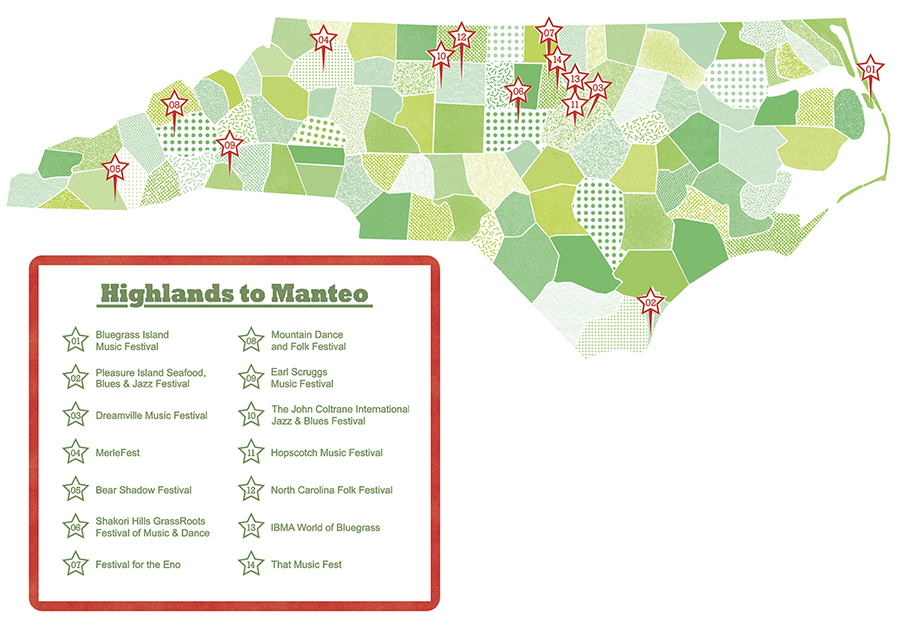
 

Map Illustration By Miranda Glyder


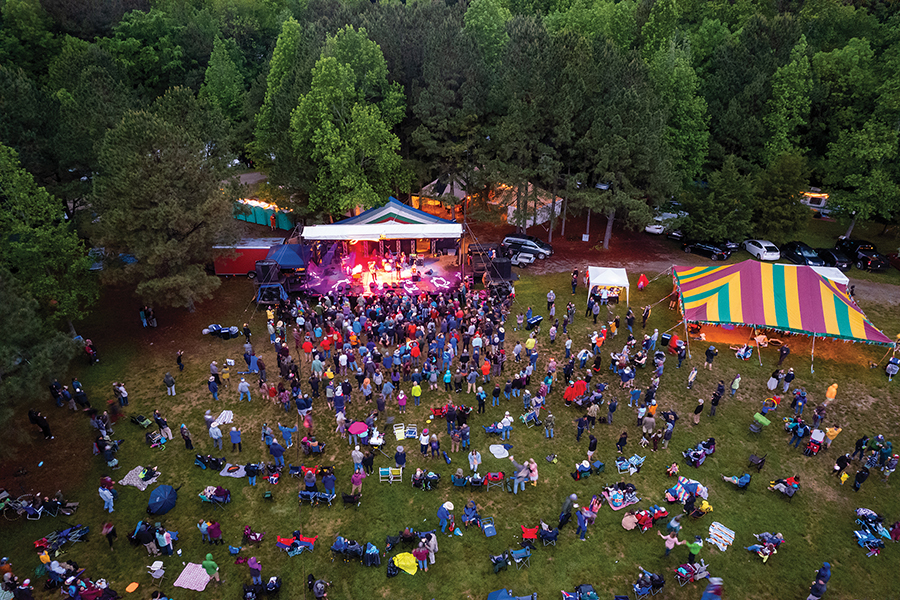
Springtime in North Carolina means college basketball madness, azaleas blooming — and the earliest days of outdoor music. Our state has a staggering array of A-list music festivals spanning numerous genres from now until fall. Here are some of what you should be making plans for.


       

Dreamville Festival 

Between apocalyptic weather and the coronavirus pandemic, rapper J. Cole’s Dreamville Festival has had a rocky existence in its short history. But in spite of multiple postponements, Dreamville has been a huge success, starting with 2019’s sold-out debut at downtown Raleigh’s Dorothea Dix Park that immediately established it as one of the nation’s top hip-hop festivals. Dreamville’s second edition in 2022 expanded from one day to two with an onstage lineup featuring the entire roster of Cole’s Dreamville Records label, and it also sold out. Round three returns to Dix Park the first weekend of April as another multi-day affair. It should be another big success, with Cole himself in the headline slot.

April 1 – 2, Raleigh; dreamvillefest.com


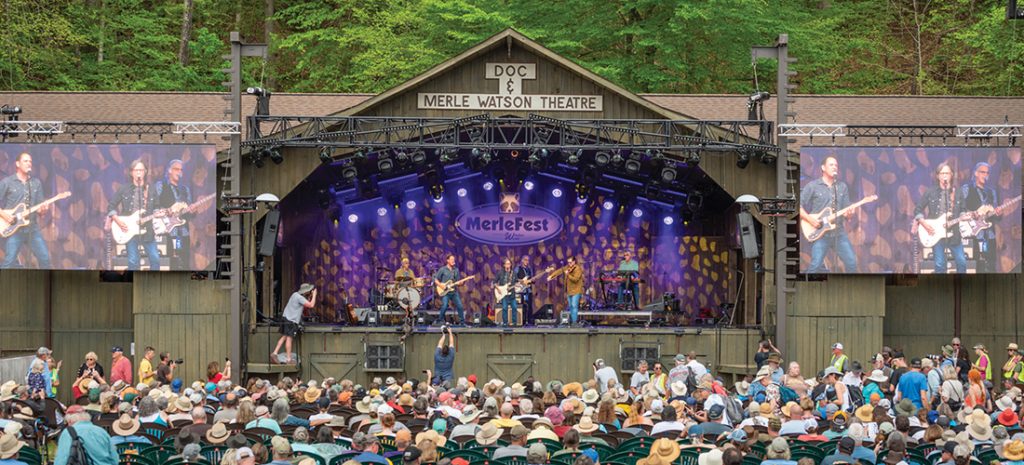
MerleFest 

Centered on the multi-style “traditional plus” music played and loved by its late, great founder, Doc Watson, MerleFest has been a tradition at Wilkes Community College since 1988. The venerable roots-music festival is a signpost event on the Americana circuit. And after the same pandemic problems that every other live-music event faced in recent years, it’s back with an impressive lineup featuring the Avett Brothers, Maren Morris, Little Feat, Tanya Tucker and more.

April 27 – 30, Wilkesboro; merlefest.org

 

Bear Shadow

The mountains of the far western corner of North Carolina are the setting for this springtime festival, which happens the same weekend as MerleFest. First conceived in 2021, this year’s model has a first-rate alternative-leaning lineup featuring Spoon, The Head and the Heart, Jason Isbell and Amythyst Kiah.

April 28 – 30, The Highlands Plateau; bearshadownc.com



Shakori Hills GrassRoots Festival of  Music & Dance 

Started in 2003 as a nonprofit music and dance festival, Shakori Hills takes place on a bucolic 9,000-acre spread in rural Chatham County. It’s probably the top camping festival in the greater Triangle region, with solid Americana lineups. Marty Stuart & His Fabulous Superlatives, Malian singer/guitarist Vieux Farka Touré, beach legends Chairmen of the Board and festival regulars Donna the Buffalo. There’s also a fall version of Shakori Hills, which happens every October.

May 4 – 7, Pittsboro; shakorihillsgrassroots.org


Annual Carolina Beach Music Festival

Dance to beach music with your toes in the sand at the 37th Annual Carolina Beach Music Festival on Saturday, June 3 from 11:00 a.m. to 5:00 p.m. Billed as “the biggest and only beach music festival actually held on the beach on the North Carolina coast,” three bands will be performing. Shows are accessible from the Carolina Beach Boardwalk at Cape Fear Blvd. and Carolina Beach Ave. S. For information on tickets call (910) 458-8434.

June 3, Carolina Beach
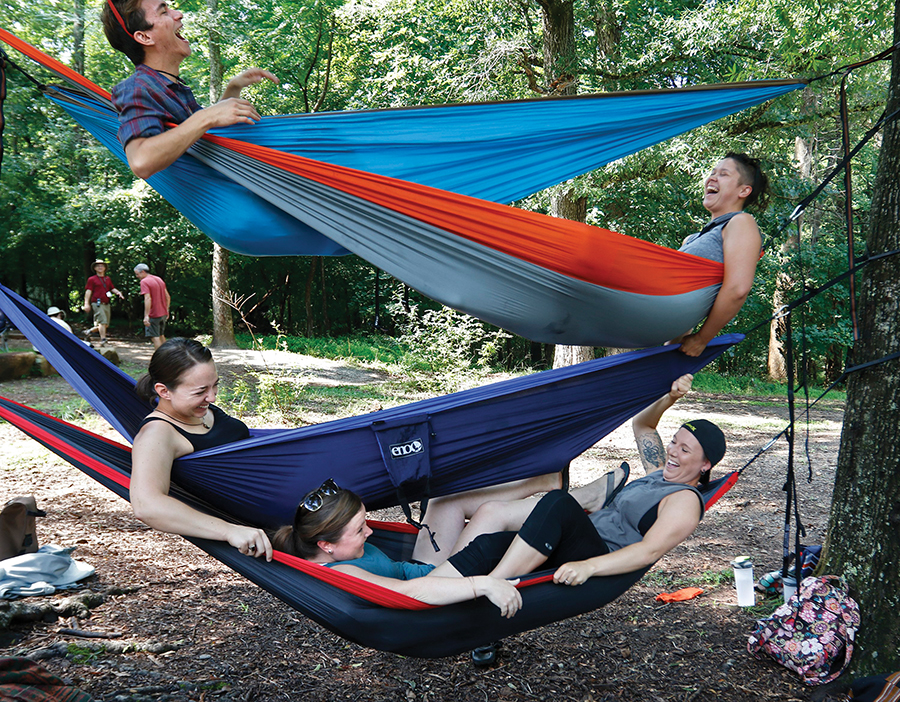
 

Festival for the Eno

The granddaddy of music festivals in the Triangle, Festival for the Eno dates back to 1980 and happens on the grounds of Durham’s West Point Park. Started as a fundraiser for the Eno River Association, the festival — which also offers a craft and food market — has hosted a who’s who of Americana-adjacent and roots artists including Emmylou Harris, Doc Watson and Loudon Wainwright III. Recent years have featured rising regional acts including Mipso, Rainbow Kitten Surprise and Indigo De Souza.

July 1 and 4, Durham; enofest.org


Mountain Dance and Folk Festival 

Reputedly the first event in America to be called a “folk festival,” Asheville’s Mountain Dance and Folk Festival was founded in 1928 by the folk music legend, Bascom Lamar Lunsford. It remains the longest continuously running folk festival in the country, and it’s as much about the folk dance traditions of Western North Carolina as the music.

Aug. 3 – 5, Asheville; folkheritage.org


Earl Scruggs Music Festival 

A newcomer to the North Carolina festival circuit, the Earl Scruggs Music Festival debuted last year at the Tryon International Equestrian Center in Mill Spring. As you’d expect for a festival named after the man who invented the three-finger style of bluegrass banjo, the lineup trends toward classic bluegrass and Americana.

Sept. 1-3, Mill Spring; earlscruggsmusicfest.com


John Coltrane International Jazz and Blues Festival 

Although he made his mark as an artist elsewhere, John Coltrane was born and raised in Hamlet, North Carolina. He was one of the towering figures of 20th century jazz, a key collaborator with Miles Davis, Duke Ellington and his fellow North Carolina native Thelonious Monk. The John Coltrane International Jazz and Blues Festival has been paying tribute to his legacy every Labor Day weekend since 2011 with solid lineups — 2022 featured trumpeter Chris Botti, singer Patti LaBelle and saxophonist Kirk Whalum, among others.

Sept. 2 – 3, High Point; coltranejazzfest.com


Hopscotch Music Festival

Downtown Raleigh has a well-earned reputation for doing music festivals right, and one of the events that helped pave the way is the alternative-slanted Hopscotch. Originally started in 2010 under the auspices of the Indy Week newspaper, it showed off Raleigh’s walkable grid of downtown nightclubs and outdoor stages to fantastic effect. Past headliners have included Flaming Lips, The Roots, Solange Knowles and St. Vincent. Hopscotch director Nathan Price reports that this year’s model should feature “an expanded lineup closer to pre-COVID size.” Here’s hoping.

Sept. 7 – 9, Raleigh; hopscotchmusicfest.com


North Carolina Folk Festival 

In 2015, the National Council for the Traditional Arts brought the long-running National Folk Festival (which has been around since 1934) to Greensboro for a three-year run. It was such a success that, after the national festival’s Greensboro run ended, the city opted to keep it going as the rebranded North Carolina Folk Festival. Last year’s lineup was typically eclectic, featuring everything from George Clinton’s P-Funk All-Stars to the Winston-Salem Symphony String Quartet. Expect more of the same in 2023.

Sept. 8 – 10, Greensboro; ncfolkfestival.com
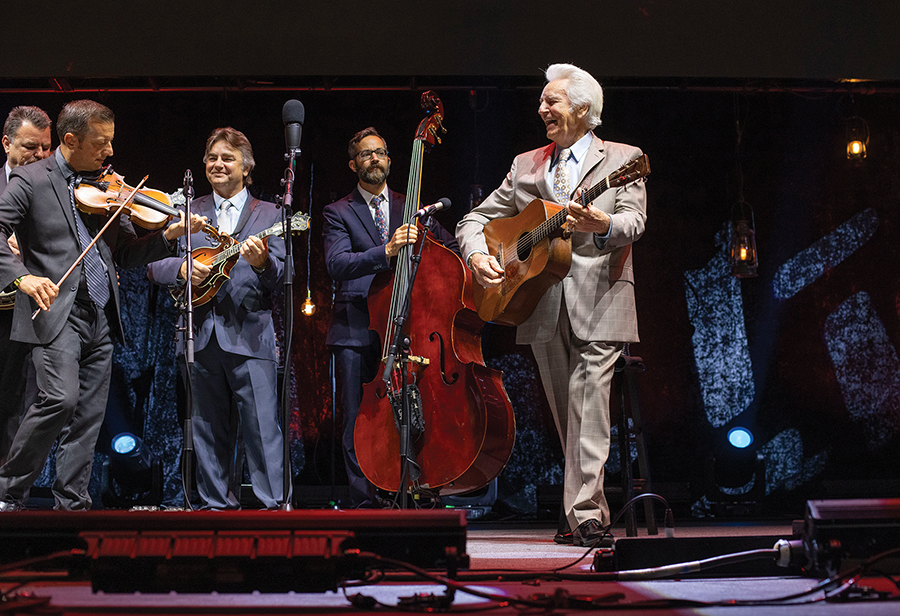
 

World of Bluegrass 

The International Bluegrass Music Association moved its annual business convention and festival to Raleigh in 2013, where it has been a huge success. Between the convention, trade show, “Bluegrass Ramble” nightclub showcases, awards show and street festival, total attendance can top 200,000 when the weather’s good. Past headliners have included Steve Martin, Alison Krauss, Béla Fleck and just about every notable picker and singer in the genre. Year in and year out, it’s downtown Raleigh’s biggest music festival.

Sept. 26-30, Raleigh; worldofbluegrass.org


That Music Festival 

Sponsored by Raleigh’s Americana/roots radio station, That Station, 95.7-FM, That Music Festival made its debut in June 2022 at Durham Bulls Athletic Park with an all-North Carolina lineup featuring American Aquarium, Steep Canyon Rangers, Mountain Goats, Rissi Palmer and more. The sophomore edition is tentatively scheduled for October, most likely in Durham again.

October, Durham; thatstation.net/that-music-fest


Annual Bluegrass Island Music Festival 

Music lovers will be flocking to the Outer Banks, beach chairs in hand, for the 12th Annual Bluegrass Island Music Festival October 19-21 held at the Roanoke Island Festival Park overlooking miles of the pristine waters of Roanoke Sound. Buy your tickets and book your lodging well ahead of time. Acts this year include The Goodwin Brothers, Seth Mulder & Midnight Run, Rhonda Vincent & The Rage, Po’ Ramblin’ Boys, Leftover Salmon, The Kody Norris Show, Thunder & Rain, AJ Lee & Blue Summit, The Kitchen Dwellers, The Steeldrivers, Darin & Brooke Aldridge, Breaking Grass, Tim O’Brien and the incomparable Sam Bush. 

October 19-21, Manteo; bluegrassisland.com  PS

The Need for Shutter Speed

The Need for Shutter Speed

Bill Chandler’s wanderlust for classic automobiles turns into a creative hobby

By Billy Ingram

Feature Image: Toyota Supra 2019  


Left: 1950 Aston Martin DB2

Middle: 1967 Corvette 427

Right: 1952 Jaguar XK 120

In a story as familiar to me as Aunt Goo-Goo’s spaghetti sauce recipe, Bill Chandler is a transplant whose glancing flirtation turned to love for the residents of Greensboro. Having spent most of his career as a neurosurgeon at the University of Michigan in Ann Arbor, he established a second home here to be close to one of his sons, an orthopedic surgeon, and his daughter-in-law, a local pediatrician.

Chandler enjoyed his visits here so much that he’s made the Gate City his permanent retirement home. “You’ve got to realize, people come to North Carolina and they never leave,” Chandler says. “Three of the finest neurosurgeons in Greensboro trained with me up in Ann Arbor. I spent seven years with each one of these folks. So that’s a nice connection, as are my two lovely granddaughters who are now 15 and 12.”

Performing surgery and teaching in a world-class medical school devoured his free time, but now Chandler can passionately pursue photographing classic cars. “I’ve always enjoyed photography,” Chandler tells me. “Even way back when I was young, in training, I had a dark room and all the stuff you used to have to have. Then along came digital photography, which I thought was wonderful.”

Chandler believes older automobiles should be enjoyed to the fullest, not perched up on blocks waiting to be transported from one collector’s event to another. “These cars are made to be driven,” he points out. “In fact, they don’t like being stored. All the rubber gaskets go bad, so the more you drive them, the better they are.”

This gearhead is particularly intrigued by the front end of these older, collectible automobiles and does an extraordinary job of capturing the quirky personality each embodies. “I started taking pictures with the red 1953 MG TD that’s sitting in my garage right now.” That ’53 MG is a head-turner and serves as a great way to meet people. “Invariably, you pull into a Lowe’s parking lot and somebody comes out and says, ‘My dad had one of those,’ or young people will ask, ‘What is that . . . and what’s an MG?’ Curiously, I was walking around one time in a hat with an MG logo on it and some guy came up and said, ‘So, how many MGs do you have?’ Not what kind, but how many.”

At one point, he owned two MGs, including a red  1957 MGA. “That model sort of brought MG into the modern era,” he says. “In the early ’60s, they started making the MGB, which they manufactured for a long time. That was sort of a squared-off design, to me, not as attractive.”

Born in 1945, Chandler remembers being impressed as a youngster with ’50s era car-nnoisseurs piloting those sporty MGs. “I thought, boy, someday I’d like to have one of those,” he says. “They made the TD model from 1950 to ’53. He says that a 1936 model, though, looks a lot like his ’53 model. “In The Crown, Prince Phillip shows up driving an MG TD,” he says. The same year that Chandler’s MG was manufactured, the first Corvette debuted. Around the same time, Detroit offered up the first Thunderbird. “Before that, there were no American-made two-seat sports cars,” Chandler says. “When I was growing up, around 1955, we’d go over and look at the brand-new Corvette, a little two-seat thing, and the original Thunderbird, which was a cute little car.”


Left: 1965 Austin Healy 3000 Mark III

Middle: 1934 Auburn 1250 Boat Tail

Right: 1954 Mercedes Benz 300SL Coupe (Gullwing)

Detroit’s more typical mid-’50s models, like a Buick Roadmaster that Chandler gave the Andy Warhol treatment in his photos, were bloated behemoths, easily seating six adults, equipped with 300 horsepower, overhead-valve V8 engines, aquatic-like fins, protruding headlamps, cinemascopic tempered glass windshields, massive chrome ornamentations and accents, and moderne amenities like electrically adjustable body-contoured seats. Weighing in at almost 2 tons, sailing one of those land yachts to and from your job at the Rand Corporation told the world you had made it.

In contrast, driving a British-made sports car in the ’50s was a somewhat rebellious move. Not quite a James-Dean-smeared-across-a- country-road-in-a-Porsche-550-Spyder level of rebelliousness, but a statement nonetheless. “The ’53 MG has no rollup windows, no heater, so they’re pretty basic little cars,” says Chandler. “And that’s why you can work on just about any part of it. On the ’53 model the hood lifts up from the sides and meets in the middle like an old-time car.”

Love for MGs must be coursing through his veins because the first new vehicle Chandler ever bought, back when he was an intern, was a feisty flame-red 1971 MG Midget two-seater costing around $2,400 back in the day (About $17,000 in today’s dollars). “Through much of my career I wasn’t working on cars, but now I enjoy the mechanics of it. I guess being a surgeon, you like to be hands-on.”

While he was still primarily residing in Michigan, Chandler brought down to Greensboro that ’53 MG which he purchased in 2009 to tool around town in. “I’d drive it to racketball three days a week, usually with my golden retriever in the front seat, and people would take pictures at stoplights.”

He still owns that magnificent machine. “I’ve had it 14 years and it starts up like an old lawnmower,” says Chandler. “Occasionally I have to replace the spark plugs or something leaks a little bit. But, the adage about cars is, you don’t worry that it’s leaking. You only worry when it stops leaking.” (To put pedal to metal on a racetrack, he also owns a 2017 Porsche 718 Boxster S. “It’s lightweight and has a mid-engine design,” he says. “So it’s perfectly balanced for the track. It’s fun, but not really as photogenic as the classic cars.”)

Of course, unforeseen breakdowns will happen, but it’s purely a mechanical thing when it comes to repairing classic autos. “There’s the diagnostic part and then the fun of fixing it,” Chandler says. “A modern BMW or Porsche, you can’t touch those engines. Half of the time you can’t find the engine.”

Neurosurgeon to grease monkey in one easy step? Complex brain surgery and car engine repair are hardly comparable. “There are just many, many more unpredictable unknowns that you’re going to find in surgery,” reports Chandler. “I’ve had a lifetime of enjoyment doing a lot of the most complex neurosurgery, brain surgery tumors, aneurysms, and, because it was a big medical center, we would always see the most complicated cases.”


Left: 1953 MG TD

Middle: 1954 MG TF Jack

Right: Morgan 1934 Super Sport 3 wheeler

By contrast, no matter how complex a car is, it’s just a collection of parts. “Whether the carburetor needs tuning or the head gasket needs changing or anything else, I’ll take care of it myself,” he says. From tuning carburetors to changing head gaskets and replacing water pumps, Chandler has developed the skills to take take apart almost everything.

Some of the older and more expensive models seen here were photographed in the field or at car shows such as Concours d’Elegance in Michigan. If the 1950 Aston Martin DB2 Drophead that Chandler shot looks familiar, it’s a precursor to the James Bond DB5 model seen in Goldfinger, which reappears in six subsequent films, although this author was unable to determine whether retractable headlights transforming into a pair of machine guns came stock on consumer models.

A rare oddity is a 1934, three-wheeled Morgan Super Sport labeled VJ62342 with the then-new “barrel-back” body style, its 1200-cubic-centimeter JAP V twin engine jutting out front; what one former owner referred to as “a special kind  of madness” to drive. The 1934 Auburn 1250 Boat Tail salon car was built in Indiana, designed by Gordon Buehrig who was renowned for the luxurious but sporty Cord Model 810, also manufactured in the Hoosier State.

One of the most expensive collector cars on the market right now, and no wonder, is that 6-cylinder Mercedes Benz 300SL Coupé with dual Gullwing doors, an option only offered between 1954 and 1957. Its lightweight, 110-pound-frame couldn’t accommodate normal doors but helped this “dreamcar” hit a top speed of 162 mph.

The Iris Blue, 150-horsepower, twin-carb 1965 Austin-Healey 3000 Mark III convertible came with sumptuous leather upholstery, striking that sweet spot between performance and comfort, and is considered highly collectible. The first sports car to feature a top-hinge hatchback, this was the last of the big Healeys before that lineage was discontinued in 1968. “I created that look through the [Austin-Healey] windshield because there were people standing back there, there’s so much clutter in every photograph,” Chandler explains about the challenges involved in getting the crisp, clean images that are his trademark.

“You have to take a photograph and look at whether the essence of the car is good and there’s not some crazy reflection . . . that also happens.” To declutter and make those photos pop, he captures his shiny metallic subjects in brightest sunlight, replacing the background with solid black. “There are a lot of interesting photographic challenges with blacking out the background, at least the way I do it. It’s not some button you push. I will enlarge the photo millimeter by millimeter, go along the edge of every mirror and everything else and then turn it black. So it’s a process.”

With a base price slightly more than $4,200 in 1967 (around $36,000 in today’s dollars), that gorgeous Marlboro Maroon Corvette Sting Ray, the most refined of the second generation ’Vettes, was a world-class racer with an optional 427CI three-carburetor, 430 horsepower, big-block V8. There’s a reason Corvettes won Car and Driver’s “Best All-Around Car” or “Best Value” award 10 out of 12 times from 1964 through 1975 — and it wasn’t just for the sleek body styling. A Concourse condition Sting Ray like the one pictured will set you back around $140,000 today.

One of the photographer’s favorite images is a full frontal look at a 1952 Jaguar XK120 Fixed Head Coupe. “A friend of mine owns that one,” Chandler says. “It’s funny, you would think a black car with a black background wouldn’t show up but it turns out there’s so much color in that car — there are blues, pinks and all sorts of colors.” That was Jaguar’s first sports car offering since SS 100 production ended when WWII broke out.

“As I met more and more people who collected old cars, once they saw these photos they said, ‘Wow, can you do one of my car?’” As a result, people from around the globe send Bill Chandler their hi-resolution pics for digital super-charging, which he does for free. “A lot of these cars here are owned by friends of mine. I never charged them anything, I just have so much fun doing it. It’s sort of like taking pictures of their kids because they love their cars so much. I always say, whatever you own, it should be fun to drive.”  OH

Daddy Knows Best

Daddy Knows Best

Catherine Harrill finds her forever home in Fountain Manor

By Cynthia Adams     Photographs by Bert VanderVeen


Beneath Catherine Harrill’s resolve to renovate two properties in the same development back-to-back lies a tale precipitated by a loving father’s last request.

He asked his daughter to move from her freshly renovated Fountain Manor home.

But all of that in good time.

Only four years ago, recently retired Harrill, a health professional, had just finished gussying up a condo in Fountain Manor (see O. Henry May 2019). The design, colorful and chicly bohemian, an ideal showcase for her expanding art collection. She rediscovered how much she enjoyed the creative process, having once worked as a home stager.

The end result was completely original. “It was a great transitional home,” she says, for before she renovated, she had downsized from a 4,200-square-foot home to an apartment.   

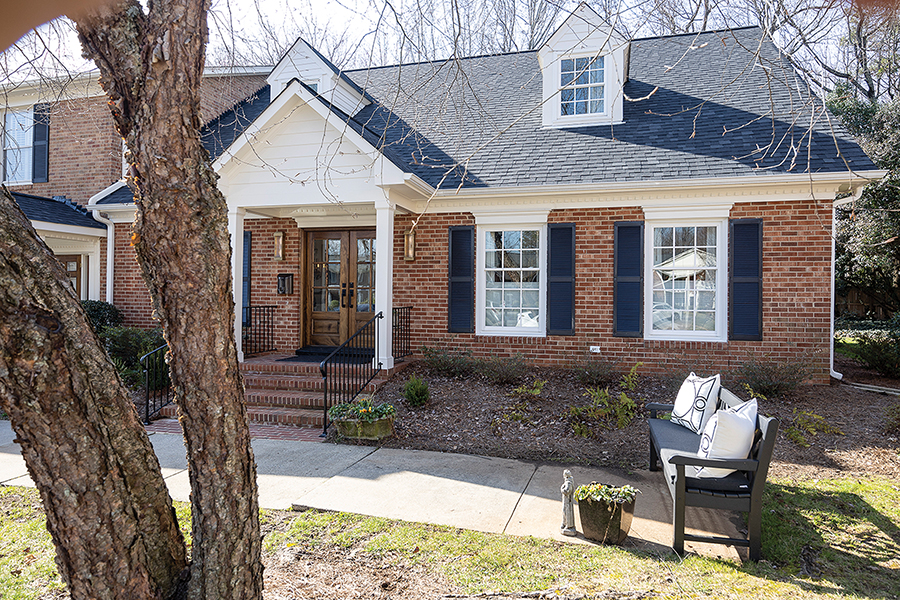
Harrill had long favored Fountain Manor, a perennially popular development created in 1973.

Browsing an estate sale at a Fountain Manor unit in 2017, she discovered the unit itself was for sale and immediately snapped it up, making it a jewel of a property.

Yet it still wasn’t her first choice. Harrill had previously pursued a condo she could practically see from her front door, which had languished in bankruptcy for years. It possessed the holy grail of plans: an end unit with a first-floor main bedroom and bath. “Yet it was owned by a bank that was not interested in selling until January of 2020,” she says.

Soon after O. Henry depicted Harrill’s renovation triumph, events prompted doing it all again.

Approaching the end of his life, Glen “Buck” Campbell informed his daughter he wanted her to move.

Her father’s hospitalization in September 2019 prompted Harrill to keep vigil for three days and nights.

As Campbell was being transferred to hospice, Harrill decided to dash home for a change of clothes. Before she left, her father said, “Well, I want you to do something for me on your way.”

He was emphatic. “Go by Fountain Manor and buy that unit with the downstairs master.” As a protective father, Campbell knew it was the property she had first wanted. But also, a more practical choice for a permanent home.

“He died later that day,” she adds: September 17, 2019. As an only child, Harrill had an enviably close relationship with her father. They even fished together.

“I had tried to purchase the unit before,” Harrill explains.

Nonetheless, the bank-owned condo had been deteriorating. The renters moved out without cutting off water. Inevitably, pipes froze and burst.

Now there was water damage — and mold.

At her father’s insistence, Harrill tried again. The bank finally budged.

“I made a bid then and closed in a few weeks [in January of 2020].” But buying the place proved to be the easy part. Although much of the damaged sheetrock had been removed, “everything leaked, and that’s where all the mold came from,” says Harrill. “We took a lot [more] sheetrock out that we discovered had been damaged.”

Remediating mold and rot would require taking much of the condo down to the studs — “a gut job,” she says.

This news didn’t discourage Harrill. Instead, it was liberating. She could create a better layout.

Once again, Harrill enlisted Jim Weisner to draw the plans for the latest renovation, and hired Classic Construction on the recommendation of her friend Becky Causey. Demolition began in March.

And soon, too, fate proved Campbell’s fatherly instincts correct.

Harrill had acquired a Labradoodle puppy named Ida Mae, after losing her father. “She was born on my dad’s birthday. Isn’t that weird?”

The new puppy needed lots of walks and attention.

Then, Harrill tripped on the stairs and took a tumble, “shattering my ankle.”

It was sobering; she needed a more accessible floor plan. While her showcase home of bold color and artistic expression (with the paint barely dry) was beautiful, it was now inaccessible. All the bedrooms and full baths in her original unit were on the second floor. Even simple potty breaks for the puppy posed a real challenge — there was no way she could climb stairs until the fracture healed.

Stuck downstairs on crutches, a single flight of stairs might as well have been Mt. Everest.

She used her experience to inform changes in the new condo, deciding to move the stairs, even changing the elevation and pitch. “It wasn’t a big deal to move the stairs,” she explains, grimacing, “because they were already rotten.”

Timing-wise, the renovation was in process before the pandemic developed. But as time went on, supply-chain delays proved nightmarish. “Fortunately, even though we needed windows, materials, I got in under the wire.”


Harrill’s father’s sense of urgency again proved prescient.

There were hiccups, nonetheless, and building supplies grew more difficult to obtain. Insulation alone “took a couple months to arrive.”

Luckily, she had already chosen and ordered plumbing fixtures and appliances, and made forays to suppliers around the Triad, including Burlington.

As the interiors were being designed, Harrill surveyed artifacts from her parents’ farm. “I have beams from dad’s barn in the sunroom,” she points out. Another tip of the hat to her father and a rural childhood: A large turtle shell Campbell preserved became a natural art treasure.

As the project proceeded, the new layout gave the impression of more spaciousness. “It has larger rooms. A differentiation of space,” she says.

The first space to be designed was the dining room. She again worked with Laura Mensch and Gina Hick’s Vivid Interiors, who had specified a custom banquette for the color-saturated blue dining room in the former condo. “A rhapsody in blue,” was the description.

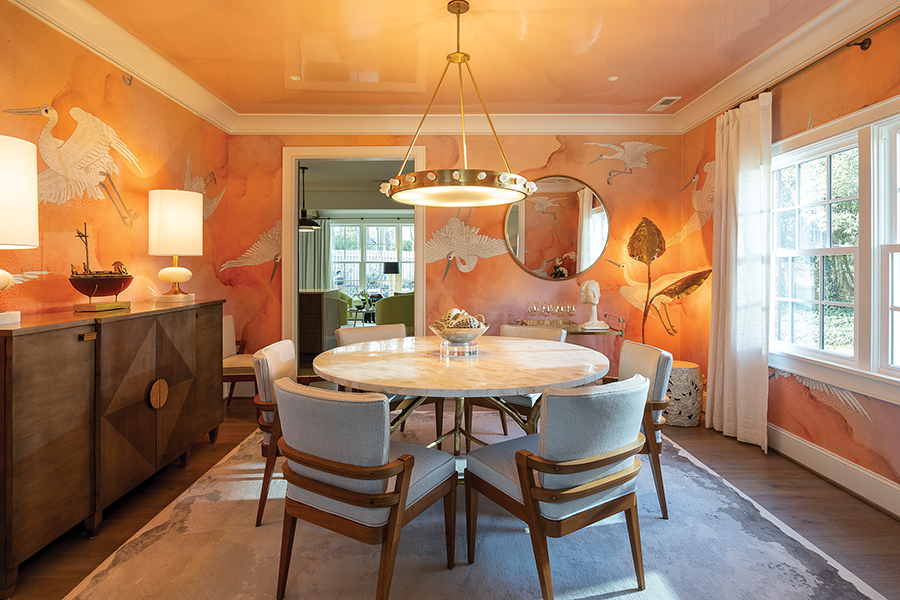
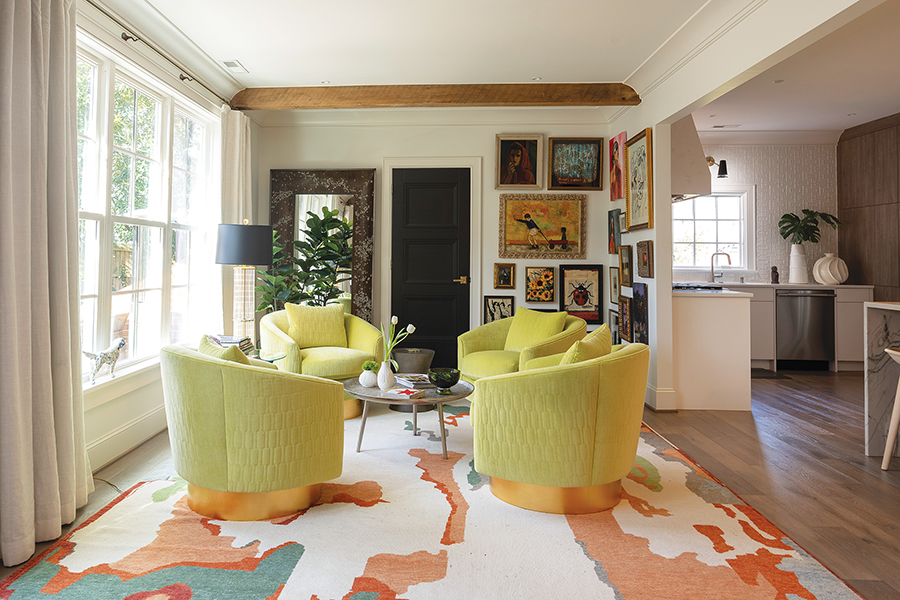
This time, the Vivid duo designed a rhapsodic dining room that is a study in pink, with Phillip Jeffries wallpaper, calling to mind the popular “Barbiecore” trend. Its most stunning feature is a lacquered ceiling — a process that would require multiple applications between sandings to complete — in seashell-coral pink. They encouraged Harrill to carry pink into the kitchen, but she had something different in mind. 


More neutrality.

“My sister-in-law’s firm, Kelly Koury Harrill Designs, helped with the entire place — all the rest.” Nonetheless, it was summer of 2021 before the interiors were completed, and later still before a custom rug arrived.

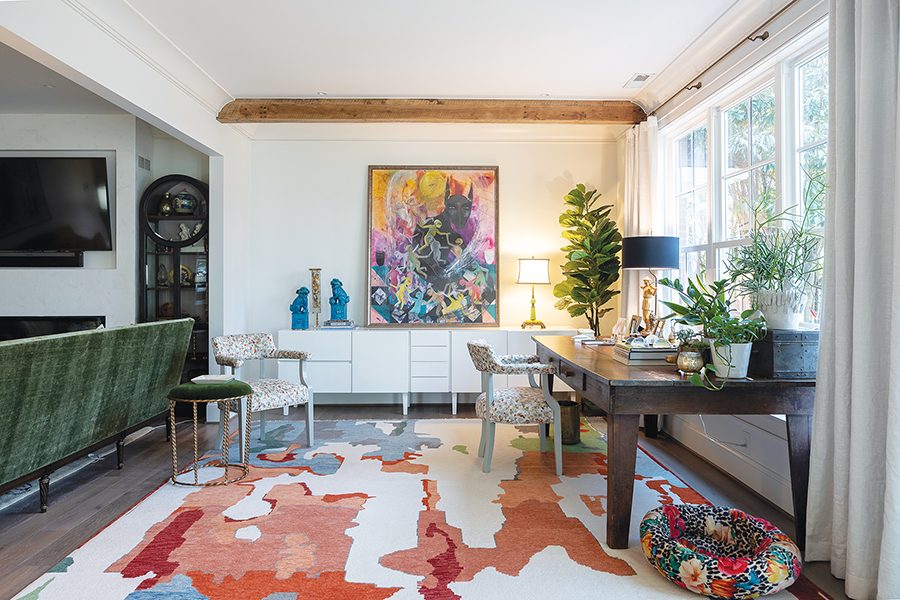
Although she had made edits since moving to an apartment several years earlier, Harrill began to cull through furnishings, trying out old pieces in the new rooms. “Things I was attached to stayed. I only kept what I really love,” she says, adding that she purchased some new furniture.

But art was important to her decision making. Several former pieces made the cut. She acquired works by artists she had either discovered recently or years ago when working for Ann Compton at Compton Art Gallery, “when my children were babies.”

Compton’s gallery represented Greensboro artist Agnes Preston-Brame. Harrill was enamored by her work. “I told Ann I was only going to sell Agnes Preston-Brame pieces for a month.”

Preston-Brame made the art edit for the condo home straightaway.

Kevin Rutan, whose work figured prominently in the Sunset Hills reno featured on the cover of the January 2021 O. Henry, is among artists whom she knows and collects. “That’s my best friend’s home,” she texts about the feature. “Kevin’s company did a faux finish in my dining room back in the 1990s in Fisher Park.”

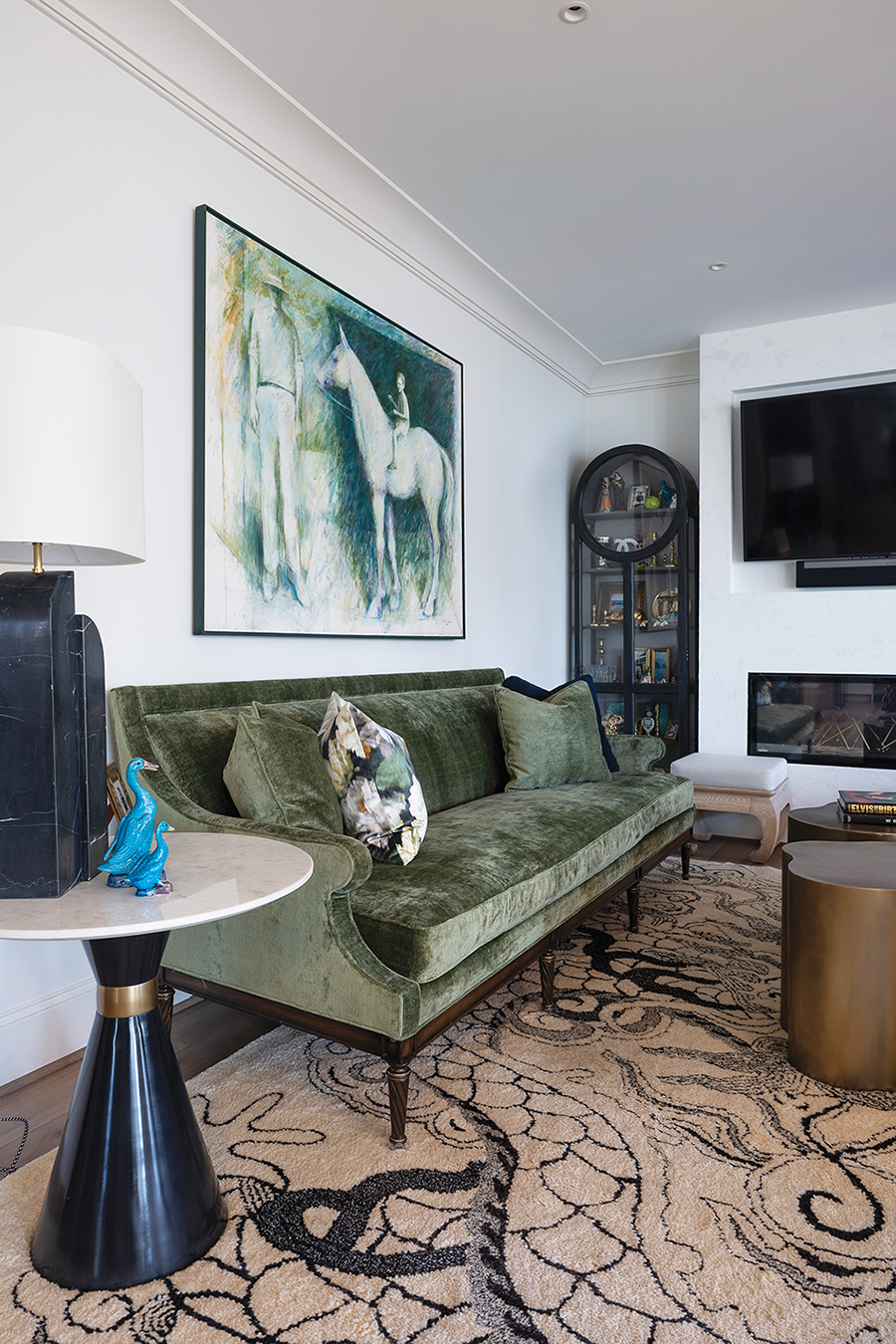
A Billy Cone piece, formerly hanging in her bedroom, now hangs in the living room. Others were found on her travels. “I decided I wanted Greensboro and North Carolina artists.”

“I bought the one over the sofa in the mountains,” Harrill says. “William Dennis is a professor of art. The lady who owns the gallery in Banner Elk studied under him.” She also mentions Amy Heywood, another artist she has collected.

Ever a nature lover, she displays a trophy fish she caught and another her son, Harrison, caught. She hung her son’s draped with his Boy Scout’s sash. Laughing, she admits having insisted he become an Eagle Scout.

Kitchens are something Harrill spends considerable effort on, especially conscious of surfaces and fittings. Tellingly, a professional chef bought her former condo. In 2019, I described that kitchen: “With white marble tile and white quartz, it is an understated study in how to create a white kitchen that isn’t sterile — and worthy of being right up front and on view.”


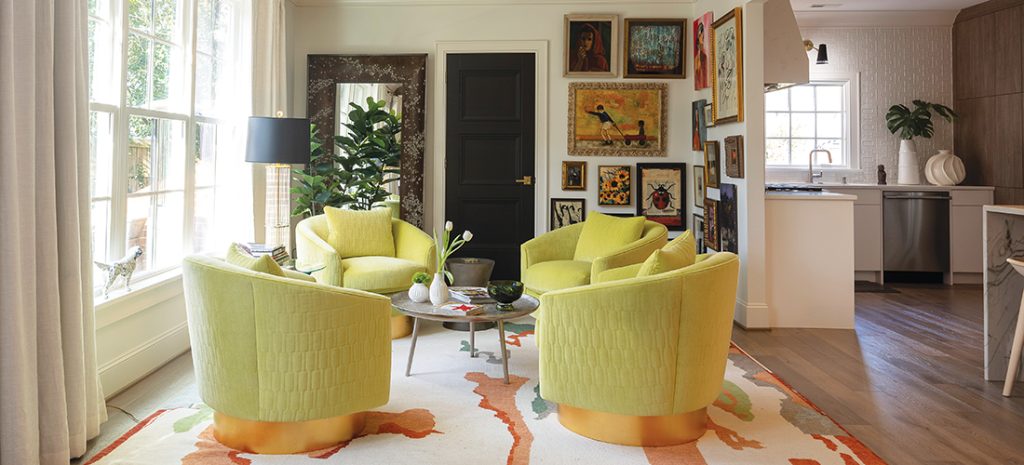
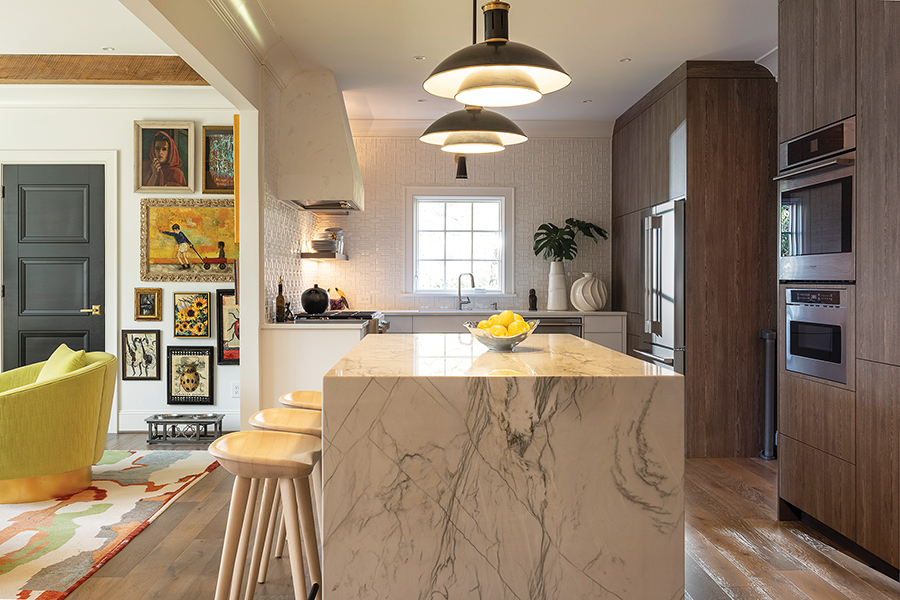
The newest kitchen, open and sleek, is very different, but again a study in sophisticated finishes. This time, she craved something streamlined.

“I wanted it to be completely different,” she adds. And either smooth or tactile.

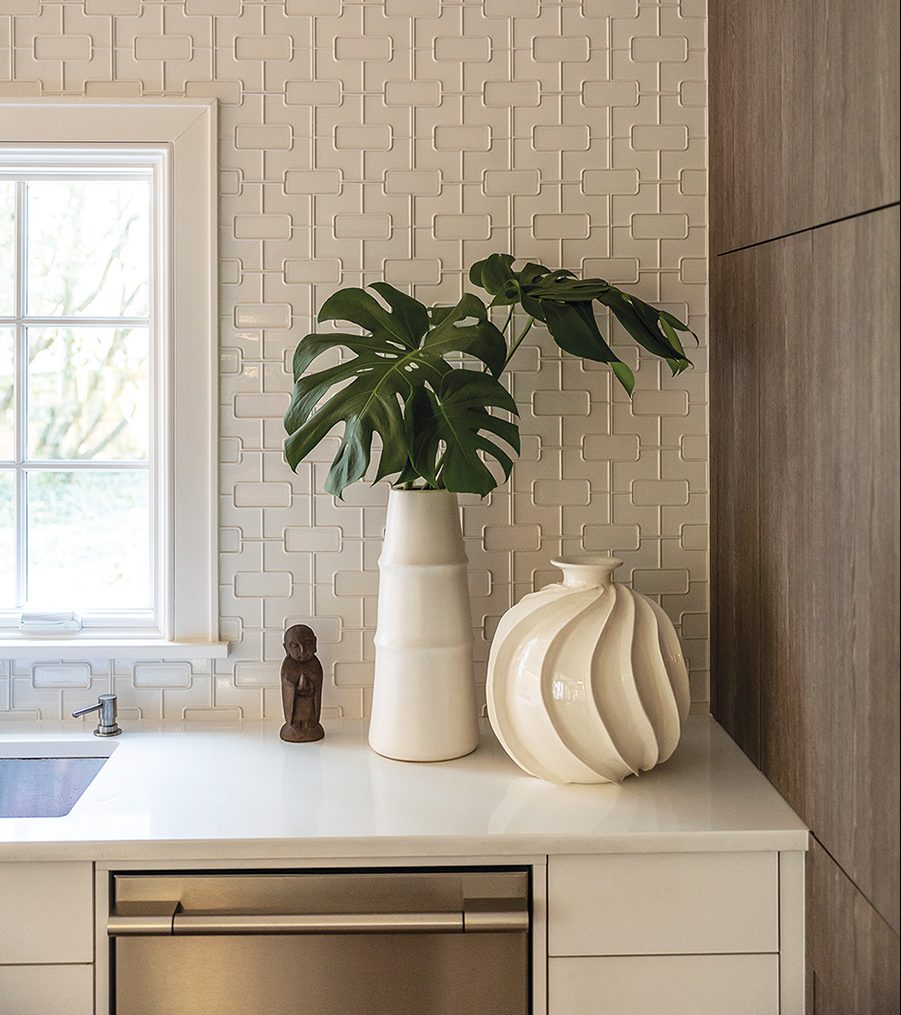
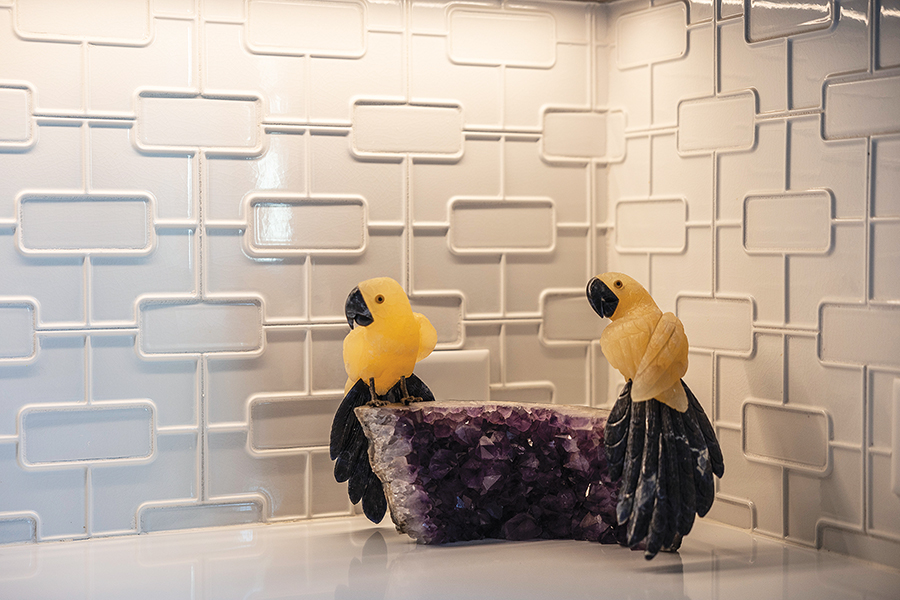
The hood is stucco and textural. The geometric wall tiles by Studio Tile have a relief design and extend to the ceiling. Thanks to COVID-related delays, “I picked out three different kitchen sinks.”

Most impressively, a wall of electronically controlled kitchen cabinets was chosen because Harrill didn’t want visible hardware. “But if the power goes out, I can’t get my groceries out [of the cupboard],” she says, and laughs, demonstrating how the electronics function.

“But it sure looks good!”

Her main bedroom is calm and absent some of the Brutalist touches (such as the grasscloth) used in her former bedroom. The ceiling also has cove molding. “These closets are huge!” she exclaims, opening a door.

Harrill leads into the main bath, which features artistic, graphic tile patterns, saying, “This is the biggest bathroom I’ve ever had!”

“He’s so good at finishings,” she says, praising Pat Parr, the contractor.

For fun, Harrill created a tiny nursery for her newest granddaughter, Millicent Campbell Morecraft (born January 13), out of a former closet. It features gray and white puffy clouds as a soothing backdrop. “It’s a sweet little room,” she says happily. “My aunt Millicent had a home I loved.”

She is still finessing things — it wasn’t a case of “boom, it’s done.” The prior condo “was a transition place,” she now recognizes.

Of course, despite all, there were problems. Harrill awaited a striking special-order rug for months — disruptions from the pandemic seeped into the project’s completion in the last year as the interiors took shape. Thanks to the pandemic, too, the outdoor living areas grew more significant than ever. After finding patio chairs at Carriage House, Harrill ordered a concrete table through the designer so she could eat and entertain outdoors.

What works best in Harrill’s newest Fountain Manor home?

“It’s quiet,” she finally says, referring to the design itself. Ida Mae pads by, an unusually mellow pup. The quiet must agree with her, too.

Given so much of her life was under revision, Harrill bought new wheels, too: a restored 1972 Chevy pickup, “with stick shift on the wheel.”

When her father bequeathed acreage to her and her children, she told her contractor, Pat Parr, she might get some cows. “Why?” he asked. 

“So, I can get a truck,” Harrill replied.

Parr retorted, “Just get a truck. Cows are a lot of work.”

She offers a ride back to my office, adroitly shifting, her ankle injury seemingly not affecting her using a clutch.

Gleefully, Harrill throws the Chevy into reverse.

“Most days I don’t notice it,” she says with a convincing grin, before asking, “Don’t you just love my truck?”  OH

A Legacy of Loving Energy

A Legacy of Loving Energy

A couple turns a former childhood home into an estate venue

By Cassie Bustamante     Photographs by Amy Freeman

Fashion Designs CassB

Models Kylie Nifong Nyger Catrice

Fashion Stylist Eutasha Simmons

Floral Designs Bea Morad

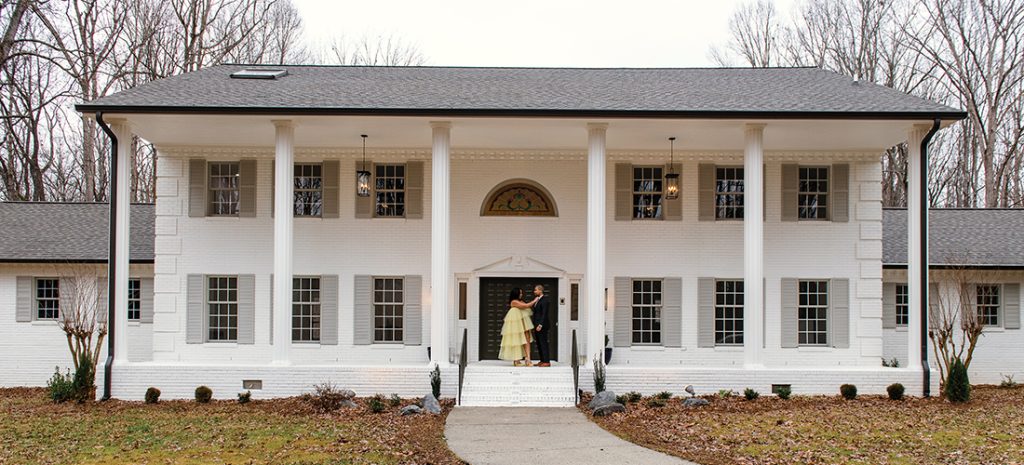
In January of 1984, Michael Newell, the youngest of six children, came home as a newborn to a stately brick three-level house, completed just in time for his arrival. Sitting on 16 acres in Pleasant Garden and thoughtfully designed by his parents, McArthur and Dottie Newell, it was a place where they raised their family and hosted large parties and events. Sadly, after Newell’s father passed away in 2002, rooms that had once been filled with life became unused and closed off. Now, almost 40 years since first crossing its threshold, Newell — and his wife, Marche Robinson — are pouring blood, sweat and tears into his former childhood home, making it once again a place for lively gatherings.
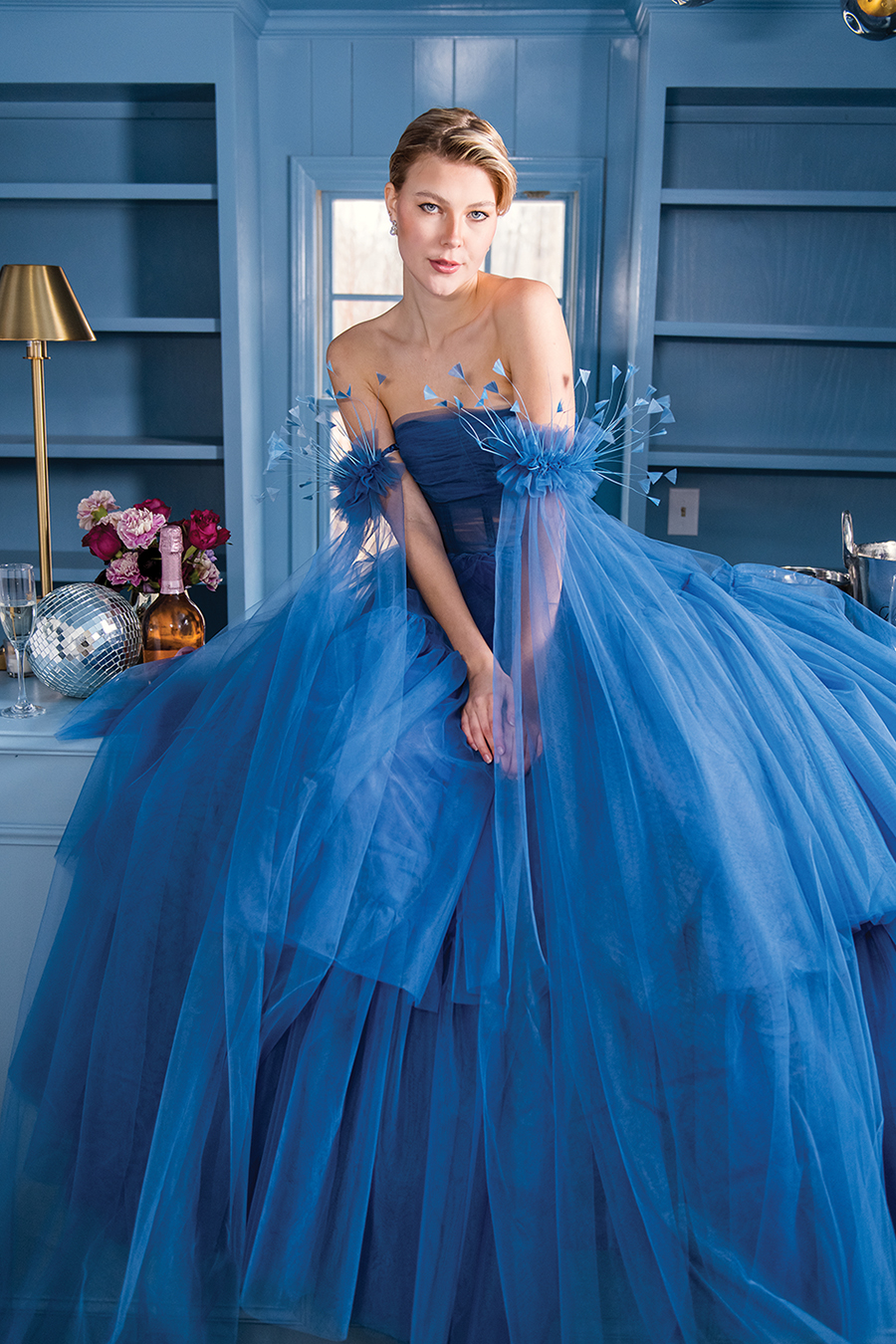
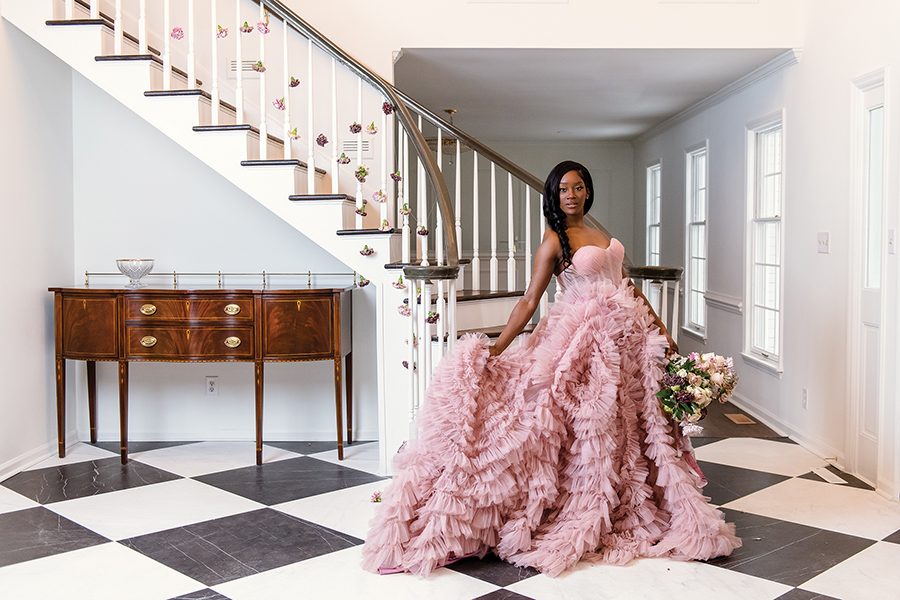
After sitting empty for some time, his mother was considering putting the house on the market. Then, in 2017, an idea popped into Newell’s head. “I don’t even know why I thought it would be a really cool wedding venue,” he reflects. But the house had served as home to so many events over the years, from bridge club gatherings with tables spread throughout the main floor to homecoming parties — and even his own sisters’ wedding receptions.

Shortly after the discussion began, Newell found himself engaged to Marche Robinson, his long-time love. “We were both working and planning a wedding, so there wasn’t really the room to be thinking about it seriously,” recalls Robinson.

And so it was that on October 19, 2019, the couple wed in The Merrimon-Wynne house, an estate venue in downtown Raleigh, closer to the home in Brier Creek where they were living at that time. Throughout their wedding planning process, Newell says, “Every step I was taking in that house, I was thinking about this house. It was boiling inside of me at the time.”

As time went on, he remembers “constantly being bombarded by what was possible.” And then one day he found himself saying, “Let’s buy the house, renovate it and let it still be a place that has a legacy of loving energy.”

Robinson, who could easily picture what could be, says, “An estate venue like this, they’re kind of rare. . . This house was already the perfect place.”

Newell and Robinson discussed it with his siblings and his mother. “She was actually really excited about it and super open to it,” says Newell.

“She loved the idea,” adds Robinson. She loved it so much that she envisioned having her 80th birthday party there. And, in fact, the couple hosted the celebration at The Newell House in early November of 2022 as their first major affair. It was what that they both refer to as “a full circle moment.”

Of course, the house needed major renovations to become the classic, polished gem it is today, but these two are no strangers to long hours of hard work.

Newell works as a lawyer and is co-owner of Dame’s Chicken & Waffles’ Chapel Hill and Cary locations. Robinson is a lawyer-turned-influencer and shares her content on instagram at @marcherobinson. She’s also the founder of Isaline, a clean, vegan and cruelty-free beauty brand.

Both grew up with hard-working parents as role models. Newell’s father was an OB-GYN who often left the house in the middle of the night to deliver babies. Robinson’s father was a Greensboro entrepreneur who started his own businesses, Scott Tree Service and Scott’s Cleaning Service.

“He would get up in the middle of the night after working all day and go clean these buildings,” she recalls, “and I would beg to go because I was a Daddy’s girl.” Seeing him work so hard to create something of his own instilled an entrepreneurial spirit in Robinson that didn’t scare her away from taking on this project.

With a plan in place, the couple moved forward in creating what would become the estate venue it is today, which they’ve branded The Newell House. Right away, they enlisted the help of “brother-in-law” Howard (actually Newell’s sister’s husband’s brother). According to Newell, he’s a “fix-it-all, handy, design” kind of guy. With his skills and ability to visualize with Robinson, they started making strides.

Newell, in awe of how Howard and Robinson could picture what was possible in a space, says, “I was just like, ‘Can y’all see the things you’re saying? Is your mind making this? Because my mind is just hearing words!’” Fortunately, he trusted their vision completely.

Howard, who fully grasped Robinson’s modern-with-vintage-charm aesthetic, added picture frame moldings — a classic Georgian touch — and built several pieces of furniture. Robinson points out a custom-made florist’s work table as well as three movable bars he created, one of them a popular shade of blue. “Everyone loves blue,” says Robinson. “I feel like the sky, especially when it’s so sunny out, is just the perfect shade of blue so I feel like it just brings a little of that in.” And, yes, she adds, Newell is a UNC Chapel Hill alum.

A non-movable bar sits in the basement level “speakeasy” — an inky green space the couple named after Newell’s father, calling it the McArthur Lounge. Now his favorite area of the house, Newell says, “It was supposed to be probably my dad’s man cave.”

Robinson adds, “But every video and every photo, it’s like their dad is down here watching TV and it’s like — there are kids everywhere!”

While his father never got to use it as a true man cave, Newell and Robinson have made it into a space that would perfectly suit its original intention, complete with a bar, moody walls, lounge tables with upholstered banquette seating and even a separate room with a poker table. It’s the ideal space for an intimate private party or a place for a groom to prepare with his groomsmen.

As with any renovation, the overhaul did not come without unexpected bumps along the way. The home still boasted its original ceilings — popcorn ceilings that were popular from the mid-’40s to the early-’90s. Robinson knew she wanted them gone, but Newell wasn’t convinced. Eventually, she prevailed.

“They removed the popcorn ceilings and then someone flushed a toilet,” recalls Robinson. “And it just started dripping everywhere!” The “popcorn” had been absorbing the unseen drops of water leakage. Robinson quips, “See, I saved you money! I saved you money!”

Another snafu arose from the foyer’s trademark feature, a 24-inch tile, charcoal-and-white checkerboard floor. The original flooring was checkered as well and Robinson wanted to “keep that classic look, but make it a little more modernized.” Unfortunately, mishaps resulted in breakage and they ran out of tile a week-and-a-half before the date of their first affair, a Sip & See open house set for September 24, 2022. Unable to find the same tile anywhere locally, Robinson called the manufacturer directly and was told, “It looks like we have some in Georgia.’” The very next morning, Newell and Robinson drove to Southern Georgia to retrieve the tile, bringing it back to Pleasant Garden at 10 p.m.“ And then the next day the guy was supposed to come and do the tile and couldn’t come because he was sick . . . ,” Robinson says, able to laugh about it now. Finally, with just 24 hours until the Sip & See, tile installation was complete. “And it was all worth it!” says Robinson.

While they had their fair share of tribulations during the renovation, many pieces fell easily into place. Newell and Robinson, who met as tweens at Mendenhall Middle School, maintained several local connections and friends in the area who ended up serving them well.

On a visit to a local nursery, Newell ran into an old childhood buddy, Landon, who’d just moved back to the area about six months earlier. Knowing that Landon had culinary expertise, Newell decided to approach him to help provide in-house catering.

“I just felt like it fell together in a way that it was meant to be,” says Robinson. “Because what are the odds that he moves back from New York, was doing catering, went to culinary arts school,” . . . and happened to be at the garden center that fateful day.

According to Robinson and Newell, Landon, whose horticultural experience has enhanced his gastronomy skills, utilizes fresh-from-the-garden, roots-still-attached ingredients. Robinson says, “Everyone who’s come to our events was like, ‘This is the best meal!’”

In the week prior to hosting that first Sip & See at The Newell House, Robinson recalls the help and hard work of Landon and another childhood friend, two of Newell’s best friends.

“I feel like that is a core memory for me,” says Robinson. “That week leading up to that Sip & See, it was me, Michael, our brother-in-law, Howard, and then it was Landon and David, who’s also a friend that grew up here. His parents still live literally right down the street.” She adds, “We really put, obviously, a lot of love into the house, but the fact that it can be friends that grew up coming to the house [now] helping is really cool.”

In addition to an in-house catering service, The Newell House also offers an in-house florist, who, you guessed it, just so happens to be a friend of Newell and Robinson.

Like Newell and Robinson, Adeola Glover wears many hats: lawyer, mother, and owner and lead designer of Bea Morad. “We both have these creative sides to us that you don’t really get to use when you’re doing [legal] contracts,” says Robinson. “And so she started her floral company right before we got married — we were her first wedding.”

Robinson reflects on hiring Glover to create the florals for own big day, knowing that every entrepreneur has to have that “first” client. “Sometimes we see these really successful people and businesses . . . you forget that they had to have their first job. If nobody took that chance, then they wouldn’t be where they are,” she muses. “And it’s kind of like with the venue, the first couple that gives your venue the chance. You know, you need that couple that breaks the ice.”

And have they booked The Newell House’s first wedding? Yes. In fact, the first marriage celebration is booked for October 22, 2023, just two days after the couple’s third anniversary, one day after Robinson’s birthday and two days after Dottie Newell’s birthday. But, in a true full-circle moment, the bride, who is getting married on her own late father’s birthday, was delivered into this world by none other than McArthur Newell, OB-GYN.

Newell smiles as he recalls his father as “this big figure that everybody came to. Super funny, always ready to talk.”  While he insists that he isn’t quite the talker his dad was, it’s clear that he’s working hard, like his father did, to build something lasting for his family.

“Obviously I can’t fill his shoes,” says Newell, “but being able to be there for my family, my mom, everybody else . . . and bring people happiness  — I don’t think I could have done it in a better way than doing this.”   OH

For more information or to schedule a tour of The Newell House, visit thenewell.house.

Cassie Bustamante is editor of O.Henry magazine.

A Tale of Three Couples

A Tale of Three Couples

From cars to kismet, local marrieds share what brought them together 

A Highly Calibrated Meeting of Minds Under the Hood

Photograph: Kayla and Vincent Mulisano

In the classic comedy, My Cousin Vinny, actress Marisa Tomei steals the scenes with her encyclopedic knowledge of cars. It isn’t far from Greensboro’s own Kayla Mulisano, co-owner at Autologic of Greensboro. 

She and Vincent Mulisano are not only a couple, they work shoulder-to-shoulder at Autologic, where they’ve built a following among car aficionados. (They frequently work on cars from as far as Charleston, S.C.) Vincent, the master technician, founded the business in 2007. Kayla is the service manager.

“We work differently,” Vincent says, each one playing to his or her strengths.

He insists that “car chicks” didn’t turn his head. But — when he first got to know Kayla, her mechanical aptitude appealed.

Vincent adds shyly, “She was drop dead gorgeous and she knew cars.” Falling for Kayla happened very, very fast in his telling.

Kayla met Vincent through her older brother, but only in passing. In 2009, they began dating while she was working in BMW restoration at Korman Autoworks by day and taking college courses by night. “If I needed help on a car that none of my guys could figure out, he could help.”

“It started with a car thing. It began as just enjoying each other,” says Kayla. He admits he had serious thoughts about their relationship within six months. “It was pretty fast. I knew right off the bat,” he says.

In May of 2015 Kayla left Korman, joining Vincent at Autologic.

Well before then, by 2009, they were a couple. He began thinking about putting a ring on her finger, later spending months poring over the design with a friend who dealt in diamonds.

“I was the one, you had to hit me on the back of the head with a bat,” she says. “I liked his brain and his sense of humor. He made me laugh.” 

“It was a whole bunch of everything all at once,” a clearly smitten Vincent says. “Okay, she’s gorgeous. She knows cars. She’s quick witted. Snaps back with jokes. Say something snarky and she has a reply. Laughs, smiles. Acts like a girl, and giggles.”

And he liked Kayla’s proclivity to change her hair color with the seasons, and her feminine aspect.

Not just another car chick

But there was a shared romance with cars. Both have had personal project cars. Both did high performance driving (“racing” to mere mortals) events. For a long time, automobiles claimed a huge chunk of their lives. When they grew involved in animal rescue with greyhounds, they did less of those activities.

In 2011, Vincent planned his proposal. He called ahead to Bleu restaurant in Winston-Salem and asked to be seated in a certain place. To entice her to dress up, Vincent led Kayla to think they were meeting a valued friend and his wife. (“He’s like a father figure to me. She — Kayla— was very nervous about that.”) 

“We get to Winston-Salem and the friend calls,” he says.

Mysteriously calls as we’re getting out of the car,” she interjects, to cancel meeting them.

They were seated, ordered wine, and then, Kayla says, “He slapped a piece of bread out of my hand,” at which she explodes with laughter. Vincent was so nervous he admits he was struggling, trying to hold her attention while wrestling with the timing of the proposal — sabotaged by the arrival of the bread basket. He had a dreaded sense she would figure it all out and his surprise would be ruined.

“She was starting to feel something was going on and had a lot of nervous energy,” Vincent patiently explains. He absolutely couldn’t stall any longer. “So, I decided it was time.” 

He got down on bended knee “as she was doing these nervous nibbles,” Vincent laughs. Kayla hadn’t even noticed his princely kneel. “She had missed me completely,” he says — until she didn’t. He pantomimes her spluttering and blowing the bread out of her mouth. 

Then Kayla saw the ring.

He thought she’d say yes. “She said yes,” he says, smiling.

Five years later, they married at Topsail Island, October 26, 2016. In their wedding picture, they are standing in the sand, smiling hugely, with Elsha, an Irish wolfhound, at the forefront.

Officiant Reverend Skip did the honors, Kayla says.

“We were — soulmates — is an easy way to say it,” she says, “but we truly are.”


A creative duo tie the knot

Photograph: Chris King and Doug von der Lippe

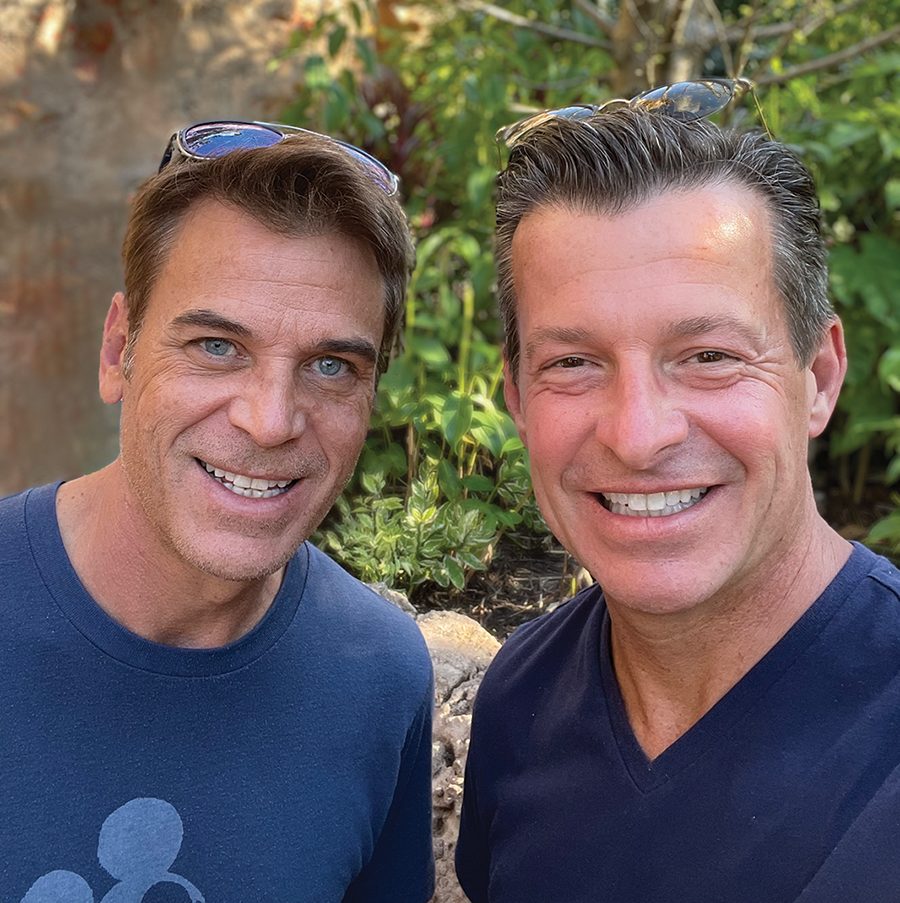
Chris King and Doug von der Lippe can thank a treadmill and a goodhearted matchmaker for their relationship. Both entrepreneurs, von der Lippe is co-owner of Twin Brothers Antiques, formerly Shoppes on Patterson, in Greensboro, where identical twin Bruce is his partner. King is co-owner of Aqua Salon & Spa in Greensboro.

Von der Lippe says that “Our creative backgrounds allow us to understand and respect the hard work and dedication to a craft to become successful.”

“Chris and I first met back in 1999 — I think. We were both living different lives,” he says. He met King through his partner at the time. “I was a graphic designer and was asked if I could help with packaging graphics for a health food line that Chris’s partner was launching.”

Then von der Lippe moved to Florida where he lived and worked long term. Years later, his father, Eric von der Lippe, former director of the Greensboro Science Center, grew unwell, prompting his return to Greensboro in 2011. 

“My dad’s health was changing and it was time to come back home to help with his care and be closer to home and family.”

Soon came an opportune gym visit.

“I was at the gym on a treadmill running and a friend, Kathy, was on the treadmill next to me,” he explains. The friend asked a lot of questions, after having not seen von der Lippe in some years. “Questions like, where are you living, what are you doing for work, how are the kids, who are you seeing or dating, etc.?” But her last question was the kicker, von der Lippe says, and he told her he was seeing no one. The friend quickly asked if there was anyone he would like to go out with. 

“Without hesitating I said, ‘I wonder what Chris King is up to these days?’”

He still isn’t sure how his name happened to come to mind, yet adds, “I am so happy it did.”

As it turned out, Kathy had an appointment with King that week.

In rapid sequence, the matchmaker connected the two by phone and they planned to meet. “We had our first date [lunch date] at M’Coul’s Public House in downtown Greensboro and that is all it took.” That was April 18, 2011.

First impressions remain strong, adds von der Lippe:

Von der Lippe’s first impression of King was “Amazing blue eyes, looks like a model, handsome, genuine.”

King’s first impression was that von der Lippe was “a polite Southern gentleman, magnetic, who left an impression.”

After their date, both report there was an instant attraction to each other. “We definitely both felt that this could be significant,” admits von der Lippe.

“We dated for one-and-a-half years, then moved in together, and in 2014, when same sex marriage became legal in North Carolina, we knew we wanted to get married and make our blended family one,” he says. 

King and von der Lippe were married at the Congregational Church of Christ in a late morning ceremony on November 22, 2014. Von der Lippe’s children, Gabrielle, 21, and Grayson, 17, participated. Afterward, they all gathered in the fellowship hall and feasted on Honey Baked ham and other noshes.

Eight years later, commonalities outweigh the couple’s differences: “Love of family, caring, concerning, DIY’ers, love of the beach, wearing the same size — and — we can share our wardrobes,” von der Lippe jokes. 

King’s favorite thing about his partner is his love for and devotion to his children.

Von der Lippe says, “The glue in our relationship is our willingness to support each other no matter what. We always know that we have each other’s back. We are each other’s ‘ride or die’ partners for life.”


Two Couples, Two Weddings and a Broom Closet

Photograph: Don and Cynthia Adams

Lastly, a kismet story. 

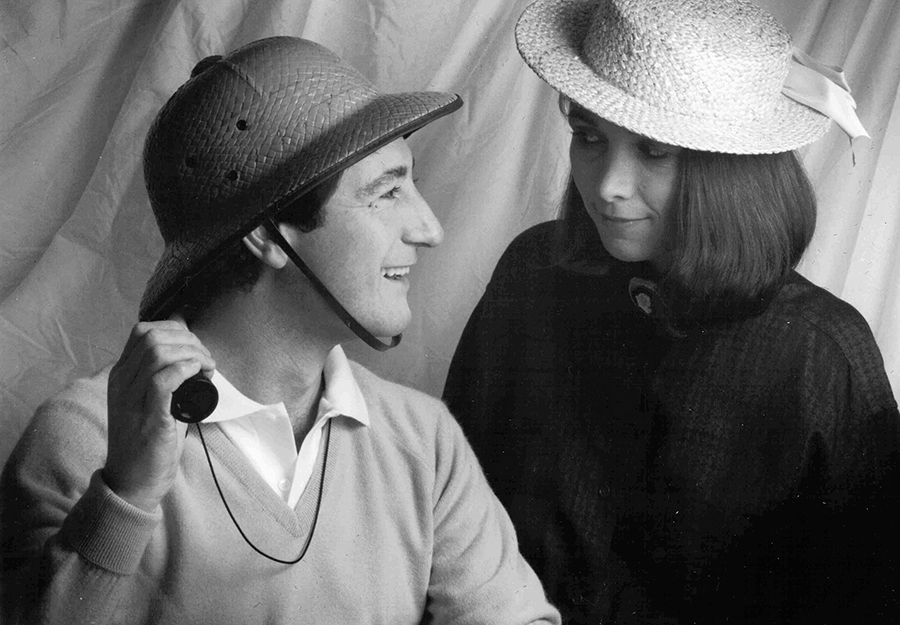
I met my husband one golden autumn day at a Greensboro music festival. A fixup.

When a former colleague arrived with a guy in tow, a slow burn ensued. The afternoon was supposed to be a gal’s outing — gabbing about work and listening to tunes.

As for the new guy, he came along due to bassist Stanley Clarke’s jazz.

I mostly ignored the Fixed Up, who had the pleasing lilt of South Africa.

But that afternoon, I learned that it happened to be Fixed Up’s birthday. I believe that for at least one of the 365 days we earthlings spin around the sun in the vastness of space, one should be special. 

There should be cake. And tiny candles, pressing back against that universal darkness, to paraphrase Jim Dodson. 

And a wish granted.

Fixed Up eventually confessed that he was thinking of returning home to South Africa.

Relieved that this would be a friends-only relationship — after all, Fixed Up practically had one foot out the door — I thawed. 

We arranged platonic movie dates and hung out. He was educated, charming, progressive. Cultural references sometimes baffled him given TV was late (1976) in coming to South Africa.

As for me, there was a slow dawning.  Then, a stronger intuition. 

This man was supposed to be in my life.

I watched as he wistfully fanned pictures from home across the kitchen table: climbs in the Drakensberg, Table Mountain draped in clouds overlooking picturesque Cape Town. Paarl and the Winelands, the bush and game parks, exquisite Cape Dutch architecture.

His world. His home.

And Fixed Up was homesick.

Another night, over a glass of wine, he quietly told me he was on the cusp of resigning from his job. He seemed sad, as if he had failed himself. 

As an avid traveler, I opened my mouth to say, I will visit you.

But instead, independent of my brain, my mouth said, you’re not leaving. Fixed Up looked at me sharply. 

You’re staying here and marrying me.

In my memory, he left hastily as my cheeks flamed. 

He phoned a few days later to ask, “When?”

What had I done? 

Rattled, I blustered, saying work was terrible that week. A dance ensued. 

Six weeks later, we both ran out of excuses. 

We got a marriage license, thinking it best to elope. Perhaps Asheville . . . far from family who would question my sanity.

There we discovered our license wasn’t valid outside Guilford County, and the wedding was deferred

Otherwise, we had a wonderful time. Inscrutably, I bought him a dulcimer kit in Biltmore Village. I warmed to my intended. To Fixed Up’s affability, intelligence, good manners. Kindness.

We returned from Asheville in time to attend my friend’s wedding — a posh evening affair at Blandwood Carriage House. 

The bride, twice divorced, was beautiful, a highly strung artistic creature. She had a scrumptious gown (with makeup artist and hairdresser), string quartet, white tulips flown in from Holland, colossal cake and reception, and flowing champagne. 

As she floated down the aisle, you could hear breaths catching.

For the evening, I had paired a vintage dress with pearls and a veiled hat I’d bought at a yard sale, feeling Chanel-esque.

We fidgeted through the ceremony, thinking of our failed elopement.

“I’m here, you’re here, a minister’s here,” my intended whispered. “Let’s get married here.”

“We don’t even know the minister!” I hissed. “That’s not how things work here.” 

His look said, just watch me.

I was drinking wine when Fixed Up returned looking flushed and triumphant.

“Chuck says he’ll marry us. Put your glass down!”

We agreed no one could know; it would be horrible to steal someone’s wedding. Which is exactly what we were about to do. Our plans to slip outside were dashed by sleet: “It’s ice-balling,” my fiancé reported, utterly in awe of sleet — a complete novelty.

We stole through the basement surreptitiously looking for an empty room.

Finding a utility closet, we squeezed inside with Chuck. Needing Chuck’s wife as a witness, all four of us pushed against mops, brooms and buckets, which meant leaving the door ajar in order to breathe.

After vows, we danced, exultant, hugging our secret.

Before they departed on a Colorado honeymoon, after the cake cutting ritual, photos and champagne toasts, it seemed only right to tell the couple. “Take all the tulips home with you!” the bride exclaimed. 

It snowed, and my new husband spent a great deal of that night overwhelmed by its beauty.

The next day, a Monday, we returned to work, outwardly the same sort of different as before.

We skirted telling others. Because . . . who gets married at someone else’s wedding? Women told me that “they could never.” Men would high five my husband.

Our wedding benefactors did not last through the honeymoon. The bride returned home a few days later alone, never to discuss why. 

Weeks became months. Months became years. We are old marrieds now; stubbornly loyal, accustomed to one another. Quirky in the same places.

And we have no idea how it has worked, but it has.   OH

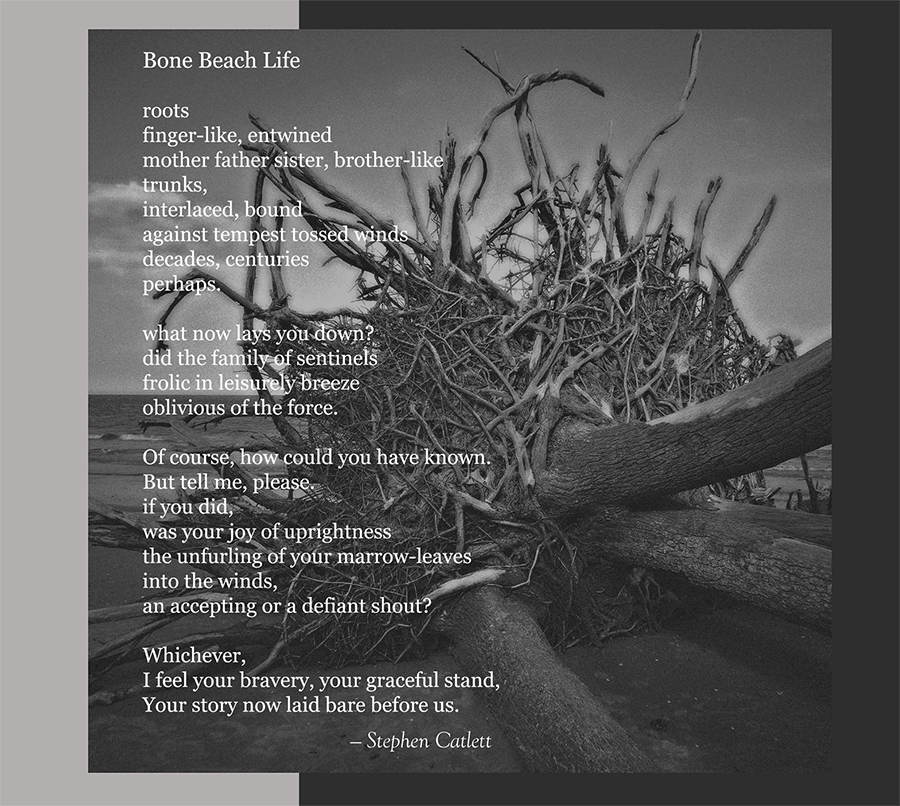
Poem February 2023

Poem February 2023

spring and some

the woman coming toward me

wears a red cape. she smiles

she likes my red hat and

she says so. the temperature

is dropping rapidly, the wind

is rising. they had predicted

rain and possibly snow; i

had not believed them. still

my red hat threatens to

blow away and her red cape

swirls about her. she says

i like your red hat, i smile

and say i like your red cape.

spring is coming by the

calendar, a red letter day,

but this day the temperature

drops, the wind blows up,

rain and possibly snow loom,

and we pass. red hat. red cape.

          — joel oppenheimer

Say Yes to the Dress Designer

Say Yes to the Dress Designer

A local clothier paves the way for haute couture

By Cassie Bustamante     Photographs by Amy Freeman

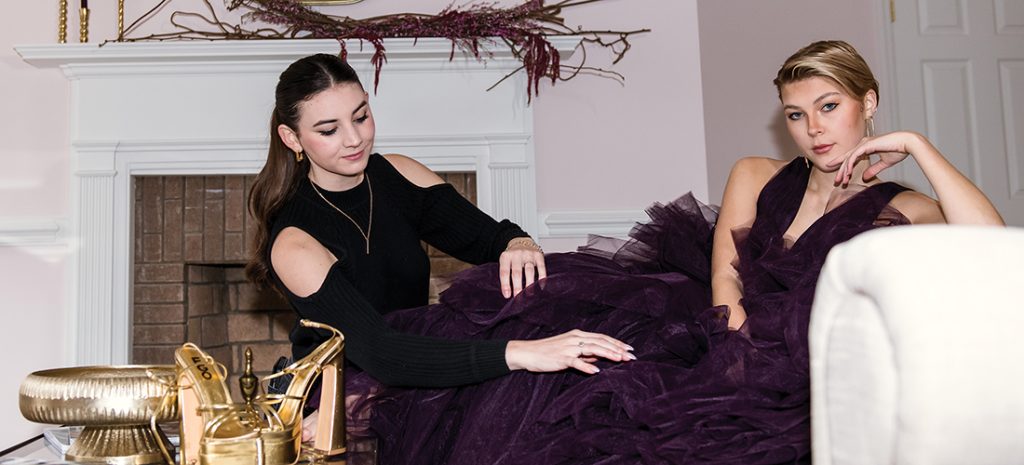
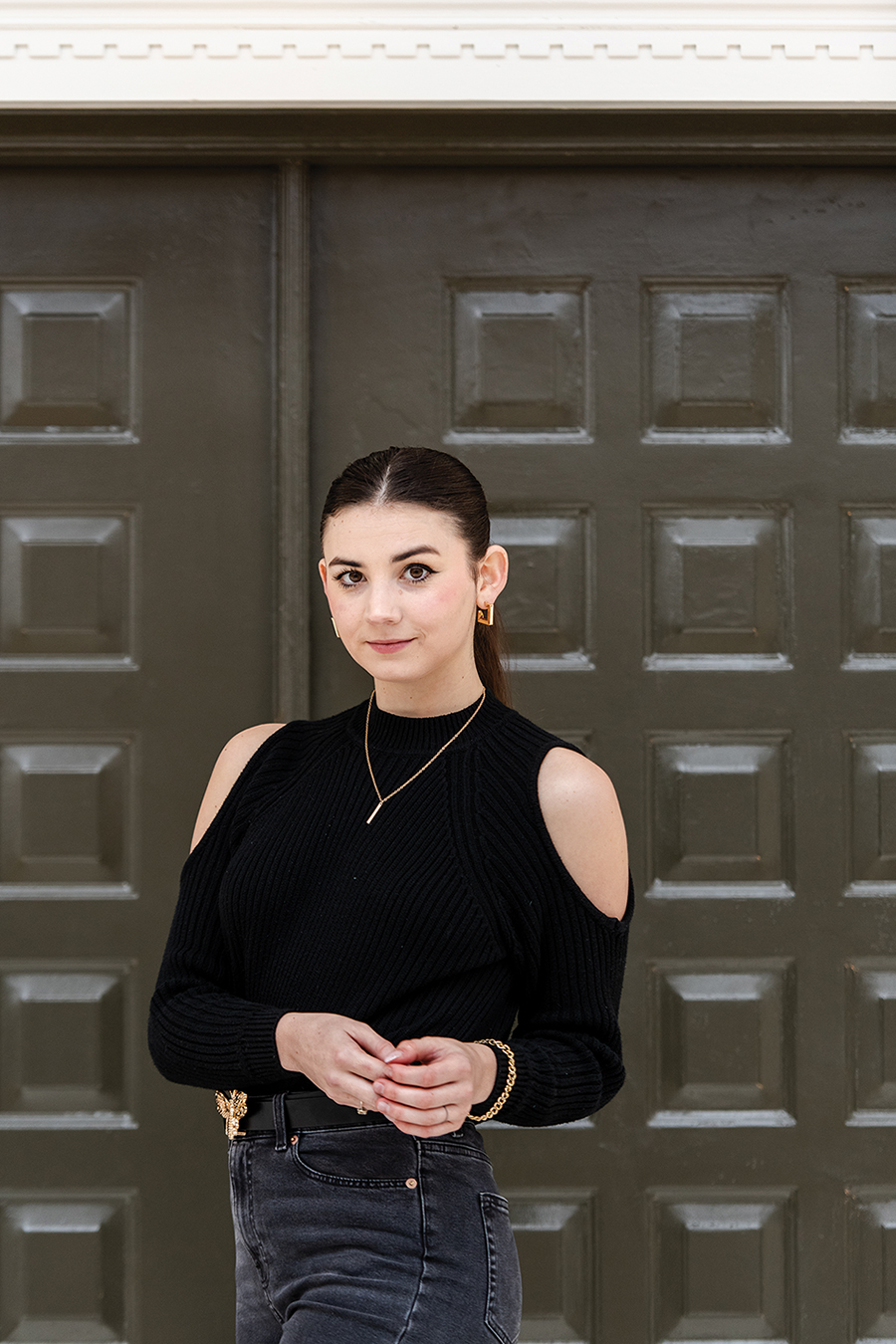
During a game of hide-and-seek at a family friend’s house, 9-year-old Cassidy Burel found herself in a closet filled with glitzy garbs. When the fashionable homeowner discovered her and allowed her to try on an extravagant piece, Burel knew she had found her calling.

“It was decadent, glamorous. The way that I felt in that [clothing], I knew that was something I wanted to continue to feel,” says Burel, her dark chocolate eyes sparkling at the recollection of that moment. As she grew in age, she realized she could actually cultivate a career in the clothing industry and share her passion for fashion with others. “I knew I wanted to participate with other women and make them feel that way.”

Now, at the ripe age of 26, Burel, owner of CassB, seems well on her way to making her mark in the haute couture world, fulfilling her own dreams as well as those of brides-to-be and fashion-conscious clients. But it hasn’t come without hours of behind-the-scenes hard work, unforeseen pivots and willingness to trust her instinct, fueled by sheer drive. And it almost didn’t happen.

With her sights set on a career in fashion design, Burel, a Hickory native, made a solid plan and stuck to it — aside from a “five-minute detour” into engineering, her father’s own field, but one she found rather “boring.” She studied at Catawba Valley Community College for two years, then transferred to UNCG to study apparel design.

Before arriving on campus at UNCG in 2016, Burel had never even threaded the needle of a sewing machine. Within the span of her four years there, she worked relentlessly, eventually even taking the seat as president of Threads, the university’s student-run fashion club.

It was during her time on campus that she designed and sewed her first wedding dress, created for her best friend just three years after learning to sew. And that was the moment she knew she loved “making wedding gowns, loving being a small part of someone’s special day and making them feel confident.”

With her impressive undergraduate portfolio and strong work ethic, Burel was poised for success upon graduation with two job offers: one from a small fashion house in New York City and another in Boston. However, with the COVID pandemic shutting down much of the country during that spring of 2020, both offers were rescinded.

After a week-and-a-half of sinking into the weight of that disappointment, Burel said to herself, “Well, I still have to pay the bills.” She put her sewing skills to work, fabricating over 2,000 masks, and then took a job fulfilling orders at Target while she plotted out a new plan.

By fall of that year, shops had begun re-opening their doors. “It was my mentality that I wanted to work for someone, get a little more experience,” says Burel. “Instead of fully diving head-on into my business, I actually started working for a bridal boutique here.” Her time spent there offered her an education in consumer sales and client interactions. And under the guidance of two experienced shop seamstresses, she developed her sewing skills to the point that she felt confident to go out on her own in March of 2022.

“It was two years of the absolute intense pressure that I needed to go, ‘I can do this now,’” says Burel.

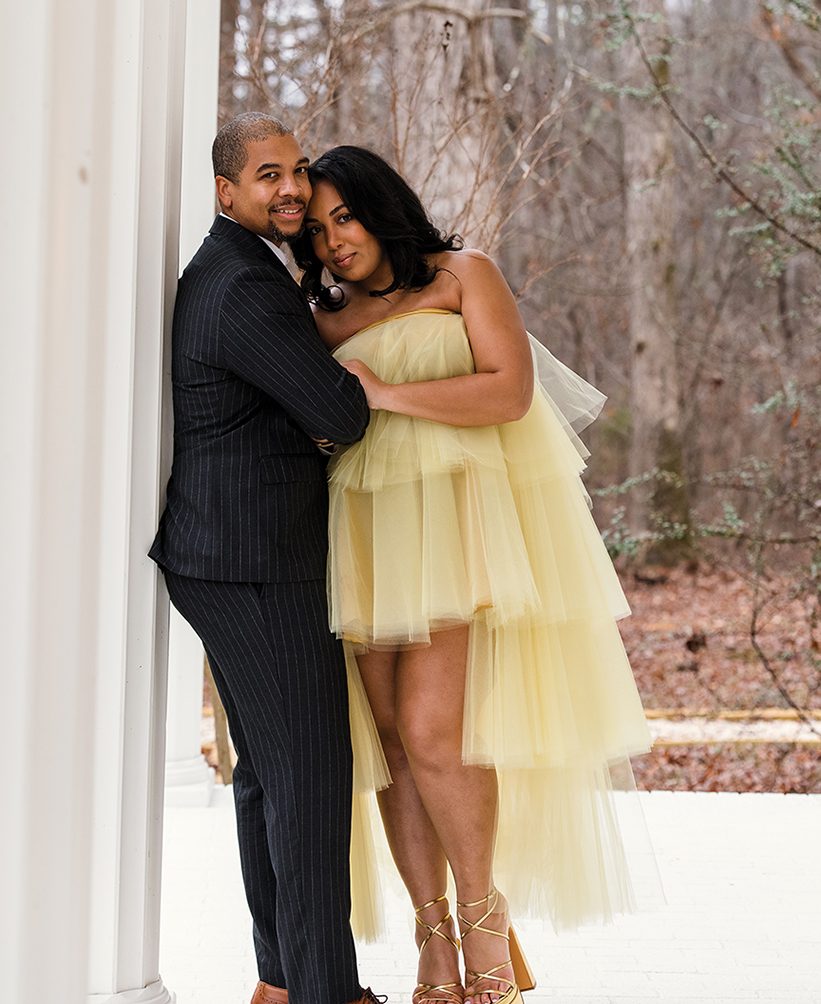
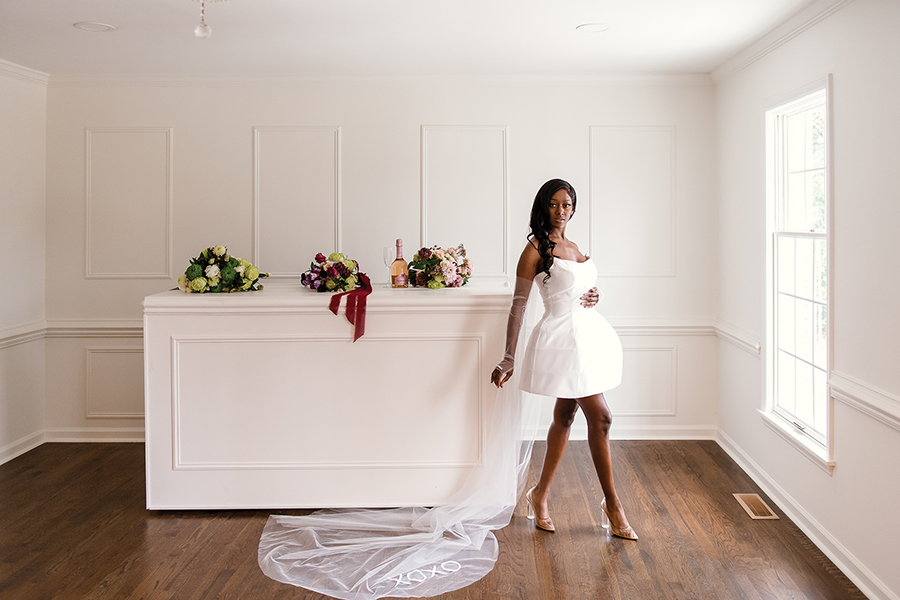
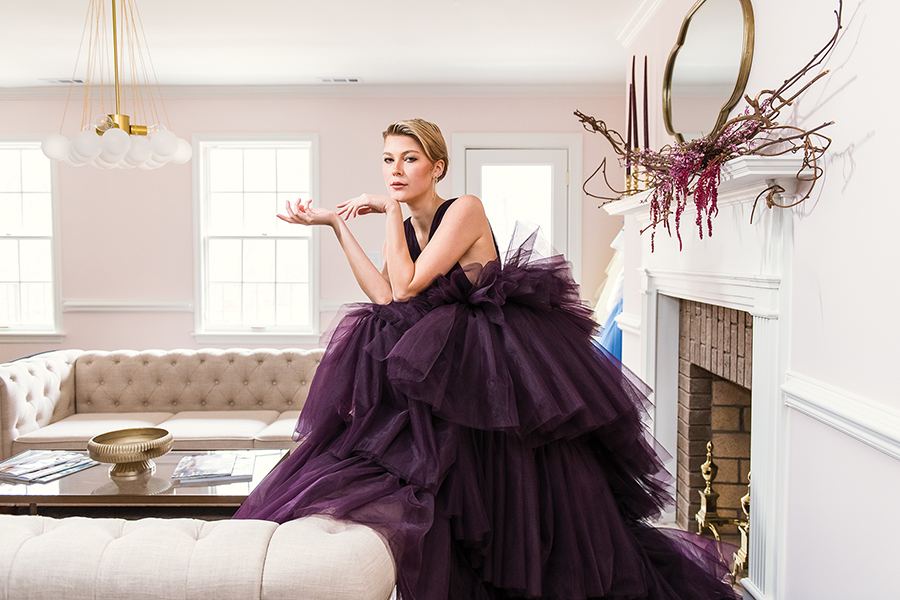
Now, six-and-a-half years after embarking on her fashion design journey at UNCG, Burel has designed several wedding dresses that “cater to the modern bride,” plus bridesmaid dresses and unique custom pieces that speak to her style, one that she describes as “very avant-garde, very glamorous, very nontraditional — and unexpected is what I really like to trademark on everything that I make.” Big tulle gowns have become her signature.

And who would be her dream client? Not one person, per se. “I would love to see my designs on the MET gala,” says Burel, referring to “fashion’s biggest night out,” the Metropolitan Museum of Art’s fundraiser. “One day, I would like some really fabulous he/she to put my look on and walk down the runway,” she says, her heart-shaped face aglow at the thought.

Though her post-graduation gig in the home to the MET gala — New York City — did not pan out, Burel has pivoted and paved her own way, working doggedly towards her dream, a dream that’s changed with the changing times.

These days she has her sights set on creating her own New York style fashion house right here in the Tar Heel State. While she recognizes it’s not the first place people think of when they consider high fashion, she sees the opportunity that lies within North Carolina.

And she’s received several affirmations that she’s landed in the right place for her business. Recently, Rose Shockley, “a beautiful client who works in the High Point furniture industry,” commissioned Burel to create a special piece for her Gatsby-themed birthday party.

“She said, ‘I want the wow,’ and I was like ‘I’ve got you on the wow,’” recalls Burel. Since most clients want to “tone it down,” Burel, who is “trying to do feathers and sequins and glitter and beading and all this stuff,” was ecstatic at the opportunity to go all out with a client who wanted the look to be “way too much.” The result? A one-of-a-kind champagne-colored, heavily-embellished mermaid tulle gown, complete with an ostrich feather bolero and a matching beaded purse.

“The dress . . . was everything I ever dreamed of and more,” says Shockley. “I felt so elegant and timeless in this piece,” which she refers to as “the most gorgeous gown I have ever worn.”

As for Burel, she lives by what she tells all of her potential clients, “Know this: You will not find anyone as excited to make [your gown] for you as I am.”

While this rising fashion star once assumed she’d call one of the major fashion meccas home, she’s realized that “God had a different plan for me.

“Maybe this is exactly where I’m supposed to be. Because I pushed and pushed and pushed to find opportunity elsewhere.” After trying her hardest to knock down doors that kept closing, Burel says, “I don’t want to say I gave up because that’s not what happened. It’s more that I took an alternative turn in attitude towards exactly where we are right now.”  OH

Behind The Barn Doors

Behind The Barn Doors

A groovy roll in the hay with some guys and dolls on the outskirts of town

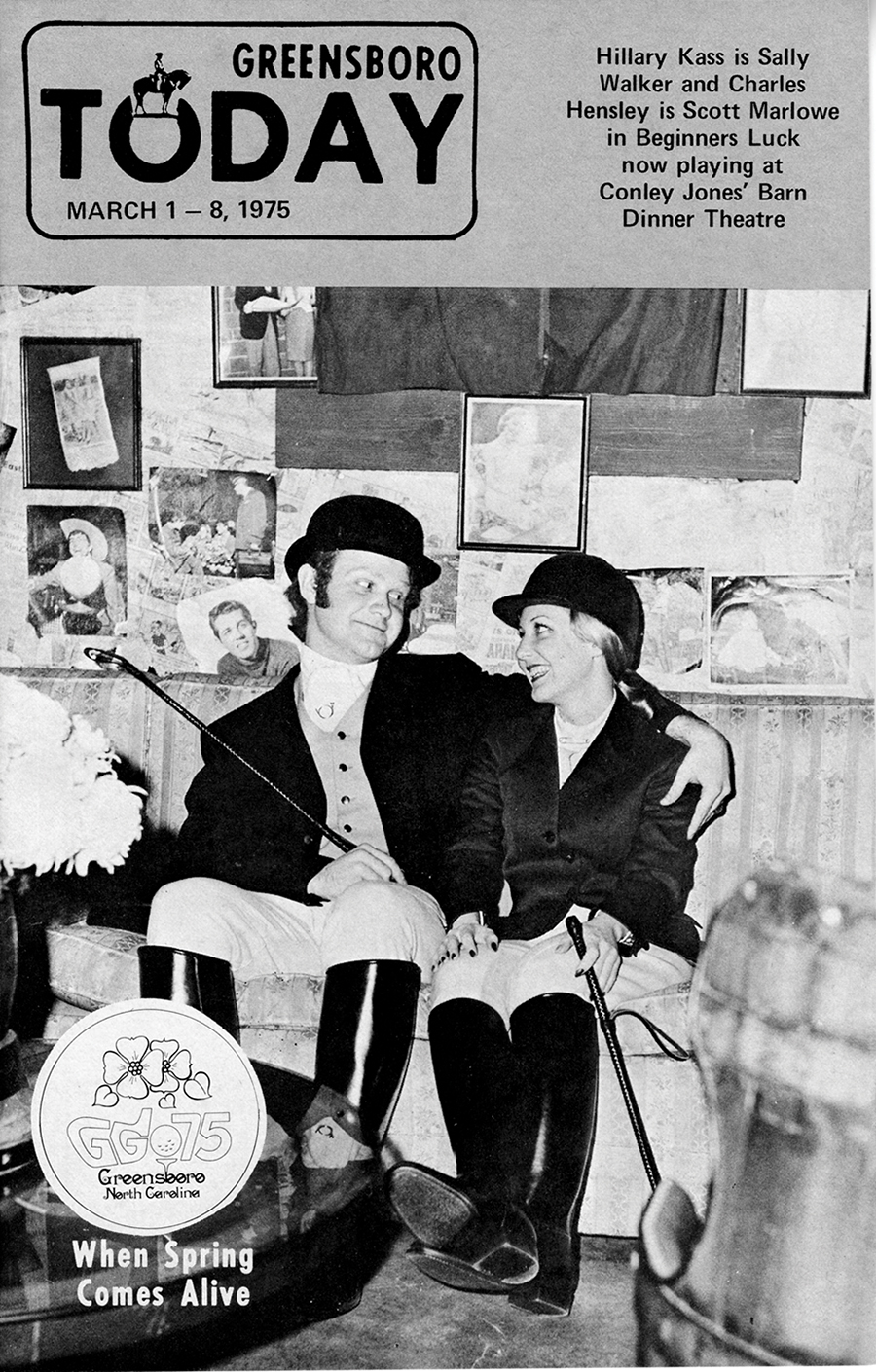
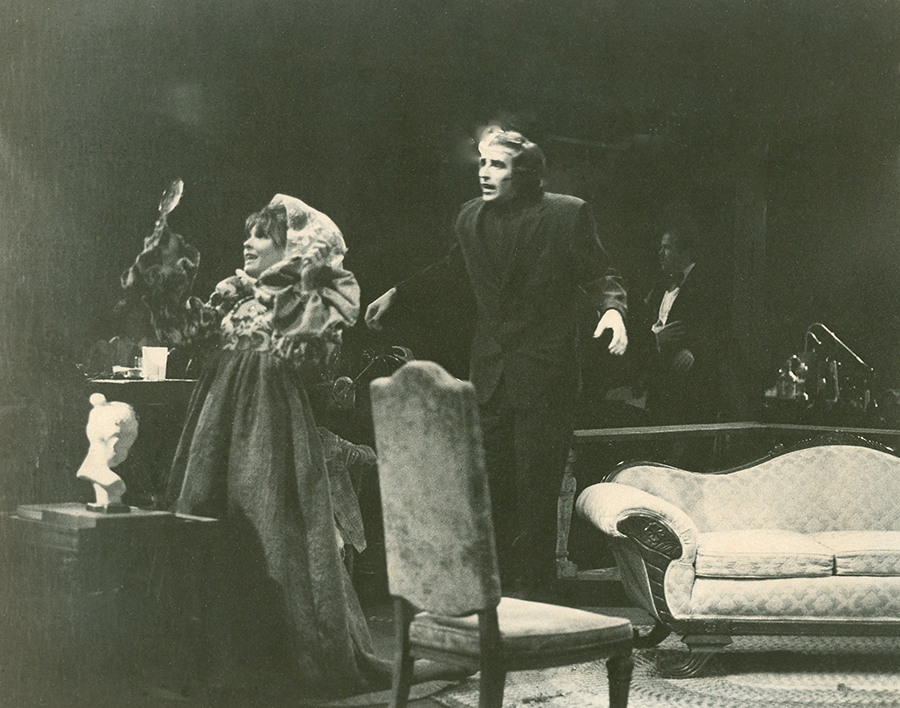
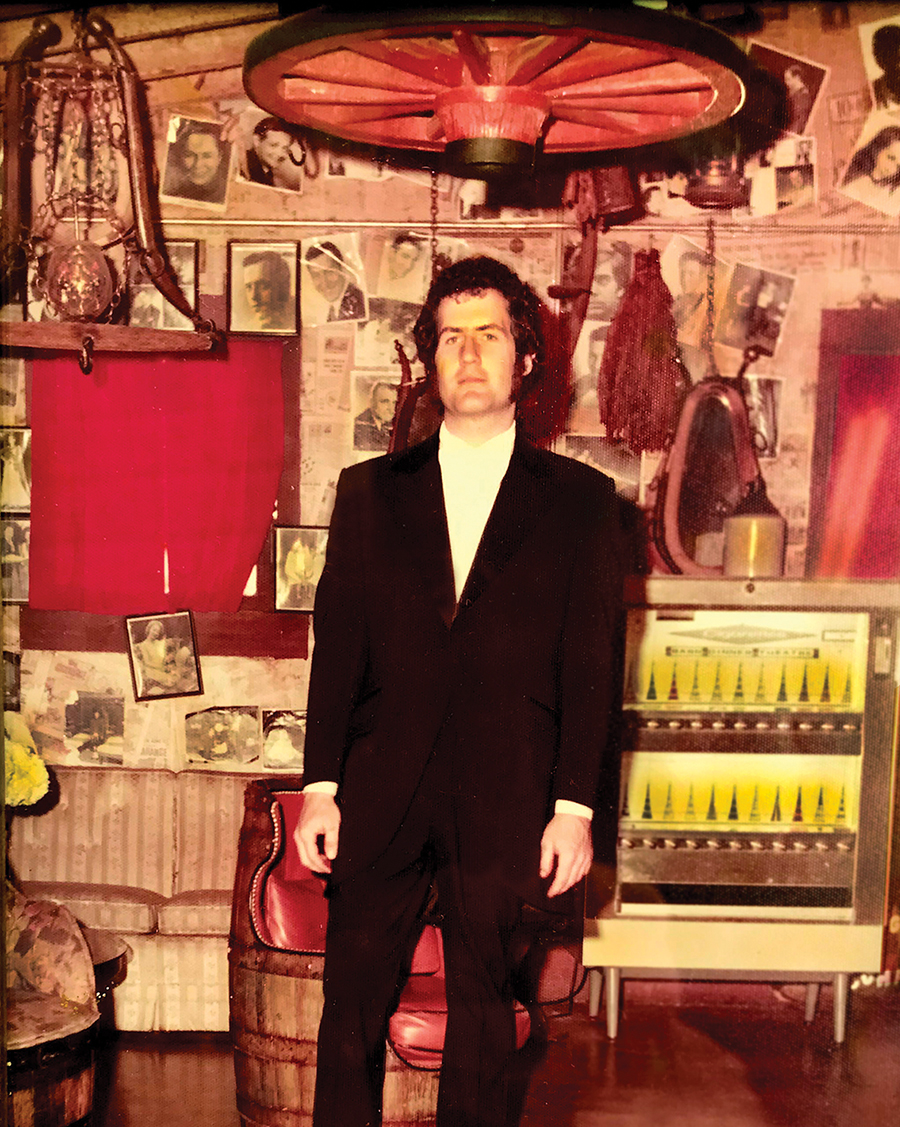
This is not the story of a place, but a snapshot from a bygone era, when a madcap company of young, stage-hungry performers were tossed into a singing and dancing whirlwind of entertainment that blossomed into lifelong friendships and happily-ever-after romances.

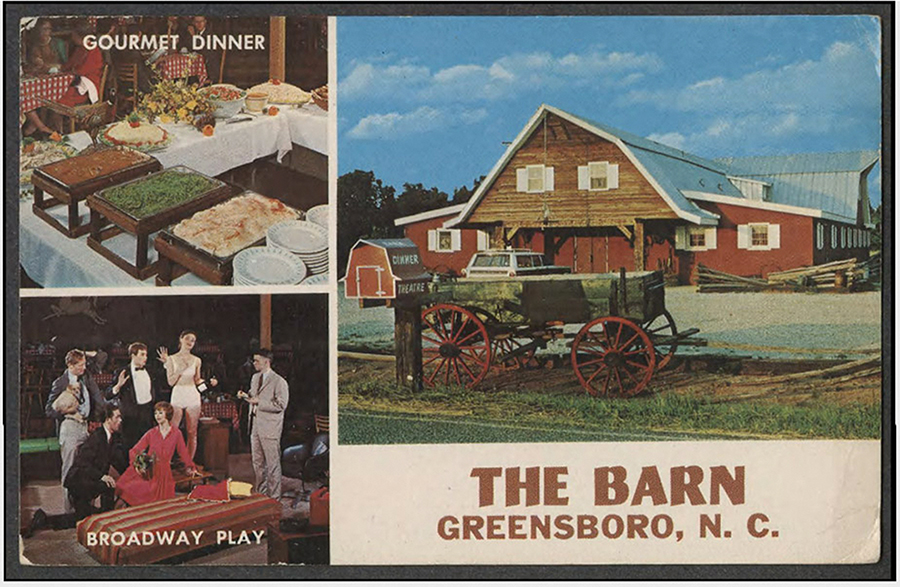
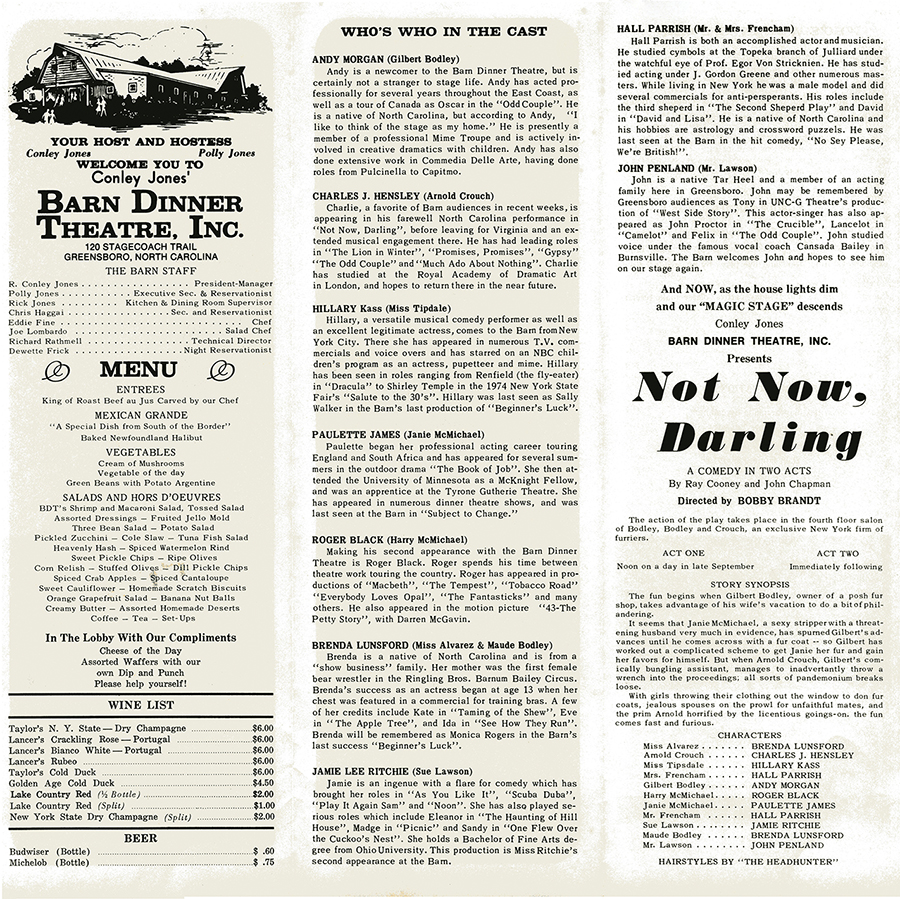
The Barn Dinner Theatre on Stage Coach Trail, the oldest continuously running dinner theater in America, has treated our community to remarkable performances for almost 60 years now, providing an outlet for creative expression by artists who have inspired generations of actors and directors.

The very first Barn Dinner Theatre was established in Roanoke, Va., in 1964 by Howard Wolfe, followed quickly that same year by The Barn in Greensboro. Within a short span, 27 Barn Dinner Theatres spread out across the country, concentrated mostly in the South. Wolfe’s insurance underwriter, Conley Jones Sr., took notice of how phenomenally successful this “play with your food” dinnertainment concept was. Conley, who died in 2015, ultimately purchased The Barn in Greensboro.

Productions were cast and produced by J. G. Greene in New York City, then directed in Roanoke before making their way to Greensboro, on to Atlanta, down to Marietta in Florida, and out to the other Barns. As soon as one show moved on, another was positioned to hit the ground running.

Advertisements touted the fact that “New York actors” were staging Broadway quality shows. Performers were guaranteed a six-month run with dinner and a free room on the premises. Stars who came through town in the 1960s included a young Fannie Flagg, Robert Blake and Mickey Rooney, but most of the working actors were unknowns.

After an all-you-can-eat buffet, the “Magic Stage” with actors and props in place descended from above via hydraulic motors. Within a minute the show was underway.

“I got called in by [UNCG theater department head] Herman Middleton,” actor Bobby Bodford says of his introduction to The Barn in 1969. “He said that the Barn Dinner Theatre had lost an actor and was looking for a young male that could learn lines quickly. This was early afternoon and I had to go on that night.”

Bodford was told by Conley Jones that his salary would be $50 a week plus tips, “And I said, ‘Tips for what?’ And he said, ‘You’ll wait tables up until about 20 minutes before the show.’” This was the era of brown bagging, and, in North Carolina, no alcoholic drinks were served. Customers brought their own booze and ordered whatever they wanted to mix it with.

At the end of each performance the actors would line up near the exit where customers had to walk past them. “I didn’t want to do it,” Bodford recalls. “The New York actors told me, ‘No, you definitely want to do this. You watch, they’ll shake your hand and remember you waited on them, run back to the table and put down a few bucks.’” One summer Bodford bought a motor home just from his gratuities. Not long after, professional waiters were hired and actors started making more than $50 a week.


Around 1969, some of the theater owners in the chain decided it would be more cost effective to hire their own actors and produce plays themselves. “They would refuse to pay the franchise fees,” Bodford says. Eventually a court ruled that theater owners could do as they please, even use The Barn name. “Once they figured that out, theaters started cropping up everywhere,” Bodford says. The Barn Dinner Theatre here switched over to locally produced productions as well. Still, almost every night the house was sold out.

Barry Bell was studying drama at UNCG when he first became associated with The Barn. “We weren’t supposed to work out there or do theater anywhere but school, but I did anyway,” he says. “The first couple of shows I did there were in 1969, so I missed Robert De Niro by two years.”

Did De Niro actually appear at The Barn? “My cousin, Michael Lilly, was wardrobe on Raging Bull,” Bell says. “De Niro told him, yeah, he was there. As the lead in a play called Tchin-Tchin, this was one of the budding actor’s first paid gigs, receiving $80 a week for a performance described as, “heart-warming” and “a delightful escape into romantic comedy.” De Niro was quoted as saying he enjoyed his experience in Greensboro, but Conley Jones circulated a rumor that the 23-year-old actor was fired because he refused to wait tables.

“Somebody was supposed to direct a show and didn’t come down,” Bobby Bodford says about transitioning from actor to director. “It was one of those things like, well, somebody’s gotta do it. Once I started directing, I really didn’t want to act anymore.” Not having to hang around for the monthlong run of the play, “I could open up a show here, then go to Tennessee and open a show there. I really enjoyed that more.”

James (Jimmy) Fisher was in graduate studies at UNCG in 1974 when Bodford cast him in one of his shows. “It was a play called Beginner’s Luck,” Fisher recalls. “The first play I directed was called Spinoff. Neither of them are great dramatic works. They were the kind of sitcom things that were very typical in those days.”

“It’s a funny thing about the theater,” Fisher says. “Because you really do build relationships very, very quickly — relationships that you remember the rest of your life. And sometimes you never see those people again, you know?” Bodford was directing Fisher in a production of Annie Get Your Gun starring an actress from New York, Dana Warner. “After a considerable effort on my part,” Fisher says, “she finally went out with me. And we’ve been married for almost 46 years.”

Katina Vassiliou Madison had been appearing in productions at Page High School and with Livestock Players in the early ’70s. As an undergrad at UNCG she made her debut at The Barn. “I jumped at the opportunity,” Madison tells me. “You rehearsed all day for two weeks and then boom, you had to be ready to perform two matinees and performances every night. Your energy had to always stay up.” Madison accepted a day-time position in the reservation office. When not onstage, she served wine and beer in the lobby. “I’d be stage manager, whatever job they had open,” she says. When an actor’s zipper ripped open on stage it fell on Madison to stitch it up: “I had to get down on my hands and knees to sew up his fly in the lobby,” she says. “You can imagine how funny that looked. I can vividly remember thinking, ‘Please God, don’t let anybody go to the restroom at this moment.’” Naturally there were mishaps and mischief galore this is the theater after all.

“A rat fell out of the vent one time into somebody’s plate,” Bodford recalls. “Conley came over and said, ‘I am not gonna charge you for that. You got something extra special for free.’ Seriously, and then he just left.”

“Brenda Lilly was playing a Cockney maid,” says Mina Penland recalling an onstage prank. “An actor named Randy Ball packed his suitcase with bricks and she’s supposed to go off the stage with it but she couldn’t lift it. So she ad-libbed for 10 minutes and the audience loved it.”

“In Last of the Red Hot Lovers, there’s a scene where Barry Bell’s character has to roll a joint,” Bodford recalls. “Barry said, ‘I’ve been told if you take Lipton tea and roll it up, it kind of has the same smell.” After a few performances smoking that tea, “We’re sitting in the green room when two detectives come in and want to go through our props because somebody said they’re smoking marijuana on the stage at The Barn Dinner Theater.”

It’s a distinct, irreplicable, zen-like experience when everything clicks, audiences and actors become like one, momentarily inhabiting a world entirely unto themselves. After the final bow, it takes hours to decompress from a peculiar form of exhilarating exhaustion. “We had lots of wild parties running around in the field behind the Barn, butt-naked, drunk . . . ” Bodford says. “That’s something you probably shouldn’t write.” Oops!

Conley Jones was, by all accounts, a colorful character who wore pistols in a holster on his hips, parading around like the caricature of a Southern sheriff — the sort of person who had people continually thinking, “I can’t believe you just said that out loud.” He considered actors a necessary evil. “He didn’t understand that we were the reason he was there,” Bodford says. With “no love for theater and no knowledge of how it worked,” Jones would refer to the players as “them goddamn actors.”

The performers’ quarters upstairs could house around eight people.  An intercom system allowed them to monitor the show going on downstairs. “This big actor named Steve accidentally walked into Conley’s office one night and he was listening into our rooms,” Bodford recalls. “Steve was so upset the next morning he got a screwdriver and disabled every single one of them. And Conley never said a word about it.”

Barry Bell returned from working in New York to run The Barn from 1981 until 1992. “I did Fiddler on the Roof three times,” he says. “Fiddler and Oklahoma were licenses to print money. We normally ran straight plays about four-and-a-half weeks and musicals about six. I think Oklahoma ran like 16 weeks.”

The most difficult aspect of Bell’s tenure was dealing with The Barn’s owner, who could, at times, engage in shady practices. “Conley Jones finally got caught and burnt by the IRS,” Bell recalls. “I got a check for almost $7,000 and the waiters were getting checks for 3,500 bucks.” On the other hand, Bell says, “If a show sold really well, Conley would come up to me the next morning and say ‘Thank you Barry, thank you a lot,’ and stick $600 in my pocket.”

Barry Bell insists the buffet was good for what it was. “They always had that huge steamship round of beef. And the giant halibut, some of them 150, 160 pounds that were five feet long. A lot of people loved that fish, but, to this day, I can’t eat halibut or roast beef.”

Lorrie Lindberg, who was in grad school at UNCG in the early ’80s when she began working at The Barn, recalls “I did A Couple of White Chicks Sitting Around Talking and Cat On a Hot Tin Roof.” Lindberg worked at a few out-of-town venues after she graduated. “When I came back to Greensboro, I had been told by tons of people that I needed to meet Barry Bell, but we never were in The Barn at the same time.” Bell would be in New York when Lindberg was at The Barn or vice versa. “Everybody that had told us that we needed to meet each other were all standing in the lobby at The Barn because I was dropping off a friend of mine who was doing The Mousetrap. They were all in that show that Barry was directing. So they all saw us meet in the lobby at the Barn.” That was 1983, “We started living together maybe a week after that and we’ve been together ever since.”

As one of several Barners who moved to Los Angeles to pursue a career, Bobby Bodford eventually found himself working as Angela Lansbury’s costumer on Murder She Wrote. “She liked what I did and she liked working with me,” he says of the legendary actress. “But she was always saying, ‘Go back to the theater.’” Bodford had fallen in love on the courthouse steps of the Back to the Future set and was now married. “I never understood why the heck I was in Los Angeles.” Wanting children but having no desire to raise them in the City of Anything but Angels, in 1992, “We decided we were going to move back to Greensboro and Angela was delighted to hear it.”

Barry Bell severed his ties with the theater in 1992. That’s when, on the road to Greensboro, Bobby Bodford received a most unexpected phone call. “Conley Jones heard that I’m coming back and he says, ‘I’ve got people here that say you would never direct another play for me.’ I went, ‘Oh, no, I will! I don’t have a job,” he recalls. It felt something like home and Bodford spent the rest of the ’90s as The Barn’s creative director. “It was more sophisticated than it had been previously. It was a big deal. I think even then it was six or eight bucks for dinner and a show.”

Lots of young actors who cut their teeth at The Barn went on to bigger things. “Beth Leavel, who just won a Tony a couple of years ago, worked at The Barn a bunch,” Bell says. Lillias White achieved stardom after wowing audiences in Barn presentations of Love Machine and The Color Purple. Nominated twice for a Tony Award, White brought it home in 1997 for Best Featured Actress in a Musical. Winning both an Obie and Drama Desk Awards for her musicality, she’s well-known to youngsters as the voice Calliope in the Disney flick Hercules.

When Conley Jones passed away in 2015, Ric Gutierrez had been manager and producer at The Barn for two decades. Barry Bell and Lorrie Lindberg moved to Richmond, where they both taught at Virginia Commonwealth University. He has since retired. Bobby Bodford still directs theater productions in the area. “My wife Nicole became a member of our theatre family the minute my friends met her. I’m no longer Bobby — it’s Bobby and Nicole,” he says.

“I ended up teaching in Indiana for 29 years,” James Fisher says of his post-Barn days. “My wife, Dana, and I talked all the time about retiring in Greensboro. UNCG was looking for a department head and got in touch with me about the possibility of applying.” Fisher served as head of the theater department at UNCG from 2007 until he retired in 2019, winning multiple awards for excellence and authoring several books.

“It’s all interwoven,” Fisher says upon reflection. “Barry Bell, Billy Wagner, Bill Rollerson, Jan Powell, Charlie Hensley, Michael and Brenda Lilly, on and on. These are people who have come in and out of our lives over what is now getting close to 50 years. We always talk about getting together and doing one more show. I doubt it’ll ever happen, but it’s fun to think about.”  OH

An abundance of thanks to Barn alumnus Charlie Hensley who provided connections to these esteemed performers and educators, allowing this humble scribbler to witness from the wings a magical moment of theater history.


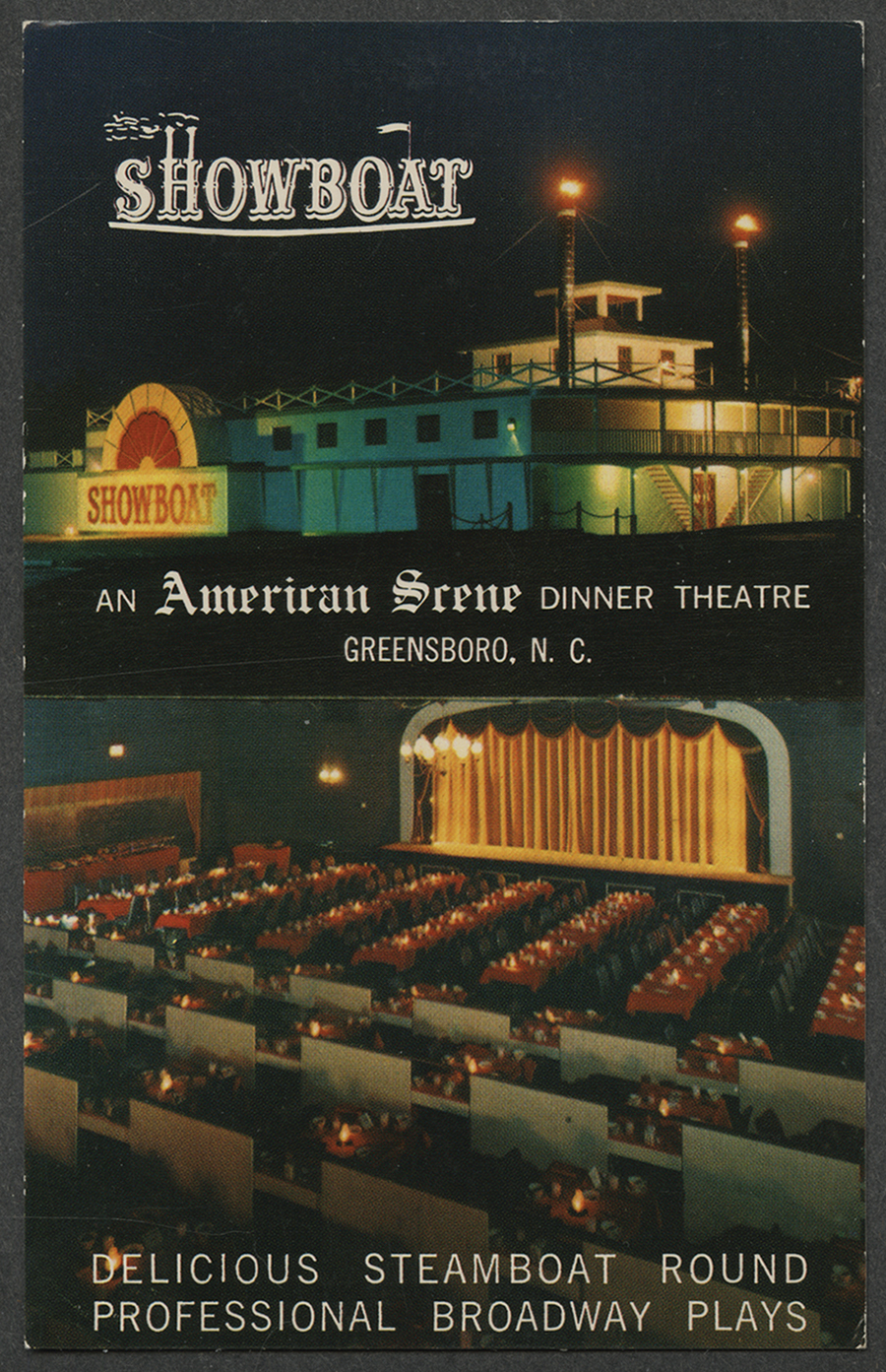
Showboat Dinner Theater

In 1965, Showboat Dinner Theater, An American Scene Dinner Theatre, opened off N.C. Highway 68 on Gallimore Dairy Road in a building resembling a New Orleans riverboat. Patrons crossed a bridge over a man-made lagoon to traverse from the parking lot to the theater. Just about every night, Conley Jones would corral an employee to drive him over to the Showboat to count the cars in the parking lot.

“The Showboat used, if I’m not mistaken, union Equity actors,” Barry Bell notes. “And Conley, at The Barn, didn’t. He didn’t even pay the actors to rehearse the new play.” There’s a legendary story about what happened when Actor’s Equity came down from New York to organize a protest. “If you look at the front of The Barn, there are two windows up in the peak,” Bell says. “Conley’s desk was right there by that window and he threw M-80 fireworks out the window at them.” One of the trade papers sported a headline that read something like, “North Carolina Theater Producer Fires on Equity Protestors.”

Around 1969, budding actress Mina Penland was in rehearsals for I Do, I Do, directed by Bobby Bodford at the Showboat Dinner Theatre, which had opened four years earlier. That production never made it before an audience due to someone in management absconding with the funds, leading to the theatre closing. She ended up doing plays at The Barn and her brother Dodie Penland became the Barn’s stage manager, who greeted the audience as it arrived.

Showboat went under after just a few years and became Jung’s Galley, the new location for Jung’s Chinese restaurant, formerly located in a Tudor inspired mansion on Church Street, close to Summit Avenue. In 1977, the site became Bill Griffin’s Boondocks nightclub for a time.  OH

Almanac

Almanac

February knows you’re weary.

She can tell by the longing in your eyes, the ache in your chest and shoulders, how you carry the cold like a burden.

On these frost-cloaked mornings, you dream of soft earth and tender blossoms, spring peepers and swallowtails, songbirds and sunny afternoons.

February knows. She cannot give you what she does not have. And yet, she offers hope.

At dawn, the frigid air nips your face and lungs, stuns you with its jarring presence. It’s hard, at first, to see beyond the dense clouds of your own breath. This is where you start: Breathe into the mystery. Let the formless take form. Watch your own warmth shape the world around you.

As the pink sky slowly brightens, two silhouettes appear in the glittering distance.

A pair of rabbits.

Something about their gentle presence softens the very landscape, softens your edges and your gaze. Weeks from now, their quiet stirrings will have conjured the first of many quivering litters. Something deep within you stirs.

February offers contrast.

Suddenly, you notice early crocus, jewel-like petals drenched with more color than you’ve seen in months. For now, this luscious purple is enough.

But there’s more.

When the first golden daffodil emerges from the frozen earth, a sunbeam lights upon your face. You close your eyes, basking in this subtle warmth, this fleeting glimpse of what’s to come.

The cold becomes quiet. As you walk the icy bridge between the harsh clutch of winter and the tender kiss of spring, you carry yourself differently. Hope is gleaming in your eyes, glittering on the horizon, tucked inside your chest like a sacred gift.


Bridge Between Seasons

The ancient Celts looked to the Wheel of the Year to celebrate and honor nature’s cycles, drawing wisdom from the turning of each season. Imbolc (observed on Feb. 1) marks the midpoint between the winter solstice (Yule) and the spring equinox (Ostara). In other words: Imbolc is a bridge between death and rebirth. Also known as Candlemas or Brigid’s (pronounced Breed’s) Day, this festival honors the return of the sun and celebrates the Celtic fertility goddess Brigid.

The days are growing longer. The sun, stronger. The earth opens to a quickening rhythm.

Soon, the seeds from last year’s harvest will be sown. As spring awakens within and around us, the great wheel turns and turns.


While it is February one can taste the full joys of anticipation. Spring stands at the gate with her finger on the latch.  — Patience Strong


Crocus Pocus

Perhaps you know that saffron, the complex and costly spice, comes from the red stigmas of the autumn-blooming saffron crocus (C. sativus), not the snow crocuses you see now, bursting through the frozen earth. And yet, these winter-blooming beauties offer something of even greater value: the ineffable promise of spring.

Plant your own corms this fall. They’ll need full sun, moist but well-drained soil and a quiet winter to unlock their incomparable magic.  OH