Don’t Let Them Eat Cake

Don’t Let Them Eat Cake

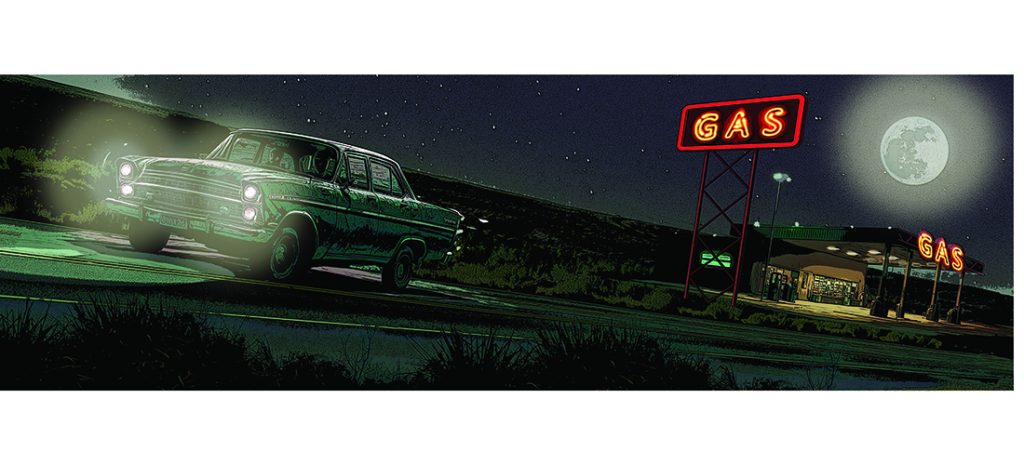
Fiction by Brendan Slocumb     Illustration by Mariano Santillan

He smelled like the cake factory: frosting, the yeasty stench of batter and butter, but more than anything else, sugar. Baked sugar, tangy and sweet, that coated the back of his tongue and the inside of his eyelashes. Leaving the factory at the end of the shift, he could feel the sugar aroma around him like a coat or a fog, always moving with him. Of course, his friends started calling him Bon Bon. He’d hated the nickname, but by now it had hung on him so long that he didn’t mind it.

He ordered another beer and checked his watch. His buddy, Tig, was late, as usual. Meet me at the bar at 6:30 and DONT BE LATE, Tig had texted him. SERIOUS!!!

Now it was 6:49, and he’d finished the first beer and ordered a second. Why Bon Bon had believed Tig that this time actually was urgent, Bon Bon didn’t know. He’d shown up in his work clothes without changing back into his street clothes, the King Arthur Brand cake flour misting up from his pant legs every time he shifted on the bar stool. 

“You makin’ me hungry, buddy,” Alan, the bartender, told him for the third time. “What do you think of carrot cake? You a big fan?”

“I figured you for a chocolate cake man,” Bon Bon said. “That was your wife in the shop the other day, wasn’t it? She bought the 14-inch and the 18-inch. Double chocolate.”

“Wife loves them,” Alan said, buffing the bar and looking away. His A-shirt, with dozens of stains on it — bourbons, whiskeys, wines — barely covered his paunch. Seemed like Alan loved those chocolate cakes, too.

Bon Bon nodded politely, tried to squeeze out a smile and looked again at the door.

“You must get sick of cakes,” Alan said. “All them sweets. That vanilla confetti cake is my favorite.”

“Never touch the stuff,” Bon Bon said. “I only eat salty stuff. You got more of these?” He pushed the empty dish that had contained pretzels and peanuts towards Alan. The first few months at the factory, Bon Bon had eaten so many pastries that he became nauseated by the sight of anything with sugar in it. 

He looked at the clock. It was 6:54. If Tig didn’t show by 7, Bon Bon was out of there. Home, out of the sugar-stenched clothes and into the shower. He imagined hot water sluicing over him, the powdered sugar circling the drain and disappearing. He fumbled in his pocket for his wallet, looking for a ten, when a familiar voice said behind him, “You stink like the inside of a fat woman’s purse, you know that?”

Tig. Of course. “What?” Bon Bon asked him. “What does the inside of someone’s purse smell like? And where were you?”

“They keep cake in them,” Tig said. “The ladies.”

“Nobody keeps cake in their purse,” Bon Bon told him. “That’s the dumbest thing I ever heard you say.” And he’d heard Tig say plenty of stupid things over the years.

“Come on, let’s go.” Tig was already heading toward the door.

“Go where?” Bon Bon said. “Why did you want to meet here? Now we’re leaving? What’s going on?” Bon Bon grabbed a handful of the peanut-pretzel snack from the newly replenished dish, thanked Alan with a wave and trotted to keep up with Tig, who was already outside

By the time Bon Bon caught up with Tig, he was almost to his car, a beat-up dark green Chevy Malibu, whose passenger door had gotten side-swiped years ago and was missing the side mirror and most of the chrome trim. Tig was what Bon Bon’s mother referred to as “a character.” Overalls, sleeveless shirt, dirt-and-oil-coated John Deere trucker cap, Reebok tennis shoes so faded and stained with oil and dirt that their color would forever be a mystery. 

“Get in,” Tig said.

“Where are we going? When will we be back? I can’t just leave my car — ”

“GET IN,” Tig said, almost an order this time.

Bon Bon never knew why he got in the car that night. Maybe because he’d done other stupid things with Tig in the past and this was just par for the course. You wouldn’t believe what Tig just did, Bon Bon imagined texting his friends later tonight. It would be fodder for conversation for days to come.

The car stunk of cigarette smoke and chaw. A spit cup sloshed in the dashboard console. Bon Bon shoved McDonald’s wrappers, Entenmann’s boxes, Dunkin’ bags and miscellaneous trash off the seat, and got in. Before he could even buckle his seat belt, Tig spun the tires and headed out of the parking lot toward the highway.

“What’s this about?” Bon Bon repeated, swallowing the last of the pretzels.

Tig smiled. Drove for a minute, enjoying the power. Then, dramatically, he said, “I’m about to make us rich.”

“No,” Bon Bon said.

“Yep.”

“OK,” Bon Bon said. “Let me out. Turn around. Stop this piece-of-crap and let me out. I told you before. I’m not getting involved in any of your messed-up money-making — ”

“It’s guaranteed cash and you’re already in it,” Tig said without missing a beat.

“Stop the car. I mean it.” 

“Too late. You’re going to thank me in about 12 hours.” 

“What the hell are you talking about? Twelve hours? What did you do? What are we doing?”

“I just made you 23K. I get 27K, you get 23K.” 

“For what?” Bon Bon asked. Frustration and fury boiled in his gut the way it often did when he had to deal with Tig. “You just handing me 23K for sitting here?”

“For coming with me, yeah,” Tig said, darting a glance at him. Bon Bon couldn’t decipher it. “All you gotta do is drive when I get sleepy.” The highway spooled out before them, the endless ripple of white lines bisecting the night. Few cars were out this late, and all seemed to be going in the other direction.

“Hell no. I don’t know what kind of craziness you’re getting into, but I’m out. I gotta work in the morning. Turn around. Take me back to my car.”

Tig laughed. “Bro, they won’t miss you at that cookie house. Besides, in 12 hours, you’ll have enough money to quit that job and do something that doesn’t leave you smelling like a giant cupcake. Lose that dumbass nickname. Grown man named Bon Bon. I’m doing you a favor.”

“Screw you. Dammit, I knew I should have just gone home.” 

The car banked around a wide curve, then through a series of up-and-down humps in the road. If you drove fast enough, it was like riding a roller coaster. For an instant, you could lose your stomach as you crested the rise.

On the descent, a thump came from the trunk.  

“What was that?” Bon Bon looked in the back seat, stacked neatly with big square boxes: Macbook Air, read several. UN3481, read others, with the logos of a battery and a flame. They were all laptop computers. The back-seat floor was the usual sea of fast-food wrappers, napkins and trash. Nothing moved.

The thump came again, as if whatever was back there shifted back to its original position.

“What’s going on?” Bon Bon asked. He couldn’t hide the note of nervousness now in his voice. “What’s in the back seat? Is that stuff stolen? You raid an Apple Store or something?” He tried to imagine how many laptops would be worth $50,000. There’d have to be at least twenty-five, maybe more.

“Nothing. Don’t worry about it.” The car was going faster now, well over 80 mph. 

“I knew it. I freakin’ knew it. What did you do? I’m not dealing in stolen goods, Tig. Stop the car.”

Tig groped in the driver side door. Bon Bon thought at first that Tig was looking for his wallet or maybe a soda bottle. But after a moment Tig retrieved a small triangular object that seemed to absorb the dim lights from the dashboard before it resolved itself into a gun. It glittered as if alive. Tig gripped the handle and then the muzzle was pointing, impossibly, at Bon Bon himself. 

“T, what the . . . ” 

“Just shut up,” Tig said. “I’m doing you a favor. Nobody is getting hurt. We walk away with more money than either of us has ever seen.”

Bon Bon had only seen Tig this erratic once before. It ended with Carl Simmons walking with a permanent limp and Tig spending three years in prison for aggravated assault. Bon Bon stared at the dark muzzle of the gun. His mouth had gone dry, the pretzel crumbs turned to gooey dust on his tongue. He wiped his hands on his pants and could feel the flour and sugar coating his palms. He wanted to scream. Instead he took a deep breath, looked out the window into the dark, trying to ignore the feel of the gun staring at him. “OK man, just tell me where you got all these computers from. And what we’re going to do with them.” 

“The less you know the better,” Tig told him. “Get some rest. You’ll take over in six hours. We gotta make the drop by 8 a.m.” 

Bon Bon had heard that Tig had gotten into some shady business while he was in prison. This whole scenario was making more sense. Tig, and now Bon Bon, were driving stolen electronics over state lines. He wondered if $23,000 was worth getting caught. If the police pulled them over —

Tig turned on the radio with an aggressive punch of his forefinger. Kellie Pickler’s “Red High Heels” deafened them. Bon Bon turned down the volume.

 Over the next two hours, Bon Bon sat in silence, thinking. Tig couldn’t be reasoned with, that was pretty clear. Bon Bon could wait till Tig fell asleep and turn the car around, but what would happen when Tig woke up? Bon Bon glanced down at the gun again, resting lazily on Tig’s thigh, and looked out the window. He could grab his phone and try putting it on mute and dialing 911, but the phone’s light would turn on and Tig would see it for sure. Bon Bon’s palms felt chalky from the mixture of sweat and cake flour dust. The damp, sugary smell from his trousers made him want to retch. 

“Hey,” he said when lights from the next exit glimmered on the horizon. Signs for gas, food, lodging. “I didn’t get dinner when I was sitting there waiting for you, and I’m starving. Do we need gas?” He pretended to stretch and stifle a yawn.

Tig kept his eyes on the road, but his grip tightened for an instant on the gun, then relaxed again. “OK,” he said after a minute. “I am, too. All right. I’ll pump the gas and you get us some food.” Tig took the exit too fast, the car almost on the berm before he overcorrected. Again came the thump from the trunk. “And don’t try anything, man. I’d hate to kill you, you hear me?”

The gas station was a half-mile down the road, its fluorescent lights bright and disorienting. No cars were parked at the pumps. A single beat-up Honda sat tucked against the building. Bon Bon had been hoping for a late-night police cruiser, an RV, anything.

After the car had come to a halt, Bon Bon got out, making sure his movements were slow and casual. He could run in, tell the attendant to call the cops, who could be here in minutes. He glanced over at Tig, who was staring hard at him. He looked away, pulled open the glass door. He could feel Tig’s eyes on him, even in the snack aisle. 

He picked up several bags of  Flamin’ Hot Cheetos, hot chili and roasted lime Takis, jalapeño Kettle potato chips, and honey barbecue and hot mustard pretzels. Then went to the refrigerators on the wall and pulled out four bottles of Pepsi.

At the cash register, Tig’s gaze brushed his shoulders as Bon Bon paid and the clerk stuffed everything in a plastic sack. Again and again, he contemplated saying something but then imagined Tig leveling the gun at them, the bullets spider-webbing the glass.

The door behind them jingled, and Bon Bon jumped. “You almost done, man?” Tig called in.

“Yeah,” Bon Bon said. The clerk put a handful of change on the counter, and Bon Bon swiped it into his palm. “You owe me 18 bucks,” he told Tig as he brushed past him out the door, out into the cool night and the waiting car.

“Oh you’ll get that and more soon, buddy.” Bon Bon could hear the relief in Tig’s voice. “You feel like driving now?”

“Yeah, I can take over,” Bon Bon said. “You eat up. Did you check on the trunk? On whatever fell over back there?”

“Don’t worry about it. It’s fine,” Tig said. 

Bon Bon pulled out of the parking lot as Tig tore open the purple bag of Takis, stuffing a handful into his mouth. “Damn these are good. You want some?” 

Bon Bon shook his head. “In a sec.” He took a sip of Pepsi.

“These things are spicy,” Tig said, playing on the word spicy. “Whooo-eee.” He cracked open his Pepsi and drained half of the bottle. Bon Bon took a sip of his.

Tig didn’t tell him where they were going, just directed him once to turn south, toward the highway running to the coast. Tig broke into the potato chips and Bon Bon munched on pretzels. They passed city after city, and a rest stop in three miles.

“I’m thirsty,” Tig said when he was halfway through the Honey Barbecue Pretzels. “These pretzels are making me thirsty.”

Seinfeld,” Bon Bon told him without looking over. He checked the rearview mirror. The boxes sat primly on the backseat, giving away nothing.

“What?” 

Seinfeld,” Bon Bon said. “That was a running joke on Seinfeld.” The rest area illuminated the road. “Remember, George said it about 200 times during that show?” They passed the entrance, kept going.

“I don’t know what the hell you’re talking about. You got more to drink?” Tig said. 

“There ain’t no more. We drank it all.” 

“That ain’t funny,” Tig said. “I’m seriously thirsty. We gotta stop.”

“OK,” Bon Bon told him. “Next place we see. I need to take a piss, too,” he added.

They passed a sign. “Next Rest Area: 28 Miles.”

“Damn,” Bon Bon said. “Another half-hour.”

“We can make it,” Tig said, staring out at the darkness. But after another 10 minutes he said, “I really gotta go.”

“So do I,” Bon Bon said. “Bad. I’m going to pull over.”

He eased the Chevy onto the shoulder, put on his flashers. “What the hell you think you doin’?” Tig said, spraying pretzel crumbs onto Bon Bon’s shirt. 

“What? You want me to piss myself in the driver’s seat? I didn’t shower after work because somebody wanted me to meet them at 6:30. So now I smell like cupcakes and if I piss myself I’ll smell a lot worse. That is not a good combination. So you’ve got a choice. Either stop yapping in my face and let me pee, or you can drive the rest of the way in a wet seat.” 

He hoped Tig would be too preoccupied to suggest that he pee in the Pepsi bottle. Tig was. 

“Whatever. Don’t do nothin’ stupid.” Tig got out of the car, slammed the door. Again the thump from the trunk, and then another. 

The car’s headlights beamed into the nondescript grass as Bon Bon climbed out, went around the front of the car. As he reached the berm, he stumbled, tripped, and fell. Then got up, close now to Tig.

“Clumsy idiot,” Tig said, laughing, transferring the gun from his right hand to his left, unzipping. “Next rest stop we’re gonna get something to drink. I’m really thirsty. We got how many miles? 15 or — ”

Wham. The rock that Bon Bon had just picked up struck Tig perfectly, right on the temple. Tig dropped, soundless, so quickly that Bon Bon thought for a second that he was pretending. 

But he wasn’t. A moment later he groaned, reaching for his scalp. Bon Bon lunged for the gun, grabbed it and sprinted back to the car.

In a moment, cinders flew and he was back on the highway, heart in his throat, going 70, 80, 90 miles an hour.

After a couple of miles he slowed slightly, pulse still pounding. The thump from the trunk came again. Bon Bon pulled over, popped the trunk, went around back.

Inside, a young boy lay wedged against tires and fabric, his hands and feet bound with zip ties. His eyes were bigger than any eyes Bon Bon had ever seen, with such terror and misery that Bon Bon couldn’t speak for a moment as he loosened the gag. The boy struggled away, a panicked bird.

“Hey, it’s OK,” Bon Bon said. “That piece of garbage can’t hurt you.”

He looked in the front seat for a knife, scissors, anything to cut the ties, but could find nothing. So he carried the boy to the front seat, tried to make him comfortable.  

“I’m taking you to the police,” Bon Bon told him as he adjusted the seat belt. “The bad man won’t hurt you anymore, OK?” He tried to sound as calm and nonthreatening as he could. 

“You smell like a cupcake,” he told Bon Bon accusingly, voice rough.

Bon Bon laughed. “Story of my life,” he said. “I get that a lot.”

The little boy eyed the bag of pretzels, tucked in between the seats. “Can I have some?”

Bon Bon reached past him for the pretzels, fed him a couple at a time.

“These are making me thirsty, “ he said.”

“Do you like Seinfeld, kid?” Bon Bon said as he pulled out his phone and dialed 911.  OH

Brendan Nicholaus Slocumb is a graduate of UNC Greensboro with a degree in music education. He is the author of The Violin Conspiracy and Symphony of Secrets. He is currently working on his third novel.

Editor’s Note

Editor's Note

Some things just belong together: peanut butter and jelly, Hermione and Ron, Elizabeth Bennet and Mr. Darcy. In celebration of our favorite pairing — a beach and a book — O.Henry has produced its summer reading issue every August for over a decade. In that span, our contributors have included Frances Mayes, Daniel Wallace, Etaf Rum, Ron Rash, Lee Smith, Clyde Edgerton, Bland Simpson, David Payne, Lee Zacharias, Celia Rivenbark, Michael Parker, Nan Graham, Terri Kirby Erickson, Shelby Stephenson, Fred Chappell, Anthony S. Abbott, Wiley Cash, Ruth Moose, Sam Barbee, Virginia Holman and Jill McCorkle, to name a few. This year, we added Valerie Nieman and Brendan Slocumb to our roster.

And every August, we strive to find a cover that celebrates both reading and readers. This year, we’re fortunate enough to feature the work of California artist Michael Stilkey, a “book sculpture” entitled Out of the Night That Covers Me. In a style reminiscent of German expressionism, Stilkey uses a mix of paint, lacquer, ink and pencil to capture his melancholic, whimsical characters painted on stacks of books, many of which are destined for the recycling bin. Stilkey told the L.A. Times, “Books are dying. There are so many that go to the garbage. It’s crazy. If I can paint on them, I’m giving them a second chance.” His work has been exhibited throughout the United States and around the world, including the United Kingdom, Italy, Switzerland, The Philippines and China. When the curator of the Rice University Gallery randomly saw his work in a Los Angeles gallery, she flew him to Houston where he created his first large book sculpture. It went viral. “Then I went on a world tour for the next, I don’t know, 15 years,” says Stilkey. “Right place, right idea, right timing. It all aligned.”

In 2018, Stilkey was invited to the World Economic Forum in Davos, Switzerland, as a cultural leader. There, he created a book installation entitled Down to Earth, consisting of nearly 8,000 books, standing 27 feet tall and 20 feet wide, and depicting people from diverse walks of life floating on the music of a pianist. In 2019 at the Starfield Library in South Korea, he created his largest piece, a three-sided sculpture made of roughly 15,000 discarded books.

If you’d like to see more of Stilkey’s artwork, visit mikestilkey.com. For now, we hope you enjoyed our 2023 page-turners. And we really hope you’re sitting in your beach chair, toes dipped in the water.  OH               

— Cassie Bustamante

To see more of Stilkey’s artwork, visit his website at mikestilkey.com.

Bidding Adieu to a “Jewel Box” Home

Bidding Adieu to a “Jewel Box” Home

The Otto Zenke stamp stands the test of time

By Cynthia Adams     Photographs by Bert VanderVeen


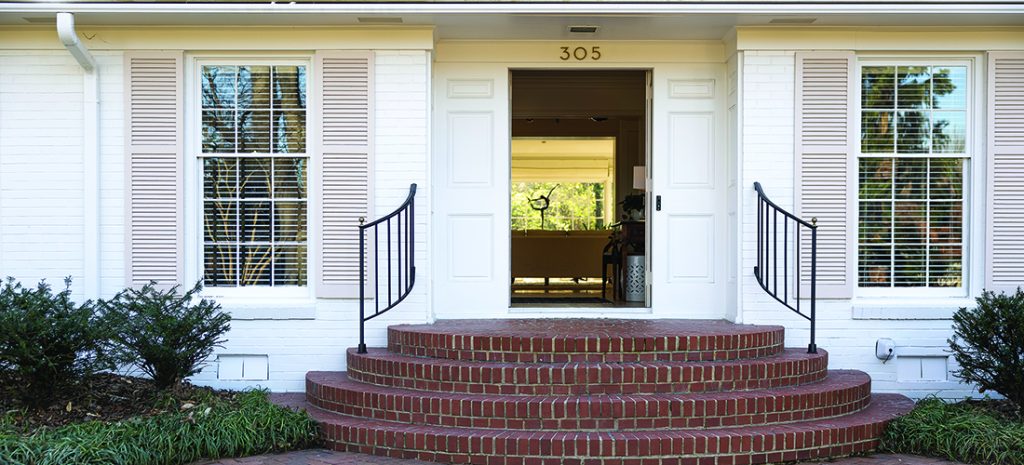
Had Robert and Adeline “Addie” Smith not taken on a hybrid midcentury modern/traditional ranch, restoring it to its full, Otto Zenke-era glory, who knows what might have happened?  Would the singular designer’s touches have been lost forever? 

Not a chance.

As you read this, the Smiths will have already decamped from their newly rejuvenated Starmount “jewel box” after living there for less than a year. “We’re starting all over again, like we did last year,” Addie says wistfully. 

“We made a splash and now we must dash,” she says with an upbeat tone of voice but an expression that says otherwise. Leaving a “dream home” in which they’ve invested time and resources came as a surprise, they both stress, although they’ve uprooted before.

They’ve closed on and begun planning a refresh of an 84-year-old sun-soaked cottage in Jacksonville’s historic San Marco neighborhood, Florida.

A difference of night and day, they say. 

Packing up their worldly belongings, setting off with their beloved wirehaired fox terrier, Bobby, for their next reno-venture, seems like déjà vu all over again, in the words of Yogi Berra. 

Robert, a senior project engineer/associate with the global architecture and engineering firm Stantec, has been recently tapped to start a new “bridge group” — or satellite office — for his company in northeast Florida. His territory has grown from West Palm Beach, where the couple formerly lived, to northern Georgia.

Addie, a Pennsylvania-born designer, hopes to recreate some of the magic in their new abode that they felt in one of Greensboro’s most wooded and walking-friendly neighborhoods.

Even, Addie says, with a serious exhale, if the San Marco cottage is half the size of the jewel box and lacks the stylish cleverness designed into its nooks and crannies. 

Bobby seems to agree, taking to his bed looking dejected, tail drooping, but Addie takes notice and calls him over for a treat.


She can’t help but gush about the aesthetic aspects of the Starmount property. “I have to pinch myself; I lived in this work of art.”

Artistry was burnished into its very DNA, she discovered, largely thanks to the home’s builders, who worked hand-in-glove with, arguably, the most renowned Triad designer. (Addie belongs to the American Society of Interior Designers, ASID, both in Philadelphia and Miami, her former home.)

Today, ASID still sponsors an annual Otto Zenke student competition in his honor.

Zenke deserves the following he cultivated, she says. 

More about the former and latter soon, but first, the why.

For if, like the Smiths, you’ve ever poured yourself into a renovation, only to soon discover you must relocate, then best follow Lemony Snicket’s advice to “look away, look away” and read another story in this issue. Because the Smith’s saga may prove too sad.

However, there is another point of view, one which Addie herself offers: “Talk about the passing of the baton to the new owner, Russ La Belle,” she suggests. La Belle, who has Greensboro roots, is president of North Carolina-based Wilmington Machinery, with headquarters incorporated in the Triad.

And so, the story of this house concerns a short but significant tenure given the Smiths’ shared vision. “Our creative thread goes through our person, what we wear, our homes,” she adds philosophically. “Our homes impact us.”

Prior to changing paint colors and refinishing floors to a lighter, blonde look, Addie had weighed all the period touches that would be preserved as well as those that would be added. But before the first brush stroke was applied late last summer, Addie had prepared a detailed notebook of paint colors, renderings and specifications. “I treated myself and Robert as the client,” she explains.

Addie first found the Starmount property in August last year — one she began calling “the Duncan house” after meeting former owners Linda and Randy Duncan. 

The 48-year history of the Duncans’ ownership and their improvements impressed her. As did the home’s beginnings.

In 1955, Arthur Schwartz, owner of Arthur’s Fine Shoes on North Elm Street, built a ranch style home on Kemp Road West for his family. Linda, who befriended Schwartz, learned that he retained “the well-renown interior designer, Otto Zenke,” confirmation of what Addie felt was true. In fact, she had done a fair amount of sleuthing.

“There are still today some remnants of Mr. Zenke’s handiwork,” she says and points to Zenke’s custom-made brass pulls on folding doors and hardware designed specifically for the built-ins.

These and other identifiable Zenke touches inspired Addie as she planned refurbishments.


On a walk-through, she mentions “the wallpaper in the bar and some of the very unique brass doorknobs in the den and foyer” as further evidence.

The Smiths invited Benjamin Briggs from Preservation Greensboro to have lunch earlier this year at their home to learn more about its provenance — and reveal the redo.

Before Briggs visited, however, the Smiths had already gotten the scoop from the Duncans. The Smith/Duncan luncheon, a true meeting of the minds, “went on for four or five hours.”

The original house plans, which reveal a meticulously designed home, conveyed with the property. Unfortunately, the architect’s name is unknown. “He [the architect] was a visionary.” 

He envisioned the picture windows spanning the main room at the rear of the home — a departure from the norm at the time when such windows were typically on the front elevation. Someone, possibly the Schwartzes, oversaw, or at least supported, some of the home’s best features, Addie speculates. Then, there was the Zenke imprint.

“Otto Zenke was highly influenced by Dorothy Draper,” says Addie, “and she was Baroque or Rococo.” Indeed, Draper, Zenke’s contemporary, was a high-society interior designer credited with inventing Modern Baroque with work that survives today in The Carlyle in New York and in the Greenbrier in White Sulphur Springs, West Virginia. Zenke, who was educated at Pratt, had a local following in the Triad, but also maintained offices in Palm Beach and London. Zenke, in fact, designed homes for the likes of the notable restorationist John Jenrette. “I think Otto had a great commission here.”   

The Schwartzes were design-minded and house-proud, choosing both good form and functionality. 

Addie says the Duncans’ contributions were similarly spot-on. They took ownership in October of 1972 and lived in the house until 2020.

“Linda and Randy Duncan left a legacy that we were able to build on.”

Randy, a former Stanley Furniture Company designer who had recently opened his own firm, added design embellishments and customized paneled doors to a wall of fir bookcases in the den. They feature an original drop-down campaign-style desk. 

“He customized the doors further, just to give them more detail, and added custom hardware.” She traces their still-stylish facades, noting, “I kept this the original fir and stain.”

And more personal details were kept, even retaining “the growth chart on the wall across from the coat closet in the den,” where the Duncans recorded their children’s and grandchildren’s heights

During the mid-eighties, the Duncans added the garage specifically to house Randy’s red 1984 Porsche 911 Carrera Coupe. 

“Work began on the garage fairly quickly and it was completed in 1985,” Linda wrote Addie, “a perfect place for Randy’s ‘midlife crisis.’”

The home was intentionally designed to separate public spaces from bedrooms, found in a private wing.

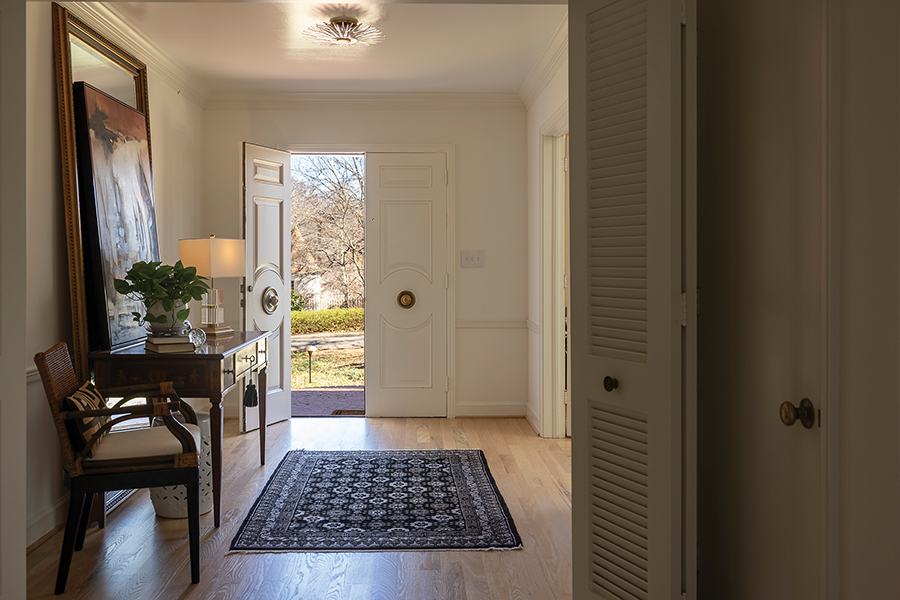
A main foyer flows into a secondary foyer, which dramatically opens into a living room. 

In the foyer, Addie installed Sputnik-style lighting and high gloss ceiling, enhancing their drama. 

She reinforced the Space Race-inspired touches with star-embellished wallpapers and period details.   

“In good design, you have some repetition of form,” says Addie, noting the circular details on the front doors by Zenke, which she repeated throughout.

She points out the unusual, original doorknobs.

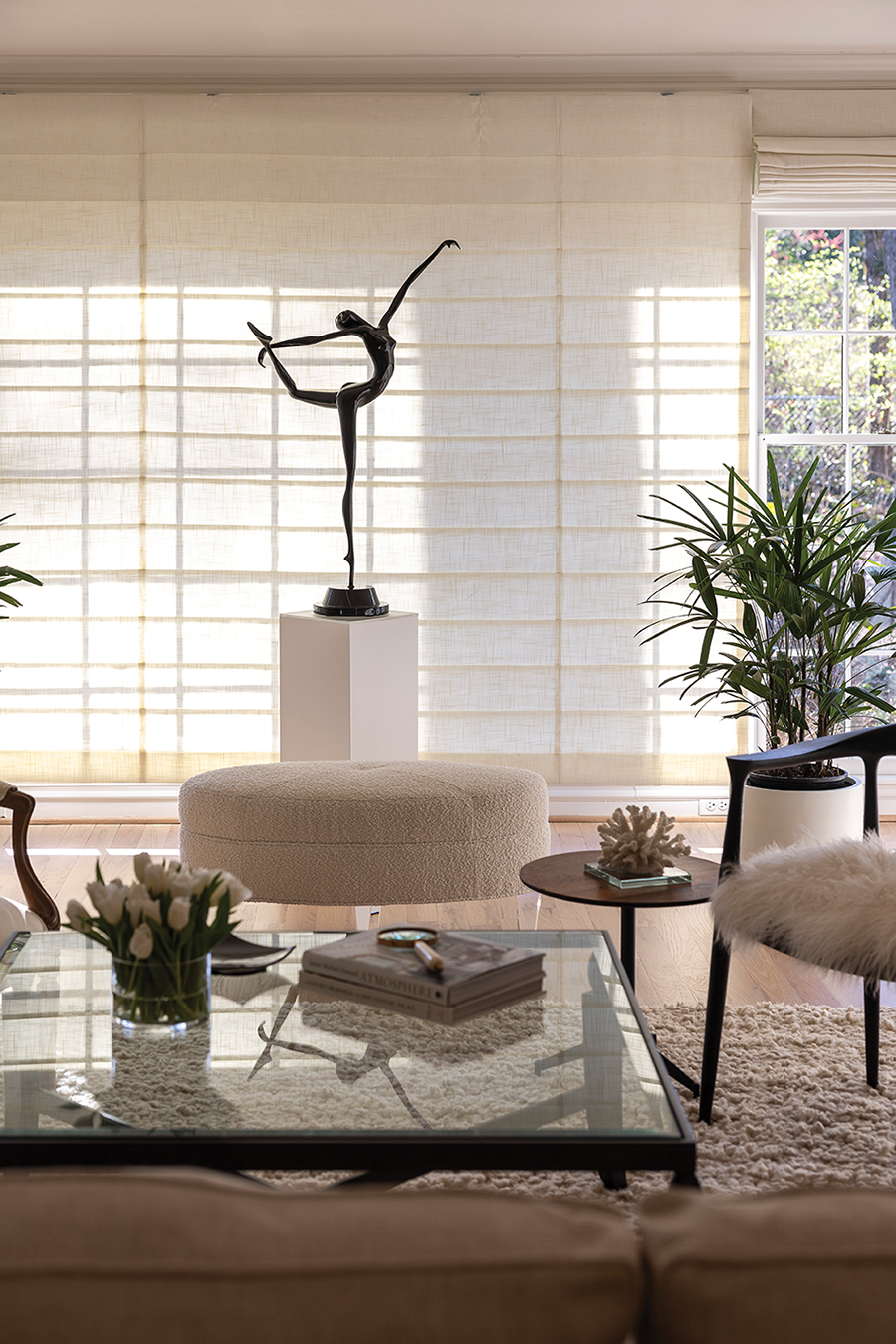
“Do you see the circle repeating in the ballerina [sculpture]?” she asks, referencing a sculpture on a pedestal, set to great effect before a massive bank of windows.

These subliminal, almost unconscious elements repeat, which Addie compares to good grammar and exclamation points in writing. 

“See what I did visually to make it all seem [part of the whole] . . . and balanced?” She considered original design themes even when it came to styling shelves and cabinets.

But she most admires the former living room, where the aforementioned window open to the outdoors. 

In a personal history that Linda Duncan prepared after lunching with the Smiths, she describes also falling in love with the house and its orientation to the outdoors.

“I loved the beautiful old trees. I loved the spaciousness of the interior,” she wrote to the Smiths. 

“Even the landscape architect we hired staged the [flowering plantings and] blossoms so nothing upstages anything else,” says Addie.

She learned that the beautiful tree outside the primary bedroom had been a housewarming gift to the Duncans. There is also an enormous tulip poplar tree nearby, one believed to be over 250 years old. 

“Our arborist loved it,” says Addie.


“He said it was the biggest tulip poplar he’d ever seen,” adds Robert.

She returns to the wall of windows, demonstrating the minimalistic linen shades, which replaced a bank of shutters in the (present day) living room. “Now, open, you get peeks of [the back yard], but when you lower them, you see the shades as a backdrop for the sculpture.” It is part of how good design manipulates space, she says.

“We gravitate here, not to the main designated den.” The den became a work area, and leads to the screened porch.

Before a house next door of the same era was demolished, Addie requested the opportunity to salvage hard-to-find items, each period-perfect. As she turned to refurbishing the rear screened porch Addie used the screen accents and grills from the tear-down. “They’re not made anymore.”

To the front of the house, she returned shutters rescued from under-house storage and installed porch railings, again architectural salvage from next door.

There was more confirmation gained from the Duncans. Addie’s suspicion that the original paper is inside what was the former cocktail bar was verified. She insisted upon keeping the paper, though the nook no longer functioned as a bar. Instead, she used the space to store architectural plans and drawings as her design work room. 

Even in the least visible places details were thorough.   

The hardware there, too, she points out, “is like Mercedes-Benz quality hardware. I don’t think it would be available anywhere,” she says.

She marvels at details like the dedicated lights through the home’s closets and storage areas. “Highly unusual at that time,” she observes.

No walls were removed during the Smiths’ renovation, only certain interior doors — especially those leading into the public rooms — given that contemporary tastes are more open. “We don’t like to be so sequestered as was the preference at the time of the house’s construction,” Addie says.

She used the hallway passageway to the bedrooms as a gallery featuring photos of friends and family. “I love passing through this,” she says, pausing again at the bathroom.

The guest bathroom retained its original appointments and built-ins; softly colored gray tile and hardware remained. “We wouldn’t tear out the vintage bathroom.” The vintage Jack-and-Jill guest bath features a telescoping base for the original white sink and walk-in shower, punctuated by a harlequin wallpaper. 

“This house is like living in a piece of art, the most beautiful home I’ve ever had the privilege of living in,” she says, later slicing a rhubarb and strawberry pie cooked by Robert. Robert used to summer in Ohio, where his grandmother, Pauline, taught him the art of baking. 

He still uses her biscuit cutter, nut chopper and other accoutrements. Those were prized possessions chosen from her estate and put to use.

Robert’s pie has the ideal ratio of tartness to sweetness, and the crust is delicate.

“The crust is basic pie dough from the original Joy of Cooking,” he says. “The flour affects it. Even the water you use can affect it.”

“My favorite rhubarb story is when I first moved South. I remember buying rhubarb at a Publix in Tallahassee and the clerk asked me, ‘What is it? Is this red celery?’”

Addie, who also cooks, prepared stuffed pork chops and mashed potatoes for their first date. She does the basic meal cooking, and he does the baking, so both preferred professional-grade appliances.

“It’s been a pleasure to live in this house . . . so beautifully designed and laid out,” she says, sipping a steaming coffee before adding a dollop of chocolate ice cream to her pie. (“The secret,” she insists. “Try it!”)

“If anything,” adds Addie, “things that are old are timeless. And better.”

Without a doubt, that maxim extends in the way the Smiths live, from protecting Grandma’s pie recipe to Otto Zenke’s design touches.  OH

The Wonder Kid

The Wonder Kid

The secret to Glenn Dobrogosz’ success? Seeing through the eyes of a child

By Cassie Bustamante Photographs by Mark Wagoner

In the fall of 1996, after hopscotching across the country chasing zoo careers, Glenn and Tonya Dobrogosz found themselves on the road again, destined for a place that would change their lives forever. The couple was headed to New York State Living Museum at Thompson Park (now Zoo New York) in Watertown, where Glenn would take on his very first directorship role. The day they arrived for his interview, tears rolled down Tonya’s cheeks.

“I’m from Florida!” exclaims Tonya. “And it was as far north as you could go and still be in the United States.”

Glenn, CEO of the Greensboro Science Center, was ready for an opportunity where he could make a real impact and, in his words, Watertown’s zoo was in “rough shape.” Challenge accepted.

His first day in the “office,” he discovered his desk was made from a door on cinderblocks, and the crammed space was shared with two coworkers as well as “a possum that had chronic diarrhea . . . I was humbled pretty quick that day.”

While Glenn worked to greatly improve the Watertown zoo in his six years there, “most importantly, year one . . . Hannah was born.”

Hannah, 25 and the Dobrogoszes’ only child, now lives in a New York City apartment and writes for the popular website, BuzzFeed. She says that whenever she tells people that she grew up living in zoos, they inevitably point out that she lives in New York City: “That’s like a zoo, too,” they joke.

“A dangerous one,” interjects Glenn, who, by the way, considers most snakes “harmless.”

In 2022, Hannah wrote a BuzzFeed piece about her experience of growing up in zoos (buzzfeed.com/hannahdobro/i-lived-in-two-zoos), sharing that although her birth was “in a human hospital like many other human babies,” her next five years were spent living in an old 1918 limestone-block house, smack dab in the middle of the zoo campus. As perk of Glenn’s job, the family resided in the zookeeper’s house, though it came with noisy neighbors — a great horned owl named Big Bird who hooted constantly — and spirited residents.

“Let’s put it this way,” says Glenn, “we had weird experiences.”

“It was very haunted, most definitely,” Tonya chimes in. “I used to hear music all the time, playing a violin.” They later discovered that a gentleman who had lived there — and was now deceased — played the violin. The music echoed from what had once been his room.

With animals — and other-worldlies — aplenty, human neighbors were scarce. “Fortunately Glenn had two coworkers, two girls who worked in his office. We all were pregnant about the same time,” says Tonya. “And we became friends.” Out of this friendship, a “mommies group” was formed that helped both Tonya and Hannah find community.

The social scene wasn’t exactly thriving, but living on the zoo campus provided copious opportunities for family time.

“She used to look out the window in the living room and sit up on the couch and she would sometimes see him out walking around,” says Tonya. “And she’d be knocking!”

And Glenn also came home regularly for lunch with the family. “These were extremely busy times, because when you’re just starting out, you do whatever it takes to succeed. And it was very intense, very stressful because I didn’t know we could do it.” But, he says, “having that ability to come home, give her a hug, walk — that was huge for my mental condition.”

Also just outside the window of their New York zoo home sat a butterfly house, which Hannah, who still considers butterflies among her favorite animals, frequented. That structure, says Glenn, “was the motivation for why we built the butterfly house at the [Greensboro] Science Center.” More so than the building itself, it was seeing Hannah interact with it “because watching her in that space, from the chrysalis to the caterpillar to the butterflies — it was pretty special.” Even today, he says, though “it sounds immature and silly,” he designs “through the eyes of an 8-year-old child.”

His daughter’s fascination with the animal world mirrored his own. Growing up in Raleigh, Glenn recalls that while other kids were playing sports, he was wading knee-deep in a creek that ran, quite literally, through his backyard and “turning over rocks for salamanders and frogs.”


After-hours walks around the zoo are favorite memories among all the Dobrogoszes. “I remember specifically we would go into the gift shop, we would go into the ice cream machine and I would get a drumstick, still my favorite ice cream,” says Hannah, adding that they’d then walk around the zoo together as the sun set. “It’s a child’s dream, really.”

“For me, it really is just taking her little hand in New York and walking that path and we’d mimic the animals,” recalls Glenn of those special evenings together.

While Watertown provided the family with obvious challenges, it provided Glenn the opportunity to see just what he was capable of doing. In fact, “I kinda wrapped my arms around the project and wrote a master plan called Thompson Park 2000 and just presented, presented, presented,” says Glenn, to “whoever would listen.”

His tenacity paid off. “We ended up raising about $3.5 million.” What really helped, Glenn says, was that “there was an army base up there and [we] met a colonel who just loved us and helped clear land, build roads — all free of charge for donuts and pop.” Under Glenn’s six-year directorship, New York State Living Museum became fully accredited, with several new exhibits, landing the spot of number one tourist destination for Watertown.

After successfully transforming the Watertown zoo, the family headed to the Chehaw Zoo in Albany, Georgia. There, Glenn spent a short two-year stint getting it accredited, and then happened to see a job listing for the Greensboro Science Center.

Happy to be closer to his own parents in Raleigh, Glenn and his family made the move to Greensboro in 2004. While this was the first time they didn’t have a campus dwelling, Hannah still recalls special moments involving her dad’s work. “He’d bring animals [to school] and we’d go on field trips to the science center,” she says, adding that, with Glenn as her father, it was “a really special field trip.”

But Glenn has worked to make the science center special for kids — and adults — from all walks of life. In his 19 years in Greensboro, supported by “a team and board that are the best I’ve had,” he’s added SkyWild, the Kiwanis Treehouse and Revolution Ridge. To see the faces of children enjoying new additions at the Greensboro Science Center, it’s clear that it was planned by people who understand what it is to look through their eyes.

One of the recent changes Glenn is proudest of allows accessibility to kids from all socioeconomic backgrounds. The Greensboro Science Center now admits those who show their SNAP (Supplemental Nutrition Assistance Program) cards for just $5, compared to a regular admission fee of $19.50. “I’ll tell ya, it’s been one of the most powerful things we have ever done,” says Glenn. “Seeing kids who normally have no exposure to this and maybe one to two percent could become science-inspired and science-minded — that gets you. Because when you’re out on the boardwalk . . . and you can tell these kids have never seen anything like this before, it’s powerful.”

And Glenn’s work here isn’t done. Due to open in 2025 is a brand-new state-of-the-art biodome which will include a free-flighted aviary, endangered species breeding programs, watery and forested environments, bridges and caves, and playscapes. Once a visitor has traveled through the biodome, they land in “this weird immersive theater that tells the story of conservation in these tropical environments.”

Glenn’s eyes, indeed, sparkle with the excitement of that boy who once tromped through backyard creeks. “I’ve done a lot of things, but I’ve never built or been part of building a rainforest. So it will be a great legacy for Greensboro, I hope.”

His own legacy shines on in his daughter, who reflects his wonder at the natural world. “I have forever been finding reasons to sneak in and see something new,” says Hannah, who visits the science center when she can these days. “I remember when you first got the hippos . . . You, Beth Hemphill [GSC Chief Operating Officer] and I drove out there to see the hippos late at night.”

And now those paired endangered pygmy hippos, Ralph and Holly, have started a family of their own with the recent addition of a baby earlier this year. Are there parallels between how animals and people raise their young? Absolutely, according to Glenn, because there’s “a lot of instinct built into our complex brains.”

So far that instinct, paired with his awe-inspired curiosity, has not steered him wrong. He adds, “I go with my gut on everything. Maybe in raising a child that’s sometimes good, sometimes not good. But, to me, it’s the only way.” It’s certainly worked for the Greensboro Science Center.  OH

Burgin Ross’ Special Collection of Memories

Burgin Ross’ Special Collection of Memories

A 1974 UNCG grad’s African artifacts tell the tale of her journey

By Cynthia Adams     Photographs by Bert VanderVeen


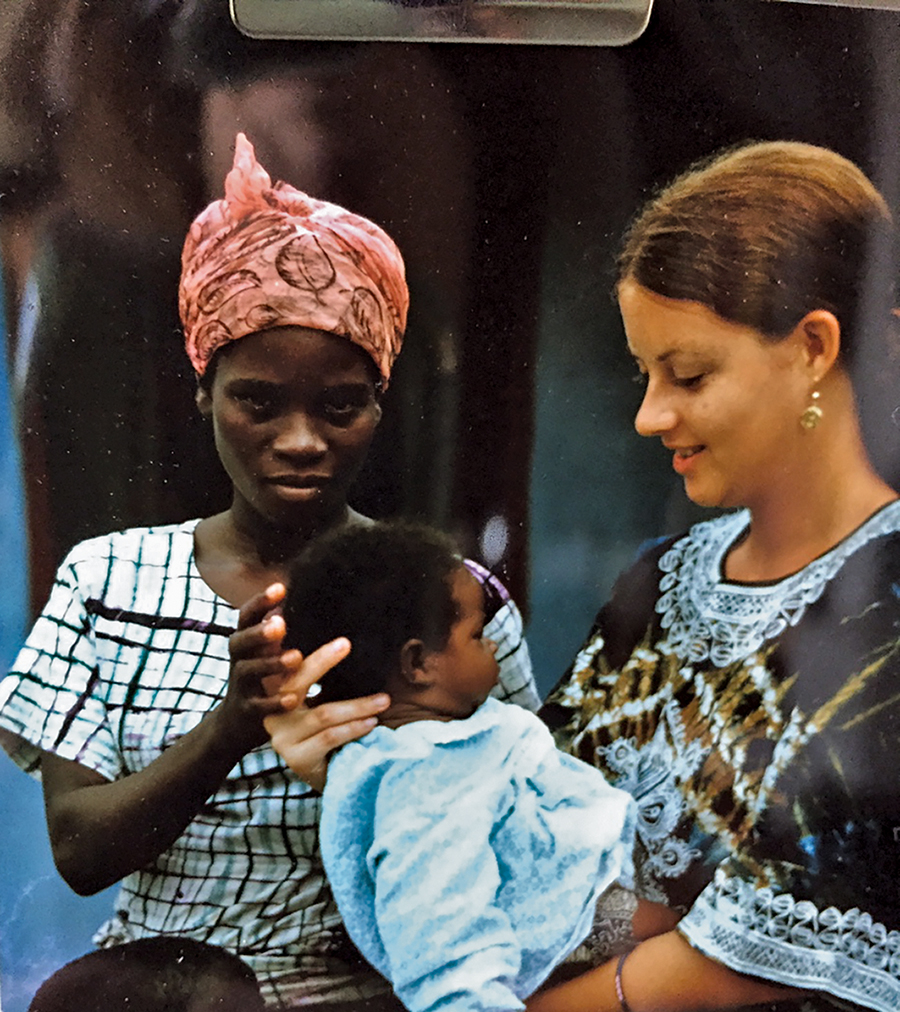
In the summer of 1974, Brenda Burgin Ross, a new graduate of UNCG, said her goodbyes to family in the North Carolina mountains before undertaking a 5,000-mile journey into sub-Saharan Africa. While many of her fellow graduates might prefer a lark abroad, she chose a life-changing experience using her new degree in Liberia, a small country no larger than Ohio.

“I was pretty sheltered,” she says. “I grew up between Marion and Old Fort, east of Asheville. I had never been out of the U.S. before.”

She mocks herself, saying she added extra vowels to words like right, light and night as riiight, liiiight and niiiight when she first arrived in Greensboro. Ross noticed other students pronounced the same words differently, in a clipped way, with a short “i” sound. “I kept my mouth shut in the beginning.”

Ross had entered UNCG as a math major, then changed to nutrition. Once armed with a degree, she signed up with the Peace Corps, requesting placement in Africa.

The gregarious, green-eyed brunette favored low-slung bell bottom jeans and clogs. She was known to her college friends as Burgin — a step toward her new identity.

In June of 1974, just shy of her 22nd birthday, Ross arrived in Monrovia, the capital city of Liberia.

Over six weeks at a Peace Corps training site, volunteers “learned some language, but mostly learned about cultural traditions, local foods, and were given ideas and materials to use in my work as a health volunteer.” The trainees learned a smattering of the nation’s 16 different dialects, although English is the country’s official language. Ross purchased basics such as plates, cups, pots and pans, sheets, towels, and kerosene lamps. Before traveling with an official from the Ministry of Agriculture to the village of Juarzon, she stocked up on “oats, flour, sugar, tins of butter and cheese, and powdered milk”

Ross traveled light, with just a medium-sized suitcase and backpack. Other volunteers filled their cases with toilet paper; she packed contact lens supplies, books, camera equipment and minimal clothing, leaving toiletries and nonessentials behind.

They made their way south over rutted dirt roads with dust swirling during the equatorial dry season. The perpetually hot, dry season would inevitably give way to an equally sweltering rainy season.

“They have two seasons, rainy season and dry season,” Ross learned. “You welcomed dry season, but then all you wanted was a day of rain.”

Their trip took nearly three days.

“Was I eager to have an adventure?” She nods yes. There was an underlying, personal mission, too. Ross’ sights were set upon two goals: first, forging her own identity — complicated by having an identical twin. Secondly, as a child of the Kennedy era, she wanted to use her education do something meaningful, if not noble.

She was well on her way to breaking with her twinned past when she chose the Peace Corps, a decision she had made in 1970. Meanwhile, her twin, Glenda, stayed stateside to enter nursing.


As twins, “we slept in the same bed. Our mother dressed us alike until we were 13 years old. We were called ‘Brenda/Glenda,’ or ‘the twins,’” Ross says with a grimace. “When we got into high school, we developed separate friends and interests.”

In photos, she looks like a young Ashley Judd. “I was a baby, wasn’t I?” she muses.

The Peace Corps was also still young. Founded in 1961, it was a goodwill initiative created by President John Kennedy, who visited Liberia while in office. The nation was founded in 1822 by freed American slaves as Africa’s first independent nation.

As a nutritionist, Ross would serve as an informal ambassador while helping Liberians improve their dietary standards. Ideally, this would boost Liberians’ life spans and their general quality of life.

When the ministry official left her in Juarzon and returned to Monrovia, reality set in.

“From that point, I was on my own.”

There were 35 Peace Corps volunteers placed around the country — but Ross was the only volunteer given a solo assignment. And it “had been four or five years” since a previous volunteer had been placed in Juarzon.

She moved into “a nice house with screens to keep out mosquitos and mice. I had no running water, plumbing or electricity, but [it] had a cement floor and was built of cinder blocks.”

“I wasn’t scared. Except for snakes, rats, dysentery and malaria. I was eager to see the world,” she says. Despite encountering everything she feared, she remained filled with youthful enthusiasm and seldom regretted her decision, apart from the existential loneliness. Books and magazines were hard to come by apart from trips to Monrovia.

“But I had the protection of the U.S. government,” she adds.

She has no memory of the first night in that simple hut. Then, a memorable event. Ross heard drumbeats, then the footsteps of a group of women approaching her house. They called out, insisting she come out to join them.

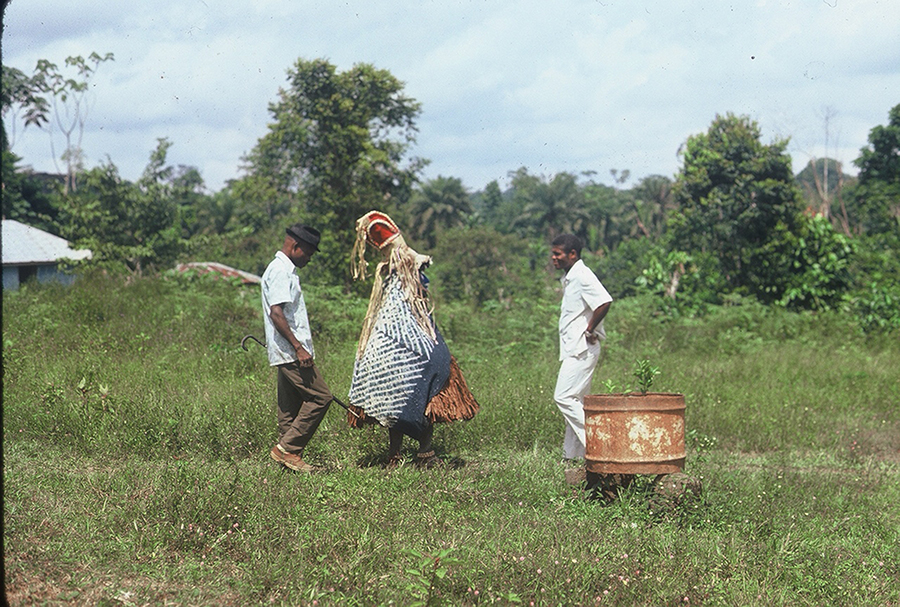
“Within my first few weeks there, I was called out one night to meet ‘the devil.’ Drums were playing, a bonfire was burning, and I initially thought, ‘This is going to be bad.’ Approaching the bonfire, I saw the ‘devil’ dancing. The ‘devil’ is just a spiritual figure covered in cloth, straw and with his face covered by a wooden mask.”


Ross’s adrenaline pumped. “He danced toward me, grabbing me around my waist, at which point I screamed and the villagers laughed.” Ross learned that the masked, dancing devils were purposeful. They came to the village to influence an election or to celebrate an important village elder upon his death. “I knew then that I was safe,” she says, “and that this was the way I was being presented to the village!”

When rainy season arrived, the incessant rain falling on the rooftop didn’t disturb her — but the rats on the roof did. “But they couldn’t get into my house,” she adds.

She swiftly discovered that nutritional advice was the smallest part of her work. Villagers were far more eager to learn skills like hand sewing, knitting and crocheting. Yet Ross’ best attended lecture was when she was invited to discuss birth control.

Because Liberia is polygamous, males faced the challenges of supporting several wives, having fathered multiple children. She noticed men also gathering closer to hear her lecture.

Regardless of their feelings about polygamy, Ross and other volunteers were cautioned against imposing their personal beliefs.

Ross preferred to interact one-on-one, talking to the women as the men worked outside the home. She never refused gifts of food as she went house to house. The village diet was largely vegetarian, although dried fish (“boni”) and canned mackerel were common. “Fish head soup was popular,” given the proximity to the coast.

Local foods included boiled cassava, palm butter, potato greens, collard greens and soups — made of okra, peanut, pumpkin, even palm oil. Limes, lemons, pineapple, papaya, pineapple, tomatoes and coconut were plentiful. Rice, a staple, was mostly imported from China.   

The price of avoiding rudeness meant “I gained 30 pounds,” she says ruefully. While the locals ate from a common bowl, they would bring her a separate bowl and spoon.

Ross mastered making palm butter using a large mortar and pestle.

“They also have mortars of many different sizes, using them for crushing peanuts for peanut soup, mashing cooked palm nuts for palm butter, or for separating the chaff from the rice kernels they grew.”


Coping with unfamiliar foods, unsafe drinking water and equatorial weather were all difficult. She sought medical help in Monrovia while suffering with dysentery and endured two bouts of malaria. Educating the villagers about boiling drinking and cooking water was an ongoing effort.

And she missed having electricity, running water and indoor toilets.

“I never got used to outhouses,” she stresses. “You had to bang on the side of the outhouse at night, because the snakes would come in seeking the cool.” She also tried to adapt to taking “bucket baths.”

Villagers called her “Missy” and later, “Jahla,” which translated to “happy girl.” No more Brenda/Glenda. 

When a set of twins was born, the sole survivor was named Brenda in her honor. “I often wonder what happened to her, how she’s doing,” Ross muses.

In May of 1976, she left Liberia when her father suffered a fatal heart attack. The Peace Corps flew her home, cutting her two-year assignment a month short. 

In time, Ross, her twin and their spouses opened Los Amigos, a Mexican restaurant in Winston-Salem. She worked in food and nutrition services at Duke University Medical Center and later at numerous corporations. Ultimately, she consulted with hospices and retirement homes while earning a graduate degree in gerontology and teaching. Ross became a UNCG instructor in 2010, eventually becoming an associate professor in nutrition.

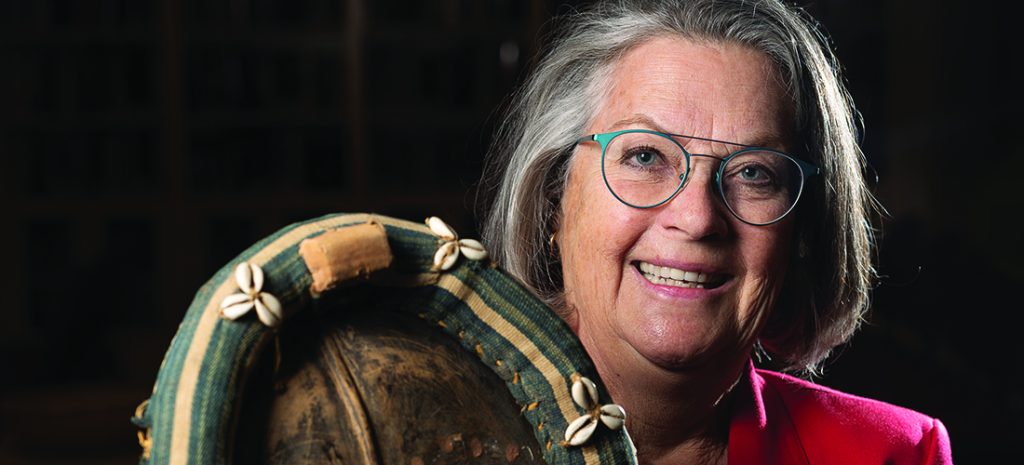
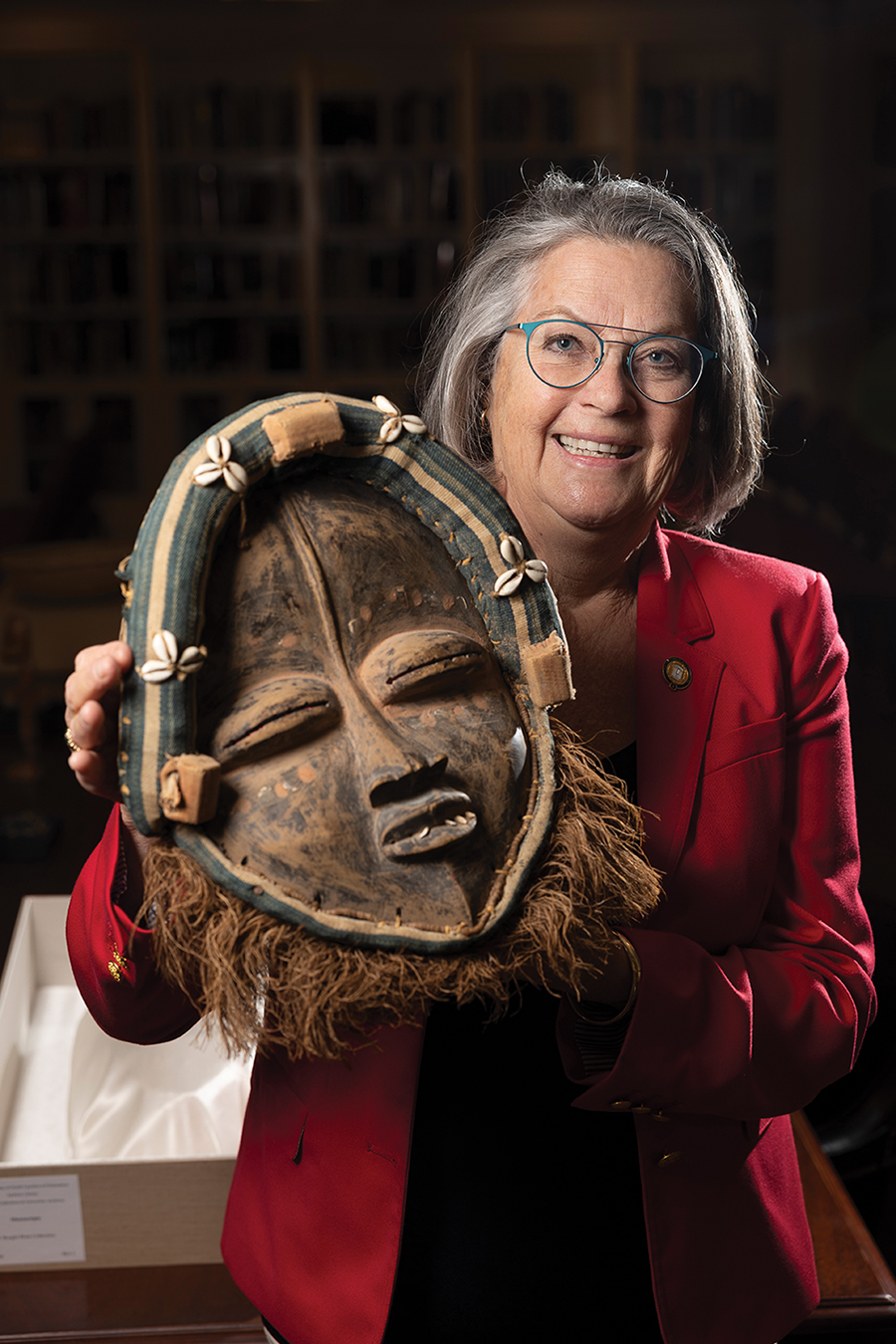
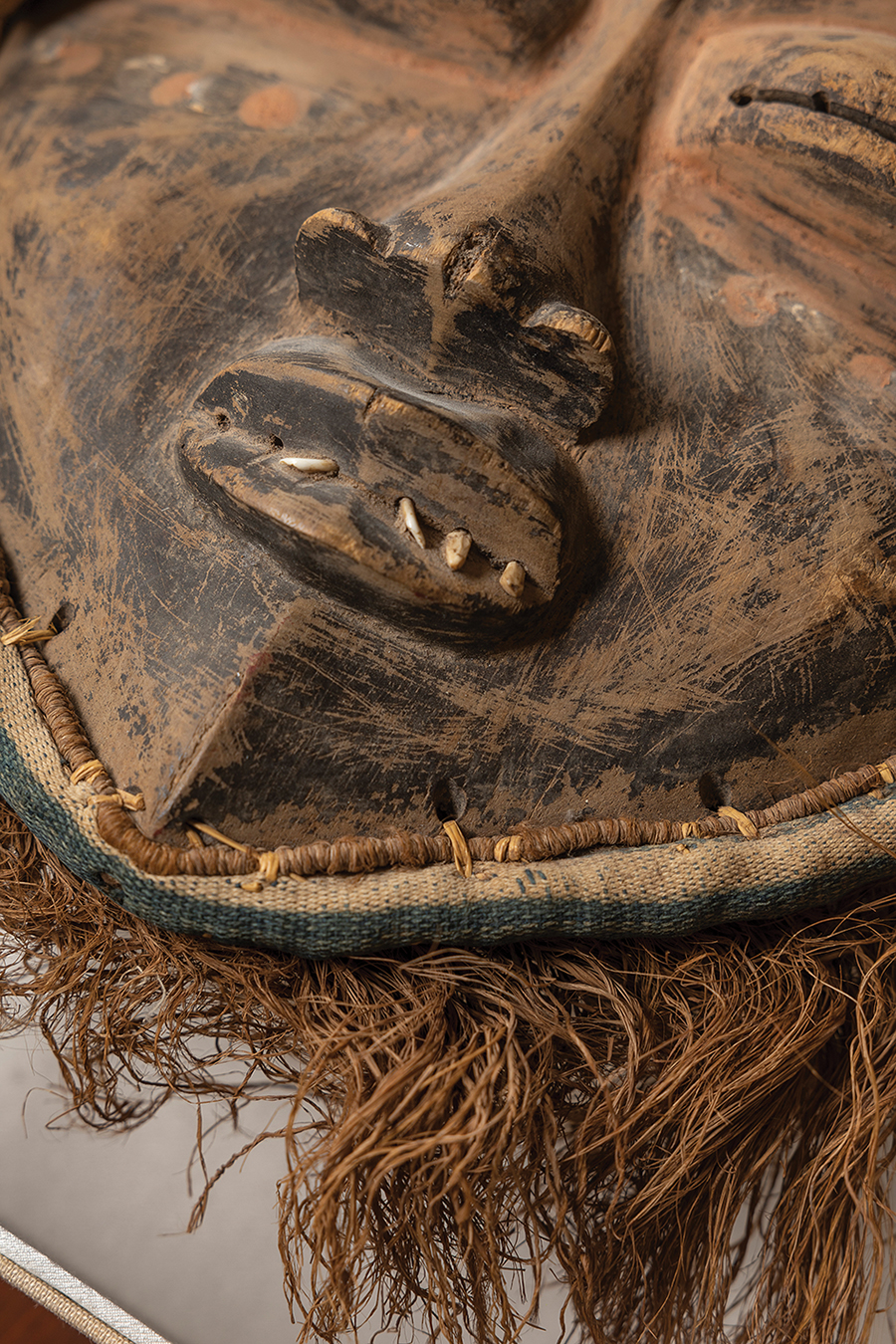
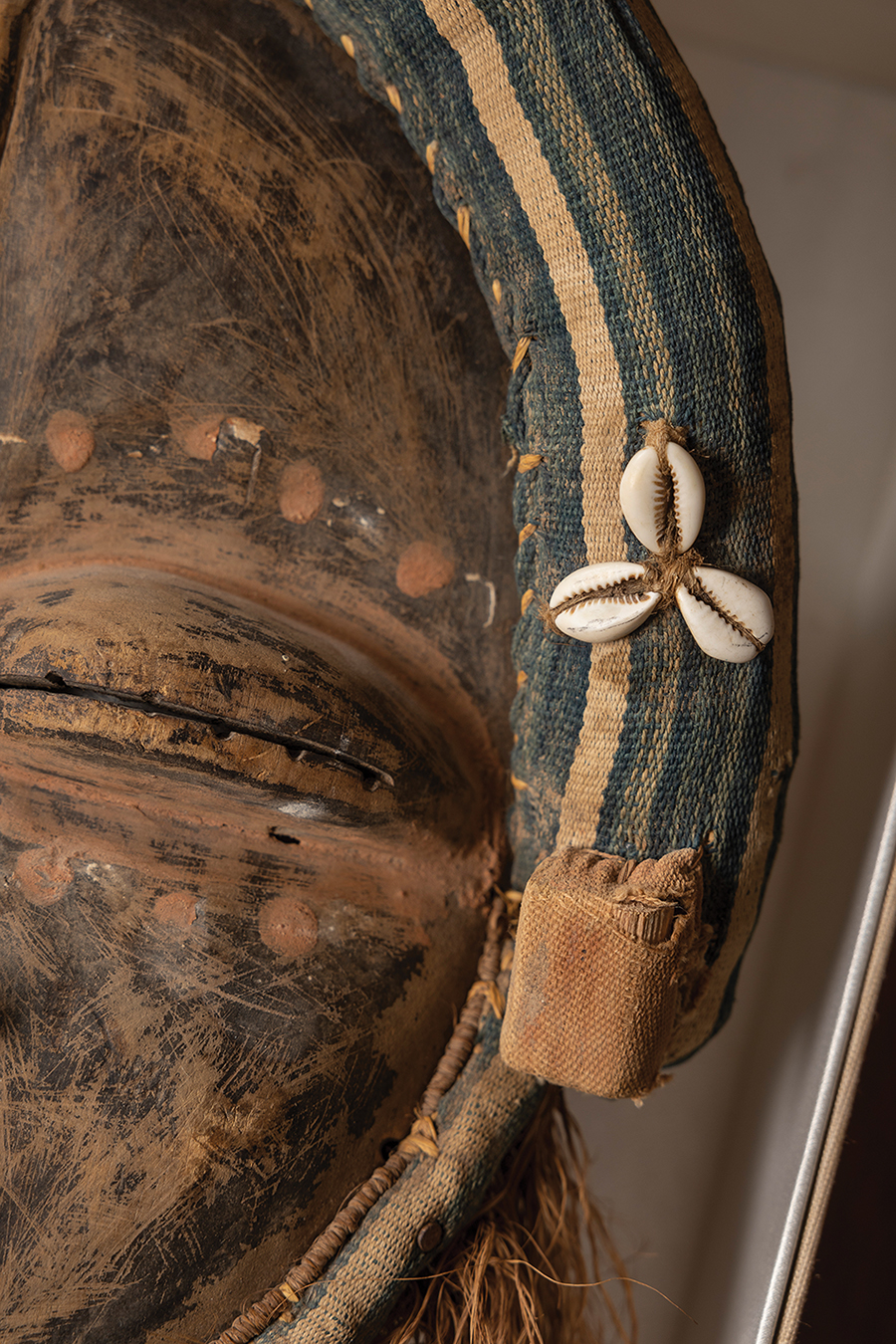
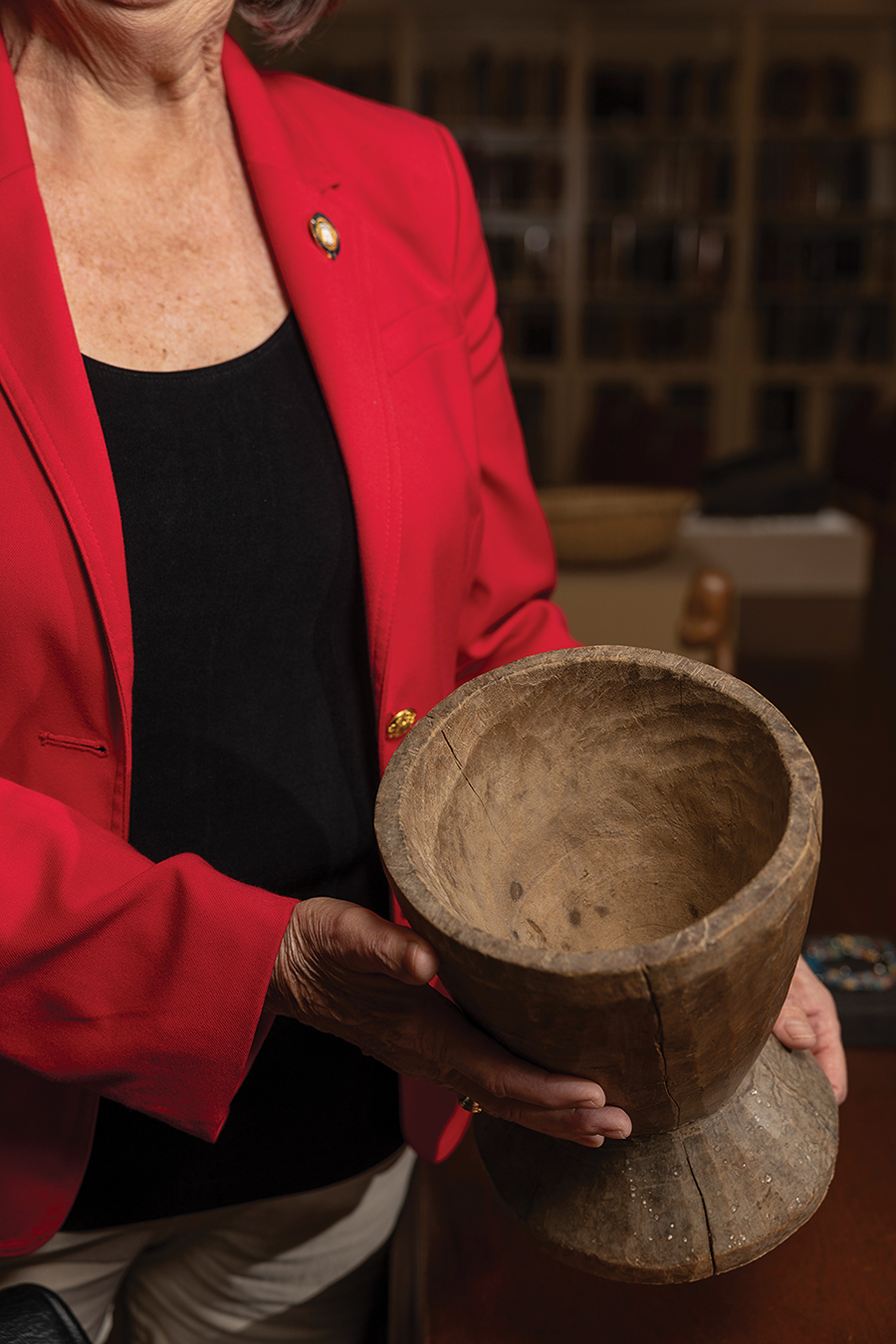
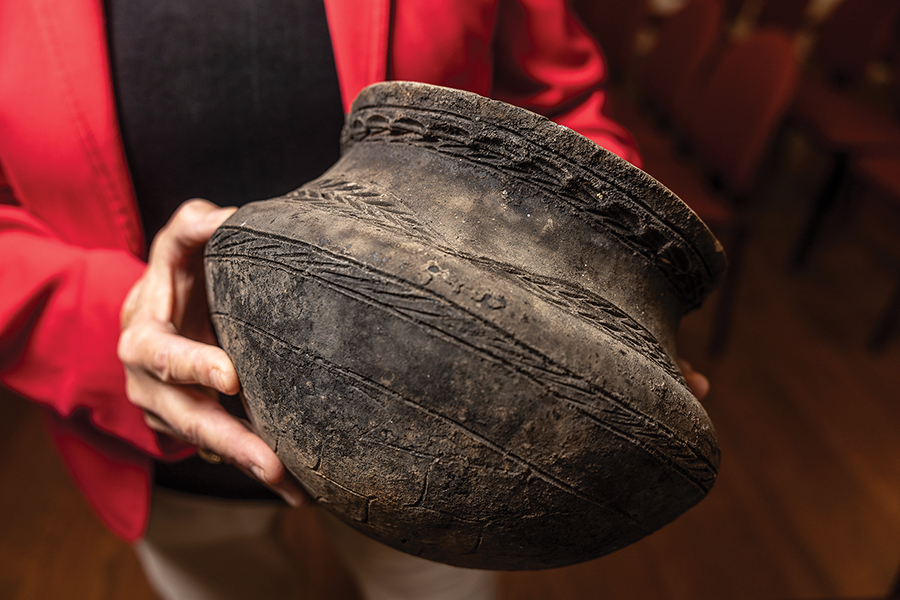
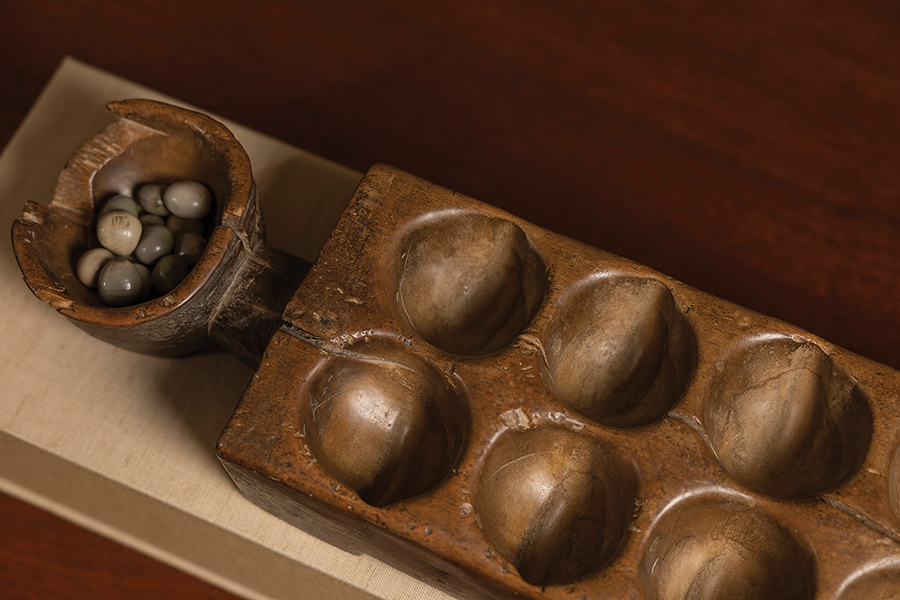
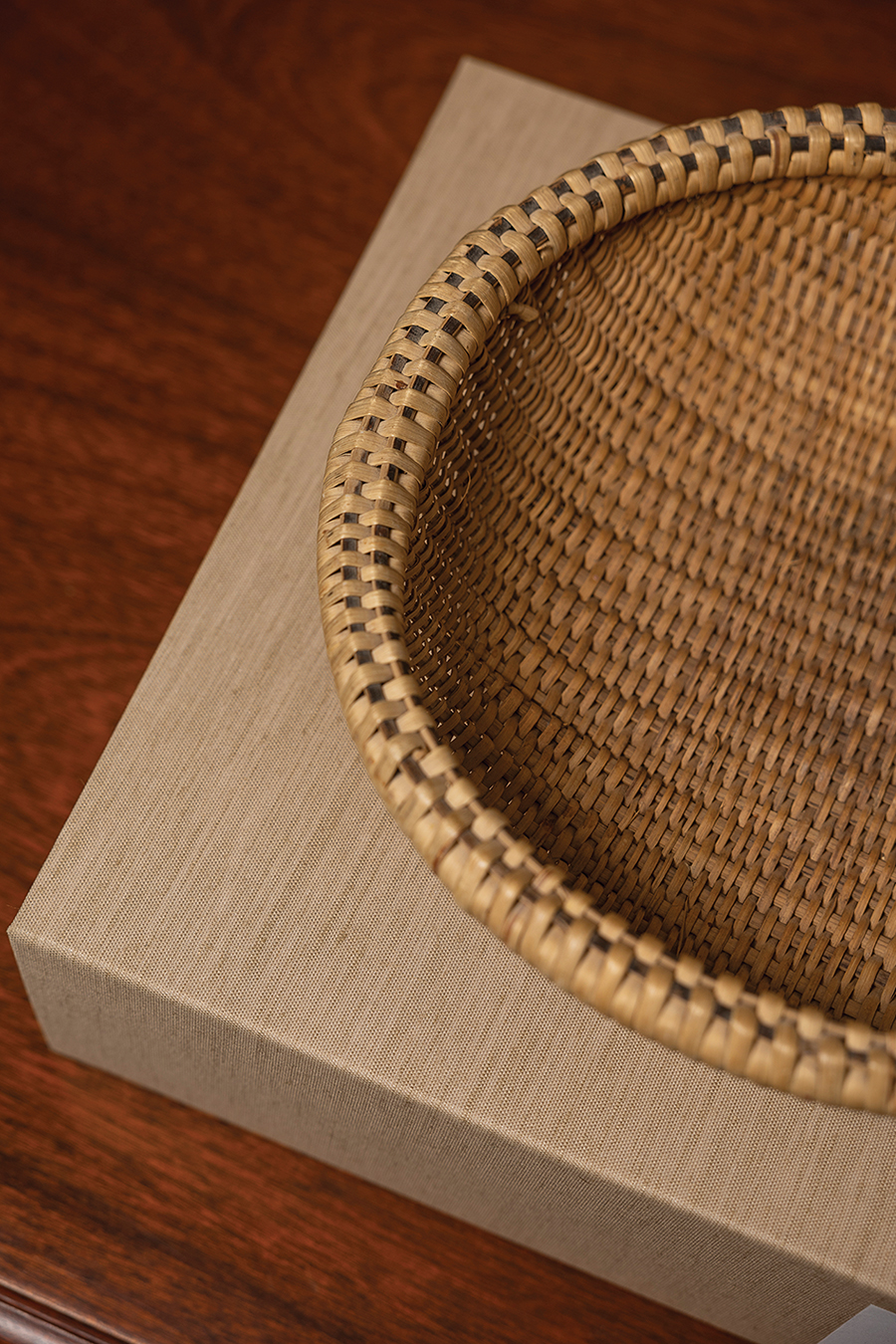
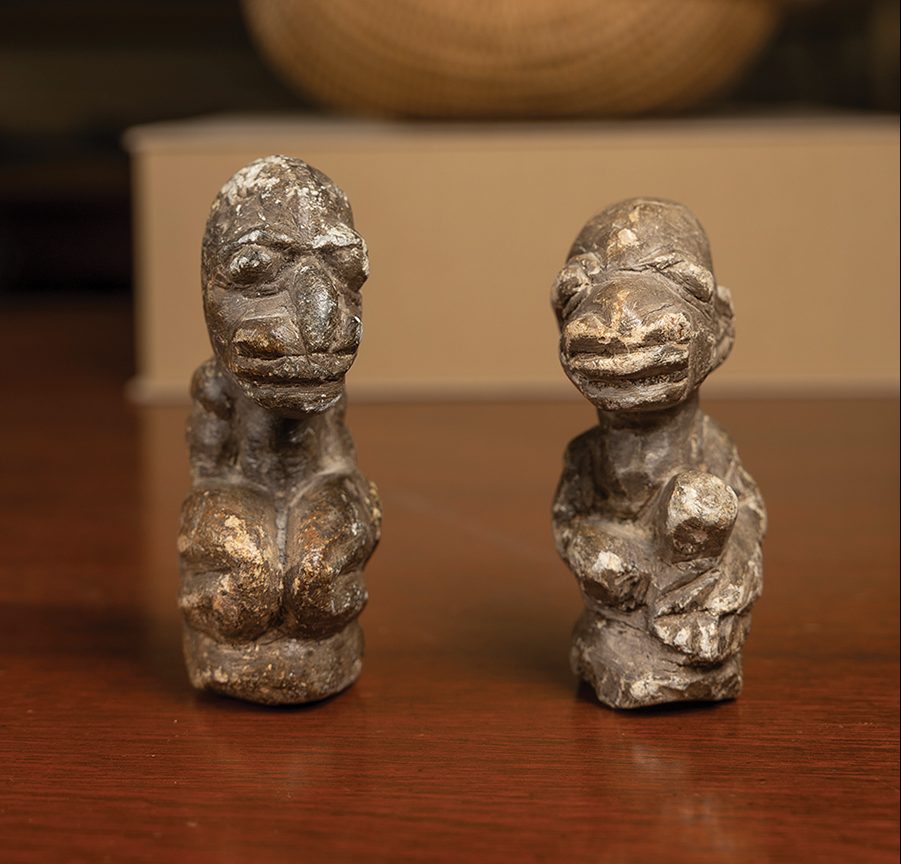
Retiring last year, she made the decision to donate seven Liberian artifacts to UNCG’s Special Collections, pieces that she had kept in her campus office. She called these “precious possessions.”

Included were a ceremonial mask, a clay cooking pot, sifting basket, wooden mortar, a primitive “mancala” board game and two bracelets.

“The wooden mortar was used by my friend and neighbor, Esther, to crush dried pepper for cooking. Liberians put hot pepper in every dish they make,” Ross explained when presenting the collection late last year to a group of anthropology faculty, friends and students.

“I was given the mortar the day prior to leaving, along with a live chicken to ‘taken to my ma.’ We cooked the chicken and had a group dinner.”

Ross gave Esther her own mortar, one she had used throughout her stay, in thanks.

“The mancala game was given to me by another Peace Corps volunteer,” she says.

The mask, believed to be Liberian, is the centerpiece of the collection. It is identical to the one the dancing devil wore in Juarzon, a gift from Ed Lipschitz when researching West African masks.

“Ed ate dinner with me every night during the months he stayed in the village,” says Ross. “The mask was a ‘thank you’ for those meals.”

Lipschitz later became a curator at the Smithsonian’s National Museum of African Art.

In passing along the personal artifacts, Ross honors the place that bookended the beginning and end of her career. “None of my career would have happened without my education at UNCG,” she says, adding she is deeply moved by her alma mater’s response to the gifts.

“My story has come full circle.”  OH

Poem July 2023

Poem July 2023

Clay Banks

The creek is old and its banks are steep.

Its flow never stops its work of remaking.

Clay like this wants to keep its form

though scoured by the storm-carried silt,

pitted as by earthbound lightning strikes.

Water is turned by jutting granite,

milky quartz, even soft sandstone,

all of it red with rust going green

as first the ferns unroll their fronds

and vines tease the air with soft thorns

the way childhood returns in old age.


A friend told me how his mother, who

is now constantly looking for her home,

who can’t recognize him or his sister,

was happy to play ball with his toddler,

with his new puppy. She tossed the ball

against the brick patio wall with a spin.

The dog and child ran with confused joy.

Sometimes they fell over each other.

His mother always caught the ball.

She was the only one who seemed to know

exactly where the ball would bounce.

— Paul Jones

Paul Jones is a professor emeritus at The University of North Carolina at Chapel Hill. His latest collection of poetry is called Something Wonderful.

Greensboro’s Jeanaissance

Greensboro’s Jeanaissance

One legacy at a time, denim is on the rise again

By Billy Ingram     Photographs by Mark Wagoner 

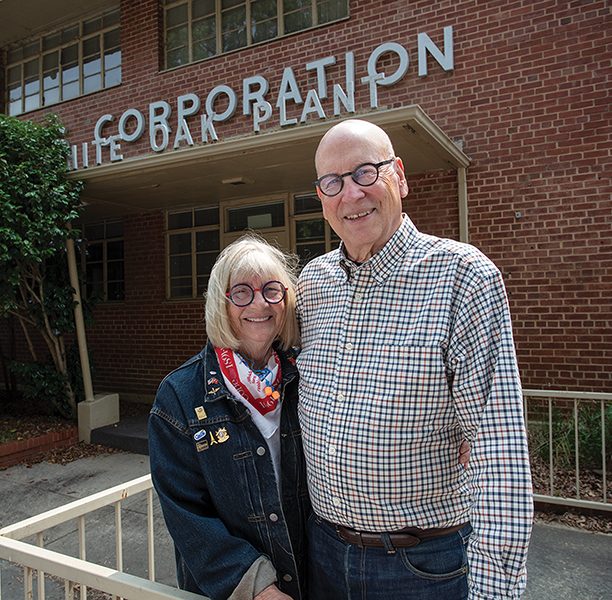
It was a solemn promise Evan Morrison made to his grandmother on her deathbed that would lead to one of the most improbable outcomes imaginable. He’d just returned from grad school in the City of Light and was looking after her. “She asked that I stay here and make Greensboro a better place,” he recalls. Morrison had no way of knowing then that his pathway forward would result in the return of denim manufacturing to our city. Ensconced in his office atop the historic White Oak Mill, he tells me,  “We’ve had so many retirees come here just pouring tears, knowing that this still is happening.”

Denim isn’t just in our jeans. It’s in Greensboro’s — and Evan Morrison’s — genes. Growing up in the Gate City, he attended Buttons and Bows day care in a converted mill house where the walls were adorned in navy and gold, the colors of Cone Mills. His mother worked at Moses Cone Hospital and an aunt was a pattern maker at Blue Bell.

What led to Greensboro becoming the denim capital of the world? The path was forged in the 1890s when two brothers with an entrepreneurial spirit moved to the city and built, first, Proximity Manufacturing Company to produce denim, and then, 15 years later, White Oak Mill, the largest denim mill in the world and the largest cotton mill in the southern United States.

Life was unimaginably rugged in the latter part of the 19th century, which found Americans in need of clothing that could hold up against the elements and rigors of farming. Recognizing that largely untapped market, Baltimore wholesale grocers Moses and Ceasar Cone relocated to Greensboro in 1895 to take advantage of that opportunity. A year later, Cone’s Proximity Cotton Mill, so named because of its adjacency to growing fields and cotton gins, began weaving denim for work clothes. Over the next decade, Cone added two more Greensboro plants, Revolution Cotton Mills and White Oak, producing flannels and denim 24/7.

In a loft above Coe Brothers Grocery on South Elm Street, Hudson Overall Company was formed in 1904. Business was so brisk, the outfit opened a much larger denim factory a block away on South Elm and Lee Street (now Gate City Boulevard) in 1919. Renamed Blue Bell, it became the world’s largest overall manufacturer. Over time, it bought up various regional brands, including Casey Jones Overall and that company’s nascent, largely unrealized Western line, Wranglers. Blue Bell hired Ben Lichtenstein, aka Rodeo Ben, a famous tailor to professional cowboys, movie and bluegrass stars, to design what they called Blue Bell’s Wranglers brand. Introduced to the public in 1947, the name was later shortened to Wrangler.

Organized, it’s been said, by disgruntled Blue Bell employees in the 1930s, Greensboro Overall Company began operations on Carolina Street, manufacturing less expensive Blue Gem coveralls. Both companies’ products were made from Cone fabric. Blue Gem’s label with the radiant gemstone states proudly, “Made of CONE deeptone® DENIM.”

By the 1940s, Cone Mills was number one in the world for denim production, world leader for indigo consumption and world output leader in denim fabric. Levi Strauss & Co. in San Francisco was becoming increasingly dependent on Cone for its 501 line of blue jeans that had become an unlikely fashion statement almost overnight.


At White Oak during the peak years, 3,000 looms were aligned in rows down a cavernous corridor stretching outward so far that if you were positioned at the end of the line, bent down to floor level, and looked forward, the curvature of the earth would only allow you to see where the floor and ceiling converged.

Already in possession of the Lee brand, VF Corporation acquired Greensboro Overall Company and Blue Bell in the 1980s. The Blue Bell label was scuttled while the company focused on Wrangler. VF’s strategy? If their products couldn’t beat the number one jeans manufacturer, Levi’s, having both the number two and three spots would result in more combined sales. It worked and, by the time VF relocated its headquarters to Greensboro in 1998, it had become the world’s largest publicly traded apparel company.

As Evan Morrison pondered the future following his grandmother’s passing in 2013, “I knew I wanted to work in denim. That’s what our city’s known for.” At that time, there were only eight denim mills operating in America. Locally, Cone’s White Oak Mill was running full tilt with several months lead time. “Made in the USA was a major selling point then,” Morrison recalls. “I thought, ‘Well, there’s no brand in Greensboro making jeans or denim products out of cloth woven in Greensboro. So if we start a business like that, we could be the only one of our kind in the Western Hemisphere.’”

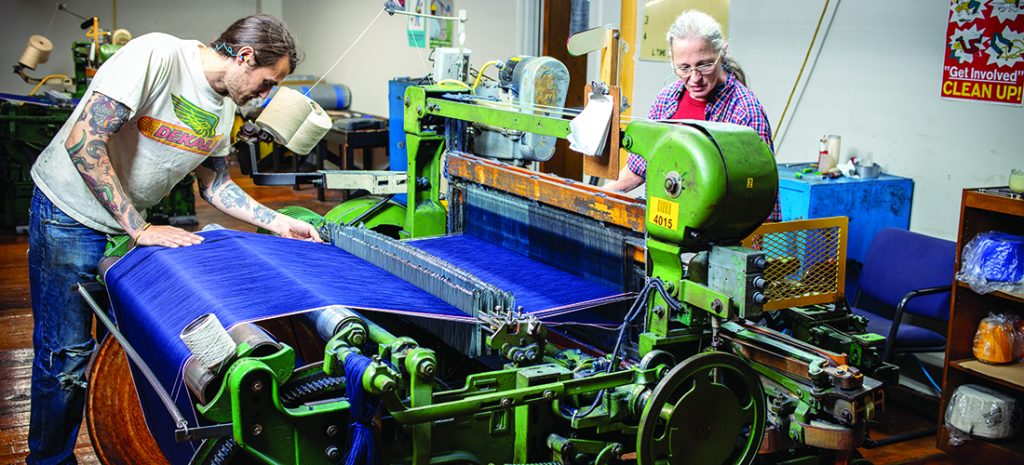
Morrison partnered with William and Tinker Clayton to create Hudson’s Hill in 2013 to market clothing and accessories made from Cone denim. Things were going well until, in 2017, Cone announced that their only active mill, White Oak, was ceasing operations, despite producing 1 million yards a year with 46 weaving looms running nonstop. With that closing, a 122-year legacy of denim manufacturing in Greensboro came to an abrupt end with no reasonable expectation that it would ever return.

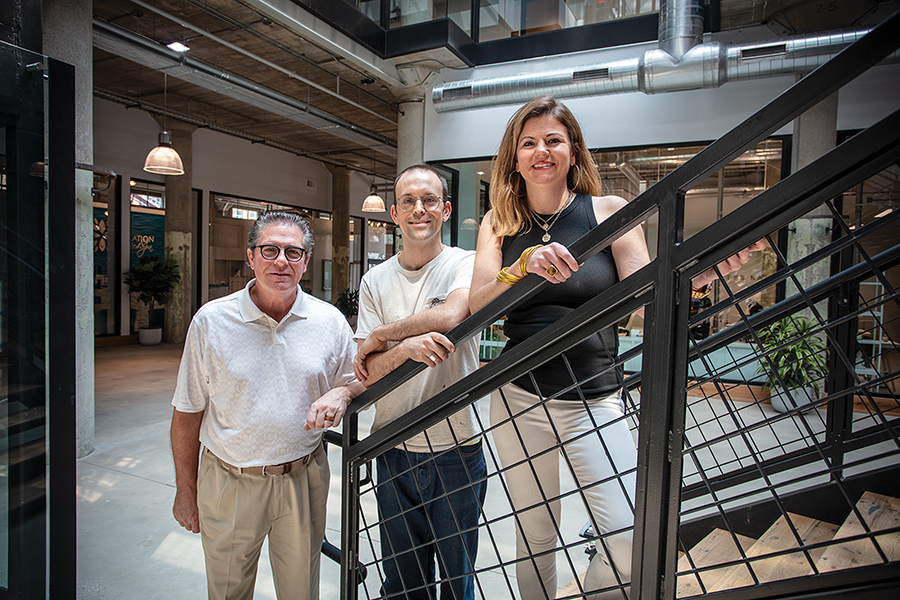
L to R: Evan Morrison, Chip Hardeman, Bud Strickland, Debbie Lindsey and Greg Redelico, representing Proximity Manufacturing Company, a weaving business producing selvage denim woven on Draper shuttle looms at White Oak Mill. Morrison is director of operations; Hardeman is general manager; Strickland is on the board  of advisors; Lindsey is a weaver; and Redelico is superintendent.


“It was like, ‘Oh my God, what are we gonna do?’” Hudson’s Hill’s business model had just imploded. “I cold-called and met with the new owner of the property, Will Dellinger, who owns JW Demolition.” Morrison posited that Cone denim’s methodology was the equivalent to Coca-Cola’s secret recipe. “This is the house that made Levi’s, Blue Bell, Lee, OshKosh and Carhartt famous — when a pair of blue jeans became iconically American. People immigrating to the U.S. have a vivid memory of their first pair of jeans. It was a symbol of a better life.”

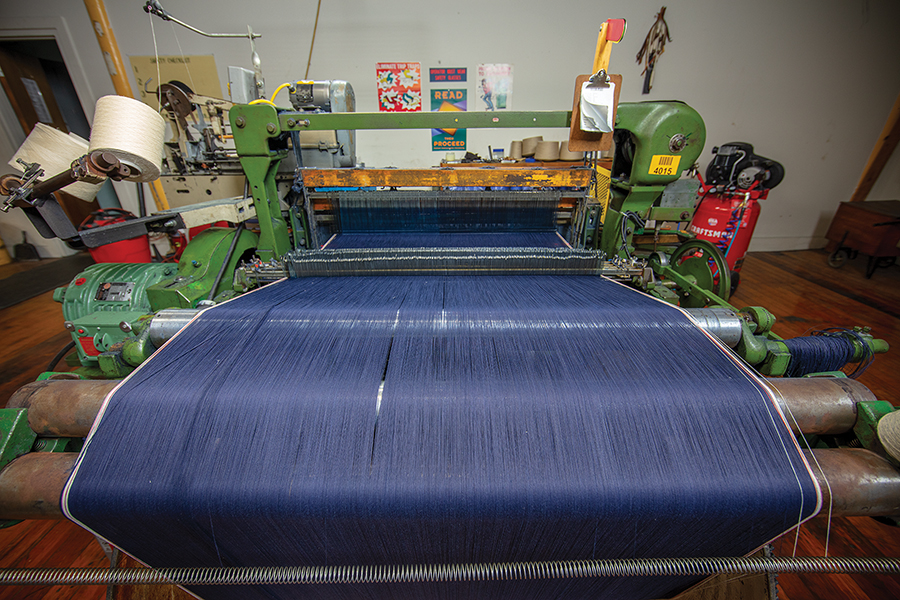
In 2019, with an agreement in place to lease a portion of the White Oak Mill, Evan Morrison and a group of business professionals across the state formed a nonprofit called the White Oak Legacy Foundation, or W.O.L.F. Morrison approached Cone Denim, asking if they could take possession of the remaining two looms at White Oak with a promise that somehow they’d figure out a way to put them to good use. “We drew up a deed of gift that basically says they’ll give them to us through the nonprofit.” When Cone donated those last remaining looms, Morrison points out, “Essentially, they gifted them to the city. So the people of Greensboro now own our history. W.O.L.F. is the nonprofit that cares for it.”


Original founders of Denim 101 Jill Amidon Strickland and Bud Strickland, shown here, helped W.O.L.F. relaunch an education program in 2021 through volunteering. The rebooted Denim 101 has become so popular that every course has a waitlist. When the couple first launched the program several decades ago while working for Cone Mills at White Oak, Bud worked in product development and Jill worked in quality assurance. 


An abundance of Cone Mills veterans in the area possessing a decades-long understanding of supply chains and contacts helped W.O.L.F. map out a workable business plan. “So we started renovating these looms in December of 2019 and, by March of 2020, we were ready to fire them up,” Morrison recalls of the initial run. “We wove our first couple of inches and then, of course, all the plastic parts that had dry rotted broke. So it took another month to find all those parts and rehab the machines to get them back up and running.” By May, those looms were weaving five days a week, “but they don’t weave very fast.” For Morrison, that presented a challenge. “I have an M.B.A., and an entrepreneurial spirit. So let’s figure out how to do as much as we can with what little we’ve got.” Know how to spot a true entrepreneur? “I do all the machine fixing and all of the rebuilding myself,” Morrison says.


L to R: Nick Piornack, Evan Morrison, Karen Little, representing Revolution Mill, located in NE Greensboro, formerly the world’s largest flannel and corduroy mill and part of the Cone Mills family of textile mills, now historically renovated and owned by Self-Help. Since 2013, it has hosted a collection of textile exhibits, ephemeral objects and historical equipment that has helped showcase its history throughout its mixed-use campus. Nick serves as general manager, Evan oversees special projects, while Karen serves as property manager at Revolution Mill.


W.O.L.F. has four defining pillars: Make, Remember, Learn and Create. Working looms represent the “Make” portion of W.O.L.F. “Remember” is being manifested as an American Denim Museum downstairs at White Oak on the heels of Morrison’s previous historical installations at various locations over the last decade. Cruise around town and you’ll spy statues of pairs of blue jeans put in place when Evan Morrison first coined the moniker, Jeansboro, now synonymous with our city.

“The ‘Learn’ side is Denim 101,” Morrison explains. “There used to be a big event here called The Denim School. Designers would come for a couple of days and learn, from bale-to-fabric-to finishing, how things actually got made.” By chance, his across-the-street neighbors, Bud and Jill Amidon Strickland, founded that program in the ’80s. “I asked them to come back on and help us. We’ve put on six sold-out programs and everybody from Gap to Levi’s, Lee, Wrangler, Cone Denim, Cotton Incorporated, with students from N.C. State, A&T, UNCG all attending.”


The “Create” aspect means staying on the cutting edge, just as Cone Mills was recognized worldwide for modernizations. “The first air-conditioned plants,” Morrison points out. “First to develop ‘S’ jeans, which is like a recovery denim that has stretch but doesn’t stretch out. First to weave denim with the new, natural indigo being grown in the United States. So many firsts.”

That spirit of innovation lives on at White Oak. The first pair of jeans in the Western Hemisphere woven on shuttle looms with hemp as a component was recently developed there. “Last year, we wove some of the first ever bio-based, plant-based indigo,” Morrison notes. “It doesn’t use any chemicals, just natural elements.”

To attain a custom shade of denim for a more distinctive look, 20,000 linear yards of yarn has to be ordered. “We can only handle about 4,000,” Morrison says. In order to act big but stay small he came up with the idea of “weft out.” In a typical pair of jeans, “the blue that goes through the loom is called the warp and it gets filled with what’s called weft.” Generally, that weft is white, creating the lighter hue you see inside your jeans. “I thought, ‘What if we just flip the fabric backwards?’ So we started Weft Out, which is our trademark, using filling yarn to create a custom color.”


Morrison unfolds a bolt of a fabric revealing an astonishing effect — vibrant hues of turquoise, gold and orange, with indigo playing a supporting role on the back side. “This is something that we sell to really high end fashion companies for $3,000 [per pair of] jeans. It does take a lot more time.”

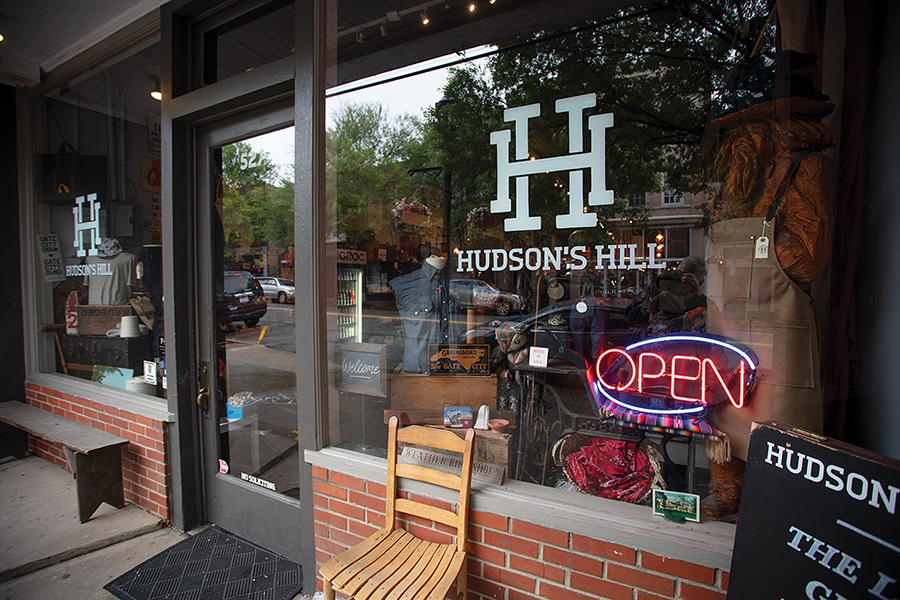
A little closer to home than $3,000 jeans, one hopes, is the aforementioned Hudson’s Hill, where Evan Morrison began this journey ten years ago, a stylish storefront situated next door to where Hudson Overall/Blue Bell was established well over a century ago. Stocked exclusively with products made in America, with a hefty percentage produced right here in North Carolina, I liken it to shopping at the Ralph Lauren store in Beverly Hills, albeit more compact.

Inside Hudson’s Hill, hip haberdasher J.R. Hudgins points out a line of jeans not likely found outside of New York or Los Angeles, saying, “Tellason is like an entry level gold standard for the shop right now, affordable for an America made pair of jeans.” A grouping of classically styled jackets catches my eye. “These are from a company called Mr. Freedom,” Hudgins says. “I love them because he’s a French designer who has a very Western aesthetic but with a European cut, higher cut arm holes, much trimmer body, not as boxy.” There are, of course, store-branded jeans and jackets constructed from found dead stock: “Fabric Cone Mills or another local producer stopped making and we found enough to make some pants or jackets out of it,” he explains. “Once these sell, that’s it.”

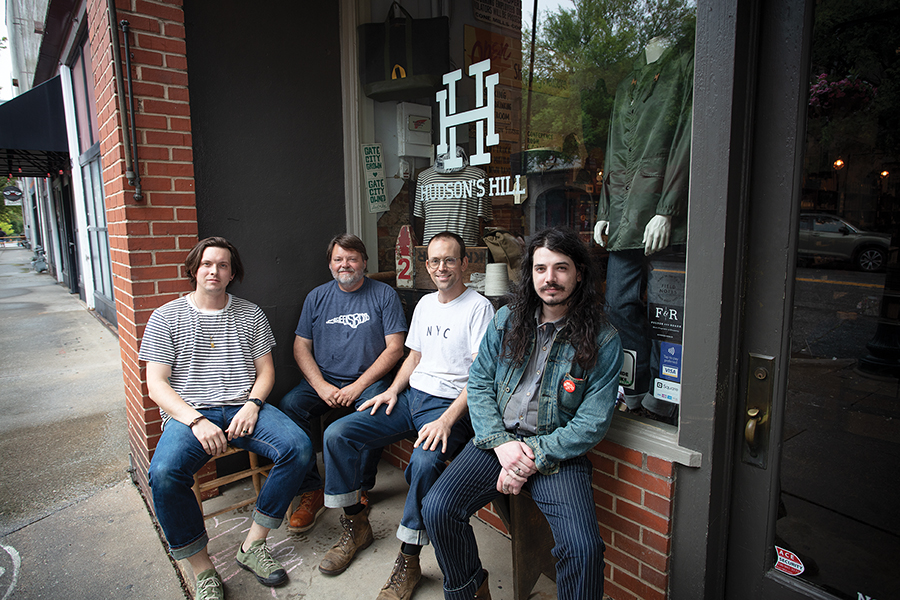
L to R: William Clayton, Tinker Clayton, Evan Morrison and John Hudgins, representing Hudson’s Hill: The Last Great American-Made General Store, located in downtown Greensboro on S. Elm Street. The Claytons (father and son) and Morrison are co-owners, while Hudgins serves as store manager.    

E-commerce aside, Hudson’s Hill’s local customer base is augmented by visitors here on business from larger cities and abroad. “That’s the clientele for a lot of the higher ticket items,” Hudgins says. “Yes, if our store was in Brooklyn, we’d probably be a lot more successful. But we couldn’t do things the way we do if we weren’t here in Greensboro.”

Headquartered on Green Valley Road, Cone Denim still operates factories in Mexico and China, and — as you read this — it’s relocating its headquarters to Revolution Mill. The circle of life and all that. And still innovating with Flash Finish technology and Mission Zero Waste to be more eco-efficient.

Adjacent to Evan Morrison’s workspace/studio at nearby Revolution Mill, old Cone manufacturing equipment sits on display. “I might be leaving my work at the end of the day, kind of frustrated because something’s gone wrong,” he tells me, “and I’ll walk out of my office and look over and there’s a granddad [crouching down] with his grandkid telling them, ‘I used to work on these machines in this building when I was a young person.’ And that’s the tackling fuel, to quote The Waterboy.”  OH

Those interested in Greensboro history might find Billy Ingram’s book, EYE on GSO, to be perfect summer reading. Available from bookstores and on Amazon.


The Legacy of Moses Cone

© Carol W. Martin/Greensboro History Museum Collection.

Just months after the employees of the combined Proximity, White Oak and Revolution Mills celebrated their fourth annual picnic in 1908, newspapers around the country proclaimed that Moses Cone, the “Denim King,” was dead at the age of 51. However, weaving and manufacturing of denim in Greensboro was still in its infancy.

Having left no last will and testament, under North Carolina law, 50 percent of Cone’s estate would have to be surrendered to the state. His brother, Ceasar, and Moses’ wife, Bertha, negotiated with state officials to park his holdings into an account, allowing Bertha to live comfortably until her death in 1947.

Moses Cone holding his niece, Isabel Cone, ca. 1907.

Photograph © Greensboro History Museum Collection


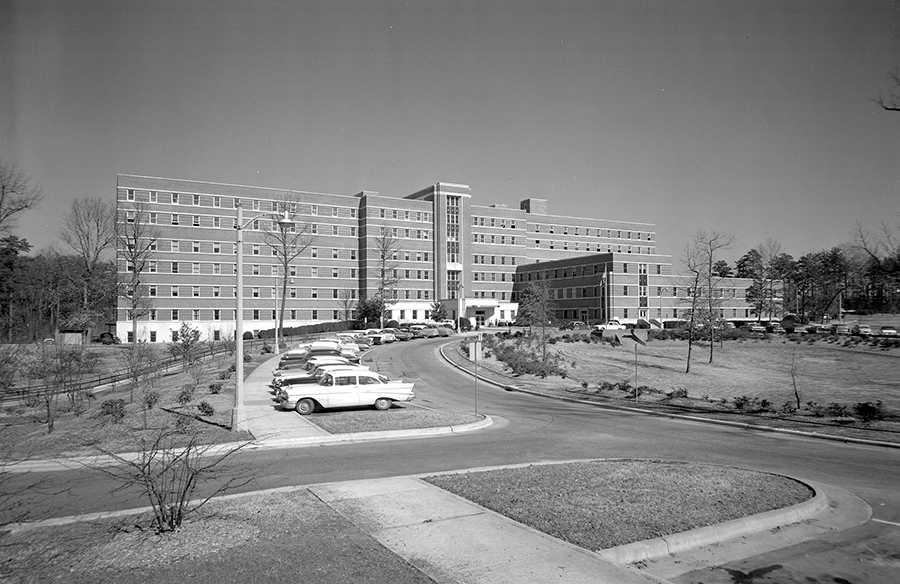
Per that aforementioned agreement, that trust was then donated, along with a sizable patch of centrally located real estate, for the construction of a hospital to be named for Moses Cone. But there was one stipulation: If the Cone name ceased to be associated with the hospital, ownership would revert to Moses’ living descendants.

That’s why, no matter how many times Cone Health may be purchased, merged or rebranded, the name Cone will always be front and center.


Big Screen Jeans


Right: Stranger Things, Left: Yellowstone

Greensboro’s own Wrangler jeans are taking a noticeable star turn on hot TV series like Yellowstone and Stranger Things. Truth to tell, if you recognize any label or logo in the scene of a television production, it’s almost certainly paid for. 

Product placements are a bit more subtle today than back in the 1980s when characters would play an entire scene in front of a Pepsi machine. Or, think back upon ET’s intergalactic hunger for a relatively unknown candy, Reese’s Pieces, considered the first mega-successful product tie-in of all time after M&Ms passed on the opportunity.

Wrangler’s first product placement campaigns started back in 1947 when their rough-and-ready denim jeans were first introduced to the public, leather labels stitched on the backsides of big name rodeo stars to reach the targeted rugged individual demographic. To a certain extent, that still holds true.

Wrangler is only one of a number of Triad companies that have been purposely inserting their products into scenes and sponsoring television programs since the medium’s earliest days. With deep pockets, Big Tobacco was one of the first industries to see the potential in television. In fact, in the 1950s and ’60s, sponsors had more control over the content of TV programs than the networks did.

  Walker

Headquartered in Greensboro, P. Lorillard Tobacco Company sponsored classic shows like Ted Mack’s Original Amateur Hour, which found Old Gold’s Dancing Cigarette Pack and The Little Matchbox tap-tap-tapping across the small screen in the early-1950s. Lorillard’s Newport logo was featured prominently on ’60s sensations like The Price is Right and Petticoat Junction.

R.J. Reynolds took an integrated sponsorship approach with seamless transitions as a primary advertiser on The Flintstones when that cartoon series debuted in 1960. “Winston tastes good like a cigarette should,” especially when Fred Flintstone and Barney Rubble would sneak around the cave to light one up while the wives continued doing all of the chores. Camels became synonymous with The Phil Silvers Show.

Reynolds’ Kent cigarettes sponsored The Dick Van Dyke Show. Cast members happily puffed away in one minute skits while Steve McQueen stepped out of character to peddle Viceroys on Wanted: Dead or Alive. Vicks VapoRub, manufactured (until 1985) by Greensboro-based company Richardson-Vicks, was another ubiquitous TV advertiser in the 1960s and ’70s.

In 1952, Greensboro’s Burlington Industries became the first textile manufacturer to advertise on television. By the 1960s and ’70s, its brash, bold, percussive spots became woven into the fabric of nighttime television, punctuating programs like The Waltons and The Mary Tyler Moore Show. When Burlington did its yearly opinion survey in 1975, 70 percent of those sampled recognized the brand from watching television.

So the next time you spy a pair of men’s Greensboro jeans on a Western-themed show like Walker or Outer Range, know that Wrangler is continuing a decades-long tradition of Triad firms influencing the television programs we watch in both large and small ways.

Beyond the Back Door

Beyond the Back Door

Three backyard buildings allow room for growth, sanctuary and entertainment

By Cassie Bustamante • Photographs by Amy Freeman

With a little out-of-the-box thinking, a backyard building can become so much more than a place to park your lawnmower. A dilapidated storage structure can open doors to mixing work and play. Take it from these three home and business owners, who unearthed the hidden potential in their own backyards. One turned a shanty of a shed into an employee haven. Another repurposed windows to form a whimsical greenhouse. The third transformed a single-car garage into a hidden guest retreat.


The Shed

In 2020, during the height of the pandemic, Dudley Moore Jr. would meet up with a few buddies on the back deck of his High Point office building for a few beers and a little escape from stay-at-home-life. Moore, who is president and co-owner of Otto & Moore Furniture Design with sister Carolyn Shaw, recalls his pal Lin Amos saying, “You know, that’s a cool building. You ought to do something with that.”

The building in question, now lovingly known as “The Shed,” was an old garage that Moore guesses to be almost 100 years old. Visible from their vantage point on the deck, it looked like it was on its last legs and was serving as a home to snakes and spiders. It’s been a fixture on the Otto & Moore property since the day the company, founded in 1960 by Shaw and Moore’s father, Dudley Moore, set up its office there. “We’ve been here since 1970 and it was already old and decrepit then,” says Moore.

    Aside from critters, the shabby structure stored old chair samples and engineered drawings in tubes. “It just sorta became a catch-all for junk,” says Shaw. “It was a disaster!”

But, with a nudge from Amos, the wheels started turning.

“It just got my imagination going,” says Moore, who planned to turn it into functional storage. A furniture designer by trade, he notes that “it had a certain beautiful symmetry to it.”

Moore and Shaw enlisted the help of Scott Dunbar, vice president of Dunbar & Smith general contractors and, “very fortunately,” husband of their office manager, Lora. Once the project started, Moore nixed the original plan. “It’s too cool for that,” he says. “So then we decided to make it a party shed.”


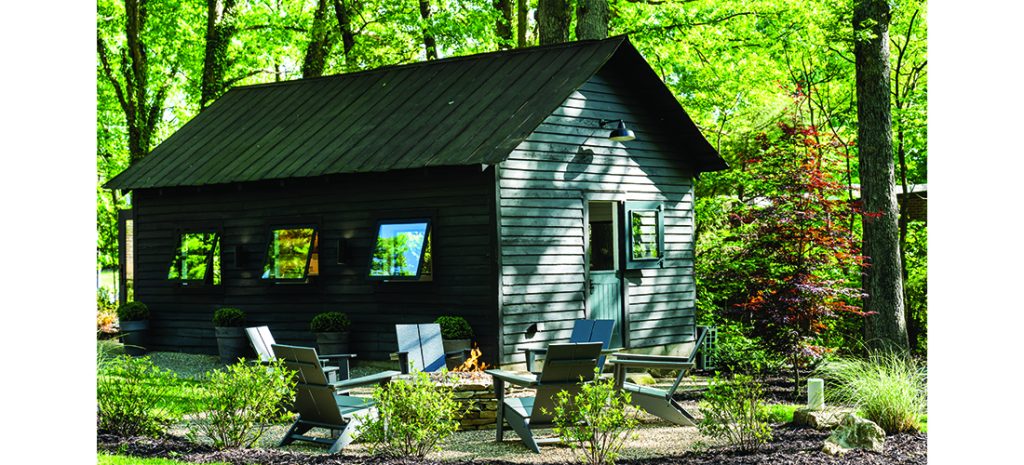
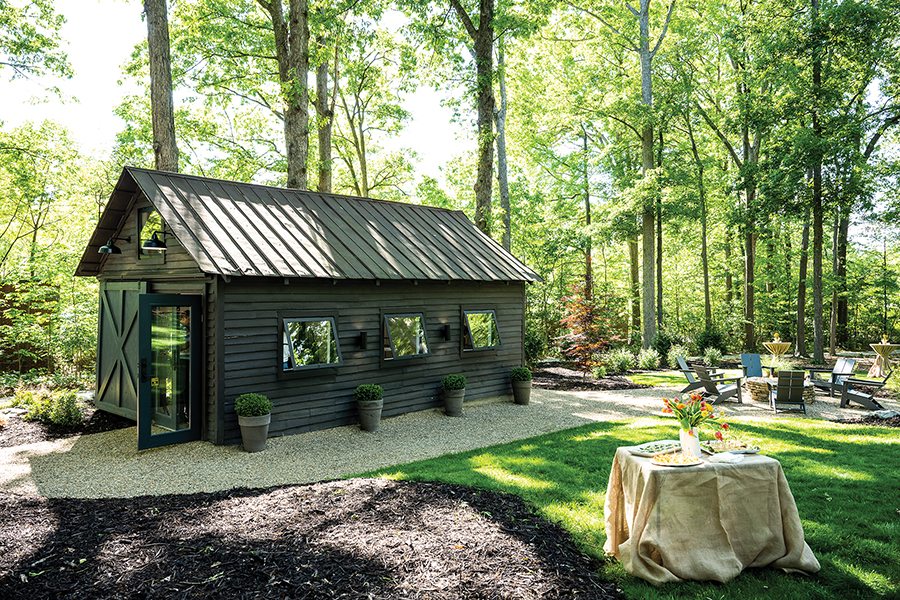
The exterior was first to be transformed and now resembles a modern Scandinavian cottage. The original metal roof was patched, and the once chippy siding was sandblasted and repainted in a dark, almost-black brown. Because they wanted to maintain its garage-style charm, a new slate-blue, sliding barn door was added, concealing a pair of glass paneled doors, which function to keep the critters out.

Thanks to the creative collaboration between Moore and Otto & Moore designer Laura Niece, the once ramshackle interior reflects the exterior aesthetic, complete with a Dutch door and a fireplace shipped from Denmark. A pair of timeworn leather chairs from the Netherlands, found at Antiques & Design Center of High Point during Market, invite one to cozy up, fireside.

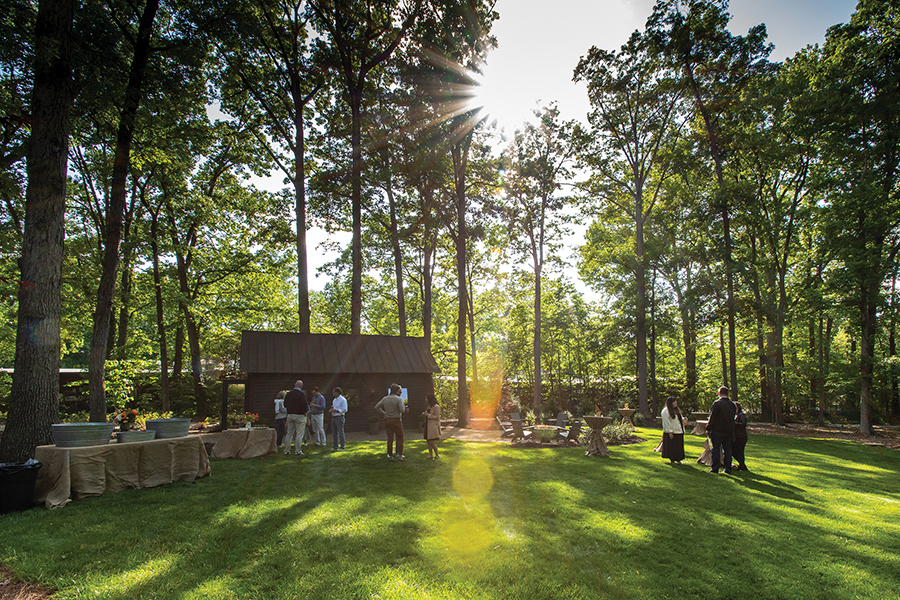
With a built-in bar area and a record player with speakers inside and out, The Shed is now host to a wide range of events, from board meetings to employee baby showers. “We use it for business purposes as well as fun,” says Shaw, whose own son spent lunch breaks watching Stranger Things there during last year’s summer internship with Otto & Moore.

Are they worried about too much merrymaking on the job? “Honestly,” says Moore, “we like to think — with creative people in particular — if you can make the job fun as well as work, then it actually helps breed creativity and productivity.” So, is Otto & Moore hiring? Sadly, no, but you can add “party shed” to your list of employer must-haves.


Greenhouse Affection


When Jamie and John Hizer, plus their five kids, moved into their Westridge Heights home in March of 2020, the backyard was an overgrown tangle. Yet, underneath a mess of English ivy, Jamie could see its hidden potential.

The Hizers enlisted a crew to bulldoze the backyard, leaving them with a “blank landscape.” After tossing around different ideas for their open space, Jamie stumbled upon a beautiful greenhouse kit from an online retailer. “I fell in love with it,” she recalls, though she didn’t love the $10,000 price tag.

But the greenhouse seed had been planted, and Jamie, after researching, became convinced that they could create something special using old windows, a little elbow grease and out-of-the-box thinking. She saw it clearly in her mind, operating to extend their growing season and as an entrepreneurial endeavor, a space for small events and photo opps. John, a safety consultant for an insurance company, thought, “You’ve lost your mind!”

Ever determined, Jamie began collecting windows from several sources — never paying more than $5 dollars a pop — then scraping, sanding, glazing and refinishing each. John? “He would just shake his head and help me stack the windows,” says Jamie.

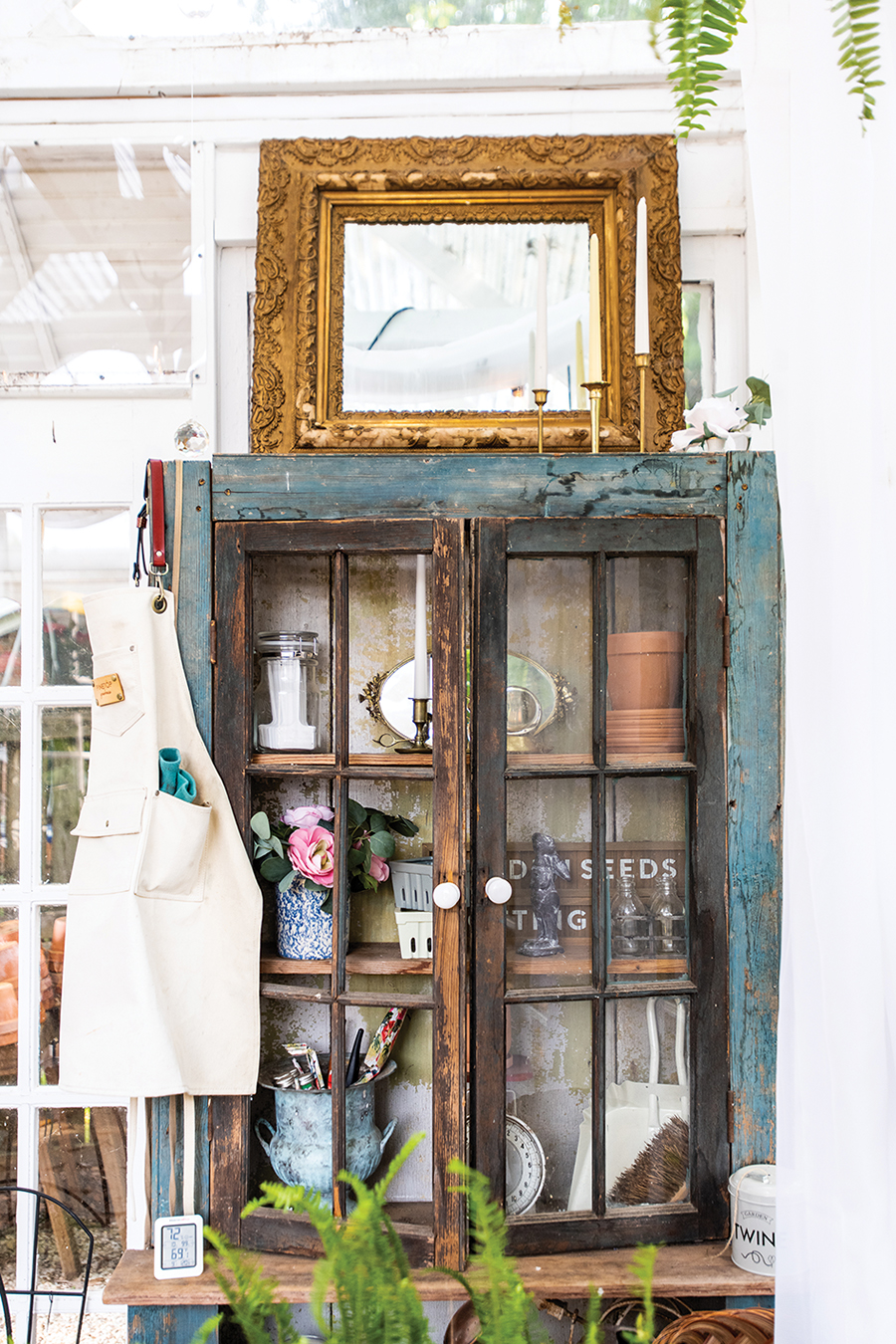
When it came time to build, the Hizers laid windows out on the ground to work out a configuration. Over a two-month period of project weekends, the four walls went up, one by one, followed by the trusses and, finally, the plexiglass roof.

In April of 2021, “we put the last nail in and I burst into tears,” recalls Jamie. Just one month later, Pinetop Greenhouse opened its sunny yellow doors for its first event, Mother’s Day mini photo sessions amidst seedlings sprouting all around them.

Now, a once neglected yard thrives, the upcycled greenhouse its pièce de résistance. Though not heated or cooled, the glass enclosure allows Jamie to start her seeds in early spring and protect plants from frosts. Just outside, garden beds lush with vegetables, herbs and flowers flourish, interwoven with gravel and stone paths.


Pinetop Greenhouse provides fruits of the labor that can’t be seen to the naked eye, too, and connects Jamie, who grew up on a small farm, to her own roots.

A full-time nurse by trade, she finds much-needed sanctuary in her own backyard. While navigating her professional role during the pandemic, she also faced personal challenges. “My mom almost died of COVID — two weeks in the ICU,” she recalls. Working in the greenhouse and garden offered Jamie a chance to “take back some form of control” in a world that felt like it was spiraling.

“Good days, bad days, stressful days,” says Jamie, “I just come get in the dirt and it works itself out.”

These days, she often calls her mom for gardening advice and hopes that the cycle continues with her own kids seeking her help one day.

For now, the greenhouse nurtures Jamie’s creative spirit. She loves “the thrill of the hunt” and shops local thrift stores, often scooping up vintage finds that inspire a complete overhaul of the interior design.

She points to a floral painting paired with a gold gesso-framed mirror. Those two pieces snowballed into a day spent flipping the entire aesthetic. “For $20 bucks,” says Jamie,”I was feeling inspired here.”

What’s next for this greenhouse that, according to Jamie, “constantly evolves?” She’s currently dreaming of adding a butterfly house. “I’ve kind of slipped that into conversation and gotten the side eye [from John],” she says. But, the seed has been planted and, no doubt, her new dream will take flight soon.

For more information, visit pinetopgreenhouse.com.


Ohana Cabana


Nestled into the corner of Kimberly Paisley’s backyard, among blooming rhododendron, twittering birds and lush landscaping, a peaceful retreat awaits. Six years ago, on the day Paisley first toured the Old Starmount Forest abode and spied its detached garage, a vision began forming in her mind.

The previous owners had already been using the building as extra living space, having furnished it with a bed and a small sofa. “When I looked at the house to begin with, the guy showed me around — the husband — and the wife was sitting in there on her computer, so that immediately gave me an idea,” says Paisley.

No stranger to renovation, Paisley has purchased and remodeled several homes in her time. (She’s currently turning a 130-year-old home into a duplex that “is going to be absolutely breathtaking.”) In early 2021, finally ready for her budding idea to come to life in her own backyard, she drew a rough sketch in a notepad.

Needing the motivation to get started, Paisley purchased a vintage-style, cherry-red refrigerator for what would become her retreat’s kitchen. “I bought it first thing and worked the whole [design] around it,” she says. “It was the incentive I needed to go.”

But there was one major hurdle to overcome before work could begin. While the former garage had been outfitted with electricity and heat, it was missing one vital ingredient that would make it completely livable: water.

Of course, installing new plumbing meant tearing out much of the existing concrete, which Paisley, as someone who works as her own contractor, hauled to the dump herself in 90-degree weather. “I thought I was going to have a heart attack — I mean, just sweating. You know, I’m the only woman out there. The men are like, ‘Let us help you,’” she says and laughs. “I was like, ‘I’m not gonna turn that down.’”

After the plumbing was installed and the new concrete poured, “it went fairly smoothly.” The last room to be finished — her favorite — was the small-scale Ikea-inspired kitchen. And to counterbalance Ikea’s “simplicity, functionality and beauty,” the kitchen’s pièce de résistance was, yes, her newly purchased, bright red retro refrigerator.

With the interior work just about complete, the retreat opened its doors to its first guest, a girlfriend who was moving back to the continental U.S. from Hawaii. “She stayed probably six months until she found her own place, but it was the perfect little space for her.” And did they meet on the backyard deck for drinks during that period? “Every day!”

It was a gift, a wooden sign, from that friend that would inspire the exterior palette of pale yellow siding, green shutters and purple doors, as well as the cottage’s name, Ohana. “Ohana means friendship in Hawaii,” says Paisley, pointing to the sign hanging on the facade as a greeting.

Airbnb? “As you’ve seen on NextDoor, people are really not wanting that,” she replies. She’s considering opening it up to just people in the neighborhood who have visitors coming in: “golfers who need a place to stay,” for instance. “I would love to offer it for that. But otherwise, no.”

For now, the aptly named former garage remains a peaceful respite for friends. “It’s just so pleasant! It’s quiet — it’s like you’re in a whole different place, but you’re not,” muses Paisley. “You’re just in the backyard.”  OH

Almanac June 2023

Almanac June 2023

June is a daydream; a picnic; a long, sweet song.

Beyond the sunlit meadow — thick with thistle and crickets and Queen Anne’s lace — the grandfather oak has gone moony. Most days, he is patient. Steadfast and uncomplaining. But on this day, when the painted lady drifts past the sea of red clover, he is fraught with expectation. The children of summer are coming.

As they float through the meadow, blankets and baskets in tow, the oak is awestruck. They could go anywhere. Bring their banquet to the altar of some other worthy tree. But they don’t. As they make their way through towering thistle, past bee balm and poppies and raves of day lilies, the grandfather knows: The children of summer will be here soon.

They come singing. Come with just-picked daisies. Come with a spread of luscious offerings:

A palmful of wineberries.

Pickled cucumbers.

Mint, marigolds and beets.

Roasted potatoes.

Dandelion shortbread.

Honeysuckle and homemade mead.

In the shade of the grand old tree, the children sprawl in dappled light, laughing and feasting and giving thanks. For them, hours pass like minutes. For the oak, time stands still.

When you’ve seen as many summers as he has — not to mention all the winters — these are the days you live for. Days of abundance. Days of praise and cicadas. When youth is a state of the heart, each breath is a banquet, and nature gets a glimpse of its own reflection.


Citronelly! Citronelly!

A summer without mosquitos isn’t a summer. No way around ’em, but we’ve got allies. Citronella, anyone?

Also known as scented geranium, citronella is one of the best-known pest repellents to add to the garden. But there are others.

Basil: Not just for pesto! This fragrant, prolific herb deters both mosquitos and flies. Learn how to trim it for larger yields. 

Rosemary: Likes it hot. Thankfully, the woodsy aroma that we know and love sends the swamp devils onward. 

Marigolds: Easy to grow? Check. Better yet, their lovely flowers attract predatory insects.

Bee balm: Out with the nippers, in with the bees and skippers.

Other plant allies include lavender, mint, lemon grass, catnip, sage and allium. Play around to see which plants work best for your garden. Besides mosquitos, what do you have to lose?


Strawberry Moon

The full Strawberry Moon rises on Saturday, June 3. It won’t be pink, but it will appear golden just after sunset, reaching peak illumination by midnight.

A new moon on Sunday, June 18 — Father’s Day — means clear skies for stargazing. See if you can spot Boötes (the herdsman), Libra (the scales), Lupus (the wolf) and Ursa Minor (the little bear) this month. Bonus points for a firefly constellation.   OH

A Fresh Start

A Fresh Start

Morning routines that get — and keep — three professionals going

By Cynthia Adams

A newswoman arrives at work at 3 a.m. An architect seeks to establish a natural flow to each day. An on-call nurse routinely leaves her work after daybreak. Their routines share a singular intention: grounding themselves, finding a rhythm with each new day.


Waking up with WFMY’s Tracey McCain

Tracey McCain’s morning-is-breaking, upbeat smile is familiar after appearing on Triad television soon after her career began. Sure, she could have gone to a bigger market — Dallas was interested — but Triad TV viewers should thank their lucky, local star that she decided to come back to her hometown.

Her first stint at WFMY was the weekend Good Morning Show, later moving to weekdays. She now appears on the Good Morning Show, America’s oldest and longest-running morning show.

Since last September, the program now airs in bifurcated segments, first from 4:30–7 a.m., interrupted by the CBS national newscast, This Morning. WFMY’s local program resumes with McCain from 9–10 a.m.

“You know, I quite enjoy it,” she says cheerfully about the added hour. “It’s a different show format, which allows us to tell the news but also relate to our viewers and each other in a nontraditional way.”

McCain says the key to an early bird lifestyle is her husband, Jaron, who juggles a demanding law practice with parenting. “He’s a great dad, and we’re great partners. I don’t think I could do this with anybody else.”

Jaron, who understands what’s required of his wife’s job, continually earns fresh respect. 

“He tells me every day, ‘I appreciate you so much.’ I don’t think I could do this if he didn’t.” McCain admits that even a morning lark like her requires a choreographed routine. 

It begins with a 2 a.m. wakeup call: “I’m out of my bed and start the process to go from mother-of-the-year to newswoman.”

First, she allows herself one cup of joe — her favorite is Breakfast Blend — light, with cream and a teaspoon of sugar, before reaching the Phillips Avenue station as Jaron, and three young children— ages 2–7 — still sleep.

After nearly two decades, the indefatigable WFMY newswoman, wife and mother says she understands if we feel we know her. Born in Guilford County, McCain graduated from Eastern Guilford High School before earning degrees at the University of Connecticut and Quinnipiac University.

She launched her career at WSHM in Springfield, Massachusetts, moving to WFSB in Hartford, Connecticut, before finding her way home in 2006.

From McCain’s perspective, being in her hometown in a job she loves validates her maternal juggling act.

As part of a high-profile morning anchor team, McCain must be ready to go before the crack of dawn, no matter what.

“It’s just like the postal service,” she jokes, saying she has driven through every type of weather. “Whether there is snow, sleet, rain, hurricane or a tropical storm.”

All part of the job. 

But she leaves little to chance. In order to get out the door on time, McCain has developed a strict routine that seldom wavers. Hair, makeup, everything is done before walking into the studio. “And I pack my bag and I’m out the door.”

“I’m into fitness. Healthy attitudes and healthy meals. So, I prepackage my meals the night before so I don’t have to think about it.”

Not only meals, mind you, but snacks to power her until the early afternoon. “I make certain I have my necessary amount of water — everything I’ll need.”

There is scarce opportunity to leave.     

“If there’s breaking news — shootings like this week — I have no time.” 

Once settled into a work rhythm, McCain allows herself a second cup of coffee before broadcast, mindful that she will be on live television for the next two-and-a-half hours.

Fortunately, the early hours of the day are her favorite.

“I’ve always been a morning person,” she declares convincingly, although it is nearing noon and she admittedly longs for a quick shut-eye. A radiant smile breaks again. “I’ve been waking up at 2 a.m. for 15 of those [last] 18 years. On off-days, I sleep in until 6 a.m. I can do a lot in an hour before the kids are up — laundry or cook a meal.” Even at rest, she even keeps a notebook bedside for jotting down ideas.

Her evening routine? While getting her kids ready for bed, McCain addresses things like her next day’s wardrobe. “I’ll set their toothbrushes up and go into my closet and choose what I’ll wear. Kids lunches are made.”

Finally, she says, “My night ends after the last child goes to bed. That could be 9 or 9:30 p.m. I have extreme child guilt, like most moms do, because I’m not there for the mornings . . . I don’t want to miss a thing.  So, I want to be there for them.”

Recalling her own upbringing, McCain says, “My parents gave me the best childhood! My mom made dinner every night. I try to do that for my kids.”

She reads with her children nightly, marveling over oldest son Josiah’s thinking and problem solving. Her daughter, Simone, 5, “dances and sings,” McCain praises. Her youngest, Julian, “is super tall, super-fast, he’s like lightning. He wants to be like his older brother . . . If I say ‘the baby,’ he says, ‘I’m not the baby!  Who’s the baby?’” 

At midday, moving into “mom mode,” McCain’s energy falters. Yes, she answers. She is sleep-deprived all the time. 

“I learned how to function with great coffee and naps. Sometimes I’ll take a nap in the carpool lane as I’m getting my child. The teachers know,” she says, smiling broadly. “If they see my car, they know I’m probably taking a nap.”

Keys to her productivity, besides cat naps, are a healthy diet and high intensity interval training. 

McCain so believes in her fitness routine she became a certified personal trainer forming a partnership with AWOL Fitness in Greensboro called “Train with Tracey.” She teaches classes Mondays and Wednesdays at 6 p.m., and Saturday mornings at 9 p.m. “I pour daily motivation into them.”

McCain reminds, “This is a great day to have a great purpose/time and have a great time with great people. I use ‘great’ all the time.”

She makes it a point “to be kind/nice/respectful of everyone, including myself,” she texts after work one afternoon. “And I’m going to love my children from the time they wake up until they go to bed. And love my husband. I’m a positive, happy, person.”

Although her friends call her “superwoman” McCain is realistic. “I’m selective. I cannot do it all.”

“I don’t know why, but for some reason, people think I’m a diva,” she says, shaking her head. “I’m not! I’m so down-to-earth.”

What is most challenging about being a local celebrity?

She responds to actor Rob Lowe saying he likes going out in public, wearing a ball cap and seeing if he is spotted, which he calls “giraffing.”

McCain enjoys being recognized. “If I’m wearing a hat, it’s not because I’m hiding . . . it’s because I’m having a bad hair day. You live in the South! My grandmother said hello to everyone — so I do!”

She relies upon feedback from viewers, but best of all, Josiah. Before Jaron drops him at school, he watches a few minutes of the Good Morning Show.

As if part of his own morning routine, her son calls her every morning, with his own positive affirmation. “He says, ‘Great job . . . you really did a great job!’”

McCain swallows. “I mean, what a sweetheart!

“He’s learning from my husband.”


Mornings with Michael Clapp, Architect and Artist

Michael Clapp has two nonnegotiables in his workday routine: caffeine in a cup and crunch in a bowl.

The 30-something architect and visual artist doesn’t even want to imagine a morning that doesn’t include espresso and at least a few bowls of his favorite Honey Nut Cheerios while he digests the news on his iPad. Maybe, he adds with a small laugh, he’ll have three or four bowls of cereal with milk.

As a naturally slender man, this requires confirmation. But Clapp isn’t kidding.

“I’m very much a morning person,” he says. “I love the feeling of getting an early start to things and hate the feeling of getting up late and having to rush through my morning preparations and out the door.”

A typical morning begins with only two cups of his go-to. An Italian espresso machine is one of the hardest working appliances in his tidy kitchen.

Clapp, a full-time architect with STITCH Design Shop, has worn other hats. He has been a lecturer in the School of Architecture at UNC-Charlotte, while also starting his own firm, Schemata, having earned a master’s degree of architecture at Harvard. His Whitsett barn conversion, “Resonant Dwelling,” appeared in the March 2019 O.Henry. In the October 2021 issue, I wrote “His Father’s Son” about a cabin retreat of his design, a collaboration with his father, who also works in a creative field as owner of an advertising agency.

So, what is his morning routine like? Variable. “So, to speak to your question . . .  it’s complicated! I would say I had a much different morning ritual when just working for myself at Schemata than I do now that I work full-time [in addition to maintaining a few jobs specific to Schemata] for STITCH Design Shop.” 

If there is such a thing as an “ideal scenario,” Clapp describes it as this:

“I’d get to bed at a reasonable hour such that even if setting an alarm, I’d generally be able to wake up naturally around the proper time to allow a slow easing into the day.” He loves taking a quick walk outside before doing anything else. “And in the winter [especially if there’s snow] it’s something that makes such a difference to how the rest of the day goes.”

On weekends, Clapp pulls on boots and heads out for a walk, “even before cereal and news.”   

Yoga helps him “feel more centered throughout each day” when he can work it into his schedule.

Now, with assorted meetings, travel and sundry work requirements, Clapp finds himself lucky “if I can get to the downtown Greensboro YMCA gym before making it to the office.”

The demands of his exacting work and art can complicate his daily rituals. An out-of-the-ordinary day may have him taking an early morning sauna [he’s building his own at home] and sweating a deadline that afternoon. But, when life is in balance, there’s a natural stasis — an equilibrium.

What follows is well-known as “flow state,” which is almost effortless creativity and the ultimate achievement within a well-calibrated day. “Uninterrupted time,” he clarifies, is critical to entering this sought-after, creative and relaxed state of mind. 

“Uninterrupted time . . . that luxury,” Clapp repeats and sighs.

When working, sketching or drafting, Clapp is very methodical. Creatives often report that when achieving the flow state their work is almost unconscious — having attained a mental state from which their work simply flows, hence the term.

All thanks to an equilibrium that for Clapp begins simply and ritually with a leisurely cuppa and a bowl of cereal. While outwardly simple, such things are significant. Clapp is seeking mindfulness and “healthy ways of living habitually.”

There is a fully-caffeinated coffee in his hand although it is late afternoon. No worries, he reassures. He can even enjoy a late-night coffee and sleep deeply. 

And with that, he walks back to his office, returning to put the finishing touches on a project, renderings he says he cannot wait to show favorite clients.


Daybreak reflections with Jessica Smith, R.N.

On-call hospice nurse Jessica Smith lives with an upside-down schedule: Mornings mark the end of her workday — not the beginning. 

Smith works after hours, on call while her family, like much of the city, is tucked into bed. So, the trick for her is to create some semblance of a morning routine during the work week before she, too, finally rests.

As day breaks, mornings often vacillate between peaceful and chaotic — seldom predictable or routine.  And yet, she says, “I’m so thankful for my job. Not everybody gets to experience the full circle of life. I do. How precious are our lives?”

Smith has been at Authoracare Collective for 17 years, working in the Triad “and as far as King, Madison, Mayodan, Sophia, Wilson and Chapel Hill.” She sings as she drives, centering herself.

Her blonde curls, blue eyes and cherubic face resemble a pre-Raphaelite painting. At first meeting, family and patients often assume she is younger, asking, “How long have you been doing this?” 

Smith, approaching 20 years in her job, hopes her longevity reassures. “They say it does.”

“I’m going to be calm for the family,” she says. “Nothing’s an emergency with hospice.” Her equanimity improves her patients’ experience. This requires establishing a routine which helps her find this. 

Her blue eyes reflect this, pools of surprising serenity.     

“If you’re not calm, the family’s not calm. And you have to be the quiet authority.” This propels her through long nights when she responds to calls that take her into varying situations and needs.

So, with each daybreak, the previous night dictates her morning routine. Sometimes, family members are waking up to discover their loved one has died, she explains. Or a patient is nearing the end. Her schedule varies out of necessity. After each night shift, Smith completes patient notes for the primary nurse and social worker before returning home for a brief walk, some devotional time to reflect and then, finally, sleep.

On difficult mornings, coffee must wait. Otherwise, Smith logs 3 miles in the morning, squeezing in a 1-mile walk when it isn’t. She takes Zumba and Peloton classes. Her Yorkie, Lexie, knows exactly how to give comfort when needed after a difficult night.

With years of experience, Smith is exquisitely aware of life stages. She can anticipate a patient’s end of life.

Sensing that death is nearing, she remains even when the family tells her she can leave. “No, I’ll stay,” she gently insists. 

Smith formerly worked as an oncology nurse, seeing patients daily. On-call, she sees many different patients, often for the first time.

While in nursing school, she had to inform her own father that he was dying. “He had the look. That is just one of those things . . . I knew.” 

“I told him, it’s not going to be long — Thanksgiving was when he entered hospice care. He looked at me and asked, ‘Do I have till Christmas?’ I said no.” 

Smith’s father died at the end of that November. Her honesty allowed time for important things to be said.

Originally, she studied voice. But by age 26, she discovered her true calling was nursing the critically ill.

As for singing? She is a fan of gospel singer Cee Cee Wynans’ Goodness of God. “I try to listen to it every day and it reminds me of where I’ve been and thankfulness: You’ve made it through.”

Smith often sings for an audience of one. 

“Even patients — and I hope it doesn’t sound creepy — we have patients who are wards of the state and they don’t have family, and they’re alone,” says Smith. “And I sometimes sing to them when they die. Even afterward.” 

“In the middle of the night, they [the family] call because they’re in a crisis. And I make them feel better, but I’m not the primary nurse.” For that reason, she speculates that no one will remember her. No matter.

Her eyes soften. “I’m in service to something bigger than myself. I could go in my pajamas and not brush my teeth and they [the patient and family] would be just be grateful I’m there. Of course, I don’t do that,” she adds. 

Well-dressed, her blonde curls tamed, Smith assumes the mantle of reassuring professional, navigating an incredible journey with families and patients. This journey, according to her, “is some of the most precious times you will ever have, apart from being born.”

It struck her from the beginning that death is a great equalizer. “It all comes down to [my] being by the bedside. I would go to one home in Smith Homes, and one home in Irving Park. And they all end the same way,” she observes.

After a hard night of helping a patient reach that end as peacefully as possible, Smith allows herself time — time to love herself and critique what she can do better, she explains. She sings, too, often unaware she is singing.

On free days, Smith sleeps in a bit. “The only difference is, I don’t go back to sleep after I walk. I try to set aside a little time with Jackson, my son. We sit and talk a lot.”

She remarried seven years ago, acquiring two “bonus” children in addition to her two sons, including a daughter, Krista, who had Type 1 diabetes.

“She was fascinated by death,” says Smith — especially hospice work.

In 2020, 17-year-old Krista passed away unexpectedly in her sleep. 

“It was a good death,” Smith says softly. “Peaceful. There is no better death than that.”

At the urging of Krista’s older brother, Caeleb, the family established the Krista Smith Foundation in support of juvenile diabetes. 

“What helps me is the work I do, and knowing how short our lives are. And that we are living exactly as long as we are supposed to. It has helped me be a better hospice nurse.”

Come nightfall, Smith will do it all again.  OH