Omnivorous Reader

Omnivorous Reader

Read and Dead

A librarian’s cozy mystery series

By Anne Blythe

Librarians are good at deciphering mysteries. Just ask any card-carrying library fan. They can be sherpas, of a sort, guiding readers from behind the confines of their reference desks to a world of information often only a bookshelf or computer click away.

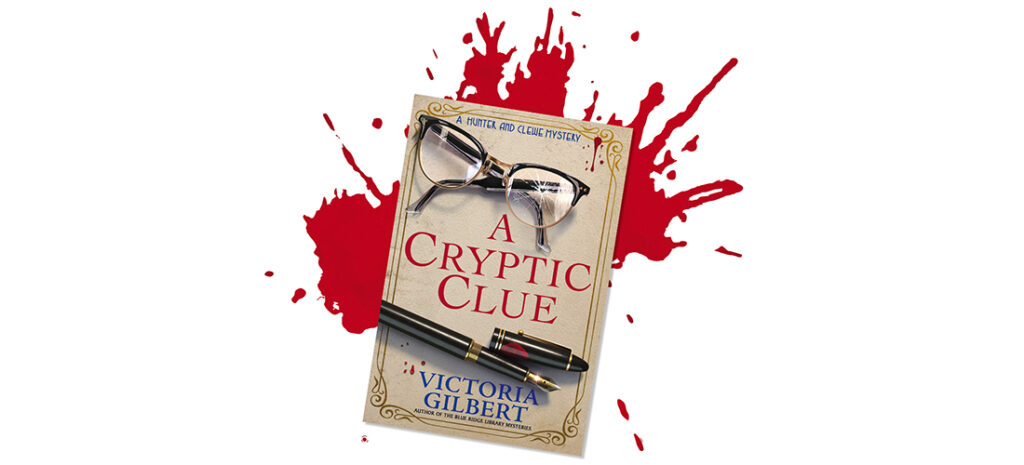
Some are good at creating them, too, as Victoria Gilbert, a former librarian-turned-mystery writer, shows in A Cryptic Clue, the first book in her new Hunter and Clewe cozy mystery series.

Raised in the “shadows of the Blue Ridge mountains,” Gilbert has been a reference librarian, a research librarian and a library director so, in the vein of “write what you know,” it’s easy to see why the protagonist in her new series is Jane Hunter, a 60-year-old university librarian forced into early retirement and a new chapter in life.

Gilbert’s Jane has tinges of Agatha Christie’s Miss Jane Marple in her, although she is a divorcee, not a spinster, who still wants to work for a living to pad her paltry pension. That desire to find a new vocation leads Gilbert’s chief sleuth to her new boss, Cameron Clewe — Cam, to those who know the 33-year-old unconventional multi-millionaire well — who was looking for an archivist and hired Jane sight unseen. Cam not only inherited tremendous wealth at a young age, but also an estate so large that it houses a private library, guest quarters and grand rooms where the well-to-do and those aspiring to affluence gather for glamorous galas, glitzy fundraisers and seasonal soirees.

Although Jane describes her new boss as “leading man material,” he’s a nervous type whose lack of a filter makes him a blunt, often humorless, speaker.

“I didn’t realize you were so old,” Cam says upon meeting Jane in his library. “And rather heavier than I expected, given that photo on the university website.”

Jane, on the other hand, is a woman used to working with college students and the mother of a grown daughter, an actress with a middle name that might as well be “drama.” She checks herself instead of blurting out the first thing that pops into her mind.

“That photo is a bit dated,” Jane responds, keeping her eyes on the prize she did not want to lose. Her Social Security payments wouldn’t kick in for at least two more years. She needs the work. Furthermore, she’s interested in sifting through and cataloging “the books and papers connected to classic mystery and detective authors” that have been amassed in Aircroft, Cam’s mansion. “As for my current appearance — years working in academia has taken its toll, it seems. But I am certain you hired me for my expertise, not my looks.”

Such is the beginning of the relationship that brings two Sherlocks from very different circumstances together to solve a mystery that holds a reader’s interest through the very last page.

The whodunit kicks off on a Monday at Aircroft after a charity fete over the weekend. Jane walks into the library on her first day of work, travel mug filled with coffee in hand, to find the body of Ashley Allen crumpled on the floor, “unquestionably, irrevocably dead.”

After “fighting the urge to retch” and scanning the crime scene with a surprisingly calm detachment, Jane staggers into the hallway, slumps against the wall and slides to the floor. “There’s a dead body in the library,” Jane thought. “That room meant to be my workplace is now a murder scene.”

It’s not just any body, either. Ashley was Cam’s ex-girlfriend, someone Jane had seen her new boss arguing with days earlier while touring the garden grounds. More than 100 people had been at Aircroft for the party the night before. Ashley had been there too, and was still clad in her silver sequined dress.

“You do realize who will be their number one suspect, of course,” Cam says after seeing the crime scene.

Quickly Cam decides to be proactive and use his resources to investigate Ashley’s death on his own. He turns to Jane for help. “I refuse to lounge around while the authorities build a case against me,” Cam declares. But, as his assistant Lauren points out, Cam is agoraphobic, rarely venturing out past the gates surrounding his home. That’s where Jane comes in.

“I’ll need help collecting information from the wider community. Which is what I’d like you two to do,” Cam tells Jane and Lauren. “Bring me back any clues you uncover, and I can piece it together, and perhaps solve this case before the authorities start casting about for a scapegoat. Namely me.”

The hunt for clues is added to Jane’s assigned duties. As Cam sets out to collect information from the kitchen staff and guests who had been staying in his house, Jane pursues the story outside Aircroft, casting about town for hints why the beautiful and wealthy Ashley has been killed, presumably by a fatal head wound delivered with a blunt object.

There is no shortage of suspects, either. Ashley left a trail of aggrieved casualties from former romances, business ventures and injurious family dynamics. As Jane and Cam glean the many storylines from Gilbert’s cast of characters, suspects are added to and subtracted from the list. Jane’s landlord, Vince, a retired reporter from the local newspaper, and his girlfriend, Donna, a former secretary at the local high school, provide background depth to clues that Jane turns up from her sleuthing.

In addition to the love interests and resentful entrepreneurs wooed and abandoned by the victim, readers meet the quirky Aircroft house guests, the detached Allen family — all of whom were to be left out of the deep-pocketed grandmother’s will — their housekeeper and others.

Gilbert keeps her readers guessing while entertaining them with snippets about mystery writers and their well-known characters, such as Archie, the droll narrator and sidekick to Nero Wolfe, the armchair detective brought to life by Rex Stout.

As Jane and Cam cross suspect after suspect off their lists while unraveling the mystery of Ashley’s killer, they uncover new secrets and riddles that are tidily wrapped up at the end of the novel. As the two share a pizza with the riddle solved, it’s clear more sleuthing is ahead.

“We could investigate those cold cases you mentioned, and maybe take on a few cases for other people,” Cam tells Jane.

“Maybe focus on cases where justice didn’t seem likely to be served?” Jane adds.

“Exactly,” Cam responds.

Exactly, indeed. Gilbert’s fans will be looking forward to whatever comes their way.  OH

Anne Blythe has been a reporter in North Carolina for more than three decades. She has covered city halls, higher education, the courts, crime, hurricanes, ice storms, droughts, floods, college sports, health care and many wonderful characters who make this state such an interesting place.

O.Henry Ending

O.Henry Ending

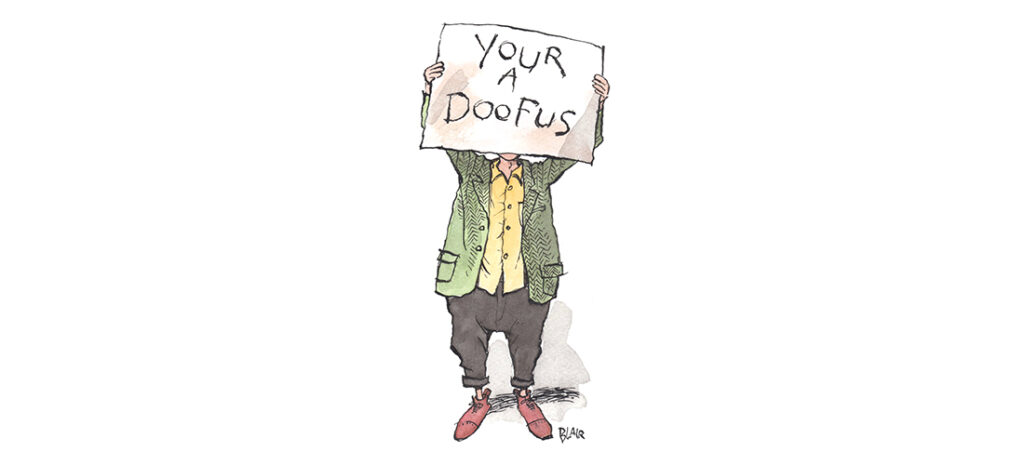
Grammar? The Horror!

He’s not silently correcting what you’ve just said in his head

By David Claude Bailey

When people ask me what I do for a living, I tell them I fix other people’s grammar — then explain I’m an editor. Do people tend to get just a bit self conscious about their speech patterns afterwards? Probably, and although I sense them choosing their words just a bit more carefully as they speak, they needn’t. I’m not silently correcting their grammar. I’m what’s referred to among English majors as a descriptive grammar guy. In my rarely humble opinion, prescriptive grammar, which is all about prescribing what’s correct while proscribing errors, is a lost cause. According to a 2016 Huffington Post poll, only 12 percent of respondents complained that improper grammar in a text message would bother them “a lot,” with 53 percent of respondents being bothered “somewhat” or “not very much.” Thirty percent responded that bad grammar bothered them “not at all.”

I saw that coming decades ago when I taught English and Latin at Salem Academy, where I’d scribble on students’ papers in red ink, “Not spelled that way — yet — but keep on trying.”

Language evolves, changing hourly. (By the minute on the internet.) In certain historical eras, scholars tell us, it’s far more plastic. Methinks ours is one of them.

According to the History Channel, Shakespeare’s name was spelled more than 80 different ways during his lifetime — including Shaxberd — my favorite. The HC goes on to point out that the Bard himself “never spelled his name ‘William Shakespeare.’” Instead his John Henry spilled onto paper as “Willm Shakp,” “Willm Shakspere” and “William Shakspeare.” So, according to the man who didn’t worry about spelling bee or not to be, we’ve been misspelling his name for centuries. That was, of course, before Samuel Johnson attempted to impose standard spelling and grammar on his fellow Brits with the 1775 publication of his Dictionary of the English Language.

But back to our time. Let’s just tackle “to boldly go where no one has gone before,” my Klingon friends. OMG! Captain Kirk split an infinitive — a faux pas worse than splitting some of those tetchy molecules on the atomic chart. He put the adverb “boldly” between the “to” and the “go” of the infinitive form. I myself was attacked fiercely by a religion prof at Wake Forest during my master’s oral exam for that very crime. That, however, is based on the Victorian world’s worship of the Romans and Latin grammar, where splitting verbs was anathema. But let’s not split hairs about it.

And how about who/whom? For years, I’ve avoided “whom” in most sentences in O.Henry magazine. Why? Because I firmly believe something like half of our readers stop and wonder whether “whom” is right in any usage, while the other half come to a dead stop parsing the sentence and losing sight of the story.

Yes, I hear you, grammar grannies and grandpas. Sometimes I’m one of you. My pet peeve, which sometimes has me shouting at my radio during All Things Considered, is the use of “and” for “to” with infinitives, as in “I’ll try and use correct grammar.” In a grammatically perfect world, one would say, “I’ll try to use correct grammar.”

But does anyone really have trouble understanding the former? Does looking down at others’ speech elevate my social station or makes me feel superior and more educated than others? “Guilty,” I say. If you’ve read this far, you probably have your own peeve. “Would of,” “could of,” “should of”? The Oxford comma, which the Associated Press and this magazine abjure? If you were an English major, it might be the waning of the subjunctive mood. How about the conflating of its, it’s/ your, you’re/ they’re, there and their? The apostrophe is dying, folks, but the language isn’t.

I like to compare what’s going on with grammar to what’s happened to Auguste Escoffier’s haute cuisine, once rigidly taught and slavishly followed in the finest restaurants. Now, fusion, the mixing of dishes from different cultures, is all the rage. In our melting pot of polyglot with English being universally accepted as the internet’s lingua franca, “standard” American English is getting fused, bruised and misused. And we might as well embrace it.

So, fellow grammar geeks, I say that it’s over, and it’s high time to boldly go where no language has gone before.  OH

David Claude Bailey is a contributing editor to O.Henry. If you want to question or amend his grammar, mail him your corrections on the back of a $1,000 bill.

Tea Leaf Astrologer

Tea Leaf Astrologer

Libra

(September 23 – October 22)

To (pick a verb, any verb), or not to (same verb). Such is the life of a Libra. On October 4, the existential turmoil will subside when Mercury (the messenger planet) enters your sun sign, offering the clarity of thought and speech you so desperately desire. Enjoy it while it lasts. The new moon solar eclipse on October 14 has the potential to incite some wildly dramatic changes. Treat yourself to a restorative day of self-care. Frankly, you’re going to need it.

Tea leaf “fortunes” for the rest of you:

Scorpio (October 23 – November 21)

Turn the compost.

Sagittarius (November 22 – December 21)

Moisturize.

Capricorn (December 22 – January 19)

Check the expiration date.

Aquarius (January 20 – February 18)

Someone needs a larger pot.

Pisces (February 19 – March 20)

The animals are trying to tell you something.

Aries (March 21 – April 19) 

Stick to the plan.

Taurus (April 20 – May 20)

Don’t spoil your supper.

Gemini (May 21 – June 20)

Phone a friend.

Cancer (June 21 – July 22)

Consider the scenic route.

Leo (July 23 – August 22)

Three words: mineral foot soak.

Virgo (August 23 – September 22)

It’s funnier than you think.  OH

Zora Stellanova has been divining with tea leaves since Game of Thrones’ Starbucks cup mishap of 2019. While she’s not exactly a medium, she’s far from average. She lives in the N.C. foothills with her Sphynx cat, Lyla. 

Life’s Funny

Life’s Funny

A Drop in the Bucket

On second thought, better make it two or three

By Maria Johnson

It was a Halloween shocker, delivered by a small superheroine who landed on my front porch last fall.

I dropped a piece of candy into her plastic jack-o’-lantern, which was filled to the brim with treats.

She looked down, cocked her hip and sighed.

What? I thought to myself. What could this girl possibly not like about Laffy Taffy?

Everything, apparently.

“I don’t really like that. Could I trade for something else?” she asked, eyeing the other treats in the dish I held.

I’ll be honest: My first reaction was to say, “What ever happened to saying ‘thank you?’ and trading with your friends later?”

But her parents were standing at the curb, waving and smiling, so I smiled tightly and said through clenched teeth, “Sure . . . honey . . . how about a . . . Snickers?”

She swapped and sprinted away.

I closed the door and dropped my jaw.

I had just been strong-armed by a pint-sized Wonder Woman.

Later, I shared my distress with our grown sons during a weekly video chat.

“OHMYGOD, Mom!” said The Older One. “You gave her one piece of candy?!”

“What’s wrong with that?” I protested.

“Don’t be that mom, Mom,” added The Younger One.

“Look, she didn’t need any more candy. She had a bucket full, OK?”

“OHMYGOD!!!” they hooted together.

Apparently, I was candy-shaming the young lady.

What was going on? Had the Halloween Handbook changed?

For answers, I turned to a panel of experts, a few of my neighbors’ children, whom I invited over for lemonade and cookies one night.

Allow me to introduce them by name, age and what they’re considering dressing up as this Halloween:

Sonja, 10, rat charmer, possibly reflecting her status as proud rat owner.

Wilhelmina, 7, tiger, a decision she underlines by curling her hands into claws.

Hendrik, 7, robot. Or possibly a pumpkin. Could go either way.

Olivia, 5. The field is wide open. Could be a monster. Or a Batgirl. Or a cheetah. Don’t press her on this.

Connor, 3, definitely appearing for the second year in a row as a T. Rex. Only bigger this time because he’s 3, not 2.

To begin our session, I told them about my experience last Halloween. They nodded in sympathy — whether for me or the girl, I’m not sure. But they were polite. They agreed to guide me. Below are excerpts from our recorded conversation with my comments in italic.

What is a normal amount of candy for someone to give out? How many pieces?

Sonja: Like three to two. Or, if it’s a bigger piece, one.

Describe a bigger piece.

Sonja [holding fingers about 6 inches apart]: Like this long.

A full-size candy bar?

Sonja [nodding]: Like if you got a Kit Kat, it would be one.

So, one Kit Kat would equal two what?

Hendrik: Starbursts.

Sonja: Two Snickers.

Fun-size Snickers?

Sonja [nodding]: Chocolate is really good. I prefer white chocolate.

Hendrik: I prefer white chocolate. But then I also really like dark chocolate. But I like white chocolate better.

What are some great candies?

Sonja: KitKat, Snickers, Twix.

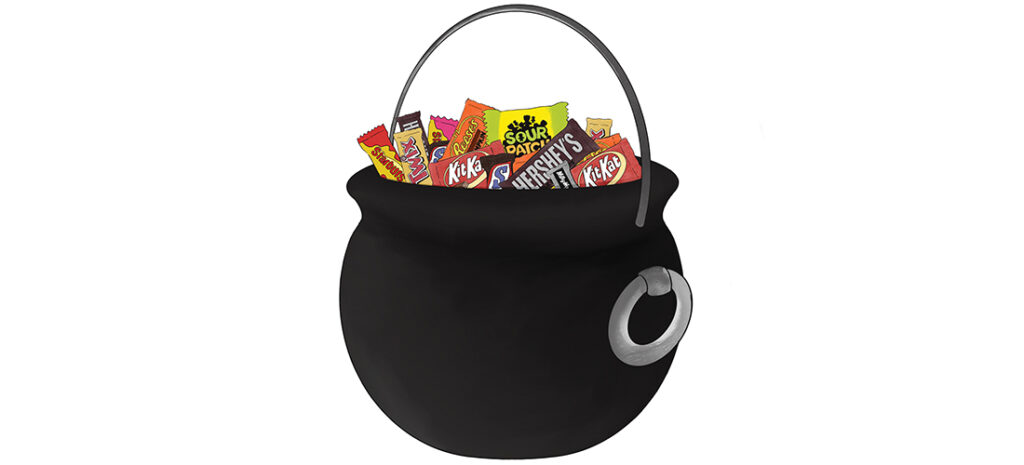
Hendrik: Starbursts, Sour Patch Kids, Sour Punch Twists.

Connor [loudly, in T. rex mode]: Mmmm!

Olivia: Jelly beans.

Jelly beans? Really? For Halloween? Any particular kind?

Wilhelmina [giggling]: Rainbow!

Olivia [giggling more]: Unicorn!

Rainbow, unicorn jelly beans? Is that a thing?

Hendrik [sounding world-weary]: No, that is not a thing.

Olivia: I have a really good one: Cookies.

Cookies in packs?

Olivia: [Smiles charmingly, suggesting she would like to start a trend]

Wilhelmina: Reese’s cups, and thennnnn Sour Patch Kids, and thennnn Giggles.

OK, let’s be honest here: What are the worst candies?

Sonja: I don’t really like those gummy hamburger things.

Those are nasty.

Sonja: Also, those gummies shaped like soda bottles. [Panel groans in agreement] They try to make them taste like soda. But they don’t.

Anyone else? No one? There’s no other bad candy?

[Silence]

OK, next question: If someone is giving out Halloween candy, is it better if they hand you the pieces or let you pick it.

[Panel responds in unison]: LET YOU PICK!

So they would say, “Pick two or three pieces?”

[Panel nods]

Connor [again as full-throated T. Rex]: I want MORE! [Then, sweetly] Can I have more lemonade?

Yes, Connor. So, what’s the worst thing y’all ever got for trick-or-treat?

Sonja: Pokémon cards. I don’t like Pokémon. And baseball cards.

When I was a kid, the worst thing you could get was a small box of raisins.

Sonja: I love raisins. But I’ve never gotten any.

Hendrik: I love raisins, too. The white ones.

Wilhelmina: Yummy! White chocolate!

Sonja [firmly]: It’s not white chocolate! It’s yogurt.

Olivia: I’d eat them, too. I’d eat one. Or two. Or three.

Hey, do you know that cartoon, It’s the Great Pumpkin, Charlie Brown?

Sonja: I don’t think I’ve ever seen it.

OK, well, Charlie Brown goes trick-or-treating, and he gets a rock. What would you do if that happened to you?

Sonja: I’d be pretty happy because then I could paint the rock.

Gosh. That’s a great way to look at it.

Olivia: I wouldn’t a bit be happy.

Would you say anything to the person who gave you the rock?

Wilhelmina: Thank you! And then I would paint it with a waterfall, and a forest, and flowers, and grass, and . . .

Hendrik: You’re gonna need a big rock for that.

You know what? Somebody told me they knew a dentist who gave out toothbrushes and little tubes of toothpaste. What would you think of that?

Sonja: I would love it. Then you could have a doll’s toothbrush.

Wilhelmina: If it wasn’t an electric one, I would use it for my stuffies. But if it was an electric one, I would use it for myself.

Hendrik: I would be happy because . . . my dad uses my toothbrush. His broke.

Sonja [defending their father’s dental honor]: It was an electric one. He used the battery part.

Hendrik: Is the recorder still playing?

Yes. OK, if someone gave you some candy that you really didn’t like, would you ever send it back?

[Panel responds “NOOOO!” in unison, except for Olivia, who nods.]

Olivia, you would?

[Nods]

What would you say?

Olivia: I would say, “No, thank you.”

Hendrik: Well, that’s a good answer.

Olivia, would you ask to trade, like the girl did?

Olivia: If I really didn’t like it, I would trade. But if I kinda liked it I would keep it.

Hendrik: Connor wants another cookie.

Ok, here, Connor. Last question: Do you guys ever trade candy?

Hendrik: Oh, yes, yes, yes!

Tell me.

Hendrik: I’m trading Snickers for Sour Patch Kids.

Sonja: I trade a whole bunch. I’ll trade Kit Kats for Snickers since I love Snickers.

Olivia: I trade with Hendrik sometimes.

Hendrik [turning to Olivia]: Oh, you trade some tricky candy! [Turning back to me] We have this habit. If Olivia doesn’t like it, I like it. And if I don’t like it, she likes it.

This is a match made in heaven.

Wilhelmina: They’re dating.

Wait, are you guys dating? Is that true?

Olivia: No! We’re not even close.

Wilhelmina: They’re dating.

Olivia: No!

Hendrik: We only like each other! We’re not even best friends! We are nowhere near dating.

Is there anything else about candy that’s important to know?

Sonja: I don’t understand how some people will be walking around with huge sacks and I just have my little bucket.

Hendrik: Connor wants another cookie.

There we have it. Chocolate and sour candies are best. Two to three pieces each. Pick your own. Rocks and raisins are acceptable. Olivia and Hendrick are not dating. And Connor wants another cookie.  OH

Maria Johnson is a contributing editor of O.Henry. Email her at ohenrymaria@gmail.com.

Sazerac October 2023

Sazerac October 2023

Unsolicited Advice

Halloween — the one time of year that it’s acceptable to dress up like Blond Ambition World Tour-era Madonna. Every other time we don the look, we get nothing but side-eye from our office mates. We’re dropping some easy-to-pull-off holiday looks, inspired by one of our fav subjects: the English language.

Looking for a couples costume? One of you can sport an English tweed suit, white beard and round glasses — and don’t forget the trademark cigar — while the other wears a simple slip. Together, you’re a Freudian slip.

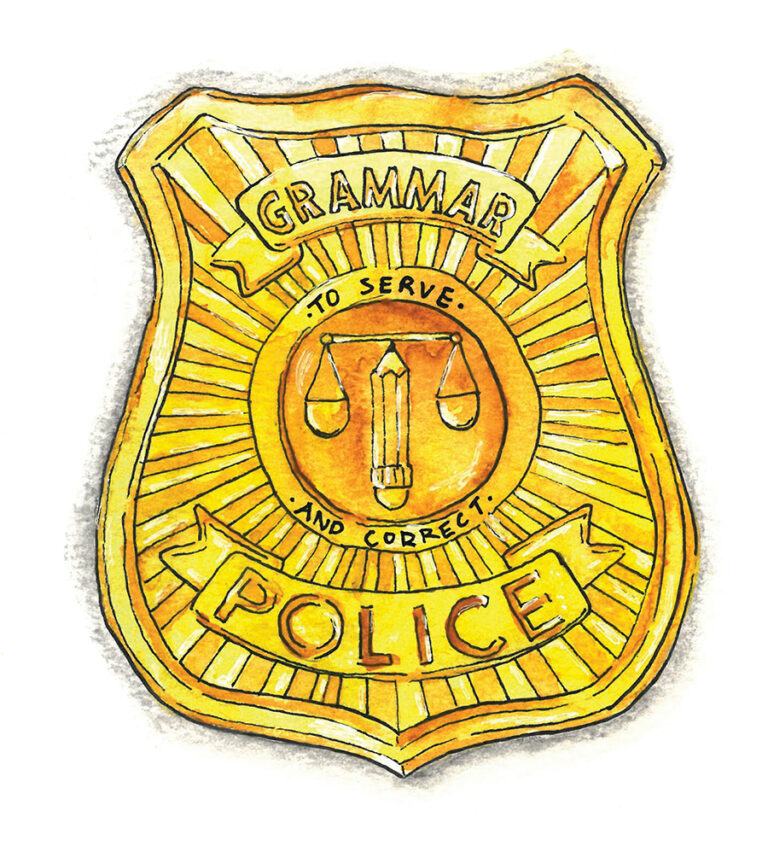
Stop in the name of literacy! All you need is a whistle, a police cap and a “Grammar Police” tee to play the part. We’re happy to let you borrow ours.

Colon or semi-colon — do we really need to go there?

Another twofer? One person dresses as a dog-walker with a leash around the neck of the other, dressed as Santa. Subordinate Claus, anyone?

Put on your most starched button-down and toss on a driving cap plus suspenders for added effect. Lastly, use black construction paper to cut out a comma and adhere it to your belly.  You’ll be the most welcomed — and dapper — Oxford comma we’ve ever seen.

Lasting Legacy

Saliba Isa Hanhan
APRIL 18, 1940 – AUGUST 2, 2023

I know that you’re smiling down at me as I struggle with this, Saliba Hanhan.

“You’re a writer, aren’t you?” you’re saying. “This should be easy for you.” You have a mischievous twinkle in your eyes and that smile incorporating every muscle in your face.

Yes, Saliba, you were a chemist, a professor, a gourmet, a shopkeeper extraordinaire, a gardener, a cook and a masterful formulator of recipes. But you were also an astute philosopher, a lifelong student, and a collector of fascinating friends and interesting knowledge, which you generously shared with others. But your children — your daughter, Emily, and two sons, Easa and Omar, each of whom continues to share the glow and energy that kept us coming to your store, even when it was 30 miles away — were your real legacy, of which you were so justly proud.

“I just got a cheese in that your friend Jim’s gonna love,” I can hear you saying, “but it may not be stinky enough for you.” And when we’d get home and start unpacking, I’d often find a heel of a Parmigiano-Reggiano or the bone of a Serrano ham that you slipped in. “You know what to do with it,” I can hear you saying.

I don’t know what makes someone “great.” Fame? Fortune? Power? None of which you cared about. Your greatness went beyond conventional definitions of worldly accomplishments. What made you great was how you followed your heart, found what made you happy and then managed to share that happiness day in and day out with others. It’s a greatness that goes beyond the grave, which is why, once again, I can hear you saying, “David. That’s a bit too much. Calm down.”   
  — David Claude Bailey

Calling All O.Henry Essayists

Don’t forget to enter our annual 1,000-word essay contest, themed “The Kindness of Strangers.” Details can be found here: ohenrymag.com/sazerac-september-2023.

Window to the Past

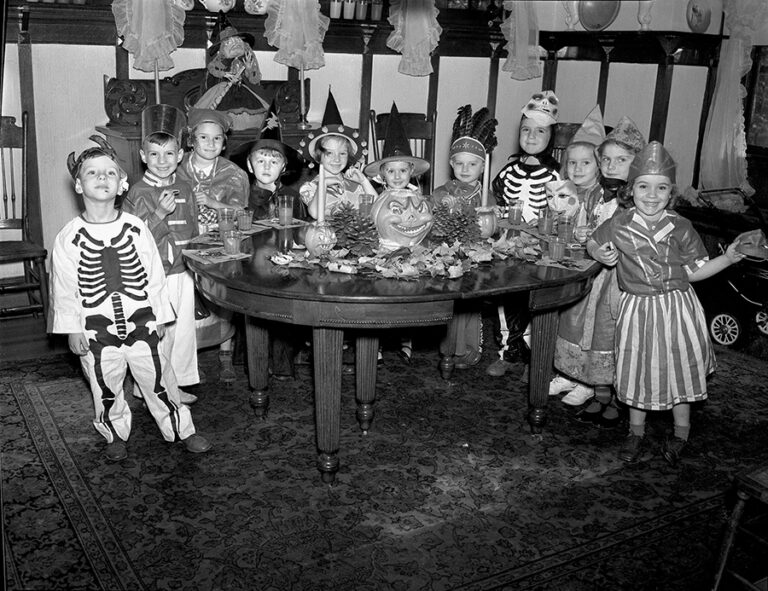
Photograph © Carol W. Martin/Greensboro History Museum Collection

Kids in the 1940s: ″Trick-or-treat, give us Fig Newtons to eat!″

Kids today: “′Made with real fruit?′ What else ya got?”

Sage Gardener

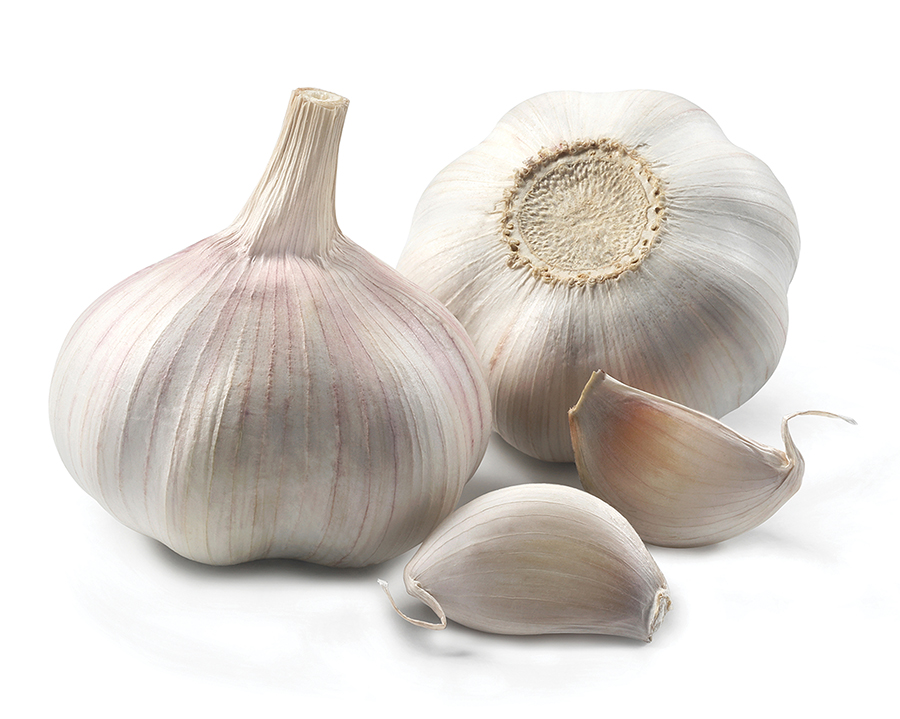
Garlic has been around for at least 5,000 years, but its reputation has hardly improved.

Esteemed by the Egyptians, Greeks and Romans for its medicinal properties, fed to workers, soldiers and oarsmen to increase their stamina, and touted for increasing sexual potency, garlic has long been “disdained by the aristocracy” and denigrated by love poets such as Horace, according to the Oxford Companion to Food. Never mind that Pliny the Elder listed 61 remedies prepared from garlic or that it’s still used in China today as an antibacterial, antifungal and antithrombotic agent. Admittedly, garlic’s after-odor is a tad odiferous — fetid, putrid, foul and rank, according to some of my former office mates. So one of the prime reasons I’ve been looking forward to retirement is eating as much garlic as I want, whenever I want. Garlic confit. Basque garlic soup. Aioli by the spoonful, ladled on a baguette. Garlicky harissa. Kimchi. Forty-clove garlic chicken à la Julia Child, who once wrote in The Boston Globe, “40 cloves may not be enough.” And with the arrival of fall, it’s high time to get it in the ground. According to the Central N.C. Planting Calendar, the ideal planting time for garlic is from September 15 to November 30.

Don’t sweat the frost. As our warm fall temperatures shift to colder, freezing days and nights, the bulbs sprout and take hold, waiting for warm spring days to reach their green tentacles out of the hay covering them. (It’s called vernalization.) Garlic thrives on nitrogen, so top dress your plants in February with composted manure. And if you’re planting hardneck garlic (look it up), by all means harvest the scapes and pop them, sautéed, into an omelet with blue cheese. (Removing the scapes increases bulb size by as much as 30 percent.) The bulbs will fill out by summer, just in time for pico de gallo and pesto. Tie the harvested plants in bundles and hang them high from the eaves of a shed or garage for four to six weeks so they cure. By then, it’s almost time to put some of them back into the ground. (No need to worry about cross-pollination because each plant is a clone of its parent.) Plant your largest cloves to get bigger bulbs next year. And, when vampires take wing on the night on October 31, think about baking a big batch of roasted-garlic, chocolate chip cookies (https://www.food.com/recipe/garlic-chocolate-chip-cookies-28771). Sink your fangs into that.         David Claude Bailey

Just One Thing

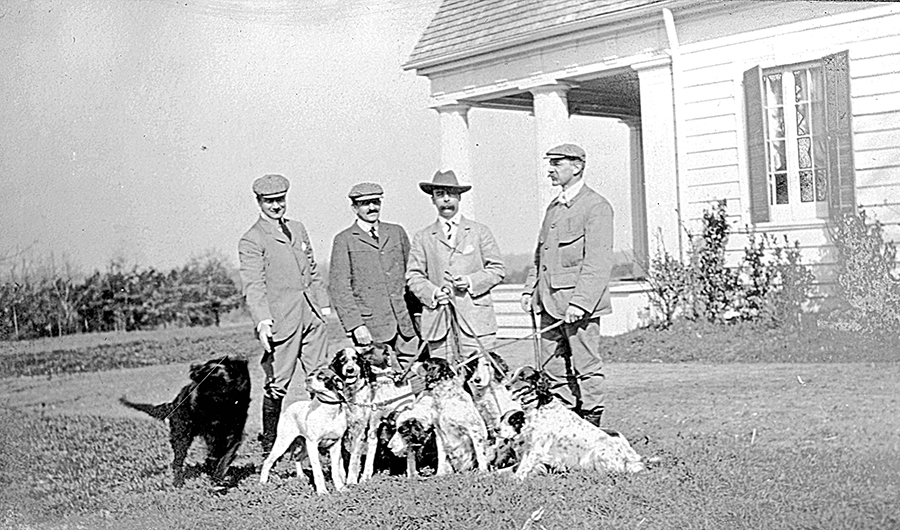
Whether or not you’re a fan of blood sports, history cannot be erased: Less than 120 years ago, some of the richest and most influential captains of American industry traveled hundred of miles to Jamestown to realize their most cherished dream — killing a dozen or more birds in one afternoon. In this photo taken in front of Deep River Hunting Lodge (most likely by renowned sports photographer J.C. Hemment), millionaire industrialist and lodge owner Clarence Hungerford Mackay, sporting the fedora, holds the leads of a pliant pack of bird dogs. The setters and pointers were trained by Englishman Edward Armstrong, whose family shared the photo and other artifacts on display at the High Point Museum in Field & Feathers: Hunting at Deep River Lodge, 1895–1935. The gentleman standing next to Mackay with the handsome, dark mustachio is William Kissam Vanderbilt II, says Marian Inabinett, curator of the museum’s collection. The tall and dapper huntsman facing Mackay seems to be Reginald Ronalds, whose great-grandfather was Pierre Lorillard II. Deep River Lodge, designed by noted Gilded Age architect Stanford White, was the grandest of a number of hunting lodges across central North Carolina. “It’s a forgotten story, but for decades America’s wealthiest men enjoyed hunting bobwhite quail that thrived among the woods and open farmland in the center of the state,” says Inabinett. “Also on display are a suitcase and steamer trunk with great travel stickers on them, a bottle of Champagne from the lodge’s wine cellar, lots and lots of ocean liner memorabilia, and even some steamship tickets for hunting dogs,” she says. The exhibit will be open through January 31, 2024. Other photos and images can be seen via the museum’s app and on its Facebook page. Info: www.highpointmuseum.org and www.facebook.com/HighPointMuseum

Simple Life

Simple Life

Farewell to Golf

But With Apologies to Sam Snead, Not Just Yet

By Jim Dodson

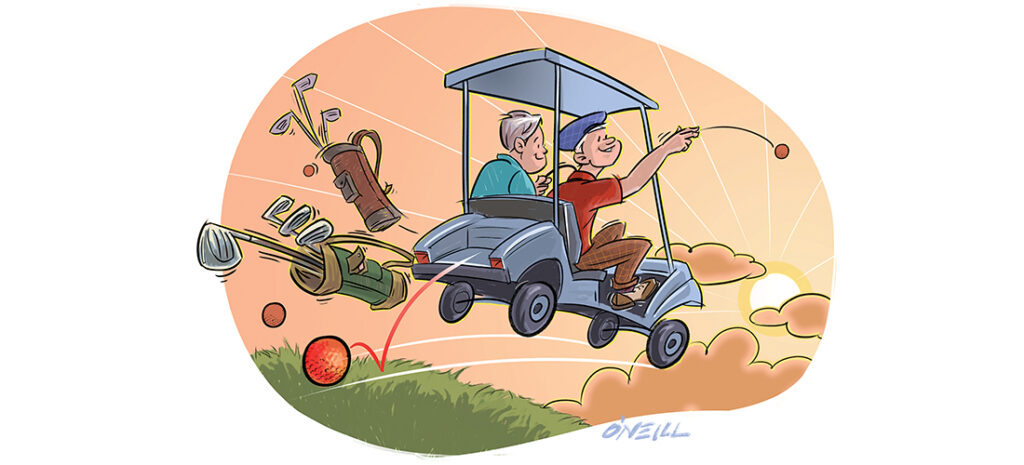
It began with a few simple questions on a beautiful October evening last year as my best friend — and oldest golf rival — and I were walking up the ninth fairway of the club where we grew up playing and still belong. As usual of late, Patrick Robert McDaid and I were all square in our friendly nine-hole match.

As we approached our tee shots in the fairway, he suddenly said: “Can you believe we both turn 70 next year?”

I laughed. “If I forget, my aching left knee reminds me every morning.”

Pat also laughed. “Isn’t that the truth.”

I could tell, however, that something else was on his mind, the benefit of more than 58 years of close friendship. We began playing golf with — and against — each other the year we turned 12.

“Do you think we’ll take one of those trips again?” he asked.

We both knew what he meant.

Over the 40 years I worked as a columnist and contributing editor for several major golf publications, my oldest pal and I had roamed the Holy Land of Golf, as we call it — Scotland, England and Ireland — more than half-a-dozen times in each other’s company, often on the spur of the moment with few, if any, arrangements made in advance, armed only with our golf clubs and hall passes from our wives.

Before I could reply, he chuckled and added, “Remember that time in Scotland when you locked the keys in our rental car and we had to stay another night at that guest house near Southerness?”

“How could I forget it? You’ve never let me live it down.”

“The owners invited their crazy neighbors over just to hear your golf stories.”

“Actually, it was your crazy fly-fishing stories they wanted to hear. You were more fun than a drunken bagpiper.”

“Good whisky helped.”

We hit our approach shots onto the green. I lagged my 20-footer to the edge of the cup and tapped in. As he stood over his 10-footer for birdie, he reflected, “I loved those trips. All those great old courses and golf on the fly.”

As I watched, he rolled his birdie putt dead into the cup, sealing my fate with a 1-up victory. It was an annoying trend of late. His short game had gotten markedly better from years of regular practice, while mine had declined from benign neglect. I sometimes joked that moving to Pinehurst — the Home of American Golf, as it’s rightly known —  was the worst thing I could have done to an aging golf game because I had no regular buddies to play with. I arrived there in 2005 a 2.5 index player and left a decade later a limping 10.5. All work and little play had left Jimmy one step closer to dufferdom.   

“I’m thinking we should do it one last time before the boneyard summons,” Pat declared.

“You’re probably saying it because, for the first time in half-a-century, you’re regularly beating me.”

“That’s true,” he admitted as we walked off for me to buy the beer. “But it would be even sweeter to finally beat you in some of the classic courses you love best.”

Pat is a persuasive fellow, probably the reason he’s such a successful industrial go-to guy for one of the nation’s leading home improvement chains. To begin with, he’s blessed to the marrow with “the craic,” a delightful Irish slang word derived from Old English that denotes a natural ability to charm and engage almost anyone in friendly conversation. I’d witnessed my old friend work his Celtic magic too many times to deny its validity. Some years back while chasing the ball around Ireland, a mutual friend with a wicked sense of humor bestowed Pat the perfect nickname of “The Irish Antichrist,” owing to his supernatural ability to disarm and coerce a smile from almost everyone we met. More than once, I must concede, we drank for free for the evening.   

Over his latest victory beer, I told Pat something Sam Snead said to me almost 30 years ago as we were playing the Greenbrier’s famous Old White course on a similar autumn afternoon. I was there to write about him for my “Departures” golf column. Sam liked me, in part because I was good friends with his best friend, Bill Campbell, the legendary amateur. Snead was almost an honorary son of Greensboro where he won the Greater Greensboro Open a record eight times, including six times at Starmount Forest, where Pat and I were soon sitting at the bar with our beers.

“How old are you now, son?” Slammin Sam asked me that faraway afternoon.

“Just turned 40, Mr. Snead.”

“What a great age. That’s the prime of life — makin’ good money, got a wife and kids, probably playin’ your best golf ever. I wrote a book about that called Golf Begins at Forty. You should read it.”

I promised to lay hands on a copy — when I got old.

“But here’s the thing,” he went ahead. “Someday you’ll blink your eyes and be 70 or 80 years old. It’ll happen that fast, you’ll hardly believe it. You’ll suddenly be saying farewell to golf. That’s when you better grab hold of as many golf memories as you possibly can. That’s the beauty of golf. If you keep after it, you can play till your last breath. No other game on Earth let’s a fella do that.”

I watched him tee up his ball. “Just so you know,” he added over his shoulder, “I got plans to play at least to 100.”

And with that, 81-year-old Samuel Jackson Snead striped a splendid drive to the heart of the 17th fairway.

“So, who won the match?” demanded the Irish Antichrist.

“That’s not the point,” I said as we sat at the bar. “Sam was just sharing a little golf wisdom about enjoying the game as one ages.”

“Good for him. I guess this means we’re off to the Holy Land next year. By the way, I get at least four strokes a side.”

“No way. Three for 18,” I said firmly, pointing out the three-stroke difference in our official handicap indexes. This was nothing new. Over five plus decades, we’d argued about everything from the prettiest Bond girl to the absurdity of orange golf balls.

A good friend, it’s said, knows all your best stories, but a best friend has lived them with you.

Over 10 days near summer’s end, in the 58th year of our friendship, we played eight classic British golf courses during the heaviest rains in England’s recorded history. It was a slog, almost impossible at times as gale force winds blew our handicaps to pieces. Between us, we easily lost a dozen golf balls.

But we had the time of our lives.

Somehow, unforgettably, we ended up in a tie.  OH

Jim Dodson is the founding editor of O.Henry.

Chaos Theory

Chaos Theory

Through the Wringer

Laughter, rinse, repeat

By Cassie Bustamante

Questionable choices? I’ve made a few. After all, I’ve been known to snip my own bangs when I get bored, despite the fact that my husband, Chris, thinks they’re “awkward”. I’ve attempted to pop deep pimples even though the results are always the same — a bigger blemish with a scab on top. The last time I did that, I even pointed to it as I said to Chris, “I will learn nothing from this.”

But I’ve been known to make good decisions, too — like when I walked down the aisle — bangless, mind you — to marry Chris 20 years ago in late September, 2003. I know this to be true, because I’ve put him through the wringer in the two decades since saying “I do.” In fact, just a month or so after our nuptials, I tested the waters, accidentally, and discovered just how my new husband would handle a costly slip-up.

That fall, I was employed as a personal trainer at Cross Gates Athletic Club, a family-friendly gym in Slidell, Louisiana. As is often the case in that profession, I worked split shifts, training in the early- to mid-morning hours and again in the evening.

On one particular morning, my stomach churns, a cacophony of gurgling, rumbling sounds. You know the ones. I rush home for my midday break, parking my car in the driveway, certain I’ll pop some Pepto and be back on my feet. But things get progressively worse and the realization strikes: I’ve been hit with food poisoning.

I call into the gym to cancel any remaining appointments and decide to move my car, a standard transmission VW Jetta, into the garage since I won’t be going anywhere anytime soon.

Once in the driver’s seat, I turn the key in the ignition, catching a blur of activity in the corner of my eye. In my unwell haze, I’ve not fully closed the door from the kitchen to the garage, and Charlie, our Houdini-like beagle, has spied his opportunity for freedom, shoving the door fully open with his snout.

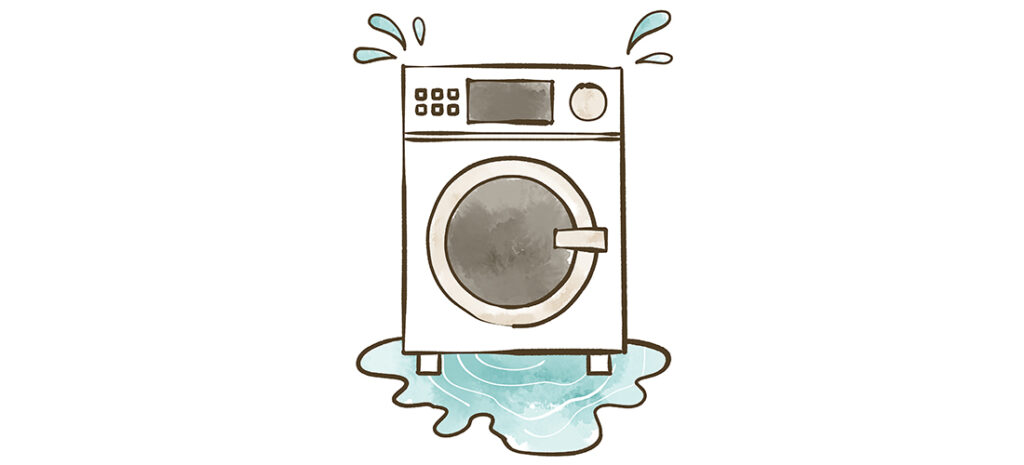
In my panic, I drop the clutch and the Jetta jolts forward, crashing right into our washing machine. Stunned, I glance back at the kitchen door, but Charlie is nowhere to be found.

After turning the car off, I dash inside and find him trembling under our bed on the complete opposite end of the house. He’s petrified, but at least he’s safe.

Back in the garage, I stare at the washing machine in disbelief. Nervously, I dial Chris.

“Hey, so . . . um . . . I kind of ran my car into the washing machine,” I tell him, explaining the events that led to the collision.

There’s a pregnant pause as I prepare for his wrath. Instead, he explodes in laughter. Once he’s able to speak again, he asks, “OK, well, does it still work?”

“Lemme check. Oooooh, yes! Water is running!” I pause. “Scratch that, all the water is coming out at the bottom.”

“OK, well, it’s no big deal,” he says. “We’ll go get a new washing machine this weekend,” he continues. “You’re all right and so is Charlie.” Another giggle escapes his lips and I picture him on the other end of the line, shaking his head.

A week later, as Sears delivers our brand-new machine with the bonus free haul-away service for the old appliance, the driver says, “I’m not even going to ask what happened.”

But I’ll tell you what happened. I discovered that I’d married a man who would help me find the lightness in tough situations and be by my side “for better, for worse, for richer, for poorer, in sickness and in health,” with bangs or without. And while appliances can come with a high price tag, knowing I’ve chosen a great partner is priceless.  OH

Cassie Bustamante is editor of O.Henry magazine.