Doodad

Free For All

EMF continues to broaden its appeal with concerts gratis to the public

If you thought classical music was out of your class, here’s your chance to elevate your status with no strain on your wallet. For the second year in a row, the Eastern Music Festival presents its Pay What You Can orchestral celebration June 28. “We decided that first Friday night of the festival was a good introduction to the whole shootin’ works, the whole shebang,” says EMF Executive Director Chris Williams. “One of my board members said, ‘Let’s go find a foundation to support it.’ And the Mebane Foundation, which does educational work, said they thought this would fit beautifully, agreed to provide the funds so we could make that one concert free and open to everyone.” The Greensboro billionaire Allen Mebane, who made his fortune in textiles with Unifi, launched his namesake foundation to ensure that all children, “regardless of race or socioeconomic background, should have the opportunity reach their highest potential in school, in career, and in life.” That philosophy dovetails perfectly with the EMF’s goals of exposing young people to the arts through an intensive, hands-on learning process and attracting the audience to see their accomplishments in performance.

In this case, you get to see all the EMF’s orchestral musicians onstage in one night. The Faculty orchestra plays one big piece, then the two student orchestras will split a Brahms symphony with each playing two movements of the symphony. “You get three orchestras playing two pieces, for whatever you can afford,” Williams says. “Last year we tried it, we were very quiet about it, weren’t sure how it would work. It brought in some families, some students who had maybe not taken the leap forward into EMF yet, that had not come before because they were curious but not willing to commit. It got people interested and excited right away.”

To rev up the excitement, the EMF hosts a chamber crawl June 15, partnering with a handful of musical ensembles for an afternoon of free performances along Elm Street. “Last year we did eight performances in eight venues — plus a little party vibe at the end,” Williams says.

Otherwise, the rich array of concerts and guest artists audiences have come to expect from EMF will continue through next month. On July 14, the festival goes on the road to Boone for a one-night appearance at the Appalachian Summer Festival, an encore performance of the Eastern Festival Orchestra featuring pianist Awadagin Pratt. And a beefed-up, second-line soundtrack — a two-week program for euphonium and tuba, much like EMF’s guitar program — should put some pep in your step, ensuring a brassy summer kickoff for the venerable festival. — Grant Britt  OH

Info: easternmusicfestival.org

Food for Thought

(Chicken) Salad Days

There is nothing like chicken salad. Whether homey or haute, it can be the centerpiece of any summer meal

By Jane Lear

Aside from the “fiesta” or “Oriental” versions found at some chain restaurants, chicken salad has pretty much been relegated to the Nostalgia Department: suitable fare for tearooms, drugstore lunch counters and Southern porch suppers, circa 1955.

I don’t know why. I suppose people are afraid of the fat in mayonnaise — common to most recipes — or perhaps the technique of poaching chicken — ditto — sounds difficult. This should change. Chicken salad should become a trend.

I mean, if I had a restaurant — a little roadside café, say — I’d feature a chicken salad sandwich of the week. Or perhaps I’d serve nothing but chicken salad; if one of the whiz kids behind the grilled-cheese-shop fad wants to diversify, we should talk.

No matter what, though, I always keep chicken salad in my regular rotation at home, because it’s a great make-ahead family supper or, fancied up with tarragon and toasted walnuts, for instance, or with a curry dressing, a fabulous company meal.

In a perfect world, obviously, I’d always take the time to gently poach chicken breast halves, complete with bones and skin: Not only is that one key to flavorful yet clean-tasting meat (along with using a wholesome pastured bird), but the light broth is handy for moistening the salad (instead of more mayo) if it starts to dry out — a trick I learned back in my years at Gourmet.

Life has a tendency to get in the way, however, and I’m here to remind you that you can make delicious chicken salad from leftover sautéed or roasted chicken, or even a store-bought rotisserie bird.

For sheer speed and efficiency, it’s hard to beat that last option, so I’m always a little shocked when I meet people who are snooty about rotisserie, or spit-roasted, chickens, one of the greatest convenience foods on the planet. Have they ever been to an outdoor market in France? I wonder. The queue for poulet rôti should be a tip-off that it’s an honest, worthy substitute for a home-roasted chicken in many a French kitchen.

And in mine, too. I’ll often buy two on the way home in the evening — one for eating that night, with some harissa-slicked couscous and quick-cooked greens, for example — and the other for salad, later in the week. While it’s still warm, I’ll strip it of bones and skin, shred both white and dark meat, and combine it with the dressing. Honestly, anyone can do this.

As far as chicken salad recipes go, I like having a repertoire. Several old-school renditions are embellished with toasted slivered almonds and grapes, cut in half lengthwise. A famous one, which is rich and light all at the same time (aside from red grapes, almonds, celery and parsley, the recipe includes unsweetened whipped cream), was created by renowned Texas cook Helen Corbitt for the café menu at the Neiman Marcus department store in the ’50s. We also have Corbitt to thank for Texas caviar (i.e., pickled black-eyed peas) and poppy-seed dressing.

Other chicken salads in this genre rely on a one-to-one ratio of mayonnaise and sour cream, and green grapes instead of red. In general, this sort of chicken salad is utterly predictable and absolutely delicious. You’ll want to serve it on a bed of soft-leaf lettuces, and on your mother’s china. A side of steamed asparagus and maybe some Parker House rolls and good butter would make everyone very happy.

Lately, though, I’ve been relying on supermarket staples — in particular, Major Grey’s mango chutney and dry-roasted nuts — as well as a picked-up-on-the-run rotisserie bird to put a chicken salad supper on the table fast. What takes this combination out of the Coronation Chicken Salad realm (first made for Queen Elizabeth II’s coronation lunch in 1953, it’s been popular in Britain ever since) are the additions of cilantro, basil, mint, and lime juice for freshness and verve, as well as large, voluptuous leaves of butterhead lettuce, for making Southeast Asian-style roll-ups.

Fast-Track Chicken Salad with Mango Chutney and Cashews

1 medium red onion, chopped

1 jar Major Grey’s-style mango chutney (8 to 9 ounces), mango cut into smaller, bite-size pieces if too chunky

½1/2 cup mayonnaise (I’m a lifelong fan of Duke’s)

Fresh lime juice, to taste

Coarse salt and freshly ground pepper

1 rotisserie chicken (about 3 pounds), skin and bones discarded and meat shredded

2 to 3 celery stalks, chopped

Dry-roasted whole cashews or peanuts, coarsely chopped, to taste

For the roll-ups

1 or 2 butterhead lettuces such as Bibb, leaves separated, left whole, washed, and spun dry

Handfuls of fresh cilantro, basil and mint sprigs, rinsed and dried

Sliced radishes and/or seedless cucumber, optional

1. Stir together the onion, chutney, mayo and lime juice in a large bowl and season with salt and pepper. (Go easy on the salt if you’re going to be adding salted nuts.) Gently stir in the chicken until thoroughly combined. Give the flavors a chance to mingle for 20 or 30 minutes.

2. Just before serving, gently stir in the celery and nuts. Spoon the chicken salad onto a platter and arrange the roll-up fixings (lettuce leaves, herbs, and vegetables) around it so everyone can serve themselves. Your mother’s china, optional.  OH

Jane Lear, formerly of Gourmet magazine and Martha Stewart Living, is the editor of Feed Me, a quarterly magazine for Long Island food lovers.

Sidecar Smackdown

Local bartenders mixed it up at a recent competition, producing some top-drawer tipples, according to two judges from O.Henry

By Billy Ingram and Annie Vorys

Dram & Draught has revved up the Greensboro bar scene, quickly becoming the latest hub for downtown drinks and hijinks. This hip little joint, formerly a service station on the corner of Eugene and Gate City Boulevard, has been transformed into a super-comfy upscale hangout that’s hosted movie nights, live music and — if you literally want to take the edge off — hatchet-throwing. But the watering hole is best known for its highbrow seasonal cocktail menus. Wrestling with upholding their newfound rep for pretty pours, they recently called three Triad bartenders to the mat against the home team for the ultimate Sidecar Competition.

When asked to judge the contest on a panel that could well have been described as an awkward dating scene (our compatriots were an administrative assistant, vegan-food vendor and a distiller), Annie’s response was: “Be still, oh beating liver! You’ve spent a lifetime training for this!”

Our bible (one of many), the 1998 volume Atomic Cocktails, likens a sidecar to a daiquiri, but with brandy instead of rum, Cointreau in place of sugar syrup, and the addition of fresh lemon or lime juice (unless you’re the “hardcore” type). The guide goes on to say that the libation was a favorite of no less than Ernest Hemingway’s during his Moveable Feast expat years in Paris. Good enough for Papa, good enough for us!

One by one, the competitors stepped up, describing their version of the classic. Hosted by Hennessy, there was only one rule: Use Hennessy VSOP. Billy was particularly impressed with “the verve the barroom mixmasters exhibited and the preparation involved in their concoctions so everything could be served up quickly.” Lao’s Robert Rhodes charred his orange peel and soaked blackberries in liqueur. Max Barwick of 1618 Midtown educated us on absinthe as he mixed his version. Country girl and Dram & Draught’s own Jordan Harwood brought in her homemade peach-mint tea in a potion she calls Porch Swing. “That personal touch, and her signature orange peel rosette, sold us judges,” declares Annie. Billy concurs, giving props to all the “refreshing” elixirs, particularly Harwood’s. “Makes me want to go down there right now and order one (which I promptly did after writing this!).” As for Annie: “Beat you to it, Buster! Where do you think I found my muse for this piece?”

Life don’t mean a thing till you’ve tried the Porch Swing. For something stiff, go for the Skiff, Max Barwick’s island-y take on the traditional sidecar placing second in this competition. Another one to try? Robert Rhodes’ Blackberry Pie. Mix ’em yourself using the following recipes — and be careful these sidecars don’t knock you sideways.

Jordan Harwood’s Porch Wing

1 oz peach-mint tea simple syrup (see recipe)

2 oz Hennessy VS

3/4 oz fresh lemon juice

1/4 oz Copper & King’s Destillarè Orange Curaçao

3 dashes Angostura Bitters

2 dashes Fee Brothers Peach Bitters

Shake all ingredients over ice; strain and serve up in a coupe.

Peach-mint tea simple syrup: In a medium saucepan, combine 3 cups chopped fresh peach, 1 cup brewed black tea and 1 cup sugar. Bring to a boil and reduce to a simmer, stirring frequently, for about 10 minutes. Remove from heat and add about 40 mint leaves to infuse while cooling. Finely strain when cool.

Max Barwick’s The Skiff

2 oz Hennessey VS

3/4 oz coconut-infused Cointreau

3/4 oz pineapple juice

5 dashes absinthe

Shake all ingredients over ice; strain and serve up in a coupe.

Robert Rhodes’ Blackberry Pie

2 oz Hennessey VS

3/4 oz lemon juice

1/2 oz Solerno Blood Orange Liqueur

3/4 oz blackberry pie syrup (see recipe)

Blackberries and orange peel to garnish

Shake all ingredients over ice; strain and serve up in a coupe.

Blackberry pie syrup: Soak 25–30 blackberries in 16 oz Hennessey VS for 4 hours. In a saucepan, combine blackberries and cognac with 8 oz water, 1 cup sugar, 1 1/2 sticks cinnamon, strip of orange peel and 3 drops of vanilla extract. Bring to a boil; lower heat to simmer and simmer 30 minutes to one hour. Cool and strain.  OH

Billy Ingram and Annie Vorys are happy to continue in their roles as cocktail judges — with or without a competition.

Gate City Journal

The Little Restaurant that Could

In spite of its surroundings in a construction zone, Cincy’s Café carries on and soothes the soul with great cooking

By Cynthia Adams

It’s 10 a.m. at Cincy’s Café — at the best of times a place that is tucked out of sight on the street level of the historic Dixie building facing February One Place. The building itself once housed the Dixie Fire Insurance Company. Now, the only fire here comes from the Cincinnati-style chili, the café’s namesake dish. If you haven’t tried it, this toothsome, complex and oh-so-satisfying delight is not really all that spicy. But it’s definitely addictive, more closely resembling Greek spaghetti sauce than Southwestern chili, with bursts of allspice, a hint clove and subtle notes of chocolate. And, surprisingly, it’s served on a bed of spaghetti.

Only a couple of years ago, a hair salon was next door and the street was busy with foot and car traffic. But for over a year now, Cincy’s has been largely concealed by a forbidding construction zone. Outside, two orange scissor lifts are hoisting workers who are repointing brick on the side of the six-story building that has been Cincy’s home for decades. Two parking decks underway and a future hotel encircle the area.

For the faithful, and there are quite a few, there is only a narrow pathway open from Elm Street to the restaurant, flanked with orange construction tape.

February One Place remains closed except to foot traffic into Cincy’s — now looking more like a-behind-the-ropes setting for a Prohibition-era Speakeasy than a café. 

Despite the commotion outside, the eatery continues to be a popular and much-loved restaurant, where lawyers and business types in tailored suits quite literally rub shoulders in close confines with construction and office workers. Inside, Cincy’s owner Bonnie Kays is all business, clad in her no-nonsense black work uniform as she prepares for the lunch crowd, which can, despite all the obstacles, still be quite a crowd of regulars. A real dynamo with graying hair tucked beneath a black fedora, Kays greets me, as she does her customers, with blue eyes and dimples that crinkle into a smile. She is cracking open her first energy drink of the day.  (“It’s by V-8,” she says with a grin. “Very low sugar. Healthy, I hope.”) 

With only four or five hours’ nightly sleep, Kays is in a serious sleep deficit. She chugs the energy drink down and smiles.

Go juice.

“It’s funny,” she says. “Being in the business you can find yourself going all day without eating.” 

The eatery she and Cindi Long purchased in 1996 from the original owner, Linda Schwoeppe, first opened in 1986. 

Cincy’s is entering 33 years of operation, making it one of two of the oldest surviving downtown lunch spots (the other one I’ll get to below). Lunch crowd mainstays like the Southeastern Soda Shop and The Mantelworks, along with Woolworths, are long closed. Only the Acropolis on Eugene Street is older and still operational, having opened in 1967.  Like Cincy’s, it has battled with construction and parking losses as development has encroached.

Despite all odds, the low-profile Cincy’s (its name a riff on the aforementioned Cincinnati-style chili, layered with Greek-style seasonings) endures. The distinctive chili with its aromatic come-hither aroma accounts for at least half of daily sales. Half turkey, half ground beef, is offered, like traditional Cincinnati chili in five variations. Two-way is just chili and spaghetti noodles. Three-way involves an additional topping of cheeses. The “five-way” chili translates into spaghetti, chili, chopped onion, and kidney beans. And don’t write off the vegetarian offerings without trying them. One nonvegetarian foodie friend insists that the veggie version of Cincy’s chili is superior to the meated variety and it’s definitely spicier.

The chili recipe is a tribute dish, one Schwoeppe remembered from her native Ohio.  The former jeans and sportswear designer came from the Buckeye State to Greensboro to work at VF Corporation, while privately nursing a dream of starting a restaurant that served her very own chili recipe. Over two years Schwoeppe perfected her culinary specialty. When she felt it was ready to debut, she opened a restaurant in the Quaker Village Shopping Center, serving lunch and dinner, and eventually hired Kays to manage it.  Meanwhile, Schwoeppe expanded, opening a lunch-only restaurant at the current location downtown.

After 10 years, Schwoeppe sold the Guilford College location, and offered to sell the downtown Cincy’s to Kays and another employee, Cindi Long. They promised not to screw it up, Kays laughs.

Kays eventually bought out Long, who remains a colleague and close friend.  Employee Minnie Crowder, now in her 80s, came to work at Cincy’s in 1992 —  after 26 years working at the McCrory Drugstore counter located at Four Seasons Mall. “I bet she served many a grilled cheese to me there,” muses Kays.

Kays admits that Crowder is her rock. A woman who has worked since she can recall, she adds.

Both Crowder and Long offer a ready smile and kind word to customers, and know many regulars by name. “Cindi and Minnie are due much credit for Cincy’s success,” says Kays.

But it’s Kays’ creativity in the kitchen that really distinguishes this hidden gem. Nothing on the menu is same-old, same-old. Everything is served with care and flair. For instance, Kays offers five varieties of veggie burgers, one with grilled onions topped with a sauce savory with horseradish and rich with cream. Her 100-percent Angus burgers come six different ways, with a spicy, raging Cajun cooled down with ranch dressing and cheese. Add seven types of salads, an eclectic roster of tantalizing sandwiches plus chocolate-brownie pie or cobbler for dessert and it’s no surprise that Kays’ “long-term, true-blue customers” are willing to navigate past the cranes, sawhorses and a street closure to come eat in this woman-powered cafe. At least half of the true-blue have continued, even now that dedicated parking has been apportioned for a future city parking deck. Kays doesn’t object to more parking. “We need it,” she affirms. But it is part of a one-two punch, as construction continues making customer access difficult.

Like the regulars who fill those seats, Kays commitment to the job is also true-blue. She has been in the business since she got her first work permit. “My first job was waitressing at Heckle’s Big Steer out on Mt. Hope Church Road, a little restaurant that is now a truck stop, when I was 15. Once I started making money, I paid for my first car, a blue Pinto.” She was still a junior at Southeastern High School, and buying preppy chinos and jackets from the Limited with her own hard-earned waitressing money. 

If there was anything she liked better than being in the bustle of a kitchen, it was self-sufficiency. Kays soon bought a silver Mercury Capri . . . again with her earnings.  “I moved out into an apartment at Sans Souci as soon as I graduated.” 

Her first true management job was at age 20 working in the cafeteria at Sears, where “I learned everything from accounting up.” She took it upon herself to go in at 5 a.m. (“I learned my work ethic from my Daddy”) and work with the chef. 

“The first time I made a biscuit, I had to make 1,000. It was a huge kitchen, and I learned how to feed the masses.”

Feeding the masses is something Kays does, even when it doesn’t net her a dime.  One of her friends, Sally Randall, began a nonprofit charity Re4Him, to help those in need.

“Sally helps people get off the street. I started helping her and feeding the homeless, so now, I do it every week except the third week of the month when Domino’s does it.” The group, whose name is a compression of “Him” and a short reference to four words (to the fourth power), each starting with “re” — renew, restore, refocus, repurpose — sets up tables in front of the Greene Street parking deck and feeds anywhere from 175–200 people after hours. One day a week, Randall also works at Cincy’s.

Kays donates some of the food distributed. “The hunger problem is bad,” she says.

So, she counts herself lucky, and has a determination to survive a worrying transitional period.

These days, Cincy’s proprietor is counting on Kays’ catering business (“The spring furniture market saved us,” she says quietly) to stay afloat through a turbulent year of downtown construction, which eliminated a parking lot and on-street parking, and has put a serious dent into her usual traffic.

Before construction took the parking behind them and eventually closed off February One off completely, the restaurant was having a boom period — feeding 120 during lunch in 2017. Now, they are doing well to serve half that many.

“For the period before construction, things were going pretty smoothly. We were kicking it with record-breaking sales . . . making double chili batches. The best it had ever done. Even after Christmas, we didn’t see a lull . . . then they started construction.”

Adding to the headaches, the restaurant flooded last July due to a construction snafu — and for a heartbeat the entire Dixie building was condemned and evacuated. The next day, Cincy’s was back in business.

As their 33rd year of operation begins, the menu is being updated and tweaked.  Kays says their burgers, veggie burgers, hot dogs and sandwiches are well-followed, and not that much has changed in its history since she became the owner. Cincy’s homemade soups are widely reviewed online by several hundred fans. The chili must remain as is.

“Our staff and customers are the reason for not forgetting our chili by any means,” Kays allows.

Comfort food for the true-blue.  OH

Cynthia Adams is a true-blue regular at Cincy’s and a contributing editor to O.Henry.

June 19 Poem

Ode to My Backyard Garden

O mighty, O valiant

flowered phalanxes,

patrolling the patio perimeter!

Sharp-pointed hostas flank

two imposing hydrangeas

holding pride of place,

one uniformed in periwinkle,

the other, salmon pink,

their blooms thrusting

purposefully toward the sky.

Snowy-petaled Shasta daisies

with bright lemon centers —

the next line of defense —

gently wave in formation,

gathering intelligence,

heads pressing together

in silent exchanges.

Outermost are the sturdy sentinels,

daylilies hued in saffron and amber,

their ranks constantly replenished,

ever watchful for marauders,

especially Inscrutable Thomas,

the neighbors’ orange tabby,

a stealthy, persistent intruder.

O carry on, carry on,

my intrepid army

of blossoms!

— Martha Golensky

Simple Life

Stormy Weather

After withstanding decades of hurricanes, Wilmington’s Blockade Runner is ready to defy the odds once more

By Jim Dodson

On October 10 of last year, Hurricane Michael made landfall on the panhandle of Florida packing sustained winds of 160 mph, a storm verging on Category 5 that entered the record books as the third strongest hurricane on record. After fully devastating Mexico Beach, Michael churned toward the Carolinas as a tropical storm over the next two days, claiming 54 lives from Florida to Virginia, causing $25 billion in property damage.

On the afternoon Michael arrived in North Carolina, I watched on my iPhone weather app as the storm spread its mayhem over Charlotte and took some comfort that the winds and rain were expected to diminish to 30 mph tropical gusts by the time the storm reached the Triad.

The winds and rain arrived on schedule around 3 p.m. Since we live in a neighborhood filled with century-old hardwoods, I stepped outside to see how our elderly trees were handling the winds after one of the wettest autumns on record.

The winds suddenly increased and something blew off my roof with a clatter. It turned out to be a chimney cap, airlifted halfway across our front yard. As I walked over to pick it up, keeping an eye on the churning treetops, things got even crazier. I heard what sounded remarkably like an oncoming freight train and turned around just in time to see the peak of our neighbor’s roof vanish beneath what appeared to be a madly swirling cloud.  Having once been dangerously close to a large tornado, I wasn’t anxious to repeat the experience.

I headed straight inside to chase wife and dogs to the basement but suddenly remembered that I’d left the door to my home office over the garage standing ajar. Like one of those Russian babushkas who insisted on sweeping her stoop before evacuating the Chernobyl nuclear site, I foolishly bolted out the back door even as my phone began shrieking a weather alarm to take shelter immediately.

Taking two steps at once, I reached the top of the garage steps just as the large wooden electrical pole at the rear of our property, bearing a major transformer and various cable lines, snapped like a twig and flew past me like the witch from The Wizard of Oz, crashing into our backyard with a vivid explosion of sparks. For several seconds, I stood there stunned by what I’d seen . . . until I had the good sense to turn around and bolt for the basement.

What turned out to be a microburst or tornado, spawned by the fury of Michael’s tropical remnants, knocked over half a dozen ancient trees along our street and plunged the neighborhood into darkness for more than a week. We were among the fortunate ones, though. Our generator came on, and chainsaws came out and neighbors began appearing outside to help assess the damage and begin the cleanup process. Several folks on the street suffered major damage from trees that toppled directly onto their houses, but fortunately there we no serious injuries on our side of town.

My thoughtful neighbor Ken, who lives across the street and had a massive oak take out his center chimney and new second-floor bathroom renovation, shook his head and said it best. “Incredible, isn’t it? Nature’s power always seems to have the final word.”

A few weeks ago, I mentioned this frightening scenario and Ken’s comment to Bill Baggett as we sat together in a newly renovated room on the top floor of the historic Blockade Runner Hotel at Wrightsville Beach. Baggett, 72, simply smiled.

“Nature’s fury has the only word,” he added.

With the first of June looming — the official start of the Atlantic hurricane season that lasts until November 30 —  Baggett and his sister Mary, who jointly own and operate arguably the most beloved and well-known hotel on the North Carolina coast, are something akin to experts on the fickle fury of hurricanes and the unpredictable damage they leave in their aftermath.

Since their family purchased the Blockade Runner from its original owner, Lawrence Lewis of Richmond, Virginia, in 1971, the Baggetts — who assumed operational management of the property in 1984 — have ridden out half a dozen major Atlantic hurricanes and several near misses while hunkered down inside their cozy seaside hotel. Their legacy began with Hurricane Diana in 1984 and continued through last September’s Hurricane Florence, the sea monster that preceded Michael and turned Wilmington and much of Eastern North Carolina into a vast world of water, marooning the Port City for weeks.

In 1984, Diana blew out the hotel’s old-style windows and flooded the ground floor of the hotel with wind-driven rain. “Structurally the hotel was fine. It’s made of reinforced industrial concrete.” Baggett recalled that the worst thing that happened was that the covering for the air vents blew off, allowing rain to flood rooms and public spaces, while destroying plaster walls and ceilings “The hotel was soaked, a real mess, physically and legally,” he said.

When the Baggetts declined to accept their insurance company’s insufficient payout of just $12,000 to cover the extensive damages, they took their case to court, enlisting an expert witness in the person of a retired meteorologist from the Miami Hurricane Center named Robert Simpson, for whom the Saffir-Simpson Hurricane scale is named. His testimony resulted in a more satisfactory settlement  — and a new insurance company going forward.

Three hurricanes in quick succession followed within a decade. Hurricanes Fran (September 1996; 27 fatalities, $5 billion total damage), Bonnie (August 1998, no fatalities but 950,000 people evacuated from the Carolinas, total damage: $1 billion) and Floyd (September 1999, extensive flooding, 76 fatalities, $6.5 billion in total damage) tested the moxie of the Baggetts and their stout lodging. In 1989, even Hurricane Hugo took a passing swipe that blew out Blockade Runner’s windows but otherwise left the property unscathed. 

“Fran was pretty bad,” Baggett recalled. “It took a typical path up the Cape Fear and right over the top, sucking up water from both sides of the hotel — the ocean on one side, the sound on the other. For a while, it was like being in an aquarium,” he allowed with a laugh. “There were six of us in the hotel that night — Mary and myself, one of our cooks and several maintenance folks. Around 11 p.m., the window wall blew out and the water came rushing in, ruining carpets and floors. It was a long night but really the damage in that instance was fortunately fairly minimal. The hotel itself was fine.”

In Fran’s aftermath, in fact, emergency crews from the Red Cross, power companies and relief agencies billeted at the Blockade Runner, which was up and running in a matter of days. “The real issue,” Baggett explained, “was that Fran did serious damage to docks along the sound — prompting fears that the annual Flotilla might be cancelled. Fortunately, everyone worked hard to get the island back in shape and the event came off.”

For her part, Hurricane Bonnie looked fearsome but passed over relatively quickly, moving so swiftly she only took a portion of the Blockade Runner’s roof.

Floyd, however, brought rain on a Biblical scale that flooded numerous towns across the Eastern portions of the state, killing livestock and damaging crops. But once again, with its new roof, the Blockade Runner was updated and “hurricane ready,” as Bill Baggett put it. When Hurricane Matthew banged along the entire east coast in early October of 2016, the hotel barely noticed its passing.

And then, last September, came Florence — a Cat-4 monster that brought new levels of devastation to Wilmington and surrounding region.

“We were a little concerned that she was predicted to come ashore as a Cat-4 hurricane, but we planned to stay in the hotel and ride it out regardless,” said Hurricane Bill Baggett. “I mean, where would we evacuate to — some stick-built motel on the mainland? This hotel is made from industrial reinforced concrete. Besides, by the time the hurricane was on top of us, the only real concern we had — besides water — was the wind.”

By the time Florence rolled over Wrightsville Beach early on Friday morning, September 14, wind shear had weakened the storm to Category 1, wind gusting to 105 mph, which was still sufficient to take out the roof of the Blockade Runner’s balcony and soak some of the hotel’s premium seaside suites.

The major problem with Florence was a record high storm surge of 10 to 13 feet at high tide and the volume of rain. Over two days the storm stalled and lingered over the region, dumping more than 45 inches of rain in places — including on top of the hotel — downing thousands of power lines and trees, making Florence the wettest tropical cyclone to ever hit the Carolinas.

“We lost vents again and had water in some of our tunnels,” Baggett told me, “but for the most part we were in better shape than most people around us.” Because of their working partnership with BELFOR, the property damage specialists who work across the country, response teams were on the site within a day, bringing emergency fuel that allowed the hotel to operate its three large cooling generators and drying machines.

In the aftermath of Florence, much of Wilmington was underwater for the next two weeks, as were numerous towns and cities across Eastern North Carolina.

Fifty-seven deaths were attributed to the storm, and $24 billion in damages to property in North Carolina alone, more than the cost of Matthew and Floyd combined.

As many have done in the wake of Florence, in the process of repairing the damage to their hotel balcony suites, the Baggetts decided to undertake a comprehensive renovation of their landmark hotel, enlisting designer Terry Allred to give the property a fresh new tropical look from top to bottom. The extensive $11 million redo, which includes makeovers of every guest room, dining room and public spaces, is ready to welcome longtime customers and perhaps a new generation of beachcombers to the hotel just as a new summer vacation season dawns.

“Hurricanes are amazingly unpredictable things,” Bill Baggett mused as he showed me through the bright new suites on the balcony floor. “It’s a new roll of the dice every time one of those storms comes out of the Caribbean. But with a jewel like this, Mary and I feel like we are stewards of the hotel. It’s been a pleasure to try and improve it over the years, regardless of whatever comes at us from the sea.” He paused and smiled. “One thing for sure. When the next one comes, we’ll still be here in the hotel.”  OH

Contact Editor Jim Dodson at jim@thepilot.com.

The Accidental Astrologer

Whoa Is Me!

And you, too, with this month’s alignment of Jupiter in idealistic Sadge and foggy Neptune in Pisces

By Astrid Stellanova

We’ve seen our share of cosmic conniption fits, Star Children, but just remember that half of 2019 is already over. And astrological rarities keep coming. The Arietids are on June 7, and on June 18, there’s an unusual alignment when Jupiter in Sagittarius meets Neptune in Pisces at 90 degrees.

If all that means zip to you, consider that the alignment hasn’t happened in 13 years, since 2006. But this year it happens three times — the next time is on November 8. Circle that on your Day-Timers, Sweet Peas. Some seers say this planetary dust-up pits idealism (yep, thanks to Neptune) against ideologies (Sagittarius). Bottom line? Pay attention to excesses. Rein in your appetites and sit tall in the saddle. But especially, just hold your horses.

Gemini (May 21–June 20)

Hot balls of fire, you may be twitchier than Jerry Lee Lewis. But the soundtrack to your life is more like that song, “Same Trailer, Different Park.” If that ain’t a song, well then it should be, given how you Geminis are wrestling with lots of energy and no place to put it. Good works, my Twins, might just make you do something with that nutsy energy.

Cancer (June 21–July 22)

Honey, you have been getting waaaay too intense. Like, you are 50 shades of black and white. If your saga gets any more black and white, somebody needs to take a brush to your head and start painting your life in rainbow colors. Nothing in life is this cut and dried.

Leo (July 23–August 22)

Like sweet little Sally Struthers says, save them jagwires, Darlin! Or pick an animal that will make your heart bleed. She’s always saving something, and you got to love her for it. But there is a part of you, little Lion Heart, that needs rescuing. It is possible you have a lot more at risk than you like to show.

Virgo (August 23–September 22)

Yes, you have got some talent and you have got plenty of desire to take center stage and blow away the competition. Breaking wind is not a musical event, Sugar. When you put in the work to compete, everybody and his brother will be calling.

Libra (September 23-–October 22)

How do you even walk when you keep one foot in your mouth? It was just that bad when you marched into a situation with all the sensitivity of Bigfoot at Cracker Barrel. Next time you open your pie hole, fill it with a big ole slice of double chocolate fudge Co’ Cola Cake.

Scorpio (October 23–November 21)

Oh, yes, Honey, you got some axes to grind and you could split some skulls right about now. Thinking of something nice to say about your exes is like trying to divide by zero. But pull in your horns, ’cause they are about to dive into a tripwire.

Sagittarius (November 22–December 21)

Honey, stopped in your tracks, you been grounded like fog closing in on an airport. Frustration ain’t even a big enough word for it. If there was ever a time for you to stop, chill out and go inside, it’s N-O-W. It will save you a whole lot of struggle next month.

Capricorn (December 22–January 19)

That silver-tongued devil you like couldn’t be trusted if his tongue had a notary seal on it. Gets you every time. Right about now is a good time to politely walk back on plans you made together. Just give it a week to cool off before signing up.

Aquarius (January 20–February 18)

You got a backbone. But where is your funny bone? If you want to have a happy life, Sugar, you will have to find what is hilarious in the not so good, and what is at least worth a smile in the hardest times. There lies the greatest strength.

Pisces (February 19–March 20)

That bottle of lightning may or may not be the cure for what ails you. When somebody says grab it while you can, you may have just been had, Honey. And when you open the lid on that bottle, it may just be more hot air. They can keep it.

Aries (March 21–April 19)

You feel like a dog without a tail, which is a doggone shame because this month you will have reason to wag it. In the run-up to the wag-worthy time ahead, you are going to have to overcome some big barkers who suck the oxygen away.

Taurus (April 20–May 20)

Did you mean to plow that same row twice? Sugar, you were as nervous as a cheerleader at the prison football game. That is not you; you’re off your game but if you can focus, find your mark and breathe, you are set to take the prize on home.  OH

For years, Astrid Stellanova owned and operated Curl Up and Dye Beauty Salon in the boondocks of North Carolina until arthritic fingers and her popular astrological readings provoked a new career path.

The Omnivorous Reader

The Mothers of Invention

A peek inside the private lives of writers

By D.G. Martin

How much impact do mothers of great authors have on their children’s writings?

Ask Daniel Wallace, creative writing professor at UNC-Chapel Hill and author of the humorous and poignant Big Fish.

In a new book, Mothers and Strangers: Essays on Motherhood from the New South, edited by North Carolina writers Lee Smith and Samia Serageldin, Wallace writes about his mother.

“My mother was twelve years old the first time she got married; her husband seventeen. This is how she told it, anyway, over and over again how she was married when she was twelve, and her husband’s name was John Stephens, and they ran off together to Columbiana, Alabama, where they found a judge who would marry them.”

As Wallace explains, his mother, Joan, and John were at a community swimming pool, and “with the crazy logic of two kids who were in love and in the grip of some uncontrollable hormones — trying to find any way to be together, to have sex with each other and make it right, make it okay somehow — they decided to get married, And they decided to get married that very day. Still in their bathing suits . . . ”

Joan set out, writes Wallace, “not to live as man and wife with John, because that wasn’t going to happen, but to have sex as a newly married couple might: with a feral eagerness. But ‘legally,’ and with the unintentional blessing of her mother. Where they had sex is unclear to me — my mother just said ‘everywhere they could’ — and they continued thusly until somehow my grandparents found out about it and had the marriage annulled. ‘It was a summer marriage,’ she said.”

Wallace’s mom told this story to everyone. “It was the perfect story,” Wallace writes, “because it cut to the chase of the kind of woman my mother was and who she always had been: defiant, sexual, shocking.”

Wallace says he got his “oversharing” storytelling gifts from her.

“She was a great storyteller, and much more creative than I ever gave her credit for. Because what I came to learn after a little bit of sleuthing, is that it wasn’t really true, this story she told. It didn’t happen like this at all.”

You will have to read Wallace’s entire essay to get something closer to the real truth. But even before we get to that point we can ask, why did Wallace’s mom lie about this story? Wallace tries to answer, “We learn more about people through the lies they tell than we do from the truths they share. I think this is why I became a fiction writer in the first place. It’s how I was raised.”

Thank goodness. Otherwise, we would have missed Big Fish, Extraordinary Adventures, and Wallace’s four other imagination-filled novels.

Wallace’s essay is just one of 28 about authors’ mothers collected by Smith and Serageldin in Mothers and Strangers. The contributors, all respected authors, include Wallace, Belle Boggs, Marshall Chapman, Hal Crowther, Clyde Edgerton, Marianne Gingher, Jaki Shelton Green, Sally Greene, Stephanie Elizondo Griest, Jacquelyn Dowd Hall, Eldridge “Redge” Hanes, Lynden Harris, Randall Kenan, Phillip Lopate, Michael Malone, Frances Mayes, Jill McCorkle, Melody Moezzi, Elaine Neil Orr, Steven Petrow, Margaret Rich, Omid Safi, James Seay, Alan Shapiro, Bland Simpson, Sharon K. Swanson and, of course, the two editors.

In comments about the book, Smith emphasizes that the relationships and experiences between mothers and children are varied. Each is unique. She explains, “America’s traditional Hallmark conception of Motherhood (note the caps) takes a real beating in these essays. The whole idea of motherhood is hampered by the stereotypes and preconceptions associated with it — mothers are selfless, right? Automatically loving and giving and happy with their biological and limited role, making biscuits from scratch and sewing all our clothes, yadayada. Almost nobody had a mother like that.”

Then she confesses, “Except me, I guess. Actually, my own sweet mother really did all these things, though she suffered terribly from depression when she quit teaching, which she had loved, to ‘stay home and take care of you.’”

In the book’s foreword Smith explains, “She sent me down to visit my lovely Aunt Gay-Gay in Birmingham, Alabama, every summer for two weeks of honest-to-God Lady Lessons. Here I’d learn to wear white gloves, sit up straight, and walk in little Cuban heels. I’d learn proper table manners, which would then be tested by fancy lunches at ‘The Club’ on top of Shades Mountain. I’d learn the rules: ‘A lady does not point. A lady eats before the party. A lady never lets a silence fall. A lady does not sit like that!’”

Smith’s description of her feelings for her loving parents and traditional upbringing will not surprise her fans, who have come to admire the loving respect with which Smith treats the main characters of her novels and short stories.

Jill McCorkle’s mother had a full-time job as a secretary while other mothers “were staying home and doing the June Cleaver thing.” McCorkle never felt slighted. She marvels at how her mother and her postal worker dad “owned a home and sent two children to college and faithfully tithed to the church.”

“Of course,” she continues, “the answer to that question is that they did without a lot for themselves.”

Her latest book, Life After Life, is set in a nursing-retirement home, where some residents are struggling with dementia. In her essay, she describes her mother’s current dementia. Most often she does not recognize her daughter. McCorkle writes, “If there is a sliver of grace to be pulled from the gnarled up tangle of dementia, it is that little bit of time given to loved ones to fully appreciate the scope of a whole life while the individual is still there and breathing and every now and then, for the briefest second, visible.”

Other writers describe different experiences with their mothers. Serageldin grew up in a prominent Egyptian family that was put into a stressful situation after the 1952 revolution. Threatened confiscation and arrests were part of the picture, but “she colluded with her mother’s pretense of normality, sensing that the illusion was more for the adult’s sake.”

Clyde Edgerton’s mother, Truma, was born to sharecropper parents who worked land in what is now the Umstead State Park near the Raleigh-Durham airport. When her father died, the family moved to Durham, taking a cow with them. When she was 12 years old, she went to work in a hosiery mill. Edgerton writes, “To my knowledge she never considered her upbringing to be in any way adverse.”

Edgerton lists some of her habits: “She’d never waste water. If she turned on a faucet for warm water, she’d collect the water that was getting warm and use it to water plants.

“She loved to listen to and tell and laugh about family stories — often the same ones over and over. Those stories were among my most special inheritances.”

Clyde says that Truma and her two sisters raised him.

He includes sections from his second novel, Walking Across Egypt, that are based on his mother. Then he writes, “That’s my mother. I wish you could have known her in person as I did. I think of her almost every day. I know I find solace in natural things, simple things — like trees, flowers, and birds — because of her inspired example of embracing and finding pleasure in the simple free gifts the earth provides . . . She never guessed that the son she hoped would be a concert pianist or a missionary would end up writing ‘talk’ for a living.”

These essays and all of the others are readers’ treasures. Short, written crisply by some of the region’s best authors, each one gives an inside look at the writer’s private life and how the mother faced and dealt with different sets of challenges, ones that have, for better or worse, helped make the writings of each author what they are today.  OH

D.G. Martin hosts North Carolina Bookwatch Sunday at 11 a.m. and Tuesday at 5 p.m. on UNC-TV. The program also airs on the North Carolina Channel Tuesday at 8 p.m. To view prior programs go to: http://video.unctv.org/show/nc-bookwatch/episodes/.

Life’s Funny

Turf Luck

Mowing with the flow in suburbia

By Maria Johnson

Timing is everything, but the more seasons that pass, the more I see that timing is nothing unless you have the right tools and experience to use when opportunity presents itself.

Take our lawn mower.

Please.

For 20-plus years, we — and by “we” I mean my husband — managed our half-acre Eden with a gigantic walk-behind mower, a self-propelled Troy-Bilt purchased soon after we moved in.

Jeff claimed to love using Big Red. Lulled by the motor’s drone, marching to whatever cadence the height of the grass dictated, he entered a Zen state that full-throated shouts and piercing whistles failed to penetrate.

He passed (pressed?) the experience onto our sons, who learned that walking behind a 300-pound machine is one thing. Turning it is quite another. Hence, one learns to smooth corners into curves.

Jeff tended Big Red lovingly, changing the oil, replacing the air filter, replacing the front wheels as needed, carving out a snug parking place in the garage. It was a beautiful relationship. Until the mower wouldn’t crank.

Jeff called in my motor-head brother for a garage consultation. They circled the patient, prodded, postulated. Indicating the severity of the situation, they consulted the owner’s manual and diagnosed the problem: a bad valve.

They carried their findings to a farm machinery dealer, who delivered a grim news: It would cost almost as much to fix the engine as it would to buy a new mower.

We all knew what that meant: Big Red was a goner.

“Oh, well,” I said. After all, we had a smaller mower, too, and over the years, we’d expanded the natural areas and shrunk the lawn. That was a good thing, right?

Jeff was morose.

He parked Big Red in its usual berth, where it lay in state for weeks.

Occasionally, I asked when we could shuck our black armbands and wheel the deceased to the curb. Soon, he promised. Soon.

Yard life moved on, but the garage was getting crowded and therefore, ladies and gentlemen of the jury, I submit that a reasonable person could expect that one night I would pull our new car into the garage and scratch the bumper a little — OK, a lot — on a seed spreader that had been displaced by a new de-thatcher because Big Red was taking up so much space.

This on the eve of our neighborhood yard sale.

Early the next morning, Jeff and Big Red said their goodbyes. I gave them time alone.

The dew was still on the clover when Jeff donned his mowing cap and green-stained running shoes and wheeled the mower to a grassy corner where curb met driveway. He walked back to the house, head down.

He had taped a sign to the handle: “FREE. DOES NOT RUN.”

Acceptance being the final stage of grief, I reasoned, it was time to enjoy the show.

I poured another cup of coffee and perched by a window as the cul-de-sac clogged with cars full of early morning bargain hunters. In less than three minutes, a pickup truck backed up to the curb. A young man and two women got out, flipped down the tailgate and circled the mower. The guy stooped to lift the front. The women took the sides.

“They’re never gonna lift that thing,” Jeff said.

He was right. The trio rotated: Nada.

Rotated again: Nope.

The guy leaned on the handles and popped a wheelie as the women tried to lift the front: Sorry.

They piled in the truck and drove away, we guessed in search of a ramp.

Would the mower be there when they returned? The drama intensified.

In less than two minutes, another truck backed up to the same spot.

This time, two middle-aged fellows — obviously in need of hernias — emerged.

Same dance steps — heave-sigh, heave-sigh, heave-sigh, damn — plus a good measure of spitting and standing with hands on hips. They, too, rumbled away frustrated.

Oh, to have had a stand selling lemonade and ramps.

I found it rather honorable that neither group had removed the mower’s up-for-grabs sign. It enhanced my faith in humans.

But not as much as the next guy who walked up. He was a white-haired fellow with a belly that said he’d digested whatever life had served. He studied the mower, disappeared for a moment, and reappeared in the driveway in his surfer-style Chevy wagon, an ideal vehicle for stuffing with yard sale finds.

Aha. A different approach.

Using the slight incline of the driveway as a ramp, he rolled the mower to the truck, tipped it back and rested the front wheels on his bumper.

“Still too heavy,” Jeff said.

Sure enough.

But the old fellow was too close to quit. He drew a bead on the house across the street, which had attracted a crowd. Leaving the mower propped on his bumper — in other words, “It’s mine” — he walked across the street and returned a few minutes later with two strapping guys.

Together, they easily picked up the rear end of the mower and slid it into the hold.

Violà.

Granddad had the right tool — the low-slung surfer truck. He used the advantage at hand — the driveway. He claimed the ground he’d gained. Plus, he asked for help. We couldn’t help but laugh and feel good about whatever lay in Big Red’s next life.

Mow in peace.  OH

Maria Johnson is a contributing editor of O.Henry.

June 2019 Short Stories

To the Tables

Meaning, Community Tables, which, for 32 years, has served Thanksgiving dinner to community members in need. We know what you’re thinkin’: Why mention Thanksgiving in June? Because in order to feed the masses this year, the organization needs your help now, especially considering the tables were, well, turned on Community Tables last year — with reduced funds and higher turkey prices owing to the hurricanes that flooded poultry farms Down East. It cost about $5 to feed each person (and that number will likely rise). That’s 1,060 pounds of turkey, 960 pounds of mashed potatoes, 900 pounds of green beans and 900 pounds of cornbread stuffing, to give you an idea. In spite of its struggles, the nonprofit has bigger plans: Partnering with Simple Gesture, which collects donations of canned goods each month, it will extend its mission to local schools. Care to lend a hand? Then please feel free to make a tax-deductible donations to the Community Foundation of Greater Greensboro (noted for the Thanksgiving Day Operations Fund), 330 South Greene Street, Suite100, Greensboro, NC 27401.

Toque-ville

Forget the wienies and ’s’mores, but encourage your kids to keep the campfires burning at French Week (June 24–28), a weeklong Junior Chefs Summer Camp, courtesy of Reto’s Kitchen (600 South Elam Avenue). In addition to honing their culinary chops, your young ’uns will also learn the particulars of menu-planning, make crafts, meet local farmers and potentially become the next Alain Ducasse or Jacques Pépin, learning la cuisine française. Later in the summer, at Reto’s Ciao! Italian Week (July 8–12) they’ll get the opportunity to become premier pasta makers. Other themes cover world cuisine, good ole American classics (chicken pot pie, anyone?) and Mediterranean munchies. Camps last Monday–Friday, 9 a.m. until 2 p.m. — just in time for Junior to fix dinner before you get home from work! For dates and registration: ticketmetriad.com.

Eye Candy

Looking for a sugar buzz without the guilt? Then head to GreenHill (200 North Davie Street) to have a gander at Sweet, which opened last month. On view through July 14, the exhibition explores sweet and processed foods as pop culture bellwethers through the paintings of Rachel Campbell, Bethany Pierce and Stacy Crabill, and multimedia installations of Kristin Baumlier-Faber, Jillian Ohl, Paul Russo, among others. Look for related activities, such as discussions of food, artists talks, and a food-and-art party on July 13, featuring cake-decorating demos, still-life painting, vegetable carving, food fonts — and as you’d expect, tasty eats. Info: greenhillnc.org.

Ploughed Shares

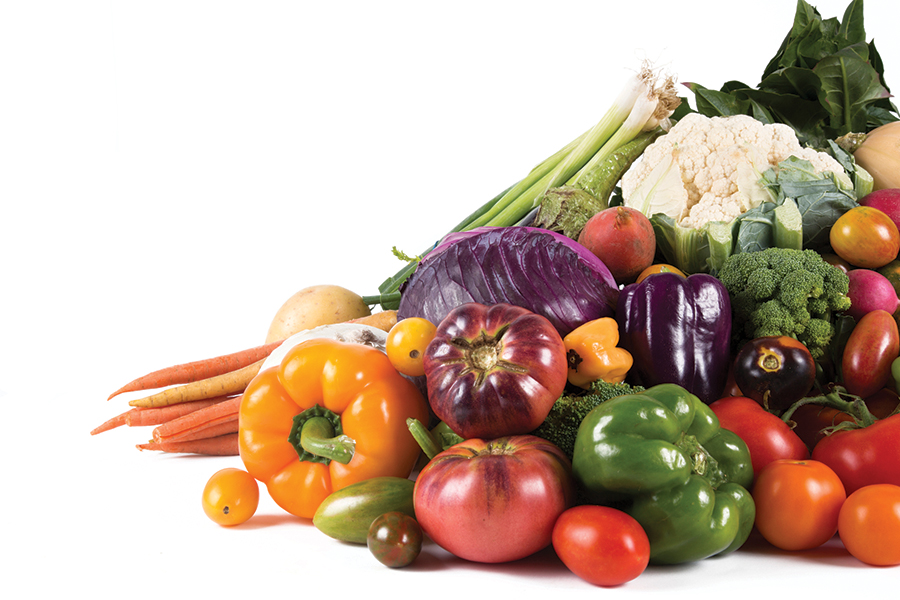
So you got a little carried away planting tomatoes, zucchinis, green beans and peppers, and now that you’ve picked ’em all, they’ve taken over your kitchen counter. How to avoid wasting perfectly good vegetables? With Share the Harvest, a program of the North Carolina Cooperative Extension of Guilford County. Taking a cue from Plant a Row for the Hungry, an initiative of the Garden Writers’ Association of America, the Extension calls on its extensive network — community gardens, food agencies, individuals, to name a few — to deliver any unwanted, fresh produce at various drop-off sites around the county. Once it’s collected and sorted at Interactive Resource Center, various hunger-fighting agencies, such as Triad Health Project, Backpack Beginnings and Mustard Seed Community Health will deliver the produce to those in need. Drop-off sites will be open from June 3 to September 30. For a complete list, go to: sharetheharvestguilfordcounty.org.

Little Boys Blue

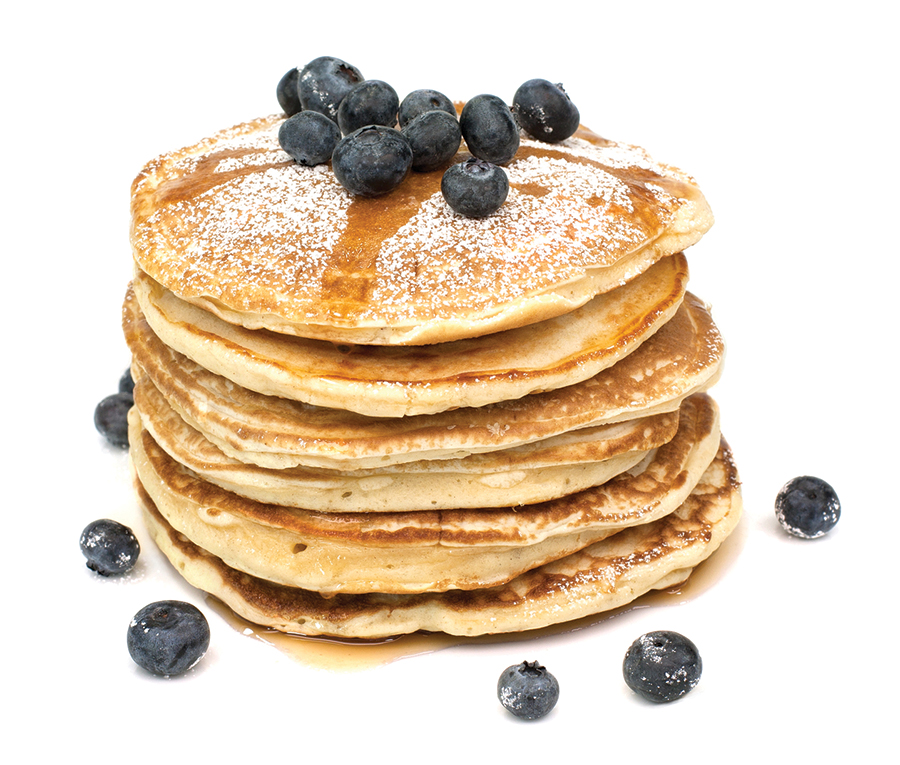
Meaning, Chef Tim & Clay, who will preside over Blueberry Pancake and Celebration Day on June 22 at Greensboro Farmers Curb Market (501 Yanceyville Street). Just think about all those antioxidants coursing through your veins — all from the humble, tiny, just-plucked globes of blue fruit. Never mind the fact that they’ll be sizzling in a sea of batter on a butter-coated griddle and smothered in a layer of thick, gooey syrup oozing from a carafe; they’re the perfect salute to the lazy, hazy days of summer. So stock up on a shortstack and enjoy! Info: gsofarmersmarket.org.

Who’s Your Crawdaddy?

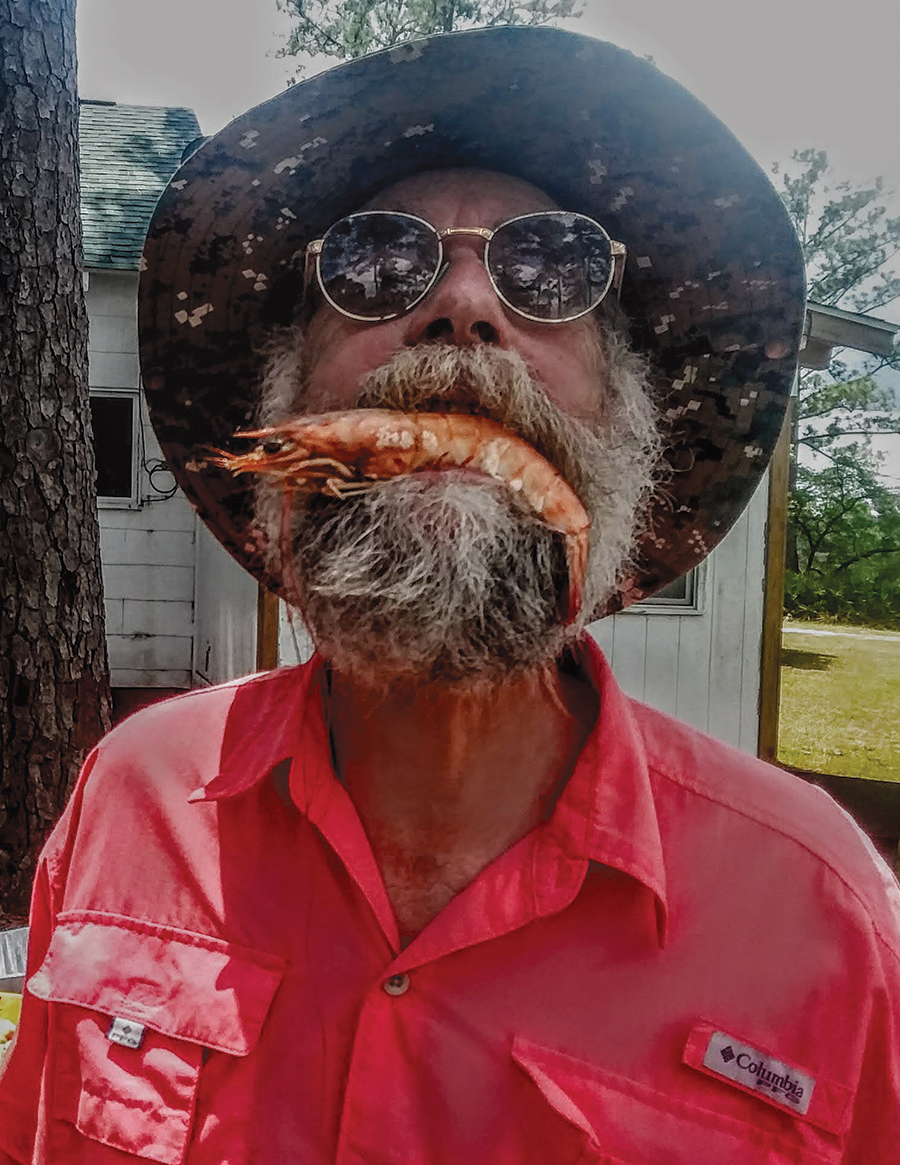
You are! That is, if you’re an early bird at the Piedmont Triad Farmers Market (2914 Sandy Ridge Road, Colfax), which is hosting a Crawfish Boil on June 15. Starting at 10 a.m. until the crustaceans run out, you can purchase a minimum of one pound of crawfish cooked in Cajun seasonings or five pounds of fresh, uncooked critters (there’s a limit of 25 pounds per person). Vendors will accept cash only, and you’ll need a cooler for carrying home this delicacy. And when it’s time to spread out your feast and laisser les bons temps rouler, we dare you to suck the heads after you’ve scarfed down the tails. Info: ncar.gov.

Hogs and Heads

That’s code for beer and barbecue. On June 15,
Little Brother Brewing and smoke master Skip Purcell will team up to explore the nuances of these beloved American classics at Adult Cooking: Brews and ‘Cue Dinner, hosted by Greensboro Children’s Museum (220 North Church Street). Learn about regional differences in barbecuing meat, and sample pairings of three meats and beers before sitting down to a good ole, NC-style pig pickin’ with sides. We can hear you squeal with delight. Participants must be 21 or older to register at gcmuseum.com.

Dolled Up

One lump, or two? Regardless of how you prefer your cuppa — sipping it with pinkie extended or not — you’ll still be doing your part to preserve our local history by joining in the Dolly and Me Tea (O.Henry Hotel, 624 Green Valley Road). Benefiting the Greensboro History Museum, the tea welcomes families — and their favorite dolls — while an interpreter in the guise of Greensboro’s own favorite doll, Dolley Madison, makes the rounds. There will be craft stations, storytelling, tasty eats of course, and a silent auction — all in the name of keeping the Gate City’s past alive. Tickets: (336) 373-2982 or greensborohistory.org.

Ogi Sez

Ogi Overman

With apologies to Rodgers & Hammerstein and anyone who performed in their musical Carousel, June really is bustin’ out all over. The evidence is everywhere, but for our purposes, it’s at the music venues in and around the Triad, both indoor and outdoor. So take in a show or three and celebrate the season.

• June 6, Ramkat: If I were limited to one show and one show only this month, I must say that Shinyribs would be it. The Austin-based octet is the personification of the aforementioned celebration of life. Call it country-soul or swamp-funk or whatever, just don’t call in sick when this no-holds-barred band is within driving distance.

• June 14, Carolina Theatre: Did you catch last month’s 60 years of Motown special on TV? If you didn’t (or did) there’s also a road show with a similar theme, titled Forever Motown. It features no fewer than seven vocalists, including original Spinners lead singer G.C. Cameron and former Temptations lead singer Glenn Leonard. It hits all the highlights, from Marvin to Smokey from Diana to Stevie, and then some.

• June 19, Carolina Theatre, Durham: I wouldn’t run folks down to Durham for just any act, but when it’s Steve Earle I have to make an exception. In my book he’s among the finest of a small handful of living American songwriters. His ability to find humor and meaning in the gut-punches of life puts him in that elite space inhabited by Jackson Browne, Rodney Crowell and few others.

• June 22, Greensboro Arboretum: Time to break out the faerie wings and funky costumes for the 15th annual Summer Solstice celebration. While hardly contained to a musical event, it nonetheless features eight big acts on three stages, headlined by Soul Central and including Crystal Bright and the Silver Hands. Prepare to be glittered.

• June 27, LeBauer Park: The Children’s Home Society Beach Blast has been going strong for 16 years and has become a downtown after-work institution. The lineup is killer again (check local listings) but they may have saved the best for last with the Tams. I feared that when Joe Pope died, so would the Tams, but I’m happy to report that I was way wrong. With Little Red at the helm, they put on a show every bit as good as the Castaways in 1969. Millennials, ask your parents.