Here Be Monsters — In Carolina

Tall tales of the tall. tailed and terrifying

By John Hood  
Illustrations by Harry Blair

It happened on the Blue Ridge Parkway.

Just west of Maggie Valley, the parkway intersects with Heintooga Ridge Road. To the south is the legendary Soco Gap. To the west is the reservation of the Eastern Band of Cherokee Indians. And just up the road to the north, at the boundary of the Great Smoky Mountains National Park, is a striking monument made of stones from all over the world.

This stretch of the parkway is one of North Carolina’s most beautiful spots. One dark and foggy May night, however, Ashley Coleman saw something terrifying there. “The hairs on my arm and back of my neck stood up straight,” he says. “I have never in my life been so afraid.”

Coleman had parked at a nearby overlook to watch the setting sun. After returning to his car through the billowing mist, he began backing up — only to stop short as a huge figure dashed across the road and entered the woods. “It was entirely too large to be a black bear,” Coleman insisted, “and definitely wasn’t an elk.”

What was it? Well, I obtained these quotes from the Bigfoot Field Researchers Organization (BFRO), a 27-year-old group that bills itself as “the only scientific research organization exploring the bigfoot/sasquatch mystery.” Coleman’s reported May 30, 2021, sighting on the Blue Ridge Parkway has an official incident number (No. 69269) and designation (Class B, meaning “incidents where a possible sasquatch was observed at a great distance or in poor lighting conditions.”)

I begin with Coleman’s story in part because it’s our state’s most recent sighting. Many of North Carolina’s other BFRO cases are Class A, designating “clear sightings in circumstances where misinterpretation or misidentification of other animals can be ruled out with greater confidence.” In July 2020, for example, a Montgomery County motorist saw something bound across Highway 109. It was “large, maybe 8-feet,” she said, and covered in black fur except for lighter patches on its face and hands.

Every region of North Carolina is represented in the Bigfoot database. There’s the self-described “city boy” who went hunting near Elizabeth City and found not a deer but a furry, 8-foot-tall hominid munching on leaves.

There’s the vacationer returning to his Smithfield home and glimpsing “a bear walking upright with long legs and arms longer than a man’s.”

There’s the trucker who was headed up N.C. Highway 53 toward Jacksonville when a “very muscular” figure bolted onto the road. “It seemed to have no neck,” he reported, “just a head — sort of like a caveman.”

There’s the man in Archdale, just over the county line from High Point, who happened to peek through his front window and see a creature, also neckless and furry and 8-feet-tall, skulking around outside. After first comparing it to the ’70s cartoon character Captain Caveman, the homeowner reached back another decade for a suitable reference: “I guess it looked more like an overgrown cousin It from The Addams Family.

And then there are the multiple sightings in Buncombe, Burke, and McDowell counties of mysterious hominids variously described as bear-like, smelling like “dead garbage” and swinging their arms “like pendulums.”
You have my permission to snort.

In olden times, cartographers would fill the unexplored corners of their maps with colorful illustrations of fantastic beasts and phrases such as “Here Be Lions” or “Here Be Monsters” or (on one 16th century globe) “Here Be Dragons.” But this is the 21st century. We’re supposed to be past this sort of thing. Plus, doesn’t everyone walk around with audio/video recorders in their pockets? Surely, we don’t need to place our trust in bleary-eyed motorists, excitable hunters and varied wanderers of the night talking of monsters ill-met by moonlight. If giant ape-men truly populated the marshes, forests and hills of the Old North State, surely, we’d have hard evidence by now.

I’ve always been a skeptical sort. Plus, I spent decades covering politicians. Need I say more? Lately, though, I’ve found my critical eye drawn away from genial true believers and toward what might be called performative skeptics. The kind who loudly, self-righteously denounce other people for chasing after Bigfoot and the like — and then, with a self-satisfied grin, glance down at their smart phones to check their horoscopes, buy healing crystals, watch New Age videos on TikTok or retweet their political tribe’s latest wild-eyed conspiracy theories.

When it comes to Bigfoot, the Loch Ness monster and many other cryptids — a modern coinage derived from cryptozoology, referring to creatures known from legend or rumor but never proven to exist — the imaginative leap to belief is arguably smaller than for, say, homeopathy or ESP. After all, while the prospect is highly unlikely, it would break no fundamental law of nature for some kind of “missing link” anthropoid to persist in the wild or for some supposedly extinct reptile to lurk in a deep body of water.

You need not be a true believer to find cryptids intriguing. Just ask Joneric Bruner. He’s from the aforementioned McDowell County and one of the organizers of the WNC Bigfoot Festival in Marion, the largest event of its kind in the eastern United States. Bruner estimates some 20,000 people attended the 2022 festival. Do they all treat the existence of Bigfoot as fact? Of course not. Many just came looking for a fun weekend — and found it, by all accounts.

You know who else doesn’t believe in Bigfoot? Bruner himself. “I’m open to the idea,” he told me, “but I’m not going to conclusively say, ‘Yes, he is real.’”
Like Bruner, I’m no true believer. I’m just curious, and in the market for story ideas.

After authoring many serious history books, I decided a couple of years ago to make a turn toward speculative fiction. My Folklore Cycle series of historical-fantasy stories began with the 2021 novel Mountain Folk, continuing with a novella (The Bard: A Mountain Folk Tale) and a second novel (Forest Folk, just published). In my fictional world, fairies and monsters coexist with historical figures such as George Washington, Daniel Boone and Sojourner Truth. It’s an improbable blend, I admit, but readers seem to enjoy it. What they especially appreciate, they tell me, is that few of my fantastic elements are fabricated from whole cloth. Rather, my research took me deep into European, African and Native American folklore, from which I imported magical creatures to my otherwise-realistic depiction of early America.

Much of the action is set in North Carolina, allowing me to draw from centuries-old traditions of monster lore. Here are four Carolina cryptids that make an appearance in the Folklore Cycle. Each represents a different region and cultural origin, yet all share a gruesome trait: drinking blood!

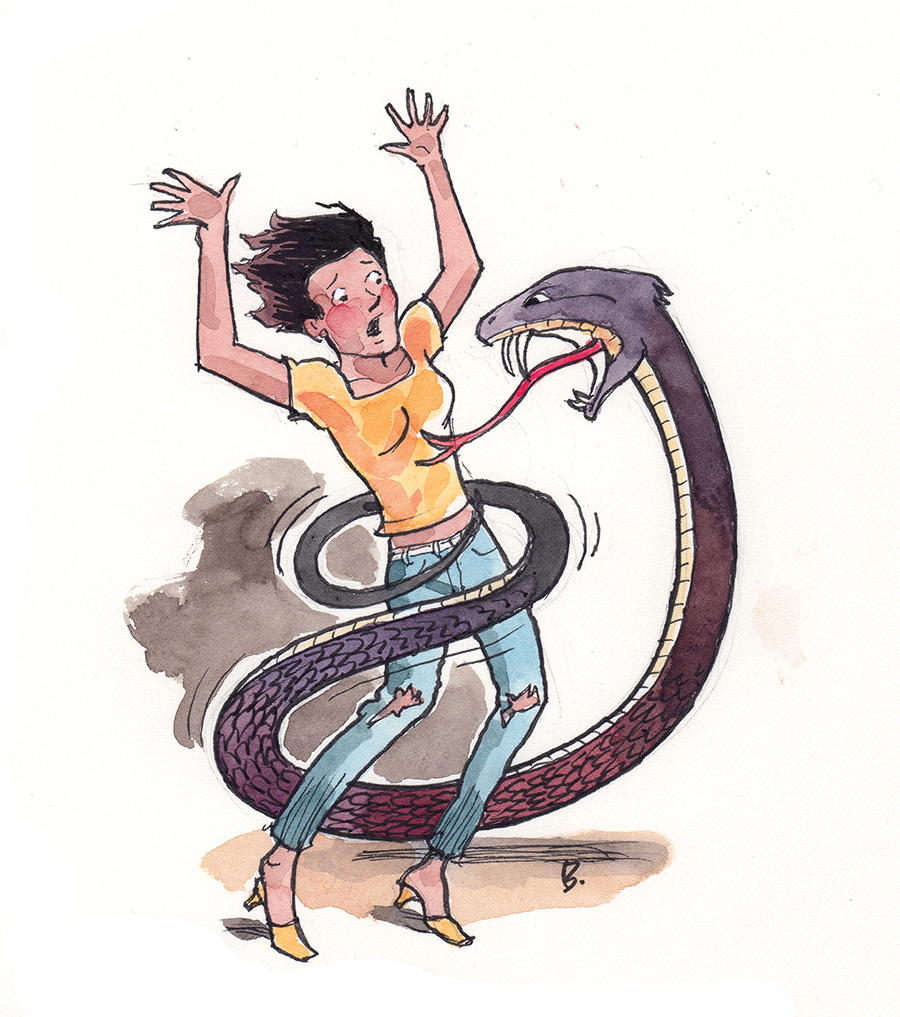
• The Whipping Snake: Stories of lightning-fast snakes that whip their prey into unconsciousness, then sink their fangs into an exposed vein, can be found throughout the Southern United States and Northern Mexico. But one of the first written accounts dates to Revolutionary War-era North Carolina. British General Henry Clinton sailed south from Boston in early 1776 to invade the Southern colonies. Reaching Wilmington in March, he expected to meet up with reinforcements, but they weren’t there. What did lay in wait at the mouth of the Cape Fear River, Clinton later wrote, was a dangerous beast, the Whipping Snake, that “meets you in the road and lashes you most unmercifully.”

• The Gallinipper:  Several decades later, and further up the Cape Fear near modern-day Fayetteville and Dunn, the legend of the Gallinipper arose among workers harvesting timber and making tar, pitch and turpentine. They spoke of a giant mosquito, as big as a hawk, that could rise from a swamp or swoop down from a tree to attack. The Gallinipper probably reflects a blending of African and Native American lore. The Tuscarora, for example, told tales of a giant mosquito that “flew about with vast wings, making a loud noise, with a long stinger, and on whomsoever it lighted, it sucked out all the blood and killed him.”

• The Tlanusi: The Valley River runs southwest through the mountains to join the Hiwassee River in Murphy. Near the confluence is a place the Cherokee called Tlanusi’yi, “Place of the Leech.” The red-and-white-striped monster in question, the Tlanusi, was said to be as large as a house. It hid in an underwater cavern near a natural bridge of slippery rock. When someone tried to cross, the Giant Leech would break the surface, shoot a waterspout to knock the foolish traveler into the water and drag its prey below to feed.

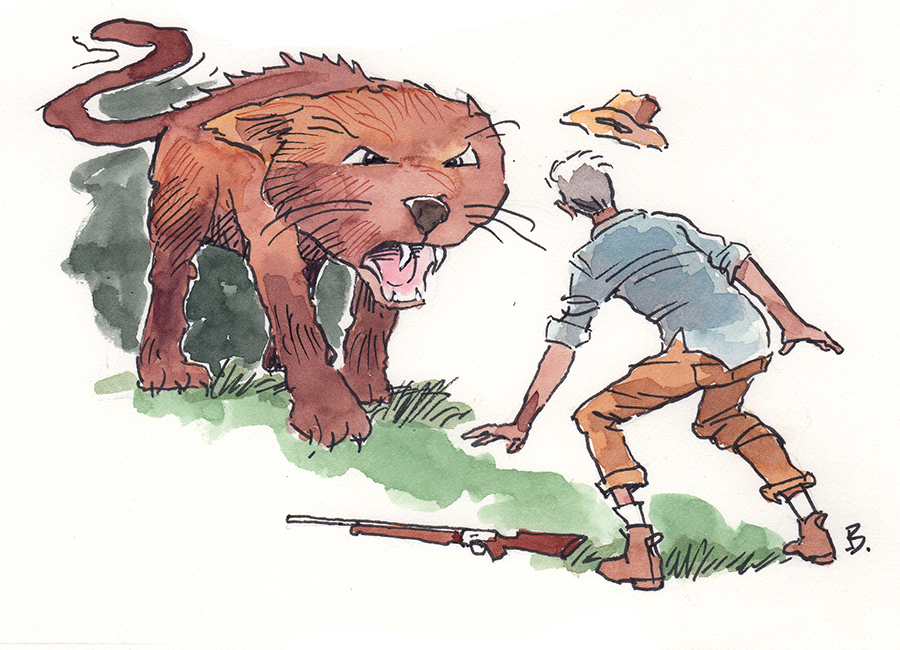
• The Monster Cat: Tales of dangerous felines span many generations and regions. In the 19th century, the residents of Salisbury, Statesville, and other Piedmont communities spoke of encounters with the Santer, an enormous beast with glowing fur, long fangs, and a strong tail that, like the Whipping Snake, could be used to soften up its prey before going in for the bloody kill. Further north and west, mountain folk spoke of the Wampus Cat, variously described as having more than four legs, capable of walking upright on two legs or shapeshifting into human form.

North Carolina’s most-famous cat tale comes from the Sandhills. On December 29, 1953, a resident of the Bladen County town of Clarkton reported seeing an impossibly large cat on the prowl. Two days later, a local farmer reported two dead dogs. Their bodies were mangled and drained entirely of blood. Other attacks followed. On January 5, a Mrs. Kinlaw rushed outside to comfort her whimpering dogs. Something like “a big mountain lion” sprung at her, Mrs. Kinlaw later said, before retreating down a dirt road. “‘Vampire’ Charges Woman,” screamed the resulting headline in the Raleigh News & Observer. The so-called Beast of Bladenboro was never seen again — well, except on the cover of my novel, Mountain Folk.

Now, perhaps, you can guess the real reason I led off with that May 2021 report of Bigfoot on the Blue Ridge Parkway. For starters, the incident occurred just east of the Cherokee reservation, and native folklore plays an outsized role in North Carolina’s tradition of monster tales. To the south lies Soco Gap, where legend has it that local hero Junaluska confronted the famous Tecumseh and insisted he not try to bring the Cherokee into his Confederacy. Junaluska has many adventures in the pages of my new novel, Forest Folk, including a desperate battle with a Giant Leech. And, as I mentioned, just north of the purported Bigfoot crossing is a monument made from stones painstakingly assembled from many different places. From the Carolina mountains and foothills, yes, but also from the White House, the Alamo, even the Rock of Gibraltar. As it happens, all these places are featured in published or forthcoming books in my Folklore Cycle.

What does that stone monument honor? Freemasonry!

History, heroes, picturesque locales, fantastic beasts, the Masonic fount of a thousand conspiracy theories — it sure has the makings of a great story. And a great story is what countless generations wanted to hear. It’s what the crowds of people flocking to Bigfoot festivals still want to hear. They want to live in a world where not all questions have been answered, where not all mysteries have been solved, where something furry, slimy, or improbably gargantuan may yet be lurking in the darkest corners of their mental map.

I want to live in that world, too. Don’t you?  OH

John Hood is a Raleigh-based writer. The latest book in his Folklore Cycle series of historical-fantasy tales, Forest Folk, was published in April.

Omnivorous Reader

Of Race and Justice

Two books with common cause

By Anne Blythe

Sometimes two books can sit far apart on the bookshelf and seem to have little in common. Then you read them and discover the themes they share.

Wastelands: The True Story of Farm Country on Trial is novelist and lawyer Corban Addison’s first work of nonfiction, a fast-paced legal thriller that reads like a novel about — wait for it — hog feces.

Addison tells the saga of Elsie Herring and hundreds of other residents in eastern North Carolina so disgusted by the stench and waste disposal practices of the industrial-style hog farms among their rural, mostly Black communities that they waged a legal battle against a pork industry giant. Through deft description of courtroom drama and artful portraits of the characters in this classic good-versus-evil narrative, Addison exposes the longstanding injustices of institutional environmental racism.

In Beyond Innocence: The Life Sentence of Darryl Hunt, Phoebe Zerwick, head of the Wake Forest University journalism program who used to work at the Winston-Salem Journal, delivers a thorough journalistic exploration of the life, wrongful conviction, exoneration and death by the suicide of Darryl Hunt. Zerwick shines a harsh light on a fundamentally flawed justice system and the institutional racism embedded in it.

Addison opens his book inside the federal courtroom in Raleigh where U.S. District Judge W. Earl Britt has just been alerted that a jury has reached a verdict in one of a series of nuisance cases that hog farm neighbors brought against Smithfield Foods Inc., the world’s largest pork producer.

The decision came quickly.

“The word spread like sparks from a brushfire,” Addison writes. “Smartphones emerge from pockets and handbags, thumbs fly across screens, and messages are cast across the digital wind, lighting up other phones with chimes and beeps miles away.”

Britt, Addison writes, is “a charming octogenarian with the oracular eyes of a barn owl,” who waits for the assembly of the necessary attorneys, paralegals, plaintiffs and others to take their places in the courtroom. Peering over his glasses at the lawyers, he motions to the bailiff to bring in the jury.

A quiet settles over the courtroom. The foreman, holding an envelope with the verdict sealed inside, tells the judge that he and his fellow jurors have come to a unanimous decision. “As the envelope makes its short trip to the bench, the plaintiffs in the gallery take a breath and hold it,” Addison writes.

His prose is poetic though, at times, a bit overwrought. “The pain and sorrow of memory, together with the labor of years and dreams of days yet to come, are at the altar before them. Contrary to the tale of greed and opportunism being spun by politicians and poohbahs across town, they aren’t thinking about a million dollar payday as they wait for the judgment to be delivered. Instead, they are whispering a simple prayer, the prayer of verdict day, of verdictum. Please, Lord, let them believe us. Let them believe that we told the truth.”

In the ensuing scenes he gives readers a sense of history about land in the coastal plain that has been passed down from generation to generation among Black families who are standing up against the nemesis they say is responsible for them being unable to enjoy the life they, and their ancestors, once had.

This thoroughly researched and reported narrative ends with a visit to Joyce Messick, one of the plaintiffs in the nuisance cases who saw the hog farm near her family’s property shutter.

While Messick told him she finally felt as if she could breathe clean air, others have not gotten to that point. “Most have yet to see the change, to fill their lungs with liberated air, to stand upon emancipated ground,” Addison writes. “The dollar is still the lodestar of Smithfield Foods, and the legislature is still its domain.” Nonetheless, Addison concludes, there are people who will be relentless until commitments by the pork industry are realized.

To open her book about Hunt, Zerwick explains why she felt compelled to revisit a case she had chronicled in a series for the Winston-Salem Journal, one that led to new court proceedings that resulted in his exoneration.

Beyond Innocence is my attempt to finish a story I began long ago,” she writes. “In 2003, when I wrote about the wrongful conviction of Darryl Hunt for the Winston-Salem Journal, Hunt was in prison then for the 1984 murder of a newspaper editor who had been raped and stabbed to death, not far from the newsroom where I worked.”

Hunt, who maintained his innocence throughout, was exonerated after 19 years of legal battles and the help of tireless advocates who refused to let the wrongful conviction stand.

“To the outside world, Hunt was the man who walked out of prison without rancor or regret,” Zerwick writes. “But the past haunted him, and the heroic narrative of a man who fought for justice masked a deep despair.” Zerwick decided to revisit Hunt’s story after he was found dead in the driver’s seat of a pickup truck that had been parked by a busy road with what appeared to be a self-inflicted gunshot wound.

She was grief-stricken, as were many others. Then she went into reporter mode.

“I wasn’t done with the story after all,” Zerwick writes. “I started looking into his death soon after the funeral. Rather than tackle the big question about the failure of the justice system, I focused first on the facts.” Answers began to arrive as she interviewed the people around him, studied photographs and Facebooks posts, and pored over correspondence Hunt had with his lawyers.
“Hunt’s death taught me a great deal about the limits of journalism and forced me to question my motives,” Zerwick writes. “Does the public’s right to know, that righteous principle we journalists invoke, justify exposing the secrets I hoped to find? Does shining a light in the dark places really help, as we claim it does? Who am I to tell a story Hunt had not told himself?”

In the end, though, Zerwick brings new layers to the saga of Darryl Hunt, the heroic advocate for reform, and the often-told recounting of his wrongful conviction.

“Long before politicians began campaigning against mass incarceration, Hunt saw the system he had left behind for what it is, a trap that condemns millions of men and women, and their children, to living on the fringes, barred from jobs, housing, bank loans, food assistance and more, barred, in short, from a reasonable chance at a decent life,” Zerwick concludes, and she wishes Hunt was here to be a part of the reforms.

Both Zerwick and Addison have crafted new, nonfiction accounts of old cases that tested the justice of the justice system. They should be read from cover to cover. OH

Anne Blythe has been a reporter in North Carolina for more than three decades.

Life’s Funny

Homeward Bound

The answers to lifelong questions are writ in stone

By Maria Johnson

“Let’s go for a little drive.”

My dad said this on Sunday afternoons when I was a kid.

It was more gentle command than invitation, but I don’t remember anybody balking.

So the four of us — he, my mom, my brother and I — piled into whatever American-made V-8 living-room-on-wheels he was driving at the time and went along for the ride.

Usually, the excursions involved looking at other people’s houses, rolling through more expensive neighbors at a speed that would get you flagged on NextDoor these days.

Sometimes, the objects of our gawking were for sale — often my parents had seen them advertised in that day’s newspaper — but most of the places we ogled were not on the market.

What was the point? To drive. To dream. To discuss.

In hindsight, it’s tempting to say that Daddy — a civil engineer with a lifelong love of architecture, especially the work of Frank Lloyd Wright — was pushing us toward a sense of aesthetics there in his rolling salon. I honestly doubt that’s what he set out to do. But that’s what happened.

We followed his lead. As a naturalized U.S. citizen, he spoke better English than most of his fellow Americans, but he lapsed into his native Greek to praise some homes with a hearty “oraio” (nice) while discounting others with a sad “po-po-po-po.” (What a shame.)

The winners, in his opinion, shared a few traits. They had clean lines, proportionate features and they harmonized with their surroundings. Size had nothing to do with it. Ostentatious homes were kicked out immediately.

I suppose that’s how he could call our modest ranch home in Lexington, K.Y., in the heart of horse country, “a beauty.” He also praised my mom’s childhood home, a two-bedroom bungalow in Spencer, N.C., where we visited my grandparents every summer.

I never saw my father’s boyhood home in Greece, but I wondered if it molded his way of seeing.

“What was it like?” I asked him.

“Rock,” he said with a smile.

“Do you think you could find it now?”

“I don’t know, honey-mou,” he said, using the endearing suffix. “It might not be there any more.”

“Do you remember what it looked like?”

“I remember there was a crack in the wall from an earthquake,” he said.

“Well,” I teased. “That narrows it down.”

He chuckled and added a hopeful line.

“One day, I’m taking our family to Greece.”

He never did. But I was still curious about the house.

One day, I thought, maybe I would find it. My chance came earlier this year.

My husband, our two grown sons and I were headed to Greece. We would spend most of our time in my father’s village, Lagadia, which clings to the side of a mountain in the Peloponnese, the paw-shaped peninsula that claws at the turquoise seas west of Athens.

More than anything, we wanted to absorb the culture: to feel, hear, see, smell, touch and taste what shaped my dad. Finding his boyhood home would be a bonus. And a miracle.

I had no address, no picture no known relatives living in Lagadia, and no guidance from my dad, who died in 2015 at age 95. All I had were several downsized paper copies of a family tree that he had mined from his parents’ memories when he was 18. The handwritten chart went back to 1821, the year Greece launched a successful war of independence against the Ottoman Empire. Would that be enough?

Hope came in the form of Dora Tasiopoulou, who, with her builder-husband Takis, owns the inn where we stayed, Agnantio Studios and Suites.

On our third night, Dora, who speaks excellent English, assembled a few of the village elders in the family’s restaurant, Aroma Café, which is captained by Takis’ brother, Christos.Dora, who also runs a middle school in the nearby city of Tripoli, summarized the family tree to the old heads. She occasionally turned to ask me a question in English, then slid back into Greek. When she ticked off the names of my father and his siblings, one of the men perked up. Was my dad’s brother, Apostolos Yiannacopoulos, a doctor? Yes. Uncle Paul, as I knew him, was a professor of radiology at the University of Athens. Heads nodded. More words flowed. Dora turned to me with a smile and said, “We found your house.”

One of the men, Mr. George, lived two doors down from Uncle Paul’s family home, which would have been my dad’s family home, too.

Together, we made a plan. The next morning, Dora’s father-in-law, Mr. Dimitri, would take us to Mr. George’s cousin, who would take us to Mr. George, who would take us to my dad’s childhood home.

What else could we say but “OK”? It was the only way.

Historically, Lagadia — once home to more than 10,000 people, now inhabited by fewer than 300 souls — is known for its stone masons, so most of its structures are fashioned from native rock and knit together by a web of mortared walkways, alleys, walls and stairs. There are no street names, house numbers or formal property records.

You want to find a place? You rely on word-of-mouth and memory.

What were the odds that we would find both in the four days we happened to be there? A hundred years after my dad was born?

Statistically speaking, we had just won the lottery — in the warmth of the people.

The next morning, Mr. George led us through a labyrinth of walkways to my Dad’s home.

The first thing my eyes fell on was a burst of fuchsia roses in a stone planter beside the front door. My grandmother, Maria, loved roses. I looked at the luscious petals as a greeting: “Welcome to my home.”

The L-shaped home hugged a slope. Imagine a house with a walk-out basement. And the front door on the side. A walled garden was on the low end. The garden was overgrown. The home’s red-tile roof had fallen in. The tops of the upper walls had been chewed off by time. The floors between stories had collapsed. Plants and small trees sprouted from debris inside.

No one had lived there for decades. It was, as the locals would say, “a ruin.”

But not to me. My dad’s stories came to life in front of me.

On the lower level, I saw the low vaulted ceiling of the kitchen where he would have begged the family’s young housekeeper, Christitsa, for fish. I could make out the remnants of the fireplace where my grandmother scooped ashes to smudge behind my dad’s ears to make him imperfect, thus warding off the evil eye.

I saw my grandfather sipping stout Greek coffee from a tiny china cup, sliding the saucer across a tablecloth to hide burn marks left by the falling ash of his unfiltered cigarette.

I saw my dad as a child, wearing what he called “short pants,” walking to church just 50 steps away, and to his school another 25 strides beyond. I saw him chasing a soccer ball on the stony landings around his home.

Right here.

He drew his first breath.

The high, innocent notes of his little-boy voice filled the air.

His mother watched him through these windows.

And now, a century later?

Bees buzzed around the salvia, thistle and sage that sprang from crevices in the tightly-stacked stone walls.

A fig tree growing inside the walls was setting fruit.

Roses beamed at us.

We stood in the morning sun, blinking through tears.

We had come 5,000 miles to look at someone else’s house.

It was, we agreed, handsome. Natural. Simple. Well-built. Suited to its place.

Oraio.  OH

Maria Johnson is a contributing editor of O.Henry. Contact her at ohenrymaria@gmail.com.

Tea Leaf Astrologer

Libra

(September 23 – October 22)

It’s hard to find balance in a world so positively askew. Even for you, Libra. And yet, you make it look easy. Contorting yourself with such subtle mastery that no one seems to notice you’re bent out of shape. Let the plates fall. Draw yourself a bath. The Earth will keep spinning while you recharge. And with the blustery energy of the new moon and partial solar eclipse sweeping in on October 25 — a breath of fresh air — it may be time to unearth a hidden passion. 

Tea leaf “fortunes” for the rest of you:

Scorpio (October 23 – November 21)

In through your nose, out through your mouth.

Sagittarius (November 22 – December 21)

Slow down and proceed with caution.

Capricorn (December 22 – January 19)

It’s time to clear the cobwebs, darling.

Aquarius (January 20 – February 18)

The door was never locked.

Pisces (February 19 – March 20)

Two words: system reboot.

Aries (March 21 – April 19)

Butter won’t save the stale bread.

Taurus (April 20 – May 20)

Try sweetening the pot.

Gemini (May 21 – June 20)

There’s an app for that.

Cancer (June 21 – July 22)

Don’t leave yourself at the altar.

Leo (July 23 – August 22)

Opening a window might help.

Virgo (August 23 – September 22)

Concentrate and ask again.    OH

Zora Stellanova has been divining with tea leaves since Game of Thrones’ Starbucks cup mishap of 2019. While she’s not exactly a medium, she’s far from average. She lives in the N.C. foothills with her Sphynx cat, Lyla. 

Día de los Muertos

A family brings the spirit of the Purépecha to Greensboro

By Cassie Bustamante

Illustrations by Miranda Glyder

Just over 2,000 miles away, on the small Isla de Pacanda in Mexico’s Lake Pátzcuaro, the indigenous Purépecha are preparing for the island’s 3,000-year-old celebration of Día de los Muertos — or Day of the Dead.

Here in Greensboro, Alejandra Ochoa de Thompson, who grew up next to Lake Pátzcuaro, readies her own Sedgefield home with her family to recreate some of that legendary magic for a group of interior designers during High Point Furniture Market weekend.

On Día de los Muertos, it is believed that the veil between worlds — the living and the dead — lifts, allowing souls to return for one day. The living celebrate with and honor those who have passed away by offering gifts to their dearly departed — from favorite foods to items that reflect preferred colors and interests.

“In every way, they are trying to please the person [they lost],” says Thompson, founder and creative director of Thompson (formerly Thompson Traders), a family-run business that designs and imports artisanal, hand-crafted, metal sinks, tubs and range hoods from Santa Clara del Cobre in Mexico.

Daughter Samantha Thompson Lizarraga, the company’s former marketing director and a co-owner, chimes in, “To celebrate their life and to give it meaning . . . this keeps them alive.”

Embracing the opportunity to share a part of her personal history and the company’s legacy with the community that has supported her, Thompson looks forward to opening up her home for the night. “I think it is important to give a little piece of us — a little piece of what we have had,” she says.

“It was [my mom’s] dream to work with her children,” adds Thompson Lizaragga, “but also bring a piece of Mexico to the U.S. So we brought the sinks and this is an even further extension — the hospitality of Mexico.”

For one evening, Thompson transforms her own deck and backyard into a scene that feels directly transported from the Isla de Pacanda. A canopy of twinkling lights and golden-yellow floral garlands representing Cempaxochitl (“the Aztec marigold” and iconic Day of the Dead flowers) hang from the trees, cascading over the deck. Candles line the railings and grace brightly decorated tables set with copper chargers, colorful textiles and goblets, sugar skulls, and menus outlining the five-course meal. Every part of this event is replicated with meaning and deliberation based on the centuries-old ceremony.

In 2017, the company threw its first Day of the Dead party, with a plan to continue biannually. Of course, COVID struck, making the 2019 event the last for a while. But this year, the relatively new tradition will continue and hold even more significance for most than before.

“I think it’s going to be more emotional because we have lost so many people,” says Thompson. “Everybody has lost somebody.”

In March of 2020, Thompson lost its CEO and close family friend, Fred Starr, to COVID. His relationship with the family “ran deep beyond business,” notes Thompson Lizarraga, who adds that the company will be eternally grateful to him for turning it around, navigating through a time of struggle.

As the youngest of 14 children in “a family that has been so close,” Thompson, 71, has seen many in her family pass on before her, most recently her sister, Susana. This year’s celebration will be especially meaningful to her as she honors her sister as well as Starr.

“People will remember how you made them feel,” notes Thompson, recalling how her own parents made everybody feel welcome, her voice cracking with emotion. “They were the biggest givers . . . I hope I can keep doing the celebration” to carry on their legacy.

People and moments from Thompson’s long life — sprinkled with bits of the celebration’s history — are present in every detail, especially in the extensive food preparation and creation.

Thompson, who does all of the cooking herself, says that it’s a moment to reconnect with her past. “If I cook a dish, I immediately see myself with all of my brothers and sisters eating,” she says, her brown eyes sparkling as she fondly remembers her childhood in Mexico.

Each dish has a story. For instance, the mole, according to Thompson and Thompson Lizarraga, originated in a Mexican convent. Legend has it that “a very important bishop” was to visit and the nuns worried about what to feed him. One sister added peppers, and another tossed in chocolate. Thompson says, “Now a lot of people make a joke because the mole has —”

“— everything you can possibly dream of is in that dish!” interjects Thompson Lizarraga.

For Thompson, the many courses served at her party represent “a part of the culture, state or a city and the history behind each dish.”

Chiles en Nogada, or chiles in walnut sauce, is a dish featuring green poblano peppers stuffed with a mixture of meat in a white cream sauce topped with red pomegranate seeds. As Thompson Lizarraga notes, the dish features the colors of the Mexican flag, celebrating the country’s own Independence Day.

This time around, Thompson plans to place descriptive cards by each dish denoting its significance, whether historical or familial.

The traditions of her country of origin are shared not only in the meal itself, but in the way the foods are presented over time. “My sister says in Mexico food is a sport,” laughs Thompson Lizarraga. “And this is still true for all of Mexico. Lunchtime is a two-hour period where you sit and have several courses . . . and talk with people and eat.”

“At the party, it’s three [hours],” adds Thompson, who wants her guests to have time to relax as they converse with others. What she offers, in addition to a delicious array of Mexican foods, is an opportunity for genuine connection. “If you take a little time to eat, sit in front of each other, you have to communicate,” she says. “And life is moving so fast now — it’s become so impersonal.”

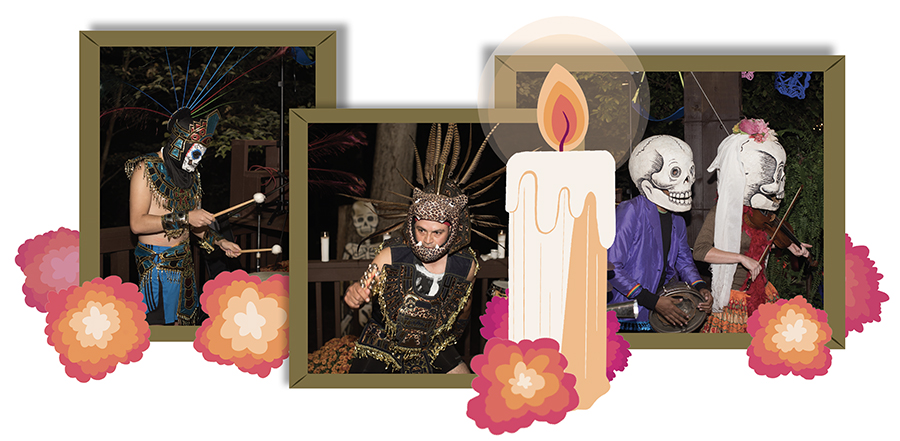
After food and conversation follows live entertainment inspired by the festivities on the Isla de Pacanda. Thompson paints a picture of what the entire night looks like in Mexico, beginning with a candlelit boat ride to the island where a violinist or guitarist serenades riders with mournful yet beautiful songs about death. On the island, a parade of Catrinas and Catrins, which originated as a satire of European high society, marches along to melancholy music that “makes you cry. Because you almost feel the presence of all these souls that left — but you wonder in that moment.”

The festivities on the island run all through the night. “The cartoon Coco is not very far off,” says Thompson Lizaragga, referencing Disney’s 3-D, animated classic about a trip to the Land of the Dead.

At Thompson’s own party, there will be a similar, smaller parade, live music and dancers. She describes Paperhand, a company out of Saxapahaw that makes its own masks and costumes and will perform among the trees in her backyard the evening of the party. Paperhand has its own band, including a singer who sounds similar to the late renowned Costa Rican-Mexican singer Chavela Vargas.

“She had a strong voice,” says Thompson, “and she’d sing those songs and immediately transport you to another place — very sad and very dramatic.”

One song, in particular, she was known for is “La Llorona,” which means “the one who cries,” according to Thompson Lizarraga. While music is a universal language that can convey emotion, Thompson hopes this year to have some of the songs translated for her guests so that they can understand the words as well.

This year’s party will be the company’s third and, as Thompson Lizarraga says, “Every time we do it, it gets better. It gets more exciting.”

And with each passing year, the family sees how the party impacts its guests. In 2019, a designer who had lost a child was in attendance. Thompson recalls that when the guest left that evening, she told her hostess, “Oh my gosh, I am going to feel different now.” This year, according to Thompson, she plans on lighting a lantern for her child.

Thompson’s wish is that her guests this year are similarly transformed — that they leave with a sense of genuine connection, a feeling “that we have hope, that the soul exists, that we are one . . . that the soul is one.”

Thompson Lizarraga adds, “The world needs that right now: To remember whether you’re left or right, whatever your beliefs are, we’re all just people.”

While the veil between the worlds of the living and the dead lifts for just 24 hours, according to Mexican beliefs, the Thompson family’s hope is that the feeling of unity cultivated during its Day of the Dead party carries on well past that, and that we continue to honor the dead, but that we take the opportunity to be truly present today.  OH

Cassie Bustamante is managing editor of O.Henry magazine.

Hot Trends

The Madcap Cottage gents know the days get shorter but the fun doesn’t

By Jason Oliver Nixon and John Loecke

Mad for Martinis  

A recent Wall Street Journal article proclaimed that millennials are eschewing wines for marvelous martinis. And why not? Our most favorite martini has to be at go-to staple Ryan’s in Winston-Salem. Classic. Easy. Olives on the side. Paired with spot-on service. And at 1703, also in Winston, a cool martini in their super-chic green-hued dining room is absolute perfection

Think of England!

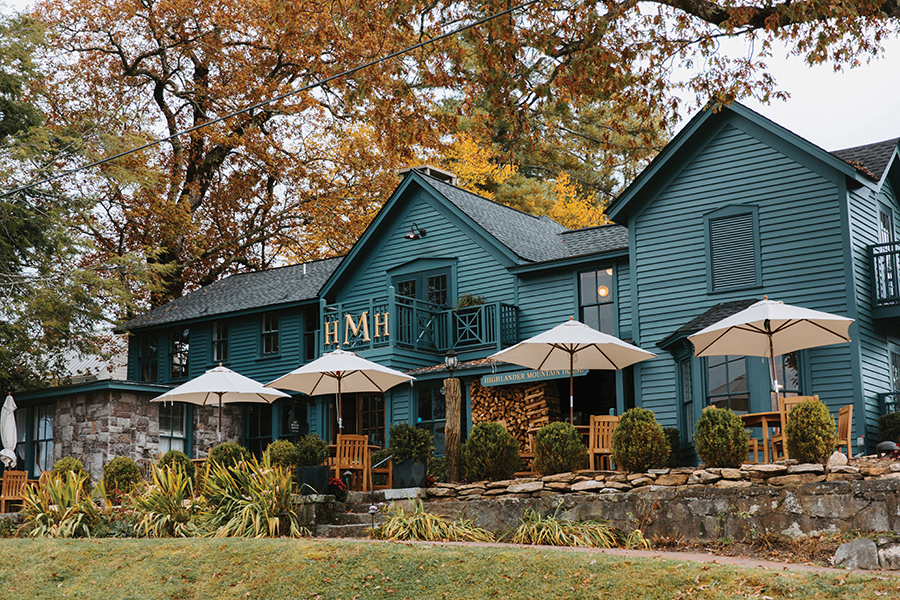
The layered, timeless English country house style is top of mind and not just because we spent a few weeks in August bopping from one National Trust property to another in Norfolk and Hampshire. Or that we savored a long weekend at English-inspired Highlander Mountain House in Highlands, North Carolina. Think antiques married with the contemporary, heaps of portraits, a raging fire, muddy wellies by the front door, and floral prints paired with tartans and Indian hand-block fabrics. Bring the look home, and capture a relaxed, easy-breezy vibe.


Grand Millennial Gorgeous  

More of more is absolutely more. After years of beige and linen hues taking center stage, we have finally broken through the fog into a tantalizing world packed with prints, patterns, and color. Hurrah! And layering is back. Embellishment. And trim. So bye-bye, minimalism. It was mediocre knowing you. Bust out and bring on the wallpaper. After all, if you want to live in a museum, well, good luck.


Why Don’t You? 

Paint your front door a bright color. Wallpaper a powder room. Open a bottle of champagne — just because. Run a bath and add two extra helpings of bubble bath. Turn up the stereo and do a spontaneous dance. Color your hair. And install a disco ball in your living room.


A colorful display of a vintage Croquet set

Love and Other Outdoor Sports 

During the pandemic, so many outdoor sports had a resurgence — from golf to pickleball and bocce. But we have fallen under the spell of a favorite lawn game that we hadn’t played in years, croquet. Croquet is the new black and orange. So hit the court. Just be forewarned: We play the game like the gals in the classic ’80s movie Heathers. Says John, “We love that you can sip a little rosé between strikes.” 


Tip, Top, Throwback  

Throwback restaurants are having a big resurgence, possibly because we could all use a spirited dash of nostalgia in these crazy days. In Manhattan, there’s Donohue’s Steak House on Lexington. In Palm Beach, the locals flock to Ta-boo. In Atlanta you will find us at The Colonnade. And London celebrates Maggie Jones’s.

More locally, you will find us happily savoring spaghetti with meatballs at Kitchen Roselli in Winston-Salem-adjacent East Bend (well worth the field trip). The shock of the new is truly so overrated. We prefer places where they know our name and the menu rarely changes.  OH

Jason Oliver Nixon and John Loecke are the duo behind Thomasville-based Madcap Cottage.

Birdwatch

What a Hoot

Call of the barred owl


By Susan Campbell

Owls definitely fall into the “spooks” category for many people. But there is one species that tends to be more endearing than scary: the barred owl. Maybe you have heard the “Who cooks for you? Who cooks for you a-a-a-a-ll?”  echoing through bottomland forest. The song is most frequently heard in early spring when male barred owls are claiming territory and advertising for a mate. But they actually can be heard vocalizing any time of the year. These are large but well camouflaged birds. Only a little bit smaller than the great horned owl, barreds are often their close neighbors. Disputes over space and feeding areas are not uncommon. Vocal sparring early in the year can get quite heated; however, male barred owls can be heard now, calling or squawking not only at night but at dawn and dusk as well..

This owl gets its name from the distinct vertical brown streaks on its breast, belly and flanks. The bird’s spotted head and dorsal surface, in addition to the barring, make it very hard to spot during daylight hours when it is perched motionless close to the trunk of a large tree. Their liquid brown eyes make them very endearing to bird lovers far and wide.

Barred owls find a wide variety of prey in swamps and bottomland forests. They feed on not only mice, rats, rabbits, small and medium sized birds, but reptiles and amphibians as well. These owls will also wade into shallow streams and pools after crayfish and small fish. At dusk, barred owls take advantage of large flying insects such as moths and large beetles.

Barreds, in spite of their size, actually nest in cavities. They will use old woodpecker holes, rotted stump holes and even larger manmade nest boxes. Up to five young are raised by both parents for close to a full year. Adult barred owls are sedentary and probably mate for life. This likely explains why they tend to be so defensive of their territory. Not surprisingly, during the breeding season, the larger-bodied female barred owls are the most aggressive. Raccoons, opossums and hawks are common nest predators. But it is great horned owls that are the greatest predatory threat, so competition can be quite intense. 

These owls are not averse to roosting, or even nesting, close to human habitation. People who get close to a nest may be subjected to distraction displays. The female may call loudly, quiver her wings or even attack with her talons. So, should you ever discover a nest hole, it is best to give it a wide berth to avoid any unintended consequences. They are known to use the same cavity year after year if they are successful. A pair of barred owls was documented to use the same cavity in the middle of the campus of the University of North Carolina for six seasons.

Despite the fact that they are non-migratory, barreds have expanded their range. Over the last century, they have moved westward into the Pacific Northwest and into southwestern Canada. They are in the process of displacing other native owls of the region including their close cousin, the endangered spotted owl. Certainly the future of this endearing species seems quite secure in our area.  OH 

Susan Campbell would love to receive your wildlife sightings and photographs at susan@ncaves.com.

Story of a House

A Wink From the Universe

For shop owner Kam Culler, it’s all about family and home

By Cassie Bustamante 
Photographs by Amy Freeman


Growth charts on door frames and bright orange permanent marker doodles on the wall might not be popular Pinterest decor, but for Kam Culler, home is all about the memories she creates there with her family.

Pointing to a shimmering gold-and-aqua tassel garland hanging in a door, she says, “Those are from our housewarming party five years ago.” Culler pivots and shows off a colorful string of pom-poms. “Those are from Charlee’s 4th birthday. We did Kidchella.”

Culler, who was just 23 when she began fixing up her midcentury 1959 split-level ranch in Old Starmount Forest, is an independent go-getter. In the last few action-packed years, she’s married the love of her life, given birth to a second child and started her own business — all while rehabbing her home. “I’ve had a lot of help from my friends and family, and my late sister-in-law,” she says. “But I want people to see a woman can do it all.”

When she first looked at homes as a single mom to then toddler Charlee in 2017, something about this house spoke to her. While Culler loves homes of that era for the charm and character they offer, this ranch style specifically symbolized to her “America’s frontier spirit and a new age and new growth of a new culture.”


Feeding not only her cosmic spirit, the house offered a little wink from the universe, a nod to let her know this was the one. The previous owners had created a poker room off of the garage that most people would want to change immediately. But the space held special meaning to her. Holding up her forearm, she cheerfully points out, “My grandfather and I play poker. My tattoo that says ‘lucky’ is for him.”

In the kitchen, the previous owners had repurposed some old plates their children had broken into a mosaic backsplash. While it wasn’t Culler’s style, she thought, “Alright, this is definitely a house for a kid.”

After seeing a multitude of houses, Culler, just 23-years-old at the time, trusted her instincts and made the decision to purchase the ranch, envisioning a future for herself and Charlee. Knowing that the house needed some work and updating, she was ready to commit because “it just felt homey.”

Shortly after moving in, an old magnolia on the property fell on the back of the house, setting a series of renovations into motion. The room that would become the playroom, for instance, flooded and required a complete overhaul, as did the upstairs bathroom off of her main bedroom.


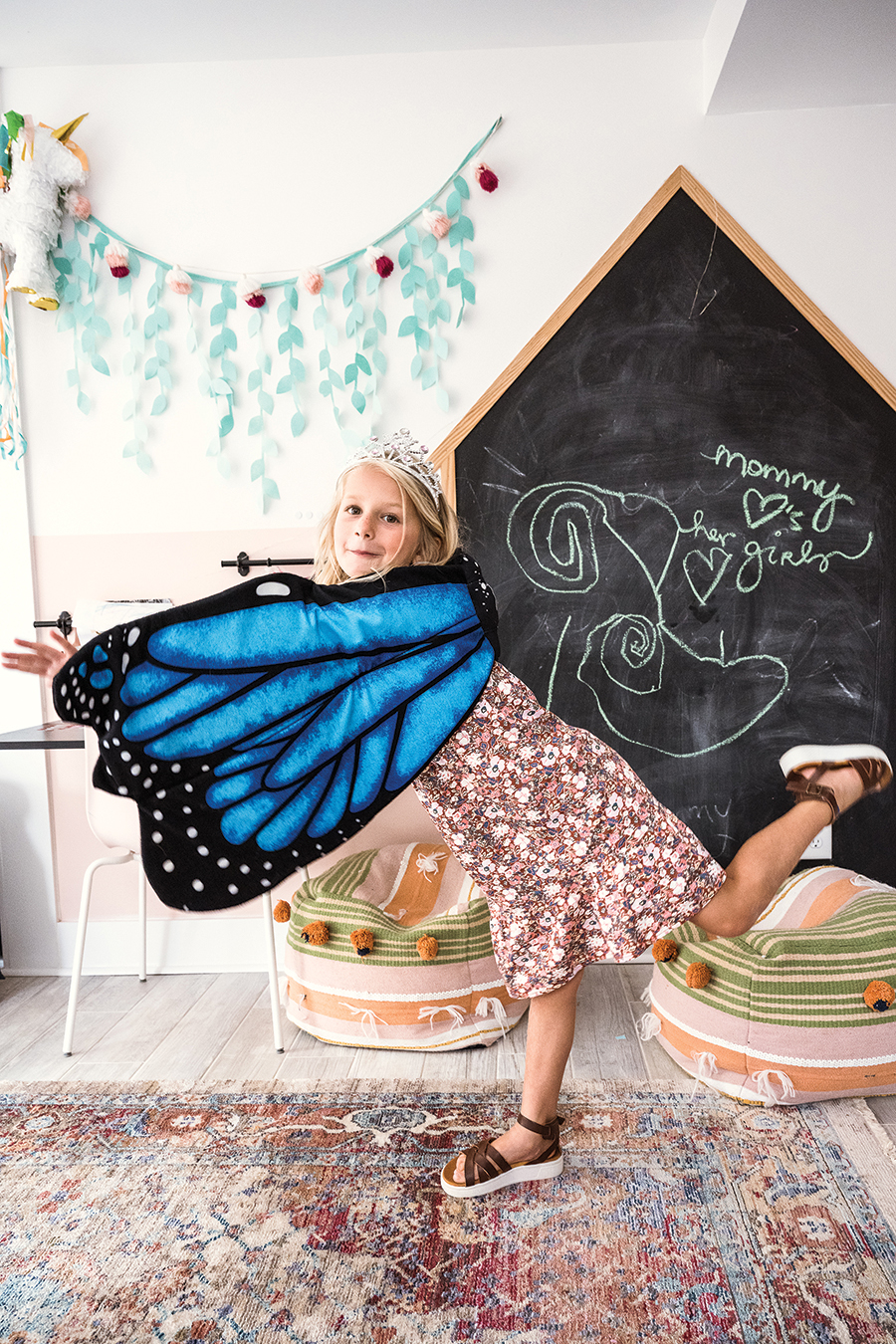
While she hadn’t planned to update so soon, Culler hired Savas Construction to create a whimsical and feminine play space for daughter Charlee (and Wrennlee, who just joined the family in July). The room now features walls that are white on top and a soft pink on the bottom, paired with Kam’s signature colorful and cozy textiles found throughout her home. In the corner, Charlee can safely write on the wall on a wood-framed, house-shaped chalkboard.

In her own bathroom, Culler repurposed a vintage dresser, its aqua paint adding a vibrant splash of color against the black-and-white ceramic floor tile and modern white shiplap walls. Photos of a smiling Culler and Charlee taken throughout the years at Anthropologie’s mother-daughter fashion shows and dance recitals adorn the walls.

But the pièce de resistance, according to her, is the large, white basin-style bathtub. “That was the one thing,” quips Culler, who’s 6-feet tall. “I was like, ‘If we’re going to redo this, I want a bathtub that can fit my boobs and knees in’ — achieved!”

Construction was already underway on the playroom and bathroom when Culler decided to have her kitchen countertops replaced. But, “funny story again,” it turned out not to be as simple as that. Shelving and cabinetry were removed from the walls for measuring, revealing that the walls beneath were not lined with drywall.

While she hadn’t planned to update so soon, Culler hired Savas Construction to create a whimsical and feminine play space for daughter Charlee (and Wrennlee, who just joined the family in July). The room now features walls that are white on top and a soft pink on the bottom, paired with Kam’s signature colorful and cozy textiles found throughout her home. In the corner, Charlee can safely write on the wall on a wood-framed, house-shaped chalkboard.

In her own bathroom, Culler repurposed a vintage dresser, its aqua paint adding a vibrant splash of color against the black-and-white ceramic floor tile and modern white shiplap walls. Photos of a smiling Culler and Charlee taken throughout the years at Anthropologie’s mother-daughter fashion shows and dance recitals adorn the walls.

But the pièce de resistance, according to her, is the large, white basin-style bathtub. “That was the one thing,” quips Culler, who’s 6-feet tall. “I was like, ‘If we’re going to redo this, I want a bathtub that can fit my boobs and knees in’ — achieved!”

Construction was already underway on the playroom and bathroom when Culler decided to have her kitchen countertops replaced. But, “funny story again,” it turned out not to be as simple as that. Shelving and cabinetry were removed from the walls for measuring, revealing that the walls beneath were not lined with drywall.


“It was brick, wood, and the cabinets were literally superglued, so there was no saving them.”

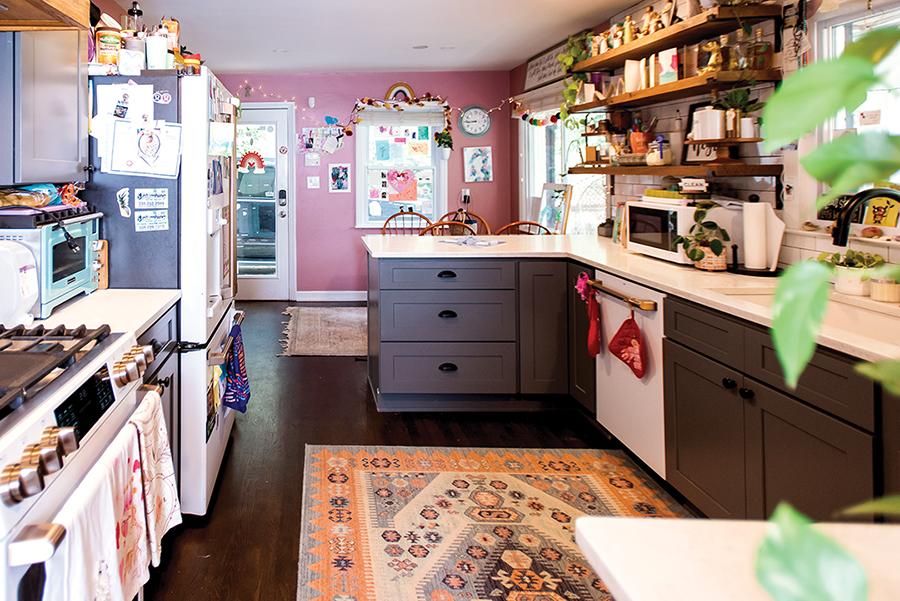
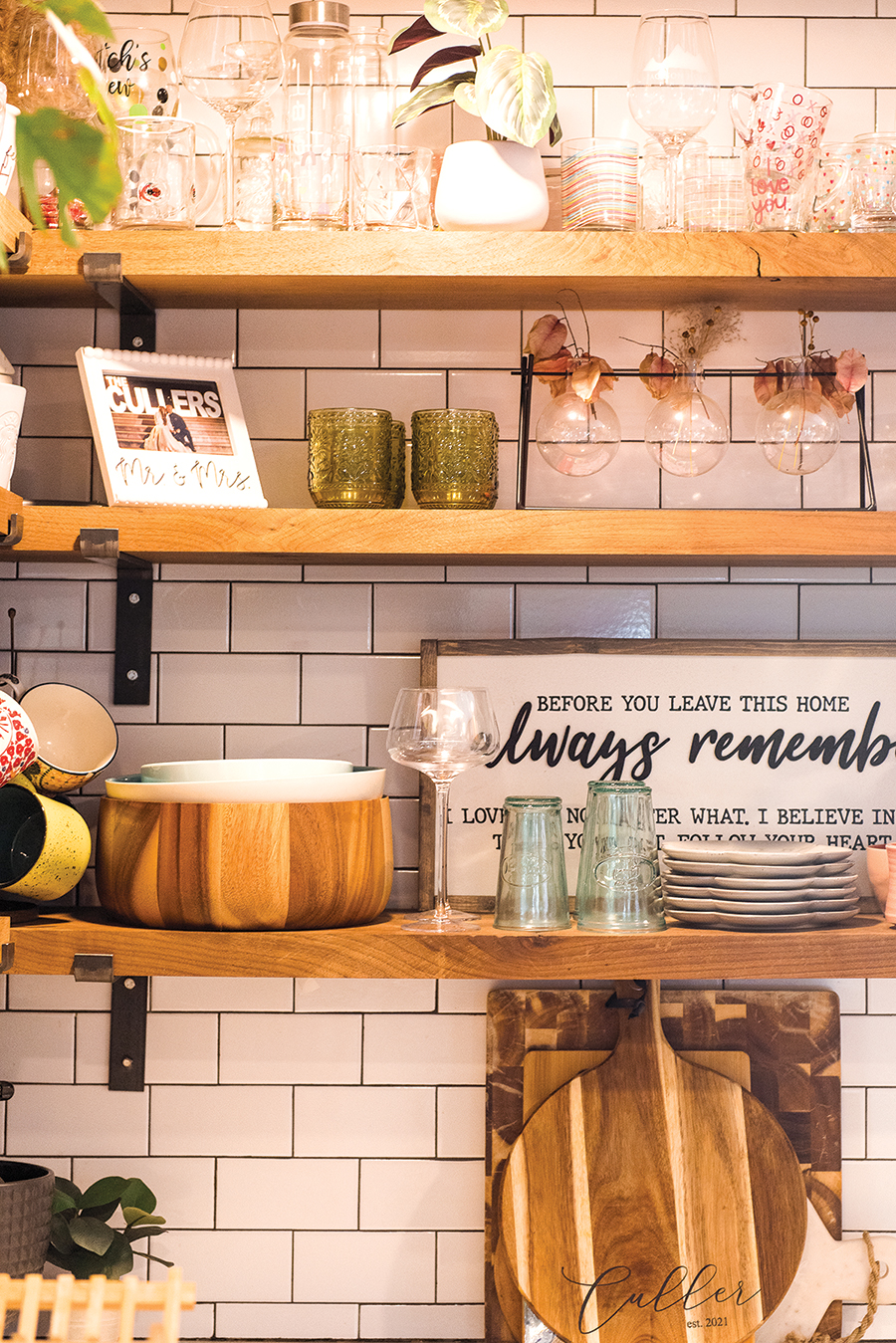
Today, the galley kitchen features modern dark green-gray cabinets with black cup pulls, a charcoal-grouted white subway tile backsplash, smooth white quartz countertops, white Café appliances with copper accents and open shelving consisting of 2-inch walnut slabs. It is as striking as it is functional.

Of course, it’s not shelves that make the kitchen for Culler, but what’s on them. Over the years, Charlee has spent many birthdays at Mad Splatter, creating something new to commemorate each family milestone. While plants and everyday dishes occupy much of the shelves’ real estate, Charlee’s works of art hold the esteemed position on the top shelf.

Recently, Culler rearranged the open shelving to accommodate the color-blindness of her newest family member, her husband Kyle. He came into her life in the middle of 2020 when he pulled into her driveway, “delivering plants — imagine that!” Looking around Culler’s lush house, it’s not hard to imagine at all.

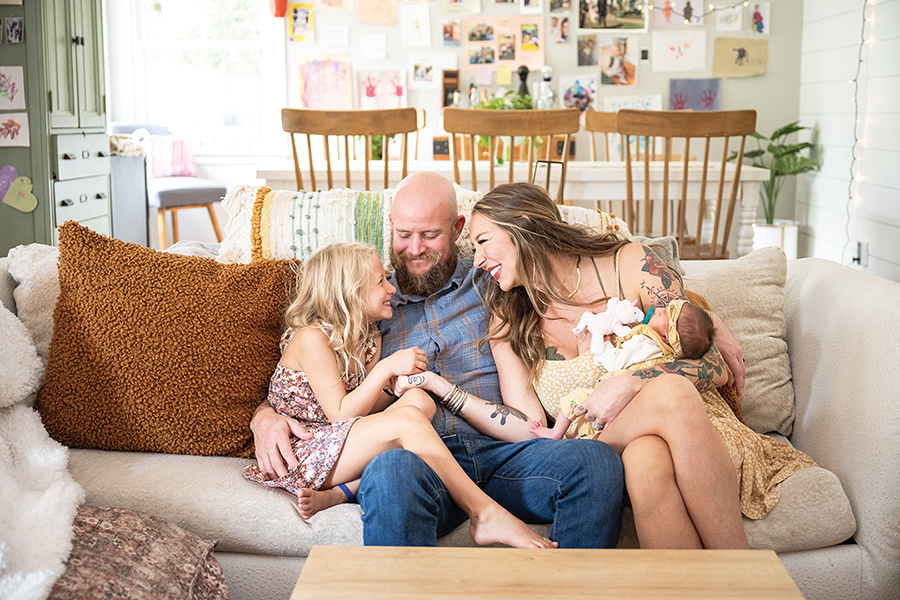
When the COVID pandemic struck in March of 2020, Culler was a 26-year-old single mom. Now she’s a married mother of two girls, Charlee and newborn Wrennlee.


The couple married at Cadillac Service Garage in a bohemian-inspired setting designed by Culler in October 2021. Two weeks later, she signed the lease on what would become The Borough Market & Bar. Just one month later, she discovered she was pregnant again.

Kyle didn’t bring much baggage, just several journals from years of service as a missionary. “He’s lived in a thousand places,” Culler points out, adding that all of those years of living minimally have served him well in his transition into this house. He has one wardrobe in the bedroom to himself and a small collection of what Culler calls “tiny little man hats,” as compared to her own wide-brimmed assortment.

She wasn’t about to let the busy-ness of life alter her dreams to have a shop of her own. “Yes, I’m a mom and then I do this,” she adds, referring to owning her business. As a mother to two girls, Culler wants to illustrate that anything is possible when a woman leans into her dreams and leans on her people.

The Borough Market & Bar was created to cultivate a stronger sense of community and would not be possible without her own supportive community. “I would not be where I am without my family,” muses Culler.

Sadly, her 23-year-old sister-in-law, Caroline, passed away in May. She was also pregnant with a girl and due shortly after Culler, who had made the decision to hire her because “we knew, or thought, she was here to stay.” Caroline had been at The Borough from the beginning, opening boxes and putting out merchandise. “I had a lot of help from her,” Culler sighs, tears forming in her eyes.

A dresser in Culler’s living room, the space where she spends most of her time, holds a treasured illustration of the two young women that a friend gave her for her birthday shortly after Caroline’s passing.

Culler’s grandfather, Jerry Hardy, has also played an integral part in the creation of The Borough Market & Bar. “He’s my person,” declares Culler. “Pop is who really helped the vision come to life after COVID.”

That vision is centered on a sense of home and community. Culler was inspired by a visit to London’s Borough Market as an Elon undergrad, studying abroad, appreciating its communal vibes. Armed with over 10 years of working in retail for Urban Outfitters, Anthropologie and Lululemon, she was able to make the dream a reality.

Her own Battleground Avenue establishment is divided into two spaces: a lounge and bar area that invites customers to relax over a cup of coffee or signature cocktail, and a boutique filled with eclectic goods from female-owned small businesses.

After a long period of many people using their kitchens as home offices, Culler wanted to offer a relaxed alternative. “They get to have their sacred space of home back, but go somewhere pretty and inspiring to work.”


The bar specializes in bourbon beverages, which is no accident since it’s Culler’s preferred spirit, a true reflection of who she is — a woman who honors her family’s past.

“Bourbon is like the story of my life. The longer it’s aged, the more craftsmanship goes into it,” she says. “It tastes better. It can open up your senses.”

This fall, she will partner with several neighborhood businesses to offer “Whiskey Around the World” pairing dinners at The Borough Market & Bar.

Her boutique is a commercial tribute to Greensboro creatives, featuring murals from local artists, Marley Soden and Jenna Rice, plus large paintings from Angie the Rose. The boutique also includes smaller pieces of art from Thea DeLoreto and Amber Taylor Creative, plus plants from Tiny Plant Market.

Looking for a sense of quality and heritage, Culler curates products for the shop just as she would for her home. She loves pieces she knows can be passed down through generations, much like the sideboard that once belonged to her grandparents.

“Smell and light sensory is a big thing with me,” Culler explains, pointing out why her home sanctuary is a space filled with twinkling lights, earthy hues of rust and pink, luscious green plants, family mementos, stray toys and nubby pillows, sofa and rugs. It’s here that she decompresses with a hot cup of coffee and her prayer journal after a long day down on Battleground Avenue.


Glancing around her transformed living room, she muses, “I really wanted to be that hippie, herb mom, but I’m probably more like Amazon, Target and Starbucks.”

However one chooses to describe her, like her home and business, Culler is an American original — an independent woman with a style all her own.

Pausing to reflect on the full life she and Kyle have embarked on, Culler sees their Starmount Forest ranch filled with “princesses and fairies, dance recitals and gymnastics, leotards and make up and sparkles and hair.” Even Kyle, who’s bald, gets in on the action, studying YouTube videos on braiding so that he can be “the ultimate girl dad.”

As if on cue, Charlee materializes in the hallway, dressed head-to-toe in her latest dance recital costume, a lavender top with sequins and tulle ruffles paired with shiny teal lamé tights that emulate the look of Disney’s Little Mermaid. In this sparkling and magical moment, it’s easy to see that in this house, dreams are not only created, but brought to life.  OH

Cassie Bustamante is the managing editor of O.Henry magazine and a frequent shopper of Greensboro establishments — especially when there’s a coffee bar inside.

A Slip of the Chisel.

And a Whole New Life

How former auto mechanic Paul Nixon became an artist

By Maria Johnson  .  Photographs by Lynn Donovan 

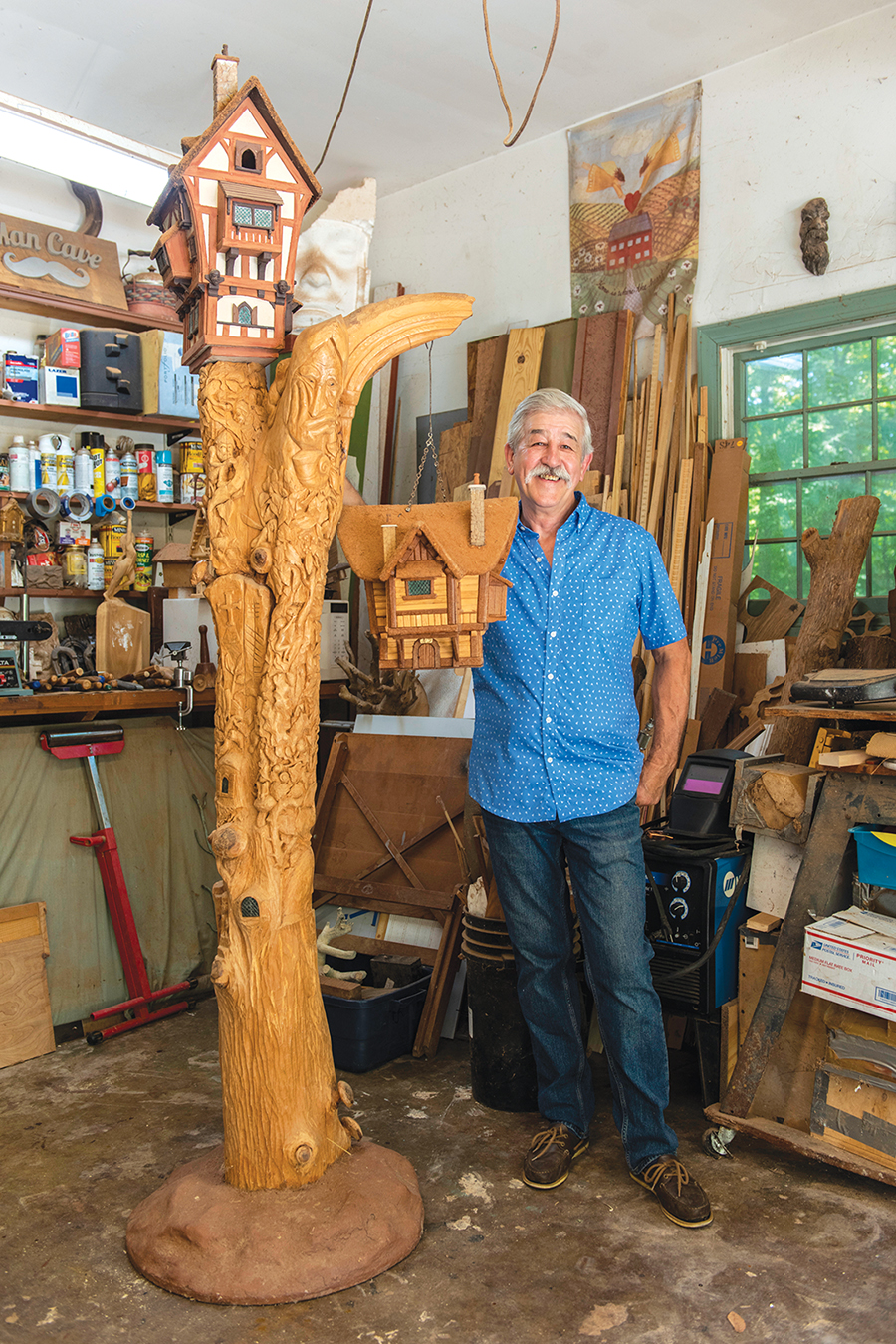
Paul Nixon, an Irishman by way of McLeansville, could be a character from a Celtic fairy tale.

He’s spry and compact with a workingman’s handshake, playful eyes, a flourish of salt and pepper hair, and sloping eyebrows that mimic the tilt of his mustache.

A brogue twines around his words, which he knits into long stories. His laugh tumbles out often because he’s fond of telling jokes, like this one:

Back when he was a car mechanic, he was used to seeing people cry — when he handed them a bill for repairs.

Yuk-yuk-yuk.


Then he adds a kicker: When he became an artist, at age 45, his clients’ tears were real, flowing from the heart.

“It changed my life in a profound way, he says. “I realized, ‘Oh my gosh, I think I have something that’s worth exploring.’”

In a month when Greensboro focuses on folk art — much of it on display downtown at the North Carolina Folk Festival — it’s worth hearing the story of a local guy who, for decades, was more folk than artist, a grease-under-the-fingernails sort who harbored a sensitivity to beauty and a yearning to express his feelings in a way that others could recognize and appreciate — the essence of an artist.

“If this happened to me, it could happen to other people, but it does take patience,” says the 67-year-old Nixon, who traded carburetors and transmissions for a creative portfolio that includes sculpture, carving, painting, stained glass and digitally-composed photography, along with art and antiques repair.

He’s best known for his bronze works in this area:

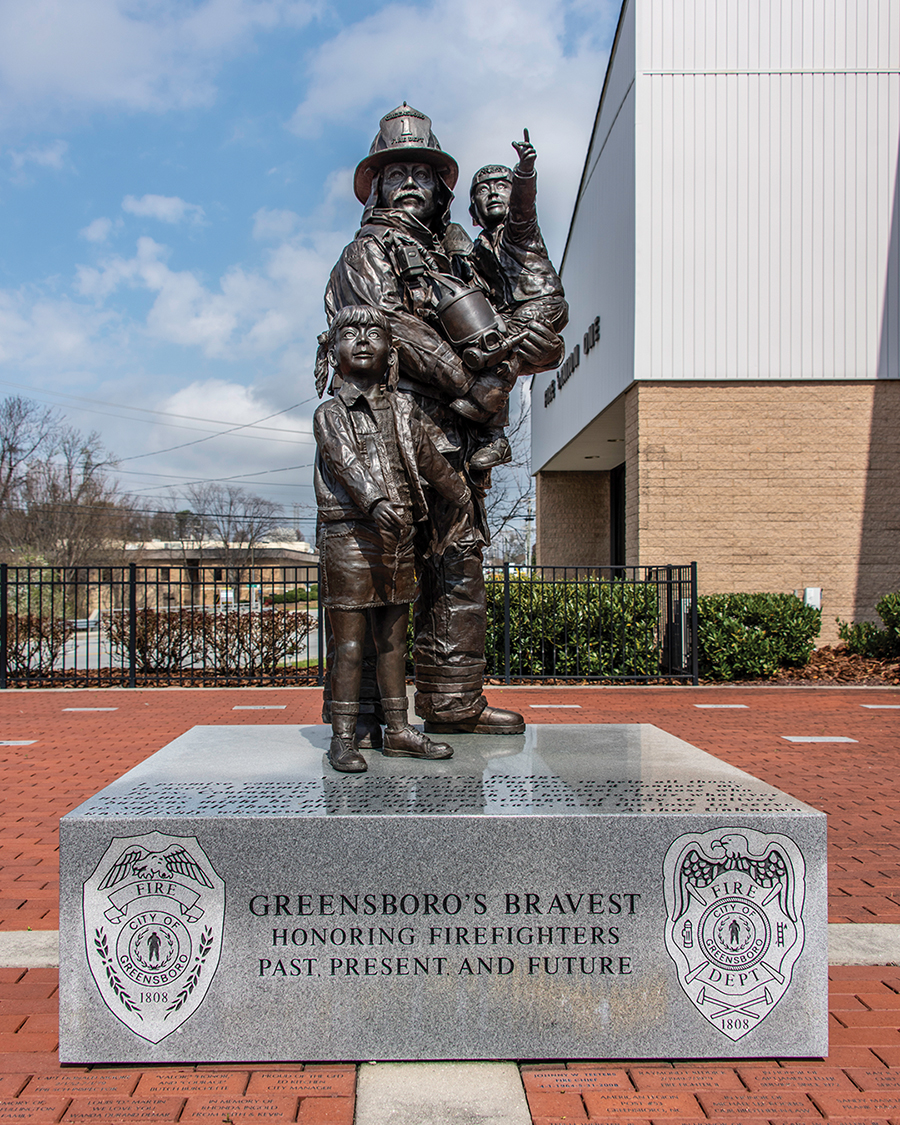
The figures of a firefighter and two children in front the Greensboro Fire Department headquarters on Church Street; a sculpture, installed at the local hospice, honoring Patrick, a therapy dog who attended many people in their final hours; a bust of a World War II soldier — whose multi-ethnic facial features represent the vast fabric of American fighters  — at a VFW post in Summerfield; and a pair of winged lions at the entrance of the Grandover Resort.

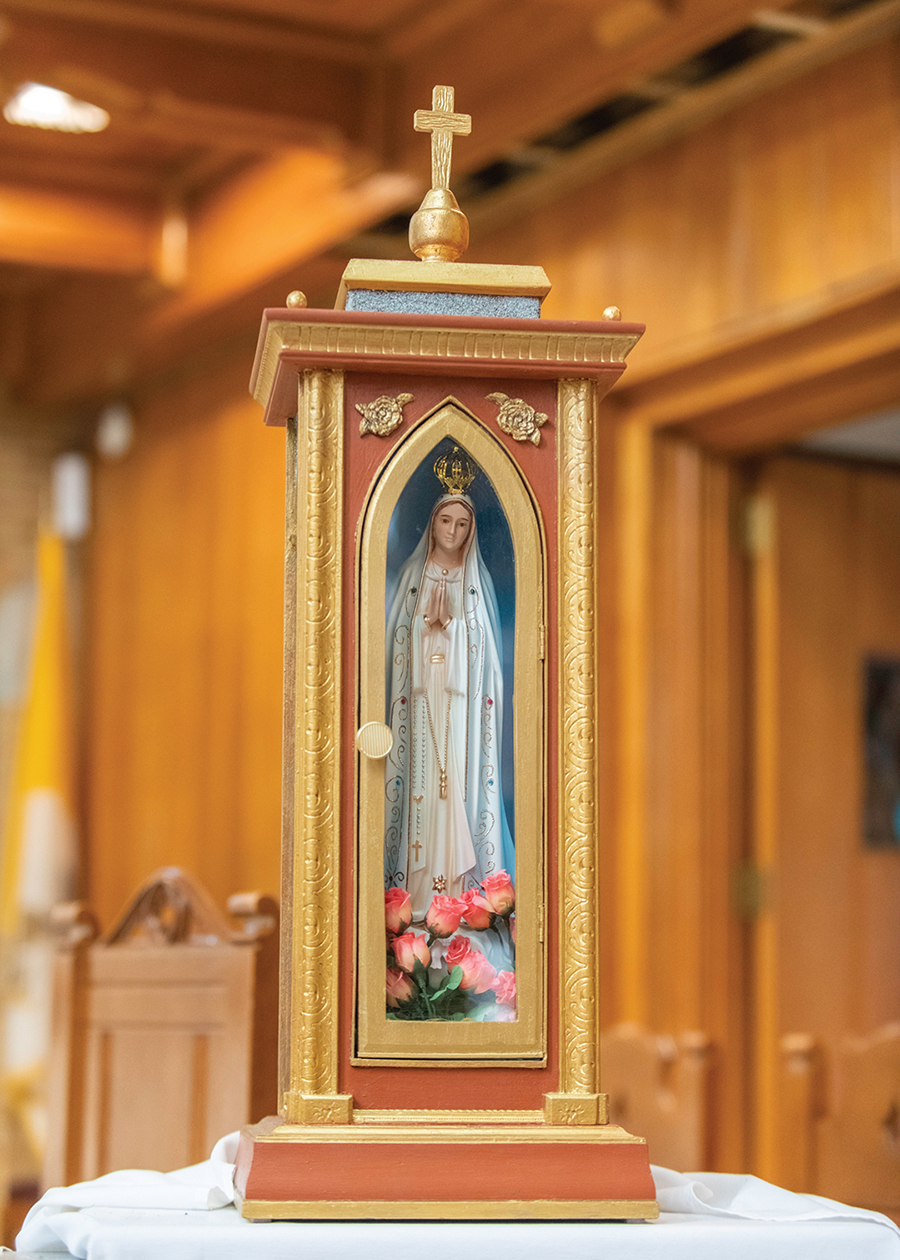
He just finished another commission for Our Lady of Grace Catholic Church, a series of ornate wood-and-glass boxes for the congregation’s Mary of Fatima statues, portable shrines that parishioners can take home as focal points of prayer.

Churches are good customers, and Nixon has shipped many pieces to out-of-town flocks.

He has carved elaborate croziers — a fancy word for wooden staffs — for an assortment of clergy. He also made an intricate staff — a tribute to St. Patrick — that’s on permanent display at the Sligo County Museum in Ireland, his childhood stomping ground.

He spent summers there with his maternal grandmother in a 300-year-old thatched roof cottage at the foot of Tievebaun Mountain, aka White Mountain, believed to be the home of a faerie door in Irish folklore.

Fellow Dubliner William Butler Yeats, an early 20th century star of Irish poetry and drama, spent boyhood holidays there, too, and was inspired by the place’s supernatural aura. Some of Yeats’ writing and personal effects are preserved in the same museum that houses Nixon’s staff.

Nixon donated the walnut staff — and a bust of Celtic warrior Queen Maeve — as a nod to the place that molded him. He confesses that his gifts doubled as a tweak to a high school art teacher whose words he remembers exactly: “Your subject matter is too small, and I don’t think you can make it as an artist.”

Her words pressed a thumb on the scale of Nixon’s already low self-worth, and they added to Nixon’s fear of making mistakes, which was reinforced by teachers who lashed the tops of fingers with bamboo canes when students goofed.

Shy and unsure of himself, young Nixon threw himself into a multitude of physically demanding jobs after school— construction worker, alongside his cabinetmaker father; TV stuntman; and mechanic for a caravan on an African safari.

In 1985, at age 29, he embarked on a personal expedition, leaving Ireland for America.

“I knew I had to lose myself to find myself,” he says.

He unearthed part of himself in White Plains, N.Y., where he bought part ownership of an auto garage and pursued ballroom dancing as a way to meet women.

“It was putting myself in the public lights — and being afraid of it — yet it was an adrenaline rush for me. It became a passion,” he recalls.

He met his wife, Francesca, a physical therapist, when she brought her car to the shop. He took her ballroom dancing on their first date.

“That was it,” he says. “We only dated three months when I proposed.”

They moved to the Piedmont in 1999 to be closer to Francesca’s family, and Nixon continued his work under the hood in a Greensboro garage.

Family provided a new path when Francesca’s Uncle Raley gave Nixon a wood lathe. Francesca suggested that Nixon make a walking stick for Raley’s wife, Mary.

Nixon turned a block of walnut into a plain shaft and handle.

“It didn’t have much luster,” he says. “I wanted it to be special.”

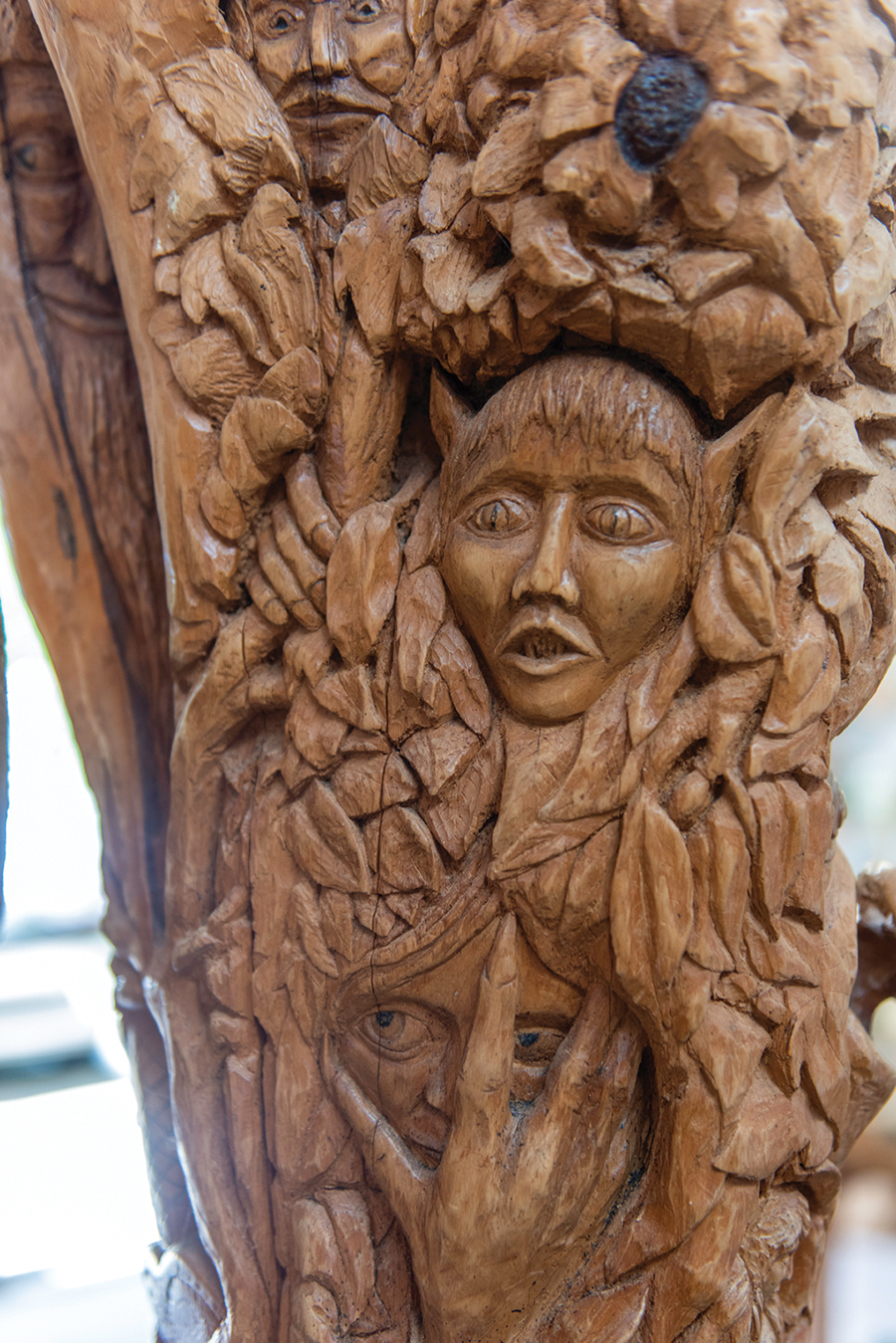
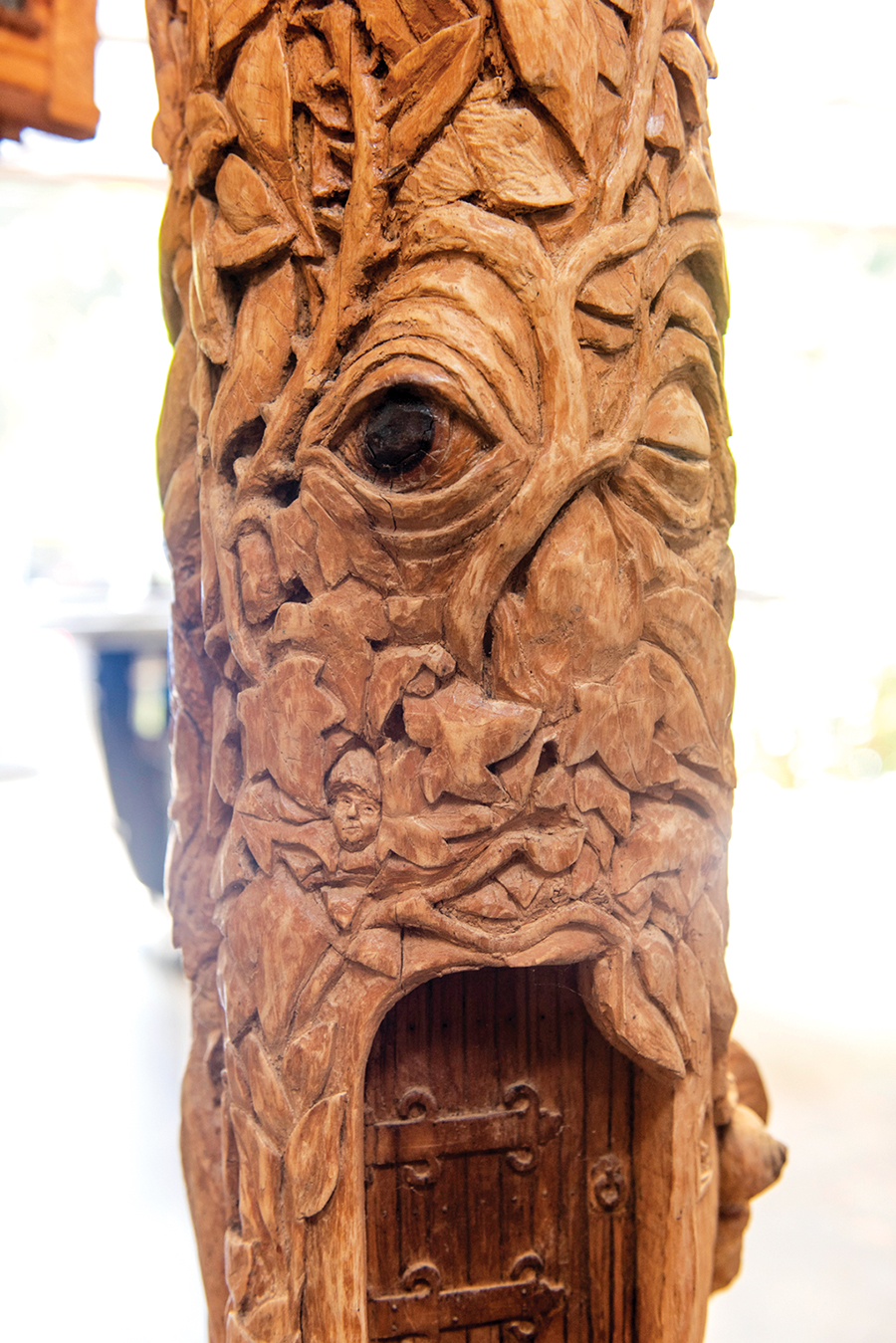
He picked up a knife knowing he could make it better, or worse, by carving a design on the cane. He took a chance. He cut away the wood to reveal one leaf and called his wife, who admired his work.

“What are you going to do now?” she said.


“I think I’m going to do a vine coming around the handle,” he said.

Forty hours later, he threw the stick under his work bench, disgusted.

A slip of the chisel had sliced off the tip of a leaf.

A week later, Francesca noticed that he’d stopped working on the stick. She asked about it.

“I can’t do it,” he said. “I don’t have enough experience.”

Francesca replied that Aunt Mary was expecting something unique, so he’d better resume the project.

“My wife has always seen more in me than I’ve seen in myself,” he notes.

He found the cane and studied his mistake. He thought about leaves he’d seen in nature. What if he made the clipped leaf look like it was folded back on itself?

He picked up a knife and kept going.

Aunt Mary burst into tears when Nixon and his wife presented her with the vine-wrapped cane one Sunday after church.

“I’d never experienced that before,” he says.

This is his cue to tell the joke about the car repair bills.

But you can tell he’s not kidding when he talks about the impact that Aunt Mary’s emotional response had on him. He left the car repair business about five years later, after he finished the Greensboro Fire Department bronze and partnered with a local art gallery.

His income dropped more than he’d anticipated.

“Thankfully, Francesca believed in me and supported me. Eventually, my income improved considerably, to where I have a happy wife and a happy life,” he says.

Twenty years after his chisel skidded through a spot of soft wood, he’s no longer afraid of making mistakes, an inherent part of creating.

“For the most part, taking risks always seems to take me to the next level, in that my confidence and art skills continuously improve,” he says.

His practice also pays off beyond the bottom line.

“It’s given me a sense of purpose to know I’m affecting people in a positive way,” he says. “It’s a rich reward for me.”  OH

Maria Johnson is a contributing editor of O.Henry. Email her at
ohenrymaria@gmail.com. See some of Paul Nixon’s work at
paulnixonart.com.

The Right Vibe

An ambitious plan is taking root to transform Greensboro and the Triad into a capital of live performance music

By Jim Dodson

Photographs Courtesy of Flat Iron; By Josh King and Ryan Bell

(Left to right) Will Easter, Marcedes Carrol, & Brooks Forsyth

Seventeen years ago, Greensboro philanthropist and businessman Bobby Long personally signed a $25 million letter of credit with the PGA Tour that saved one of the most venerable professional golf tournaments from the dustbin of history. At that time, the former Greater Greensboro Open —  known then as the foundering  Chrysler Championship — was losing its title sponsor with no potential successors waiting in the wings.

Within a year, however, in partnership with a creative young tournament dynamo named Mark Brazil, Long broadened the outreach of the formerly Greensboro-focused event to the wider Piedmont Triad region and secured a major tournament sponsorship with then-Chairman Steve Holmes of Wyndham Hotels & Resorts. It was a master stroke that transformed the new Wyndham Championship into one of the most innovative and family-friendly events in professional golf.

Since that time, the team of Long and Brazil, along with their colleagues at Piedmont Triad Charitable Foundation, have gone on to serve a host of regional charities and projects aimed at improving the quality of life and economic opportunity across the region.

Last March, the dynamic duo joined 10-time Country Music Association’s Musician of the Year Mac McAnally for a concert at downtown Greensboro’s One Thirteen Brewhouse + Rooftop Bar to quietly kick off an ambitious initiative they call “Live Music Vibe.” It aims to develop the Gate City and surrounding communities into a regional capital for budding songwriters, musicians and live performance music.

“In a nutshell, we’re hoping to do for live performance music in the region what we did for professional golf,” explains Brazil, Piedmont Triad Charitable Foundation CEO, who once again is the enthusiastic tip of the project spear. “We’re not trying to reinvent the wheel, mind you. We are learning as we go from some of the sharpest people in the music industry, aiming to provide a place where up-and-coming songwriters and performers can afford to come and develop their craft before live audiences.”

Just as they revitalized the PGA Tour’s sixth oldest golf tournament — in part by identifying the Tour’s rising stars and building relationships with them — the plan is to do the same with emerging and established musician and songwriters in our region. The hope is that the Triad will become a more affordable and less daunting music venue than Nashville and other big-time music capitals.

As Mac McAnally points out, the traditional capitals of live performance music, are frequently out of reach for many promising singers and songwriters. With a robust musical heritage that includes everything from the opening of the Carolina Theatre in 1927 (hailed as the “Showplace of the Carolinas”) to the legendary Chitlin Circuit of the 1950s and ’60s, Greensboro owns a rich musical heritage. With the city’s timely designation as the permanent home of the North Carolina Folk Festival, Greensboro seems to primed to become a launchpad for rising performers.

“When you are starting out in the business, finding a place to play to an appreciative audience is really what it’s all about,” McAnally, a mainstay of Jimmy Buffett’s Coral Reefer Band, points out. “To make more places accessible for up-and-coming songwriters and musicians to try new music and refine their craft is something that can only expand the music business — and bring new people to it.” He notes that in the music industry of the 1950s, bands and musicians toured largely to promote their records, but the monumental growth of the record business over subsequent decades, plus the introduction of digital sales, basically killed off the touring business.


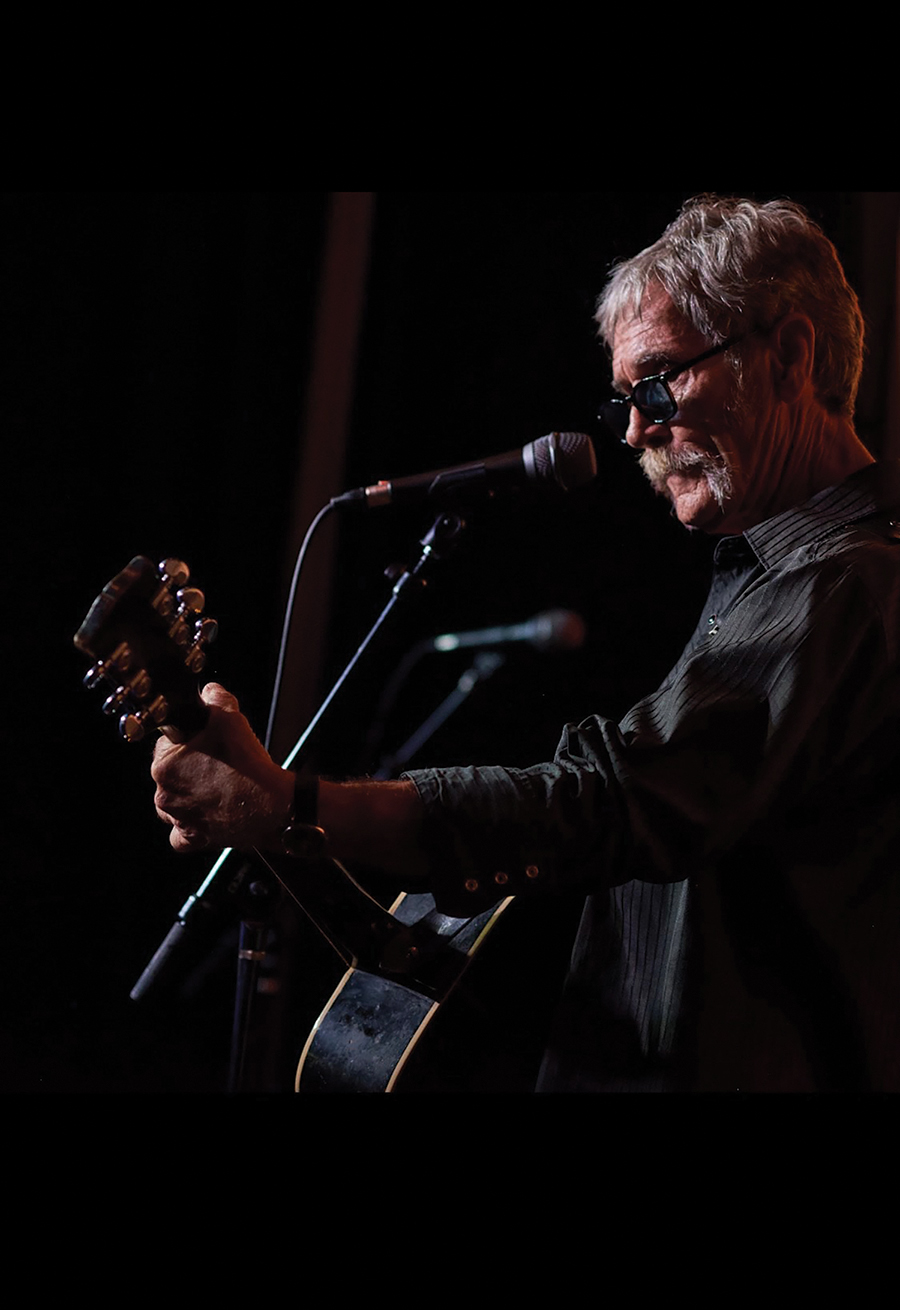
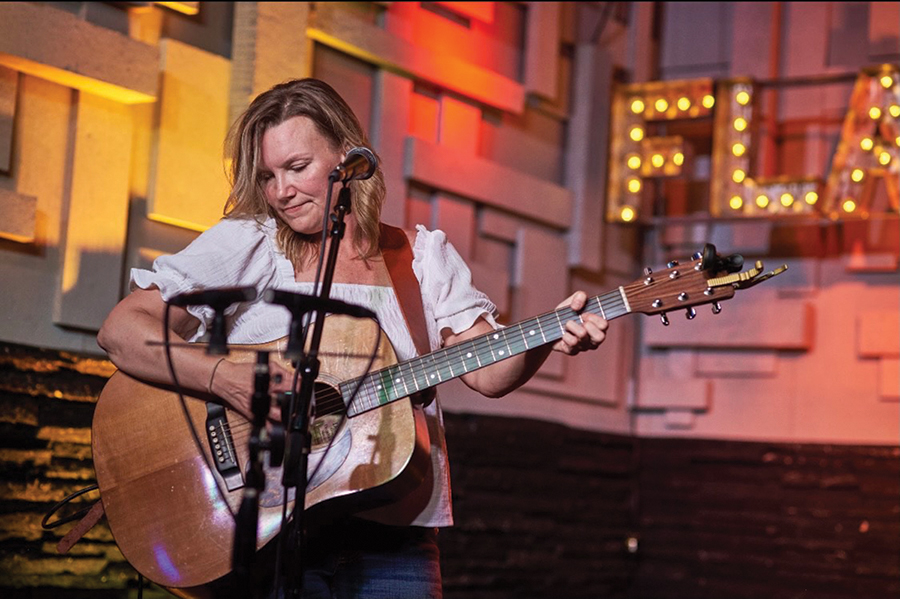
Left: Billy Don Burns. Right: Carri Smithey.

With record sales flat, the legendary country music performer — a former session musician from Alabama who went on to write major hits for country music royalty — thinks the timing may be ideal for the return of live performance touring and development of local grassroots talent.

The idea of a regional music series that could complement and maybe someday rival the traditional live performance capitals of Nashville and Austin, Texas, in fact, came out of an impromptu conversation McAnally and Bobby Long had with Jimmy Buffett prior to the pandemic about how the music world was changing. The three men mused upon what opportunities might emerge from an unprecedented period of lockdowns.

“Our goal is to simply be additive — to contribute to opportunities for people here to see great music and up-and-coming artists as well as terrific local talent,” explains Mark Brazil, who outlines a three-plinth strategy for developing the Triad Music Vibe.

The first two legs involve partnering with McAnally on a singer-songwriter series that brings emerging musical talent (anywhere from 10 to 15 artists per year) to the area, in addition to providing performance opportunities for local songwriters and musicians. The third aspect is to bring more live performance music to downtown Greensboro, particularly the five or six blocks on lower South Elm Street, creating what Brazil calls “a gathering spot for great live music.”

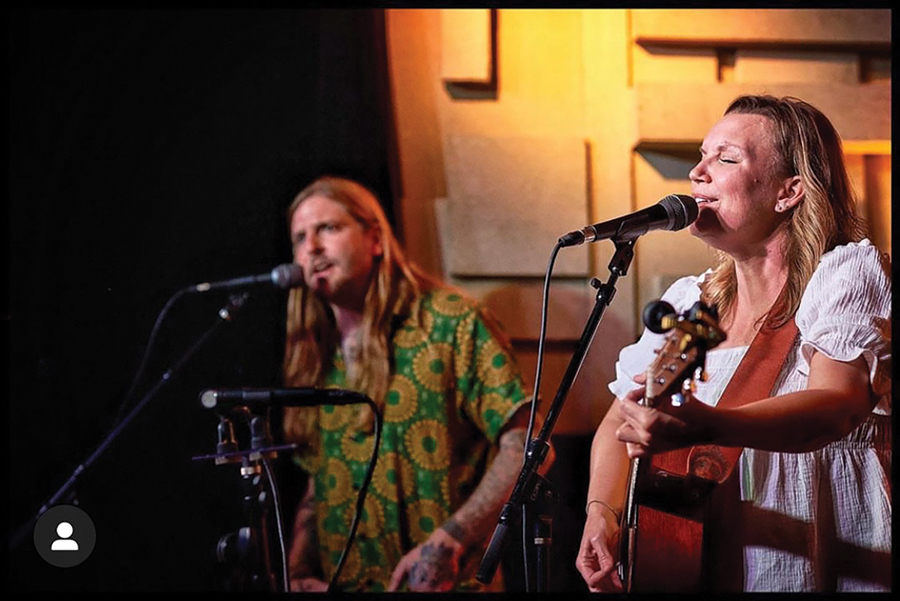
Back in April, Brazil and Scott Baxter, CEO of Kontoor Brands, put together an evening of live performance at several of Lewis Street’s most popular night spots. “It went over extremely well,” Brazil notes. “It was kind of a glimpse of what Greensboro and other cities in the region could be in the future.” A follow-up event at the Flat Iron and recording studio on Summit Avenue introduced a trio of rising national singer-song writers to a local audience, including a gifted Montana artist named Marcedes Carroll, who may partner with the initiative going forward.   

As the North Carolina Folk Fest returns to town, the timing and the vibe both seem right for a grassroots awakening that already seems afoot. Several of the city’s most popular breweries feature live music several nights of the week. Recently opened Steel Hands Brewing on Gate City Boulevard just completed its own “Nashville Nights” series, a local touring program that got its start at their original Columbia, South Carolina, location several years ago. “Because of its strong music culture and younger population, we identified Greensboro as a great place to expand our operation and the concept of bringing touring artists and live sets for local songwriting talent,” explains Ashley Lambert of Steel Hands, which staged 11 performance evenings from June to August. “It was so well received,” she adds, “we’re planning to expand the series next summer — adding a really great outdoor venue.”

All of this is music to the ears of Brazil and Long. Inspired by the success of Myrtle Beach’s Carolina Country Music Fest and North Wilksboro’s popular MerleFest, Mark Brazil envisions the live performance vibe someday growing strong enough for the Triad to support its very own music fest.

“At this point,” agrees Bobby Long, “we are still in the discovery stage, connecting with key folks who have an eye for emerging talent. We’re blessed to have Mac and others helping us bring this thing about. We think if new up-and-coming artists find a warm welcome here and across the Triad,  they’ll keep coming back. “I come from a small town that’s still inside me,” says McAnally. “And I was blessed to shape my career through live performance in listening rooms and bars across America. Greensboro has a lot to offer the music world. It will be exciting to be part of that.”  OH