Creatives on Creativity

Creatives on Creativity

How four locals work artfully

By Cynthia Adams

Photographs by Bert VanderVeen

Linda Lane, textiles and interior design

Linda Lane, who began her career as both a textile and interior designer, seeks inspiration in the greater world.

She is especially focused upon surface patterns, discovering “inspiration everywhere as I am out and about . . . manhole covers, plantings while walking my dog, a fallen branch or seed pods. Nature always inspires, never disappoints and teaches me about color palettes.”

Lane keeps a dedicated workspace, where she goes irregularly. But, she says, “Lately I am taking a different approach and dedicating daily time to ‘work’ on whatever I wish. That can include a lesson on YouTube, a seminar on Zoom or cataloging my hundreds of photos for inspiration and to use them further in developing an idea.” 

Her workspace may appear chaotic to others — “but not to me! I like visible stacks or piles spread out around me to move from one idea or medium to another: sewing, printing, drawing, mood boards and music help me sustain a productive period.”

Once committed to an idea, Lane uses various methods “to see how it holds together,” such as reviewing former concepts with fresh eyes. 

“Sometimes I revisit my sketchbook after years have passed.” Lane mentions how her mother nurtured her art, saving childhood artwork. They remind her that the young artist “is still inside of me and needs help to rise to the surface and to not be constricted by perfectionism.”

When a work in textile or home design is completed, she periodically asks if it has met the test of time. 

“Time is the best teacher. If it holds up after months or years then it doesn’t have a ‘sell by’ date on it.”
Harry Blair, illustrator

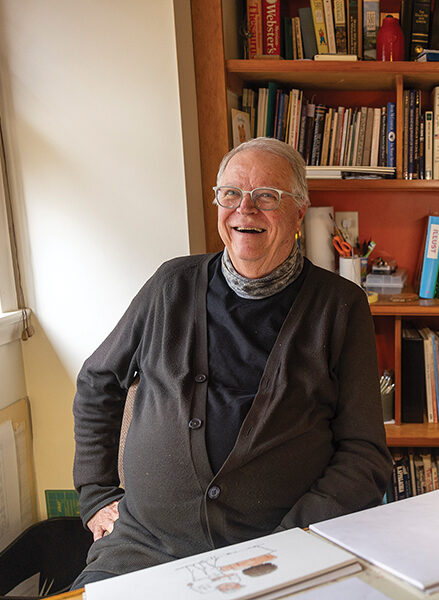
As a child, Harry Blair drew and doodled in school. A science teacher noticed and, rather than punishing him, hung his sketches up in the classroom.

He believes the truest answer to where creativity comes from, and how, is unknowable. Children, he suggests, seem to innately possess it — unless, of course, it is squelched. 

“It’s always seemed to me children, 5–6 years old, are the perfect example of creativity, having not been taught what is the wrong way or right way of doing something,” says Blair. “That is what I strive for — that freshness, the magical quality of drawing something never seen before. Kids are ruined by first grade because they look at the kid next door to see what they drew.”

He thinks he escaped that ruinous fate, thanks to his own innate sense of knowing what is true and that creativity is doing something new.

How do his drawings emerge? “I visualize things that I think are flying around in the air . . . That’s where the magic comes in . . . I watch a drawing being drawn without consciously drawing it.”

Once an idea enters Blair’s head, he’ll do a quick sketch that brings into focus what he sees with his mind’s eye.

Sometimes he evaluates a sketch and throws it away. “Other times it takes a 24-hour look-see. At that point I generally know if it’s good or not.”

He works at an antique table that is the center of his creative universe, a table that he believes is a century old. 

“It came from Grimsley High back when they had drafting classes. Heavy. Beautiful. You don’t see them anymore.”

Fifty years ago, when they were cleared out, he asked to buy one. “And they said, ‘Take one!’ I was teaching art at the time at Page.”

He keeps reminders of past work while at work positioned on the same desk near a window. There’s a (figurative) camel displayed from when he did agency work promoting Camel cigarettes. “I have to be comfortable and well lighted.”

What does he credit as the source of his creativity? Blair’s unsure. “I saw Keith Richards recently — maybe on Jimmy Kimmel, and he asked how Keith did a riff . . . Keith said, ‘I don’t know.’”

Blair chuckles. “That’s a true answer.” 

“There are days when I struggle, when it doesn’t flow like a river. I have to put it down and do something else.” He adds that such days are few. 

Yet he’s grown kinder and gentler with himself. He’s less self-critical. And he doesn’t hold himself to a routine.

Although he taught art early in his career, Blair firmly thinks creativity is ineffable.

“I don’t think you can teach creativity . . . I don’t think you can teach someone who’s a pretty good artist to be a better artist.” Creativity, he explains, arises; “it happens or not.”
Brianna Campbell, singer

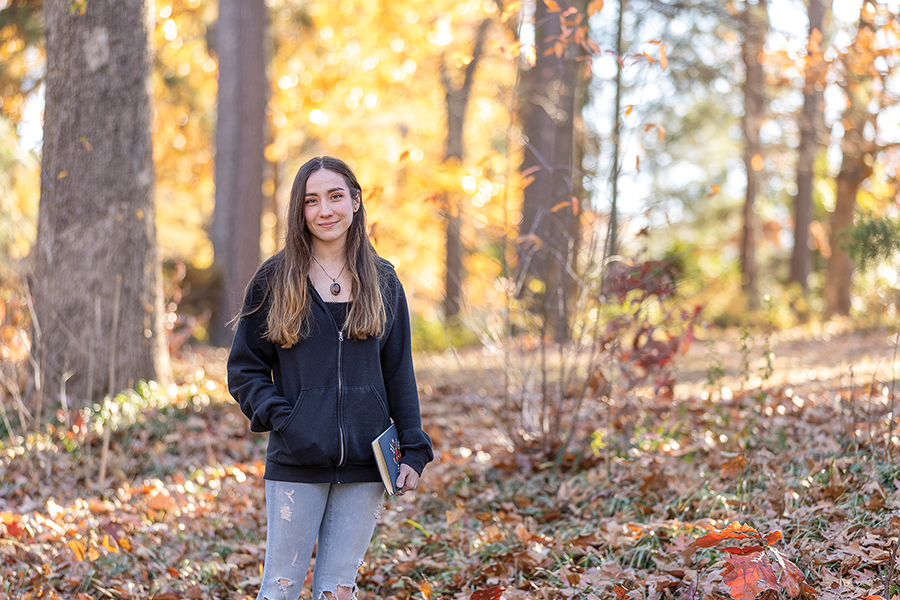
Brianna Campbell recalls how her grandmother, “a really charitable person,” encouraged her to sing. Beyond that, she taught her granddaughter how to sign for the deaf so that she could sing in sign language. “I look up to my whole family,” says Campbell gratefully. “They give me the purpose to create.”

Now she writes her own lyrics, often singing while on the job at Friedrich Metal Products building industrial smokehouses and chillers. It’s a job that sees her frequently traveling to installations across the country. (Campbell is currently studying laser welding.)  

While a student at Greensboro’s Weaver Academy, she attempted sculpture welding for the first time. Competing against 2,600 students at the 2017 SkillsUSA Leadership and Skills State Conference, she won first place. Campbell subsequently earned a full scholarship to Tulsa Welding School in Jacksonville, Florida, where she was among few female students.

Before SkillsUSA, she’d never tried welding sculpture, but possibilities were opened. “I went to nationals after that. And all roads lead to Rome. Your creativity, your will and devotion can get you further than anything in life.”

As she sees it, “creativity is everywhere.”

Campbell explains creativity is “problem-solving,” much as Jobs believed.

“It’s seeing what everyone else has seen,” she says. “But thinking what no one else has thought.”

Artistic ideas occur to Campbell most often while traveling, walking in the woods or enjoying music. “It’s very chaotic to most people, but I just feel like when you are an artist, the inspiration is visible to you at random times and you never know when it will be.”

While she seeks inspiration from her surroundings, she usually writes her songs in silence. But that’s not to say it’s a silent process: “I am alone a lot, but you can almost always see me singing to myself,” says Campbell. “It’s always a new song I’m working on. Occasionally, when writing music, I will change the lighting to write the song because light affects your mood and so does your environment.”

Campbell figures out the instrumentation for the song and whether she wants harmonies. When lyrics later come to mind, Campbell uses any surface available — even her wrist.

“Everywhere, people and their stories inspire me . . . music is a shared experience because it’s usually relatable to the listener in some way and it’s powerful enough to be part of our identity.” 

Campbell will soon complete a yet to be titled album in early 2024, electing to find a local artist to produce the album cover. 
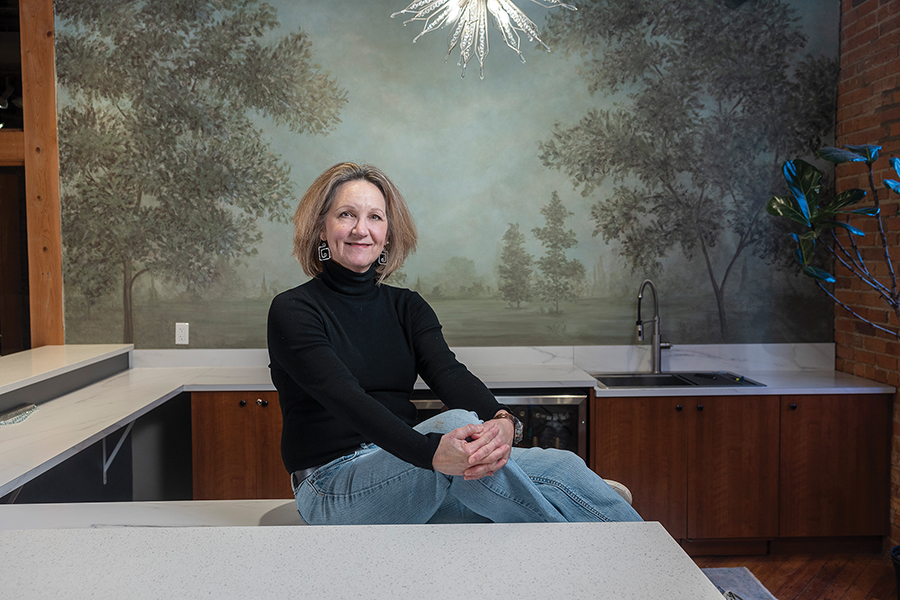
Dana Holliday, mural artist

Thomasville artist Dana Holliday is just off a patchy international call with her mother, Sue Canoy, who is in Nepal “on a yoga and walking trek.” (Canoy, like her daughter, also draws and paints. Both seek global inspiration for their work.)

Within Holliday’s extensive portfolio are specialized trompe l’oeil installations and murals for a variety of showrooms at the International Home Furnishing markets. 

She finishes what she starts. Holliday once completed a massive commission for Currey & Company at High Point Furniture Market with one arm in a cast after falling from a scaffold. “I was painting a lady getting shot out of a cannon.” She jokes dryly, “How ironic.”

Holliday often works on three different projects at once. She believes creativity “is being able to paint a mural or painting from scratch without a clue of what it will become.”

She is inspired by both internal and external ideas, “usually drawn to nature, trees and other organic objects. And then, dreams. Even bad dreams.” 

Typically painting in her studio (“It’s organized chaos!”) on a fixed schedule from 11 a.m.–5 p.m., she finds a routine solidifying. The artist frequently shows her personal work, including encaustic paintings using wax. Holliday often seeks out experts in techniques, absorbing the ways others have perfected their practices, “wanting to make it my own.”

Her artistic family offers commentary.

“Last year, my brother, Cary, reeled me in and said, ‘You’re getting fancy. You’re not speaking to light and shape.’ And he was right.” 

Challenging herself to create a new, minimalistic group of paintings, she stripped away inessentials. “That was really difficult for me, but I decided to do it and I did it.”

Influenced by Impressionism and the works of Georgia O’Keeffe, her travels have caused her to seek out artists in Europe, South America and New Zealand. Holliday, who also works in abstracts and portraiture, recently studied artist Ezshwan Winding’s encaustic and abstract painting techniques at her studio in Miguel San Allende, Mexico.

In 2023, she studied in western Ireland with Lora Murphy and Alicia Tormey.  Tormey, an encaustic artist, pioneered the form. Murphy creates both oil and cold wax portraits.

She repeatedly checks finished work, asking, “Is this what I started out to do?”

Holliday asks, “Why did I choose to be an artist?”

Was the artistic life a choice at all, she wondered, or a compulsion?

Scientific American’s “Messy Minds of Creative People,” defined certain traits— plasticity, emergence, divergence — concluding that creativity “was messy.”

Rick Rubin decided the creative life wasn’t messy at all. Mysterious yet intentional. “Art is choosing to do something skillfully, caring about the details, bringing all of yourself to make the finest work you can. It is beyond ego, vanity, self-glorification and need for approval.”


A Teetotaling Toast to the New Year

A Teetotaling Toast to the New Year

Local bars serve the latest buzz — nonalchoholic cocktails

By Cassie Bustamante     Photographs by Amy Freeman

After a month of (over)indulgence, we’re ready to wipe the palette clean — while still tickling the palate. Whether you’re a committed nondrinker, a little sober-curious or just taking a hiatus from the hard stuff, we’ve got six alcohol-free beverage recipes from local mixologists who deliver all the tastiness without the tipsiness.

Only Resolutions

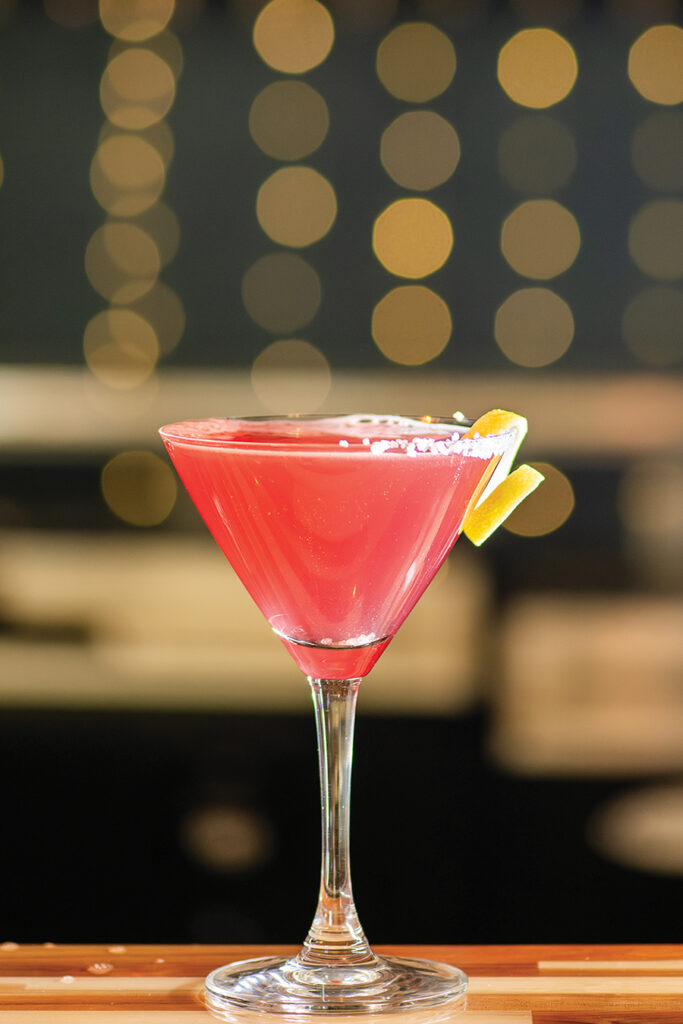
With a last name like Emerson, is it any wonder that Daniel Emerson, bartender at newcomer Bitters Social House, took his inspiration for this drink from a book? Only Resolutions is the nonalcoholic counterpart to a Bitters cocktail with a name that echoes Only Revolutions, a road novel by Mark Z. Danielewski, one of (Daniel) Emerson’s favorite authors. His concoction is a “blend between opposing botanical flavors that . . . carries those champagne notes at the end so you have that celebratory taste in your mouth.” In a nutshell, he says, this mocktail, which features ingredients found at Bitters, tells the world, “I know how to party; I just don’t have to drink.” For an added festive touch, Emerson rims the glass with edible glitter. “Everybody loves sprinkles at a celebration, right?”


1/4 ounce lemon juice

1/4 ounce simple syrup

3/4 ounce blueberry basil shrub

1 dash alcohol-free cardamom bitters

4 dashes alcohol-free plum bitters

3 ounces nonalcoholic champagne

Lemon twist

Edible glitter

Shake first five ingredients together with ice. Strain into martini glass and top with champagne. Serve with a lemon twist and an edible glitter rim (if desired).

Old Fashioned Wisdom

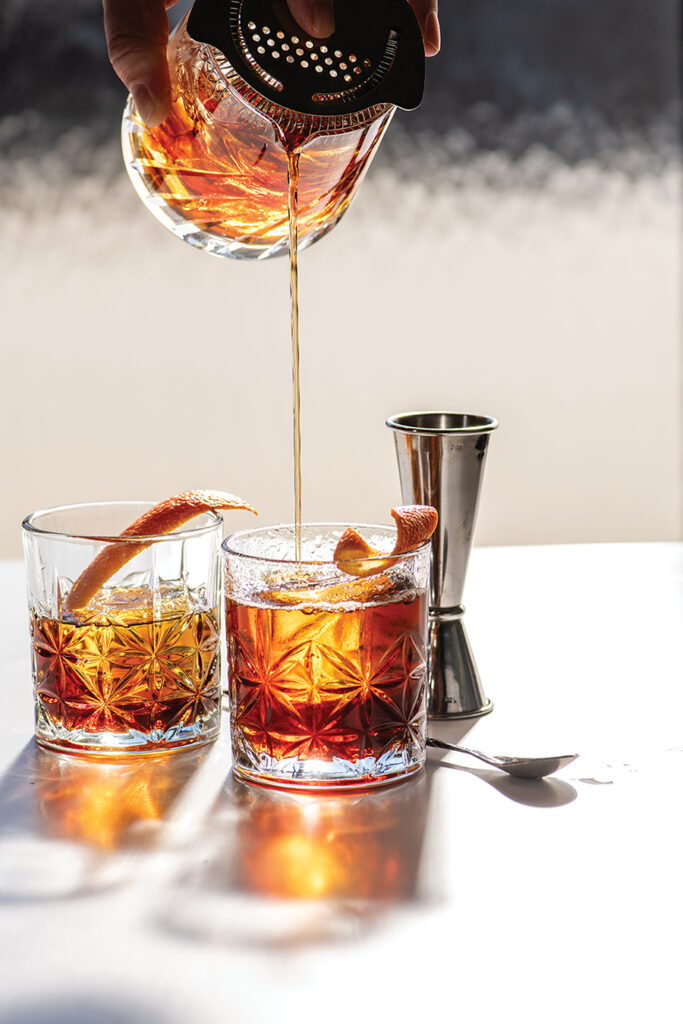
“Will you be my guinea pig?” wondered Mark Weddle, beverage manager at 1618 West, to a friend who had been 15-years sober when he first began experimenting with nonalcoholic spirits. The result? “I suddenly have a lot of memories of sitting in a bar in New Orleans flooding back!” his friend told him. Weddle calls that association to the real thing high praise. The restaurant’s Old Fashioned Wisdom is a nonalcoholic take on the classic old fashioned, a bedrock cocktail. How close to the real thing does it taste? “The parts on their own are not exactly true to flavor, but when you combine them, it gets pretty close to an actual old fashioned.” He laughs and adds, “I don’t want to trigger anybody, but trigger warning!”


2 ounces Lyre’s American Malt, nonalcoholic

1 ounce Dr Zero Zero AmarNo (nonalcoholic amaro)

1/2 ounce Demerara syrup

2–3 dashes All the Bitter Alcohol-Free Aromatic Bitters

Ice cube

Orange twist

Combine first four ingredients with ice and stir until well chilled. Strain into a double old fashioned glass over a large ice cube and garnish with an orange twist.

Blueberry Lemonade

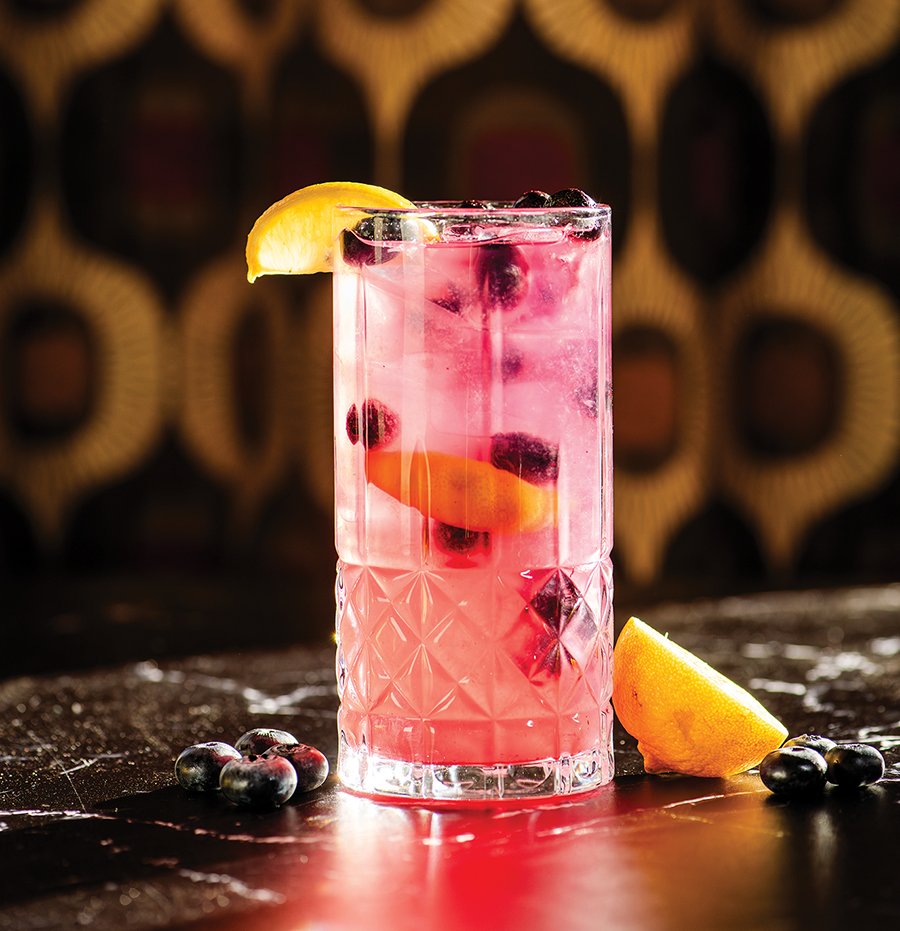
Freeman’s Grub & Pub proprietress Emily Purcell has crafted a creative nonalcoholic menu featuring plays and the inevitable fun puns on some classics, such as the Nojito and the Nontucket. But Purcell, who has co-owned the restaurant with husband Kevin since March 2022, cites the establishment’s pun-free Blueberry Lemonade as the fan favorite, as well as her own, hands down. “We fresh squeeze our lemons and make our simple syrup in house. We add some frozen blueberries in there, so as you’re drinking the cocktail, you get more of that blue color.” Bonus, the frozen fruit makes this drink a year-round flavor-quencher.


2 ounces lemon juice

2 ounces simple syrup

2 ounces water

2 ounces frozen blueberries (about 10)

1 lemon slice

Mix lemon juice, water, frozen blueberries and simple syrup together well. (Simple syrup is made by combining equal parts of water and sugar. Sweet!) Pour over ice and garnish with lemon slice.

Mulled Wine

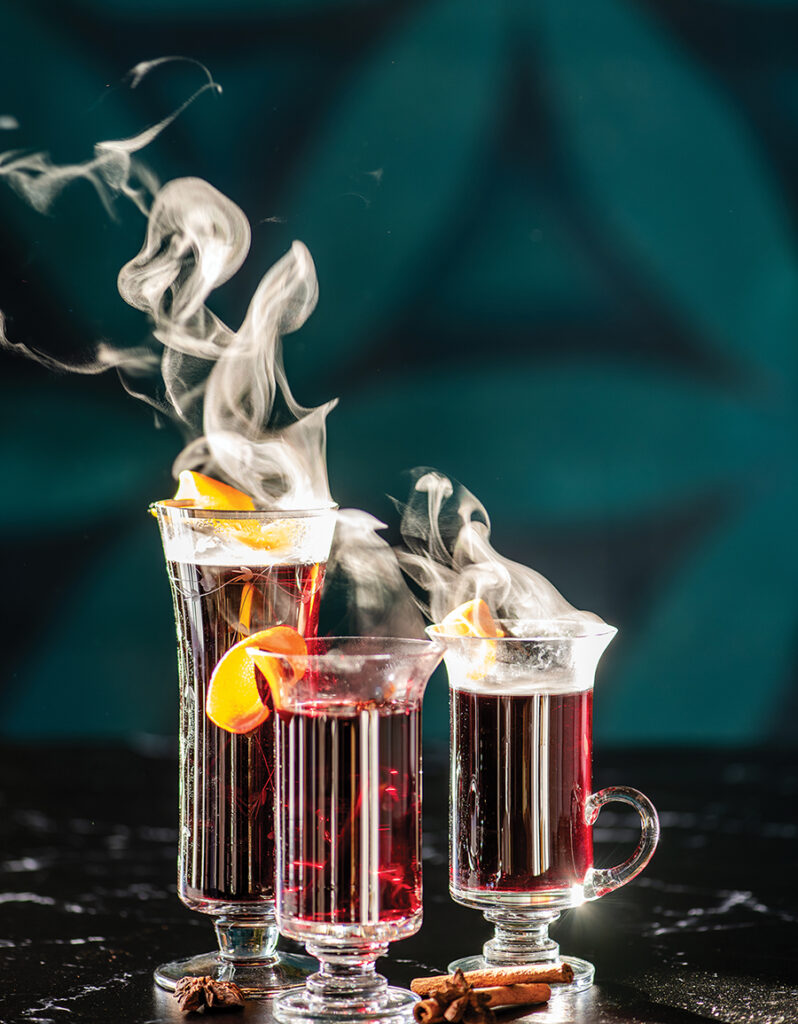
Don’t mention “mocktails” around Machete general manager Kevin Ash. He prickles at the word. Why? It implies “a fake in a certain sense,” he sniffs. “No and low proof” is the order of the day at Machete’s sleek and well-stocked bar. After all, he points out, these drinks are not lesser — but alternative versions. For instance, his mulled wine combines oranges, spices, water and Giesen zero percent merlot, made in the traditional manner then dealcoholized using something called a rotovap (rotary evaporator). “A lot of people like to enjoy a warm drink during the winter doldrums,” he says. “it’s fun to be able to offer something that is nonalcoholic wine-based with spices being the backbone of the drink itself.” Simply serve in a mug and curl up by the fire.


1 blood orange, peeled and juiced

1 navel orange, peeled and juiced

4 bottles of Giesen 0% alcohol merlot

1 cup of sugar

4 cinnamon sticks

35 cloves

4 star anise

2 cups of water

In a crockpot, combine half of each orange’s peel, the juices of both oranges and the remainder of ingredients. Set the crockpot on low and let sit for four hours before serving, stirring occasionally to ensure that the sugar has dissolved. 

Midnight Spritz

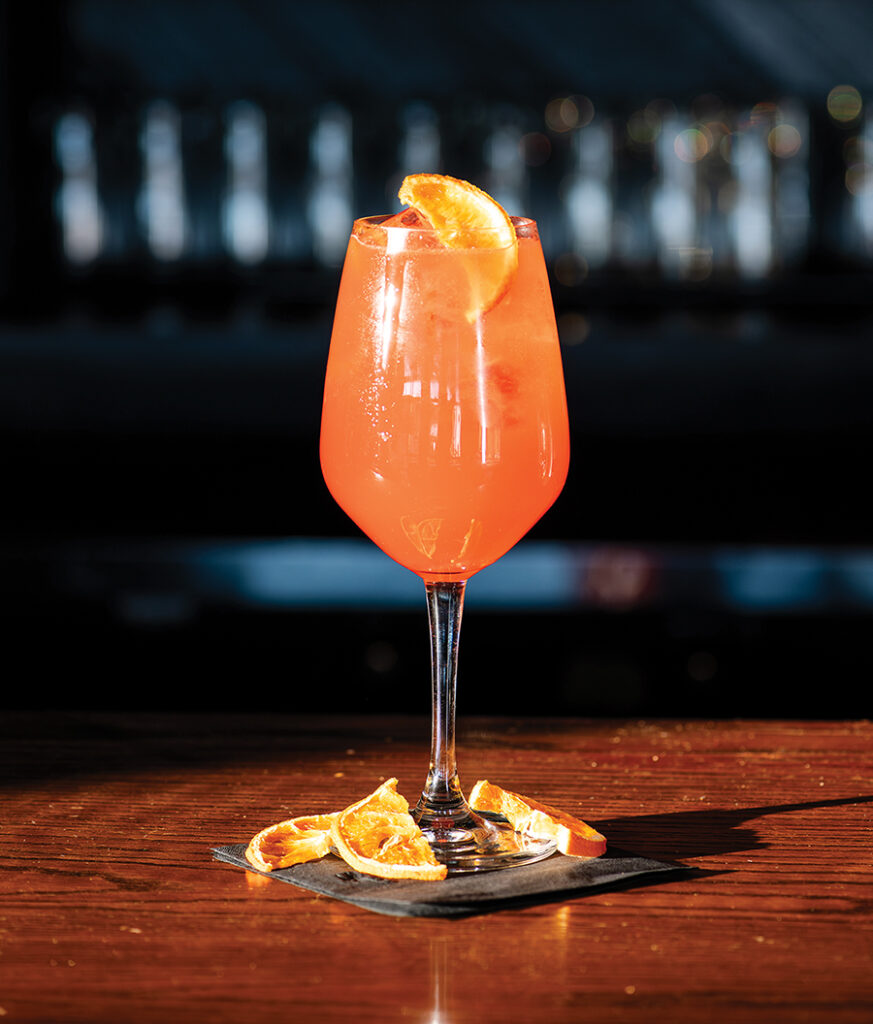
Dram & Draught touts itself as “a place for the whiskey fanatic, the craft beer fan, the cocktail enthusiast, the wine tippler and more.” The “and more?” Perhaps its spirit-free cocktails. Why? “Because it is still a labor of love,” says director of marketing and events Edie Alexander. “We put a lot of effort and time behind making them. So we want them to be a little more elevated than the typical quote-unquote mocktail.” The Midnight Spritz is a riff on the classic Aperol spritz and has become a Dram & Draught fan favorite. “It still has some of the same light, refreshing citrus notes,” says Alexander. Plus, “it’s sparkling and a little bit festive.” Cheers!

1 1/2 ounces Lyres Italian Spritz, Non-Alcoholic

1 1/2 ounces verjus blanc

1/2 ounce lemon juice

1/2 ounce simple syrup

Soda water

Orange slice

Add first four ingredients to a shaker tin with ice and shake well. Dump into a wine glass and top with soda water. Garnish with an orange slice.

The Hot & Sober Marg

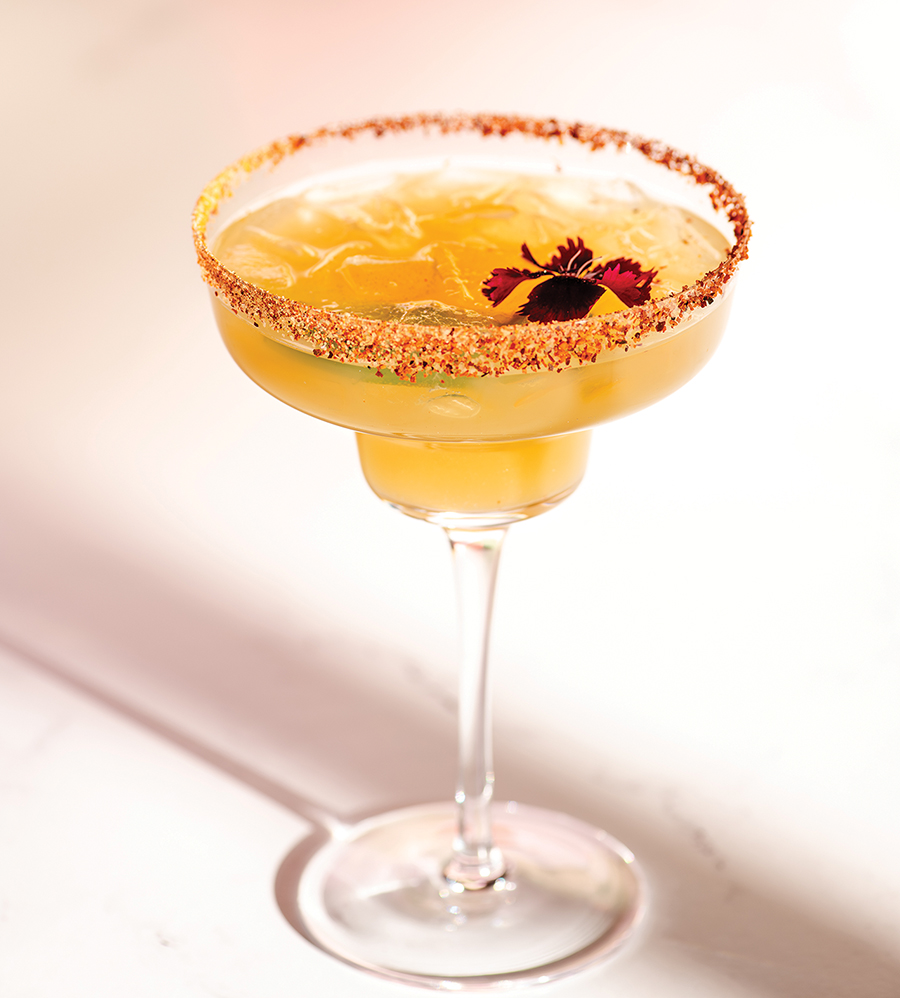
Borough Market & Bar owner Kam Culler knows what she likes. Something a little spicy, a little sweet, a vibe that’s reflected in the “market” part of her establishment. Her drink of choice? The margarita. So when she created a sober drink menu at the end of last summer, the Hot & Sober Marg, made with house-crafted candied jalapeño syrup, was a must-sip. And customers seem to agree, as this drink — and its alcoholic version — are the top sellers on their respective menus. What sets this alcohol-free margarita apart from others? According to Culler, it’s the quality of the nonalcoholic spirit.  She tried other brands and just wasn’t sold. “And then I tried Ritual,” she says. Bar manager Olympia Hensley concurs. “Every time someone orders a Hot & Sober Marg, they’re always impressed by how much it tastes like a margarita,” she says. “That’s really the Ritual tequila popping in there.”


1 1/2 ounces lime juice

1 ounce orange juice

1 ounce jalapeño-infused simple syrup

1 1/2 ounces Ritual Zero Proof Tequila Alternative

Salt, sugar or Tajín seasoning (recommended)

Candied jalapeños

Edible flower

Edible glitter

Add first four ingredients to a shaker tin with ice and shake well. Pour over ice in glass rimmed with salt, sugar or Tajin if desired. Garnish with candied jalapeños, edible flower and edible glitter.

Poem January 2024

Poem January 2024

ADVENTURE

Because she was fast in her way

And he followed her suit,

They launched horizon’s fruitful gaze

To fortify their fruit.

In short parlance, ahead of him,

She was a gushing bride

Until gray moods turned dark to bend

Their rivers for her tide.

They never had one dissension.

He lived his love the same

Beyond single thought’s contention. 

Her body chemistry!

A drinking fountain salutes thirst,

Instant bubble, wet lips.

Then comes what earthly love holds first,

Her muscles fell to slips.

So he slept and woke up alone,

For she was processioned

In Smithfield Manor Nursing Home,

Tenacity, a test.

His eye-lids open every morn.

The bones to him creak rise.

The sun’s obeying crown adorns

Remembrances, her sighs.

— Shelby Stephenson

Shelby Stephenson was North Carolina’s poet laureate from 2014-16. His most recent volume of poetry is Praises.

Almanac January 2024

Almanac January 2024

January is a sacred pause, a rite of passage, a miracle in the dark.

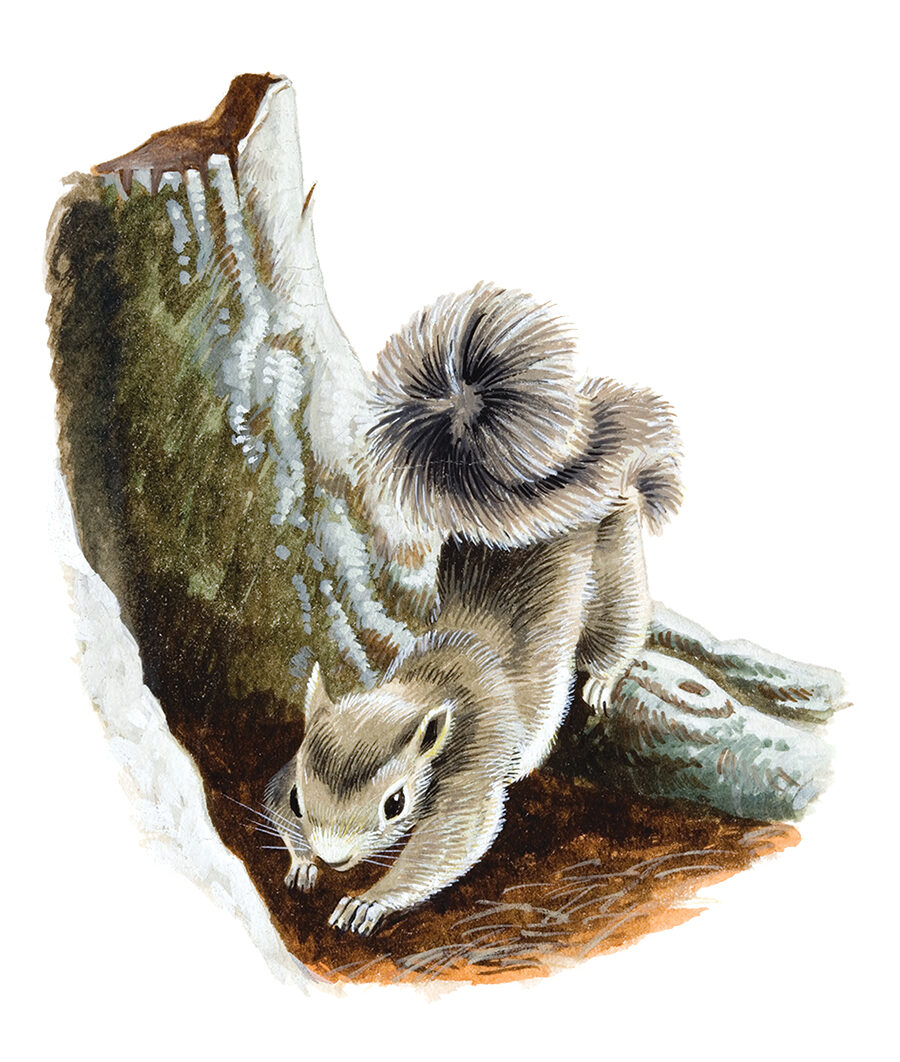
As the Earth sleeps, a brown thrasher sweeps through the dormant garden. Gray squirrels skitter across naked gray branches. A grizzled buck disappears into the colorless yonder.

These bitter mornings, you study the critters beyond the window until the kettle calls out. Back and forth, you putter from stovetop to window, marveling at the movement amid the still and desolate landscape.

You open your journal, turn to a fresh page, watch your thoughts wax introspective.

Sifting through the humus of last year — the upsets, obstacles and lessons — you procure a wealth of nourishment. Glimpses of who you’re becoming. Morsels of wisdom to carry forth.

So much is stirring beneath the surface. Surely the crocus feels this way. Growth isn’t always visible. 

At once, the thrasher breaks your focus with spontaneous song.

You put on the kettle, fill up your thermos, step into the freshness of a brand-new year.

The buck has shed his antlers at the forest’s edge. Gray squirrels skitter from cache to cache. Each critter is a holy mirror.

The darkest days are behind us. Within the ancient quiet of winter, a secret world awaits discovery. Those searching for spring will never see it. Those looking within will find the key.


Don’t think the garden loses its ecstasy in winter. It’s quiet, but the roots are down there riotous.     — Rumi

Milk Flower

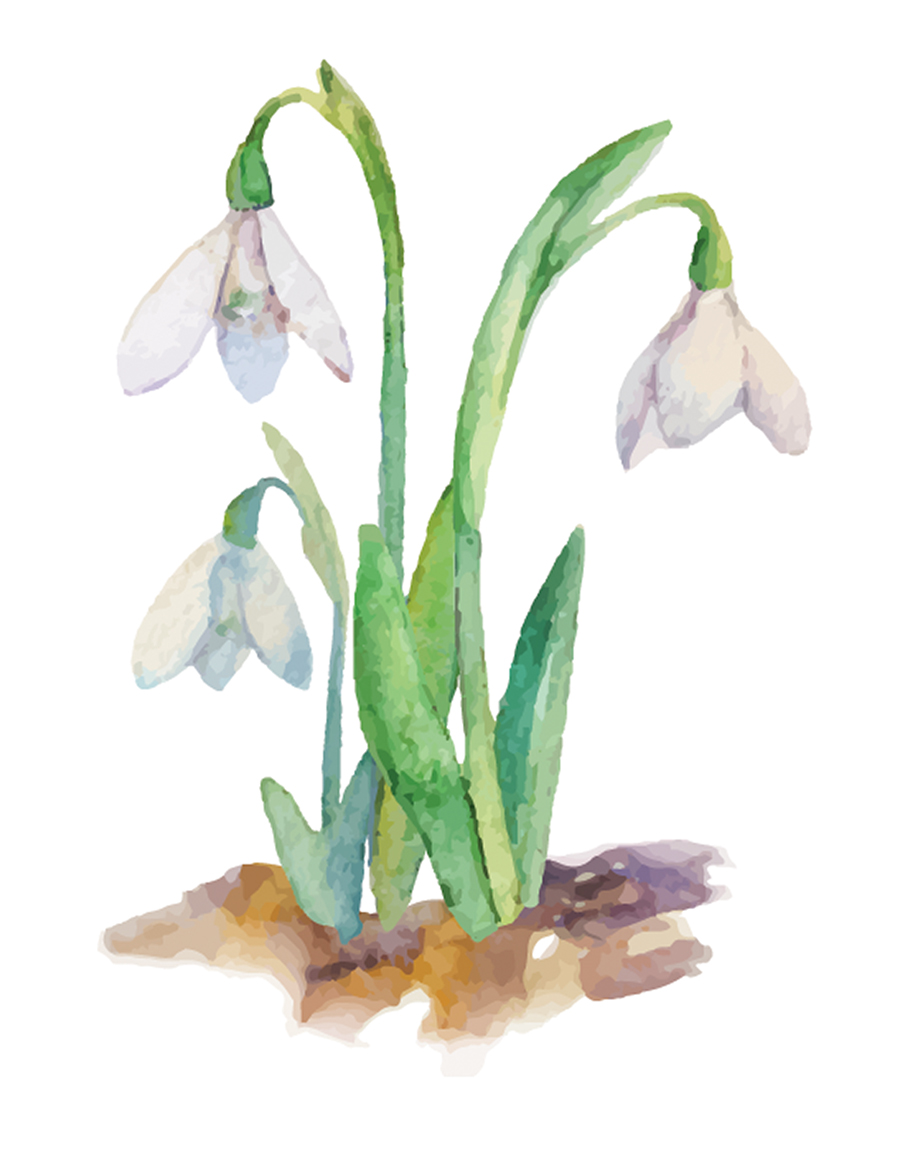
Among the earliest spring bulbs to bloom, the common snowdrop (Galanthus nivalis) dazzles in large drifts, especially when planted beneath deciduous tree canopies.

A birth flower of January, the snowdrop’s Latin name translates as “milk flower.” Emerging from a cold and sleeping Earth, the delicate flowers are, in fact, sustenance for the winter-weary, symbolizing purity, hope and new beginnings.

Reaching a height of just 3 to 6 inches, the dainty white blossoms of this hardy perennial resemble tiny teardrop chandeliers. German folklore tells that, before snow had a color, it asked the flowers of the Earth if it could borrow one of their radiant shades. When all the other blossoms denied the snow’s request, the humble snowdrop offered its white hue to the snow. Grateful for this kindly gesture, the snow vowed to protect the snowdrop from the icy grip of winter. Thus, snow and snowdrop remain true and lasting friends.

Stone Soup

You’ve heard the old folk story: Everybody gives, everybody wins.

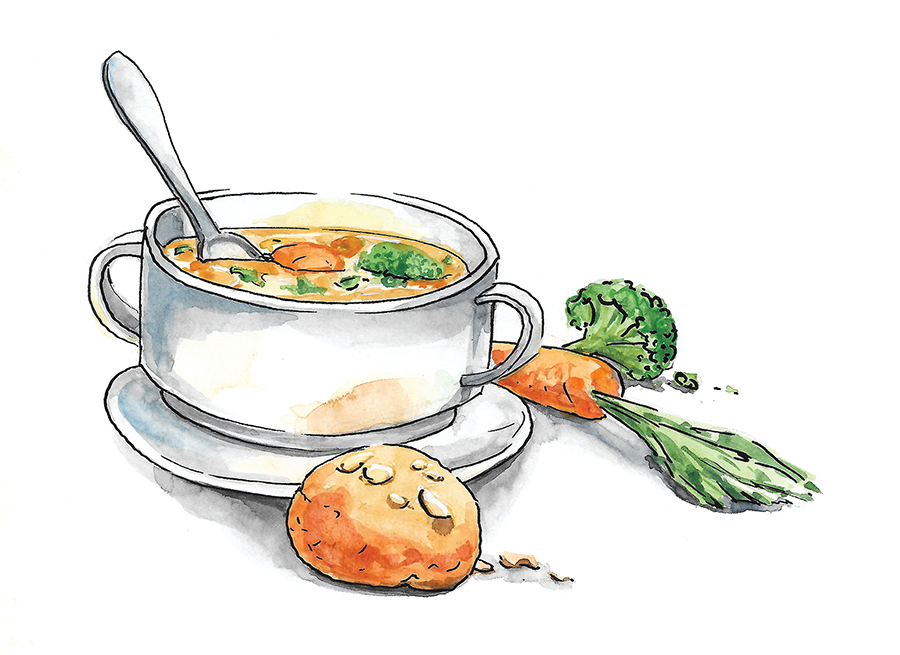
Soup Swap Day is celebrated on the third Saturday of January. Launched in Seattle in the early 2000s, this unofficial holiday has inspired soup enthusiasts across the globe to gather their tribes — and their Tupperware — and get to simmering.

It’s simple.

Pick a soup, any soup:

Vegetable stew served with homemade bread.

Cream of mushroom topped with cracked pepper and fresh thyme.

Roasted cauliflower brightened with a squeeze of lemon.

The possibilities are endless.

Cook a king-size batch, ladle into containers, then distribute to your broth-loving friends. Leave the party with as much soup as you doled out. Everybody gives, everybody wins.  OH

Creators of N.C.

Creators of N.C.

Restless Musical Energy

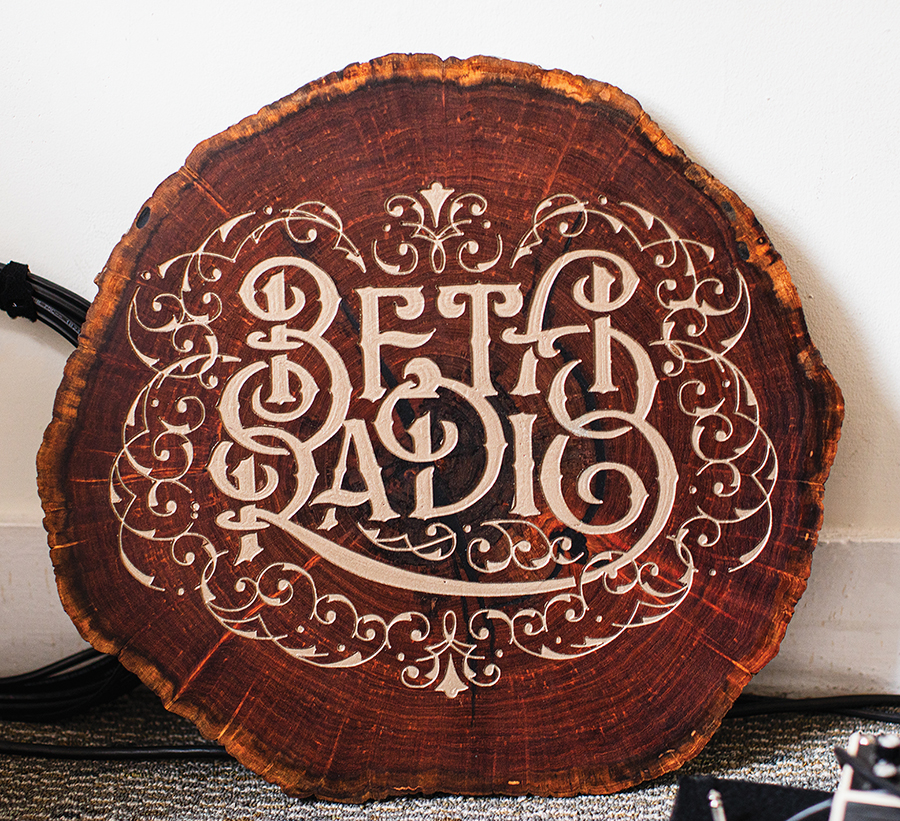
The moving sound of Beta Radio

By Wiley Cash

Photographs By Mallory Cash

Ben Mabry, lead singer of the Wilmington-based, two-man band Beta Radio, was 8 years old the first time he was moved by music.

“My mom gave me this old tape from my aunt’s church,” he says. “And it was some kind of gospel. I don’t even remember the name of it, but I remember feeling the movements of the music and just knowing something was happening inside me.”

That something kept happening to Ben, whether it was in response to Christian music, Pearl Jam or the classic rock he listened to with his dad. As a teenager, while attending summer camp in the mountains, he met someone who responded to music the same way. It was Brent Holloman, a fellow Wilmingtonian Ben had never met before.

“I remember Ben being this funny prankster,” Brent says, cracking a smile while recalling their time at camp. “He would carry around a spray bottle and walk up behind people, fake a sneeze and then spray their necks.”

“I just thought you were cool because you could play ‘Stairway to Heaven,’” Ben says. He laughs. “Brent was the first person I knew who was really good at guitar.”

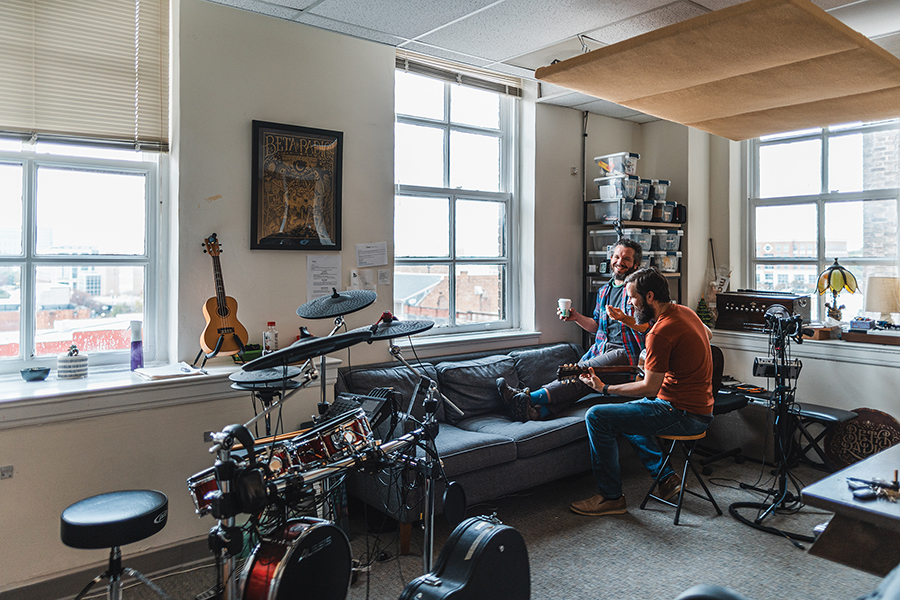
We’re standing in their studio high up in the art deco Murchison Building in downtown Wilmington. The room’s windows peer out on a gray day during a fall holiday weekend. Guitars and banjos are resting in their racks along one wall; a drum kit is set up nearby. Everywhere you look are scribbled scratches of songs, mementos fans have sent, boxes of tea and snacks: the detritus of two old friends who’ve spent long hours making music together.

After their friendship formed at summer camp, it continued when they returned home to Wilmington, and they began playing music together, with Brent joining Ben’s band on bass. The band was all electric guitars and drums, but after practice Ben and Brent would get together to play acoustic, realizing their shared love for artists like Simon & Garfunkel. Nearly two decades later, Beta Radio is still primarily an acoustic guitar band, and with nine albums to their name and hundreds of millions of streams across various music platforms under their belt, it’s safe to say they are now the ones moving others with their music.

Over the years, American Songwriter has claimed the band is “evoking serenity” with “orchestral experimentation” to “emit an incandescent optimism,” and The Vogue has written that their “lyrics and music carve out a space in your head and find a way to fit into your own cosmology.” The praise is both heady and ethereal, much like the band’s previous albums, many of which are dominated by a gorgeous, yet restless, musical energy and lyrics that never quite settle on answers. That sense of struggle reflects the years of spiritual yearning Ben experienced as a younger man searching for answers during time in college and the military, and later during travels through Peru, Hawaii, Costa Rica and the desert Southwest. He was writing lyrics the whole time.

“I think it was 2009 when he went to Hawaii and ended up getting inspired by something there,” Brent says. “He’d send me these a cappella voice memos of songs, and I would write the guitar parts. And then I went to Ireland and picked up the banjo, and when I came back we started adding banjo to a few of the songs. Soon we had five or six songs, and we thought, ‘Hey, these are pretty good. Maybe we should record them.’ And by the time we got into a studio we had seven or eight.”

And then the real work began. The newly minted Beta Radio had official letterhead made, and they spent hours packaging CDs of their debut album, Seven Sisters, and sending them off to music blogs and magazines, hoping for reviews. They also submitted songs to the new streaming services, at the time dominated by Pandora, with Spotify’s reign soon to come.

“Friends were telling us, ‘Hey, I heard your song the other day on some coffeehouse playlist,’” Brent, says. “And other people were saying, ‘I heard you on the Mumford & Sons channel.’”

People weren’t just listening to Beta Radio on streaming services; they were hearing the band and immediately downloading its album.

Over the next 10 years, Beta Radio released follow-up albums at a steady clip, all of them bolstered by the millions and millions of times its songs were listened to on streaming services. Most bands have to tour voraciously in support of their records, but Beta Radio was able to stay home, working on new music.

As the pandemic emerged in 2020, the band began writing and recording the songs that would end up on 2021’s Year of Love. Once the world went into lockdown, Ben’s geographic searching came to a standstill and forced him to investigate exactly what it was that he’d been looking for. The songs on that album are mystical explorations of various forms of love, the music often swelling into sonic walls of strings and guitars, marked by gorgeous, ethereal lines like “In my soul, there’s something I want to say.” These lyrics open the album, and they set the tone for its themes of the intangibility of love and the many ways we search for it while struggling to find the language to express it.

If Year of Love is about searching for something — language, answers, love — 2024’s Waiting for the End to Come is about finding it. The songs feel urgent, tactile, narrative-driven and grounded in a physical space. This album marks the first time Ben and Brent have co-written songs with others, and the experience of spending time in Nashville and sharing ideas with fellow songwriters brought them closer while elevating what they could do musically. The two kids from Wilmington who’d been moved by music found themselves moved once again.

“There’s just no other way to say it: I began to vibrate,” Ben says of those days writing songs with Brent and others in Nashville. “Just like that guitar would if I were to strum it; I was vibrating because I was the energy.”

“That whole week flew by,” Brent adds, “and it was like we were living on a high. It was the first time we co-wrote with other people, and it was the first time we were writing songs this quickly.”

One song birthed from the co-writing experience is “This One’s Going to Hurt,” which will be released as the album’s first single this month. The line itself was written by a co-writer named Henry Brill, and its honesty and directness struck Ben.

“I would never write that line,” he says, “but I love it because it’s an admission, it’s an acknowledgement. And in all the prior stuff — Year of Love, for example — so much of the music up to now was me knowing that I had something to say but being afraid to fully say it.”

The three of us have left their studio space and taken the elevator down to Front Street. We’re sitting at a table inside Drift Coffee, where Ben and Brent regularly drop in for coffee during the week.

I wonder if the people around us, most of them young hipsters wearing headphones and ear buds and no doubt streaming music, would be shocked to learn that a band who’s part of their regular streaming rotation is sitting so close by.

As our conversation wraps up, I say goodbye and make my way back to the counter for a refill to-go. I happen to know the barista, so I tell him who I’ve been sitting with for the past hour.

“Those guys are in Beta Radio?” he says. “Brent and Ben? They come in here all the time. I had no idea. I love that band.”

Another person, moved by the music.  OH

Wiley Cash is the executive director of Literary Arts at the University of North Carolina at Asheville and the founder of This Is Working, an online community for writers.

Omnivorous Reader

Omnivorous Reader

The Scars of Our History

Will revisionism invade the book world?

By Stephen E. Smith

The world is surely shifting beneath our feet. What was Fort Bragg is now Fort Liberty. In many small Southern towns, the obligatory statues memorializing the Confederate dead have come tumbling down with a predictable thud. Even the most revered Southern monument of them all, the edifice of Gen. Robert E. Lee, a bronze equestrian statue with the South’s greatest general mounted on his horse, Traveller, was unceremoniously plucked from its imposing pedestal and melted down for scrap.

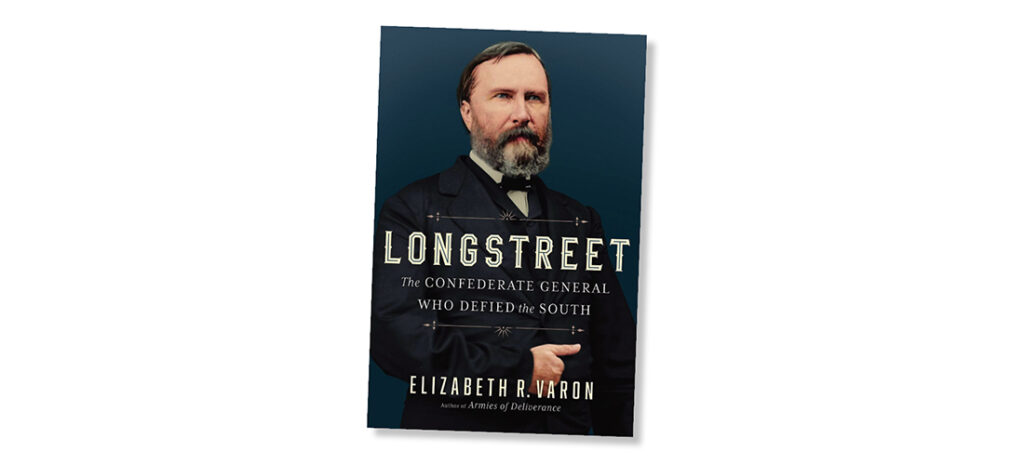
So here’s the question: In a new world where book banning, the most blatant and least effective form of censorship, is all the snazz, how do revisionist attitudes affect the publishing of books about the Civil War? It’s probably too early to say, but two new offerings are testing the market. Elizabeth R. Varon’s Longstreet: The Confederate General Who Defied the South, and On Great Fields: The Life and Unlikely Heroism of Joshua Lawrence Chamberlain, by Ronald C. White, are waiting on bookstore shelves.

Those unschooled in Civil War lore and history need only know that Longstreet was Lee’s second in command, referred to by Lee as his “old war horse.” A graduate of West Point, he fought in the Mexican War, was friends with Grant and played a pivotal role in the Southern rebellion. He’s most remembered for his participation — or lack thereof — in Pickett’s Charge at Gettysburg, where he disagreed with Lee’s determination to attack the Union position on Cemetery Ridge. Varon asks the question that has persisted over the years: Did his (Longstreet’s) misgivings about Lee’s plan translate into battlefield insubordination? Did he deliberately delay Lee’s attack, thus dooming it to failure? Gen. Pickett asked Longstreet if he should proceed with the advance, and Longstreet merely nodded. Scholars and Civil War buffs have spent the last 160 years attempting to discern Longstreet’s motives.

After the surrender at Appomattox, Longstreet moved to New Orleans, a Union-held city that supported a large anti-secession population and a well-educated Black community, a place where Reconstruction might have succeeded. Longstreet threw himself into Republican Party politics and promoted Black suffrage. He helped establish a biracial police force, sat on the New Orleans school board, which was racially integrated, and was instrumental in fostering civil rights laws. But violence soon enough became endemic in the South and in Reconstruction Louisiana. Longstreet attempted to suppress it, but terrorist groups such as the White League and the Knights of the White Camellia held sway. In 1874, the White League attempted to overthrow the state’s Reconstruction government. Longstreet sided with the militia and police, but only the intervention of federal troops restored order. For the remainder of his life, Longstreet continued to speak up for Black voting rights, which earned him condemnation from his former brothers-in-arms.

No statue of Longstreet existed in the South or on the Gettysburg battlefield until the 1998 unveiling of “a decidedly unheroic” likeness of the general riding “an undersized horse, positioned on the grass rather than atop a pedestal, on the edge of the battlefield park, blocked from view by trees.”

So why aren’t there more monuments to Lee’s “old war horse”? Longstreet’s embrace of Reconstruction rendered him unfit as a symbol of the “Lost Cause,” thus proving, Varon observes, that the small-town Confederate statues were not simply monuments to heroism but “totems to white supremacy.”   

“We like to bestow praise on historical figures who had the courage of their convictions,” she writes. “Longstreet’s story is a reminder that the arc of history is sometimes bent by those who had the courage to change their convictions.”

There’s no dearth of statues honoring Gen. Joshua Lawrence Chamberlain. A bronze likeness stands in Chamberlain Freedom Park in Brewer, Maine. A second statue was erected in Brunswick, Maine, not far from Bowdoin College, where he served as president following his participation in the Civil War, and a third statue of the general overlooks the Gettysburg Battlefield, facing outward from Little Roundtop.

Chamberlain was lifted from obscurity by Michael Shaara’s 1974 Pulitzer Prize-winning novel The Killer Angels and Ken Burns’ 1990 documentary The Civil War, both of which rehash Chamberlain’s and the 20th Maine Infantry’s crucial defense of Little Roundtop during the second day of the Battle of Gettysburg. Ronald C. White’s On Great Fields: The Life and Unlikely Heroism of Joshua Lawrence Chamberlain is the latest biography to explore Chamberlain’s remarkable and complicated life.

Rather than concentrating on Chamberlain’s Civil War exploits, White delves deeply into the general’s personal life, both pre- and post-war. He examines Chamberlain’s deep Calvinist faith and his love of music and learning — he was fluent in nine languages — that dominated his adolescence and shaped his adulthood. His lengthy and difficult courtship of and marriage to Fanny Adams is explored in sometimes agonizing detail, and his time as president of Bowdoin College and as governor of Maine is fully explicated.

Although he was much admired in Maine, Chamberlain’s post-war years were anything but tranquil. His marriage was troubled. He and Fanny were at one point estranged, and she implied that marital abuse may have been a factor in their separation. Chamberlain never denied the accusation. In January 1880, Chamberlain was called upon to prevent violence in the state Capitol during the gubernatorial election. The Maine State House had been taken over by armed men, and the governor appointed Chamberlain to take command of the Maine Militia. He disarmed the insurrectionists and stayed in the State House until the Maine Supreme Court decided the election’s outcome. White goes on to expand on Chamberlain’s role as an entrepreneur, his ventures into Florida railroads and land development, and various New York businesses.

On February 24, 1914, succumbing at last to infections caused by an old war wound, the 85-year-old Chamberlain died at his home in Portland, 50 years after a minie ball ripped through his body at Petersburg. He had lived most of his life with excruciating pain caused by the wound, refusing opioids that were legal and readily available.

Near the conclusion of Burns’ The Civil War, the death of Joshua Lawrence Chamberlain is announced: “The war was over,” the narrator says. Given the lessons implicit in these new biographies and the skullduggery of contemporary politics, readers are likely to question that simple declarative sentence.  OH

Stephen E. Smith is a retired professor and the author of seven books of poetry and prose. He’s the recipient of the Poetry Northwest Young Poet’s Prize, the Zoe Kincaid Brockman Prize for poetry and four North Carolina Press Awards.

Life’s Funny

Life’s Funny

Thinking Outside the Box

Beware of fraud — but not too much

By Maria Johnson

The package on our doorstep was large, maybe 2 feet by 2 feet.

Too big for the paper bathroom cups I’d ordered. Way too big for the wooden floor vent due to arrive any day.

“Did you order anything this big?” I asked my husband.

He shook his head.

I checked the label.

It was addressed to me.

I looked at the return address. The sender was something called Muji in New Jersey.

“MOO-gee?” I said slowly. “What’s a MOO-gee?”

I looked at my husband.

“Emoji?” he said.

“Not emoji. A MOO-GEE,” I said, acting as if the words sounded nothing alike.

I proceeded with caution, grabbing a pair of scissors, carefully slitting the packing tape and slowly opening the cardboard flaps.

You never know what a Muji from Jersey might send. A packing slip lay atop some crumpled brown paper.

I unfolded the slip to see a manifest of the contents:

“Item.”

“Item.”

“Item.”

No prices were given.

Okaaaaaaay.

I set aside the slip and lifted a layer of the packing paper to reveal a clear plastic storage box with a lid.

In-ter-est-ing.

Under that, another layer of paper.

I gingerly lifted the wads.

Two stackable plastic trays. Or, as we used to say back in the day, an in-box and an out-box.

How quaint.

And weird.

I picked up the packing slip again. It gave no website for Muji. No phone number.

Just a fuzzy QR code.

“Maybe you should scan the code,” my husband suggested.

Hmph. I’d read way too many scam stories, received too many “urgent” text alerts about nonexistent bank accounts and listened to too many voicemails regarding my request for a business loan — huh? — to fall for this.

And yet, a part of me would feel guilty about keeping these plastic accessories I had not paid for.

Equally bad, I imagined someone out there, sitting at a desk strewn with the disorganized chapters of the next Great American Novel, just waiting for a 2-by-2 box that never arrived.

Danged human emotions. Danged scammers for preying on them.

Why, just the week before, I’d received two cunning, if clumsy, emails that I found myself reading and responding to in my head.

One was an email from my long lost friend Jimmy at PayPal, as proven by the fuzzy company logo below his message. Never mind Jimmy’s personal Gmail address.

“Hi,” he wrote. “I hope you’re doing well and reading this message.” (Yes to both, Jimmy, though who can say how long either will last?)

“We haven’t caught up in much too long.” (Like, ever.)

“I’ve been missing our amazing connection and our discussions.” (We’re talking about PayPal, right? But, yeah, it’s true. I’m a good listener.)

“I wanted to get in touch with you and start off again.” (I do like a good repair attempt.)

“We can communicate via email, video call or in-person meeting . . . ” (In person? To talk about my PayPal account? I dunno . . . This seems . . . Well . . . Maybe over coffee?)

“Till we cross paths again, be well and never forget that you are missed.” (Do you really expect me to have coffee with a man who uses the word “till” in a business letter? It’s over, Jimmy.)

Then there was this flattering note with “ART INQUIRY” in the subject line.

“How are you doing? My name is Paul Arthur from Atlanta, GA.” (That’s a lot to cram on a birth certificate, Paul Arthur of Atlanta, GA.)

“I have been on the lookout for some artworks lately in regards to I and my wife’s anniversary which is just around the corner. I must admit your doing quite an impressive job.” (Artworks? You must be talking about the flower pots that I’ve been encrusting with orphaned earrings, a sort of hot-glued reminder of lobes past. I saw it on Etsy. They’re cute, aren’t they? And you are obviously a man of taste. Though your spelling and grammar need work. It’s “you’re,” not “your,” and technically you should have said, “my wife’s and my anniversary.” Or even better, “I’ve been looking for some artwork to buy my wife for our anniversary.” Much simpler.)

“You are undoubtedly good at what you do.” (Paul. You charming devil.)

“I would like to purchase some of your works as a surprise gift to my wife in hoding anniversary.” (Hoding?)

“My budget for this is within the price range of $500 to $5,000 dollars.” (H-O-D-I-N-G?)

“I look forward to reading from you in a view to knowing more about your pieces of inventory.” (Do you mean the paper anniversary? Or the cotton anniversary? Or maybe the pottery anniversary?)

The point is, it’s easy to get sucked into these things even when you know they’re fakes.

I stared at the Muji box. I wasn’t about to scan the splotchy QR code and potentially open the door for a malicious actor to commandeer my device and do God-knows-what with my dog pictures.

I double checked my outstanding internet orders. Had I ordered desk accessories in my sleep? Was this a sign from my subconscious that I needed to literally get my stuff together?

Zippo.

I was stuck. Finally, my husband offered an idea: “Just throw it out.”

What? Throw away a perfectly good plastic storage bin and two filing trays that probably cost 10 cents to manufacture?

No way. I would recycle them. No, wait, even better, I would donate them, take a small tax write-off and keep alive the chance that the person who’d ordered these things would find them at Goodwill.

That would solve it. Clean conscience all around.

I put the box by the door. The next time I left the house, this puppy was going in my trunk.

About 30 minutes later, our son in New York texted.

“I may have accidentally had a Muji package sent to you rather than here. If it shows up, would you be able to forward it to us? No rush.”

I did what any loving mother would do.

I asked him a security question.  OH

Maria Johnson is a contributing editor of O.Henry magazine. Email her at ohenrymaria@gmail.com.

Tea Leaf Astrologer

Tea Leaf Astrologer

Capricorn

(December 22 – January 19)

They say a caterpillar turns to soup before taking new form. Transformation is a messy business. Although it’s soup season for sea goats, trust that something delicious is simmering — specifically in the House of Pleasure. Let things be playful. And savory. Maybe a little spicy. When Mercury enters your sign on January 13, prepare for a grand emergence. There’s no going back to the chrysalis. 

Tea leaf “fortunes” for the rest of you:

Aquarius (January 20 – February 18)

It’s time for some radical honesty.

Pisces (February 19 – March 20)

Breathe before you speak.

Aries (March 21 – April 19) 

Try sitting with the discomfort for a minute.

Taurus (April 20 – May 20)

Two words: natural light.

Gemini (May 21 – June 20)

Ever tried vocal toning? Look it up. 

Cancer (June 21 – July 22)

Spit it out already.

Leo (July 23 – August 22)

Trust your own (adorably neurotic) rhythm.

Virgo (August 23 – September 22)

Smells like codependence. 

Libra (September 23 – October 22)

Don’t forget the key.

Scorpio (October 23 – November 21)

Prepare to surprise everyone. Including yourself.

Sagittarius (November 22 – December 21)

Less screen. More routine.  OH

Zora Stellanova has been divining with tea leaves since Game of Thrones’ Starbucks cup mishap of 2019. While she’s not exactly a medium, she’s far from average. She lives in the N.C. foothills with her Sphynx cat, Lyla. 

SAZERAC January 2024

SAZERAC January 2024

Sage Gardener

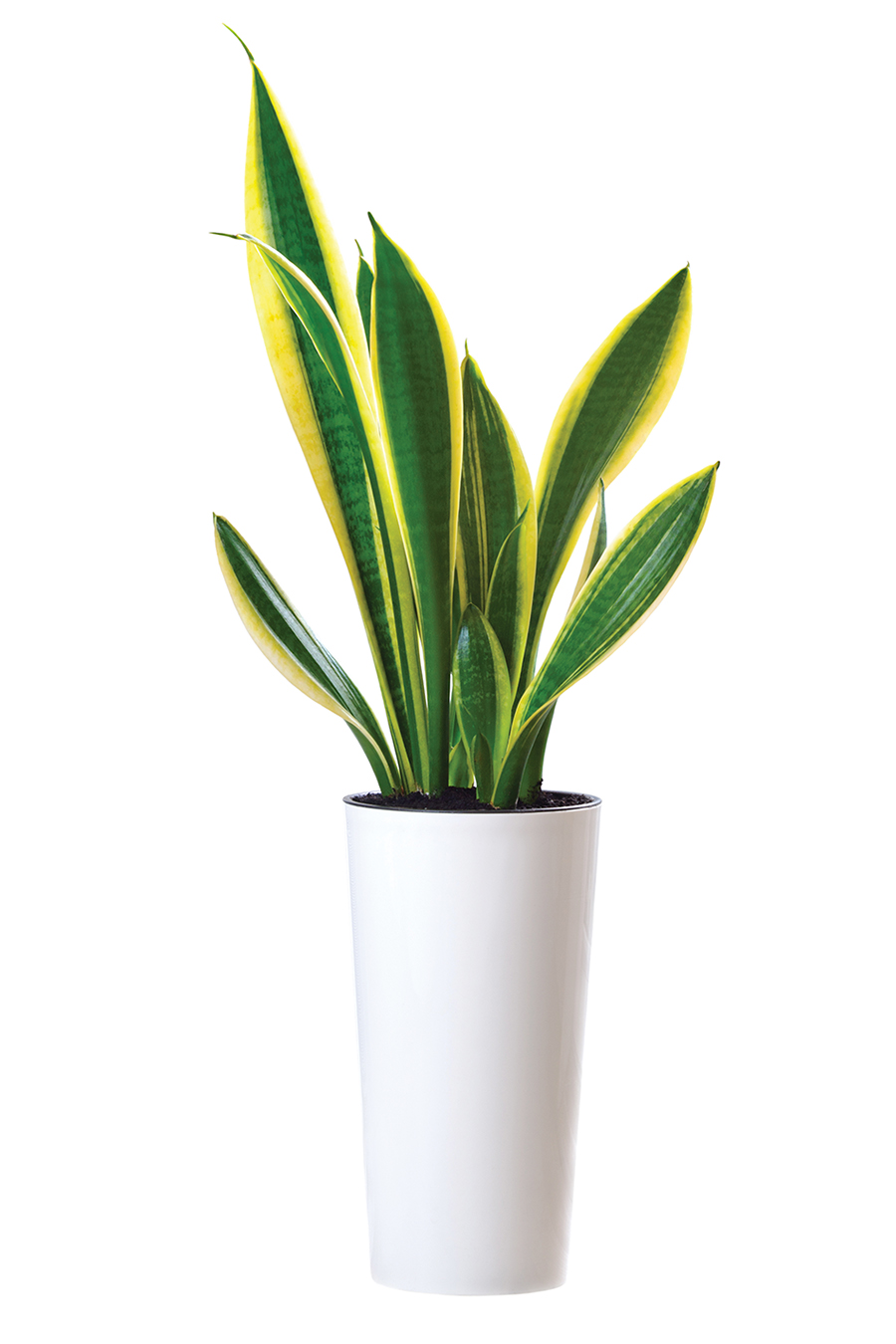
The Sage Gardener had a simple question: What’s the hardiest, hardest-to-kill houseplant you’ve ever had? The answers, as you’ll see, were anything but simple, but first thing first: A majority of respondents insist that for pure can’t-kill-it endurance, nothing beats a snake plant, aka devil’s tongue, good-luck plant or mother-in-law’s tongue. “Thriving, impossibly leggy and ugly,” complains O.Henry columnist Cynthia Adams, who gave hers away “because it just wouldn’t give up the ghost and die.” But they are by no means immortal. My poet and playwright friend from New Jersey sniffs: “My husband killed my snake plant just after we met. I’d had it for about 32 years when we met. Gone.” Along with some precious oxygen in their house. “According to NASA’s Clean Air Study,” a former colleague from Florida pointed out to me, “the snake plant is so effective at producing oxygen that if you were locked in a sealed room with no airflow, you would be able to survive with just six to eight plants in it.” She says NASA recommends 15–18 medium-to-large-size plants for an 1,800-square-foot home for optimum air quality. When you ask O.Henry’s founder, Jim Dodson, about plants, you, of course get a dog story: “We have a beautiful tree fern that has been ravaged by our one-year-old wildling, a Lab-English-spaniel. The tree fern made two comebacks and is now safe in a sunny, remote guest bedroom. Its will to survive is an inspiration.” Another writer, name withheld to protect the guilty, reports “any interesting successes with houseplants involve previous marriages, so I don’t think my mentioning them would play especially well in my household.” A friend from Asheville says she has three peace lilies, which are notoriously temperamental, that are thriving: “one from my grandmother’s funeral in 1995, one from my dad’s funeral in 2016 and one from my mother’s funeral in 2021. I don’t have the heart to get rid of them so I nurse them along.” A former neighbor tells about a peace lily her husband-to-be “clung to as the only living thing he had after moving away from an abusive relationship and to a new town and a new job.” Once they became a couple, the lily survived poor lighting in Michigan, aphids in Georgia, cramped space during grad school: “This peace lily became a barometer for our collective prosperity and . . . literally . . . our peace.” Until “we began the sad trajectory of replicating the marriage my partner had tried to escape. It was a decline for all three of us. Attempts to recover, or even salvage, failed. After almost 20 years, the peace lily died. It took fewer years for the marriage.” On a brighter note, O.Henry’s Maria Johnson says that “probably my longest-lived plant is a next-to-the-house plant, a Boston fern that summers on a metal stand next to the garage.” As spring turns to summer, it bursts into verdant glory, and “its lacy fingers brush the side of my car when I pull into the garage. It reminds me of the way a friend might touch the arm of another while chatting, a gentle way of connecting.” Several respondents voted for ubiquitous and hardy pothos: “It wilts to say, ‘Water me, Seymour!’” says O.Henry’s editor, Cassie Bustamante. But a hiking buddy’s has perhaps the most practical and enduring solution to fading and expiring house plants: “Plastic,” she says.    

David Claude Bailey

Window to the Past

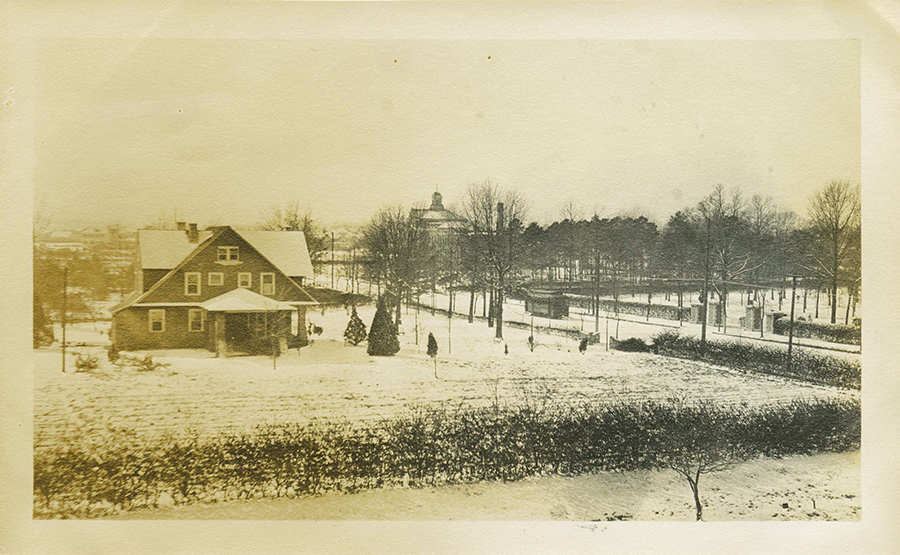
Photograph © Carol W. Martin/Greensboro History Museum Collection

A trolley travels through a wintry scene along Summit Avenue, circa 1900s. 

Unsolicited Advice

While your dogs licks up the last of the sequins and your hangover succumbs to a little hair of the dog, an anti-post-holiday malaise cure is in order. To stave off the NYE — New Year Ennui — we’ve made a list of things we’re looking forward to in 2024.

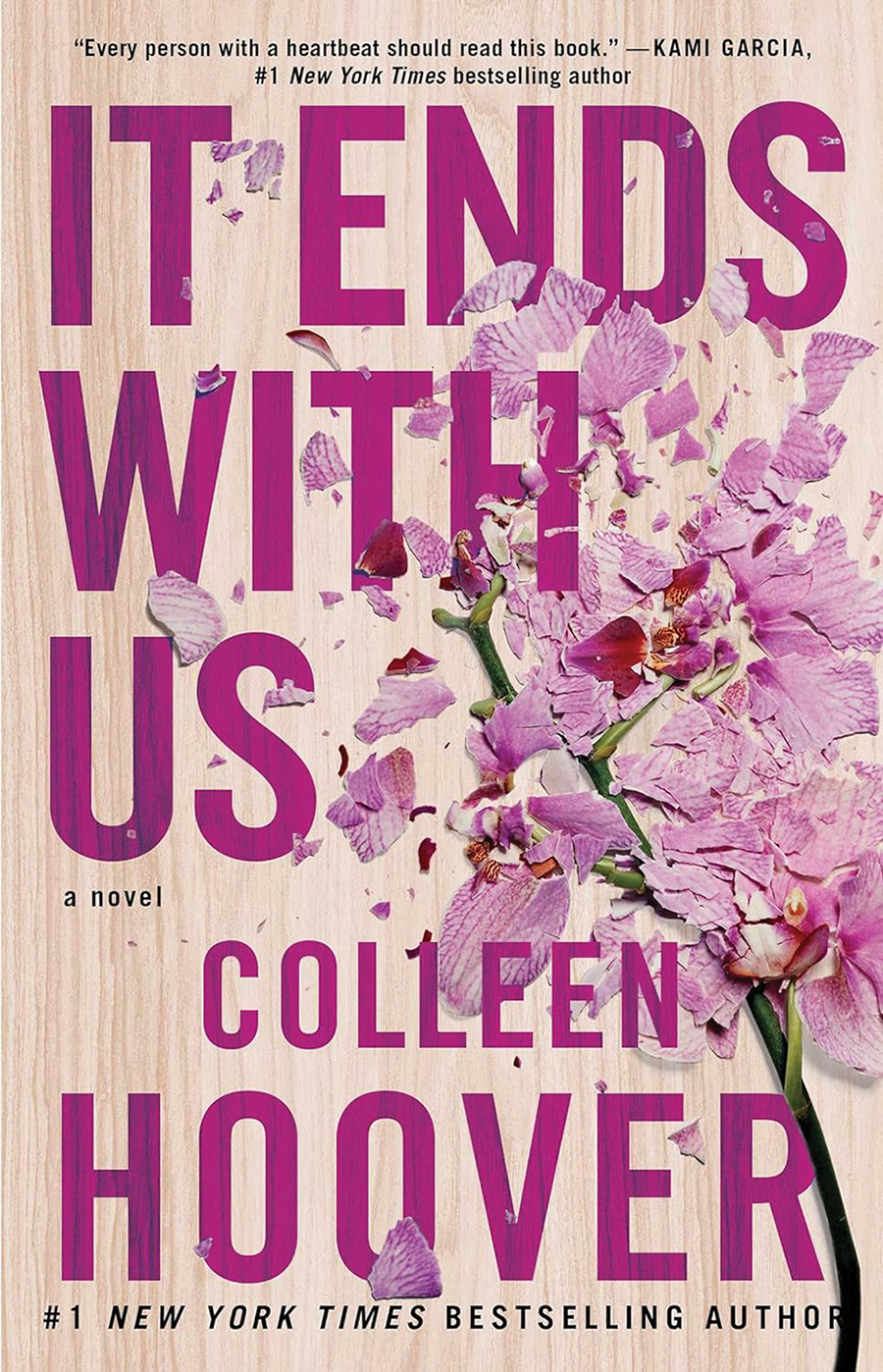
It Ends with Us. Colleen Hoover, a New York Times-bestselling author, is on fire — not literally, of course — and this 2016 title is her most popular by far. The film adaptation hits theaters on February 9. Just in time for Valentine’s Day, which we’re not looking forward to.

Summer Olympics. The City of Light has another nickname — La Dame de Fer, aka The Lady of Iron — thanks to the iron Eiffel Tower. She’ll become the lady of gold, silver, bronze and “just honored to be here” when the Olympics kick off in late July.

February 29. It only comes around once every four years, folks. Seize the moment by doing something you rarely do. Like balancing your checkbook. Your what?

Ringling Bros. and Barnum & Bailey Circus. Call it vegan, if you will, but the circus is back in town, animal-free and flipping through the Coliseum in early February. Sorry, Hugh, but this is “The Greatest Show.”

Snow White. In March, just when we’re ready to move on from the idea of snow, Disney releases its live-action adaptation of this classic fairytale, sure to make us melt. Cue the songbirds.

Just One Thing

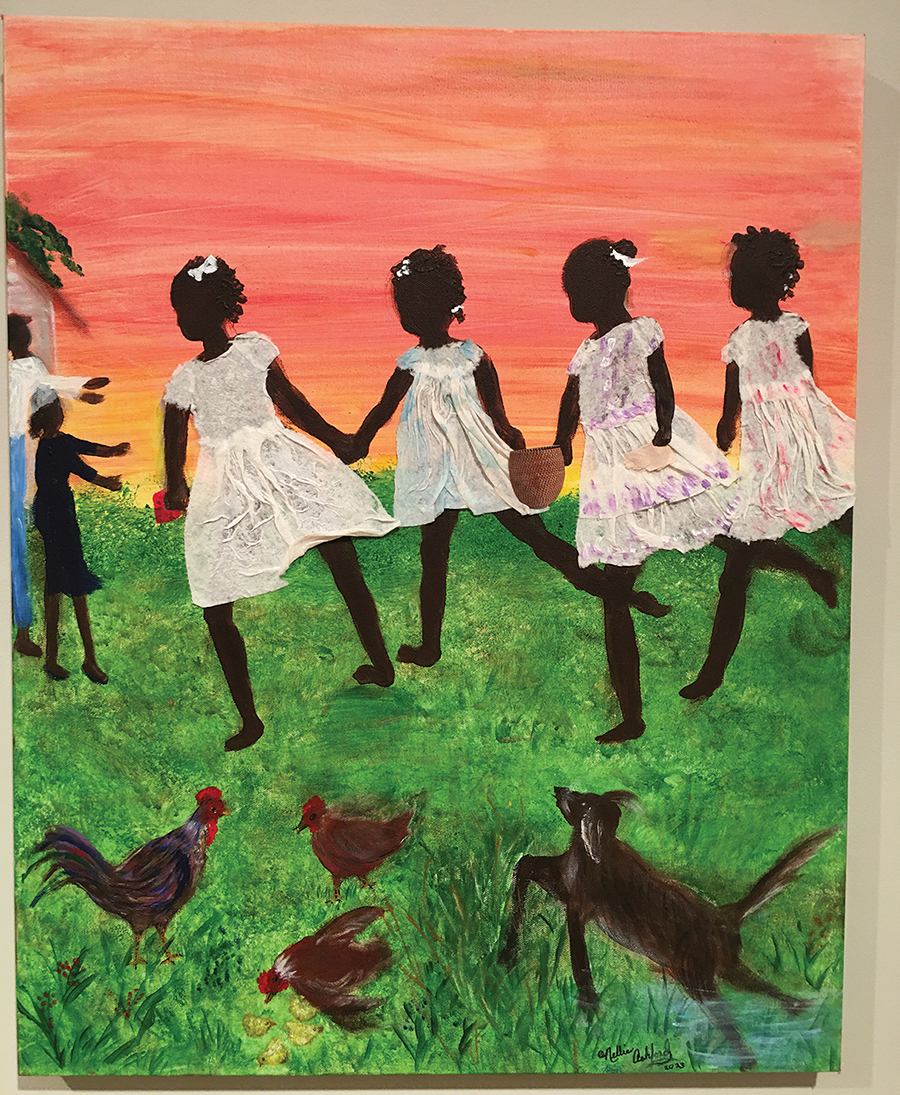
“My first pieces sold; I just thought I was always doodling,” Charlotte native Nellie Ashford, a visual storyteller and a self-proclaimed folk artist, says in the short documentary titled Nellie Ashford: Reckoning with Ties to Slavery at Davidson. “I started doodling as a serious artist when my grandson and I, we would get on the floor and we would draw — together.” Now 80, she’s been exhibiting her work across North Carolina for well over 20 years, including her first solo exhibit in 2016. Through a combination of painting and collage that often features vintage fabrics that bear meaning to the work’s subjects, Ashford creates art that represents everyday people in the community — children, families, dancers, musicians — as well as her own memories of growing up in the Jim Crow era South. Found at GreenHill Center for NC Art’s annual “Winter Show,” where all pieces are available for purchase, A Walk to the Farm to See My Aunt & Uncle (2023) depicts four little girls running toward the open arms of their relatives against a vivid orange sky. “We’re thrilled to be able to include Nellie Ashford for the first time at GreenHill, especially because she is a pre-eminent North Carolina folk artist, one of our state’s most well-known on a national level, and has been widely exhibited in museums and artist collections,” says GreenHill executive director Leigh Dyer. “This is a wonderful opportunity for collectors to access her work.”

Letters

To Jim Dodson in response to his September 2023 “Simple Life:”

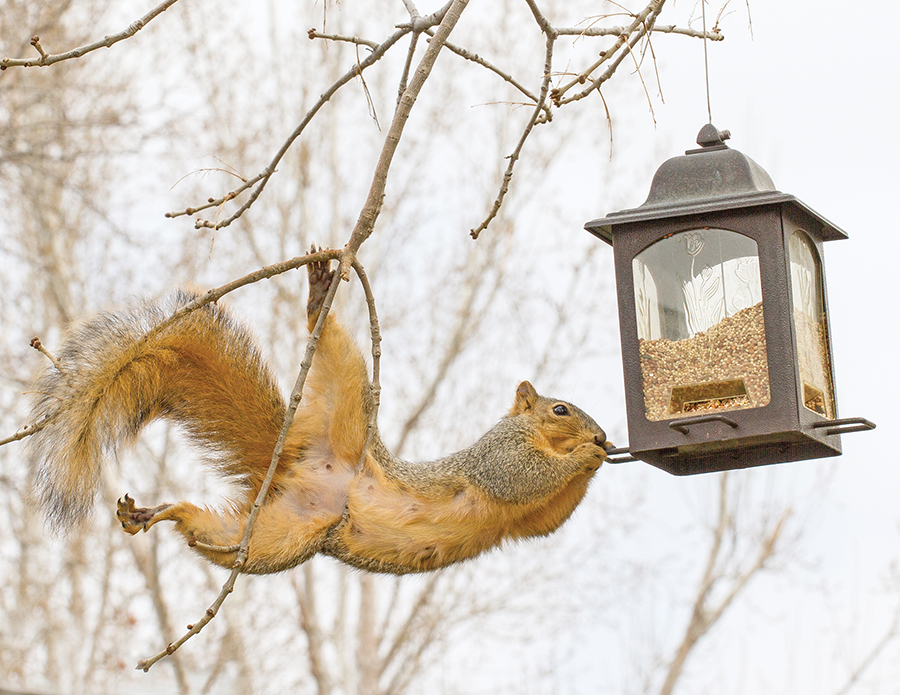
My husband, who will remain nameless (but folks of a certain age always ask him how Durwood Kirby is doing), shares your view of squirrels.

One morning, after observing a varmint munching on the bird food outside our bedroom window, he moved stealthily to grab his black powder pistol, cock it and open the window. Leaning out, he shot that squirrel and left him on the ground for a day as a warning to those in his tribe. In our new neighborhood, he has used his BB gun to dispatch three others.

 Don’t get me wrong. We’ve tried the live trap and actually caught a possum one time, but the squirrels couldn’t be bothered to investigate the bait. Arghhhhh! Our Golden Retriever, Scout II, is no help whatsoever. He’d rather play with them and seems disappointed that they don’t hang around.

 I know that squirrels have to eat, too, and they must serve some purpose other than in Brunswick stew, but damned if I can figure out what that purpose is. Maybe driving otherwise peace-loving folks to violence? As for squirrels in the middle of the road, my ecology professor called them Kamikaze squirrels. Still, I cannot abide the crunch of their tiny bones under my SUV tires. Call me an old softie.

Alice S. Moore

Wandering Billy

Wandering Billy

The Keys to the Gate City

Ben Blozan tunes into his passion for pianos

By Billy Ingram

“I dreamt of you last night — as if I was playing the piano and you were turning the pages for me.”    – Vladimir Nabokov

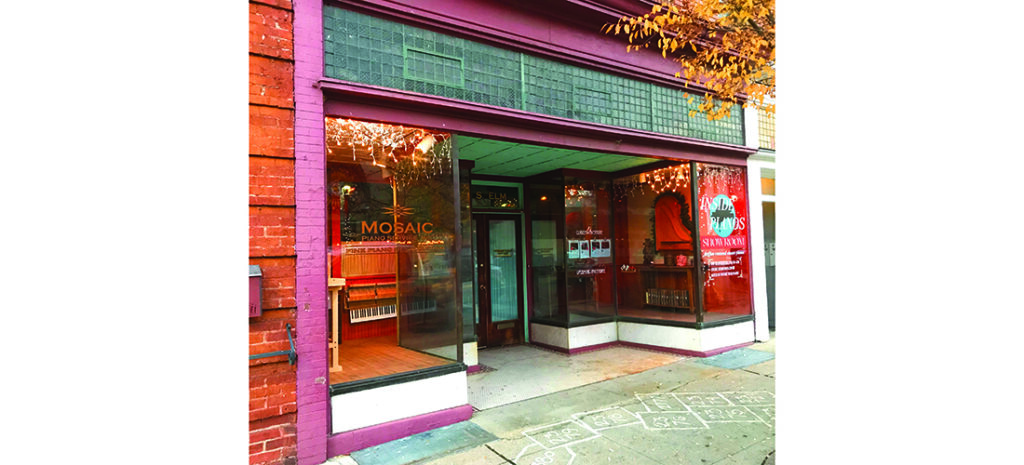
I’ve wandered past the charming Mayberry-esque storefront adorned with antique instrumental bric-a-brac at 612 S. Elm St. hundreds, perhaps thousands, of times since moving just a couple of blocks from Hamburger Square in 1997. Not an ivory tickler myself, I was aware 612 had something to do with pianos, but it never struck a chord somehow until now.

Home to a mom-and-pop grocery store in the 1920s, today the two east-facing display windows are lettered with “Mosaic Piano Service” on one side, “Inside Pianos” on the other. It’s quite a feat for such an uncommon business model to survive over a quarter-of-a-century embedded inside this rapidly evolving South End corridor. 

It was at this very location back in 1998 that proprietor John Johanson began his apprenticeship in the art of refurbishing pianos for high dollar clients under the illustrious John Foy. He then made this space his own in 2010, when he founded Mosaic after Foy relocated. It’s in this spot that Johanson spends days in a cavernous workspace engaged in everything from soundboard repair to hammer replacement, rebuilding concert grands and other fine pianos from the pedals up if necessary.

I made an appointment one weekday afternoon to speak with a more recent occupant, Ben Blozan, who started Inside Pianos just about a year ago, performing essentially the same tasks — but with a twist. While Johanson and Blozan are both highly-skilled artisans when it comes to rehabilitating classic pianos, “We’re not in conflict because he’s doing this to return pianos to their owners,” Blozan notes. “I’m doing it to sell. So I’m renting this front area as a showroom/workshop from John.”

Blozan’s love affair with the 88s began as a 4-year-old. “Playing an instrument like the violin or the piano, typically you have to have had an early childhood foundation,” he says, noting that you also need dedication to a continual learning experience. “Just this year I learned a piece that I’ve always wanted to play.”

With a doctorate in music from UNCG, for over a decade Blozan was a rehearsal pianist for Greensboro Opera and, for many years, an instructor at High Point University’s music department. “I would say that the schools themselves are changing,” he points out when asked about the current state of musical instruction. With less emphasis on the old conservatory model, “Popular music is being taught,” he says. “Music technology’s being taught. There’s an attempt to move with the times and be less classically exclusive.”

Until recently, Blozan focused on his recording studio in Glenwood. Currently he dedicates his energy almost entirely toward locating and restoring exceptional pianos, then flipping them. “I love it,” he tells me. “It’s been really satisfying to watch the pianos choose the buyers. I’ve only done this for a year, but it’s already been far more successful than the recording studio, to be honest.”

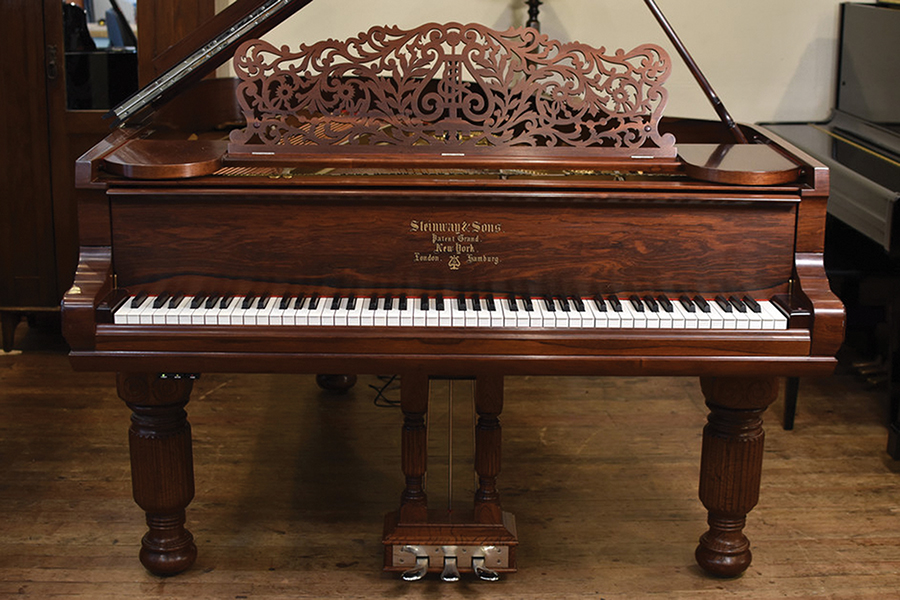
Why purchase a used piano rather than a brand new model? “Pianos are built to last,” Blozan explains. “As a matter of fact, the chief competitors to Steinway as a current company are used Steinways because they hold up so well and they were built so well. In some cases, the build quality was better than current pianos.” He points to an 1896 Steinway Model A in a Rosewood case that has been brought back to like-new condition: “This gets a little bit ethereal, but there’s a soul to old pianos.”

Painstaking attention to detail is one element of what Blozan finds so rewarding about his craft. For instance, on that 1896 Steinway, “I leveled the keys,” he says. “I brought all of the action adjustments into regulation because there are, oh gosh, maybe eight or so adjustments per key that can be made.” He works with the tone of the instrument, changing the texture of the hammers when needed so that when they hit the strings, the desired sound is emitted. It’s a process called voicing. “I really love for pianists to get wowed instantly. That’s something that I try to offer, pianos that get an uncommon amount of refinement so that a pianist can come in and know automatically what the instrument is capable of.”

Blozan fingers a bit of Tchaikovsky, perhaps Chopin — what do I know? — on the keys of an exquisite black Yamaha, gleaming like new. “I would say most concert stages in America have Steinways, but many recording studios particularly have Yamahas,” he says. “This is a more budget conscious instrument, but it benefits from Yamaha’s deep pockets for research and development. Yeah, it’s a beautiful piano.”

Blozan’s already established YouTube channel (Inside Pianos, natch) has been crucial in extending his reach way beyond the Triad. “There was a guy who lives in Arkansas who bought a piano, sight unseen, based on the video,” he says. “Because of my recording background, I’m able to make some nice product videos where someone can get a sense of what the instrument sounds like.” His latest production showcases a $62,000 instrument. “It’s possible that I’ll sell it locally, but I want to cast a wide net.”

Where is the best value for someone looking at buying a vintage piano? “I do a lot of Baldwins,” Blozan explains. “Some people even prefer them to Steinway. They’re very underpriced since there are no longer new Baldwins on the market.” On the other hand, the demand for pianos has cooled considerably, leading to a glut of unwanted uprights, abandoned baby grands. “Honestly, it’s almost a nuisance how many calls I get,” Blozan says. “Sadly, I do a lot of grief counseling — people having to part with their childhood pianos when they were supposed to be something that kept their value.”

Though raised in Maryland, Ben Blozan says his family migrated to the mountains of North Carolina and he subsequently made the decision to attend college and set down roots in the Gate City. “I was happy to have the chance to get geographically closer to my family. I feel like Greensboro has a lot of opportunity for people who want to do their own thing,” he says. “You can carve out your niche here.”  OH

Billy Ingram is the author of 6 books and the creator of TVparty.com.