Essay Contest Winner

ESSAY CONTEST WINNER

The Mummification of Leapy the Lizard

And the love language of science

By Karen Southall Watts

Note from the editor: This was our 2024 essay contest second place winner.

One of the ways my late father connected with us was by indulging our love of little critters. We had an elaborate aquarium setup where hundreds of mollies and swordfish lived, plus a series of cats, including one named Cedric who had his own small castle my father had built for him in the basement. Despite his decorated plywood castle, Cedric preferred to spend nights outside, where he collected mice. He would line them up on the front porch for my mother to find when she came home from work.

Once, we were allowed to bring home a huge bucket of frog eggs and hatch them. Unfortunately, we left the lid off the aquarium and hundreds of baby frogs escaped into my brother’s bedroom. Years later when we moved out of that house, we were still finding tiny, desiccated frog bodies in the cracks of the wood floors. Obviously, not all our pet experiments turned out well, which leads us to Leapy the lizard.

Leapy was an anole, which some people mistake for chameleons because they can change from green to brown, though they aren’t truly part of that family. He lived in a small, plastic cage, having been spared the huge aquarium that had seen the deaths of three iguanas. Henry I, Henry II and Henry III, all of whom, though indulged with lots of fruit-and-veggie treats, probably perished due to the lack of a heat lamp in an upstairs, suburban-Maryland bedroom. So, Leapy got smaller quarters that could be moved around.

He was green and cute, and we could not keep our little hands off of him. It should come as no surprise that this led to Leapy’s demise. The exact cause, revealed through tearful answers to adult questioning, seemed to be my little sister deciding that his red throat pouch was an injury that she needed to push back in. As yet another lizard went to the great beyond, my father looked for a way to distract us from the loss.

He told us we could mummify Leapy by following the step-by-step instructions that were, oddly enough, in the 1948 World Book Encyclopedia set my mother had inherited. Not having a source for a prime ingredient, natron, the mineral salt used by the ancients, a cough drop tin filled with Epsom salts sufficed. After a few days covered in salts, Leapy was ready for the next step. My father spray painted him gold and then mounted him on a small board he had lacquered with several layers of shiny, black paint. Then, Dad covered him with a plastic shell, making him immortal.

Just because Leapy was dead didn’t mean we stopped playing with him. He was taken to many show-and-tell days and incorporated into backyard games. Sadly, this last activity meant his golden, princely state was ended by an encounter with the lawn mower.

Many years later when I had my own children, I told them the story of Leapy the lizard. What I didn’t realize was that, when my youngest was in second grade, he retold the story at school for a Family Day activity and drew a picture to go with it. This was the first time I realized that my child was correcting his science teacher. On his class project, she had changed the word natron to nitrogen, telling my son that the first word didn’t exist. He was livid. So, on the night of the parent-teacher conference, I had to explain to his teacher that natron actually did exist and was a mineral salt, and it was, in fact, the substance used by ancient Egyptians to mummify the dead. She was not amused; nor was she amused several weeks later when my son corrected her in class because she didn’t realize that bats were mammals. Second grade was tough.

Over the years, I used the same types of strategies and science-driven activities my father had to connect with my own children. I’m sure our neighbors will never forget the archaeological dig in the yard, complete with perfectly square holes, measuring strings, and the happy accident of a long-forgotten cow bone.

Now, I’m a grandparent who routinely has to shampoo spider webs out of her hair. Recent adventures have included photographing dozens of mushrooms, fungi and insects, as well as befriending several worms and snails. Sure, I’m not as flexible as I was in my younger days, but I can still catch a toad when necessary. And, yes, it’s almost always necessary.

I was well into adulthood before I understood that my father’s unconventional parenting was the result of severe abuse and neglect. He had no memories of a happy childhood, and no example of decent parenting to guide him. He was making it up as he went along and used the part of his life where he’d found acceptance and success — science — to connect with his kids. It turns out that science can be a love language, perhaps the only one my father had. And while Leapy may not be truly immortal, his story has connected three generations of curious minds in my family.

O.Henry Ending

O.HENRY ENDING

The Album

Family photos launch a new road trip down memory lane

By Danielle Rotella Adams

My mom may remember my name today.

Or not.

I’ve come to terms with this as I enter her memory care home, walk down the bright hallway and round the corner into her room.

One of my mom’s neighbors is taking a lap down her hallway, walking toward me. I know for sure that he won’t remember my name.

“Hi, Bill, nice to see you,” I say as I walk closer. He replies with a curious, somewhat confused expression, “Nice to see . . . you?”

Last month, Bill told me that he takes 600 laps a day inside the building using his rollator. He said that he likes to keep moving.

Walking through my mom’s doorway, I don’t hear anything. Pure silence. We make eye contact and she recognizes me. I can see it in her eyes.

“Hi, Mom, how are you doing?”

The question lingers for a moment. She then breaks into her playful smile, which I’ve known my whole life. The smile I remember from countless soccer games and chorus performances.

I give her a hug and remove the cloth bag from my shoulder. “Mom, I brought another photo album for us to look through today,” I explain as she starts to look more comfortable and more herself.

A few short years ago, back in June of 2021, my mom was diagnosed with Lewy Body Dementia and Parkinson’s Disease. But I suspected something was up when I noticed that her right foot was always trembling, and she stumbled on words and phrases.

After the diagnosis, we worked together to sell her house and move her to an assisted living apartment. We carefully reviewed her financial and insurance accounts and added my name to her bank accounts.

Her disease held steady until it didn’t.

On September 30, 2024, I got the dreaded call that we couldn’t put it off any longer. She needed to move from assisted living to memory care.

Did it go smoothly? No, not really, but we got through it. She is adjusted now, our new normal taking shape.

Her speech is worse than ever, her words often jumbled or inaudible. She often knows the word she’s looking for, but can’t seem to locate it. She rarely knows what day it is and can’t operate her iPhone without help.

Despite this, I made a fortuitous discovery. Her words and memories return miraculously when we look at old photos together. As we start looking through albums, whether they are from 10, 20 or 40 years ago, she points to faces, clearly naming people she hasn’t seen in decades.

On this particular day, we’re looking at an album from 1983, reminiscing about a road trip we took to visit family in Upstate New York. Photos of my cousins, aunt and uncle gathered around my grandparents’ kitchen table transforms Mom back into the laughing, energetic young woman.

She remembers it all.

She points to her brother, my Uncle Rennie, remarking at how young and different he looked back then. Her words flow freely when talking about that summer. Photos of our 1972 Volkswagen Westfalia van bring us back to our long drive from North Carolina.

“I made those curtains on my sewing machine,” she remarks, her shaky finger pointing to the red floral pattern on the windows, which matched the faded exterior of her beloved van.

We laugh as we flip each page, surprised at how different life was in 1983. Our hairstyles were long and shaggy. No gray hair or reading glasses for either of us. No cane or walker for her.

Because at this moment, sitting on a small couch in her room on this cold, winter day, we are the 1983 versions of ourselves again — before a debilitating diagnosis had taken over.

She is once again a fearless single mom, and I am a wild, long-legged 8-year-old girl, both of us laughing back then and grinning widely now. I can almost feel the wind hitting my face as we drive southward home in the faded, familiar camper van.

Almanac June 2025

ALMANAC

June

By Ashley Walshe

June is a love poem, unrestrained.

Impossibly red poppies gaze upon achingly blue skies. Dragonflies bend for one another, clutching and curling like contortionists in flight. Swallowtails sup nectar, deep and sweet, enraptured by milkweed, sunbeams and endless summer days.

Can’t you see? All of life loses itself in itself. The rhyme is internal; the rhythm, organic; the imagery, holy refrain.

Each stanza surprises. Some, purple as passionflowers. Some, fussy as French hydrangeas. A precious few are sharp and true.

Bend your ear toward all that pulses. Get lost in the cadence of field crickets, the tranquil lilt of whippoorwill, the ballad of goldfinch and thistle. Find the harmony.

Complete the circuit. Behold poppies as poppies behold sky. Behold the dreamlike wonder.

Become a sunbeam. Become honey. Become, as wings, transparent.

Bow to the majesty of Queen Anne. Fashion a crown of singing daisies. Embellish your throne with honeysuckle and squash blossoms.

Are you dizzy yet?

Take a pause.

Rest in the dappled shade of sourwood. Let the hum of bees cradle you through afternoon. Come evening, swoon to the pink-and-yellow tune of rosy maple moth.

A good poem needs a good host. Can you be as milkweed to monarch? Sapsucker to birch?

Climbing oak to starry-eyed child?

Sup the sweetness of the moon-drenched night. Lose yourself in the wild beauty. Be, as green berry on vine, altered by the ardent kiss of
summer.

Father Sky

According to Navajo legend, Mother Earth and Father Sky were created as divine counterparts, their union essential to all life. Mother Earth gives us life. Father Sky offers the light of the sun, thirst-quenching rains and the endless mystery of the heavens.

In the spirit of Father’s Day (Sunday, June 15), consider looking skyward this month for a handful of celestial happenings.

The Full Pink Moon on June 11 is the last full moon of spring. No, it won’t be candy-colored.  According to The Old Farmer’s Almanac, Native American tribes (Algonquian, Ojibwe, Dakota and Lakota) named this month’s moon to mark the harvest of June-bearing strawberries.

On June 16 (the day after Father’s Day), you can spot the pairing of Mars and Regulus with the naked eye. Look for the fiery red planet gleaming alongside Alpha Leonis, the brightest star in the constellation Leo.

The Summer Solstice occurs on June 21. On this day — the longest day of the year — give thanks for the warmth and light of the sun and the wild abundance bursting from the Earth. And when night finally falls, you just might glimpse an early participant of the June Boötids meteor shower, which takes place June 22 through July 2 and peaks on June 27.

The Buzz, Etc.

Did you know there are 16 species of milkweed native to North Carolina? Sixteen! June is National Pollinator Month. Celebrate all that buzzes, hums and flutters by adding some native flowering plants to your little corner of the great, wide world.

Sazerac June 2025

SAZERAC

June 2025

Just One Thing

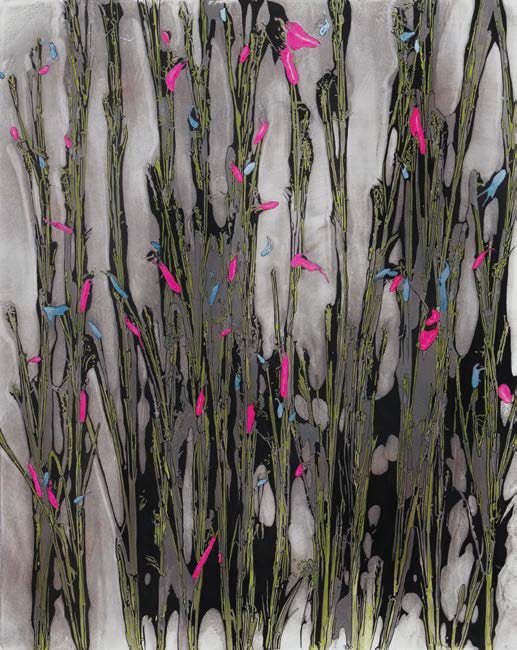
“My bond with nature began in childhood with time playing in the woods and helping my grandmother in her flower gardens,” says artist Emily Clare, named for both her grandmother, Emily, and her grandfather, Clarence. Since 1987, Emily Clare’s work has been exhibited in galleries throughout much of the Southeast and has reached as far as Australia. These days, Emily Clare can be found strolling by evening light around her Winston-Salem home or exploring woodlands of the Southeast, where she collects native, invasive and exotic plants she then presses as the basis of her work. Rather than traditional paint and brushes, she uses leaves, vines or blades of grass, and ink, allowing nature to dazzle as it unfurls its wondrous design. “Each one has a message they leave on paper,” she says. For her, creation is meditation. And for us, the observers, her work invites us to be more mindful, to reflect on being stewards of Earth’s natural resources. Seen here, Native Grass 1 depicts tall, wild and free — rather than meticulously mowed — blades printed using Akua ink and accented with gouache, watercolor and iridescent paint on Arnhem 1618 paper. Its shots of neon pink and cerulean blue catch the eye as you take an indoor nature walk through her “Botanical Dreamscapes” exhibit in Revolution Mill’s Central Gallery, on display through June 20. Info: revolutionmillgreensboro.com/events.

Another Candle on the Cake

Last of the late-1950s Rockabilly stars, Billy “Crash” Craddock turns 86 years old this month. A lifelong resident of Greensboro, he was 18 years old in 1957 when he recorded his first 45 single locally on the Sky Castle label, named after the teenybopper hangout on High Point Road known for its elevated WCOG-AM DJ booth. He was signed by Columbia Records a year later.

In 1959, he became a bonafide teen idol in Australia, where, during his first tour there, screaming fans greeted him everywhere he went. “Boom Boom Baby” rocketed to No. 1, the first of four top-10 platters down under. “I was excited just to be in the business and nervous at the same time,” Craddock told me in 2009. “The record company took a picture of me combing my hair on top of a building in New York. When it came out in a magazine they called me ‘pretty boy.’ I didn’t like that.”

Hits mostly eluded him stateside in the ’60s, but that changed in a big way after his 1971 “Knock Three Times” hit No. 3 on the Billboard country chart. “Wow, what a feeling riding around Greensboro,” he recalled. “Seemed like every time I’d move the radio dial, it was playing. Every station, ‘Knock Three Times’ was either getting started or ending. I thought, Is this for real?” His followup country radio release, “Ruby, Baby,” cruised into the No. 1 spot.

A string of chart-toppers followed, culminating in his biggest smash in the summer of ’74, “Rub It In,” which not only landed in first place on the country chart, but also hit No. 16 across all musical genres on the Billboard Hot 100. Still rockabilly to the roots, country to the core in his 80s, Craddock thrilled the studio audience on Country Road TV in 2024, covering a Tammy Wynette tune, “Darlin’ Take Care of Yourself.” 

A bridge over the rail lines on 16th Street is dedicated to Billy “Crash” Craddock, but locals who knew him before he began mining gold records remember him as the down-to-earth guy who hung sheet rock in their homes during those lean years before he began mining gold records. Rub it in, why don’tcha?  — Billy Ingram

Window on the Past

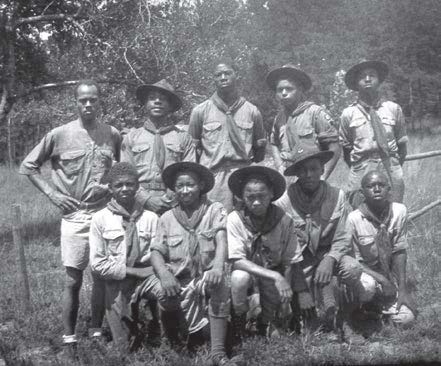
This photo, taken in the 1940s, is part of the Abraham H. Peeler collection held by the Greensboro History Museum. Peeler, long-time principal at the historic J.C. Price School, was heavily involved with Camp Carlson, one of the first camps in North Carolina created for Black Boy Scouts. These 10 lads are definitely dressed for adventure with the classic campaign hats and official-issue field uniforms, complete with kerchiefs and knee-high socks with garter flashes. Obviously trustworthy, loyal, helpful, courteous, kind, obedient, thrifty, brave, clean and reverent, they were on their honor to do their best to help other people at all times and to keep themselves physically strong, mentally awake and morally straight.

Unsolicited Advice

June is chock-full of celebrations, some we’ve already marked in our planners — Father’s Day, Summer Solstice, Juneteenth, Pride Month and the highly anticipated National Accordion Awareness Month. (This is not a joke. Nor is Bed Bug Awareness Week. Look it up.) In 2014, June was also designated as Alzheimer’s & Brain Awareness Month, so we thought we’d share some of our favorite ways to boost brainpower:

Brain teasers: Ever play The New York Times’ Connections? You have to find the common bond between several words. Try this: safety, candy, DJs, home ownership. Answer: They all have their own national month in June.

Board games: Our fav? The one where someone puts bits of cheese and fruit all over the board and challenges us to eat it all. Haven’t lost yet.

Crossword puzzles: Like Katy Perry, you’re up then you’re down — but never clueless. Amp up your cognitive flexibility and reserve, short- and long-term memory, and problem-solving skills.

Sleep: Catching Z’s is vital for brain restoration and repair. But maybe you lie awake at night already fully aware of bed bugs. Let a Calm app celebrity-narrated “Sleep Story” lull you to slumber. Because the last voice you want to hear at night isn’t your partner’s. It’s Matthew McConaughey’s.

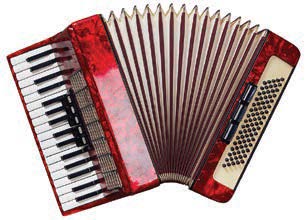
Learn a new skill: Think languages or instruments. Accordion, anyone?

Wandering Billy

WANDERING BILLY

Filmmaking on the Frontlines

And screenwriting in a Greensboro bar

By Billy Ingram

“I am a typed director. If I made Cinderella, the audience would immediately be looking for a body in the coach.” — Alfred Hitchcock

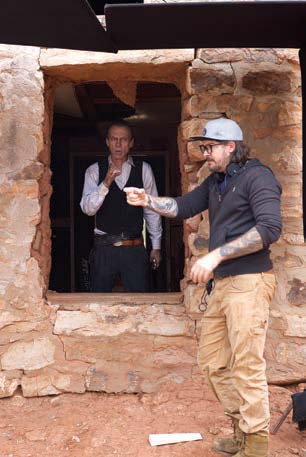
Hunched slightly over in the darkened outer reaches of Corner Bar on Spring Garden, writer, producer and director Phil Blattenberger is pecking away at finessing his latest screenplay. Forbes anointed him as “Cinema’s Every Man” and says he “is reshaping the industry in his working-class image.” Launched from Greensboro, this young filmmaker managed to wrap two acclaimed feature films in the last two years alone. His 2024 release, Laws of Man, stars Jacob Keohane (Halloween Kills), Jackson Rathbone (Twilight), Dermot Mulroney (My Best Friend’s Wedding), Keith Carradine (Nashville) and Harvey Keitel (Reservoir Dogs).

“I was in grad school at UNCG” recalls Blattenberger. A baby step back in 2017 is what prompted this improbable journey. “As a fun little side project, I wrote a Vietnam War movie. I’m going to shoot this thing in the woods of North Carolina with my buddies to get investors involved.” As it turns out, he raised enough money behind it to ship production overseas to Cambodia. The result was Point Man, an unflinching deep dive into racial tensions during the Vietnam War, racking up nominations for Best Screenplay and Best Director at the Sydney Indie Film Festival, ultimately winning Best Film among other accolades. Sony secured DVD-distribution rights for the 2018 wartime drama.

His second feature, Condor’s Nest, came out a full five years later, and was more ambitious. A WWII adventure about a downed American B-17 bomber crew thwarting Nazis, it stars a platoon of familiar pros including Arnold Vosloo (The Mummy), Michael Ironside (Starship Troopers), Academy Award-nominee Bruce Davison (X-Men, 1923) and Jorge Garcia (Lost). While some scenes were filmed in South America (doubling for Germany), most of the production was shot in North Carolina, including right here in town, even a day lensing at the former Cellar Anton’s site, underneath what is now Havana Phil’s. I’m told it looked exactly as it did when the last meal was served there some four decades earlier. (I wrote about that project in my March 2023 column: ohenrymag.com/wandering-billy-76.)

Blattenberger set sights even higher for his follow up, the aforementioned Laws of Man. “Next step up is a bigger budget, bigger names,” he says about an explosive period piece pitting a suited duo of 1960s-era U.S. Marshalls manhunting a fleeing fugitive. “If we’re going to justify that expense, we’ve got to have the soft money. So we set up shop in New Mexico.” That decision was made primarily due to the state’s generous financial incentives for filmmakers, i.e. soft money. “All of the Condor’s Nest financiers came in so we got Keith Carradine — the first time I’ve worked with an Academy Award winner.” Laws of Man scored Best Film at the Tangier Film Festival in 2024.

“Jacob Keohane, who starred in my first two movies, plays the lead in Laws of Man, just a phenomenal guy.” Blattenberger met the actor while working as a bartender prior to filming Point Man. “His audition came across, I watched the tape and I was like, ‘Where the hell do I know that guy?’ I realized he was DJ Jake the Snake at Club Fifth Season, my first bartending gig in its final days, circa 2009.”

Blattenberger’s fourth feature, Ascendant, is likely to lift off as you’re reading this, but the financing landscape in 2025 is a great deal more fraught than it was even just a couple of years ago.

He characterizes current conditions as the biggest crisis the motion picture industry has faced since the advent of television. “Distributors have chopped their minimum guarantees because they overspent, basically.” Recall that onslaught of intriguing new TV series and big budget pictures bombarding us on streaming platforms beginning around five years ago (thanks to COVID)? Notice how that practice has cooled considerably? Turns out there was some illogic behind that. Amazon, Hulu and Netflix leveraged — and blew through — billions of dollars developing jaw-dropping content with maximum star power, believing that newbies like Peacock and Paramount+ would wither away in their wake, leaving just a few players dominating digital media.

“It just didn’t happen,” says Blattenberger. Posting billions in losses, streamers reversed course, eschewing new acquisitions. “They stopped buying the indie films that hit Cannes and then Toronto. Nobody is getting post-theatrical deals.” The (new) old paradigm was that a movie would have an initial run, get picked up by a top-tier streamer for three months, followed by a Hulu run, then a Tubi exclusive and a cable deal. “That used to be the waterfall.”

I find that comforting, in a perverse way, knowing the movie business hasn’t changed significantly since I walked away 30 years ago. The bobbleheads tucked into top floors are still running things with reckless fecklessness.

As preeminent entertainment essayist and film historian Peter Biskind once wrote, “ . . . the independents who are really passionate always find a way to make their films.” Embracing this unprecedented distribution dynamic, for his next production, Blattenberger set aside an elaborate concept, which was already in the works, in favor of a more scaled-down approach.

“Because B-budget action thrillers require huge names, you’ve got to make your money back on a $1.5 million budget,” argues the auteur. “The exception has always been horror — I hate the word ‘horror,’ so I’m going to call it a psychological thriller — that lets you bring in a genre star who costs you pennies on the dollar compared to your A-listers. Horror turns out a hundred times at the box office what you could possibly expect with low-budget action.”

In pre-production when we spoke, Ascendant is centered around a doomsday cult no doubt up to devilish dealings while on a retreat in Eastern North Carolina. “You’ve got to make your location interesting if you’re going to hold an audience hostage for 90 minutes in what’s effectively a single location. You’ve got to go for broke on the design.” What will be a creepy encampment situated inside what is effectively a 3-acre crop circle is being constructed from the ground up in Rocky Mount. Blattenberger is no Cecil B. DeMille on an elevated perch barking orders through a megaphone. “I’m out there with dirty hands, picking splinters out of my fingers, building sets,” he says of his activity earlier in the week.

“Film it and they will come” may not sound like a solid marketing strategy to a banker or lawyer, but it’s business as usual for indies and major releases alike. When a long shot does hit the mark — take Blair Witch Project, for instance — the money spigot sprays in all directions. “I’m in a weird position where I’m over halfway financed, but, in my experience, once you attach a name, that’s when people really start throwing cash in.” As luck would have it, he’s just signed Rob Zombie collaborator Richard Brake (The Munsters), who also appeared in Laws of Man.

“As producer, all of my pre-production work can be done from a laptop.” As such, Phil Blattenberger has discovered what other local creatives have: You can go Hollywood without living the nightmare. “I sit here in this exact chair at this exact corner at Corner Bar and do half my work. This is effectively my office at this point. I can shoot in Cambodia or New Mexico or Rocky Mount, but, until I need to be on set actually building or directing, I can center myself in a place like Greensboro, North Carolina.” 

Birdwatch

BIRDWATCH

The Black Crows

The same music but different lyrics

By Susan Campbell

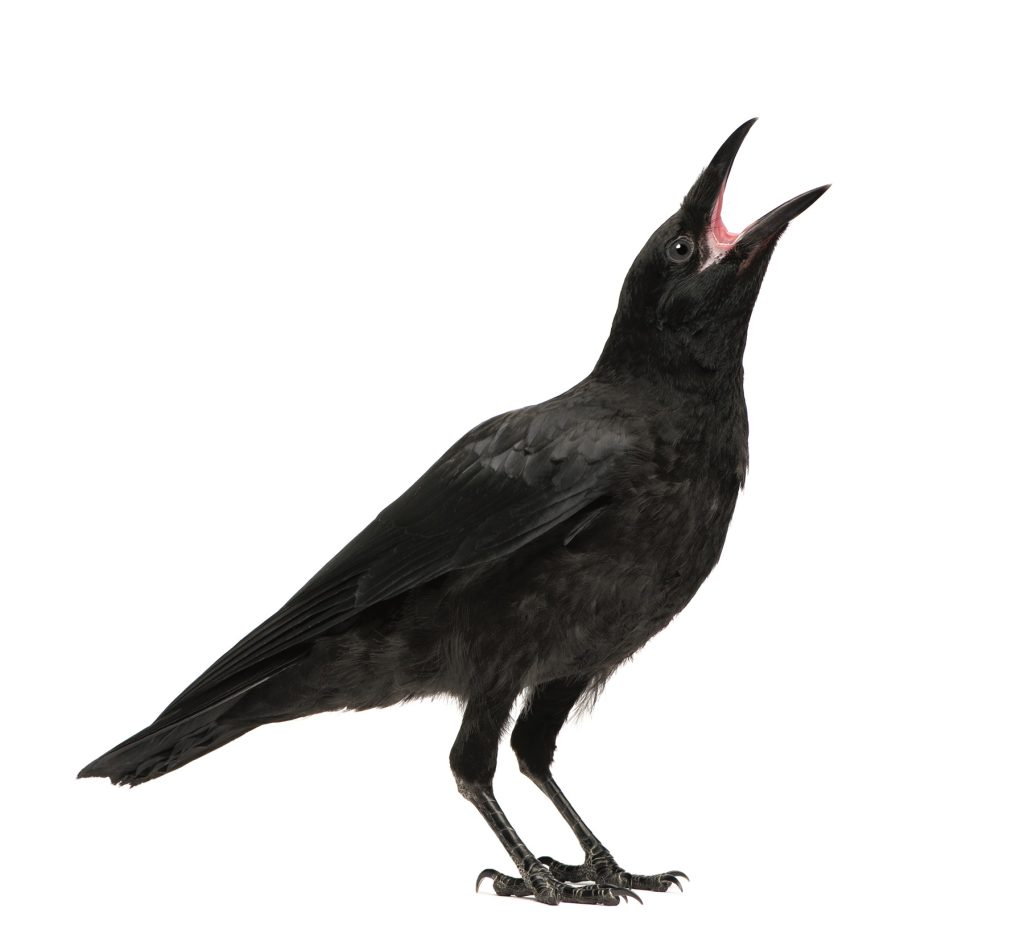
Everyone knows what a crow is, right? Well, no. Not exactly. It is not quite like the term “seagull,” which is generic for a handful of different species found near the coast. When it comes to crows, you can expect two species in central North Carolina in the summertime: the American crow and the fish crow.

Telling them apart visually is just about impossible. However, when they open their beaks, it is a different matter. The fish crow will produce a nasal “caw caw,” whereas the American will utter a single, clear “caw.” That familiar sound may be repeated in succession, but it will always be one syllable. Young of the year may sound somewhat nasal at first, but they will not utter the two notes of their close cousin, the fish crow.

Both crows have jet black, glossy plumage. They have strong feet and long legs, which make for good mobility. They walk as well as hop when exploring on the ground. They have relatively large, powerful bills that are effective for grabbing and holding large prey items. Crow wings are relatively long and rounded, which allows for bursts of rapid flight as well as efficient soaring. The difference between the two species is very subtle: Fish crows are just a bit smaller. Unless you have them side by side, they are virtually indistinguishable.

Fish crows are migratory in our part of North Carolina. By the end of the summer flocks of up to 200 birds will be staging ahead of the first big cold front of the fall. Most of the population will be moving eastward come October. For reasons we do not understand, some fish crows will overwinter in our area. Other small groups are being found on Christmas Bird Counts each December across the region. Not surprisingly, the number of fish crows along our coast swells significantly by mid-winter. Visiting flocks do not stay long and are our earliest returning breeding birds, arriving by early February for the spring and summer. Almost as soon as they reappear, they begin nest building. Their bulky stick-built platforms are hard to spot, usually in the tops of large pines. Furthermore, crows tend to be loosely colonial, so two or three pairs may nest close together in early spring.

Although fish crows are often found near water, they wander widely. They are very opportunistic, feeding by picking at roadkill, taking advantage of dead fish washed ashore, sampling late season berries, digging up snapping turtle eggs, or robbing bird feeders all with ease. But they are also predatory. Even though they are large birds, they can be quite stealthy. It is not uncommon for these birds to hunt large insects in open fields, or frogs and crayfish at the water’s edge. Unfortunately, fish crows are very adept nest robbers and take a good number of eggs and nestlings during the summer.

     These birds, as well as their American cousins, can become problematic. They are very smart and readily learn where to find an easy meal. At bird feeders, they will quietly wait until the coast is clear, especially if savory mealworms or suet can be had, and polish off every scrap in no time. Southern farmers, years ago, found an effective deterrent: hanging one of these birds in effigy to keep flocks from decimating their crops. Recently I acquired a stuffed crow from my local bird store in hopes this method would work around my feeding station. I have also been concerned about both species of crow preying on nearby nests. Amazingly, it does work, though I do move it regularly to keep the attention of passing would-be marauders. And it’s quite the conversation starter as well!

Life’s Funny

LIFE'S FUNNY

Great Googly Moogly

Inquiring minds want to know some weird stuff

By Maria Johnson

If there’s one thing that internet search engines can confirm about human existence, it’s this: You’re not alone in your musings, no matter how offbeat.

Which is comforting. Sorta.

I became aware of this phenomenon a few years ago, when I broke my collarbone. The treatment included wearing a cross-body sling on my right arm, and I was struck by how much of a  load that put on my left shoulder.

“I wonder how much my right arm weighs?” I thought to myself.

Pre-Google I would have had to settle for a guess. Either that, or I could have pulled out a scale and tried to weigh my arm, which would have been too painful and would have brought me back to guessing.

Well, no more.

I started typing my question into the Google machine.

“How much does a woman’s . . . ”

Autofill offered several disturbing ways to complete that search phrase, along with the relatively innocuous words “arm weigh?”

Clearly, others had wanted to know the heft of a lady-wing.

Who are these weirdos? I wondered . . . before proceeding to the answer, which is:

About 5% of her body weight.

I glanced down at my 6-pound appendage.

No wonder it felt like I was lugging around a small dumbbell. I was.

Since then, I’ve noticed that no question is so esoteric, so arcane, so flippin’ odd that other people haven’t wondered the exact same thing.

Here’s a small sampling of the questions I’ve searched in the last several months, along with a little context about why I wanted to know, and the readily available answers.

Question: Why does Amal Clooney hate George Clooney’s dye job?

Why I wanted to know: Because I’m a big fan of Guilford County native and legendary World War II-era newsman Edward R. Murrow (hello, Murrow Boulevard), and because George Clooney darkened his hair for his role in the Broadway show Good Night and Good Luck, which is about how Murrow exposed McCarthyism.

Answer: Amal hates her husband’s dye job because she believes that nothing makes a man look older than using hair coloring, which, in my humble opinion, is a double standard — and also very true.

Question: Are crows attracted to bones?

Why I wanted to know: My younger son was at a friend’s apartment recently when they discovered what appeared to be a fragment of a deer jaw lying on a cushion. Huh? The best explanation: The friend’s dog had dragged in the fragment from the balcony, where . . . a bird had dropped it. (Let’s hope.)

Answer: Yes, crows are attracted to bones and other bright objects. They have been known to leave bones as “gifts” for people they like. Or want to terrorize. That part is unclear, although another Google search confirmed that crows can hold grudges against particular humans. This  led me to wonder about something else that, apparently, other people have pondered, too.

Question: Do crows laugh at people?

Answer: “There’s no evidence to suggest they find human actions humorous.”

Tough audience. Caw-caw-caw.

Question: Why do male tegus have two reproductive organs?

Why I wanted to know: OK, stay with me for a minute. I was talking to a veterinarian-friend about the most unusual pets she has ever seen, and she mentioned tegus, which are a kind of lizard. Then she mentioned in a by-the-by way — you know, how friends do when they’re discussing lizard genitalia — that male tegus have two, um, cold-blooded thingies, which led me to make a crude joke about how I know a few guys who might want to become reptiles.

Answer: Nature loves a Plan B. Sorry, human dudes.

Question: What does Cali-sober mean?

Why I wanted to know: I heard it on a podcast, natch.

Answer: Cali-sober (short for California-sober) means swearing off all intoxicants except weed, which, if you think about it, makes sense only if you’re high.

Question: Where does the phrase “great googly moogly” come from?

Why I wanted to know: Because it’s a phrase I know, but I’m not sure how I know it.

Answer: No less an intellect than author Stephen King has wondered the same thing. He traced the phrase back to 1950s bluesman Willie Dixon. Others point out that rocker Frank Zappa used the phrase in his 1974 song “Nanook Rubs It.” And apparently Grady uttered the words on the 1970s TV show Sanford and Son in clear anticipation of the internet age way before Lamont and the rest of us “big dummies” saw what was coming.

Question: How do dryer balls work?

Why I wanted to know: In case you haven’t noticed, dryer balls — which are balls that you put in a dryer; let’s hear it for the occasional obvious answer that is also correct — are on store shelves everywhere. I’d dismissed them as a gimmick until a veteran appliance repairman recommended them as a way to increase the efficiency of a clothes dryer.

Answer: Dryer balls work by “aerating” the clothes, creating more space between laundry items as they tumble, thereby cutting down drying time. I wouldn’t have believed it, but it seems to be true. The balls also soften clothes by beating the snot out them (my words, not the words of the dryer ball industry). And as an added bonus, your dryer will sound like a collegiate drum line, which should keep the crows from leaving deer bone fragments around your house. It works out. 

Tea Leaf Astrologer

TEA LEAF ASTROLOGER

Gemini

(May 21 - June 20)

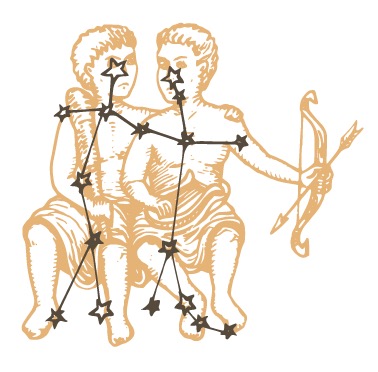
Perhaps you know that butterflies have taste receptors on their feet. But did you know they drink mud? Communicate through flight patterns and pheromones? As the social butterfly of the zodiac, you’ve learned to flit your way out of foot-in-mouth moments with charm and grace. That skill will come in handy this month. And on June 11, the full moon in Sagittarius just might rock your world with an unexpected romance.
Do try to avoid mud, flightiness and unnatural fragrances.
Read that last line again.

Tea leaf “fortunes” for the rest of you:

Cancer (June 21 – July 22)

Ignore the critics.

Leo (July 23 – August 22)

Operation Digital Detox. Capeesh?

Virgo (August 23 – September 22)

Pack an extra set of clothes.

Libra (September 23 – October 22)

It’s just not that serious.

Scorpio (October 23 – November 21)

No need to force things.

Sagittarius (November 22 – December 21)

Remember to pause before you speak.

Capricorn (December 22 – January 19)

Your song is somebody’s medicine.

Aquarius (January 20 – February 18)

Gift yourself a quiet moment.

Pisces (February 19 – March 20)

Tune into a different channel.

Aries (March 21 – April 19) 

Don’t let your ego call the shots.

Taurus (April 20 – May 20)

Write this down: baking soda and vinegar.

Sazerac May 2025

SAZERAC

May 2025

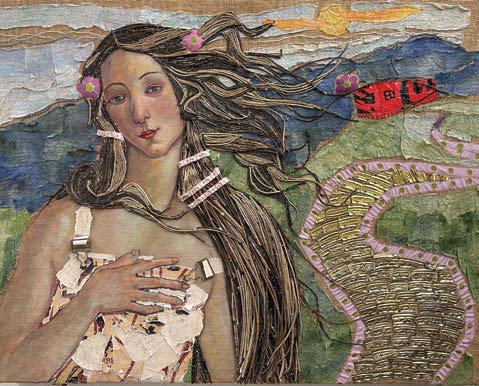
Celena Amburgey, Blue Ridge Venus, 2024. Oil Paint, vines, mason jar rings, cardboard, love letter from the artist’s father (paper), and a childhood bedsheet (fabric) on burlap, 30 x 38 x 1 ½ in.

Just One Thing

For Celena Amburgey, home is where the art is. “By intertwining paint, mixed media and deeply personal items like my daddy’s bed sheets, my work becomes a vessel for layered narratives,” says the creator of Blue Ridge Venus, which combines oil paint, vines, Mason jar rings, love letters from her father and a childhood bedsheet. “These intimate objects carry the weight of my heritage,” says the artist, who hails from Jefferson, N.C. Utilizing both personally precious as well as oft-discarded items such as plastic bags and grocery sacks, she says, “I craft a powerful dialogue on the tension between what is cherished and what is disregarded, drawing attention to how we assign worth and value in our lives.” Amburgey’s works, along with art by two other M.F.A. candidates, Paul Stanley Mensah and Nill Smith, will be on exhibit through May 25 at Weatherspoon Art Museum. Meet the artists on Thursday, May 8, from 5:30 until 7:30 p.m. Info: weatherspoonart.org/exhibitions/current-exhibitions.

May 25 Unsolicited Advice

If, like the rest of us, you’re trying — but struggling — to break up with your smartphone, this one’s for you. Those little buggers are full of dopamine hit after hit, lighting up our brain in a way that screams, “More, more, more!” When we find ourselves in a moment of quiet inaction, our fingers wander to that tempting touchscreen, desperate to fill the void. Well, we’ve come up with some digital-free ways to occupy those digits while taking a note from Depeche Mode: “Enjoy the Silence.”

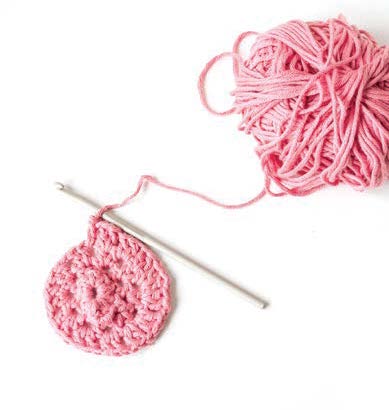
Get hooked on something new: Learn to crochet. If you start now, you’ll have an entire collection of colorful hats to gift friends and family during the holidays.

Play solitaire. And not on an app, but with a real, tactile deck of cards. Best part? No one will ever know if you cheat — not that we’re endorsing that behavior. We just have the luck of the draw.

Try your hand at building. Scandinavians are consistently ranked among the happiest in the world and it’s probably because they’re constantly creating with Legos, which originated in Denmark, or putting together Swedish-made Ikea furniture. We certainly smile — through gritted teeth while cursing — when we assemble a Kallax shelf.

Read. As the proverb goes, “A book in the hand is worth two in your library queue.” Or something like that.

Window on the Past

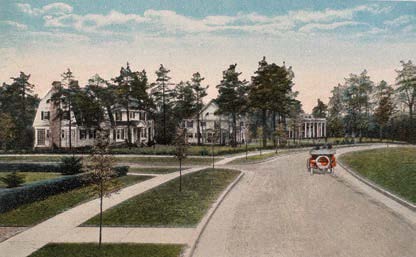
Though much of Greensboro has changed over the years, the charming facade of this Irving Park Dutch Colonial, the historic R.J. Mebane House, remains very much the same since its circa 1912–13 construction. Wondering about the interiors? See for yourself as this and many other Irving Park abodes throw open their doors, welcoming guests of Preservation Greensboro’s Historic Tour of Homes, May 17 and 18. History, architecture and design come together to help you reach your step goal. What more could you want? Tickets and info: preservationgreensbo.org/events.

Must Love Books

Reading, writing and arithmetic? No, thanks on that last part of the equation. The Greensboro Bound Festival is where reading, writing and book fanatics create a buzz of all-day literary activity descending upon the cultural epicenter of downtown Greensboro.

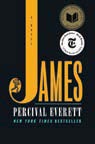
But first, at 7 p.m. on May 15, how ’bout a little pre-fest fun with . . . (if this were an audiobook, you’d hear a drumroll right now) . . . Percival Everett, The New York Times-bestselling author of several novels, including the 2024 National Book Award for Fiction winner, James? A reimagining of Mark Twain’s The Adventures of Huckleberry Finn, James is told through the eyes of the runaway, enslaved Jim. Everett is sure to draw a huge crowd, filling up UNCG’s Elliott University Center Auditorium. Registration is required ­ and is now waitlist only by May 12 and can be found via the Greensboro Bound website.

Now, hold onto your pen caps and block out May 17 in your planner because this year’s one-day festival is, well, one for the books.

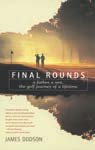
Dreaming up your own manuscript? Learn every trick in the book at the Greensboro Public Library. Three O.Henry magazine contributors, plus a few local notables, help you sharpen your skills — and pencils. Our founding editor, Jim Dodson, teaches “The Art of Memoir” — something he knows a little something about after writing Final Rounds, a New York Times-bestselling memoir. Maria Johnson hones your humor and Ross Howell Jr. shows you how to easily slip between fiction and nonfiction writing. Poets Ashley Lumpkin and Elly Bookman, plus Chapel Hill-based cookbook author Sheri Castle know how to measure for success.

In the Greensboro Cultural Center’s Van Dyke Performance Space, take a page from several authors in conversation. O.Henry editor Cassie Bustamante, yours truly, interviews Winston-Salem’s New York Times-bestselling author, Sarah McCoy, and Reidsville’s Sir Walter Raleigh Award winner, Valerie Nieman, about making herstory with historical fiction. Former Wall Street Journal writer Lee Hawkins, whose 2022 nonfiction book, I Am Nobody’s Slave: How Uncovering My Family’s History Set Me Free, was a Pulitzer Prize finalist, chats with Aran Shetterly, author of the harrowing account of the KKK vs. Civil-Rights demonstrators, Morningside: The 1979 Greensboro Massacre and the Struggle for an American City’s Soul. Andy Corren, whose Dirtbag Queen: A Memoir of My Mother was born out of the obituary he wrote for her that went viral, chats with Cassie. Finally, wrap up your evening with a conversation between Christopher A. Cooper, author of Anatomy of a Purple State, and spiritual writer, preacher and community cultivator Jonathan Wilson-Hartgrove, moderated by Raw Story investigative reporter Jordan Green.

Beyond the Greensboro History Museum’s doors, Kristie Frederick Daugherty, known for her book of Taylor Swift-inspired poetry, and UNCG M.F.A. alum Elly Bookman, plus local high school poet laureates read and discuss their modern take on the ancient art form. Known for her New York Times bestsellers Wench and Take My Hand, NAACP Image Award-winning author Dolen Perkins-Valdez chats about her latest book, Happy Land, which hit the shelves last month.

And what’s a festival without something for the littlest readers and aspiring writers? The second floor of the cultural center is chock full of children’s authors including Kamal Eugene Bell, Natasha Tarpley and Patrice Gopo.

Sage Gardener

“Wait,” says our hiking companion at the head of our group. “You’re saying that bees are not native?”

“Honey bees,” our citizen-scientist hiker responds. “It’s honey bees that are not native to the Americas. But there are hundreds of species of native bees.” (More than 500 in North Carolina alone, in fact.)

“How about honey,” the disbeliever shoots back. “Are you telling me that the honey I put on my toast in the morning is a non-native species?”

“The bees that gathered and regurgitated it are originally from Europe, brought over here to pollinate the Colonists’ crops in the 1600s,” says our apiculturist.

“Yeah, I read that the Virginia Company brought hives over when they established Jamestown,” pipes up the group’s historian. “So, yes,” says our honey bee detractor, “the honey comes from the U.S.A. — unless it’s imported from India, Argentina or Brazil, like a lot of cheap honey is.”

To say that our trail discussions are often lively is a gross understatement. At least it’s not politics this time around, I think to myself.

“I’m going to look that up,” our lead hiker says, an all too common refrain on these hikes. Moments later, Siri chirps, “Here’s an answer from gardenmyths.com: ‘The honey bee is a non-native import into North America and most other countries.”

“But honey bees pollinate our crops,” our dissenter insists. “Without them we would starve!”

Citizen scientist says, “A lot of crops are now engineered to be self-pollinating or even wind-pollinated. I’ve grown tomatoes in my living room with no bees and I still had tomatoes,” she counters. “Besides, a big hive of honey bees can outcompete native bees, sometimes the sole pollinators for certain native plants.  Without that bee, the plant can go extinct.”

You can read all about it in our Raleigh sister publication, Walter (waltermagazine.com/home/the-buzz-north-carolina-coolest-native-bees) in a piece by Mike Dunn, a Chapel Hill naturalist and educator. “Our native bees are truly bee-autiful and bee-zarre,” he writes. Plus, he points out, practically no one ever gets stung by native bees.

Or dive into the N.C. State Extension Service’s The Bees of North Carolina: An Identification Guide, available online (content.ces.ncsu.edu/the-bees-of-north-carolina-identification-guide), where you can see stunning photos of wood carder bees, rotund resin bees, cuckoo leaf cutter bees, zebra cuckoo bees, along with scintillating anatomical diagrams.

A whole ’nother subject is plants that nurture and support native pollinators. In March of last year, the Greensboro City Council adopted an official policy to promote native plants and eliminate invasive plants at city-owned facilities.

“Native plants help maintain, restore and protect the health and biodiversity of local ecosystems, supporting native pollinators, birds and other wildlife,” the City proclaimed. The Guilford County Extension Master Gardener volunteers couldn’t be more enthusiastic about those plants our native bees love, sponsoring periodic workshops on them. On Saturday, August 23, from 10 a.m. until 1 p.m. (guilford.ces.ncsu.edu/2025/02/2025-great-southeast-pollinator-census), they plan a count’em-if-you-got-them session as part of the the Great Southeast Pollinator Census.

Meanwhile, detractors of honey bees — especially lovers of native wildflowers like our citizen-scientist hiker — continue to blast Apis mellifera, that European intruder to our shores. One enthusiast at ncwildflower.org/honey-bees-friend-or-foe suggests, “Do not buy honey. Kill any wild hives you encounter. And discourage the use of domesticated hives transported to pollinate crops.” 

Y’all bee careful out there, now.     — David Claude Bailey

Birdwatch

BIRDWATCH

Big Blue

The majesty of great blue herons

By Susan Campbell

The great blue heron is a bird that will get anyone’s attention, bird lover or not. It is the largest of all the species found in the Piedmont and Sandhills and is second in wingspan only to the bald eagle. Also, the way it ever so slowly stalks its prey in the open is unique. Great blues are colonial nesters often gathering very close together in trees in wet environments where terrestrial predators are not a threat.

Great blues can be found across North Carolina year-round foraging in a variety of wet areas. However, nesting habitat can be harder to find. Many wet areas are too shallow to preclude raccoons, opossums and other climbing animals. Sizeable beaver ponds or islands in the middle of sizeable lakes with mature trees or large snags are attractive. And if a pair or two are successful in raising a brood high above the water, it is likely that the numbers of nests will grow in subsequent years to form a “heronry.” The female will weave a cup nest from the branches and then smaller, softer material (such as twigs, grasses, moss, etc.) that her mate delivers.

The bond between a pair of great blues is very strong during the breeding season. Male and female are both involved with rearing the nest generation. The large nest can accommodate up to five eggs. Both adults incubate and then brood the young. The male spends most of the daylight hours at the nest while the female is there overnight. Herons are very good parents, able to defend their young with not only their heavy, sharp bills but with very powerful wings.

It will take a year or more for the young to reach maturity. During the first several weeks they are fed mainly fish by their parents. As they begin to forage for themselves, they will become opportunistic, eating everything from large, aquatic invertebrates (such as crayfish) to frogs and even the eggs of other bird species. Some individuals will not breed until their third summer. Sexually mature birds will sport long plumes on their neck and back. They may be seen displaying to their mates by raising their crests and clapping bills together at or near the nest site.

The loud raspy croaking of herons is territorial and can be heard day or night at any time of the year. They will defend rich feeding areas as well as their nest from competitors. Great blues also call when in flight, perhaps to maintain contact with family members. In the air, these big birds have a very characteristic profile with slow, deep wingbeats, their necks coiled, and legs trailing out behind them.

These huge birds are amazingly unafraid of humans. Although they seldom tolerate a close approach, they are frequently found feeding from bulkheads, farm ponds and even small backyard water features. Many great blue herons have learned that people may provide an easy meal — even if it is in the form of fish remains or table scraps. So, keep an eye out; you may find one of these large birds closer than you think.