The Wyndham Way

THE WYNDHAM WAY

The Wyndham Way 1 OH 082024

The Wyndham Way

After 85 years, Greensboro’s beloved PGA event is still making history 

By Jim Dodson

One morning 25 years ago, while working with Arnold Palmer on his memoir, A Golfer’s Life, I asked the King of Golf if there was one tournament in his illustrious career that he regretted never winning.  

I was sure he was going to say the PGA Championship, the only missing major.

Arnold was sitting at his workshop desk, putting a new leather grip on his driver. But he paused and gave me what I’d come to think of as “The Look,” a cross between a constipated eagle and a very disapproving school master. 

Really, Shakespeare?” he growled. “You really have to ask? You of all people should know the answer. After all, you grew up there!”

He meant, of course, my hometown Greater Greensboro Open, which I attended almost every year of my life growing up in the Gate City, including the year after I went off to college, when Arnold had his best chance ever to win the tournament. He led the final round until a triple bogey on the par-three 70th hole allowed lanky George Archer to win at the wire. 

“I never quite got over that,” he admitted with characteristic candor. “I had so many friends in the gallery from Greensboro and Winston-Salem, plus my connections with Wake Forest [University]. It still chews at me. That tournament was so much fun and meant a great deal to me. I just never got the job done.”

The King may have regretted failing to win the GGO, as it was affectionately called, in front of  the homefolk faithful, but the tournament known today as the Wyndham Championship has never forgotten Arnold Palmer.

Yes, that tournament: in its 85th year, set to begin Thursday, Aug. 8, and continuing until Sunday, Aug. 11. All eyes, as usual, will be on the Wyndham because it determines which 70 PGA Tour golfers will advance into the FedExCup Playoffs.

Several years ago, his grandson Sam Saunders watched as Wyndham officials installed a plaque dedicated to Palmer on the Wall of Champions behind the ninth green at Sedgefield Country Club. The plaque reads: “Widely considered the most important figure in golf and one of the most influential players in Wyndham Championship history, Arnold Palmer had five top-five finishes in 13 appearances at Sedgefield.” 

From its modest beginning as the seventh oldest golf event on the PGA Tour, won by Sam Snead in 1938, the Wyndham’s legacy of winning champions who made their mark on American golf can be matched by few PGA events. The list includes legends such as Ben Hogan, Byron Nelson, Sam Snead (who won the GGO a record eight times), Gary Player, Billy Casper, Larry Nelson, Raymond Floyd and a dashing young Spaniard named Seve Ballesteros, who won his first tournament at Greensboro in 1978 en route to superstardom. 

The last nine decades have seen at least three different sponsor name changes before Wyndham Hotels & Resorts became the tournament’s stalwart title sponsor in 2007. All that time, the Triad’s beloved golf tournament — North Carolina’s first professional event — retained its unique personality and important place in the world of professional golf.

“It’s essentially unique for a variety of reasons,” says Executive Tournament Director Mark Brazil, who started with the tournament in 2003. “You can begin, of course, with its almost incomparable history, which rivals the majors in terms of legends who won here. But its evolution under Wyndham has made the tournament even more special in several ways.”

One notable way, he points out, is the strong emphasis the Wyndham places on being a premier fan-friendly event, a five-time winner of the PGA’s top hospitality award for fan accessibility and friendliness.

“Most tournaments actually focus most of their attention on the players, going out of their way to provide luxury accommodations and services, anything they can to make the players feel welcome. We do the same thing, of course, but the key to our  hospitality focus has always been the fan experience, the paying customer who might come out for a day or the entire week in the heat of summer to watch the greatest players in golf.” 

Brazil points out that at a time when fan bleachers are disappearing from the grounds of some tournament venues, the Wyndham features numerous bleachers, enhanced spectator viewing areas and much-lauded cooling areas all over the Sedgefield property. The Wyndham’s popular Margaritaville tent, Truist fan pavilion, Sunbrella Sun Deck and Wyndham Rewards areas have become hallmarks of the its laid-back, hometown family feel.

That’s just the Wyndham way.

Another facet of the tournament’s appeal is the opportunity to watch younger players on the rise who may someday become the next Seve Ballesteros. The likes of British Open Champ Sandy Lyle, a young Davis Love III and Webb Simpson have won the Wyndham on their way to stardom. In more recent times, even older players such as Sergio Garcia and Tiger Woods joined the field, hoping to claim some Wyndham magic and the tournament’s Sam Snead trophy. Garcia made himself relevant on the PGA circuit by winning the tournament in 2013. A recovering Tiger Woods gave fans a thrill and left a good impression on fans by comparing Sedgefield and its history-rich Donald Ross golf course to baseball’s historic Wrigley Field. 

At a time when professional golf is in flux, perhaps the Wyndham’s biggest recurring storyline is its coveted position as the last regular season event where players can make a run at finishing in the Tour’s Top 70 rankings, thus qualifying for the FedExCup Playoffs that begin the following week in Memphis. The tournament also helps determine the top 50 players who qualify for the next season’s “signature events” that sport $20 million purses after reaching the second FedExCup Playoffs event. Sweetening the attraction, there’s also the $40 million Comcast Business Tour Top 10, rewarding the top-10 finishers in the PGA Tour regular season.

Finally, players who find themselves potential “captain’s picks” for the President’s Cup and Ryder Cup, have a final opportunity to make a big impression. In 2023, both Ryder Cup captains Zach Johnson and Luke Donald played in the Wyndham Championship for this very reason.

“This explains why we generally leave the players alone,” Brazil notes. “They have important business on their minds when they get here. There is so much riding on their performances. In many cases, the Wyndham becomes the last opportunity of the year to advance their careers. As we like to say,” he adds, “the finale is really the beginning.”

Aside from its strong community outreach programs, including longtime support of the First Tee—Central Carolina, each year seems to bring a nice, new wrinkle in terms of the tournament’s service to the Triad.

Earlier this year, partnering with First Tee, the Wyndham put out a nationwide call for artists to create an outdoor wall mural honoring the civil rights pioneers the “Gillespie Six” at the Gillespie Golf Course, to be commissioned by Wyndham Rewards and overseen by the City of Greensboro. 

With Gillespie’s continued revival in mind, a panel of key community figures and organizations selected a trio of finalists from more than 50 artists across the nation to design an outdoor memorial that will honor the Greensboro Six at Gillespie Golf Course. The mural is commissioned by the Wyndham Rewards Program.

In mid-June, Vincent Ballentine was announced as the artist who will paint the Greensboro Six mural on the First Tee—Central Carolina building at Gillespie Golf Course. An artist’s rendering of the mural was unveiled at the time, honoring the course’s history with a depiction of the six pioneers as well as a vibrant nod to the diverse future of golf.

Ballentine hails from Brooklyn, New York, and is a multidisciplined visual artist known for large-scale outdoor murals commissioned by the likes of MTV, the NCAA and BET. At the June announcement, First Tee—Central Carolina CEO Ryan Wilson praised Ballentine’s mural plan, saying it “captures our vision of bringing the community together through the power of golf and will serve as an everyday reminder of our storied past and — because of that — our beautiful future.”

Ballentine also addressed the crowd: “The Gillespie mural honors courageous men who overcame deep-rooted racial challenges to inspire incredible change.” His hope? That his creation will generate thoughtful conversations about the importance of inclusivity while paying homage to the Greensboro Six.

The mural will be publicly unveiled during the Wyndham Championship Jr. Golf Clinic on August 5, 2024, kicking off the Wyndham Championship.

The latest example of the Wyndham Way.   OH

Tumbleweed

TUMBLEWEED

Tumbleweed OH 082024

Tumbleweed

Fiction by Shelia Moses     Illustration by Raman Bhardwaj

My man is like a tumbleweed. He just rolls around and catches everything that crosses his path — every woman that is. I am telling you he’s just like a tumbleweed. That is the reason I did not want to come to this one-horse town to live. But Hogwood, North Carolina, is my Tumbleweed’s home, and he wanted to come back to be near his dying daddy. That was four years ago. His daddy, Mr. Pop, is still alive. So why are we still here?

I knew Tumbleweed would start rolling with the gals that used to love him as soon as the train stopped in Weldon to let us off in 1952. We was only here one day before we ran into one of his old gals, Missy, in the grocery store. That was the beginning of Tumbleweed going back to his old ways. First he told me that Missy was his cousin. Then I looked at that boy of hers, Boone, and I knew Tumbleweed was lying. I knew he was the daddy. Look more like Tumbleweed than Tumbleweed look like himself.

“Come on Sweet Ida,” he said to me.

“Come on nothing, Tumbleweed. You lied to me again. You know good and well Missy ain’t your cousin. You know that boy is your boy.”

“Na’ll Ida, Boonie ain’t no boy of mine. I only got six boys and two girls. You know that.” He say that mess like he proud that he left a baby in every town between Wildwood, New Jersey, and Hogwood. He ain’t never had no wife, so what he bragging for?

Missy ain’t saying a word. She just smiling and turning from side to side like she can’t stand still around my Tumbleweed. That boy Boonie ain’t got good sense. He don’t even know what we talking about. Guess we better leave before he eat up all the candy in the grocery store that Missy ain’t even offered to pay for. He definitely Tumbleweed’s boy because he always want something for nothing.

Can’t be too crazy, now can he?

“Oh stop looking for reasons not to love me gal.” Then Tumbleweed pulled me in his arms in the store that was filled with people. The store always filled with people from Rich Square, Jackson, and Hogwood on a Friday evening. It’s payday, even for the field hands. The womenfolks was looking when Tumbleweed pulled me closer. I forgot all about that boy that looked just like my man. I remembered all the reasons I love myself some Tumbleweed.

I love him for the same reason all these North Carolina womenfolks love him.

He a man! A real man! My man!

He ain’t all fine or nothing. He just a man that you gots to have.

Come that Monday morning we was back working in the ’bacco field. I was hanging ’bacco in the hot barn loft while Tumbleweed drove the truck for Mr. Willie who own all this land and ’bacco. Right now he ain’t driving. Tumbleweed just sitting and waiting to take us home. I think Mr. Willie had extra folks in the field that day. Extra women to prime this ’bacco. Extra women to look at my Tumbleweed.

They can’t fool me. That old Bessie was there shaking her big behind all over the place. She the only woman I know that wear tight skirts in the ’bacco barn. I can’t believe I left my job waiting tables at that rich country club in Wildwood to come here to prime ’bacco. Tumbleweed claimed it is a good way to make a living.

Look at him sitting over there looking at me up here in the loft and all the other women that love him out in the field.

“You want some water?” Bessie yelled to my Tumbleweed when it was time for us to knock off for lunch.

He did not answer her.

He better not!

“Anything Tumbleweed want, I can get for him,” I said, climbing down the hot barn loft for lunch.

“Fine,” Bessie said as she laughed like she knew something that I did not know. “I can get Tumbleweed some water later tonight,” she whispered and walked over to the tree to eat her pork and beans and crackers.

“Say it again,” I said as I ran up behind her. Bessie turned around in slow motion. She must have eyes in the back of her head.

I did not get far when them sisters of hers all jumped up from the ground at the same time.

“Where you going city girl?” her oldest sister Pennie Ann asked as she rolled up the sleeves on her shirt while kicking her can of beans out of the way.

I will fight anybody, anywhere for my Tumbleweed, I thought to myself.

I tried to roll up my sleeves too.

That is all I remember. The next thing I know I am lying in the back of Tumbleweed’s truck and he’s looking down at me.

“How many fights you going to have girl?” he said like he was almost sad.

“How many women you gonna love Tumbleweed?” I said as I reached for my head that was really hurting now. The knot on it felt mighty big.

Tumbleweed leaned over me and kissed me real hard with his big black lips.

All the womenfolks looked at us. They wished they was me. 

An Afternoon, No Wind

AN AFTERNOON, NO WIND

An Afternoon, No Wind

Fiction by David Rowell     Illustration by Keith Borshak

A striking, big-boned woman runs back and forth trying to fly a kite. She is surprisingly eager, considering there is no wind today. There is not enough of a breeze to sail the gum wrapper off the bench I’m sitting on. She darts tirelessly across the park as the kite drags behind her like a little dog. Every so often the kite lifts off the ground, though no higher than her head, and that’s only because she is a fast runner. This goes on for an hour.

I’m supposed to be helping my ex-girlfriend move her tanning bed into the spare room. But when the woman with the kite throws her arms up in an almost vaudevillian show of disgust, I get up, stiff from the wooden slats, and walk over to her. She isn’t aware of me until I am close enough to touch her.

“Tough day for kites,” I say.

We look at each other, and for a few seconds neither of us seems sure what to do. I back up a step or two. I am suddenly confused and can’t remember if I have spoken yet or just thought about what I might say. Tough day for kites?

“Je ne comprends absolument pas ce que vous dites.” I know it’s French, but I don’t speak a word of it. Watching her earlier, it didn’t occur to me that she wasn’t American, but up close I can see the faint olive glow of her skin, the slightly pouty curl of her lips. I consider turning around, leaving her alone, but there is something helpless about her and her shiny but now damaged triangular kite. I point to the kite, then to the sky. I blow a deep breath and shake my head no.

“No wind,” I say slowly, so slowly that I am keenly aware of how my lips feel when they move. “There is no wind.”

We stand another moment in silence, as the strangled cry of taxi horns and someone’s high-pitched laughter and the rusty churn of a nearby bicycle chain play off each other like jazz musicians. Behind the woman a mass of clouds forms a penguin, then a penguin on skates. She says something — something abrupt, like an order — and points to the kite. She points at me, then to the kite again. I reach down to pick it up.

“Oui,” she says.

I raise the kite slowly over my head, arching my brow to say, Is this OK? Is this what you want? She doesn’t indicate one way or another. Out of the corner of my eye I notice that two older women who are dressed for the tundra have stopped to watch.

She backs up and lets some string out, all the while staring into my eyes so intensely that I am afraid to look away. She nods her head once, the way mob bosses in movies indicate their willingness to listen first, before killing. Then she turns and starts sprinting, divots of grass spraying from her heels. The kite jerks out of my hand and immediately sinks, not quite hitting the ground because, as I say, she’s fast. Her ponytail thrashes behind her like a fish pulled into a boat.

She goes probably thirty yards before she looks up at the speckled sky, where she expects the kite to be. Her sturdy legs slow to a gallop, which causes the kite to touch down with feathery impact. The sad sight provokes her to grunt from the diaphragm and kick at the ground with such force that she nearly falls over. Her large frame heaves in and out. She yells something at either me or the kite (the literal translation might be, “What a piece of crap are you!”). I point up at the sky again and shake my head.

When she finishes winding up the string, she puts the kite back in my hands. I notice two small but distinct moles above her right eye. She catches me looking and balls up her face like a fist. She gives me an earful about something, to which I shrug and smile, though not with my teeth.

All afternoon we do this. And every time we try, I can tell that she expects it to go differently. Sometimes I shake my head in mock disbelief. Other times I grab a handful of grass and launch it into the air, as if that might tell us something. Once I try to hand the kite back to her and reach for the string, thinking she might appreciate the break. But she shakes her head in a frenzy, the way monkeys do in TV commercials, and holds the string behind her back. She tries running harder and for longer. If I hold the kite up with my arms even slightly bent, she refuses to start running. When yet another attempt fails, she violently reels the kite in. As we get ready again, she sucks some air into her locomotive lungs, then gives me the signal to release.

By now the sun has melted to the bottom of the sky, leaving behind a fiery red glaze. People walk by with their necks turned at awkward angles, their mouths agape with wonder. My French companion is still for the first time all day. We stand there awhile, just a few feet apart, but it’s hard to believe we’ve spent the entire afternoon together. If I ran over the hill and brought back two sno-cones, I wonder if she would even recognize me.

The man at the pretzel cart is folding down his umbrella. I imagine a big wind suddenly sweeping through the park and lifting the umbrella up over the trees, the man kicking wildly in the air as he tries to hang on. When I look over again at my partner in aeronautics, it takes me a moment to realize that she is tearing up the kite. She grips it in her muscular arms and splits it down the middle. She yanks out the sticks of the frame, fumbling with them until she snaps them over her knee. Then, with lips moving but making no sound, she grabs the tail with both hands and tries to twist it off, but she loses patience with it and is content to leave it a thin, raggedy string. Her hands are a frenzied blur of methodical destruction, though her face has an even, almost serene expression. When she is finally satisfied, she bundles up the remains and hands them to me. Instinctively I reach out to cradle the wreckage.

She lumbers toward the wrought iron entrance of the park, past the statue of George Washington on his horse, past a little boy trying to step on his balloon, which keeps darting out from under his foot. She steps directly in front of a stretch limousine so that it has to slam on brakes; still, the driver senses enough not to honk. She mows through the streets with an elephantine grace and does not fade from view until well after the darkness settles in.

I COULD GO OVER THIS AGAIN, say at what point this, then that, but it would more or less come out the same. And yet there is something that I can’t account for, even now: In my arms the kite felt like a bouquet of flowers.

The Music Lover

THE MUSIC LOVER

The Music Lover OH 082024

The Music Lover

Fiction by Katherine Min
Illustration by Jesse White

Gordon Spires lived across the courtyard from Leonard Hillman, concert master of the M         Symphony, and his lover, Kyoung Wha Jun, the second violinist. Leonard and Kyoung Wha often practiced together outside in the courtyard, under the brim of a large oak tree. The neighbors would hear them playing Debussy or Brahms and sometimes something contemporary that they wouldn’t recognize.

Gordon liked to listen to them. He was in love with Kyoung Wha, who was slender and lovely, and he believed that she secretly returned his affection but could only reveal it through her music. So when she played Mozart, it was because he was Gordon’s favorite, and when she played Bach, it meant that she was biding her time, and when she played Tchaikovsky, it was surely a sign that she was ready to run off. For it was well known that Leonard beat Kyoung Wha when he was drunk, that he cheated on her with the first violist, and that he had not quit smoking like he told Kyoung Wha he would, but snuck cigarettes after matinee performances. At least these things were well known to Gordon, who was sickly and often home during the day.

One Sunday afternoon in late autumn, Kyoung Wha and Leonard played Beethoven. From his bedroom window, Gordon could see them, Kyoung Wha in a pleated blue skirt with prim white blouse, her long bangs swinging in her face as she swept her bow across the strings of her violin; Leonard, his narrow face impassive, eyes closed, chin tilted up at an unpleasant angle. Gordon could distinguish the rich, vibrant tones of Kyoung Wha’s playing from the darker, ruminative vibrations of Leonard’s, and he attributed the mistakes — rushed tempo, inconsistent meter, mawkish drawing out of notes — to Leonard, who was, in Gordon’s opinion, the inferior of the two musicians.

Taking careful aim, Gordon threw a Monopoly piece — a silver top hat — at the rounded, balding place at the back of Leonard’s head. Leonard did not stop. Gordon threw the wheelbarrow, the thimble, and the Scottish terrier. He used more force.

“What the — ?”

Beethoven came to a halt. Gordon peeked to see Leonard rubbing his bald patch, looking up at the oak tree, then down to the ground. Leonard shrugged at Kyoung Wha, who shrugged back. They resumed playing.

The next day, Gordon lobbed a satsuma, just grazing Leonard’s left temple. Leonard leapt from his chair. Kyoung Wha seemed to look straight at Gordon then, smiling sadly. Even crouched below his bedroom window, he could feel her smile penetrate his heart like the most tender of arrows.

A few days passed before they played outside again, Leonard setting up in what had formerly been Kyoung Wha’s spot, farthest from Gordon’s window, Kyoung Wha moving farther from Leonard, into a sunny patch that did not get much shade. Her face in sunlight looked faded to Gordon, wan, and when she played — Mendelssohn this time — he heard the silent suffering as separate notes from the ones that overlapped with Leonard’s, inhabiting the spaces between. She was even more beautiful in her despair, black hair against pale complexion, in an autumnal ensemble of mauves and rusts.

Gordon heaved a bottle of multivitamins, but it overshot its mark, landing, with a muffled plop, in a giant hosta.

It rained for several days after that, the afternoons overhung with mist. Gordon saw Kyoung Wha come into the courtyard in a yellow rain slicker. He thought her green rain boots splendid, as were the orange bill and bubble eyes on her hood, which were meant to make her look like a duck.

On the first clear day, Leonard appeared without Kyoung Wha. He began to play Mahler, his feet planted like andirons before a hearth. Gordon disliked the implication that music could simply go on without her. He wondered where she was, what Leonard had done to her. The lights were off in their apartment. He could see the white fringe of an afghan against the window, resting on the back of a blood red sofa.

Gordon palmed a large rock shaped like a dinosaur egg, with a rough, pock-marked surface. He raised the window and hurled it. The rock rainbowed up and out, hitting Leonard squarely on top of the head and bouncing off. The strings of the violin made a distressed, bleating sound as Leonard slumped sideways out of his chair, then fell face first against the brick walkway.

Time passed. The lights went on. Gordon saw Kyoung Wha come out, heard her call Leonard’s name. Approaching his body, she kneeled, bent to retrieve his violin by its broken neck, got up, and stumbled back inside. The lights went out.

Gordon listened, but all he heard was the sound of distant traffic.

Softly, he closed the window.

Where She Sits

WHERE SHE SITS

Where She Sits OH 082024

Where She Sits

Fiction by Randall Kenan
Illustration by Gary Palmer

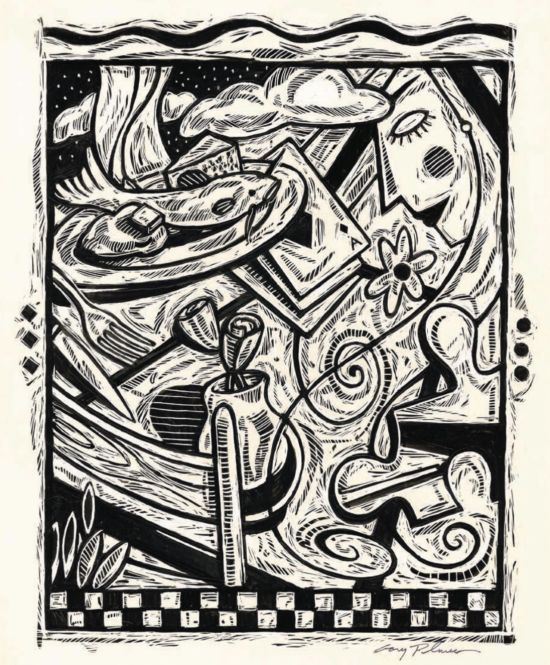
They were in the little dining room off the kitchen when he finally told her. He paced about, motioning with his hands.

She just sat there, staring down. Feeling nothing. Maybe. Or just plain tired.

“I can’t do it anymore, Sandra,” he said.

Sandra said nothing. Slowly, she moved her hand over the oilcloth, steadying herself.

“I don’t care what your family says about me,” he said. “I don’t care. I can’t . . . I’m not . . . I’ve got to . . .”

She might have asked Dean about the children. But the idea that he would come up with some sleazy nonsense only made her feel a wave of nausea. Sandra put her head down.

Dean stopped behind her. She could feel the tension in the air; without seeing him, she knew he was clenching and unclenching and clenching his fists. He did that when he was angry. “Did you hear me? I’m leaving.”

Sandra raised her head. “Then go.”

He stood there for the amount of time it takes a frying egg to turn white and walked from the room.

Sandra reached out and caressed the table, and remembered. Not so much remembered as allowed a flood of images, past scents, past sights, to overtake her, fill the void she was now harboring. Each image evoked something like a feeling. So much took place in this room, upon this very surface. Not merely the food served, or the homework fretted over, or the cards played, or the beer spilled, or the puzzles arranged. Moments occurred right here. And now, in this instance of illusions shattered, of dreams wrecked and a heart frozen, these moments seemed to simmer before her, behind her eyes, and she could only hold on to them, to find some strength.

She had inherited this very table from her great-grandmother. Made of pine, by whom she did not know, it had been oiled, dented, dusted, polished, chipped, varnished, battered, peed upon, burned, broken, mended, hammered, nailed, or some such for decades. If it could feel, she knew she’d feel the way it felt now . . .

“Sandra? Damn it! . . . Where is my . . .”

The first true memory of her grandmother had been watching her across this expanse, on the other end, smiling and slicing with pride a piping hot blueberry pie. No, child, wait for it to cool. And so many mornings, days, nights, her mother at that same end: What you doing out so late? Sandra! An A in math! Now that’s good. Girl, don’t you ever raise your voice at me. I’ll knock the taste out your mouth! You heard about Uncle William, didn’t you? . . .

“Sandra, can’t find my . . .”

As if he actually expected her to come in there and help him to pack, to leave; as if any of this fault rested on her shoulders; as if she was expected to go along to get along; as if she would be unreasonable to go into the kitchen, get a butcher’s knife, and chop him into seventeen billion little pieces.

She ran her hand out against it again, against its smooth flatness, as if to absorb some of its stolid solidity.

Here, she served him his first taste of her cooking: catfish, greens, mashed potatoes, corn bread; here, she told her mother she was to wed the man who made her legs feel like overcooked spaghetti and her heart feel like butter. Here, where she tended him, listened to his tales of boring sales meetings and petty office feuds, and where he entertained his buddies (when not in front of the TV); here, where she fed and consoled and interrogated first one, then two daughters; here, where she slowly watched the shoals of her marriage erode, grain by grain.

Oh, if it could talk . . .

“Sandra.” He stood in the door. She didn’t want to look up at him. She had nothing to say.

“Good-bye.”

She did not look up, as he turned, wordless, and walked down the hall. As the door clicked behind him, she held fast. He may go, but some things would remain. A part, a piece, a fixture, a witness. Even now.   OH
The Playhouse

THE PLAYHOUSE

The Playhouse

Fiction by Max Steele
Illustration by Mariano Santillan

The professor was standing now before the doors of the American Embassy. He was early for an appointment with an old frat brother, a legal attaché who would help him procure a fast Mexican divorce. There was no urgency really in getting a divorce. It was simply that he could not concentrate on a permanent separation. When he tried he would end up in a hot soapy shower thinking about putting on freshly starched cotton clothes. Someone should have warned him in Raleigh not to drink on the plane. Here he was in Mexico City, a mile high, still a bit dazed.

Three blond children, not more than five or six years old, obviously embassy kids, a little girl and two little boys, were playing house in and around a sort of blueprint design of squares and rectangles drawn with green chalk on the sidewalk. A solid block of taxicabs, more than the professor had ever seen, was passing on the Paseo de la Reforma.

Something about the broad boulevards and the taxi horns reminded him strongly of Paris, where twenty years ago he had spent his one sabbatical. The next year he had met his wife, who often reminded him that he had never taken her to Paris as he had promised. Or done any fun things. There was never enough money on his salary, she accused him, to do any fun things. In the late autumn air the feeling of déjà vu was so strong that he felt it was a dream, or a forgotten passage from a novel he was living through.

The two boys were now standing near him whispering, and the little girl was in the chalk-line house, busily sweeping, putting things on shelves, getting pots out of a stove only she could see, and washing dishes in the silent sink.

At a signal he did not notice, the small boys, giggling and full of themselves, marched slowly to the front of the house and knocked on the door. “Knock. Knock.”

The little girl seemed genuinely surprised. She came through the house, untying her apron and opened the door, drying her hands on the apron.

“Oh, there you are!” She was quite annoyed. “Late again, as usual. And furthermore you have brought a perfect stranger home to dinner.” Oh, she was vexed. “Without even asking. Without even calling!”

“Yes, my dear,” the little husband said proudly, full of his secret. “I would like for you to meet the man who owns the merry-go-round.”

As the boys entered the house, the professor glanced at his watch. He was still five minutes early. Enough time to walk to the far corner.

As he strolled up the dark gusty boulevard, he could still hear the high laughter of the children, and at the sound of their thin, excited voices his heart almost broke. After all, how were they to know (for they were still children), how could he have known she would run off with the man who owned the merry-go-round?

Poem August 2024

POEM AUGUST 2024

Steadfast

A lone tree fell in my woods

But it didn’t hit the ground

Or make that debated sound

It fell into the steadfast embrace

of another tree

With its outstretched branches free

They lean into each other

The broken and the strong

The living and the gone

It’s only with a passing breeze

And a creaking, crying bough

That they make sure we hear them now

    — Kayla Stuhr

Kayla Stuhr is a Scottish visual artist, writer, and award-winning filmmaker.

Memento Mori

Memento Mori

The affirming life of Leslie Deaton

By Cynthia Adams 

Photographs by Amy Freeman

The ache for home lives in all of us,” wrote poet Maya Angelou. “The safe place where we can go as we are . . .” 

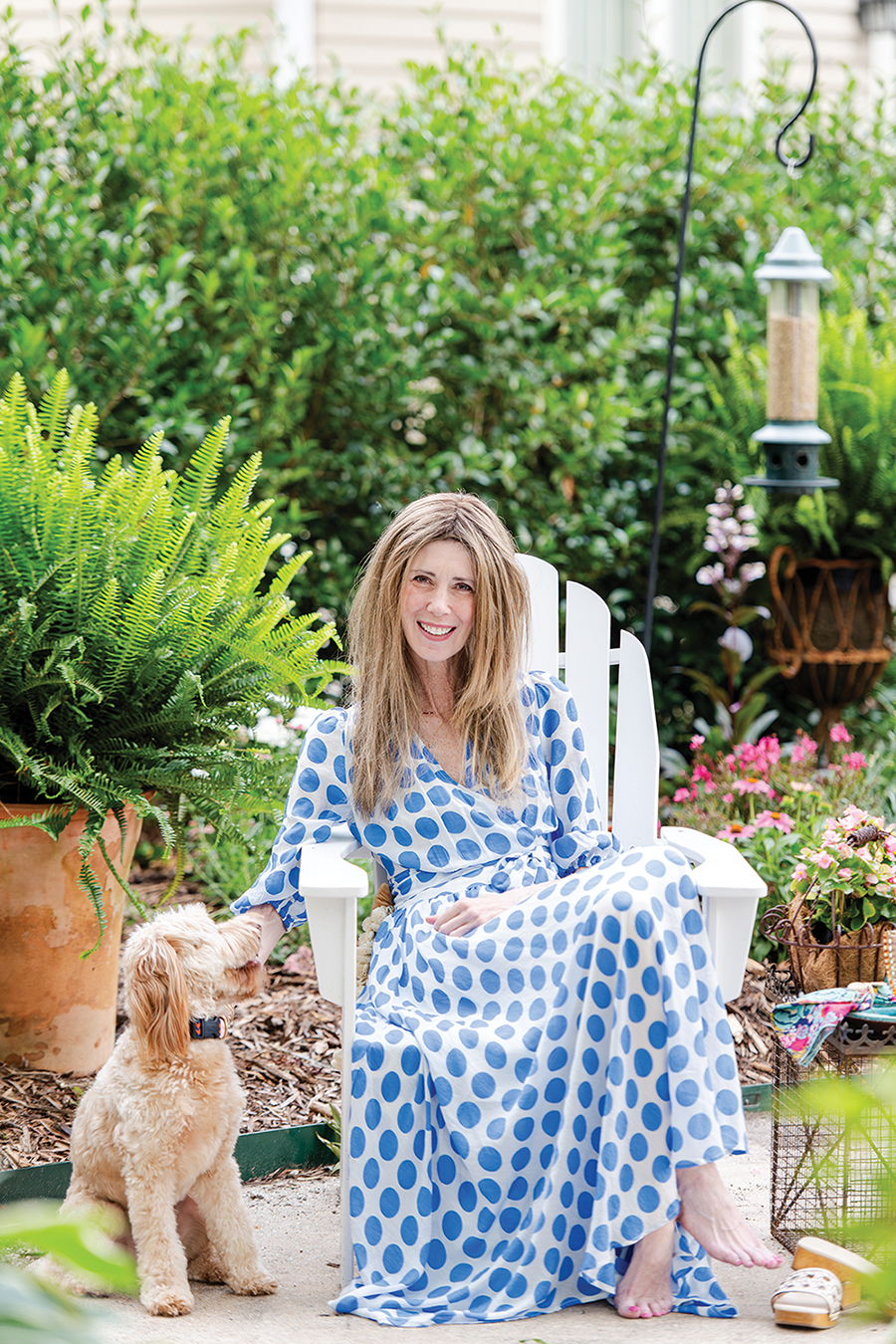
For Leslie Deaton, sanctuary is a Dutch Colonial in the historic Fisher Park district. “My story is one of breath-stealing tragedy, but also love in its wildest form, of soul-crushing pain and new mercies every morning,” she says. On leave as a Northern Guilford High School counselor, she’s fighting cancer while drawing comfort from her beautifully realized retreat.

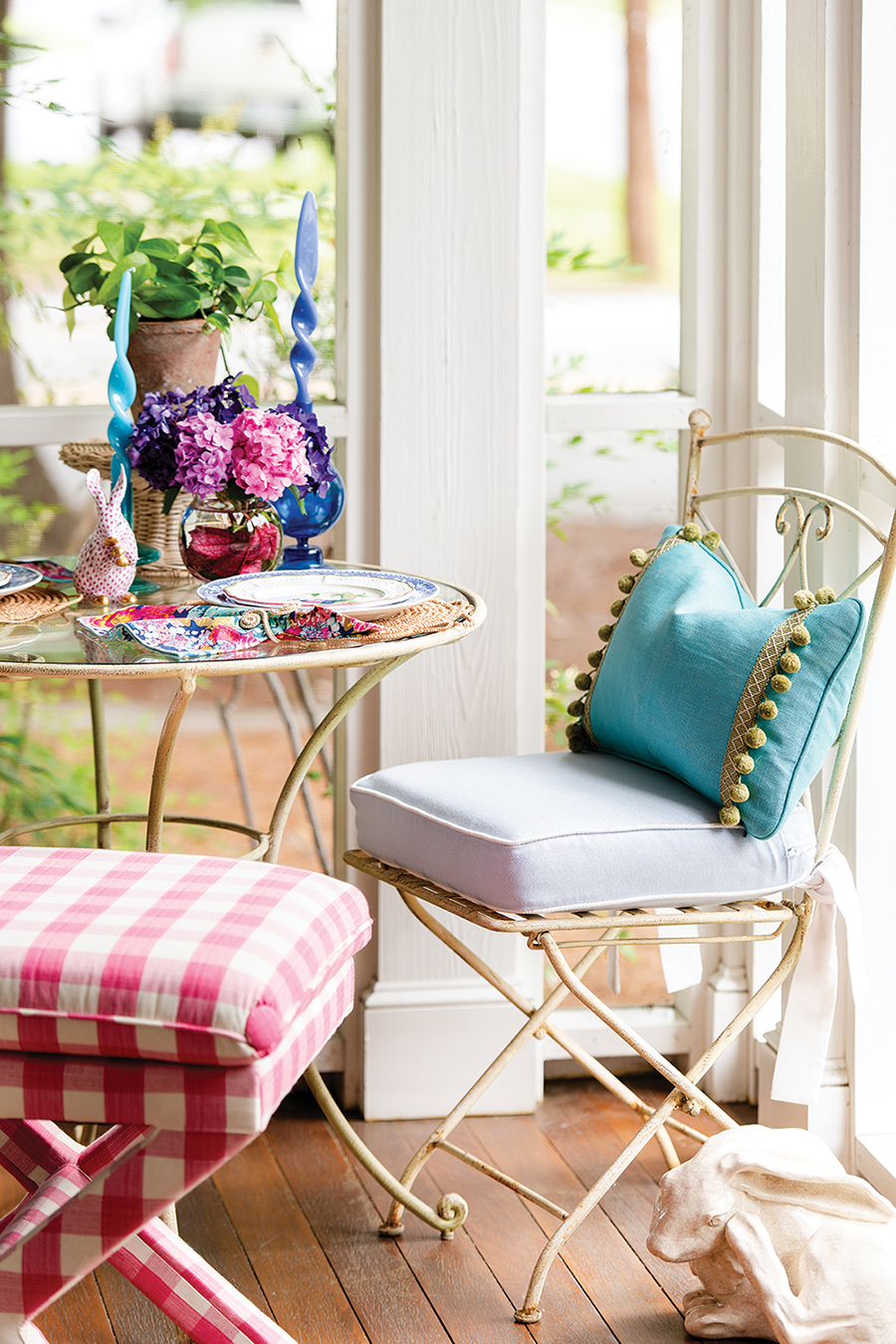
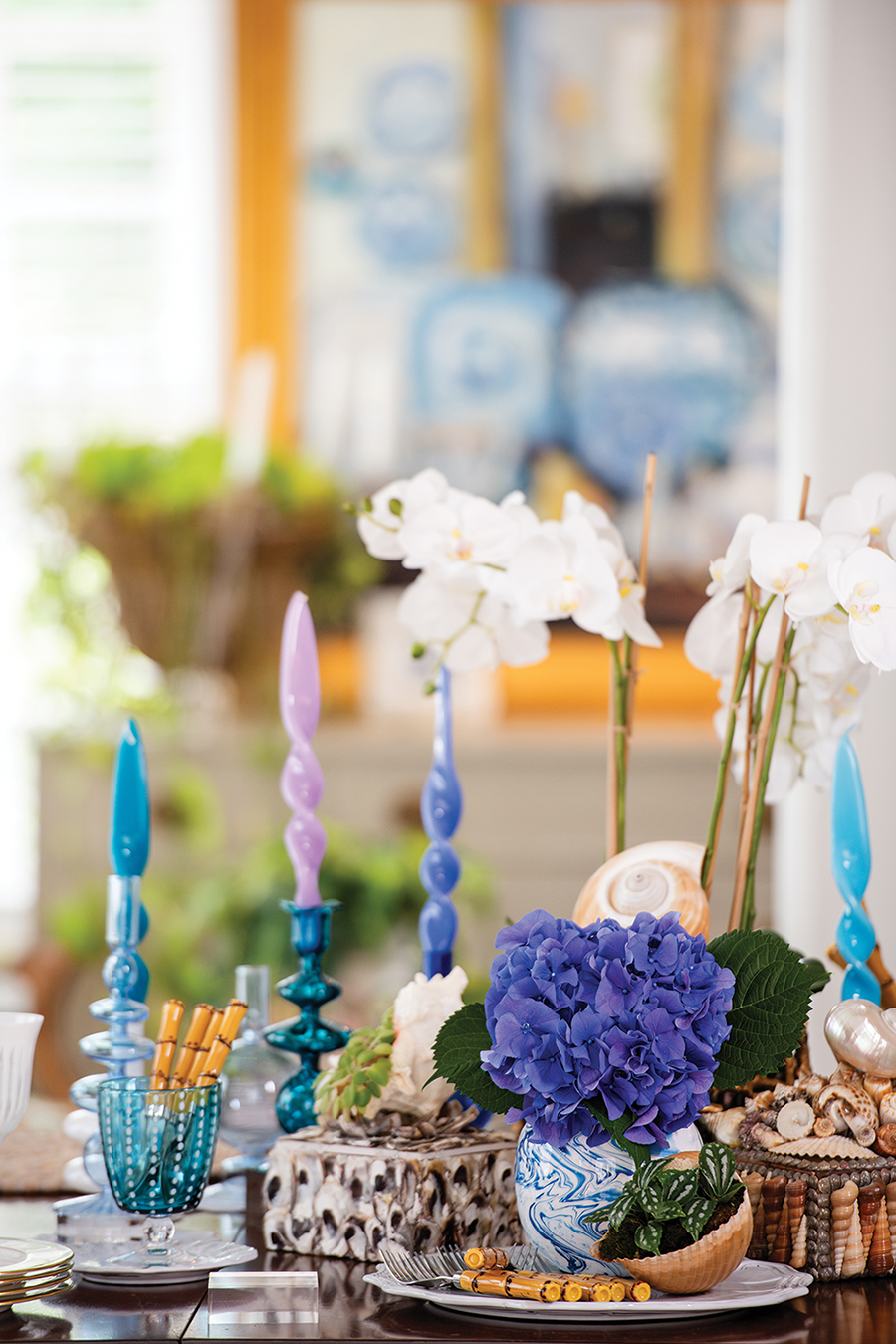
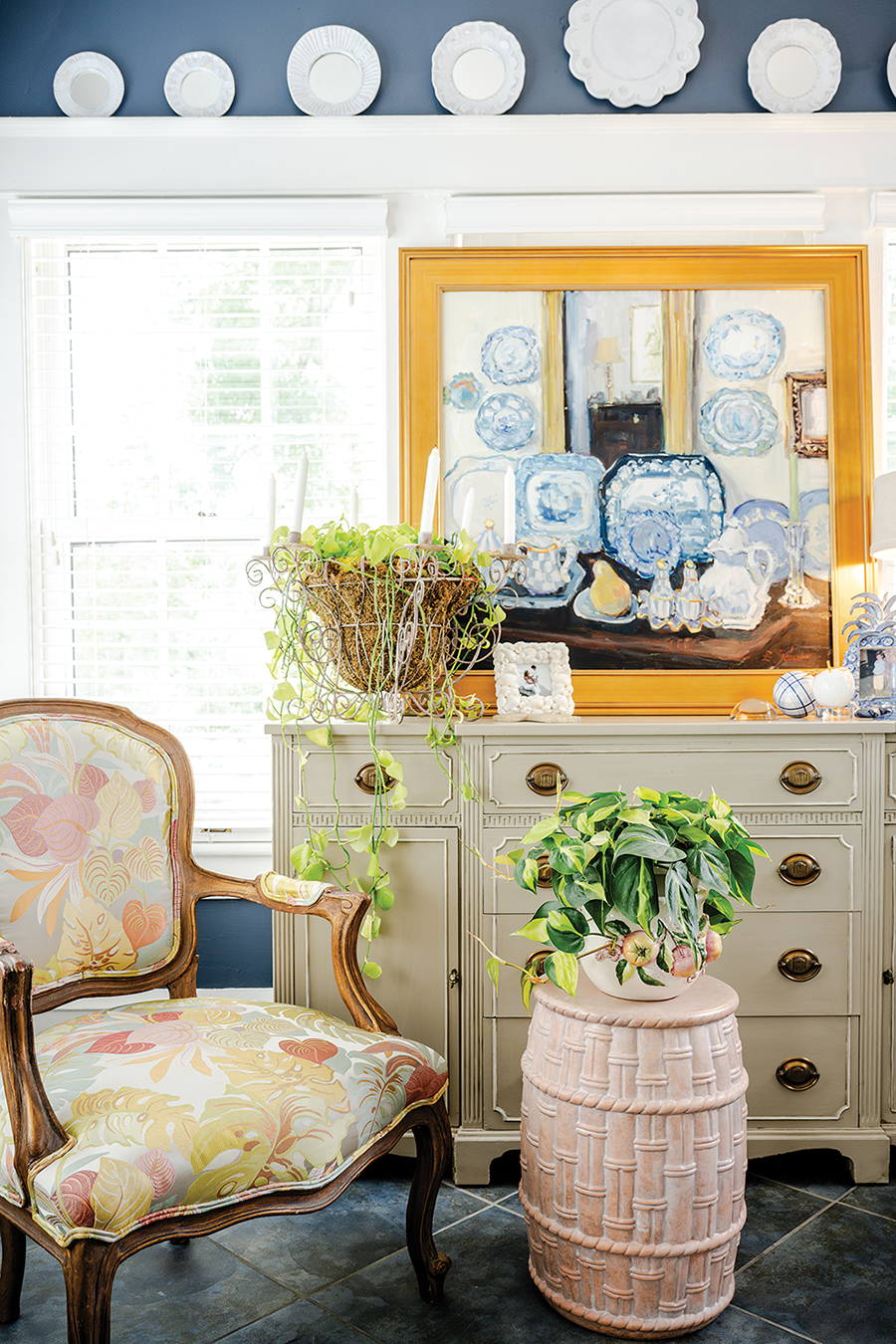
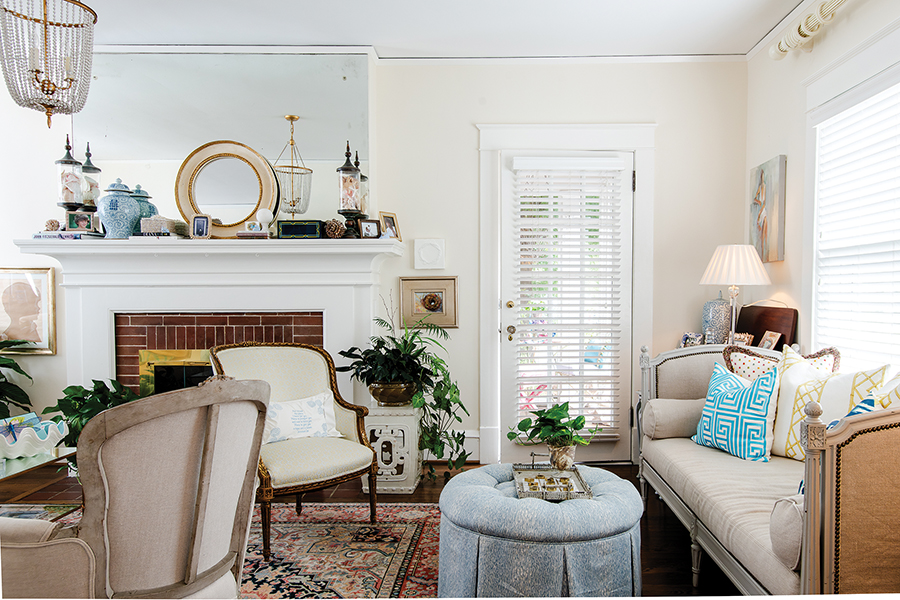
The home, a slate-gray charmer, tells a visual version of Deaton’s story. This is a place of meaning, its well-appointed rooms say. Of warmth. Of joy.

As she found it only a few years ago, it was move-in ready, which was a particular boon, after a sensitive and full restoration by Dunleath residents Camilla Cornelius and Stephen Ruzicka. 

“The house was built in 1922; it looked great,” she praises. Cornelius, who formerly housed a counseling practice there, presented Deaton with four pages of itemized renovations, including specialty faucets.

It was a turnkey home with curb appeal, given the on-trend gray exterior with crisp white trim. “So perfect for me,” Deaton adds, having bought the property in August 2020, “in the heart of COVID.” 

She made the move well before she became ill, and a year before she lost her only child, William Walton Finch, at age 23.

“Losing my son . . . ” she falters, explaining. “He took a Xanax that was pressed with Fentanyl on July 28, 2021. I believe that is why I have cancer. I just could not endure it.” She pauses. “The love of my life. My only child.” 

Her son graduated a semester early from N.C. State University with magna cum laude honors, she adds. Nothing fit.

She sighs raggedly. Tears fall.

Deaton understands those tears are therapeutic and necessary. Ironically, she has seldom been able to enjoy much leisure time at home prior to her illness, given a busy professional life. 

Fueled by her longtime work with young adults, she has continued to speak to students and anyone who will listen about the lethal threat street drugs pose to young people, even after a shocking diagnosis last year.

She believes “the trauma of losing Will opened me up to invasion. Losing a child is a different type of loss.” Losing an older child is no less challenging, she says. “It’s different.” Two people in her life who lost children subsequently “ended up with breast cancer.”

In February 2023, she chose to share her son’s story with 700 students, parents and educators at Northern Guilford. She was joined that night by Amy Neville, a California parent who lost a 14-year-old son. 

“Tragedy would hurl me without warning into a spotlight I never in a million years asked for but felt required to assume in order to tell the most soul-crushing story of my lifetime.”

Publicly, she drew back the curtain on pain following the loss “of my sun, my moon and all my stars — my beautiful son and my only child.” The title of her presentation? One Pill Can Kill.

In a televised interview with WFMY-TV, Deaton shared the nature of her personal trauma. “I got the absolute worst phone call of the human experience. I was informed that I lost my child to a horrific poison, Fentanyl,” she explained

She met Jane Gibson at Authoracare while grieving.

“I was touched by the love and the pride she shared with me about her son,” says Gibson, a recently-retired staff member. “And despite her great sorrow, she was not crawling away into a hole.” Even though it was a busy time in the academic year for her and her students, it was clear to her that “she would find healing by providing counseling support for these teens. What an amazing, loving woman!”

As long ago as 2022, Deaton began experiencing persistent stomach pain. Late that year, nagging back pain worsened.

“I was trying so hard to resist painkillers,” she recalls. “To honor what I’d been so vocal about.” Instead, she bought a new mattress to help her back, still suspecting she also had a stomach ulcer. 

“Then we got new office chairs. Each member of our counseling department had back complaints . . . But guess what? I still had agonizing pain.”

She turned to Ibuprofen, Tums and a heating pad in order to make it through the work day. “One morning in May [2023], our well-intentioned counseling secretary stood at my desk and said, ‘I’m not going to move until you call the doctor.’”

Deaton eventually capitulated, seeking help. When a radiology interventionist proposed a nerve block to alleviate back pain, she tried it.    

It helped briefly. Then her pain roared back. 

During follow-up, her blood work was normal. But an endoscopy and a CT scan detected a large mass in her pancreas. 

Deaton was diagnosed with stage four pancreatic cancer on May 31, 2023. “I was told to get my affairs in order while I still had cognition.” When she learned her diagnosis, she was at home alone. It was a phone call “that cruelly propelled me off my axis once more.”

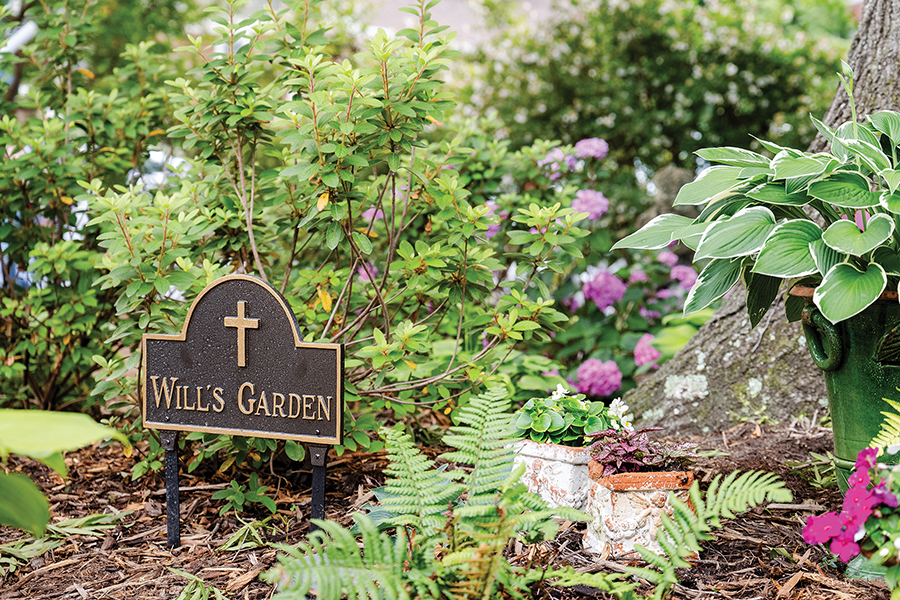
“Yes, I know I have a terminal diagnosis, but I don’t know what that means,” she says calmly, gazing out a kitchen window. “I could be in a car wreck today,” she says unemotionally. Outside, colorful plants await planting in a garden she plans to call “Will’s Garden.”

She makes plans and continues home projects.

“I’ve not asked my life expectancy from my doctors, and the reason I haven’t is, I feel it’s a guess, at best. I’m focused on today. Today is a gift,” she muses. Shortly after her diagnosis when she realized she wouldn’t be going back to work in the fall, she recalls deliberating over “this silly little rug from Ballard Design. And my friend, Jane Harrill, was here. And she said, ‘You’re going to be here a lot. If that rug gives you happiness, get it.’”

Harrill is Will’s former kindergarten teacher, explains Deaton, as well as an artist. She helps Deaton following treatments. 

Deaton’s close, longtime friend, Todd Nabors, who met her at First Presbyterian church, agrees with Harrill. 

“We’re the same age,” he says. “We’ve been friends forever.” They see each other nearly every Sunday. Deaton admires his aesthetic and relied upon his point of view when it came to her home.

Nabors, who works for furniture company Thayer Coggin and also consults on design, offered similar advice. “Beauty matters,” he told her.

And so, Deaton ordered the sisal rug. 

Deaton has always found “feathering her nest” therapeutic. Years ago, she frequented Summer House, a home decor shop. There she met Kaylee Phillips.

Phillips, who now works in antiques and collectibles at Carriage House, says, “She collects beautiful things. And along the way, she collects beautiful friendships.”

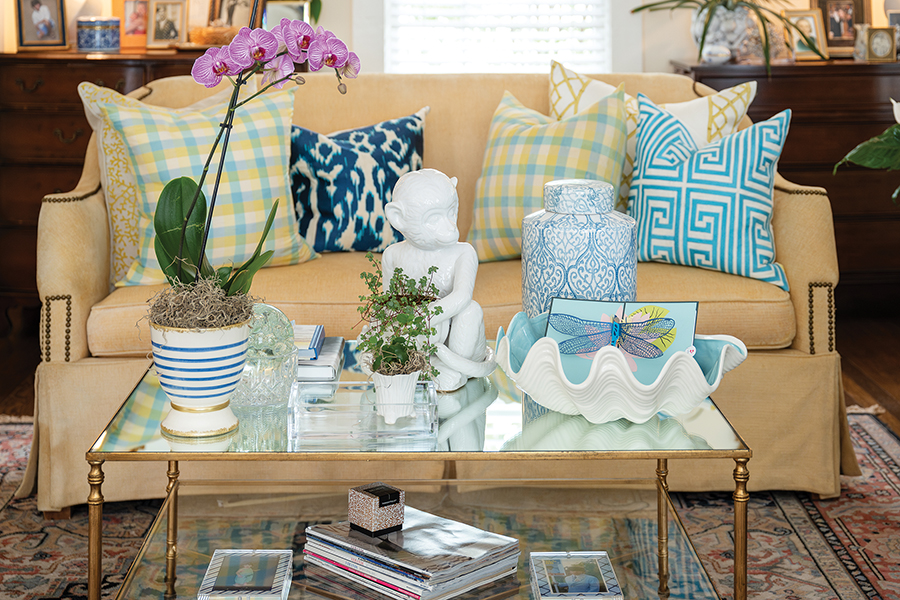
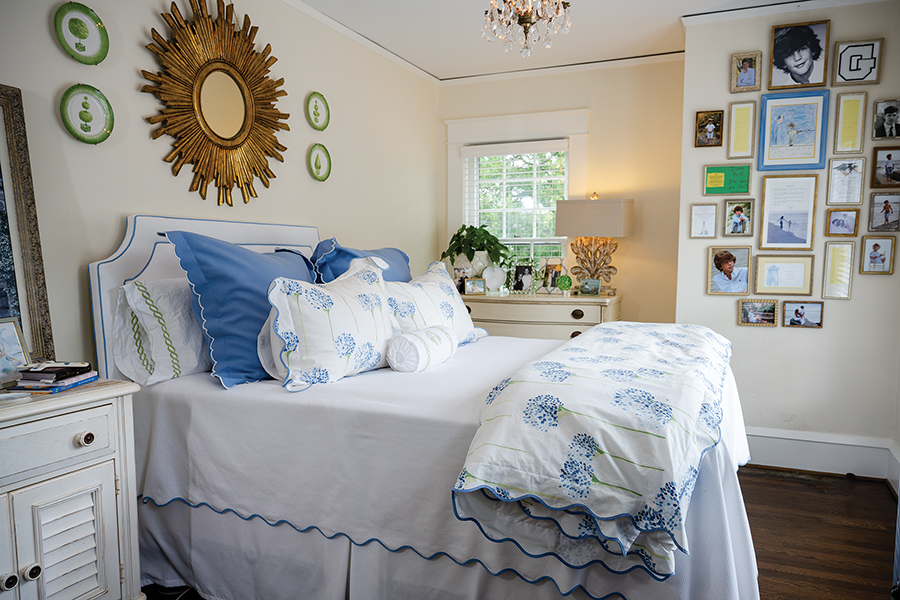
“Beauty does matter to me. And surrounding myself with joy and cheer is a medicine of sorts. It’s a therapy. It’s treatment,” says Deaton. There’s sorrow here, too, of course: the elephant in the room, as the expression goes. Yet there’s an aura of peace, too, and light. It streams through the house’s many windows.

At home, the gentle colors of a spa surround her.

Along those lines, she has selected a fabric with which she wants to reupholster an upstairs den chair. The room is softly feminine, accented with the pastel art she collects. Inside sit her desk, a vintage French chair found at Carriage House, along with a television, chaise lounge and cushy seating. After treatments — a more aggressive regimen of chemo and radiation began in April — she often rests here.

She cocoons here in the beautiful room, sometimes tossing a toy to her dog, Charley, whom she shares with her dad, and Virginia, her cat.

She resists staying in bed when under the weather, and refuses to recover in pajamas but prefers regular clothes. To be as normal as possible. “When I go to treatment, they say, ‘We love seeing what you come in wearing.’” Deaton takes pride in this, saying it is a form of self-care.

Even while wearing yoga pants, she stacks delicate beaded bracelets along her arm — many are gifts from devoted friends.

She refuses to give in or stop making an effort.

This applies equally to her personal environment.

She has just chosen a new fabric by Elliston House for a favorite bedroom chair. “The company is owned by [Greensboro residents] Morgan Hood and Ally Holderness. And I just admire them for taking that leap of faith,” she says of their venture into business.

“At times I’m tethered to that chair.” 

She chose Elliston House for Roman shade fabrics in the same space and the company’s wallpaper to line a breakfront she uses for storage. She’s deliberating another Elliston House fabric for an often-recovered armchair.

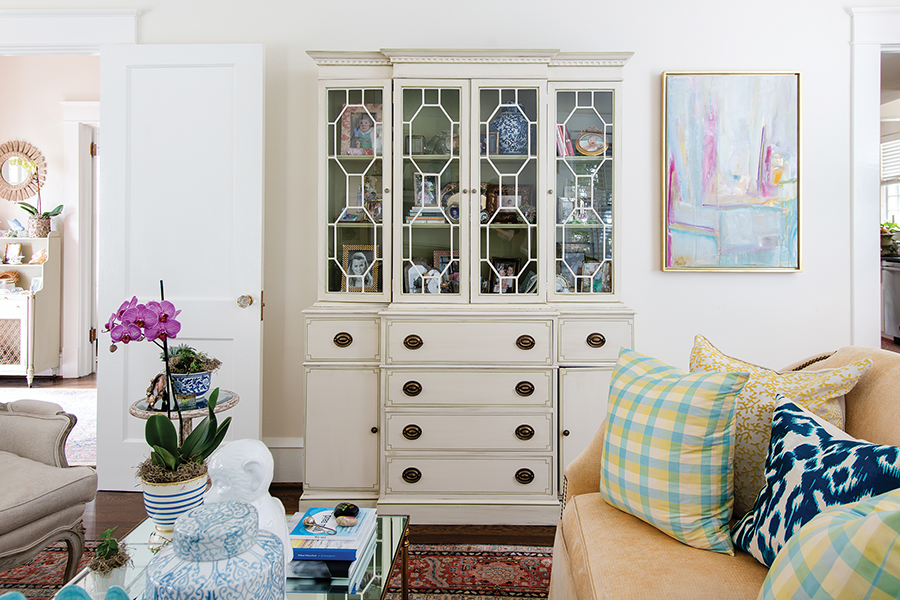
She, perhaps, values art and personal mementos above all else. Art is present in every room, as are personal touches. Many of the works she’s acquired have been created by local and regional artists.

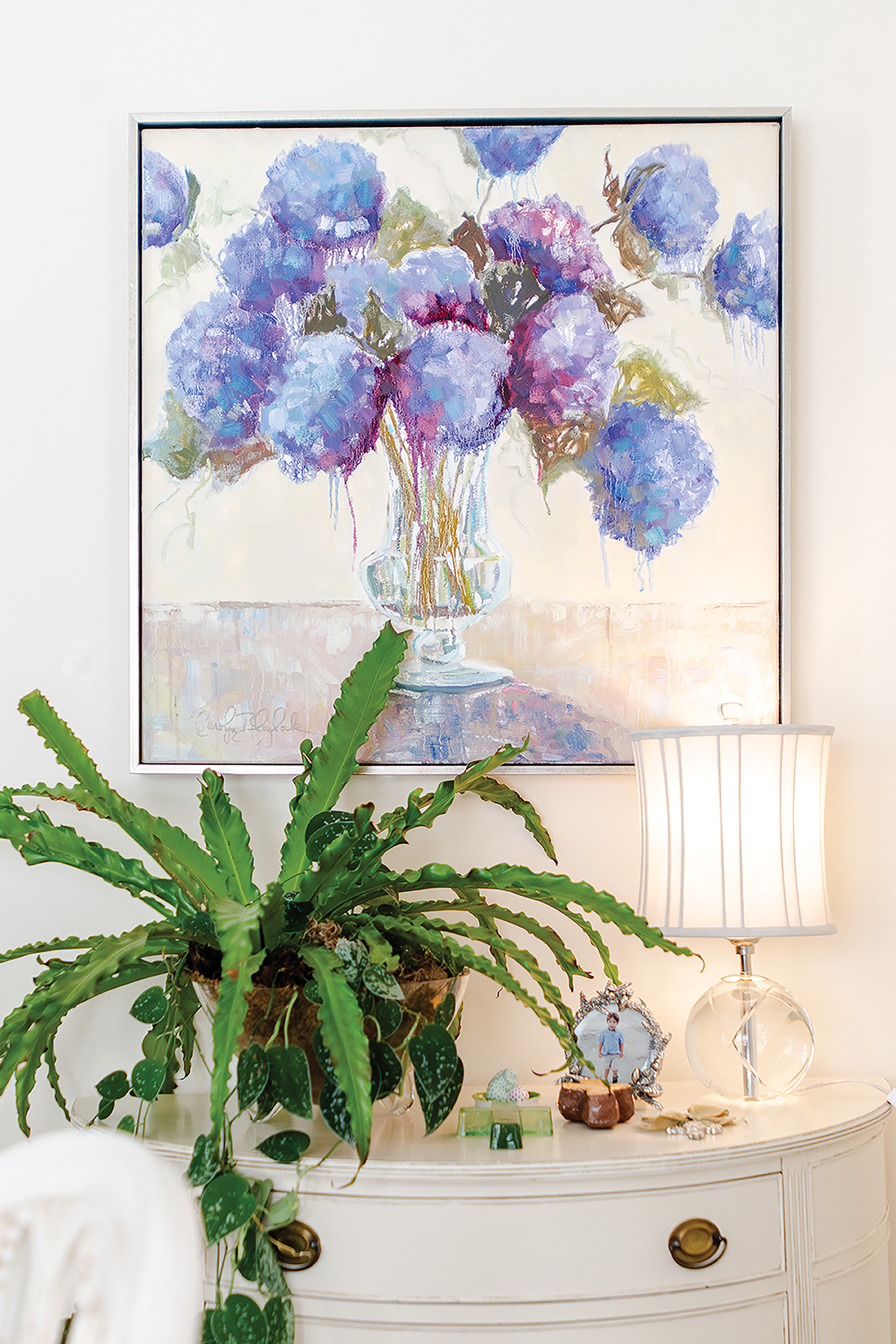
Winston-Salem artist Carolyn Blaylock is a favorite. She collects North Carolina artists Bee Sieburg, Libby Smart, Sharon Schwenk, Sue Scoggins, Helen Farson, Amy Heywood, Yvonne Kimbrough, Crystal Eadie Miller and Murray Parker. She describes their styles as “warm and inviting.” She treasures pieces by artist (and fellow educator) friend Harrill.

Virginia artist Martha Dick and Georgia artist Lisa Moore are also part of her collection.

Favorite places and influences?

Deaton admires the Carolina Inn, in the “most classic of ways.” (She’s a UNC-Chapel Hill grad.) She loves “going room to room and seeing the differences.”

Home magazines are a constant source of inspiration. She again mentions former home decor shop Summer House. “It had a great influence. I loved it.” She uses painted pieces acquired there, including chests and breakfronts. 

Once, a man delivered something to her prior home and exclaimed, “You’ve shopped at Summer House!” 

“Everybody who’s ever encountered her loves her,” says Phillips, musing about the friendship that originated in that store. “We’ve all become friends with her. It was deepened due to the connection with our children,” she adds.

Often, too, Deaton finds Randy McManus’ floral shop “very therapeutic for me.” 

She picks up a small plate displayed in her den, found in a Pawley’s Island shop in 2019. 

“It simply says, ‘Tell stories.’ It’s funny because I didn’t buy it initially, but it popped into my mind several times before our departure, so I scooped it up on our way out of town, never dreaming of its significance, completely oblivious that it would ultimately become my life’s theme song.” 

Deaton still considers her home a creative outlet and she now has time to contemplate every detail. She considers a colorful pink Elliston House lampshade. (Pink is a favorite color. There is even a pink Keurig coffeemaker on the kitchen counter and a pink leopard print sisal on the kitchen floor). 

She just replaced the upstairs bath’s colorful mirror with a high gloss white-framed one. Satisfied, she says it calms the effect of a lively wallpaper.

This is part of “living my life,” she explains. Design, color and beauty bring her great joy.

When Deaton walks into her son’s former bedroom, her voice is softer. “His special, special things,” she says quietly. “I just had to totally redo it . . . ”

She pauses, as if she is seeing the room as it was before it became a guest room, adding a white Matelassé coverlet, crisp linens and French blue accents. One wall displays diplomas, pictures and mementos from her son.

Everything in here is something about Will, she says.

After his dad left when he was young, Will and his mom had years together. “We had such a unique and special relationship. I weep. And I will never stop weeping. I tell people, I do not cry over my cancer, but I cry over Will.”

She reads aloud framed stickies he wrote to her, struggling with her emotions.

“I have beautiful portraits of him,” she says of her son. “I am so thankful.”

Friends who know of Deaton’s loss and health issues have donated wallpaper, fabrics, bedding, a specially monogrammed neckroll with Will’s initials from Matouk bedding — even a special commission by Triad artist Amy Heywood. 

“She gave that [painting] to me. Came into the home, looked at all my art. And that’s what she created.” Fresh flowers appear at her doorstep. Letters with donations arrive from strangers.

“Never did I dream when I redid this room that so many different people would be using it to stay with me,” she continues, lingering in Will’s former room. She is pleased when they tell her they find peace here.

If memories of Will are the dominant focus of her home, the underlying theme is serenity.

The lighting fixture in her room was a gift from a friend. “It’s a very visual comfort,” she says. “It’s so beautiful at night.” This is a real place of sanctuary, she repeats.

She picks up and cuddles Virginia, the blue-eyed rescue cat. “She has a little dot on her nose,” Deaton says delightedly. She imagined her “walking up Virginia Street. to find me.” 

Deaton rehabilitated her. She is epileptic, Deaton says, and takes phenobarbital; once, a well-meaning friend almost gave her Virginia’s medicine. She winces, but smiles, quipping, “Wonder what that would have been like?” 

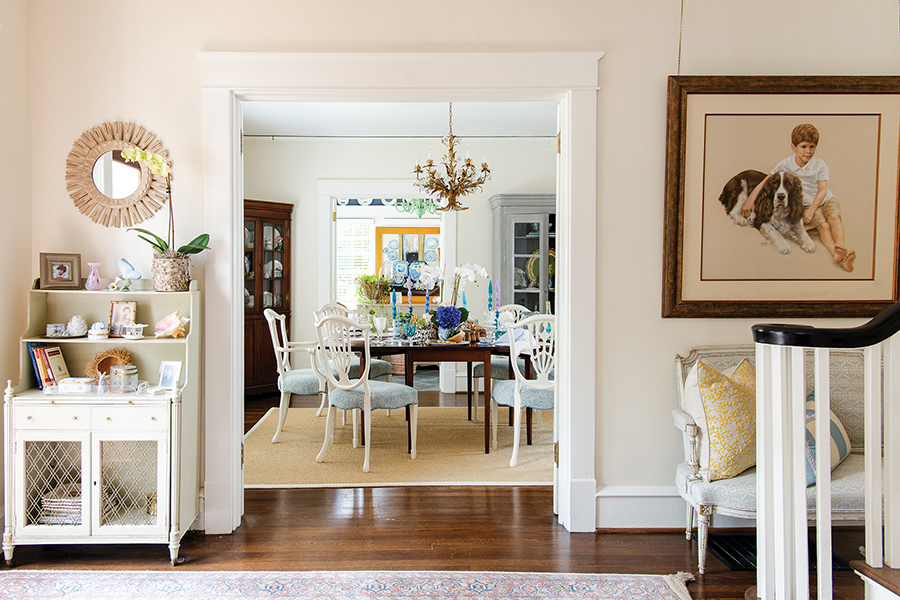
The downstairs rooms are tasteful yet casual with cream-colored walls, accented with French finds, collections and artwork. The eating nook off the kitchen had original benches and table, which she decided to keep but stash in storage. It was original, and Deaton says she didn’t want “to be disloyal to the Ruzicka’s renovation.” While she would “never get rid of it,” she stored it in the basement so she could add a table that better worked for her 6’3”-tall son when he lived with her.

Each room in her home sparks a return to the subject of her son.

Will chose to enter treatment at Fellowship Hall, she says quietly, standing in the breakfast nook where they ate together when he was staying here. 

He had completed treatment for addiction. Will had just qualified for Navy Seal training, “when this all happened.” Deaton would never know if it was his first relapse either. At the time, her son was living in Charlotte and doing incredibly well, according to his roommate. He had, for months, endured miles of running and swimming. “He doesn’t fit the mold,” she stresses.

Nonetheless, Deaton extols the virtue of a recovery program. “But when you are 22, and everything about socializing is a drinking event . . .” 

Alcohol, she explains, lowers our inhibitions. “And opioids are the worst. Instantly addictive. I’m not minimizing alcohol,” she stresses, “but it’s a different beast.”

“It’s a tragic, tragic story,” she says. “An incredible, stinging hurt and [emotional] pain followed him,” she says. “But Will was definitely trying to find a way to deal with that pain. And he went at it the wrong way.”

“But he was always outstanding, and he will always be my greatest accomplishment,” she says. 

Coping with extreme pain, Deaton has had to learn how to handle her own fears regarding painkillers. She credits the Palliative Care Program at Cone for guidance.

“Dr. Beth Golding took me under her wing and has gotten control of my pain,” says Deaton. Controlling pain enables her to walk again, go to the grocery store, to do chores. “Transformative,” she adds.

She recalls Dr. Golding saying “we don’t see thriving in pancreatic patients. But you are doing life.”

With Deaton’s pain lessened, she occasionally found diversion working a few hours at Watkins Sydnor, a home store. Earlier last year, she even managed 5-mile walks from Fisher Park to Irving Park, feeling completely energized.

“For me, time with my friends is what matters. It’s not about stuff. Funny, because this article is about stuff, in a way. But what this disease has taught me is that time together is all that matters.”  OH

Dog Is Love

Dog Is Love

Sedgefield Presbyterian Church laps up its new congregational canine

By Maria Johnson 
Photographs by Mark Wagoner

It’s been several weeks since 79-year-old Sue Lucado could make it to church.

She had a cold.

She had guests.

She had COVID.

It’s been one thing after another, but she’s here, at Greensboro’s Sedgefield Presbyterian Church, this Sunday morning. She steps into the vestibule and receives an unusually robust welcome.

She is sniffed

She is licked.

Her shoelaces are tasted.

In an instant, Lucado’s expression changes from somber to smiling.

She leans over and sticks a hand into the mass of apricot curls dancing around her feet.

Two gleaming brown eyes look up.

Two floppy ears emerge.

A finger-length tail covered with wispy tendrils thumps the carpet.

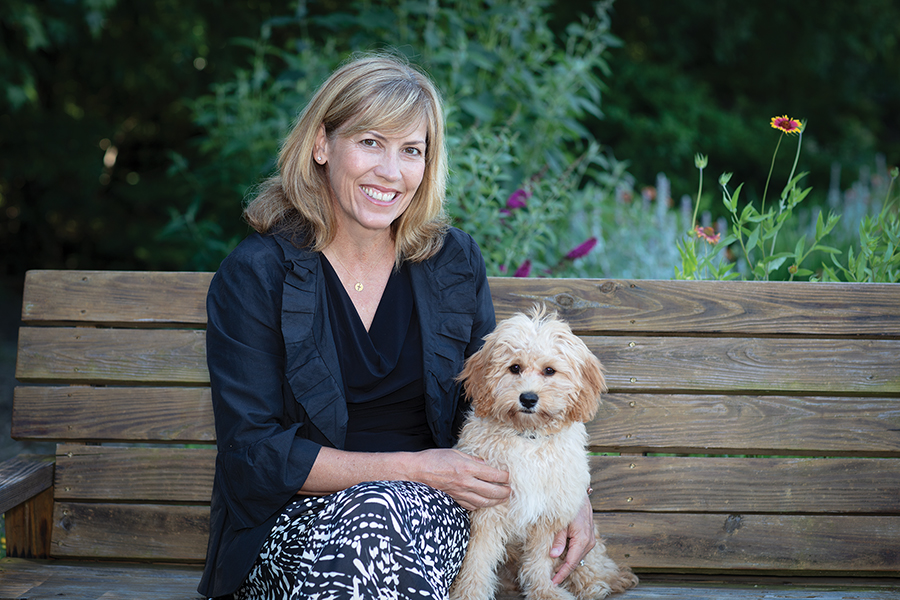
The furry swirl slows enough to reveal Chloe Grace, the church’s 3-month-old, 8-pounds-and-gaining, congregational dog.

Genetically speaking, Chloe Grace is a cavapoo, meaning she’s part poodle, part King Charles Cavalier spaniel.

Spiritually speaking, she’s heaven-sent.

“She’s the most beautiful thing,” Lucado gushes. “Bless her heart!”

The good news about Chloe Grace reached Lucado a couple of weeks ago, when she cut the pup’s picture out of a church newsletter, stuck the picture on her refrigerator, and made an announcement to her own beloved dog, Katie, a Yorkshire terrier.

“I said, ‘Katie, we have a little friend at church,’” she says.

Now that Lucado has met Chloe Grace, she is smitten.

She takes a program from human greeter Paul Durant, who owns the dog with his wife, the church’s pastor, Rev. Kim Priddy.

“You know me and dogs,” Lucado tells him. “I like them better than people.”“Don’t tell anyone, but me, too,” Durant confides playfully.

Lucado nods, still smiling, and finds a pew.


Priddy, the shepherd of this flock, swiped the idea of a pastoral pup from a friend, Rev. Michelle Funk in Pennsylvania.

Funk, who got a church dog last year, had toyed with the idea of a congregational canine for years. Using a therapy dog for church work made sense to her, but when she pastored a church in Burlington, N.C., a few years ago, she had two beagles.

“Neither of them was church therapy dog material,” Funk says in a phone interview.

“You know beagles. They follow their noses. They’re very loving, but they have a mind of their own.”

Then, in 2022, she was called to her current church, Heidelberg Union Church in Slatington, Pa.

The time and place seemed right.

One member trained seeing-eye dogs and often brought the trainees to church. A past member had attended with his personal service dog, who sometimes sat in on messages for the children.

“Dogs in church was not a new concept in this congregation,” Funk says.

She resurrected her hunt for a four-legged staffer. Her research turned up a handful of pastoral pooches nationwide. The cavapoo breed, known for being warm, intelligent and hypoallergenic, was a popular choice.

Funk visited a reputable cavapoo breeder and brought home a 4-month-old pup that her family — fans of the Harry Potter franchise — named Muggles.

At a pastoral retreat last year, Funk told Priddy about taking Muggles, in his first week on the job, to see a church member who was living at home under hospice care.

Funk placed Muggles in the woman’s lap. As the woman stroked Muggles’ soft coat, she opened her heart. Words poured out.

Muggles knew what to do. He relaxed, stayed put and let the woman talk.

She was scared of dying, she said. She had things she wanted to do in life. As faithful as she was, she wondered if God would be present at her passing.

Funk reminded her of Jesus’ words on the cross: “My God, why have you forsaken me?”

She reassured her that fear and doubt were normal.

She prayed with the woman.

It was clear to Funk that Muggles had helped the woman tap a vein of emotion that she, the pastor, might not have been able to reach alone.

The story lit a fire in Priddy, who’d grown up with dogs and owned dogs when her three children were young.

“I knew that dogs made people happy, but when Michelle talked about her visit, I realized the potential of reaching church members in a new way,” she says.

She ran the idea past her husband, Durant.

“I said, “As long as it’s for a purpose . . . ’” he recalls.

Historically a “big dog person,” he agreed to getting a smaller, more portable cavapoo — with a mature weight of 15 to 20 pounds — for the church gig.

Priddy pitched the plan to her session, the congregation’s ruling body. She told the story of Muggles.

If she got a similar dog, she said, she would bring the dog to work, take it to visit sick and homebound members, and have it certified as a therapy dog as soon as possible.

The idea was consistent with other forward-leaning projects that Priddy has backed to improve the church’s outreach, relevance and membership — an Earth-care committee; a yoga class that meets during the Sunday school hour; guest speakers on the war in Gaza.

Like many mainline churches, the Sedgefield congregation has shrunk over the last several decades. Today, riding an uptick following the doldrums of COVID, there are about 85 active members. About half are seniors. Many live alone.

A dog, Priddy hoped, would comfort those who missed touching and holding another living being.

She also aimed to delight children in the church’s preschool program and signal to potential members that the congregation was open to new ideas.

The session agreed unanimously.

On a Friday in March, Priddy and her husband brought their 8-week-old bundle of joy home from a breeder in Charlotte.

That Sunday, they toted the puppy to church.

Priddy invited church members to vote on a name for the dog by dropping dollars into red Solo cups bearing the names suggested by children of the church.

After the service, $125 in votes were tallied. The top two vote-getters were Chloe and Grace.


“Helllllllo, Miss Helen,” Priddy singsongs as she steps through the door of an apartment at the River Landing retirement community in Colfax. “I’ve brought all kinds of guests today.”

Across the room, church member Helen Boyer, 98, sits in a recliner with her feet up, watching daytime television.

“Where’s Amazing Grace?” She calls out in a bright voice. “I call her Amazing Grace. Amazing Grace is better for a church dog.”

Priddy leads the pup into the studio, detaches a leash and lifts the dog into the chair with Boyer, a stalwart church member who attended services regularly until she gave up driving about seven years ago. These days, she watches on YouTube or, if her daughter is with her, on Facebook Live.

“Get up here, Amazing,” says Boyer, whose manicured fingers slide into the pastoral pup’s curly coat and begin massaging. “How are you, missy? It’s been a while.”

Soon, Boyer is talking about how she misses the dogs she used to own — what good company they were and how they kept her on her toes. One dog, Suzy, a Doberman, lived with her when she moved to a cottage in the retirement community 20 years ago.

Suzy died about 10 years ago, but Boyer still feels close to her.

Literally.

“She’s over there, in that drawer,” Boyer says, pointing to a bureau that holds her beloved dog’s ashes. “She’s going to be inurned with me.”

Chloe Grace is not impressed. She nibbles Boyer’s unguarded toes.

“No biting!” Priddy says, removing her charge.

Priddy pulls out a bag of treats and hands some to Boyer. For a tasty price, they finish their visit peacefully.

In closing, Priddy scoots closer to the recliner and offers Boyer a hand in prayer. She thanks the Lord for this time together, for Boyer’s devotion to the church and for the opportunity to talk about their dogs.


Ask almost any question about Chloe Grace, and the answer is probably “yes.”

Has Chloe Grace had any accidents at church?

Yes, but none in the sanctuary. As of this writing.

Did Chloe Grace participate in this year’s Easter egg hunt?

Yes. She quickly found a candy-filled egg, at which point Priddy and Durant pulled her from the hunt.

Has Chloe Grace been invited to children’s birthday parties?

Several. One girl requested the gift of being chased around her party by the puppy.

Do adults drop by the church just to see Chloe Grace?

Yes. The clerk of session, Karen Johnson, who is retired and lives near the church, sometimes texts Priddy to see if she has brought the pup to work. If the answer is yes, Johnson heads to the church.

Are people sometimes disappointed if Priddy shows up to a church meeting alone?

Yes. “I thought Chloe Grace would be here,” they say sadly.

Does Durant tease his wife that more people come to church to see Chloe Grace than to see her?

Yes. Priddy’s reply: “I don’t care, as long as they come.”

Does Chloe Grace attend Sunday services?

Yes. Usually, she hangs out in the back of the sanctuary with her usher-dad, Durant, and her clerk-of-session-pet-sitter Johnson.

Does Chloe Grace help take up the offering?

Yes. She has a flair for opening hearts and wallets. Someone suggested training her to stare at people until they drop money in the offering plate — and to bark if they don’t give enough.

Does Chloe Grace occasionally run under the pews, causing a visible ripple of heads turning to catch the flash of fur under their feet?

Yes. Sometimes, they step on Chloe Grace accidentally. She seems to forgive those who trespass against, and on, her.

Does Chloe Grace have a time-out spot for when she is too excited?

Yes. See the playpen in the church library.

Does Chloe Grace have an Instagram account?

Yes, @chloe_the_spc_pup. Follow her colleague, Muggles in Pennsylvania, @pupminhuc.

Are there members of the church who aren’t crazy about dogs in general, or Chloe Grace in particular?

Yes, probably. But they haven’t whined to the leadership.

Do people seem to be smiling more around Sedgefield Presbyterian these days?

Definitely. Johnson credits Chloe Grace with lifting spirits.

“She’s a ray of sunshine for people. When she greets you, how can you not have a better day?” she muses. “She doesn’t care if you’re walking with a cane or if you’re in a wheelchair, if you’re 2 feet tall or 5 feet tall, if you’re Black or white, gay or lesbian. She doesn’t care. She’s there to give you love, like God is.”  OH