O.Henry Ending

O.Henry Ending

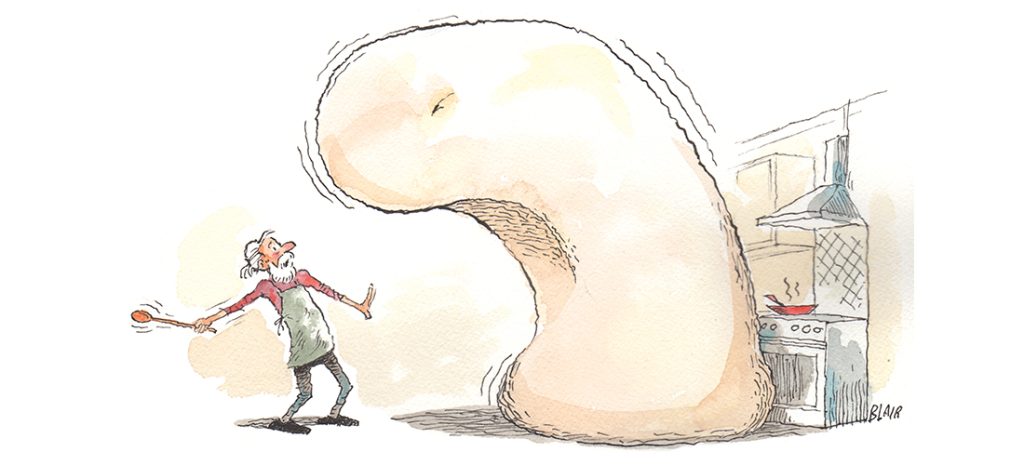
Grammar? The Horror!

He’s not silently correcting what you’ve just said in his head

By David Claude Bailey

When people ask me what I do for a living, I tell them I fix other people’s grammar — then explain I’m an editor. Do people tend to get just a bit self conscious about their speech patterns afterwards? Probably, and although I sense them choosing their words just a bit more carefully as they speak, they needn’t. I’m not silently correcting their grammar. I’m what’s referred to among English majors as a descriptive grammar guy. In my rarely humble opinion, prescriptive grammar, which is all about prescribing what’s correct while proscribing errors, is a lost cause. According to a 2016 Huffington Post poll, only 12 percent of respondents complained that improper grammar in a text message would bother them “a lot,” with 53 percent of respondents being bothered “somewhat” or “not very much.” Thirty percent responded that bad grammar bothered them “not at all.”

I saw that coming decades ago when I taught English and Latin at Salem Academy, where I’d scribble on students’ papers in red ink, “Not spelled that way — yet — but keep on trying.”

Language evolves, changing hourly. (By the minute on the internet.) In certain historical eras, scholars tell us, it’s far more plastic. Methinks ours is one of them.

According to the History Channel, Shakespeare’s name was spelled more than 80 different ways during his lifetime — including Shaxberd — my favorite. The HC goes on to point out that the Bard himself “never spelled his name ‘William Shakespeare.’” Instead his John Henry spilled onto paper as “Willm Shakp,” “Willm Shakspere” and “William Shakspeare.” So, according to the man who didn’t worry about spelling bee or not to be, we’ve been misspelling his name for centuries. That was, of course, before Samuel Johnson attempted to impose standard spelling and grammar on his fellow Brits with the 1775 publication of his Dictionary of the English Language.

But back to our time. Let’s just tackle “to boldly go where no one has gone before,” my Klingon friends. OMG! Captain Kirk split an infinitive — a faux pas worse than splitting some of those tetchy molecules on the atomic chart. He put the adverb “boldly” between the “to” and the “go” of the infinitive form. I myself was attacked fiercely by a religion prof at Wake Forest during my master’s oral exam for that very crime. That, however, is based on the Victorian world’s worship of the Romans and Latin grammar, where splitting verbs was anathema. But let’s not split hairs about it.

And how about who/whom? For years, I’ve avoided “whom” in most sentences in O.Henry magazine. Why? Because I firmly believe something like half of our readers stop and wonder whether “whom” is right in any usage, while the other half come to a dead stop parsing the sentence and losing sight of the story.

Yes, I hear you, grammar grannies and grandpas. Sometimes I’m one of you. My pet peeve, which sometimes has me shouting at my radio during All Things Considered, is the use of “and” for “to” with infinitives, as in “I’ll try and use correct grammar.” In a grammatically perfect world, one would say, “I’ll try to use correct grammar.”

But does anyone really have trouble understanding the former? Does looking down at others’ speech elevate my social station or makes me feel superior and more educated than others? “Guilty,” I say. If you’ve read this far, you probably have your own peeve. “Would of,” “could of,” “should of”? The Oxford comma, which the Associated Press and this magazine abjure? If you were an English major, it might be the waning of the subjunctive mood. How about the conflating of its, it’s/ your, you’re/ they’re, there and their? The apostrophe is dying, folks, but the language isn’t.

I like to compare what’s going on with grammar to what’s happened to Auguste Escoffier’s haute cuisine, once rigidly taught and slavishly followed in the finest restaurants. Now, fusion, the mixing of dishes from different cultures, is all the rage. In our melting pot of polyglot with English being universally accepted as the internet’s lingua franca, “standard” American English is getting fused, bruised and misused. And we might as well embrace it.

So, fellow grammar geeks, I say that it’s over, and it’s high time to boldly go where no language has gone before.  OH

David Claude Bailey is a contributing editor to O.Henry. If you want to question or amend his grammar, mail him your corrections on the back of a $1,000 bill.

O.Henry Ending

O.Henry Ending
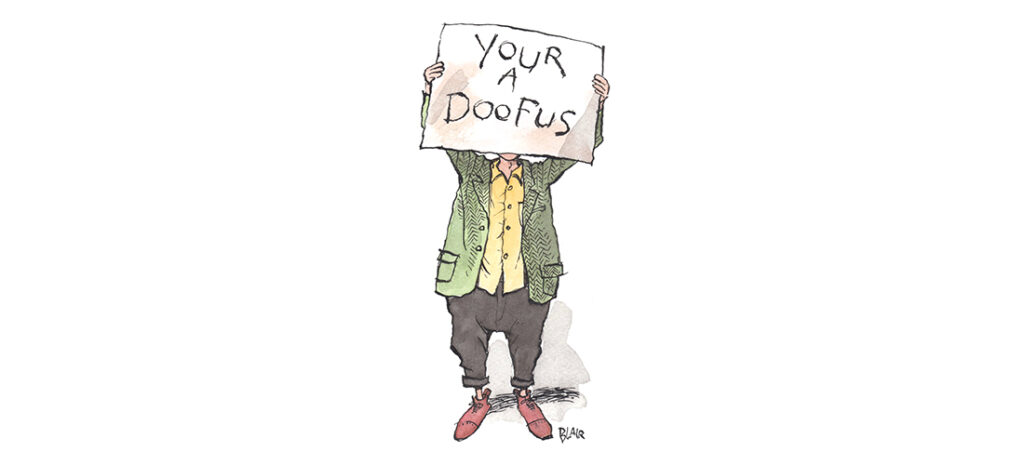
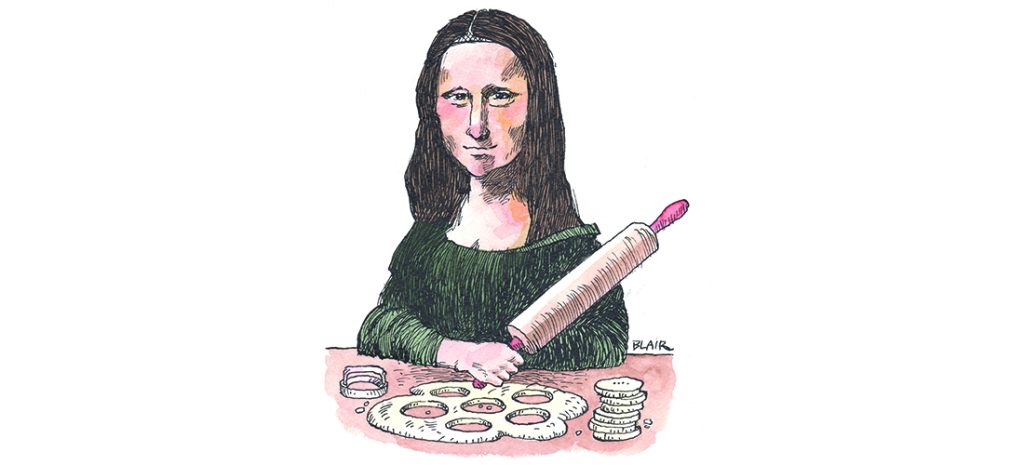
La Mona Lisa Gioconda

Value is in the eye of the beholder

By:  Cynthia Adams

I have a not-so-secret fascination with Mona. Mona and I go way back.

The Italians call the Florentine beauty La Mona Lisa Gioconda — Madam Lisa Giocondo. She is La Joconde to the French.

As Nat King Cole crooned, she is Mona Lisa to the rest of us. 

My first reproduction of Mona was set in a chippy frame beneath wavy glass. This prized possession cost $1 at the former Sedgefield Flea Market. 

More recently, I’ve acquired others: two oversized giclées by Randy Slack titled Mona Ghost and Mona Citrus. I own books on the infamous Louvre thefts and tussles over the world’s most famous portrait, replete with accounts of when she went missing or was subjected to unwarranted attack. Five times and counting, Mona has been either outright stolen (the first time in 1911) or vandalized. Rocks, tea cups and paint have been hurled at the impassive face

Why all this drama? Salvador Dali said Mona with the mystic smile had “a power, unique in all art history, to provoke the most violent and different kinds of aggressions.”

Recently, a film critic reviewing Glass Onion suggested that Mona symbolizes legacy. The villain in the film “wants to be remembered in the same breath as the Mona Lisa . . . standing the test of time.”

Her legacy was burnished with every assault, Mona’s fame escalating after the 1911 heist.

She epitomized Da Vinci’s greatness. No visible brush strokes. The lifelike countenance. Mona’s ambiguous physicality. And . . . that smile. We experience Mona as faintly masculine, lacking eyebrows or lashes (overzealous restoration removed them).

Da Vinci began the commission of Mona, the wife of a wealthy Italian merchant Francesco del Giocondo, in 1503. He worked on it until 1507.

When he left Italy on horseback for France in 1516 at the invitation of an admiring King Francis I, he took Mona’s portrait with him.

Installed by Francis at the Château du Clos Lucé in Amboise, he hung Mona on his bedroom wall. 

He himself regarded her as his opus. (Or not; an art dealer earlier this year argued this: what if the artist wanted to hide her?) Mona held his attention because he never considered her quite finished.

Working in splendid style befitting a genius, he died at age 67 in 1519 in the arms of the weeping King, who called Da Vinci “Father.”

It is entirely possible that Mona’s was the last face he saw at his death.

Afterward, Da Vinci’s painting was claimed by the French King much to the consternation of the Italians. The Chateau was preserved by the French as a Da Vinci Museum.

The embittered Italians want her returned. When first stolen from the Louvre by an ordinary workman in 1911, she was whisked off to Italy.

Mona became an international celebrity. You get the picture: Cabbages and kings alike obsessed over Mona.

I placed Dollar Mona, the chippy, cheap one, over the kitchen stove. There was and is something inspiring about Mona’s presence.

House-poor as we were, Mona somehow sustained our determination to revive and make worthy the tatty kitchen. 

We scraped, painted, plastered and sweated over the monstrous job we faced. We fashioned new cabinet doors and tiled the counters. Too poor to replace the ancient stove, we polished till it gleamed. 

My brother showed up one weekend to reinforce the sagging dining room floor. Slowly, the careworn, early-1900s house responded.

Feeling celebratory, we opened it up for a party. A niece’s ex, famously befuddled, disappeared into the kitchen for an inordinate amount of time. 

What the heck was he doing?

Walking through the butler’s pantry to the kitchen, I overheard as he ground out the words, “That’s the Mona Lisa,” stopping me in my tracks.

“Yeah, I know,” replied my niece.

“Well, they’ve got to have money if they own that,” he said sourly.

Wearing an enigmatic smile of my own, I reversed course and rejoined the party. True enough, even Dollar Mona had grown beyond price.  OH

O.Henry Ending

O.Henry Ending

Swing to Life

A tired play set oscillates a passerby’s perspective

By Mallory Miranda

I can’t stand the sight of it: The metal and plastic swing set in its sun-faded primary colors. It stands conspicuously in a neighbor’s yard.

I can almost hear its creaking joints.

One word flashes across my mind’s eye as I approach: eyesore.

I bind my dog’s nylon leash around my knuckles, determined to pass it quickly.

It’s the sort of swing set friends had in their yards in the early ’90s. Thirty years ago, these swing sets were more brightly colored, but, displeasingly, they creaked then, too.

I recall two swing sets in particular. One was in the yard of our neighborhood Girl Scout troop leader. Let me just say, I don’t have fond memories of my time in this troop. The other swing set was in a much happier backyard.

Any fond memory of my time as a Girl Scout is tarnished by the unpleasant troop leader. I’ll confess I often misplace her actual face in my memory with that of Miss Agatha Hannigan, the boozy, little-girl-loathing head of the orphanage in Annie. You get the picture.

Did anyone actually play on that swing set? Or was it just for show, a way of proclaiming, halfheartedly, “Our child is beloved. See — we buy her things!”

Shortly after her stint as a Girl Scout troop leader, the woman and her husband dropped their daughters off at a relative’s house for an indefinite visit. Then, they bought a Harley and rode off into the dust together.

Is their old swing set still rusting in their backyard now, wheezing in the wind?

My dog yanks her shortened leash. She hasn’t gone “number one” yet. Judging from the tension on the leash, she’s ready.

I release some slack. As she sniffs for her perfect spot, I wait at the curb of the swing set house, grateful to my oversized sunglasses for concealing my condescension.

I see a motley mix of terra cotta pots and old plastic margarine containers that form a boundary around the yard. All of the pots and containers are overgrown with a vibrant variety of plants. The grass is freshly mowed.

Another yard comes to mind: my grandmother’s.

Particularly, it’s the repurposed plastic containers that remind me of her abrasive voice, scolding me across time, “Aye, Mija! Don’t throw away that perfectly good Tupperware!”

My grandmother was the neighborhood babysitter, her yard always littered with a mix of toys she collected over the years. Many were leftover from former clients whose kids had outgrown them. And, yes, she had a swing set just like the one I’m trying not to stare at. It and all the other toys were faded and dated, but everything sparkled anew when it hit her lawn.

“Waste not, want not.”

My grandmother’s yard of hand-me-down toys, creaking swing sets and messy children is all cleaned up now. She’s too frail to lift a small child, let alone have one or more running wild in her yard.

My dog kicks up grass with her hind legs, signaling she’s done.

A screen door opens and a pair of chubby legs bursts through it. A stout little toddler flings herself onto a hard plastic seat, joyfully propelling it into centripetal motion, while a woman looks on.

With the spark of child’s play, the swing set is magically restored to its vibrant glory.

I smile and wave to my neighbor. She nods in return.

And as my dog and I amble down the street, the swing set creaks loudly, as if it’s laughing.  OH

Mallory Miranda is a resident of Greensboro. She is currently writing a play.

O.Henry Ending

O.Henry Ending

The Chipmunk

An uninvited houseguest makes an imprint

By Marianne  Gingher

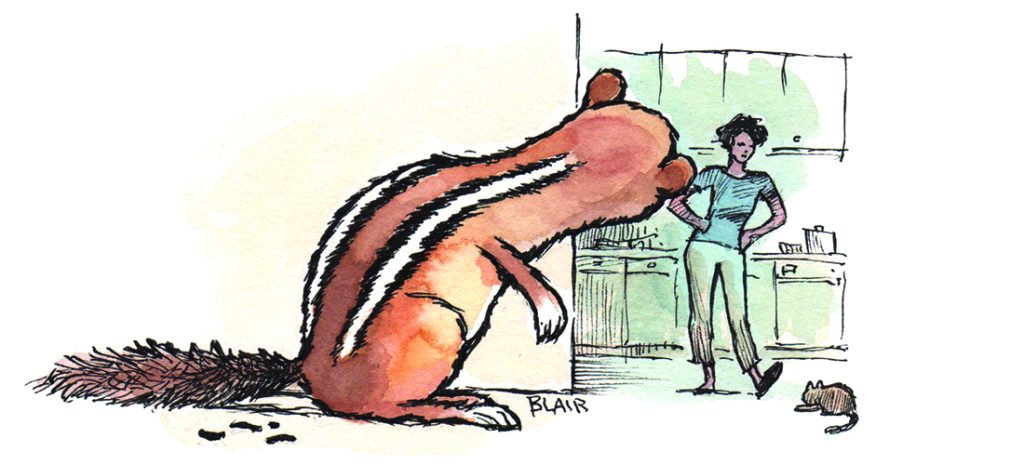
At the beginning of the 2020 pandemic, a chipmunk enters my house and will not be caught — not by my cat or the Havahart trap I bait with peanut butter. Day after day, she won’t take the bait.

Next, my 3-year-old dishwasher breaks. First world problem, a broken dishwasher, right? It seems a certain order is breaking down between appliances going haywire and wild animals invading my house. I call a repair service and am told that parts for this dishwasher are on backorder from Mars. No matter. I happen to be a dish washer — in the way I am not a stove or a refrigerator.

A month passes, pandemic time, so that weeks go by like years and years like weeks, and nobody can remember with any authority what happened when. The dishwasher is still broken, I know that much, and Chippy’s still on the loose. I hear her scuttling under the stove, shifting herself around to get ever more comfortable. Mornings, when I make coffee, I find tufts of insulation in front of the oven door, as if she’s been rearranging her furniture. She’s had a chance now to study my habits and my cat’s habits and hedge her bets as to when it’s safest to venture out. I find less-than-savory evidence of her adventures whenever I sweep. Once in a while, when I’ve been especially quiet, she’s skittered out and encountered me. She screams! I scream! Clearly, we are not meant to be roommates.

Daily, I bait the trap with fresh peanut butter, but catch nary a whisker. On warm days, I leave the backdoor open, hoping a sniff of fresh air will entice her to brave a jailbreak. Has her long captivity made her forget how to be a chipmunk? Has mine made me forget how to be human? My cat’s catness seems in jeopardy (since he can’t catch a chipmunk) and he looks depressed.

When the appliance man delivers the new dishwasher motherboard, he wears pristine coveralls, clean cloth booties over his shoes and a super-duper N-95 mask. He carries a large briefcase with all sorts of digital testers and gleaming repair instruments inside. He arranges all his tools on drop cloths and removes the dishwasher’s worn out organs with the care and precision of a surgeon. “A bit of bad news,” he says as he finishes tidying up. “I found small animal droppings under there. Possibly you have a rodent problem?”

That day, I go to the grocery store and, on a hunch (I’ve done some research), buy some pricey rabbit/gerbil/hamster food specifically “for rodents.” I have refrained from thinking seriously about the fact that Chippy is a rodent. I bait the Havahart with renewed determination and . . . voila! In the cage, she’s calm, cocking her little chipmunk head to observe me better as I carry her outside. I feel tenderly connected, like Snow White on the brink of a song.

The pandemic asked us all to get better at waiting. I marvel at the patience of the chipmunk who knew only the wild green flickering world before her estrangement from it. Trapped in a house, her immense aliveness had to learn to be still. She spent six weeks dodging a gargantuan human and Isis, the cat, gobbling any dusty crumb she could find, waiting, no exit strategy. During her lockdown, nothing was certain, except that the hawk who frequently glides over the neighborhood would not be picking her off. Wherever she scampered, I know she’s enjoying the pandemic’s easement as much as I am this summer.  OH

Marianne Gingher has published seven books, both fiction and nonfiction. She recently retired from teaching creative writing at UNC-Chapel Hill for 100 years.

O.Henry Ending

O.Henry Ending

Deep Dish

A family vacation to remember

By Cassie Bustamante

Every family has the quintessential summer vacation that stands out in its history. Ours is a 2017 road trip halfway across the country, from Maryland to South Dakota, with stops along each way in Chicago and St. Louis. I’d just sold the vintage store I’d set up with a friend and had decided to spend some of the profits on an epic family vacation, one the kids would remember for a lifetime.

We load up our cherry-red Ford Flex with snacks, pillows, luggage, plus 11-year-old Sawyer and 10-year-old Emmy, and all of their “necessities” (rainbow unicorn hooded blanket — check). My husband, Chris, a Virgo and Type A planner, has plotted out our vacation in great detail. As we begin our first leg, we excitedly chat about the fun things we’ll get to do and see during our two-night stay in our first stop, the Windy City: a Cubs game, the Field Museum, the iconic Bean and, of course — the most highly anticipated and arguably Chicago’s greatest contribution to culinary arts — deep dish pizza. In fact, Chris has planned it so that we’ll arrive in Chicago just in time to check in to our hotel and walk to one of the city’s most famed pizza joints, Lou Malnati’s.

About a half-hour from our destination, traffic slows a bit. “Mommy, I don’t feel so good,” Emmy calls from the back seat. From a young age, our daughter has been subject to bouts of motion sickness on long trips, so we chalk it up to that and assure her that we will be there soon.

“Just close your eyes and try to rest,” I say reassuringly.

A few minutes later, I’m rushing Emmy out of the backseat of the car so she can barf on the side of Interstate 80. It’s a routine we’re both familiar with. We give her a minute to make sure it’s all out, then hit the road again.

When we arrive in Chicago, Emmy’s motion sickness doesn’t seem to be passing, but the rest of us are the worst combination of exhausted and hungry. I tell her I’m sure she just needs some fresh air and time for her stomach to settle; the walk to the restaurant will do her some good.

After a few blocks, we arrive, put in our name, and wait outside Lou Malnati’s front door to be called. Emmy, we notice, still looks pale and miserable. Chris and I exchange “oh crap” glances as she says, “I think I’m gonna be sick again.”

In a moment of panic, I rush her toward the nearest restroom, dragging her by the hand behind me. She doesn’t make it into a stall and unleashes all over the floor, counter and sinks. I clean up as best I can while shouting to women at the door, “Do not come in here right now!!” (In retrospect, we should have stayed outside, as Chris likes to remind me.)

Mortified, I find an employee and explain what’s just happened, apologizing profusely. Emmy and I head back outside where Chris and I decide that the best course of action is ordering pizza-to-go for the rest of us.

Back at our hotel room, we tuck into the pizza with gusto — except Emmy, as you might suspect. And for the next few minutes, the subtle sounds of chewing and involuntary “mmmms” echo throughout. Chris, Sawyer and I are so swept away by deep-dish pizza we savor every warm and gooey bite while Emmy looks on from bed, eyes sunken and sad.

Thankfully, after a night of sleep, she’s fine. We scurry through the Windy City, taking in as much as possible in our 48-hour jaunt.

But six years later, it isn’t a tourist site or baseball game that is top of mind when we think of that trip. It’s that pizza — the one that Emmy never got to taste. And while it might not be what we had in mind when we set out to create the vacation of a lifetime, we’re confident we made memories our kids will not forget, no matter how hard they try.  OH

O.Henry Ending

O.Henry Ending

A Religion of Birds

On a wing and a prayer, a mother attempts to explain life’s greatest mystery

By Sarah Ross Thompson

It’s the first day of preschool. I am making a last-minute sign for my 3-year-old, Owen, to hold while I take his picture on our front steps. You know the ones, complete with name, age and class (Bees). Lastly, I ask him, “Hey, O, what do you want to be when you grow up?”

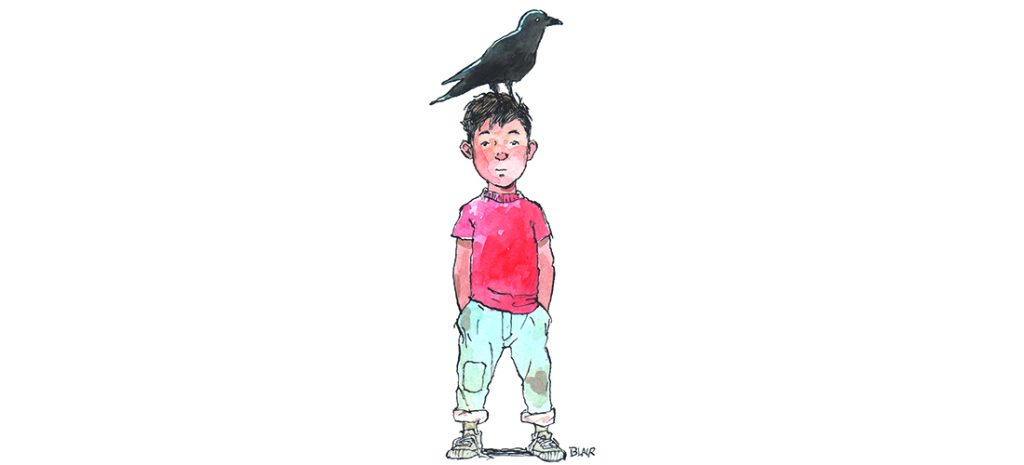
Without a moment’s hesitation, he replies, “Well, when I die, I want to be a bird.”

Caught somewhere between laughing and crying, I say, “That’s such a nice idea.” And then, because there is still the sign to think about, “You like firefighters a lot, too.”

“Yeah, firefighters, Mommy!” he agrees.

His words, of course, stay with me the rest of the day. After some thought, I realize that the idea must have come from a trip to the Bog Garden months before. He and I had walked hand-in-hand on the trail while his infant sister rode along strapped to my chest in the front-carrier. We fed the ducks, called for owls, noticed the chickadees hopping on their tiny feet, and, toward the end of our walk, came upon a crow that had died. To my surprise, Owen became tremendously emotional, refusing to leave the bird’s side. And because it’s almost impossible to carry a crying 3-year-old down a steep, muddy trail with one baby already strapped to your chest (If you’ve been there, you know), I had no choice but to stay — and breathe — and discuss the afterlife of the crow.

While I believe in God, I am not a churchgoer. I look for God in nature, love and moments of stillness. Moments such as sitting on a muddy trail, holding my babies and trying to make sense of loss in such a beautiful world.

I don’t pretend to actually know what happens to crows after they die. And yet, I can’t bring myself to leave him with that helpless feeling of uncertainty. So instead, I share with Owen bits and pieces of what I hope happens. “We are only seeing this bird’s body. Its soul is in the air all around us,” I say. “You have a soul, I have a soul, and this bird has a soul, and souls live forever. This bird’s soul may even come back as another bird one day.”

He seems to take this in and process it, asking through sniffles and staggered breath, “What kind of bird, Mommy?” I feel almost paralyzed with the awareness and responsibility of how much weight my words carry for him. It’s not until six months later on the first day of preschool that I discover his words carry the same power for me.

Since then we’ve talked a lot about birds. We’ve got bird feeders, birdhouses, birdbaths, you name it. There is absolutely nothing better or easier than going to feed ducks, geese or swans with my now 5- and 2-year-olds. We do it so often that it’s become our own little religion.

Certain things about birds I hold sacred: Red birds remind me of my Mema, yellow birds remind me of my Grandma and, when I see these birds in our yard, I believe they are my grandmothers coming to check in on us. Or maybe to remind me to be still, to look up, to breathe.

And I agree with Owen: When I grow up (and eventually die) I want to be a bird.

It reminds me of that iconic line from The Notebook, “If you’re a bird, I’m a bird.”

But seriously, please God, let me be a bird. I want nothing more than to navigate eternity with my children’s wings flapping by my side.  OH

Sarah Ross Thompson lives in Greensboro with her husband, John, and her children, Owen and Ellie. A psychologist by training, she finds getting lost in the woods and writing little stories to be two of the greatest therapies.

O.Henry Ending

O.Henry Ending

Good Grief

An aunt’s legacy of funeralizing lives on

By Cynthia Adams

On the occasion of my Great Aunt Fola’s death, we funeralized.

This was a term coined by her maid, Ella. Funeralizing, according to Ella, meant cooking and baking (in anticipation of drop-ins, primarily family, friends and neighbors who would come by in order to pay their respects). This required being sure there was cold chicken, iced tea and pound cake for anyone who stopped by before or after the formal service. (Funeralizing, she would explain, always makes you hungry.)

It meant earmarking ample time for the first public phase of grief — reminiscing, remembering and mourning the dead with all of those drop-ins. Which required, too, being sure your best (black, navy or gray) funeral clothes were cleaned and prepared, and the home was readied “to receive.” 

And, of course, funeralizing included wearing your bravest face at the wake, plus standing at the funeral home in the “receiving line” with the family as mourners wept and made the loss their own.

We funeralized first when Ella died, and we followed suit with Fola.

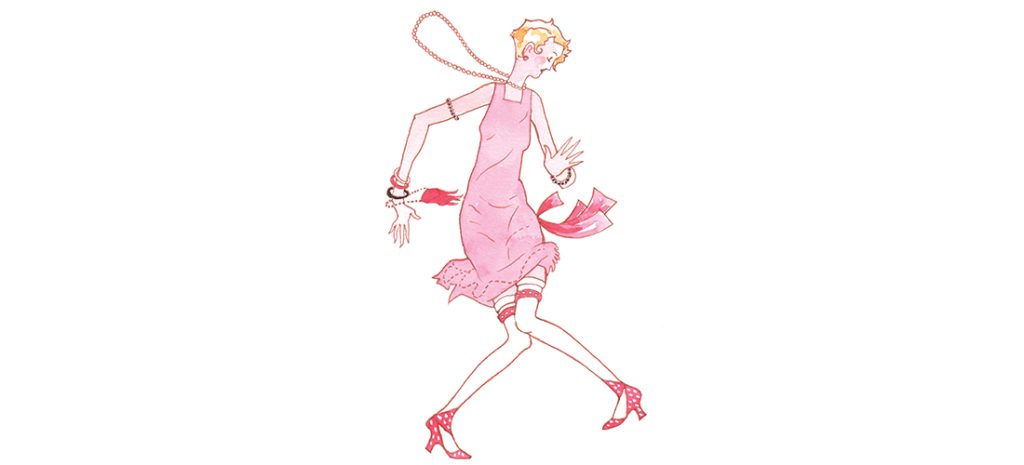
Fola McClellan Williams, born in 1904, was the youngest child in a Scotch-Irish family in Union County. Her sisters became homemakers. Her brothers, businessmen. But Fola, with strawberry blonde hair and bright blue eyes, was a child of the modern age. She was a Flapper.

Fola dressed and danced prettily. She was the first woman in Monroe to drive a car. She deliberately married late and was childless. Fola shunned health fads and cooked “with seasonings,” a term for the liberal use of fatback and salt in a pot of greens or beans. 

She became a buyer for Belk at the original Monroe department store. Fola took the train to New York City for buying trips, with hat and gloves — plus a tiny salt shaker tucked into an alligator purse. Unconstrained by traditional housewifery, thanks to Ella, she became president of the Business and Professional Women’s Club, and traveled.

Fola was a consummate lady, but cussed under her breath if the occasion demanded. It was her lifelong habit to enjoy a happy hour, and neighbors and friends often joined her. Upon her death, Fola relegated her worldly goods to the women in the family. Among other things, I inherited her souvenir shot glasses (including one depicting the World Trade Center, and another which looks like a thimble, engraved with “Just a Thimble Full”).

At her funeral, no less than John Belk, son of Belk founder William Henry Belk, was one of five men to eulogize her. Fola’s elderly Baptist minister dramatically cleared his throat before describing her as “a feminist.” He entreated God to overlook this aspect of an otherwise God-fearing woman, pointing out that “she wasn’t obnoxious about it.”

As the minister helpfully warned God, “Watch out for Fola in Heaven, for she has her own ideas about things,” one of my sisters grabbed my kneecap and hissed. Our mother refused to look at us, keeping her eyes fixed upon a spray of pink flowers.

The rheumy-eyed minister had been partly right. Fola was a woman who had her own ideas. She volunteered for good causes, was a town booster and was unapologetically progressive. 

The speakers at her funeral were also right. Our aunt was an anomaly:

Fola resided in her home town till death.

She didn’t think somewhere else was better than where she was — small-town, North Carolina.

She collected a gold pin from the company where she began her career 50 years earlier.

She remained with the man she finally chose to marry.

When things went wrong, Fola didn’t think it was up to somebody else to fix things; instead, she figured she was somebody, and did something.

After the eulogizing, my sisters and I accepted the tone-deaf minister’s sympathies. Although I later cussed under my breath like Fola might have done, I still murmured courteous thanks to him on the church steps. 

This was funeralizing, after all. Fola would have insisted upon nothing less. OH

O.Henry Ending

O.Henry Ending

The Chili Queen

The prize is in the pot!

By Barbara Rosson Davis

It has been widely reported that capsicum spices make one wickedly hot. Even dreams catch fire! Billy the Kid, a lover of chili, once supposedly said “Anybody who eats chili can’t be all bad . . . even when the bed-linens tend to levitate after eating three bowls.”

This chili tale is not one of enraged cannibals butchering conquistadors, seasoning them with chiles, cinnamon, cilantro, cocoa and corn, simmering the lot, then feasting. Rather, it’s a spicy story of a “Chili-Cook-off” that takes place at the original — and no longer in existence — Roosters Gourmet kitchen shop on State Street.

Chili, the concoction, with or without beans, has many versions. Recipes abound — some guarded, some misguided and some worthy of a prize. Thousands of known chili-pepper varieties exist, ranging in hotness and assorted colors. “Carolina Reaper” (grown in Rock Hill, S.C.) is a hybrid cultivar, rated the world’s hottest pepper, as referenced in Guinness World Records, circa 2012.

At Roosters, proprietor Mary James Lawrence bags the spices I’ve selected and points to the newly-arrived Calphalon pots, the largest of which catches my eye. But the price of $145 is beyond my budget.

Then I see a sign that tempts the competitor in me: “Enter Roosters’ Chili Cook-off and Win the Pot!”

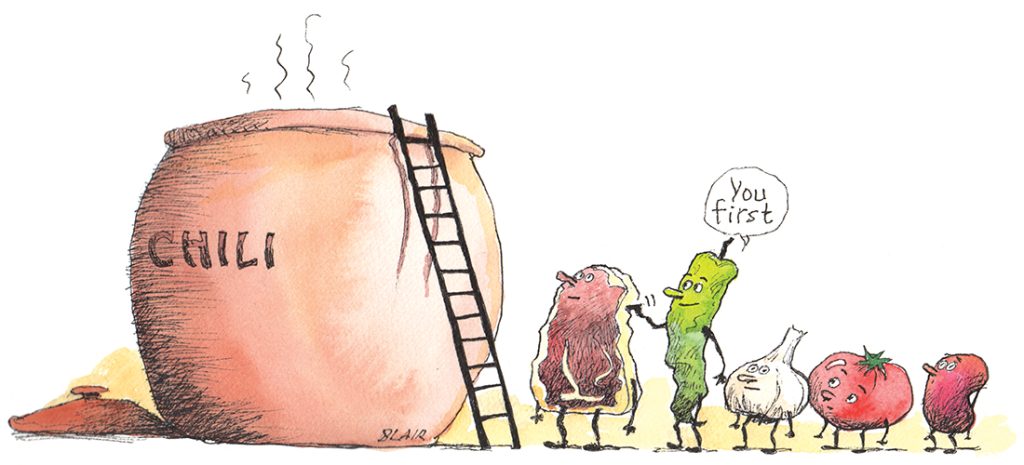
Fortune favors the brave. I fill out an entry form, fire up the brain, chili on my mind, and go home to simmer some beef. Roosters’ contest requires a recipe plus a sample of the contestant’s homemade chili to be judged by local chefs and restaurateurs. If my chili is going to stand a chance of winning, it has to be truly “after-burner” distinctive, mouthwatering, and so irresistible the Judges cannot stop eating it. Damn the mouth, defy the stomach! I add some kicker-ingredients: authentic Spanish chorizo, smoked (hot) pimenton (Spanish paprika), Tio Pepe Fino Sherry, tons of garlic and an assortment of fresh chiles: Anaheim, jalapeño, habañero, serrano, poblano and pasilla. The beef is grass-fed, Guilford-county-raised, simmered for hours in chili powder, cumin, cinnamon, onions, oregano and garlic, plus chiles, with a whole bottle of Corona beer and more sherry. In the morning, I add sautéed chorizo chunks, more onions, fresh peppers, smoked paprika, dark kidney beans, a can of enchilada sauce and tomatoes.

I then let my chili meld its aromatic flavors for two days and serve it with chopped fresh cilantro and three shredded cheeses melted on top.

Judgment day arrives: Twenty contestants and onlookers surround the tasting table at Roosters. The five judges sample — and re-sample — each recipe from numbered bowls. I have no idea which bowl holds my chili as the judges taste, nod and whisper. Their eyes begin watering . . . Mary James announces, “Only one female entry, folks.”

Me? Up against a passel of good old Southern boys? More buzz. Thirty minutes go by. Now I’m sweating. 

Finally, after conferring with the judges (for what seems eons), Mary James announces, “It’s unanimous! — Number four is the winning chili!” She smiles at me.

“Congratulations to Greensboro’s Chili Queen!“ she beams, handing me the huge Calphalon pot. My eyes start to water, but not from chiles.  OH

A native Californian, Barbara Rosson Davis is a writer living in Greensboro since 1979. A lover of chili, she concocts new versions of her original winning chili, whatever the season.

O.Henry Ending

O.Henry Ending

Halfway And Home

“Making a life around here”

By John Adamcik

“He ain’t from around here,” my new friend said as she introduced me to others.  Although it’s been over 10 years, I remember her smiling just enough to inform me that she was joking. Mostly. After all, I had failed the shibboleth by mispronouncing her town of Sophia (I still couldn’t tell you how to pronounce it). And, in her favor, remnants of my Michigan accent told the tale plainly to everyone I met. Still, I was trying to endear myself to these people.

A few months later I revisit the topic with her. “When will I be here long enough to be from around here?” I ask.

“Never,” she says. She points to her husband. “He’s been here over 40 years, he still ain’t from around here.”

He nods. “It’s true,” he says, nonplussed. 

Around here.

Approaching our 20th anniversary of making the Piedmont Triad our home, my family still ponders whether we qualify as being part of “around here.” Admittedly, we’ve been welcomed by the community and engaged in the community. We’ve done our part to strengthen the community. We feel at home.

Our children attended grade school through high school around here. They played sports, joined scouts and made lifelong friends. They worshipped God around here. As our children move forward to new places and new careers, my wife and I reflect on how blessed we have been by all the people “around here” who call this their home and have made us feel welcome.

When we moved here, family and friends asked us where we had planted roots.

“Halfway,” we answered.

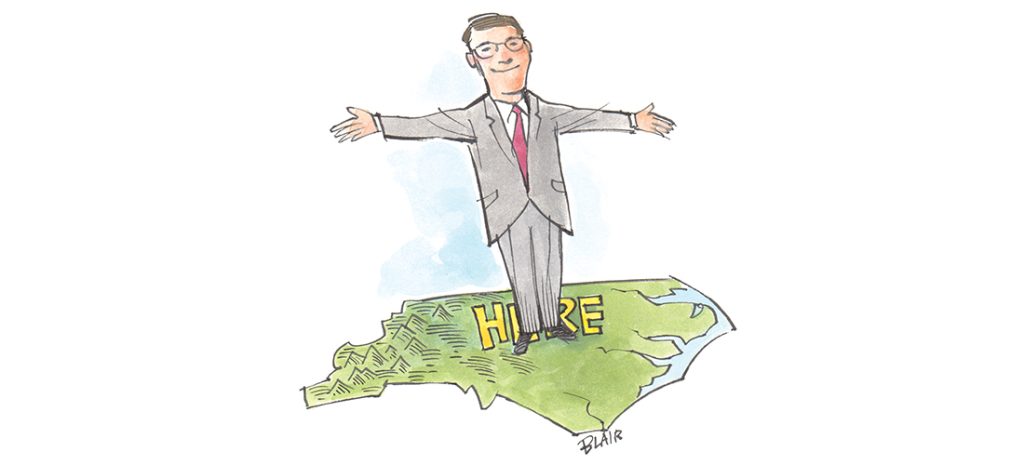
It was true. Halfway between family and friends in Michigan and Florida. Halfway between the mountains and the coast. Halfway between the southern and northern borders of our adopted state. Here in southwest Guilford County, we were even halfway between many of the places we frequented in Greensboro, High Point and Winston-Salem. Halfway between closing on our home and our actual move-in date, a memorable ice storm hit the area and knocked down several trees in our new yard, splitting the Bradford Pear in half.

We were halfway in elevation and in weather patterns (according to our observations and at least one reputable seed catalog). We were also halfway in the biblical tracking of a, “three score and ten years” lifespan.

Reflecting on this milestone, I’m reminded that we hadn’t been here long when we realized this community is not at all halfway. Rather, we are at the center. The center of land and space and culture and dreams and life. The center of the hope of growth and of resolute determination.

Like us, thousands upon thousands will be coming to make new homes “around here” as the legacies left by generations of textile, furniture and agricultural pioneers pave the way for a future of new industry. I look forward to helping others plant roots around here.

My family and I are privileged to be around here and to have invested our time in this community. We have grown in ways we could not have imagined. We will celebrate with neighbors, with friends and with family that we are not halfway. We are home.   OH

John Adamcik and his wife Jeanneen live with their family in High Point. John enjoys his role in human resources with a Triad-based nonprofit human services religious organization. In addition to ministry, writing, speaking, and hosting his podcast (Fore Yore Lore), he can be found accompanying Jeanneen to craft shows as public relations for her vintage craft jewelry business.

O.Henry Ending

O.Henry Ending

Waffling Over Keto

Too much of everything might result in something edible

By David Claude Bailey

When my Pennsylvania Dutch mother went into the kitchen, forget about “a little of this and a little of that.” Salt was plunked into the pot using three fingers and her thumb. When she seasoned her iconic chicken’n’dumplings with black pepper, you could smell it two rooms away. A pinch was something I got for saying the wrong thing at the wrong time. And yet she was a marvelous and adventuresome cook. And I, the apple of her eye, landed not far from the tree.

After marrying my high school sweetheart at 19, I learned to cook because Anne, my bride, had an 11 o’clock class. By the time she got home, the house would be redolent with my inimitable Sicilian spaghetti sauce. (The secret was too much of everything but ground beef, which we couldn’t afford.) “Garlic is a flavoring,” she’d say, “not a vegetable.” Or, “Tabasco is not your — or my — best friend.” It was much later in life that I actually became a reliable cook.

Having lost my job in 2009, I got on as, first, a dishwasher, and then a backline chef, at Print Works Bistro. There, I learned some restraint and how to follow a recipe. Nowadays, I, in fact, do the lion’s share of cooking, with Anne, by far the superior chef, often putting me to shame. Maybe that’s because I haven’t lost my who-needs-a-recipe spirit and, like Mom, still think exact measuring is for sissies.

Carb-conscious, we go on and off the Keto diet — the one where, counterintuitively, you lose weight eating butter, heavy cream, eggs, bacon, cheese and anything else loaded with protein and saturated fat. Meanwhile, we bid adieu to our old friends, sugar, wheat flour and potatoes — which allegedly trigger weight gain and speed the onset of diabetes.

Whatever. Any diet that embraces pork rinds and favors whiskey over beer is fine with me.

Still, we missed the comforting carbs of waffles, pancakes and biscuits for breakfast. So one Sunday morning while Anne slept in, I decided to surprise her with Keto-compliant crêpes. After browsing a dozen or so gluten-free recipes online, all requiring exotic ingredients (tapioca, millet, sorghum flour, potato starch and what the hell is teff?), I started rummaging around in our pantry. Anne had bought some almond flour and coconut flour that she baked into marvelous cakes, so into a bowl went a quarter cup each. I found some brown rice flour and white rice flour, so two more quarter cups were tossed into the mix. I had no idea what xanthan gum was, but had seen it online and we had plenty, so in went several heaping tablespoons. After beating eggs and milk and butter together, I added the ersatz-flour concoction and ZAP!

The result was a thick slurry that I could have picked up with the immersion blender and carried to the compost heap. And that’s probably what I should have done. Worried that my little handheld appliance might short out or be absorbed by the blob, I poured in more milk, some cream, water. RRRrrrrr. RRRrrrrr. RRRrrrrr.

But the blob simply grew and started wiggling threateningly.

I dumped it into a bigger bowl and took a wire whip to it with the idea of beating it into submission. I doused it with more and more liquid until the blob loosened up, no longer adhering to what I was whipping it with. I extracted a hunk from the quivering mass and tossed it in the frying pan. Even after flipping it, the gelatinous glob refused to flatten. When I pressed down on it, the blob squirted a gob of creamy stuff at me.

Not yet willing to give up, I cranked up the waffle iron, thinking of it as a submission chamber. The blob hissed. It sizzled. And made fairly decent waffles! Especially when served with ice cream and chocolate syrup.

Mom would have been proud.  OH

O.Henry’s contributing editor, David Claude Bailey, is known for his kimchi milkshakes.