Wandering Billy

The Island of Misfired Toys

Naughty or nice, you didn’t want to wake up to these gifts on Christmas Day!

By Billy [Eye] Ingram

One of our family Christmas traditions was all of us showing off those predictably lousy presents from various older relatives, probably the most revolting being a used baby changing pad my sister-in-law was horrified to unwrap. On the other hand, there were gifts that young and old alike eagerly anticipated Santa would deliver. Careful what you wish for: More than a few turned out to be potentially catastrophic, lethal even.

Gilbert Chemistry Experiment Lab

Gilbert Chemistry Experiment Lab No. 12006. Photograph  Courtesy of Science History Institute

I thought the Gilbert Chemistry Experiment Lab my older cousin received in 1965 was the coolest thing ever, most likely purchased from Charlie Plummer at Friendly Center’s Fleet-Plummer Hardware where they always stocked a gloriously lavish toy selection over the holidays. Even the illustrated metal box was boss looking, depicting two hearty boys, younger and older brothers one surmises, exploring a better life through chemistry. Inside that compact, clasped canister was a row of test tubes, scales and two walls of minute glass jars filled with powdery substances with exotic names like calcium oxide, cobalt chloride and sodium ferrocyanide, a less toxic cyanide — all together a dizzying array of potions and poisons. There was even sodium carbonate, basically Alka-Seltzer, for mother after she realizes the potential chemical weaponry her offspring might be scheming to unleash upon the neighborhood. Come to think about it, has anyone seen little Fluffy lately? That noxious apparatus was lots safer and saner than its predecessor.  In 1950, parents would have ventured out to Harry and Faye Rimsky’s Tiny Town Toyland on South Elm to locate A.C. Gilbert Company’s U-238 Atomic Energy Lab, aka “The Most Dangerous Toy in History.” A mad scientist’s dream come true, it came with a Geiger counter; a spinthariscope for observing decaying atoms; a Cloud Chamber assembly; alpha, beta and gamma sources of radiation in addition to four vials of actual radioactive uranium ore; plus an instruction booklet where Mandrake the Magician explains how science works. All the contaminates and gaseous emissions a glowing boy needs to make the family home go poof!

Jarts

a shot of some vintage lawn darts somtimes called JARTS. One of each color inside the yellow ring in a back yard setting.

Sold at Sears on Eugene Street in the late-1960s, Jarts was a set of 1½ foot tall, aerodynamic, metal, pointy darts, the kind you would throw in a bar, only many, many times larger. When I was about 12 years old, the jolly one brought us a box of these lawn darts. Did we javelin those heavy, spiked missiles at each other threateningly or use them as weapons against neighborhood kids? Of course we did. Judge if you must, but dodging lawn darts made us more resilient to life’s slings and arrows.

Clackers

One of the most dangerous devices ever to hit the toy market, Clackers were made right here in Greensboro in a small factory on Smyres Place in the early-1970s. An immediate sensation, the inevitable risk of injury was just one of the reasons they flew off the shelves. Clackers consisted of two dense, colorful acrylic balls connected by a small rope on a stick, allowing kids to “clack” them together by moving their hand up and down vigorously and with precision. The idea was to slap those globes together above and below your hand, making the loudest possible noise. When you eventually missed, those rock-hard balls rocketed into your wrist and knuckles, resulting in bruised and occasionally cracked bones. Ironically, the better you were at this rhythmic hand jive, the more dangerous it became. Wear and tear on those synthetic globes caused clackers to crack, sending shards flying in all directions, leading to a marring little Christmas for more than a few youngsters.

1972 Ford Pinto

Can you imagine anything more exciting than a brand new car in the driveway, wrapped in a pretty red bow, making it a December to Remember? Not if the year was 1972 and the automobile was a Ford Pinto, known for bursting into flames whenever they were rear ended. Twenty-seven drivers were roasted alive and numerous others seriously injured any time the gas tank was struck. Pintos built in Canada had an inexpensive part attached to the gas tank that prevented this very problem. It’s a mystery why the automaker didn’t similarly upgrade its American-built models. A friend of our family owned a ’72 Pinto, purchased from Bob Dunn Ford on Murrow Boulevard, that was plowed into from behind but he somehow spared a fiery demise. He happened to be pulling out of the gas station after a fill-up so there was no oxygen in the tank to allow for combustion.

Mr. Coffee Machine

Also in 1972, TV commercials starring Joltin’ Joe DiMaggio introduced America to the Mr. Coffee Machine, a tremendous leap forward for brewing java at home. An electronic marvel of glass and plastic replaced the simplistic percolators folks had used since the days of old. But with progress came growing pains, and by growing pains we’re talking family homes going up in flames. In the 1970s and ’80s, there were major Mr. Coffee recalls due to the devices being a fire hazard. As late as a decade ago, Mr. Coffee was again recalled for spewing hot grounds and scalding water on users. Even today, coffeemakers in general are considered one of the most dangerous kitchen appliances. Yet another reason Starbucks is a multibillion dollar business.

Easy-Bake Oven

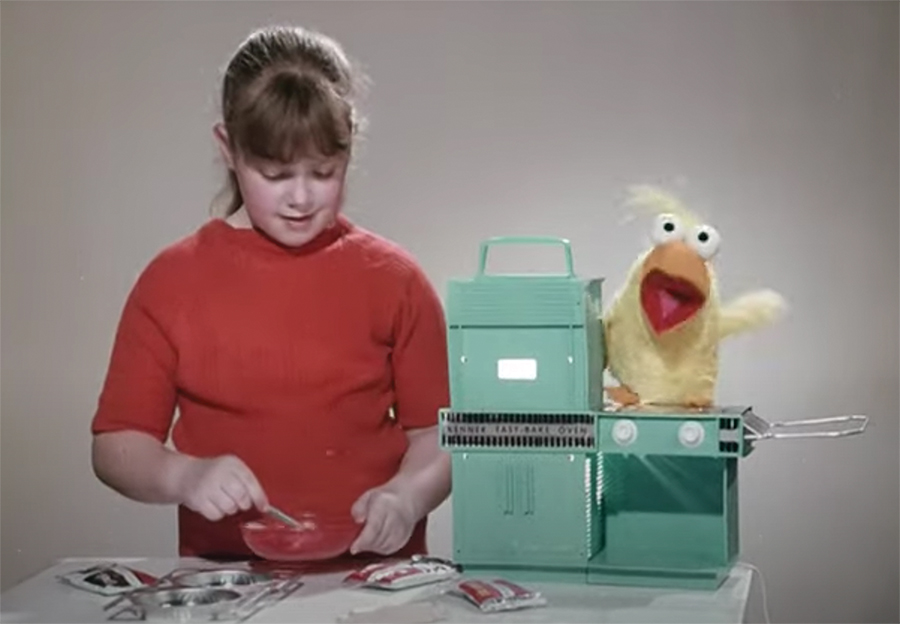
Thanks to Warren’s Toyland at Lawndale Shopping Center in 1968, our neighbor, Toot King, discovered an Easy-Bake Oven under the tree, 5 years after the toy debuted. Given the technology of the time, it seemed a pretty safe operation. Two 100-watt bulbs cooked itty-bitty cakes. The biggest drawback was that the itty-bitty mixes cost as much as the real thing. In 2006, a new Easy-Bake Oven design was introduced that made January headlines with kids getting their itty-bitty fingers and hands trapped inside the baking chamber, leading to dozens of second and third degree burns.

Aqua Dots

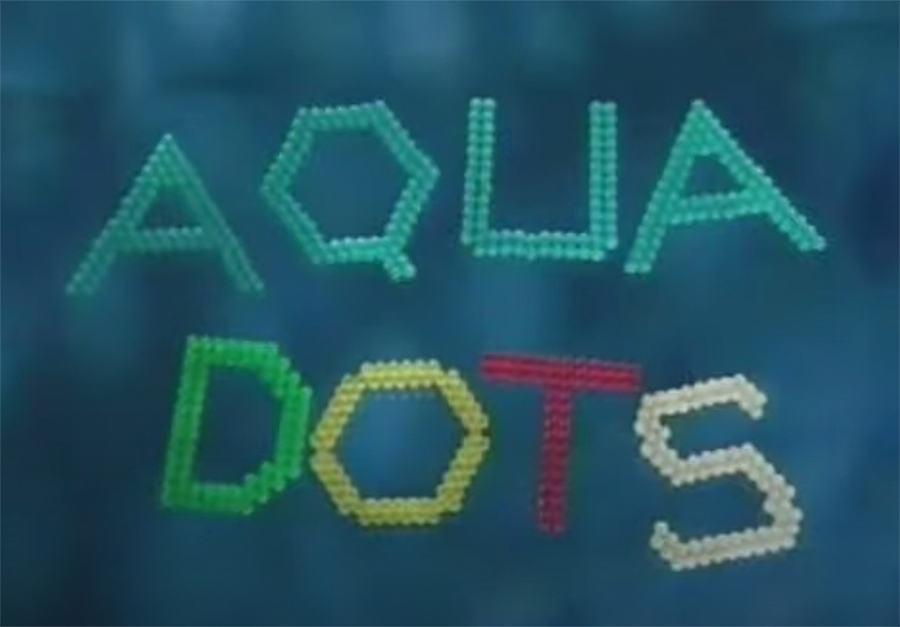
In 2007, Toys “R” Us on High Point Road sold Aqua Dots, candy-colored beads that could be arranged in any pattern and, when wet, fused together to create a necklace or a bracelet. They were swallowable and laced with gamma hydroxybutyrate (GHB), aka the “date rape drug.” One shudders to think how many parents reading this now are thinking, “You mean I could be sedating my overexcited brats on Christmas Day and they took that of the market?!?”

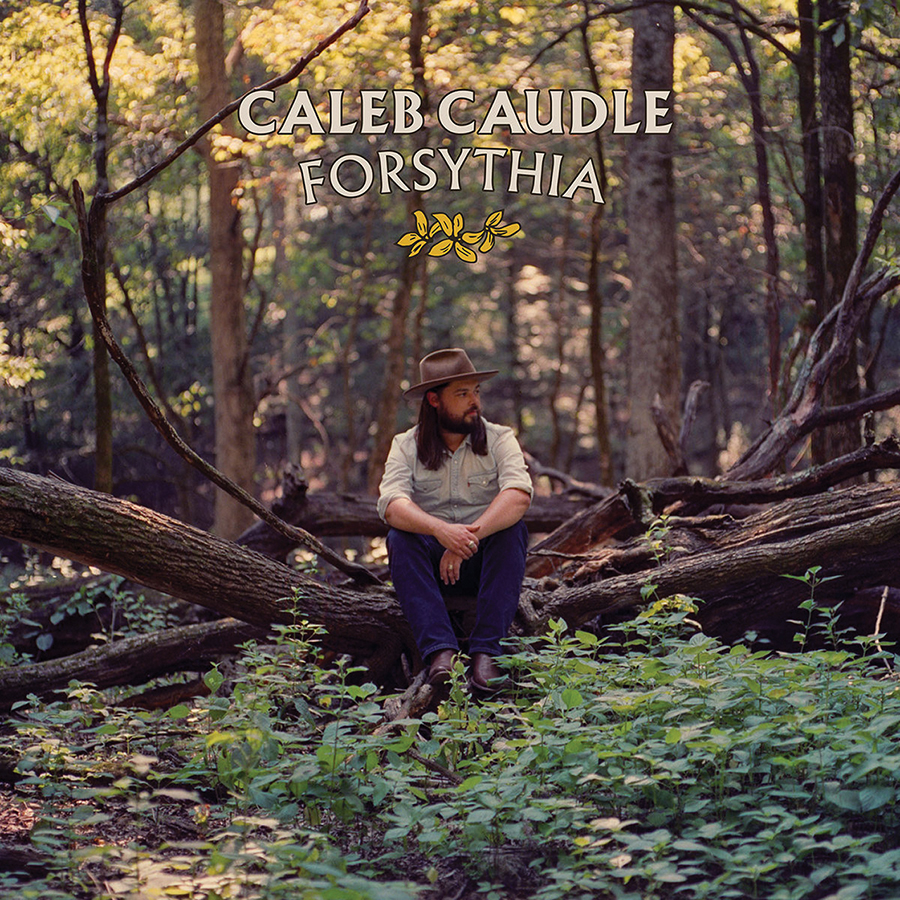
A gift you do want this season (no joke): As I write this, local singer-songwriter Caleb Caudle is No. 1 on the Alternative Country Specialty Music chart with his album, Forsythia, that he describes as “somewhere where gospel, folk, country, blues, all that stuff lives together.” Rolling Stone raves about Forsythia saying, “There’s something very comforting about listening to it, but not in a cheap or obvious way. It’s more hard-won.” It’s an exquisitely produced album that resonates. I didn’t grow up listening to music like this, yet Caudle’s melodies sound like home. Available on the usual music platforms such as Spotify and Amazon.  OH
Billy Ingram is O.G. — Original Greensboro. His latest book, EYE on GSO, is a collection of stories (mostly) about Greensboro originally published in O.Henry and other publications. A great gift idea, available where books are sold and on Amazon.

Wandering Billy

Saved by the Belles

The women who saved Blandwood from becoming history

By Billy [Eye] Ingram

“Home wasn’t built in a day.”
— Jane Sherwood Ace

On a morning in 1966, bulldozers were poised to raze a bloated antediluvian structure on a prime block of downtown Greensboro real estate. The building, leaking and collapsing, sat perched on a hill in one of the last residential neighborhoods in the shadow of the Jefferson Standard Life Insurance Building. For almost 70 years, this compound served as a lonely outpost for the Keeley Institute, a live-in rehabilitation center where drunks and drug addicts were promised “That New Freedom” after weeks of four-times-daily injections of bichloride of gold, laced with alcohol, strychnine, apomorphine and willow bark.

With downtown bursting at the seams, an expansion of businesses to the west was only natural. Kroger had its eye on the lot under the Keeley Institute, so a crew was dispatched to clear the land. And they would have, had socialites Anita Schenck and her mother, Mary Lyon Leak Caine, not stood between the heavy machinery and that sacred place steeped in ceremony, where the Civil War came to an end in North Carolina, a once stately manor they knew as Blandwood.

Fellow Garden Club member Virginia Zenke, who with her husband, Henry, was inducted into the International Interior Design Association’s Hall of Fame in 2002, had a nagging suspicion Blandwood Mansion’s architect had to have been someone of prominence. As a trend-setting decorator of the ’60s, she had an acute eye for style. Perhaps if a pedigree could be proven, there might be more of an interest in saving the estate. Peering from black-framed round glasses, pencil protruding from her thick dark hair, she pored through books and reference materials attempting to solve the mystery of who designed Blandwood.

That moment of Zen(ke) came in 1966, when Virginia discovered the architect was none other than Alexander Jackson Davis, America’s leading designer of country houses, known locally for our gentrified State Capitol. He also left his mark on UNC Chapel Hill, where the playfully austere facades of Old East and Old West dormitories and the four-columned roman splendor of the Playmakers Theatre are nothing less than iconic. All of his creations were lavished in the Italianate and Greek Revival genres he was famous for. His designs for Blandwood are preserved in no less than the Metropolitan Museum of Art.

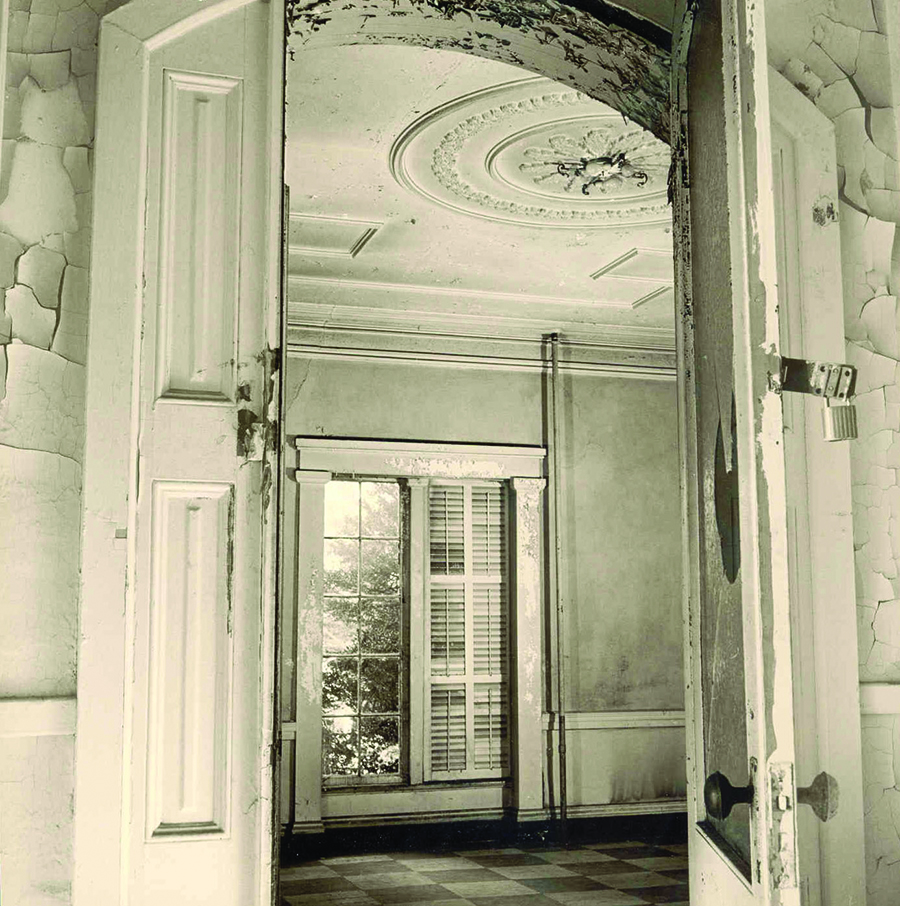
This was a home like no other in America. Reminiscent of a Tuscan villa, it featured two large parlors with garden-view bay windows on either side of an imposing three-story tower made inviting by three enormous archways that circumambulate the front porch. Completed in 1846, it’s the oldest building on an original foundation in the city, one of the first towered Italianate villas in the nation and the earliest surviving example.

With Blandwood’s important historical lineage confirmed, the ladies who lunched became the ladies who launched. Bulldozer stoppin’ grandma Mary Lyon Leak Caine called to order the first meeting of the Greensboro Preservation Society on October 31, 1966, to foster, “a respect and reverence for the past by preserving landmarks in Greensboro including streets, public buildings, churches, houses, parks, trees or any existing examples of culturally, historical and architectural value to the city, state and nation.” No budget, only a zeal to identify cultural touchstones that needed safeguarding, they quickly came to the realization, however, that if Blandwood was to be saved, they’d have to do it themselves.

First efforts were strictly DIY. Green Thumb Garden Club members came wielding pruning shears. Along with Greensboro Jaycees and Thomas Tree Service, they tidied up the one block area, unearthing varieties of gingko, Japanese lacquer, linden, box elder, white pines, oak, maple and mulberry trees. On March 13, 1967, the state’s First Lady, Mrs. Dan K. Moore, was given a tour of the dilapidated Blandwood before heading to a luncheon a block away at the home of Otto Zenke, who partnered with his brother Henry to found an interior-decorating firm that gained an international reputation.

Modern architect Edward Lowenstein, known for the Greensboro Public Library (1964) and YMCA (1971) buildings as well as homes in Irving Park and Starmount, was enlisted to oversee one of the first modern-age adapted reuses of an American historic property.

Seemingly forgotten on the part of the public was any knowledge of the historical significance attached to this former residence of Governor John Motley Morehead. The only governor of the state to hail from Greensboro proper, Morehead was an early champion of the railroad at a crucial time in its development. He also championed a public education system that included the disabled, women and slaves, a concept many considered heretical.

“The Father of Modern North Carolina” had one eye focused firmly on the future. In 1854, as first president of the North Carolina Railroad, he undertook an aggressive expansion of what he called “the tree of life,” connecting every corner of the state to the wider world. As a result, a delicate “City of Flowers” morphed into the “Gate City,” defined by a robust rail system that, not coincidentally, utilized Greensboro as its hub.

As talk of secession grew louder in 1861, Morehead was a Peace Convention delegate, hoping to avoid war with the north. After hostilities broke out, though, he did serve in the Confederate Congress and entertained officers as they marched headstrong to Richmond, then again when they returned in retreat. At war’s end, Greensboro served as a decommissioning depot with Union officials occupying all of the nicest homes. Morehead’s daughter, Letitia Morehead Walker, referred to Blandwood’s 1865 houseguest, Major General Jacob Dolson Cox, as, “a most courteous and elegant man” who, nonetheless, forced her to witness what for her was a macabre sight, a triumphant parade of occupying forces.

After John Motley Morehead passed away in 1866, his daughter, Emma Victoria, and her husband, General Julius A. Gray, became lord and lady of the manor. He had been the commander-in-chief of North Carolina’s repelling forces during the War of 1812. When the British invaders heard his regiment was in their path, they decided to come to terms rather than face this fearsome foe. Gray initiated the successful effort to preserve the site of the Battle of Guilford Courthouse, saved Greensboro College and founded the Greater Greensboro Chamber of Commerce. Gray died in 1891, his service held at West Market Methodist Church. Five years later Blandwood was deeded to the Keeley Institute.

Guilford College bought the property in 1965 along with Arnold Schiffman, who took over Schiffman’s Jewelers from his father, Simon. They put forth a proposal to save the estate. Former mayor Robert Frazier had appealed to legislators for years, but this shady lady was not an obvious candidate for a long term relationship, her very uniqueness a turn-off. No white column décolletage or proper Southern brickwork? Besides, wasn’t that the joint shooting up addicts with weird serums?

On April 17, 1968, HUD allocated over $100,000 to put the ladies in white gloves and pearls within sight of their financial goal, and the rest followed quickly. A week later, after Boy Scouts cleaned and pruned the grounds, the Greensboro Woman’s Club hosted a public open house at Blandwood.

Joyous sounds of celebration have been ringing from the south lawn since 1970, when Blandwood Carriage House became a location of distinction for weddings and receptions, a state-of-the-art facility that has as its backdrop an ancient beauty where past and present coexist harmoniously. Live music, dancing, children’s laughter, business leaders congregating, a bride and groom’s exhilarating first hours as a married couple? They are all a living testament to those preservation pioneers who drew a line in the sands of time, to battles won against prevailing winds on a field of devastating losses.  OH

An excerpt from a story in his first book of (mostly) Greensboro history, Hamburger², Billy Ingram’s new book about the Gate City is entitled EYE on GSO available where books are sold or burned.

Wandering Billy

48 Hour Film Project

Lights, Camera, Panic!


By Billy [Eye] Ingram

“We’re a species that rushes through everything, then complains that time flies.”     Steve Maraboli

I recall reading an article by Jeri Rowe back in 2004 about The 48 Hour Film Project being held in Greensboro, the first city in North Carolina to host this worldwide competition that originated in Washington, D.C., three years earlier. The idea is that individuals or teams create a short motion picture, from concept to completion, in just 48 hours, with all teams starting at the same time — 7:30 on a Friday night, in our case.

First, some ground rules: The movie must run between four and seven minutes, contain a certain prop (this year was keys) and a line of dialogue (“Don’t lie to me”), plus a particular character (in this instance, a musician named Duane or Diana Fortran). Details may vary, but these are the general parameters, whether you’re making a 48-hour film in Greensboro, Rome, Lisbon or any of the more than 120 cities participating around the globe.

Over the last 18 years, this hambone has been lucky enough to mug for the silver screen maybe 10 times in various 48 Hour Film Project productions. This was my fourth for Evan Wade’s Stumblemuse Productions. Wade swears this year will be his final frenzy of filmmaking, which is hard to fathom given the enthusiasm he brings to the event. He’s served in one position or another almost every season, the last dozen as producer. “As I went through my 30s, feeling unsatisfied and looking for a new pursuit, I found a certain satisfaction and glee during the 48 Hour Film Fest,” Wade says. “The weekends are always highlights of any particular year, a great networking opportunity that keeps art alive in my heart, helps bolster my confidence as a leader while developing friendships that will last a lifetime.”

At the Friday evening kickoff this year, each team blindly selected two genres to pick from: science-fiction, comedy, western, film noir . . . you get the idea. Given a choice between drama or family film, we settled on the latter. It was decided I would play the lead — just my luck that I banged up my face a couple of nights earlier while avoiding tripping over the cat. Basically, I fought the wall and the wall won.

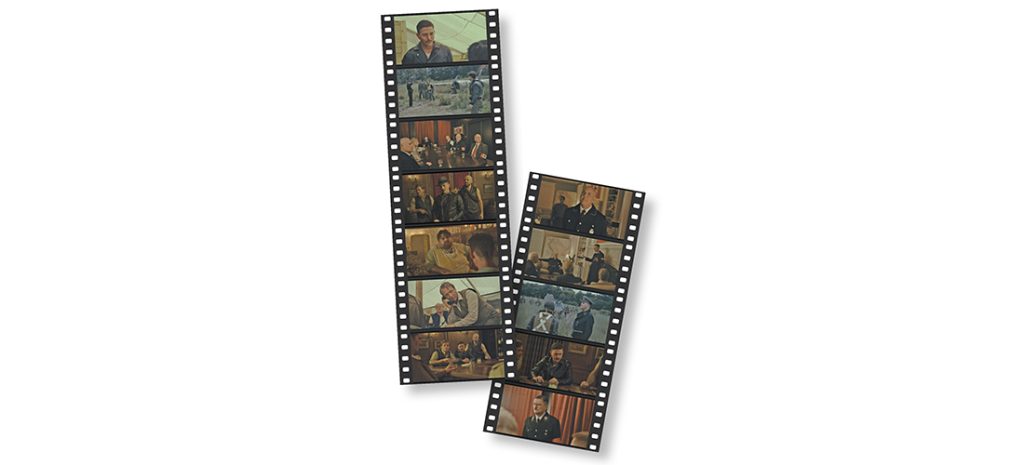
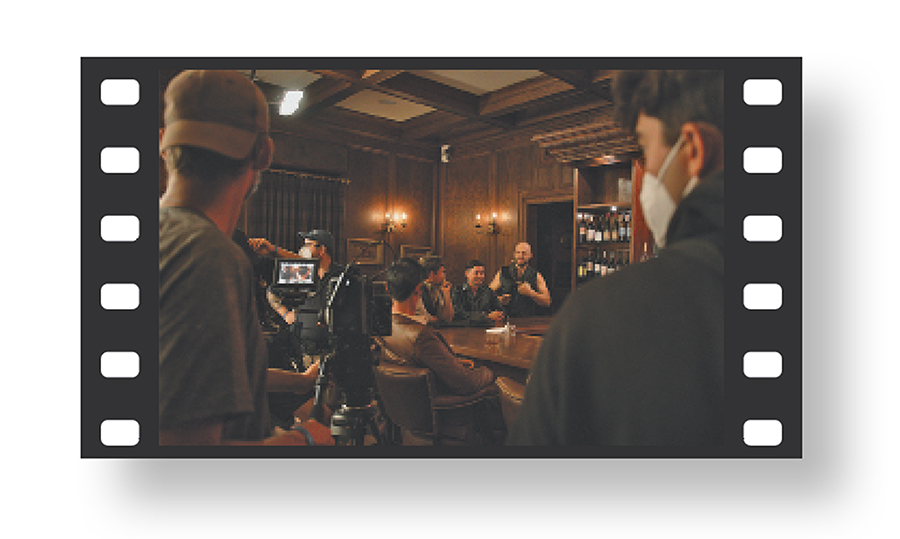
The next morning, cast and crew got together for the first time. Already there was turmoil. When an Italian restaurant was needed at the last minute, I suggested we decamp to New York Pizza on Tate Street where bar manager Gavin Holden was receptive to the idea of us filming there. This Slip ’N Slide approach to filmmaking is inherently exciting, developing characters and scenarios on the fly, in the moment. Fortunately, Evan Wade had assembled a team of top professionals with years of experience behind them. Director Ken Randall and Matt Amick, director of photography, engaged in guerrilla filmmaking at its finest. Under their pilotage everything looked and sounded pro all the way, moving deftly, quickly through scenes. After just six hours on Saturday afternoon we were done.

For my role — a washed up, one-hit wonder trying to convince his son to go into the music business — I was lucky to be partnered with a very talented actor, Chris Pierce. Our back-and-forth was more like stage acting, which generally requires eye contact, whereas with film it’s often advantageous to cheat a bit to the right or left of your co-star, showing more of your face to the camera. Together we ad libbed our way around the written word, with a lot of our funnier, off-the-cuff scenes ending up on the digital cutting room floor.

My character was a raspy, bitter, high-strung contrarian — basically a walking heart attack. Spoiler alert for a six-minute film: He has one. In the bar at NYP no less. Talk about an ignominious demise.

In my experience with making 48-hour films, anything that can go wrong will. Flexibility is essential to getting things done on schedule. When a location fell through, I suggested we regroup at my place nearby, a four-plex built in 1930 that has been a background for dozens of motion picture and TV productions.

Not so bad, comparatively. Another team lost a crucial cast member due to a car accident on Saturday, necessitating reshooting everything next day. And when the organizers say you have only 48 hours, they mean it. One group found out the hard way after turning in their film 30 seconds late.

Our own nail-biter came during post-production. “Everything seemed fine until the audio started getting out of sync,” Wade tells me, referring to the crunch Sunday evening, deadline rapidly approaching. “We laughed nervously. [Editor] Louis Bekoe frowns and we make the fix. It happens again. Ten minutes later, we watch the ‘final cut’ again, now all flustered, when [production assistant] Lisa Steele notices the required line is missing . . . at which point, Louis’ main computer crashes.” With only 13 minutes to spare, they somehow beat the clock.

Screenings of all 28 submissions took place at the Carolina Theatre the very next weekend. This year was the first for our new city producer Mike Dickens. For a position with loads of responsibility and no pay, he did a bang-up job of coordinating everything. When he’s not wrangling cinematic cats, Dickens serves as webmaster/digital operations specialist at UNCG.

A total of 15 films were selected for the “Best Of” night held a week later where awards were handed out in 13 categories. Our contribution, Chitarra’s Requiem, won Best Special Effects, while Best Film of 2022 went to those that are fools, which will go on to represent the Gate City at Filmapalooza 2023 with the possibility of a screening at the Festival de Cannes next year.

My personal favs this year were BUSK by Good Gravy Productions; Biggest Fan by Hot Batteries; Friends and Funerals, a comedy written, directed and edited by My Big Fat Fabulous Life star and dapper dresser Lennie Alehat; Reconsidered Ghosting by 13th Pygmy Productions; and Kawabunga Productions’ Grandpa’s House.

Best in show was, in my opinion, the genuinely hilarious National Sneak Some Zucchini Onto Your Neighbor’s Porch Day by Colonel Popcorn Productions (awarded Audience Favorite: Group A). Turns out there really is a National Sneak Some Zucchini Onto Your Neighbor’s Porch Day, celebrated the day after this clever amuse-bouche wrapped. (Some of these films are viewable on YouTube.)

Acting is mostly something to dabble in today, but I started out my professional career in my teens as a working actor. From 2003–2006, I was writing and appearing on programs for VH1 and Bravo, while, a few years ago, I was almost cast as a murderous sex pervert on Death Row for a cable network series. Very disappointed at not snagging that part — I was far creepier and infinitely more nauseating than the guy they cast!

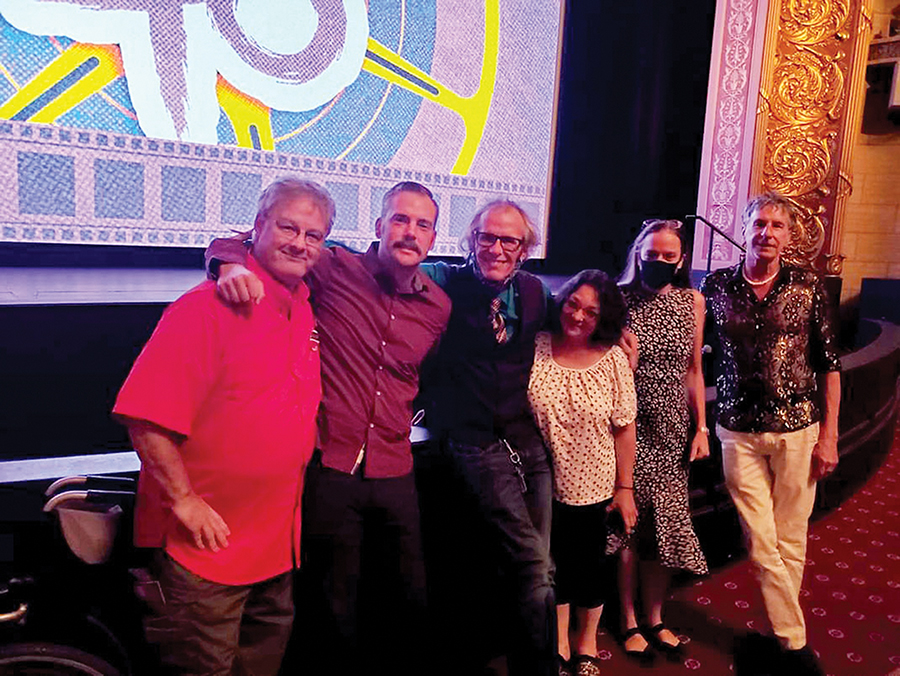
While Evan Wade won’t be at the helm next summer, hopefully some other team will recruit this scenery chewer for another wild weekend of frenetic filmmaking.  OH

Billy Ingram produced, directed and starred in his first television production at 11-years old, broadcast on The Kiddie Scene with Mr. Green in 1968 with a script lifted out of Cracked magazine. Find him on IMDb and watch his 2022 48 Hour Film Project at YouTube.com/watch?v=UNJFZRT8Y8E.

Wandering Billy

The Greene Street Music Scene

Hellraiser Haus raised no hell, but elevated musicians

By Billy [Eye] Ingram

“It was a killer spot in a strangely ideal location. One of the fanciest neighborhoods in town but with no actual neighbors at night. I still imagine that yard all packed out, a crowd sprawling out onto Greene Street.”   Katei Cranford

When I read about First Presbyterian Church’s plan to bring down one or more of the houses on Greene Street directly across from the chapel’s western entrance, I was relieved to discover those demolition plans did not include 711 Greene, known to a generation of Gate City indie music lovers as Hellraiser Haus.

For a fleeting moment in time, this cavernous four-bedroom, brick home was a DIY live concert stage, so named because there’s an exterior shot of the nearby church in one of the schlockiest movies ever made, Hellraiser III: Hell on Earth, where Greensboro (particularly around Lewis and South Elm) and the Triad were supposed to represent New York City. That alone should give you some idea of how laughably inept this unintentionally horrific production was.

Over the last 20 years, various dwellings on the outskirts of downtown and circling our college campuses have doubled as underground punk/experimental music venues — Karate Dungeon, TYP, Dogwood, Dude Ranch and Tuba House, a mid-2010s era crashpad so precarious you half expected The Wicked Witch of the East’s stockinged legs to be jutting out of the foundation.

Remind me sometime to tell you about running from the police with 9 inches of snow on the ground then taking refuse at Tuba House . . . on second thought, never mind.

Ironically, given the name, the most civilized of these rhythmic refuges was Hellraiser Haus. “I moved in around 2012 so [711 Greene] served as a music venue from then until 2018,” Ryan Stack tells me. “We were mid-20s kids living in that house, surrounded by a church across the street, a separate church to the left of the house, an outreach center. It was in a wealthy neighborhood and for some reason that house went to a bunch of kids.”

Stack had played in local bands such as Saucer and R Father for most of his life. “I think small scale venues help prop up larger venues,” he says. “If there’s not a grassroots music scene where you can go and play for cheap or free, then there’s nothing. You can’t build anything up from that.”

“That strip was a little oasis adjacent to downtown,” Yes! Weekly’s maven of music Katei Cranford remembers. “And, lord, that house was fancy. Like a soap opera set in 1980. Something about cracking a PBR on an exquisitely-tiled counter while punk bands thrashed out in the living room like a party scene out of a John Hughes movie — opulence and degeneracy intertwined.”

“Often neighbors walked by with their dogs or whatever,” Stack says. “They would be like, ‘We heard you playing music last night — sounded good.’” Without next-door neighbors, Stack says, they were “just a faint sound and a little bit of flavor in the neighborhood. Never ever got the cops called on us and we were there for about six years.”

Almost every Hellraiser Haus booking featured at least one band on tour, with all of the cash collected at the door going to the performers. “We never took any money,“ Stack says. “We focused on exposing new and young bands, pairing them with larger bands that were out on the road.” Eye attended Hellraiser Haus on a few occasions, most notably around 2017 for Instant Regrets, Bronzed Chorus, Basement Life, Taylor Bays, and The Kneads. The basement hangout was outfitted with a pool table and an arcade set up with dozens of vintage video games.

“There was a band from Japan called Mothercoat that did a really killer set at our house,” Stack recalls. “Ice Balloons with Kyp Malone from TV on the Radio played there. I remember going to work and stepping over him as I came down the stairs cause he was sleeping on the floor. We kept collecting mattresses and bands would come through and be like, ‘I haven’t slept on a mattress in months!’”

When promoter/performer Joe Garrigan revived GSOFest in 2017, Hellraiser Haus was naturally the launchpad: “For touring bands,” Garrigan says, “it was a better situation than playing at a club, then finding a place to crash after the gig.”

Stack fondly recalls his favorite evening, when Fat Wreck Chord label’s Night Birds played. “The place was slammed full,” he says. “The mosh pit got out of control and some dude went flying through the glass front door. He went to the hospital, the show went on, and all those nice punk folk donated exactly enough money to fix the door.”

“We had hip hop, folk shows, metal shows. I never felt like the space was disrespected.” Stack discovered that he and the 10 or 15 individuals living at Hellraiser Haus at various times were in harmonic convergence. “We were trying to do something for the music community,” he says, “and they were fully on board with us when we needed things.”

Shouldn’t be too surprising that Ryan Stack now lives in Glenwood where the music scene has been reignited at Etc.gso, formerly On Pop of the World, on Grove Street, a newly formed artistic collective booking resident powerhouses that never fail to rock, like Instant Regrets and The Old One-Two. World-renowned Eugene Chadbourne, possibly the 10th most famous person from Greensboro, will be performing at Etc.gso on Sunday, September 11.

Joe Garrigan is drummer for longtime grinders The Kneads. They’ll be at Oden Brewery on September 10, along with The Bleeding Hearts and The Eyebrows from Charlotte. Perhaps First Presbyterian could leave a door ajar in case anyone needs a place to crash.   OH

Billy Ingram has written 2 books about Greensboro, Hamburger² and his latest, EYE on GSO, has best-seller written all over it. In type so tiny you can’t read it but it’s there. 

Wandering Billy

Intentional Working

Dr. Tomi White Bryan’s latest book helps organizations develop leaders

By Billy [Eye] Ingram

“You are a magical, creative ball of energy pretending you aren’t.” — Dr. Tomi White Bryan

Over the last few years, Tomi Llama (Dr. Tomi White Bryan, Ph.D, J.D) has written three self-help books that transcend the medium, definitely not the “I’m OK, You’re OK” type of navel-gazing that allows one permission to plow ahead and let the world adapt to whatever underlying, undiagnosed psychosis they may have in play. A quick search for “Karens destroying McDonald’s” on YouTube will show you where that’s led us.

Bryan’s first two books, The Toni Llama Purpose Guide: Emotional Maturity as a Path to Your Divine Purpose and What Is Your Superpower? are essential reading for anyone struggling with understanding why people respond to conflict — or even success — and react the way they do. Her third book, Hating Myself Every Step of the Way, no longer available, is undoubtedly one of the rawest, most honest assessments of a life lived that I’ve ever encountered. (Full disclosure: I typeset and formatted two of those books.)

Published by Houndstooth Press under her actual name, Bryan’s latest, Emotional Intelligence 3.0: How to Stop Playing Small in a Really Big Universe, is aimed toward helping organizations, coaching- and talent-development folks to better pinpoint potential and existing employees’ emotional maturity in order to fast track their way to a more satisfying and productive workplace experience, a mindful evolution benefitting everyone in the loop.

This blurb from the back cover of Emotional Intelligence 3.0 sums it up: “Every human being is born with unlimited creative energy — then life marks us up with red ink, teaching us who we’re supposed to be instead of who we really are. Before we know it, our greatest birthright has been crossed out, leaving most of us believing, ‘It’s not safe to be who I am.’”

I was fortunate to talk with Bryan over lunch about her groundbreaking new book, which is really more of a system, and this was one of the most illuminating conversations I’ve had in a decade. Since little of that brilliance was coming from my end of the table, let’s let the author speak for herself . . .

Dr. Tomi White Bryan: I left my corporate job in January of 2021 and started working on Emotional Intelligence 3.0, a condensation of everything I’ve ever read on abundance, self help, leadership, Western and Eastern philosophy. My dad was a university professor, I’ve taught at UNCG for a long time, North Carolina A&T and the University of Phoenix. So I approached this as an academician.

Life is getting more complex. Societal complexity is far outpacing human complexity right now. Yet we don’t have systems to deal with that because we, as people, need to become more complex to adapt to changing times. 

How well are we doing at that?

Dr. Tomi White Bryan: We have within us what I call an “emotional scrap heap.” When it’s full and you do something to me, you’re going to get the full force and effect of that whole scrap heap because I haven’t cleared any of it out. You have to process those experiences. It used to be that nine little annoyances would happen to you during the day — somebody’d cut you off in traffic or whatever. Now, there’s like 27 or 30 triggers every day. As a result, 70 percent of the population lives in what is called “Protection mode.” What happens when our power is challenged is we go to conflict. 

What affect does this have on the people around them in the workplace?

Dr. Tomi White Bryan: I love companies that say, “We have a values-based culture,” because right now toxic culture is rampant. Here’s the thing. If you, as an organization, want to live by your values, how do you get your people to do that if they don’t know how? So the first workshop we have is called “Aligning the Culture.”

And how does that work? 

Dr. Tomi White Bryan: For people to find a job fit, there has to be a culture fit, which means that each person knows their values and can live by them. If they are aligned, they’re going to be engaged every day. Only one in 10,000 people know their values. Less than that know their strengths and their purpose. If they don’t know their purpose and how to live by it, they certainly can’t do it for the organization. So they hide, they blame, and they shuck and jive. 

A couple years ago, there was a CEO round table where 250 of those Fortune 500 CEOs signed a statement saying, “We’re going to be Purpose Led.” Wonderful. Do your people know how to get there? Because if they don’t, that’s going to fail.

Basically, if someone is hiring a manager, director, vice president or C-suite, can organizations test the applicant’s emotional balance to determine what kind of leader they’re getting?

Dr. Tomi White Bryan: We’ve developed an activity called the Greatness Guide. According to leadership research by Dr. Zenger and Dr. Folkman, they’ve discovered the five fatal flaws that will derail effective leadership every time. One of those is not being accountable for your actions. Another one is not learning from your mistakes. Part of what I did is take those five fatal flaws and, instead of making them negative, I made them positive. That’s why it’s the Greatness Guide, the goal of which is disentangling from one’s adapted identity, but we have to do it in a certain way because, if you don’t, a person that is in Protection won’t hear me. 

What’s the upside of exploring these behavioral responses?

Dr. Tomi White Bryan: With a leadership pre-screening to assess employees, it’ll let you know whether or not this person gets stuck in the drama triangle, what emotional state the person is in and whether or not they’re a good, medium or bad fit for a leadership role. You’ll know what kind of leader you’re getting. 

So this manifests itself in the workplace how?

Dr. Tomi White Bryan: You’ve just had your annual review, a lot of organizations do this. What are you going to work on next year? How are you going to develop yourself? What we’ve done is, the organization can have all of their employees take this assessment and, based on where they are, build a five-year development plan. This is your current spot. Here’s your future spot. Here are the exact steps to get there. Here are the tools. 

The desired result being…?

Dr. Tomi White Bryan: What you’re left with is an employee that’s much more in tune with what’s going on, not only internally with his job and his place in that organization, but also they can take these tools and apply it [them] to the rest of their lives. Emotional Intelligence 3.0 needs to be ingrained in everything we do, bringing human complexity up to where the structural complexity is.

There’s an old story that circulates, it was IBM or somewhere. This young kid makes a $10 million mistake and he’s called into the CEO’s office. The young man asks, “Am I gonna get fired?” The CEO says, “No, I just spent $10 million on your education. You’re not going anywhere.” That’s the type of culture that is agile and progressive.  OH

Emotional Intelligence 3.0 : How to Stop Playing Small in a Really Big Universe will be available at Amazon and Barnes & Noble online on September 13.

Billy (Eye) Ingram has a new book out called EYE on GSO, a compendium of stories mostly taken from the pages of O.Henry magazine all about The Gate City’s rich history. For instance: When Greensboro, Charlton Heston with a cast of thousands and a camp filled with Nazis won World War II. Oh yeah!

Wandering Billy

True Kid Rock

The band that even makes the mamas and papas very happy

By Billy [Eye] Ingram

What is a home without children? Quiet.” — Henry Youngman

Eye had the distinct pleasure to talk music the other day with Chuck Folds who, along with Steve Willard, and Eddie Walker, constitute North Carolina’s most popular children’s act, Big Bang Boom. This whirlwind trio possesses the ability to whip toddlers and grade school youngsters — and even their parents — into a grand mal frenzy: Everyone go-go-ing, pogo-ing and slow mo-ing from the moment this band takes the stage with their almost criminally infectious lyrical concoctions.

Big Bang Boom taps into that frenetic Greensboro sound epitomized by Bus Stop in the 90s. Small wonder, it was Folds, Eddie Walker, Britt “Snuzz” Uzzell and Evan Olson who formed arguably the city’s most successful pop band around 1991. Not much more than a year later, Bus Stop entered and won Dick Clark’s USA Music Challenge — the American Idol of that decade — broadcast on national television.

Bus Stop split up in the mid-’90s. That’s when Folds, along with guitarist/vocalist Steve Willard, concentrated on their touring cover band, Rubberband. All the while, in the back of his mind, Folds was toying with the idea of forming a combo called Big Bang Boom, for no other reason than he liked the name.

“Anybody with kids in the last 20 years knows, when you have small class sizes, like 11 or 12 kids, everybody has to invite everyone in the class to their birthday party.” Attending and/or throwing a dozen birthday parties a year, it’s not long before bouncy castles, The Little Gym, even our spectacular Science Center would fail to jumpstart the youngsters or bored parents, for that matter.

“When my oldest son was about to turn 7,” Folds says, “we were like, oh my God, what are we gonna do this time?” Folds asked long-time collaborator Steve Willard to join him and, “We cleared out the living room, put up a bunch of lights, then played a rock show as a made-up band called Big Bang Boom.” The rug rats went Richter scale nuts, their parents just as enthusiastic. After that electrifying 30 minute set, the adults were inquiring if Folds could perform at their offspring’s next soirée. “Well that’s funny,” he thought. “Because this isn’t really even a thing.”

Chuck Folds was scribbling down children’s songs as an aside, giving little thought to actually recording them, merely musings he noodled around with solely because he had little ones of his own. “I was hired to play bass at a recording session,” he tells me. “The producer, Ralph Covert, had a Disney children’s music show called Ralph’s World. This was around 2002.” Covert handed Folds his latest preschooler oriented CD. That got him thinking about his own roughhewn kiddie compositions and about actually finishing them.

Since forming in 2007, all three Big Bang Boom bandmates compose the songs. They also switch off on lead vocals, backed by Chuck Folds’ buoyantly bumping bass, Steve Willard’s kaleidoscopic guitar riffs and the action punctuated by Bus Stop alumnus Eddie Walker’s pop punk, rat-a-tat-tat, rimshot heavy riffs. The result is an effervescent explosion of irreverent (but respectful) melodic mashups spoofing life’s most basic conundrums.

Folds and his bandmates grew up in the ’70s, were teenagers in the ’80s, before becoming parents in the ’90s. “When they were little, our kids were listening to pop bands like Cake, They Might Be Giants and Weezer,” Folds says. “They liked it. So we approached the arrangement, the production, the instrumentation, the melody, everything, no differently than if we were going to record a song for regular pop radio. We just adjusted the lyrical content to address kids’ and their parents’ point of view.”

Honing their craft, they’d jam on Friday afternoons at the Greensboro Children’s Museum. “One of the ladies working there loved to have us play,” Folds says. “We’d just do it for free practice space. Then we started getting paid, playing for birthday parties.”

There’s a tonal groove you may not be aware of that Big Bang Boom neatly plugged into: Kindie. That is, indie music geared for kindergarteners that won’t drive grown-ups up the bloody wall. “It’s only been in the last decade or so that parent-friendly kindie artists emerged from an underground movement to become more mainstream,” Folds tells me. “It’s all very organic. It’s not run through major labels or record companies. This is all independent.”

You might not be surprised to learn that the kiddos today are so plugged in they have their own music festivals. “We played Lollapalooza in 2012,” Folds says. “You have people going to Lollapalooza that attended when they were in their 20s but now they have kids. So there’s a family stage called Kidsapalooza.” (Even if such a thing had existed when I was growing up, no way my parents would have taken us!)

Can an artist really be taken seriously if their core demographic pedals around on three wheels? In 2013, a band called the Okee Dokee Brothers won the Grammy for Best Children’s Album of the Year for their fourth disc, Can You Canoe? They subsequently garnered three more Grammy nominations. “These guys were like our heroes. That’s what really turned the corner for kindie music,” Folds says. “Because here’s a really freaking good musical group that recorded a great album and they won the Grammy.” Secret Agent 23 Skidoo, a kindie band out of Asheville, hip hopped their way to a Grammy of their own in 2017. “It’s one of the few areas in the music world that’s evolved the way it has,” Folds says. “Kind of like the way rock ’n’ roll came about.”

Word spread rapidly about Big Bang Boom. With their first album, Why Can’t I Have Ice Cream, planting aerosonic earworms into young minds around the world, Parenting magazine raved: “These former rocker dads are creating kids’ music you won’t be embarrassed to blast in the carpool line.” A great example is “Hippie Mom” from the CD Because I Said So!, with jaunty lyrics like, “With pretty flowers in her hair, she’ll let me pick the clothes I wear.” Then it ends with, “You’re so much fun I scream and shout, I want to tell the world about my hippie mom.” Check it out on YouTube.

A song the band opens their live shows with, “Big Bang Boom,” blasts out word salads like, “We’re gonna jump and shout, your underwear is inside out, don’t put boogers in your mouth, someone’s gonna throw you out!” I mean, that’s good advice no matter what your age!

Your chance to experience Big Bang Boom will come during this year’s NC Folk Festival, September 10 and 11. “How many people actually make a decent living off of music? It doesn’t happen very often,” says Folds. As a side gig, he and Steve Willard formed a cover band called SNAP! that entertains at weddings and other private events.  OH

Billy [Eye] Ingram is the author of a new book, Eye on GSO, a series of essays focusing on Greensboro history, all previously published in O.Henry and Yes! Weekly.

Wandering Billy

June is Busking Out All Over!

Cuttin’ up With Colin Cutler

By Billy Eye

“When I first came to Nashville, people hardly gave country music any respect. We lived in old cars and dirty hotels,
and we ate when we could.” — Loretta Lynn

Colin Cutler is one of those individuals who devoted his life to music from an early age. Like many who choose that path, his passion started at church. “I was 5 years old,” he tells me. “Mom put me up in front of the congregation to sing an Amy Grant song, ‘Angels Watching Over Me.’” He was 9 when he picked up the trumpet, played that until about 16, then mastered the guitar. “I wanted to be a metal head like, you know, Eddie Van Halen,” Cutler says. “In college, I got into more acoustic music. One of the guys I was doing chapel music with had been in a Bluegrass band down in Raleigh. I figured out that the writing I was doing fit that music a lot better.”

Cutler moved to Greensboro from Virginia in 2014 to attend UNCG, aiming for an M.A. in English which he completed at Fort Bliss while serving with his National Guard unit, releasing his first album, Nelson County Wayside, just before deployment to Qatar and Romania. Having written short stories and poetry since his teen years, Cutler realized, “Songs are just poetry put to music.” He says, “And I’ve always loved great songwriters — Paul Simon, Johnny Cash, Hank Williams, the songs that Patsy Cline wrote or chose for herself.”

Ultimately this bushy-haired musician decided he’d rather fly solo, for the most part anyway. “I’m about 23 or so when I saw Kelly Wills, who does a lot of my graphic design, playing a clawhammer banjo and I was like, that’s what I want to do. That’s a very Piedmont style of banjo.” Instead of falling into the local bluegrass scene, Cutler found himself in Greensboro’s Old Time scene.

Whereas bluegrass is dependent on an entire band to weave melodies, clawhammer style is like a simultaneous blend of melody and rhythm, very similar to flat-picked guitar. As Eye understand it, clawhammer differs from three-finger-style-guitar picking because the strings are being hammered, using the thumb and the back of the index or middle fingernail, making the hand look claw-like. Our very own multiple Grammy-winning artist Rhiannon Giddens plays clawhammer banjo in the Old Time music style.

Old Time was developed in the late 1800s into the ’20s and ’30s, whereas bluegrass didn’t really gain popularity until the 1940s. “UNCG has the Old Time Ensemble, and the Piedmont Old Time Society is based in Greensboro,” Cutler notes. “The Triad, with its proximity to the Blue Ridge, is a hub for the traditional clawhammer banjo-driven, Old Time music, which is a more rhythmic style than the finger-picking of bluegrass, a sound more predominant in the Triangle.”

You may have encountered Colin Cutler playing and singing while out in public. “I busk quite a bit,” Cutler says. “I started cutting my teeth playing at the farmers markets when I was living up in Virginia.” Recently he’s been busking at the Corner Market in Lindley Park (it has since moved to Sunset Hills), the Curb Market on Yanceyville and the Cobblestone Farmers Market in Winston. “Actually, that’s how I met my girlfriend.”

The art of busking goes back to ancient days. Many centuries ago, Geoffrey Chaucer captured that spirit in The Canterbury Tales, a grand tradition of troubadours wandering hither and yon, sharing stories and songs. “It’s a moment of vulnerability and intimacy that isn’t available when you’re on a stage,” he tells me. Cutler compares it to church bells, sort of setting a surround-sound rhythm: “The music is there for anyone who needs it or wants it, and it’s often a pleasant surprise what you get back from it.”

This summer Colin Cutler is spearheading the East of Nashville in the Round series in The Crown at the Carolina Theatre. “We’ve got it lined up monthly through September,” he tells me. “Basically a diverse group of songwriters from all over the region, a couple of locals and a couple of out-of-towners for each show.” Cutler’s June 19 event at The Crown will bring together Momma Molasses from Bristol, Tennessee, Greensboro local Matty Sheets and Emmanuel Winter out of Charlotte.

“That’ll be a cool mix,” Cutler says. “Emmanuel’s a bit more of a jazzy violin player who does a lot of looping and stuff. Matty’s very roots-based, but also moves into rock ‘n’ roll and punk. He’s very much a mainstay of the local scene.” Having recorded an untold number of albums, the ubiquitous Matty Sheet’s Open Mic Night, currently at The Green Bean downtown every Tuesday night, has been a local tradition for decades. “There’ll be musicians up on stage in the round. After one person plays one of their songs, the next person does their song and so on. Usually about a third or halfway through they get a feel for each other and start cracking jokes and telling stories. It’s a good time.”

Of special interest to me is Momma Molasses — aka Ella Patrick — a singer-songwriter originally from Carthage in Moore County, North Carolina, where she immersed herself in Piedmont Blues. She describes her style as, “Warbling county-folk, tear-in-your-beer ballads; toe-tapping, finger-picking and sweet soundin’.” Momma Molasses’ County Folk style is about as twangy as music gets, with loads of clutch-poppin’ fun, while at the same time conveying a level of sweet intimacy. Her rolling contralto warbling has been compared to Mother Maybelle Carter and early Janis Joplin. Check her out on ReverbNation.

In 2021, Colin Cutler released his latest album, Hot Pepper Jam. I asked about the significance of that title. “I did a lot of gardening when I was up in Virginia and then when I moved down here,” Cutler says. “And everything died but the hot pepper plants.” With an abundant crop, he began jamming in a different way to pass the time during the shutdown.

Thanks to a grant from Arts Greensboro, a new album is in the works for this fall, a collection of tunes based on Flannery O’Connor short stories. “It will be more acoustic, more towards blues rock. I’ve had a lot of interest from Flannery O’Connor scholars.” In fact, in May he sang some of his songs in the Greensboro Bound Literary Festival.

In addition to playing at East of Nashville in the Round at the The Crown on June 19 and July 17, Cutler — as he does periodically — will pull together a full band to perform at Gardens at Gray Gables in Summerfield on June 29. Earlier in June on the 22nd, he will be playing solo at Foothills Brewery in Winston-Salem. I’ll do my best to be there to enjoy the great chow, the laid-back atmosphere, Cutler’s clawhammering vibes and the crisp acoustics.  OH

This month Billy Eye releases a new book about Greensboro past and present, Eye on GSO, a compendium of past Wandering Billy columns from the last six years in O.Henry. Available at amazon.com or through your favorite bookstore.

Wandering Billy

Hair-raising Adventures

Mullets, hawks and pomps, oh my!

By Billy Eye

“For three days after death, hair and fingernails continue to grow but phone calls taper off.”        — Johnny Carson

Sixty years ago, when I was a wee young’un entering first grade, every couple of months or so, like when a holiday was approaching, my father marched my younger brother and me up to Lawndale Barber Shop to have our heads reshaped, curls cascading to the linoleum in piles, hair buzzed into distant memory on the sides, leaving slightly longer flops on top. Ed Jones was lead barber at this particular clip joint consisting of three chairs inside a glass storefront at the tip of a strip of shops in front of the railroad tracks directly across from Plaza Shopping Center.

“If Hair Is Cut Well It Grows Out Well” was Lawndale’s slogan where, above the silver-capped jar of combs soaking in bright blue Barbicide, was a mounted metal sign from a decade earlier displaying all of polite society’s approved Red Blooded American Boy hairstyles: Flattop, Butch, Crew, College Contour, Little League or Ivy League. There were other, more adventuresome options like the Forward-Combed Boogie, Flattop Boogie and the Hollywood — no way my old man was going to allow any of that city slicker nonsense atop his upstanding offspring. (Although it should be noted that dear ol’ Dad wore his hair Flattop Boogie style.)

Considered a sort of golden age for barbering, in 1962 Lawndale was one of around 70 similar shops dotting the city, 13 downtown. Keep in mind, the population of Greensboro was less than half of what it is today. Four years ago, I counted two dedicated barber shops downtown. Today, as part of a nationwide cultural shift, there are at least seven barber shops concentrated in the center city.

On South Elm, just shy of Lewis Street, is Rock’s Hair Shop, where I spoke with their mane man Grey Dominguez. “When I was growing up we had some of the worst haircuts,” Dominguez recalls of the 1990s. “I don’t think our parents really cared what we looked like. I ultimately ended up going to those Sport Clips types of places.” Nowadays parents are more circumspect when it comes to their child’s appearance. “There are some 10-year olds who walk out of here with better haircuts than I’ve had in my adult life.”

Open in Greensboro since 2018 and offering a wide-open, casual environment, Rock’s delivers what you might call masculine grooming services, plus complimentary craft beer or other beverages with your cut. Your traditional experience with a twist, where they take a much more detail oriented approach to haircutting, along with old school straight razor shaves, beard trimming, vivid or permanent color, and everything else one thinks of from a traditional barber, only with an ABC permit so you don’t have to go looking around for a bottle shop or beer bar to celebrate having your ears lowered.

Rock’s is a “very inclusive and affirming shop” with clients all over the gender spectrum, all races. “We have clients that will bring their laptops and work at the bar,” Dominguez says. “Don’t tell their bosses but they’ll be sipping a beer on a conference call while they’re here.”

While Dominguez is a licensed cosmetologist, “I realized pretty early on into my education that I should have gone to barber school. I guess I really cared about short hair, specifically men’s hair.” Dominguez sees his shop as somewhere “between traditional barber shops and modern salons. We’re sort of a fusion of the two. I actually hear a lot from clients, this is the place they didn’t know they needed.”

While most folks are looking for a practical hairstyle they can dress up or down, some more extreme looks from the distant past are unexpectedly rearing their not-so-ugly heads again. “Mullets, pompadours and hawk styles have snuck back as common trends for sure,” Dominguez notes. “We started seeing a handful of requests for them as early as three or four years ago with a big uptick in the past year or two.” Granted, they’re not the most common style requested, “but they’re frequent enough to not be surprising when someone wants it done.”

On the opposite end of the spectrum there’s Gene’s Styling & Barber Service on Spring Garden, across from Scrambled. Frank Dorrity has been stylin’ and profilin’ in Greensboro for 65 years now, 61 of those revolutions around the sun in the same spot at Gene’s, back when a haircut cost a buck and a quarter. “I came here as the fifth barber in 1961,” he says. Gene’s, he says, has been open since 1957: “The tremendously amazing thing is this little 20 x 35 foot room, the entire world has come through here. Every denomination in the world has been through that door right there. And that’s the original door!”

Dorrity is a proud graduate of Winston-Salem Barber School, after 87 years still the area’s finest academy for learning the discipline. As to why he chose to become a follicle butcher, “Well, it was cotton mills, mines or barbering,” he confides. Half joking.

The heyday for straight edge barbering was the early 1960s. “We were doing a lot of business then,” Dorrity says. “A lot of flattops and different kinds of buzz cuts.” In 1964 The Beatles burst on the scene, and over the next decade men’s hairstyles went from styled to wild.

“We called it the hippie days, the long hair days,” Dorrity recalls of the mad, mod late ’60s. “We lost a great portion of our barbers across the whole country, most did not know how to cut long hair and we didn’t have anyone to instruct us, to show us how. When we finally figured it out, we put up a sign that said, ‘Leave it long but let us shape it.’”

Of course, Dorrity and the crew at Gene’s routinely clip kids’ hair, women as well, same as it ever was. Business remains brisk. When I dropped by on a Friday afternoon, chairs were swiveling, phones ringing constantly. “These years have been a real blessing,” Frank says. “I’ve made some wonderful friends and I still have one or two original clients.”

That’s no exaggeration, if anything an understatement. What are the odds? I actually know one of those loyal customers that keeps coming back decade after decade. “I’ve been going to Gene’s since my first haircut, before Frank came to work there in 1961,” local raconteur Randy Barnes tells me. “I remember having to sit on the board they used to put across the arms of the barber chair. Back then Charlie Sneed ‘Sneedy’ cut my hair.” Barnes also points out that while the sign on the front window was freshly painted a couple of years ago, the building itself hasn’t been refurbished since the Eisenhower administration.

When I spoke with Frank Dorrity about the new trend in chop shops like Rock’s downtown where you can get cropped, coiffed, then leave half crocked, Dorrity confesses, “We would not want customers to be drinking beer in our place ’cause we want ‘em to make it out the door.” The original door from 1957 mind you.  OH

Billy Eye cuts his own hair as is fairly obvious if you’ve ever met the guy.

Wandering Billy

Child Star

Brody Bett’s ascent to fame began
— you guessed — in Greensboro

By Billy Eye

In 2016, when Brody Bett accepted the role of the Grand Duke in the Community Theatre of Greensboro’s production of Cinderella Kids, he had no way of knowing it would set him on a path where, a couple of years later at the ripe old age of 8, he would be circling the nation singing and dancing his chili pepper heart out as the star of two big time Broadway-touring musicals. Oh, and he has a supporting role in one of the most highly anticipated motion picture thrillers of the year, at least for moviegoers here in the Gate City.

The film is Tethered, a dark, psychological thriller produced by Greensboro-based 4 Leagues Media, a consortium of local filmmakers, writers and technicians who’ve banded together to produce nine short films since 2014 and, this year, their first full-length feature.

“We always had aspirations to shoot a full-feature film,” producer/writer Jeff Cox says. Tethered is based on 4 Leagues Media’s 2017 short film of the same name. “So, by the time we began shooting Tethered, we had learned a lot about production, funding and all of that kind of thing along the way,” he says.

Directed by 4 Leagues partner Daniel Robinette, Tethered was shot at Red Wing Farm, a 400-acre hunting refuge and equestrian facility outside of Thomasville — where nary a car nor airplane could be heard. “We feel like we’ve created a little world that wasn’t like anything you’ve seen on film,” Cox says, “which is tough to do with a limited budget.” This means they can’t do the sort of computer      generated imagery or special effects available in Hollywood. “We had SAG [the Screen Actors Guild] involved so we had their regulations we had to follow, which was fine.”

The producers sought out advice from other creatives around the country who’d made feature films that ultimately found an audience. “We kept hearing we needed a name actor attached to it before distributors would even look at it,” Cox says. “One of our executive producers knew Alexandra Paul [Lt. Stephanie Holden on Baywatch] and sent her the script. She was game and signed on with us.”

Without having seen the film before press time, I can’t vouch for it, but the poster and the trailer are spot on; they got that right. It’s telling also that North American theatrical and streaming rights were immediately snatched up by Gravitas Ventures, a major distributor whose current release is the Pierce Brosnan film, The King’s Daughter. As a result of that hookup, Tethered debuted in select theaters on March 18 with video on demand via iTunes and Amazon before heading to one of the streaming platforms, according to news sources.

That’s an astonishing feat when you consider this is a low-budget indie shot in pastures and woods. But honestly, nothing terrifies me more than the idea of being isolated in the hinterlands — the trees have eyes!

In the leading role is Walkertown native Jared Laufree, who portrays Solomon, a tormented, sightless youth at the mercy of some mysterious entity lurking beyond the nearby tree line. By all accounts, Laufree’s performance is riveting. “In high school, I joined an acting class called Actors Group in Winston-Salem,” he says of his previous experience. “And I did that for four years. Since then, it’s kind of been snowballing.” Asked to describe his character, “The first word that popped in my head was lonely but then I also wanna say he’s strong too. Very strong, very brave, courageous.”

Jared Laufree also was the lead actor in the short film Tethered. “He did such a great job and got so much praise,” Cox says.  “Alexandra Paul saw the short and suggested that Jared play the lead in the feature. He did an outstanding job.”

It’s a demanding role, “because I’m so angsty myself,” Laufree says. “I liked the opportunity to get all that out.” As for continuing to pursue acting roles, “I really want to be a screenwriter. I feel like that fulfills me more right now, at least in my life, than acting.”

Playing Young Solomon in Tethered is the aforementioned Brody Bett. Thinking back to that initial role in the Community Theatre production of Cinderella as a first grader, “I loved it so much that I actually did six shows in a year,” he says. “I did five more with Community Theatre of Greensboro and one for Triad Stage.”

As an 8 year old, he commandeered one of the leading children roles (Jack/Michael) in the Broadway national tour of Finding Neverland, a high-flying musical attraction whisking him and his mom across 43 states, touching down in 102 cities in a 10-month period. Bett is what they refer to in show business as a “triple-threat” — that rare entertainer who can act, sing and dance
. . . all at once if need be. Come to think of it, considering he’s mastered five instruments — keyboard, ukulele, drums, organ and guitar — Brody’s a quadruple-threat, a potential Sammy Davis Jr., this kid.

“After Finding Neverland I got an agent out of New York, then another Broadway national tour playing the leading role ‘Charlie’ in Charlie in the Chocolate Factory,” Bell tells me. When the shutdown happened in March of 2020, he and his mom were dispatched home.

How to channel all of that energy, enough to light up an audience of thousands of theater-goers night after night? “My agent asked me if I wanted to do voice-over tryouts, so we set up this amazing recording studio in our house.” For the last couple of years, Bett’s been laying down tracks for Disney and Netflix, and he’s the singing voice of Gil in Nickelodeon’s effervescent preschooler Bubble Guppies.

It was during this period that Bett was cast as Young Solomon in Tethered, which began filming in January 2021. “My character is a sweet young boy who always tries to please his mom,” Bett says about his part, the younger version of the lead. He was paired with Alexandra Paul, who played his mother. “I can’t say enough nice things about her. It was such an honor to work with her.”

Stage and film acting are separate crafts, similarities notwithstanding. “I think I enjoyed film acting a little bit more than stage acting,” Bett says. “I got to meet so many new people and be in front of the camera, which is something I always love to do.” Having trod more boards, in short pants mind you, than actors three or four times his age, seeing himself on the big screen, “was pretty surreal, I have to say. Yeah.”

Asked to return to Charlie and the Chocolate Factory last year, Bett declined, preferring to remain home, concentrating on his burgeoning voice-over career, which is proving very lucrative for this now 12 year old. “Maybe, if I do anything with film,” Bett imagines, “I’m probably going to be a composer or the score writer.” Nothing’s stoppin’ this kid!

Producer Jeff Cox is optimistic about the future of local filmmaking. “We’re just a little niche company that’s trying, long-term, to bring back filmmaking to North Carolina,” he says. “A lot of that activity moved to the Atlanta area because the state got rid of the [financial] incentives and tax breaks. The more prevalent it is, the more incentive for the state to bring some of that back. We thought this movie turned out really well and obviously Gravitas Ventures thought so too.”  OH

Billy Eye is a former Hollywood movie poster artist. Most recently, he featured prominently in the upcoming 2022 European documentary Devil on Wheels, which chronicles Steven Spielberg’s first motion picture Duel.

Wandering Billy

Blast from the Past

When Blockbuster and Netflix fell short, Video Review had it all

By Billy Eye

The VCR is to the American film producer and the American public as the Boston Strangler is to the woman home alone. — Jack Valenti

It’s been a decade since one of my favorite places in Greensboro, Video Review on Westover Terrace, closed its doors. You can’t possibly understand my grief. That place was responsible in no small part for one of the most successful network television experiences of my life. Seriously.

I stumbled into a television “career” in 2002 when VH1 asked me to write for and appear on a brand-new series called SuperSecret TV Formulas, which would be a companion to the network’s popular I Love the ’80s docu-series. Since I had a book out at the time, I figured why not? Besides, I had a gnawing hunger to prove (mostly to myself) that I could excel at something I’d never attempted before.

SuperSecret became the highest-rated program on VH1 that fall.

Figuring that was a one-and-done situation, I was surprised to find myself involved with the same kind of gig for the Bravo network, filming in L.A. and New York just a few short months later. In 2004, the latest iteration of that Bravo series became 100 Funniest Movies, a “talking head” countdown-type of show. Basically, I’d been given a list of one hundred movies that would require my snarky commentary. I was familiar with most of them but, in dozens of cases, hadn’t watched these films in several years.

Needless to say, I had homework to do.

I was disappointed but hardly surprised to discover that Blockbuster was well stocked with the latest DVD releases — but not so much the ’60s and ’70s-era comedies I was searching for. Netflix fell short as well. But after commiserating with my pal Michael Scott (not the guy from Dunder Mifflin), my world opened up.

“Go to Video Review,” Michael replied casually.

“Where?”

I must have passed that spot a thousand times — never gave it a thought.

Wandering through the doors for the first time, my heart leapt upon seeing row after row of shelves packed with DVDs and, more importantly, a staggering inventory of films on VHS tucked alongside them. They had every single motion picture on my list.

I recently caught up with Jason Laws, son of Jim Laws, who was the owner/proprietor of Video Review. Jason and his brother, Michael, were working the counter when I was furiously renting the maximum number of videos for weeks on end.

“I mean, I was born into this,” says Jason, who started shelving movies at the store when he was 12 or 13. “I actually started working the counter at around 15 or 16. When you’re in a family business, that’s kind of normal.”

Jason’s father, accountant Jim Laws, entered the video rental biz in 1983, two years before the first Blockbuster store in Texas debuted and many more before that chain became ubiquitous. “He and my mom looked at various opportunities,” Jason says. “At one point, they considered a wine and cheese store.”

In 1983, the Laws bought into a fledgling franchise, Video Connection. They opened with an inventory of 125 titles — just about everything out there that wasn’t X-rated.

“Video stores sold more equipment then,” Jason says of a time when video cassette recorders were retailing for around $1,000 ($2,640 in 2021 currency). “It was high-dollar stuff. My father would actually go into people’s homes to set up their VCRs.”

The Video Connection chain unraveled in 1985, just as the price of VCRs dropped below $300. Before long, VCRs were cheap and readily available. Rebranding the business as Video Review, Jim Laws was determined to go it alone, despite video rentals being an alien concept to the general public. “People would come into the store and think it was an arcade,” Jason says. “They had no clue what video was. We were really in on the ground floor, but that was a good thing because it became a rapidly growing industry.”

After six years at Caldwell Square, Video Review moved south next to Outback on Westover Terrace in 1990. For the next 21 years, that place served as a cultural lighthouse for those seeking refuge from reality. Foot traffic was so brisk that the Laws opened a second location at Adams Farm.

In the early-2000s, strolling the copious aisles at Video Review to select a suitable flick for date night was a genuine bonding experience. Entire families were inexorably drawn by the gravitational pull of a 7,000-square-foot showroom displaying well over 150 thousand titles. “That’s probably the main thing people miss: the tactile experience of seeing everything laid out,” Jason says. “And I think about all the people with their kids that grew up in the store. Later, some of those kids would come to work for us.”

New videos arrived every Friday but wouldn’t hit the “New Releases” wall until Tuesday. One nice clerk perk? “You could take new videos home and watch them over the weekend,” Jason says. “That way you’re ahead of everybody. We can say, ‘Hey, no, you don’t want to watch that.’”

As the 21st century unfolded, Netflix’s signature red envelopes began peeking out of just about everybody’s mailbox. If, as the song goes, video killed the radio star, then streaming snuffed out the video store. The Adams Farm branch closed in 2008. Then, after 27 years of business, the Westover Terrace megastore shuttered in 2011.

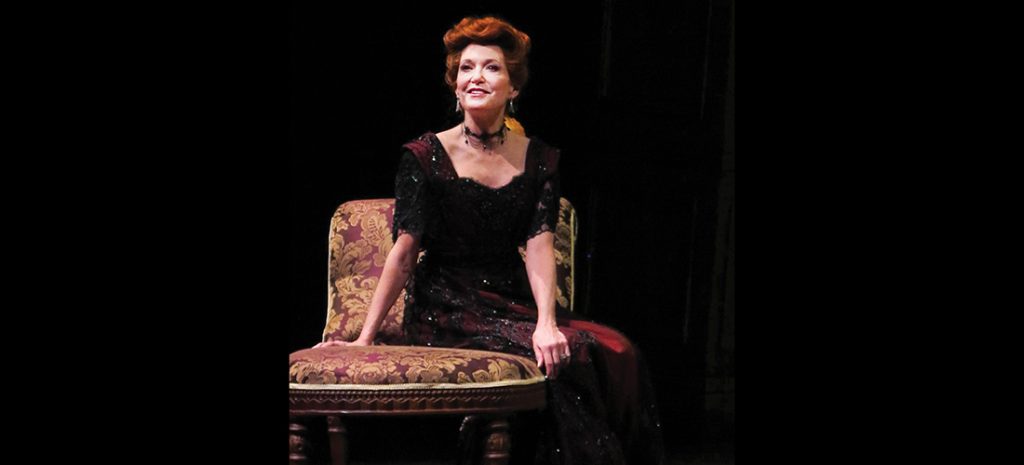
“Video Review was a library of culture and film,” says Greensboro’s chanteuse extraordinaire Jessica Mashburn (pictured left doing her best Dolly Levi impression). “A place a nerdy artist like myself could go and discuss the latest releases and exchange one-liners with the staff. I always left there feeling joyful and connected to people like me. It was a constant of my childhood here in Greensboro, and I was present for the final hour of its existence.”

What does Jason miss most about those days? Quality time with his dad, he says.

Bravo was thrilled with the ratings for 100 Funniest Movies, which must have made an impression in the Big Apple because, in 2005, VH1 summoned me back to work on 100 Greatest Kid Stars. I asked the producer, “Who’s going to be No. 1? Shirley Temple, Spanky McFarland or Stymie Beard?” None of them, she replied. “It’s Gary Coleman.”

I thought, “You’ve got to be kidding me!” and begged off the project. As much as I came to enjoy the process and the people involved, I didn’t have any desire to be on television in the first place.  OH

Billy Eye returned to his hometown (yep, Greensboro) in 1994 after 16 years of working as a writer and artist for the entertainment industry in LA. Oh, and Bravo’s No. 1 funniest movie? Animal House.