O.Henry Profiles July 2019










Frank Slate Brooks and Brad Newton are always ready to set sail for adventure from the comfort of their nautical-themed home in historic Lindley Park
By Billy Ingram • Photographs by John Koob Gessner
Frank Slate Brooks and Brad Newton have chosen to cruise through life, moored but not anchored to their spectacular Lindley Park home, a retro-pop sanctuary where elegance and eccentricity collide.
Frank was raised in High Point, Brad in Burlington. They’ll have been a couple for 23 years this August. “We found out a couple of years into our relationship that our grandparents had been best friends,” Frank tells me. “We don’t know if we met each other as kids or not, but it was meant to be somehow.”
If their names sound familiar, it may be due to a blizzard of publicity that erupted in 2014 after they became the first gay couple to marry in Guilford County. “I didn’t realize that the media might be there,” Frank recalls. With that in mind, their first thought was — would their parents be OK with this being public? “My father is very conservative,” Frank says. “My mother had already passed and my dad was out at River Landing. Someone had left him a copy of the newspaper next to his bed and wrote ‘Congratulations’ on it. I walked in and Dad said, ‘So what have you been up to?’ He was all good.”

And so was the community at large. “We really thought there would be some kind of backlash or something nasty but it was the opposite,” Brad says. “At the baseball stadium the Saturday after, there was a chili cookout thing going on and people of all ages were coming up to us giving us hugs, it was just great.” Frank Slate Brooks, now with Tyler Redhead & McAlister Real Estate, has sold well over 100 homes in and around Lindley Park since 2006. “In 2001, I started out flipping homes with my then partner [interior designer] Laurie Lanier,” Frank tells me. “She staged a house for me and it sold in less than half a day. We did about 12 houses here in Lindley Park before we priced ourselves out of the market because when we started, Lindley Park was not what it is today. Everything that we sold raised the prices for all the properties around them.”
After his experience flipping houses, Frank realized he needed to get his real estate license, “I really think we [Stephanie and I] were responsible for the renaissance of Lindley Park.”
Graced with tree-lined streets, eclectic architecture and neighborhood schools, Lindley Park was ripe for a revival once people began moving in from the suburbs. It was originally the site of an amusement park designed by the Greensboro Electric Company in 1902 to generate interest in the city’s new trolley line. That 3-mile trolley ride down Spring Garden from the center of town took around an hour and a half. (You could walk in half the time, but the muddy terrain wasn’t exactly pedestrian-friendly.)


Named for J. Van Lindley, whose 1,130-acre nursery and Pomona Terra Cotta Company were situated nearby, the 26-acre park opened on the Fourth of July. The pavilion featured refreshment booths, a Fairyland Casino for dancing and bowling alleys. Nearby was a manmade lake for swimming and boating in the summer, ice skating in the winter, along with a miniature railroad and a 1,000-seat theater for touring vaudeville acts, as well as some sort of local monkey act. The park’s 20 x 25–foot bathhouse still stands behind the residence at 2812 Masonic Drive.
Frank and Brad’s two-story, Colonial Revival–style home on Northridge Street was built during the first wave of swank homes developed for the Lindley Park neighborhood in 1922 after the amusement park had closed. Its construction is somewhat unusual, consisting of a brick exterior with 16 inches of insulation between the walls, the majority being more brick that keep rooms naturally warm in winter and cool in the summer. “They knew how to build houses back then,” Brad says.
At the start of the 1920s, the heart of Lindley Park was the corner of Walker and Elam and it remains so today. The first collection of unrelated businesses outside downtown was most likely Sunset Hills Shopping Center, established around 1925 on the northeast and northwest corners of the intersection, with two shops and a service station where Sticks and Stones is today. The retail area expanded in the 1930s to include a Piggly Wiggly in the space Suds & Duds currently occupies.
The Pickwick Soda Shop (now Walker’s) opened around 1943, at some point in the 1960s becoming The Pickwick bar and grill where, in the evening, newspaper folks downed Blatz on tap with college students that included Jim Clark, future Director of UNCG’s MFA Creative Writing Program. Sealing its street cred as a hippie hangout in the ’60s and ’70s, The Allman Brothers played there. As the district became more bohemian with the expansion of UNCG in the 1980s, large portions of Lindley Park began to go to seed.
In 1999, Frank had been living on Mayflower Drive for around seven years when, as he recalls, “My parents said, ‘You need to get a bigger house because we’re giving you a lot of furniture’ and I thought, ‘OK . . .’” Visiting a friend who lived on Northridge Street, “We were out on her deck,” Frank remembers. “And she said, ‘These people next door are getting ready to transfer and they’re selling their home,’ and I said, ‘What house?’ We had been over there many times and never noticed this house.”
That may be because the manse is somewhat hidden behind a canopy of shade trees even older than the home itself. Frank ventured over, knocked on the door, “A woman named Mary lived here,” he says. “She showed me the house and the backyard and I said, ‘Sold!’”
A few minutes later, “Frank called me at work,” Brad recalls. “He said ‘I found a house, we’re signing the papers tonight’ and I said, ‘Whoa, slow down.’ I’ve not even seen this house! I came over after work and kinda did the same thing: ‘Sold!’”
Frank describes the surroundings in 1999, “The Filling Station [restaurant] was still a filling station with stacks of rusty cars in front of it.” Fishbones on the corner, he says “was part of The Blind Tiger next door; they closed that off and it just sat there. Now it’s the reverse.”
“Bestway was owned by two old men,” Brad remarks. “After they sold it, it became very much like a glorified Stop & Rob, not at all what it is now. There was very little activity at the corner of Walker and Elam, I think Wild Magnolia closed right as we were moving in.”
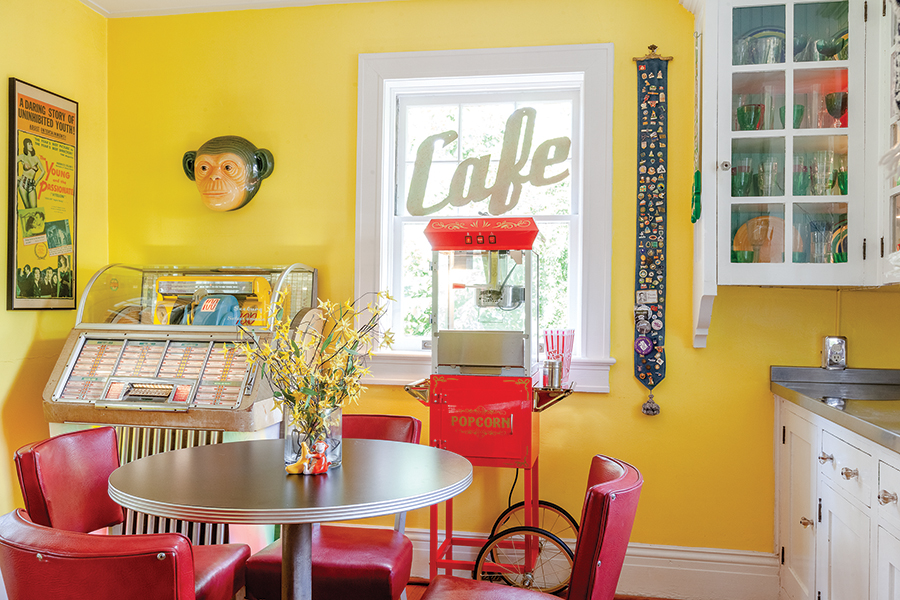
Since then, they’ve been furnishing their home in 20th-century whimsy, a Technicolor dreamscape. For instance, in an otherwise sedate living room, a Chain Drive Irish Mail push/pull pedal cart from the 1960s adorns one corner. In the breakfast room, a papier-mâché monkey mask by Mexican artist Sergio Bustamante hangs above a pristine 1952 Seeburg Select-O-Matic 100 jukebox. “We had it restored,” Frank says. Surprisingly, filling it full of hit records was easy, he adds. “I had a listing where the owner had left hundreds of 45s behind so we switch it out all the time.” They even found a place online that prints those distinctive crimson-striped labels for the jukebox’s song selections.


Brad is a big Don Knotts fan, so a poster from The Ghost and Mr. Chicken holds a prominent spot in the kitchen, as does a collection of pins acquired by Frank’s father from the many countries he’d traveled to. It continues to grow with the couple’s own additions. “This kitchen has seen so many transformations,” Frank says. “We recently did the countertops, the upper cabinets are from Preservation Greensboro.” Just off the kitchen is another equally impressive collection: of model ships he assembled as a teenager.
But what really makes their home one-of-a-kind is an unmistakable nautical theme. Both Frank and Brad (or “Frankenbrad” as their friends fondly refer to them) share a fascination with ocean liners and enjoy luxuriating on transatlantic cruises aboard vessels like the SS Norway and RMS Queen Mary 2. Part of the allure? “I love the ability to unpack once and have everything taken care of,” Frank says. “In a lot of ways, we’re very old-fashioned,” Brad explains. “On cruise ships you still have to dress for dinner, I do enjoy that. On the Queen Mary 2, they will stop people from entering the dining room in a T-shirt and shorts.”
A Carnival Cruise won’t float their boat. “We prefer the old-school, luxury Cunard ships and Celebrity Cruises,” Frank insists. “They always have lectures and more interesting things to do than your Caribbean cruises. The spa . . . high tea is very nice, the British ships are big on trivia contests. And the disco is fun for maybe one night.”
“Frank made friends with the actress Celia Imrie (of the Bridget Jones movies) on our first Queen Mary crossing,” Brad says. “We were invited to a gay wedding on board, officiated by the Captain, and she was involved in that.” Even choppy waters won’t spoil the good times for these two. “We got chased by Hurricane Mitch last year on the [Celebrity Cruise ship] Mercury,” Frank tells me. “We dodged it the first time but then it reformed in the Atlantic and they were calling it ‘Son of a Mitch.’ The waves got so bad, everyone was tossed and thrown everywhere so all drinks were free for a day or two. We have our sea legs so it didn’t bother us; we thought it was fun.”
At an early age, Frank became infatuated with America’s Flagship, the SS United States. Now he’s North Carolina co-chairman of the SS United States Conservancy, an attempt to repurpose what was once the most elegant ship on the high seas, attracting U.S. Presidents and Hollywood stars alike from the moment of her maiden voyage in 1952. A full 100 feet longer than the RMS Titanic, the SS United States still holds the record as the fastest ocean liner to cross the Atlantic. The ship was retired in 1969.
All around the home are mementos and sumptuous details salvaged from the SS United States: ashtrays, aluminum cabin keys, towels, travel posters, its “Swimming Pool” sign in the mudroom above the back door, even blankets on the beds bear the ship’s insignia.
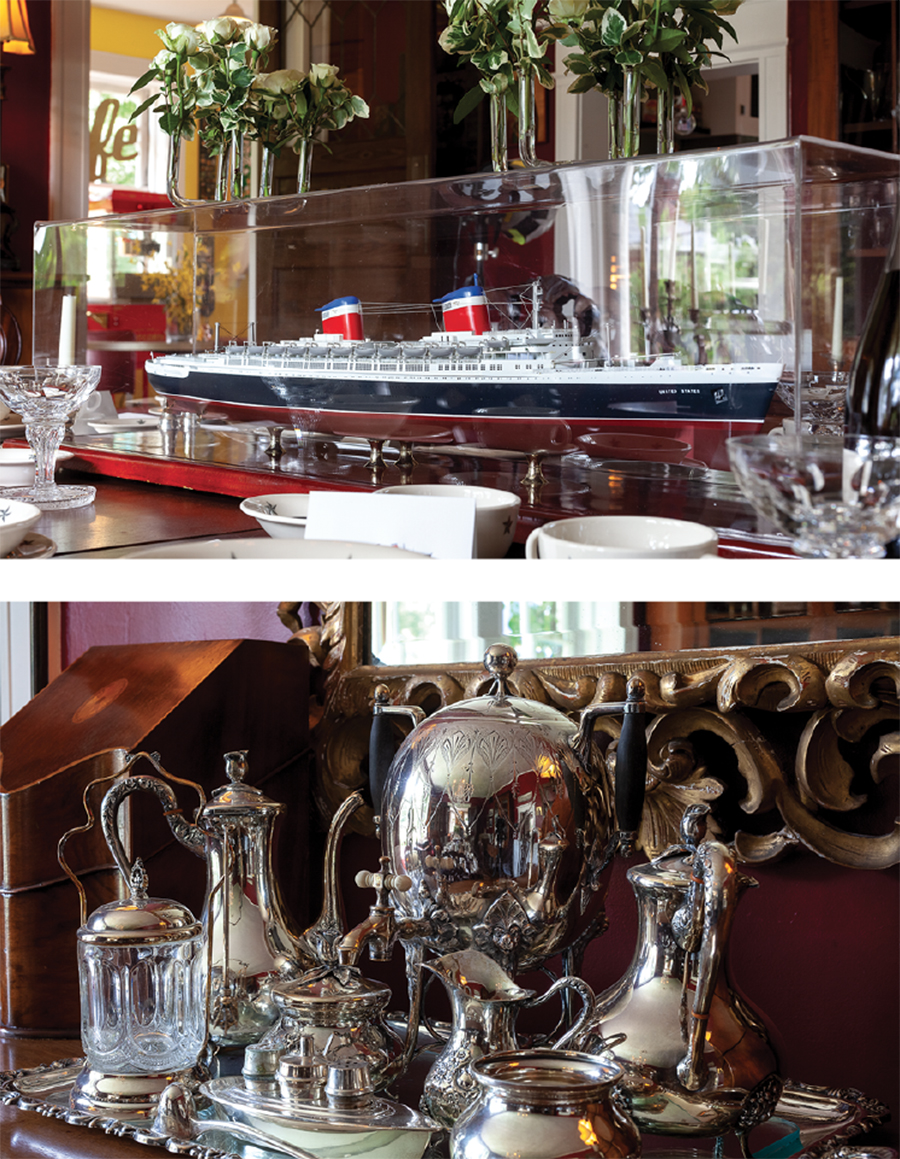
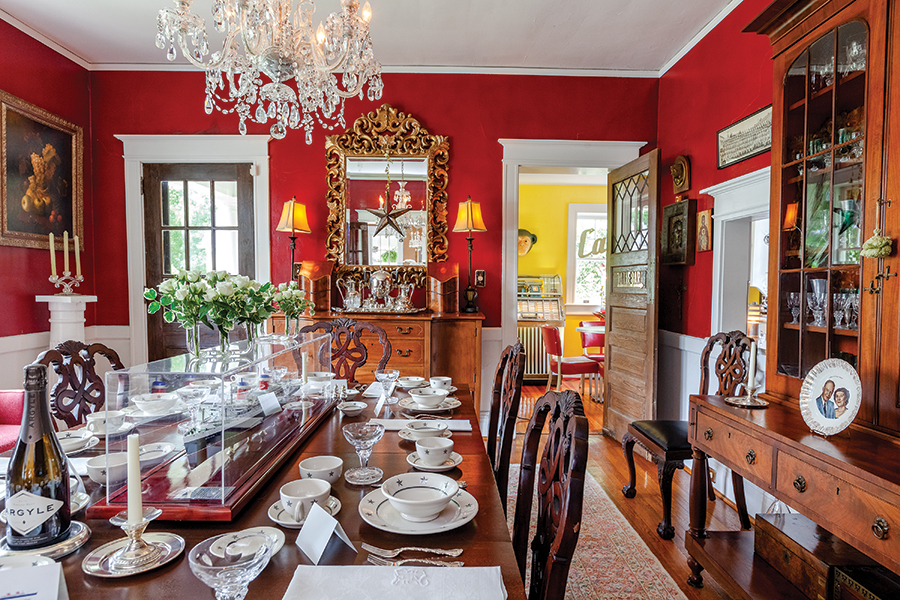
In the dining room are several chairs, a table lamp, and fine china place settings that also originated from the ocean liner; a scale model of the ship serves as the formal table’s centerpiece. Nearby, a grandfather clock from the 1800s chimes the hour while, mounted on another wall, is a metal sculpture of Jesus wearing a crown of thorns by Felix de Weldon who famously sculpted the Iwo Jima Memorial. “It’s bolted to the wall,” Brad says. “It’s very heavy. If it ever falls off, it’ll end up in our basement.”
Recently, FrankenBrad hosted a kick-off party here for Preservation Greensboro’s tour of Lindley Park homes. “We had a great turnout,” Brad says. “Our house was going to be on the tour, but we were out of town.”

Brad, who’s worked in marketing for Replacements, Ltd. for the past 23 years, has a love for Hollywood movies, as evidenced by the dramatic framed three-sheet posters for such cult classics as Beyond the Valley of the Dolls and Stanley Kramer’s The 5,000 Fingers of Dr. T., both of them three times larger than your typical one-sheet movie poster. “They didn’t make a whole lot of three-sheets,” Brad notes. “In fact, they are always numbered.” Pointing to an etching in the bottom left hand corner of the 5,000 Fingers poster, he says, “There were only a total of 53 of these made and this is No. 8.” A poster for Roman Polanski’s 1965 thriller Repulsion is mounted above their bed because, as Brad says, “Everyone wants to see a psychotic Catherine Deneuve whenever they walk into the bedroom, right?”
If this home reminds one of Stately Wayne Manor it shouldn’t be surprising that, just like the ’66 Batman TV show, in the den next to a red rotary telephone is a bust of William Shakespeare. Pulling back The Bard’s head reveals a switch that triggers a bookcase to slide to one side, exposing the Batpole leading down to the Batcave (sliding bookcase, Batpole and Batcave not included).
Another fitting nostalgic touch? Their screened porch, which hasn’t been glassed-in as so many are nowadays. There’s something quaint about a screened porch, especially this one with four 1950s era barbershop waiting room chairs to lounge on. Very Mayberry.

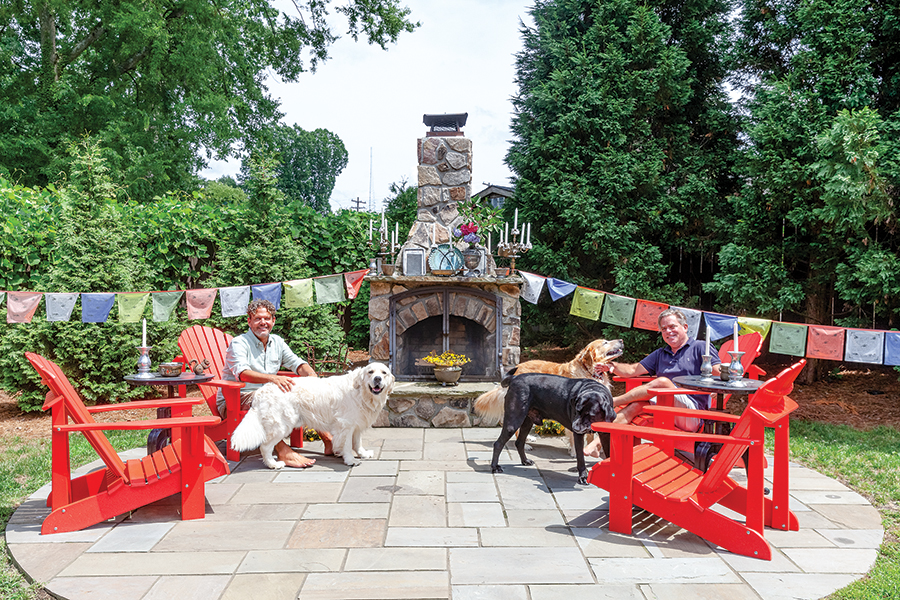
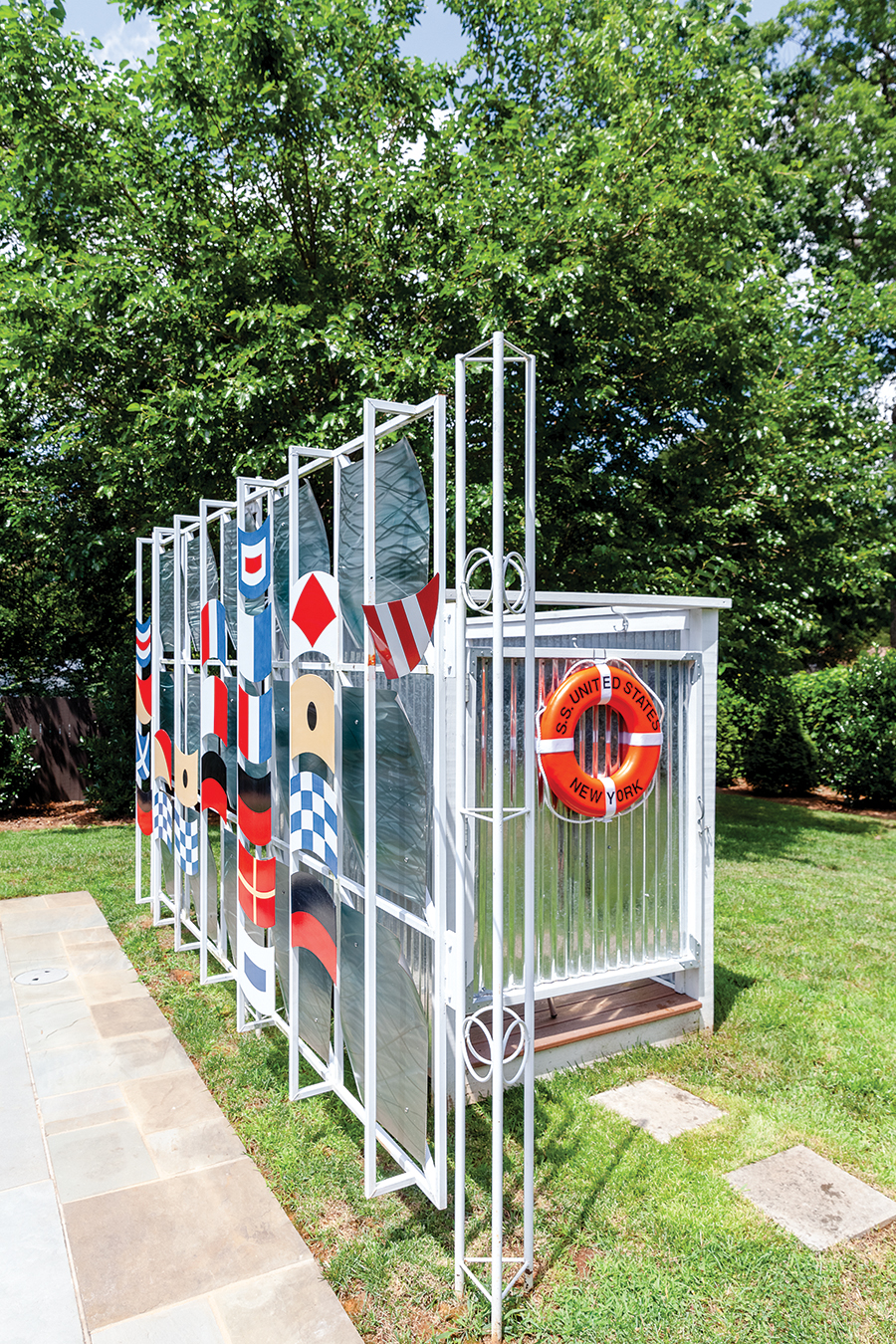
Entering their backyard, dominated by a 60-foot long pool, is a bit like walking onto the deck of a cruise ship, but considerably greener. “These silver planters are from the First Class Dining Room in the SS United States,” Frank says. A wall of nautical flags, nearly an exact replica of the one situated at the end of that fabled ocean liner’s indoor pool, spells out, ‘Come on in the water’s fine!’ The outdoor shower and deck chairs also originate from the United States.
As we relaxed on the terrace, accompanied by a symphony of chirping birds, I half expected Admiral Halsey to come floating down from the sky.
“There was a time when we were talking about buying a beach house,” Brad explains. “We thought about the upkeep, the insurance, worrying every time a storm came through, so we decided we’d turn our house into a vacation property. We love to get up on Saturday mornings, put on our bathing suits [“Or not,” Frank interjects] and it’s like we’re on vacation in our own neighborhood.”
It’s safe to say the couple’s three dogs — Rex, a 6-year-old black Lab; Dios, a 9-year old golden retriever; and Ripley, a 2-year old English Cream — enjoy the pool almost as much their owners do. Frank laughs, “When we go on vacation we have a dog sitter who is always like, ‘Oh yeah!’”
Chip Callaway did the landscaping, lining the fence line with magnolias and upright skip laurel. “Chip told us, ’The first year they sleep,’” Frank explains. “‘The second year they creep and the third year they leap.’ And that’s where we are now, the leaping stage.” A pull-down motion picture screen along an exterior wall of the garage allows for cozy movie nights. No wonder they have no intention of moving or even one day downsizing. “We’re here to stay,” Frank insists. “We love it here.”
Sold! OH
Billy Ingram is a former Hollywood movie poster artist who now enjoys exploring Greensboro’s rich history.

Joy resounds in the crack of a bat for Grasshoppers superfan Priscilla Tuttle
By Maria Johnson • Photographs by Sam Froelich
Priscilla Tuttle raises her fists, but not in anger.
She puts up her dukes to bolster her beloved Grasshoppers when they need it — as they do now, in the opening act of a daylight double header against the Lakewood BlueClaws, who’ve scuttled down from New Jersey.
It’s the bottom of the first, and the Hoppers, Greensboro’s minor league baseball team, are at-bat, down 1-nothing.
The BlueClaws pitcher unfurls a fastball that reverses sharply with a flash of ash. CRACK! A shooting star of hide arcs over the infield and lands in the grass. The Hoppers batter in bright white churns to first.
“Go-go-go-go-go-yeah-yeah-yeah-yeah-yeah-wooooooooo,” Tuttle croons from her usual seat in the first row behind the Hoppers dugout. She shakes her fists like baby rattles, though she’s far from the cradle.
At 78, she’s one of those women who subtracts years by answering the age question quickly.
She’s not afraid of stepping up to the plate.
Or guarding it, like she did when she was coming up in the textile town of Eden.
Her daddy worked at Fieldcrest Mills’ Draper blanket plant; he played catcher and shortstop for the mill team. Young Priscilla and her family watched the games at close range.
“Mama said my first black eye I got by a baseball when I was 3,” she says.
As a teenager in the 1950s, Priscilla followed the Dodgers — the Brooklyn Dodgers — on TV. She played catcher for her high school softball team. She used her daddy’s mitt, a hard brown doughnut made buttery in the middle by balls that numbed her left hand.
She threw right-handed, batted left, was a fair-to-good hitter and a scrappy defender who planted her featherweight frame over home plate whenever a girl rounded third.
“I tried to keep ’em from getting across that base. I got rocked a lot. That was in the old days,” she says.
Later in life, after she and her husband, Gray, had four sons, she and the boys played on occasional Sunday afternoons with a co-ed bunch from her Methodist church. Priscilla played catcher, again. She didn’t get bowled over nearly as much — thank you, Jesus, for Christians and small children at home plate— but she got charley horses from not warming up.
Dirt-and-fescue diamonds are rarely a girl’s best friend into middle age.
She quit the plate and exercised by chasing her boys and minding the family store — The Barn Bait & Tackle — in an old tobacco barn on N.C. Highway 135 between Eden and Stoneville. That’s where she was working when a friend of the family — who was also a booster of the Greensboro Hornets, a predecessor of the Hoppers — walked in with some players in T-shirts and jeans.
It was 1991.
The booster-friend had worked it out with Gray’s uncle to let the players fish in the uncle’s pond. They stopped at the store for rods and reels and worms.
Priscilla fixed them up. That’s how it started, her long walk home to baseball.
She’d set up the players with bait and tackle, they’d talk, and naturally, they got to be friends. She invited them over to the house for supper.
She made regular food. Salisbury steak. Meat loaf. Green beans. Crowder peas. Creamed potatoes. Cornbread.
“They ate it all,” she says. “Lord have mercy.”
One day, one of the players asked Priscilla if she’d ever been to one of their games?
No, she said.
Why not? he asked.
She shrugged.
If I got you some tickets, would you go?
Sure, she said.
In 1993, she became a regular at War Memorial Stadium. Gray would go, too, when he could get away from farming tobacco and getting up hay.
Priscilla studied the game. She learned the fine points that had never dawned on her in high school: how hitters hit to certain locations in certain situations; how defenders shift on the field depending on who is at-bat; how every throw from the field is calculated to minimize damage.
Like most games, baseball was simple on the surface, complex underneath.
“It’s a finesse game,” she says. “I enjoy seeing ’em work it.”
It was more fun because she knew the players. She took their pictures, had double prints made at Winn-Dixie, laid out photo albums for herself and gave extra prints to the players to share with their families.
Somewhere, she knew, those players — most of whom were single and in their late teens or early 20s — had parents who worried about them. Priscilla wore out her Instamatic camera letting the unseen families know she was watching out for their sons.
She got new cameras, new lenses.
She made the transition from film to digital.
She grew and changed with the team, with the seasons.
She joined the booster club and pitched in to provide the players with picnics, household goods, and goody bags for road trips.
She adapted to the name changes — from Hornets to Bats in 1994, and from Bats to Grasshoppers in 2005, when the team moved to what’s now First National Bank Field.
She rolled with changing affiliations to major-league clubs.
She and Gray traveled to spring training in Tampa, Florida, when the team was aligned with the New York Yankees. They visited Jupiter during the reign of the Miami Marlins.
Just this season, the Hoppers divorced the Marlins and took up with the Pittsburgh Pirates, who eat grapefruit in Bradenton, Florida.
Priscilla was sorry to see the split. Marlin’s CEO Derek Jeter had played for the Greensboro Hornets in 1992 and ’93 before going onto stardom with the Yankees, and Priscilla was impressed by him and his parents. Good people.
But Jeter’s visit to Greensboro last season did not bode well, she says. He stayed in a skybox and did not acknowledge the fans.
“It looks like he would have come out of the box to meet the people,” she says. “There are a lot of people here who remember the old days.”
Maybe, she says, it was time for a change after all. The Marlins’ brass didn’t like the dog crates in the clubhouse. The bat-fetching pooches of Hoppers owner Donald Moore are longtime darlings of local fans, including Tuttle.
Soooo . . . fair thee well, Marlins.
“We like the Pirates,” says Priscilla, who has served as the president of the Hoppers booster club for, as she says, forever. “We like the Pirates just fine.”
It’s time for “Y.M.C.A.”
Youngsters in shorts mount the dugout roof in front of Tuttle. She moves her canvas tote bag to give them more room as they commence to making Village People of the crowd.
Tuttle, whose short blond hair yields easily to gray, stays seated, sings along and makes the letters with her arms. In her elastic-waist jeans and slip-on sneakers, she looks every bit the elementary-school substitute teacher that she once was — and the reading tutor that she still is.
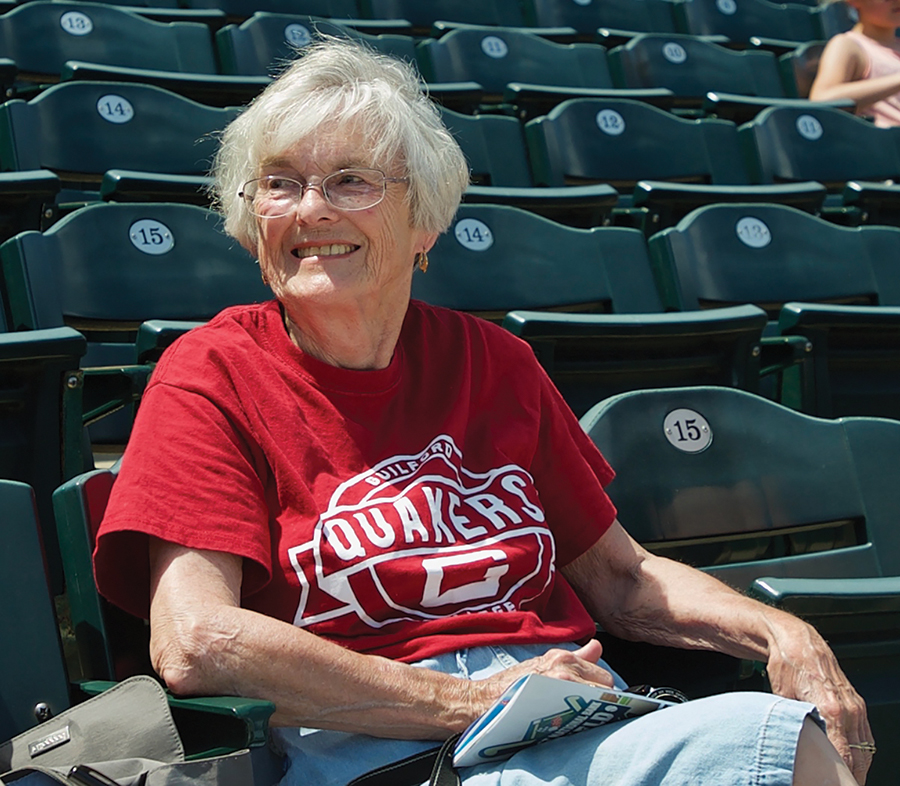
Her red T-shirt advertises the Fighting Quakers of Guilford College. Her grandson, Dylan Tuttle, pitches and plays right field for the Quakers. He gets it — why his grandmother keeps baseball cards, baseball programs, baseball books and signed baseballs in clear plastic boxes.
He gets her poster of Yankees slugger Don “Hit Man” Mattingly, who, incidentally, also played in Greensboro, in 1980, on his way to the Show.
If anything happens to me, Priscilla has told Dylan, don’t let them throw this stuff away. You know what it means. Not that she plans on going anywhere anytime soon, she points out, other than to a Hoppers game.
“A lot of things make me happy, but with this, I enjoy sitting and watching the plays. You sit here, and the cares of the day . . . it’s a way of focusing on something else,” she says.
“You can stay at home, in your little cluster, and never branch out, or you can go out someplace like this and meet people, and have a community. It’s just a joy. Except when we’re losing.”
We’re losing.
Have been since the error-filled fourth inning.
Now, it’s bottom on the seventh, the final inning of the foreshortened doubleheader.
Priscilla locks her blue-green eyes on the game. Her bifocal lenses are clear — not rose-colored — but her wire frames are rosy-gold. Hopeful around the edges.
We’re down 4-7 when the rally starts.
Siri doubles. Sanchez walks.
Men on first and second.
Macias singles, driving home Siri and advancing Sanchez.
Men on first and third.
“Oh! Go-go-go-go-go! Woooooooo.”
Priscilla’s fists are up.
The score is 5-7 when the first baseman Martin comes to bat. His mother might call him Mason, but to Priscilla, he’s Martin. She calls them by their last names. This is baseball.
Martin’s a lefty. Out of Washington state, Priscilla thinks. She’s still getting to know this Pirates team, making them her own.
“Let’s go, Hoppers! Let’s goooo,” she urges.
Four-hundred-and-eleven feet. That’s how far Martin pulls the ball. It sails over the ad-plastered fence and clonks off a building under construction on the other side of Eugene Street.
Martin knows it’s gone when he hits it. His slow trot around the bases gives time for everything to rise: The noise. The fans. The delirium of seeing the long shot made real.
Game over.
Hoppers win 8-7.
Priscilla Tuttle is on her feet, bouncing in her Skechers, yelling to be heard over the swell.
“Now, that’s what you call a baseball game.” OH
Maria Johnson is a contributing editor of O.Henry. Her email is ohenrymaria@gmail.com.

Hey, all you yarn-spinners – and for once, we don’t mean storytellers, but knitters — here’s something that will keep you in stitches: The Carolina Yarn Crawl, which takes place July 18–21 across the Piedmont. All you have to do is pick up a free Passport at one of the seven participating fiber stores, such as Gate City Yarns (231 South Elm Street). As you weave your way to the other boutiques, take advantage of sales, raffles and giveaways and enter your name in a drawing for a grand prize. For more, uh, purls of wisdom about the event please visit centralcarolinayarncrawl.com or facebook.com/centralcarolinayarncrawl.
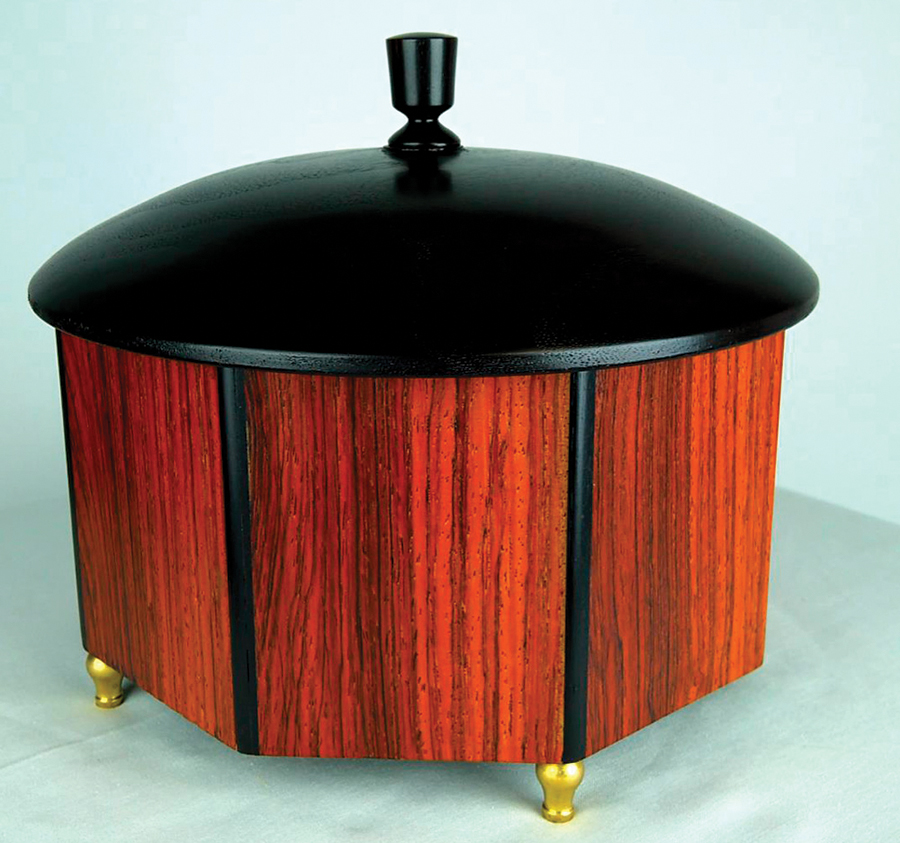
And not the kind that includes concrete birdbaths or gnomes, but elegant pieces from Twin City Artisans, who will exhibit their wares July 19 and 20 at Paul J. Ciener Botanical Garden (215 South Main Street, Kernersville). The brainchild of TCA charter member and avid gardener Sue Davis and Ciener’s Executive Director John Whisnant, Artisans in the Garden will include stained glass, photography, jewelry, pieces made from turned wood, calligraphy and hand-bound books . . . and so much more. The idea is not only to promote the works of the various craftsmen but also the importance of botanical gardens. And what a way to spend the afternoon, wandering among Nature’s creations in the perennial and kitchen gardens, before cooling off in the carriage house to admire works wrought by human hands? Info: cienerbotanicalgarden.org or twincityartisansnc.com.
We tend to think of geometric shapes as the stuff of 1960s and ’70s pop art. But the medium’s era of hard lines and bright colors seemed to comprise art merely for art’s sake, contrasted to current trends, in which artists sometimes imbue their works with personal meaning or social commentary. See for yourself at Double-Edged: Geometric Abstraction Then and Now on view at Weatherspoon Art Museum, (500 Tate Street) through August 18. Info: (336) 334-5770 or weatherspoon.uncg.edu.
Hiking boots? Check. Mountain bike? Check. Kayak? Check. The woods are lovely, dark and deep — yours on Saturday, July 27 for Greensboro Trails Day at Country Park (3905 Nathanael Greene Drive). Organized by Parks & Recreation, with help from partners such as Piedmont Hiking and Outing Club and Piedmont Fat Tire Society, you and the whole family can take a guided hike or a spin. Along the way, stop to take in BMX demos, have a gander at some ganders as Goose Masters (Border Collies) herd their gaggles, listen to a lecture about the Underground Railroad, try your hand at some crafts and snag some swag. Most important: Celebrate the great outdoors in the full blush of summer. To register: greensboro-nc.gov/TrailsDay.

Now in its 16th year, the biennial National Black Theatre Festival (July 29–August 3) is pulling out the stops. Not only has it lured as co-chairs stage and screen luminaries Margaret Avery (The Color Purple) and Chester Gregory (The Jackie Wilson Story: My Heart Is Crying, Crying and Dreamgirls), the festival is also offering a crowd-pleasing lineup of plays that include the hit musical Jelly’s Last Jam, Ruined, the 2009 Pulitzer Prize–winning drama set against the unrest of Democratic Republic of Congo and Prideland, a dance adaptation of The Lion King. Added to the mix are workshops, one-person shows, performances of words and verse, revues featuring the songs of Aretha Franklin and Lena Horne, an acapella musical and an adaptation of Shakespeare’s Twelfth Night, or What You Will, Mon — set in Jamaica. Performances take place in various venues throughout the Twin City. For information and tickets: ncblackrep.org.
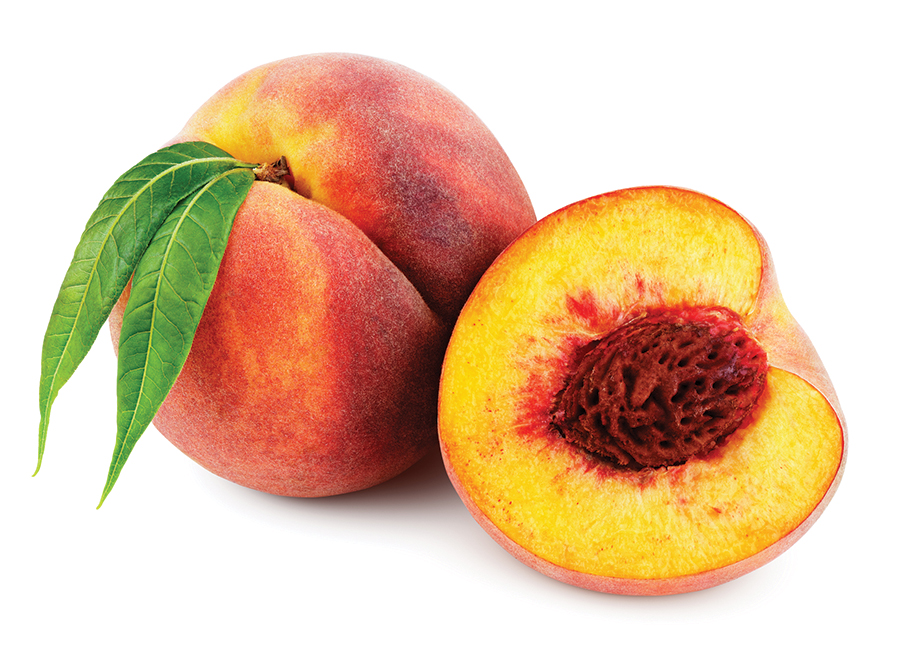
Or rather, door busters. Hungry patrons are, heh, pitted against one another to get their fix of Carolina Belles, Contenders, WinBlos, and more, at Piedmont Triad Farmers Market’s Peach Day on July 12 (2914 Sandy Ridge Road, Colfax), which includes a peach pie recipe contest. On July 20 at Greensboro Farmers Curb Market, (501 Yanceyville Street), line up for a helping of flapjacks at Peach Pancake and Celebration Day. Whether cooked in a short stack or cobbler, smothered in a bowl of cream, or simply as is, there’s nothing quite like the sweet, succulent, rosy-colored fruit that tastes like summer. Info: www.facebook.com/PiedmontTriadFarmersMarket; gsofarmersmarket.org.
George Clinton, that is, who’s got groove — One Nation Under Groove. Strutting onto the stage July 27 at the Coliseum’s White Oak Amphitheatre (1921West Gate Boulevard), the master of funk and founder of Parliament /Funkadelic, ramps up the blues- and rock-inflected beats with hits like “Tear the Roof Off,” “Mothership Connection” and “Flashlight,” with performances from Galatic Fishbone, and Miss Velvet & the Blue Wolf. So go, and get down as Clinton says, “for the funk of it.” Tickets: (800) 745-3000 or livenation.com.
Koepka, Rose, Fowler, Cantlay, McIlroy . . . come out July 30–August 4 to watch the pros stalk Sedgefield Country Club’s course (3201 Forsyth Drive) for the Sam Snead Cup, awarded at the 2019 Wyndham Championship. In addition to great play, the PGA TOUR stop includes all the elements we’ve come to anticipate: a pro-am, practice rounds, youth clinics, hot dogs, tall cool frosties, demos, merch tents — and we hope, Hawaiian leis. For information and tickets: wyndhamchampionship.com.
July, being the beginning of the second half of the year, is the half-full or half-empty month. If the first six months of your year were not so great, here’s your chance to start anew. And if they were wonderful, it’s a reminder to keep the momentum going. Either way, stay cool and raise your glass to some terrific summertime music.

Ogi Overman
• July 6, White Oak Amphitheatre: I remember so well when Warren Haynes and Allen Woody formed Gov’t Mule as a side project to the Allman Brothers. Has it really been a quarter century ago? Woody has since passed on, but Haynes has kept the group as vibrant and kickass as it ever was. Rock on, my brothers.
• July 20, Blue Note Grill: There was a time when the Nighthawks and Rev. Billy C. Wirtz played Greensboro regularly. But these days it’s going to take a quick trip to Durham to see this perfect joining of blistering blues and sizzling satire. It’ll be worth the trip.
• July 25, Greensboro Coliseum: One might think that Lionel Richie has nothing left to give and should quit dancing on the ceiling all night long. But at the ripe young age of 70 (as of June 20), he is hotter than ever, with a new album, tour, and “American Idol” judgeship. It truly is an endless love.
• July 26, Carolina Theatre: If you could read my mind you’d know that when Gordon Lightfoot hits the Carolina stage, I’ll be right down front, swooning and swaying. Of all the musical heroes I’ve had over the years, he is right at the top of the list. This might be the highlight of my summer.
• July 31, Ramkat: OK, Americana buffs, you heard it here first. If you love the Avett Brothers, Mumford & Sons, and the Decemberists, National Park Radio is your new BFF. You have seriously got to head to Winston-Salem to see this band. You can thank me later.

Cancerians bring light and light-heartedness to the darkness
By Astrid Stellanova
A whole lot of July Star Children are born with a funny streak, and live for shenanigans. One is that high-larious actor Ken Jeong, the doctor and comedian who just so happens to be a Page High School alum. Recently he revisited his local roots to deliver the commencement at UNCG — and delivered the grads from taking themselves too seriously.
The fun and fabulous Sofia Vergara, Will Farrell and comic genius Robin Williams were born under the sign of Cancer. How ironic that the sign of the crab should produce so many big wits and comedians. Like the stars, they light the darkness.
Cancer (June 21–July 22)
That double-dang double-crosser who broke your trust will get theirs, and you won’t have to lift a pinky. Not to worry one second. Let’s put it this way: If you were a comic book hero, you’d be known for your super power of . . . judgey-ness. You have super powers you have never even explored. Like an incredible talent for sussing up a situation and knowing when to hightail it outta Dodge.
Leo (July 23–August 22)
While you were busy monkey-branching like you were Tarzan, you forgot to look down. If you had, you would have noticed some circling hyenas waiting for you to slip and fall. Those are some of the pack you used to run with, and now, Sugar, you need to outrun them. Put your past waay behind you.
Virgo (August 23–September 22)
This is classic you: not exactly inclined to give a rat’s you-know-what or a gnat’s little patootie for status or approval. And Honey, you get a lotta lovin’ for that! Next up: letting down the old guard and making yourself vulnerable. Trust ain’t just a banking term.
Libra (September 23–October 22)
You didn’t just lose touch with reality. Sugar, you broke the whole handle off things trying to get a grip. A new work opportunity is golden, but your domestic situation is suffering. Take care of those who tend to the hearth and home.
Scorpio (October 23–November 21)
The tee-nine-sy part of you that likes approval took over your whole world. If you want to win friends, Darling, let’s put your “I Know It All” merit badge away in a drawer. Sure you earned it. But it has not helped your sex life or friendships one bit.
Sagittarius (November 22–December 21)
The juice just ain’t worth the squeeze, Sugar. You have worked hard to make good on a promise to yourself and another. Now you have a significant situation that has escaped you and is calling your name. Time to squeeze and release.
Capricorn (December 22–January 19)
By the time you can say tickety-boo you let the cat out of the bag. Not your fault; a trickster you know so well made you spill. No worries. There is time to clean up the mess on Aisle Five before anybody’s the wiser.
Aquarius (January 20–February 18)
Rinse and repeat. Words to live by. Works real good for stains and also works good for self-love and redemption. Forgive yourself, Darling, for letting a situation get a little gray and a whole lot dingy. It will all come out in the wash.
Pisces (February 19–March 20)
Fireworks don’t have a place in your life except for Independence Day. Dial back emotions, and just recognize somebody set a tripwire for you because they are more volatile than a pig in a hailstorm. They only wish they had your self-control.
Aries (March 21–April 19)
Looks like you stuck the baster in the wrong end of the chicken, Honey. You have been in such a dizzy place that you forgot your purpose and dang near lost your marbles. Recalibrate. Breathe. Meditate. Honey Bun, just do anything but knit your brows.
Taurus (April 20–May 20)
Pigs were flying when you (praise Jesus) decided to zip it and keep the peace just when your nemesis made a total jerk out of himself. Take a bow. You have just zoomed to the front of the astral line for having passed a major spiritual challenge.
Gemini (May 21-June 20)
Sometimes you open your mouth and your Mamma falls out. Life has been a little too boring for your tastes, so you decided to pull the plug on a very good idea and watch it all go right down the dang drain. It will not be boring to reconnoiter. OH
For years, Astrid Stellanova owned and operated Curl Up and Dye Beauty Salon in the boondocks of North Carolina until arthritic fingers and her popular astrological readings provoked a new career path.

Keeping it simple keeps it delicious
By Tony Cross
Last month I confessed to being behind on a number of books that I had barely started or hadn’t opened at all. One of those books is Anthony Bourdain’s Kitchen Confidential. Yes, that’s right. It’s blasphemous to say that I adore the man, yet have not read his epic first book. Embarrassing, I know. Anyway, the book is amazing. One of the chapters, “How to Cook Like the Pros,” has Bourdain giving tips to those at home who want to cook well enough to amaze their next dinner party guests. Good stuff. He starts with tools: chef’s knife, other knives, plastic squeeze bottles, pots and pans, etc. He then moves on to ingredients: butter, stock, shallots and more. So, in this episode, I’m going to blatantly rip off Anthony. It’s OK, we share the same first name.
When it comes to making drinks, people always ask me questions like: “What’s your favorite drink to make? Do you really like egg whites in cocktails? What’s a good recipe?” (I get that one a lot.) Or: “How do you make your old-fashioneds?” and “Do you really like mezcal?” I usually respond to the last one with “no” and a grin on my face. One time, a married woman (claiming to be newly separated) actually messaged me on social media late on a Saturday night to find out what my favorite rye is. It’s Rittenhouse, but that’s not all she asked.
The point is, you only need a few tools, and a few ingredients to make a ton of delicious cocktails. And in no particular order, so let’s go.
Angostura Bitters
There are a ton of bitters on the market. They’re everywhere. And by all means, experiment and check them out. But I’ve never lost it in my kitchen when I’ve run out of cardamom bitters. It’ll never happen. Angostura is the essential bitters that should always be stocked in your place. Plain and simple. Plus, it’s available everywhere, and it cures hiccups (doused on a lemon wedge). Just saying.
A Good Juicer
A durable, inexpensive, hand-held juicer is all you need when making drinks at home. I’ve talked to people who just “squeeze a little lime juice” into their shaker (I hope) when creating their own gimlets. Amazon has the Chef’n FreshForce model that is only $20, and durable as hell. Even if you’re hosting a 12-person cocktail party, this hand-held juicer is really convenient. Once you get the hang of it, you can juice 10 ounces in no time. Oh, and measure the stuff while you’re at it.
Jigger
Use a jigger that has a few measurements on it. You know, 1/4 , 1/2, 3/4 of an ounce. I prefer the Japanese style, but whatever is easiest for you. Cocktail Kingdom has a lot of fancy plated ones; to each their own. I have the original stainless steel, and they’ve lasted me for years. If you’re not measuring, stop reading here.
Sugar
If you’ve always got a half to a full cup of simple syrup in your fridge that hasn’t gone bad, good for you. You’re an alcoholic. Kidding. The rest of us probably have that “Oh, hell” moment when realizing that we’ve got everything for the drink ready except for said syrup. No worries, it only takes a minute to make, and that’s if you feel like making it. But syrup or no syrup, you should always have a small amount of demerara or cane sugar in the cabinet. It makes all the difference in the classics. Don’t believe me? Make a rich demerara syrup for your next daiquiri and tell me that the sugar doesn’t bring out the flavors in the top of the line rum you used. The color may not be Instagram-worthy, but who cares when you’ve made one of the best drinks in the world.
Vermouth
I can’t believe that almost every bar and restaurant in this town still has vermouth on the shelf. It’s rancid. Don’t be like most bars and restaurants in this town. Refrigerate, dammit. You’re only wasting your own hard-earned dollar and taste buds. Get a white and a red. You don’t need four of each, unless you’re using them before they spoil. Here, here! Dolin Dry for martinis and Carpano Antica for Manhattans. They’re also delicious over ice with a twist, too, ya know.
Spirit
I see a lot of articles online that read something like this: “The 8 Gins You Should Have at Home!” Really? Eight? No thanks. How about two or three? Plymouth for martinis and Beefeater’s for gin and tonics. “Hey, Tony! I can’t imagine how many whiskies you have at home!” I can. Three or four? Maybe? I love rye, so I usually have Old Overholt, Rittenhouse and/or Wild Turkey Rye. Whatever bourbon I can get my hands on that’s halfway decent from the ABC. Oh, and a good bottle of Scotch. Yeah, that’s about it. Aaaaand for the rest:
Agave: If you are really just into margaritas, get a blanco; I particularly enjoy Herradura. If sipping is your thing, grab a nice anejo. A bottle of Del Maguey anything wouldn’t hurt either.
Rum: One white rum and one funky. For me, it’s Cana Brava and Smith & Cross. Actually, I’m lying. I have more. But I’m a rum-whore. Can’t help it. But the former is a good start.
Vodka: This is easily the most debated. Probably because most people who boast about what vodka they love are full of it. Tito’s, you say? Yeah, sure. I don’t care. For me, it’s always a vehicle to a destination. Just don’t let that ride be a Ford Pinto.
Brandy: Rémy Martin. Damn good cognac. OH
Tony Cross is a bartender who runs cocktail catering company Reverie Cocktails in Southern Pines.

The worldly palate of Cameron Klass
By Jim Dodson • Photographs by Amy Freeman
Cameron Klass is a young woman forever on the move.
Hers is the kind of millennial wanderlust that has kept this 26-year-old crossing the globe over the past five years, a personal quest to learn about other cultures and countries from the grass-roots level, resulting in a passport that’s been stamped by at least two dozen different nations on four different continents. Her end game? Discovering food that not only sustains but also elevates the quality of human life.
The latest move from this peripatetic Greensboro native’s determination to help others comes in the form of a lifestyle cookbook filled with favorite recipes gathered from Klass’ world travels, promoting a naturally-sourced, whole-Earth approach to eating that works wonders for both body and soul, not to mention the health of the planet.
To hear her tell it, the 2011 Page High graduate had something of an awakening during her college junior year abroad in Reading, England, fueled by the month she spent at term’s end backpacking across Europe before her return to Ole Miss, where she was a marketing major and a member of the Kappa Kappa Gamma sorority.
Traveling on the cheap, sleeping in train stations and youth hostels, soaking up culture and food styles as she went, Cameron roamed from Barcelona to Florence to Croatia (“with many stops in between”), undergoing an epiphany in the process.
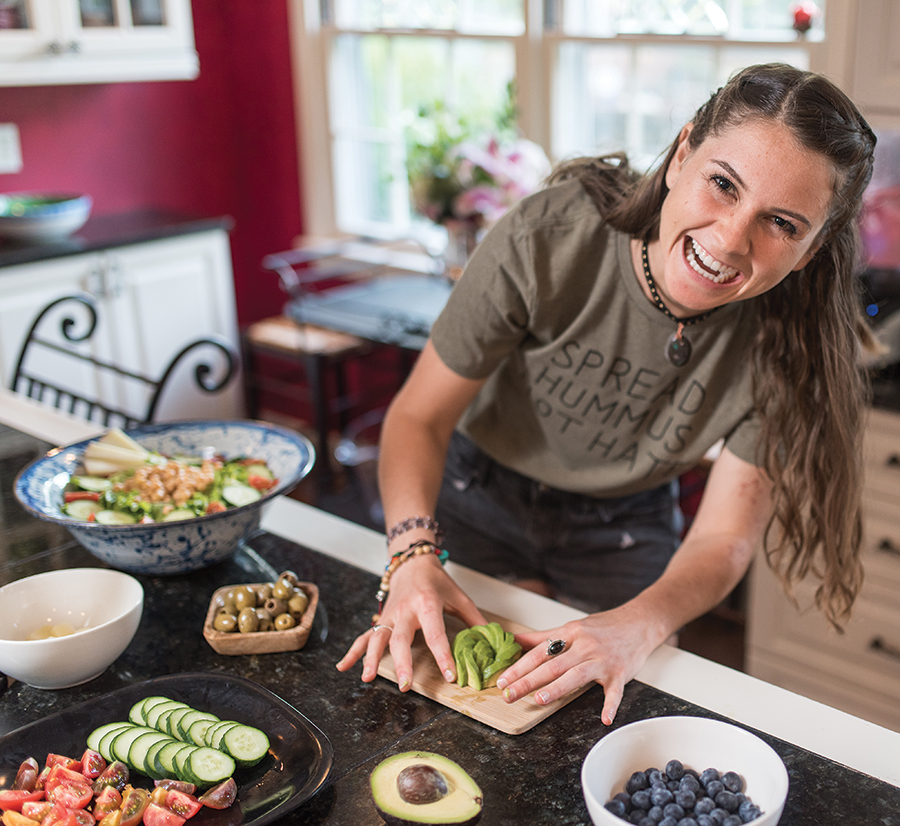
“That trip changed me,” she explains over an afternoon basil tea at Vida Pour Tea on State Street. “I’ve always been an independent person, someone who loved to camp with my family, enjoyed hiking and traveling on my own.” But after meeting so many different people and experiencing other cultures, something larger and more encompassing stirred awake in her. “I went home, resigned from the sorority and decided after graduation that I would travel as much as possible, learning from hands-on experiences.”
It helped to have a roommate, she adds, who was a nutrition major.
Her senior year at Ole Miss was spent deep-diving into food science and natural nutrition, learning the importance of cooking with fresh foods and reading ingredient labels. She also became a serious student of yoga — eventually earning certification as a teacher down the road. “I’d been a vegetarian since my freshman year. But learning more about the healing power of natural foods was eye-opening and exciting,” she reports. “Generally speaking, our convenient fast food culture promotes a very unhealthy and unstable lifestyle of eating. I wanted to be part of the solution to that.”
Eager to keep moving, during the summer of 2014, she landed a gig as an au pair for a family in Istanbul, Turkey. “My favorite times were days off when I went in search of local cuisine, inspired by the family cook, who made the most delicious vegetarian meals. On my own, I got to explore the city and its amazing markets and cultural sites, including mosques, meeting so many different types of people. It all opened my mind and broadened my outlook on life and left me hungry for more.”
Before returning home to Greensboro that Christmas, Cameron extended her travels to Poland, where, among other things, she visited the Auschwitz concentration camp and underwent yet another awakening. “That was such an emotional experience for me,” Klass says. “The lesson I took from that is that life is fragile and everything can change in an instant. The moment is now to change, to make your life better. I knew I had to keep going in my travels — to learn more.”
From there, she did a two-month stint working for a youth hostel in Valencia, Spain, followed by a month in Morocco, where she went on a camel trek across the desert, sleeping beneath the stars and sharing meals with nomadic families and picking up recipes as she went — including how to make Berber pizza by baking it in the sand. “I also discovered that the camel is my spirit animal. We’re both slow but steady and can cover a lot of ground with a smile on our faces. Also,” she adds with a laugh, “we’re both vegetarians.”
Upon her return to Greensboro, she resumed her yoga classes at Radiance Yoga and began teaching a 10-day class in detoxing the body with natural foods, cooking healthy meals for private clients — which funded the next chapter of her educational travels.
Five months in South America followed, beginning with the Galapagos Islands with her younger sister, Julia, before moving on to Ecuador, Peru, Bolivia and Colombia, exploring native cultures, eating in local markets, learning to cook the local dishes, visiting holy places, trekking in the Andes, camping on beaches. In Bolivia, she worked on a farm for two months, cooking, building plots, picking vegetables and harvesting coffee. She finished her time there by helping build a raft with Israeli backpackers and taking it down the Rio Verde River.
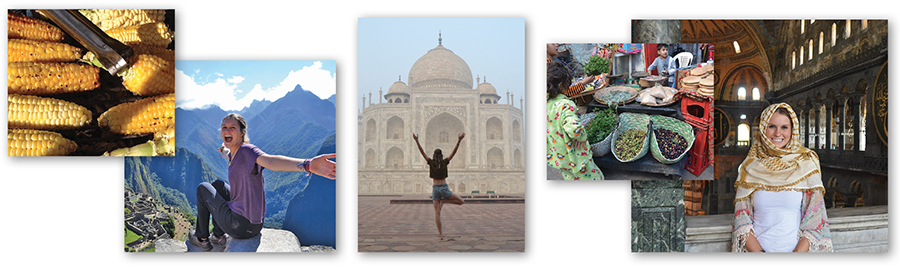
“If you are open to people,” she reflects, “they will open up to you. Everywhere I went I found people who were warm and receptive — eager to share whatever they had, including food and wisdom. It was deeply enriching.”
By the time she got home to Greensboro to do her 10-day detox programs and help out with her sister’s wedding, she knew it was only a matter of time until she returned to South America.
On the road again with her backpack, she worked at a youth hostel in Chile and trekked in the Argentinian high country (“They eat so much meat. I lived on peaches and bread.”) From there it was on to Europe to work at an organic veggie farm in Germany. “I loved that work — every morning in the garden, weeding and watching plants grow and cooking meals from food you have taken straight from the garden. There’s nothing healthier or more delicious than that.”
Her next step was Nepal for three months, where she trekked the Annapurna Circuit through the Himalayas and fell in love with the people and food of Nepal. She also did five days in a Buddhist monastery in Katmandu, a meditation course that further shaped her emerging consciousness. “The deep silence, the simple food — soup, bread — sitting on the floor, being with people who were so genuine and loving. It really did change my world.” A highlight was her visit to Lumbini, the birthplace of the Buddha.
Moving on to India, she took cooking classes and went to Varanasi, explored the Taj Mahal and visited Mathura, the birthplace of Krishna, continuing her pilgrimage to the sacred places where the Buddha became enlightened, first taught the dharma, and eventually died. Her travels took in the famous beach at Goa, the Ajanta caves, the teeming streets of Mumbai and Delhi.
Following another time home in Greensboro to teach cooking and study yoga, she returned to India to attend the International Yoga Festival at Rishikesh and took her yoga teacher training at Bhagsu, a small village where she heard the Dalai Lama speak several times and visited his temple. Upon returning to Bhagsu, where she continued cooking classes and yoga training — learning to make jewelry and dreamcatchers in the process — she began to formulate her own vision of a life of service in which she shared the wisdom of her travels through cooking and yoga.
On her way home, she stopped off in Spain to walk the famous Camino de Santiago, having made up her mind to start a business called Root to Rise. The name is taken from a common term in yoga in which one “grounds down through your feet and extends your arms over your head, lengthening your body and radiating energy.”
The name felt right, she adds, because her plan was to “ground down” after her nomadic travels in a place — Greensboro — where her own roots existed, with the purpose with helping the people of her home town “rise” to live their healthiest and fullest life.
“One important thing I’ve taken from all of my travels to such beautiful and amazing places is how close to the Earth people in those places live — simply and typically without the pressure of material life and a commercial culture that equates happiness with things you buy or own. They know where their food comes from, and that is almost sacred to them, a daily blessing.”
She pauses and smiles. “Basically, I learned that food is medicine for the body and soul. That it nourishes and heals — and affects everything you do in your life.”
And for this reason, Cameron Klass returned home with her mind set to put her worldly wisdom — and recipes — to use by integrating a healthy-living style of cooking, a weekly stall at the Greensboro Farmers Curb Market on Yanceyville Street, and a forthcoming cookbook that will feature recipes from her magical mystery tour of the planet.
Her longtime customers and yoga students are eager to get their hands on her Root to Rise cookbook, a project Klass envisions expanding into an interactive website with daily meditations, wellness information, food investigations, healthy-living news, grocery lists, in-season recipes and even travel tips.
“Everything in life follows a process of growing and learning,” she adds. “That’s why I am excited to share the wonderful things I’ve learned where my roots are.”
And we are glad to rise with her.
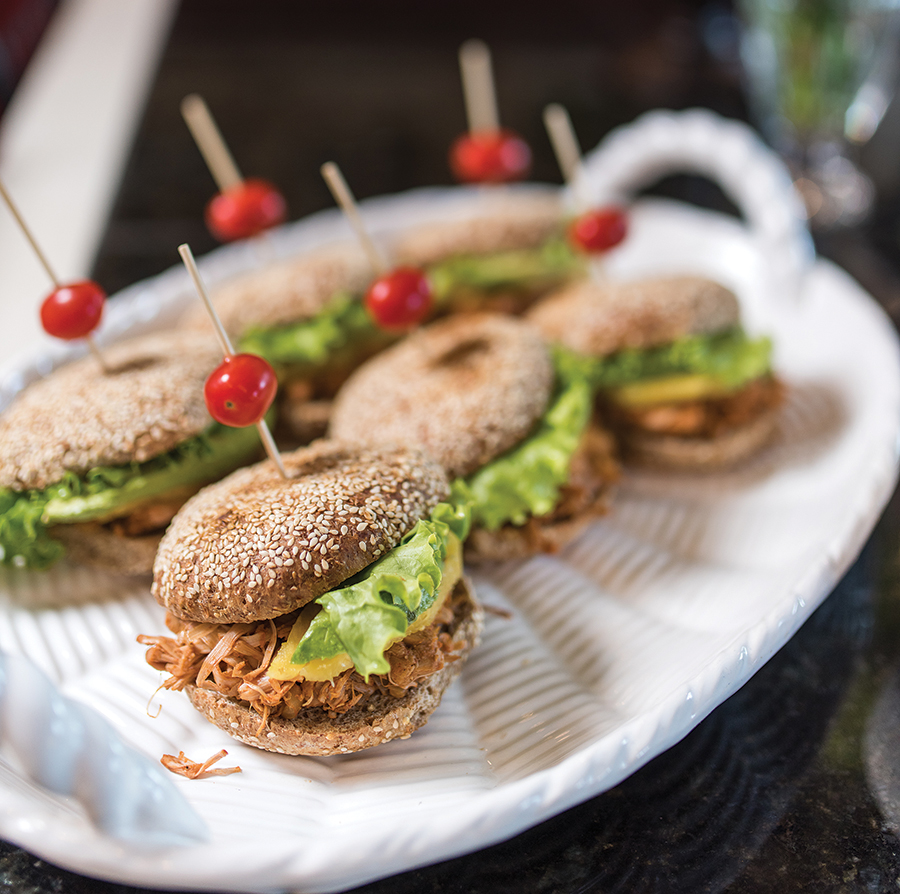
NORTH CAROLINA VEGAN BBQ SANDWICHES
Serves: 6 sandwiches
Time: 25 minutes
2 tbsp. olive oil
1 yellow onion, chopped
2 cloves garlic, minced
2 (14 ounce) cans young jackfruit, rinsed and drained
2 tbsp. apple cider vinegar
2 tbsp. ketchup
1 tbsp. coconut sugar
1 tbsp. white vinegar
1 tbsp. red wine vinegar
1/2 tbsp. Dijon mustard
1/4 cup vegetable broth
1/4 cup water
1 tsp. cumin
1/2 tsp. onion powder
1/2 tsp. paprika
1/2 tsp. chili powder
1/4 tsp. red pepper flakes
1/4 tsp. cayenne pepper
1/2 tsp. salt
Sandwich:
6 Ezikiel burger buns
1/2 pineapple, sliced thinly
2 avocados, sliced
6 lettuce leaves
Heat 2 tbsp. olive oil over medium high heat, until hot but not smoking. Add the onion and garlic, sautéing for 5-7 minutes, until just beginning to brown. Add in the jackfruit, and remaining ingredients. Using a fork or potato masher, break the jackfruit into shreds. Add more water 1 tablespoon at a time if it appears dry. Lower the heat to medium and cook, uncovered, for 12-15 minutes. Stir occasionally to blend flavors.
While the jackfruit is simmering, toast the buns until golden brown. Cut the pineapple and set aside. Wash and pat dry the lettuce leaves. When the BBQ is ready, top on the buns, adding in pineapple slices, lettuce, and avocado slices. Enjoy!
Store leftover BBQ in the fridge for 2-4 days.

CAMINO SALAD
Serves: 4
Time: 15 minutes
4 large handfuls leafy greens
1 can chick-peas, rinsed and drained
1 cucumber, sliced
2 tomatoes, diced
1 cup green olives
1 avocado, sliced
1 cup organic sheep cheese, cubed
Salt and pepper to taste
4 tbsp. Cam’s Go-To Dressing
Divide the ingredients among four bowls and toss with the dressing. Enjoy!
Health tip: When consuming cheese, sheep and goat cheese is a better alternative for health and environmental purposes than cow cheese. Sheep cheese has high levels of conjugated linoleic acid (CLA), which reduces body fat, maintains muscle, and improves bone health. Goat cheese is more easily digested than other cheeses. And both sheep and goat farms create less of an impact on the Earth than cattle farms. They require less water, produce less waste and methane, and traditionally use more organic farming tactics.
CAM’S GO-TO OIL AND BALSAMIC DRESSING
5/8 cup olive oil
1/4 cup balsamic vinegar
1/8 cup water
1 tsp. dried basil
1 tsp. dried parsley
1/2 tsp. dried oregano
Salt and pepper
Place all ingredients in a jar and shake well. Keeps on the counter for 2 weeks.
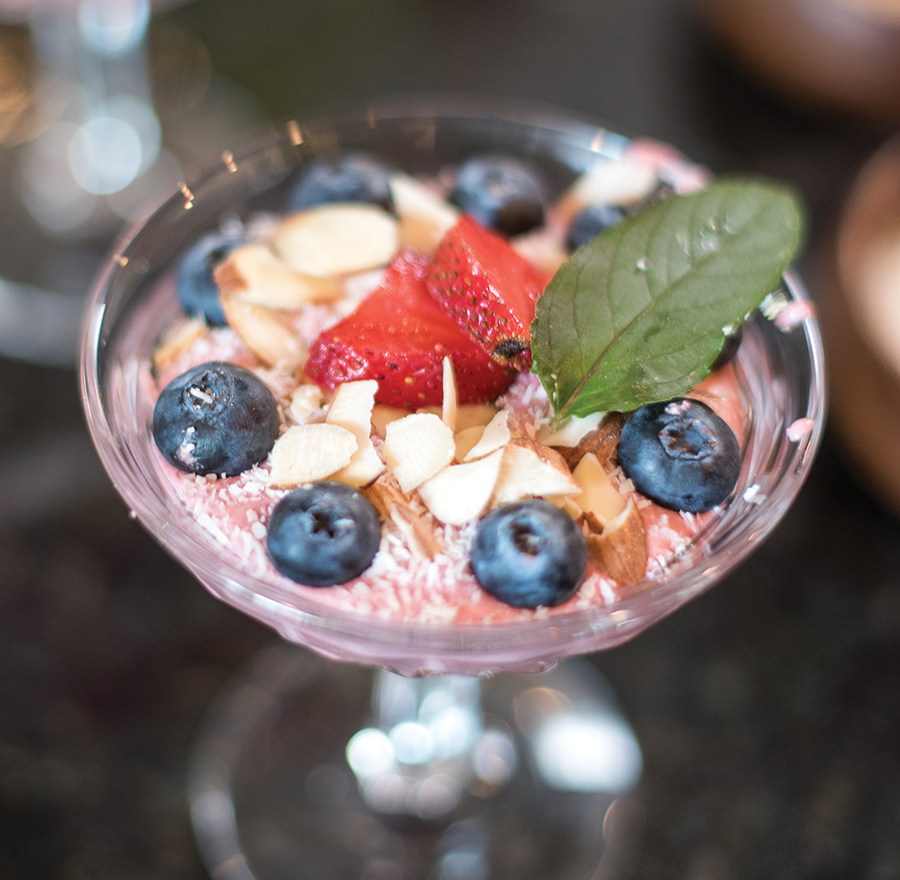
VERY BERRY SUMMER PARFAIT
Serves: 2
Time: 1 hour chill time + 10 minutes
1 (15 ounce) can organic culinary coconut milk, full-fat (refrigerate the can 1 hour or more before opening)
1/2 cup organic frozen strawberries (or berry of choice; if using fresh fruit, add ice)
1 tbsp. ground flaxseed meal
1 tsp. beetroot powder
1/2 tsp. pure vanilla extract
1/2 tsp. cinnamon
Toppings: fresh fruit, organic unsweetened coconut shreds, dash of cinnamon, chopped nuts.
Place the can of coconut milk in the refrigerator 1 hour or more prior to making the parfait.
When you open the can, use a spoon to place the thick white part that has accumulated on the top in a blender. Add 1/4 cup of the liquid from the can of coconut milk to the blender along with all other ingredients.
Blend until smooth, stopping to scrape the sides if needed. To alter the consistency add more ice to thicken or more liquid/water 1 tbsp. at a time to liquify.
Divide among two parfait bowls and add your favorite toppings! OH

Because love trumps money
By Clyde Edgerton
After a recent day of teacher protest in Raleigh, a Buzz from the StarNews went something like this: “If they want more money, why do they teach?”
One answer: “To educate young people in such a way that America doesn’t end up with about 40 percent of its adults who think like you do.”
For some reason, I’m guessing the question-asker is an adult male — kind of irreverent in an annoying way, annoyingly pushy, laughing in an annoying way about being pushy. This guy, let’s call him Norman, probably has a boring, well-paying job, and loves to watch TV and collect, say, bicycle spokes. He made Cs in high school, finished two months of college, then dropped out because it was boring.
Today, his boring job pays a pretty good salary — for a person with the creativity of mud. He has health insurance and is going to retire as soon as possible so he can spend the rest of his life watching TV and collecting bicycle spokes. He likes quiz shows and action films — the ones that aren’t too complicated. He likes to bet on sports. He dreams of being a millionaire. He knows that greed makes the world go around. Greed makes people work hard. Teachers aren’t greedy, so they don’t work hard.
I had Norman pictured as about 40 years old, making maybe 48 to 54 grand a year, but I just now had a switch-glitch.
I had him wrong.
Norman is actually a multimillionaire who lives carefully, counting his money. He got some lucky breaks. He thinks of himself as cool — though he doesn’t collect bicycle spokes — he has no hobbies; he’s a little less creative than the first Norman. He does have two Thomas Kinkade paintings except one of them doesn’t have the little original spot of real paint. He has a cool Mercedes. He’s 62, and has had some face-work. Maybe a little too much — since he looks kind of like a 38-year-old who’s constipated.
He’d volunteer in a public school if he could find one that paid $1,200 per hour. But why should he spend even a second thinking about public schools? He has a portfolio. And a nice $920,000 yacht. He has a membership in a high-end country club. (Don’t get me wrong — there are people in country clubs without face-lifts.) His thought is: What is public education anyway but a place for poor kids? Like the children of teachers. He, like the first Norman, asks, “If they want more money, why do they teach?”
They teach because most of them love teaching. Love it in spite of a collapse of respect for what they do — in spite of a surprisingly large percentage of their country’s budget going for “leadership.” Whoa. In spite of bosses with a Bluetoothed ear who sometimes visit in schools that might well expel a student who refused to un-Bluetooth her ear. In spite of insane testing mandates from the government. In spite of people working around them for $11 an hour — with their state government and local school board rubber-stamping those poverty-making wages.
They love teaching. They are rewarded by the look in the eyes of a child who is excited about learning something — like, say, a new language, how to play clarinet, or how to solve a calculus problem. They believe that look in the eyes of a curious child might, with some luck, be morphed into a dream that does not depend on money for happiness, a dream that finds purpose in serving others, that creates a permanent curiosity about the world, a permanent respect, even love, for their neighbors — even neighbors who have far less than they do. The deep excitement in teaching and learning is water for a thirsty nation.
While it’s appropriate to say, “Thank you for your service” to a vet, it’s just as appropriate to say, “Thank you for your service” to a teacher. Both make our nation safe. Both have tremendous power — one to destroy, one to build.
If they want more money, why do they teach? To build student insight and character through knowledge, and thus make our nation better able to handle something as risky as democracy. OH
Clyde Edgerton is the author of 10 novels, a memoir and most recently, Papadaddy’s Book for New Fathers. He is the Thomas S. Keenan III Distinguished Professor of Creative Writing at UNCW.

Not everyone qualifies for shelf space
By Susan S. Kelly
Not long ago someone said to me, “I’m cutting down on friends because I find it cuts down on expectations.” In the same week, my sister informed me that coffee table books are o-u-t. She knows this kind of thing because she lives in Charlotte. Both pronouncements indicated that, after hurriedly sweeping tables free of Irish Country Houses and Flowers for Entertaining and the like, I needed to take a good long look at my bookshelves.
Despite the fact that I’m an inveterate deleter — of photographs, recipes, clothes, emails (especially emails, and you would be too if your daughter had found the one in which you’d commented to your sister that, during your daughter’s semester in France, it was obvious that she’d eaten more éclairs than haricots verts) — I have bookshelves upstairs and down, in bedrooms, in halls, in the kitchen, in an armoire, in corner cupboards, even behind a desk against the wall where I can’t see the books themselves. Time to apply that neat-freak guru’s Does It Bring You Pleasure? dictate to my bookshelf contents.
First to go: The Adventures of Tom Sawyer. I don’t care if it was my mother’s. I don’t care if it has Mark Twain’s personal signature on the flyleaf. Nobody likes that book. Nobody. The very title makes me think of my son’s comment that melancholy instrumental music always makes him think of summer reading requirements, i.e., depressing. I so get that, and so farewell to Cry, the Beloved Country, too.
Here go the various books penned by my Master of Fine Arts teachers, because I thought that they’d notice I’d bought them and mention to their editors that I was worthy of publication myself. Brown-nosing does not get you published. Maybe, in a pinch, you’ll get a cover blurb, but of course you have to get published first. Out.
Here’s the shelf that makes me think: What was that about? Meaning not the book’s plot, but why I ever bought it. Take Ellen Gilchrist’s books. I thought she was a tough Southern broad and that if I read her stuff, I’d grow up just like her. OK, so that happened; no need to keep. This row of Leon Uris books, when I was on a Jewish jag. Poof. Begone, Barbara Kingsolver. So long Stephen King’s The Stand, the only book I’ve ever read that caused me to shake my husband awake at 2 a.m. because I was so terrified.
Wait, what is Jonathan Livingston Seagull doing here? And Rod McKuen’s Listen to the Quiet? Remnants of the soulful ’70s get no shelf space. Yet what does it say, pray, that I can’t part with The Preppy Handbook? It says that I Instagrammed a photo of it and the number of people who responded that they still had a copy was astounding. What this says about me, or them, is something I’d rather not delve into too deeply. But The Preppy Handbook stays.
Never mind the defunct coffee table books; what to do with all these “little” books? You know, the kind that were gifts or you bought in a museum store. First lines of famous books. Last lines of famous books. The kings and queens of England. Frank Lloyd Wright’s Falling Water. Joan Walsh Anglund.
To keep: Eleanor and Franklin, because it was a U. S. History Prize, in high school, and I was so stunned that I won. I’m no history buff, but I’m very good at memorizing. Here goes Pilgrim at Tinker Creek. Don’t care that it was a college graduation gift. Don’t care that it’s a Pulitzer. It’s boring, and unlike Annie Dillard, I never was much given to introspection, much to my husband’s dismay. Because here is row upon row of his Jesus books, with sleeping pill titles like Christianity and Culture, The Beginning of Wisdom, The Love of Learning and the Desire for God. Lord, I rest my case. Guess I’ll have to keep the two-tome volume of Governor Reagan and President Reagan, since my spouse has never seen fit to even remove the shrink wrap cover.
During a stint as a librarian, I myself shrink wrapped my childhood hardback of Stuart Little because my daughter (see above) read the same copy aloud to me every night before bedtime while I played Tetris on Game Boy — and you’ve never read E. B. White if you haven’t heard it in an 8-year-old’s voice. Nor will I ever part with anything Tasha Tudor illustrated: The Secret Garden and A Little Princess. The four-volume edition of The Raj Quartet and Brideshead Revisited are keepers because I was so addicted to their versions on Masterpiece Theatre.
All Alice McDermott books stay. All Julia Glass books stay. All Jane Smiley books stay. All John Updike novels and short stories stay, if only for the heartbreaking, last-line comeuppance in “A&P” and the marital depiction of “Wife-Wooing.” My copy of William Faulkner’s Absalom, Absalom! stays because it falls open naturally to the lines I’ve read so often: “Tell me about the South. What’s it like there. What do they do there. Why do they live there. Why do they live at all.” Here’s to the hard-drinking writers still trying to figure out their love/hate relationship to the South. I think I know one. Besides, don’t you love a great “hate” line? “Love Rebecca? I hate her!” Oh, Maxim de Winter . . . Rebecca, and all Daphne du Mauriers stay.
The $3,000 worth of bridge books stay. They’re an investment . . . that hasn’t matured.
I’m exhausted. Meaning I’m just going to pretend like Dr. Zhivago isn’t staring me in the face right beside Gone with the Wind. After all, tomorrow is another day. OH
Susan S. Kelly is a blithe spirit, author of several novels, and a proud grandmother.

Ballinger Academy, downtown Eye candy and an ode to Dear Old Dad
By Billy Eye
“True terror is to wake up one morning and discover that your high school class is running the country.” — Kurt Vonnegut
Just weeks ago, I lost a very dear friend of mine. After a long and protracted battle, he finally succumbed to his wife’s demand that he not hang out with that bum Billy Eye anymore.
Perhaps as conciliation, my pal Caleb Gross, knowing how much I love a mystery, pulled up a Google satellite image of a large, manufacturing plant–sized building at the end of a winding, unpaved trail off Friendway Road near West Market Street. Caleb’s dad had lived in the Westwind Area neighborhood years ago, and that elephantine structure sequestered behind a row of mid-century homes had always fascinated him, being so completely out of place and long ago abandoned.
It has no discernible address, doesn’t seem to appear on any map, nor is the property listed on Zillow. Eye became intrigued as well, so we went urban excavating, motoring past the “No Trespassing: Violators Will Be Prosecuted” signs to steal a closer look. Caleb, by the way, is the drummer for our region’s banging-est punk band, Basement Life, whose latest album Devour is one of my all-time favorites. In addition to being a ferocious skin beater, Caleb’s a devoted father and hard-working professional.
What we discovered at the end of that dirt trail was a low-slung, one-story building fronting a Georgian Colonial-–inspired, four-story structure, a bit disheveled but totally intact, with unusually high ceilings. The windows weren’t broken — imagine that — but all entrances and lower floor windows have been boarded up to prevent egress. My first thought was, what a great event space this would make.
Surrounded by five acres of slightly overgrown lawn, there is no signage or anything identifying the property, but an adjacent athletic field suggested that this may have been a school of some sort. Sure enough, after asking around, it was Lady Katei Cranford who informed me that this was once Ballinger Preparatory Academy, also known as The Little Red Schoolhouse.
Attorney Max Ballinger and his wife Patsy bought this former preschool not far from their 100-acre Guilford College farmstead. After 12 years teaching at Sternberger Elementary, this was a dream come true for Patsy Ballinger, to be headmistress of her own academic enterprise.
Beginning in 1971, students attended kindergarten through 8th grade at Ballinger Prep, with class sizes ranging from 10–12 students. Under Patsy’s tutelage, pupils were immersed in a curriculum emphasizing geography, science, social studies, government, history, mathematics, as well as gaining fluency in French. Each day, students attended classes in the arts — music, drama, painting and creative writing.
It wasn’t unusual for Ballinger attendees to win the national Geography Bee. Students were encouraged to write books, many of which were published and achieved acclaim. Ballinger’s motto: “You don’t have to do it, You get to do it!”
First to arrive each morning and last to leave, Patsy directed and often times composed two dramatic or musical productions each term, insuring every child had a chance to participate in some way. Field trips afforded older students an opportunity to experience a variety of distant locales such as the Outer Banks, Williamsburg, Cape Canaveral, our nation’s capital, even white water-rafting down the New River.
When Ballinger Prep closed after the 2002 term, enrollment had dropped to just a few dozen, that year’s seventh grade class was just four students.
Caleb and I didn’t go as far as pulling particle board off the windows of the now vacant academy, not my style, but a visitor to this property in 2011 got a good look at the inside and discovered classrooms with desks and chairs in place, graded papers and a pair of glasses resting on a teacher’s desk.
On a related note . . .
Downtown the other day, on the corner of Elm and Washington, waiting for a light to change, I overheard a young man say to his wife, who was strolling their baby, “Look, there’s a candy factory. You want to go check it out?” They were referring to a building across the street from the Depot. “Don’t bother,” I told them. “There’s no candy factory there nor has there ever been.” They were puzzled, “Then why did they paint ‘Gate City Candy Factory’ in large letters on top of that building?” Beats me.
That brick, multilevel structure at 301 South Church Street, is currently home to The Experiential School of Greensboro, where, coincidentally, Caleb is hoping to enroll his 6-year old son this fall. This tuition-free collaborative for K-7 students opened its doors only last year, yet there’s already a waiting list.
The charter’s mission statement declares, “The Experiential School of Greensboro educates creative critically engaged citizens using an experiential curriculum that extends the classroom into the downtown Greensboro community.” That’s why you’ll occasionally witness a gaggle of youngsters taking part in a field trip making their way in a neat little row across downtown sidewalks.
A benefit concert for the school was held in May, “Songs of Peace and Community,” featuring many of the city’s finest singer-songwriters including Rhiannon Giddens, Laurelyn Dossett, Charlie Hunter and Molly McGinn, among others.
Meanwhile, talk about taking it back to old school, Caleb Gross and Basement Life have a show on June 8th at The Blind Tiger on Spring Garden, Eye’ll see you there?
***
I often wax nostalgic about members of the well-named Greatest Generation. Something about living through The Depression, World War II, the economic boom of the 1950s and ’60s, gave them an almost singular perspective, embodying the American Dream that subsequent generations squandered.
I was unexpectedly reminded of two friends of my parents, Tom and Leenette Wimbish (Wimbish Insurance) both departed, she just last year. Pulling a book from my library, an 8 x 7 pamphlet I’d never seen before dropped into my hands, a collection of poetry self-published by Tom Wimbish.
The final verse in his booklet, one entitled “My Dad,” is a clear-eyed portrait of the quintessential Depression-era Southern gentleman:
Standing straight and tall in the worldly wind,
Rigid in his beliefs, to the very end.
Arbitrate, not he; and need we ask,
An unwavering devotion to every task.
Love, he showed in a particular fashion,
Patience, he had as if on ration.
But, good he was in every pore,
His memory engraved forever more.
And, thus these lines thought somewhat sad,
Do honor and glory, my Dear Ole Dad. OH
Billy Eye is O.G. — Original Greensboro.