Omnivorous Reader

Omnivorous Reader

The Skill of Perseverance

The remarkable second act of John Quincy Adams

By Jim Moriarty

If your American history IQ, like mine, falls somewhere between Animal House’s Flounder — “fat, drunk and stupid is no way to go through life, son” — and the great David McCullough, you’ll find America’s Founding Son both an enlightening and rewarding portrayal of our sixth president, John Quincy Adams.

It’s written by Bob Crawford, something of an oddity in itself given he’s the upright bass player for The Avett Brothers band. “For more than two decades, I’ve studied American history while rambling up and down the interstates, freeways, and back roads of America,” Crawford writes in his introduction. While not exactly an autodidact, his lifelong fascination, beginning as a kid collecting fliers about historic landmarks at highway welcome centers, places him in the company of another member of the band, Scott Avett, who has a side hustle as an admired visual artist.

With the recent passing of Ted Turner, one is reminded of the quote he often attributed to his father, “Be sure to set your goals so high that you can’t possibly accomplish them in one lifetime.” This is, in fact, the crux of Crawford’s thesis about Adams and the goal was, or became, the abolition of slavery. His primary source is Adams’ own diaries, written faithfully on a daily basis, that illuminate the arc of JQA’s understanding of how America must eventually, and tragically, cope with its most egregious and contradictory failing.

Jimmy Carter is often extolled as a man who, in the modern age at least, made the most of his post presidency, but he was a piker compared to John Quincy, who, after losing the presidential race of 1828, briefly considered retiring from public life but instead won election to the U.S. House of Representatives. He served the citizens of Massachusetts in that capacity from 1831 until his death in 1848, when he collapsed at his desk in the House chamber and died two days later on a couch in the Speaker’s Room in the Capitol building. During those 17 years, Adams became a formidable opponent of slavery, argued the Amistad case before the Supreme Court, defeated the “gag” rule designed to muffle anti-slavery petitions, and outmaneuvered efforts, led by representatives of the “slavocracy,” as Crawford calls it, to censure him.

“John Quincy Adams may not have been an extraordinary president like Washington and Lincoln, but he is our most extraordinary ex-president. A maverick. A public servant. An American hero,” Crawford concludes.

Adams’ opposition to slavery was never in question, but his theories on what exactly to do about it evolved over time, a transition Crawford illustrates through Adams’ diary and speeches. “America’s founding son had reached the end of his patience,” Crawford writes of an 1844 clash on the House floor. “He shuddered in 1820, when he prophesied a violent dissolution of the Union, but all he had experienced in the nearly twenty-five years since proved to him that the South would never, ever, voluntarily or otherwise, give up being the enslavers.”

Crawford’s fascination with the period of American history between the War of 1812 and the Civil War came into focus after reading Sean Wilentz’s The Rise of American Democracy: Jefferson to Lincoln. His own study of John Quincy is divided into three acts. The first begins with Adams’ appointment as secretary of state under James Monroe, covers his election to the presidency in the House of Representatives in 1824 (the second time the young republic picked a president in that manner), his loss to Andrew Jackson in their rematch in 1828 and concludes with the voters of Plymouth, Massachusetts, sending him to the House as their representative. In act two Crawford does an admirable job of setting the table. “In 1835, the slavery issue was tearing the fabric of the nation apart. Its threads tossed into a smoldering furnace of bigotry and hate. And there was Adams. A witness to all of it. Sitting on the fence. Waiting for his moment.” That moment builds to a crescendo in act three.

The political figures of the day — Jackson, Henry Clay, John C. Calhoun, Martin Van Buren — are carefully drawn, as are the central issues of nullification (What if the federal government says one thing and a state refuses?) and what to do about Texas. Of equal, or even greater, interest are the abolitionists: Benjamin Lundy, Charles Finney, Theodore Weld, Arthur Tappan (full disclosure, the square at my alma mater is named Tappan Square), William Lloyd Garrison and the writings of David Walker.

When Crawford first pitched the idea of America’s Founding Son to his agent, he thought he’d be paired with a writer to produce the final work. Instead, he was left to his own devices. The result is highly readable, no small feat when you’re bound to be leaning on quotes written in the first half of the 19th century. If there is any complaint — and it is admittedly minor — it’s that on a rare occasion or two he strays too far into the vernacular of his own day, seemingly trying a bit too hard to prove that history doesn’t have to be tedious and dense. This is, perhaps, an innocent byproduct of cohosting his history podcast, “The Road to Now.”

Where Crawford ends up is in praise of a historical figure most of us, I’d venture to say, don’t often associate with greatness. “Adams brought the issue of slavery out of the darkness and into the light of the center of politics in the United States — the People’s House. John Quincy Adams preserved and protected the American democracy established by the founding generation — his father’s generation,” writes Crawford. “As the man standing in the breach, Adams passed the aspirations of the Declaration of Independence on to the next generation. With one hand reaching back to the founding and the other reaching forward toward the Civil War, John Quincy Adams is a bridge and perhaps the best representation of America’s tortured adolescence.”

If, in reading Founding Son, you see traces of modern America — our deeply flawed and fractured America — so does Crawford. “I can’t say for sure whether history repeats or rhymes, but I do notice echoes from the past in our present. That’s because history is driven by people — and people haven’t changed since 1776,” he writes. “Truth be told, people haven’t changed since Adam and Eve, or however you signify the beginning of time (or should I say history?). Spend a little time reading about the 1830s and 1840s, and you’ll encounter figures who feel eerily familiar. They dressed differently, used different slang and communicated via what now seem like antiquated technologies — but in a very real sense, we are them and they are us.”   OH

Jim Moriarty is the editor of PineStraw. He can be reached at jjmpinestraw@gmail.com.

Life’s Funny

Life’s Funny

Begin the Begats

A longstanding Greensboro church makes room for an up-and-coming flock

By Maria Johnson

Photograph by Lynn Donovan

You might remember my January 2023 column about a venerable, old Greensboro church’s plan to sell their property and downsize, a sort of spiritual and physical transformation.

Well, the 120-year-old Presbyterian Church of the Covenant — worshippers affectionately call the place “peacock,” the phonetic version of PCOC — finally has a reason to flash its feathers.

The small congregation has sold their massive complex and found a more suitable space that’s literally across the street.

At the same time, the old church property has been assumed by a younger, up-and-coming congregation, the Citadel of Praise Church & Campus Ministries, which has occupied different rental spaces around Greensboro since its founding 23 years ago. Finally, the nondenominational, charismatic congregation has a home of its own.

In many ways, it’s a story of generational and societal change written on the back of a church program.

“It feels like a torch is being passed,” says Joyce Powers, an 83-year-old PCOC member and self-described “catalyst” of the hand-off.

First, a little history.

PCOC, then called the Walker Avenue Presbyterian Church, started in 1906 as an offshoot of First Presbyterian Church and Westminster Presbyterian, both on the edges of downtown Greensboro.

The upstart church, which changed its name a few years later, focused on serving young people around Greensboro College and the state-run school that would later become UNCG.

For years, the congregation worshipped in a small, wooden church. Then, backed by several prominent families, they hired notable architect Harry Barton — who also drew plans for the Guilford County courthouse, as well as UNCG’s auditorium and chancellor’s house — to design a stately house of worship.

Done in the Neoclassical Revival style, the 1919 building hunkers at the corner of Mendenhall Street and Walker Avenue. Additions eventually covered much of that block.

From the beginning, PCOC was an activist church.

Members nursed the sick during the recurring flu pandemic of the late 1910s.

They fed soldiers who paused at Greensboro’s Overseas Replacement Depot in World War II.

They housed programs that provided child care, counseling, a preschool for blind children, and enrichment for disabled adults.

More recently, as their numbers dwindled, they leased out worship space to different denominations and nondenominational groups, as well as to artists and musicians.

In 2019, Greensboro native and Grammy-winning musician Rhiannon Giddens, who once attended PCOC, joined other local musicians at the church for a concert benefitting the Experiential School of Greensboro.

By the time the COVID pandemic hit — nearly 100 years after the flu pandemic — the congregation, which numbered 30 on a good Sunday, knew they had to make a change. As with many mainline U.S. churches, shrinking membership made it difficult to keep the physical plant going.

They had a grand vision.

They would sell their sprawling complex to a developer who would keep the property largely intact, rehab it into an affordable live-work-play space and, hopefully, rent back a space to PCOC so the congregation could continue to worship there.

The church entertained potential buyers starting in 2023.

Several developers looked at the fixer-upper.

And passed.

“There was hope. Then there was not. Then there was hope. Then there was not. We went through a roller coaster,” Powers says.

Finally, the church hired an agency that specializes in selling churches nationwide, and the property was listed for sale “as is.”

That’s how the Rev. Greg Drumwright, who started his church in 2003, just before graduating from N.C. A&T, found out about the property. Someone else had filled out an online contact form using his name, and an agent followed up.

Drumwright — who had indeed been searching for a permanent home for his flock but had no idea PCOC was up for grabs — went with the flow.

A showing was arranged.

Drumwright met PCOC’s minister, Rev. Mark Sandlin, and common threads quickly emerged. Both had attended divinity school at Wake Forest University.

Drumwright also learned that PCOC was once pastored by the Rev. Z. Holler, a well-known civil and labor rights activist. A social justice advocate in the same vein, Drumwright — who received national attention for ministering to George Floyd’s family during the 2021 trial of Floyd’s killer, a former Minneapolis police officer — felt a kinship between the churches.

“It felt like we were meeting our aunts and uncles and grandparents,” he says. “I would call that providential.”

Like the PCOC of yore, the Citadel is known for its outreach to college students and for its hands-on involvement in social and political issues. Drumwright walks his talk; he’s the Democratic candidate for an at-large seat on the Guilford County Board of Commissioners, and Powers says PCOC members back him.

“This is a guy who makes things happen,” she says.

In December, PCOC members, most of whom are white, worshipped in their old home for the last time, alongside the Citadel’s mostly Black congregation.

PCOC mustered most of its 40 members, many of them silver-haired.

The Citadel, which boasts a congregation of more than 250 people, most in their 20s, 30s and 40s, filled the rest of the pews. The Citadel choir belted out hymns of praise.

“They shook the dust off the chandeliers,” says Powers. “It was wonderful.”

“It felt transitional and transformational,” says Drumwright.

The churches closed the sale on the last day of 2025.

Knowing that the property went to a growing church, PCOC members leased another space right across Walker Avenue, inside the Victorian home known as the Holderness House, which was built for the current owner, the Presbyterian Campus Ministry.

The resettled congregation will hold an open house with music, lemonade and watermelon  from 5–7:30 p.m., Saturday, July 18, with a rain date of Sunday, July 19.

Drumwright says the Citadel, too, plans an open house, probably in the late summer or early fall, once they’ve spruced up the sanctuary and fellowship hall.

Like elderly homeowners who sell their property to younger families, Powers says PCOC members delight in watching from across the street as the Citadel’s energetic members plant flowers and work to restore the aging church home.

And who knows? Maybe someday PCOC members will move back in with their spiritual children.

“We’ve told them: ‘You can always come home,’” says Drumwright.  OH

Maria Johnson is a contributing editor of O.Henry. Email her at ohenrymaria@gmail.com.

Tea Leaf Astrologer

Tea Leaf Astrologer

Cancer

(June 21 – July 22)

It wouldn’t be Cancer season without a few tears, your basic mood swings and a new pair of house slippers. That said, with Mercury retrograde in your sign until July 23, expect more introspection and — you know you love it — a bit more time at home. Pick up a bodice ripper that you can’t put down. Make a playlist of hits from the year you were born. In other words: Distract yourself from making rash decisions until month’s end. And even then, try not to get swept up by your own swell. 

Tea leaf “fortunes” for the rest of you:

Leo (July 23 – August 22)

Listen to your gurgling gut. 

Virgo (August 23 – September 22)  

Clean the baseboards. 

Libra (September 23 – October 22)

Pass on the potato salad. 

Scorpio (October 23 – November 21)

Look for the silver lining. 

Sagittarius (November 22 – December 21)

Just let things steep.

Capricorn (December 22 – January 19)

Trust what you already know. 

Aquarius (January 20 – February 18)

Stop at the farmstand. 

Pisces (February 19 – March 20)

Try firefly therapy. 

Aries (March 21 – April 19) 

Bring something to the potluck. 

Taurus (April 20 – May 20)

Three words: homemade ice cream. 

Gemini (May 21 – June 20)

Hit refresh. OH

Zora Stellanova lives in the N.C. mountains with her wolfdogs, Venus and Lilith. Although she prefers divining with loose-leaf pu-erh, she recommends a mugwort and passionflower blend for those seeking wisdom and clarity from the dream realm. 

Sazerac July 2026

Sazerac July 2026

Sazerac July 2026

Unsolicited Advice

If you have never owned a pooch, then visiting a dog owner’s home may seem a little strange to you. They don’t operate like houses without wagging-tail greetings. You’ll hear phrases or words yelled over and over again. And, if you neglect to use them while visiting, you might be met with fluffy ears cocked in confusion. Take it from us, you don’t want to be caught without the proper puppy parlance. Don’t fret, we’ve compiled a list of useful common phrases to know before you hit the homes of these happy hounds.

About twice a day you’ll hear “Walk?” Say this and watch every flappy ear in sight shoot up and you’d better get ready for the barrage of wagging tails running straight toward you. Just be cautious: If you accidentally drop it into conversation, you may find yourself guilt-tripped into a late-night stroll, holding the leash of a cheerful canine.

“Who’s a good boy/girl?” you’ll hear a dog owner say as they scrunch, ruffle and scratch behind their pups ears. Don’t be tricked. “Good” probably refers to the dog having decided to chew on their bone instead of the living room furniture. So what if they respond to the question by masticating a choice Birkenstock? It’s all relative.

“Treat,” anyone? The easiest way to a dog’s heart is through the stomach — that’s just the way the bone-shaped biscuit crumbles. Whether they’ve eaten an hour ago or five minutes ago, a treat will always be happily wolfed down. Who doesn’t love a mid-day Scooby snack? It’s guaranteed to sweeten the bond between the two of you.

Window on the Past

Photograph courtesy of the Greensboro History Museum

A pet sheep may not sound ideal, but, in the early 1900s, you never knew what might wander onto the lawn around Ceasar and Jeanette Cone’s first Greensboro mansion. Still, we’d bet counting sheep there contributed to some much needed slumber — and honestly, that doesn’t sound too baaaaaad.

Art to Heart

UNCG biology student Kayden Friddle knows that there’s an art to blazing a path forward. Born and raised in Summerfield, Friddle is an artist whose pyrographic work consists of burning wood and leather with sketches of bears, dogs, birds, cats and just about anything you can find in the wild — or at home with a wagging tail. “I use a really hot tool that burns the wood to make patterns,” says Friddle, “the same way you would draw with a pen.” While it may sound simple enough, woodburning requires precision and patience — oh, and, at the very least, an artistic hand. As a child, Friddle says all the content she consumed — documentaries and TV shows — and the toys she played with were, you guessed it, animal related. Inspired by traditional pyrography artists, she began experimenting beyond wood. With a steaming-hot pencil in hand, Friddle crafted her own method, discovering new techniques. “I had seen where people have done pyrography and wood burning but, at the time, I hadn’t seen anyone do it on leather.” So, she adds, “I crafted a method to do it.” Her love for animals extends far beyond her medium. Merging her creativity with compassion, she has auctioned her work and donated from 50%  to, sometimes, all proceeds to Red Dog Farms Animal Rescue Network and World Wildlife Fund, both nonprofit organizations dedicated to rescuing animals. Turns out, Friddle’s work makes a mark on more than just leather and wood. Info:
kaydenfriddleart.com. 
OH

Sketch Artist

This rising artist —  the 11-year-old winner of our Dolley Madison sketch contest — Josephine (Jo) Reese clearly has a knack for drawing picture-perfect first ladies. With creativity and skill already peeking through, she is well on her way to painting her own path — quite literally!

Just One Thing

If you haven’t yet wandered through The Marshall Muse Gallery’s newest exhibit, “Nature’s Kingdom,” take a cue from a curious deer and stop in to discover what animal-inspired artworks are waiting around the bend. For instance, Linda Reville’s Strength & Courage watercolor features three bucks and a bald eagle, and dips deeply into Mother Nature’s palette, from earth tones to indigo blues. Other works, says gallery owner Tracey Marshall-Becker, are “very diverse from pottery, wood, sculpture, fiber art, paintings, acrylic oil and watercolor,” July 1–25. Info: themarshallmusegallery.com.

Animal Tale

Sun’s out, scales out: The days are getting hotter, but we’re not the only ones with an affinity for soaking up vitamin D. Olivander, Forrest Pfaff’s cold-blooded bearded dragon, naturally loves the sunlight, so, when the temperatures started rising in late March, he decided to take his little legs for a three-day solo journey off the beaten path. “He doesn’t really escape a lot,” says Pfaff. Although he’s apt to run and hide, “he’s never flown the coop before. I guess he decided this was his Ferris Bueller’s Day Off.” Like most bearded dragons, Olivander refuses to stay in his cage. Instead, he roams around the house and front lawn as he pleases. But on this particular day, Olivander hit the road to warmer pastures. Usually, he hides himself during the day, always returning for his evening feast. So, when he didn’t, Pfaff and his 13-year-old daughter knew something was wrong. Instead of panicking, they did what any modern pet owner does — they ran to Facebook. “We typed in ‘missing bearded dragon’ and the first thing to pop up was Olivander,” says Pfaff. His merry jaunt had taken him all the way to the parking lot between the Downtown Greenway and the Greensboro College campus, where Tom Saitta, senior director of marketing and communication at the college, spotted him. How did Saitta know Pfaff was in fact the rightful lizard owner? When the two spoke on the phone, Olivander recognized Pfaff’s voice and ran toward the sound, head-bumping Saitta — his signature move. Safely back at home, Olivander’s owners keep a more watchful eye on him, but, as free-spirited as he is, it’s doubtful we’ve seen the last of this rambling reptile.

   Joi Floyd

JOI DE VIVRE

A nosy Nelly knocks at our door: In my second year of college at UNCG, I went back home to Goldsboro during fall break, where I met our family’s newest addition, Nelly — or what I like to call her, Nosy Nelly. There she lay, bright-eyed and bushy-tailed, pulling the threads from the comforter on my bed. A bit shy and reserved — and occasionally snoopy — our white-furred cat with blue eyes isn’t the sweetest kitty on the block, but somehow she found a soft spot for my sister, Bre, and me. Our soon-to-be-Nelly was first found in a loved one’s garden, digging up more than just weeds, and had to be moved to a home that would accept her, claws and all. And if anyone will take in a stray, misbehaving cat who doesn’t listen, it’s my sister. We’d fostered many cats since moving to our latest house and, like the rest of them, our mother let us keep Nelly until we could find her a forever home — which turned out to be closer than we thought. A few months passed and my mother finally gave up the pretense. Nelly had settled in our house with no intention of leaving. When guests visit, she’ll peek out curiously from underneath our beds, ultimately deciding it’s not worth her time, and slide back into hiding. Sometimes considered rude or aloof, she just might surprise you. In fact, if you’re lucky enough — or shake a treat in your hand — she may find her merry way to your lap for an evening nap. A year ago, I asked my sister why she chose the name Nelly, half expecting it to have originated from the phrase “nosy Nelly,” fitting for a curious cat who’s torn up our blinds to sneak a peek outside, but that seems not to be the case. To this day, my question remains unanswered. All we know is that the name fits her all too well.
    Joi Floyd

Paw Patrol

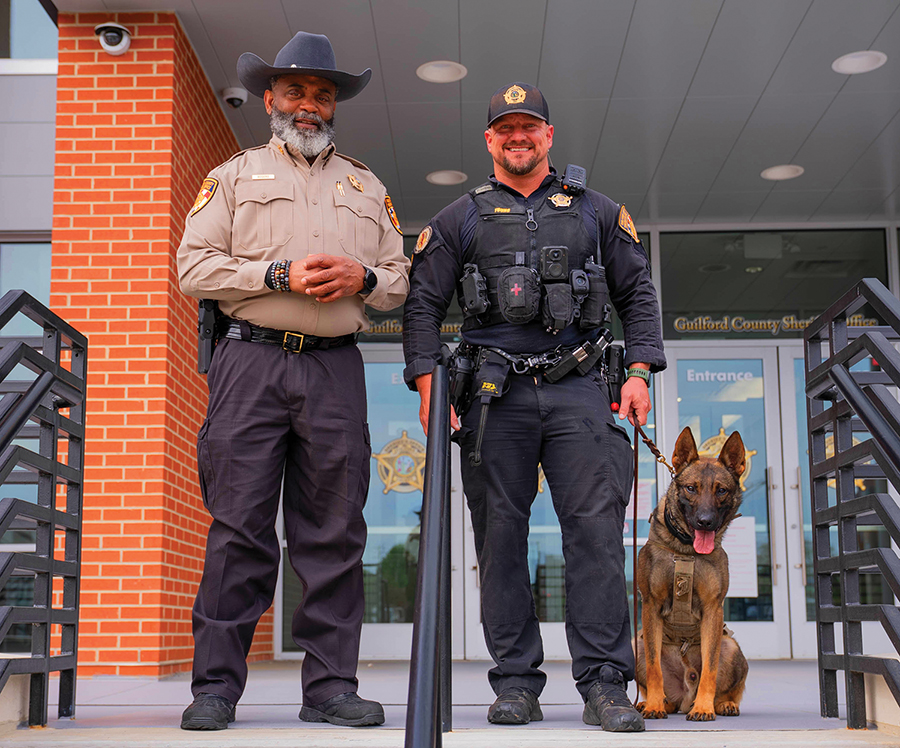
Pictured in this mutt-shot, alongside esteemed Guilford County Sheriff Danny H. Rogers (left) is Master Corporal C. Young and his patrol K-9 partner, Rook. Rook is a 2-year-old Belgian Malinois-German Shepherd mix from Hungary who was deputized by the sheriff’s office just last year — a K-9 with canines for takin’ a bite outta crime.

In his dogged pursuit of two-legged desperados, Rook is trained in narcotics detection, suspect tracking, evidence recovery and missing-person searches. Already, he’s assisted in seizing pounds of illegal snout candy, and a doggy bowl’s fill of fentanyl, plus he recently collared a criminal suspect currently cooling his heels in the county kennel. That’s a good boy!

Corporal Young admits one of the most rewarding aspects of his job is observing these K-9 crime-fighters as they grow into reliable, indispensable deputies trailing errant assailants. Fun fact: Young and Rook even share the same birthday and will one day be the same age — in doggie years, natch.

— Billy Ingram

Simple Life

Simple Life

My Miss American Pie

And our slice of heaven together

By Jim Dodson

Illustration by Gerry O’Neill

She has a birthday this month. It’s one of the biggies.

It’s not every day you reach an age when you’re permitted — even expected — to kick back and reflect on a long journey that has shaped so many lives for the better.

Her kindness is exemplary, guided by a heart that is as compassionate as it is brave. Over the years, I’ve seen her take on tasks that seemed almost hopeless, inspiring significant change in others around her. That’s just her nature. 

No wonder her birthday is a national holiday — at least in France.

It’s hard to believe that my wife, Wendy, born on Bastille Day, is 65. She’s never looked more youthful and beautiful. 

Yes, I know. America also has a big birthday this month. So, roll out the bunting, strike up the band, hand out the confetti poppers and light the fireworks. Even in times that try men’s souls, it’s good to pause and reflect on how our beloved nation got here — and where it may be headed, for better or worse.

My birthday gal, Wendy, is as all-American as apple pie and just gets better with age, an infectious optimist and embodiment of what it means to be a fully engaged citizen, a wise counselor and the most capable human being I’ve ever known. 

Because she’s also a gifted baker, I call her my Miss American Pie. 

I’ve said for years that she’d make a great president. But please don’t spread that notion around. I’d hate to give up her enlightened leadership skills to a struggling nation and lose her famous roasted apple-crumb pie in the deal.   

Meeting her almost 30 years ago was the luckiest day of my life — an encounter in retrospect that seems providential, if not presidential. It’s a story I’ve told only once in a book many years ago. This is as good a moment to share it with you as any.

On the heels of a wearying, month-long, national book tour for Final Rounds, I was invited to give the keynote speech during the American Lung Association of New York’s three-day golf event and fundraiser in Syracuse.

I’d been amicably divorced for a couple years and shared custody of our two goslings with my former wife. The last thing I wanted to do, however, was trek to Syracuse for yet another golf event and rubber-chicken speech. 

But my host was relentless. He not only talked me into coming but set me up with dinner “companions” for the three nights of the event. I don’t know why I said yes. 

But I’m glad I did.

The first night’s blind date met me, my host and his wife at the stately Onondaga Country Club where Walter Hagen once belonged. My date was a local poet who showed up late to the table and said nothing until I was asked by my host’s sunny wife if it was true that I received (and replied to) hundreds of letters from fans of my new book. I confirmed that I did. 

“That’s nothing,” piped up the poet. “I get pictures from prisoners. They send me photos of their [use your imagination].”

The formal dining room around us was full of elderly diners. Audible gasps and crashing crystal sounded throughout the room. As I walked her to her car, the poet laughed merrily and declared, “I love making rich Republicans uncomfortable!”

“Everybody needs a hobby,” I told her.

The next night’s match was worse. She was the town’s historian. I borrowed my host’s car to take her to a lovely restaurant in the Finger Lakes. She wasn’t planted on the seat beside me for two full seconds before she exclaimed, “I hear you wrote some beloved book about golf. I hate golf. It’s a fascist sport. Golfers are fascist doughboys.”

“So, I guess hitting a bucket of balls before dinner is out of the question,” I remarked.

“You’re &%$#@! right,” she declared. Please use your imagination again. Every other word was a charming expletive. I guess she hated history as well. I got her home in record time.

I asked my host for Number Three’s phone number to cancel the final date. He refused. I demanded her phone number. He wouldn’t budge.

“Her name is Wendy. She’s an incredible baker and mother of two young boys. Everyone in the neighborhood adores her. If you break this date, Sparky, I’ll be as lonely as you are and sleeping on the couch for a month.”

The final dinner was held at the home of our hosts with two additional couples. At the appointed hour, I forgot to go down the block to meet Wendy Ann Buynak at her house. She walked up by herself bearing a plate of homemade chocolate chip shortbread cookies in the shape of acorns. They looked too good to eat and tasted even better.

The minute I saw her standing in the open doorway with that plate of cookies, I realized there was a God (who probably played golf) after all. Third time was the charm. We sat at the end of the table talking only to each other for three solid hours. Then I walked her home.

The next afternoon, we went for a drive and wound up at a local golf course, where I kissed her. She smiled and kissed me back.

Two weeks later, I drove seven hours for our first date. She put me to work helping to box up 75 beautifully made miniature wedding cakes for a Syracuse bride. I got to eat the 76th cake. It was love at first bite. She also made me a roasted apple-crumb pie to take home to my kids.

Is this an All-American love story or what?  

Three months later, I introduced Wendy Ann to my two little ones, who instantly fell in love with her and her key lime pie. Two summers later, she and her two young boys joined our family, doubling our size in a lovely backyard marriage ceremony in Maine. I saw the spectacular cake she made but never got a taste. It vanished without a trace before I could get a piece.

This summer marks our 25th wedding anniversary. Miss American Pie and I plan to slip away to our favorite inn for a few days of golf, relaxation, and — use your imagination again.

Later this summer, we plan to renew our vows.

I’m reliably informed there will be pie.  OH

Jim Dodson is founding editor of O.Henry.

O.Henry Leading Women July 2026

O.Henry Leading Women July 2026

O.Henry Leading Women

July 2026​

 Written by Danielle Rotella Guerrieri

Photographs by Betsy Blake Photography & Bert VanderVeen

Sponsored Section | July 2026

Blowouts & Bubbles

Community Foundation of Greater Greensboro

Fellowship Hall

GenCrest Capital Partners

The Jaree Todd Team

Lindsey Architecture

Monkee’s of Burlington

The Marshall Muse Gallery

South 23rd Porch Pops

Weatherspoon Art Gallery

Wilkerson Bakery

Winston-Salem Symphony

Concerts, Canoes, and Community

Concerts, Canoes, and Community ​

Concerts, Canoes, and Community

Passion and perseverance after Saxapahaw’s storm of the century

By Danielle Rotella Guerrieri

Photographs by Bert VanderVeen

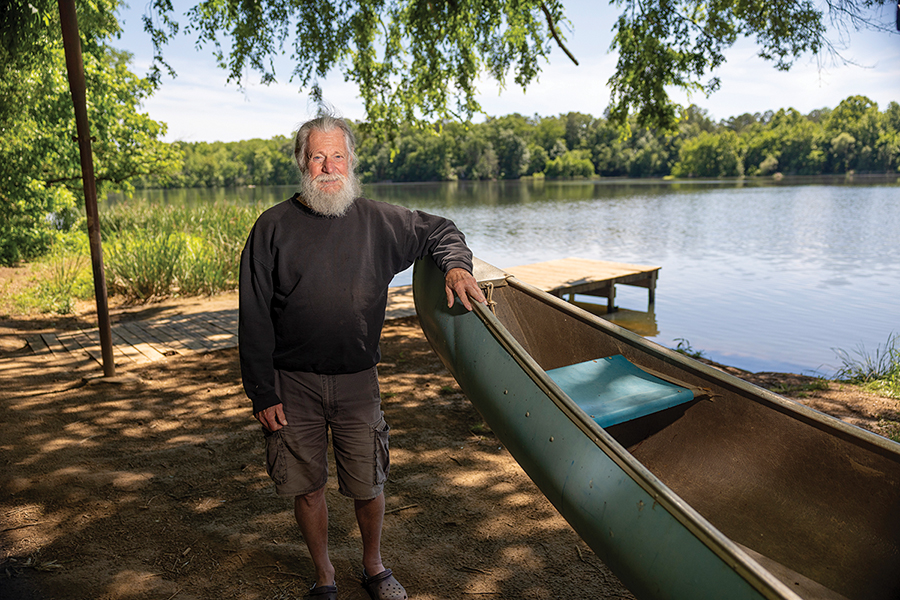
Last July, Tropical Storm Chantal wreaked havoc across central North Carolina, causing $500 million in storm damage. Perched above the Haw River’s east bank in a quiet corner of Alamance County, Saxapahaw was ground zero for some of the worst flooding and property damage in the state, with nearly 12 inches of rain falling in 24 hours. Since its revitalization in the late 1990s, the former mill village has been a hip and vibrant destination, drawing visitors with its rich history, Southern cuisine, bespoke artwork, specialty craft ales and bohemian counterculture. On a recent cloudy Thursday morning, my dad, Pete Rotella, and I decided to see how Saxapahaw was faring after the flood.

We start our visit chatting with the Saxapahaw Museum director, Jane Cairnes, and the man behind the town’s revitalization, entrepreneur John M. Jordan Sr., son of the late U.S. Senator B. Everett Jordan. Jordan and his sons, Mac and Carter, purchased many mill houses and the abandoned spinning mill and dye house in 1995, and renovated them into 75 apartments. They also turned the upper dye house into commercial space and a home for The Hawbridge School, a public charter school with an emphasis on community engagement, environmental stewardship and the arts. “We were competing with Chapel Hill, Durham and Raleigh real estate,” Jordan says. I had people living in 60 houses who needed a place to buy gas and bread, and I provided it.” Over the years, the sleepy little town evolved into a lively and progressive home for lovers of music, arts and the outdoors.

Just down the hill from the museum is the Saxapahaw General Store. After filling our bellies with a good ol’ Southern breakfast, we learn how owners Jeff Barney and Cameron Ratliff turned a modest gas station and country store into a community hub beginning in 2008. Look for gourmet grub with an emphasis on comfort food, a staggering selection of beer and wine, locally grown produce and area crafts. Thankfully, their establishment was not damaged by the storm. Just two days after Chantal passed, they announced on Instagram: “We have electricity, Wi-Fi, A/C, and our full menu available.”

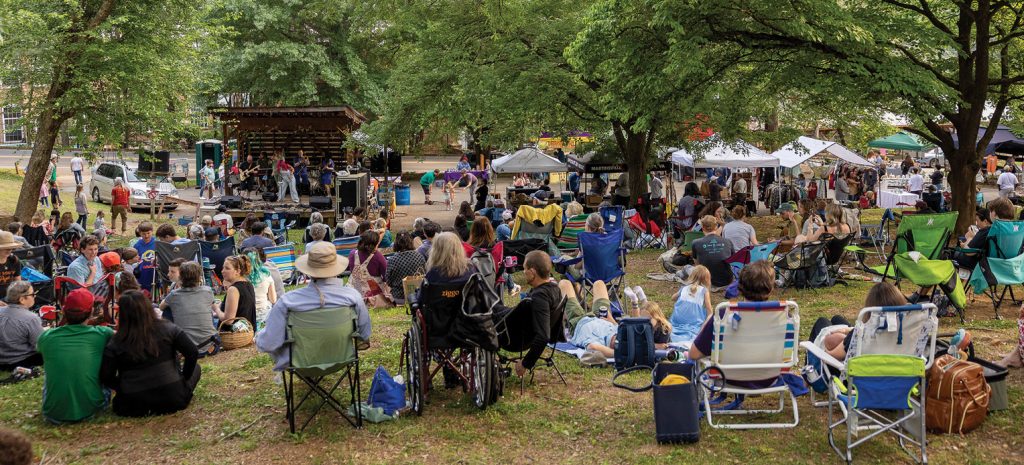
Cup 22 is our next stop, an open, two-story space with black industrial railings and massive windows that welcomed neighbors and volunteers after the storm with bottomless coffees and free Wi-FI. Heather and Tom LaGarde own both the café and the adjacent Haw River Ballroom, one of North Carolina’s premier musical destinations. Known for hosting nationally and internationally renowned bands, the Ballroom has also held film screenings, workshops and private events since 2011, thanks to its large, 750 capacity that maintains an intimate vibe. Due to its location in the mill’s upper dye house, the Ballroom was left unscathed, making it an ideal hub for storm relief efforts. Saturday in Saxapahaw is another LaGarde creation, a family-friendly outdoor concert and farmers market held weekly from the first Saturday of May through late August from 6-8 pm. Held in a grassy hillside near the Ballroom, “Swan Buckets” and a Swan Venmo account collect donations that pay operating costs. The LaGardes were also instrumental in organizing widespread relief efforts last July.

Next door to the Ballroom is Haw River Farmhouse Ales, a quaint, eclectic pub with cozy outdoor seating, owned by Ben Woodward and Dawnya Bohager, who use locally grown ginger, barley, rye and other ingredients in their small-batch customer favorites, such as Odds & Ends IPA and Saxtoberfest.

Excited to explore Saxapahaw’s art scene, we walk to Riverside Collective, where we’re greeted by contemporary oil painter Katie Pape, one of the five female artists who opened the shared studio space in 2004. When the bike shop next door moved, Katie and her husband, Ian, opened an adjacent store, Saxy A GoGo. Inside, Saxy, a vintage shop, a nonalcoholic bar, a lounge and a recording studio are all connected, creating a funky, urban vibe. Along with their wide variety of art, Riverside Collective offers classes in weaving, watercolor and leatherwork, and a Monday Open Studio Night where fellow creatives can connect. (While their shops didn’t sustain flood damage, the Papes’ daughter’s preschool, Saxapahaw Village Kids, inside Saxapahaw United Methodist Church, was completely submerged. “One of my favorite stories from the flood was how Holly, the preschool’s pet chinchilla, was gallantly rescued by volunteers after the storm,” Katie says.)

With our new art carefully packaged, we mosey past more upper mill spots that dodged storm damage — Deipnon Studio, a custom tattoo shop, and The Hawbridge Lower School — before entering Leftbank Butchery. Owner Ross Flynn opened the whole-animal butchery in 2014 to provide a local outlet for area farmers who want to process and sell their meat, such as beef cows from Alamance County farms and chicken from Little Way Farm in Siler City. Before leaving, we look into Flynn’s Seam Butchery Class, which teaches ways to cut and use every part of an animal, and the Basics of Cooking Meat Workshop, an excellent way to learn techniques for braising, roasting and pan-frying cuts of beef.

With a pound of tienda chorizo in hand, we climb up a steep staircase before opening a ginormously heavy oak door to enter The Eddy Pub, a European-style gastropub serving farm-to-table food and known as “Saxapahaw’s Living Room.” With old steam valves as beer taps, a rustic wood ceiling set against expansive windows overlooking a patio and the Haw, the pub partners with local farms for their meat and vegetables and serves North Carolina-brewed beers and wines from smaller, family-owned vineyards. On the second level of the mill complex, the pub remained unscathed by the flooding. General manager and co-owner Paul Neubauer and his staff were some of the first to volunteer after the storm.

After bowls of hearty chicken chili with fresh sourdough bread, we walk up the road to StudioSax, a multicultural, creative café and vintage store opened last year by Deborah and Robert “Robo” Jones, the talented trombonist from the 90s jazzy, pop-rock band The Sex Police. Deborah proudly shares that it’s the only Black-owned storefront in Saxapahaw as she finishes setting up paints and brushes for the night’s dot-painting event. Jones then gives us a tour of the outside courtyard, which she explains was “completely filled up with water when it flooded.” Sand and dirt still line the cement courtyard, which adjoins a nearby hillside, where folks gather to hear live music and many come for sound baths, a meditative, immersive audio experience that induces relaxation.

As my dad and I leave Saxapahaw, we’re both struck by everyone’s love for the dynamic, free-spirited river community. There are still small, visible signs of Chantal’s passage, but those are nothing compared to the stories of generosity and the survival of a magical place that refuses to be washed away.  OH

Simple Life

Simple Life

Sacred Grounds

My Journey with the Three G’s

By Jim Dodson

Illustration by Gerry O’Neill

As I write this, it’s an hour before sunrise on Good Friday of Holy Week.

With my morning meditation behind me for the day – I call it “Coffee with God,” a time when I have frank conversations with the Almighty beneath the morning stars – it seems like the ideal moment to take stock of my “Three G’s.”

In addition to the enduring love I have for my wife, children and brand new grandchild – a baby girl named June; how’s that for timing? — the Three G’s is my simple shorthand for God, golf and gardening, the three defining elements of my life’s journey.

Allow me to consider them in reverse order of importance.

This month, on June 7, my home’s garden will be featured on the annual Greensboro Council of Garden Clubs tour. It’s an honor I never saw coming. That’s because building gardens (and working in them) has been a passion of mine since I was knee-high to a post-hole digger. I hail from rural people, you see, smalltime Carolina farmers who lived off the bounty of the land. So, the urge to grow things is in my bloodstream. Some of my fondest memories are of visiting my dad’s elderly second cousins, Josie and Ida, a pair of spinster ladies in their 80s who shared a handsome old farmhouse from the Civil War era and a giant garden in Orange County.

My dad called them the “Moon and Star Girls.” He called them this because their house had limited indoor plumbing but a pair of splendid outhouses with elegantly carved wooden doors. One featured a half-moon (Cousin Ida’s), the other a shining star (Cousin Josie’s). I was deeply fascinated by both women and their fancy outhouses. Almost every Easter and Christmas of my boyhood, our family would take them a salted country ham, Pond’s Cold Cream, and copies of Reader’s Digest, Life Magazine and the Saturday Evening Post.

Ida was the solemn and stern sister who ran the household. Josie was the sweet and talkative one who loved books and storytelling. Their dressing style was pure 19th century, floral dresses with knitted sweaters Ida made by hand and lace-up boots. I like to think part of the verdure in my blood comes from them as well as my great-grandmother, who lived 5 miles closer to Dodsons Crossroads, and grew and collected native plants for making folk medicines. Aunt Emma, my dad’s grandmother, was the beloved “healer” along Buckhorn Road since a real doctor was 20 miles away.

The vast garden of the “Moon and Star Girls” was well-known along Buckhorn Road between Hillsborough and Chapel Hill. The Dodson sisters shared their bounty with neighbors up and down the road. For several summers before a game called golf seized my waking attention, I got to stay with Ida and Josie and help in their garden. Josie would sing hymns and tell me stories about our Colonial ancestors while Ida kept a sharp eye on our progress, sometimes reminding us that the “Lord loves busy hands. Not idle chatter.” Once, Josie stuck her tongue out at Ida’s back and we both dissolved with laughter. Cousin Ida was not amused.

Both my parents were serious suburban gardeners, which is why I grew up to become one, too. I’ve built three ambitious gardens in my life, from a forested hilltop in Maine to a pine-girdled garden I brought back to life in Pinehurst. Number three is the most ambitious, built around the old house we purchased a decade ago on the street where I grew up in Greensboro. Likely, it’s my final garden.

Garden work is good for the soul, Cousin Josie liked to say. 

Golf came into my life at age 11 after watching Arnold Palmer play in the 1964 Masters Tournament on TV. That’s the year the King of Golf won his final green jacket by six strokes and tossed his cap into the air. I promptly joined “Arnie’s Army.”

I began beating golf balls around our backyard with an old Bobby Jones wedge I still own (somewhere) and quickly progressed to a modest nine-hole golf course I nearly wore out every day after swim practice. I followed my dad into journalism and shared his passion for the cruelly addictive game invented 400 years ago by lonely Scottish shepherds.

In 1997, as a columnist for Golf Magazine, I published a memoir called Final Rounds that told the story of taking my wise old man back to play the courses on England’s Lancashire coast where he learned to play the game as an airman shortly before D-Day.

The book was a bestseller that changed my life. After reading it, Arnold Palmer invited me to write his memoir, A Golfer’s Life, and share the cover credit with him. We remained close friends until his passing in September 2016. During our last visit in Latrobe a month before he passed away, I asked him to autograph my copy of our book. He wrote: “Jim, Thank you for your wonderful words. I couldn’t have a better friend.”

I’ve been deeply blessed by my golf writing, a career that includes four books of the year about the game (two from United States Golf Association and two from International Network of Golf), scores of friends and a lifetime of memories.

Not long ago, just for fun, one of my golf buddies and I even started a podcast on Apple called Sports is Beyond Us that allows us to share the timeless joys, fellowship and low comedy of the game.

God is the most important “G” in my life. I once heard someone say there are two paths to God — one is love, the other is sorrow.

I’ve taken both paths in my life and found that the divine force of the universe eventually welcomes everyone home regardless of where they’ve been. We all have a different picture of who or what God is. My belief is that God grades life on a generous curve and small miracles are everywhere if you take time to notice.

Many years ago, I took my highly opinionated Scottish mother-in-law to the daily Evensong service at St John’s College Chapel in Cambridge, England. Kate was probably my best friend during several challenging years, a gifted gardener and educator who never missed watching the British Open Championship with me over gin and tonics. She was the only person on Earth who ever called me “James.”

Kate was also a professed atheist who had one of the kindest hearts of anyone I’ve ever known. Her own parents perished during the German bombing of the docks in her native Glasgow when she was very young.

That summer evening at St John’s, though, when the choir sang the familiar “Old Hundredth” hymn from the Genevan Psalter, I heard Kate softly singing along. As we exited into a beautiful evening, she took my arm and squeezed it. There were tears in her eyes.

“Thank you, James,” she said. “My mother and father loved that old hymn. I haven’t heard it in 50 years.”

Praise God, I thought, from whom all blessings flow.  OH

Jim Dodson is founding editor of O.Henry magazine. Find him on Substack at One Man’s Simple Life and on Apple Podcasts at Sports is Beyond Us.

Wandering Billy

Wandering Billy

To the Moon, Harry

How a seminal local computer science publication and illustrator rocketed a career

By Billy Ingram

Illustration by Harry Blair

(Caption: Original Harry Blair illustration for issue No. 46, March 1984, of Compute!)

“There is no reason anyone would want a computer in their home.”  Ken Olson, President of Digital Equipment Corporation in 1977

Just two years after mass-marketed personal computers were made possible by a game-changing microprocessor, Robert C. Lock founded Small System Services, the “Corner Computer Shop” on Spring Garden at Mendenhall, in 1979. That little shop of floppy discs served as Lock’s launching pad for arguably one of the most consequential and culturally influential magazines of the 20th century, Compute!, first catering to a decidedly minuscule demographic when it debuted in 1979 — devout computer geeks. The publication spawned a sprawling publishing empire before being sidelined a decade and a half later by the popularity of the very subject it was devoted to.

A UNCG chemistry and biochemistry professor at the time, Harvey Herman was writer and associate editor of Compute! starting with the very first issue. “The magazine was based really on the MOS Technology 6502 chip in a lot of the early computers, the single boards, ones that you could use right off the shelf,” he says. “There was a lot of useful stuff coming out of the magazine.” Every issue offered readers what the soon-to-be-popular publication called “type-ins,” custom-made programming codes to manually type into Ataris, apple ][, TRS-80 and Commodore PET models, cascading rows of seemingly random letters and numbers strung together that must be entered without error or the DIY software wouldn’t Do It, Yo.

Success was immediate and overwhelming. By issue No. 3 in March 1980, Compute!’s crew had grown from publisher-editor Lock and five unpaid stringers to dozens of contributors, columnists and support staff. Leaving the Spring Garden electronics store behind, magazine production was established in a stunning, two-story, gray stone manse on Bessemer and Magnolia. With the addition of spinoff mags and manuals, they began overflowing out of a former heavy-machinery manufacturing plant on Fulton Place and High Point Road (today’s Gate City Boulevard) a year later.

That’s when Fred D’Ignazio, already an accomplished author specializing in robotic programming in 1982 and living in Chapel Hill, began writing for Compute! “It was so exciting,” he says. “I really had the feeling this was going to take off.” However, in mainstream minds, computers were strictly sci-fi fodder: “Maybe others looked at you as a geek, but, inside, you knew you were smarter than everybody around you.” D’Ignazio reflects on his former editor, Lock: “He was kind of a visionary statesman- or chairman-of-the-board type person. Very thoughtful, very nice to me and encouraging. I was on the fringe, thinking of computers in much more of a futuristic and metaphorical sense. Like how do you introduce computers to children?” Yes, that was a radical concept in the early ’80s.

Beginning with issue No. 1, Compute!’s cover artist almost every month was O.Henry’s own illustrious illustrator, Harry Blair. “He’s my favorite cartoonist of all time!” D’Ignazio, who currently resides in Tucson, Arizona, hadn’t heard that name in decades. “Harry drew cartoons of me going off on my different journeys overseas with robots and computers. He was very whimsical.” One of those caricatures “was a bunch of robots chasing me across the globe, just very funny.”

Headquartered in a hangar-sized facility off of Wendover by 1983, Compute! cashed out to ABC Publishing for $18 million. A major redesign was undertaken five years later with cluttered (stock?) photo covers replacing Mr. Blair, whose coup de grace that January depicted a wintery mountain range awash in bluish hues, Big Tech logos crystalizing inside a starry sunset. A stark, frozen terrain devoid of humanity, a suffocating, frosty landscape offering no possibility of connectivity. Metaphorical?

In 1990, the enterprise was gobbled up by General Media, publisher of Penthouse and Omni, the latter consolidating editorial and production with Compute (now sans any “!”), here in Greensboro. Not long after, Compute was folded into, or buried beneath, internet behemoth AOL. Video killed the radio star.

The ’90s had arrived, bringing vastly more powerful processors and sophisticated, off-the-shelf software. Gone was that unprecedented level of kinship twixt a magazine and its subscribers by virtue of the communal coding experience, this pivotal technical and inspirational catalyst that had fed eager brainiacs for a decade. “Microsoft BASIC was just everywhere,” D’Ignazio points out about those intrepid early-’80s code tweakers. “There was no limit to the kind of programs you could create. That early, hands-on experience, combined with tapping into people’s imagination, especially young people, I think it really inspired a whole generation.”

I know that to be true.

I met with one such individual, Keir Davis, in his suite of offices tucked into Latham Park proper. Davis and a phalanx of prodigious programmers at the firm he founded in 2002, Xtern Software, alongside a team of behavioral psychologists from Northwestern University, developed the tools for enhancing interconnectivity between NASA Mission Control and the Artemis II manned voyage recently returned from the moon. Under the confines of Earth’s gravity, Xtern is involved in next-level web and mobile-focused customized software for all manner of industry — furniture makers, an A-list jewelry designer, a manufacturer of military boots, even UNCG, where Davis as well as many of his local workforce have earned degrees, his in computer science. Very high-level, diamond-edge innovation taking place right across from the tennis courts.

As a 10-year-old Pittsburgh (adjacent) youth, Davis was an avid consumer of Compute! “This was prior to my even knowing what Greensboro was.” He once copied those elongated lines of code into a 1982 Texas Instruments computer and recalls “looking at those great Harry Blair covers.” There are those who insist there are no coincidences, but, in the summer following eighth grade, Davis and his mother moved to the Gate City, where he attended a cartooning class at Weaver High taught by . . . I’ll let you guess.

Forty years later, Davis and his wife were out to dinner when they spotted none other than Harry Blair. “I talked to him and he remembered the class, but he didn’t remember doing this,” Davis says, presenting a superbly sketched caricature of himself as a 14 year old that hangs in his home today. “I showed it to him on my phone and Harry lost it. He was like, ‘I can’t believe you would’ve saved that.’ It was a throwaway for him, right? He can do this in his sleep, but to me it was really cool.” I’d bring up the whole “circle of life” concept and all of that but I might owe Disney a royalty.

Over the last half century, personal computers emerged from bit players to major supporting (or starring) roles in our everyday lives. From operating systems scarcely capable of rendering spreadsheets or simplistic, pixelated diversions like Pong and Pac-Man to generating unimaginably complex computations crucial for blasting astronauts into outer space and then returning them safely to terra firma.

And Harry Blair had it covered all along.  OH

Billy Ingram’s TVparty! was first to stream videos from television shows over the internet and first to create web pages with text, pictures and embedded media. 

Sazerac June 2026

Sazerac June 2026

JOI DE VIVRE

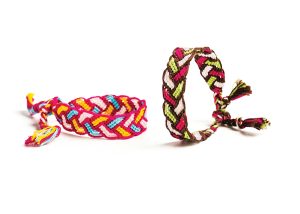
Woven friendship bracelets. Dear Diego: Elementary school plays a key role in a child’s development, but for shy and reserved Joi, who found it hard to make genuine friends, she spent most of it by herself. That was until I met Diego. “Joi, could you please stop that!” yells Mrs. Perkins, my fourth-grade teacher, during our class walk to the playground. I’m near the back of the line and have, unknowingly, slipped into a daydream, humming a tune the entire walk back — loud enough for her to hear me from the front of the line. A little embarrassed now that my classmates are staring at me, I walk the rest of the way back with my head down. “I thought it sounded good,” says a voice behind me. Diego. He has a Go, Diego, Go! backpack — fitting, isn’t it? — and light-up Skechers he wears everyday. From that moment on, Diego and I are two peas in a pod, never leaving the other’s side. He becomes my first best friend and later evolves into a crush. I am fascinated by his ability to climb the monkey bars just as he is fascinated by my swift running skills — so much so that he brags to all his male friends that I could beat them in a one-on-one race if they dared to challenge me. Sadly, a year later, his father, who is in the military, is stationed overseas, which means Diego has to leave. Now as an adult, I appreciate the love Diego showed little Joi when she needed it the most. I hope he has grown up to impact other people as much as he impacted me. And who knows? Maybe we’ll meet again one day. Until then, I’ll keep an eye out for light-up Skechers.       Joi Floyd

Window on the Past

Photograph courtesy of UNCG’s Martha Blakeney Hodges Special Collections and University Archives

Captured here are the 1974 founding members of the United Afro-American Society for Greensboro College’s yearbook, The Echo. Bell-bottoms, bold patterns and enough polyester to make a disco ball nervous, this lineup is as rich in personality as it is in ’70s fashion. Membership may not have come with a written dress code, but a keen eye for the style was clearly part of the deal.

Behind the Scene

Photograph by Curtis & Cort Photography 

“Once I started doing film acting at the studio, I just fell in love with it,” exclaims Emi Curia — a Winston-Salem native and actress. A year after graduating from UNCG, Emi’s career continues to rise. At 22, she’s already a veteran of the hit TV series Echoes (Netflix) and Murdaugh: Death in the Family (Hulu). But before she was in front of the camera, she was on stage. “I did dance as a kid, and that evolved into community theater,” she says. After coming to Greensboro for college in 2021, she found in-STUDIO, a nontraditional, Greensboro-based actor training facility that quickly became central to her journey. “That studio is like my home,” she says.

Not only has she made friends who have become family at the studio, but Emi’s instructors have steered her in the right direction: “Having a good teacher who sees you is so important, and I admire teachers for being able to do what they do.” Her favorite teacher there, Lee Spencer, put her at ease, giving her the confidence to pursue her dream. “When it comes to acting, you’re working with someone who’s really bringing themselves and their vulnerability to you.” Isn’t that a little scary? Sure, she says, “It feels like you’re exposing yourself, but when teachers can foster a safe environment for you, it makes you feel like you can do anything.”

Beyond the screen, Emi is a multi-talented performer — skilled in tap dancing, ASL, kickboxing, piano, mezzo-soprano and fluent in Japanese, just to name a few. She has leveraged these abilities to secure leading roles in four plays and 15 films, with her most notable performance as Miley Altman in last fall’s Murdaugh: Death in the Family. Though an exciting milestone, she describes the audition process as tense. “It was really stressful, to be honest with you. I had that audition when I was on vacation.” Just before her senior year spring semester began, Emi recorded her audition from a hotel room. She didn’t think much about it afterward, so she was surprised to see she was pinned for the role. With exams, finals and now a role in a TV show all at once, she felt the pressure. Balancing frequent drives to Atlanta for filming with the demands of her final semester at UNCG meant occasionally missing class. “I had to bargain with my professors for excused absences,” she says. Still, by embracing the meaning of her name — “by the grace of God” — in her daily life, she persevered through the demanding schedule and graduated with two degrees: psychology, and women’s, gender and sexuality studies. “I will always be grateful for that experience,” Emi says.

Ask Emi how post-grad life is and, like many recent college graduates, she might roll her eyes. “Sometimes I get that question, and it just makes me laugh because I really understand now how much it sucks.” As a psychology major, she put value in relationships with friends, coworkers and passing strangers. “I miss my friends. I miss my acquaintances. I miss all of it,” she says, though she quickly adds that she doesn’t miss the pile of assignments. Emi encourages her peers pursuing an artistic career to create a path for themselves and to stay persistent. Work hard and respond to the calling you feel. “You just have to see it through. The tunnel is long, and you’re not going to be able to see the light at the end of it, but you have to be the light to guide yourself.”
        Joi Floyd

Unsolicited Advice

Father’s Day is right around the corner and we’re bracing ourselves for a day where we hold back the eye rolling as the corniest puns ever, aka dad jokes, exit the mouths of our fathers. They’re a comical and fun play on words, but, if your father is like most, he probably feels unashamed when blurting out the same joke over again and again — on repeat forever and ever. And, if you’re not careful    or if the apple doesn’t fall far from the tree — you may find yourself in a witty banter battle. This year, we’d like to defeat our funny fathers, so here are some dad jokes to keep in your arsenal, just in case you riff-off against the wizard of wordplay.
Sometimes, it’s better to start slow and simple. Pull out a classic and consider quacking this joke; What did the duck say to the waiter? Put it on my bill.

As descendants of fathers who somehow forget to flush every time, this one always gets us rolling: What did one toilet say to the other? You appear a bit flushed. And, maybe, just maybe, it will remind them to erase the evidence.

Finally, it’s time to pull out the big puns. Though, to be honest, we’re not sure if this joke is entirely accurate — especially since our dads can’t remember the names of our best friends from elementary school. What’s the best way to save your dad jokes? In a dad-a-base.