Short Stories & Ogi Sez

Intentional Eating

At O.Hey, our diet is omnivorous and philanthropic. If eating our way through a cross-section of Greensboro’s culinary offerings is what it takes to support the N.C. Folk Fest, we will do what needs to be done. From 6–8:30 p.m. on Tuesday, May 11, at Elm & Bain, stuff yourself silly with a diverse array of savory delights from 13 of Greensboro’s eateries while mingling with the Triad’s talented chefs. Anyone know how many empanadas can fit in a pair of carpenter joggers? Asking for a friend. Info: NCFolkFestival.com; to subscribe to receive weekly happenings in the O.Hey voice, visit oheygreensboro.com
 

Over and Dunleath

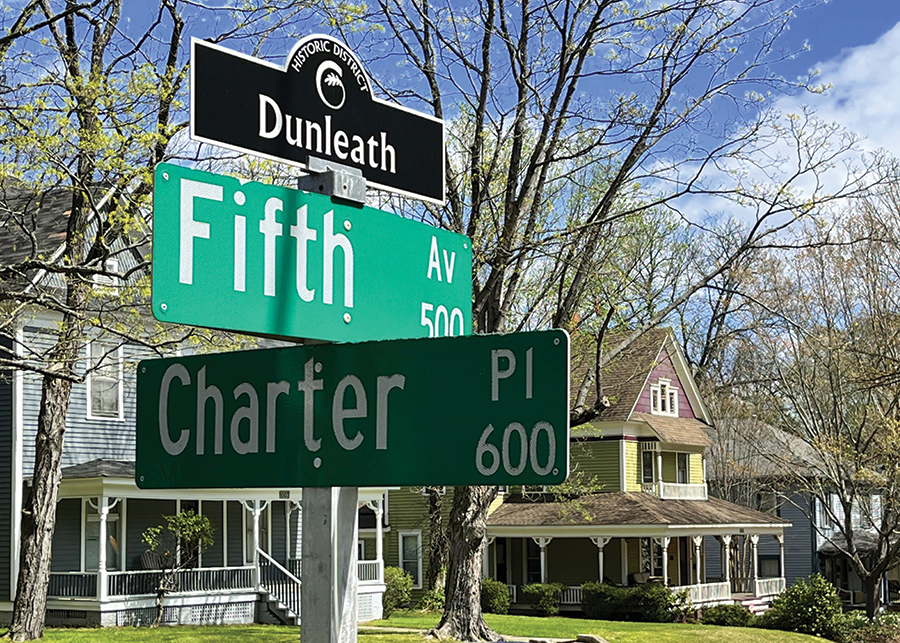
They’re not old — they’re gracefully aged. Throughout the month of May, Preservation Greensboro’s Twelfth Annual Tour of Historic Homes & Gardens will focus on the architecture, gardens and history of one of Greensboro’s oldest neighborhoods. Dunleath, home to World War Memorial Stadium and the Greensboro Farmers’ Curb Market, features a range of traditional vintage American homes built in the 19th and early 20th century by middle- and upper-class residents — from sprawling Victorians to modest Craftsman bungalows. It is also known for its eclectic mix of creative residents as well its annual Porchfest, scheduled for June. This year, the tour — Preservation Greensboro’s flagship fundraiser — will include both in-person and virtual elements so you can visit while either strolling or scrolling. Info: PreservationGreensboro.org.

 

Ain’t No Cure

Forget about the summertime blues. The Piedmont Blues Preservation Society’s Carolina Blues Festival returns this spring for its 36th year with Young, Black & Blues, a celebration of young Black musicians. This year, the longest-running blues festival in the Southeastern United States delivers a full lineup of seven talented acts, including storytelling through smooth instrumentals and lyrics.  Follow the sounds of soulful vocals and riveting guitar riffs to LeBauer Park from 3–11 p.m. on Saturday, May 21. Info: PiedmontBlues.org.

 

In His Jeans

The Cone family was not one to just mill about. The iconic dynasty, known for its entrepreneurship and contributions to Greensboro’s economy and civic life, made it big in the textile industry in the late 1800s. The Denim King: The Moses Cone Story, based in part on the book A Mansion in the Mountains by Phil Noblitt, weaves a spirited musical tale — with little fabrication — of Moses and Ceasar Cone while giving a peek inside life at their family residence, Flat Top Manor in Blowing Rock. The show runs May 12–16 at the Virginia Somerville Sutton Theatre at Well·Spring. Info: ticketmetriad.com.


Ogi Sez

Ogi Overman

May might be one of two months, weatherwise, that needs no hype. (October being the other.) It’s like Little Red Riding Hood’s bowl of porridge: Not too hot, not too cold, but just right. The outdoor concerts and festivals are cranking up, the big bands are touring, al fresco dining is in, the flowers are blooming. Oh, I could go on, but my favorite juke joints await, and it’s time to let the fish fry proceed.

• May 15, Ziggy’s Space: If you regularly peruse these ramblings, you know I’m a big fan of Americana music. And there is no more talented Americana artist than Darrell Scott. Singer/songwriter/multi-instrumentalist/storyteller, he does it all and does it better than most.

• May 20, Tanger Center: Exactly 50 years ago — I don’t think it was the Fourth of July — a carload of us traveled to Charlotte to see Chicago. The band was great, the acoustics were horrible. Thanks to Cliff Miller and SE Systems’ sound, and the Tanger designers, we won’t have to worry about that this time.

• May 21, Truist Field (Winston-Salem): Just as May needs no hype, neither does Paul McCartney. This is a major coup for us and the Triad, as the legend of legends only scheduled 13 stops, and we “Got Back” to where we once belonged.

• May 22, Doodad Farm: Each spring, my heroes, Dean and Laurel Driver, host a tribute/fundraiser for a local nonprofit. This year they appropriately chose the New Arrivals Institute, which serves as a bridge for local refugees and immigrants getting acclimated to a new culture. The all-day show is titled Legends of NC and features no fewer than 18 of our finest: Sam Frazier, Laurelyn Dossett, Graymatter, Jon Shain, Abigail Dowd … you get the picture.

• May 25, White Oak Amphitheatre: Nineties icons Smashing Pumpkins officially broke up in 2000, but eventually regrouped — with Billy Corgan still fronting — and put out a killer double album in 2020. After COVID interruptions (including a show here), they’re touring relentlessly again, “like a rat in a cage.”

Bookshelf

May Books

Compiled by Shannon Purdy Jones

At Scuppernong Books, May means one thing: the flurry of organizing and last-minute preparations for the annual Greensboro Bound Literary Festival. We’re so thrilled to have the festival back in-person after two long years, and the lineup is better than ever before. More than 60 authors will participate in panels, talks and signings May 19–22 in downtown Greensboro, including Nikole Hannah-Jones, Amor Towles and Jason Mott just to name a few. The festival also hosts workshops for aspiring authors (advance registration required) and this year will feature a special screening of the documentary film Fred Chappell: I Am One of You Forever on Sunday, May 22.

Showcasing everything from literary novels to poetry, romance to memoir, and everything in between, the Greensboro Bound Literary Festival has something to entice every bookish mind. You’ll definitely see me there, sprinting manically between selling books, moderating the Afternoon Delight romance panel, and sitting in on every single panel I possibly can. We’re so lucky to have this festival to bring nationally renowned authors and foster our literary community. Be sure to head over to www.greensborobound.com to plan your festival experience and register for free ticketed events. Then check out a small taste below of the many amazing books featured at this year’s fest. Scuppernong hopes to see you there! 

The 1619 Project: A New Origin Story
edited by Nikole Hannah-Jones

In late August 1619, a ship arrived in the British colony of Virginia bearing a cargo of 20 to 30 enslaved people from Africa. Their arrival led to the barbaric and unprecedented system of American chattel slavery that would last for the next 250 years. This is sometimes referred to as the country’s original sin, but it is more than that: It is the source of so much that still defines the United States.

The New York Times Magazine’s award-winning 1619 Project issue reframed our understanding of American history by placing slavery and its continuing legacy at the center of our national narrative. This new book substantially expands on that work, weaving together 18 essays that explore the legacy of slavery in present-day America with 36 poems and works of fiction that illuminate key moments of oppression, struggle and resistance. The essays show how the repercussions of 1619 reach into every part of contemporary American society, from politics to music, from diet to traffic, from citizenship to capitalism, from religion to our democracy itself.

This book reveals long-glossed-over truths around our nation’s founding and construction — and the way that the aftermath of slavery did not end with emancipation but continues to shape contemporary American life.

The Lincoln Highway by Amor Towlew

In June 1954, 18-year-old Emmett Watson is driven home to Nebraska by the warden of the juvenile work farm where he has just served 15 months for involuntary manslaughter. His mother long gone, his father recently deceased, and the family farm foreclosed upon by the bank, Emmett’s intention is to pick up his 8-year-old brother, Billy, and head to California, where they can start their lives anew. But when the warden drives away, Emmett discovers that two friends from the work farm have hidden themselves in the trunk of the warden’s car. Together, they have hatched an altogether different plan for Emmett’s future, one that will take them all on a fateful journey in the opposite direction — to the City of New York.

Spanning just 10 days and told from multiple points of view, Towles’ third novel will satisfy fans of his multilayered literary style while providing readers with an array of new and richly imagined settings, characters and themes.

Hell of a Book by Jason Mott

In Jason Mott’s Hell of a Book, a Black author sets out on a cross-country publicity tour to promote his bestselling novel. That storyline drives Hell of a Book and is the scaffolding of something much larger and more urgent: Mott’s novel also tells the story of Soot, a young Black boy living in a rural town in the recent past, and The Kid, a possibly imaginary child who appears to the author on his tour.

As these characters’ stories build and converge, they astonish. For while this heartbreaking and magical book entertains and is at once about family, love of parents and children, art and money, it’s also about the nation’s reckoning with a tragic police shooting playing over and over again on the news. And with what it can mean to be Black in America.

Who has been killed? Who is The Kid? Will the author finish his book tour, and what kind of world will he leave behind? Unforgettably told, with characters who burn into your mind and an electrifying plot ideal for book club discussion, Hell of a Book is the novel Mott has been writing in his head for the last 10 years. And in its final twists, it truly becomes its title.

The Violin Conspiracy by Brendon Slocumb

Growing up Black in rural North Carolina, Ray McMillian’s life is already mapped out. If he’s lucky, he’ll get a job at the hospital cafeteria. If he’s extra lucky, he’ll earn more than minimum wage. But Ray has a gift and a dream — he’s determined to become a world-class professional violinist, and nothing will stand in his way. Not his mother, who wants him to stop making such a racket; not the fact that he can’t afford a violin suitable to his talents; not even the racism inherent in the world of classical music.

When he discovers that his great-great-grandfather’s beat-up old fiddle is actually a priceless Stradivarius, all his dreams suddenly seem within reach. Together, Ray and his violin take the world by storm. But on the eve of the renowned and cutthroat Tchaikovsky Competition — the Olympics of classical music — the violin is stolen, a ransom note for $5 million left in its place. Ray will have to piece together the clues to recover his treasured Strad . . . before it’s too late.

With the descendants of the man who once enslaved Ray’s great-great-grandfather asserting that the instrument is rightfully theirs, and with his family staking their own claim, Ray doesn’t know who is trustworthy — or whether he will ever see his beloved violin again.  OH

Shannon Purdy Jones is store manager and children’s book buyer for Scuppernong Books.

Wandering Billy

Hair-raising Adventures

Mullets, hawks and pomps, oh my!

By Billy Eye

“For three days after death, hair and fingernails continue to grow but phone calls taper off.”        — Johnny Carson

Sixty years ago, when I was a wee young’un entering first grade, every couple of months or so, like when a holiday was approaching, my father marched my younger brother and me up to Lawndale Barber Shop to have our heads reshaped, curls cascading to the linoleum in piles, hair buzzed into distant memory on the sides, leaving slightly longer flops on top. Ed Jones was lead barber at this particular clip joint consisting of three chairs inside a glass storefront at the tip of a strip of shops in front of the railroad tracks directly across from Plaza Shopping Center.

“If Hair Is Cut Well It Grows Out Well” was Lawndale’s slogan where, above the silver-capped jar of combs soaking in bright blue Barbicide, was a mounted metal sign from a decade earlier displaying all of polite society’s approved Red Blooded American Boy hairstyles: Flattop, Butch, Crew, College Contour, Little League or Ivy League. There were other, more adventuresome options like the Forward-Combed Boogie, Flattop Boogie and the Hollywood — no way my old man was going to allow any of that city slicker nonsense atop his upstanding offspring. (Although it should be noted that dear ol’ Dad wore his hair Flattop Boogie style.)

Considered a sort of golden age for barbering, in 1962 Lawndale was one of around 70 similar shops dotting the city, 13 downtown. Keep in mind, the population of Greensboro was less than half of what it is today. Four years ago, I counted two dedicated barber shops downtown. Today, as part of a nationwide cultural shift, there are at least seven barber shops concentrated in the center city.

On South Elm, just shy of Lewis Street, is Rock’s Hair Shop, where I spoke with their mane man Grey Dominguez. “When I was growing up we had some of the worst haircuts,” Dominguez recalls of the 1990s. “I don’t think our parents really cared what we looked like. I ultimately ended up going to those Sport Clips types of places.” Nowadays parents are more circumspect when it comes to their child’s appearance. “There are some 10-year olds who walk out of here with better haircuts than I’ve had in my adult life.”

Open in Greensboro since 2018 and offering a wide-open, casual environment, Rock’s delivers what you might call masculine grooming services, plus complimentary craft beer or other beverages with your cut. Your traditional experience with a twist, where they take a much more detail oriented approach to haircutting, along with old school straight razor shaves, beard trimming, vivid or permanent color, and everything else one thinks of from a traditional barber, only with an ABC permit so you don’t have to go looking around for a bottle shop or beer bar to celebrate having your ears lowered.

Rock’s is a “very inclusive and affirming shop” with clients all over the gender spectrum, all races. “We have clients that will bring their laptops and work at the bar,” Dominguez says. “Don’t tell their bosses but they’ll be sipping a beer on a conference call while they’re here.”

While Dominguez is a licensed cosmetologist, “I realized pretty early on into my education that I should have gone to barber school. I guess I really cared about short hair, specifically men’s hair.” Dominguez sees his shop as somewhere “between traditional barber shops and modern salons. We’re sort of a fusion of the two. I actually hear a lot from clients, this is the place they didn’t know they needed.”

While most folks are looking for a practical hairstyle they can dress up or down, some more extreme looks from the distant past are unexpectedly rearing their not-so-ugly heads again. “Mullets, pompadours and hawk styles have snuck back as common trends for sure,” Dominguez notes. “We started seeing a handful of requests for them as early as three or four years ago with a big uptick in the past year or two.” Granted, they’re not the most common style requested, “but they’re frequent enough to not be surprising when someone wants it done.”

On the opposite end of the spectrum there’s Gene’s Styling & Barber Service on Spring Garden, across from Scrambled. Frank Dorrity has been stylin’ and profilin’ in Greensboro for 65 years now, 61 of those revolutions around the sun in the same spot at Gene’s, back when a haircut cost a buck and a quarter. “I came here as the fifth barber in 1961,” he says. Gene’s, he says, has been open since 1957: “The tremendously amazing thing is this little 20 x 35 foot room, the entire world has come through here. Every denomination in the world has been through that door right there. And that’s the original door!”

Dorrity is a proud graduate of Winston-Salem Barber School, after 87 years still the area’s finest academy for learning the discipline. As to why he chose to become a follicle butcher, “Well, it was cotton mills, mines or barbering,” he confides. Half joking.

The heyday for straight edge barbering was the early 1960s. “We were doing a lot of business then,” Dorrity says. “A lot of flattops and different kinds of buzz cuts.” In 1964 The Beatles burst on the scene, and over the next decade men’s hairstyles went from styled to wild.

“We called it the hippie days, the long hair days,” Dorrity recalls of the mad, mod late ’60s. “We lost a great portion of our barbers across the whole country, most did not know how to cut long hair and we didn’t have anyone to instruct us, to show us how. When we finally figured it out, we put up a sign that said, ‘Leave it long but let us shape it.’”

Of course, Dorrity and the crew at Gene’s routinely clip kids’ hair, women as well, same as it ever was. Business remains brisk. When I dropped by on a Friday afternoon, chairs were swiveling, phones ringing constantly. “These years have been a real blessing,” Frank says. “I’ve made some wonderful friends and I still have one or two original clients.”

That’s no exaggeration, if anything an understatement. What are the odds? I actually know one of those loyal customers that keeps coming back decade after decade. “I’ve been going to Gene’s since my first haircut, before Frank came to work there in 1961,” local raconteur Randy Barnes tells me. “I remember having to sit on the board they used to put across the arms of the barber chair. Back then Charlie Sneed ‘Sneedy’ cut my hair.” Barnes also points out that while the sign on the front window was freshly painted a couple of years ago, the building itself hasn’t been refurbished since the Eisenhower administration.

When I spoke with Frank Dorrity about the new trend in chop shops like Rock’s downtown where you can get cropped, coiffed, then leave half crocked, Dorrity confesses, “We would not want customers to be drinking beer in our place ’cause we want ‘em to make it out the door.” The original door from 1957 mind you.  OH

Billy Eye cuts his own hair as is fairly obvious if you’ve ever met the guy.

Birdwatch

A Rare Bird

Searching for the Bachman’s sparrow

By Susan Campbell

Photograph by Carl Miller

Although unquestionably the most sought-after bird species in North Carolina, the Bachman’s sparrow does not, at first glance, seem very special. But once you search for this incredibly adapted little bird, you will realize how special it is. One of a handful of endangered species in our state, you will have to find the right spot to get a glimpse of this cryptic little creature.

Endemic to pine forests of the southeastern United States, Bachman’s sparrows are only found in the frequently burned, open understory of the Sandhills and inner coastal plain. The best time to locate one is to visit in the spring, when males spend much of their time singing from low perches. Otherwise, the birds are down low, foraging in the groundcover and virtually invisible. A local species, Bachman’s sparrows do not migrate in the fall but rather become even harder to find. As insects become scarce, they subsist on a variety of seeds during the colder months.

Bachman’s sparrows are bland-looking brown and white with just a splash of yellow at the bend of the wing (which you will miss unless you are looking carefully with binoculars). Their song is a beautiful trill preceded by a single note. It carries a long way and is hard to pinpoint, in spite of the volume. And the nest, which is carefully constructed by the female, is an intricate cup of grasses at ground level. Often they will incorporate vegetation over the nest, creating a dome to protect the eggs and young from predation.

These birds are also unique in that they run, not fly, to evade potential threats. They will disappear into thick vegetation and have also been known to evade predators by diving into burrows dug by gopher tortoises — another species restricted to the sandy pine forests a bit farther south. More than anything, they are closely associated with longleaf pine and wiregrass, a plant community type that has become very rare over the last century. Habitat conversion and fire suppression have reduced the forests that they commonly inhabited by over 90 percent.

The individuals of the species were first noticed by one of the country’s most famous early ornithologists, John James Audubon. He chose to give them the name Bachman’s sparrow after his local host for the expedition, South Carolina clergyman John Bachman (pronounced BACK-man). Indeed, many birders have followed in Audubon’s footsteps, searching for this unique, secretive little survivor. Should you do the same, you just might be rewarded with a brief look at one of our state’s most prized inhabitants.  OH

Susan Campbell would love to receive your wildlife photos and reports. She can be reached at susan@ncaves.com. 


Life’s Funny

What in the Wordle?

How an online game catches fire one green tile at a time

By Maria Johnson

I start with goodbye.

A-D-I-E-U.

It’s a good opener because it contains so many vowels.

Yes, I’m talking about the web-based game Wordle, which gives you six chances to guess a five-letter word.

And yes, I’m hooked, just like the many millions of people who’ve glommed onto the game since it appeared online last fall and became a viral sensation over the winter.

I heard about the puzzle from my elder son’s girlfriend, who made a custom Wordle-like game for them to play virtually on his birthday as they sat on different coasts.

Each of them supplied five words for the other to guess.

I was charmed that she would, and could, create such a smart and intimate gift.

I wanted to know more. So I sniffed out the real Wordle and gave it a try.

I couldn’t get the hang of it.

Then some friends brought up the puzzle in a group text. One pal compared it to the 1970s board game Mastermind, a code-breaking challenge based on colors.

“It’s the same concept, but with letters,” she wrote.

Now I was intrigued.

The next time my younger son was home, I cornered him.

“Do you Wordle?”

“Yep.”

“Will you show me how?”

“Sure.”

A couple of days later, I texted him.

“I got Wordle in two tries.”

“Two?! That’s the white whale.”

Welp, there’s nothing like a little success to spark an obsession.

I dived into the history of the game and found out it was invented by a Brooklyn software engineer named Josh Wardle. Get it? Wordle. Wardle.

Anyway, Wardle, who’s originally from Wales and used to work for the social-news aggregator Reddit, had been noodling with game-making for about 10 years. During COVID, he decided to create a game that he and his partner could play together.

God bless the game-loving lovers of the world.

Eventually, after refining the game with family and friends, the couple decided to put Wordle on their own website with no pay walls and no ads because as Josh Wardle has told several interviewers, they wanted to give people a simple, fun, relatively quick game to play for free.

Do you love these folks or what?

The first Wordle appeared in October 2021.

The number of players grew exponentially. In January of this year, The New York Times Company bought the game for a sum “in the low seven figures.”

For now, Wordle is still available for free, and it has spawned spin-offs galore. Wardle, the inventor, hosted an in-person competition of Wordle, the game, at the American Crossword Puzzle Tournament in Stamford, Connecticut, in April.

Every day, players share their Wordle triumphs and defeats on social media, often with green-and-gray grids representing their attempts in a non-spoiler way.

A player who goes by @iSlutsky recently tweeted, “It’s with great disappointment & sorrow that I inform you of my loss in todays [sic] Wordle. I am heartbroken to have my streak broken and [am] currently entering a dark period of the day. Please send cookies.”

I get it. I have a streak going myself. Twenty-seven games.

I take a sip of coffee and a deep breath.

A-D-I-E-U.

Enter.

The “A” turns olive green, meaning it’s in the word somewhere, but not in the first slot.

I go to the second line, where I’ll get another chance, planning to use the “A” in a different place while trying new letters and fishing for an “O.”

F-L-O-A-T.

The “F” and the “A” turn bright green. Yay. They’re in the right spot. The “O” is olive green, so I need to move it.

On my third opportunity to nail it, I type “X’s” to visualize possibilities.

F-X-X-A-X.

Focal?

Foray?

You could say it’s a toss up. But I’m guessing that “R” is more common in the English language than “C.”

F-O-R-A-Y.

Enter.

Green-green-green-green-green.

Bingo! With three tries to spare.

I wallow in a squirt of self-esteem and a sliver of hope that some mysteries are solvable.

Today, anyway.

And for those that aren’t, there’s always tomorrow.

According to the website, the next Wordle drops in 18 hours, 13 minutes and 24 seconds.  OH


To play today’s Wordle, go to nytimes.com/games/wordle/index.html.

Maria Johnson is a contributing editor of O.Henry magazine. You can reach her at ohenrymaria@gmail.com.

Home by Design

House Proud, Hard Core

They don’t want your stuff

By Cynthia Adams

It took a pandemic to convince my friends that their kids didn’t want their stuff. Which is especially cruel, knowing what we have learned lately thanks to millennials out there in increasingly nostalgic Internet Land.

Sequestered at home — albeit beautiful ones — the house proud of a certain age dusted, cleaned, preened their gardens and behaved like the house-proud people they are. House proud in Southern-speak means those who don’t leave dirty dishes in the sink for tomorrow. They buff lipstick marks off wine glasses. They vacuum under the fridge.

But mortality was breathing down our necks during what a writer friend calls “the late unpleasantness,” lingering like an unwelcome houseguest.

Raising the question: When the house proud decamped to Valhalla, who would want their stuff? (In the South, there’s always a lot of stuff: china sets, crystal, flatware, porcelains and photographs. Also, treasured oddities like Grandpa Bingo’s wooden radio.) As it happened, nobody belonging to their family tree agreed. Grasping this truth, my friends nearly fell off a branch.

Three of them persisted. Two kept storage units (!) to store things they no longer displayed. Another tried her ever-loving best to beg her offspring into accepting antique furniture and art.

Still no takers. 

Personally, it hadn’t taken a Swedish death cleanse to convince me of the hard facts, having floated the “Interested, anyone?” question when good friend and attorney Charlie Younce updated our will.

Would anyone want our nostalgic curiosities?

True to the cliché, our loved ones’ silence was deafening.

Seemed minimalism was their new thing. Closets curated by Chairman Mao containing 10 white shirts and 10 black pants. 

Mine bulged.

Nevertheless, I purged, stopping far short of becoming a minimalist. Minimalism forms a disconcerting void.

One reforming pack rat friend reported he wanted to cry after all but emptying his home after staging it for sale. “It’s just awful,” he moaned. “It echoes when I walk across the floor.” This was too much to bear. He yanked it off the market and restocked his bookshelves.

Writers wrote and bloggers posted about people like us using derisive terms. “Maximalism,” a recurring euphemism, barely hid disdain for “brown” furniture, chintz, wallpaper, valances and draperies. If attempting to be kind, they dubbed it “Bohemian.”

Yet Bohemian conjured up tacky bead curtains and tie-dye bedspreads.

That was last year.

Without warning a worse décor term popped up, making me cringe: “granny chic.” Turned out, it was code for a maximalist revival. The young suddenly embraced old fashioned style with a strange fervor, even macrame and spider plants.

Then dropped another term: “millennial chic.” It looked, at least to my eye, exactly like “granny chic,” but, seems it was only a trend if millennials were in on it.

Nobody actually photographed grannies in busy chic interiors — only hipsters doing macrame.

And then this appeared: “grand millennial” style. Which means — well, I am not exactly sure. It seemed maximalism was being rebranded, better suiting the aesthetic of hip young art directors. Granny chic didn’t quite do the job.

Hence a new moniker started popping up in design pubs and blogs: not old fashioned.

Bold fashioned!

Gah. Suddenly, millennial designer Rudy Saunders promoted all things prep, crazy for needlepoint and Lilly Pulitzer. He loved color-saturated, Dorothy Draper/Greenbriar resort interiors.

Which leads to another, stupendous, design trend: cottagecore.

(Also, I fear, known as grandmacore. Sigh. Seems millennials love their grandmas. And British style.)

Cottagecore, or grandmacore, is what designer Brit Rachel Ashwell dubbed Shabby Chic. Which is what Brit Laura Ashley of twee prints and a lifestyle brand owned for decades, from 1954 until her untimely death.

Now Brit Paula Sutton, a charming British Hill House blogger, is coming on like a freight train, and her Georgian dream of a house made me tear up with, well, happiness.

Best of all? She’s middle aged. With “brown” antiques and cushy pillows and china! And nary a word uttered about grandmas, nor cottagey porn. It’s simply beautiful and cozy.

And, so sorry, kiddos, but it’s too late. The will is already written.  OH

Cynthia Adams is a contributing editor to O.Henry.

The Pleasures of Life Dept.

Third Time’s the Charm

Writing life into existence

By Cassie Bustamante

We sat at our homemade paver firepit, the flames tickling the late spring sky as our tweens tossed a frisbee nearby and the dog licked any remaining bits of melted marshmallow from the grass. My husband, Chris, looked at me nervously and said, “OK, I’m going to give you what you want.”

“Right now? The kids are right over there,” I giggled, knowing exactly what he meant. After all, we’d been discussing it for months. And by discussing it, I mean I’d continued to badger him relentlessly with no plans to concede.

After our first attempt — not in front of the kids, mind you — two pink lines appeared on our pregnancy test. In awe, I showed Chris the evidence of our success. “We’ve still got it,” I gloated as we exchanged high fives.

Sadly, a week later, that new life slipped away as quickly as it had begun. I’d had two healthy pregnancies in my 20s. A miscarriage had always felt like something that happened to other people — not me.

Over the next year and a half, we continued to try for a third child, with the same outcome each time. Finally, we met with a specialist to get to the root of the problem, and I was put on a new prescription. I left her office confident that the next pregnancy would be ours to keep.

That summer, while my kids volunteered at a local vacation Bible school not far from my favorite bike trail, I pedaled along the dirt path that bordered the canal, listening to a favorite podcast that featured Scott Adams, creator of Dilbert, as a guest.

At that moment, if someone had suggested I could find valuable life lessons from a popular cartoonist, I probably would have laughed. But I was a desperate woman on a mission. After listening to his incredible tale of using affirmations to manifest his heart’s desires, I decided to give it a go. At this point, what did I have left to lose?

When those two pink lines teased me yet again, I practiced what I’d learned. In my mind, I pictured myself holding my newborn baby, who’d be due in early April, and imagined how he would feel, warm and snuggly against my chest. I saw Chris standing next to the hospital bed as we basked in the glow of parental love. In my journal, an entire page was filled over and over with the words, “I will hold my baby in April.”

But it wasn’t meant to be. Frustrated by my foolish desire to believe simple affirmations could work maternal magic, I permitted myself to have a major cat-5 emotional meltdown over the cruelty of the universe.

My doctor pointed out there was another route we could take, but I had reached my limit. Mentally exhausted, I made an appointment with her just so that I could thank her and feel at peace with my decision to move on. I threw myself back into creativity and running, activities that had made me who I was before grief had cast its dark shadow.

Not long afterward, during a long run with a close friend, a wave of nausea hit me as we reached the summit of a challenging hill. Assuming I was simply out of shape after taking so much time off, I brushed it off and kept moving. Back at home, I washed the salt of sweat and tears down the drain, allowing my body to cool down, but that queasiness continued.

Ironically, Chris and I hadn’t been “trying” this time around. We’d just found a moment to comfort each other in our heartache and it had led us here — to the earliest stages of pregnancy again. Instead of feeling overcome with joy, I actually feared this was just going to be another baby I’d never get to hold.

As it turned out, my farewell appointment with the specialist happened to already be on the calendar. With Chris by my side, we shared the news and told her we would be going ahead with the next type of treatment — blood thinners — after all. She showed us how to perform my daily injections, wrote me a new prescription and sent us on our way with a due date: May 12, 2018. One day before Mother’s Day.

Nervous weeks turned into hopeful months as my stomach swelled with our growing baby boy. As I lay on the doctor’s table one afternoon in late February, watching my son kicking away on the monitor, she said, “We’re going to have to schedule you to be induced a couple weeks early. Since you’re on blood thinners, we need you to be off them for 24 hours before delivery. Let’s get you down for the end of April.”

I will hold my baby in April.

On April 27, 2018, our family was made complete. Wilder is everything we’d hoped for wrapped up into a feisty, yet adorable, sandy-haired, blue-eyed package that lets him get away with way too much.

As for me, I’m a changed woman, a believer in the power of affirmations after receiving my greatest gift from the universe. And on the days when Wilder challenges me — he’s a Taurus, after all — I come back to this story and give thanks for my stubborn little miracle who was meant to be mine all along.  OH

Cassie Bustamante manages O.Henry’s digital content and writes and creates our weekly digital newsletter, O.Hey.

Simple Life

The Kindness of Strangers

And the strangeness of some kinds of people

By Jim Dodson

Illustration by Gerry O’Neill

The other afternoon I was making a pleasant run to the garden center during early rush hour when I saw something I’ve never seen on a busy North Carolina street.

While waiting for the light to change at one of the busiest intersections in the city, a woman next to me in a large, luxury SUV began edging out into the heavy stream of traffic crossing in front of us.

At first, I thought she might simply be unaware of her dangerous drift into moving traffic. She was, after all, visibly chatting on her phone and apparently oblivious to blaring horns of those who were forced to stop to avoid a collision. Within moments, however, traffic in both directions had halted. One man was actually yelling at her out his window, shaking a fist.

But on she merrily went, indifferent to the automotive mayhem left in her wake, the first red light I’ve ever seen run in slow motion.

For an instant, I wondered if I might have somehow been teleported to Italy or France where motorists seem to regard traffic lights and road signs as simple nuisances, a quaint if daunting European tradition of civil indifference to les autorités that evolved across the ages.

Having motored across all of Britain and most of France, Italy and Greece, I long ago concluded that driving there is both a blood sport and national pastime, an automotive funhouse to be both enjoyed and feared. When in Italy, for instance, my operational motto is: drive like the teenage Romeo with the pretty girl on the back of his Vespa who just cut you off in the roundabout with a rude gesture insulting your heritage. It’s all part of the cultural exchange.

But here in America, at least in theory, most of us grew up respecting traffic laws because we were force-fed driver’s education since early teen years, programs designed to make us thoughtful citizens of the public roadways. (Quick aside: I have a dear friend whose teenage son has failed his driver’s license test — God bless his heart — for the fifth time, which must be some kind of statewide record; I’ve helpfully suggested she immediately ship him off to Sorrento, Italy, where he’s bound to find true and lasting happiness, a pretty girl, a nice Vespa scooter and no annoying driver’s test to complicate his life, rude gestures optional.)

All fooling aside, in cities across America, officials report that traffic accidents and automobile fatalities are approaching record levels. Some blame the COVID pandemic that has had the world so bottled up and locked down, presumably entitling folks behind the wheel to make up for lost time by driving like there’s no tomorrow — or at least no traffic laws.

In my town and possibly yours, is it my imagination or do more folks than ever seem to be blithely running stop signs, ignoring speed limits and driving like Mad Max on Tuscan holiday. Running a red light in slow motion may be the least of our problems.

The armchair sociologist in me naturally wonders if America’s deteriorating driving habits and growing automotive brinksmanship might simply be a symptom of the times, part of a general decline of public civility and respect for others that fuels everything from our toxic politics to the plague of violence against Asians.

Whatever is fueling the road rage and social mayhem, the remedy is profound, timeless and maddeningly elusive.

I saw the fix written on a sign my neighbor planted in her yard the other day.

Spread Happiness, it said.

I found myself thinking about my old man, an ad-man with a poet’s heart who believed kindness is the greatest of human virtues, a sign of a truly civilized mind. My nickname for him was Opti the Mystic because he believed even the smallest acts of kindness — especially to strangers — are seeds from which everything good in life grows. “If you are nothing else in life,” he used to advise my older brother and me, “being kind will take you to wonderful places.”

This from a fellow who’d been in the middle of a World War and experienced first-hand the worst things human beings can do to each other. He became the kindest man I’ve ever known.

In any case, Opti would have loved how a timely reminder of his message came home to me during another challenging automotive moment.

On a recent Saturday morning, after setting up my baker wife’s tent at the weekend farmers’ market where she sells her sinfully delicious cakes and such, I set off in my vintage Buick Roadmaster wagon to a landscape nursery on the edge of town to buy hydrangeas for my Asian garden.

On the drive home, however, I blew a front tire and barely made it off the highway into a Great Stops gas station before the tire went completely flat. I had no spare. To make matters worse, my cell phone had only one percent of a charge left — just long enough to leave a quick desperate voicemail on my wife’s answering service before the dang thing went dead. The old Buick, of course, had no charger.

I walked into the service shop whispering dark oaths under my breath at such miserable timing, asking the personable young African American clerk if she could possibly give my phone a brief charge. I even offered to pay her for the help.

Her supervisor emerged from the office. When I explained that I was running errands for my wife when my day suddenly went flat, she gave me a big grin. “Bless your heart, child! Give me that phone!”

I handed it over. She shook her head and laughed. “You’re just like my husband. I can’t let that man go anywhere without him gettin’ into trouble! That’s husbands for you!”

Just like that, my good mood returned. Outside, a few minutes later, the tow truck arrived. The driver was named Danny Poindexter, a big burly white guy. He was having a long morning too. We dropped off my car at the auto service center and he graciously offered to drive me home to get my other car. It was the second surprising act of kindness from a stranger that morning. As we approached my street, I saw my neighbor’s pink Spread Happiness for the second time.

“What kind of cake do you like?” I asked Danny.

“Carrot cake,” Danny replied. “I love carrot cake.”

He dropped me off at home and I drove over to the farmers’ market and picked up a piece of my wife’s amazing carrot cake, phoned Danny and met him at a Wendy’s parking lot near his next job. He was deeply touched by the gesture. “This just makes my day,” he said, diving straight in.

I then drove back to the service station across town to pick up my phone — now fully charged — that I’d managed to forget in all the unexpected mayhem of the morning. I even offered to pay the ladies for their kindness to a stranger.

They simply laughed. “Oh, honey, that’s why we’re here!” said the manager. “I’m just glad you remembered to come back for your phone, so I didn’t have to chase your butt all over town!”

I drove home to plant my new hydrangeas in a happy state of mind, making a mental note to take the kind ladies of Great Stops my wife’s famous Southern-style caramel cake just to say thanks to strangers who are now friends.  OH

Jim Dodson is the founding editor of O.Henry.

Omnivorous Reader

Generational Trials and Trauma

Can the genetic past also be prologue?

By Stephen E. Smith

Is it possible to predict and thereby alter an individual’s spiritual destiny by analyzing emotional frailties that are inherited genetically from long-forgotten ancestors? That’s the question at the heart of Jamie Ford’s novel The Many Daughters of Afong Moy.

Afong Moy was the first known Chinese woman to immigrate to the United States. In 1834, she arrived in New York City and was exhibited as “The Chinese Lady.” Americans, most of whom had never seen a person of Asian heritage, had immense interest in her language, her clothing, and her 4-inch bound feet. She toured widely in the United States, appearing on stages in major cities on the East Coast. She met President Andrew Jackson and was employed for a time by P.T. Barnum. But her popularity waned in the 1840s, and there’s no record of Moy after the 1850s. She was, however, the first Asian woman that many Americans had seen in the flesh, and her appearances influenced perceptions of Chinese women and culture long after her disappearance from the American theatrical scene.

Ford fleshes out the unknown details of Moy’s life, and although there’s no evidence that she had children, her fictional descendants and their trials and traumas are the subject of his novel. Their stories, especially their emotional sufferings, are explained by using the theory of transgenerational epigenetic inheritance, which is, simply stated, the transmission of epigenetic information through the germline — a theory which will, for most readers, immediately beg the question: Do the emotions we feel influence our genes and those of our descendants?

Online sites explicating transgenerational epigenetic inheritance abound, but Ford offers his own simplified explanation in his Author’s Note (which conveniently relieves him of having to craft an awkward explanation in the text of the narrative): “Take a moment and think about your own family, their joys and calamities,” Ford writes. “Do you see similarities? Do you see patterns of repetition? Rhythms of good and bad decision making? Cycles of struggle and triumph?”

It’s a tenuous thread upon which to base a novel. While the inheritance of epigenetic characteristics may occur in plants and even in lab mice, the extent to which it occurs in humans remains unclear, and readers are likely to harbor doubts as to the theory’s validity. Might not the transgenerational theory be an attempt to escape our problems in the present by blaming them on distant ancestors? What could be easier than attributing our personal troubles to the dead? And how far into the past might this psychological necrophilia extend?

Nevertheless, Ford has crafted an intriguing novel that’s contingent on the reader’s acceptance of transgenerational epigenetic inheritance, a term which surely sounds impressive and therefore has enough intellectual import to entice the curious. If the novel is a protracted exercise in illustrating by use of example, there are interesting stories to be told, and Ford does a workmanlike job of telling those stories.

He explores the lives of six generations of the Moy family — Afong Moy, Lai King Moy, Fei-jin “Faye” Moy, Zoe Moy, “Greta” Moy and Dorothy MoyAnnabel — and although each character is adequately developed and the narratives interestingly interrelated, the two primary storylines involve Afong and her mid-21st century descendant Dorothy, Washington state’s former poet laureate, who is channeling dissociative episodes that are affecting her mental health.

The novel opens with Faye Moy, a nurse working with the Flying Tigers in China in 1942, who unsuccessfully attempts to save the life of a wounded pilot. After his death, she examines his personal belongings, which include a pocket watch with a newspaper article that features a photo of her — a photo she’s never seen and has no memory of having been taken. On the back of the newspaper article are written the words “FIND ME.”

Moving forward from that intriguing clue, the narrative jumps to 2045 and Dorothy’s life in Seattle, where the city is besieged by the adverse consequences of climate change. The world of the future, for better or worse, manifests itself all around her, as when a computer-generated elevator voice chats with her: “Good morning, Ms. Moy. You’re up awfully early. Might I offer you direction to a nice coffee shop or patisserie? I could summon a car for you”; or when Dorothy recalls her doctor’s explanation of transgenerational epigenetic inheritance, “How each generation is built upon the genetic ruins of the past. That our lives are merely biological waypoints. We’re not individual flowers, annuals that bloom and then die. We’re perennials.”

And so it goes with Afong’s “daughters”: in 1927 Zoe Moy is a student in England at a school run as a pure democracy; Lai King Moy is quarantined in San Francisco in 1892 during a plague epidemic and a great fire; Greta Moy is a contemporary tech executive who creates a multi-million-dollar dating app, etc. These narrative transpositions culminate when Dorothy overcomes her psychological inheritance via a plot twist that borders on science fiction/fantasy.

If this seems confusing, well, it is, and readers will be required to focus their full attention on a plotline that is crowded with characters and frustrating complexities. When the episodic storylines finally come together, readers who have bought into the transgenerational epigenetic inheritance theory will likely experience a sense of completion. Skeptical readers might well feel they’re the victims of a 350-page shaggy dog story.

The Many Daughters of Afong Moy will be in bookstores in June.  OH

Stephen E. Smith is a retired professor and the author of seven books of poetry and prose. He’s the recipient of the Poetry Northwest Young Poet’s Prize, the Zoe Kincaid Brockman Prize for poetry and four North Carolina Press Awards.

Short Stories

Short Stories

Ready, Set, Play

They are at it again. On March 26, Nido and Mariana Qubein hosted the grand opening of their much-anticipated children’s museum in downtown High Point. The four-acre site at 200 Quebin Ave. welcomes children and families to explore 75,000 square feet of hands-on exhibits and programming.

Attractions include Kids Point, a kid-size town modeled after High Point where children explore working at a veterinary clinic, a restaurant, a furniture design studio and more. Mars Academy invites children to travel through space to start their own Mars colony and explore the red planet’s terrain. The Hall of Mysteries is an eclectic home and laboratory offering clues to multiple mysteries visitors solve. There’s also a Big Kid’s Arcade, a STEAM Lab (science, technology, engineering, the arts and math), a vertical climber, an outdoor adventure area, a theater and a double-decker carousel.

The museum is open Tuesday through Sunday, with admission $10. The facility also offers annual memberships, gift cards, birthday parties, programs, field trips and professional development for educators. Info: QubeinChildrensMuseum.org.

Hello, Hamilton

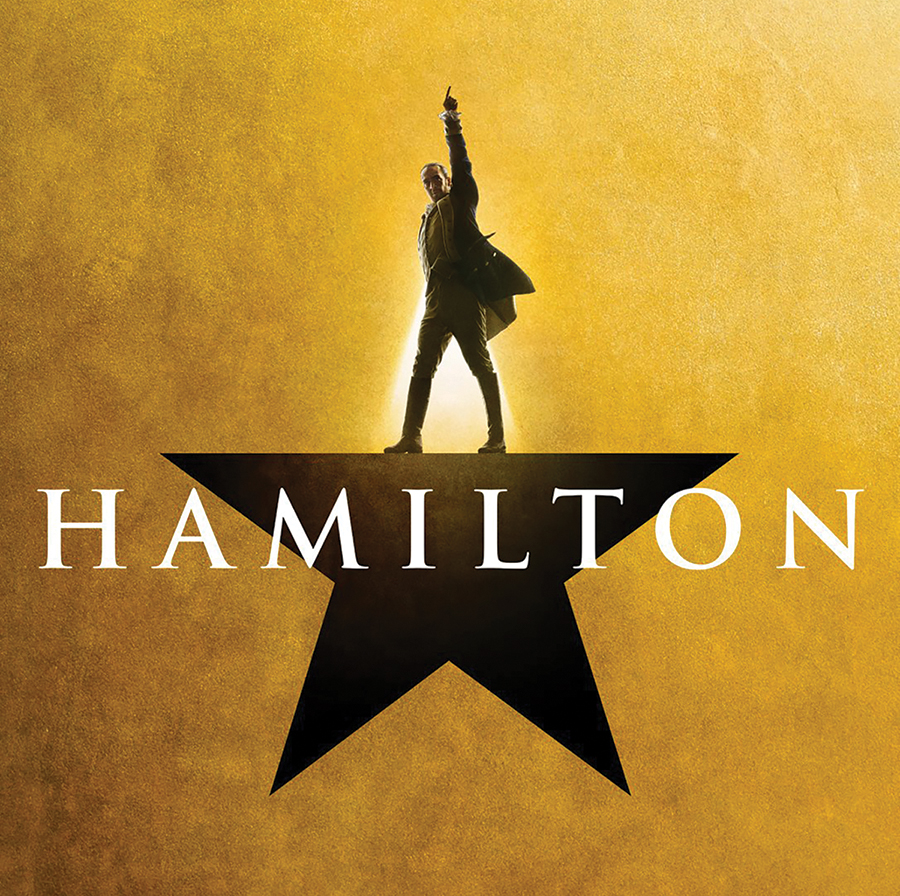
It might be quiet uptown, but downtown is thrumming with the sounds of history being retold through hip-hop. Lin-Manuel Miranda’s award-winning show, Hamilton, hits the Steven Tanger Center for the Performing Arts April 6–24. Don’t miss your shot or you’ll be crying in your tea, which you hurl in the sea. Info: TangerCenter.com.

Makin’ Waves

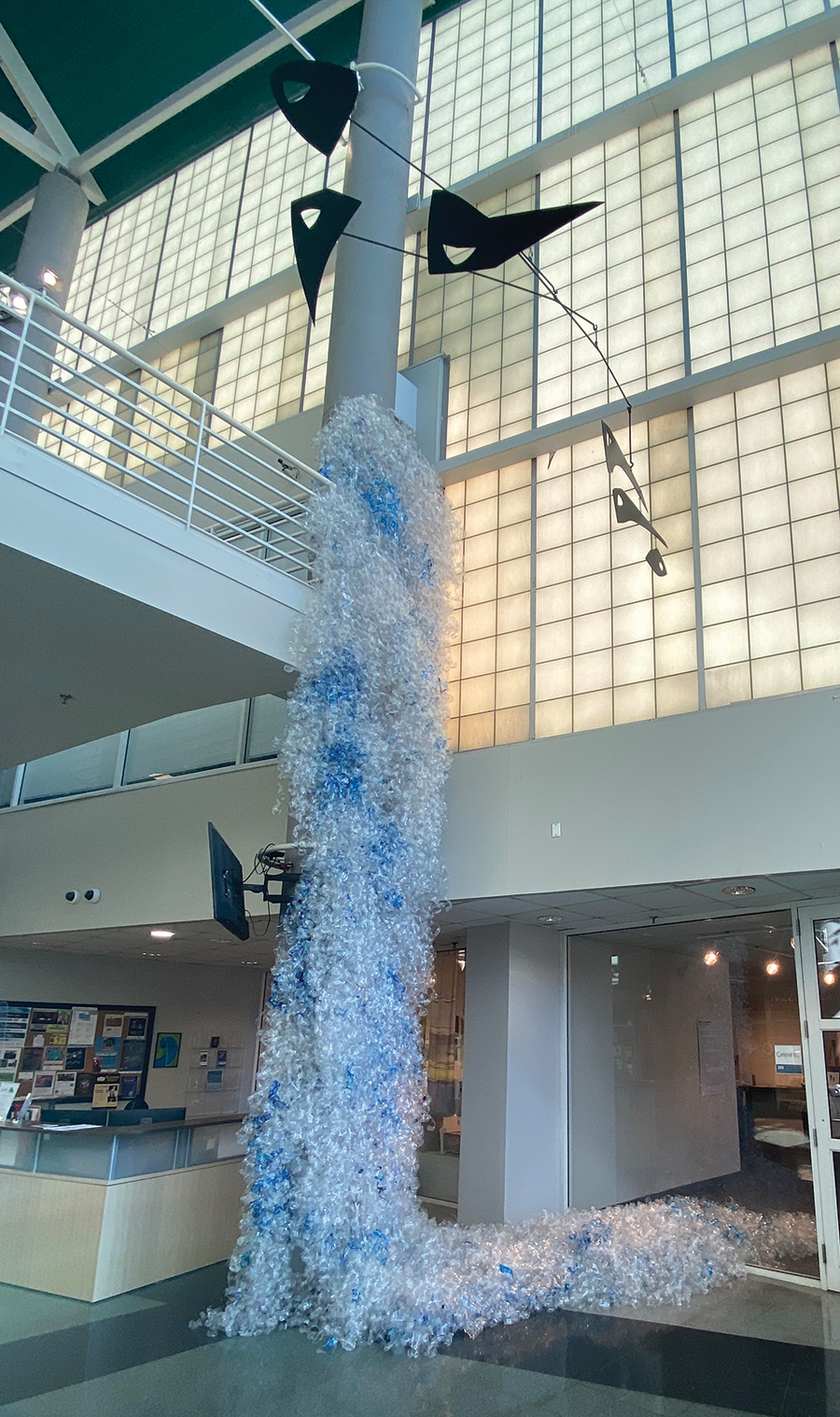
Two parts hydrogen, one part oxygen, with the covalent bond being artists concerned about the planet — and its reliance on water. “H2O” is GreenHill’s newest exhibit where you can check out Bryant Holsenbeck’s mammoth waterfall, made up of disposable water bottles, or his meandering stream of plastic culled from the ocean, then catch his comments on Wednesday April 13, at 5:30 p.m. Later in the month, at 5:30 p.m. on Wednesday, April 27, Will Warasila will discuss his photographs of people living in the shadow of Duke Energy’s Belews Creek Steam Station, where 12 million tons of coal ash are being cleaned up. And every Tuesday from 1–2 p.m. at LeBauer Park, GreenHill artists/instructors will host water-inspired art activities for children and their families. Water you waiting for?
Info: GreenHillNC.org/H2O.

Kudos to . . .

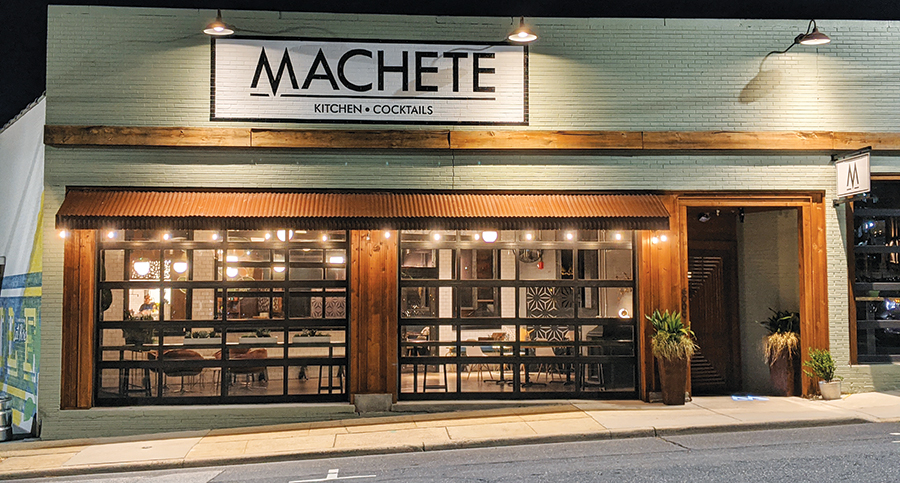
Our friends at Machete, at 600-C Battleground Ave., have been named semifinalists for a 2022 America’s Classic Award for Best New Restaurant by the James Beard Foundation. Any wonder? We don’t think so. With an exquisite plate selection from beef tartar to whole fish to heirloom carrots (to die for) in a chill atmosphere, the restaurant’s creative cuisine is as cool as its vibe.

Stars on Ice

There are a lot of things we like on ice, like scotch — and world-class figure skaters. The 2022 Stars on Ice tour glides into the Greensboro Coliseum at 7:30 p.m. Wednesday, April 20. Catch recent Olympic gold-medalist Nathan Chen with a skate squad of skill as they salchow, axel, lutz, loop and flip — things we can’t even do on dry land — their way across the arena. Info: GreensboroColiseum.com.