Wandering Billy

Child Star

Brody Bett’s ascent to fame began
— you guessed — in Greensboro

By Billy Eye

In 2016, when Brody Bett accepted the role of the Grand Duke in the Community Theatre of Greensboro’s production of Cinderella Kids, he had no way of knowing it would set him on a path where, a couple of years later at the ripe old age of 8, he would be circling the nation singing and dancing his chili pepper heart out as the star of two big time Broadway-touring musicals. Oh, and he has a supporting role in one of the most highly anticipated motion picture thrillers of the year, at least for moviegoers here in the Gate City.

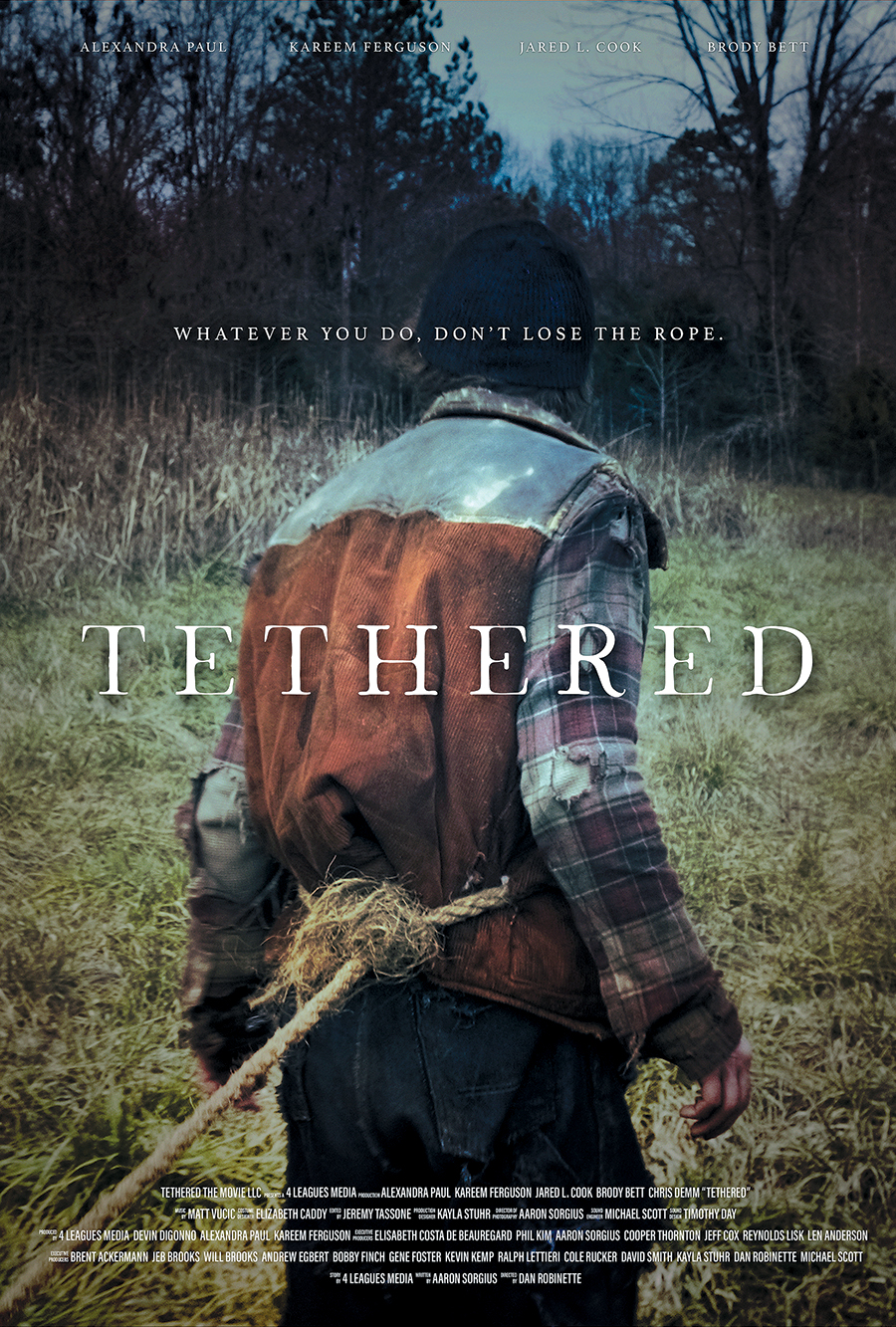
The film is Tethered, a dark, psychological thriller produced by Greensboro-based 4 Leagues Media, a consortium of local filmmakers, writers and technicians who’ve banded together to produce nine short films since 2014 and, this year, their first full-length feature.

“We always had aspirations to shoot a full-feature film,” producer/writer Jeff Cox says. Tethered is based on 4 Leagues Media’s 2017 short film of the same name. “So, by the time we began shooting Tethered, we had learned a lot about production, funding and all of that kind of thing along the way,” he says.
Directed by 4 Leagues partner Daniel Robinette, Tethered was shot at Red Wing Farm, a 400-acre hunting refuge and equestrian facility outside of Thomasville — where nary a car nor airplane could be heard. “We feel like we’ve created a little world that wasn’t like anything you’ve seen on film,” Cox says, “which is tough to do with a limited budget.” This means they can’t do the sort of computer      generated imagery or special effects available in Hollywood. “We had SAG [the Screen Actors Guild] involved so we had their regulations we had to follow, which was fine.”

The producers sought out advice from other creatives around the country who’d made feature films that ultimately found an audience. “We kept hearing we needed a name actor attached to it before distributors would even look at it,” Cox says. “One of our executive producers knew Alexandra Paul [Lt. Stephanie Holden on Baywatch] and sent her the script. She was game and signed on with us.”

Without having seen the film before press time, I can’t vouch for it, but the poster and the trailer are spot on; they got that right. It’s telling also that North American theatrical and streaming rights were immediately snatched up by Gravitas Ventures, a major distributor whose current release is the Pierce Brosnan film, The King’s Daughter. As a result of that hookup, Tethered debuted in select theaters on March 18 with video on demand via iTunes and Amazon before heading to one of the streaming platforms, according to news sources.

That’s an astonishing feat when you consider this is a low-budget indie shot in pastures and woods. But honestly, nothing terrifies me more than the idea of being isolated in the hinterlands — the trees have eyes!

In the leading role is Walkertown native Jared Laufree, who portrays Solomon, a tormented, sightless youth at the mercy of some mysterious entity lurking beyond the nearby tree line. By all accounts, Laufree’s performance is riveting. “In high school, I joined an acting class called Actors Group in Winston-Salem,” he says of his previous experience. “And I did that for four years. Since then, it’s kind of been snowballing.” Asked to describe his character, “The first word that popped in my head was lonely but then I also wanna say he’s strong too. Very strong, very brave, courageous.”

Jared Laufree also was the lead actor in the short film Tethered. “He did such a great job and got so much praise,” Cox says.  “Alexandra Paul saw the short and suggested that Jared play the lead in the feature. He did an outstanding job.”

It’s a demanding role, “because I’m so angsty myself,” Laufree says. “I liked the opportunity to get all that out.” As for continuing to pursue acting roles, “I really want to be a screenwriter. I feel like that fulfills me more right now, at least in my life, than acting.”

Playing Young Solomon in Tethered is the aforementioned Brody Bett. Thinking back to that initial role in the Community Theatre production of Cinderella as a first grader, “I loved it so much that I actually did six shows in a year,” he says. “I did five more with Community Theatre of Greensboro and one for Triad Stage.”

As an 8 year old, he commandeered one of the leading children roles (Jack/Michael) in the Broadway national tour of Finding Neverland, a high-flying musical attraction whisking him and his mom across 43 states, touching down in 102 cities in a 10-month period. Bett is what they refer to in show business as a “triple-threat” — that rare entertainer who can act, sing and dance
. . . all at once if need be. Come to think of it, considering he’s mastered five instruments — keyboard, ukulele, drums, organ and guitar — Brody’s a quadruple-threat, a potential Sammy Davis Jr., this kid.

“After Finding Neverland I got an agent out of New York, then another Broadway national tour playing the leading role ‘Charlie’ in Charlie in the Chocolate Factory,” Bell tells me. When the shutdown happened in March of 2020, he and his mom were dispatched home.

How to channel all of that energy, enough to light up an audience of thousands of theater-goers night after night? “My agent asked me if I wanted to do voice-over tryouts, so we set up this amazing recording studio in our house.” For the last couple of years, Bett’s been laying down tracks for Disney and Netflix, and he’s the singing voice of Gil in Nickelodeon’s effervescent preschooler Bubble Guppies.

It was during this period that Bett was cast as Young Solomon in Tethered, which began filming in January 2021. “My character is a sweet young boy who always tries to please his mom,” Bett says about his part, the younger version of the lead. He was paired with Alexandra Paul, who played his mother. “I can’t say enough nice things about her. It was such an honor to work with her.”

Stage and film acting are separate crafts, similarities notwithstanding. “I think I enjoyed film acting a little bit more than stage acting,” Bett says. “I got to meet so many new people and be in front of the camera, which is something I always love to do.” Having trod more boards, in short pants mind you, than actors three or four times his age, seeing himself on the big screen, “was pretty surreal, I have to say. Yeah.”

Asked to return to Charlie and the Chocolate Factory last year, Bett declined, preferring to remain home, concentrating on his burgeoning voice-over career, which is proving very lucrative for this now 12 year old. “Maybe, if I do anything with film,” Bett imagines, “I’m probably going to be a composer or the score writer.” Nothing’s stoppin’ this kid!

Producer Jeff Cox is optimistic about the future of local filmmaking. “We’re just a little niche company that’s trying, long-term, to bring back filmmaking to North Carolina,” he says. “A lot of that activity moved to the Atlanta area because the state got rid of the [financial] incentives and tax breaks. The more prevalent it is, the more incentive for the state to bring some of that back. We thought this movie turned out really well and obviously Gravitas Ventures thought so too.”  OH

Billy Eye is a former Hollywood movie poster artist. Most recently, he featured prominently in the upcoming 2022 European documentary Devil on Wheels, which chronicles Steven Spielberg’s first motion picture Duel.

Ogi Sez

Ogi Sez

While our “Winter of Discontent” has lasted eight full seasons, I truly believe that hope is on the horizon. I’m sensing a rebirth, a renewal, a reawakening that goes beyond seasonal. Yet, what better time than April — being a transition month — is there to shake off the shackles, divest the doldrums and breathe in the beauty? So, let’s go dancing in the moonlight, singing in the sunshine and letting the music keep our spirits high.

• April 7, Haw River Ballroom: Not long after “Americana” became au courant (circa ’95), Todd Snider ambled onto the scene to perfectly define the idiom as a nonmainstream mixture of folk, alt-country, blues, acoustic funk and all things East Nashville. He immediately became the Americana poster boy and remains so today. To say he is a revered figure would not be a stretch.

• April 8, Ziggy’s: Back when the original Ziggy’s was packin’ them in nightly, one of the prime packers was guitar whiz Keller Williams. And it does my heart good to see that both are still alive and kickin’. Yes, the reborn Ziggy’s is now in High Point, but all that means is a shorter drive from G-boro to see Keller kill it.

• April 14, The ArtsCenter (Carrboro): Apologies for sending you down the road, but when the show is James McMurtry, I trust you’ll forgive me. Few singer-songwriters dare be mentioned in the same breath as Guy Clark or Townes Van Zandt, but McMurtry has earned the comparisons. The son of famed novelist Larry McMurtry, he comes by it honest.

• April 19, Greensboro Coliseum: Where do you start in describing the career of Sir Elton John? It literally gives me chill bumps thinking of the impact he has had, not only on pop music, but on the music industry as a whole. But, yes, after 50 years, he really is saying goodbye to Yellow Brick Road and snuffing out the candle in the wind, but not before a Greensboro appearance.

• April 22-23, The Crown: This show originally was scheduled for last October but, well, you know, that thing that refused to go away . . . I feared that it would not be rescheduled, but the gods of music have smiled down on us. Bus Stop (Evan Olson, Britt “Snuzz” Uzzell, Chuck Folds, Eddie Walker) was H-U-G-E throughout the ’90s, arguably the biggest band ever to come out of Greensboro. The Crown was wise to schedule two nights for the reunion.

Birdwatch

Knock, Knock

Who’s there? Red-bellied . . .

By Susan Campbell

Here in central North Carolina, we are fortunate enough to share the landscape with six different species of woodpeckers. With pileateds being the largest and downys being the smallest, the red-bellied woodpecker is about in the middle. Often it is possible to identify these feisty birds without the aid of binoculars. And once you recognize their loud, rolling calls, you will likely realize how common and widespread the species is.

Found in mixed forests of the Piedmont, pine forests of the Sandhills, and into the flooded bottomlands of the Coastal Plain, red-bellieds are adaptable birds with a rather broad diet. They require sizable dead trees, referred to as snags, for both roosting and nesting. Their heavy chisel-shaped bills are the perfect tools for drilling a new home when need be. Typically, a new cavity is constructed each spring before nesting begins.

Interestingly, both the male and female will take part in creating the new nesting space. However, birds may take advantage of exiting cavities in live pines (created by red-cockaded woodpeckers) in the Sandhills, if the entrance is large enough for them to squeeze through.

Although adult birds do have a reddish wash on the belly during the spring, it is their red head feathers that get people’s attention. The males have bright feathers from their forehead all the way down the back of the neck, whereas the red on the females is limited to the nape. The back, as with many species of woodpeckers, is covered with black and white barring. Young of the year are easily identified by midsummer — they have gray heads with no red appearing until early fall.

Given their size, red-bellieds are most often seen hitching along the trunks and larger branches of trees, searching for food. They both look and listen for insects of all kinds on, or even in, the bark. They can pry the wood away or will pound on the outer bark to uncover prey hidden underneath. However, they will take advantage of fruit or nuts later in the season. Since they are opportunists, it is not surprising that they also take advantage of bird feeders. Not only will you see them eating suet but also black oil sunflower seeds. Sugar water feeders may even be attractive to them. The birds can become a nuisance if they become too vigorous and break the feeding ports on hummingbird feeders in their attempts to reach the nectar inside.

Red-bellieds are readily identifiable in flight, given the translucent white patches near the wingtips. Their size and undulating flight style also aid in identification. The fact that they tend to be vocal when on the wing at this time of the year also gives them away. So keep an ear out and an eye to the sky — one of these handsome birds may just get your attention sometime soon.  OH

Susan Campbell would love to receive your wildlife photos and reports. She can be reached at susan@ncaves.com.

The Creators of N.C.

The Burden and Beauty of Home

Carrying the weight of
William Paul Thomas’ art

By Wiley Cash

Photographs by Mallory Cash 

I’ve met William Paul Thomas twice, both times inside an art gallery. He wasn’t present for our first meeting, but his work was. In October last year, I encountered his portrait of Alexander Manly, editor of The Daily Record, which was North Carolina’s only daily Black newspaper, as part of the “Initiative 1897” exhibit at a gallery show in downtown Wilmington. The exhibit featured prominent Black civic leaders in the years preceding the 1898 race massacre, a violent coup d’état that saw Wilmington go from being one of America’s most successful Black cities to a place where racial terror and murder were used to take over Black-owned businesses and homes.

The second time I met William was in late February inside the Nasher Gallery on the campus of Duke University, where his portrait series Cyanosis was part of an exhibit titled “Reckoning and Resilience: North Carolina Art Now.” The subjects in the nine paintings in the Cyanosis exhibit are not as historically prominent as Alexander Manly, but they’re nonetheless important to William’s life. Each person is either someone he knows or someone he’s met during the course of a day, perhaps someone with whom he shared a passing conversation or a quiet moment that changed the trajectory of an afternoon.

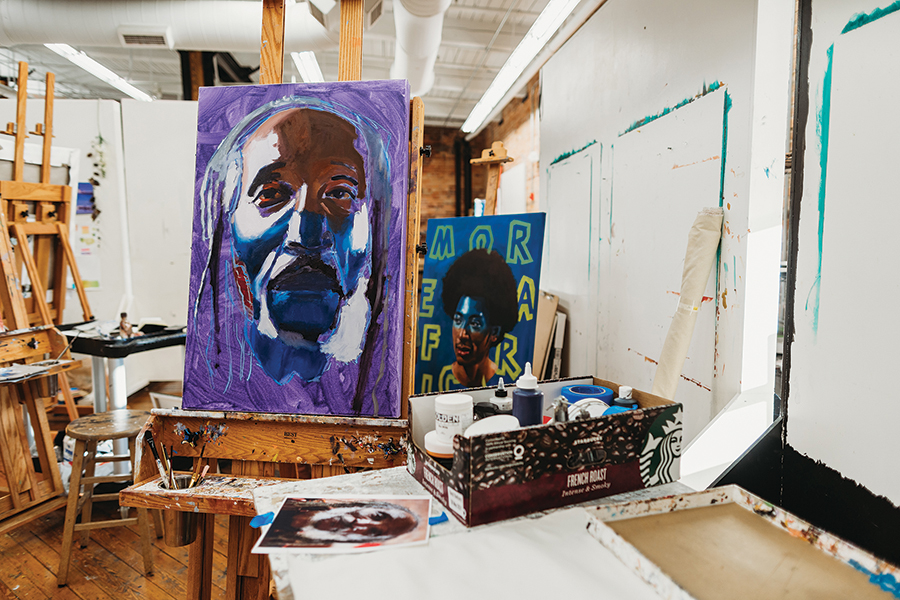
The name of the series is taken from the medical term that refers to the blue pallor skin takes on when it is not sufficiently oxygenated. The idea first took root in a portrait William painted of his young nephew Michael. He painted half of Michael’s face blue to emphasize the color of his skin. Soon, the use of blue grew to represent the presence of deep emotions — perhaps trauma, fear or uncertainty — that lie beneath the surface of people’s lives while they present a calm face to the world. In an online interview with Artsuite, William shared the unifying theme of the series: “My question through those paintings is: What would it look like if that trauma or adversity was shown on the skin? Would it invite people to be kinder to each other?”

On the day I finally met William in person inside the Nasher Gallery, Mallory, our daughters and I arrived half an hour early. While Mallory unpacked her camera gear and set off to scout the museum for places to set up, our daughters and I wandered through the exhibits with scores of other masked patrons. When we found the exhibit featuring William’s paintings, we paused and stood in front of them. The nine paintings are all closely cropped portraits of Black men in rows of three with a self-portrait of William sitting at the center. Each of the men is looking in a different direction, some of them seeming to stare right into the viewer’s eyes. Strips of blue color their faces in various places: across the eyes like a blindfold, over the nose like a mask, or covering the mouth like a gag.

Top row: Regine’s Brother, 2021, Lindsay’s Friend, 2018, Donna’s Son From Chicago, 2017. Second row: Le frère de Nathaly, 2019, Leticia’s Dear Friend, 2021, Kenna’s Dad, 2019. Third row: Tamara’s Father, 2019, Lydia’s Only Caregiver, 2017, Stephanie Woods’ Fiancé As An Icon of Piety, 2017.

William arrived, and we all introduced ourselves to one another. I’d been following his Instagram for several months — which I will later describe to him as being “delightfully weird” — and I didn’t know what to expect from an artist who is wildly experimental and playful while still remaining earnest and sincere. The dichotomy a viewer might find in William’s work also seems present in his personality; he is formal but warm, thoughtful but quick to smile. He told us he had just returned home on a flight from Chicago after spending the weekend at a family wedding with his fiancée and their newborn daughter. We joked that he looked rested and photogenic for a man who’d spent the morning lugging bags, baby and a car seat through airport terminals. His face softened for a moment at the mention of his being a new father, and then he and Mallory got to work.

Meanwhile, our 7- and 5-year-old daughters were feeling inspired after seeing the art in the museum. I tore pages loose from my notebook and fished pencils from my bag, and we found seats in the café and ordered snacks. I must have been feeling inspired myself because, like them, I began doodling on a blank page. But I couldn’t stop thinking about the faces of the men I’d just seen in William’s paintings, that strip of blue still hovering on the edges of my vision. When I thought of deoxygenated skin I thought of the videos I’d seen of Eric Garner and George Floyd, recalled their panicked voices saying, “I can’t breathe.” I looked down at my hands, one holding a pencil and the other resting on the table, the blue veins rolling atop the backs of my palms, not because my skin was deoxygenated or because I was experiencing latent trauma, but because my skin is pale and the blue veins were visible because the blood inside them was moving freely.

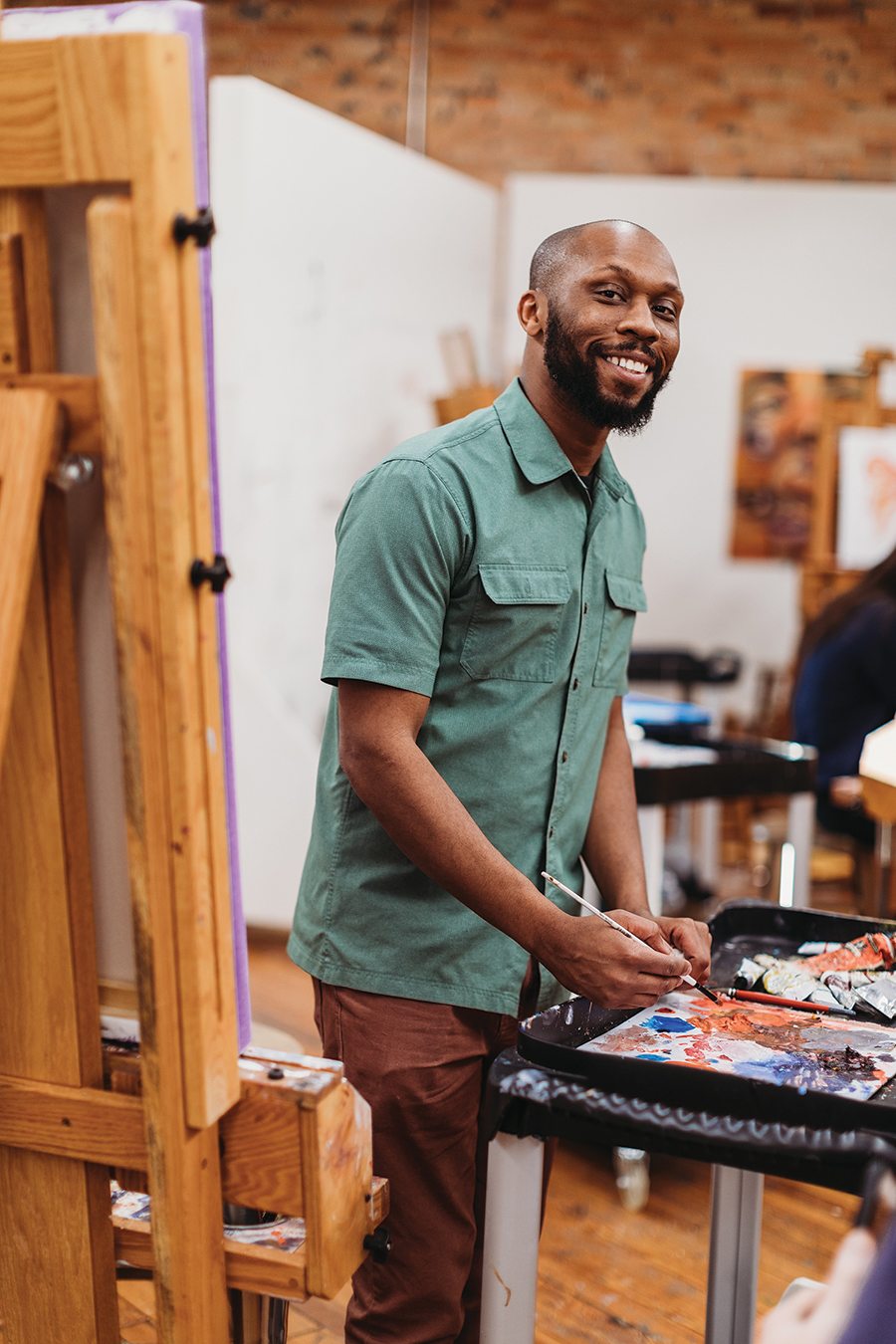
After we left the museum, we followed William across the Duke campus to the studio where he teaches a painting class to undergraduates, which is just one of the courses he teaches at several nearby universities. Inside the classroom, one of his students was behind an easel, working on a project from his class. He greeted her warmly by name, and then I watched him return to his work on a portrait of a man named Larry Reni Thomas, a Wilmington native known as Dr. Jazz because of his extensive knowledge of the music’s history. The two men met when William was working on “Initiative 1897”.

I asked William what interests him about painting people he meets. He lifted his brush from the canvas and considered my question, his eyes settling just above the top of his easel.

“For a long time, my art had been contained within an academic context,” he said, a reference to his Master of Fine Arts degree from UNC-Chapel Hill and his teaching in the undergraduate classroom. “In the portrait work, it’s important that the people that I invite (to be painted) don’t always belong to that same environment, so I’m having conversations with people who don’t necessarily have the same ties to UNC or Duke. I meet someone at the bus station and we strike up a conversation, and that’s a person I’m making a painting of. I feel like I start learning more about this area, or where I’m at, via those conversations. That’s how I’ve chosen to break away from a strictly academic environment.”

I ask him if he specifically looks for subjects outside of academic settings, and he admitted that he does, but that he’s also interested in introducing people to art who do not always think of themselves as being individuals who appreciate it.

“Sometimes I make visits to places with people because of the location. The Ackland Art Museum in Chapel Hill is right on Columbia and Franklin, and buses run all around that area. So if I was talking to somebody and having a conversation about art, there have been times — if they have the time — I’ll say, ‘Let’s take this conversation to the museum.’ Since I’ve identified museums and galleries as places I love to be as an artist and as a consumer of art, a lover of art, I don’t necessarily expect people to share that same interest, but if you tell me that you are not interested in art but you have not been inside a gallery, I question that and I challenge it and say, ‘Then let’s go check it out.’

“I have relatives, friends, people I’ve met who feel like they don’t have a direct connection to art, and I disagree right away because I’m thinking, if you dress yourself in the morning or if you like a certain model of car or if you like a certain movie, these are visual experiences where you are making choices about the visual world that suggests that you have some interest in aesthetics even if you don’t identify as an artist or a person who likes art. You can treat the museum that way, where you intuitively defer to your own tastes and go in there and judge whether or not you like whatever you see or are disinterested or feel moved by it based on your own experiences and not whatever education you have.”

When William considers how hesitant many people are to engage with art, he views his casual discussions with strangers as an opportunity that might lead them to a museum visit or to their portrait being painted: “It’s really of interest to me to engage in conversations where I try to demystify or deconstruct wherever that idea comes from.”

William is also interested in deconstructing the role art played in his own life, especially during his childhood. There could be no better representation of this than the bright pink concrete block that rested on the floor nearby. I’d already seen the block on his website, and I knew it had been painted to match a wall William’s mother had painted in the apartment where he’d grown up with his sisters in the Altgeld Garden housing project on Chicago’s South Side. He bent down and picked up the block at his feet.

“I extracted a single cinderblock as a way to represent that memory,” he said. “It became a way to carry that experience forward as a part of my narrative. How much of her decision to paint that wall influenced my decision to become an artist? This domestic alteration, how did it have an impact on the way I see the world?”

I asked him about the differences between being affected by the burden of memory and affected by the physical burden of lugging around a 40-pound block of cement.

“I did that unconsciously,” he says, referring to the burden of memory, “and now I’m doing it consciously. I’m choosing to carry this weight with me.” He smiles. “There’s never any good reason to carry a cinderblock around with you, but there might also not be a very good reason to take any traumatic or negative moments that I experienced as a child to have that affect me in the present, but nevertheless, for better or worse, the things we experience through our lives are carried with us. I’m definitely carrying home with me.”

I thought of his newborn daughter, a baby born in the Triangle, far from William’s Midwestern roots. What role would her father’s art play in her own conception of art’s role in her life? How would she carry her childhood with her?

He smiled at the questions, and then he rested the block in his lap as if it were a newborn.

“I hope she recognizes art as a normal, central fixture of her life, whether she is personally creating things or paying attention to the world around her. I hope she recognizes that it’s something valuable and precious.

“I hope she has an interest in exploring and discovery. I hope she gets to know Durham and North Carolina in a way that’s really intimate. I want her to carry with her how rich the world can be wherever she is as long as she’s paying attention.”

If William’s daughter follows the example of her father — an artist who is constantly paying attention to his surroundings with an idea toward capturing the richness of a place and the people who inhabit it — I’ll bet she’ll learn to do just that.  OH

Wiley Cash is the Alumni Author-in-Residence at the University of North Carolina Asheville. His new novel, When Ghosts Come Home, is available wherever books are sold.

Hot Trends

Spring
Forward

By Jason Oliver Nixon
and John Loecke

Green Goddess 

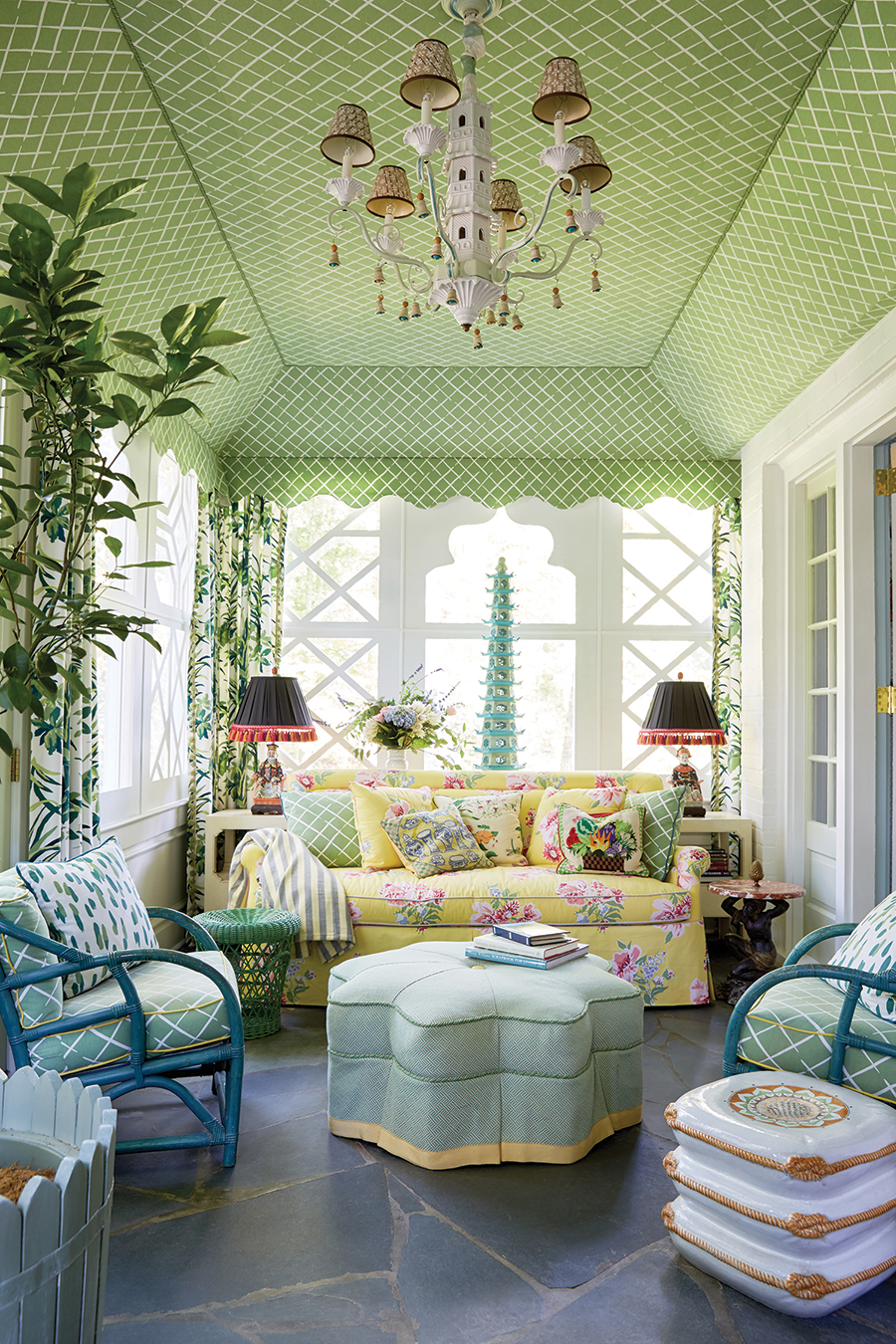
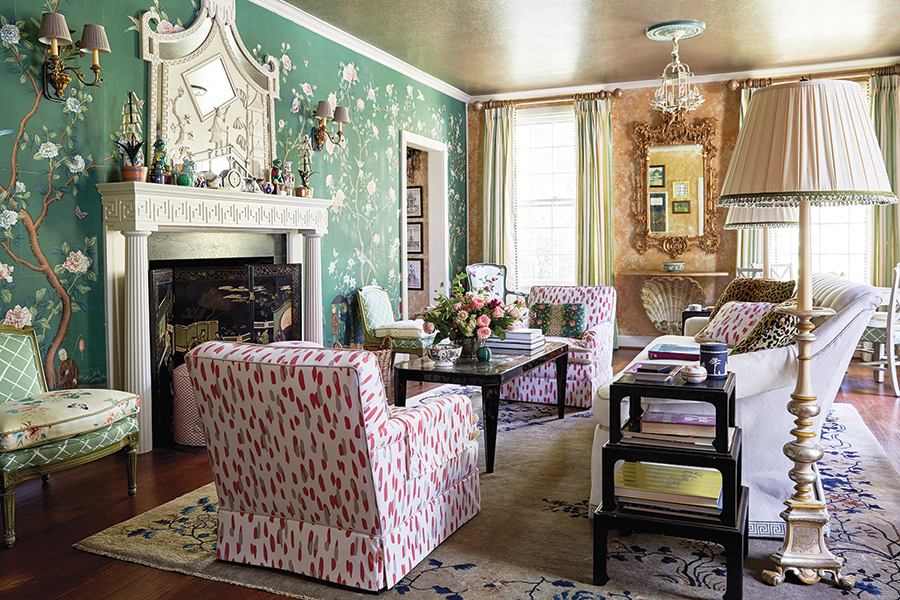
Gardening has had a massive resurgence since the pandemic began, so formerly forlorn front yards are displaying a newfound floral bounty. Trees have been trimmed, flowers are blooming blowzily, and stone masons have been busily crafting patios and terraces. But how to connect the interiors of your home with its glorious exterior? Bring the timeless, fresh charms of garden-plucked green hues within — whether in the form of paint, wallpaper, fabrics or rugs. As John says, “If it works in your yard, it will work in your home. And there’s no more cool, soothing neutral hue than green.” Think paint colors such as Soft Fern from Benjamin Moore and Dirty Martini from Clare, and fabrics such as Swans Island in Meadow Green from Madcap Cottage.

Leafy Luxe 

Palmy, balmy interiors — inspired by a mix of the Beverly Hills hotel paired with a jigger of The Greenbrier and Palm Beach’s Colony Hotel — are bursting into bloom. Think traveler palms reaching hither and yon upon wallpaper and lemon trees scampering across sofas. Says Liz Vaughn, a guiding force at Winston’s iconic Gazebo women’s retailer, “Gorgeous palm leaves march across the library at my home and have created a timeless vibe that is one part Dorothy Draper and another part classic escape. Stepping into this room is like taking a mini vacation, no plane tickets required. The color and scale of the grand palm print wallpaper absolutely dazzles our guests.”

Remarkable Rattan

Rattan is finally getting its moment in the sun after seemingly falling out of favor for a blip — but never at Madcap Cottage! And the woven furnishings are not just making star turns on covered porches but also in living rooms and other public spaces. Notes Morgan Cooper, the owner of the glamorous Hive, in Winston-Salem, “Our clients are loving reinterpreted rattan that boasts a dash of unexpected whimsy and wonder. This is definitely not your grandmother’s rattan. And it might be going into a master bedroom or bathroom — not just a sun porch.”

Prince of Chintz 

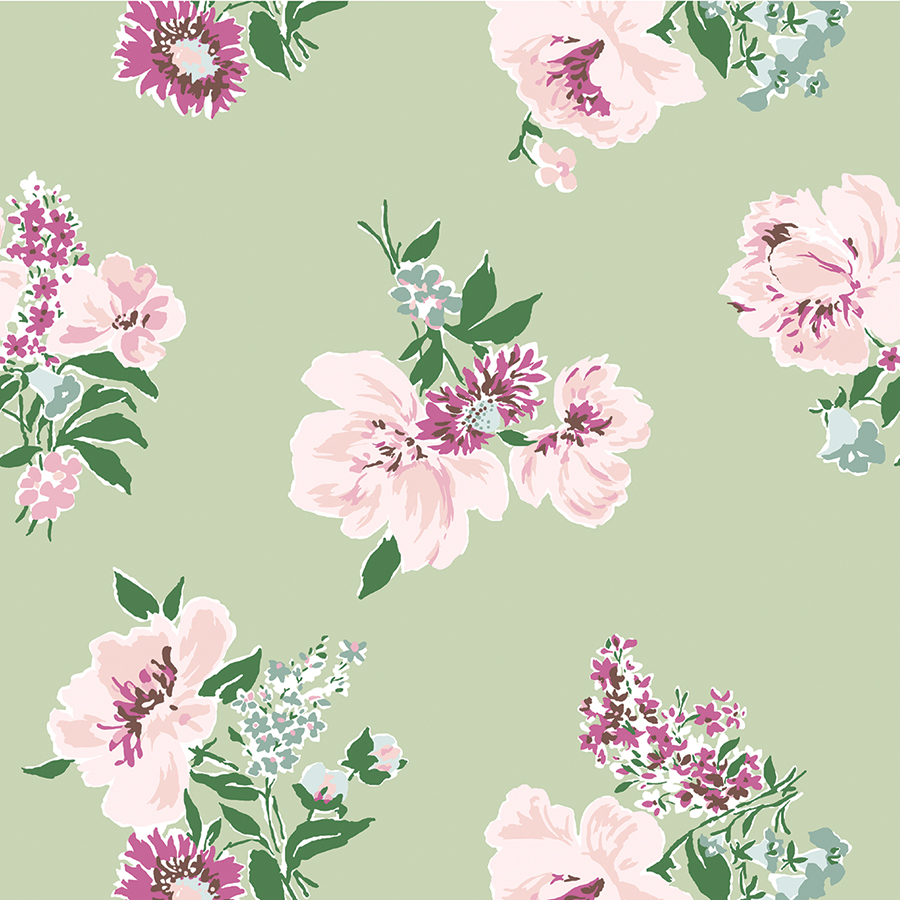
The pendulum always shifts, n’est-ce pas, so should you really have kept those clothes from the 1970s that made you look like Holly Hobbie to use as so-called “nap” dresses now? Rewind to the 1980s. That decade’s go-to textile, chintz, is having a big resurgence, too. “It’s not the highly polished chintz that we remember from Mario Buatta in 1987,” says John. “And we adored Mario. But today’s chintz is a bit more relaxed, less polished, and with more negative space. Perfect for a sofa or an armchair.”

Think Pink 

“Pink is such a wonderfully flattering hue,” says John. “A pink-hued room will literally take 10 years off your face. And pink can be both feminine and masculine, so the shade can really work in any room of our home — from a living room to master bedroom or bathroom.” Our go-to pink shades include Pink Ground from Farrow and Ball, Rachel Pink from Sherwin-Williams, and Dead Salmon, also from Farrow and Ball. P.S. Our most favorite escape of late is stunning, pink-toned Manor House Room 23 at the amazing Duncraig Manor and Gardens in Southern Pines. Is it the pink walls that leave us feeling so refreshed?

Heavy Metal 

We love using metallic finishes in home design schemes. But don’t think that we are referring to the old adage that “brass and glass equals class.” Think layered. Aged. Patina. Notes John, “Why not embrace metallics on a ceiling to bring light into a room that lacks luster? We often wallpaper ceilings with metallic finishes, and that gentle sparkle really brings a space to life.” A favorite is The Lost City of Silver from Phillip Jeffries — just heaven.

Tried and True 

Noted Winston-Salem landscape architect Jeff Allen turns to classic, timeless garden elements to craft his magical, cooling sanctuaries. Here’s his garden go-to cheat sheet:

1. Boxwoods: versatile, beautiful and sculptural. These classic bushes provide shape and style to any garden and pair well with everything. They can be structural or architectural or can be used as an accent. With regard to the blight, there are varieties that are disease resistant, and there are treatments available.

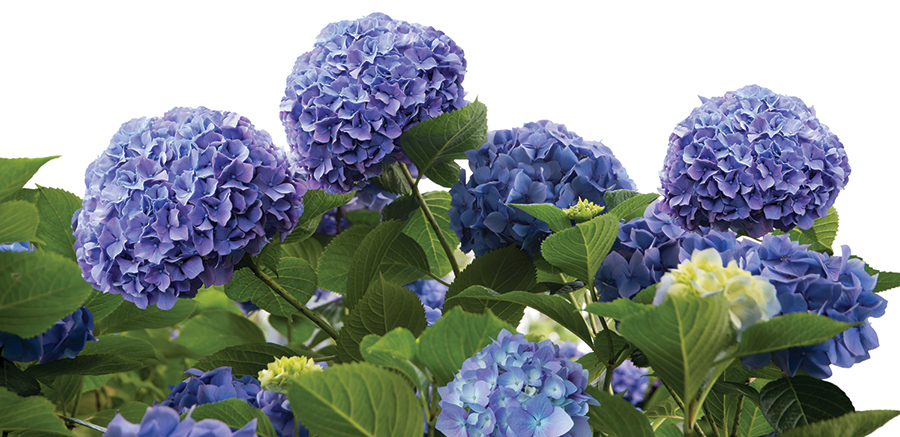
2. Hydrangeas: dynamic, colorful and dramatic. You can’t go wrong with large sweeps of hydrangeas for dramatic color. Underplant with bulbs to extend the bloom seasonally.

3. Pachysandra: my favorite groundcover. Used liberally in our landscape designs, pachysandra provides continuity with our planting compositions.

Fabulous Follies 

Ah, the great outdoors! But where to kick back and relax and sip a cool sauvignon blanc whilst shaded in splendor? Follies are all the rage in England, and these whimsical garden ornaments are quickly spilling across the pond. Think whimsical temples adorned with columns and plenty of space upon which to toss back on a daybed with book and hooch. Turn to Haddonstone, the England-based cast-stone manufacturer, for whimsical creations that range from temples to pavilions, pergolas and more. Plus, Haddonstone has a U.S.-based arm, so that makes the logistical bits all that much easier.

RUIN_1

Make an Entrance 

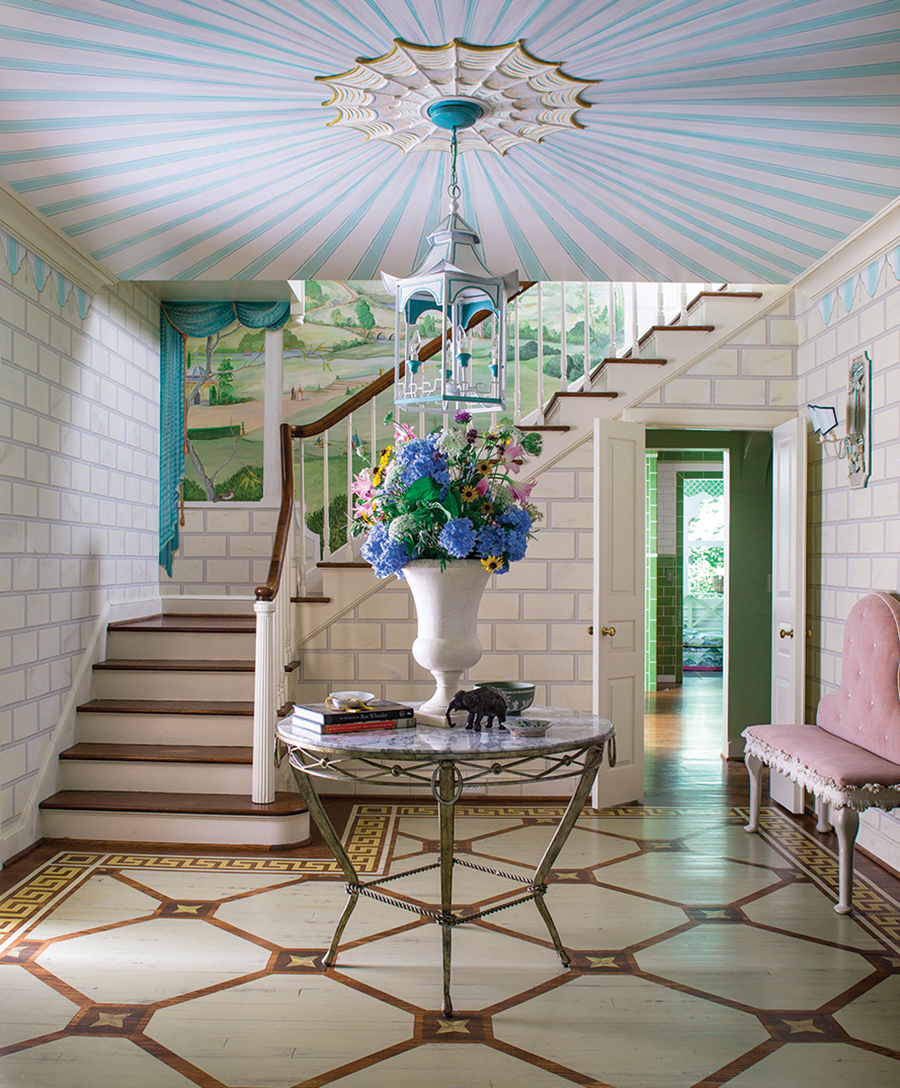
As we all paused over the past two, gulp, years, we turned our attention to fixing up our homes and addressed areas that had perhaps been long overlooked. One such space that has been a focal point for our clients has been the foyer. Says Anne Rainey Rokahr, the charismatic owner of Winston-Salem’s Trouvaille Home, “The feeling one creates in the foyer sets the tone for the entire house and should therefore never be an afterthought and definitely not a family drop zone. Even if the rest of the house looks a little messy the foyer should always be pristine. And the foyer is the spot to go grand. Pair a spectacular chandelier (always on a dimmer), a one-of-a-kind chest, and a large mirror with a couple of yards of a fine fabric, and you’re on your way!”  OH

Jason Oliver Nixon and John Loecke are the duo behind Thomasville-based Madcap Cottage.

Omnivorous Reader

Writing on the Edge

Short stories that stick

By Anne Blythe

Joanna Pearson, a psychiatrist in the Chapel Hill area, describes herself as a “lapsed poet” on the jacket of her new short story collection, titled Now You Know It All.

Yet, in the 11 stories that plumb the depths of the hearts and minds of a variety of flawed but intriguing characters, it’s clear that Pearson’s poetic touch is not on hiatus. The author deftly describes settings, backstories and eerie omens as the narrators of her mini-mysteries move toward precipices that will forever change their lives.

These stories can be dark, tempting readers to turn their eyes away from characters whose hard-living and messy circumstances have pushed them to a point where they struggle mentally with what is and isn’t real.

It’s difficult to read about James, the foster child (also known as the Devil Boy), the therapist Miss Beth Ann and her boyfriend in “The Films of Roman Polanski” and not be disquieted by the troubling, manipulative behavior on display in that story. In “Mr. Forble,” you might get creeped out as you read about the disturbed 13-year-old boy who tries to sic the miscreant from an internet hoax on his birthday party guests.

Other characters we meet in Now You Know It All include two sisters at their grandmother’s rural Burke County home who hear about a boy tied up in the barn next door; a pregnant woman in her 40s reliving a previous brutal bout of postpartum depression; and a waitress/bartender wooed away from her small Southern town by a socialite eerily similar to Ghislaine Maxwell.

Pearson builds compassion for her storytellers as they teeter toward their ominous misfortunes, while hooking readers with her descriptive writing.

“There were ruins and fountains and a fury of beeping horns,” Pearson writes in “Rome,” the opener of the book. “Naked putti lounging fatly in marble. Gorgeous long-armed women in skirts and strappy sandals, and young men hanging out of their cars in mirrored glasses. Old men in storefronts arranged cheeses and sausages tenderly, as if they were tucking in sleeping infants while chattering tour groups trailed guides holding red umbrellas, and honeymooners licked perfect gelatos.”

That’s how we meet Lindsay, an American college student exploring Rome with her friend Paul. They’re sick of each other, and as it is with each story in the collection, Pearson does not seduce her readers with an ordinary tale about a young couple exploring their feelings for each other as they travel together in a foreign land. Expect the unexpected.

“We were finally seeing all the things — beautiful, famous things we’d waited all our young lives to see — but we couldn’t appreciate any of it any longer,” Lindsay said.

Then comes the plot twist.

After an unanticipated night of romance with Paul — and him spending the next day worrying about it — Lindsay sets out on her own for a day trip to the Tivoli ruins, leaving her traveling partner alone in bed in the hostel. Along the way she meets the Gooleys, a “seemingly wholesome family” of five blonde-haired girls, a Pentecostal father and mother who she believed to be pregnant.

Not only does Lindsay come to realize the “wholesomeness” of the family she was touring the ruins with might be more of the “slippery quality” that sometimes accompanies such carefully crafted images, she also questions who she really is.

Pearson’s stories rarely conclude with a cleancut resolution to the many mysteries posed, leaving a sense of uneasiness that gives a nod toward the tumult of our times.

In “The Field Glasses,” Pearson opens with the line: “For weeks my sister Clara had been warning me that there was something in the woods that wanted to eat the children.”

And she closes it with: “There was another call, a different animal this time, joining in mournfully with the first, their voices rising in a strange duet, and I determined it must be two dogs, something wounded and wild in their voices. Through the dark of the trees, I imagined or heard the crack of branches. Something hungry out there. I waited for a figure — my sister, a deer, some other animal — to emerge.”

That’s it. The end of the story. In Pearson’s world, the uncertainty lingers, leaving readers to long ponder not only what’s lurking in the woods but what truly lurks in the minds of the narrators. She shows us how the power of suggestion and expectation can shape her characters’ narratives, as well as our own.

We never really know everything they’re thinking or how what’s roiling below the surface is going to lead to new discoveries.

Pearson’s stories might be short, but they have a long-lasting impression while craftily making you think about life’s mysteries.  OH

Anne Blythe has been a reporter in North Carolina for more than three decades. She has covered city halls, higher education, the courts, crime, hurricanes, ice storms, droughts, floods, college sports, health care and many wonderful characters who make this state such an interesting place.

Simple Life

The Cowboy in Me

Old Westerns are the cure for Yellowstone fever

By Jim Dodson

So, there we sat, three old ranch hands around a blazing fire as a lonesome doggie let loose a howl at the moon.

“Sounds like that dadgum dachshund down the street got loose again,” grunted Harry, the quick-draw artist sipping his Buffalo Trace.

“He’s pretty bad,” agreed Timmy the Kid, the tile-slinging merchant. “But that dang goldendoodle across the street ain’t much better. Got a howl on him like a stuck prairie dog.”

Counting women folk (cowboy-speak for “wives”) there actually were six of us gathered round the elegant Tuscan terrace fire pit in Tim and Sally’s beautiful backyard where our brides were drinking excellent white wine and chatting about whatever suburban wives talk about when their husbands are talking like dim-witted ranch hands who have watched too many episodes of Yellowstone, the hottest show on cable TV.

In case you’ve been livin’ under a flat rock in the woods, Yellowstone is the TV saga of rancher John Dutton and his proud but mentally unstable family, owners of the largest cattle ranch in Montana. They are in a perpetual war with an Indian reservation, the national park system and godless resort developers eager to turn their ranch into Club Med West. Think Dynasty with pump shotguns, F-bombs and luxury pickup trucks.

Whether you find Yellowstone appalling or hopelessly addictive, Yellowstone fever has spread like a case of terminal kudzu across the lower 48, turning ordinary dudes like Harry, Tim and briefly me into mini John Dutton wannabes.

As a result of the show’s surging ratings, there’s now even an official Yellowstone Merchandise TV Shop Collection peddling everything from home goods to coffee mugs for riding the urban range in your luxury pickup truck. Down at the auto mall, fancy rigs like the boys from Yellowstone drive can easily set you back 70K.

Back at Christmas, just for fun, I bought the little missus — a.k.a. my wife — an official Yellowstone ballcap and matching sweatshirt that reads, “Don’t Make Me Go Beth Dutton on You,” thinking she might ditch her daily green tea and morning yoga meditation in favor of going a little bit “Beth Dutton.” Every marriage needs a bit of spice.

In case you been watchin’ way too much CNN and worryin’ about stuff like the future of democracy and the free world, Beth Dutton is the smokin’ hot, potty-mouthed, always drunk, oversexed, mean-as-a-rattlesnake daughter of John Dutton, the stoical, monosyllabic, unnaturally stone-faced daddy-rancher with obvious deep inner conflicts, who every now and then shoots some dumb sumbitch who wants his land or wanders uninvited onto it. 

Unfortunately, while I was over at Tractor Supply one Saturday mornin’ trying to decide how many head of cattle I might be able to raise on a quarter acre suburban lot, the little lady dropped off her sexy new Beth Dutton duds to Goodwill — her way of saying the drunk and nasty lifestyle of the modern TV cowgirl just wasn’t her cup of green tea, with or without the Tito’s chaser.

For those of us who grew up in the 1960s idolizing cowboys like Gene Autry, Matt Dillon and Roy Rogers, not to mention the boys from Bonanza and the gals from The Big Valley, these Yellowstone folks aren’t exactly your polite, old-fashioned TV cowboy types who wear white hats, never seem to get dirty and always marry the pretty school mistress in the end.

Must admit, after binging three full seasons of Yellowstone, I suddenly began to miss those kinder and gentler Hollywood cowboys I grew up with and had every intention of someday becoming.

Sitting on a shelf in our library are a pair of small, well-worn cowboy boots, the only things on my feet for the first four years of my life. We lived in the rolling country north of Dallas, a neighborhood that shared a great big pasture full of horses and a burro named Oscar.

Oscar belonged to me — well, my folks. But I fed and talked to Oscar every morning and sometimes got to ride him in the afternoon. I always figured Oscar and I would someday ride off into the sunset together, meet the right gal and finally settle down. Instead, we moved to the city where I rode a bicycle instead of a burro and gave up my boots for a pair of Keds.

The old-style cowboy in me never died, though. He even still shows up from time to time, like when — in search of the Golf Channel or an update on Ukraine — I stumble across old episodes of The Virginian or Maverick on some remote cable channel and watch the entire episode, remembering exactly what happens. Give me a classic John Wayne western or John Ford epic on TCM and I’m also good for the count.

Several years ago, my wife surprised me with tickets to see Glen Campbell at an outdoor arena in Raleigh. Reportedly suffering from Alzheimer’s disease, Campbell was making his farewell musical tour.

Unfortunately, a thunderstorm broke right at showtime, and Campbell managed only a brief appearance to sing one song before the show was canceled. He passed on not long afterward.

I guess even rhinestone cowboys never die, though, as long as you have their complete hits on Spotify or Pandora radio. When folks drive like the Wild West in my town, I just sing along with Glen.

Twenty-five years ago, I took my daughter, Maggie, then a precocious 7, on an unforgettable, two-month road trip to fish and camp the great trout rivers of the West. We tented beneath glittering stars by the Shoshone River and attended the Friday night rodeo in Cody. We took a rocking McKenzie boat down the Snake and camped for two days in Yellowstone, saw buffalo and a gray wolf, hiked for miles, and drank our bodyweight in root beer. For a full week we rode horses in the Colorado high country around Durango and camped atop a star-strewn mesa in New Mexico. On the way home, we even bumped into the great-granddaughter of outlaw Jesse James near the Red River. She was a nice old lady with a killer smile.

Though I didn’t tell my daughter this for many years, the cowboy in me was actually scouting out places where I could start a new life following a divorce — somewhere in the wide-open, Western spaces where I could stake a new claim, hear the doggies sing and never look back. 

It didn’t quite work out that way, but the trip sure healed something in both of us and bonded us like saddle pals on the old Chisholm Trail. The little memoir I wrote about our journey of the heart is still in print all these years later — and even got made into a film. Maggie herself now lives in the Golden West.

I guess that’s why I was initially drawn to the saga of the Duttons of Yellowstone Ranch, hoping to find some comforting trace of the Western spirit — the inner cowboy — that lives in all of us.

But after three full seasons of Yellowstone, I simply had enough. I went back to old TV Westerns and John Ford movies that never fail to deliver.

My little missus — better known as my wife, Wendy — knew just the thing to perk me up. She brought me a nice big glass of milk and some Oreos as we settled in to watch a couple of my favorite episodes of The Big Valley.  OH

Jim Dodson is O.Henry’s founding editor and ambassador at large.

Tea Leaf Astrologer

Aries
(March 21 – April 19)

You know those little peppers used on Thai menus to indicate the spice level of the dish? Well, it’s a three-pepper month for you, Aries. And while that may seem mild compared with the blistering, full-body high you’re accustomed to, perhaps it’s time to shift your focus toward the subtle energies in your life. Single? No need to go sending up flares. Love always finds you. But you’re not a dish for just anyone. 

Tea leaf “fortunes” for the rest of you:

Taurus (April 20 – May 20) 

Get ready for a reality check. Or don’t. It’s coming for you either way.

Gemini (May 21 – June 20)

When it comes to love, you’re only fooling yourself.

Cancer (June 21 – July 22)

Somebody’s got shiny-penny syndrome.

Leo (July 23 – August 22)

The door is unlocked. 

Virgo (August 23 – September 22)

You’re going to have to speak up.

Libra (September 23 – October 22)

Don’t think of it as backtracking. Think of it as recalibration.

Scorpio (October 23 – November 21)

Two words: healthy boundaries.

Sagittarius (November 22 – December 21)

You’ll want to change your shoes for this. 

Capricorn (December 22 – January 19)

Does the term “energy vampire” mean anything to you?

Aquarius (January 20 – February 18)

You couldn’t wipe off that grin even if you tried.

Pisces (February 19 – March 20)

You’ve already hung the moon. Now it’s time to enjoy it.  OH

Zora Stellanova has been divining with tea leaves since Game of Thrones’ Starbucks cup mishap of 2019. While she’s not exactly a medium, she’s far from average. She lives in the N.C. foothills with her Sphynx cat, Lyla.

Home by Design

Eccentrics of
Latham Park

Public grounds along Buffalo Creek
entertain a cast of characters

By Cynthia Adams

Living in sight of Latham Park affords premium viewing (for free!) of 24-hour reality programming.

At the onset of coronavirus-fueled frustration, park going surged.

Lots of posing occurred in the park, with professional photographers forced out of studios. Women and men leaned into gnarly trees as pros and amateurs snapped away. A girls’ sports team pirouetted on a small rise, one long favored by golfers who perpetually have ignored the “No Golfing” signs. They air hugged, bumping elbows, posing while socially distanced.

Romance, too, played out on grass-stained quilts. Couples lugged cold drinks and takeout to make-out exhibitions putting Love Island to shame.

For some reason, Latham Park, among Greensboro’s first, has never been funded at the level of the city’s other parks, despite its age and popularity. No lovely plantings nor gazebos, no special features whatever except for a trail and rusting old exercise stations.

Beyond that, nothing but a few old benches.

Occasionally, gang members tag the park signs. Pranksters even lugged away two bolted-down benches. We were stunned one morning to find one abandoned near Elm Street and Buffalo Creek.

This bench had a pervy history. A flasher once stationed himself there. Now, only the concrete pads remain. Kudzu, another local pest and natural predator, further menaces the trail.

After lockdown, the surge receded as suddenly as it began. The park returned to its usual tempo and a rotating cast of walkers, joggers and occasional eccentrics.

A couple of tuba players rehearsed on a remaining bench, bleating and booming on their unwieldy instruments. Tubas are the manatees of the music world, seldom glimpsed in the wild.

An agreeable cyclist we call Beep repeatedly shouts “Beep!” as he often bikes with orange peel covering his teeth like an orthodontic retainer.

Beep began hailing us as “Sarah and Abraham!” when my husband avoided haircuts during lockdown.

Miata Man chugs cautiously around the park perimeter on area streets before securing his car in a parking lot, carefully storing the tag in the trunk.

We don’t know Miata Man, but we would like to.

Butch recently moved away. He cut through the park on forays to the service station for snacks. Like us, Butch walked in all weather — even in moonlight. He kept an eye out for suspicious behavior, frowning on drugs and littering. He regaled us with stories about the mayor, whom he phoned to keep apprised of such things. We miss Butch.

Mysterious Patchouli Girl walks past with an instrument on her back, wearing folk costumes. The scent lingers in the air, once she has passed us.

Sometimes, the truly weird happens in the park. One dawn, a yellow tent appeared near Buffalo Creek. The camper’s breakfast bacon smells drifted through the air. The park floods, mind you, and we were alarmed by their perilous campsite. It happened more recently when an orange tent pitched up.

But this year, a doozie.

As I tugged at a weed in our courtyard, hubby appeared, eyes wide, furtively motioning. He hissed, “Big, fat man in sheet!”

I could only stare back.

“Golfing! Hurry!” he urged, motioning toward the park. “You can see his skimpies!” (Skimpies are unmentionables where he grew up.)

As I crept to look, a very large man was negotiating his body into a sedan.

Was he wearing a sheet?

He sped off. Was it, perhaps, clothing? Tie-dyed? Nope, hubby said.

“Like he cut a hole in a white sheet and — wore it like a caftan!”

Had he ever seen him before from his park-facing office?

Apparently, yes, but — normally the man wore nothing.

“I mean, no shirt. He usually comes to the park with a club in hand, wearing skimpies. Undershorts.”

But golfing in a sheet? I spluttered. 

“I was on a work Zoom, or I would have been able to get your attention before he was leaving,” he retorted. “It was a sheet.”

Puzzled, I tugged at the weed, whose roots extended to Middle Earth.

What to call him? Toga Man? Sheet Man?

The root would not surrender: It whispered, “Just a park goer, you fool. A weed in the garden of life.”  OH

Cynthia Adams is a contributing editor to O.Henry.

Bookshelf

April Books

Compiled by Shannon Purdy Jones

If you live in my neighborhood, I guarantee you saw me out as early as February, pacing lazy circles around my barren yard and muttering to myself. Not, as it might appear, doing anything nefarious or unhinged (at least not to date).

No, I was mentally mapping where in the garden the perennials would reappear and where between them the new year’s plantings might go. Next, of course, I was wandering the perimeter of the raised beds, plotting out this year’s vegetable rotation. Thankfully, after a few years now, my neighbors know the drill and are no longer worried for my sanity. As soon as the ground thaws, I’m itching for it: cutting in compost and starting seedlings and feeling the soil under my fingernails. Waiting until the correct time to plant before hitting the local nursery to browse is an exercise in self control I have yet to master.

Thankfully, the wait is over. The last frost date is just around the corner, so it’s time to dust off our rakes and hoes and fill the world with green things. Not only will you get some gorgeous blooms and delicious veggies for your efforts, but our pollinator neighbors will reap the rewards too. Whether you’re a seasoned gardener looking for some new ideas or someone who’s never grown a single tomato, we’ve got some great books to get you outside and growing. See you out in the sunshine!

Plant Grow Harvest Repeat: Grow a Bounty of Vegetables, Fruits, and Flowers by Mastering the Art of Succession Planting by Meg McAndrews Cowden 

Discover how to get more out of your growing space with succession planting — carefully planned, continuous seed sowing — and provide a steady stream of fresh food from early spring through late fall.

Drawing inspiration from succession in natural landscapes, Meg McAndrews Cowden teaches you how to implement lessons from these dynamic systems in your home garden. You’ll learn how to layer succession across your perennial and annual crops; maximize the early growing season; determine the sequence to plant and replant in summer; and incorporate annual and perennial flowers to benefit wildlife and ensure efficient pollination. You’ll also find detailed, seasonal sowing charts to inform your garden planning, so you can grow more anywhere, regardless of your climate.

Plant Grow Harvest Repeat will inspire you to create an even more productive, beautiful and enjoyable garden across the seasons — every vegetable gardener’s dream.

Pollinator Gardening for the South: Creating Sustainable Habitats by Seth Danesha Carley and Anne M. Spafford 

This step-by-step guide will answer all of your questions about how to create beautiful gardens designed to welcome beneficial pollinators across the South. Combining up-to-date scientific information with artful design strategies, Danesha Seth Carley and Anne M. Spafford teach gardeners of all levels to plan, plant and maintain successful pollinator gardens at home and in shared community sites. Everyday gardeners, along with farmers, scientists and policy makers, share serious concerns about ongoing declines in bee and other pollinator populations, and here Spafford and Carley deliver great news: Every thoughtfully designed garden, no matter how small, can play a huge role in providing the habitat, nourishment and nesting places so needed by pollinators. This book explains all you need to be a pollinator champion.

• Covers USDA hardiness zones 6, 7, 8 and 9, including 12 Southern states.

• Explains what makes pollinators happy — bees, for sure, and many others, great and small.

• Brings science and art together in gardens of all types, including urban, food, container, community, school and large-scale gardens.

• Provides step-by-step instructions for choosing locations, preparing soil and garden beds, selecting the best plants, considering seasonality in your garden design, managing your garden throughout the year and much more.

• Richly illustrated with photographs, design plans, and handy charts and lists.

Grow More Food: A Vegetable Gardener’s Guide to Getting the Biggest Harvest Possible from a Space of Any Size
by Colin McCrate and Brad Helm

Just how productive can one small vegetable garden be? More productive than one might think. Colin McCrate and Brad Helm, former community supported agriculture growers and current owners of the Seattle Urban Farm Company, help readers boost their garden productivity by teaching them how to plan carefully, maximize production in every bed, get the most out of every plant, scale up systems to maximize efficiency and expand the harvest season with succession planting, intercropping and season extension.

 Along with chapters devoted to the Five Tenets of a Productive Gardener (Plan Well to Get the Most from Your Garden; Maximize Production in Each Bed; Get the Most out of Every Plant; Scale up Tools and Systems for Efficiency; and Expand and Extend the Harvest), the book contains interactive tools that home gardeners can use to assist them in determining how, when, and what to plant; evaluating crop health; and planning and storing the harvest. For today’s vegetable gardeners who want to grow as much of their own food as possible, this guide offers expert advice and strategies for cultivating a garden that supplies what they need.

Grow Now: How We Can Save Our Health, Communities, and Planet — One Garden at a Time by Emily Murphy

Did you know you can have a garden that’s equal parts food source and wildlife haven? In Grow Now, Emily Murphy shares easy-to-follow principles for regenerative gardening that foster biodiversity and improve soil health. She also shows how every single yard mirrors and connects to the greater ecosystem around us.

No-dig growing, composting and mulching smartly, and planting a variety of edible perennials that attract bees and butterflies are all common-sense techniques everyone can use to grow positive change. You’ll also find detailed advice on increasing your nature quotient, choosing plants that cycle more carbon back into the soil, selecting a broader variety of vegetables and fruits to improve overall soil fertility, rethinking space devoted to lawns, and adding companion plants for pollinators to “rewild” any plot of land.

Exquisitely photographed and filled with helpful lists and sidebars, Grow Now is an actionable, hopeful and joyful roadmap for growing our way to individual climate contributions. Gardening is climate activism!  OH

Shannon Purdy Jones is store manager and children’s book buyer for Scuppernong Books.