Poem

Cardinal

Like a spot of blood against the blue sky,

a Cardinal perches on the shepherd’s hook

where I hang suet and a cylinder of seed-feeders

I gave Sylvia for her last Mother’s Day.

The birds are a gift to me now. Her beautiful

ashes fill a marble blue urn and rest

near one of her crazy quilts in the foyer to welcome visitors.

Buddha is there on a table and guards her keepsakes,

a cleaned-out bookshelf holds her high school portrait,

a cross-stitch she made for me. Every little corner

has its memory of how short a sweet life can be.

— Marty Silverthorne

From Collected Poems of Marty Silverthorne

Almanac

The summer ended. Day by day, and taking its time, the summer ended.

— James Baldwin, Just Above My Head

September takes you by surprise again.

She told you she was coming. Tried to, anyway. Back in July, when the butterflies were puddling on the wet earth, she sent her first announcement — a tulip poplar leaf: half orange, half yellow.

“See you soon,” she scribbled across its waxy surface.

Perhaps it slipped through the cracks.

In August, when the hummingbirds were weaving among hibiscus, she scattered a few more notes. The marbled muscadine leaf, swirled with gold, brown and rust. The crimson maple leaf, brilliant as a summer flower. The star-shaped sweetgum leaf, splotched like a palette with autumn’s fiery hues.

Somehow you missed them.

Suddenly, it seems, September is here, playfully tugging at the loose threads of summer.

But she doesn’t just surprise you once.

On cool mornings, she permeates the air, perfume thick with earth and musk. Now and again, she pinches your cheeks; tousles your hair. Her very presence is electric.

The trees shiver and blush.

Chimney swifts and swallows haunt the evening sky with dark, flickering clouds.

A screech owl sings out, voice quavering like a treble violin.

Now that she’s got your attention, she begins to unravel the golden season leaf by marbled, rust-colored leaf. She doesn’t rush, nor does she dawdle. She just sips the light from the summer sky, strips the green from the rustling trees and, sometimes, surprises herself.

Equinox Flower

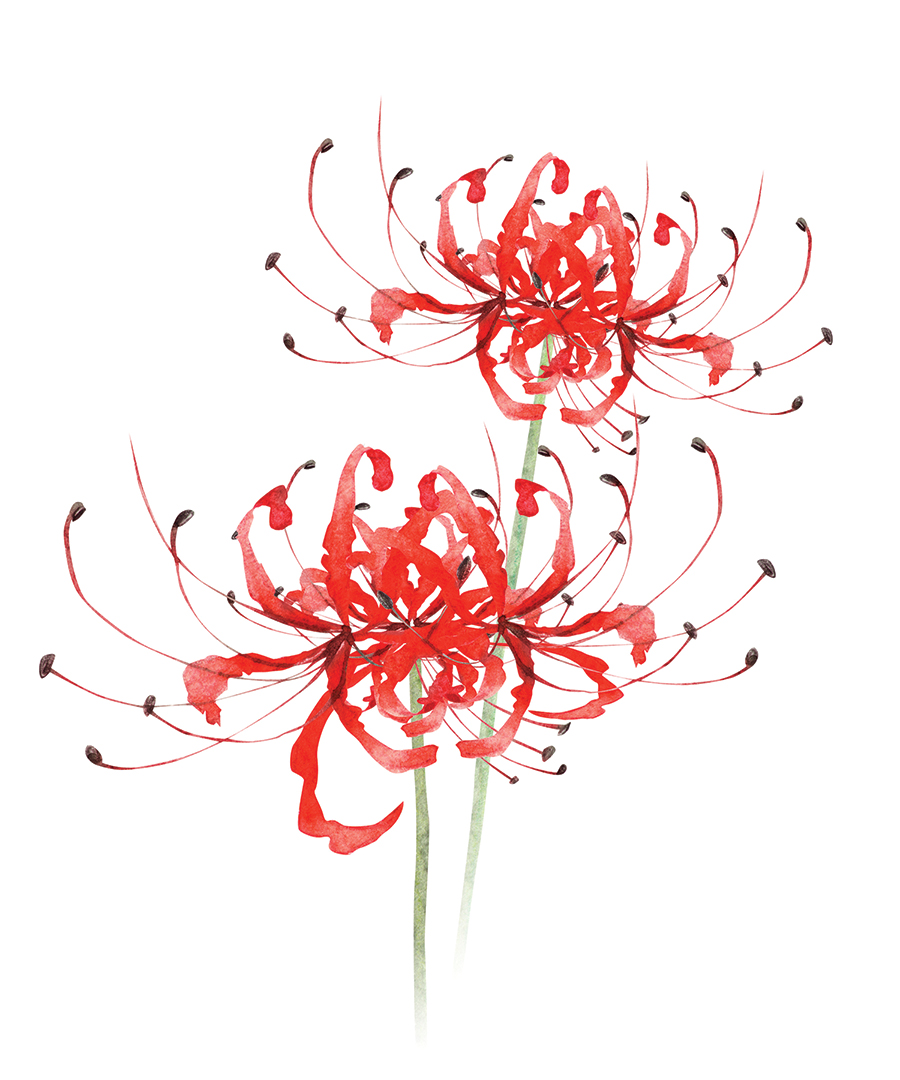
The apples are falling. Figs, drooping. And among the early fall bloomers — crape myrtle, chrysanthemum and autumn crocus — one has a name truly fit for the season: the equinox flower. Lycoris radiata (also known as the red spider lily, red magic lily and surprise lily) bloom on naked stalks, often after a heavy rainfall. The coral-red blossoms comprise an explosion of curled petals with long stamens that resemble the legs of a you-know-what (see alternate names). Winter foliage follows.

In Japan, the name for the red spider lily — Manjushage — means “flower of the heavens.” While this dazzling flower is often associated with death and the afterlife, don’t let that stop you from planting it in your own garden. The butterflies love them. Japanese rice farmers use them to deter mice. But should they attract the lost soul of some distant ancestor, ancient Buddhist text tells that this eye-catching beauty will help to guide them along.


On This Harvest Moon

The full harvest moon rises on Saturday, Sept. 10 — 12 days before the autumnal equinox, aka, the first day of fall.

And what of the harvest?

Garlic, garlic, garlic. Bushels of apples and sweet, plump figs. Potatoes, tomatoes and greens galore.

Don’t forget the honey.

The days are growing shorter. As the golden season fades, savor what is here, now: the nectar and fruits of a waning summer. OH

Greensboro’s Emerging Artists

Three women cultivate joy, connection and self-discovery through their work

By Cassie Bustamante    Photographs by Bert VanderVeen

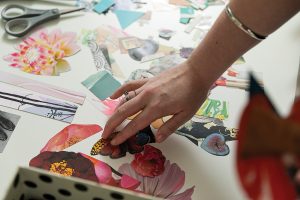
Creating art is not for the meek. It’s gritty and emotional, filled with trial and tribulation, plus hours upon hours of grueling, behind-the-scenes labor such as stretching canvases, tediously cutting out tiny images from magazines until the hands start cramping or digging into the deepest parts of one’s soul. But as any artist knows, the hunger to create can’t be ignored.

Yet, an artist’s bravest act is being vulnerable enough to share your work with the world. Our city has cultivated a community that welcomes up-and-coming artists with open arms, and new creatives are arriving on the scene regularly, excited to be a part of the artistic and collaborative energy thrumming throughout Greensboro.

After all, the connection and community the Gate City provides are often what the artist seeks through her work — especially in a post-pandemic world.

We’re introducing three local artists who you may not yet know, but won’t soon forget. Each brings something unique to the art world, ranging from vibrant, music-inspired watercolors, to collage that explores transformation, to acrylic paintings that celebrate the wonder of the female body.

Surrealist Salvador Dalí once said, “A true artist is not one who is inspired but one who inspires others.” These “true artists” have brought their work forth as a way to tell their stories while inspiring others to see and feel their own truths.


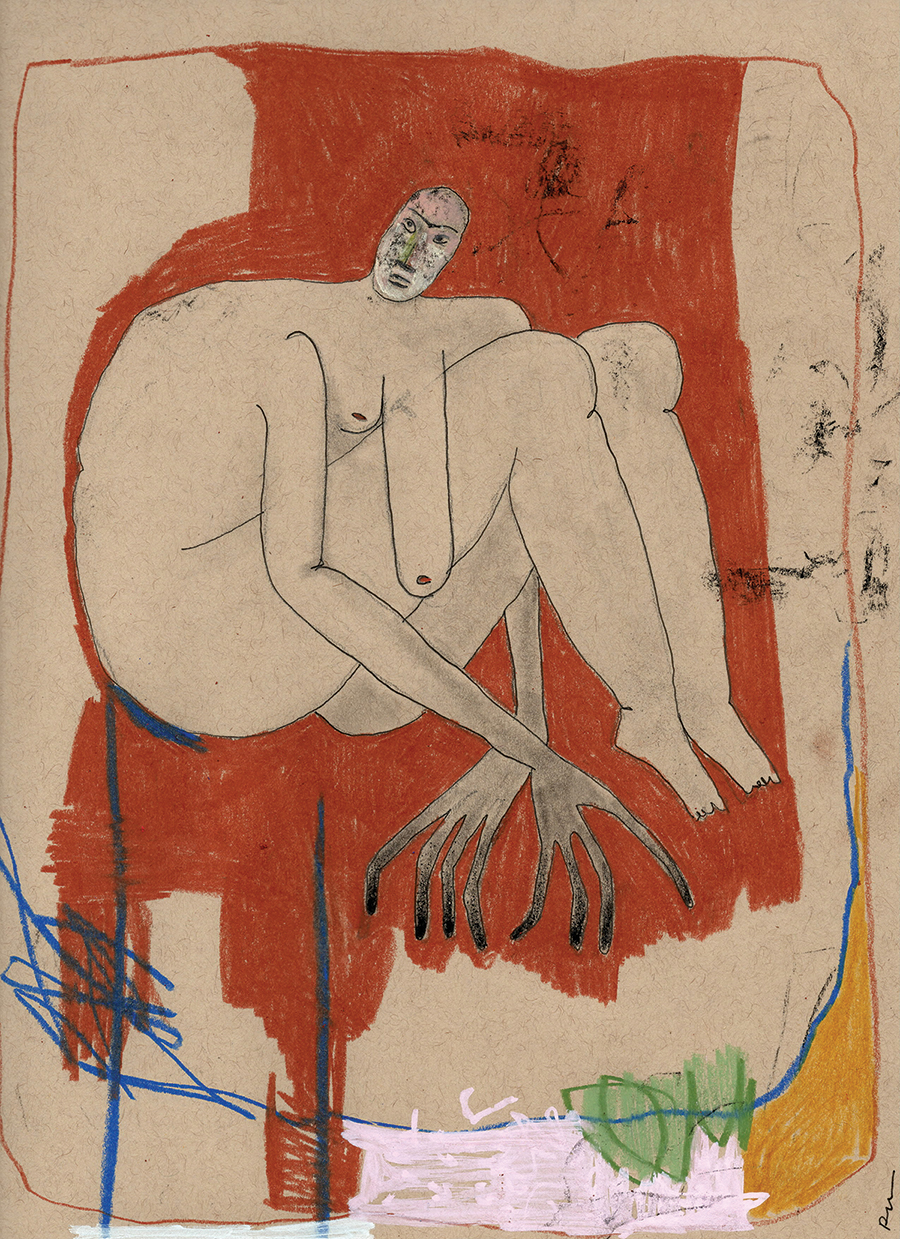
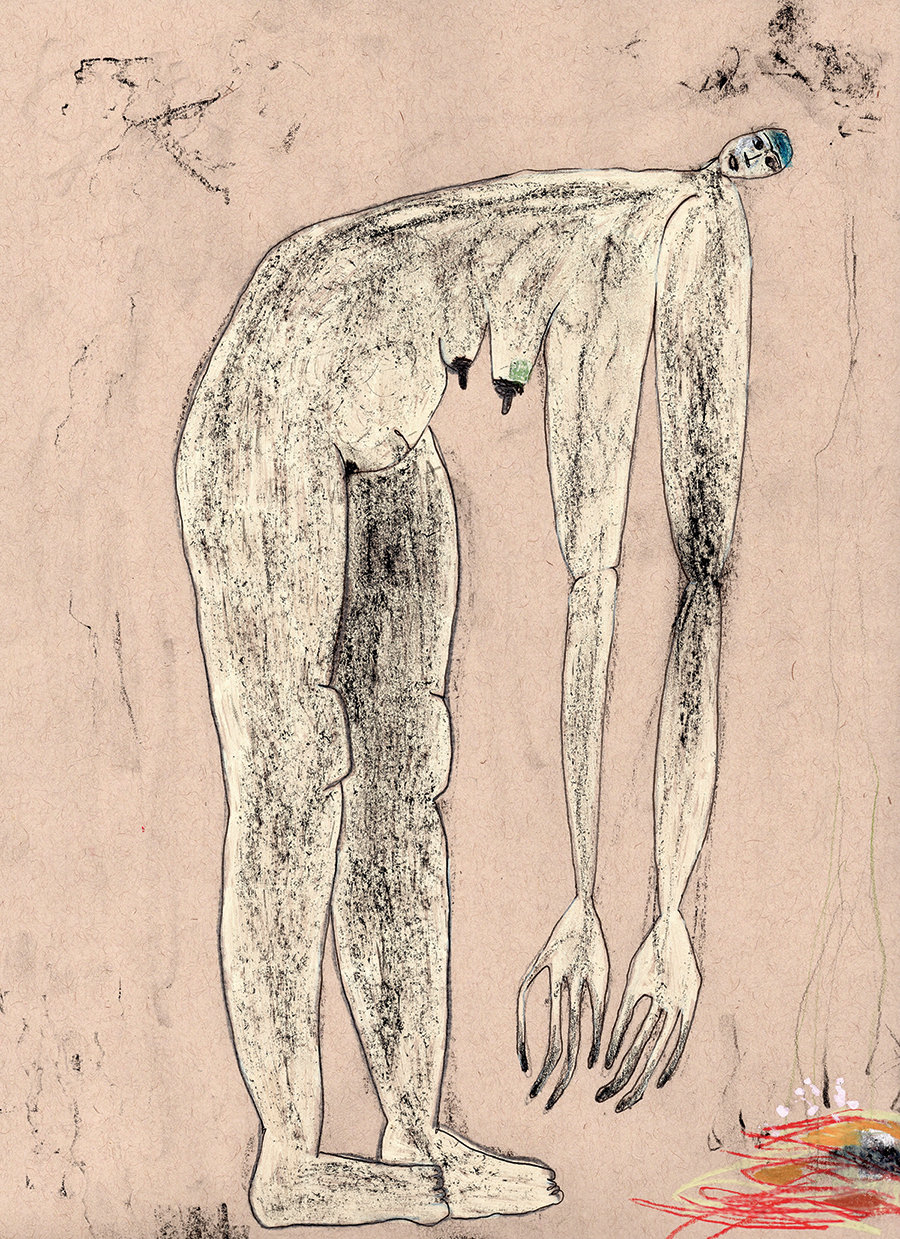
Reneesha McCoy | While the childern sleep

Perfect beauty in imperfection — that is what Reneesha McCoy sees in the world around her.

Whether it’s in her own body, the chaos of life or the so-called blemishes on her artwork, McCoy lives her life in a way that honors the raw state of being human, perfectly — or, rather, imperfectly — all of which is reflected in her paintings.

For several years, McCoy felt something tugging at her to create, but it was the 2019 birth of her son, Phoenix, that gave her the push to heed that call, leaving behind a 10-year retail career. After trying her hand at multiple endeavors, her partner, Scott, also an artist, suggested she consider art.

In 2020, with no professional training, McCoy picked up a paintbrush. “I kept thinking, ‘I have this feeling and I need to express it,’” she says. The 33-year-old mother of two trusted her instincts.

“I just kept trying and trying,” she says, “until I was like, ‘Wow — I’m an artist.’”

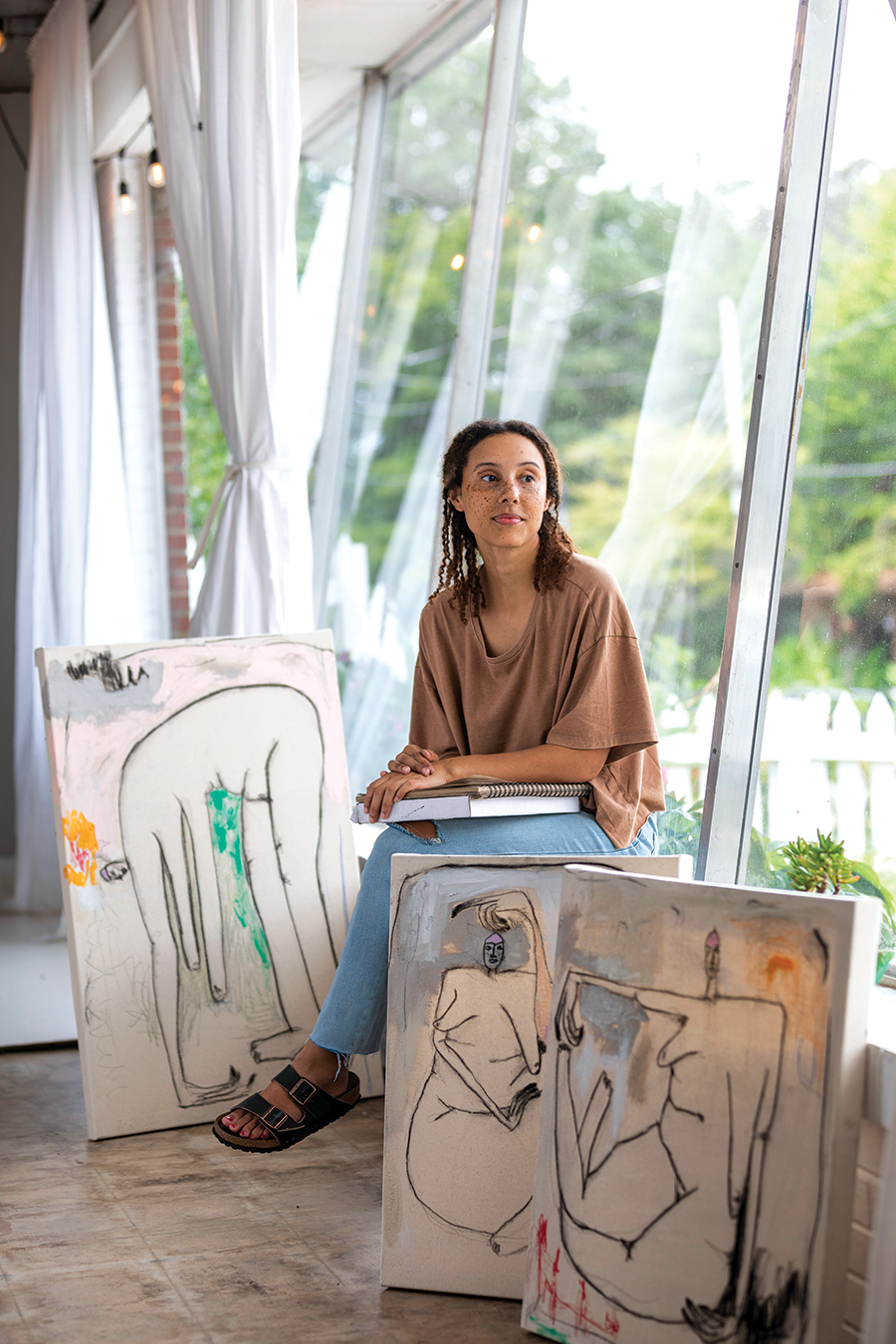
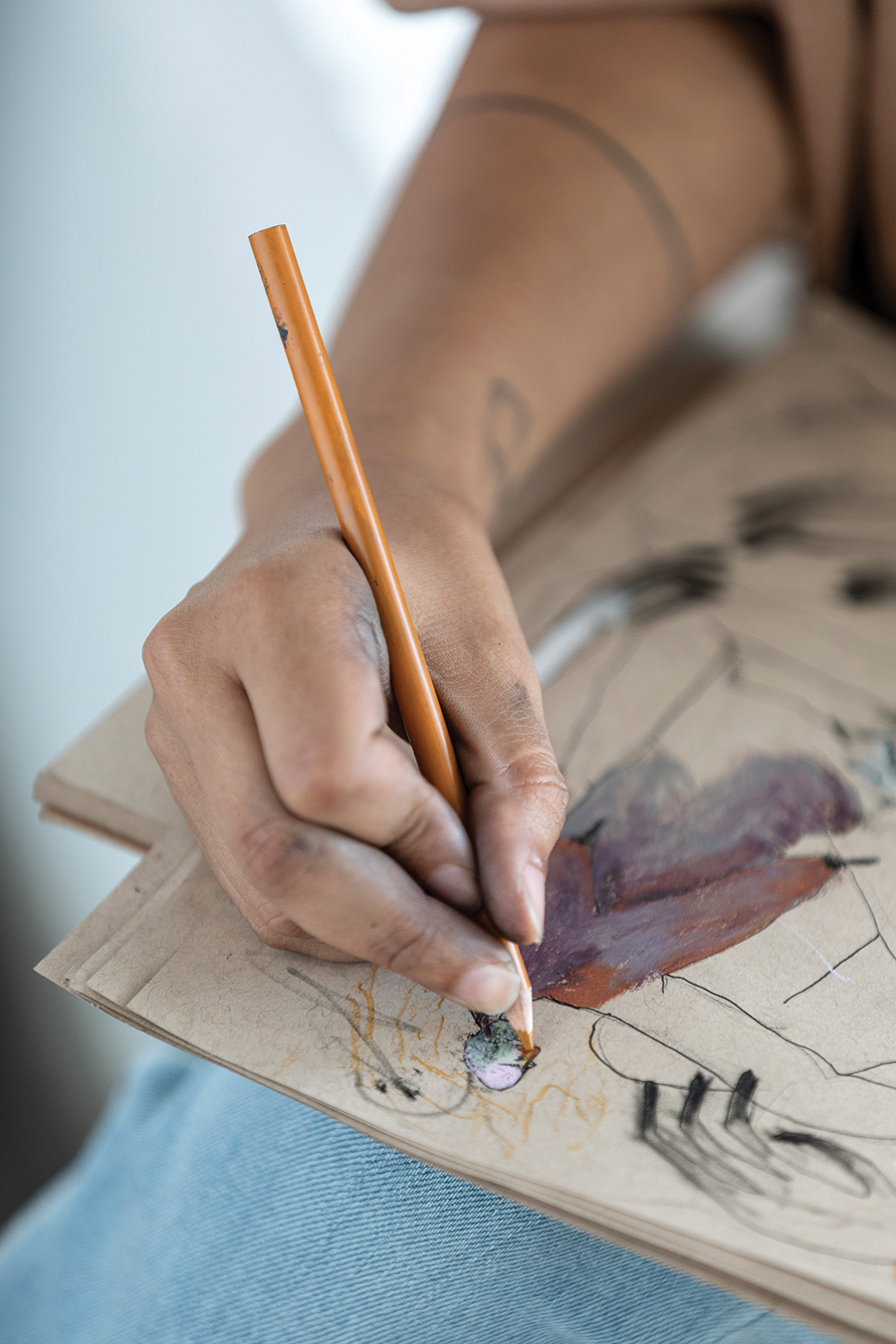
Inspired by the changes her body has undergone through childbirth and breastfeeding, her own raw emotions, and her desire to be inclusive, McCoy’s paintings feature nude female forms with a mix of skin tones, posed in a manner that often expresses insecurity. She uses acrylics, which are quick drying, allowing her to paint while her children sleep.


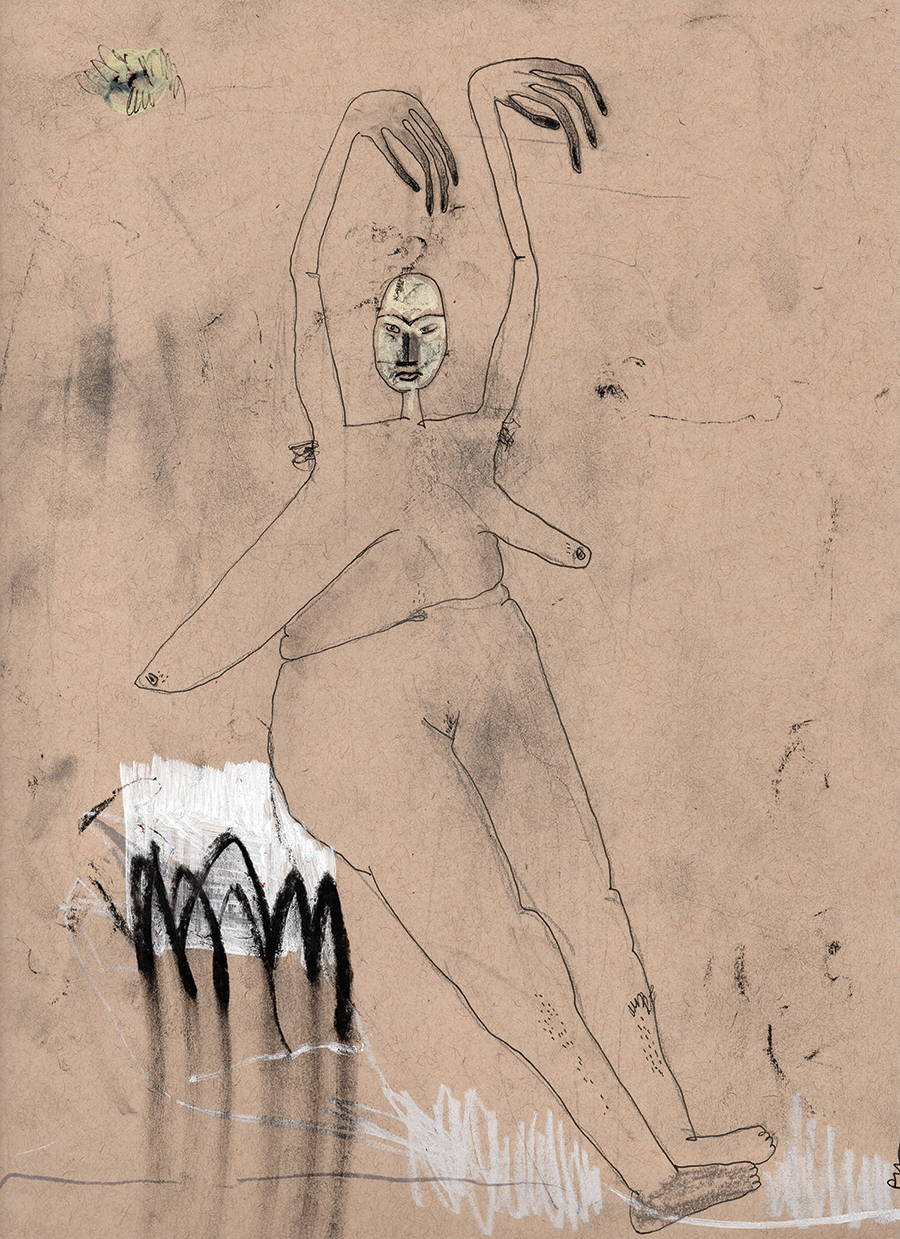
Left:  I Knew I Could Fly
Middle: Everybody Danced and I Sat Still
Right: I Cook Berries on the Fire
9 x 12 inches, Charcoal, colored pencil, graphite, ink pen and marker on paper, 2022

Working through her thoughts on her canvases, McCoy notes, “It is not only that I am just releasing everything. It’s also that it means something to someone else.” 

McCoy’s paintings have given her back the one thing she was missing from her retail job — human connection. Posting on social media allows her to engage directly with customers and followers. “I’ve had people tell me,” she says, “‘Hey, that’s how I felt.’”

Relatability is at the heart of every canvas she touches. “We all go through things,” she says, adding that her work is “not just about the body — it’s about life.”

While McCoy now paints to support herself and her family, she still feels the tug that started it all, that urge to create. Even as exhausted parents to 3-year-old Phoenix and 1-year-old Penelope, McCoy and Scott reach for their work every day, painting in their living room while the kids nap. “We should probably nap and sleep,” McCoy laughs, “but we don’t do that because [our work] makes us happy and whole.”

She adds, “I would choose this life right now, this journey, over anything.”

As a woman who has struggled with insecurity throughout her life, painting has given McCoy a confidence she never expected.

“When I worked in retail,” she says, “I was always on the path of ‘Who am I?’”

It seems McCoy has finally found the answer. “If you go back through all my journals, there’s a lot of ‘just be,’ and I didn’t know what that looked like,” says McCoy. “And now I do from my art.” 

Leaning into the essence of her being, she has stepped into her true self, an artist.

Learn more about Reneesha McCoy and see her work at rnwulf.com.


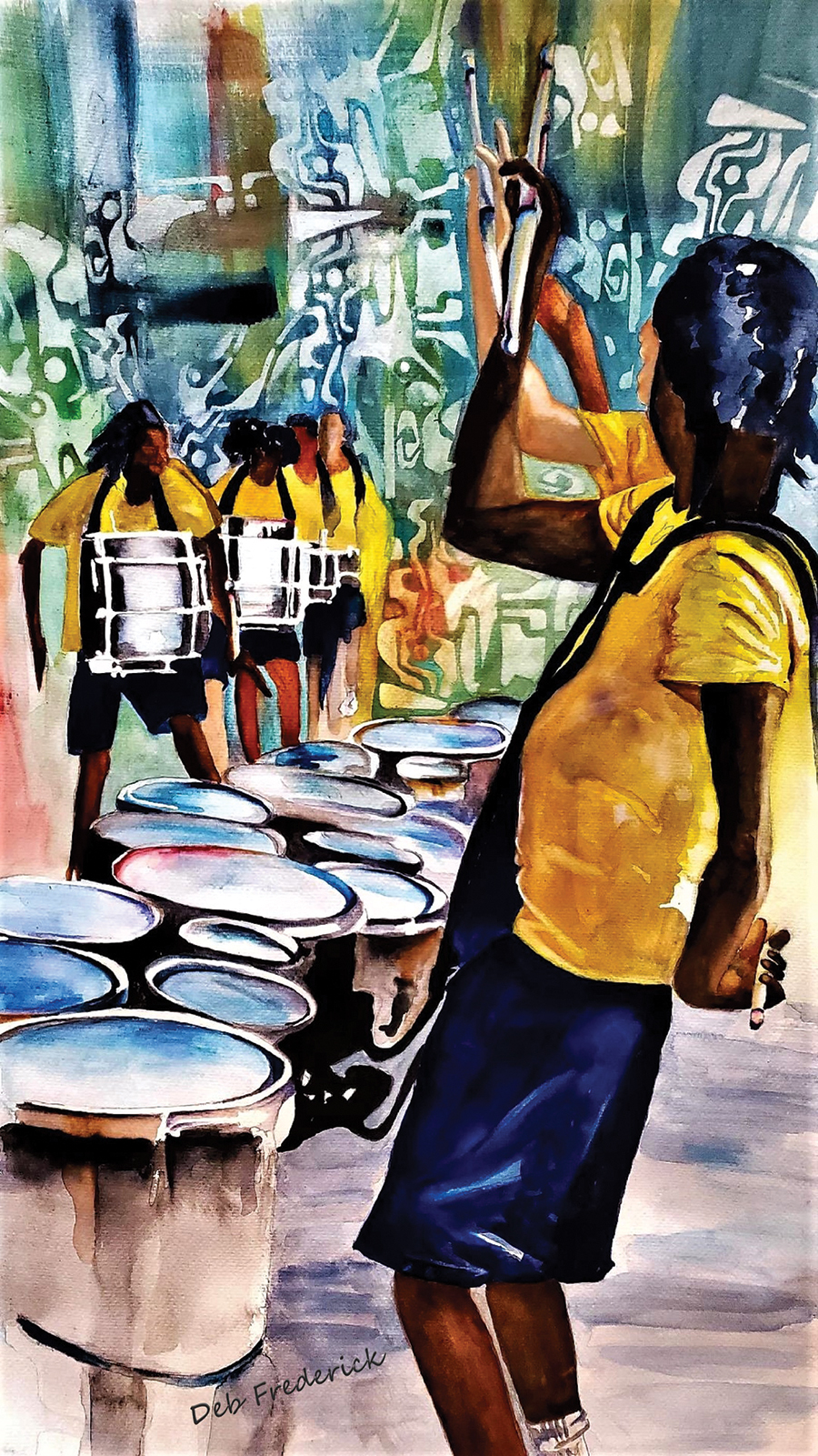
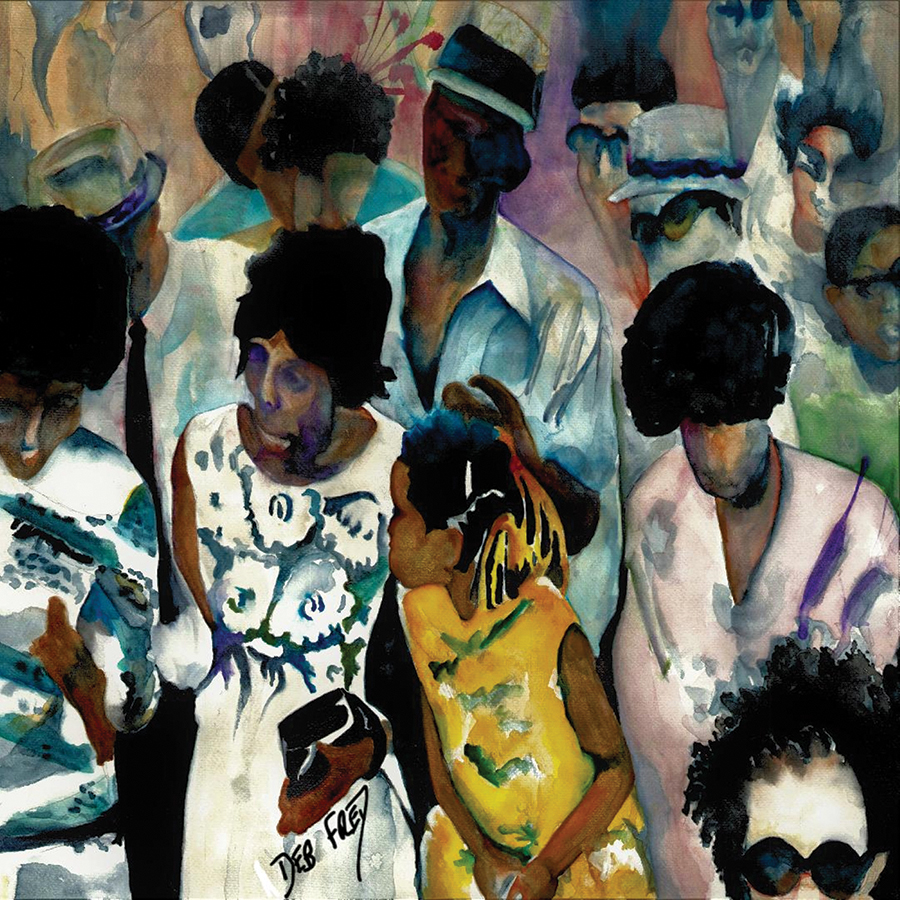
Right: Band Beats Proud

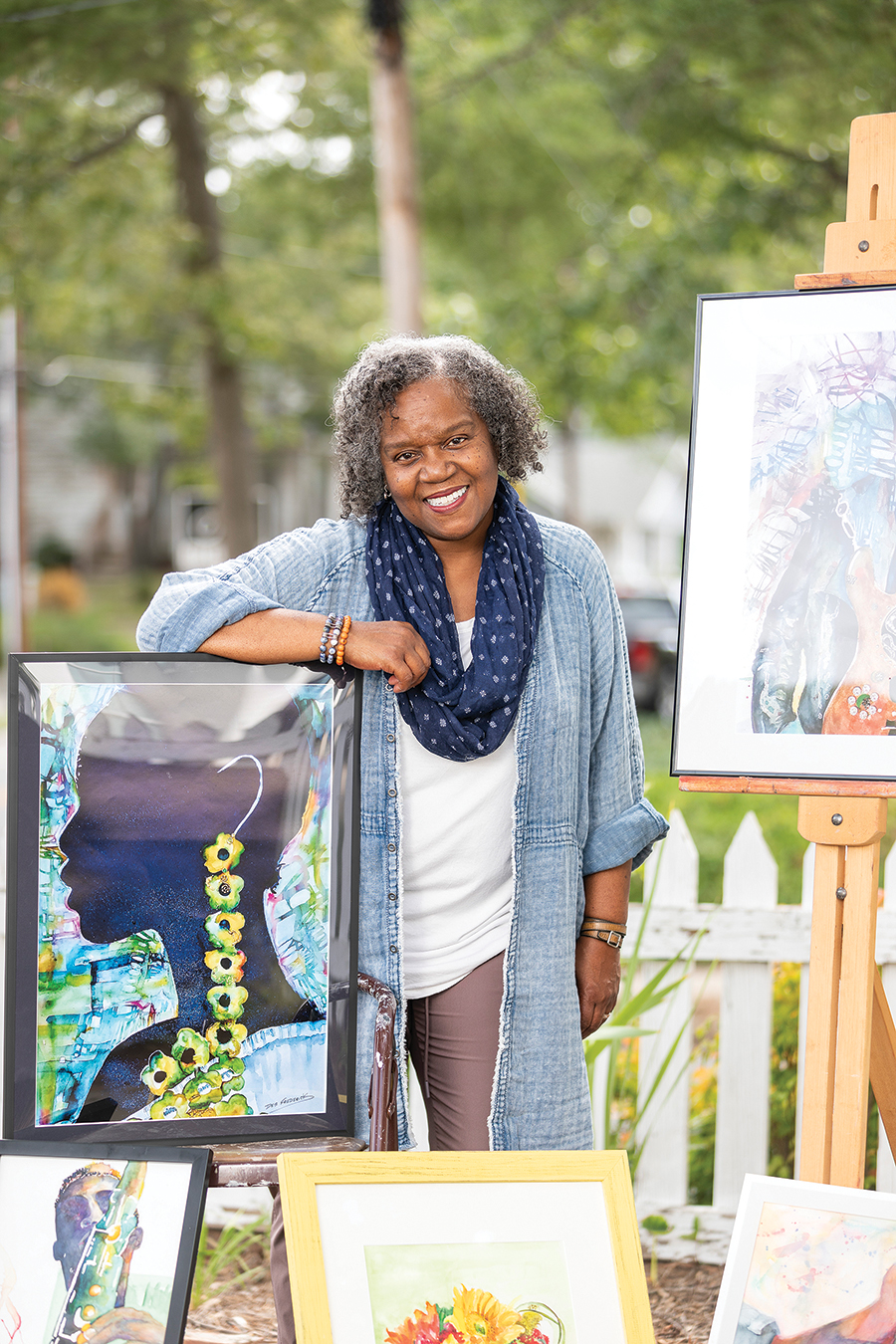
Deb Frederick | Designed for joy

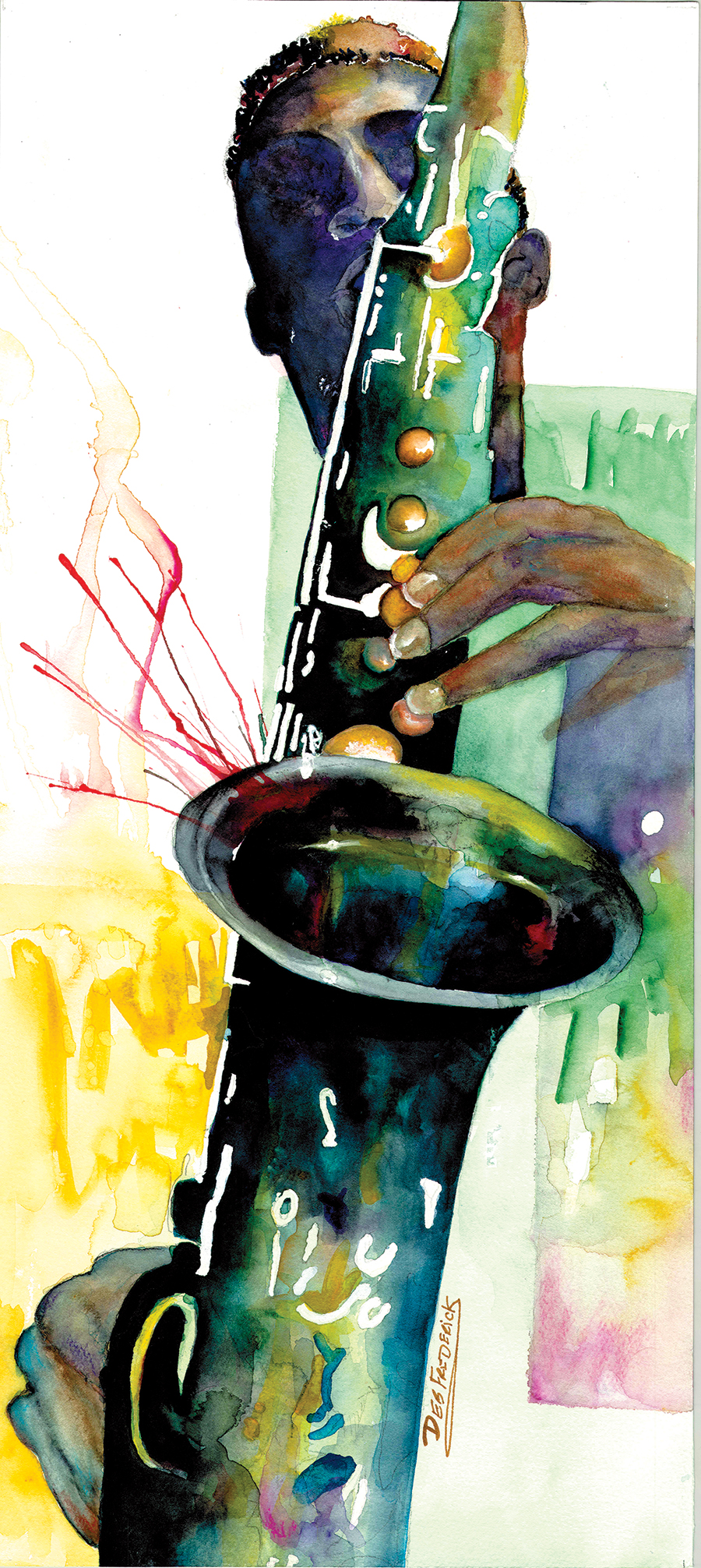
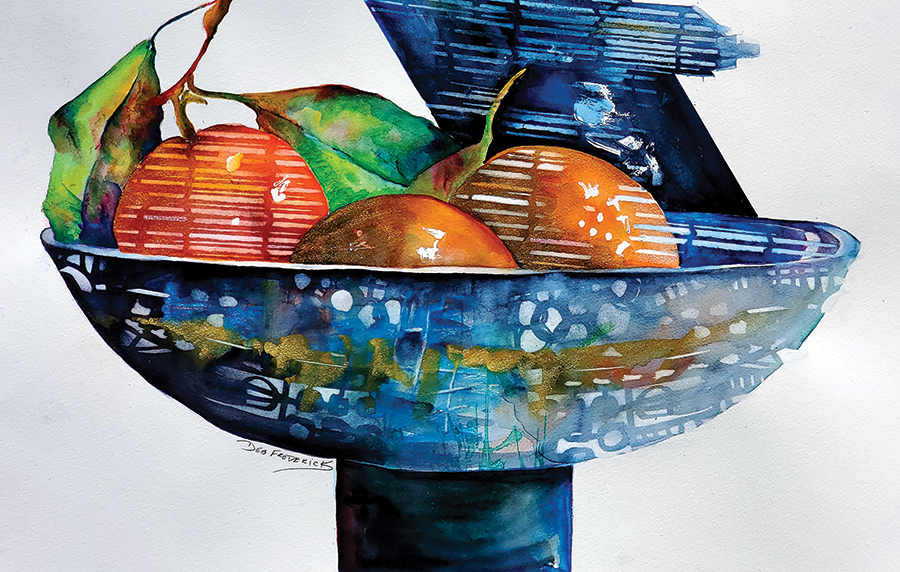
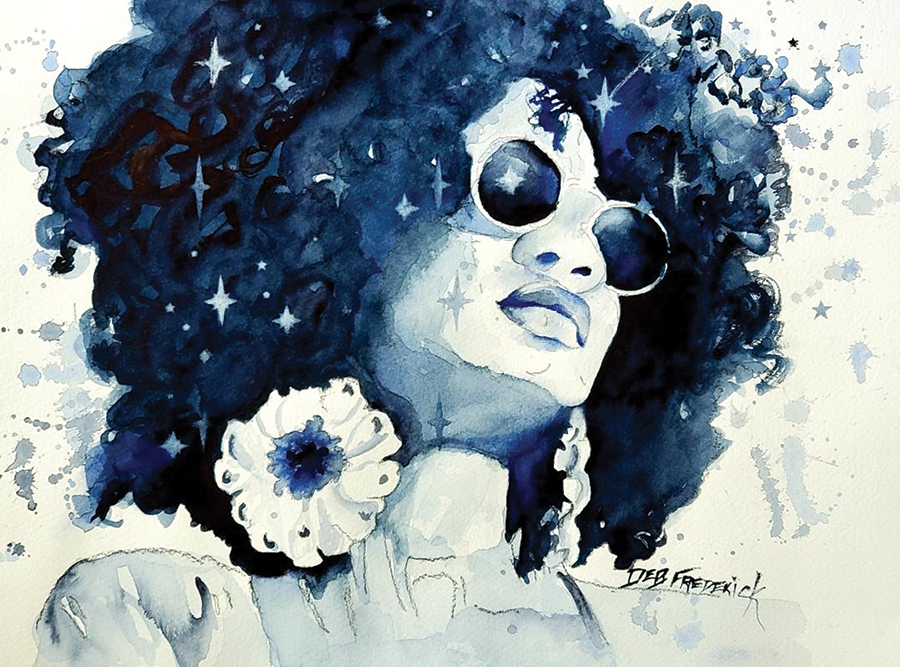
Petite in stature, Deb Frederick is a force when it comes to radiating high-vibe energy, her joy and lust for life obvious to anyone who meets her. It’s no wonder that her bold watercolor paintings reflect her vivacious spirit and love for music and culture.

As a child, Frederick discovered she had natural talent when she tried her hand at drawing “Winky,” a character on the back of a cereal box, for a contest — and won. “From then on,” she says, “my parents supported me and my art.”

Her sketches evolved into paintings and her paintings evolved into an exploration of lifestyle. In 1981, she earned her B.F.A. degree from the University of the Arts in Philadelphia. Marriage and children soon followed. While painting was her passion, Frederick decided to take a lucrative position with a textile company, noting that her “creative skills could be transferred to an industry where creativity is needed.”

Little did she know that her fashion design career would take off, allowing her to travel the world and discover new countries and cultures. Though it meant she wasn’t painting, as she says with a laugh, “I’m not mad about it.”


Left: Saxophone
Right: Super Fruit

When the COVID pandemic struck in 2020, Frederick wasn’t surprised when she was laid off because, she suspects, of her age and salary. Her 35-plus year apparel design career came to an end, but — in typical Frederick fashion — she found joy in her situation. “It didn’t feel like I fell,” she notes. Shortly after, she picked up her paintbrush again.

“Safe,” a painting that she’ll never sell, was her way “back in” to the world of watercolors. Inspired by a moment caught between American Idol contestant Samantha Diaz and her grandmother, it features a beaming Diaz, locked in her grandmother’s tight embrace. Frederick, who was born in Panama but left the country as a small child, never met her own grandmothers. Imagining that their arms would have comforted her similarly, she painted with a heart full of love, noting that two heart shapes can be subtly made out in forms of the two figures.

Upon finishing “Safe,” she stood back in awe, whispering, “Did I do that? I forgot I could do that.”

Since then, Frederick has taken her brush to several sheets of watercolor paper, receiving praise from friends, family and the community, just as she did from her parents years ago. Recognizing that many children aren’t as fortunate, her hope is to mentor young people who “have the drive and desire,” but are lacking the “110 percent support” she had growing up.


Left: Retro Modern Woman
Right: Sundresses and Festivals

Frederick’s being sizzles with palpable enthusiasm when it comes to sharing her art, whether it’s through her own creations or teaching. “There’s so much more to discover,” she says, “and I’m excited about the journey.”

Learn more about Deb Frederick and see her work at debfredart.com.


Jessica Dame | The therapy of flight

Nature is full of surprises. Take the wren, for example. A bit of an understated bird. That is, until you hear one sing. The same might be said of Jessica Dame. Shy and unassuming, the longtime librarian expresses herself in bold and surprising ways through her collage work, blending bright floral and avian imagery with the female figure, juxtaposing striking black ink with flirty colors.

In a world that’s dominated by digital collage, Dame, 36, appreciates the nostalgia of an art form that influenced the pop-culture scene throughout her ’90s youth. “Part of what makes [analog collage] therapeutic and great is that you’re getting away from the screen,” she says. “You’re doing something with your hands.”


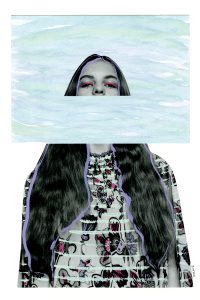
Left: Head Above Water. Watercolor, acrylic gouache, and paper.  9 in x 12 in. 2018.
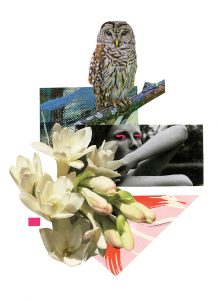
Right: Barred Owl. Paper and acrylic gouache. 9 in x 12 in. 2019.

Dame notes with a laugh that from an early age she was collaging, illustrating and publishing her works. “My oldest memories,” she says, “are of making books about whales and unicorns when I was a kid.” Her love of imagery and books led her to earn a B.A. in art history from Christopher Newport University in Newport News, Va., as well as a Master’s in library science and information from the University of South Carolina.

In 2019, Dame uprooted her life, leaving her career behind to move to Greensboro from Columbia, South Carolina, with her partner, who had accepted a position at UNCG. New to the city and out of work when COVID entered the scene, she temporarily lost her mojo, but soon found her footing again. She told herself, “Don’t cover up the desire [to create] with chores,” finding time and space to reconnect to her art.

Like many in 2020, Dame discovered bird-watching, journaling what she saw. She’d always been infatuated by birds because “they’re so free and so elegant, so beautiful.”

Her most recent collages feature birds paired with florals, an underlying theme of blooming, something she seems to be doing herself. While nature has always been prevalent throughout her work, lately she’s been exploring the idea of transformation. “I don’t know why quite yet,” she says. “I’m seeking that through my art.”

A past piece features a female figure clothed in a black slip-dress, whose head is replaced by lotus blooms. “I was reading about the lotus flower and how they grow in mud,” says Dame. “They’re so pristine and beautiful, but can’t grow without that mud. It’s such a Zen metaphor for life.”

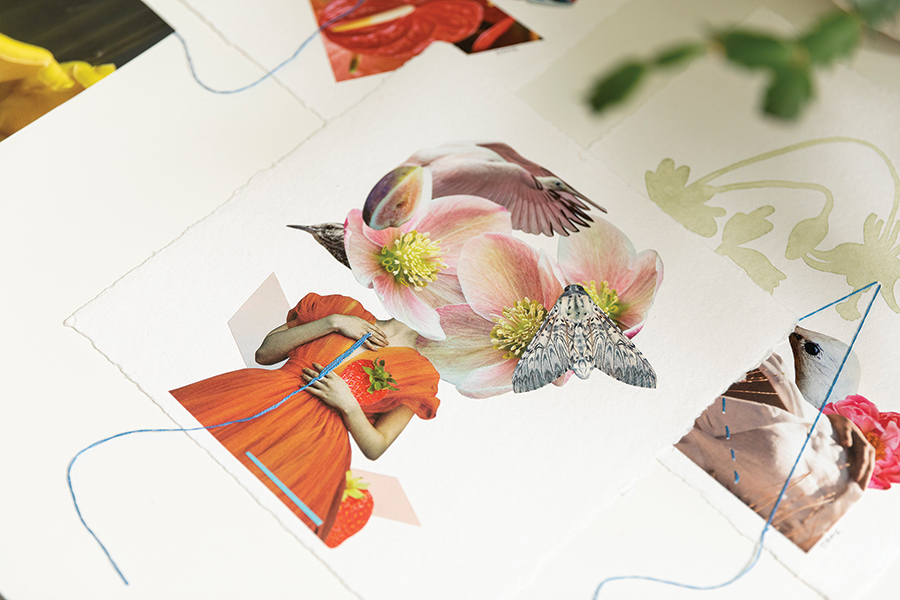
Strawberry Shortcake. Paper and string. 8 in x 8 in. 2022.

And, it seems, the sacred water lily is a perfect metaphor for Dame, who is flourishing creatively after a challenging stage of life.

Recently, Greensboro’s Historic Magnolia House hung four Dame pieces in the guest bedroom named for James Baldwin. She decorated her own floral ink illustrations, layering in collage pieces that feature Baldwin’s written works.

What’s next for Dame? “Right now, just keep making stuff.” But it should be no surprise that this librarian-turned-artist’s ultimate dream is to see work on the cover of a book. OH

Learn more about Jessica Dame and see her work at jessicadame.com/collage.

Cassie Bustamante is managing editor of O.Henry magazine.

Birdwatch

Songster in the Shrubs

The Eastern towhee hides to survive

By Susan Campbell

“Drink your tea, drink your tea,” the loud, emphatic call comes from dense shrubbery right outside our front door. It is the voice of a common, but frequently overlooked, Eastern towhee. It is hard to imagine that such a persistent songster could keep so well hidden, but towhees’ larger size makes them a target for predators, and keeping hidden is the survival strategy they employ. Belonging to the sparrow family, they are short-billed birds found in brushy or grassy habitat. The bird’s name originates from its typical “tow-hee” call.

Many backyard birdwatchers in central North Carolina are rather confused when they finally catch their first glimpse of a towhee. Is it some kind of oriole? Perhaps it is a young rose-breasted grosbeak? Males are quite colorful with rufous or chestnut flanks set against a white belly with a black hood, back and wings as well as a long black and white tail. The bill, too, is jet black. Females sport brown feathers instead of black but still have rufous sides. Their legs are long and powerful: good for kicking around debris in search of insects and seeds. Towhee eyes, which are usually dark red, may be orangey in the Sandhills population. Farther east, individuals have irises that are a striking pale yellow.

Eastern towhees are found, as their name implies, throughout the eastern United States. Here in the Southeast, they are year-round residents, although we do have some wintering individuals that breed further north. Their diet is variable, consisting of a variety of invertebrates (insects, spiders, millipedes) during the breeding season. However, in colder months, towhees can also be found scratching for seeds dropped by other birds from feeders. Their heavy bill allows them to take advantage of a variety of seeds. The powerful jaw muscles associated with such a strong bill make it a formidable weapon. If attacked, a towhee can inflict quite a bite. Males will viciously attack each other during territorial disputes and may inflict mortal wounds from grabbing the head or body of an opponent. Conflict is not infrequent where food is abundant, so the potential for fights exists throughout the year in our area.

It is not uncommon for Eastern towhees to raise three broods in a summer. Each brood involves three to five young. Nests are simple affairs, in short shrubbery or even directly on the ground. As a result, nestlings often do not remain in the nest long after their eyes open and downy feathers cover their bodies. They will move around noisily begging from the adults. Young towhees instinctively run for cover if their parents sound the alarm.

A little known fact about this species is that it was first described by some of the earliest Europeans to arrive in the New World. The artist-cartographer John White noticed towhees during his visit to the English colony on Roanoke Island in 1685-86. It was this trip that documented the colony’s disappearance — the Lost Colony. White’s unpublished drawings of both males and females predated the famous work of Mark Catesby in Natural History of Carolina, Florida and the Bahama Islands in the 1700s, since republished with a modern perspective as Catesby’s The Birds of Colonial America.  OH

Susan Campbell would love to receive your wildlife sightings and photographs at susan@ncaves.com.

O.Henry Conversations

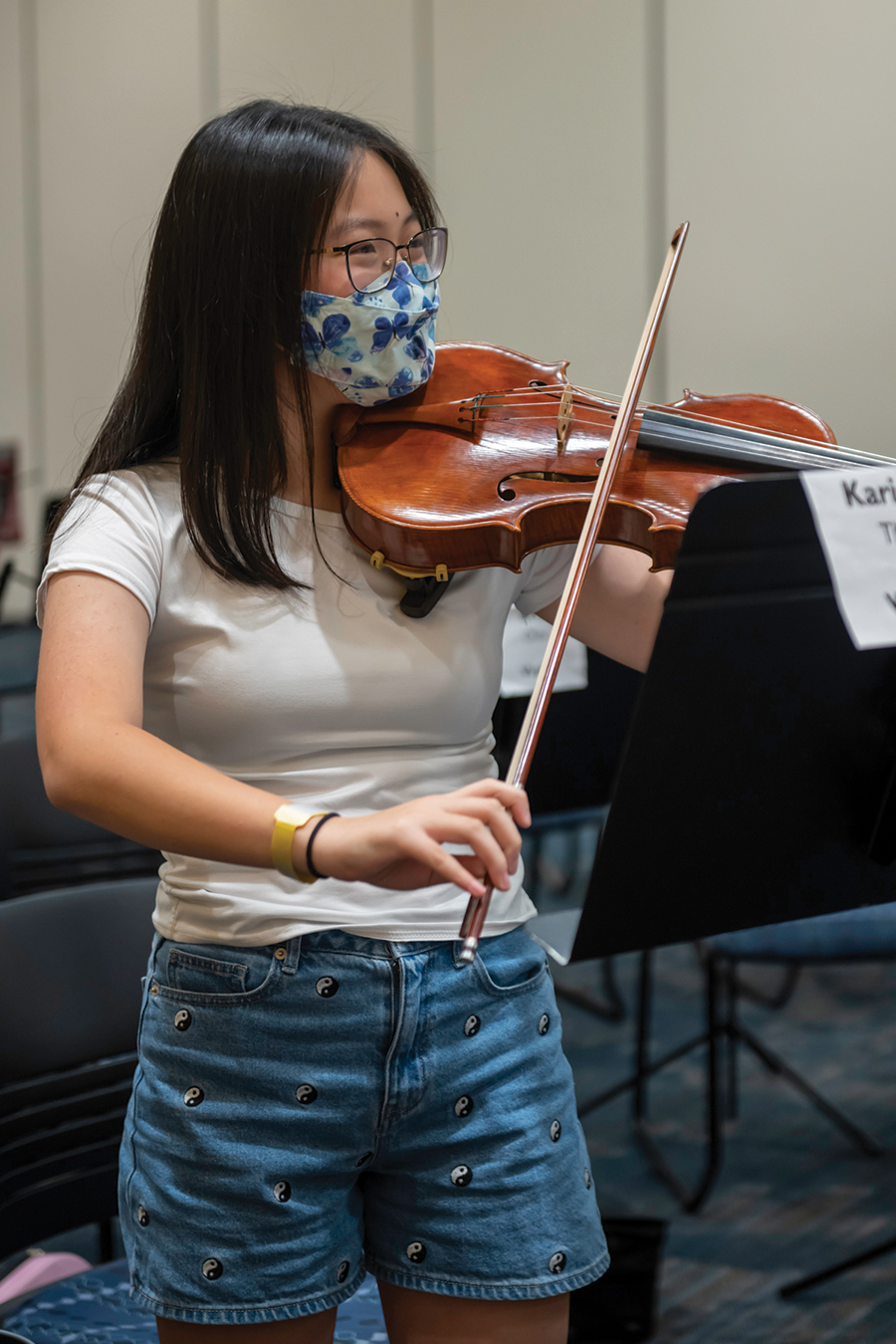
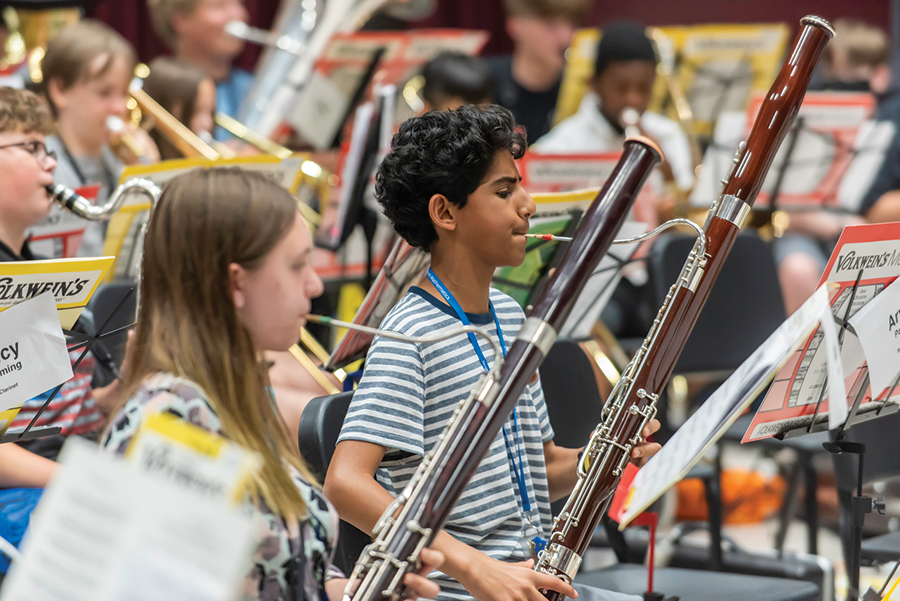
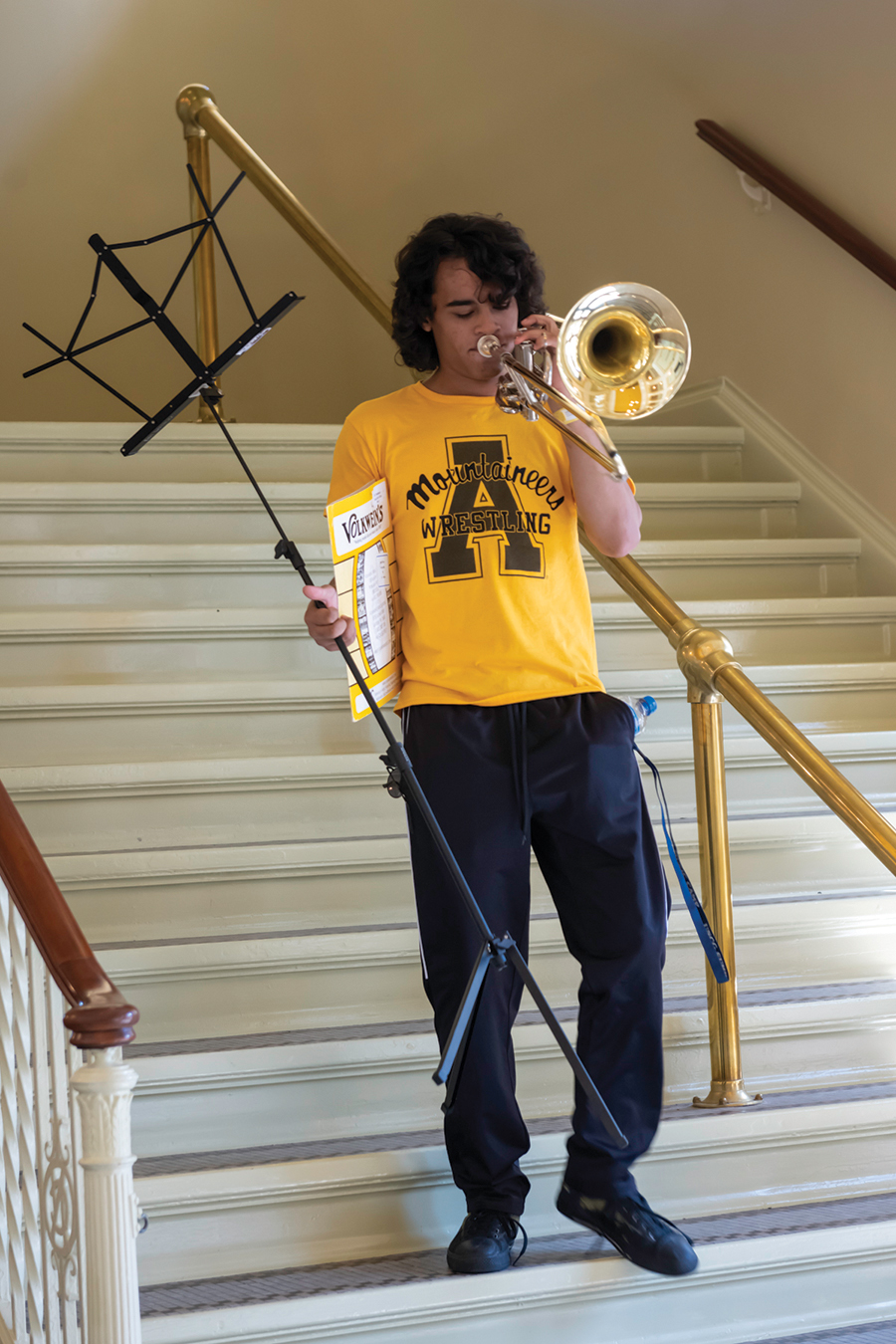
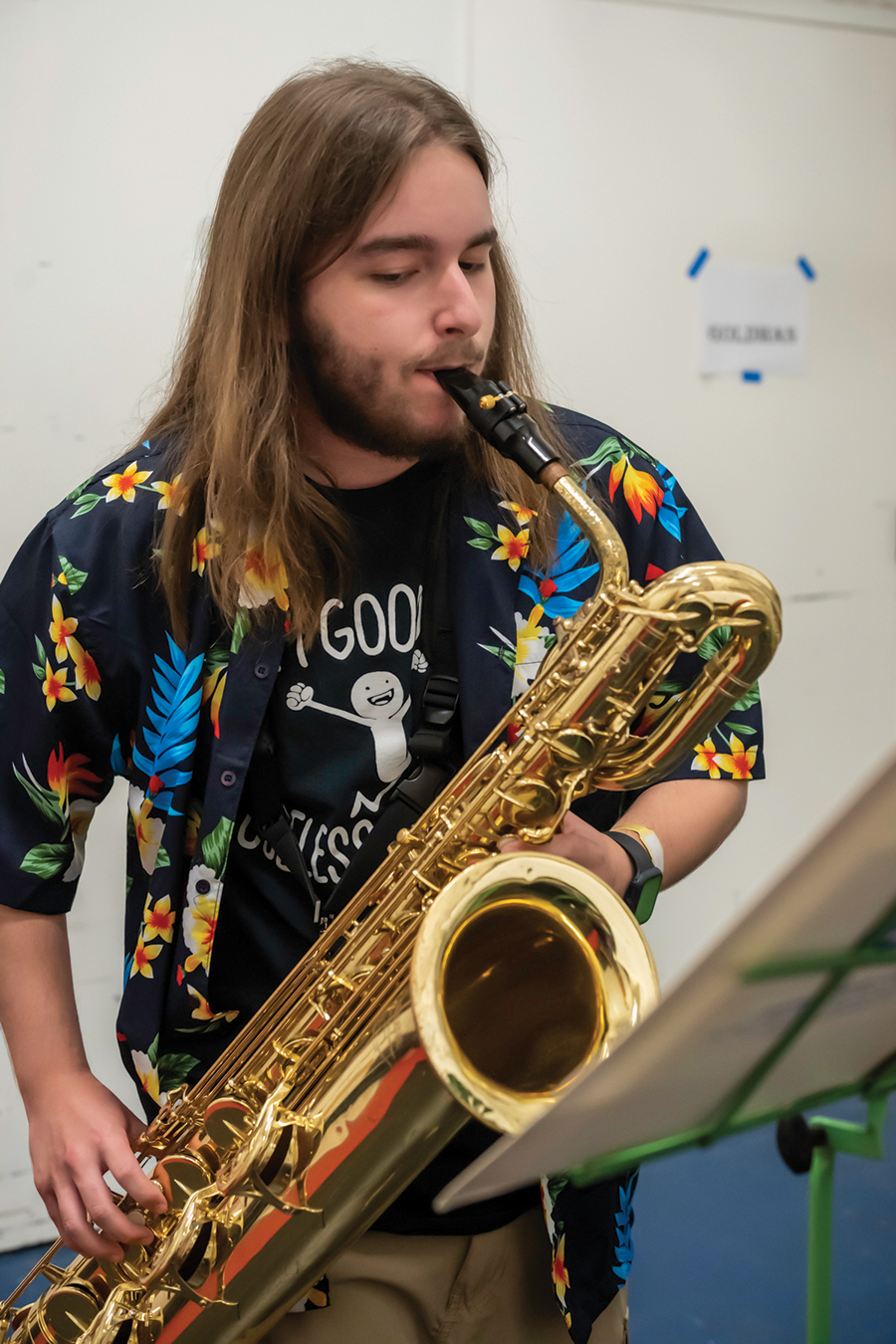
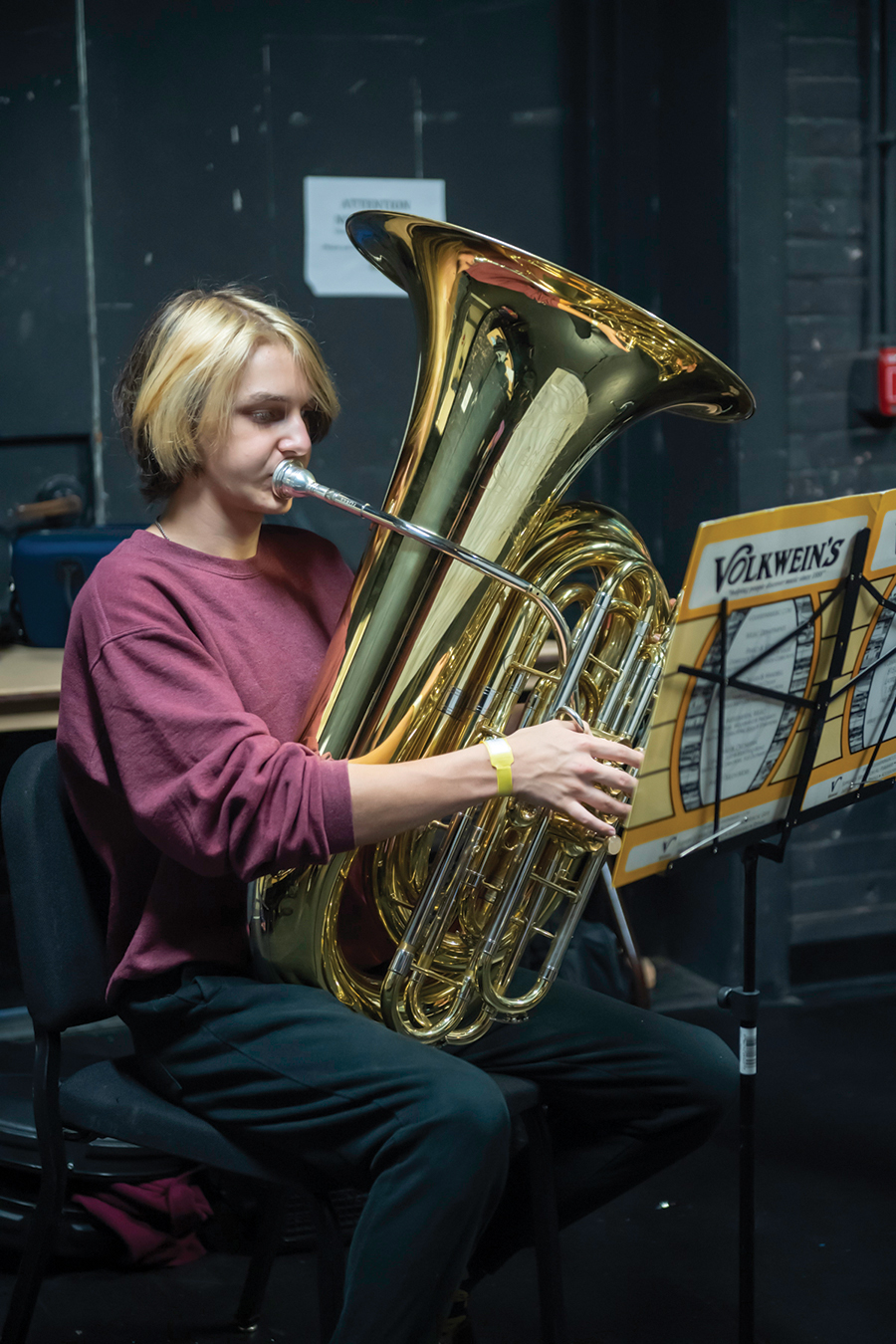
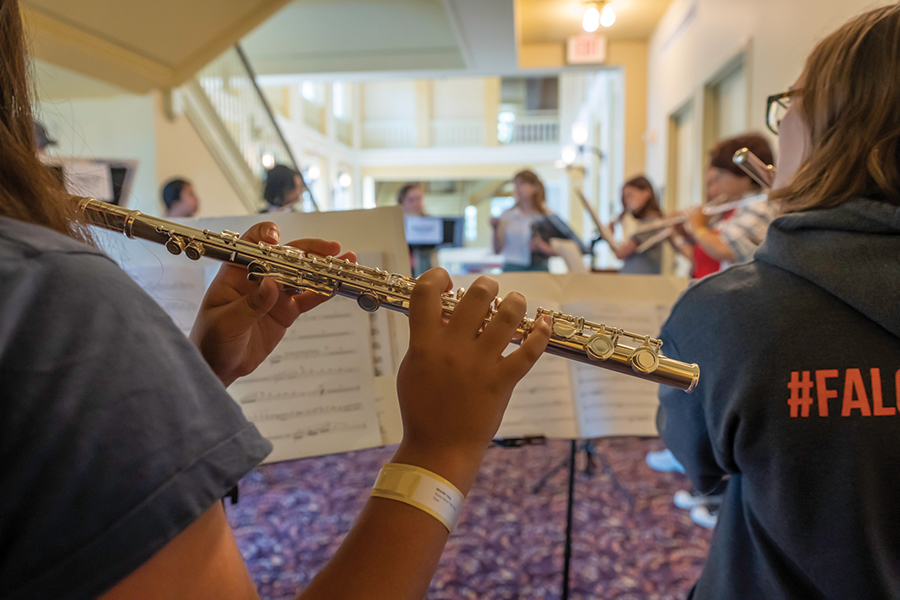
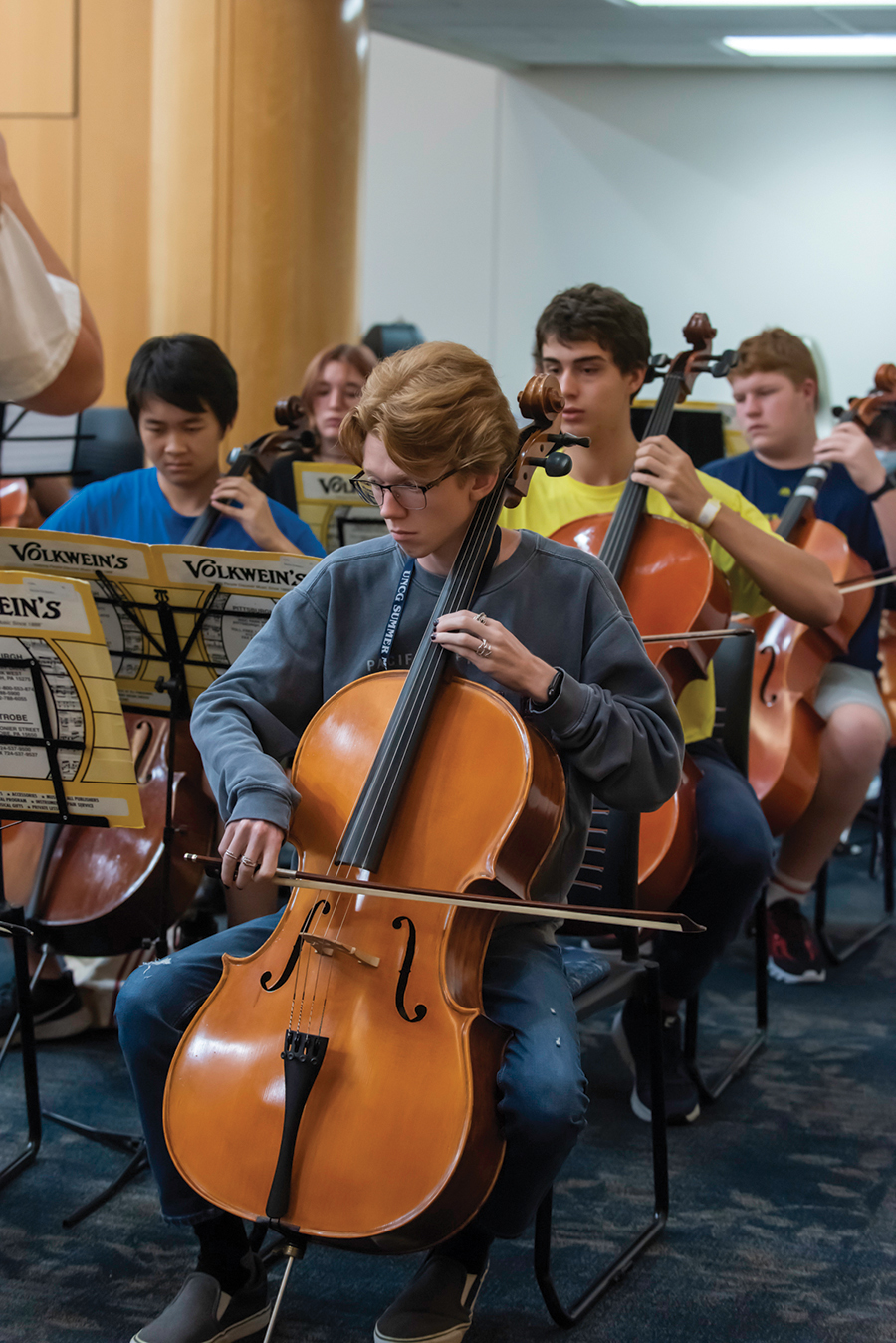
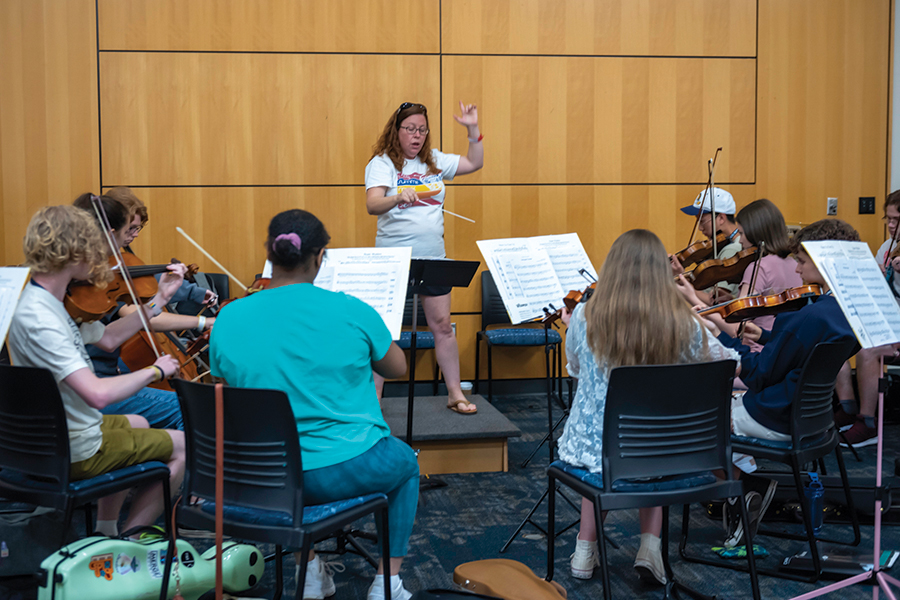
The beat goes on at UNCG’s beloved summer music camp

By Billy Ingram 

Photographs by Lynn Donovan


When John Locke came aboard as UNCG’s director of bands in 1982, he approached local music educators about the university’s vision of conducting a yearly summer music camp for youngsters. Outside of Robert Blocker, newly hired dean of the School of Music, no one believed this was in any way a sound idea, much less feasible. Like many of his colleagues, longtime band director at Page High School, Charles Murph, was blunt when presented with the concept. “John, I really like you,” he said. “But this is never gonna work.”

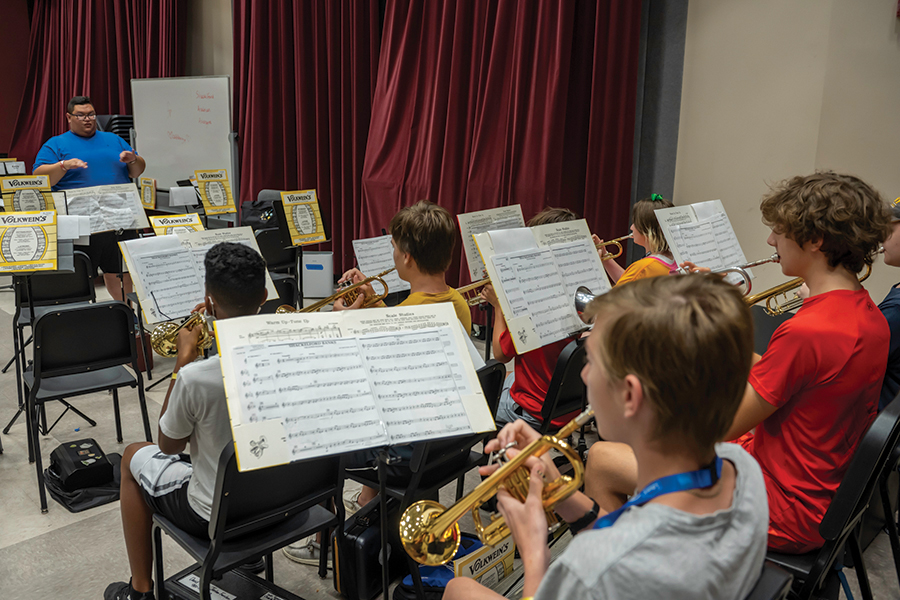
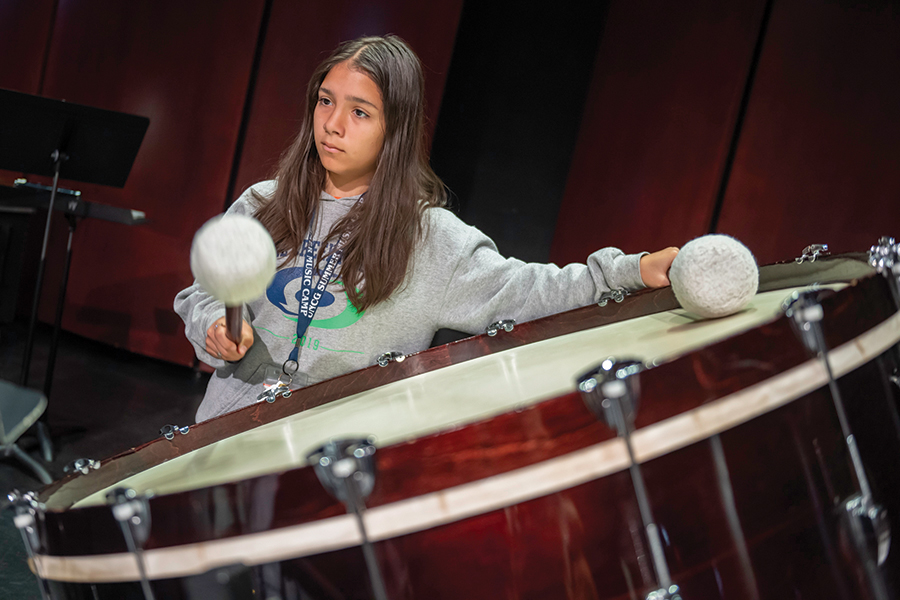
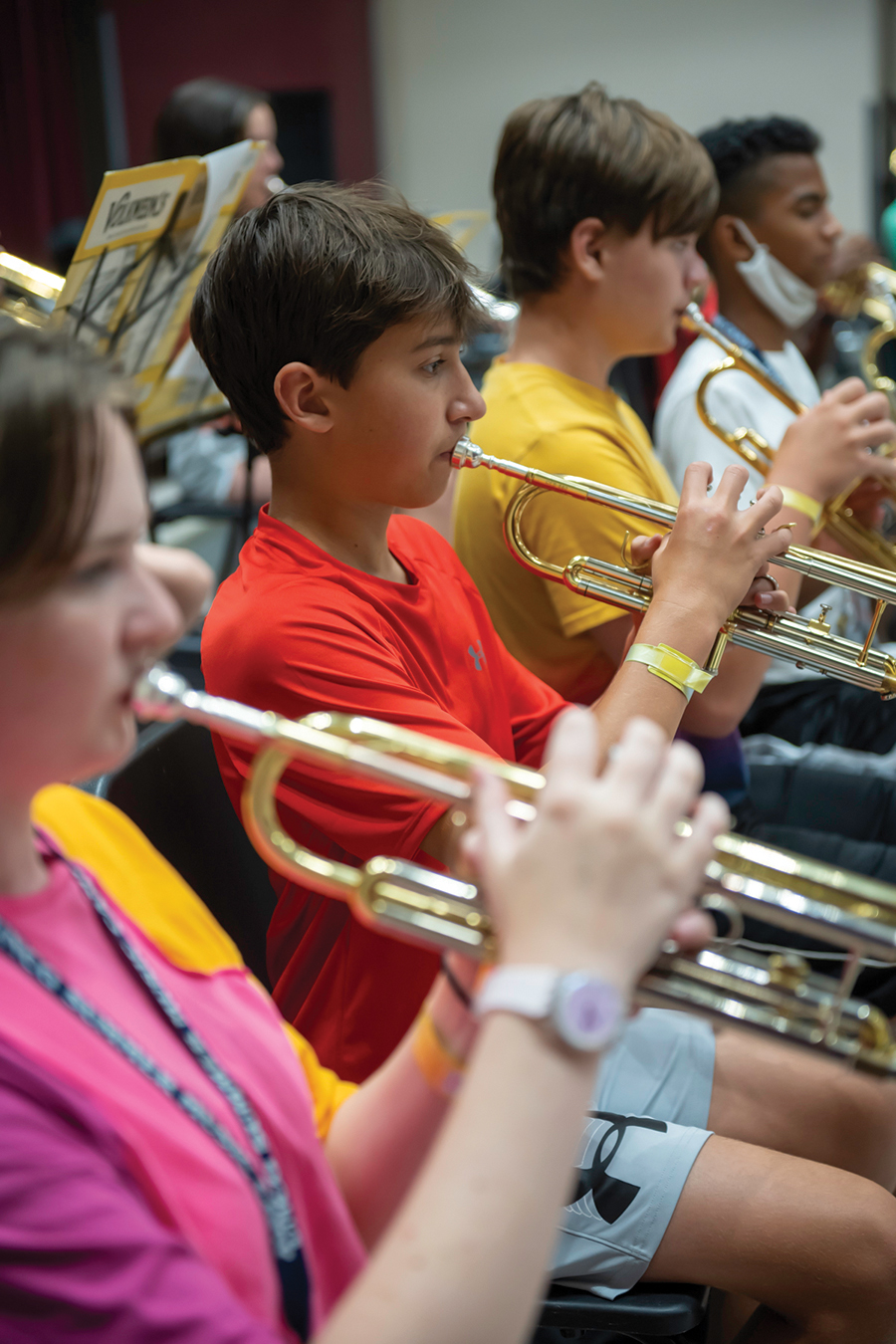
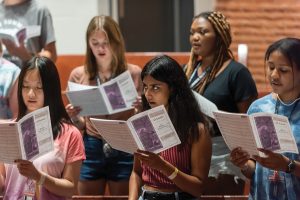
And yet, in 2023, UNCG’s Summer Music Camp will celebrate its 40th anniversary. It’s the largest university music camp in America, attracting more than 2,000 middle and high school students from around the globe for two, one-week sessions of intensive training across a wide spectrum of musical disciplines. Camp culminates with a series of Friday night orchestral and band concerts, along with piano and choral recitals, for audiences numbering into the thousands.

As preparations were underway this summer, I spoke with former camp educators, counselors and attendees in an effort to understand this phenomenon, to discover what it takes to string together one of this musical city’s most important yearly events, one that not only contributes greatly to our local economy, but, more importantly, expands Greensboro’s cultural footprint.


John Locke, Summer Music Camp Director 1983-2018: The director of bands position came open at UNCG in 1982, I was the first one to interview . . . The new dean of the School of Music, Robert Blocker, looked at my resume and saw that I’d headed a music camp at Southeast Missouri State and he was thinking, “This is exactly what UNCG needs.”

Edward DeMattos, Summer Music Camp Attendee, 1996-2001: I went to UNCG’s music camp from sixth grade to 10th grade. It was a family thing. My brother and sister both attended summer music camp before — and at the same time — as me. They absolutely loved it and would come home every summer raving about it, so I couldn’t wait to go.

John Locke: The campus faculty, the band directors in town at Page and Grimsley high schools all said, “I’m telling you now, it’s not gonna work.” There was a popular music camp at Appalachian in 1982 and a big camp at East Carolina that had populated the state with its band director graduates, so [ECU would] get the good kids. UNCG’s first summer music camp was 1983. We had 361 students. Then we had 750 or so the second year, 980 the third year, and we never looked back.

Melissa Capozio Jones, Summer Music Camp Counselor 2012-14: They obviously hire a lot of the music students as counselors and I was one of them. A little stressful, definitely a little underpaid, but just a lot of fun, especially for someone who was majoring in music education. Having the opportunity to run sectionals and work with the students was like a crash course in teaching, too.

John Locke: When we sent out applications, everybody knew to get those things in the mail quickly. “Write the $40 deposit check, Mom. I gotta take it to get my band director’s signature and you better put it in the mail tomorrow ‘cause if I don’t get in I’m not speaking to you for the rest of my life.” It was a hot ticket. We got up to 2,000 students every summer, and even had a thousand more on the waiting list.

Kevin Geraldi, Associate Camp Director 2005-21: My first summer working with the music camp was July of 2005. I accepted a position as an assistant professor in the School of Music and assistant associate director of bands. John Locke brought me in and I started working for the camp right away, before I ever taught a day in the School of Music.


Kamala Lee, Summer Music Camp Attendee 2002: I played clarinet. I guess because I kind of paid attention in class so I got to go. At camp, in one week, I went from playing really easy sheet music to playing stuff that I never thought I would ever be able to play. Looking back on it, and even hearing it again, we played a Shrek medley and it was awesome. It didn’t sound like a bunch of middle schoolers playing.

Kevin Geraldi: The students arrive on Sunday afternoon. They begin their rehearsals on Sunday evening and learn a whole concert’s worth of music over the course of that week. We would have a thousand students giving concerts all at the same time, all over the UNCG campus. It was really exciting and enjoyable to see how much they learned in that amount of time, how fast they could grow. Then to see how much fulfillment and enjoyment they got out of making music together, that’s a huge reason music camp exists.

Edward DeMattos: The freedom they would give you at these camps, you didn’t have counselors walking you here and there, making sure you were on time for classes. You were expected to be where you needed to be and allowed to be a free and independent person away from your parents. You just weren’t allowed to cross Tate Street. Dr. Locke’s speech at the beginning of every band camp always, always included the line: “And do not cross Tate Street!”

Cody Jones, Summer Music Camp Attendee 2004-06: One of my favorite memories was going to The Corner on Tate Street, they had all kinds of laser pointers and stuff that kids would annoy the counselors with. That guy would sell you a little spud gun and two potatoes and you just stab the potato and shoot spuds at people and, again, counselors hated them.

John Locke: We’ve had the who’s who of band directors in the Southeast, particularly from North Carolina, but from Virginia and Maryland and South Carolina, Georgia, Tennessee. These teachers felt honored to be asked to come to UNCG and teach at the camp, which was good because we didn’t pay them that much. It was a labor of love for them.


Kevin Geraldi: Ed Rooker taught at camps from the very beginning, through the later part of his teaching career and all the way through his retirement. He had great energy and great passion and joy for teaching his students. So a lot of students kept coming back to camp to play in his band.

Cody Jones: One of my favorite teachers was Mr. Ed Rooker, who actually has passed away since (2014). He was a very popular conductor. They separated the bands out by colors and he was always the red band. He called it The Big Red Band.

Kevin Geraldi: When you’re talking about something that functions for 2,000 students over the course of the two weeks, it’s kind of all over the map in terms of logistical challenges. We’ve got a really great system set up that’s existed for a long time. Every year is a little different but the system is in place so it runs efficiently and effectively.

John Locke: If you have 2,000 students on your campus, you literally have 4,000 parents on your campus. And you’ve probably got another 2,000 or 3,000 brothers and sisters, and another 1,000 or 1,500 grandmas and grandpas, cousins who show up for the concert. UNCG’s got a hundred different majors you can pursue and these campers now know a little bit about the campus. It at least puts UNCG on the list of colleges they might attend because they had a great time at music camp.


Kevin Geraldi: I’ll really miss the many people who have devoted an unbelievable number of years, 30, 35 years of summers working for the camp. And I’ll miss all the newer people that come with great energy, great passion and enthusiasm and new ideas. [In 2022, Kevin Geraldi accepted a position as director of bands at The School of Music at the University of Illinois.]

John Locke: This thing is year round — it’s all consuming. There isn’t a week that goes by, even in September, October, that you’re not tying up loose ends from the last camp or making plans for the next one. I don’t recommend it to anybody because it imposes a certain insanity on your life. But I don’t really have any regrets. I loved doing it. [After retiring in 2018, John Locke remains active as a guest conductor for bands throughout the United States and Canada.]

UNCG Chancellor Franklin D. Gilliam, Jr., 2015 to present: Summer Music Camp is wonderful on all counts. John Locke was a real driving force, I give him a lot of credit for maintaining the high quality of the program. They’re not appealing to the lowest common denominator. These kids really have to step up musically.


With preparations underway for the 40th season of UNCG’s summer music program, it’s worth noting, counselors in tow, those happy campers can now cross Tate Street.  OH

In 2011, Billy Ingram published an oral history about two young ladies who joined Dean Martin’s Golddiggers girl group in the 1970s and their adventures with The Rat Pack and other Las Vegas legends called Beyond Our Wildest Dreams. Available where books are sold and on Amazon.

N.C. Folk Festival

You can’t see it all — but you can try

NC Folk Festival promises something for everybody, and then some.

By Ogi Overman

Photographs Courtesy Of N.C. Folk Festival

It’s the best weekend of the year. Period. If you can’t find something at the North Carolina Folk Festival that a) ignites your passions b) arouses your curiosity c) fuels your sense of discovery and/or d) restores your connectivity with the world around you, then you’re missing out on much of the beauty and wonderment of life.

Now in its eighth year (counting the first three as the National Folk Festival, and the 2020 COVID-necessitated, virtual event), the festival will showcase downtown Greensboro, Sept. 9-11, transforming it from a business hub into a roving party with 100,000 or so of your closest friends.

To say that it’s been a raging success is putting it mildly. And much of the credit belongs to its president, CEO and director, Amy Grossmann, who assumed the reins in 2018 after working at ArtsGreensboro since the festival’s inception.

“We’re building a temporary city within a city,” noted the upstate New York native. “It’s complex, and we tweak it every year, but we make it work.”

Indeed.

While it is almost unfair to highlight only 10 items from the global smorgasbord, to feature the entire array of acts, events and eats would be impossible. So here is a sampling to whet your appetite:


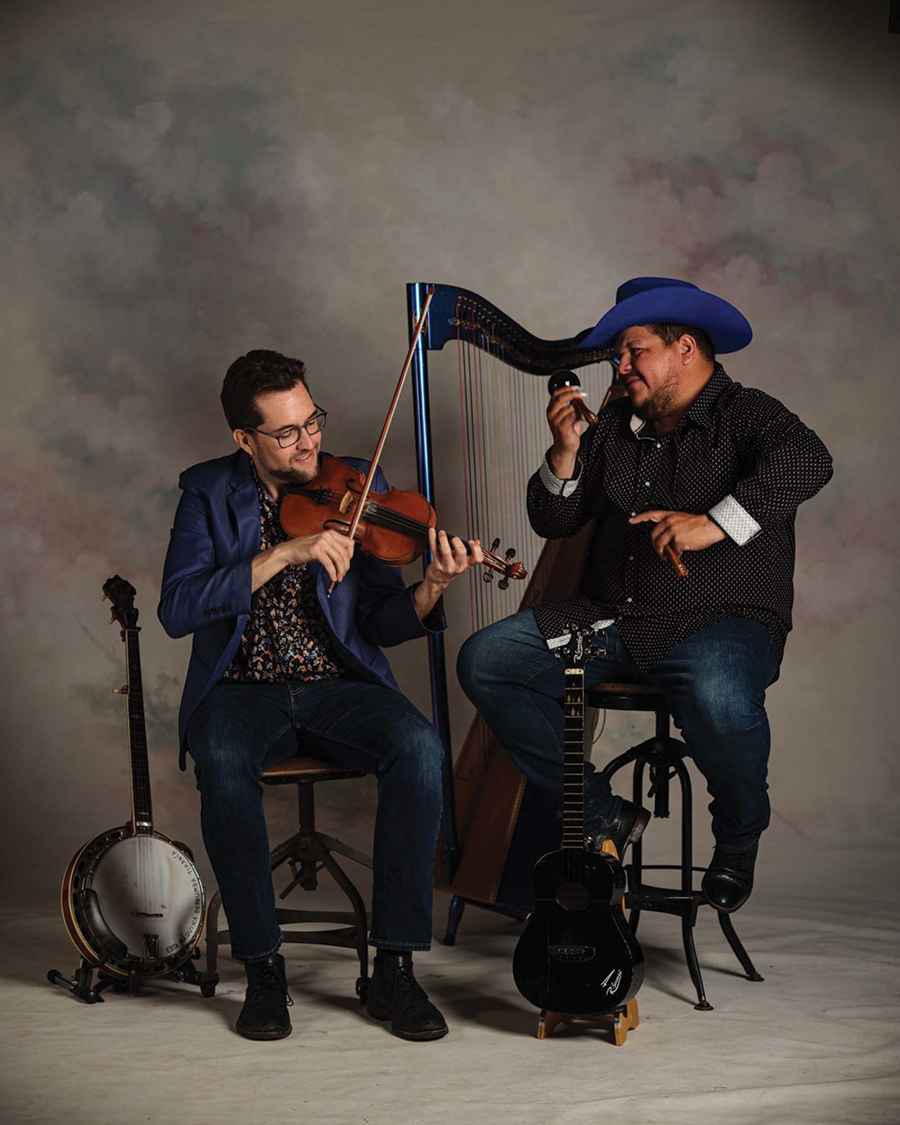
Left: Big Bang Boom. Right: Larry Bellorín & Joe Troop. 

Perhaps the best news for those who’ve braved the late-summer sun is that the City Stage in the Lincoln Financial lot will be tented this year. “It’s the biggest tent we’ve ever erected,” says Grossmann. “We’ve had several tented stages in the past but this the first time our main stage audience area will be covered.”

Typical of the assemblage of worldwide talent on display is Larry Bellorín, a native of Monagas, Venezuela. A refugee who was forced into exile and sought asylum in North Carolina, Bellorín is a master of the Venezuelan harp, specifically in the genre called Llanera. He sings and plays several other instruments, and is a captivating storyteller. But the harp . . . oh my. You have to hear it for yourself.

After going on hiatus for a couple of years, the Family Activities Area is back in full force. Its theme is “Playing Together,” featuring numerous interactive displays geared toward the younger set, many produced by the Greensboro History Museum. Find it in the Governmental Plaza, near the Courthouse Stage.

“Songs of Hope & Justice” returns to its original slot as a pre-festival kickoff event, Thursday, Sept. 8, at the Van Dyke Performance Space. Piloted by Greensboro’s (and Danbury’s) favorite daughter, Laurelyn Dossett, and a number of her mega-talented friends, the ticketed show features tunes from some of the folk/protest genre’s legends as well as some new and original compositions dealing with the ongoing fight for social justice.


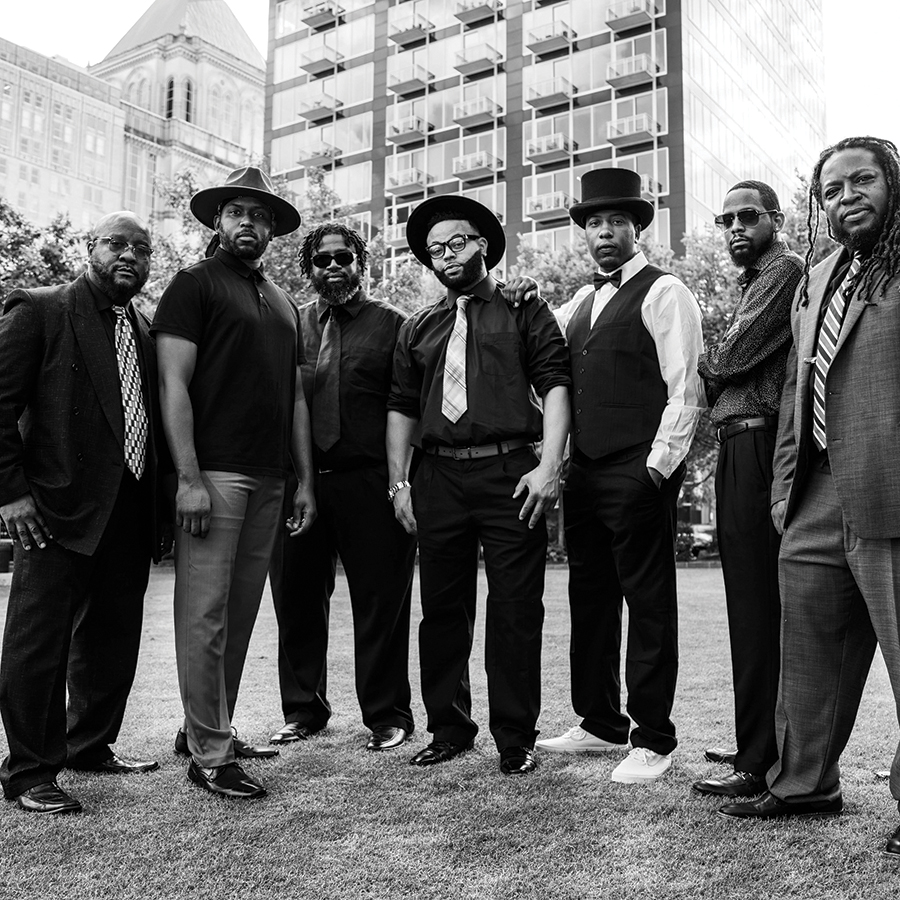
Left: Soultriii. Right: The Rumble ft. Chief Joseph Boudreaux Jr. 

Traditionally, country & western music has been the domain of white performers, but all that seems to be changing. And it’s not singularly due to the phenomenal success of Jimmy Allen. There is a touring consortium of Black country and Americana artists who are living proof that Nashville is evolving. Calling themselves Black Opry, five members of the rotating ensemble will do both solo sets and singer-songwriters in the round. Charley Pride would be smiling.

Perhaps taking a page from MerleFest, this year’s festival will launch Center City Jams, whereby anyone can bring their instrument and, well, jam. Held in Center City Park, some sessions will be facilitated by a pro, while others will be more spontaneous. “We wanted to create an informal space where pickers can get together and just have fun and play music,” says Grossmann.

Drawing from the broad definition of “folk music” as all-inclusive and indigenous to a particular culture, i.e. “people’s music,” last year’s NCFF launched the Not Your Average Folk contest. Open to North Carolina musicians, applicants in the friendly competition were voted upon at the festival website, and three winners were awarded a slot on festival stages:

• 1st place: Anna Vtipil

• 2nd place: The Zinc Kings

• 3rd place: The Travis Williams Group

• Honorable Mention: Discount Rothko

Right: Diali Cissokho and Kiara Ba.

Because of COVID protocols, no indoor events were held last year, which eliminated the immensely popular Dance at the Van Dyke. Happily, it is back this year, inviting patrons to the stage, where the Dance Project teaches Salsa to West African and everything in between. “This is a way to honor the vision of the great Jan Van Dyke, as well as give folks a chance to express themselves and learn new steps,” notes Grossmann.

Formed last year from the remnants of the Grammy-nominated Cha Wa, The Rumble is steeped in the Mardi Gras Indian funk tradition. Fronted by Second Chief Joseph Boudreaux Jr. (Big Chief Monk’s son), they are following in the footsteps of such icons as the Neville Brothers, Meters and Wild Magnolias. And those are some big footsteps.  OH

Poem

Cardinal

Like a spot of blood against the blue sky,

a Cardinal perches on the shepherd’s hook

where I hang suet and a cylinder of seed-feeders

I gave Sylvia for her last Mother’s Day.

The birds are a gift to me now. Her beautiful

ashes fill a marble blue urn and rest

near one of her crazy quilts in the foyer to welcome visitors.

Buddha is there on a table and guards her keepsakes,

a cleaned-out bookshelf holds her high school portrait,

a cross-stitch she made for me. Every little corner

has its memory of how short a sweet life can be.

— Marty Silverthorne

From Collected Poems of Marty Silverthorne

Lavender Field of Dreams

Follow your nose to Red Feather Ranch

By Cynthia Adams     Photographs by Amy Freeman


“Sweat is nearly as wonderful as the smell of lavender,” claims Dianne Reganess, who presides over Red Feather Ranch, a 24-acre property on Ritter’s Farm Road.

“I love hard work.”

Clad in hard-working clothes, T-shirts and jeans, Dianne proves the point, steering a Polaris Ranger utility vehicle — with ample space for flower buckets — inspecting orderly rows. She eyes a second planting of 400 organically-grown lavender plants in green formation. (Current number of lavender plants? Almost 1,000.)

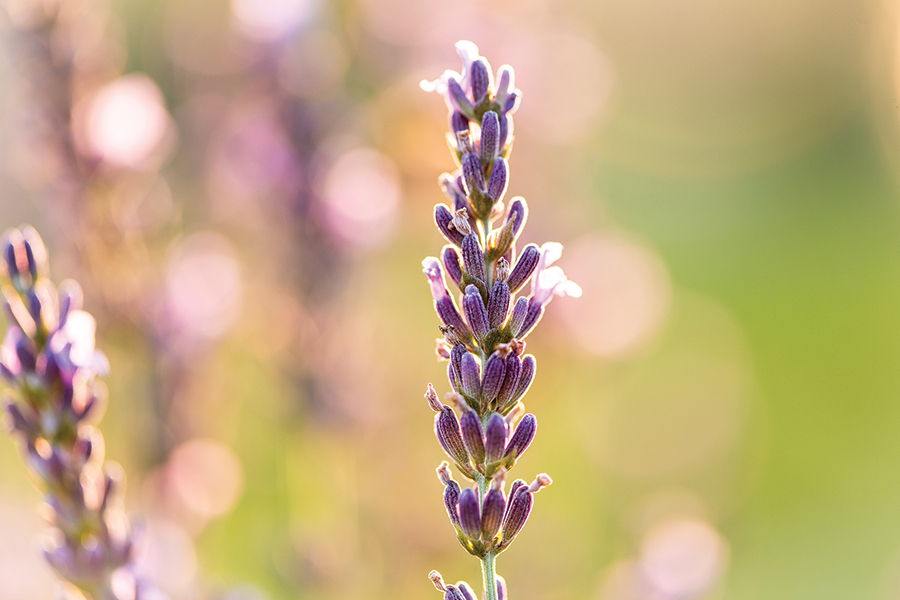
Dianne’s blue-gray eyes approximate the colors of the Sweet Melissa Lilac, Grosso, Grosso Blue, Riverina Thomas and Provence varietals she finds best suited and most productive in her USDA Plant Hardiness Zone, 7-B.

Although she is a member of the United States Lavender Growers Association, managing a farm and cut flowers business, Dianne once wore a snappy Air Force uniform, which she eventually exchanged for business suits when later joining the financial world.  At First Union Securities, where she met husband Jonathan, a financial manager, she worked as a cage operator, responsible for placing orders for stocks and the ticker tape that would print out.

“A complicated job,” she says. “I also was the cashier, documenting checks coming in and going out. Compliance manager . . . etc.”

In time, Dianne joined an estimated 40,000 women in farming and agri-businesses throughout the North Carolina Piedmont. 

Growing lavender is a challenging endeavor, she says: “You have to trick it, and make it think it’s somewhere it’s not.” Jonathan helps when his work allows. But all of the maintenance and work of growing a fickle herb and an expanding variety of flowers, are her own. 

Daily labors she does joyfully.


“I built every bed out there by myself. I did all the irrigation by myself.  It’s hard work, but it’s very rewarding,” Dianne says. 

She jumps back into the small vehicle, proudly pointing out the new “high tunnel” — grower lingo for a large commercial greenhouse.

As with all farmers, the day starts early. At 7 a.m. during growing season, Dianne has completed picking and harvesting, plus hitting the office mid-morning to deal with online orders. “By 1 p.m., most of the work is done. Flowers don’t like heat.”

With Dianne working mostly alone, apart from an occasional volunteer, the one-woman, great lavender experiment has blossomed into a visually stunning, yet all-consuming, endeavor. 

And it couldn’t be more ironic, she jokes.

“I’m a terrible gardener,” Dianne confides darkly. “I cannot grow a thing for my house. But flower farming is so very different.” The mindset is different, she says, and the strategy is different.

The running joke in her family, she shares, is “do not give Dianne a houseplant. She’ll kill it.” 

“So here I am, with all this going — all out there,” she says, waving toward the fields. At this point, she giggles.

Some of her family still cannot believe she created this field of lavender dreams. Her mother, an avid gardener, always knew she had it in her.

“My mom said, ‘Welcome to the other side! You’re finally recognizing what we always knew was there!’” 
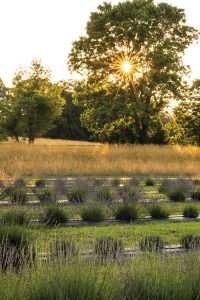
    

“All this” commenced in 2016, a year after Dianne and Jonathan found a long-pursued farm listed on Zillow, promptly scheduling a look-see.  “And I came over the top of the hill, and I said, ‘This is it!’ I just knew, seeing the land, that pond, the house. This was it!

Here was ample room for an outsized dream Dianne had been nursing.  As for the name? Red Feather Ranch was carved in stone at the gated entrance.

“I kind of took it as a sign since my favorite bird is the cardinal. When we pulled onto the property that very first time and I saw that, I thought to myself — that’s kind of neat!” says Dianne.

The partially-wooded 24 acres included a barn, outbuildings, a spring-fed pond, creek and a white pine, custom log home at the center.  Redolent of the Ponderosa on the Western Bonanza, it would have been the deal maker for many, but Dianne was equally star struck by the land itself.

“All woods. Creek. Great for our three children,” Dianne says. Her eldest, Samantha, was 19 at the time.

Daughter Mackenzie, now 15, was 9; son Alex, 17, was 11.

“I would have never thought [we would buy a] log home, though we loved a rustic look,” she says. The house would serve their needs well. 

“It’s a spacious house. There were [then] five of us here. Plus, three dogs. Three cats.” 

It was a farm in theory. However, six years ago, there were no fields. No commercial greenhouse either.

At the time, Samantha, now in Asheville, worked with American Conservation Experience on habitat restoration. Her knowledge concerning invasive species removal, planting and more proved a strong resource as the farm developed. 

Dianne’s mother, who had relocated to the Triad from the West Coast “is an amazing gardener. Grew up in California. She can grow anything.”

But not so for Dianne, whose abilities held few hints of what was to come. 

“I went into the Air Force straight out of high school. My father was in the military.” 

Posted abroad for nine years, she trained as a graphic artist, creating images and visuals used in briefings for military brass. “To Generals,” she clarifies. “It was classified information. Top secret.”

Stationed near the southwest border of France, her final years were in Ramstein, Germany, near stunning fields. 

“When I was in Europe, you would be driving along and pass rows and rows of lavender and sunflowers — it was the simplicity of it really that was so breathtaking. No frilly houses or structures . . . just the plants,”

Dianne left the military at age 27. Reentering civilian life, she met Jonathan while both worked at First Union Securities.

In 2003, they wed at the home of friends Andrew and Hilary Clement, a fortuitous sign given the Clements now own the Finch House, a Thomasville wedding venue. “Maybe we were practice,” jokes Dianne. (See the February 2021 issue of O. Henry magazine’s “Labor of Love.”)

They honeymooned north of Edinburgh, Scotland, “where my family originally is from,” she says. Jonathan’s family’s Swiss.

For years, Dianne flashed back to striking fields of color. She imagined herself growing sunflowers, a notion Jonathan endorsed.

Dianne eventually left the financial world, where Jonathan remained, and refocused upon their growing family and . . . growing plants.  The family lived in Summerfield while seeking a small farm.

Then, the aforementioned Zillow listing appeared.
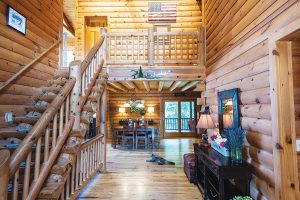
Driving over the rise the day she first approached the house, “I had a vision of sunflowers,” she says. 

The expansive log home seemed perfect. It was everything the family hoped for, but Dianne was even more excited by what lay outside. 

Arable land!

Early on, they tilled the front section in preparation for Dianne’s venture.  “I was planning to have sunflowers.”

Then, reality. “I planted about 4,000 seeds by hand. Maybe, maybe, 50 of them grew. I was so disheartened!” The land, accustomed to growing something else, won out. The grass, she says, “completely took over my sunflowers. I have a picture of one scrawny little row.” Dianne sighs.

“I went in very green, knowing little,” she puns. That first failure caused her to “dive deep.”

“It forced me to educate myself on how to make it work. What did I need to do that I didn’t do? I was up at night studying. I love a good challenge. And I was going to make it work.”

Dianne persisted. “The second year, a little more successful.  The third year, a lot more successful.” 

Sunflowers were simply not quite enough. “But what else could we do?”

Dianne had more hands-in-the-dirt dreams.

Jonathan followed his bliss, too, leaving his corporate job and starting a wealth management business last April. 

She pondered the next agro steps. With some prodding from Jonathan, she realized lavender was the right complement. 

“Of course,” Dianne laughs. “I had talked about sunflowers and lavenders in France.”

Here, too, was another learning curve. Rather than plunging in without exploring risks, she did research. “Time. Money. How realistic? Is it going to grow in this area?” Growing conditions in the Triad’s microclimate, 7-B, are tricky. The air is more turbulent; therefore, storms are more violent. 

In 2016, she took an entire year off to figure out the best supplier and grower before Red Feather Ranch launched as a commercial grower.

Suppliers are crucial.

“A lot of varietals are patented,” she explains. This prevents commercial growers from propagating their own plants.

She attended a lavender grower’s conference in Charleston, S.C., to better educate herself. “I was asking questions. Took notes and listened. I came back thinking, ‘We can do it. But it’s going to take a lot of work.’ Because lavender is a very tricky plant. In the French Provence area where it grows well, they get 14 inches of rain a year. We get 44 plus.”

How not to drown lavender? 

She learned the answer. “You have to have it raised. Drainage is key.”

Dianne experimented with a mix of dirt and pea gravel, having met a Virginia grower who only used pea gravel and no dirt. Then she grew braver. “I last planted them only in pea gravel.” 

Paydirt! She finally “figured out the drainage thing.”

“The more you neglect it the better it is. The plant life of lavender is about 15 years. Get them out of a pot,” she advises, and give them room. “At full maturity it can get about five feet from side to side!”

Dianne learned what growing practices “are good for lavender.” As a cool weather plant, she knows to set stock in October. 

Lavender varietals differed by camphor content, Dianne explains.

“Lavender has the compound in it that is called camphor,” she adds. “That camphor chemical makes you kind of go oof . . . it’s really in your face. The other lilac plants that they use for culinary have a much lower chemical compound.”

Sweet Melissa Lilac and Provence lavenders are for culinary use. For infusions, teas and baking, she employs these, even adding a teaspoon of lavender buds into muffin batter or beverages. “I make lavender lemonade and cocktails! I’m old school.”

It’s savory, too. Whenever cooks use herbs de Provence, “there’s lavender in there,” she points out.

Sunset is her favorite time.  She and Jonathan can enjoy bird-watching. Or take in bumblebees, drunk from the soporific lavender, nodding off on the stalks. Felines, too. The family cat, Chanel, curled up to nap inside a lavender wreath as Dianne was crafting it.

She still loves sunflowers, where the goldfinches feast away on the drooping heads. 

And the butterflies! They thrill Dianne. “I don’t spray,” she says, adding, “lady bugs eat the aphids on my sweet peas.”

There is something beyond what nurtures plants. There are benefits for humans, too.

In fact, she wishes more people would come out, breathe the intoxicating and relaxing smell of lavender, and enjoy the rejuvenating air, while walking the picturesque farm.

“People can come here. People need to get back out in nature. Take off your mask and breathe some fresh air! Walk the rows even if you don’t buy anything.” 

Sometimes people come solely for photo opportunities, she says. Dianne is a shutterbug, who enjoys snapping pictures of each unfolding season, posting online at https://www.redfeatherranch.shop/blog.

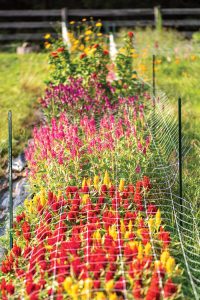
After lavender peaks, other blooms follow, including, of course, sunflowers, a perennial favorite. Sunflowers have a longer season, growing thru October. 

Red Feather Ranch offers subscription options, a community supported agriculture program, and cut-flower delivery throughout Greensboro. The farm sells lavender through mid-July, and sunflowers June–October, adding a new program called U- Pick. 

After the growing season ends, Dianne harvests the dried lavender and stitches up sachets and other projects for both home and kitchen. 

She makes linen spray, body mist, lip balm, sugar scrub — all from organic, dried lavender.

Farming is relentless, as anyone who ever wielded a hoe knows. It’s an all-the-time lifestyle choice, but it happens to agree with Dianne, who determinedly battles weather and wildlife. 

“All is well here… hot, hot, hot, but well,” the exasperated farmer writes in June. “Deer ate ALL my sunflowers.  Makes me so mad!”

Still, the work seems to dial the clock back. Dianne swears it rejuvenates her. An unhurried manner and easy laugh underlie this. All of which — especially a lack of vanity — proves her point. 

Sweat of the brow is a point of pride. 

A feather in her cap.

Cynthia Adams is a contributing editor to O.Henry magazine.

Fast Facts about Lavender from Dianne Reganess:

Fact: Zone 7-B is a microclimate. “What works in Raleigh won’t necessarily work here. We’re in a zone where the air can be more turbulent. It is definitely humid. Severe storms.” (https://planthardiness.ars.usda.gov/)

Fact: It’s illegal to propagate lavender varietals, which are patented, without a license. It took Dianne a year to find the right commercial grower. Like roses, many lavender varietals are patented. “I cannot take a clipping and grow my own plants without breaking the law. So, I go back to the same woman grower. I know the plants I get from her. They are healthy and survive, and this is key.”

Fact: “It takes the lavender plants three years to reach maturity.” 

Fact: “Lavender is organic. No chemicals are needed. Also, deer and rabbit don’t bother it.” Also, she warns against potting soils or bark mulch, which hold excess moisture, causing disease.

Fact: Dianne recommends Munstead, Provence and Sweet Melissa, lavenders more commonly found at “big box” stores.  OH

Romantic Fever

Fiction by Lee Smith     Illustrations by Matthew Shipley

The house I grew up in was one of a row of houses strung along a narrow river bottom like a string of beads. We were not allowed to play in the river because they washed coal in it, upstream. Its water ran deep and black between the mountains, which rose like walls on either side of us, rocky and thick with trees.

My mother came from the flat exotic eastern shore of Virginia, and swore that the mountains gave her migraine headaches. Mama was always lying down on the sofa, all dressed up. But there was no question that she loved my father, a mountain man she had chosen over the well-bred Arthur Banks of Richmond, “a fellow who went to the University of Virginia and never got over it,” according to Daddy. Mama suffered from ideas of aristocracy herself. Every night she would fix a nice supper for Daddy and me, then bathe and put on a fresh dress and high heels and her bright red lipstick, named “Fire and Ice,” and then sit in anxious dismay while the hour grew later and later, until Daddy finally left his dime-store and came home.

By that time the food had dried out to something crunchy and unrecognizable, so Mama would cry when she opened the oven door, but then Daddy would eat it all anyway, swearing it was the most delicious food he’d ever put in his mouth, staring hard at Mama all the while. Frequently my parents would then leave the table abruptly, feigning huge yawns and leaving me to turn out all the lights. I’d stomp around the house and do this resentfully, both horrified and thrilled at the thought of them upstairs behind their closed door.

I myself was in love with my best friend’s father, three houses down the road. Mr. Owens had huge dark soulful eyes, thick black hair, a mustache that dropped down on either side of his mouth, and the prettiest singing voice available. Every night after supper, he’d sit out in his garden by the river and play his guitar and sing for us and every other kid in the neighborhood, who’d gather around to listen.

Mr. Owens played songs like “Wayfaring Stranger” and “The Alabama Waltz.” He died the year we were thirteen, from an illness described as “romantic fever.” Though later I would learn that the first word was actually “rheumatic,” in my own mind it remained “romantic fever,” an illness I associated with those long summer evenings when my beloved Mr. Owens played the old sad songs while lightning bugs rose like stars from the misty weeds along the black river and right down the road — three houses away — my own parents were kissing like crazy as night came on.

II

The link between love and death intensified when my MYF group (that’s Methodist Youth Fellowship) went to Myrtle Beach, where we encountered many exotic things such as pizza pie and Northern boys smoking cigarettes on the boardwalk. Our youth leader, who was majoring in drama at a church school, threw our cigarettes into the surf and led us back up onto the sandy porch of Mrs. Fickling’s Boardinghouse for an emergency lecture on Petting.

“A nice girl,” she said dramatically, “does not Pet. It is cruel to the boy to allow him to Pet, because he has no control over himself. He is just a boy. It is all up to the girl. If she allows the boy to Pet her, then he will become excited, and if he cannot find relief, then the poison will all back up into his organs causing pain — and sometimes — death!” She spat out the words.

We drew back in horror and fascination.

III

Of course it wasn’t long before I found myself in the place where I’d been headed all along: the front seat of a rusty old pickup, heading up a mountain on a dark gravel road with a wild older boy — let’s call him Wayne — whom I scarcely knew but had secretly adored for months. This was not the nice boy I’d been dating, the football star/student government leader who’d carried my books around from class to class all year and held my hand in study hall. My friends were all jealous of me for attracting such a nice boyfriend; even my mother approved. But, though he dutifully pressed his body against mine at dances in the gym whenever they played “The Twelfth of Never,” our song, it just wasn’t happening. That fiery hand did not clasp my vitals as it did in Jane Eyre whenever she encountered Mr. Rochester.

So I had seized my chance when Wayne asked me if I’d like to ride around sometime. “You bet!” I’d said so fast it startled him. “I’d love to!” Wayne was a big, slow-talking boy with long black hair that fell down into his handsome, sullen face. He wore a ring of keys on his belt and a pack of cigarettes rolled up in the sleeve of his T-shirt. He did not play sports. I admired his style as much as I admired his family — or lack of family, I should say, for he lived with his uncle in a trailer out near the county line. Wayne smoked, drank, and played in a band with grown-up men. He was always on the Absentee Hot List, and soon he’d be gone for good, headed off to Nashville with a shoebox full of songs. 

We jolted up the rutted road through dense black woods. My mother would have died if she’d known where I was. But she didn’t. Nobody did.

I was determined to Pet with Wayne even if it killed him.

Finally we emerged onto a kind of dark, windy plateau, an abandoned strip mine set on top of the mountain. He drove right up to the edge, a sheer drop. I caught my breath. On the mountainside below us were a hundred coke ovens sending their fiery blasts like giant candles straight up into the sky. It was like the pit of hell itself, but beautiful. It was the most beautiful thing I’d ever seen. For some reason I started crying.

“Aw,” he said. He screwed the top off a mason jar and gave me a drink, which burned all the way down. “You know what?” He pulled me over toward him. He smelled like smoke, like alcohol, like the woods.

“What?” I said into the sleeve of his blue jean jacket

“They was a boy killed in one of them ovens last month — fell in, or throwed himself in, nobody ever did know which.”

“Was there?” I scooted closer.

“Yep, it was a boy from over on Paw Paw, had a wife and two little babies. Gone in the twinkling of a eye, just like it says in the Bible.” He snapped his fingers. “Right down there,” he said into my hair.

“That’s awful.” I shuddered, turning up my face for his kiss, while below us the coke ovens burned like a hundred red fountains of death and I felt the fiery hand clutch my vitals for good.

Finally, I thought.

Romantic fever.  OH
Summer Reading Issue 2022

William Faulkner invented Yoknapatawpha County as a place for his imagination to live, and every Southern writer knew where it was, even if it wasn’t on any map. Ernest Hemingway loaded his readers onto a double-decker bus and transported them to a fiesta in Pamplona, Spain, with its wine skins and dusty plaza de toros. Allan Gurganus created the fictional small town of Falls, North Carolina. In the hands of a fine craftsman, a sense of place in a piece of fiction can be so compelling it almost becomes its own character in the narrative. In our Summer Reading Issue three of North Carolina’s greatest writers deliver on this promise, taking us to West Virginia coal country, the Smoky Mountains of North Carolina, and the bottom of a freshly dug grave. Our guides for these adventures are Lee Smith, Ron Rash and Clyde Edgerton.

— Jim Moriarty

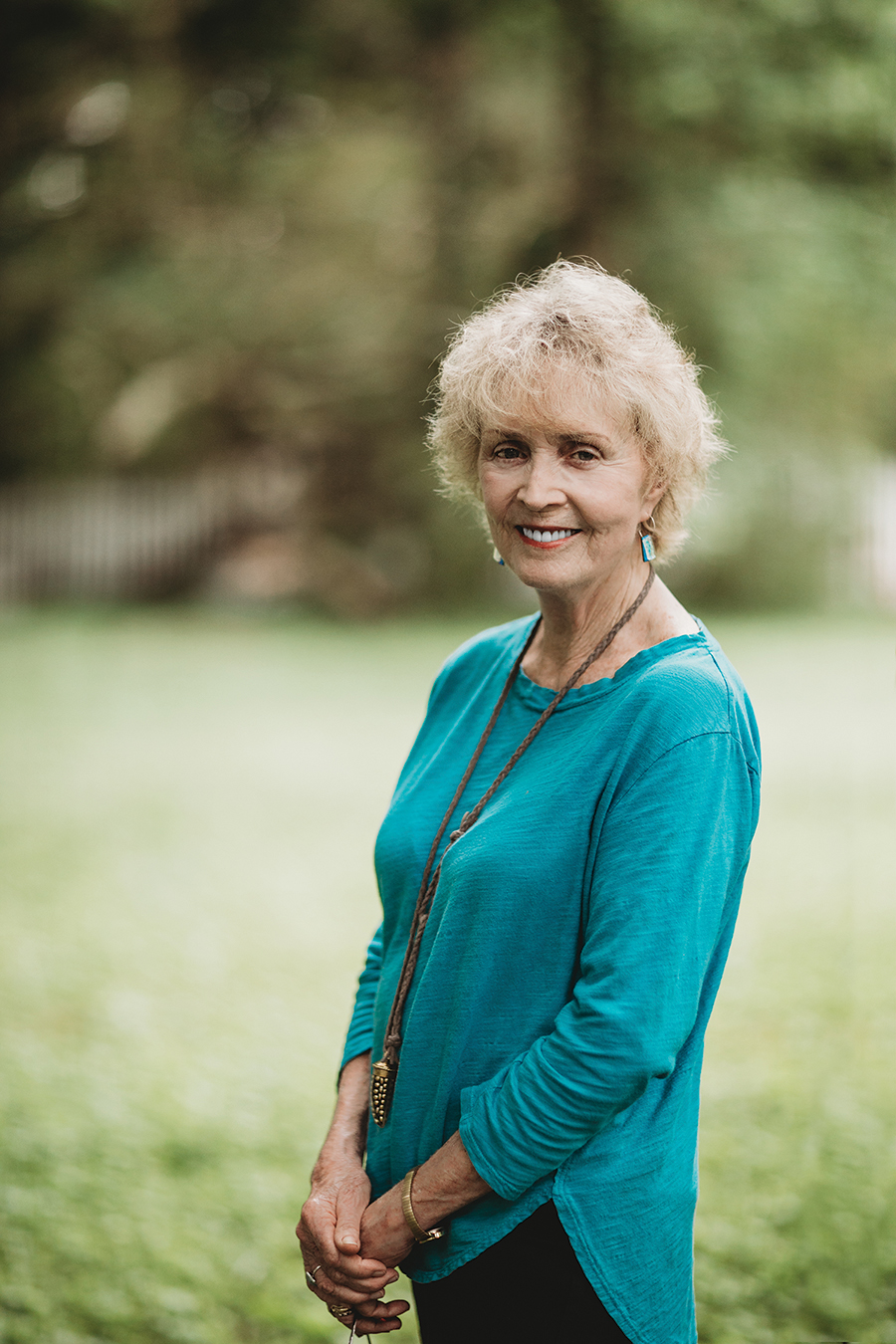
Lee Smith is the author of 14 novels, including Fair and Tender Ladies, Oral History, Saving Grace and Guests on Earth, as well as four collections of short stories.  Her novel The Last Girls was a New York Times bestseller as well as co-winner of the Southern Book Critics Circle Award. A retired professor of English at North Carolina State University, she has received an Academy Award in Fiction from the American Academy of Arts and Letters, the North Carolina Award for Literature,  and the Weatherford Award for Appalachian Literature. Her latest book, Silver Alert, will be available in the spring of 2023.


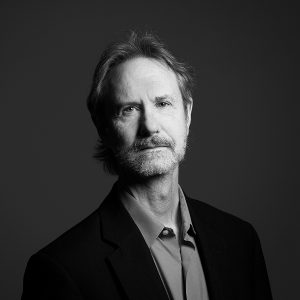
Ron Rash is the author of seven novels, seven collections of short stories and four volumes of poetry. He has been honored with The Sherwood Anderson Prize and was a finalist for the PEN/Faulkner Award for Fiction for his collection Chemistry and Other Stories, and for his New York Times bestselling novel Serena. His other novels include Saints at the River, Above the Waterfall and The Risen. He is the Parris Distinguished Professor in Appalachian Cultural Studies at Western Carolina University, where he teaches poetry and fiction writing.


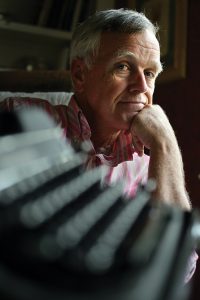
Clyde Edgerton is the author of 10 novels and two books of non-fiction. His novels include Raney, Walking Across Egypt, The Floatplane Notebooks, Killer Diller and Lunch at the Piccadilly. Both Walking Across Egypt and Killer Diller were adapted for the screen. He has been the recipient of a Guggenheim Fellowship and has also received the North Carolina Award for Literature. He is the Thomas S. Kenan III Distinguished Professor of Creative Writing at the University of North Carolina Wilmington.